Home Blog Page 1744

OXI Day: The Genesis of the 2nd Anzac Corps formation and defence of Greece

By Nick Andriotakis, Secretary, Joint Committee for the Commemoration of the Battle of Crete & The Greek Campaign.

Every year on the 28th October, the Greek people, including the diaspora, commemorate ‘OXI’ (NO) Day, the anniversary of the historic response of Greeks against Nazism, Fascism and Totalitarianism in WW2.  On the 28th October 1940, Greece said ‘NO’ to an invading Italian Fascist invasion, pushed them back and gave the Axis Powers their first defeat. This victorious defence destroyed the notion of Axis invincibility and gave hope to a battered and suffering world.

However, the result for Greece saying ‘NO’ created one of the most devastating impacts on any country in Europe. During WWII, Greece lost 11 percent of its population due to military conflict, civilian resistance, crimes against humanity and war resulting famine and disease. Greece lost 80 percent of its Jewish population.
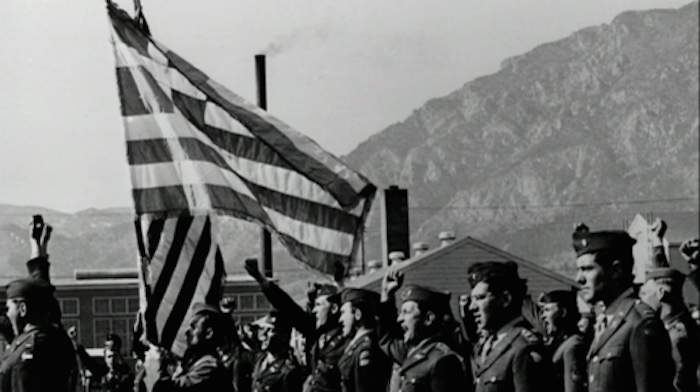
Every year on the 28th October, the Greek people including the diaspora, commemorate ‘OXI’ (NO) Day.

As a result of OXI and the Greek victory against the fascists Italians, the Nazis invaded Greece and consequently, the allies came to its aid. In early April 1941, the Second Anzac Corps was established in Macedonia and followed the earlier victorious Australian Naval engagements in Greek waters by HMAS Sydney in The Battle of Spada and HMAS Perth in The Battle of Cape Matapan.

Greece, with the support of the ANZAC and Commonwealth Allies, resisted for over 210 days the invasion of the Axis forces. This resistance has been sighted by military leaders and historians as taking up valuable Axis Power resources and delaying the Nazi invasion of Russia into a cold and harsh winter. The defeat of the fascist Italians and the delay of the Nazis in Greece is acknowledged as turning the tide of victory in the favour of the Allies.

Australians and Greeks have been interwoven for more than a century as solid dependable allies and friends. Since the South African War (1899-1902), when Greek-Australians fought in the Boer War, Australians and Greeks have been allies in all major world conflicts defending democracy, freedom, the rule of law and human rights. Both countries were involved in conflicts large and small, most famously the Anzac Campaigns of World War I and World War II. About 2,500 Australians of Greek heritage served Australia in WW1, WW2, Korea & Vietnam.
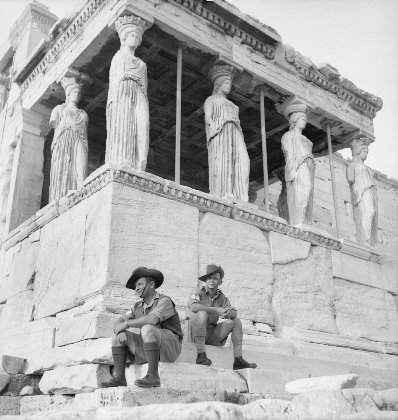
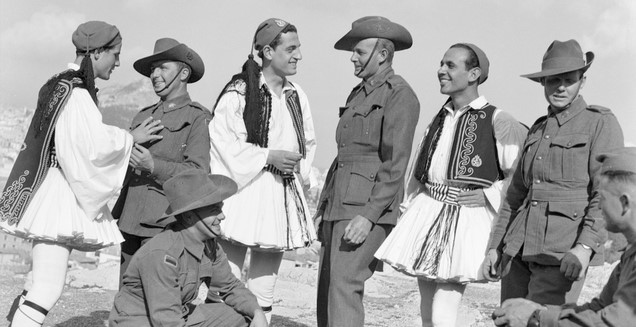
Anzac troops in Greece.

During the first Anzac campaign in Gallipoli, the Greek island of Lemnos played an important role. It was here where the Anzacs obtained supplies, established training facilities and hospitals, safely harboured the ships and also buried some of the fallen. Some 250 Anzacs lie on Lemnos and about seventy Australians of Greek heritage served Australia in Gallipoli and Western Europe in WWI.

The Second Anzac Campaign, including the Battles of Greece and Crete, involved a second generation of Anzacs adding fresh pages to the history of their forefather’s service some 26 years earlier in the Dardanelles. Together with the Greek people, the Anzacs confronted overwhelming odds with determination and the Anzac ideals of courage, mate ship and self-sacrifice. 

In 1941, over 34,000 Anzacs fought in Greece. They fought and walked nearly one thousand kilometres of Greece’s mountainous terrain and engaged in the Battles of Vevi, Tempe, Thermopylae/ Brallos and finally in the Battle of Crete. Some 1,686 Anzacs from both world wars lie in Greece and of these nearly half were never found or their remains identified. They all now rest amongst their friends, comrades and their Greek allies in this ancient land.

OXI day is the genesis of the Anzac involvement in Greece in WWII. It is important to acknowledge, commemorate and honour these historical and unique ties of Australians and Greeks. The commemoration of OXI day and the Anzacs in Greece from both World Wars is very relevant to both countries.

The Anzac legacy and OXI day continue to be commemorated and remembered with honour by Australians and Greeks around the world.

Αιωνία τους η μνήμη. Eternal be their memory. Lest We Forget.

Greece’s Deputy Foreign Minister, Kostas Vlasis, says OXI Day will unite all Greeks

Greece’s Deputy Foreign Affairs Minister and representative for Greeks Abroad, Kostas Vlasis, has issued a special message to the diaspora on the occasion of OXI Day on October 28.

In his message, Mr Vlasis explained what OXI Day means to Greeks around the world, saying “it is the day that Greece… shouted “NO” against the brutal and brazen blackmail of the fascist and Nazi forces of the Axis.”

“Greece’s participation in World War II is not a coincidence in the course of Greek and European history. It is a brave decision by our ancestors to fight against an opponent who was numerically superior and, until then, invincible,” Mr Vlasis added.

The Deputy Foreign Affairs Minister then went on to say that OXI Day is “more relevant and instructive than ever,” as ‘OXI’ (NO) remains an appropriate response to the current challenges facing Greece, including the tensions with Turkey at the Evros border and in the Eastern Mediterranean.

“By honouring October 28, 1940, all Greeks become like a fist. We join our forces and intensify the struggle for the defence of our national rights with the compass of strength and national solidarity that characterises us.”

FULL STATEMENT IN GREEK HERE.

Arthur Sinodinos to give exclusive insight into US politics during video conference

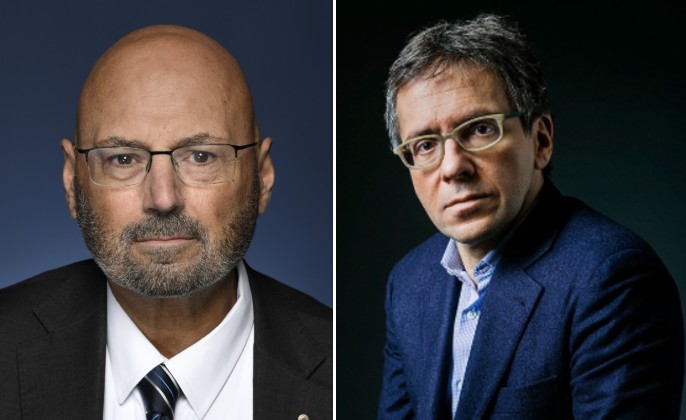
The Australian Chamber of Commerce and Industry is holding an exclusive ‘Fireside Chat’ video conference with Arthur Sinodinos AO, Australia’s Ambassador to the United States, on Friday, October 30 at 9am.

Mr Sinodinos will be speaking alongside Ian Bremmer, who is the President and Founder of Eurasia Group, Host of ‘GZERO World with Ian Bremmer,’ and a leading political scientist and author.

READ MORE: Arthur Sinodinos becomes inaugural patron of The Fred Hollows Foundation in the United States.

Direct from New York and Washington DC, the video conference will give people a chance to hear from two of the most knowledgeable authorities on geopolitics, global and US trade, macro policy and current political issues in the United States and around the globe.

In the week leading up to the 2020 United States Presidential Elections, Mr Sinodinos and Mr Bremmer will engage in an expert, in-depth discussion on the central issues in the US and international affairs.

If you would like to attend the video conference, please email paul.nicolaou@australianchamber.com.au to secure your place. A Zoom link will be forwarded to you after you RSVP.

READ MORE: Australian Chamber of Commerce & Industry hosts celebratory dinner for the Hon Arthur Sinodinos.

British Special Forces storm Greek-owned tanker and arrest hijackers

0

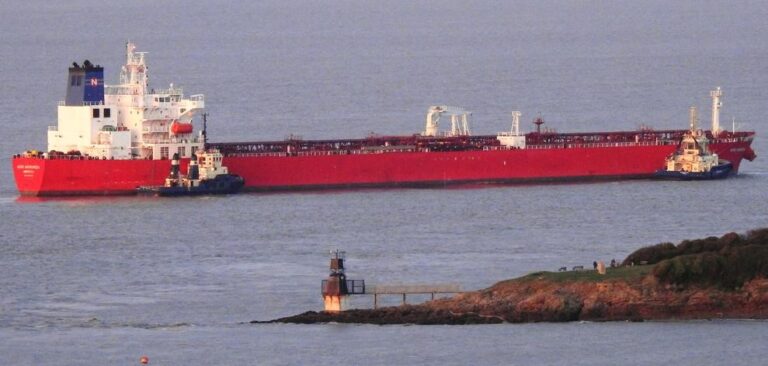
British Special Forces stormed a Greek-operated oil tanker in the English channel on Sunday to wrestle control of the vessel from seven stowaways who had threatened the crew in a suspected hijacking.

Troops from the Special Boat Service, a navy special forces unit whose headquarters is just a few miles away from where the vessel began showing signs of distress, boarded the Nave Andromeda near the Isle of Wight off southern England.

Defence Secretary, Ben Wallace, and Home Secretary, Priti Patel, authorised the armed forces to board the ship “to safeguard life and secure a ship that was subject to suspected hijacking,” the Defence Ministry said.

“Armed forces have gained control of the ship and seven individuals have been detained,” the ministry said. “Initial reports confirm the crew are safe and well.”

It was not immediately clear where the stowaways were from or what their intentions were.

The tanker’s Greek operator, Navios Tank Management, thanked UK authorities for their swift reaction to the hijacking situation.

“Navios Tanker Management wish to thank all the UK authorities involved in this operation for their timely and professional response,” the operator said in a statement.

The defence ministry declined to confirm or deny the involvement of the SBS – in line with British government policy of not commenting on special forces operations.

The navy’s Special Boat Service, considered a sister unit to the Special Air Service Regiment (SAS), is one of Britain’s most secretive special forces units.

An elite maritime counter-terrorism unit, the SBS traces its history back to World War Two and has been involved in many of the conflicts of the past 70 years including Afghanistan and Iraq.

Turkey-Greece feud escalates as Turkey plays military games in East Med

0

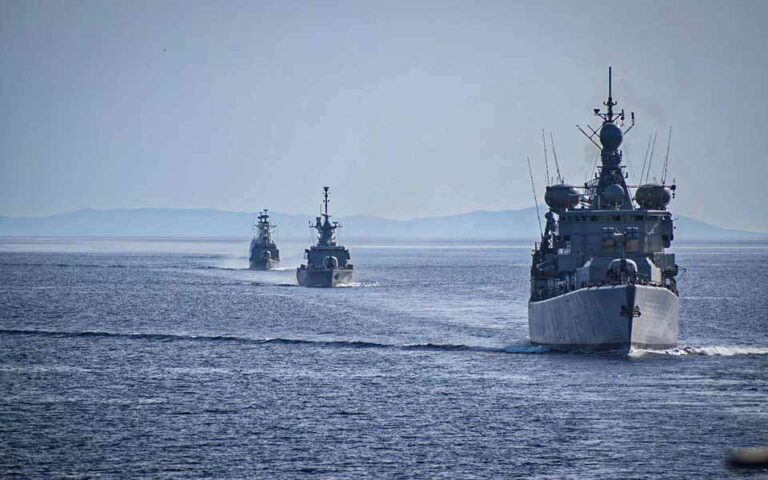
Greece, early on Monday, denounced Turkey’s plans to carry out a maritime military exercise on October 28, a Greek national holiday.

Greek government spokesman Stelios Petsas said Ankara’s move showed it was an “unreliable” partner when it comes to negotiations.

“Over the last few days, Turkey has been making a persistent effort to prove that not only is it a troublemaker in our wider region, but it is also a completely unreliable interlocutor,” Petsas said.

But, just a few hours later, Turkey made an abrupt face with Turkish officials announcing that they had decided to cancel the exercises.

Citing military sources, the Turkish state-run news agency Anadolu described the decision as a “one-time move and gesture of goodwill.”

It was a gesture aimed “to show Turkey’s willingness to solve the problems in the Eastern Mediterranean and Aegean with dialogue,” Anadolu said, citing the unnamed sources.

Turkey issued a navigation warning late on Friday announcing naval exercises in the Eastern Mediterranean for October 27-28, hours after NATO’s Secretary-General announced that Greece and Turkey agreed on Friday to cancel military exercises that were scheduled on each other’s national holidays on October 28 and 29, respectively.

READ MORE: Turkey to conduct military exercises on OXI Day, breaking NATO agreement.

Russian FM calls for speedy reduction of East Med tension, closer ties to Greece

0

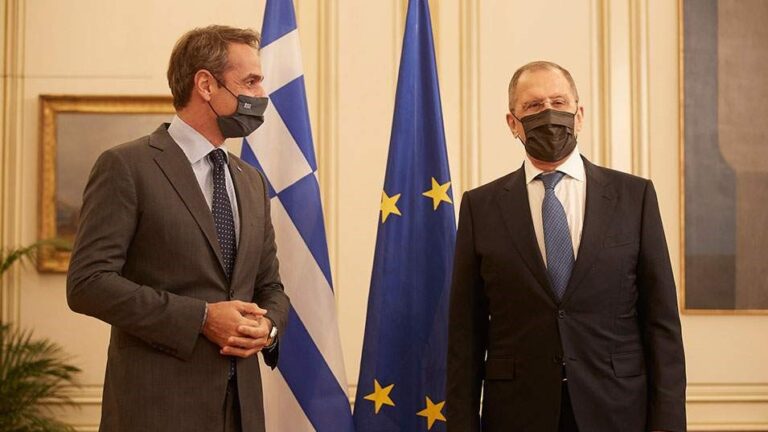
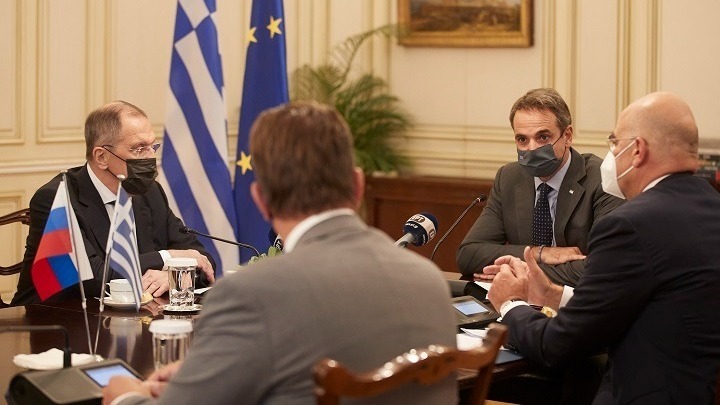
Turkey is an “international troublemaker” stirring problems and undermining peace in sensitive parts of the world while dressed “in a religious mantle,” Greek Prime Minister, Kyriakos Mitsotakis, said on Monday, ahead of a meeting in Athens with Russian Foreign Minister, Sergei Lavrov.

“I believe that it is in our common interest to check such provocative behaviors and to remind the party acting them out that there are limits,” he said.

Mitsotakis welcomed earlier comments made by Lavrov during a meeting with his Greek counterpart, Nikos Dendias, in which the Russian official said that every state has the sovereign right to extend its territorial waters up to 12 nautical miles, as stipulated by the UN Convention on the Law of the Sea, of which Russia is a signatory.

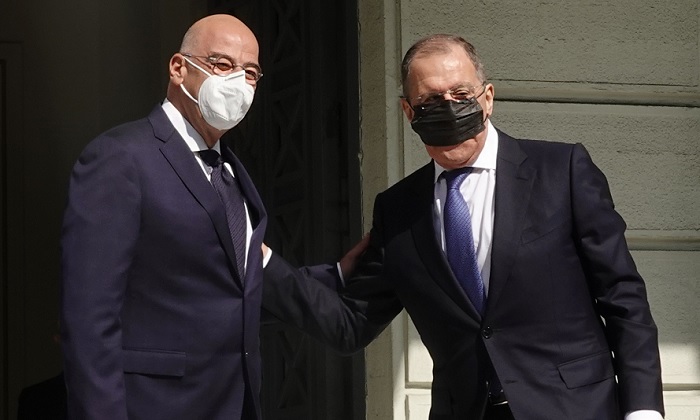
Russian Foreign Minister, Sergei Lavrov, met with his Greek counterpart, Nikos Dendias, in Greece.

READ MORE: Greece to extend territorial waters in the Ionian Sea, says PM.

The Greek Prime Minister also indicated Athens’ desire to expand bilateral relations with Russia, saying that next year’s 200th anniversary of the Greek War of Independence – in which Russia played an important role – and the naming of 2021 as “Greek and Russian History Year” is an opportunity to “remember those moments when we acted together in the past,” and build those that will “accompany us in the future.”

Lavrov, for his part, stressed that Greece’s membership of the European Union and NATO should not act as an obstacle in strengthening relations with Russia, while adding that Brussels and the alliance should “not stand in the way” of this.

The Greek PM discussed Turkey’s aggression and bilateral relations with the Russian FM.

Referring to his earlier discussions with Dendias and fraught relations between Greece and Turkey over the Eastern Mediterranean, the Russian Foreign Minister stressed the need for “the fastest possible de-escalation of the tension that has built up in the region, so that the two countries can go ahead and settle their differences – and there are a lot of them – in the region, though dialogue.”

Lavrov said that overlapping interests need to be settled bilaterally through dialogue, while adding that Moscow is prepared to “contribute to the normalisation of the situation” if such an interest is expressed by the two sides.

“We have a good, steady relationship with the countries in the area,” he said.

READ MORE: Turkey to hold military drills off coast of Cyprus as Greece continues exercises with France and Italy.

Source: Ekathimerini.

Inner West councillors accuse staff of spying on emails, phone calls

Councillors at the troubled Inner West Council have accused administration staff of spying on their mail, email and phone calls and have resorted to communicating through private email accounts to avoid surveillance, according to a Sydney Morning Herald exclusive.

The claims will be discussed at a council meeting this week at the behest of long-serving councillor, John Stamolis, who said councillors’ mail had been intercepted or withheld, and staff were being quizzed about why they had spoken to a councillor on the phone.

“It has been appalling,” Mr Stamolis told the SMH.

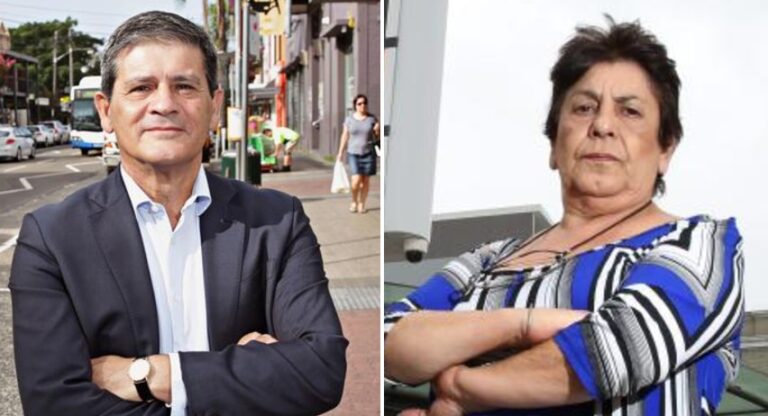
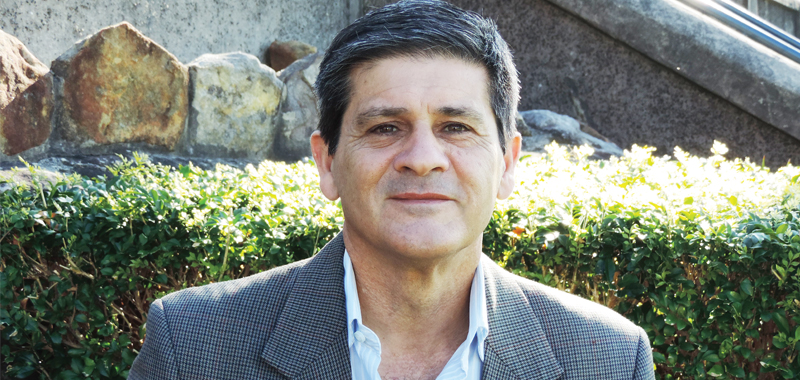
Councillor, John Stamolis, has issued a motion about the accusations. It will be discussed in a meeting this week. Photo: Ciao Magazine.

Inner West Council denied any such monitoring occurred. A spokeswoman said councillors’ emails were stored on a secure system which could be accessed if needed under the relevant legislation, but no access had been granted to the archive since the amalgamated council was formed in 2016.

But numerous councillors expressed concerns about monitoring of their communications.

Veteran Liberal councillor, Julie Passas, said she had called a council staff member about a personal matter and “within two minutes” a member of the council’s senior management called asking why she had phoned a council staffer.

Cr Passas also complained that mail was being intercepted and withheld. She said she had not received written correspondence from constituents in eight months, and angry residents had approached her in the street asking why she hadn’t responded to their letters.

Veteran Liberal councillor, Julie Passas, has added her voice to the complaints.

“I was absolutely shocked,” she said. “In all my years on council I’ve never come across this. It’s totally unnecessary. We are supposed to be working together for the good of the municipality.”

In his motion to be discussed at this week’s council meeting, Cr Stamolis says “it is not clear who authorises this monitoring, for what purpose and to what extent this occurs.”

“Nor is it known how any information gained through monitoring is used by Inner West Council and by whom,” he says.

“It appears that the systems, processes and practices used to do this monitoring are quite developed. It would be of value to know what these systems, processes and practices are.”

The Inner West Council has been embroiled in turmoil amid the departure of its chief executive, Michael Deegan, who formally resigned last week after a month of negotiations about ending his contract.

The SMH asked Mr Deegan whether he was aware of councillors’ emails being spied upon by staff but he did not respond before deadline.

An Inner West Council spokeswoman said: “Inner West Council does not and has never monitored councillor emails or phone calls.” She referred questions about the mayor’s communications to Cr Byrne, who declined to comment on the matter.

Source: Sydney Morning Herald.

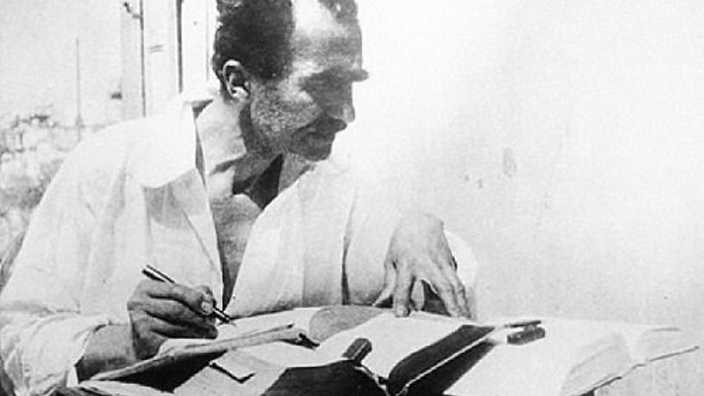
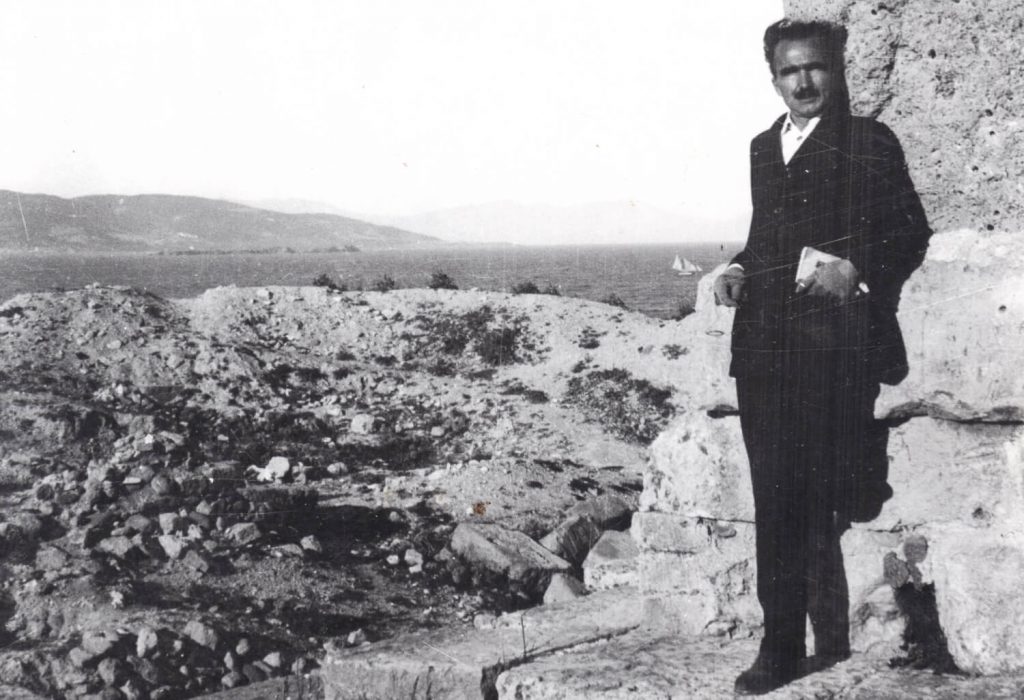
Nikos Kazantzakis: Greek writer of ‘Zorba the Greek’

By Billy Patramanis.

Nikos Kazantzakis is remembered as one of the most pivotal figures of Greek literature and philosophy. His most famous published works were his novel, Zorba the Greek, his poem, Odyssey: A modern sequel, and his philosophical book, Askitiki.

Kazantzakis was born on February 18, 1883 in Heraklion, Crete. At the time, Crete was under Ottoman rule. During the Cretan revolution against the Ottoman Empire (1866-1869), Kazantzakis’ family left the island of Crete and moved to the island of Naxos.

By 1902, Kazantzakis began studying law at the University of Athens. He would later go on to study philosophy with famous French philosopher, Henri Bergson, in Paris between 1907-1909.

Kazantzakis was born on February 18, 1883 in Heraklion, Crete. Photo: Why Athens.

During the Balkan Wars (1912-1913), Kazantzakis voluntarily fought for the Greek army.

After his time in war, Kazantzakis would travel to countries across the world, including Spain, England, Russia, Egypt, Palestine and Japan.

During this time in his life, Kazantzakis was fascinated by the work of his philosophy teacher Bergson, and took a real interest into the philosophies behind Christianity, Marxism and Buddhism.

While on his journey across the world, Kazantzakis wrote his philosophical work and in 1927, he published his main philosophical work, Askitiki.

After his philosophical work was completed, Kazantzakis would reside in Aegina and begin his main literature work. By 1938, Kazantzakis published his poem, Odyssey: a modern sequel. The poem continues on from where Homer left off in Odysseus’ story. While being in the form of a poem, Kazantzakis’ philosophical brilliance was on full display.

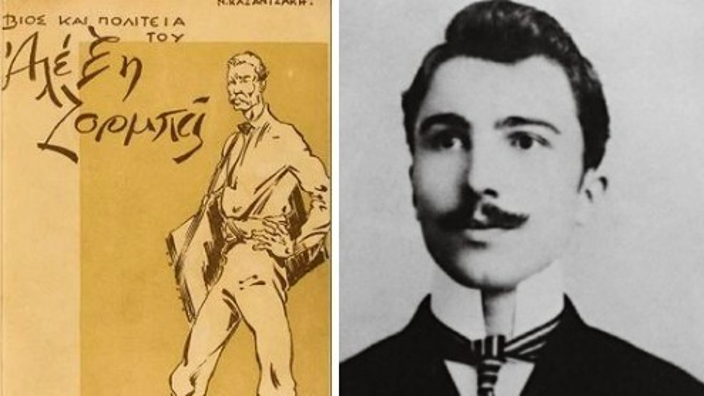
However, Kazantzakis would gain major fame for his novel writing. His most notable work, Zorba the Greek, was published in 1946 and is about a young philosopher’s journey away from his dull life, with the help of the larger than life character, Alexis Zorba.

Kazantzakis’ other notable work included The Last Temptation of Christ (1952) and Freedom and Death (1953).

While working on his famous literature, Kazantzakis was also a minister in the Greek Government in 1945, and worked for UNESCO between 1947-1948.

In 1956, Kazantzakis was awarded the International Peace Award in Vienna, Austria.

On this day in 1957, Kazantzakis passed away in Germany. The Historical Museum of Crete has a section dedicated to Kazantzakis, with his desk and even manuscripts of some of his work on display. There is also the Nikos Kazantzakis Museum, located in his birthplace of Heraklion, Crete.

Kazantzakis is a well-known and well-respected Greek writer and philosopher, and his work remains as some of the best literary and philosophical work ever produced.

Tension grows as Greece, France and Turkey have heated war of words

0

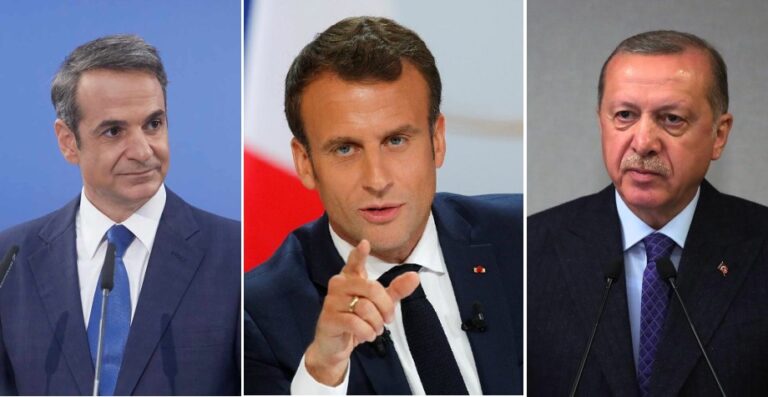
Over the weekend, Turkish President, Recep Tayyip Erdogan, attacked French President, Emmanuel Macron, saying that he needed mental treatment over his attitude towards Muslims and Islam.

The statement was made twice during Erdogan’s televised address in the central Anatolian city of Kayseri.

“What can one say about a head of state who treats millions of members from different faith groups this way: first of all, have mental checks,” Erdogan said in the first instance.

“What’s the problem of the individual called Macron with Islam and with the Muslims?” Erdogan added later. “Macron needs mental treatment.”

In response, France recalled its ambassador in Ankara, marking the first time such a move has been made.

“Such excess and coarseness on the part of Erdogan are unacceptable,” Macron’s office said in a statement on Saturday. “We demand that Erdogan changes the course of his policy because it’s dangerous.”

On Twitter, Macron wrote: “We will not give in, ever. We respect all differences in a spirit of peace. We do not accept hate speech and defend reasonable debate. We will always be on the side of human dignity and universal values.”

READ MORE: France send jet fighters and navy to East Med as Greece welcomes French support.

Greek Prime Minister, Kyriakos Mitsotakis, also joined in on the war of words on Sunday, expressing his solidarity with France’s President via Twitter.

In a post, he wrote that Erdogan’s “hate speech” is “unacceptable.”

“Personal insults against President Macron and hate speech targeting France by the Turkish leadership is unacceptable,” Mitsotakis said.

“It fuels religious hatred and undermines peaceful coexistence. Full support and solidarity to Emmanuel Macron and the French people, still mourning a heinous crime.”

France and Turkey are at loggerheads over a range of issues, including maritime rights in the eastern Mediterranean, Libya, Syria and the escalating conflict between Armenia and Azerbaijan over Nagorno-Karabakh.

Sophie Cotsis MP welcomes installation of traffic calming and pedestrian safety devices

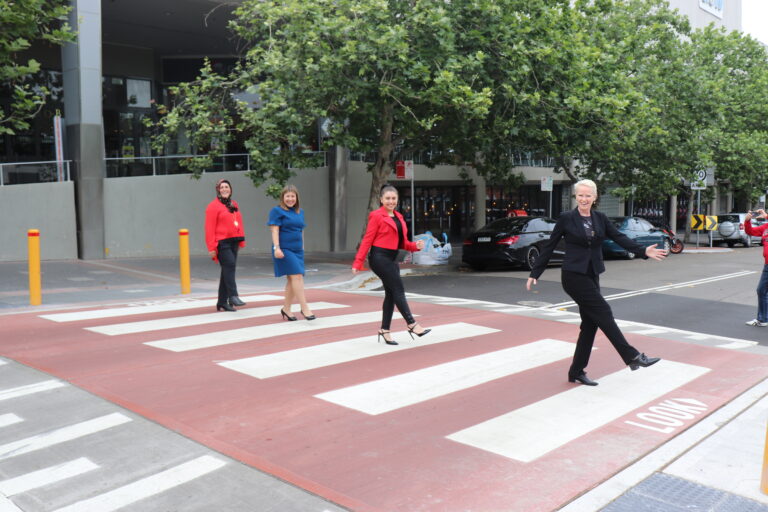
Sophie Cotsis MP, Member for Canterbury, welcomes the completion of various traffic calming and safety devices across her electorate of Canterbury.

Recent works that have been completed include installation of roundabouts, zebra crossings, speed humps, median island crossings, and resurfacing streets and lanes.

“The community has continued to raise concerns with my office and local councillors regarding speeding motorists and pedestrian safety. There are still many issues and concerns that need to be addressed,” said Ms Cotsis.

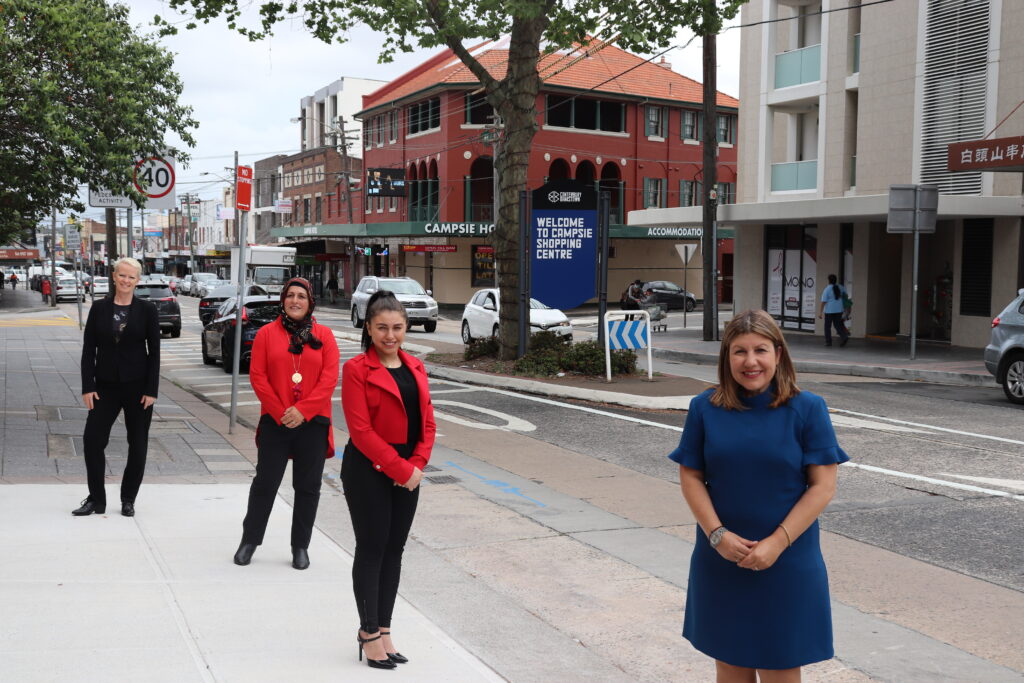
Sophie Cotsis MP (front right), Member for Canterbury, welcomes the completion of various traffic calming and safety devices across her electorate.

“Issues such as greater plantation of native flora and beautification of our streets are important for our community.

“Thank you to everyone that has raised concerns about local traffic and pedestrian safety – particularly the parents who had filled out the School Safety Survey from my office.”

The School Safety Survey was a NSW Labor initiative which allowed parents from schools across Canterbury to communicate any issues they saw while their children walked, biked or drove with them to and from school.

A report, based on the survey, was prepared and sent to Council and the NSW Government with a range of recommendations to ensure greater safety when children are travelling to and from school.

“I encourage everyone to continue to have your say and relay your issues and concerns to Council by contacting your local councillor” said Ms Cotsis.

Residents are able to find details about their local councillor by visiting: https://www.cbcity.nsw.gov.au/council/mayor-councillors or contacting council via phone on 02 9707 9000.