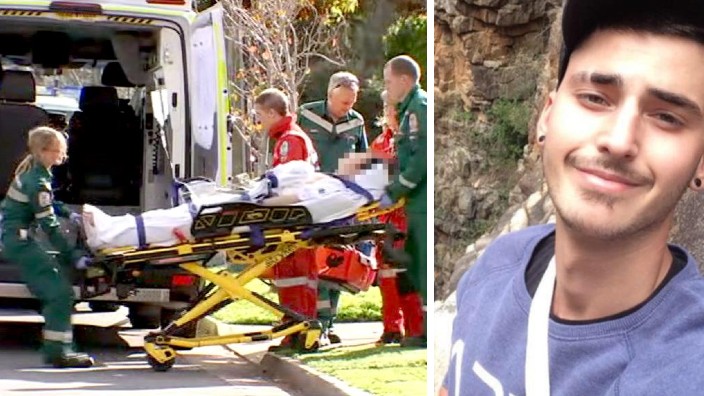
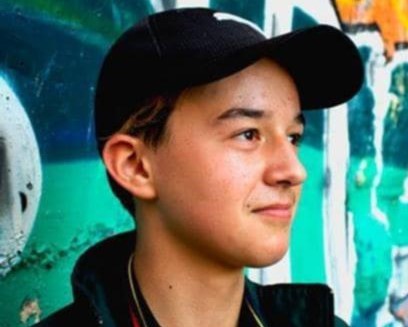
An intoxicated young man who shot his brother through the front window of the family home has pleaded guilty to criminal negligence.
Dimitri Gatis, 22, has spent 18 months behind bars after shooting his younger brother Alex, leaving the 16-year-old with serious chest and abdomen injuries.
The plea brings to an end more than a year of legal negotiations, which saw a charge of attempted murder dropped in the magistrates court.
Alex was left with serious chest and abdomen injuries.
On Friday, David Edwardson QC, for Gatis, guided his client through the process of pleading not guilty to aggravated recklessly causing serious harm, but entering a guilty plea to causing serious harm by criminal negligence.
The guilty plea was accepted by the prosecution and Gatis will now face sentencing submissions in the District Court.
The legal manoeuvre reduces the maximum penalty Gatis is facing from 19 years in prison to four years.
The use of the Greek word, ‘pandemic,’ shot up by more than 57,000% last year, according to Oxford English Dictionary lexicographers. This news should be welcomed by renowned Greek Professor Georgios Babiniotis, but it’s not.
Mr Babiniotis is worried the sheer scale of the pandemic and terminology which has emerged as a result, has produced fertile ground for verbal incursions on the Greek language. Something he thought he would never see.
“We have been deluged by new terms and definitions in a very short space of time,” Mr Babiniotis told the Observer.
“Far too many of them are entering spoken and written Greek. On the television you hear phrases such as ‘rapid tests are being conducted via drive-through,’ and almost all the words are English. It’s as if suddenly I’m hearing Creole.”
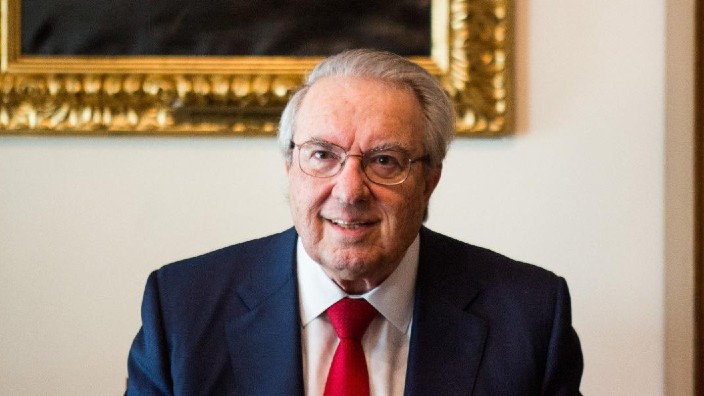
Greek Professor Georgios Babiniotis has nine dictionaries to his name.
Almost no tongue has been spoken as continuously as Greek, used without respite in roughly the same geographical region for 40 centuries.
But Mr Babiniotis, who has nine dictionaries to his name and is a former education minister, worries that the resilience that has marked Greek’s long history is at risk of being eroded by an onslaught of English terms that now dominate everyday life.
In the space of a year, he says, Greeks have had to get their heads, and tongues, around words such as “lockdown,” “delivery,” “click away,” “click-and-collect” and “curfew.”
“There has to be some moderation,” Mr Babiniotis told the British media outlet, lamenting that even government announcements are now replete with the terminology.
“We have a very rich language. As the saying goes, ‘the Greeks must have a word for it.’ Lockdown, for example, could be perfectly easily translated.”
This is not the first time that a war of words has erupted over Greek. Arguments over the language, between proponents of change and traditionalists advocating a return to its Attic purity as a means of reviving the golden age, go back to the first century BC.
“For Greeks, language has always been a sensitive issue,” Mr Babiniotis says. “I know what I say troubles some, but it is the duty of a linguist to speak out.”
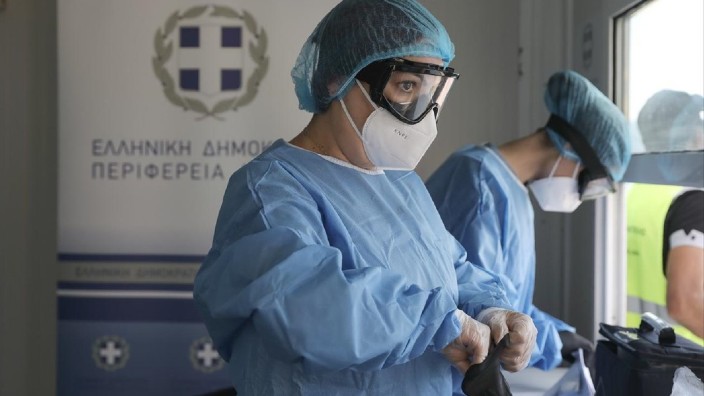
Greek authorities have confirmed the first detection of the South African variant of the new coronavirus in the country, prompting top health officials to fly to the area where it was found for meetings on Sunday.
The minister leading the government response to the pandemic and the head of the country’s public health body met with doctors and the local bishop in the northern city of Thessaloniki.
The variant is believed to be more contagious than the original type and it was detected in a 36-year-old deacon in a suburb of the city.
“We will be doing screenings to isolate the persons who have been in contact with the patient,” said Panayiotis Arkoumaneas, head of the National Public Health Organisation.
There have also been 173 cases of people affected with a variant first detected in the UK, authorities said Sunday.
Authorities announced 484 new cases of coronavirus on Saturday, as well as 17 deaths. The total number of confirmed cases since the start of the pandemic is 156,957, with 5,796 fatalities.
Experts warn there could be a resurgence in February and March and say the situation will remain volatile until a large number of vulnerable people are vaccinated.
“The virus is playing the drums and we are dancing to its beat,” said Nikos Sipsas, member of the state advisory committee on the pandemic.
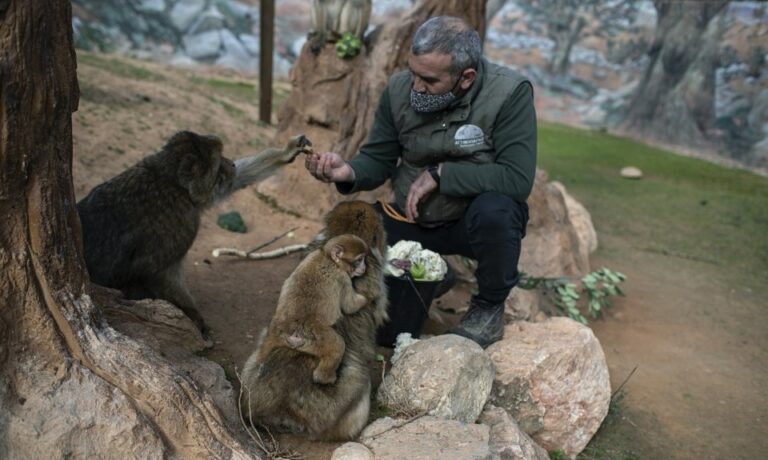
It’s feeding time at Greece’s only zoo, and a capuchin monkey grabs as many mandarins as it can — even tucking one into his long, supple tail. It might be wise to stock up.
After being closed for almost three months due to COVID-19, the zoo on the fringes of Athens could be on the road to extinction: With no paying visitors or — unlike other European zoos — enough government aid to cover its very particular needs, the Attica Zoological Park faces huge bills to keep 2,000 animals well-fed and healthy.
“As things are … we still can go on for at least one month,” zoo founder and CEO Jean Jacques Lesueur said. “After that, we don’t know.”
Unlike some businesses forced to temporarily close due to virus-control restrictions, the zoo continues to have sizeable operating expenses. Between food, salaries, utilities, medical care and other expenses, the cost of caring for the animals currently exceeds 200,000 euros ($243,000) per month.
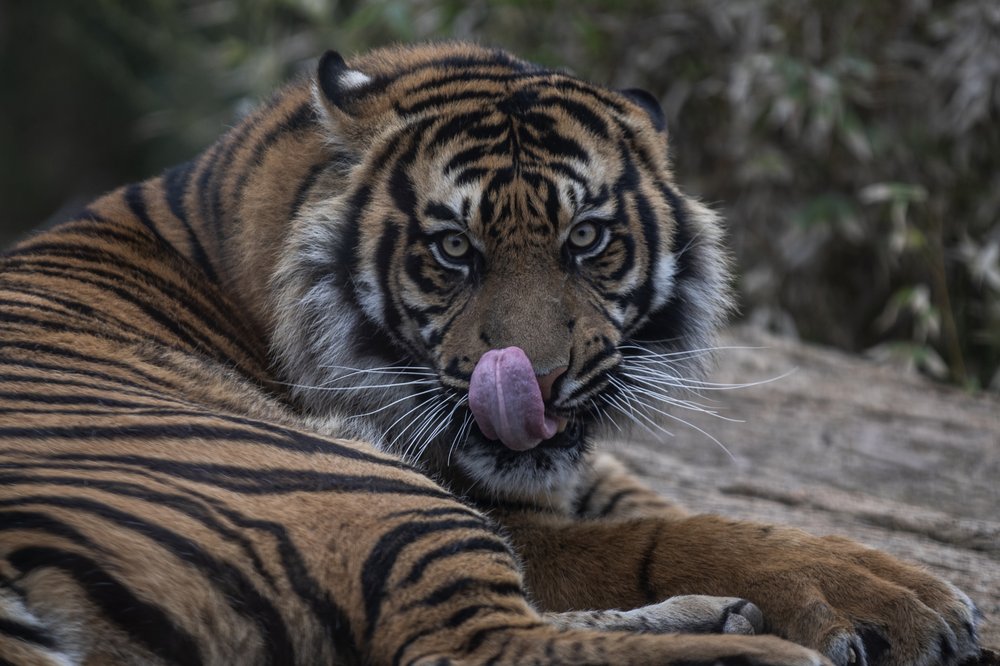
A Sumatran tiger of licks it’s lips as it lays down in the Attica Zoological Park in Spata, near Athens, on Tuesday Jan. 26, 2021. (AP Photo/Petros Giannakouris)
“That’s the difference between us and other companies: When they close they close. We close, but we don’t close,” Lesueur told The Associated Press.
Founded in 2000 and located in the town of Spata, the zoo occupies 20 hectares (50 acres) and is home to 290 species, from elephants to prairie dogs. It’s involved in education, conservation and breeding, and belongs to the European Association of Zoos and Aquaria, which has about 400 members.
Having to close again on Nov. 7 after Greece’s two-month spring lockdown came at a bad time for Attica Zoological Park. The zoo normally operates year-round but does a lot of its business during cooler weather “because in Greece people go to the beaches, to the islands, they don’t visit zoos” in the summer, the French-born Lesueur said.
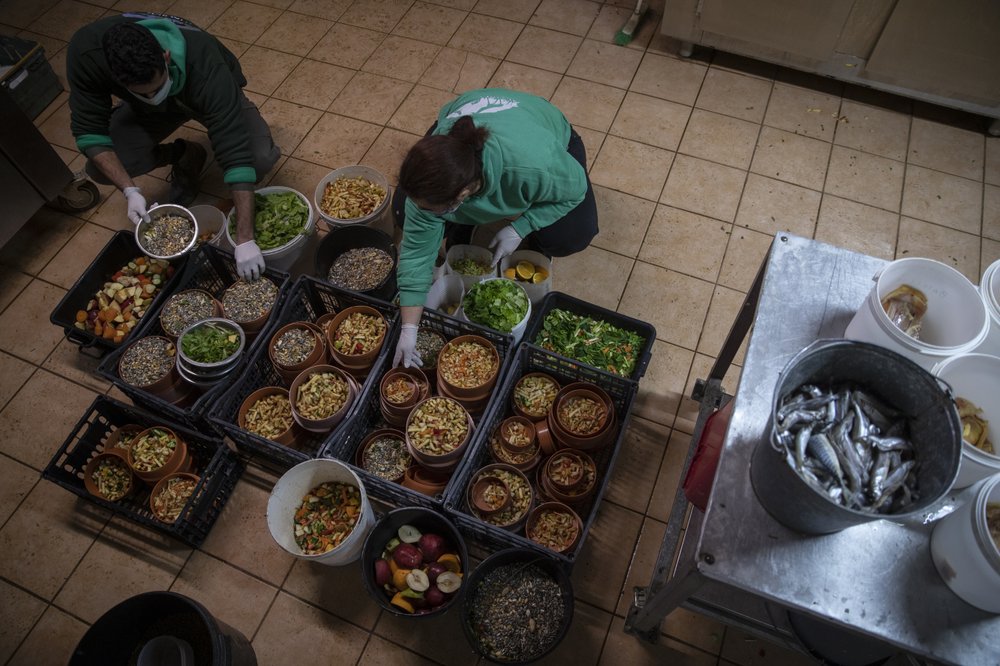
Zoo keepers Alexis left and Christina prepare food for the animals in the Attica Zoological Park in Spata, near Athens, on Tuesday, Jan. 26, 2021. (AP Photo/Petros Giannakouris)
Visitors account for more than 99% of its revenue, from tickets, food and beverages and gift shop sales. So every month’s revenue counts, and the loss of December, usually busy due to the Christmas holidays, was particularly heavy.
So far, suppliers have shown understanding and are accepting credit. Two-thirds of the zoo’s staff is on state-supported furlough, and an expected installment of state aid will take care of this month’s pay for the rest, the CEO said.
The zoo also has sold 5,000 advance tickets at reduced prices for when the lockdown ends, and Lesueur says that helped pay December’s salaries.
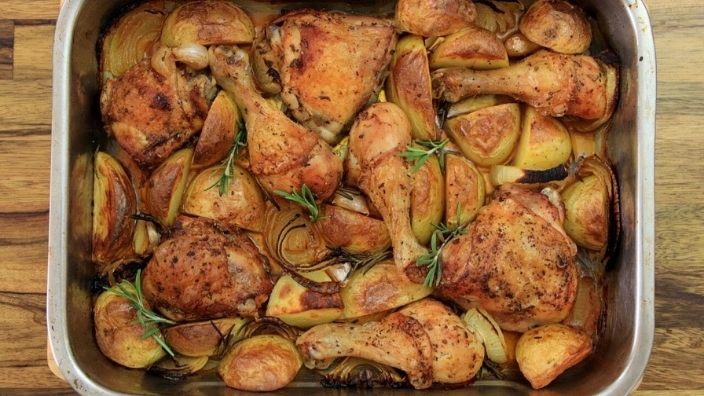
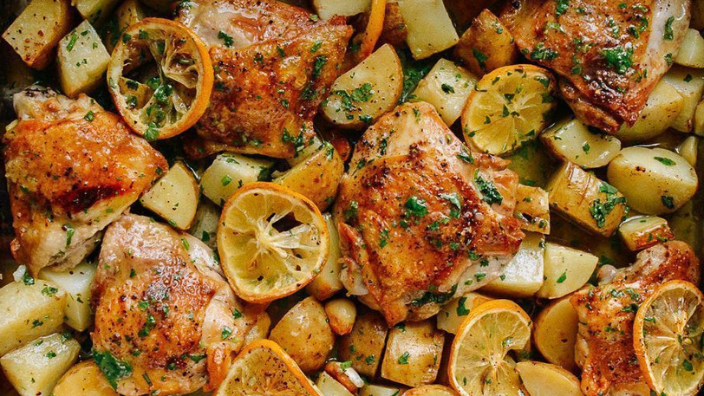
Who else loves a traditional Greek lemon chicken with potatoes? This recipe has everything you need to know to make sure your Greek dish is roasted to perfection, just a little bit zingy and crunchy.
Let’s get straight into it!
Greek Lemon Chicken and Potatoes Recipe:
Serves: 4
Time: 10 minutes to prepare and 50 minutes to cook.
Ingredients:
4 pounds skin-on, bone-in chicken thighs.
1 tablespoon kosher salt.
1 tablespoon dried oregano.
1 teaspoon freshly ground black pepper.
1 teaspoon dried rosemary.
1 pinch cayenne pepper.
½ cup fresh lemon juice.
½ cup olive oil.
6 cloves garlic, minced.
3 russet potatoes, peeled and quartered.
⅔ cup chicken broth, plus splash to deglaze pan.
chopped fresh oregano for garnish.
Directions:
1. Preheat oven to 425 degrees F (220 degrees C). Lightly oil a large roasting pan.
2. Place chicken pieces in large bowl. Season with salt, oregano, pepper, rosemary, and cayenne pepper. Add fresh lemon juice, olive oil, and garlic. Place potatoes in bowl with the chicken; stir together until chicken and potatoes are evenly coated with marinade.
3. Transfer chicken pieces, skin side up, to prepared roasting pan, reserving marinade. Distribute potato pieces among chicken thighs. Drizzle with 2/3 cup chicken broth. Spoon remainder of marinade over chicken and potatoes.
4. Place in preheated oven. Bake in the preheated oven for 20 minutes. Toss chicken and potatoes, keeping chicken skin side up; continue baking until chicken is browned and cooked through, about 25 minutes more. An instant-read thermometer inserted near the bone should read 165 degrees F (74 degrees C). Transfer chicken to serving platter and keep warm.
5. Set oven to broil or highest heat setting. Toss potatoes once again in pan juices. Place pan under broiler and broil until potatoes are caramelized, about 3 minutes. Transfer potatoes to serving platter with chicken.
6. Place roasting pan on stove over medium heat. Add a splash of broth and stir up browned bits from the bottom of the pan. Strain; spoon juices over chicken and potatoes. Top with chopped oregano.
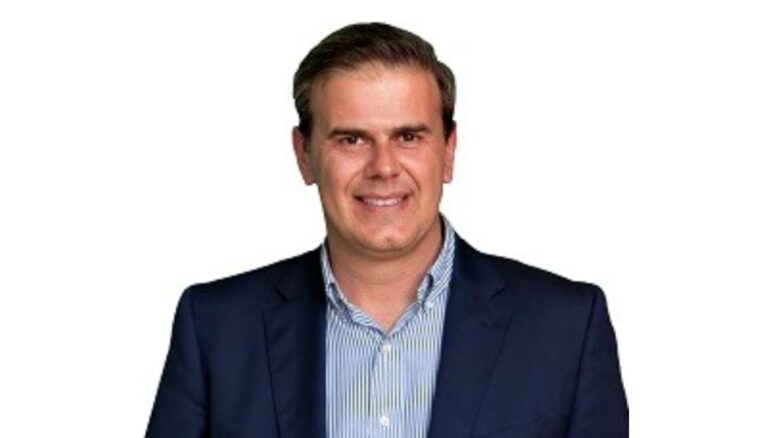
A strong imprint of optimism has been given by Dimitris Fragakis, the Secretary General of the Greek National Tourism Organisation (GNTO or EOT).
Mr Fragakis, who since taking office has been on a constant creative alert, reveals that a trip to Australia “will be a priority for him” when pandemic conditions permit.
But he also revealed a fact which, if confirmed, will satisfy a request of the Greek community in Australia. This is the resumption of an EOT office in the country.
“It is now my priority to visit Australia, as soon as circumstances permit, in order to get in touch with relevant bodies and consider, among other things, the possibility of setting up an EOT office in the country. The conditions have now matured and I believe we will do so,” he stated.
“For the Greek government as a whole, homogeneity is a priority in order to maintain the ties that bind us. That is why it is in the EOT’s intention to cooperate much more closely with Australia, as all researches shows that it has great potential and advantages as a market.
“Australia is therefore an important market for Greece and is high on this government’s priority list. You would have seen it as early as in the campaign we had prepared for 2020, if it hadn’t been for the sudden change in our planning due to the pandemic.
“In October, at the invitation of the director of the Australian Chamber of Commerce and Industry, I had the pleasure of discussing important issues with many members of the active Melbourne Greek Community and marketing people.
“I have received specific proposals and offers, not only for the opening of an EOT office in Melbourne, but for wider synergies, in the context of strengthening the Greek tourism market.”
Of course, with the pandemic, like quicksand sucking up every plan, everything seems to be spinning in a vortex of uncertainty. Nevertheless, Greece, in 2020, had a weak rate for the tourist season and the question to the Secretary General of the EOT concerns its valuation.
“It is a fact that the world experienced unprecedented things in 2020. Greek tourism has suffered a severe blow, as have almost all economic activities in our country.
“In 2020 we lost a lot, in revenue and in arrivals, while thousands of Greek businesses and tourism workers suffered significant economic damage in the past season. We all think we want to put 2020 behind us and make a fresh start in 2021.
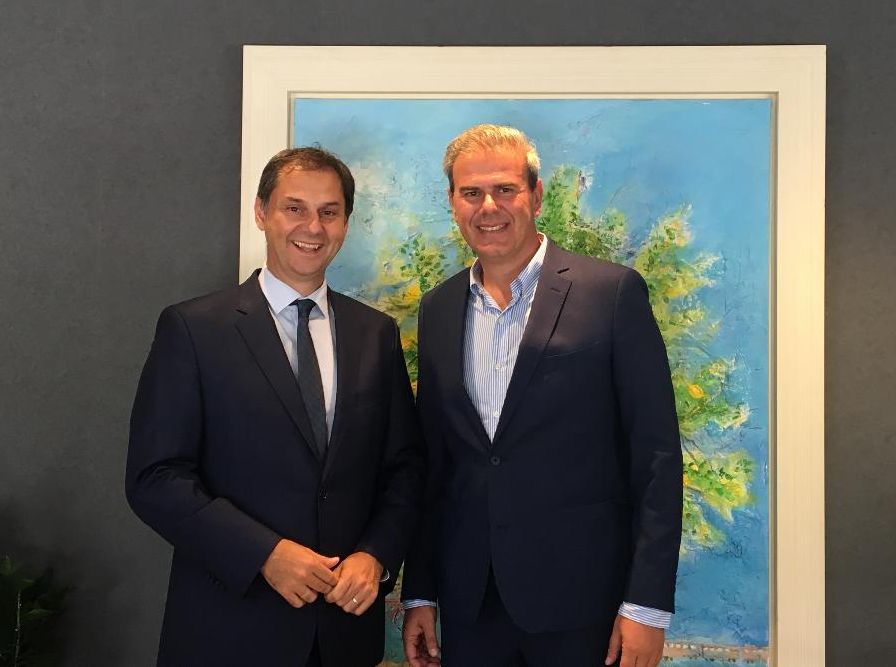
Greek Tourism Minister Harry Theoharis with the new secretary general of the GNTO, Dimitris Fragakis.
“On the positive side, however, is the credibility shown by our country with the safe opening up of tourism, the professionalism shown by the whole tourist world and the successful adaptation of all of the new conditions.
“These, together with some revenues of no more than 4 billion EUR for 2020, are what we hold as ‘positives’ and as a legacy for 2021. In this respect, and mutatis mutandis, we have achieved a great deal in a short time and adverse conditions.
The income forecast for the coming season in Greece are characterised by uncertainty, in a substantially transitional year.
“The pandemic is so volatile and affects societies and economies so deeply that it is difficult to make safe assessments of the future.
“But just as we have not been idle in 2020, we are now on our toes and have already started preparing for 2021. In the coming season we have more weapons than last year in terms of defending tourism amid the pandemic.
“Vaccines, rapid tests and health protocols in accommodation, transport and focus that worked well last year are important factorsthat will have a significant impact on the coming year.
At the end of this interesting debate, Mr Fragakis was asked to send a message to the community, whose members missed their annual visit to the motherland.
“First of all, let me tell them that we too have missed them very much. And Greece awaits them with great joy and impatience, equivalent to theirs. We all have a very critical quarter ahead of us, where we will judge the “liberation” of our world from an invisible enemy. So stay safe and be a little patient, like all of us! And soon we will be able to travel and meet again in Greece.”
Oh how we wish we were sitting on a beach in the Greek islands. Cocktail in one hand, magazine or newspaper in the other. Life couldn’t get any more perfect.
Then we wake up and realise we’re stuck at home making home-made cocktails and enjoying a backyard slip ‘n’ slide.
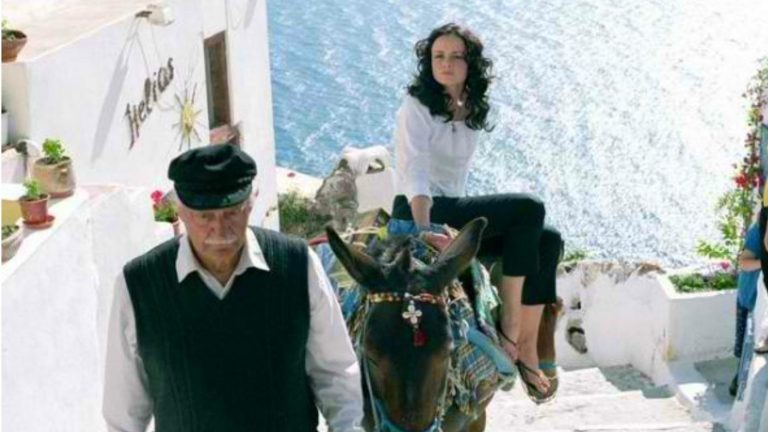
But no matter! We can still relive the Greek summer holiday experience through these movies listed below:
It seems to me there are more sinister reasons why most Greek associations do not promote the Greek language, even though they believe they do.
One reason is money. A group of people from a village form an association and have a number of events, usually they would have dances, and collect money to buy a property and rent it out to pay itself off. Those who made a lot of money bought their own buildings and continued to enjoy their “cultural” activities, usually to do with the cooking of a lamb, drinking retsina and Greek dancing.
Many sent their primary aged children to learn some Greek and thought that it is enough. But there is much more to Greek culture than this.
Whether you blame it on lack of education or their struggle to integrate and support each other in the early days of migration, that is not the case now.
Now their associations are holding onto wealth. Their joint wealth is worth many millions and no matter what their politics they all do the same thing, hoard the wealth and then lament the fact that the language is dying out in Australia.
Luckily for us and due to the Greek crisis in recent years, we got an influx of new migrants which has helped the level of Greek once more to restore some of what we have lost.
However, it is funding that is needed to help the language survive in the long term. Funding not only to cover teaching hours but to create new courses, to market the language to all students not just those of Greek background.
Next week more of what our associations should be doing.
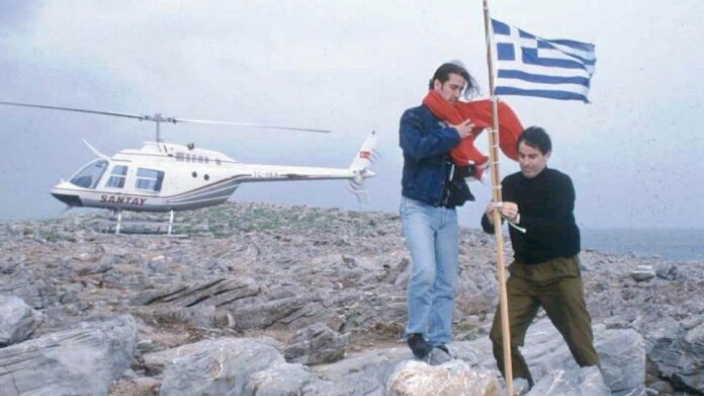
The small Greek island of Imia was almost the catalyst of war between Greece and Turkey in 1996, and remains a sensitive topic for leaders of both nations.
An issue first arose on Christmas Day in 1995, when a Turkish cargo ship “Figen Akat” hit shallow waters near Eastern Imia and emitted a distress signal. The Greek Coast Guard came to the ship only to be turned away by the captain, who claimed he was in a Turkish area.
The two Foreign Affairs Ministries communicated and worked together to rescue the ship. Thought to have ended there, only three days later a Turkish fighter plane crashed in Greek territorial waters, in the area of Lesvos, after engaging with Greek fighters. With Greek help, the Turkish pilot was rescued.
However, The Turkish Ministry of Foreign Affairs took advantage of the situation and tried to claim the Imia islets as being registered in the Mugla cadastre of Boudrum and belonging to Turkey. On January 9, 1996, The Greek Ministry of Foreign Affairs responded, rejecting the announcement.
One week later, Greece sends out vigilance measures in the area of Imia to protect the isles.
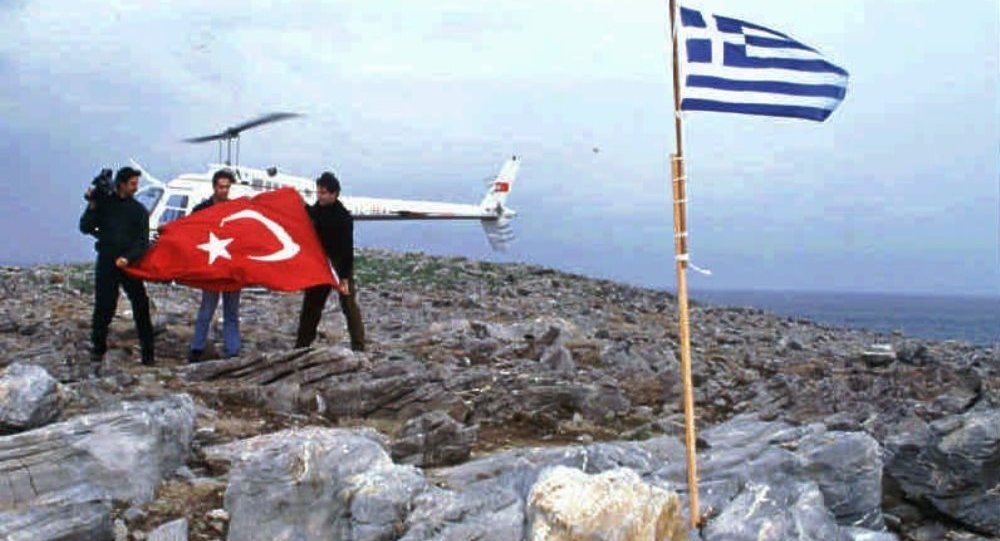
On January 26, 1996, the mayor of Kalymnos, Dimitris Diakomichalis, raised the Greek flag on one of the two islands. Yet, it only took one day for two ‘Hurriyet’ journalists to fly to Megali Imia by helicopter. They raised their own Turkish flag, broadcasted live by the Hurriyet TV channel.
Turkish reporters helicoptered in to plant flag on Imia islet, January 1996. (file photo)
Another day passes, another flag raised. This time, a patrol boat of the Navy “Antonios” lowers the Turkish flag and raises the Greek one.
Greece’s new Prime Minister Costas Simitis later sends a message to Turkey that Greece will respond immediately and vigorously to any challenge. Turkish Prime Minister Tansu Ciller, meanwhile, called for negotiations on the status of the Aegean islets. This was done, however, while Turkish warships enter Greek territorial waters and approach Imia.
On January 30, US President Bill Clinton weighed in on the conflict, shocked at the escalation.
“I thought my aides were joking when they said Turkey and Greece would engage in war over rocks on which none but sheep live. I held phone calls with the leaders of both countries, and convinced them to not go to war over the rocks that inhabited mostly 20 sheep,” Bill Clinton said about the crisis.
The Greek government said they are ready to withdraw the procession, but not the Greek flag. The Turkish Foreign Minister responded saying there are other Aegean islands with unclear legal status and does not accept the Greek proposal (departure of the procession, not the flag).
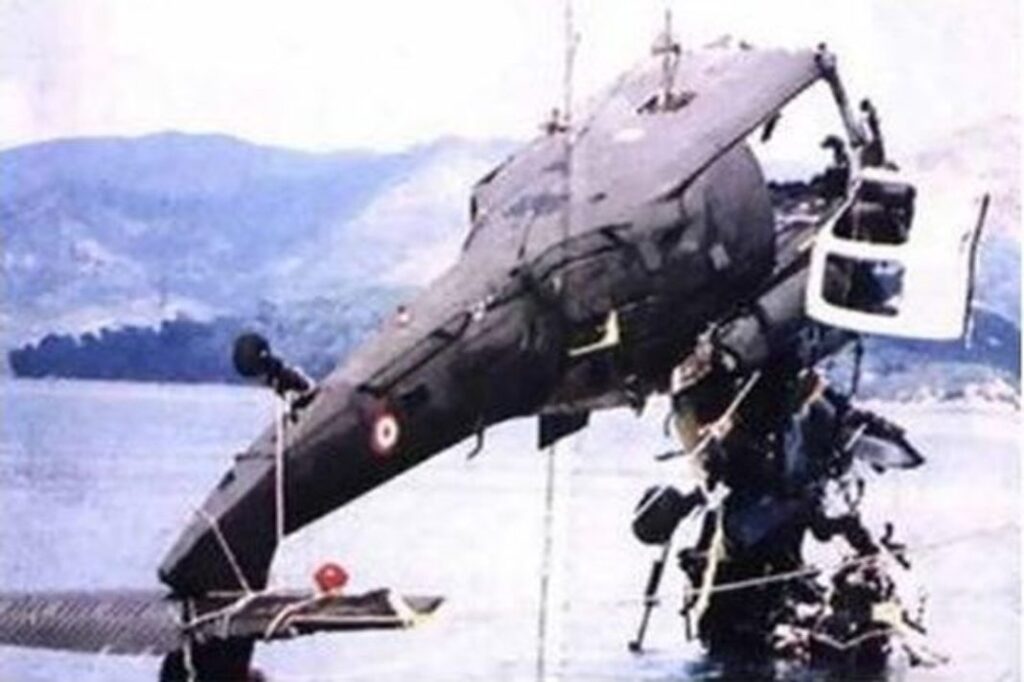
Naval helicopter which crashed during the 1996 Imia crisis (file photo).
On January 31, Greek forces feared the worst as information arrived claiming Turkish commandos are landing in Imia. Helicopter of the Greek Navy confirmed a few hours later that around 10 Turkish commandos stood on the island with their flag. That same helicopter later took damage and disappeared, killing three Greek crew members.
The US Government soon intervened, arguing for a diplomatic solution. By noon on 31 January, 1996, the ships, soldiers and flags had been withdrawn from Imia.
The crisis had no effect on the status of the islands, yet it’s sovereignty is still in dispute by both nations. Currently, the islands are regarded as indisputably Greek by Greece but as grey zones of undetermined sovereignty by Turkey.
Researchers from The University of Western Australia have created an immersive virtual reality experience to improve participants’ understanding of the effects of dementia on people who live with the condition.
The program, Meaningful Spaces, is a novel, virtual reality training resource that allows healthcare workers to walk in the shoes of a person living with dementia and experience some of the challenges they face in their everyday lives.
While the virtual reality scenarios are based in residential care, the principles apply across all care settings.
The team from UWA’s WA Centre for Health and Ageing developed the program through the Dementia Training Australia consortium, an organisation funded by the federal government to provide training for people who care for those living with dementia.
Next month, the team will be facilitating the first statewide rollout of the resource in Western Australia, running interactive workshops in key metropolitan and regional areas.
The workshop has been developed for all healthcare professionals involved in providing care for people living with dementia, including nurses, medical practitioners and allied health workers.
During the workshop, participants will experience how the principles of environmental design and medication management can support people experiencing dementia symptoms, such as changed behaviour and psychological symptoms, enabling them to provide better care.
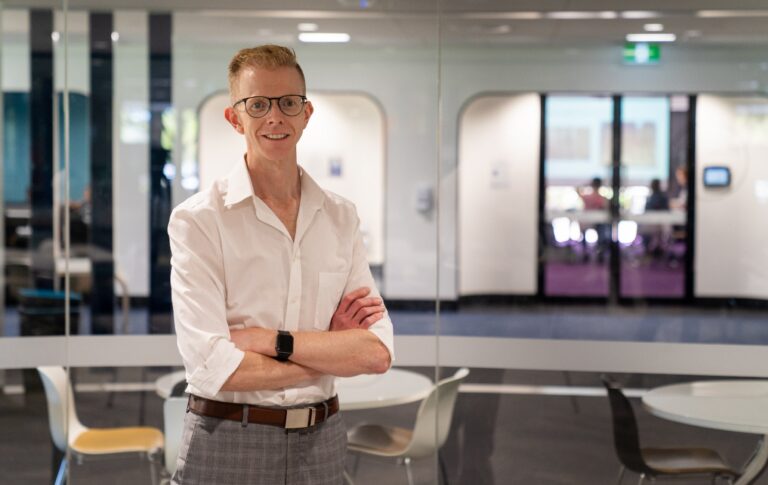
Dr Andrew Stafford from UWA’s Dementia Training Australia team said the virtual reality program was designed to provide healthcare workers a new level of understanding of the challenges faced by people living with dementia.
“We think that this new resource has the potential to address some of the key issues around providing high quality dementia care,” Dr Stafford said.
“The current Royal Commission into Aged Care Quality and Safety has highlighted a number of areas where engaging, high quality training experiences can improve the lives of people living with dementia,” Dr Stafford said.
“The Meaningful Spaces experience is profoundly emotive, and participants are more engaged in these workshops than with traditional classroom- type training events. We hope that the dementia care workforce in WA makes the most of the opportunity to experience our workshops next month.’
Ellie Newman the UWA Director of Dementia Training Australia said the workshops empowered participants to rationalise the use of medication in dementia care, and create supportive, more home-like environments.
“Change starts from within and this resource provides participants with the opportunity to experience, first hand, the interaction of medications and the environment for someone living with dementia,” Ms Newman said.
“It will make a difference.”
Workshops will be conducted in Joondalup, Geraldton, Melville and Albany throughout February and can be booked here. Private sessions are available for larger groups.