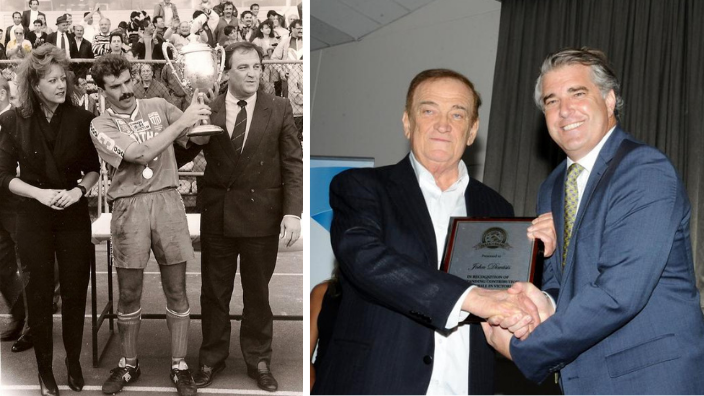
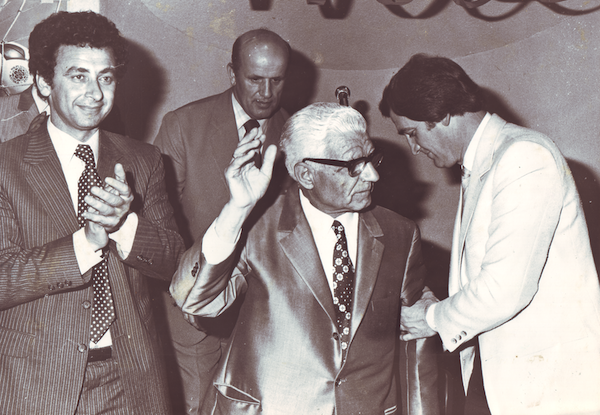
Tributes have flowed after the death of Football Victoria Hall of Fame member and Heidelburg United FC legend, John Dimtsis, on Tuesday evening after a long battle with illness.
“A person who has contributed so much for the game in the country,” Heidelburg United wrote on Twitter.
The Board of Directors and staff at Football Australia and Football Victoria also expressed their condolences to Dimtsis’ family on his passing.
“A well respected and much loved member of our community for such an extended tenure and deep passion for the game and its people, his passing will be felt deeply by so many in the football community across Australia.”
Dimtsis was born in Greece on 22 June, 1940 and came to Australia at the age of nine. After attending Northcote High School he joined the Commonwealth Bank before moving to the State Bank of Victoria, where he worked intimately with the area’s large Greek community.
This path led him to the Alexander Soccer Club, then playing at John Street. He quickly became an influential administrator, serving as Club Treasurer before gaining the attention of the Victorian Soccer Federation (VSF). He joined the Board of VSF and by 1980 was appointed President.
While retaining his role as President of the VSF, Dimtsis became Treasurer of the Australian Soccer Federation (ASF) and Deputy Chairman under John Constantine. In 1995, Dimtsis served as acting chairman of the ASF.
During his time with ASF, he managed referees, juniors, indoor soccer and women’s football. He played a major role in negotiating the merger between the men’s and women’s organisations and helped facilitate the latter’s entry into Olympic competition.
After five years following his period at the ASF he returned to his beloved roots by re-joining Heidelberg United, completing his spell as president of the club at the conclusion of 2014.
He was made an Honorary Life member of HUFC in 2016 and in 2017, inducted into Football Victoria’s Hall of Fame.
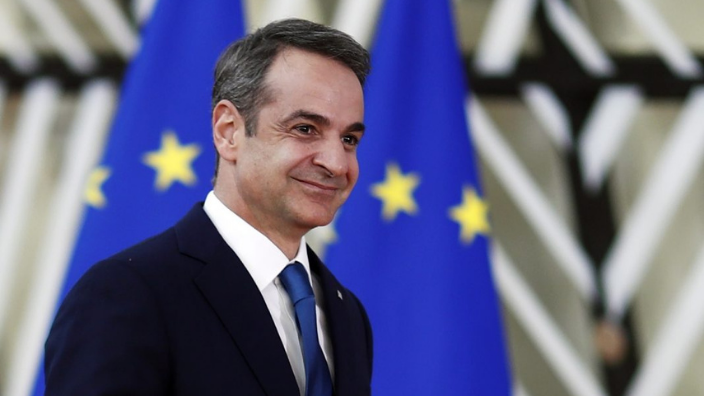
In a letter to European Commission President Ursula von der Leyen, the Greek Prime Minister, Kyriakos Mitsotakis, called for a six-point proposal to counter a jump in energy prices in the European Union as the war in Ukraine continues.
The proposed plan, outlined by Mitsotakis in an opinion piece on news outlet Politico, includes a price cap on title transfer facility (Europe’s regional gas benchmark), and daily price guardrails to limit volatility on the fluctuation band on TTF.
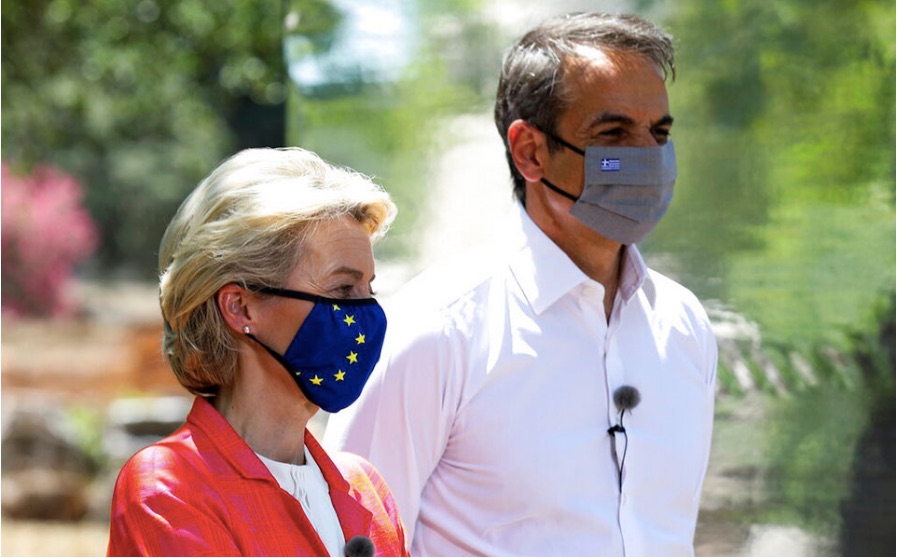
Mitsotakis has written to von der Leyen (left).
It also foresees a fixed-price setting as an emergency reaction to declarations regarding pipeline gas flows from Russia, as well as a profit cap on gross margins.
“Natural gas has become a major factor in the power struggle between Russia and the European Union,” Mitsotakis said.
“This spiral of speculation and politicised price hikes must stop.
Πρέπει άμεσα και αποφασιστικά να αντιμετωπίσουμε την αυξανόμενη οικονομική απειλή που αφορά τη χονδρική αγορά φυσικού αερίου. Είναι απαραίτητη μία στοχευμένη και χρονικά περιορισμένη παρέμβαση στην αγορά, προκειμένου να ομαλοποιήσουμε την κατάσταση. https://t.co/xhCpsHM9Aopic.twitter.com/RqYRzE1y5L
— Prime Minister GR (@PrimeministerGR) March 9, 2022
“Extreme circumstances call for out-of-the-box thinking, and the time has come to address this threat head on. We are seeking to intervene only as a last resort and with a temporary set of measures.”
The European Commission said on Tuesday that it plans to store more natural gas and add more renewable-energy sources as part of a plan to reduce the bloc’s dependence on Russian gas imports by two-thirds by the end of the year.
According to the EU, the plan could end members’ dependency from Russian gas entirely before 2030.
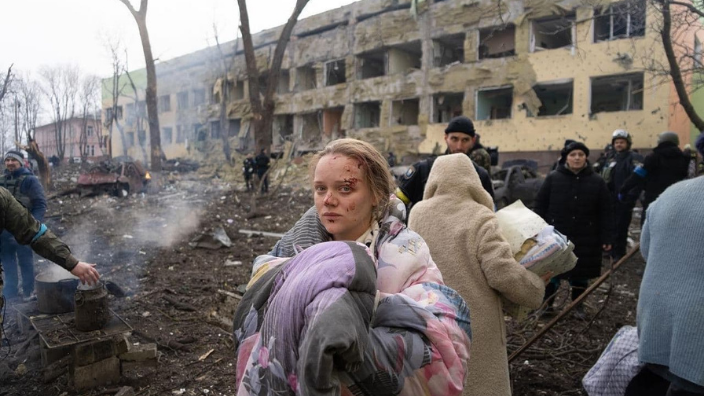
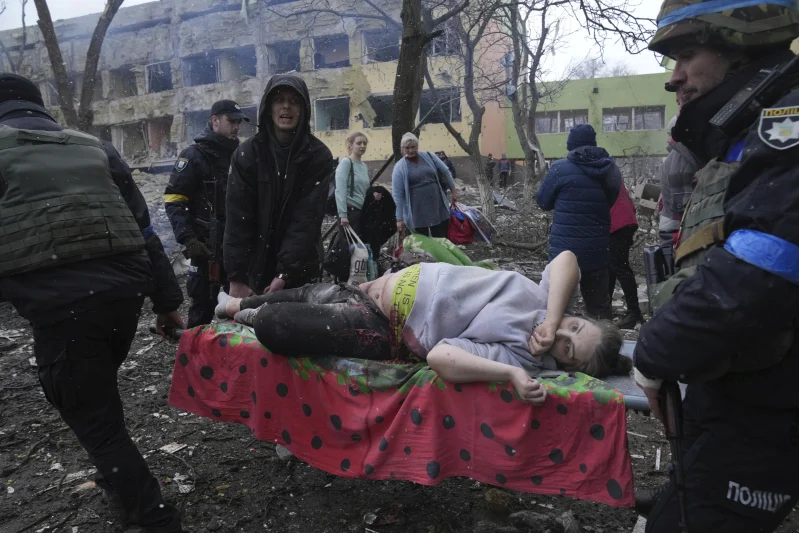
Ukrainian President, Volodymyr Zelenskyy, has accused Russia of carrying out an air strike that severely damaged a maternity hospital in the southern port city of Mariupol.
President Zelensky said the “direct strike” on the hospital had caused “colossal” damage and left women and children trapped under rubble.
Mariupol. Direct strike of Russian troops at the maternity hospital. People, children are under the wreckage. Atrocity! How much longer will the world be an accomplice ignoring terror? Close the sky right now! Stop the killings! You have power but you seem to be losing humanity. pic.twitter.com/FoaNdbKH5k
Regional governor, Pavlo Kyrylenko, later said at least 17 people were wounded in the attack, including women in labour. The reports could not immediately be verified, according to Reuters.
Russia had said it would hold fire to let thousands of civilians flee Mariupol and other besieged cities on Wednesday. But the city council said the hospital had been hit several times by an air strike.
An injured pregnant woman is carried away from the maternity hospital which was damaged by Russian forces on Thursday. Photo: AP / Evgeniy Maloletka.
Greece evacuates people from Ukraine on Greek ships:
This attack comes as renewed efforts to evacuate civilians from besieged and bombarded Ukrainian cities were under way on Wednesday.
A Greek Foreign Ministry spokesperson confirmed that Greece is running five operations to evacuate Greek citizens, their relatives and other nationalities from Odessa, Kiev and Mariupol on Greek-owned ships.
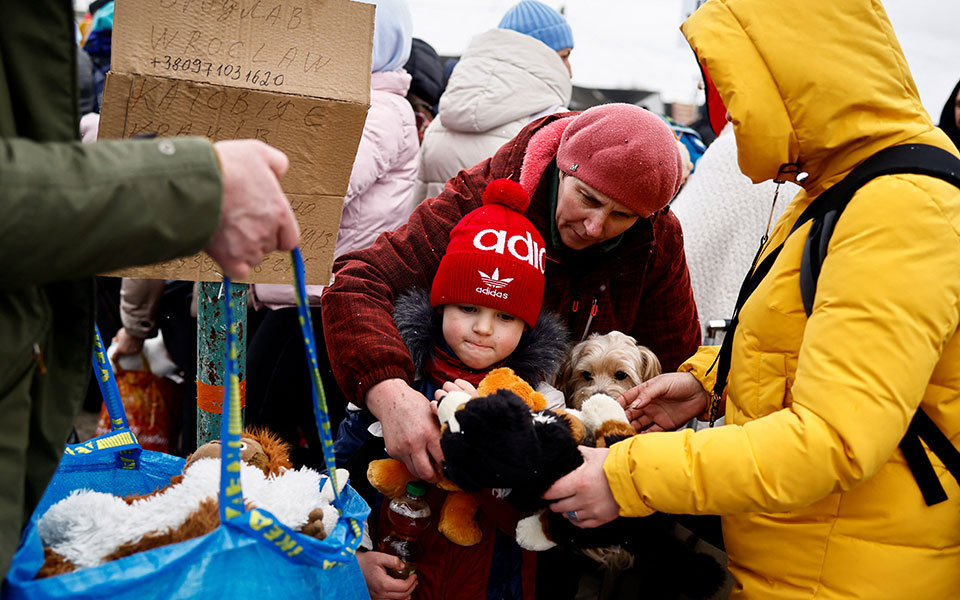
Greece has already received a total of 5,878 Ukrainian refugees.
Speaking at a regular press briefing, Alexandros Papaioannou complemented the remaining Greek diplomatic staff in Ukraine, embassy officials in Bucharest and the ministry in Athens for their work in getting Greeks in Ukraine to safety.
He said officials were working in close coordination with the Organization for Security and Cooperation in Europe (OSCE) and the Red Cross.
According to data released by the Hellenic Police (ELAS) on Wednesday, a total of 5,878 Ukrainian refugees, of whom 1,853 are minors, have already arrived in Greece since the beginning of the Russian invasion of Ukraine.
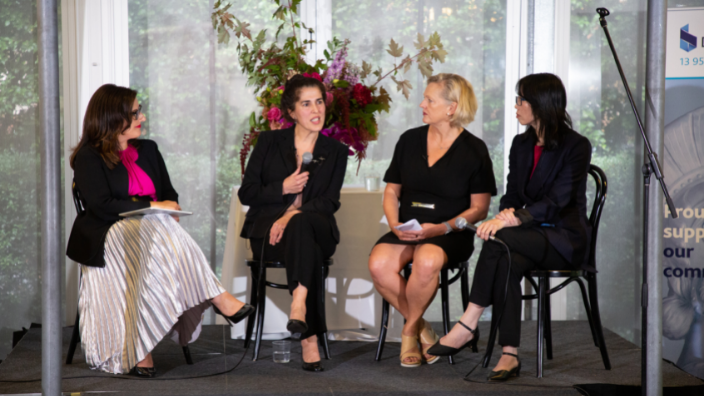
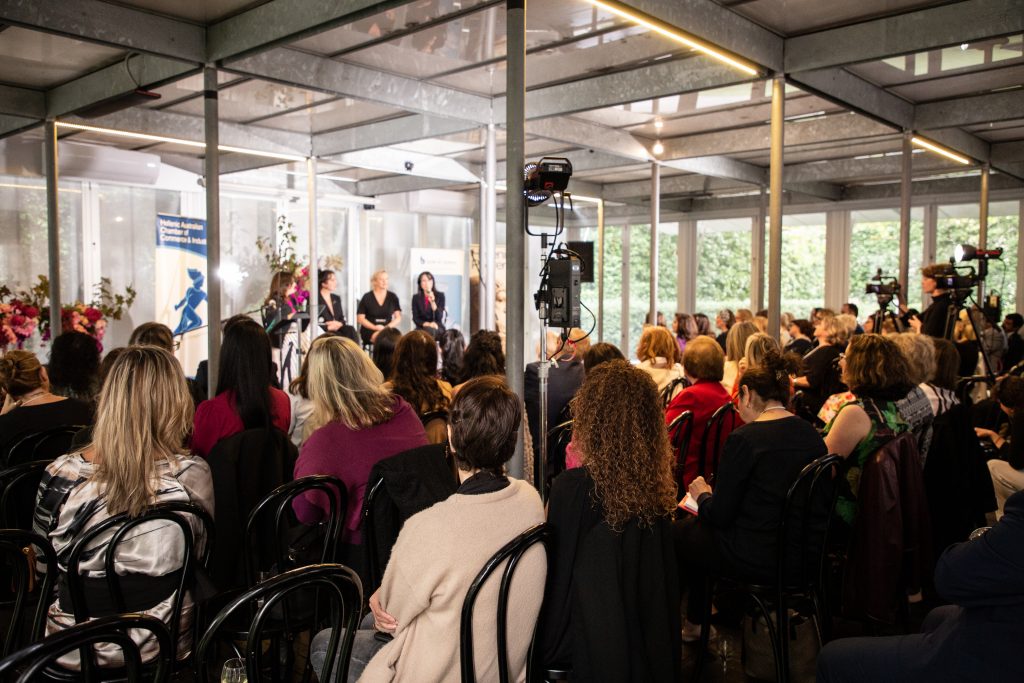
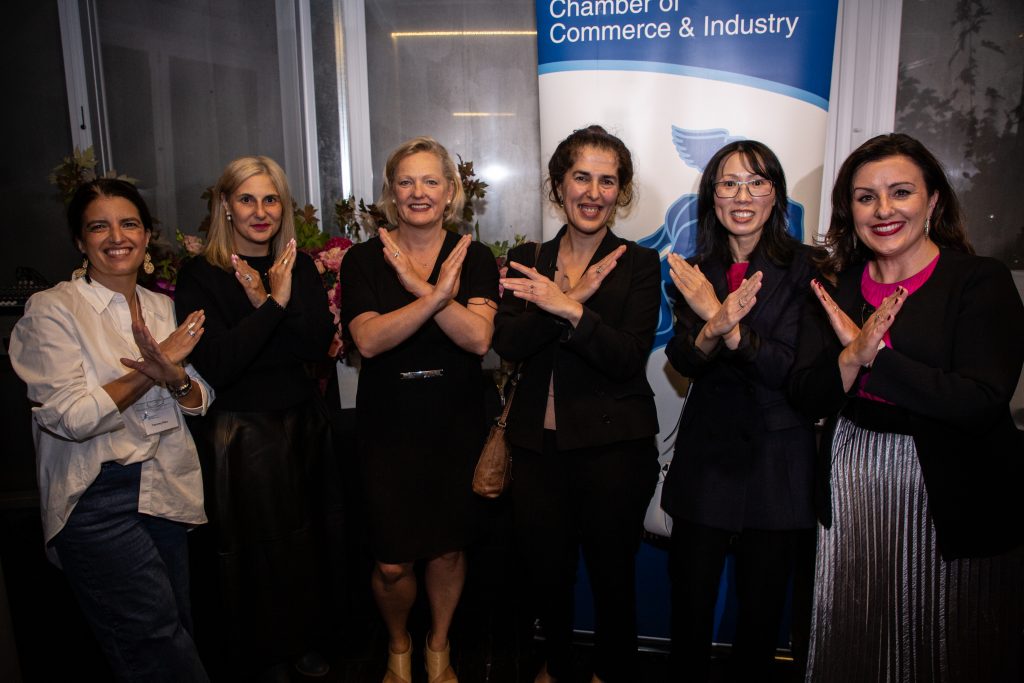
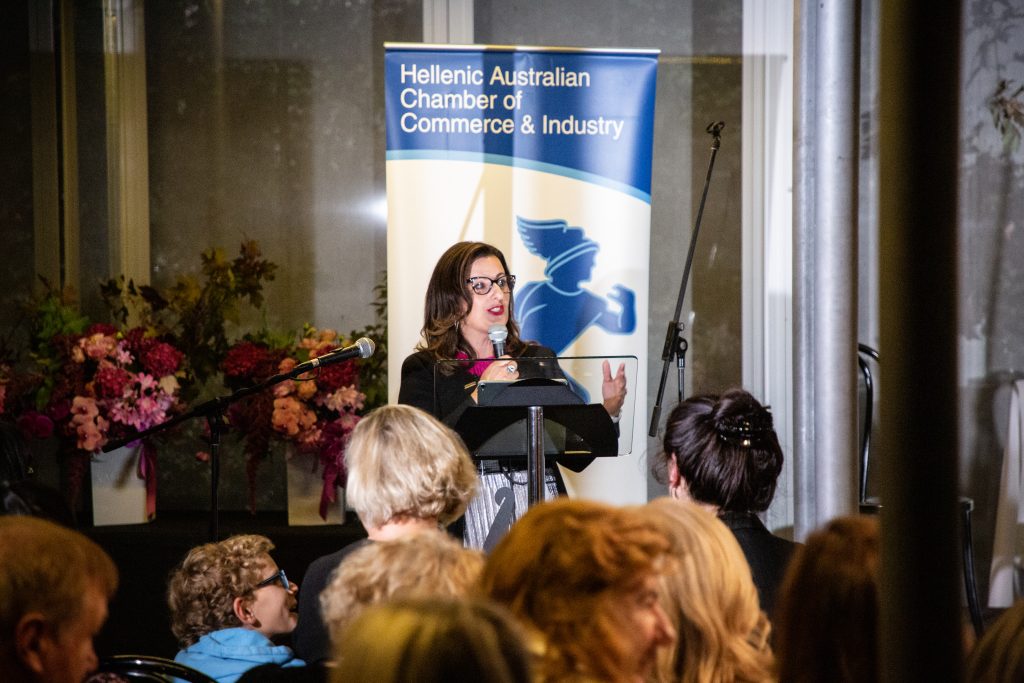
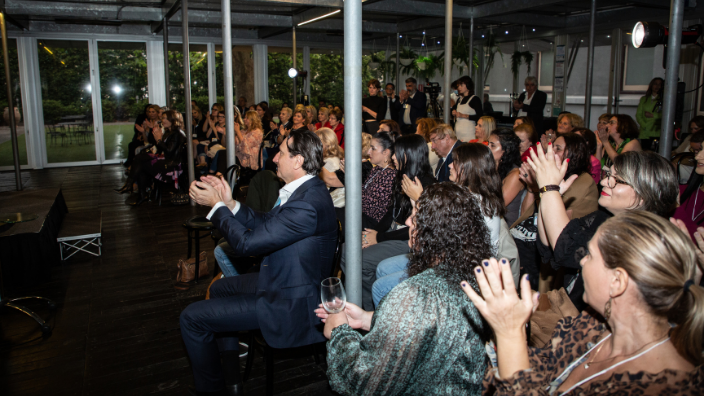
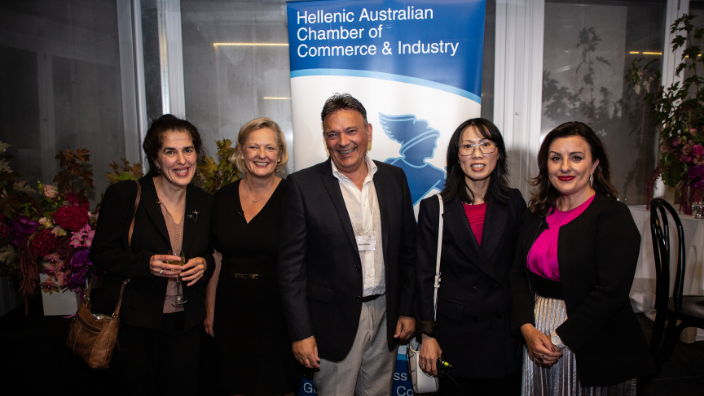
The Hellenic Australian Chamber of Commerce and Industry (HACCI Vic) last night celebrated International Women’s Day with an evening of reflection and empowerment at the Hellenic Museum.
The event featured a panel discussion hosted by Chamber Chair, Fotini Kypraios, and featuring Her Honour Nola Karapanagiotidis, Judge of the County Court of Victoria; Corinne Proske, CEO of Jobsbank; and Vivienne Nguyen, Chair of the Victorian Multicultural Commission.
The conversation centred on the International Women’s Day theme, “Break The Bias,” and how that applies to women from multicultural backgrounds in Australia.
“This year’s theme is an important opportunity to consciously examine our biases, recognise the biases that exist preventing equality and inclusion, and break them down,” Ms Kypraios said.
When it comes to gender pay parity, the COVID-19 pandemic has significantly worsened the lot of women around the world, with the time required to close the global gender pay gap having increased from 99.5 years pre-pandemic to 135.6 years post-pandemic.
“That’s hard to look at. It’s not my lifetime, it’s not my son’s lifetime,” said Corinne Proske, CEO of Jobsbank, an organisation focused on helping businesses introduce greater diversity and inclusion to their workplaces.
The three women also shared their experiences as women from multicultural backgrounds, who have risen to high levels within their industries.
They said women from culturally and linguistically diverse backgrounds had no choice but to navigate extra challenges, whether they’re first, second, or third generation migrants.
“We don’t just carry our own issues and trauma, we carry our whole community’s,” said Ms Nguyen, referring to the often entrenched biases within migrant families.
“I’m too Australian in my Vietnamese family, and I’m too Vietnamese in my Australian context.”
For her part, Her Honour Nola Karapanagiotidis spoke about her upbringing and said: “It wasn’t expected of me that I would do well.”
Despite this, she has had a formidable two-decade career as a barrister, advocating for refugees and women in the criminal justice system.
Her Honour noted that the outpouring of support from the Hellenic Australian community following her appointment to the County Court bench in 2021 had been both humbling to her, and empowering to those around her.
“I believe it’s because they’re seeing someone that reflects them, that represents them,” she said.
When asked what advice they’d offer to the younger women in the audience, the three panellists offered words of confidence and empowerment.
“Be proud of what you have. What you have is what many others don’t,” said Ms Nguyen, referring to the rich and deep cultural and family connections that many migrants experience.
She encouraged younger women to get to know their culture, take the good things from it, and work to change the bad.
Ms Proske echoed the sentiment, sharing that her grandmother had given her mother the ultimate gift of the opportunity to return to work after having children by taking care of them, and her own mother had done the same for her.
“It’s a gift that you can give within families and multicultural families do that well,” Ms Proske said.
Her Honour Ms Karapanagiotidis offered a rallying call to all the women present: “Be confident. Back yourself. Your diversity is an asset, your community mindedness is an asset, your courage is an asset.”
The sold-out event was supported by HACCI’s Chamber Partner Bank of Sydney, Community Partner Hellenic Power, Corporate Partners Greek Media Group, Intralot Australia, Jobsbank, Patras Group, Prisma Legal, Procal Dairies, and The Content Engine, as well as IWD Event Partners BDO Australia, Flowers Vasette, Moka Foods, Salary Masters, Structural Challenge, Prisma Legal and Thematikos.
The Greek Festival of Sydney is returning to Brighton-Le-Sands this year as part of the festival’s 40th anniversary celebrations, The Leader has reported.
The announcement comes after festival organisers met with Bayside Council last week. The desired date for the Festival is October 23 but The Greek Herald will announce final dates once confirmed.
Ethnism is an ideology that promotes the cultivation of national consciousness, without disregarding the history and identity of other nations. Its basic principle is that the national consciousness of a people and a nation is strengthened and consolidated through revolution and resistance to all kinds of national danger and diversion of its sovereignty. The Americans, an amalgam of European races, a Euro-Asian and African ethnic and racial composition, created its American consciousness during its revolution against the British colonists. Ethnism defeated feudalism, it abolished the empires and stood on the path of imperialism and the expansionist struggles of foolish and megalomaniac dictators and all kinds of authoritarian and totalitarian regimes everywhere. This ideology of Ethnism dominated Ukraine with the Putin invasion a few days ago.
President Putin, the leader, of one of the most important countries on our planet, a country that gave humanity a huge light and voice of culture, arts, literature, music, letters, sciences, architecture, a country without which Europe and European civilisation cannot exist, wanted to believe that there is no Ukrainian people and no Ukrainian nation. President Putin, like his compatriot Stalin in the past, proclaimed that modern Ukraine is the result of ethnic composition of German-Polish peoples, Slavs and Hungarians, fugitives of wars and products of peoples’ relocation. He believed, as did Stalin, that Ukraine is simply a province of Russia. They believed that the cereals and fruits of this country, together with their people, belong to them, or at the very least that as same-religion and same-race people, they have the right to control them.
So, under the pretext that the Ukrainians supposedly did not want to declare themselves as “neutrals”, detached from Europe and NATO and demilitarized (this is what Erdogan is also demanding for the Greek islands), President Putin invaded Ukraine to “conform” them. He violated Ukraine’s sovereignty, humiliated international law, disregarded “the rule of law”, trampled on human rights and wreaked havoc on thousands of young soldiers and civilian populations. President Putin brought the man of Europe back into the jungle from which they had emerged, by European standards, seventy-so many years ago.
The Putin invasion of Ukraine is one, perhaps the worst defeat of combat operations experienced by Russia’s proud history. President Putin, even to win all the battles, and to flatten cities and drag millions of people into refugees, and to wipe out infrastructure, he actually already lost the war in Ukraine. He suffered a huge defeat.
He was defeated on all fronts that he himself either wished to conquer and impose himself, he was defeated in his goal of turning Ukraine into his province, he was humiliated into a united and unbroken West and lost strong friends, if not allies (even the despotic Ertogan on the issue of Ukraine stood against him, with the exception of the imposition of sanctions, so as not to lose the Russian tourists of the summer).
Why then Putin had decisively lost this War. Let’s analyze it briefly.
He lost the war and defeated its objectives, because it caused the awakening of the national consciousness of Ukrainians, as a fighting people for altars and hearths as well as for its national dignity and its right to exist.
Even if he will conquer the whole of Ukraine, he had lost the war because he had awakened the hatred of the gallantly defending Ukrainian people towards Russia and of course against the tyrannical Putin regime. The hatred aroused among modern Ukrainians and their children will remain unquenchable intergenerationally. Future generations will grow up to hate Russians and remember the invasion of their homeland. Hatred is the worst emotion in man, it is man’s most powerful innate power, unquenchable, mighty, ready to avenge both now and tomorrow and beyond. It is an animalistic innate feeling that fundamentally discredits man.
Even, if he will conquer Ukraine, he had lost the goal for which he made the War, because he managed to rally the Ukrainian people and lead them from now on to various forms of national resistance, of a political, diplomatic, cultural and ecclesiastical guerrilla movement, both within Ukraine and Europe and the Diaspora.
He had lost the War because he provoked the resistance of the Ukrainians, gave them national credibility, pushed them forever to Europe and the West, although Ukraine historically from 478 AD, with the dissolution of the Roman Empire, had been part of the Eastern Roman State.
The Putin invasion managed to turn even Ukrainian Russians, Russophiles, Russian-speaking, and children from mixed marriages against Russia, a Slavic brotherly nation.
This invasion caused huge and abysmal social rifts, wounds that time will not heal. It led and will lead to the dissolution and destruction of families that were established and blessed as products of Ukrainian-Russian marriages, injuring the social cohesion of Ukrainian and Russian societies.
While Mr. Putin’s goal was to shrink the influence of NATO and Europe in Ukraine (he did not do this for the Baltic states, nor for Moldova, nor for Romania), he actually achieved the opposite. It rallied all neighbouring countries to Russia to turn openly to the West and to immediately demand that they become its organised members of the EU and NATO.
The Putin invasion awakened Europe’s sleeping giant, and Russia’s hitherto only friend in Europe, Germany, not only turned against him, but also made sure that she was shielded by spending EUR 100 billion in a year on defensive and offensive armaments.
The new imperialism, now called revisionism, has taken care to unite the 30 NATO countries decisively, to give for the first time a military role to the E.U., to unite the European states in a cohesive manner, against a common danger, and to give the E.U. political credibility and an essential role in international issues concerning the Union of Europe.
Russian imperialism has now become visible and has caused the awakening and reorganisation of all the states neighbouring Russia, from Finland and Sweden to Romania, in order to protect their national and territorial sovereignty in Europe. For the first time it also united all western states against Russia in a cohesive manner with cultural, economic, artistic, sporting sanctions.
The unfortunate thing for humanity is that this conflict is unpredictable because of its proclamation by a difficult regime and an unpredictable leader-oppressor. What the end will be for humanity remains unknown. Many, of course, are the sufferings, but none is more evil than man himself.
*Professor Anastasios M. Tamis taught at Universities in Australia and abroad, was the creator and founding director of the Dardalis Archives of the Hellenic Diaspora and is currently the President of the Australian Institute of Macedonian Studies (AIMS).
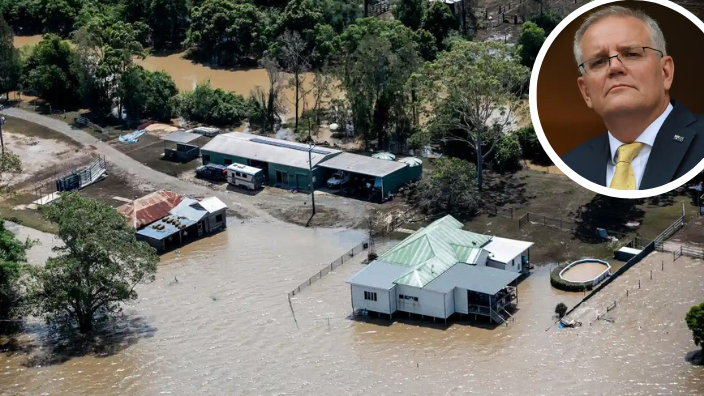
Australian Prime Minister, Scott Morrison, has declared a national emergency in response to catastrophic floods in northern New South Wales.
The declaration gives the federal government power to deploy money and resources faster. It is a legislative power that Mr Morrison sought after the 2019-2020 bushfire crisis.
Mr Morrison said he intended to ask the Governor-General to formally make the declaration which would cover both NSW and Queensland.
“I have made this decision today, in consultation with the Premiers … and it will ensure our Ministers and agencies don’t face any unnecessary bureaucracy as they roll out what communities need,” he said.
Mr Morrison made the announcement before he spoke in Lismore today, where he was greeted by angry residents whose lives have been upturned.
He also said residents in the Local Government Areas (LGAs) of Richmond Valley, Lismore and Clarence Valley would be able to access a further $2,000 for adults and $800 for children through an extension of the Disaster Recovery Payment scheme.
This announcement comes as earlier today, His Eminence Archbishop Makarios of Australia also issued a message of support for all flood victims who have lost their lives, homes and belongings in the unprecedented flood crisis across NSW and in Queensland.
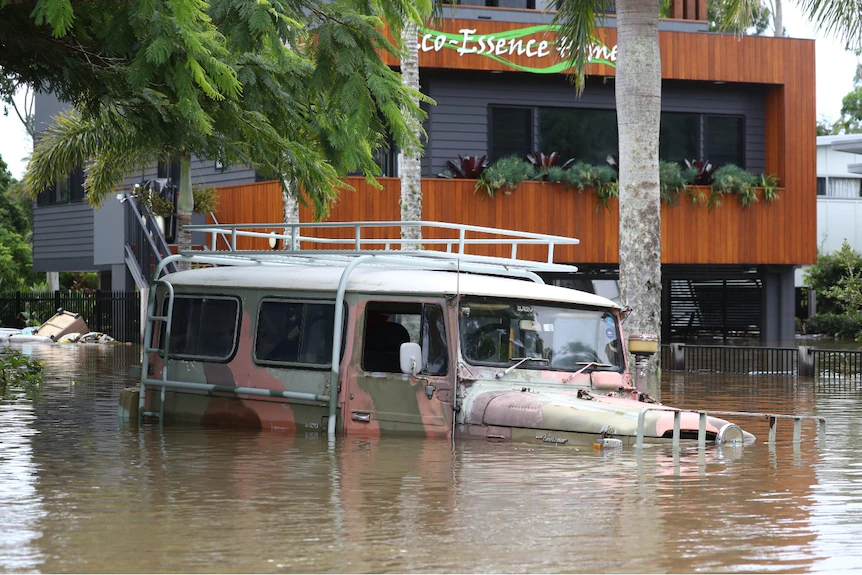
Submerged car in northern NSW due to the flood damage. Photo: AAP / James O’Brien.
“I pray for the souls of our fellow human beings who have lost their lives and for the consolation of their relatives and loved ones, as well as for the relief of the injured and for the strengthening of those who continue to fight against the destructive floods,” the message reads.
Other additional measures announced by the government include:
$25 to cover “emergency relief”, food relief and financial counselling services
$7.8 million for businesses in NSW and Qld affected by the floods
Around $6.9 million for early childhood and childcare services which have been closed for more than seven days
$4.7 million to make sure primary health services can continue to operate in affected regions.
$10 million to a mental health program for school-aged children in Northern NSW
$31.2 million for mental health support services for affected communities in both states
$5.4 million for legal services within affected communities.
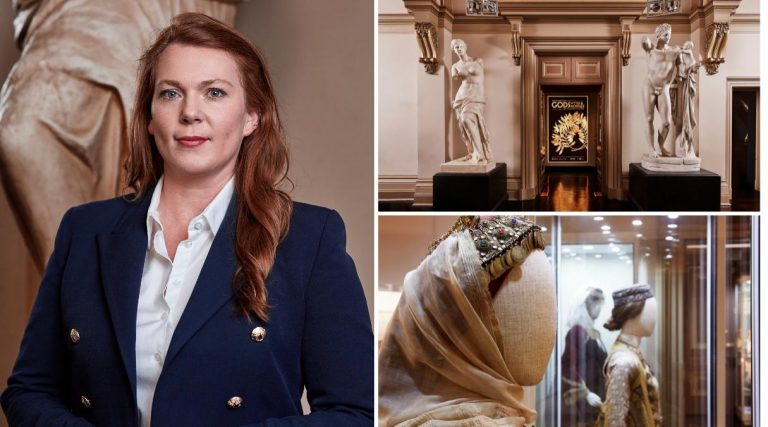
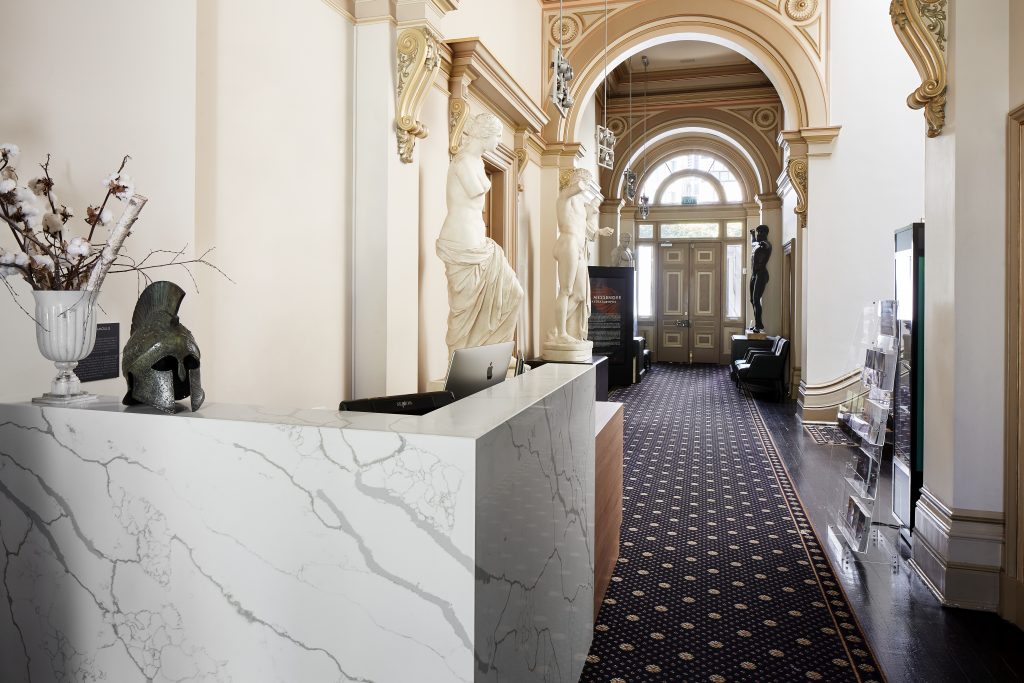
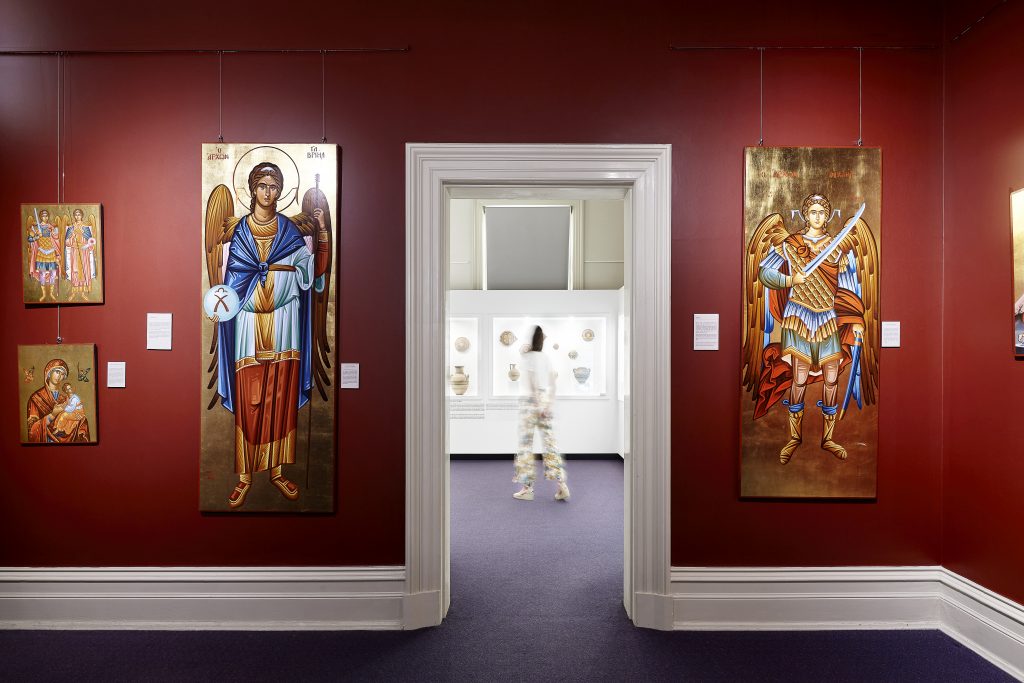
Hellenic Museum CEO Sarah Craig says she feels like she’s on the set of a movie every time she walks down the opulent staircase of the Royal Mint, where the museum is housed.
It’s a movie with plenty of cliff-hangers since she took over its reins in October 2020. That month, despite a deadly pandemic dominating global headlines, the Hellenic Museum in locked-down Melbourne managed to make the news on at least three occasions.
A Herald Sun top story spotlighted the now-scrapped plan of a “$244 million CBD museum” at the iconic Land Titles Office to make Melbourne “the only city outside Greece with a permanent Benaki Museum on the site”. This was swiftly followed by a statement by Greek Prime Minister Kyriakos Mitsotakis referring to the Benaki Museum’s collaboration with the Hellenic Museum as “an example of how we can bring Greek culture to Australia”.
Before the month had ended, Ms Craig took the helm as the museum’s new CEO, with outgoing John Tatoulis stating the announcement of her appointment had caught him “a little by surprise” and was perhaps “naively distributed prematurely”.
Ms Craig told TheGreek Herald that she, too, was “surprised” when the Board made the decision to appoint her to the role but was also “fabulously honoured and delighted”.
Remembering her predecessor, an “ideas man”, she feels gratitude. “We worked together for six years, and it was fabulous,” she said. “I’m grateful there was so much freedom given the size and scope of the museum.”
Her rise to CEO has been swift and spectacular, starting her collaboration as an intern in 2014 while doing a Masters of Art Curatorship at the University of Melbourne. From there, she moved to volunteer, curator, assistant, curator of operations and now CEO.
“When I started, there was only one exhibition and now all the galleries are full,” she said.
Benaki Museum artefacts, a flagship display
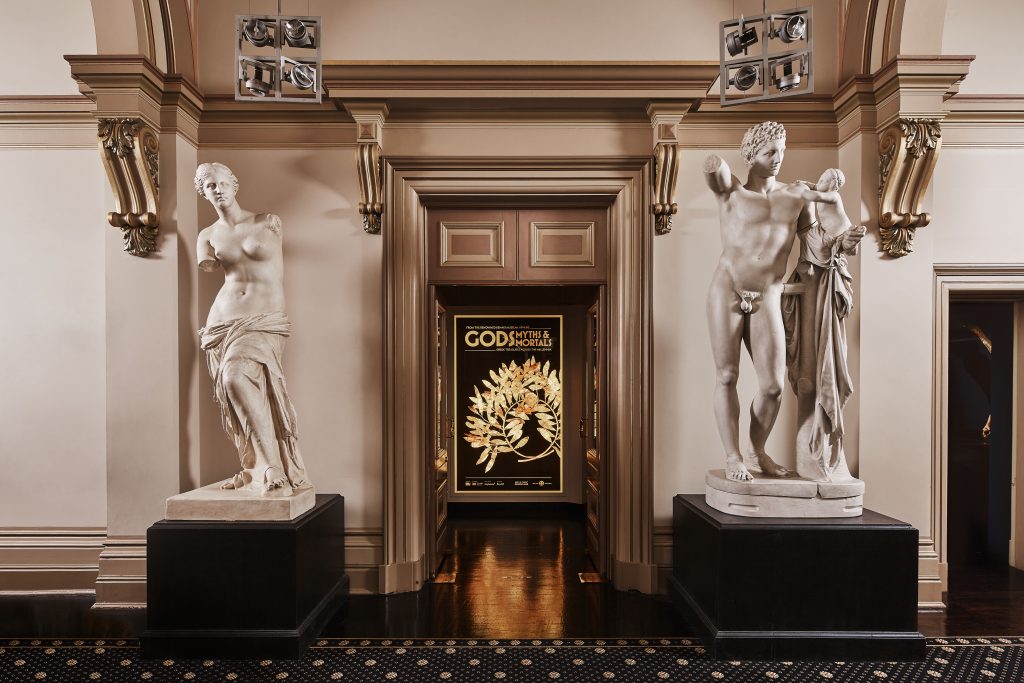
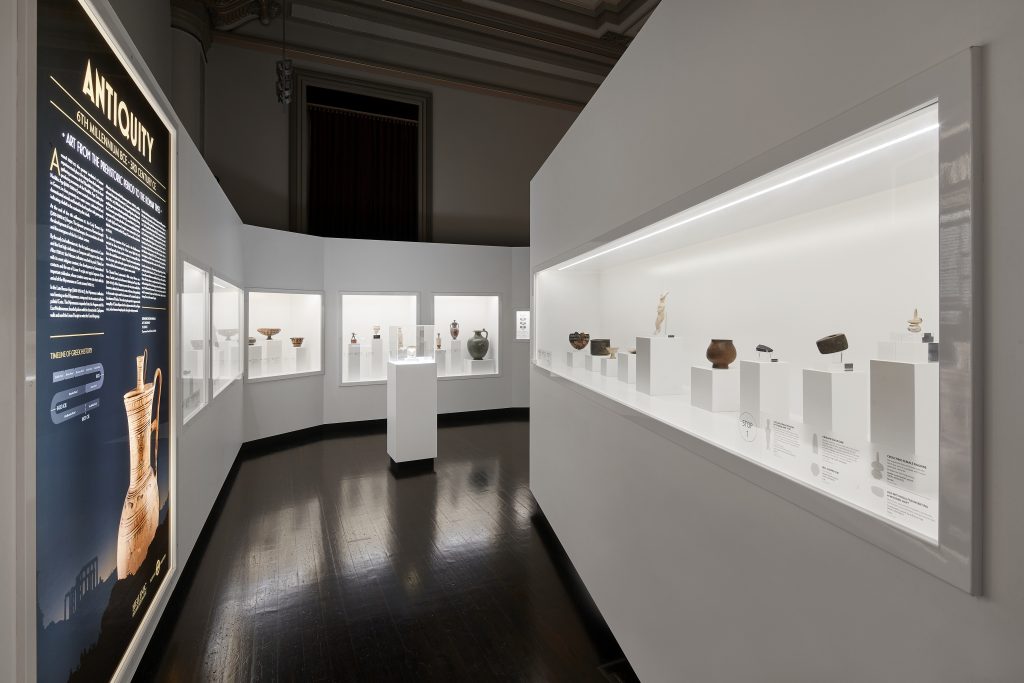
The display of “Gods, Myths & Mortals: Greek Treasures Across the Millennia” spans over 8,000 years of Greek civilisation from 5,800BC to the Greek War of Independence.
Ms Craig knows the display well but never tires of it, stating her own connection is rejuvenated through visitors’ reactions. She learns from everyone ranging from the Australian Embroiders Guild who were “blown away by the detail, use of colour and the complexity of the stitches” to a Benaki Museum expert, who could look at animal-skin papyri and tell which hide they were made of.
Asked to share her favourite item, her choice of a seemingly unremarkable coil pot indicates where her heart lies when telling history.
“Someone has gone through all the effort of making this beautiful pot,” she said, admitting that it looks like the creations of a Year 9 pottery class. “They’ve burnished it, they’ve fired it and it has survived for 8,000 years. And we’re only a moment of time in its life and it will probably last another 5,000 years beyond us. And I think it is a special piece, an everyday piece.”
Ms Craig wants people to relate to the artefacts, to feel a connection. “So much of history is written by the victor. It was written by men up until recently. It’s written in the helmets and the gorgeous pottery and statues and gold, whereas these ones (the makers of the pot) are people like me,” she said.
She stops short of offering me tea from the pot in question, despite the museum’s philosophy of object-based handling. Real objects, not replicas, such as a sword from 800 BCE from Ms Craig’s own collection are offered to visitors to handle as “a tangible way to hold your heritage”.
Heritage, like history, is quite intricate
Wikipedia describes the museum as “one dedicated to showcasing the ongoing story of the Greek community of Melbourne”, but those hoping to find a narrative of the Greek-Australian story and tribulations of early pioneers may be a little disappointed. It’s more about art, thought and philosophy, than it is about immigrant struggles.
“I think the notion of Greekness really depends on what period you are looking at,” Ms Craig said.
“The geographic borders have continually shifted over time so that is why we are the Hellenic Museum rather than the Greek museum.”
A believer in intercultural connections, Ms Craig points to another pot from the Benaki display, adorned with a swastika. “Greeks were inspired by Indian art, and that is reflected in their own,” she said pointing to “ancient connections”.
“To say that culture is an island is a fallacy.”
Proof of how culture transcends, transforms and triggers dialogue can be seen in sculptor Sam Jinks’ commissioned work, “The Messenger” – a hyperreal depiction of messenger goddess Iris using silicone, resin, calcium carbonate, fibreglass and hair. It was a huge success when it travelled from Melbourne to Greece in 2018.
In a bougie upstairs lounge, classicist/landscape photographer Bill Henson’s “Oneirei” consists of 11 images which incorporate artefacts from the Benaki display into a moody installation of light, darkness, reality, dreams and shifting perspectives.
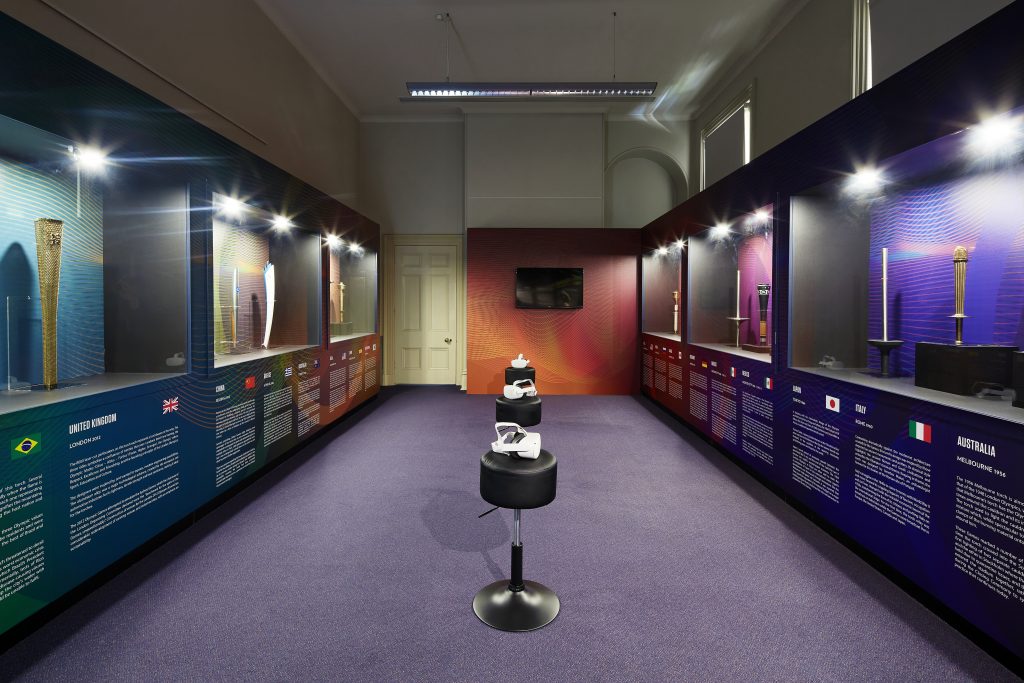
In another hall, the story of the Olympic Games is told through torches, while VR headsets by a Melbourne tech team allow visitors to explore ancient Olympia.
“The museum underpins all that is Hellenic, but ultimately hopes to expand to the rest of the world so we can have more conversations with more people,” Ms Craig said.
“The bigger vision is to be recognised as a place where people can go and discover and be challenged and walk away with more ideas.”
Ms Craig said this vision is not just in the museum’s DNA but at the core of Hellenic ideals. “Greece was always about growth,” she said. “The ancient Greeks were always challenging, always striving, always looking forward and I really think if we didn’t honour that here, we would be remiss.”
Looking to the museum’s future
Despite expansionist aspirations, the high hopes and hype surrounding the move to the refurbished Land Titles Office fell flat.
“We just couldn’t get it across the line,” Ms Craig said. “The Board decided it was not viable for us, which was disappointing because so much work had gone into it from both sides, but we’re still looking to grow.”
Growth can take many forms. With the Benaki Museum display set to end in 2024 and the world slowly returning to normal, Ms Craig said that there are conversations brewing and discussions taking place.
Ms Craig said the museum is “a Greek dream which changed over time”. She adds, however, that the original vision of businessman/philanthropist Spiros Stamoulis “to share Greek cultural heritage, but ultimately for everyone to buy into why it is important” is slowly being realised.
As a “passionate philhellene” who first fell in love with Hellenic culture through her mother’s telling of ancient myths tweaked with happy endings, Ms Craig is one who shares the dream and well positioned to carry on the legacy.
The Hellenic Museum is located at 280 William Street, Melbourne. Telephone (03) 8615 9016.
UPCOMING EVENTS AT THE HELLENIC MUSEUM
11 March, 1-3pm
International Women’s Day Fund-raiser held by the Hellenic Museum Ladies’ Society, tickets $130
22 March, 6.30-7.30pm
Live art and storytelling with John Hughs and Marco Luccio Art and storytelling collide as Greek myths are read aloud while art is created live, $20
2 April, 11-12.30pm
Seasonal scents, Easter edition Guests must be over 16 to attend this soy candle-making workshop, $95
14 April, 11am-12.40pm
Magic and Medicine Masterclass An educational workshop for students from 7 to 13 years during Term 1 school holidays, $18
23 April, 11am-12.40pm
Pigments of the Past Experiment Experiment with ancient paints during Term 1 of the school holidays for students aged from 7 to 13 years, $18
9 July, 5-9pm
Hellenic Arts Fest: Mythical Feast – Atalanta Greek myths via a gastronomic experience, $195 First Saturday of every month from 11.30am-12.30pm guided tours are held by the museum’s curator, Tickets at $17 (adults) and $12 (concessions).
The Daily Telegraph‘s rugby league writers, Michael Carayannis and Brent Read, have named their top 50 most power figures in the NRL and among the list are four Australians of Greek heritage.
The Greek Herald breaks down who they are.
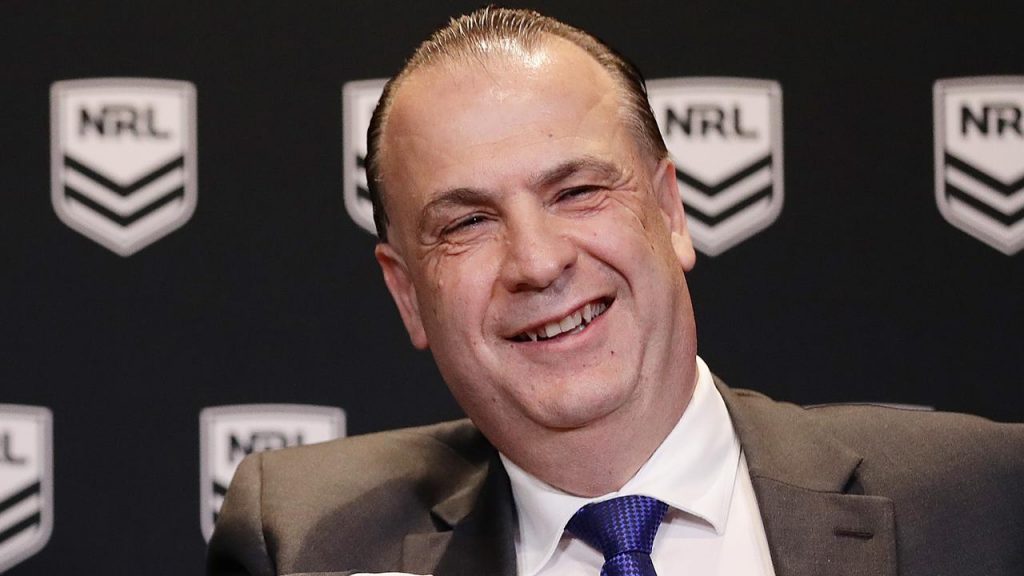
#1: Peter V’landys, ARLC Chairman, Chief Executive of Racing NSW
Peter V’landys assumed the chairmanship of the Australian Rugby League Commission (ARLC) from Peter Beattie in 2019.
He ripped millions out of the bottom line in the NRL’s head office, kept the game afloat during the COVID-19 pandemic and helped the NRL become the first major sporting code to return to play. He also introduced a raft of rule changes.
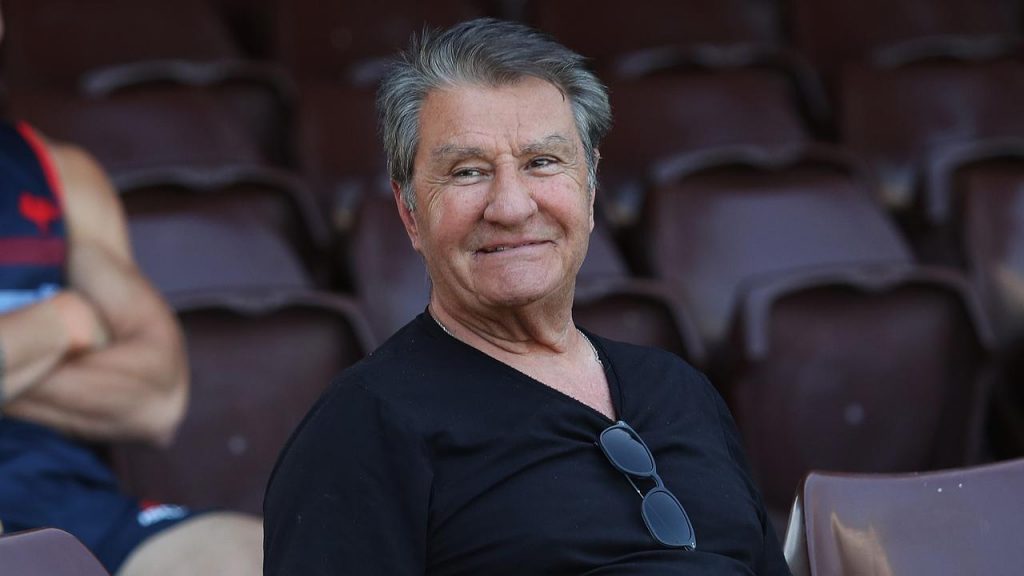
Nick Politis is a migrant from the Greek island of Kythera who has helped save rugby league in Australia and turned a single car dealership into a $2 billion fortune.
Politis is one of the most powerful men in rugby league as the Chairman of the Sydney Roosters. He recently quit his post as a NSW board member.
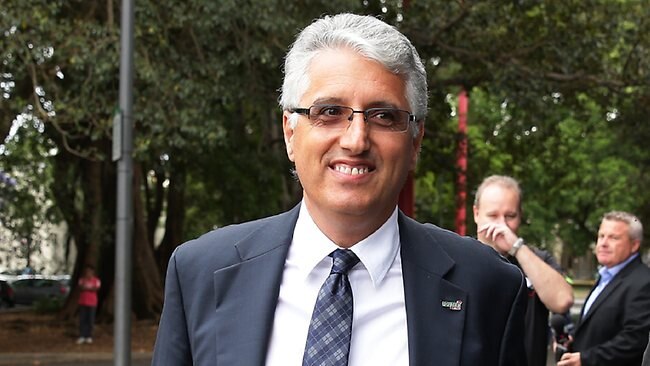
Nick Papas is held in high regard by the NRL’s executives and fellow clubs alike and has long been touted as a potential chairman of the game.
While he has been in the thick of discussions regarding the game’s big picture, it has not detracted from running one of the game’s most successful clubs in South Sydney.
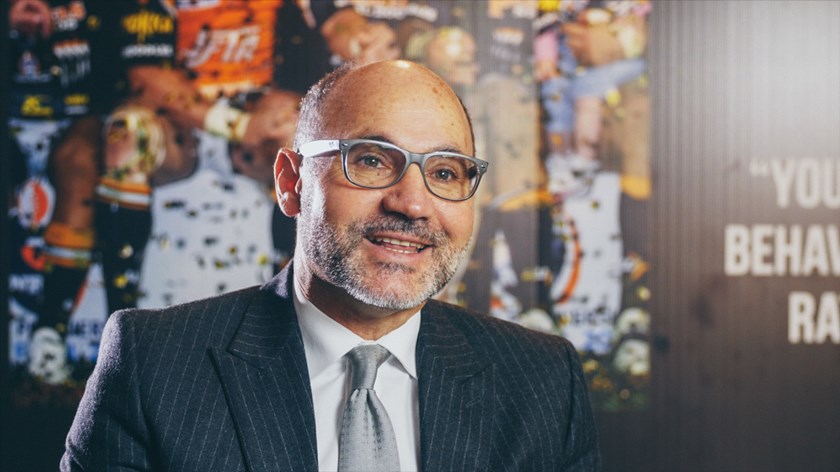
#31: Lee Hagipantelis, West Tigers Chairman
The Tigers chairman has been involved in the game for a long time via his business Brydens Lawyers.
The law firm are major sponsors of the Tigers and also sponsor a host of other teams including Newcastle, South Sydney and a range of junior clubs.