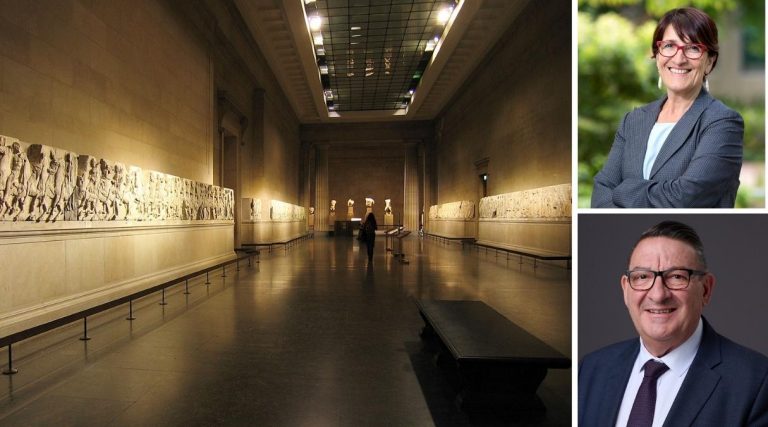
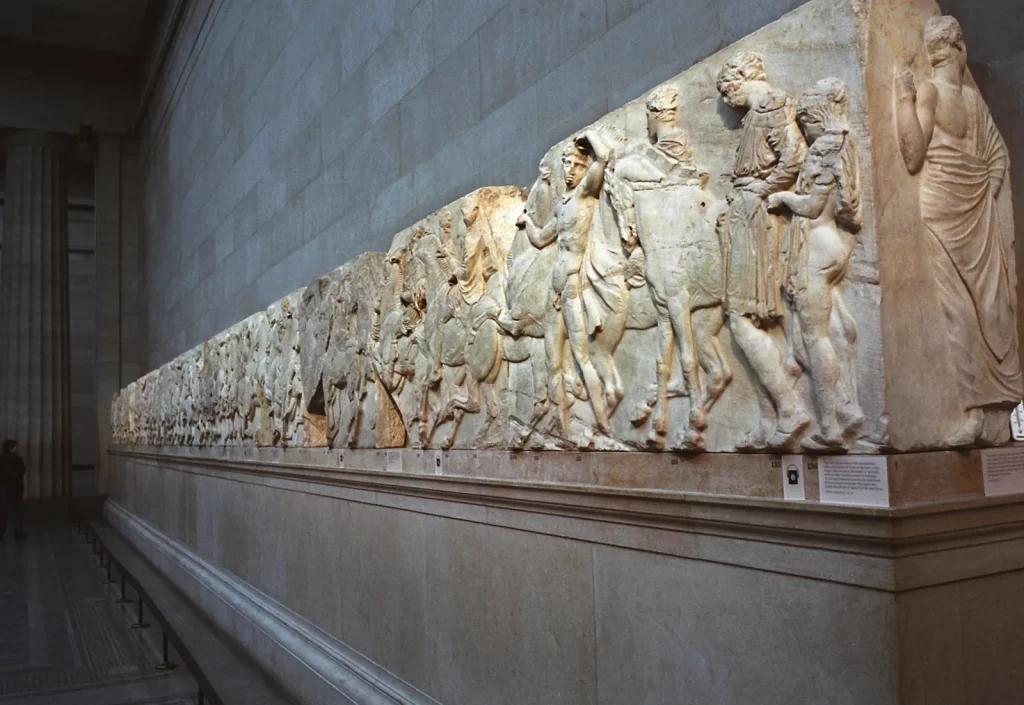
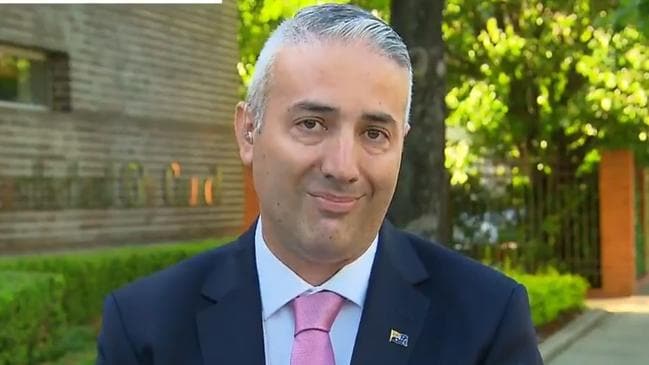
Federal Shadow Minister for the Arts, Tony Burke, has tabled an official motion in the Australian Parliament calling for the Parthenon Marbles to be returned to their rightful home in Greece.
The motion was seconded by Greek Australian Labor MPs, Maria Vamvakinou and Steve Georganas, and calls on the Australian Government to join the growing number of nations that are now supporting this repatriation campaign.
Speaking to The Greek Herald, Ms Vamvakinou says joining the campaign is of benefit not only to local Greeks, but to the wider Australian community as well.
“This motion reflects our long history of advocacy for the return of the Parthenon Marbles. Over the last 20 years, we’ve established civil society committees alongside federal parliamentary friendship groups advocating for their return,” Ms Vamvakinou says.
The Parthenon Marbles. Photo: Getty Images.
“The issue of the Parthenon Marbles is really one where culture, arts and politics meet. It’s important not only to Australia’s large Greek diaspora, but also carries particular significance among Philhellenes across society.
“We’ve seen its impact on cultural heritage and sense of identity play out not only from within the Greek community, but also through its influence on the increasingly growing voices also calling for the return of objects and human remains stolen from Australia.”
Australia has long advocated for the return of stolen objects and human remains from our country which are held overseas. It is in our national interest that we uphold that same principle on behalf of other nations as well.
A man who attacked former Cumberland Mayor Steve Christou outside a polling booth at Merrylands on council election day has avoided a conviction,The Daily Telegraph reports.
Khayam Ali, 29, attended Fairfield Court on Wednesday after he pleaded guilty to the assault on Cr Christou.
The incident took place when Ali became infuriated by claims from a younger relative the mayor had threatened to snatch him away at the Merrylands Public School polling station on Fowler Rd.
Fresh police documents tendered to the court reveal the boy, who was a Labor volunteer, told police Christou, who is an Our Local Community councillor, had been bullying him for three days when they were campaigning at the Holroyd Centre polling booth at Merrylands and on election day.
Cr Christou declined a voluntary police interview but denied any wrongdoing and he was not charged.
At the time of the assault in December 2021, Cr Christou told The Greek Herald the incident was “very disappointing.”
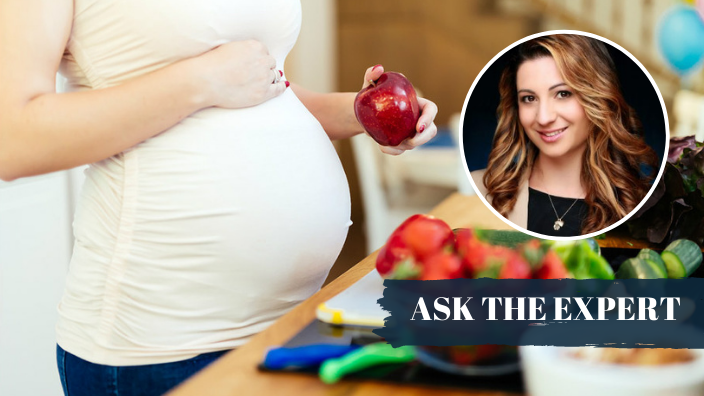
By Georgia Pandelios, Accredited Practising Dietitian and Owner at Nutrition Prescription.
Food allergy is a serious medical condition that is life-long, but what if we could prevent our children from getting them? Is it even possible?
The answer is yes. The latest research highlights the importance of the maternal diet during pregnancy and breastfeeding, and it’s usefulness as a tool in reducing the risk of babies developing allergies. The theory behind this has to do firstly with desensitisation to allergens and secondly, with supporting the developing immune system of the baby whilst in-utero.
Summed up, these 3 tips are key in allergy prevention during pregnancy:
First, start with desensitisation. Regularly include common food allergens in your pregnancy diet to expose your baby whilst in the womb. These are tree nuts, peanuts, cooked egg, cow’s milk, soy, wheat, fish and seafood. Note: do not include any allergens / foods that you personally are allergic to.
Secondly, feed your gut right. Over the last few years we have been learning more and more about the complex relationship our gut microbiota has on our health, particularly on our immune system. There are two things we can do to help our gut bacteria thrive – include probiotics and enjoy a variety of prebiotics. Probiotics are those microorganisms found in yoghurt and in supplement form, whilst prebiotics refer to the fibre and resistant starches that the probiotics feed off. Particularly during the final trimester, specific probiotic supplements may reduce the risk of infant and childhood allergies.
Thirdly, vitamin D. This is something I personally researched during my university thesis in paediatric nut allergies. Vitamin D plays a vital role in immune development. We can get this from the sun and vitamin supplements. During pregnancy, particularly in a post pandemic world, we may be having less sun exposure – which puts maternal vitamin D levels at risk of deficiency. The research highlights associations between low levels of vitamin D during pregnancy (usually winter gestations being higher risk) and the likelihood of having a baby with a food allergy. Getting the right amount of vitamin D is key, as other research has reported excess vitamin D may also increase the risk.
Remember to not take any supplements (vitamins, minerals or other) without first consulting with your doctor or maternal health dietitian.
Your breastmilk will be another tool that can support food allergy prevention. After the birth, if you are breastfeeding, continue these same practices.
When introducing solids, although the guidelines for the general population state to introduce solids around 6 months of age, when you have a family history of food allergies and signs of readiness for solids are there, your paediatrician, GP or dietitian may suggest you start slightly earlier (but not before 4 months), in line with the infant feeding recommendation by the Australian Society of Clinical Immunology and Allergies (ASCIA). Subsequently, these guidelines also recommend regularly exposing your infant to all of the common allergens before they are 12 months. At times, it can be a little scary and confusing to do this, especially if you aren’t sure if bub is ready – feel free to contact our team or speak with your family doctor for additional support.
Unfortunately, although allergy prevention in infancy can be successful, whilst less common, food allergy can still develop in teens and even adults. Knowing the signs and symptoms of a food reaction can be lifesaving for families with a strong genetic history of atopic diseases (e.g. allergy, asthma, eczema).
If you or your partner have a family history of allergies, discuss an allergy prevention plan with our team to help you safely approach food allergen exposure and allergy prevention for your child during pregnancy and beyond.
If you need help with your pregnancy diet or introducing solids, contact Nutrition Prescription for a nutrition assessment with tailored nutrition recommendations. You can book through www.nutritionprescription.com.au or email info@nutritionprescription.com.au.
Nutrition Prescription’s accredited practising dietitians offer nutrition consultations that are specially designed for the whole family – from infants to adults and elderly, through to highly specialised fertility-preconception, paediatric, sports nutrition and food reaction services. We can assist with all your nutrition needs, including complex and chronic conditions – in English, Greek and Portuguese.
Disclaimer: The information in this article is generalised and is not intended to replace medical or dietetic advice, nor directly manage any medical conditions. For personalised advice, please speak with your doctor or contact us via info@nutritionprescription.com.au to make an appointment with one of our Dietitians.
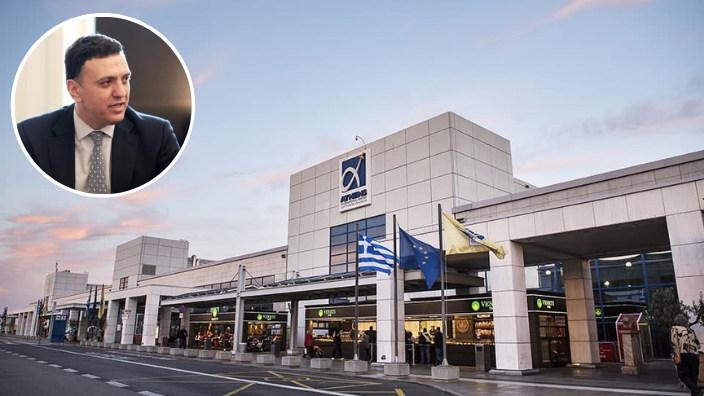
Greek Tourism Minister, Vassilis Kikilias, told local media on Thursday that as of March 15 Greece’s requirement for travellers to fill out a detailed Passenger Locator Form (PLF) will be abolished.
Greece introduced this requirement as a measure to contain the spread of the coronavirus as the virus’ spread was slowing down but also ahead of this year’s tourist season.
The PLF had to be completed online at least 48 hours before entering Greece and required information such as the country travellers were coming from, the address they would be staying at in Greece and even how long they had stayed at other countries during their trip.
— Consulate General of Greece in New York (@GreeceinNewYork) March 3, 2022
“The abolition of the PLF simplifies the entry process for travellers, shifting the emphasis on the vaccination certificates,” Kikilias said.
“In addition, the adoption of new health protocols for tourism companies, places Greece ahead of the competition. Once again, we are ready to welcome our guests safely.”
The decision to abolish the PLF was taken after a recommendation of the panel of experts advising the government on the pandemic was given.
The panel also recommended increasing capacities on tour buses from 85 to 100 percent from March 5, with remaining protection measures in place such as natural ventilation and mask use.
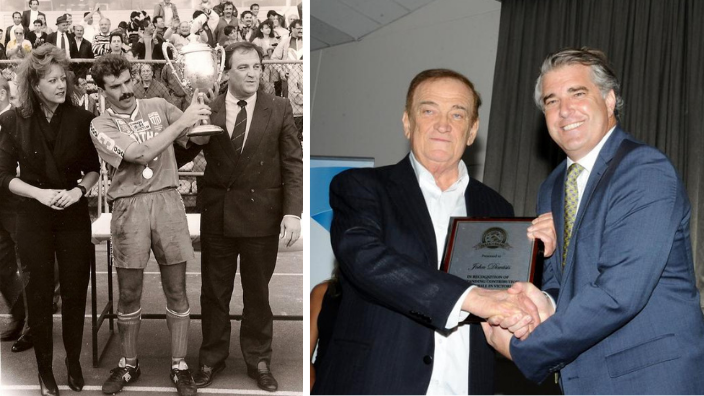
Tributes have flowed after the death of Football Victoria Hall of Fame member and Heidelburg United FC legend, John Dimtsis, on Tuesday evening after a long battle with illness.
“A person who has contributed so much for the game in the country,” Heidelburg United wrote on Twitter.
The Board of Directors and staff at Football Australia and Football Victoria also expressed their condolences to Dimtsis’ family on his passing.
“A well respected and much loved member of our community for such an extended tenure and deep passion for the game and its people, his passing will be felt deeply by so many in the football community across Australia.”
Dimtsis was born in Greece on 22 June, 1940 and came to Australia at the age of nine. After attending Northcote High School he joined the Commonwealth Bank before moving to the State Bank of Victoria, where he worked intimately with the area’s large Greek community.
This path led him to the Alexander Soccer Club, then playing at John Street. He quickly became an influential administrator, serving as Club Treasurer before gaining the attention of the Victorian Soccer Federation (VSF). He joined the Board of VSF and by 1980 was appointed President.
While retaining his role as President of the VSF, Dimtsis became Treasurer of the Australian Soccer Federation (ASF) and Deputy Chairman under John Constantine. In 1995, Dimtsis served as acting chairman of the ASF.
During his time with ASF, he managed referees, juniors, indoor soccer and women’s football. He played a major role in negotiating the merger between the men’s and women’s organisations and helped facilitate the latter’s entry into Olympic competition.
After five years following his period at the ASF he returned to his beloved roots by re-joining Heidelberg United, completing his spell as president of the club at the conclusion of 2014.
He was made an Honorary Life member of HUFC in 2016 and in 2017, inducted into Football Victoria’s Hall of Fame.
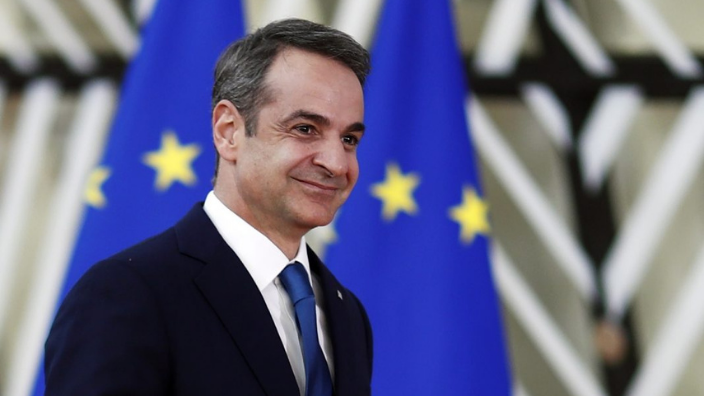
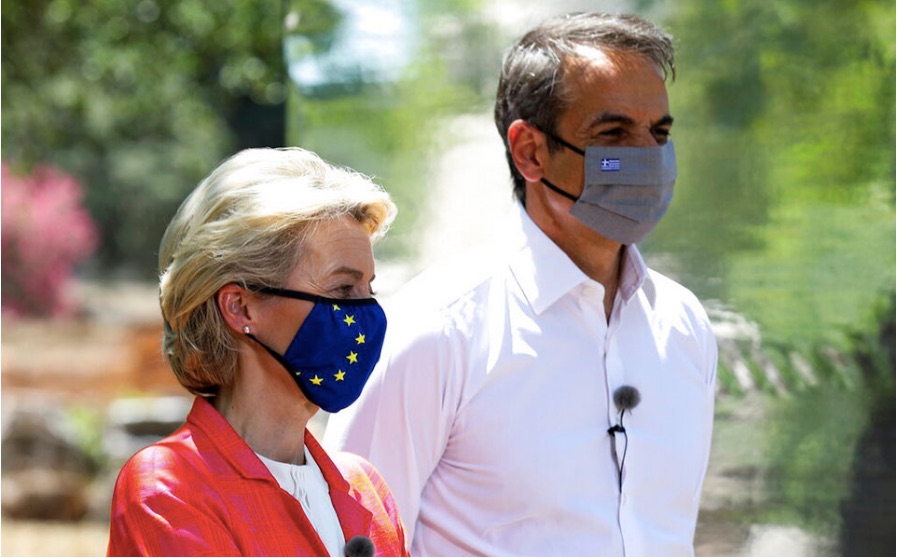
In a letter to European Commission President Ursula von der Leyen, the Greek Prime Minister, Kyriakos Mitsotakis, called for a six-point proposal to counter a jump in energy prices in the European Union as the war in Ukraine continues.
The proposed plan, outlined by Mitsotakis in an opinion piece on news outlet Politico, includes a price cap on title transfer facility (Europe’s regional gas benchmark), and daily price guardrails to limit volatility on the fluctuation band on TTF.
Mitsotakis has written to von der Leyen (left).
It also foresees a fixed-price setting as an emergency reaction to declarations regarding pipeline gas flows from Russia, as well as a profit cap on gross margins.
“Natural gas has become a major factor in the power struggle between Russia and the European Union,” Mitsotakis said.
“This spiral of speculation and politicised price hikes must stop.
Πρέπει άμεσα και αποφασιστικά να αντιμετωπίσουμε την αυξανόμενη οικονομική απειλή που αφορά τη χονδρική αγορά φυσικού αερίου. Είναι απαραίτητη μία στοχευμένη και χρονικά περιορισμένη παρέμβαση στην αγορά, προκειμένου να ομαλοποιήσουμε την κατάσταση. https://t.co/xhCpsHM9Aopic.twitter.com/RqYRzE1y5L
— Prime Minister GR (@PrimeministerGR) March 9, 2022
“Extreme circumstances call for out-of-the-box thinking, and the time has come to address this threat head on. We are seeking to intervene only as a last resort and with a temporary set of measures.”
The European Commission said on Tuesday that it plans to store more natural gas and add more renewable-energy sources as part of a plan to reduce the bloc’s dependence on Russian gas imports by two-thirds by the end of the year.
According to the EU, the plan could end members’ dependency from Russian gas entirely before 2030.
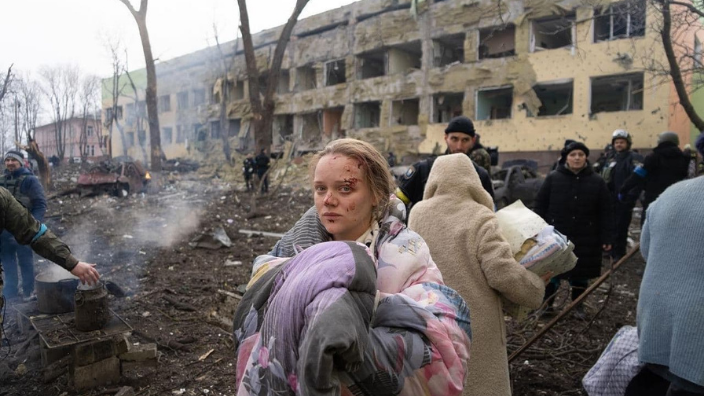
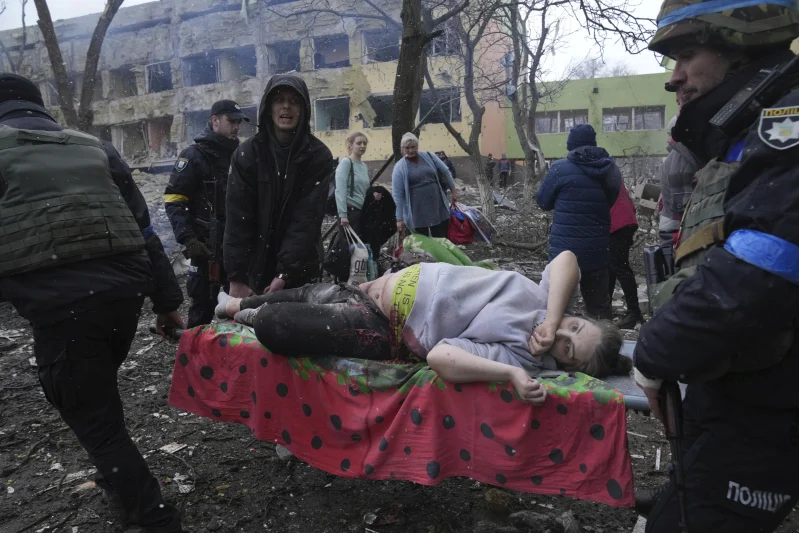
Ukrainian President, Volodymyr Zelenskyy, has accused Russia of carrying out an air strike that severely damaged a maternity hospital in the southern port city of Mariupol.
President Zelensky said the “direct strike” on the hospital had caused “colossal” damage and left women and children trapped under rubble.
Mariupol. Direct strike of Russian troops at the maternity hospital. People, children are under the wreckage. Atrocity! How much longer will the world be an accomplice ignoring terror? Close the sky right now! Stop the killings! You have power but you seem to be losing humanity. pic.twitter.com/FoaNdbKH5k
Regional governor, Pavlo Kyrylenko, later said at least 17 people were wounded in the attack, including women in labour. The reports could not immediately be verified, according to Reuters.
Russia had said it would hold fire to let thousands of civilians flee Mariupol and other besieged cities on Wednesday. But the city council said the hospital had been hit several times by an air strike.
An injured pregnant woman is carried away from the maternity hospital which was damaged by Russian forces on Thursday. Photo: AP / Evgeniy Maloletka.
Greece evacuates people from Ukraine on Greek ships:
This attack comes as renewed efforts to evacuate civilians from besieged and bombarded Ukrainian cities were under way on Wednesday.
A Greek Foreign Ministry spokesperson confirmed that Greece is running five operations to evacuate Greek citizens, their relatives and other nationalities from Odessa, Kiev and Mariupol on Greek-owned ships.
Greece has already received a total of 5,878 Ukrainian refugees.
Speaking at a regular press briefing, Alexandros Papaioannou complemented the remaining Greek diplomatic staff in Ukraine, embassy officials in Bucharest and the ministry in Athens for their work in getting Greeks in Ukraine to safety.
He said officials were working in close coordination with the Organization for Security and Cooperation in Europe (OSCE) and the Red Cross.
According to data released by the Hellenic Police (ELAS) on Wednesday, a total of 5,878 Ukrainian refugees, of whom 1,853 are minors, have already arrived in Greece since the beginning of the Russian invasion of Ukraine.
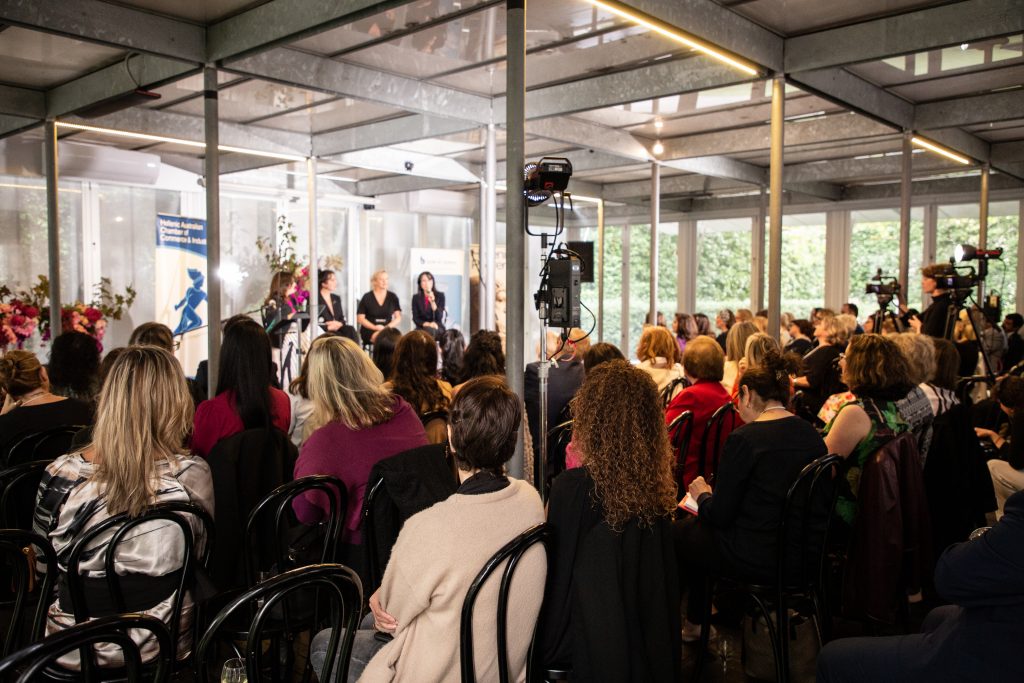
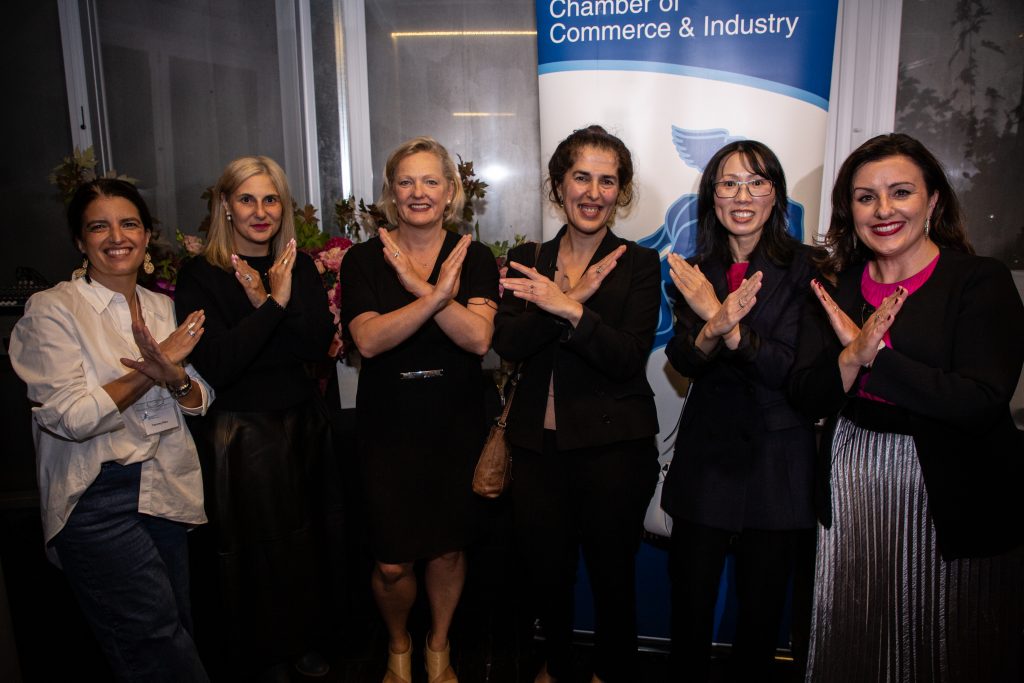
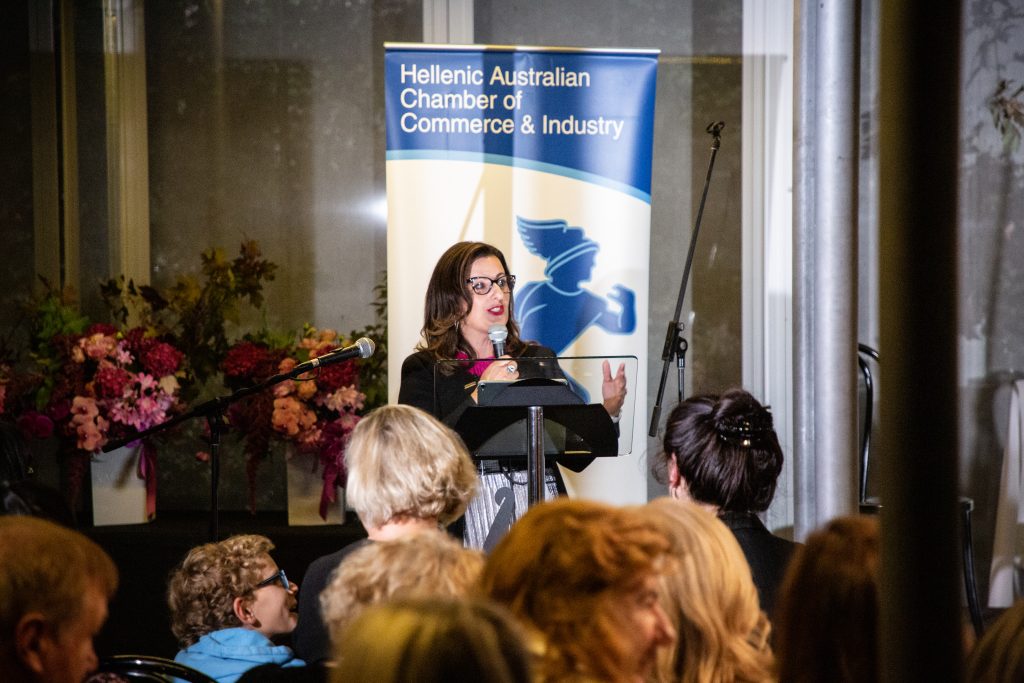
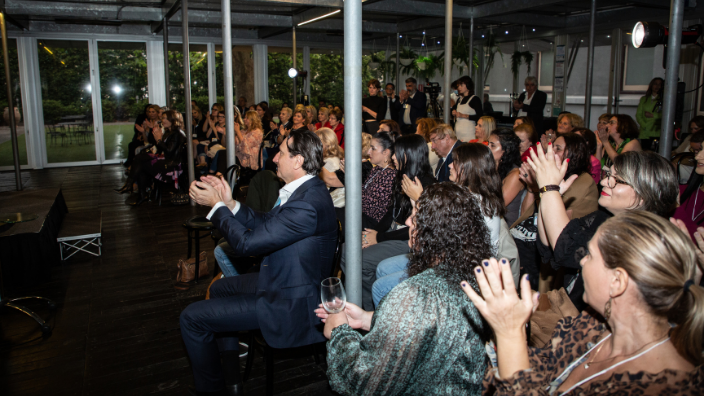
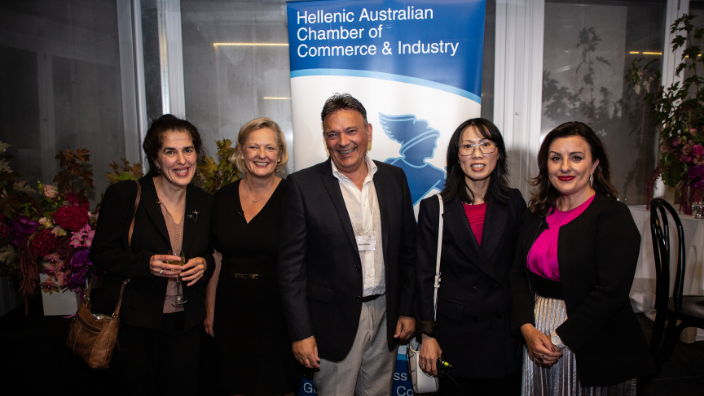
The Hellenic Australian Chamber of Commerce and Industry (HACCI Vic) last night celebrated International Women’s Day with an evening of reflection and empowerment at the Hellenic Museum.
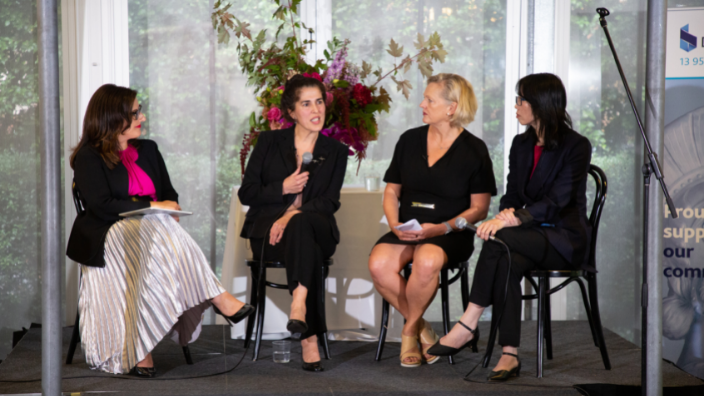
The event featured a panel discussion hosted by Chamber Chair, Fotini Kypraios, and featuring Her Honour Nola Karapanagiotidis, Judge of the County Court of Victoria; Corinne Proske, CEO of Jobsbank; and Vivienne Nguyen, Chair of the Victorian Multicultural Commission.
The conversation centred on the International Women’s Day theme, “Break The Bias,” and how that applies to women from multicultural backgrounds in Australia.
“This year’s theme is an important opportunity to consciously examine our biases, recognise the biases that exist preventing equality and inclusion, and break them down,” Ms Kypraios said.
When it comes to gender pay parity, the COVID-19 pandemic has significantly worsened the lot of women around the world, with the time required to close the global gender pay gap having increased from 99.5 years pre-pandemic to 135.6 years post-pandemic.
“That’s hard to look at. It’s not my lifetime, it’s not my son’s lifetime,” said Corinne Proske, CEO of Jobsbank, an organisation focused on helping businesses introduce greater diversity and inclusion to their workplaces.
The three women also shared their experiences as women from multicultural backgrounds, who have risen to high levels within their industries.
They said women from culturally and linguistically diverse backgrounds had no choice but to navigate extra challenges, whether they’re first, second, or third generation migrants.
“We don’t just carry our own issues and trauma, we carry our whole community’s,” said Ms Nguyen, referring to the often entrenched biases within migrant families.
“I’m too Australian in my Vietnamese family, and I’m too Vietnamese in my Australian context.”
For her part, Her Honour Nola Karapanagiotidis spoke about her upbringing and said: “It wasn’t expected of me that I would do well.”
Despite this, she has had a formidable two-decade career as a barrister, advocating for refugees and women in the criminal justice system.
Her Honour noted that the outpouring of support from the Hellenic Australian community following her appointment to the County Court bench in 2021 had been both humbling to her, and empowering to those around her.
“I believe it’s because they’re seeing someone that reflects them, that represents them,” she said.
When asked what advice they’d offer to the younger women in the audience, the three panellists offered words of confidence and empowerment.
“Be proud of what you have. What you have is what many others don’t,” said Ms Nguyen, referring to the rich and deep cultural and family connections that many migrants experience.
She encouraged younger women to get to know their culture, take the good things from it, and work to change the bad.
Ms Proske echoed the sentiment, sharing that her grandmother had given her mother the ultimate gift of the opportunity to return to work after having children by taking care of them, and her own mother had done the same for her.
“It’s a gift that you can give within families and multicultural families do that well,” Ms Proske said.
Her Honour Ms Karapanagiotidis offered a rallying call to all the women present: “Be confident. Back yourself. Your diversity is an asset, your community mindedness is an asset, your courage is an asset.”
The sold-out event was supported by HACCI’s Chamber Partner Bank of Sydney, Community Partner Hellenic Power, Corporate Partners Greek Media Group, Intralot Australia, Jobsbank, Patras Group, Prisma Legal, Procal Dairies, and The Content Engine, as well as IWD Event Partners BDO Australia, Flowers Vasette, Moka Foods, Salary Masters, Structural Challenge, Prisma Legal and Thematikos.
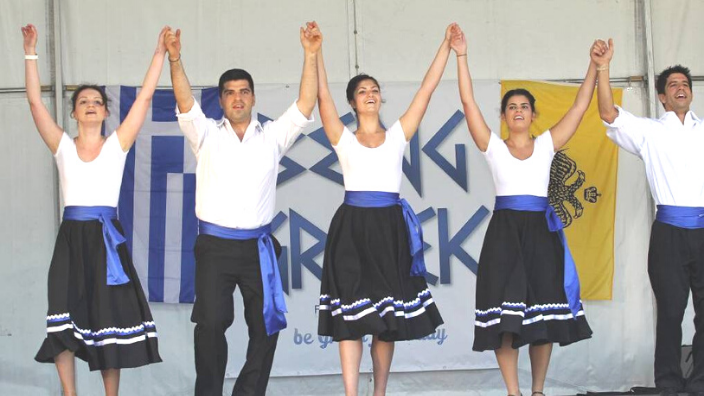
The Greek Festival of Sydney is returning to Brighton-Le-Sands this year as part of the festival’s 40th anniversary celebrations, The Leader has reported.
The announcement comes after festival organisers met with Bayside Council last week. The desired date for the Festival is October 23 but The Greek Herald will announce final dates once confirmed.
Ethnism is an ideology that promotes the cultivation of national consciousness, without disregarding the history and identity of other nations. Its basic principle is that the national consciousness of a people and a nation is strengthened and consolidated through revolution and resistance to all kinds of national danger and diversion of its sovereignty. The Americans, an amalgam of European races, a Euro-Asian and African ethnic and racial composition, created its American consciousness during its revolution against the British colonists. Ethnism defeated feudalism, it abolished the empires and stood on the path of imperialism and the expansionist struggles of foolish and megalomaniac dictators and all kinds of authoritarian and totalitarian regimes everywhere. This ideology of Ethnism dominated Ukraine with the Putin invasion a few days ago.
President Putin, the leader, of one of the most important countries on our planet, a country that gave humanity a huge light and voice of culture, arts, literature, music, letters, sciences, architecture, a country without which Europe and European civilisation cannot exist, wanted to believe that there is no Ukrainian people and no Ukrainian nation. President Putin, like his compatriot Stalin in the past, proclaimed that modern Ukraine is the result of ethnic composition of German-Polish peoples, Slavs and Hungarians, fugitives of wars and products of peoples’ relocation. He believed, as did Stalin, that Ukraine is simply a province of Russia. They believed that the cereals and fruits of this country, together with their people, belong to them, or at the very least that as same-religion and same-race people, they have the right to control them.
So, under the pretext that the Ukrainians supposedly did not want to declare themselves as “neutrals”, detached from Europe and NATO and demilitarized (this is what Erdogan is also demanding for the Greek islands), President Putin invaded Ukraine to “conform” them. He violated Ukraine’s sovereignty, humiliated international law, disregarded “the rule of law”, trampled on human rights and wreaked havoc on thousands of young soldiers and civilian populations. President Putin brought the man of Europe back into the jungle from which they had emerged, by European standards, seventy-so many years ago.
The Putin invasion of Ukraine is one, perhaps the worst defeat of combat operations experienced by Russia’s proud history. President Putin, even to win all the battles, and to flatten cities and drag millions of people into refugees, and to wipe out infrastructure, he actually already lost the war in Ukraine. He suffered a huge defeat.
He was defeated on all fronts that he himself either wished to conquer and impose himself, he was defeated in his goal of turning Ukraine into his province, he was humiliated into a united and unbroken West and lost strong friends, if not allies (even the despotic Ertogan on the issue of Ukraine stood against him, with the exception of the imposition of sanctions, so as not to lose the Russian tourists of the summer).
Why then Putin had decisively lost this War. Let’s analyze it briefly.
He lost the war and defeated its objectives, because it caused the awakening of the national consciousness of Ukrainians, as a fighting people for altars and hearths as well as for its national dignity and its right to exist.
Even if he will conquer the whole of Ukraine, he had lost the war because he had awakened the hatred of the gallantly defending Ukrainian people towards Russia and of course against the tyrannical Putin regime. The hatred aroused among modern Ukrainians and their children will remain unquenchable intergenerationally. Future generations will grow up to hate Russians and remember the invasion of their homeland. Hatred is the worst emotion in man, it is man’s most powerful innate power, unquenchable, mighty, ready to avenge both now and tomorrow and beyond. It is an animalistic innate feeling that fundamentally discredits man.
Even, if he will conquer Ukraine, he had lost the goal for which he made the War, because he managed to rally the Ukrainian people and lead them from now on to various forms of national resistance, of a political, diplomatic, cultural and ecclesiastical guerrilla movement, both within Ukraine and Europe and the Diaspora.
He had lost the War because he provoked the resistance of the Ukrainians, gave them national credibility, pushed them forever to Europe and the West, although Ukraine historically from 478 AD, with the dissolution of the Roman Empire, had been part of the Eastern Roman State.
The Putin invasion managed to turn even Ukrainian Russians, Russophiles, Russian-speaking, and children from mixed marriages against Russia, a Slavic brotherly nation.
This invasion caused huge and abysmal social rifts, wounds that time will not heal. It led and will lead to the dissolution and destruction of families that were established and blessed as products of Ukrainian-Russian marriages, injuring the social cohesion of Ukrainian and Russian societies.
While Mr. Putin’s goal was to shrink the influence of NATO and Europe in Ukraine (he did not do this for the Baltic states, nor for Moldova, nor for Romania), he actually achieved the opposite. It rallied all neighbouring countries to Russia to turn openly to the West and to immediately demand that they become its organised members of the EU and NATO.
The Putin invasion awakened Europe’s sleeping giant, and Russia’s hitherto only friend in Europe, Germany, not only turned against him, but also made sure that she was shielded by spending EUR 100 billion in a year on defensive and offensive armaments.
The new imperialism, now called revisionism, has taken care to unite the 30 NATO countries decisively, to give for the first time a military role to the E.U., to unite the European states in a cohesive manner, against a common danger, and to give the E.U. political credibility and an essential role in international issues concerning the Union of Europe.
Russian imperialism has now become visible and has caused the awakening and reorganisation of all the states neighbouring Russia, from Finland and Sweden to Romania, in order to protect their national and territorial sovereignty in Europe. For the first time it also united all western states against Russia in a cohesive manner with cultural, economic, artistic, sporting sanctions.
The unfortunate thing for humanity is that this conflict is unpredictable because of its proclamation by a difficult regime and an unpredictable leader-oppressor. What the end will be for humanity remains unknown. Many, of course, are the sufferings, but none is more evil than man himself.
*Professor Anastasios M. Tamis taught at Universities in Australia and abroad, was the creator and founding director of the Dardalis Archives of the Hellenic Diaspora and is currently the President of the Australian Institute of Macedonian Studies (AIMS).