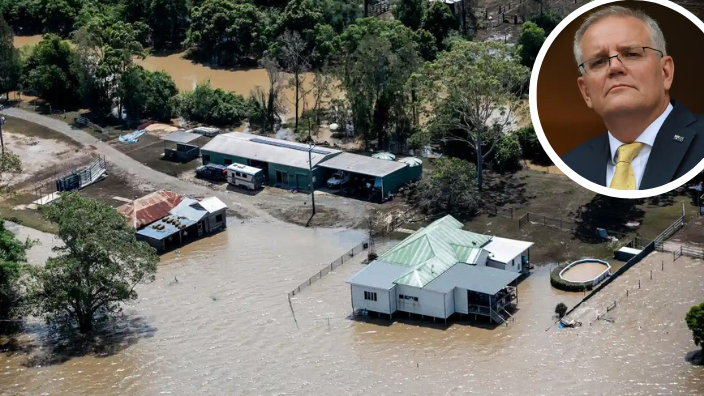
Australian Prime Minister, Scott Morrison, has declared a national emergency in response to catastrophic floods in northern New South Wales.
The declaration gives the federal government power to deploy money and resources faster. It is a legislative power that Mr Morrison sought after the 2019-2020 bushfire crisis.
Mr Morrison said he intended to ask the Governor-General to formally make the declaration which would cover both NSW and Queensland.
“I have made this decision today, in consultation with the Premiers … and it will ensure our Ministers and agencies don’t face any unnecessary bureaucracy as they roll out what communities need,” he said.
Mr Morrison made the announcement before he spoke in Lismore today, where he was greeted by angry residents whose lives have been upturned.
He also said residents in the Local Government Areas (LGAs) of Richmond Valley, Lismore and Clarence Valley would be able to access a further $2,000 for adults and $800 for children through an extension of the Disaster Recovery Payment scheme.
This announcement comes as earlier today, His Eminence Archbishop Makarios of Australia also issued a message of support for all flood victims who have lost their lives, homes and belongings in the unprecedented flood crisis across NSW and in Queensland.
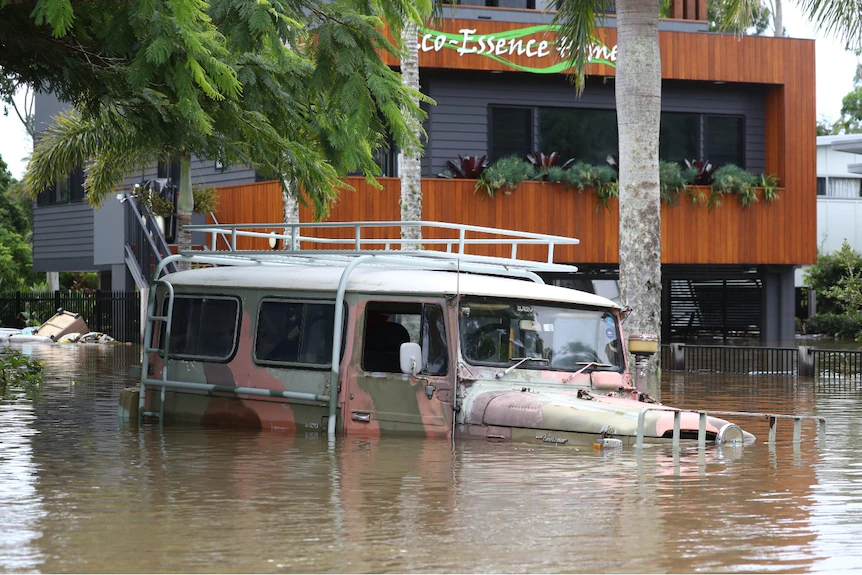
Submerged car in northern NSW due to the flood damage. Photo: AAP / James O’Brien.
“I pray for the souls of our fellow human beings who have lost their lives and for the consolation of their relatives and loved ones, as well as for the relief of the injured and for the strengthening of those who continue to fight against the destructive floods,” the message reads.
Other additional measures announced by the government include:
$25 to cover “emergency relief”, food relief and financial counselling services
$7.8 million for businesses in NSW and Qld affected by the floods
Around $6.9 million for early childhood and childcare services which have been closed for more than seven days
$4.7 million to make sure primary health services can continue to operate in affected regions.
$10 million to a mental health program for school-aged children in Northern NSW
$31.2 million for mental health support services for affected communities in both states
$5.4 million for legal services within affected communities.
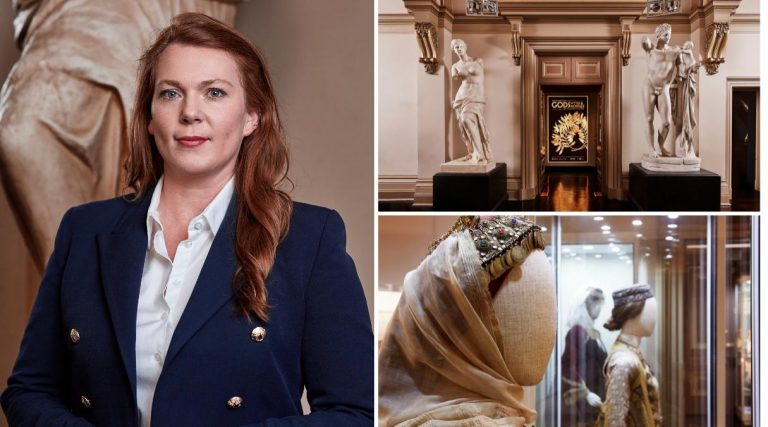
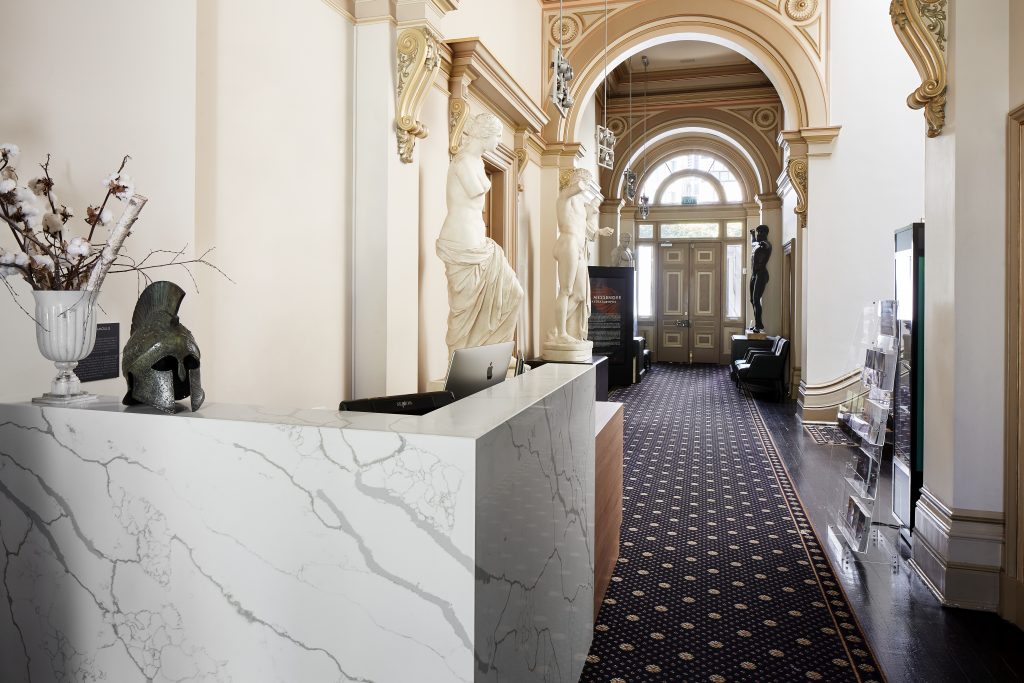
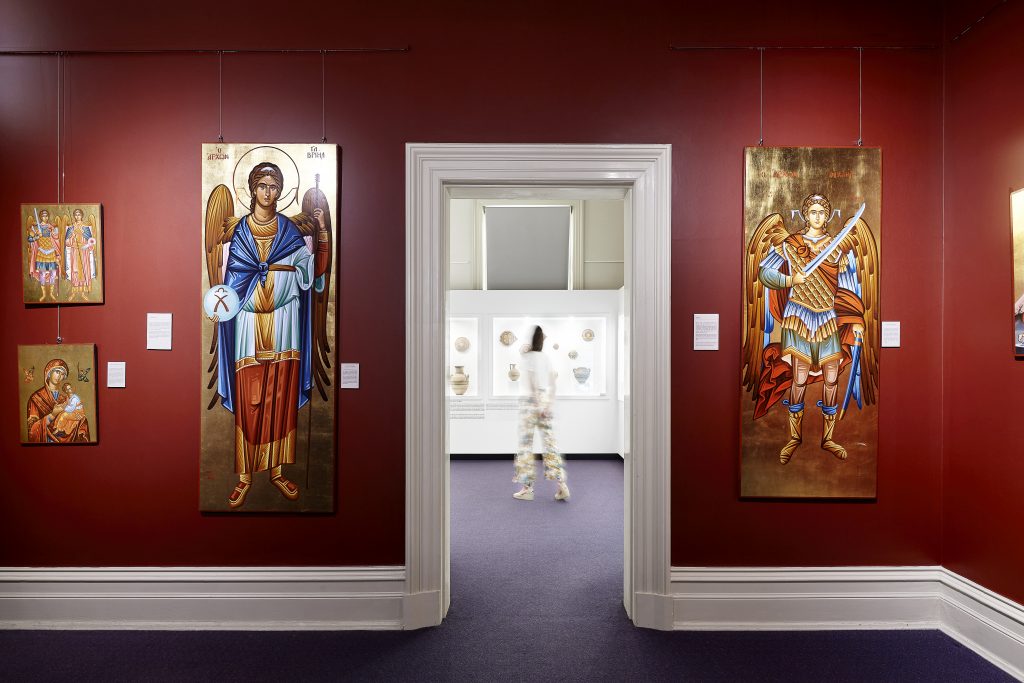
Hellenic Museum CEO Sarah Craig says she feels like she’s on the set of a movie every time she walks down the opulent staircase of the Royal Mint, where the museum is housed.
It’s a movie with plenty of cliff-hangers since she took over its reins in October 2020. That month, despite a deadly pandemic dominating global headlines, the Hellenic Museum in locked-down Melbourne managed to make the news on at least three occasions.
A Herald Sun top story spotlighted the now-scrapped plan of a “$244 million CBD museum” at the iconic Land Titles Office to make Melbourne “the only city outside Greece with a permanent Benaki Museum on the site”. This was swiftly followed by a statement by Greek Prime Minister Kyriakos Mitsotakis referring to the Benaki Museum’s collaboration with the Hellenic Museum as “an example of how we can bring Greek culture to Australia”.
Before the month had ended, Ms Craig took the helm as the museum’s new CEO, with outgoing John Tatoulis stating the announcement of her appointment had caught him “a little by surprise” and was perhaps “naively distributed prematurely”.
Ms Craig told TheGreek Herald that she, too, was “surprised” when the Board made the decision to appoint her to the role but was also “fabulously honoured and delighted”.
Remembering her predecessor, an “ideas man”, she feels gratitude. “We worked together for six years, and it was fabulous,” she said. “I’m grateful there was so much freedom given the size and scope of the museum.”
Her rise to CEO has been swift and spectacular, starting her collaboration as an intern in 2014 while doing a Masters of Art Curatorship at the University of Melbourne. From there, she moved to volunteer, curator, assistant, curator of operations and now CEO.
“When I started, there was only one exhibition and now all the galleries are full,” she said.
Benaki Museum artefacts, a flagship display
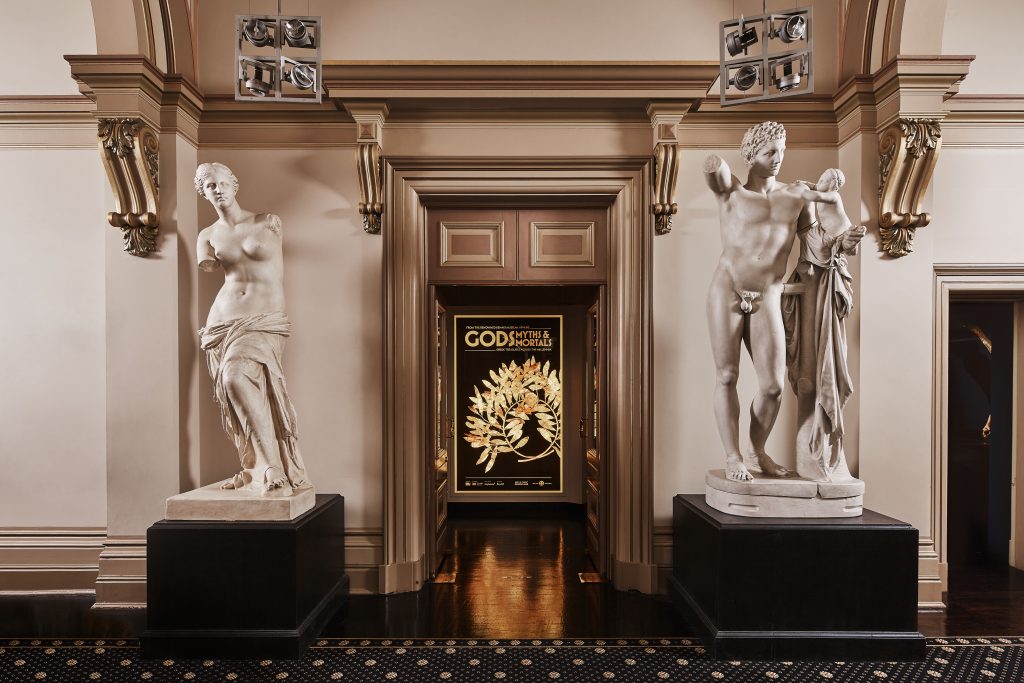
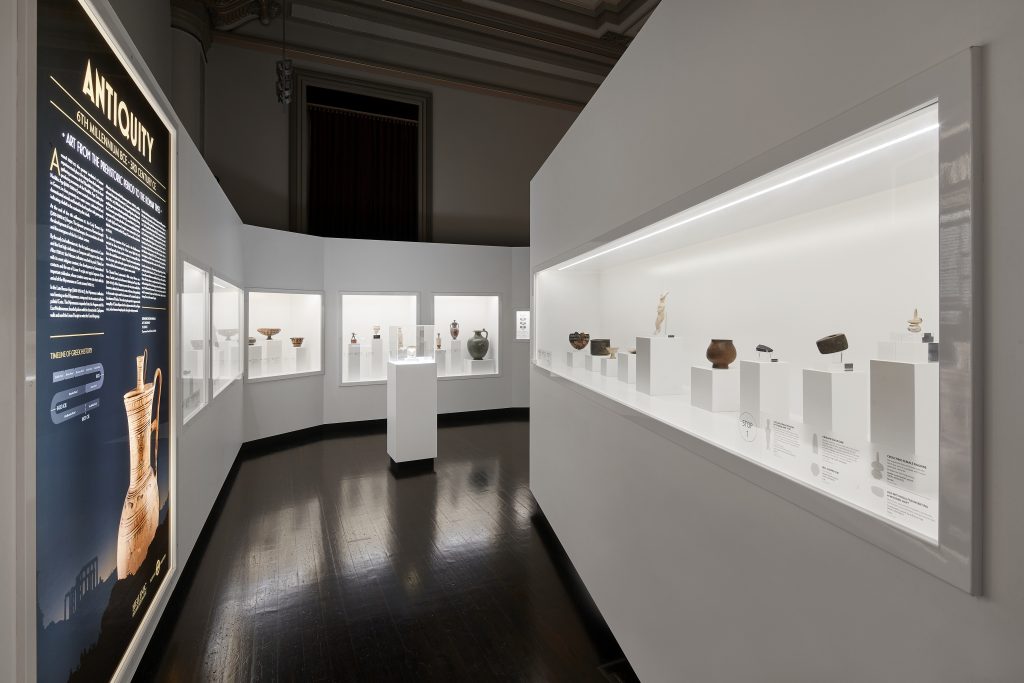
The display of “Gods, Myths & Mortals: Greek Treasures Across the Millennia” spans over 8,000 years of Greek civilisation from 5,800BC to the Greek War of Independence.
Ms Craig knows the display well but never tires of it, stating her own connection is rejuvenated through visitors’ reactions. She learns from everyone ranging from the Australian Embroiders Guild who were “blown away by the detail, use of colour and the complexity of the stitches” to a Benaki Museum expert, who could look at animal-skin papyri and tell which hide they were made of.
Asked to share her favourite item, her choice of a seemingly unremarkable coil pot indicates where her heart lies when telling history.
“Someone has gone through all the effort of making this beautiful pot,” she said, admitting that it looks like the creations of a Year 9 pottery class. “They’ve burnished it, they’ve fired it and it has survived for 8,000 years. And we’re only a moment of time in its life and it will probably last another 5,000 years beyond us. And I think it is a special piece, an everyday piece.”
Ms Craig wants people to relate to the artefacts, to feel a connection. “So much of history is written by the victor. It was written by men up until recently. It’s written in the helmets and the gorgeous pottery and statues and gold, whereas these ones (the makers of the pot) are people like me,” she said.
She stops short of offering me tea from the pot in question, despite the museum’s philosophy of object-based handling. Real objects, not replicas, such as a sword from 800 BCE from Ms Craig’s own collection are offered to visitors to handle as “a tangible way to hold your heritage”.
Heritage, like history, is quite intricate
Wikipedia describes the museum as “one dedicated to showcasing the ongoing story of the Greek community of Melbourne”, but those hoping to find a narrative of the Greek-Australian story and tribulations of early pioneers may be a little disappointed. It’s more about art, thought and philosophy, than it is about immigrant struggles.
“I think the notion of Greekness really depends on what period you are looking at,” Ms Craig said.
“The geographic borders have continually shifted over time so that is why we are the Hellenic Museum rather than the Greek museum.”
A believer in intercultural connections, Ms Craig points to another pot from the Benaki display, adorned with a swastika. “Greeks were inspired by Indian art, and that is reflected in their own,” she said pointing to “ancient connections”.
“To say that culture is an island is a fallacy.”
Proof of how culture transcends, transforms and triggers dialogue can be seen in sculptor Sam Jinks’ commissioned work, “The Messenger” – a hyperreal depiction of messenger goddess Iris using silicone, resin, calcium carbonate, fibreglass and hair. It was a huge success when it travelled from Melbourne to Greece in 2018.
In a bougie upstairs lounge, classicist/landscape photographer Bill Henson’s “Oneirei” consists of 11 images which incorporate artefacts from the Benaki display into a moody installation of light, darkness, reality, dreams and shifting perspectives.
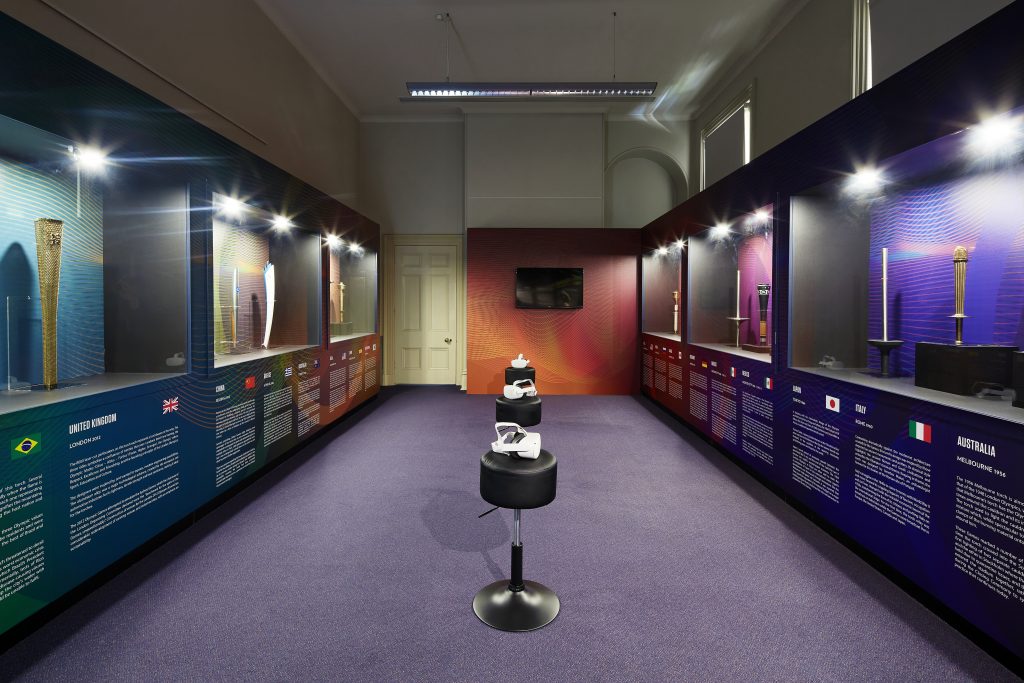
In another hall, the story of the Olympic Games is told through torches, while VR headsets by a Melbourne tech team allow visitors to explore ancient Olympia.
“The museum underpins all that is Hellenic, but ultimately hopes to expand to the rest of the world so we can have more conversations with more people,” Ms Craig said.
“The bigger vision is to be recognised as a place where people can go and discover and be challenged and walk away with more ideas.”
Ms Craig said this vision is not just in the museum’s DNA but at the core of Hellenic ideals. “Greece was always about growth,” she said. “The ancient Greeks were always challenging, always striving, always looking forward and I really think if we didn’t honour that here, we would be remiss.”
Looking to the museum’s future
Despite expansionist aspirations, the high hopes and hype surrounding the move to the refurbished Land Titles Office fell flat.
“We just couldn’t get it across the line,” Ms Craig said. “The Board decided it was not viable for us, which was disappointing because so much work had gone into it from both sides, but we’re still looking to grow.”
Growth can take many forms. With the Benaki Museum display set to end in 2024 and the world slowly returning to normal, Ms Craig said that there are conversations brewing and discussions taking place.
Ms Craig said the museum is “a Greek dream which changed over time”. She adds, however, that the original vision of businessman/philanthropist Spiros Stamoulis “to share Greek cultural heritage, but ultimately for everyone to buy into why it is important” is slowly being realised.
As a “passionate philhellene” who first fell in love with Hellenic culture through her mother’s telling of ancient myths tweaked with happy endings, Ms Craig is one who shares the dream and well positioned to carry on the legacy.
The Hellenic Museum is located at 280 William Street, Melbourne. Telephone (03) 8615 9016.
UPCOMING EVENTS AT THE HELLENIC MUSEUM
11 March, 1-3pm
International Women’s Day Fund-raiser held by the Hellenic Museum Ladies’ Society, tickets $130
22 March, 6.30-7.30pm
Live art and storytelling with John Hughs and Marco Luccio Art and storytelling collide as Greek myths are read aloud while art is created live, $20
2 April, 11-12.30pm
Seasonal scents, Easter edition Guests must be over 16 to attend this soy candle-making workshop, $95
14 April, 11am-12.40pm
Magic and Medicine Masterclass An educational workshop for students from 7 to 13 years during Term 1 school holidays, $18
23 April, 11am-12.40pm
Pigments of the Past Experiment Experiment with ancient paints during Term 1 of the school holidays for students aged from 7 to 13 years, $18
9 July, 5-9pm
Hellenic Arts Fest: Mythical Feast – Atalanta Greek myths via a gastronomic experience, $195 First Saturday of every month from 11.30am-12.30pm guided tours are held by the museum’s curator, Tickets at $17 (adults) and $12 (concessions).
The Daily Telegraph‘s rugby league writers, Michael Carayannis and Brent Read, have named their top 50 most power figures in the NRL and among the list are four Australians of Greek heritage.
The Greek Herald breaks down who they are.
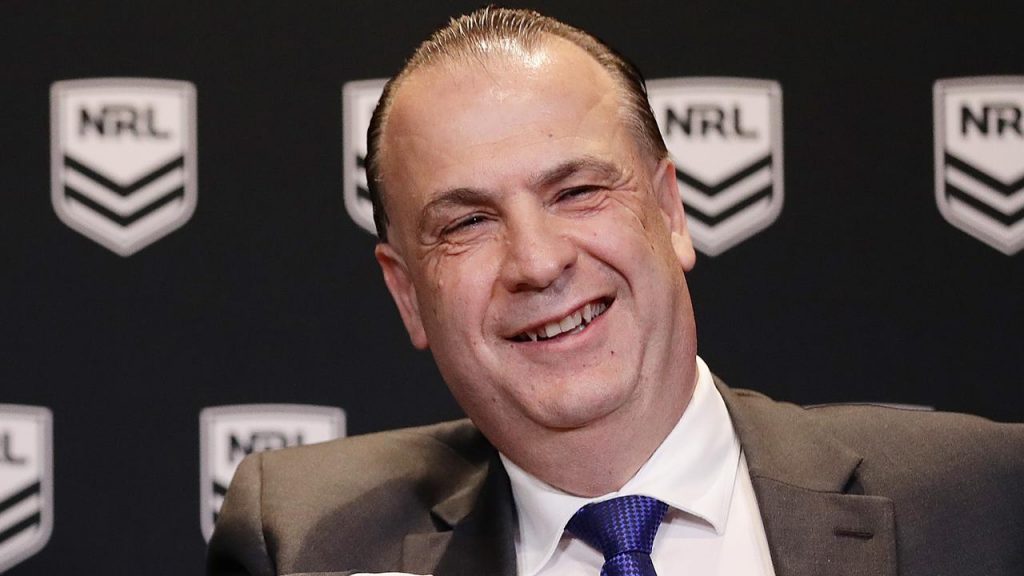
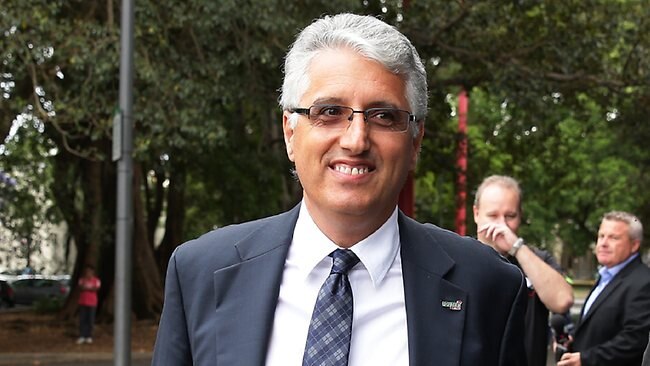
#1: Peter V’landys, ARLC Chairman, Chief Executive of Racing NSW
Peter V’landys assumed the chairmanship of the Australian Rugby League Commission (ARLC) from Peter Beattie in 2019.
He ripped millions out of the bottom line in the NRL’s head office, kept the game afloat during the COVID-19 pandemic and helped the NRL become the first major sporting code to return to play. He also introduced a raft of rule changes.
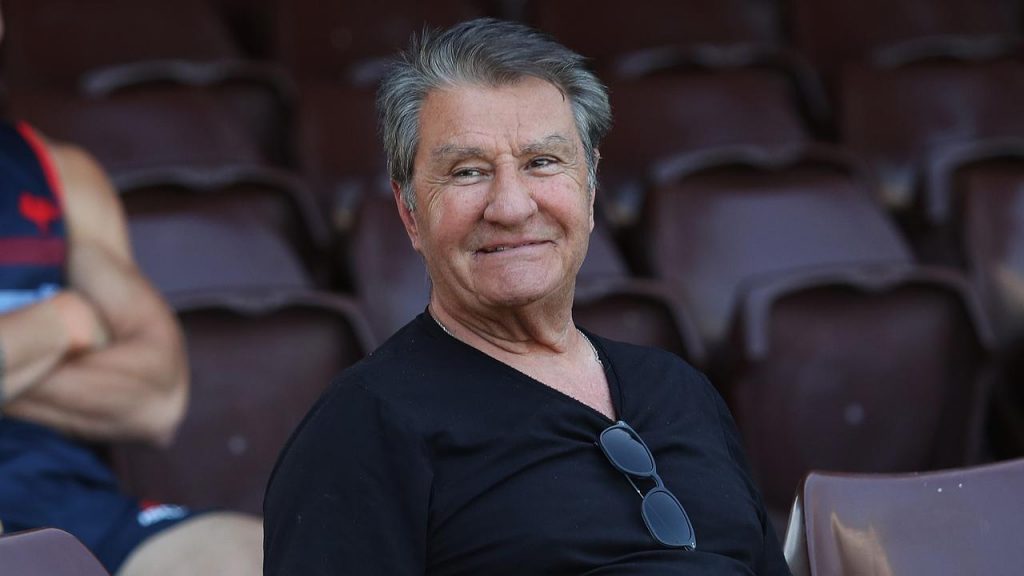
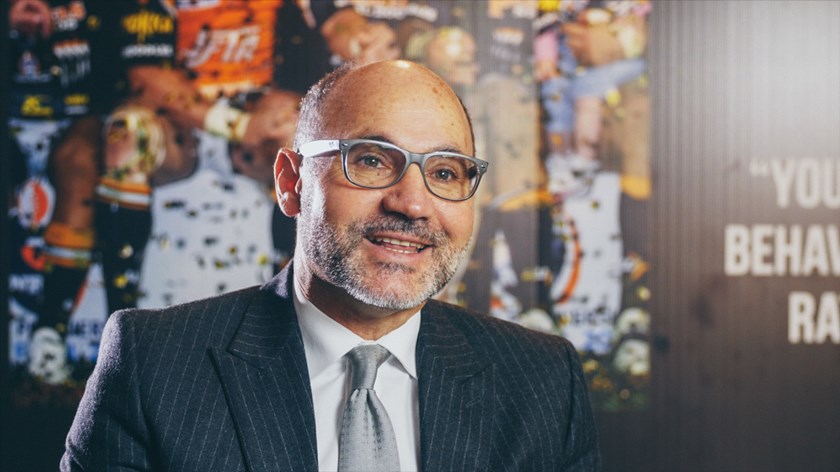
Nick Politis is a migrant from the Greek island of Kythera who has helped save rugby league in Australia and turned a single car dealership into a $2 billion fortune.
Politis is one of the most powerful men in rugby league as the Chairman of the Sydney Roosters. He recently quit his post as a NSW board member.
Nick Papas is held in high regard by the NRL’s executives and fellow clubs alike and has long been touted as a potential chairman of the game.
While he has been in the thick of discussions regarding the game’s big picture, it has not detracted from running one of the game’s most successful clubs in South Sydney.
#31: Lee Hagipantelis, West Tigers Chairman
The Tigers chairman has been involved in the game for a long time via his business Brydens Lawyers.
The law firm are major sponsors of the Tigers and also sponsor a host of other teams including Newcastle, South Sydney and a range of junior clubs.
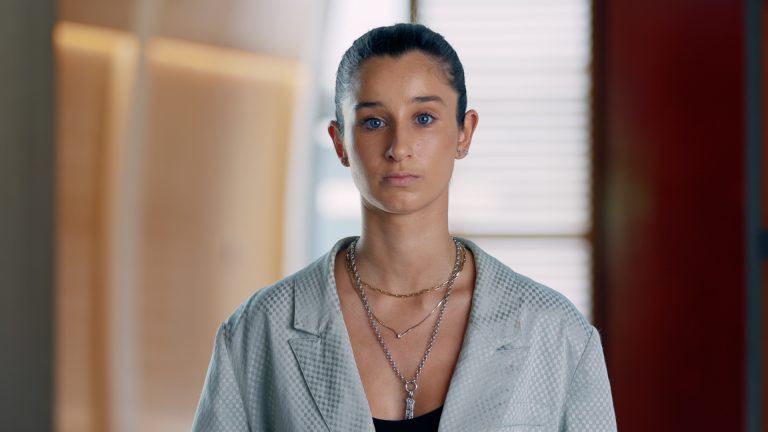
Activist, Chanel Contos, has lent her voice and star power to a new Australian campaign aimed at ending injustice and inequity for women.
The Safety. Respect. Equity. initiative is calling for systemic reform in the areas of sexual harassment, domestic violence and consent education.
Contos is a part of the campaign after her petition for earlier sex education in schools inspired hundreds of former Sydney schoolgirls to come forward about their experience with sexual assault last year.
Proud to stand alongside these women in calling for action to ensure ALL women can enjoy safety, respect & equity. NB: the women visible are not the only women involved. Some women weren't able to be visible. Which is precisely why we're calling for action.#SafetyRespectEquitypic.twitter.com/86iwOh2BDN
She’s also joined by 11 other prominent Australian women including Grace Tame, Julia Banks, Christine Holgate, Brittany Higgins, Lucy Turnbull, Madison de Rozario, Michele O’Neil, Larissa Behrendt, Yasmin Poole, Wendy McCarthy and Georgie Dent.
In a video on the group’s website, Ms Tame starts by telling viewers, “Australia, we need to talk.”
The video explains that “2021 wasn’t the first year that Australian women were harassed or unsafe or violated or ignored or disrespected… and it wasn’t the first year that women spoke up.”
For her part in the video, Contos says now is the time to “educate the future generations of Australians” on equality for all women.
The group is specifically calling for the prevention of sexual harassment and bullying toward women and wants all 55 recommendations in the Respect@Work report implemented.
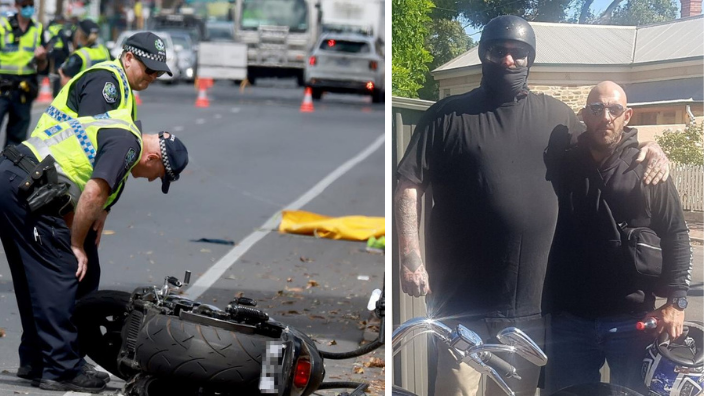
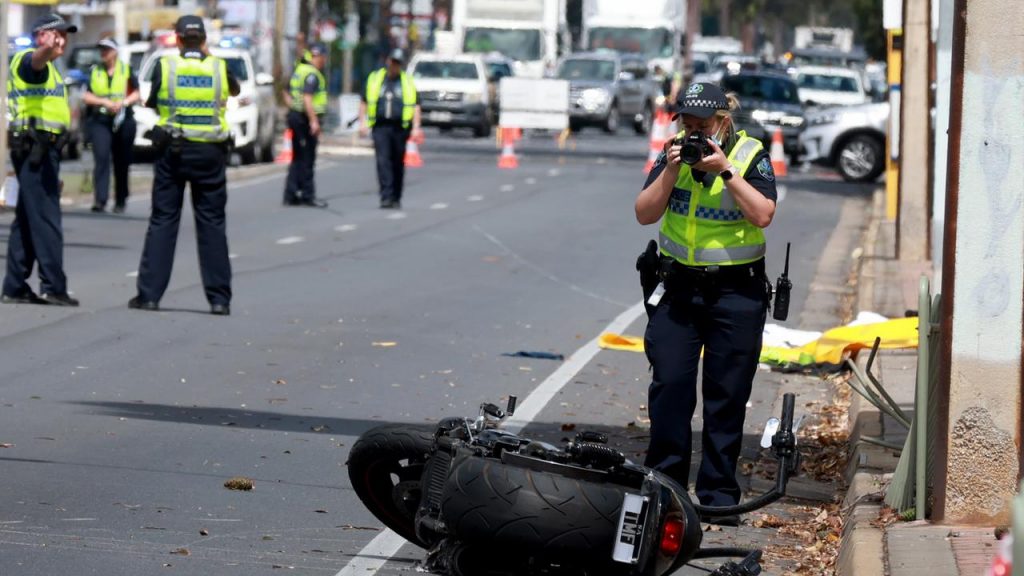
Former senior Finks bikie, Anthony Mavropoulos, has been identified as the motorbike rider who was killed in a crash in Somerton Park yesterday afternoon.
Mavropolous, 45, crashed into a stobie pole at speed on Brighton Road outside Sacred Heart College around midday.
The horror scene, which played out in front of school students, took more than six hours to clear and Mr Mavropoulos died at the scene.
Police at the scene of the Somerton Park crash on Monday. Picture: Kelly Barnes.
According to The Advertiser, witnesses reported Mr Mavropoulos had been travelling in excess of 100km/h and had run a red light prior to the crash.
Tributes were flowing on social media for Mr Mavropoulos after his death, including from former Mongol and Fink bikie Tyson Ward.
Mr Mavropoulos was found guilty in 2009 over a shooting at Prospect in the midst of a cannabis turf war. He served eight years in prison for his crime.
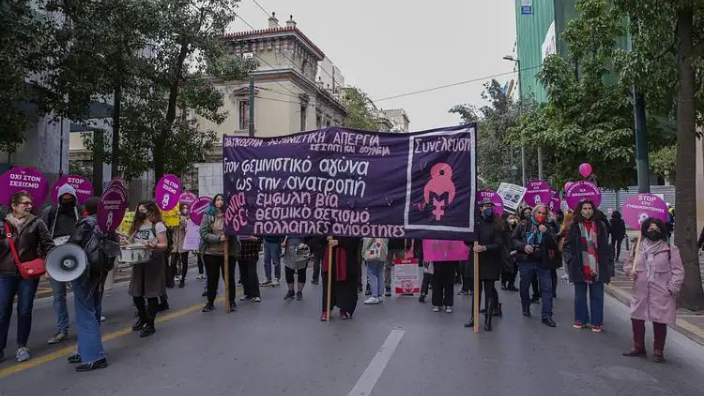
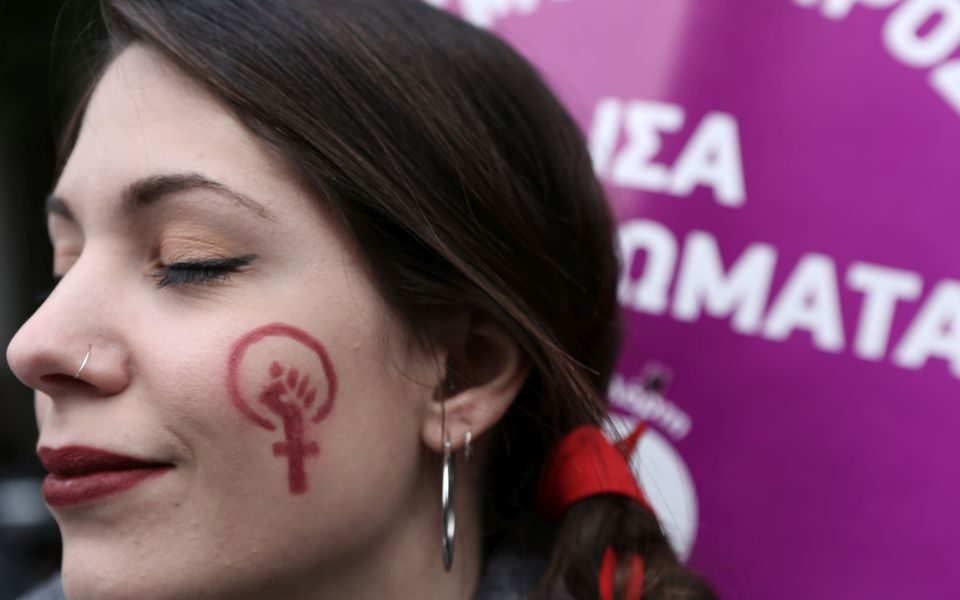
Hundreds of people participated in a rally and march to mark International Women’s Day 2022 in Athens on Tuesday.
Besides chanting slogans in support of women’s rights, participants also chanted against the war in Ukraine while a central banner called for the reinstitution of the General Secretariat for Equality.
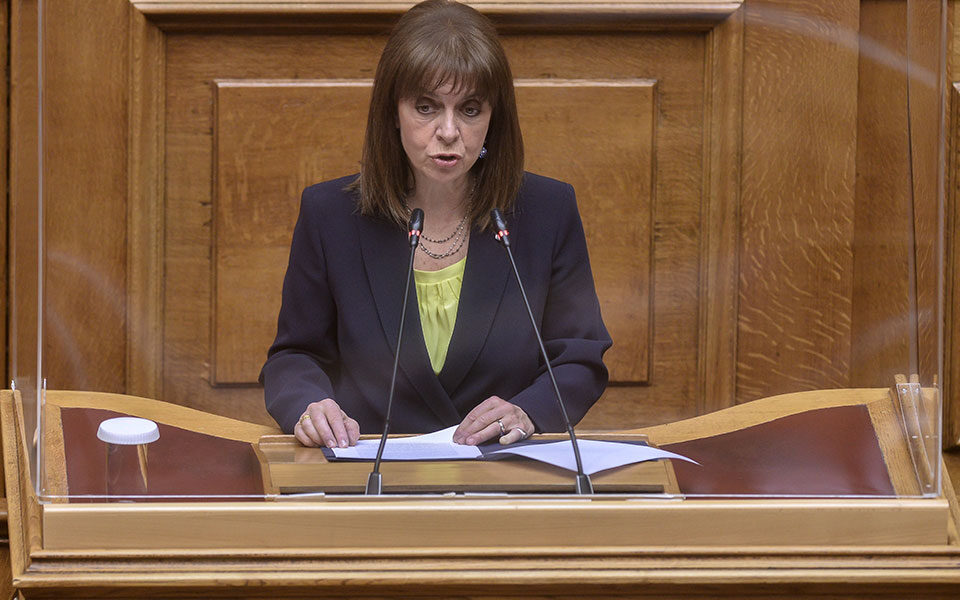
Greece’s President, Katerina Sakellaropoulou, also added her voice to mark the day in Parliament on Tuesday.
In a speech, Sakellaropoulou made special reference to the women of Ukraine amid Russia’s invasion of the former Soviet republic.
“On a day like today, a day of honour for women around the world striving for a better future, the women of Ukraine are in our hearts and minds,” Sakellaropoulou, who was dressed in the colours of the Ukrainian flag, said.
The female President stressed that TV footage and images of refugees escaping war in Ukraine brings up “painful memories” of refugee waves triggered by the Asia Minor disaster and Turkey’s invasion of Cyprus.
Η Παγκόσμια Ημέρα της Γυναίκας γίνεται φέτος αφορμή όχι μόνο για να ευχηθούμε, όσο κυρίως για να στοχαστούμε και να αγωνιστούμε. Γιατί χωρίς αμφιβολία, το μήνυμά της αποτυπώνεται σε ένα μόνο πρόσωπο: αυτό της γυναίκας της Ουκρανίας. #WomensDay#IWD2022
— Prime Minister GR (@PrimeministerGR) March 8, 2022
For his part, Greece’s Prime Minister marked International Women’s Day with a message on Twitter pointing out the strength of the “Ukrainian woman” who “stayed in her homeland to defend it from the Russian invasion.”
Later in the day, the European Union’s executive arm also unveiled plans to harmonise the criminalisation of rape across the 27-nation bloc on the strict basis of lack of consent. The plans also include the criminalisation of female genital mutilation and cyber violence.
“I want Europe to be at the side of women with protection and support. I want a society where violence against women is prevented, condemned and prosecuted when it occurs,” European Commission president Ursula von der Leyen said.
“The time for justice and equality is now. That’s why we come forward today with the right rules to accelerate change.”
The proposed directive also lays out targeted support from member countries to specific groups, including women fleeing armed conflict.
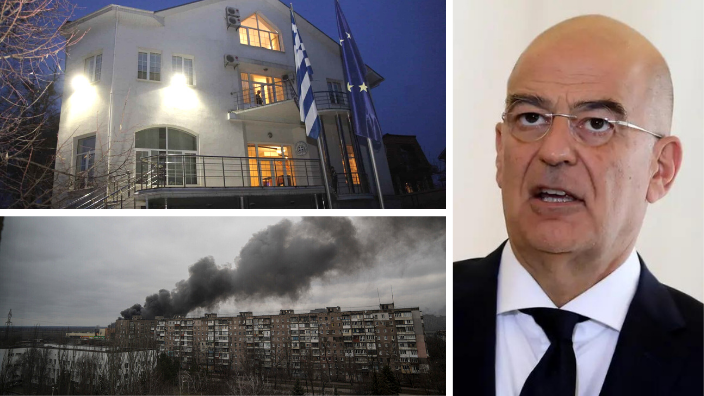
The building that housed the Consulate General of Greece in the Ukrainian city of Mariupol has been damaged as a result of missile and bomb attacks by the Russian army, Ukraine’s Foreign Ministry has confirmed.
The Foreign Ministry said that the office of the OSCE Special Monitoring Mission in Ukraine was also damaged, while the honoured consulates of Slovenia, Azerbaijan and Albania in Kharkiv were destroyed.
We strongly condemn shelling of the premises of foreign diplomatic missions in Ukraine by Russia’s armed forces. All facts of destruction will be added to the international lawsuits against Russia to bring perpetrators to account.https://t.co/y5025DlM0fpic.twitter.com/tdCbFyVxHK
“Russia’s armed attacks on the premises of diplomatic missions represent gross violation of international humanitarian law, the Vienna Conventions on Diplomatic and Consular Relations,” the Ukrainian Ministry said in a statement.
“We call on the international community to condemn Russia for its barbaric shelling of civilian objects in Ukraine, which results in murders and injuries of civilians, including children.”
In response, Greek Foreign Minister, Nikos Dendias, wrote on Twitter that Greece is “very much trying to create a humanitarian corridor so that people that want to leave, can leave.”
We are very much trying to create a humanitarian corridor so that people that want to leave, can leave. As we speak, I have a Consul General in Mariupol, the last EU diplomat there and we have a very difficult time getting him out of there. We are trying our best.
“As we speak, I have a Consul General in Mariupol, the last EU diplomat there and we have a very difficult time getting him out of there. We are trying our best,” Dendias continued.
According to Ekathimerini, Consul General Manolis Andoulakis is currently sheltering in the building of the Organization for Security and Cooperation in Europe (OSCE) in Mariupol.
This comes after Dendias met with the Secretary General of the OSCE, Helga Schmid, in Vienna on Tuesday.
The two leaders discussed at length the situation and latest developments in Mariupol and Dendias stressed that his Ministry “will do everything in our power to bring the Greek consul general home safely.”
Dendias also thanked all Greek diplomats involved in the risky evacuations of Greek citizens and members of the Ukrainian Greek community from the country.
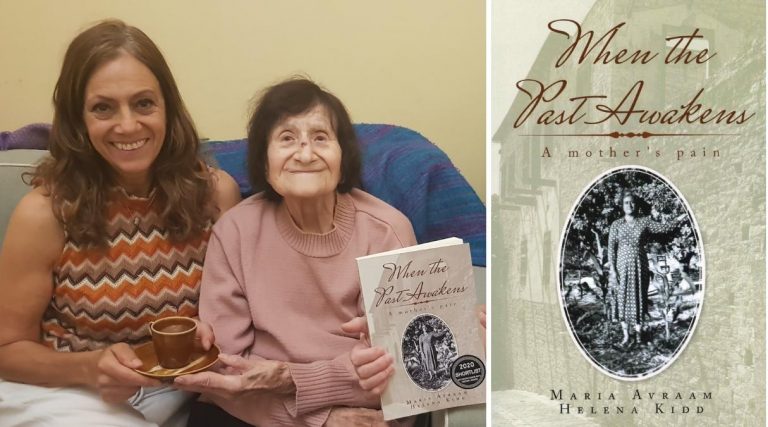
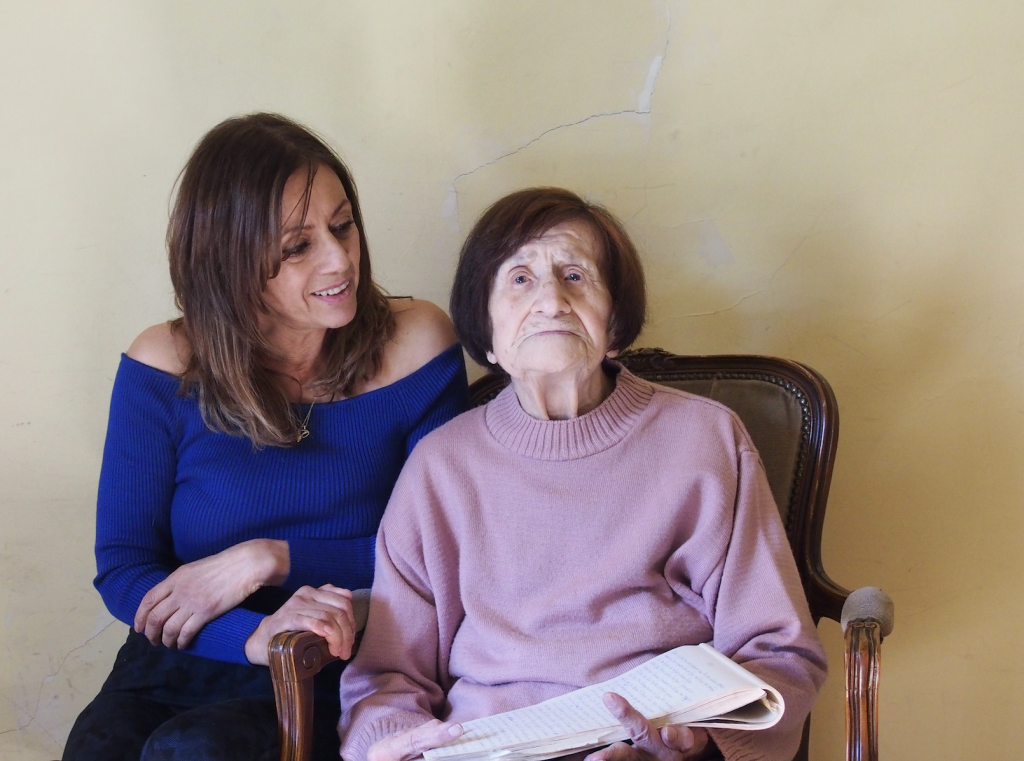
Nearly ten years ago Helena Kidd, a first generation Australian of Greek Cypriot heritage, came across her mother’s, Maria Avraam’s, Greek handwritten diary and had it translated to English for the family.
“I found my mother’s A4 pages of Greek writing and because I can’t read Greek, I asked her what it was and she said it was her diary. She said it was her heartache and that she just had to put it into writing.
“And she did that writing when she was 64 after she moved out from a house we have lived in, in Richmond that belonged to my uncle and finally bought her own home,” Ms Kidd tells The Greek Herald.
Some years later, she felt the need to share her mother’s story with a wider audience and this led her to rewrite sections, edit and improve upon the story, “When the Past Awakens: A Mother’s Pain”.
“I self-published the book with my mum’s permission. She was ok to reveal to the world what’s in the book and there is a lot of mental and physical abuse by my father -a story that many Greek women take with them to their grave,” Ms Kidd said.
“It’s a real and brutally honest account of her life and thoughts, straight from the heart. Her domineering mother was a constant battle of the mind and spirit.”
Arriving in Australia from her village in Cyprus presented even more challenges especially when she found herself alone, a deserted wife, with three small children to raise.
However, Maria proved to be a survivor who triumphed against the odds.
“It’s a very important story to be told with so much abuse currently going on in our communities,” said Ms Kidd.
Helena Kidd with her late mother Maria Avraam
When the book was published Ms Avraam was in her 90s and knew she wouldn’t live much longer.
“She knew she was ready to go and she didn’t care what people would think and couldn’t hide these secrets anymore.”
Until she read the translated notes of her mother Ms Kidd had no idea what her mother had been through but she says she feels lucky that her mother got to see the book before she passed away late last year aged 98.
“She got to see the book and an award. She couldn’t believe that people read her story and what she went through. And it’s not about misery. It is a beautiful story.
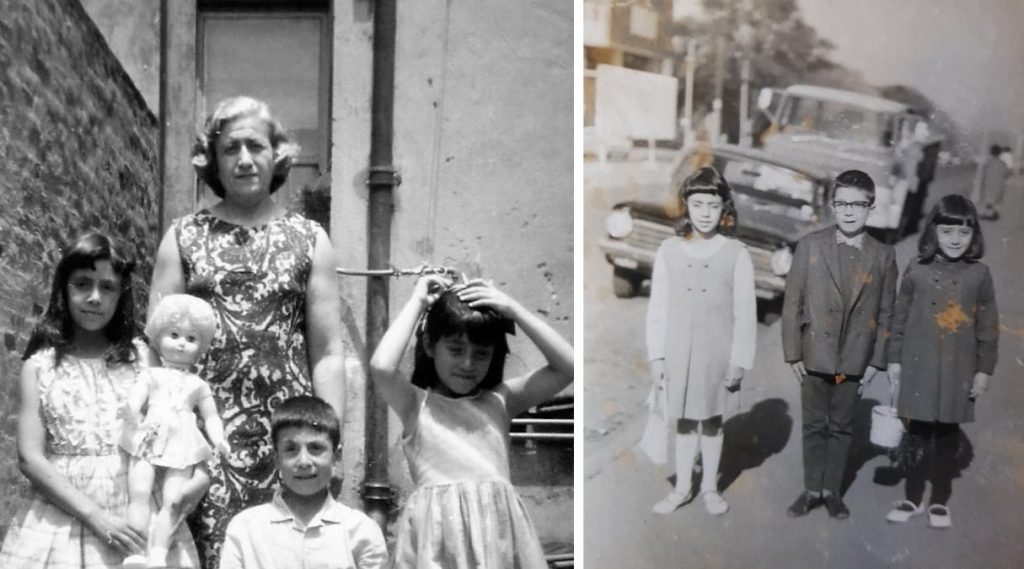
In the second part of the book, Helena shares further insight and creates a bigger picture for the reader of the family’s life in 1960s and 1970s.
“Today, women are still the silent victims just as Maria was. It still happens, so her story is very relatable in today’s society and other cultures,” Ms Kidd says.
“Despite the difficulties my mother gave us the best life. She instilled to us -my siblings and me- her power and strength. This book is not only about my mother but also other mothers of her generation. For the mothers that never give up but keep going despite the adversities.”
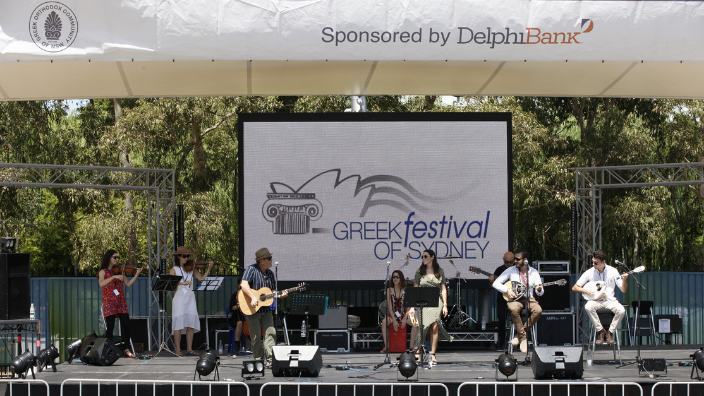
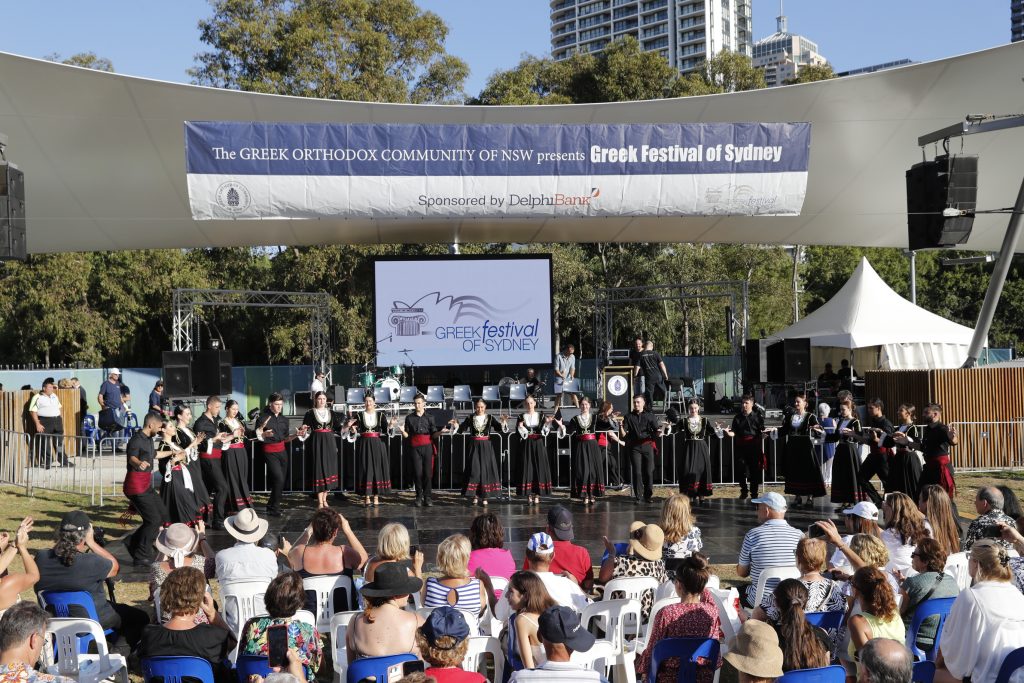
Due to the current weather conditions in Sydney, the Greek Orthodox Community of NSW under the direction of Property NSW, has been forced to make the difficult decision of postponing the Greek Fest Darling Harbour that was scheduled to take place this Sunday, 13 March.
“Following a meeting with Property NSW, we were faced with concerns of not being able to deliver an effective and safe festival in the current conditions,” Festival Chair, Nia Karteris, said.
“Even if this weather was to clear up, we would still have problems with many other issues such as power and turf conditions.”
The Festival Committee is in discussions for a new and suitable date which will be announced shortly.
Linked to the Darling Harbour celebration is the nine-week-long Greek Festival of Sydney, with over 30 events scheduled in this year’s quality program line-up. The Greek Festival of Sydney is an initiative of the Greek Orthodox Community of NSW.