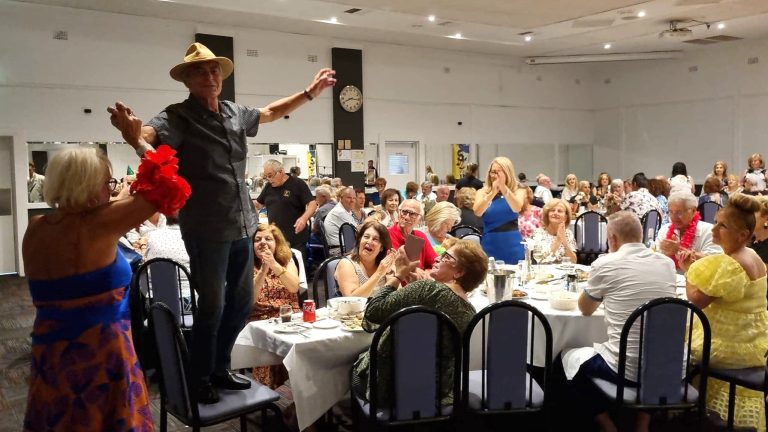
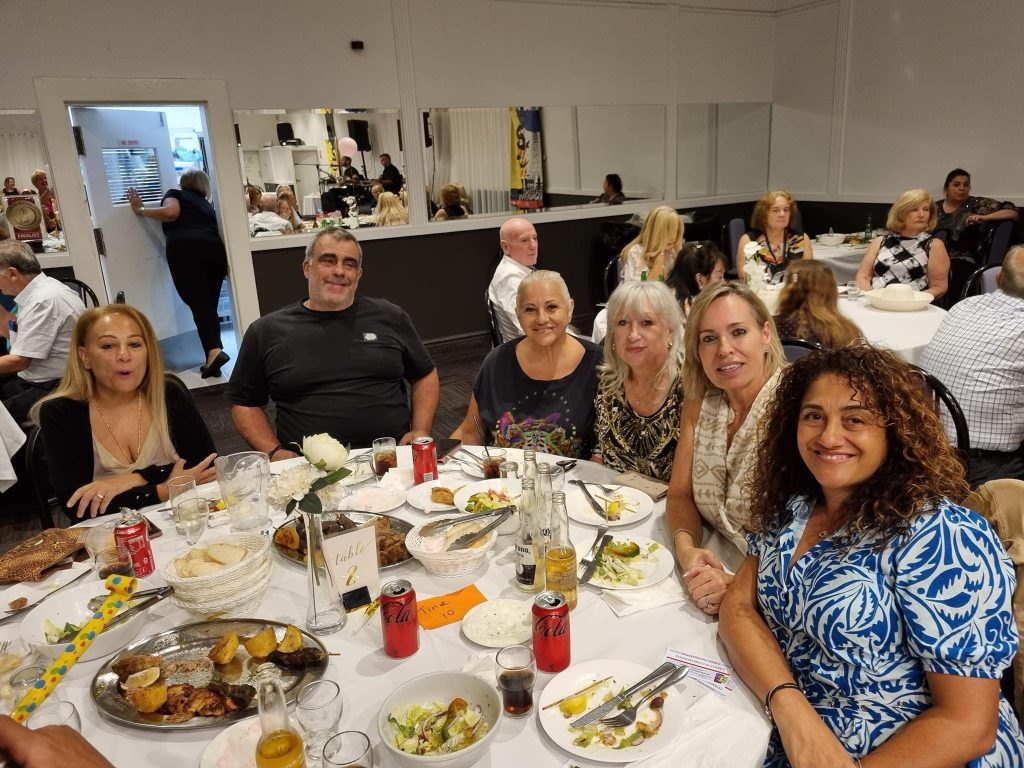
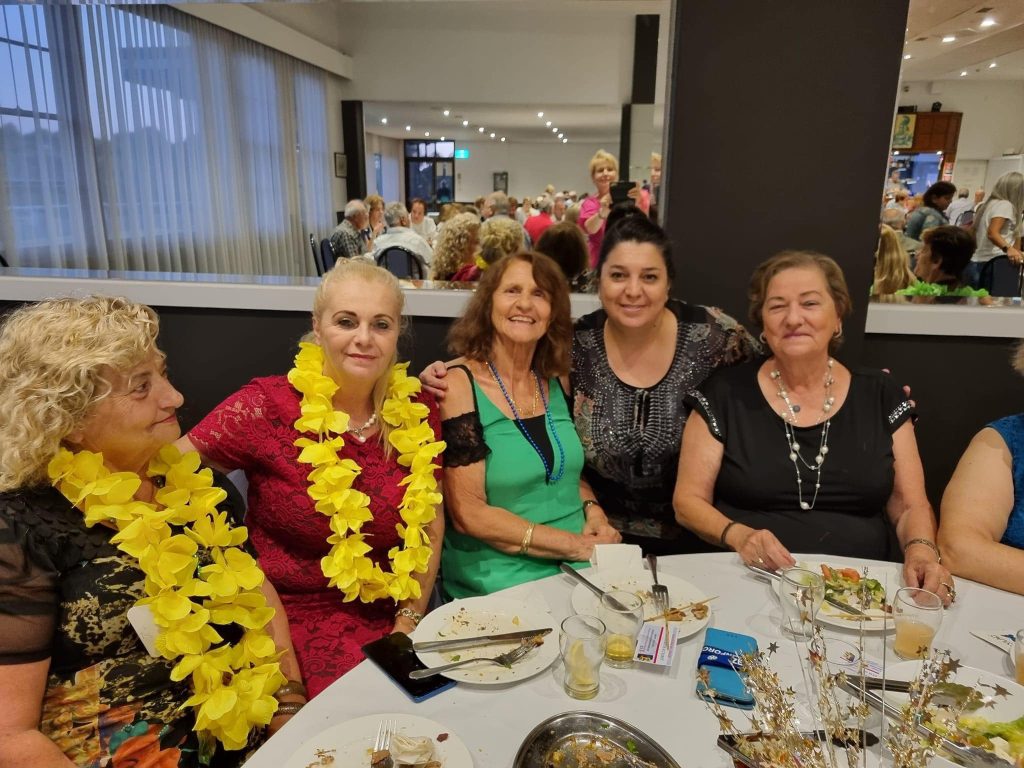
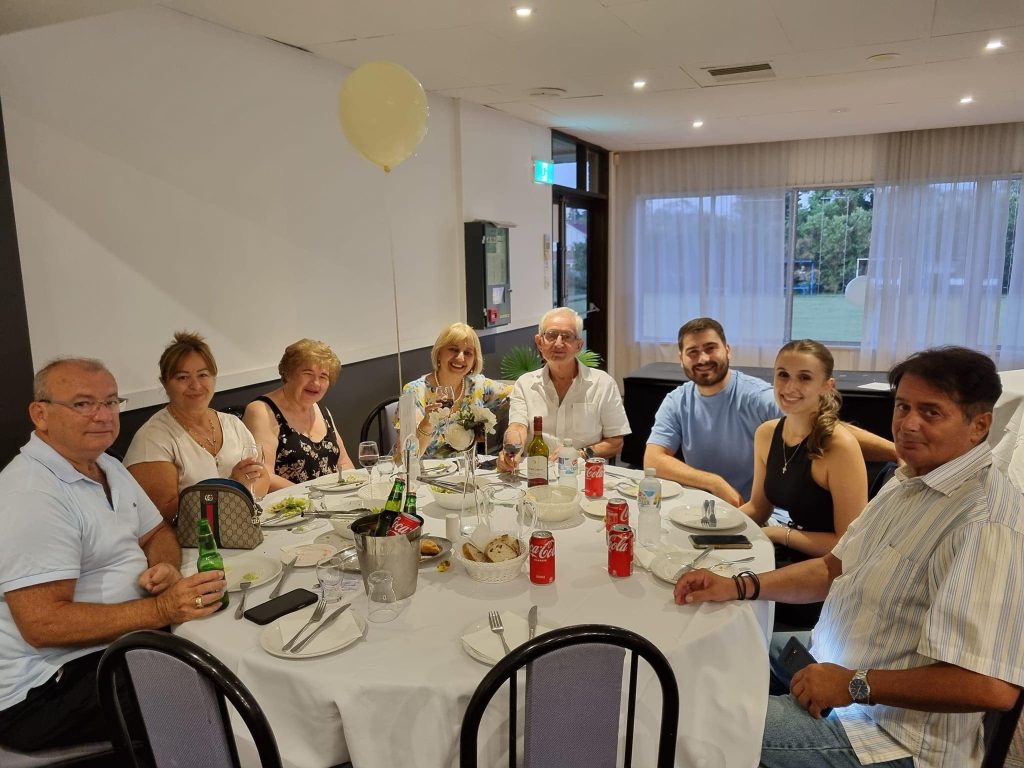
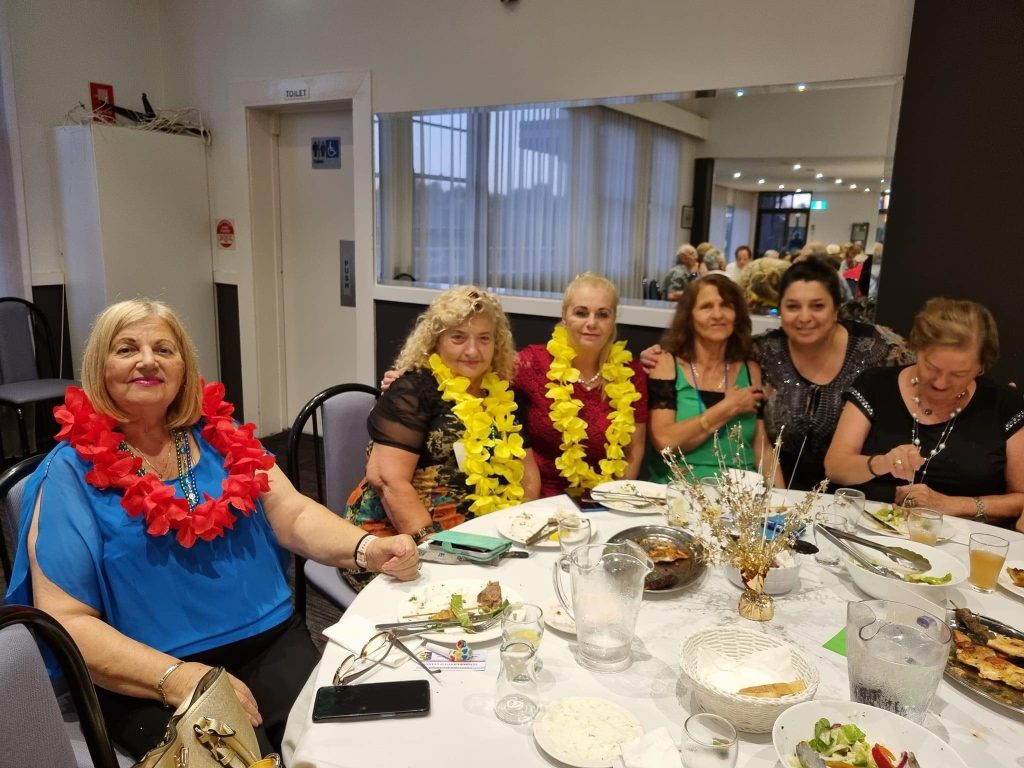
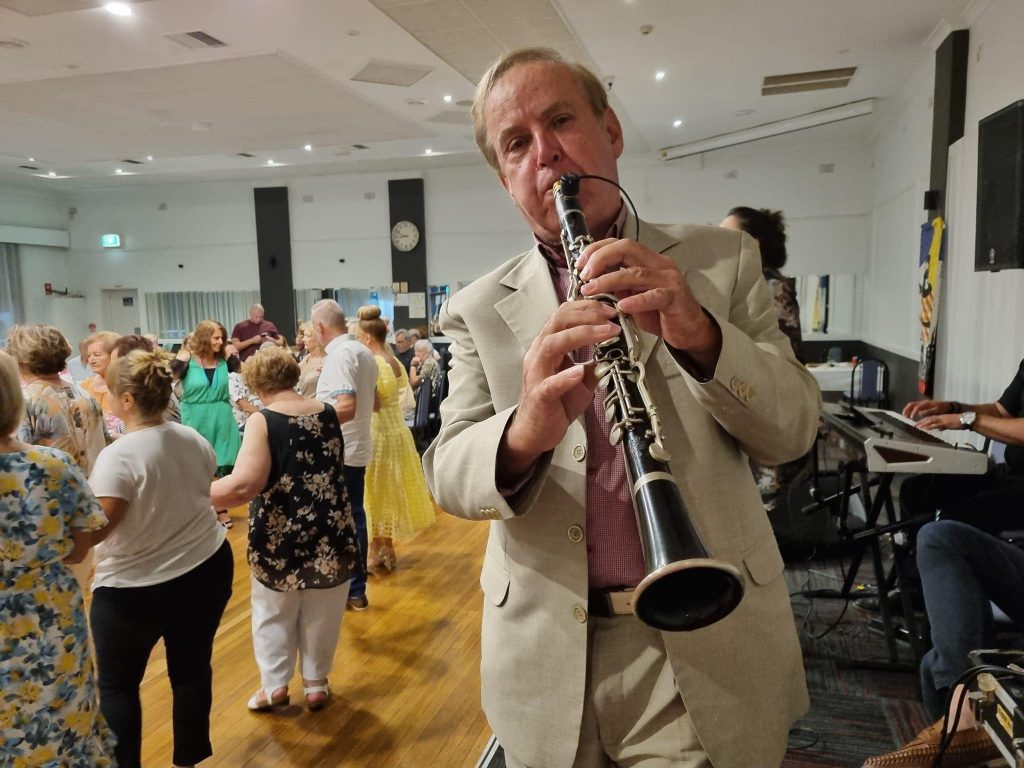
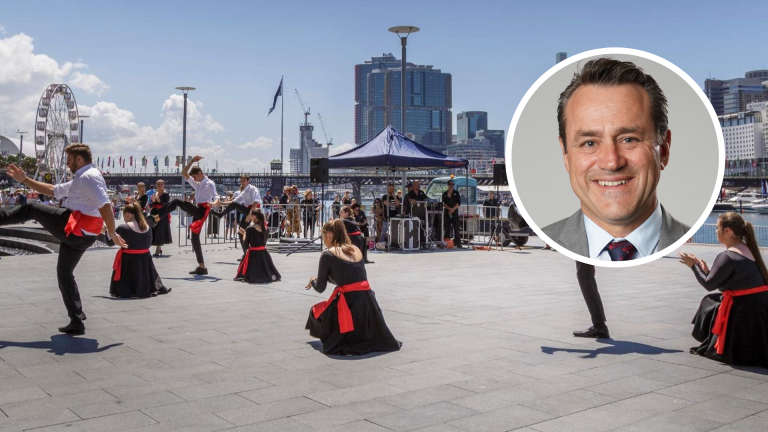
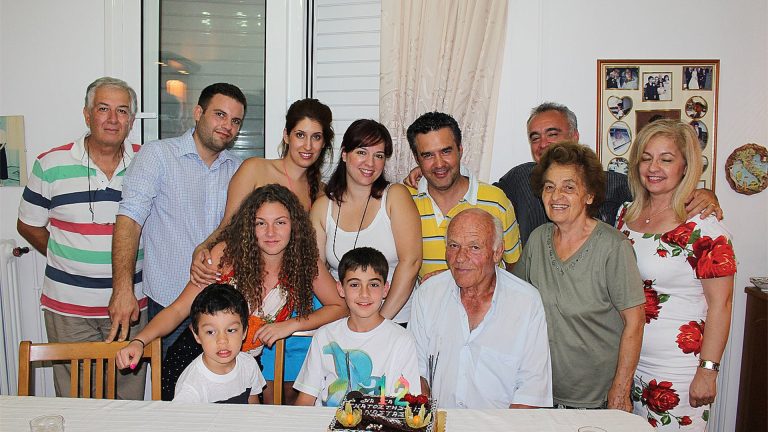
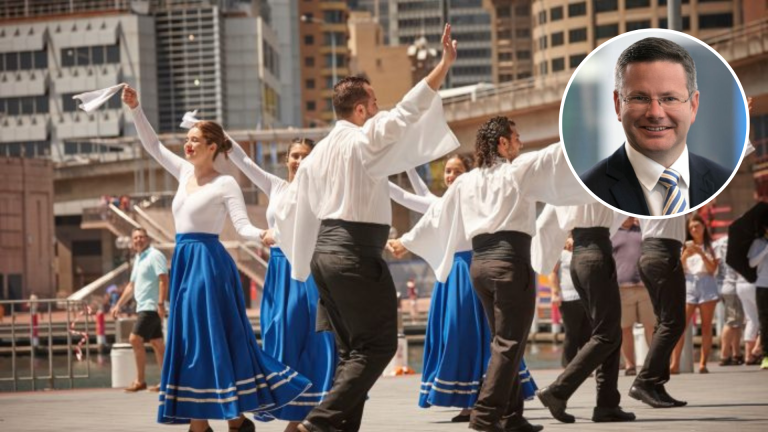
Sydney’s Greek community gathered at the Panarcadian Club in Canterbury on Thursday to celebrate Tsiknopempti.
Tsiknopempti, or ‘Smoky Thursday,’ is part of the traditional celebrations of Apokries season and centres on the consumption of large amounts of grilled and roasted meats.
The Sydney event was organised by the Panachaian Philanthropic Association (PPA) and saw over 100 people enjoy meat off the grill and have a dance or two.
Attendees also enjoyed live music by Thanasis Pylarinos and Kosta Zafeiropoulos on the clarinet.
“Thank you to everyone for attending. You all made Tsiknopempti a fabulous night,” President of the (PPA) wrote on Facebook about the event.
The New South Wales Labor Party has pledged it will invest $220,000 a year over the next four years to support the Greek Festival of Sydney if elected at the upcoming state election.
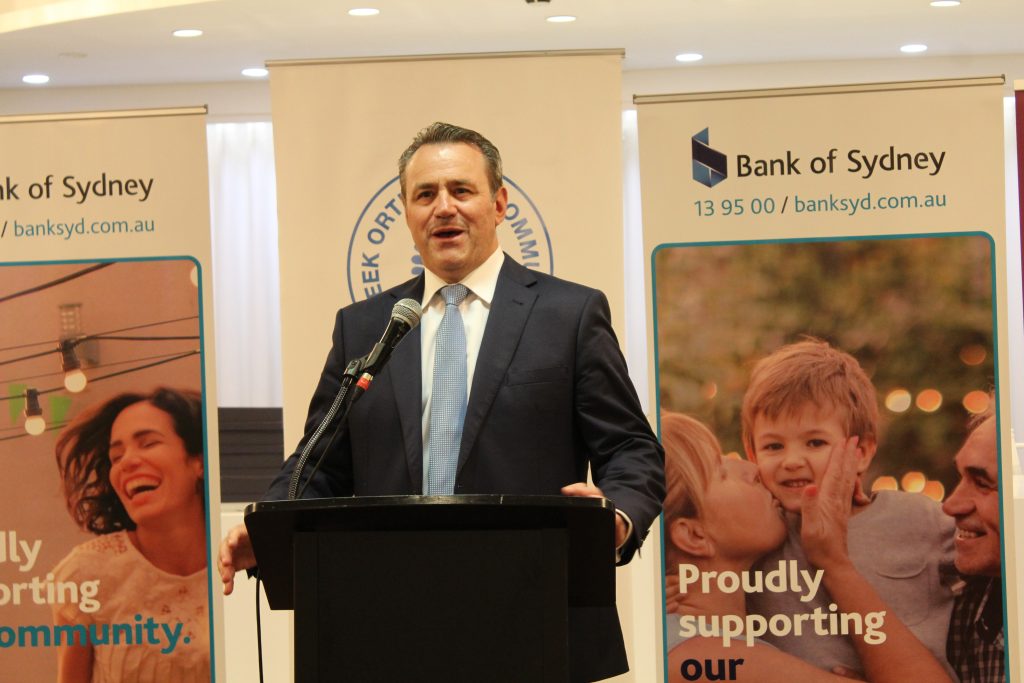
The announcement was made by Labor Member for Rockdale and Shadow Minister for Small Business, Property and Multiculturalism, Steve Kamper, at the official launch of the festival on Thursday night.
“We’re so proud of our Greek community. NSW Labor, under the leadership of Chris Minns, will continue to support the Greek Festival, anything Greek. It’s in our DNA,” Mr Kamper said in a speech on the night.
Steve Kamper MP making the announcement at the Greek Festival of Sydney launch. Photo: The Greek Herald / Andriana Simos.
Mr Kamper’s pledge came after the NSW Minister for Multiculturalism, Mark Coure, said on Thursday night the NSW Liberal and National Government would invest $800,000 over the next four years to the festival if re-elected.
“The Greek community has played a special role in helping build our rich multicultural society, and I am so proud to say we will be helping continue taking this event to even bigger heights,” Mr Coure said.
Both the President of the Greek Orthodox Community of NSW (GOCNSW), Harry Danalis, and Chair of the Greek Festival of Sydney, Nia Karteris, welcomed the support.
Although there is a Pan Corinthian Greek Association in Australia, there is also a Pan Corinthian Greek Australian Association of Greece – which was once the largest club of its type in Greece. ‘Was’ because although it still exists, its membership has dwindled significantly.
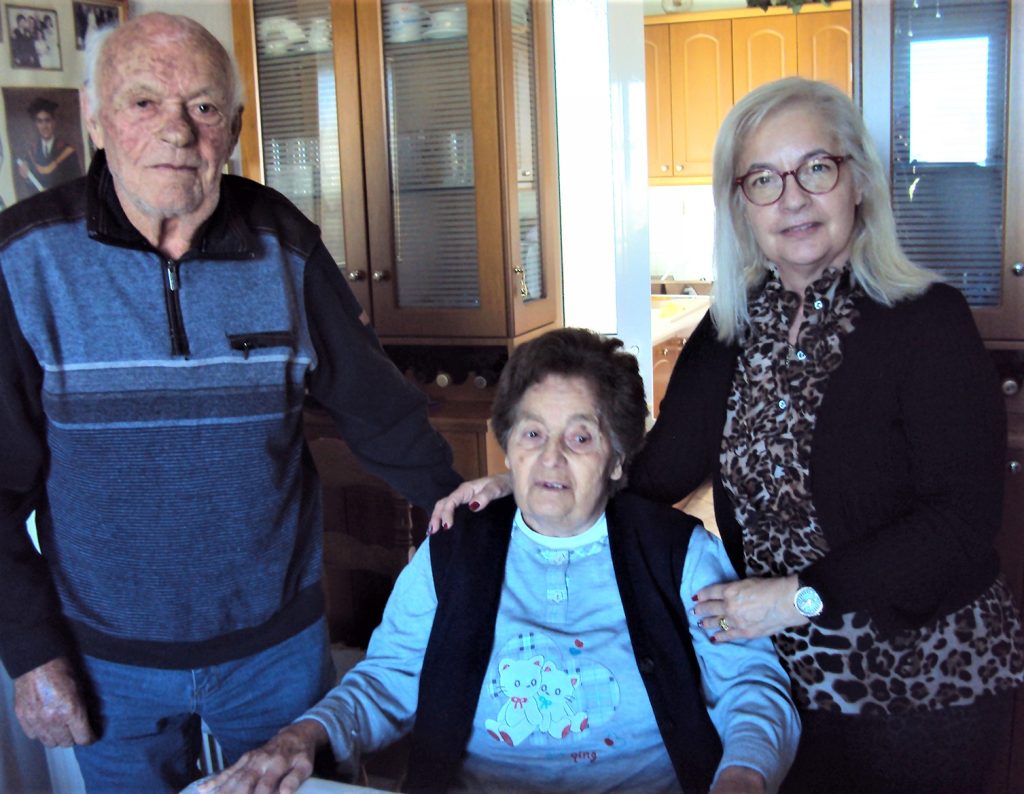
The President of the more successful original association was Anastasios Karahlis, now 90 years of age. He passed on the running of this group for Greek Australians in Greece’s wider Corinthian area to his daughter Mary, an accountant in her early 60’s.
I met up with both father and daughter in their home in the Corinthian locale of Kiato, the prefecture which incidentally served as the Pan Corinthian Greek Australian association’s main base.
In terms of its popularity and ensuing activeness, the heyday of the association was from the 1980s to the mid-1990s.
“I’ve tried to attract Greek Australians from the area into our association, but they’re of a different generation to that of my father and our parents. Most of the Greek Australians here now are more Greek as they’ve grown up in Greece and have assimilated here, hence shedding much of their Greek Australian identity,” Mary says.
“Our parents’ generation, who moved back to Greece from being migrants in Australia, were more united in their migration experiences and as returnees to Greece after many years of working and living in Australia.
“This common experience saw them being very keen to participate in the Pan Corinthian Association, as it was their voice from and for Australia.”
Her father, with a lively sparkle in his eyes, nods along and adds that at one point there were over 600 members in the group in the early 1990s.
I ask him what the association was all about and he tells me that it was about having fun through shared activities and events, like dances and celebrating special occasions. He also proudly asserts that the group went on many excursions, not only around Greece, but also to Bulgaria and Turkey.
Mr Karahlis then composes himself and adds, “we did a lot of good, serious work,” while Mary, on cue with her father, presents me with an article from a Greek publication regarding one of the philanthropic projects that the Pan Corinthian Greek Australian Association offered to Kiato’s large Health Centre.
Pointing to the photos in the article, Mr Karahlis proudly explains that “the machines are for x-rays, and this other one is for blood analysis. They cost the equivalent of 25,000 euros back then and we even donated an air conditioning system.”
I am fascinated to learn of Mr Karahlis’ background, which led to his very active role as President of this important Greek Australian association. Did he work in an administrative capacity in Australia?
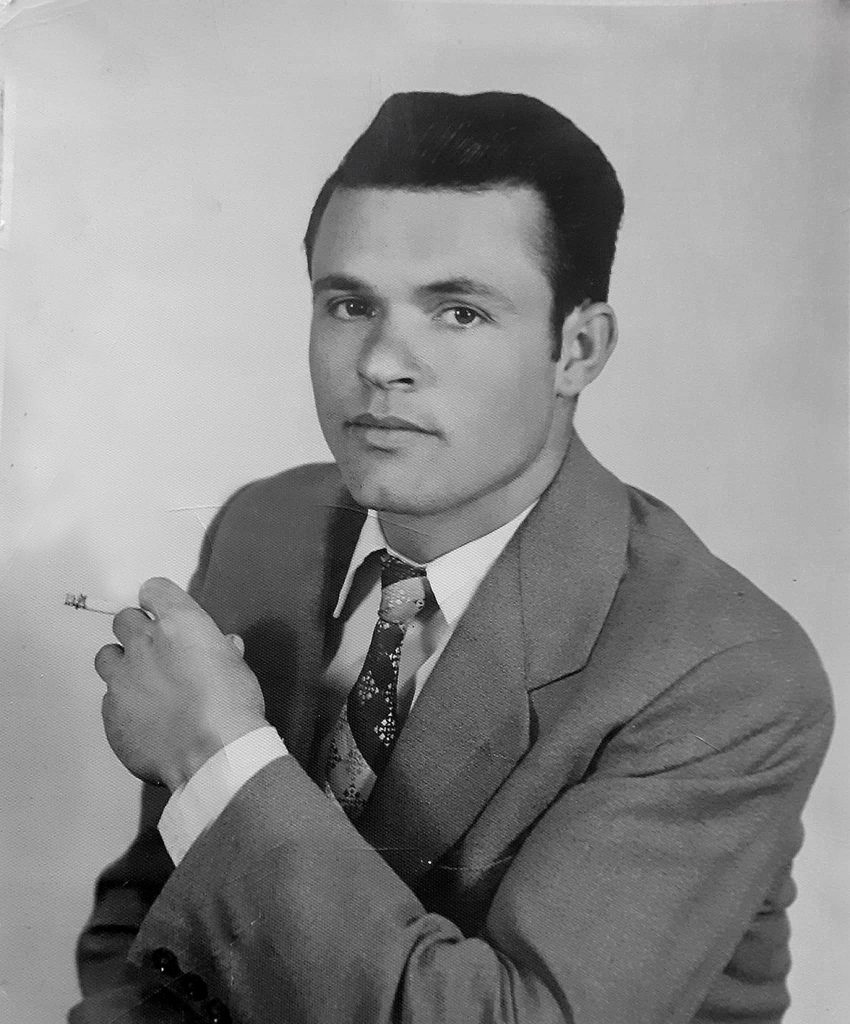
“I was a builder here in Kiato since I was young, because I lost my father when I was eight years old and had sisters to look after. So I had to go to Australia to save for their dowries,” he answers.
“I was very satisfied with how they looked after us there – the food was good, the staff were polite and the place was clean,” he says.
“Then I got a job for the airline TAA as a driver, followed by working as a builder, until I had 35 employees working under me in the construction industry.
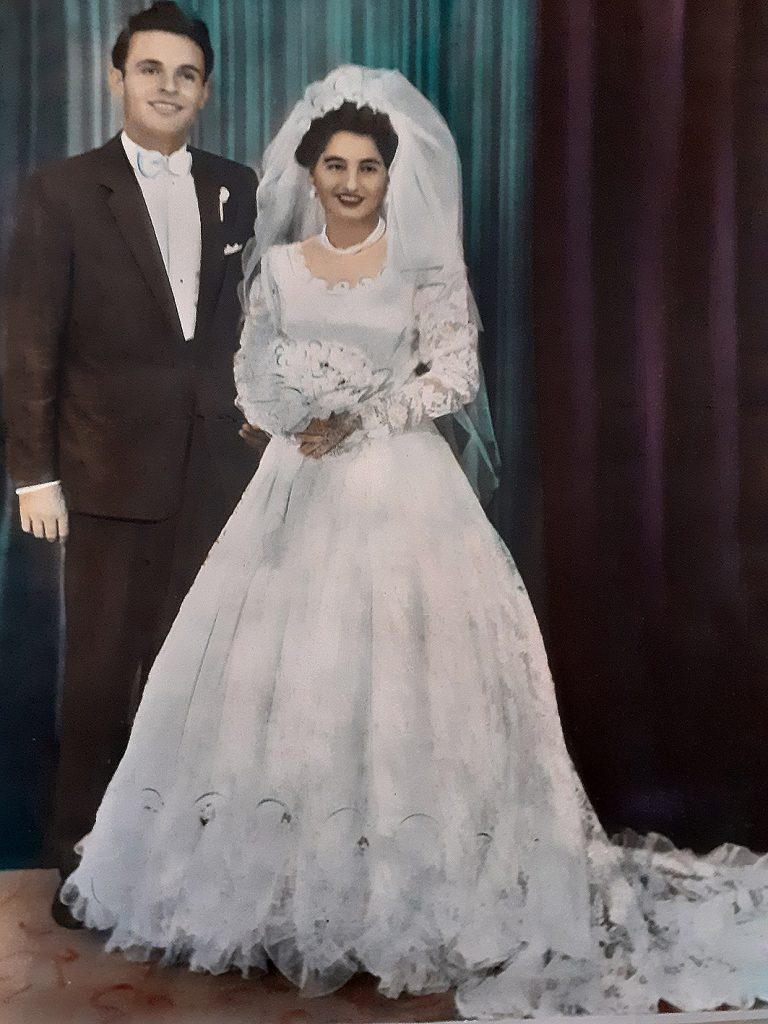
“I brought my wife from Greece a year and a half after I arrived in Australia, who is from the same village as me in Kiato, and we’ve been happy together ever since – and have two children and even great grandchildren.”
Now back in Kiato and pointing to a magnificent view of the sea from his spacious home, Mr Karahlis says: “I loved Australia, and always will. We were poor and Australia gave us all this.”
“I wanted to give back what Australia did for me so I became President of the Pan Corinthian association in the early 1980s, after I had returned permanently to Greece.
“I was instrumental in supporting the law whereby Greek Australians returning to Greece got a pension from Australia. This affected 100,000 Greeks and took many years of fighting and negotiating with authorities with the invaluable help of other Greek Australian associations particularly the Patras Greek Australian Club’s President, Vivian Stefanou – an amazing woman.”
He signals towards his daughter Mary smiling and says: “now she’s in charge.”
Mary sighs and says COVID-19, as well as the Greek economic crisis really put a hamper on the association’s activity.
“Not to mention the unfortunate passing away of many of the older members, so now we have under 40 members,” she says.
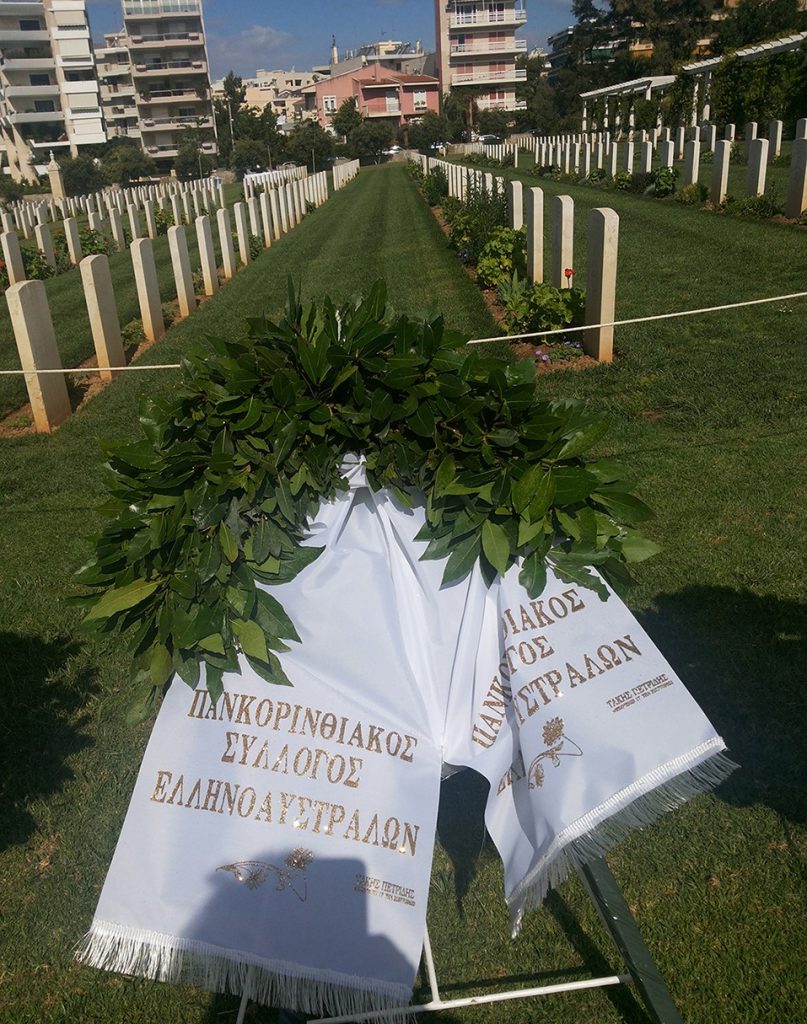
Anzac Day memorial
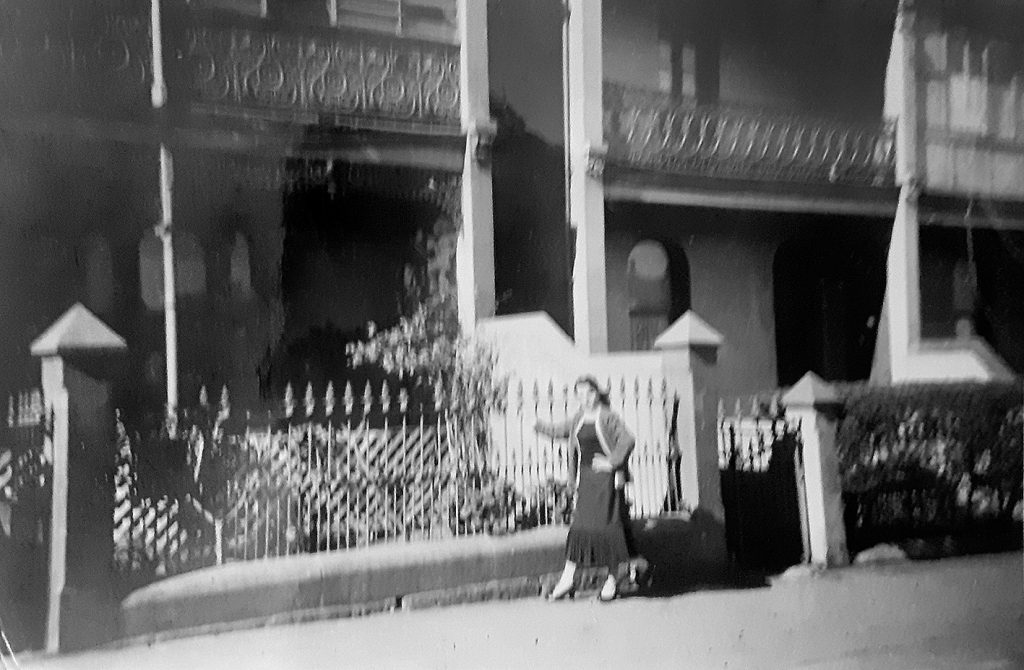
Asking Mary of her experiences in Australia, she tells me that when the family returned to Greece she was 12 years of age, and that it was difficult adjusting to school in Greece as she loved her life in Australia, growing up in the Sydney suburb of Pennant Hills.
With affection she recalls and shows me photographs of her family, including many of their fond memories there.
“I’m going to keep working on our Pan Corinthian Greek Australian Association,” Mary resolutely says. “Because… our ties with Australia are unbreakable and deserve to be honoured.”
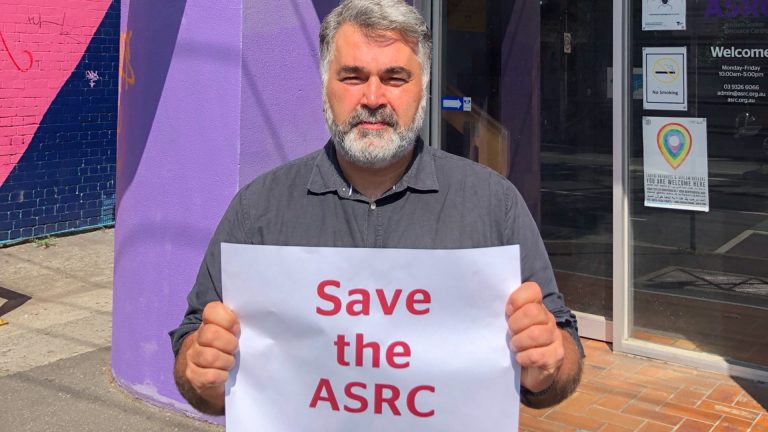
The Founder and CEO of Asylum Seeker Resource Centre (ASRC), Kon Karapanagiotidis OAM, has announced the organisation’s Victorian office is at the risk of closure due to a decline in donations since July 2022.
Mr Karapanagiotidis is publicly calling for donations and support for the ASRC to keep its doors open.
Over the past 21 years, the ASRC have supported over 30,000 people seeking asylum and refugees without federal government funding, relying on the public’s support for funding.
But, with the rising cost of living across Australia, donations from the public are down 45 percent since July 2022.
In a Twitter video, Mr Karapanagiotidis said: “It’s not that people have stopped caring, it’s just that people are giving what they can.”
“[But] our work here is not done,” Mr Karapanagiotidis added. “Thousands of people need us right now.”
The @ASRC1 is at risk of having to close its doors in 7 weeks without your help
We’ve been sticking to our budget but cost of living pressures means donations are down 45%
We’re surviving off our savings for now as we take no Fed Gov $
As a proud Greek growing up in a small country town in Victoria, Mr Karapanagiotidis witnessed first-hand the exploitation of his parents working in factories.
The human rights lawyer’s grandparents also experienced exploitation and racism as refugees who fled the Pontian genocide in Anatolia.
With a strong passion and drive for human rights, Mr Karapanagiotidis founded the ASRC as a 28-year-old. It has now grown into the largest independent human rights organisation in Australia.
The ASRC is a voice for immigrants who expose the cruelty of the immigration system, and aims to deliver the promise of creating a fair and just country system that welcomes asylum seekers.
Find out more about how you can help the ASRC here.
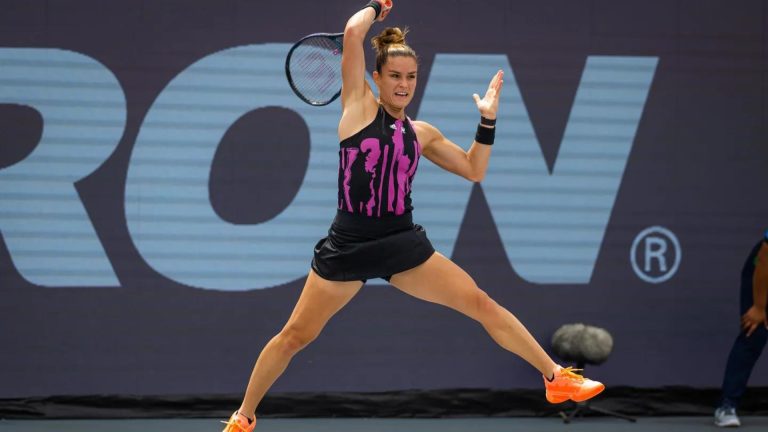
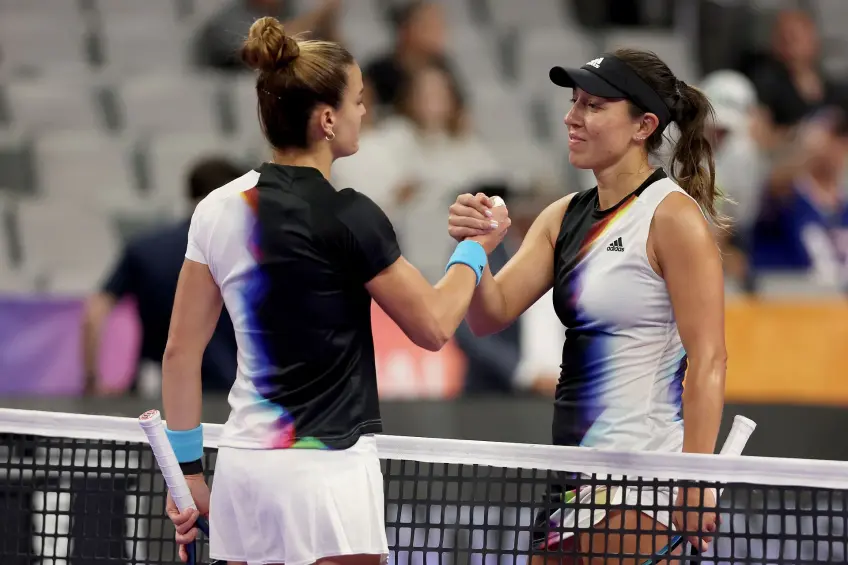
Greek Tennis player, Maria Sakkari, heads to the semi-finals where she is set to compete against Jessica Pegula in the Qatar Total Open 2023 in Doha tonight.
The rivalries split their four meetings in 2022, with Sakkari taking the lead over Pegula, 4-2, winning their final meeting last year at the WTA Finals.
In the 2-hour and 41-minute match this morning, Sakkari advanced to the semi-finals defeating Caroline Garcia 6-2, 6-7(5), 7-6(5) in the Qatar Open quarterfinals. The 27-year-old would break the first two serves against Garcia, but the pair would go unbroken in the final two sets.
Maria Sakkari and Jessica Pegula. Photo: Tennis World
Finishing with 30 winners to 21 unforced errors and saving all three break points, Sakkari kept a clean sheet against Garcia with only five break points. Garcia finished with 43 winners to 44 unforced errors.
After the match, Sakkari said in an interview with WTA Tennis, “The conditions were very tough for both of us,” Sakkari said. “I think we did a really good job in the second set of holding our serves and not giving the opponent a chance to break. You don’t see that often in women’s tennis. It was pretty impressive.”
“That third-set tiebreak was something special. I was brave, when in the second-set tiebreak I wasn’t, and I’m just very happy,” Sakkari added.
A re-elected NSW Liberal and National Government will invest $800,000 over the next four years to continue supporting the Greek Festival of Sydney.
Making the funding commitment during the Festival’s 2023 program launch, Minister for Multiculturalism Mark Coure said the Greek Festival of Sydney is a premier cultural event and a major part of NSW’s multicultural calendar.
“In 2019, on behalf of the NSW Liberals and Nationals, I committed $400,000 over four years to help take this great event from strength to strength,” Mr Coure said.
“I am proud to say, we will double this investment to $800,000 in our next term of government.”
“This is an incredibly important event that has been bringing hundreds of thousands of people from all walks of life together in a fun and family-friendly environment to celebrate all things Greek.”
The NSW Liberals and Nationals have also committed to bringing the main Festival back to the Grand Parade in Brighton-Le-Sands after more than 20 years for a one-off special celebration.
Minister Coure said both of these commitments demonstrate the NSW Liberals and Nationals’ belief that cultural diversity should be celebrated.
“The Greek community has played a special role in helping build our rich multicultural society, and I am so proud to say we will be helping continue taking this event to even bigger heights,” Mr Coure said.
President of the Greek Orthodox Community of NSW Harry Danalis welcomed the commitment to provide much needed assistance to the Greek Festival of Sydney.
“The NSW Government and Mr Coure have once again demonstrated their belief and commitment to the Greek community, the Greek Festival of Sydney and to the promotion of multiculturalism in NSW,” Mr Danalis said.
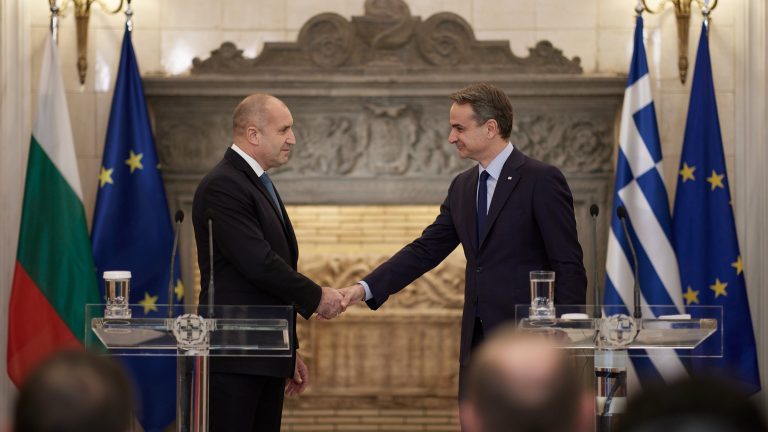
Greece’s Prime Minister, Kyriakos Mitsotakis, spoke on Thursday of two deals signed between Greece and Bulgaria which “change the energy map of Southeast Europe.”
In joint statements with the President of Bulgaria, Ruben Radev, in Athens, Mitsotakis spoke about the signing of two memoranda of cooperation in the fields of security and natural gas supply, as well as oil.
Mitsotakis said these agreements, which may include the possible construction of an Alexandroupolis-Burgas pipeline, will make the two countries energy providers in the European Union and will contribute to Europe’s energy security.
Η πρώτη συμφωνία αφορά την ενεργειακή συνεργασία στον τομέα της προμήθειας και αποθήκευσης φυσικού αερίου, ενώ η δεύτερη τη διερεύνηση του ενδεχομένου κατασκευής ενός νέου έργου αγωγού πετρελαίου, που θα συνδέει τους Λιμένες Αλεξανδρούπολης και Μπουργκάς. https://t.co/ZdMJjyVtA6pic.twitter.com/mIeVJu763Z
This was a bilateral agreement, Mitsotakis said, which “has a European scope as it turns our countries into a crossroads for the movement of gas to the whole of Europe.”
On his part, Radev underlined that the traditionally good cooperation between Greece and Bulgaria was further strengthened by the two memoranda and thanked Mitsotakis for his country’s support.
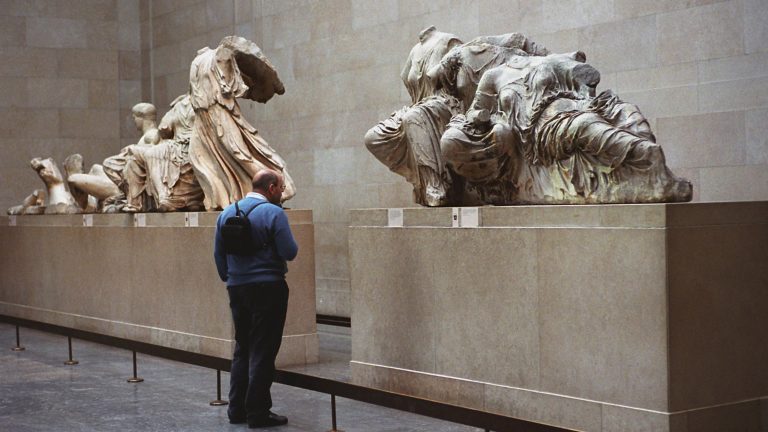
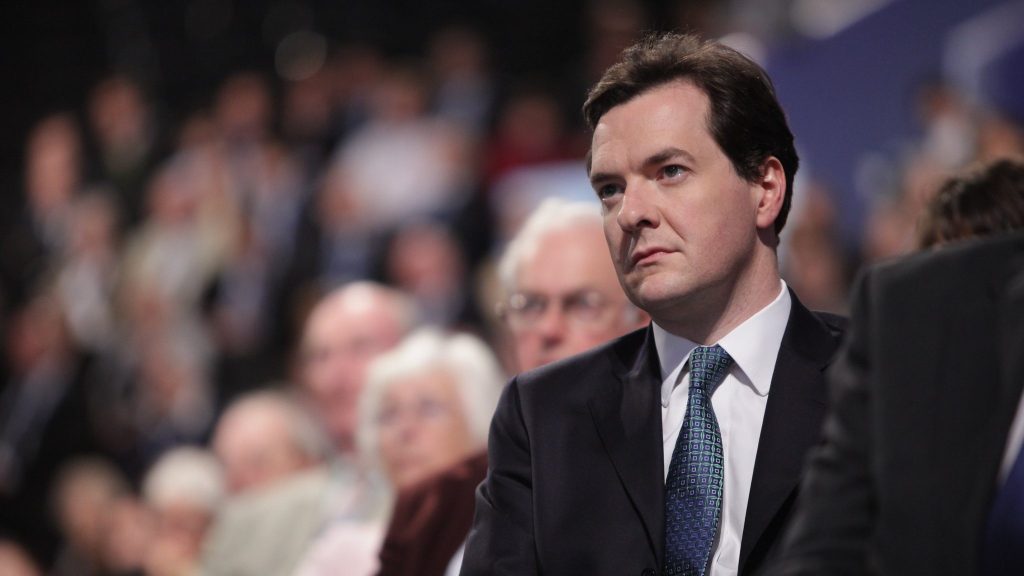
George Osborne, the Chair of the British Museum in the United Kingdom, said on Thursday a deal is in the works that could see the Parthenon Marbles shared with Greece.
“I think there is a way forward where these sculptures… could be seen both in London and in Athens, and that will be a win-win for Greece and for us,” he told the BBC.
When asked if that meant loans, he said: “We’re talking to the Greek government about that, about a new arrangement and what I didn’t want to do is force the Greeks to accept things that they find impossible, and equally they can’t force on us things that we would find impossible.”
But Osborne ruled out a scenario where the sculptures could be handed over permanently, saying it would need a change of UK law.
“If we wanted to send all the Elgin Marbles back then that would require an act of parliament, and that would be beyond my authority,” he said. “But what the museum can do is try and form a new relationship with Greece… I’m reasonably optimistic.”
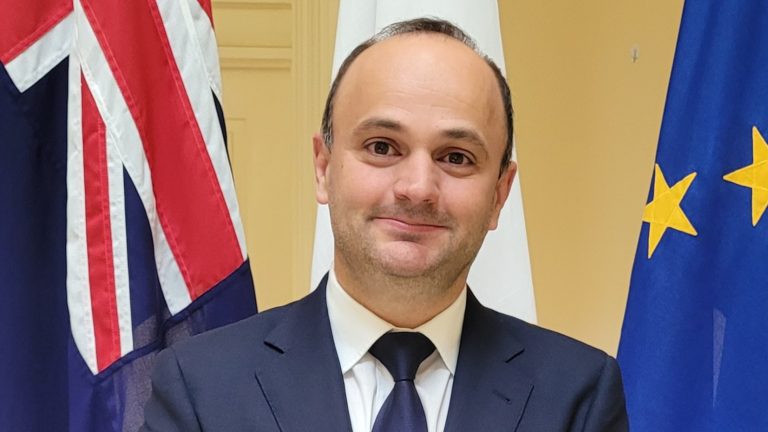
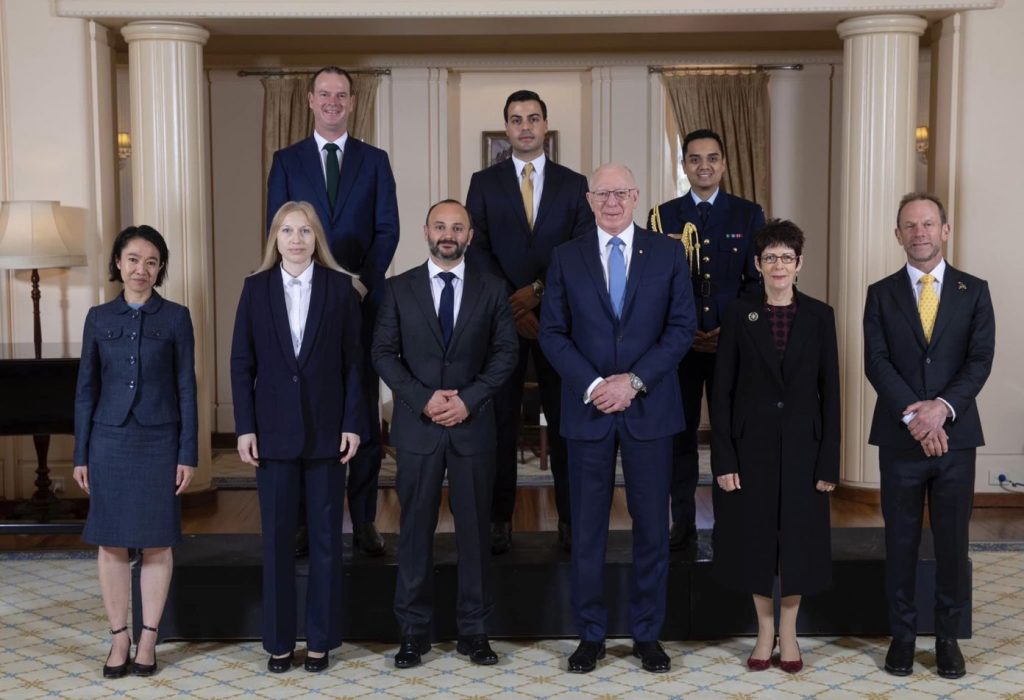
The High Commissioner of the Republic of Cyprus in Australia, Antonis Sammoutis, has only been in the country for less than six months but he’s definitely hit the ground running.
The Greek Herald sat down with Mr Sammoutis to ask about his thoughts on these Cypriot Australian communities, as well as his plans to celebrate the 50th anniversary of bilateral relations between Cyprus and Australia this year.
What has been your impression of Australia so far?
Australia has been fascinating. Far greener than we’re used to in Cyprus. The flora and fauna, the people, everything. It’s an amazing place and now I see the reason why so many Greeks moved here. Of course, when it comes to our diaspora, we’re very proud of you and all you have achieved here – how committed you are and how you don’t forget the places you came from.
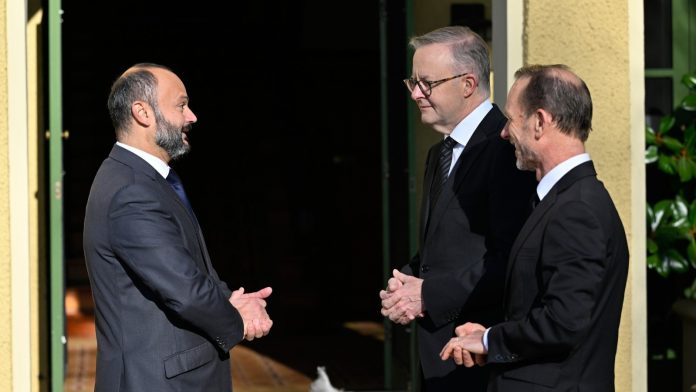
Antonis Sammoutis (left) met with Australia’s Prime Minister Anthony Albanese last year.
This year marks 50 years of bilateral relations between Cyprus and Australia. How would you describe the current relationship between both countries?
The first Cypriots came to Australia over 100 years ago so our relations go back to the period before the establishment of the Republic of Cyprus. But especially after the establishment, with the exchange of ambassadors, our relations became formal and ever since it has been a strong one with high level visits. Traditionally, every year, we have a minister from Cyprus visit and especially this year, we are trying to hold cultural events to remind us of this very, very important milestone.
It’s very interesting to see that out strongest bond is indeed the Cyprus community here in Australia.
What events are planned to celebrate the 50th anniversary of bilateral relations between Cyprus and Australia?
The first thing we are trying to organise is the State Theatre of Cyprus presenting an old Greek comedy in Australia. We’re trying to get this organised in May in three or four major Australian cities. This is huge for us because it’s the first time the State Theatre of Cyprus will come to Australia with a large group of actors and actresses.
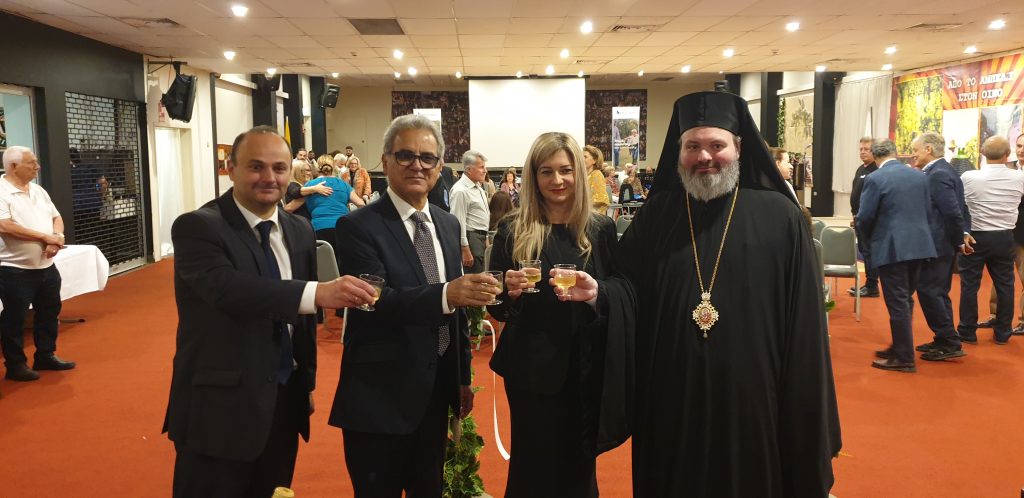
Antonis Sammoutis (left) with members of the NSW Cyprus Community, bishops and politicians.
At the end of last year, we also had a presentation of a book [by Professor Anastasios Tamis] about the Cypriots in Australia and we’re trying to promote this book.
We’re also in contact with various Cypriot Australian artists that could help us organise exhibitions and some other cultural events. Of course, Cypriot communities across Australia are also working on their own events.
In your diplomatic role, how will you work with the Federal Government to continue strengthening bilateral relations between Cyprus and Australia?
After the accession of Cyprus to the European Union we have new opportunities, especially when it comes to the framework of cooperation – the new framework between the EU and Australia – which also concerns Cyprus as a member state.
We are looking forward to the Free Trade Agreement between Australia and the EU countries, including Cyprus, and we also look forward to starting negotiations on a new Double Taxation Agreement between Cyprus and Australia.
Of course, we’ll never forget the contribution of Australia to the efforts to solve the Cyprus issue – the continuous presence of Australian officers in the United Nations force in Cyprus; the continuous interest of the Australian Government in the situation because things have become more complicated in the last few years when it comes to the Eastern Mediterranean.
Antonis Sammoutis (from, third from left) with the Attorney-General of Australia and other diplomats.
You mentioned the double taxation agreement and new trade talks. What is the latest with these two issues?
The Double Taxation Agreement will be delayed a while because the negotiations will only start in 2024 – the second half of 2024. But I really hope they will be concluded promptly. It’s good to have speedy negotiations on that because it’s really important for Cypriots who want to do business here or Australians who want to do business in Cyprus. Of course, it’s related to the Free Trade Agreement. There are some aspects of that agreement that really touch upon taxation and services.
We really think that the Free Trade Agreement will boost trade ties [between Australia and Cyprus]. Starting with the communities here, I think we have good allies to spread some of our products. But I think there is room for many more products to come from Cyprus.
What are your thoughts on the Cyprus issue?
Unfortunately, the latest developments [with the Cyprus issue] are not so encouraging because we’ve seen over the last few years, after the collapse of negotiations in 2017, a new approach from Turkish side – the approach of a two-state solution – which is contrary to the UN Security Council resolutions.
The situation on the ground isn’t any better. We have new attempts from the Turkish side to open the fenced area of Famagusta. The fenced area of Famagusta, which is now uninhabited, was supposed to go back to the owners of the properties, to the refugees, even before the start of negotiations. Instead of that we see that recently there was an announcement the Turkish side is going to build houses right next to the buffer zone and probably the houses will be for settlers from Turkey. These are actions that aim to enhance the division of Cyprus, not enhance efforts for unification.
Unfortunately, we see that the very strong Turkish position on the Cyprus issue, which is the two-state solution, makes the beginning of new negotiations impossible. Our biggest worry is that time passes and works against everybody and especially against us in this case.
We will see how the UN Secretary General will handle this issue and we’ll see how the international community, including Australia, will encourage the Turkish side to engage in new negotiations to achieve a viable solution.
Antonis Sammoutis meets with member of parliament, Andrea Michaels.
What role can the Cypriot diaspora in Australia play to bring more attention to this issue?
We understand that Australia talks to all its partners, and to Turkey, to give the message that we need to do something. The situation on the ground is not sustainable. Even the two-state solution that Turkey proposes will only create new problems on the island.
We welcome the continuous presence of Australia in the UN force in Cyprus, as well as the engagement of Australia with the Security Council of the UN, and the engagement of the Australian Parliament with the support of specific motions.
We also have a Turkish Cypriot community in Australia, being part of this country and living together with the Greek Cypriot community. To my understanding, they get along very well. So we think even these communities could encourage the leaders in Cyprus to work together instead of working against each other.
Do you have a final message for the Cypriots and Greeks of Australia?
Keep up the good work! My strongest message is ‘travel back to Cyprus.’ Get to know Cyprus. And, of course, for the younger generation my strongest message is to invest in the language. It will bring a lot of joy because every language you learn opens up a whole new world.