Greek Australian singer, VASSY, has become the first female to win the Icon Award at the Electronic Dance Music Awards in Miami, the United States.
VASSY is the female artist behind some of the most well-known dance anthems of the last ten years. BAD, her musical collaboration with David Guetta and Showtek, passed two billion streams.
“I came to this country from a small town in Australia called Darwin, from a humble, hard-working Greek family with a dream to pursue my passion,” VASSY told EDM.com after her win.
“I’m beyond grateful and proud to say that being authentically myself through out my career paid off. Ladies, women can too be icons in dance.”
I won the ICON Award 🏆 Thank you @RemixT30 & @HollyHamy Such an honour to win the 2023 EDMA ICON Award. Thank you to everyone at Radio for supporting my career & music over the years. Shout out to @TheEDMNetwork for the Luv ♥️ pic.twitter.com/JOuUwKcnEp
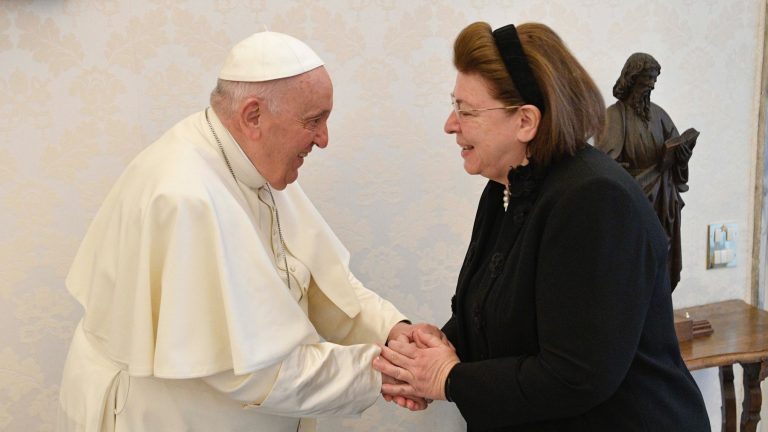
During the meeting, Mendoni presented the Pope with a letter from Greek Prime Minister Kyriakos Mitsotakis, expressing his gratitude for the Pope’s significant decision to return the fragments.
📌Στο #Βατικανό, δεκτή από τον Πάπα Φραγκίσκο έγινε η #ΥΠΠΟΑ Λίνα Μενδώνη.
Η συνάντηση πραγματοποιήθηκε σε συνέχεια της δωρεάς των τριών θραυσμάτων του Παρθενώνα, τα οποία επανενώθηκαν στο Μουσείο της Ακρόπολης.
— Υπουργείο Πολιτισμού και Αθλητισμού (@cultureGR) March 27, 2023
The Pope expressed his deep respect for Greece as the birthplace of western civilisation and commented on the ongoing war in Ukraine, emphasising the importance of all efforts to restore peace.
As a gesture of appreciation, Mendoni offered the Pope a replica of the 1st-century BC marble statue, “To prosygaki,” at the end of the meeting.
Greek communities across Australia celebrated the 202nd anniversary of the 1821 Greek Revolution this year with a number of exciting events, wreath laying and flag raising ceremonies.
Here’s our list of how Greek Independence Day celebrations went across Australia:
New South Wales:
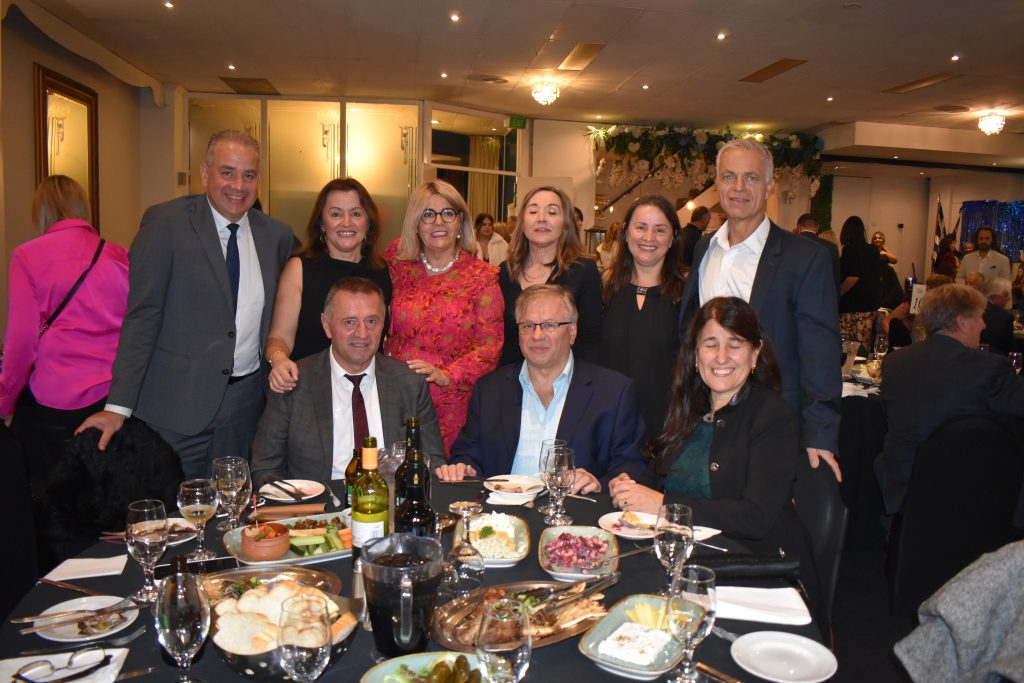
Due to the NSW state election on March 25 this year, celebrations started early for Greek Independence Day with a flag-raising ceremony and program of cultural activities organised by AHEPA NSW Inc in Rockdale on Friday, March 17.
On Friday, March 24, AHEPA Australia held a National Day commemorative dinner at the Ashbury Pan Arcadian Federation Club, whilst on Saturday, March 25, there was also a Cyprus Taverna Night at the Cyprus Club in Stanmore to mark Greek Independence Day.
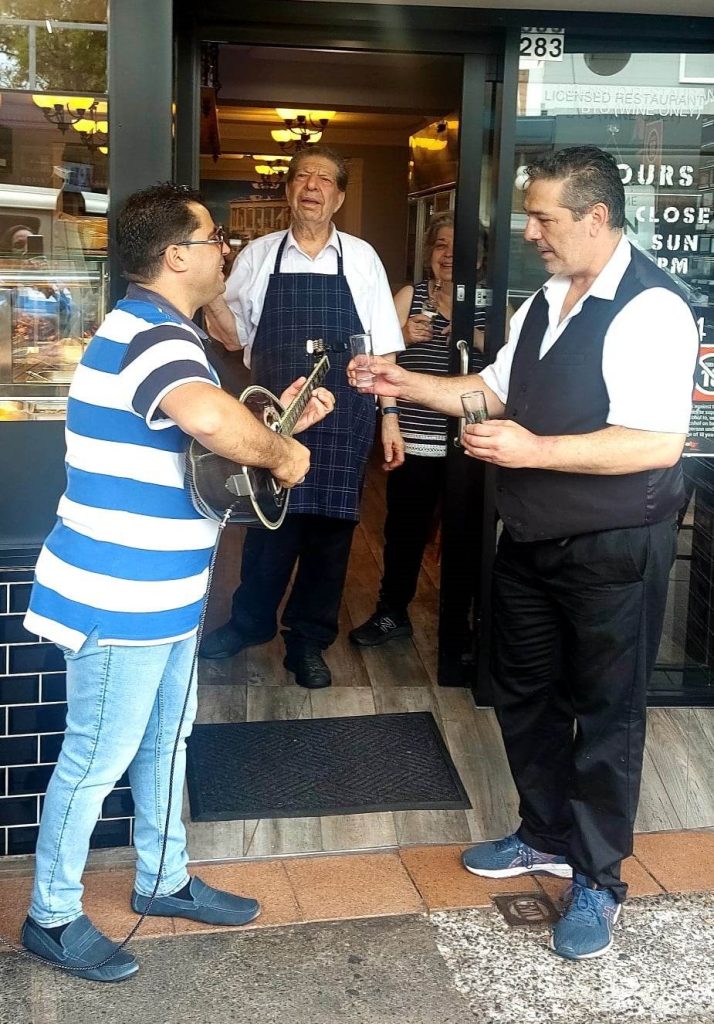
This weekend, on Saturday, March 25, the city of Marrickville in Sydney’s Inner West also got into the Hellenic spirit with Tassos Bouzouki performing at Alex Trevallion Plaza.
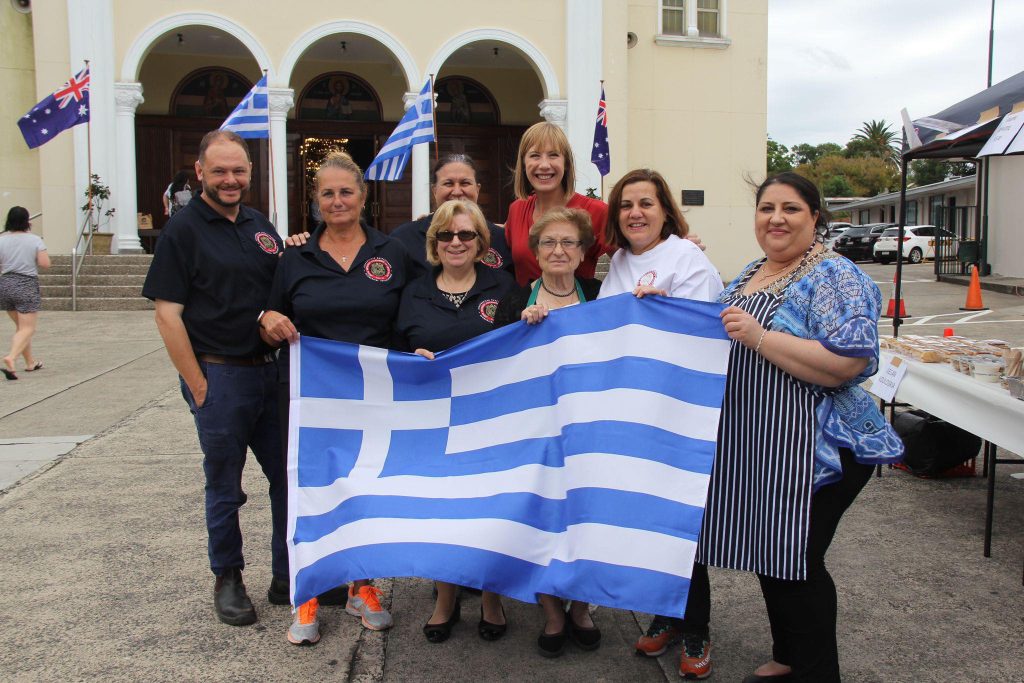
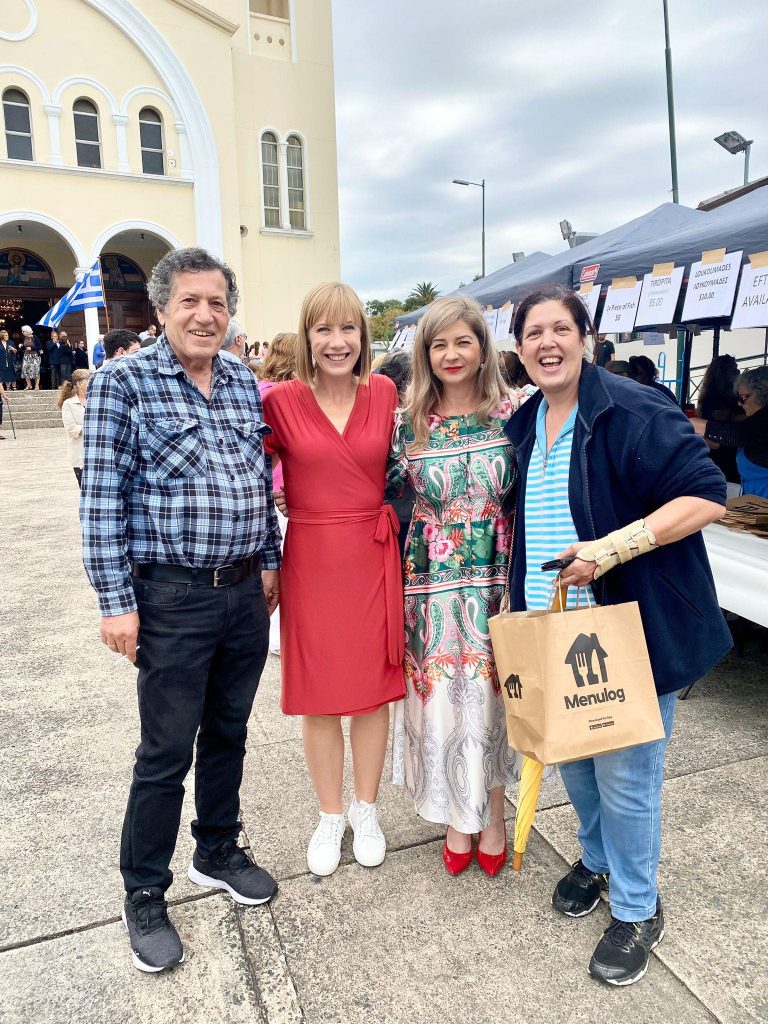
Close by at St Nicholas Greek Orthodox Church, there was also a mini food festival of loukoumades and tiropites as people visited the school hall to vote on election day. Member for Summer Hill, Jo Haylen, and Inner West Councillor Zoi Tsardoulias were in attendance on the day.
St Nicholas Greek Orthodox church.Tassos BouzoukiMarrickville goes Greek.
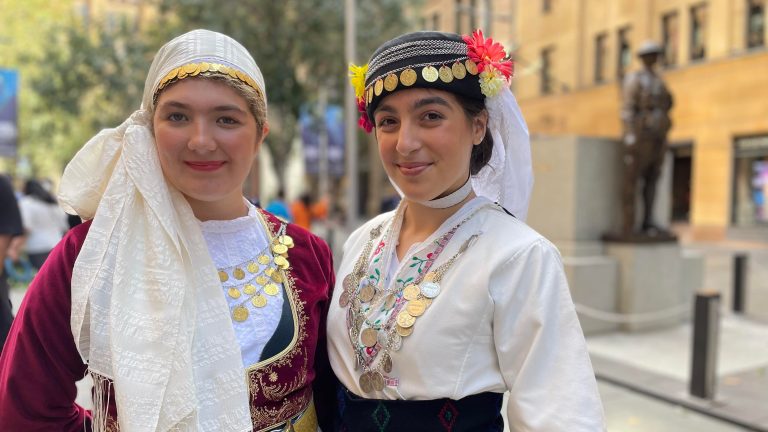
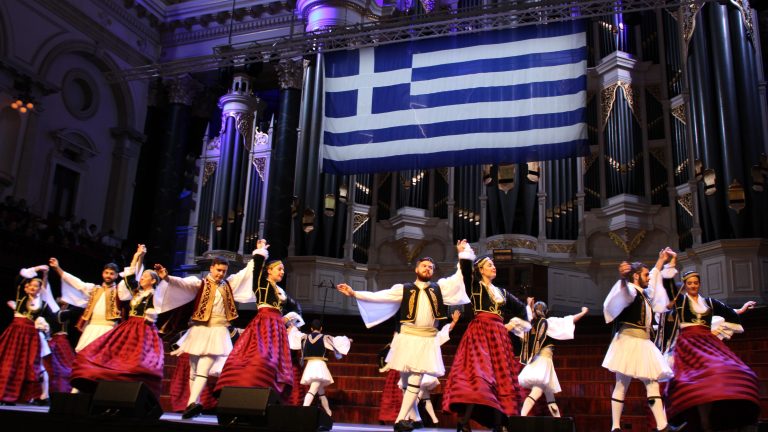
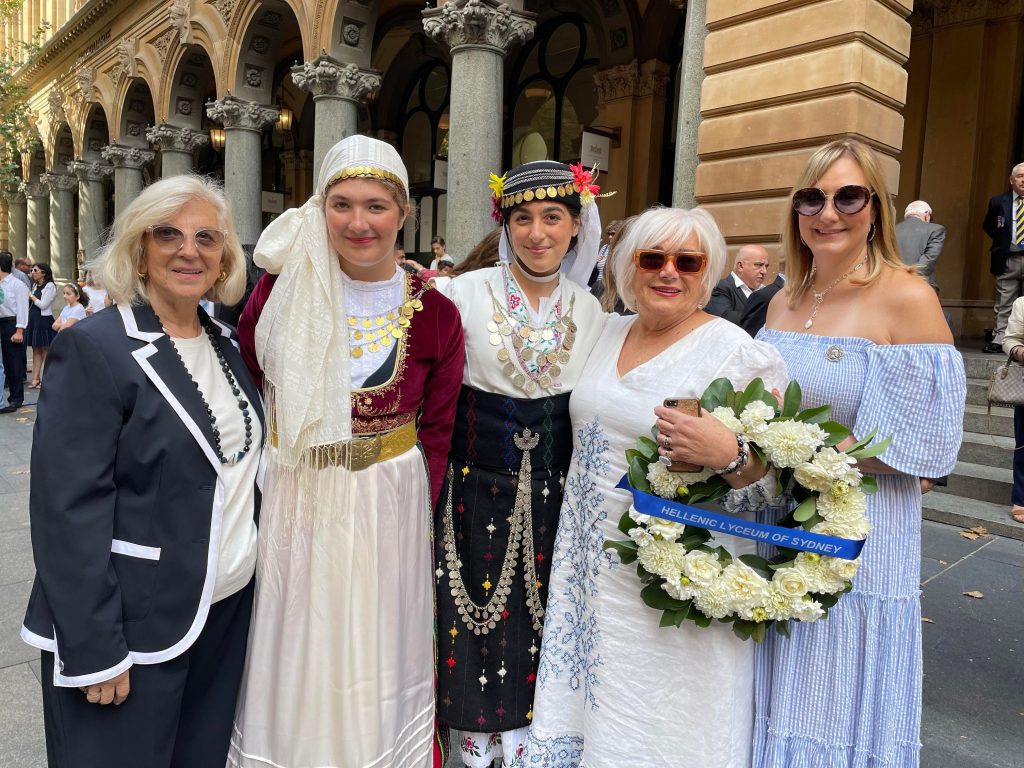
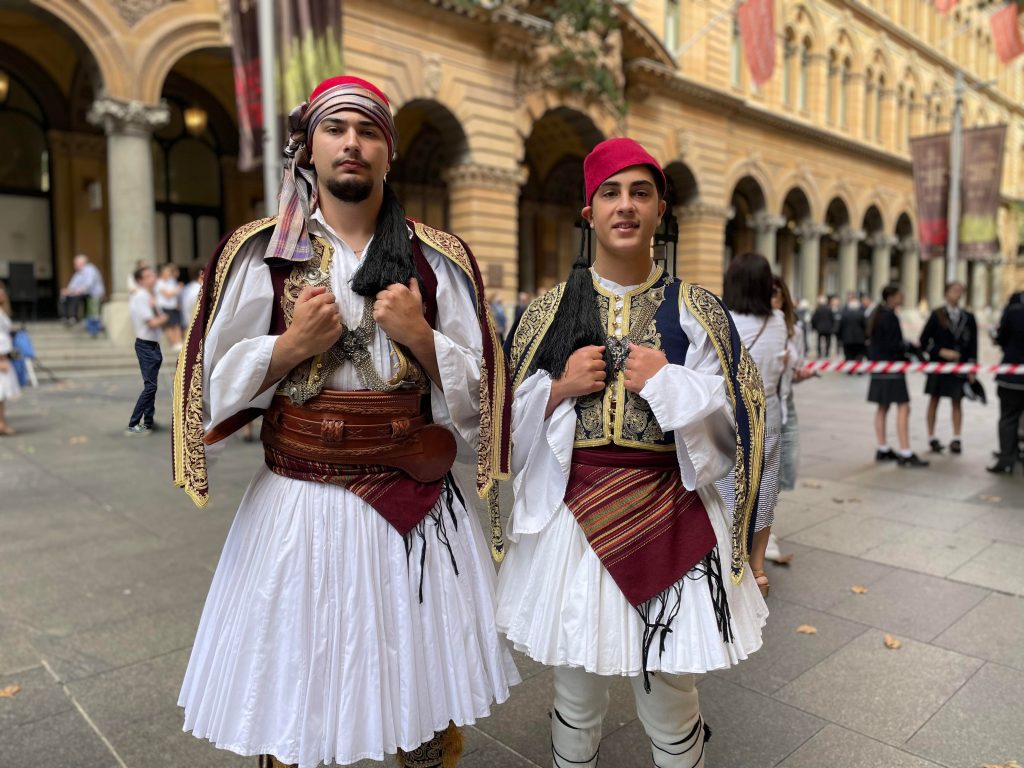
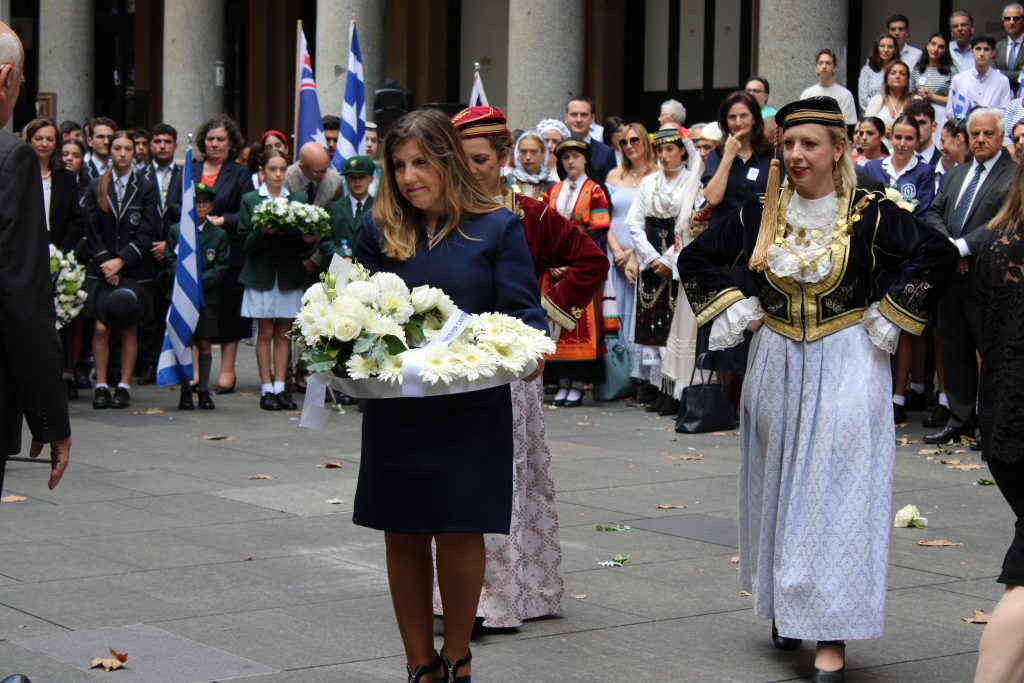
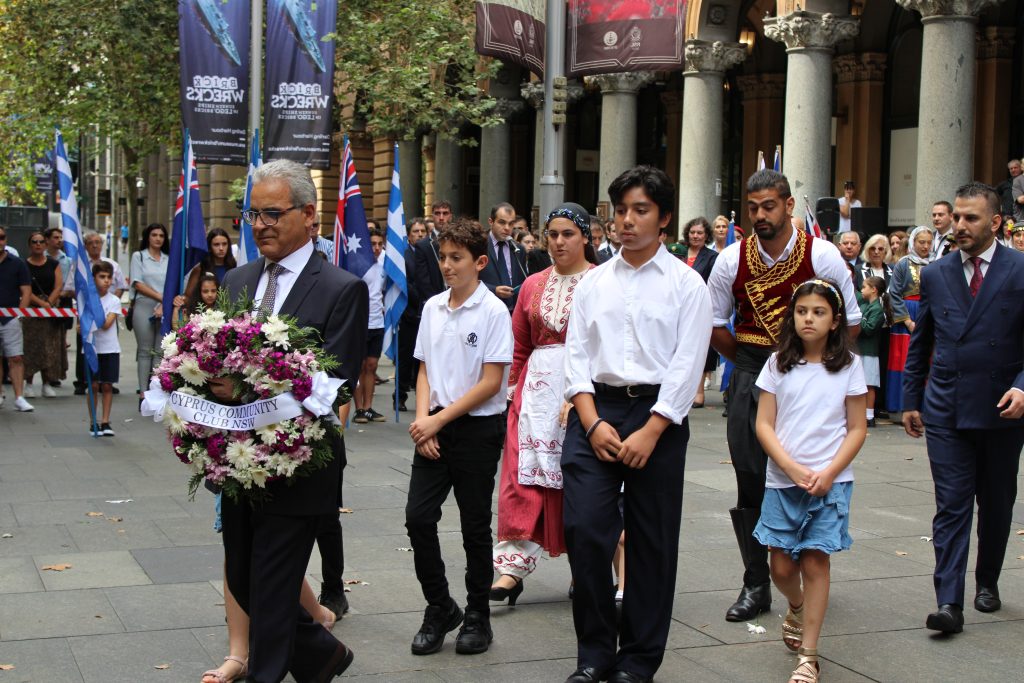
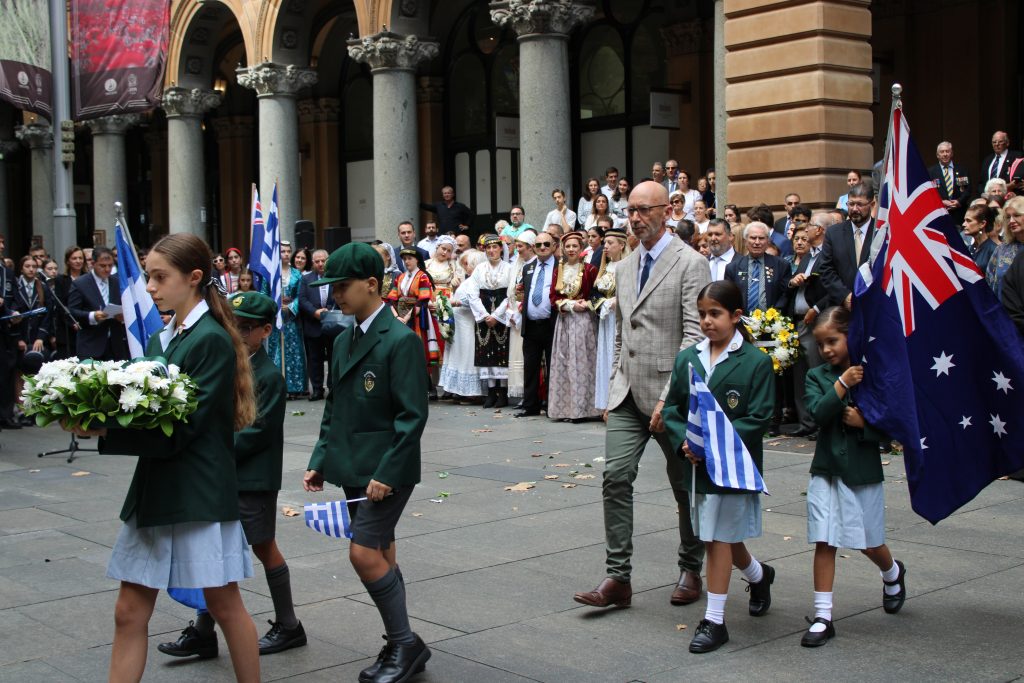
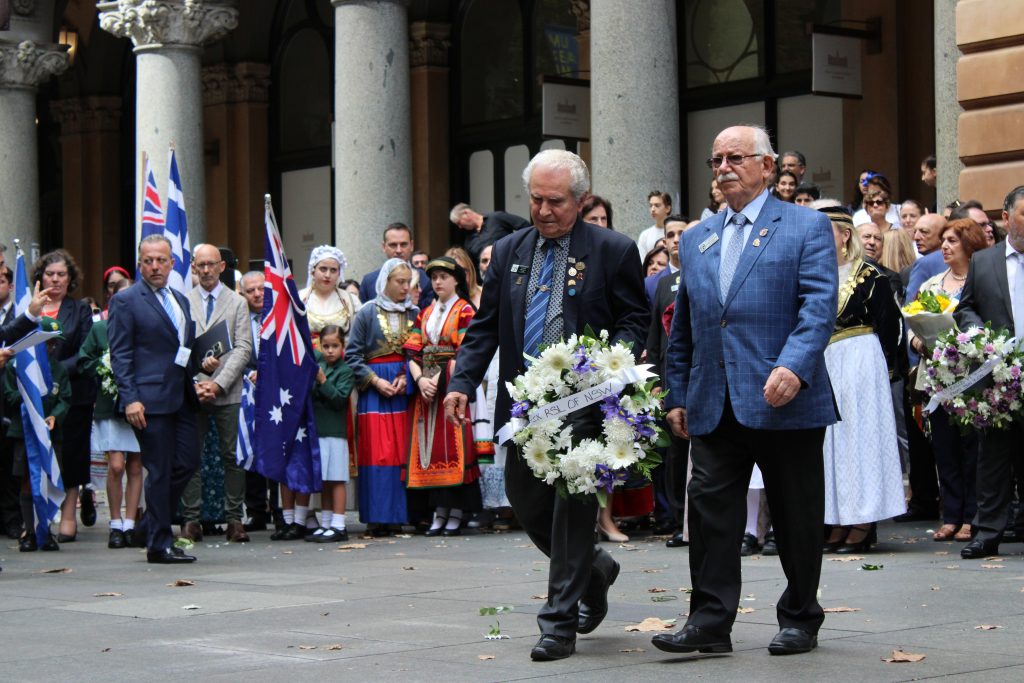
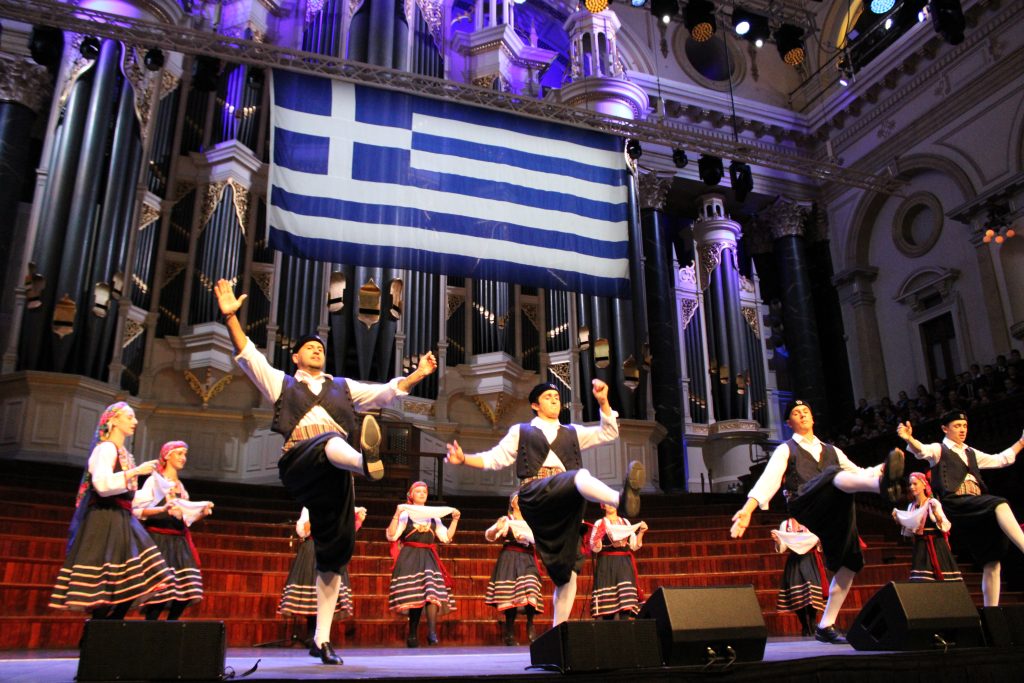
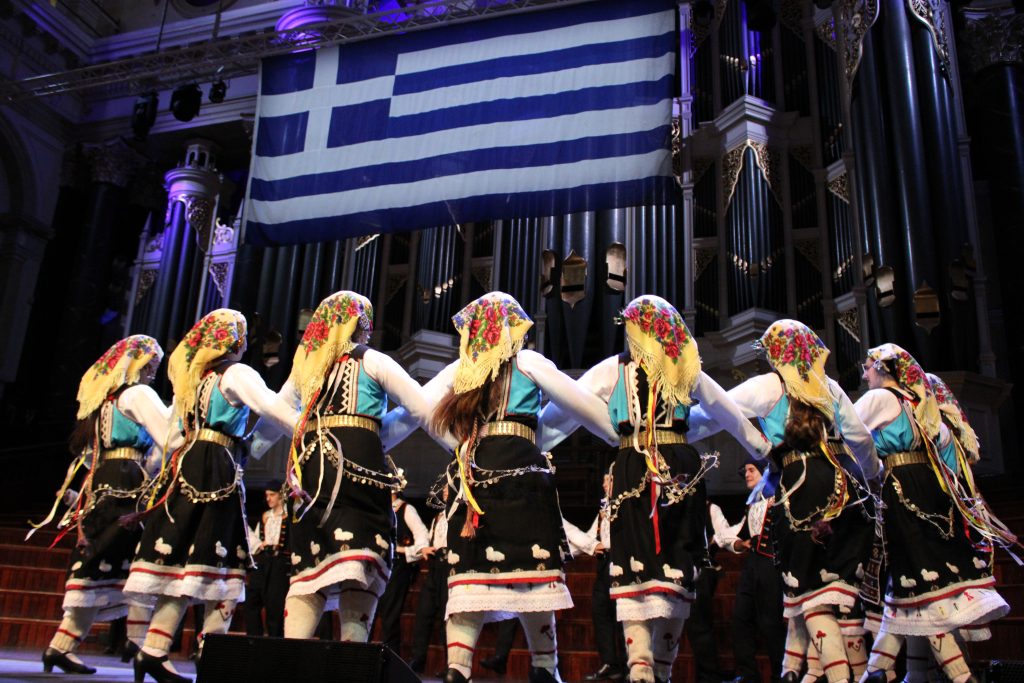
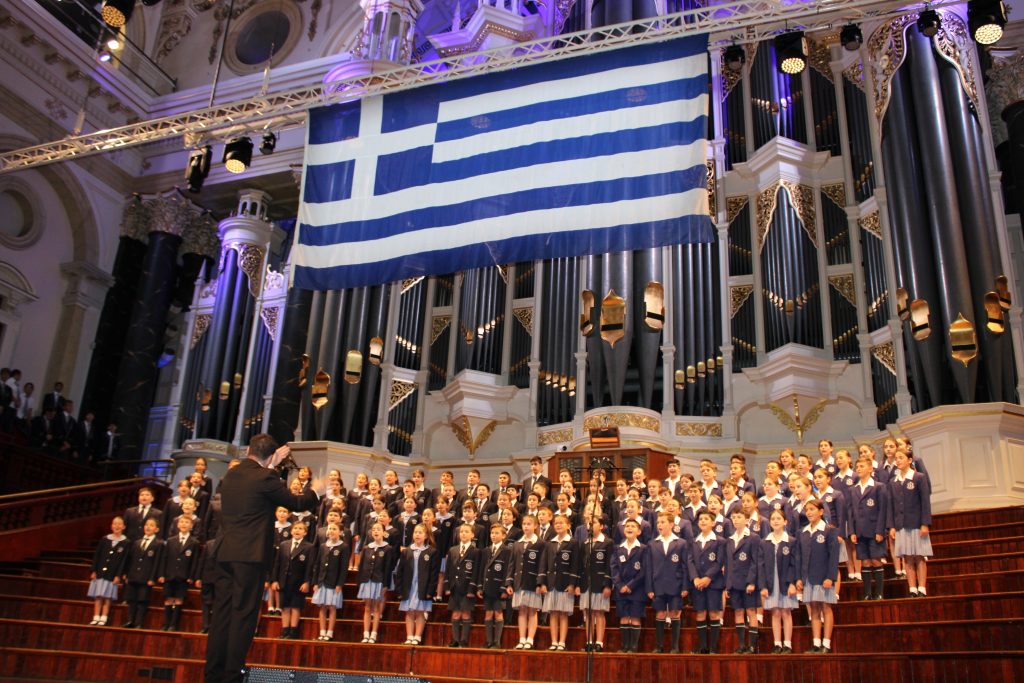
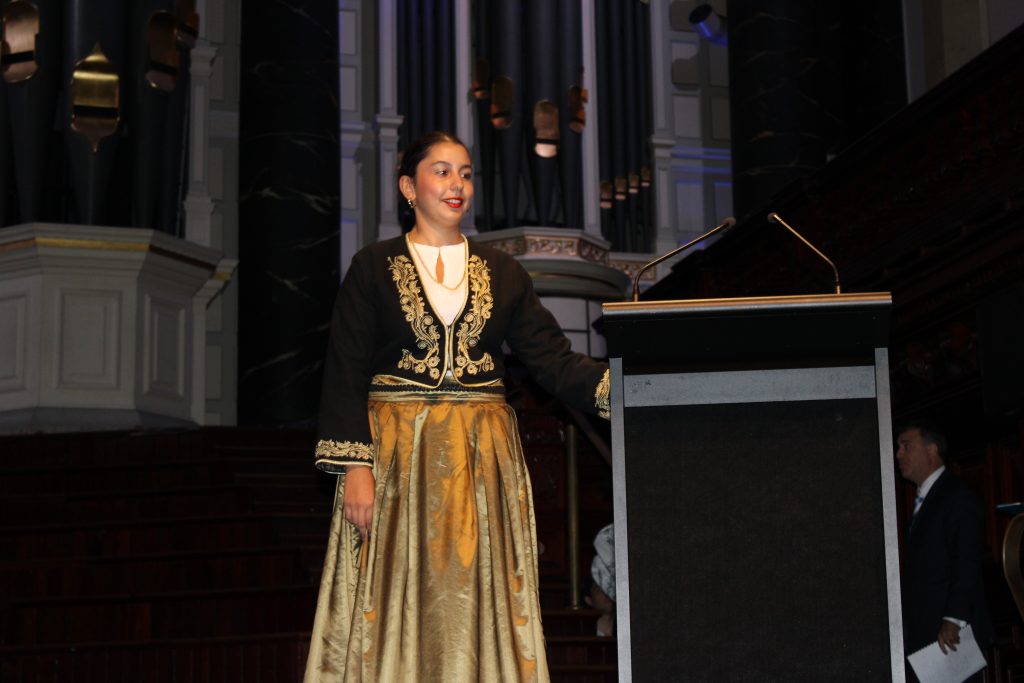
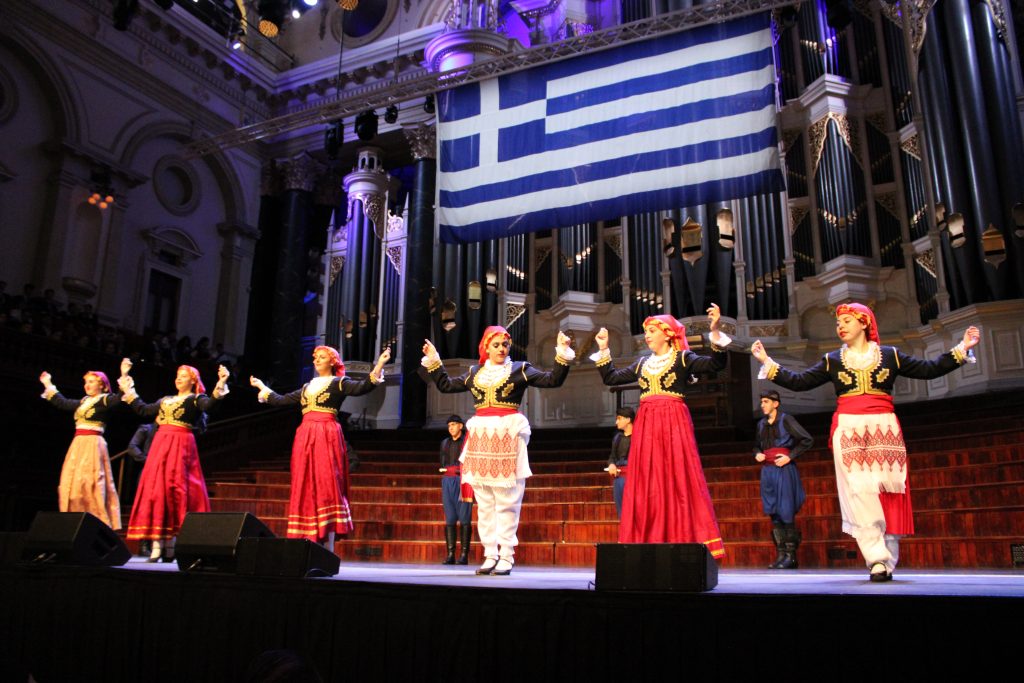
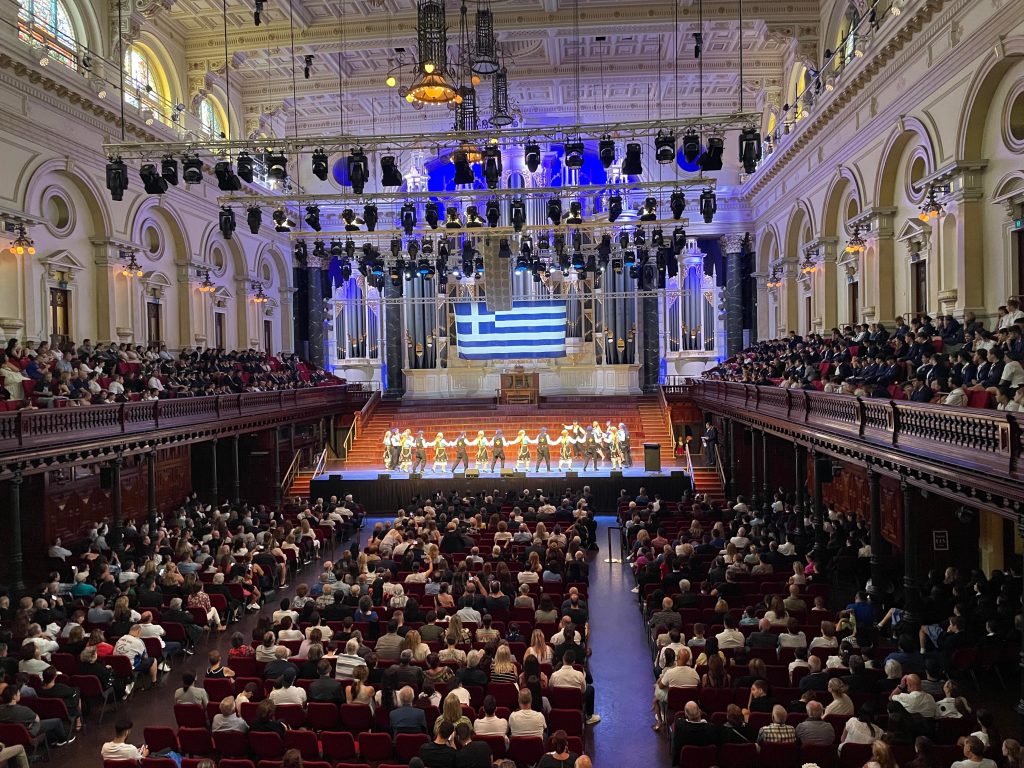
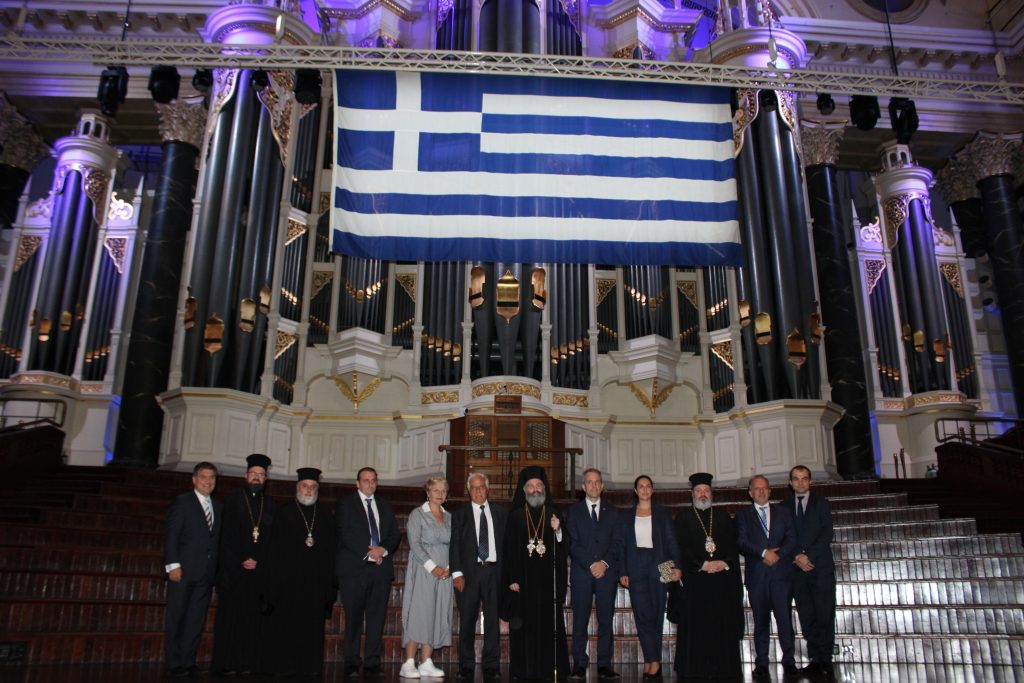
On Sunday, March 26, there was also a wreath laying ceremony at Sydney’s Martin Place followed by a proud display of Hellenic culture, music and dance at Town Hall. The event was organised by the Greek Orthodox Community of NSW and the Inter-Communities Council of the Greek Orthodox Archdiocese of Australia.
Victoria:
In Victoria, on Sunday, March 19, the Victorian Council Greek National Day and South Melbourne Football Club hosted the 2023 Greek National Day parade at Albert Park’s Lakeside Stadium.
On Friday, March 24, the Greek Community of Melbourne (GCM) held the 2nd Annual Grecian Ball at the Park Hyatt Melbourne. There was a performance by singer Eleftheria Arvanitaki.
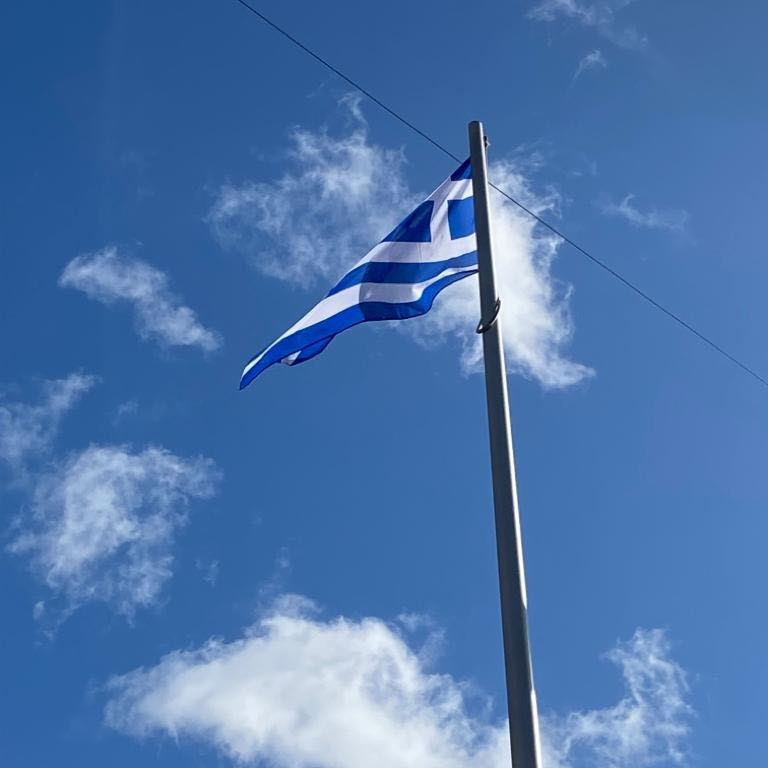
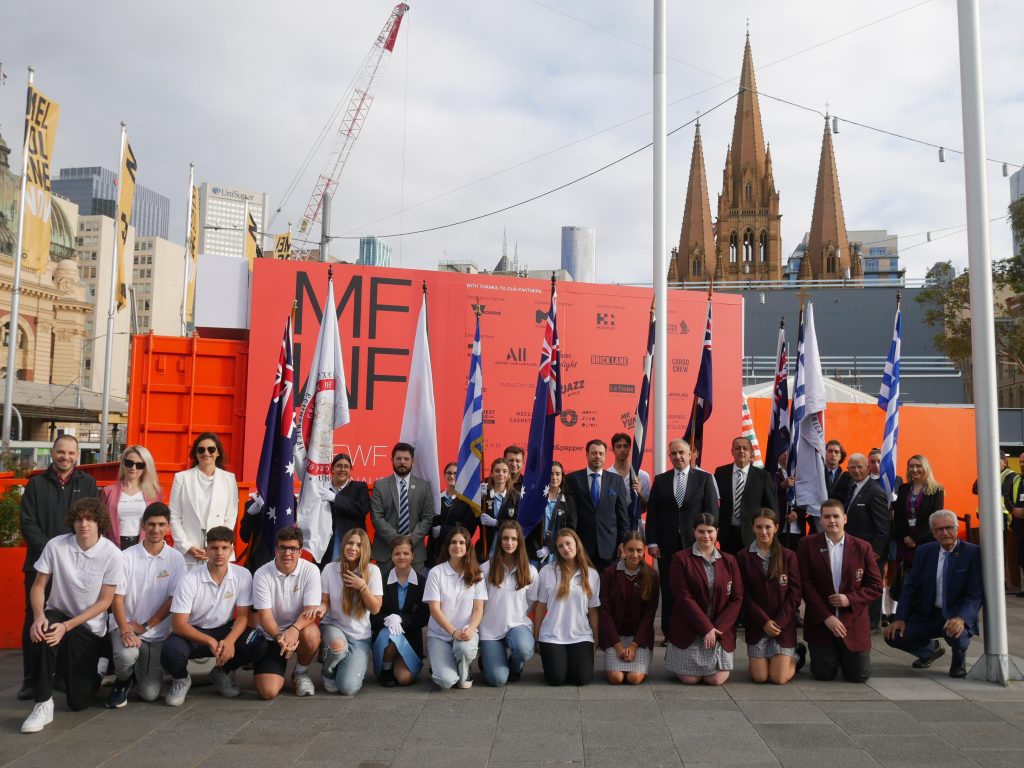
On Saturday, March 25, there was also a flag raising ceremony at Melbourne’s Federation Square. Students from the GCM’s Greek Schools raised the Greek flag, while the national anthems of Greece and Australia echoed across the square.
Greek flag at Federation Square.Attendees at Federation Square.
Apart from the students, many officials were present at the flag raising ceremony including the Consul General of Greece in Melbourne, Emmanuel Kakavelakis; the Chairman of the Victorian Council Greek National Day, Tony Tsourdalakis; the President of the GCM’s Language Schools, Maria Bakalidou; Dr Marinis Pirpiris, Nick Dallas and others.
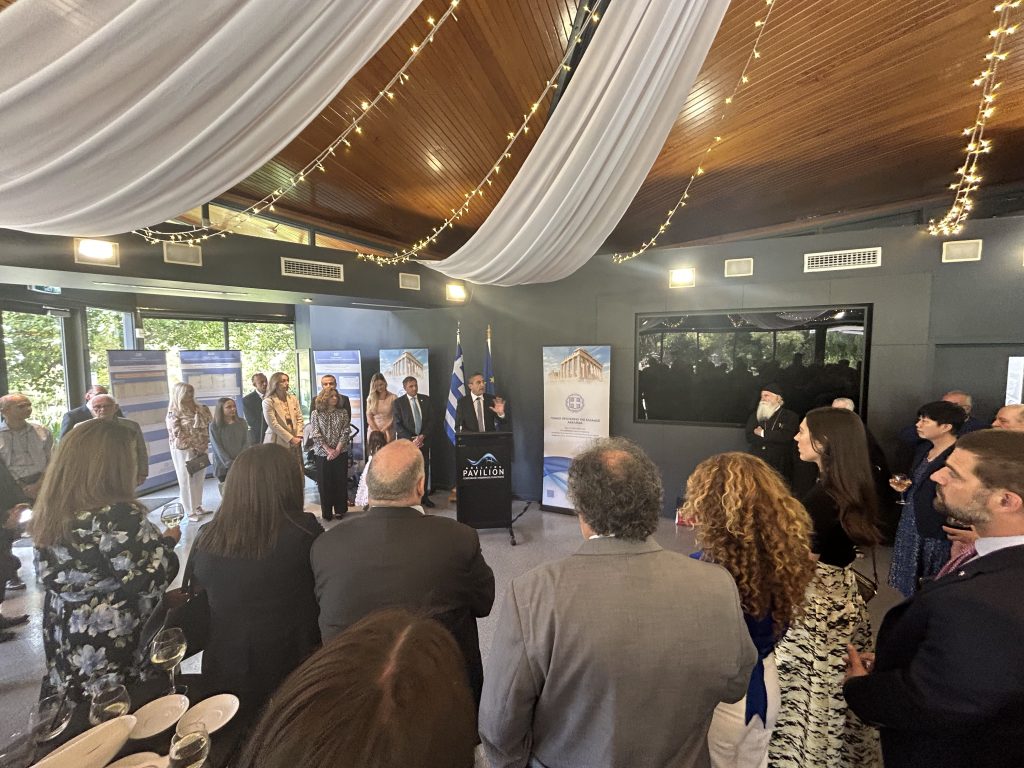
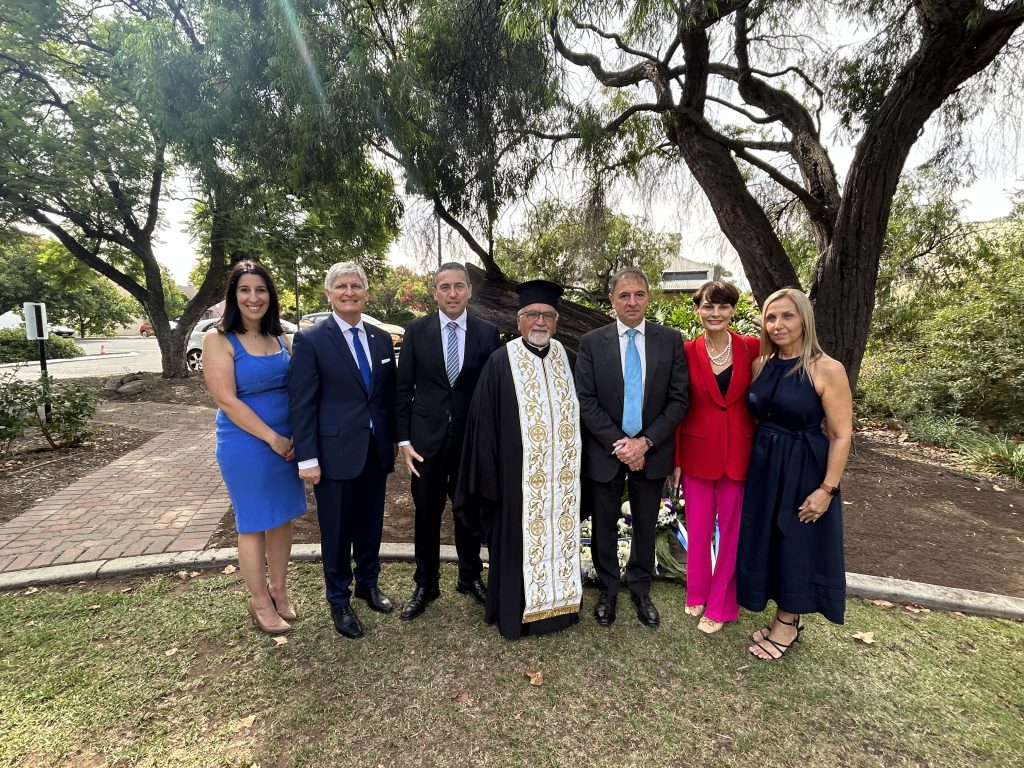
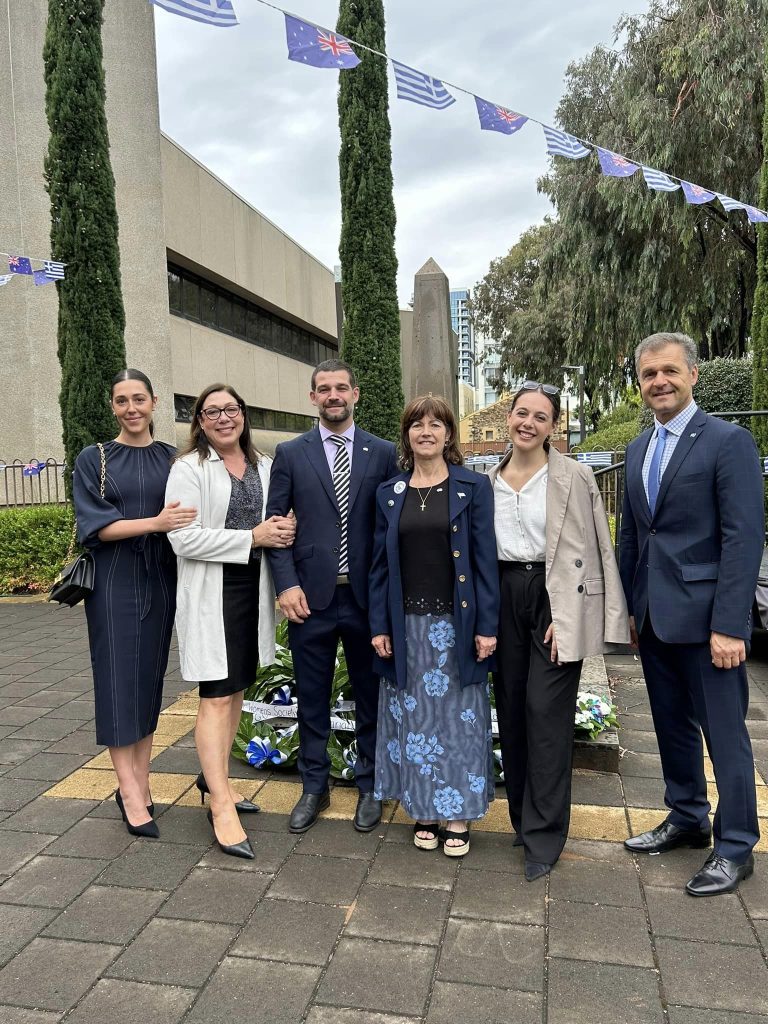
In South Australia, the Consul General of Greece in Adelaide, George Psiachas, held an official reception for the celebration of Greek Independence Day at the Adelaide Pavilion on Saturday, March 25. In attendance were government representatives, as well as Presidents and representatives from Greek associations in South Australia.
Consul General event.
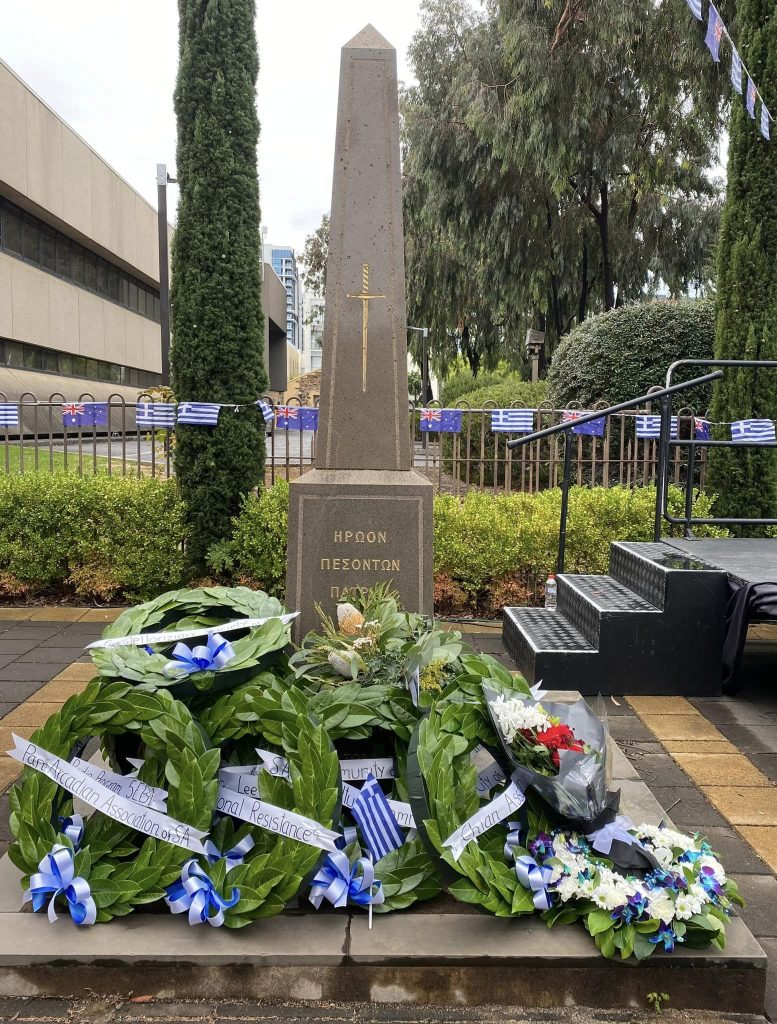
The Messinian Association of SA also held a wreath laying ceremony at the West Torrens Memorial Gardens on Saturday.
Representatives at the Messinian event.
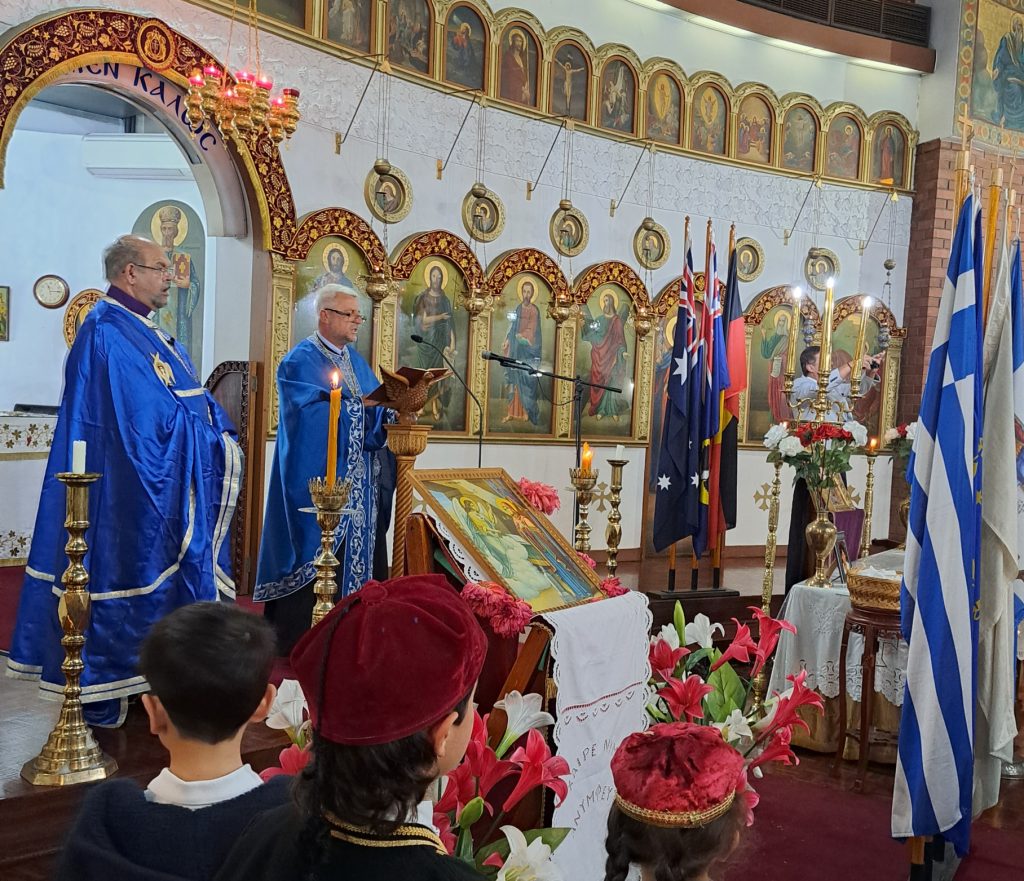
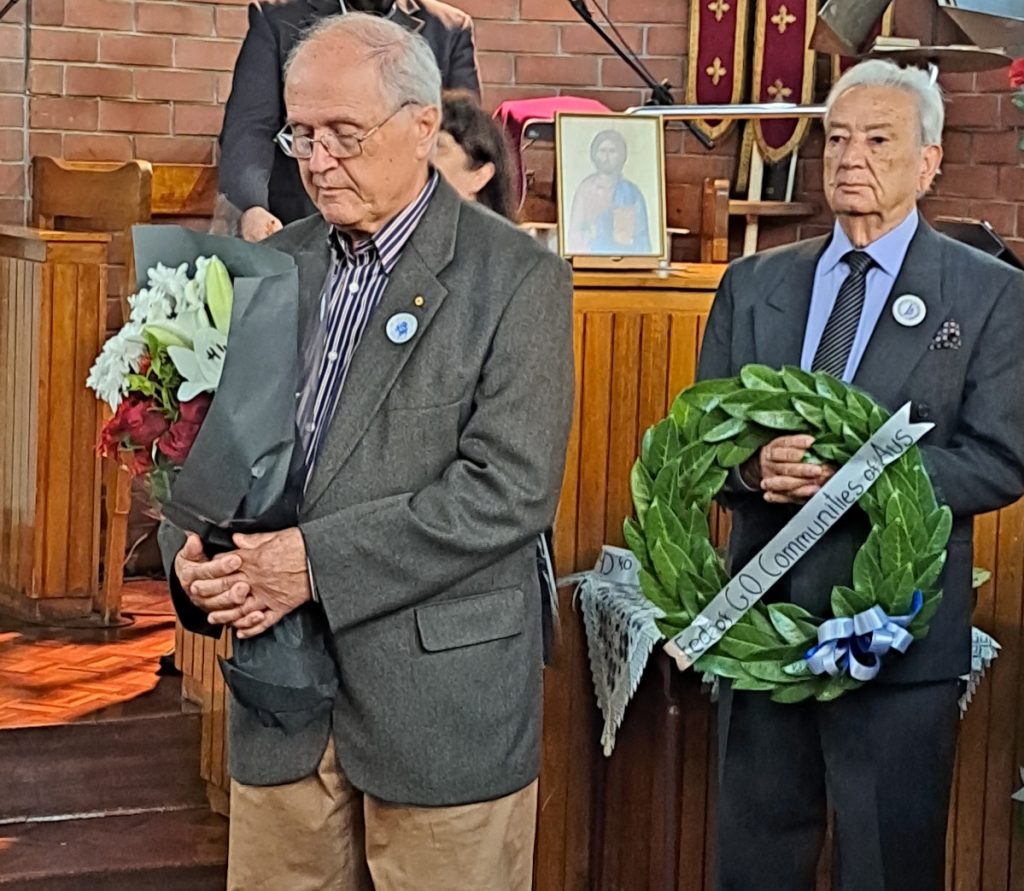
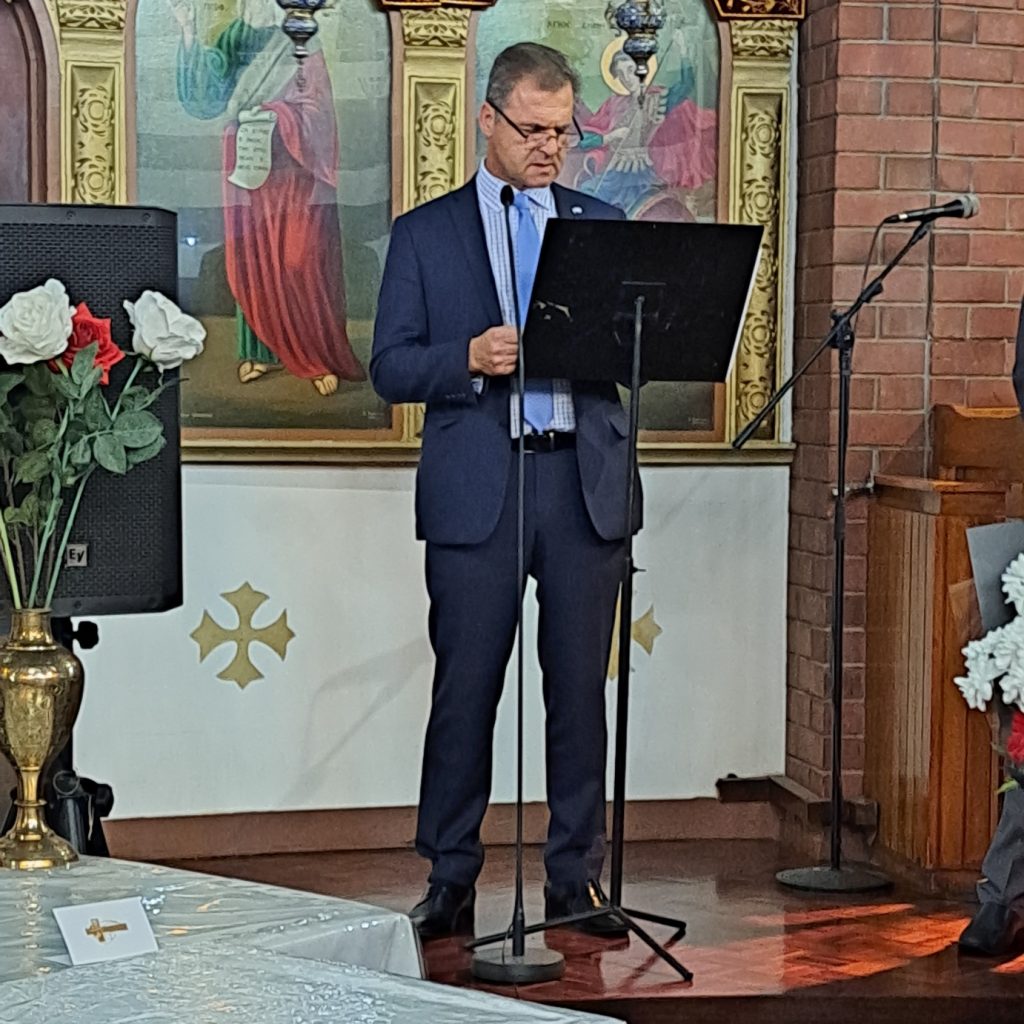
On Sunday, March 26, the Greek Orthodox Community of South Australia (GOCSA) gathered for a church service to mark the Annunciation of the Theotokos and a wreath laying service to celebrate Greek Independence Day.
The Greek Orthodox Archdiocese of Australia (Archdiocesan District of Adelaide) also held on Sunday a Matins, Divine Liturgy and Doxology in the Archiepiscopal Church of Saint Sophia, Bowden, officiated by Bishop Silouan of Sinope.
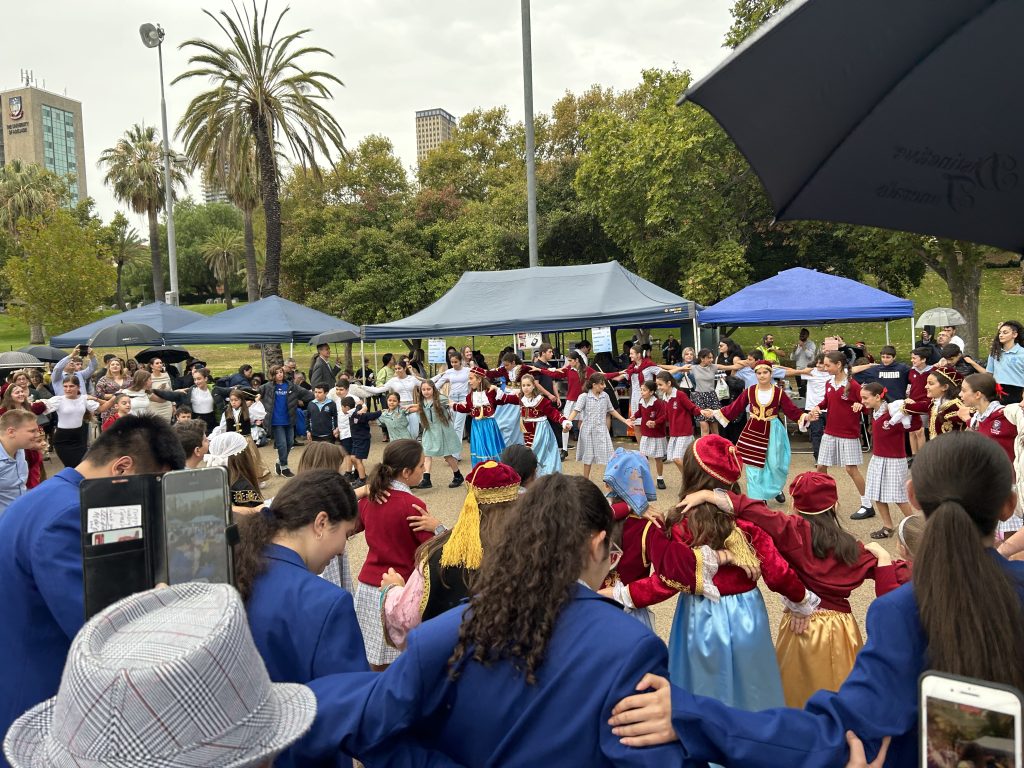
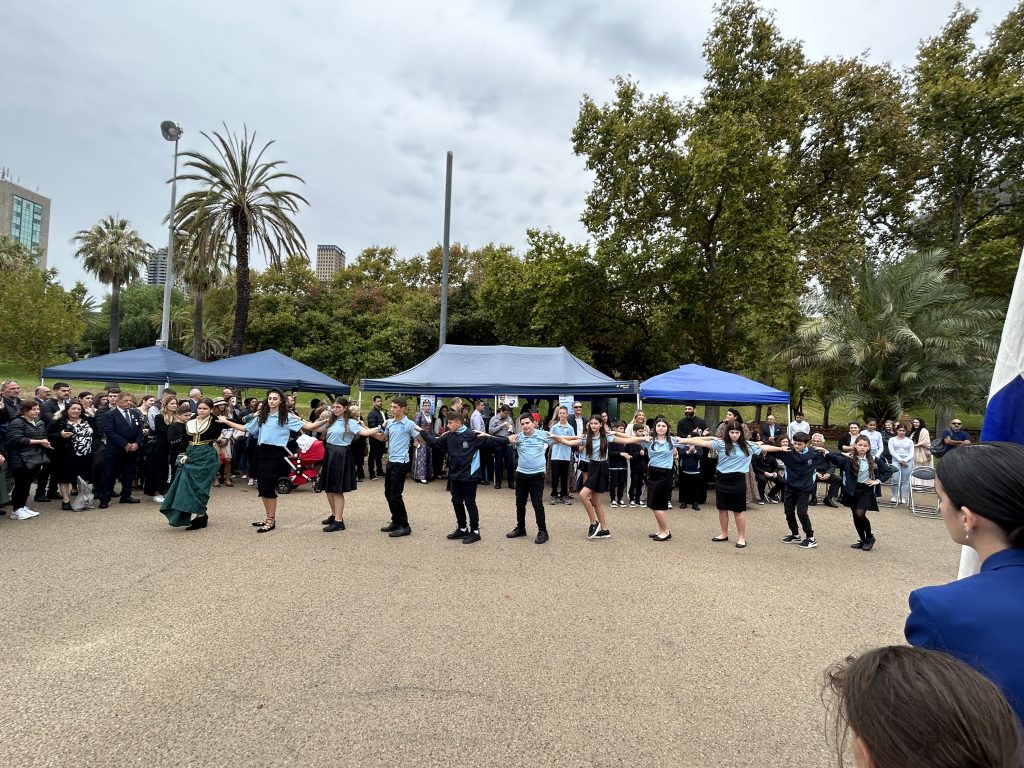
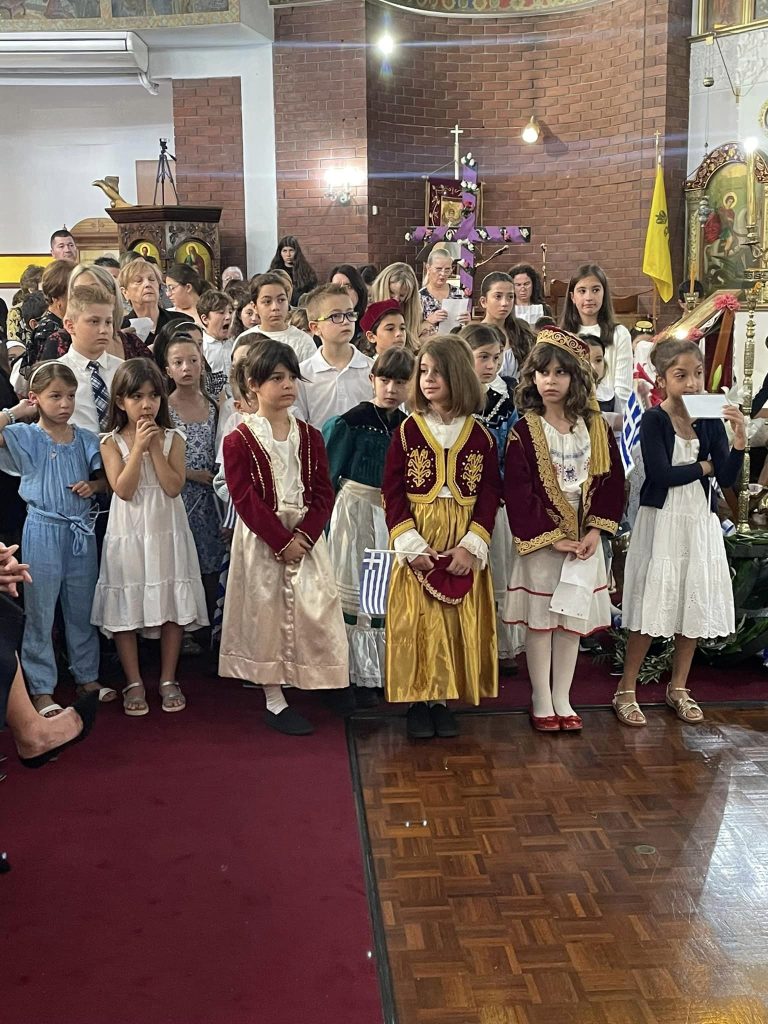
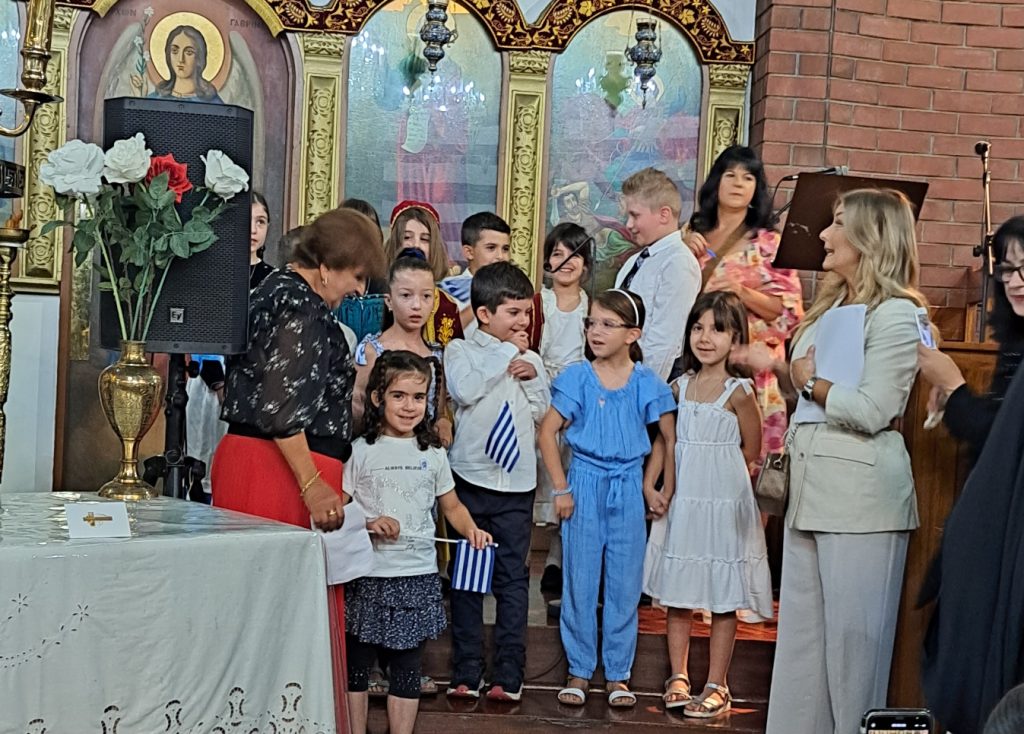
There was also a Memorial Service at the North Terrace War Memorial and a wreath laying ceremony followed by a parade to the Torrens Parade Ground. At the Torrens Parade Ground, there were songs, poems and traditional dance performances by students.
Torrens Parade Ground.Torrens Parade Ground.
Western Australia:
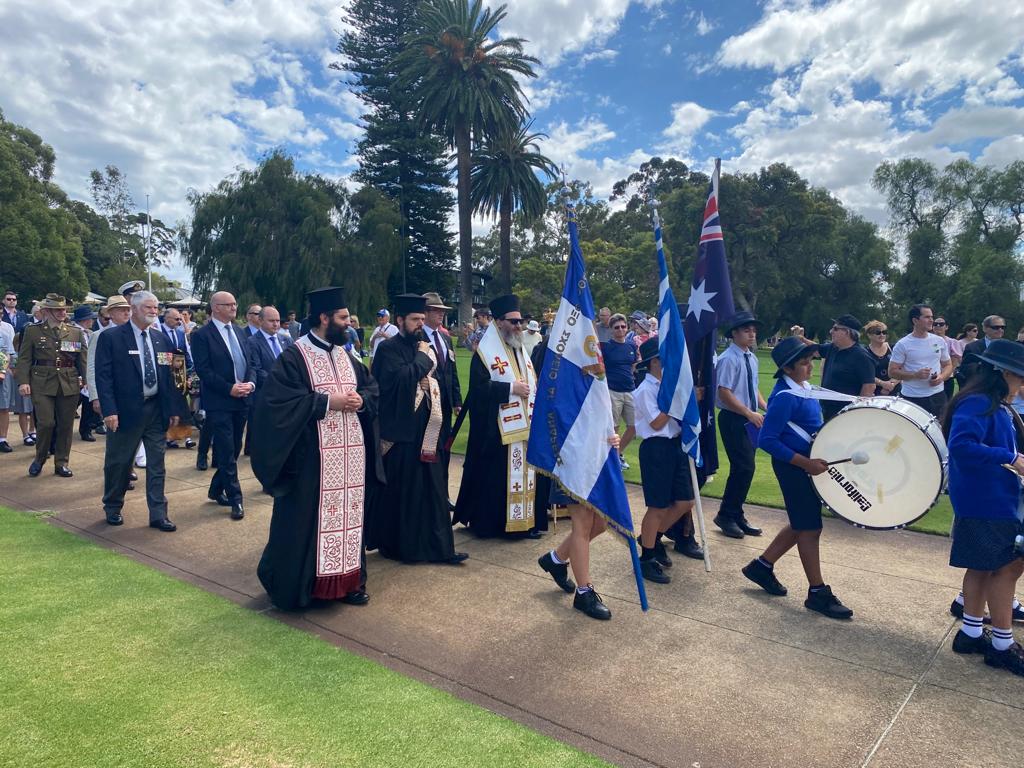
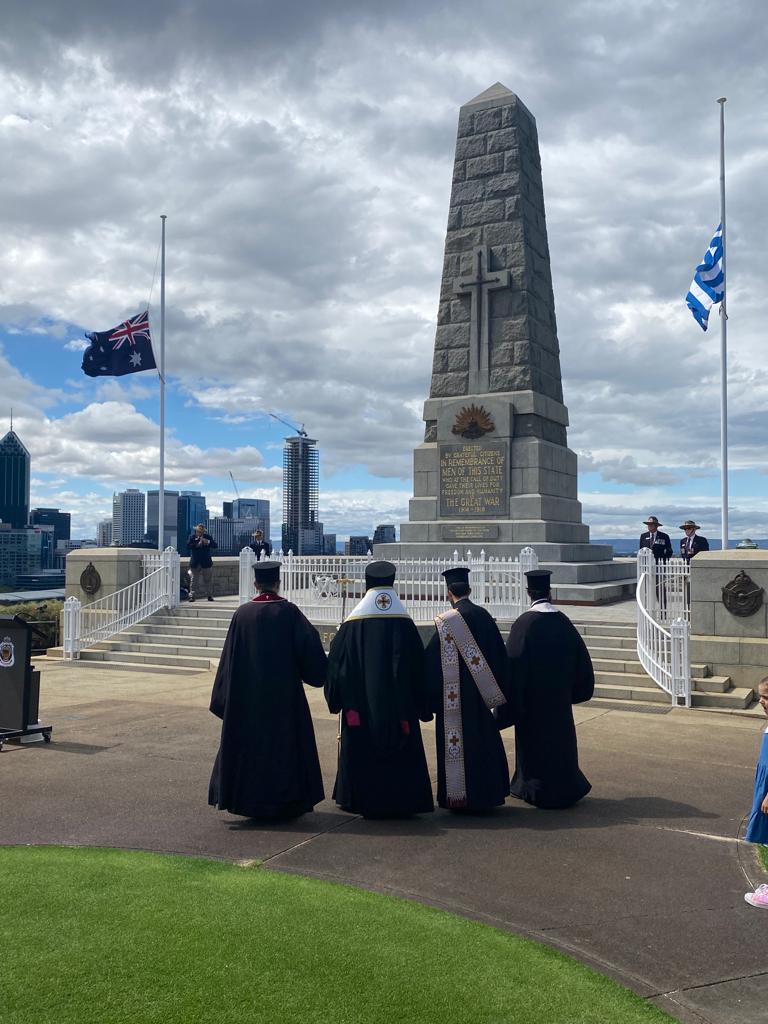
The Consulate of Greece in Perth organised a well attended wreath laying ceremony at Kings Park State War Memorial on Sunday, March 26 to commemorate the 202nd anniversary of Greece’s Independence Day.
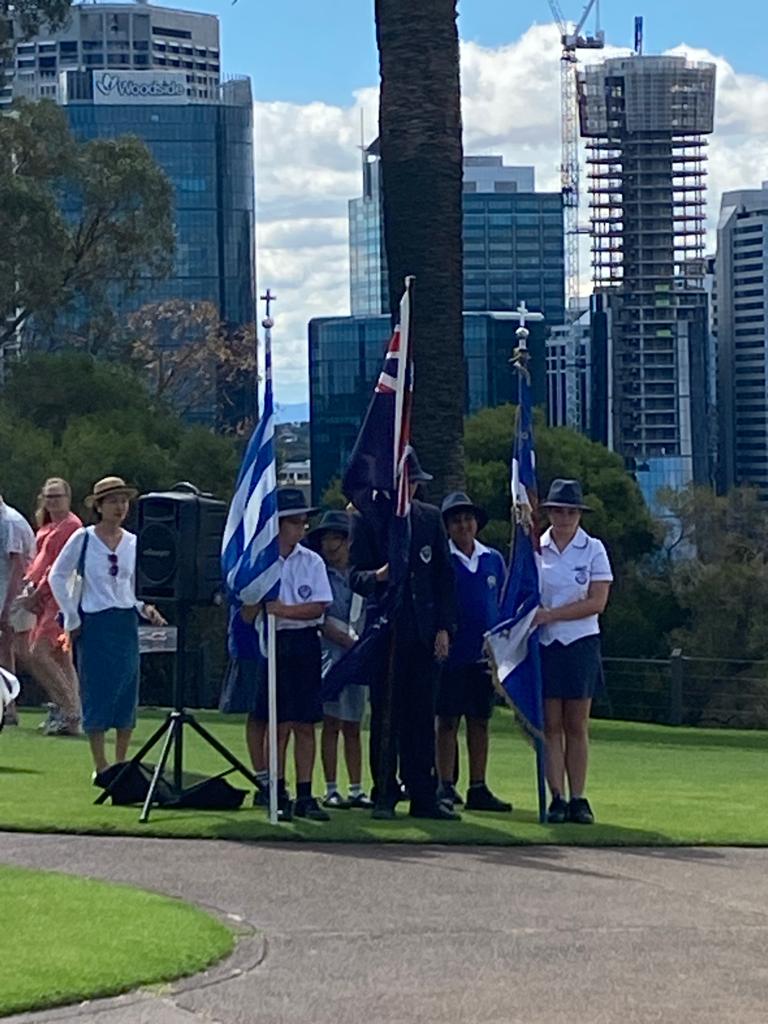
The ceremony opened with a blessing by the Reverend Fathers, followed by poems and songs by the students of the Greek Orthodox St Andrew’s Grammar School, the Immaculate Heart College, and the Greek Language and Culture Institute of Evangelismos.
Attendees.At the memorial.
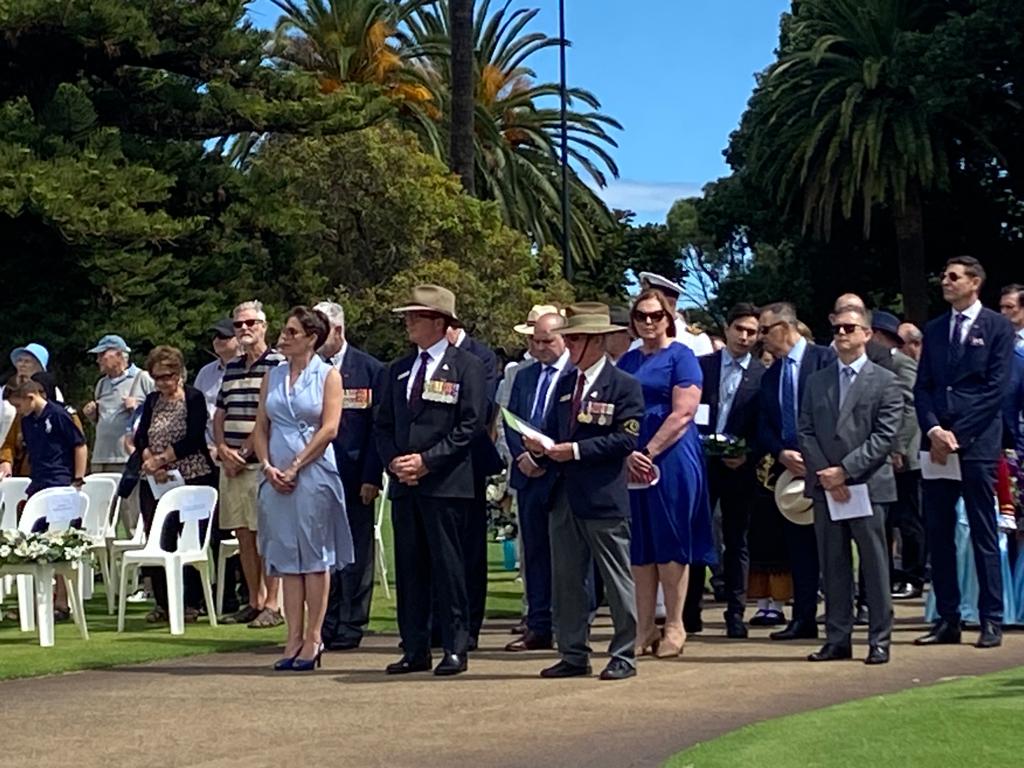
Australian and Greek dignitaries paid their tribute by laying their wreaths and the ceremony was concluded with speeches by the Consul of Greece in Perth, Georgia Karasiotou; Dan Caddy MLC, representing the Premier of WA; and Tjorn Sibma MLC, representing the Leader of the Opposition. Among the guests were also the former Governor of Western Australia, Dr Ken Michael AC and the Lord Mayor of Perth, Basil Zempilas.
Official guests.
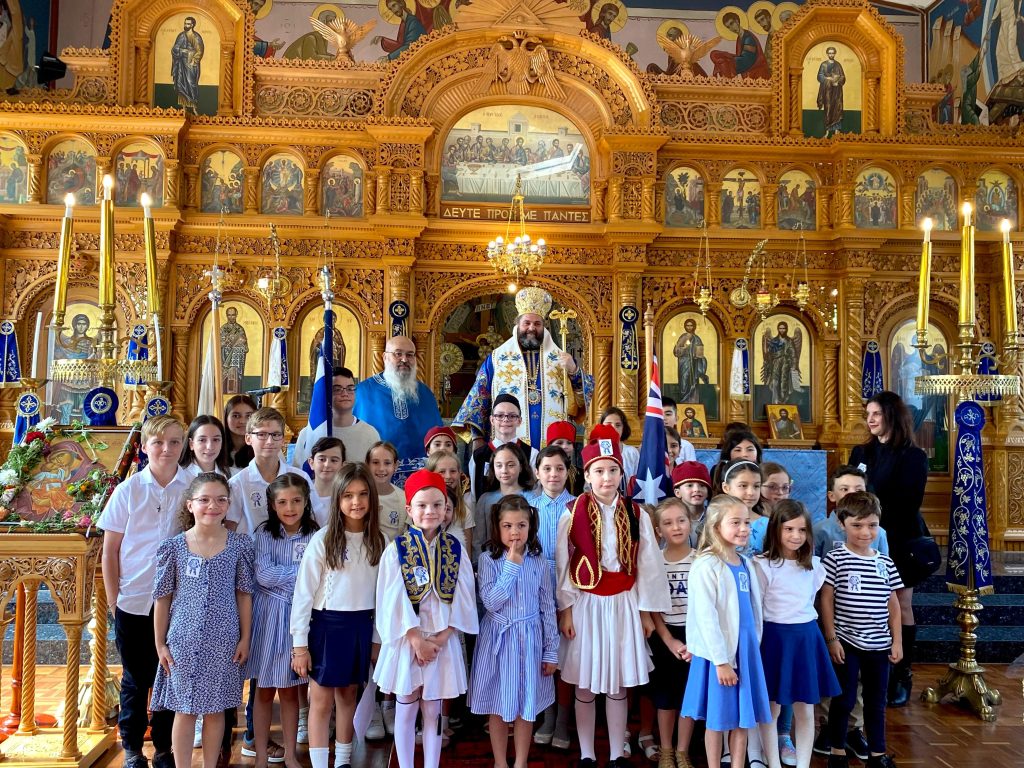
The usual Doxology, presided by Bishop Elpidios of Kyanea, took place the previous day, along with the feast Service of Evangelismos, at the Church of Evangelismos. The Greek Orthodox Community of WA – Evangelismos held their feast day lunch right after at Alexander the Great function hall. On the evening of the 25th, the Hellenic Club of WA held a 25th March Independence Day Dinner Dance.
Australian Capital Territory:
Over the weekend, the Greek community of Canberra in the Australian Capital Territory (ACT) came together to celebrate Greek Independence Day and showcase their love for their faith, language, food, dancing and culture.
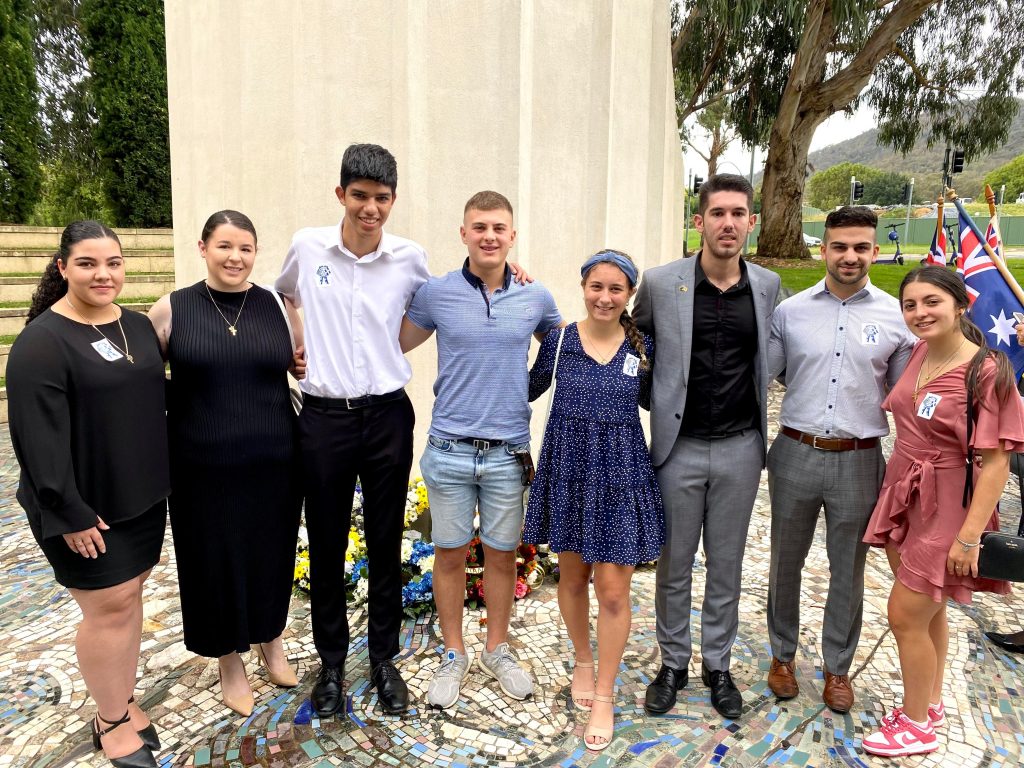
Canberra youth.
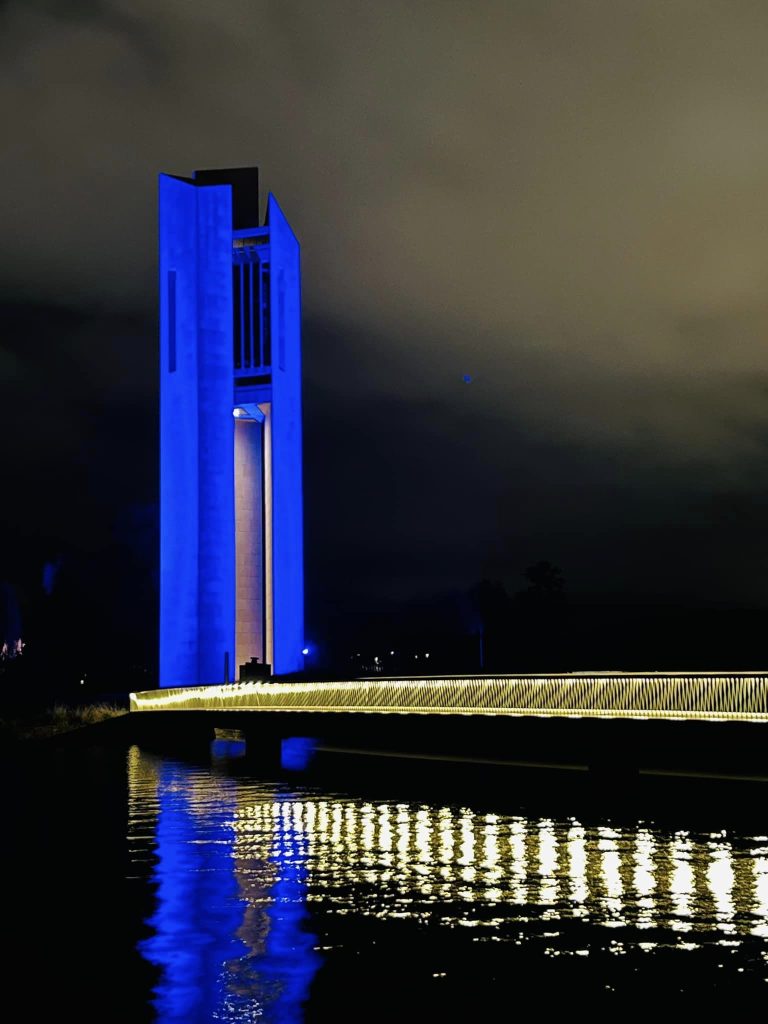
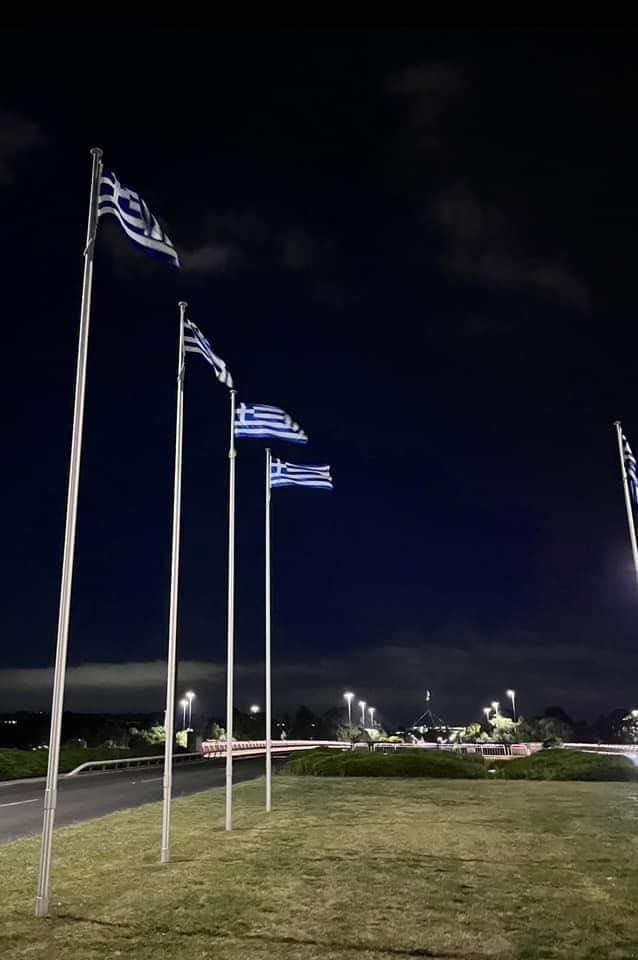
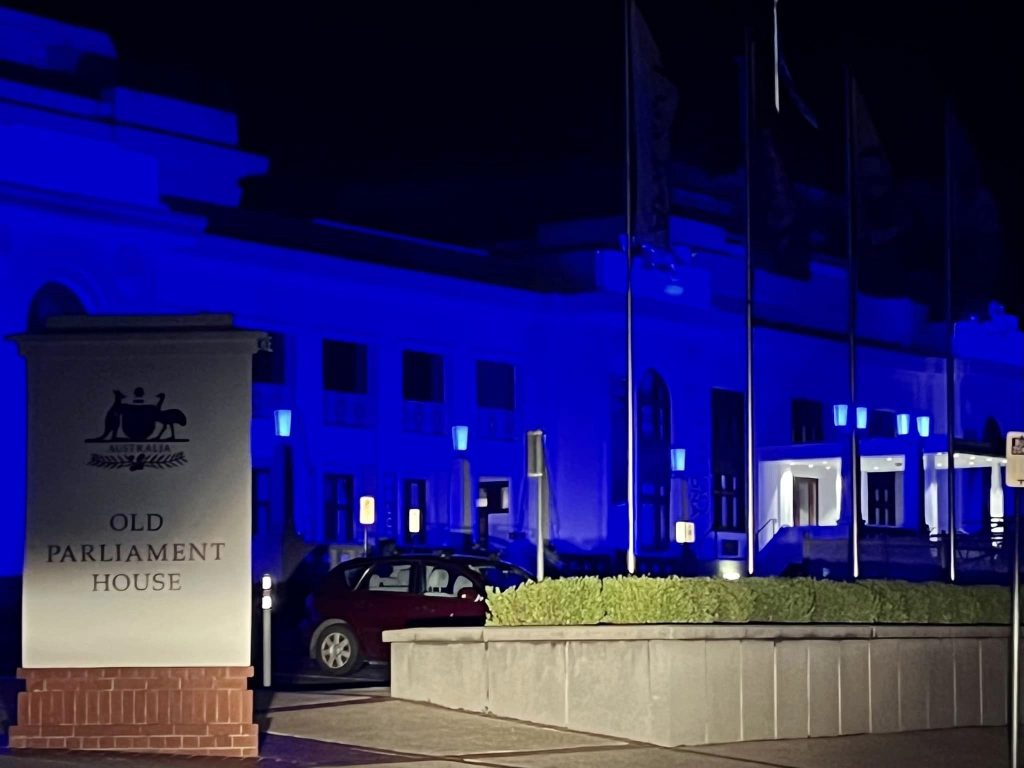
On Saturday, March 25, buildings such as the Hellenic Club of Canberra, the Carillon Bell Tower, the National Museum of Australia and Old Parliament House were all lit in the colours of the Greek flag. 40 Greek flags were also flying proudly across Canberra.
On Sunday, March 26, there was a Divine Liturgy, Memorial Service, wreath laying ceremony and luncheon at the Hellenic Club of Canberra to celebrate Greek Independence Day.
Northern Territory:
In the Northern Territory, the Greek Orthodox Community of Northern Australia and the Darwin Greek Orthodox School honoured Greece’s National Day in the presence of Bishop Silouan of Sinope.
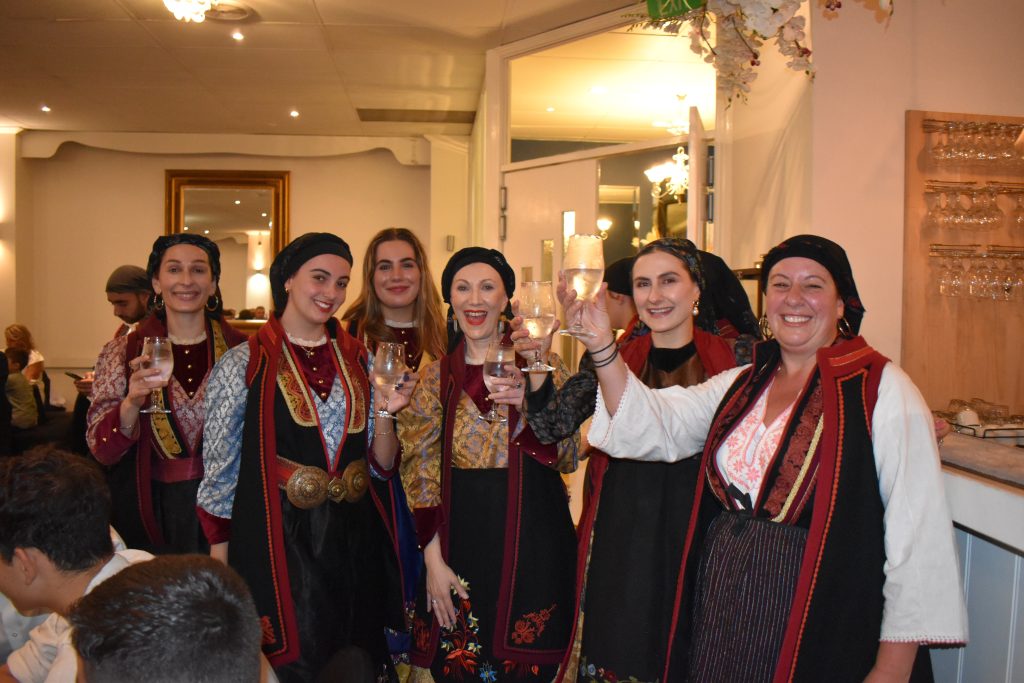
On the day, there was a wreath laying ceremony followed by a school celebration featuring poem recital and Greek dancing by the OPA School of Hellenic Dance.
Tasmania:
The Greek Community of Tasmania held a Doxology service and wreath laying ceremony on Sunday, March 26 at St Georges Greek Orthodox Church in Hobart. Wreaths were laid by a number of local Greek community Presidents and representatives.
Students from Hobart’s local Greek school recited poems and the National Anthems of Greece and Australia were sung.
Queensland:
Over the weekend, the Greek Orthodox Community of St George in Brisbane held a Doxology service and wreath laying ceremony.
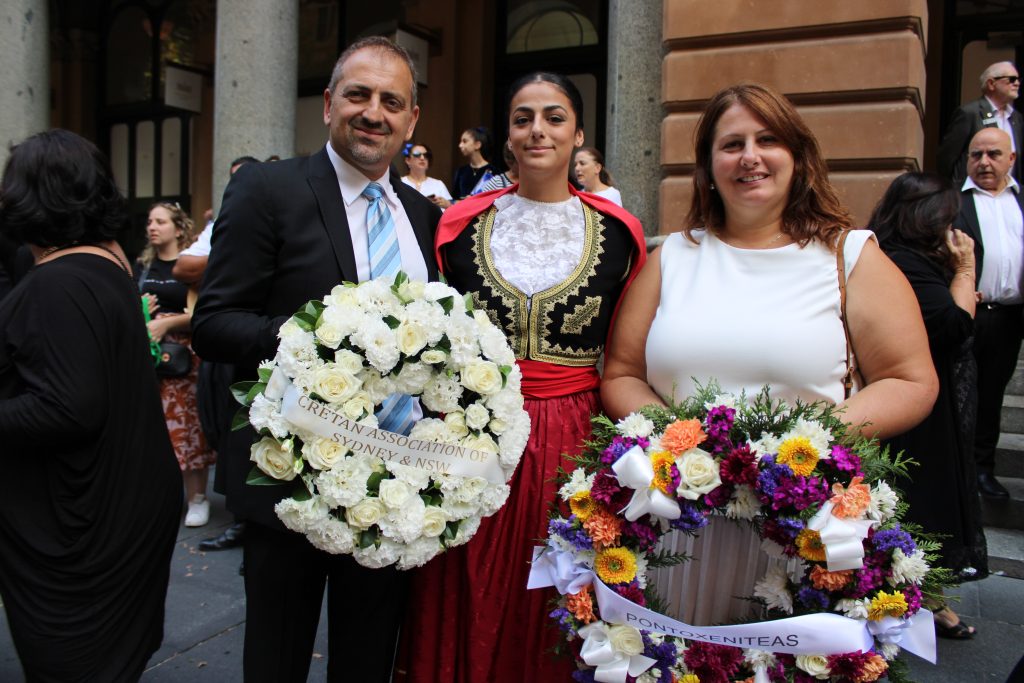
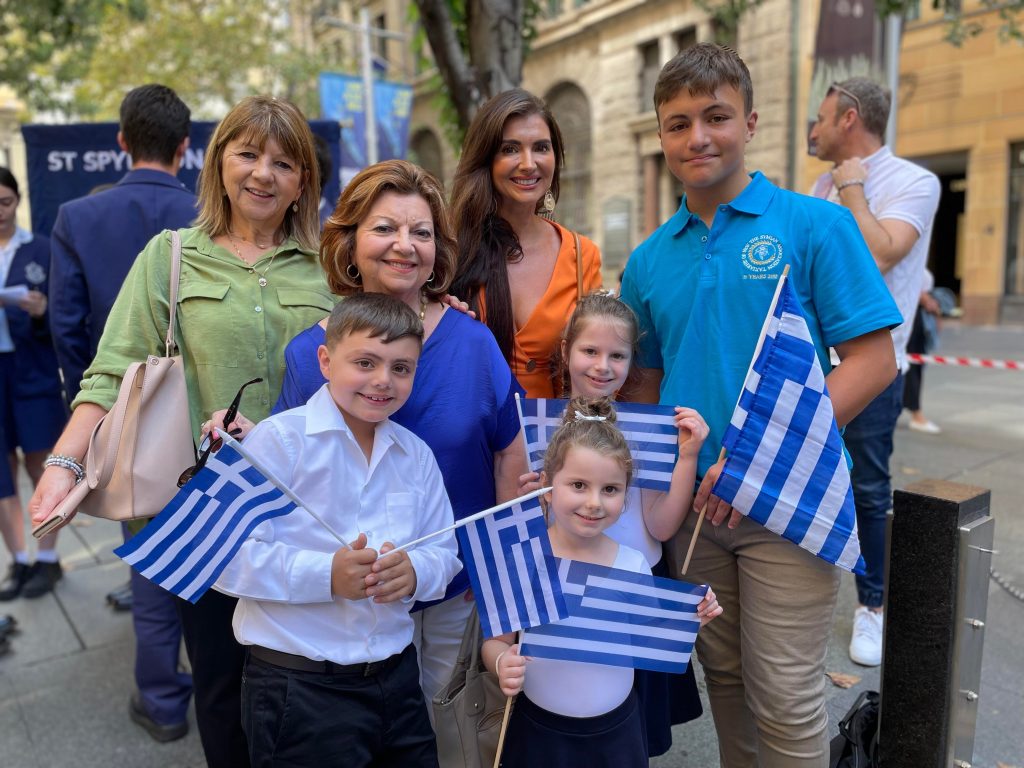
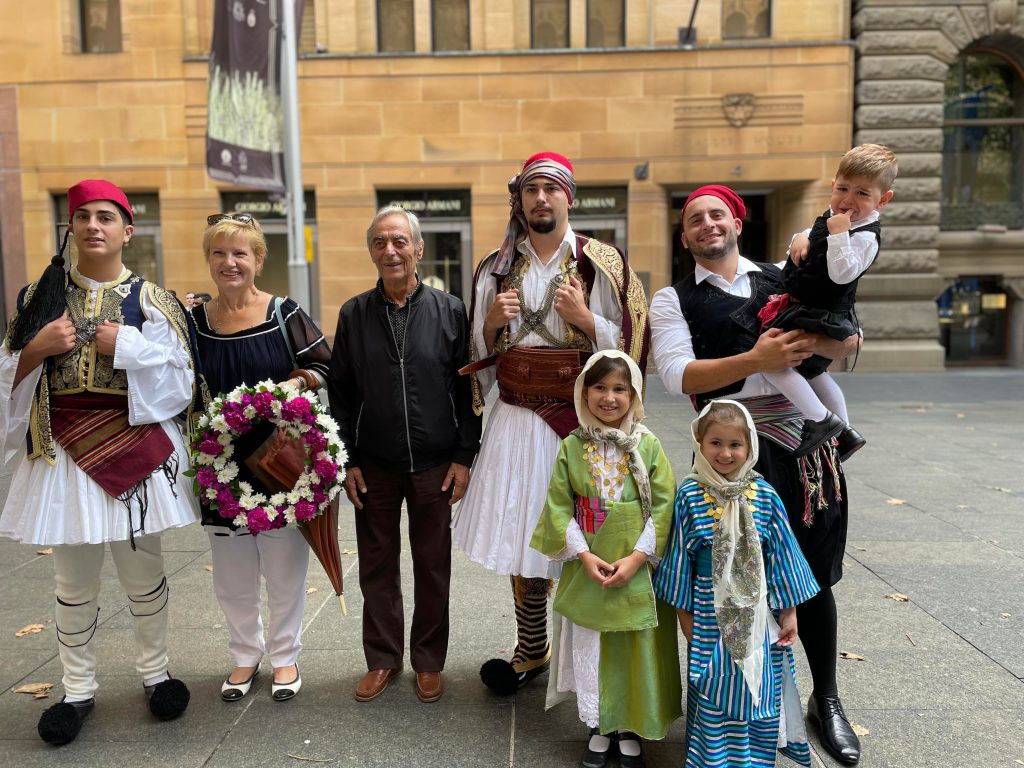
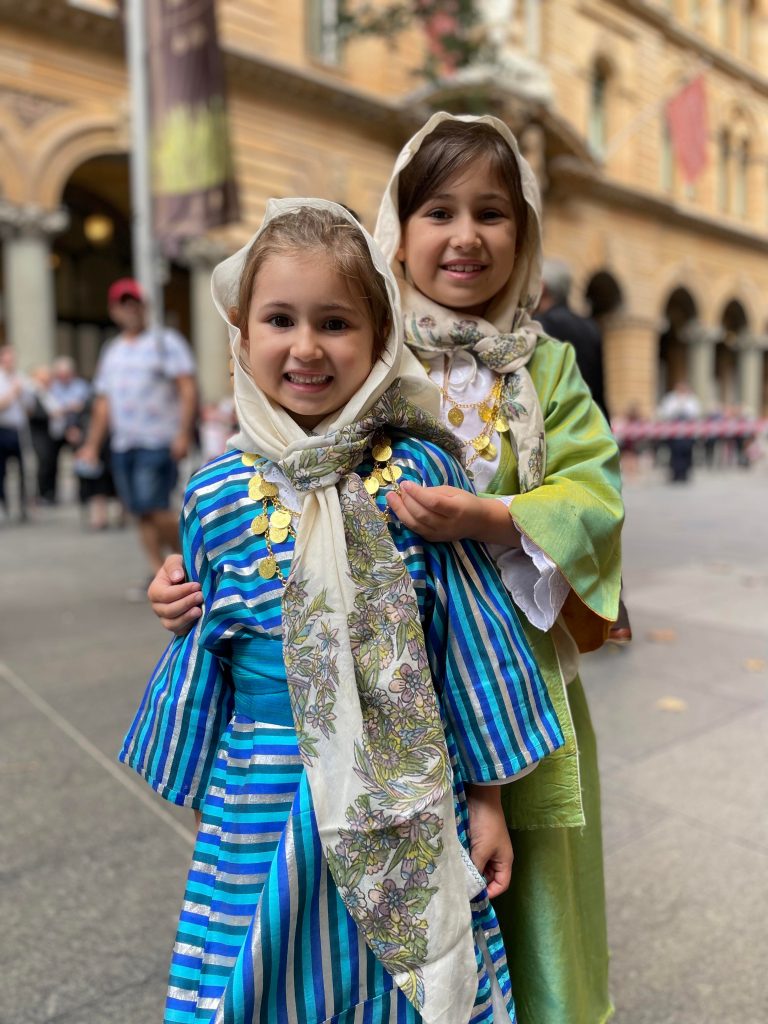
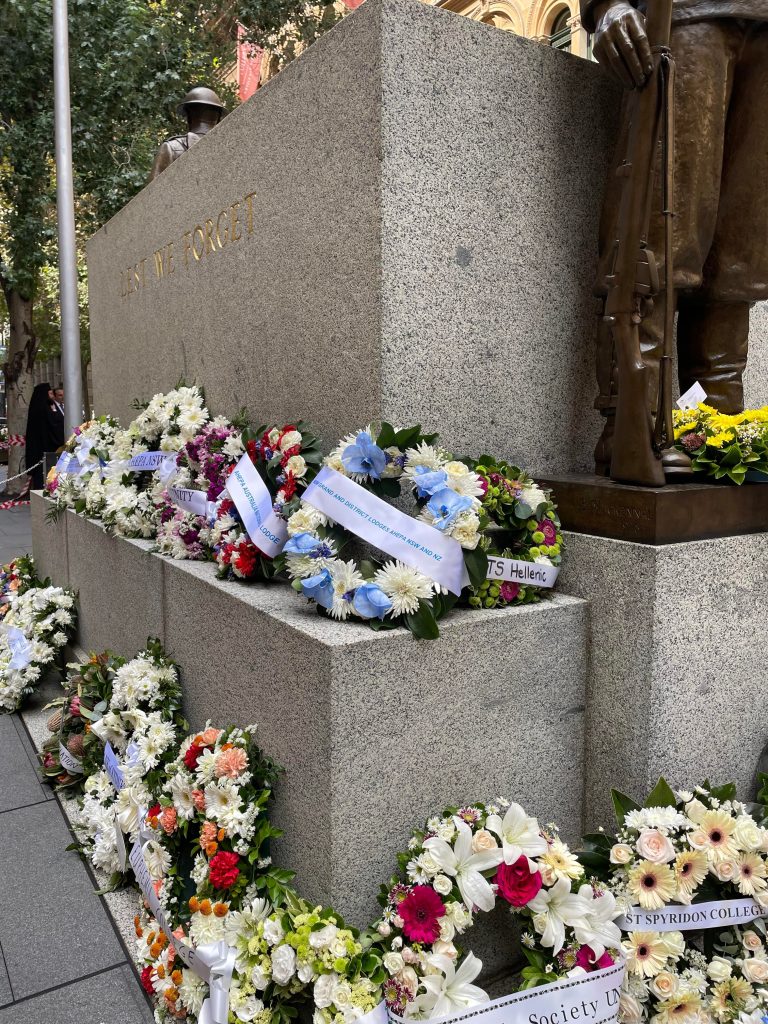
From a wreath laying ceremony at Sydney’s Martin Place to a proud display of Hellenic culture, music and dance at Town Hall – Sydney’s Greek community came out in full force to celebrate Greek Independence Day on Sunday, March 26.
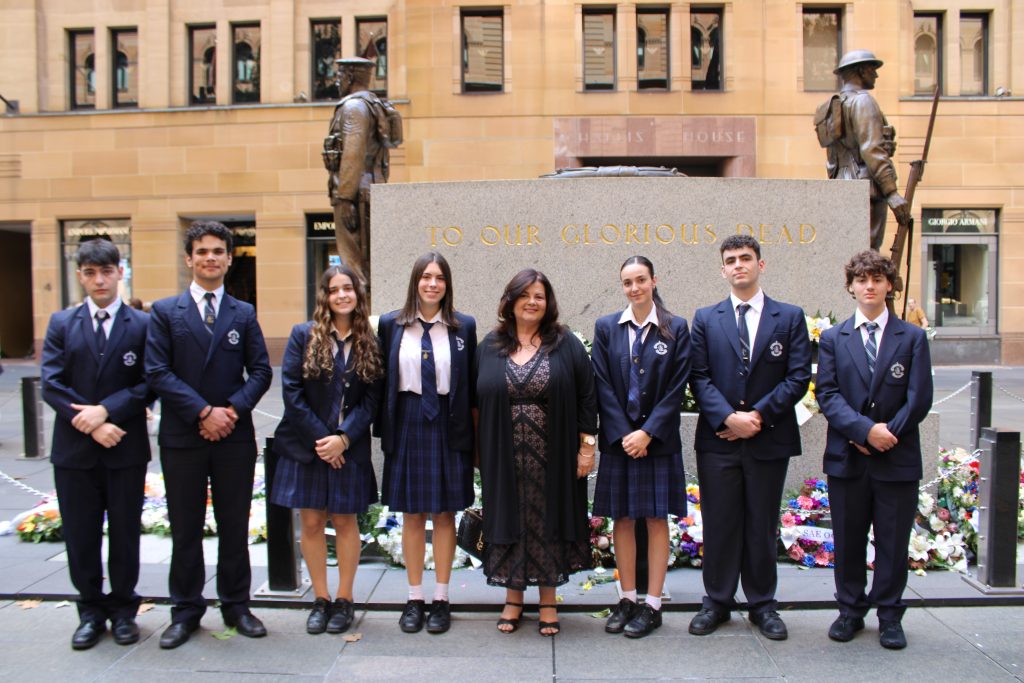
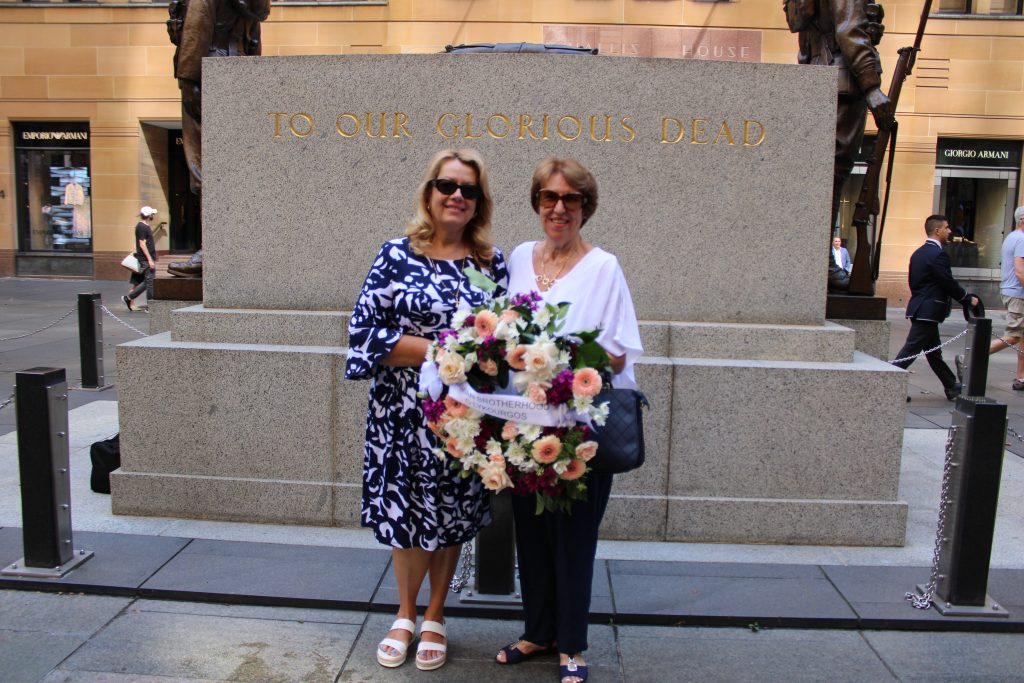
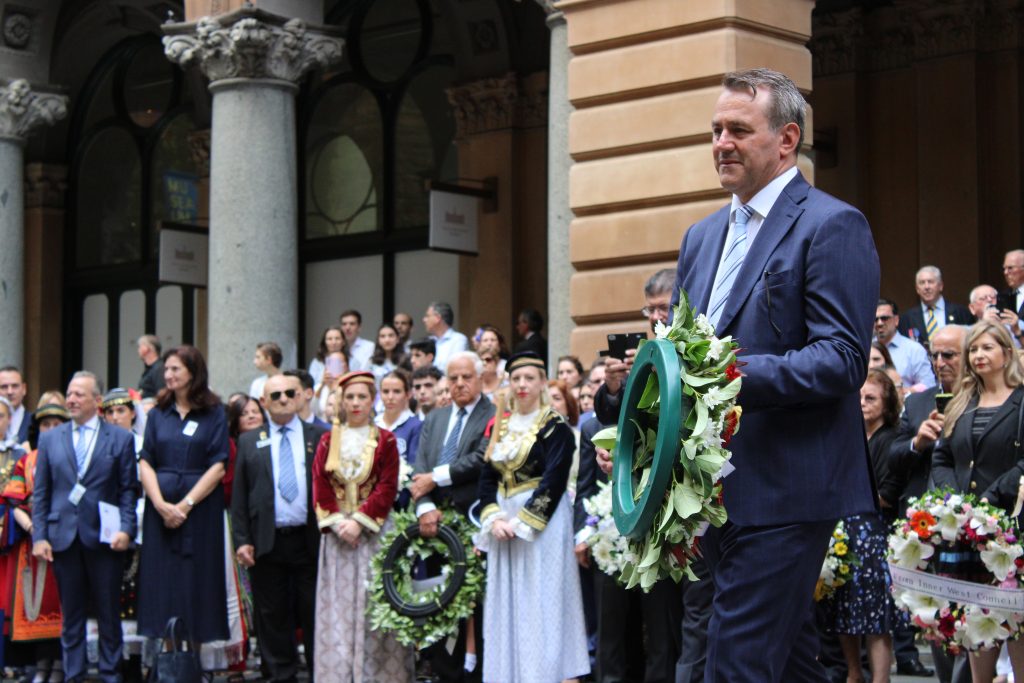
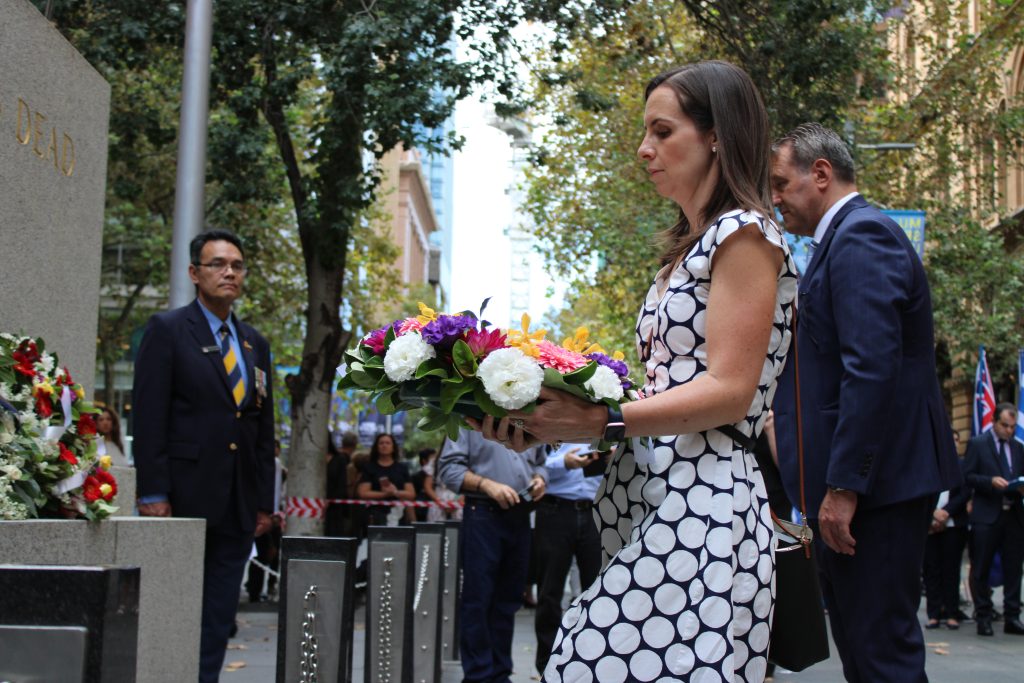
At Sunday’s wreath laying ceremony, over 100 Presidents and members of local Greek community organisations stood to attention in front of the Martin Place cenotaph to pay tribute to the fallen heroes and heroines of the 1821 Greek Revolution.
Attendees. All photos copyright The Greek Herald / Andriana Simos.Attendees.Attendees.Attendees.Attendees.
The ceremony began with the Greek and Australian National Anthems, followed by a small memorial service conducted by Archbishop Makarios of Australia.
The Last Post and Rouse was then played, the Ode was read in Greek and English by NSW Greek RSL members Andrew Kitsos and Peter Tsigounis, and a minute silence was held.
Attendees.Attendees.
Politicians, prominent members of Sydney’s Greek community and young students later laid wreaths. These included Archbishop Makarios; the Consul General of Greece in Sydney, Ioannis Mallikourtis; Steve Kamper MP; Sophie Cotsis MP; Courtney Houssos MLC; Councillors and Mayors from Randwick, Canterbury Bankstown, Georges River, Waverley, Inner West Councils; and the President of the Greek Orthodox Community of NSW (GOCNSW), Harry Danalis; among many others.
Following the wreath laying ceremony, people walked to Town Hall for a program of cultural activities organised by GOCNSW and the Inter-Communities Council of the Greek Orthodox Archdiocese of Australia.
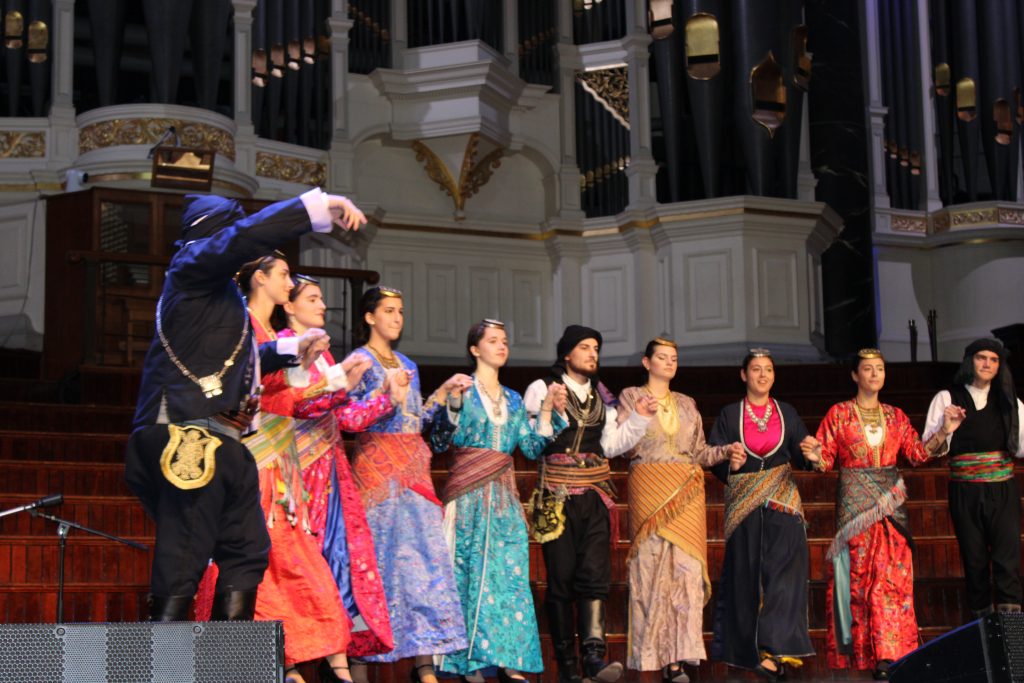
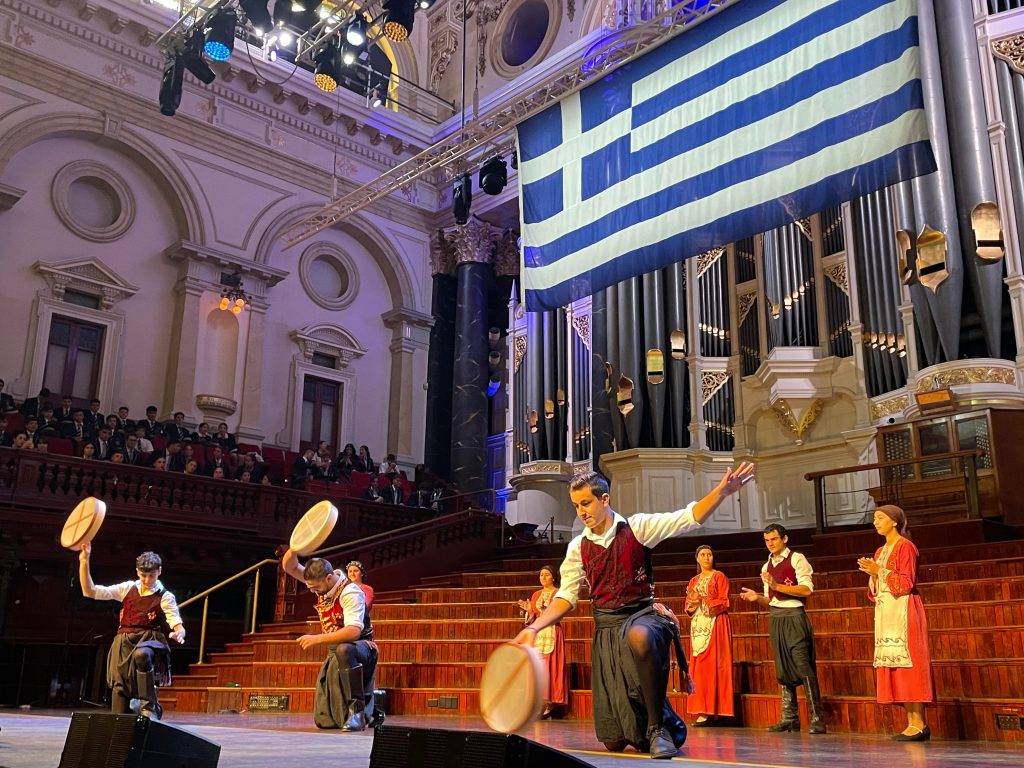
Greek dancing.Greek dancing.
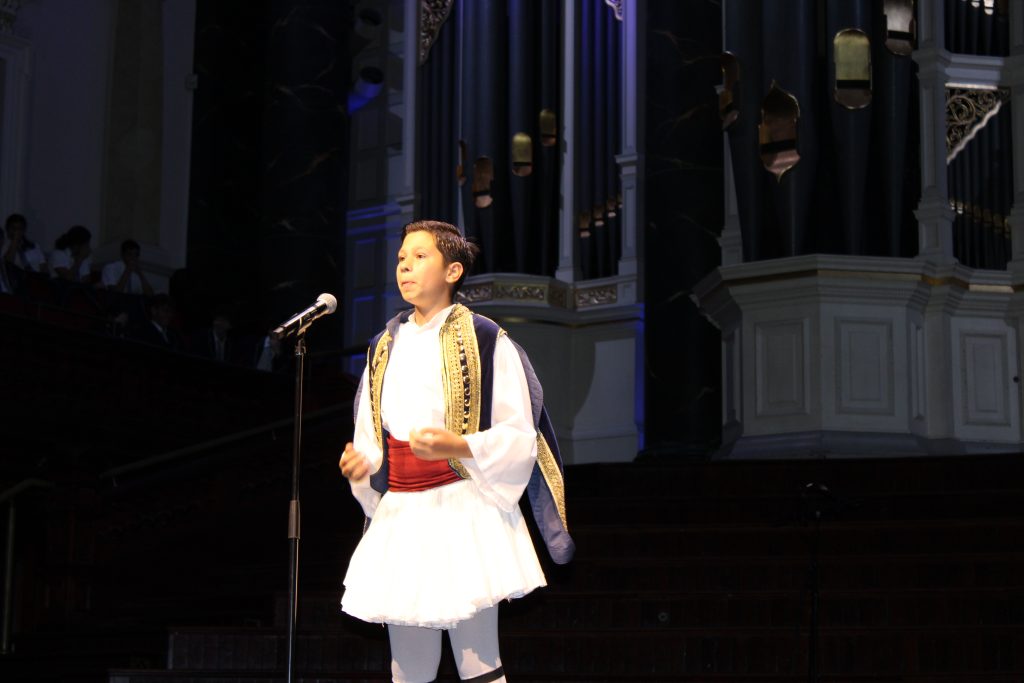
The program of events began with the singing of the National Anthems of Greece and Australia by school students from St Euphemia College, All Saints Grammar and St Spyridon College. Two young students also gave powerful renditions of poems.
Choir.Student recites poem.Student recites poem.
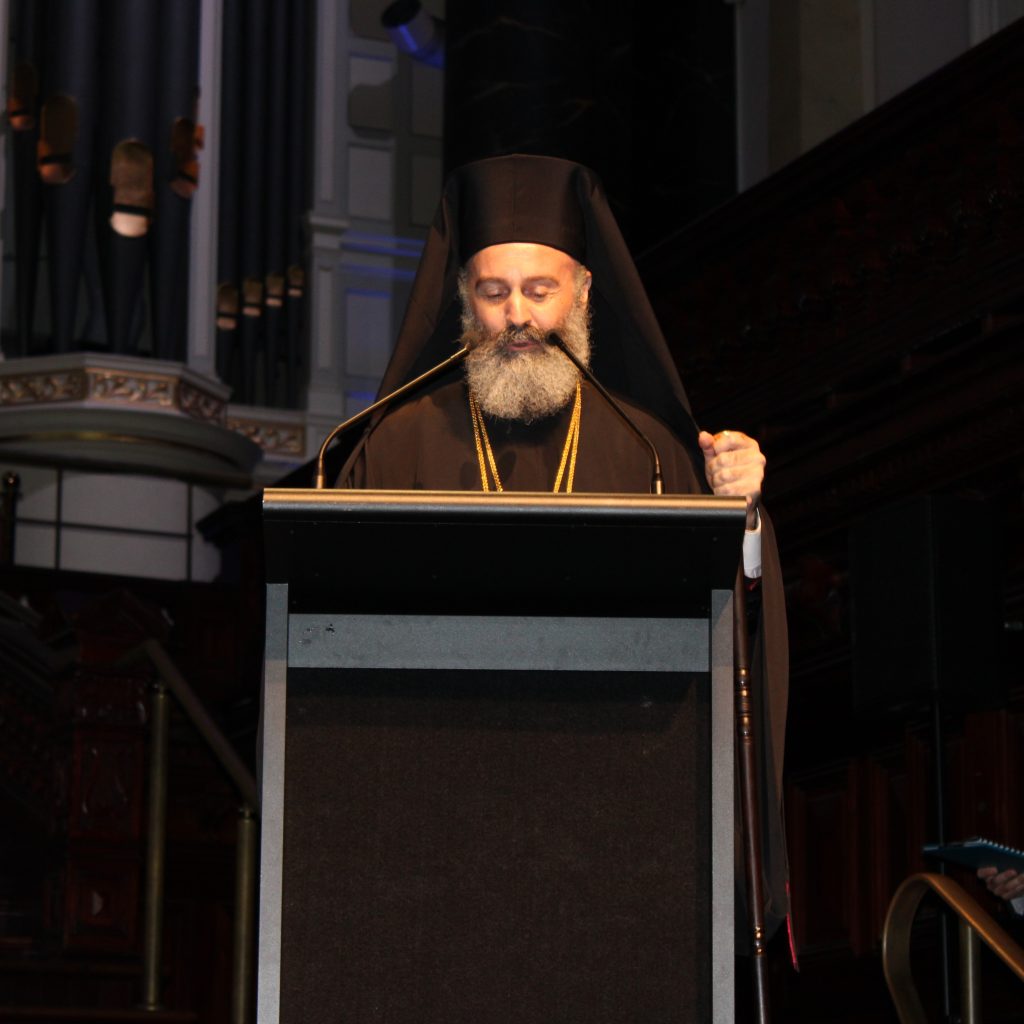
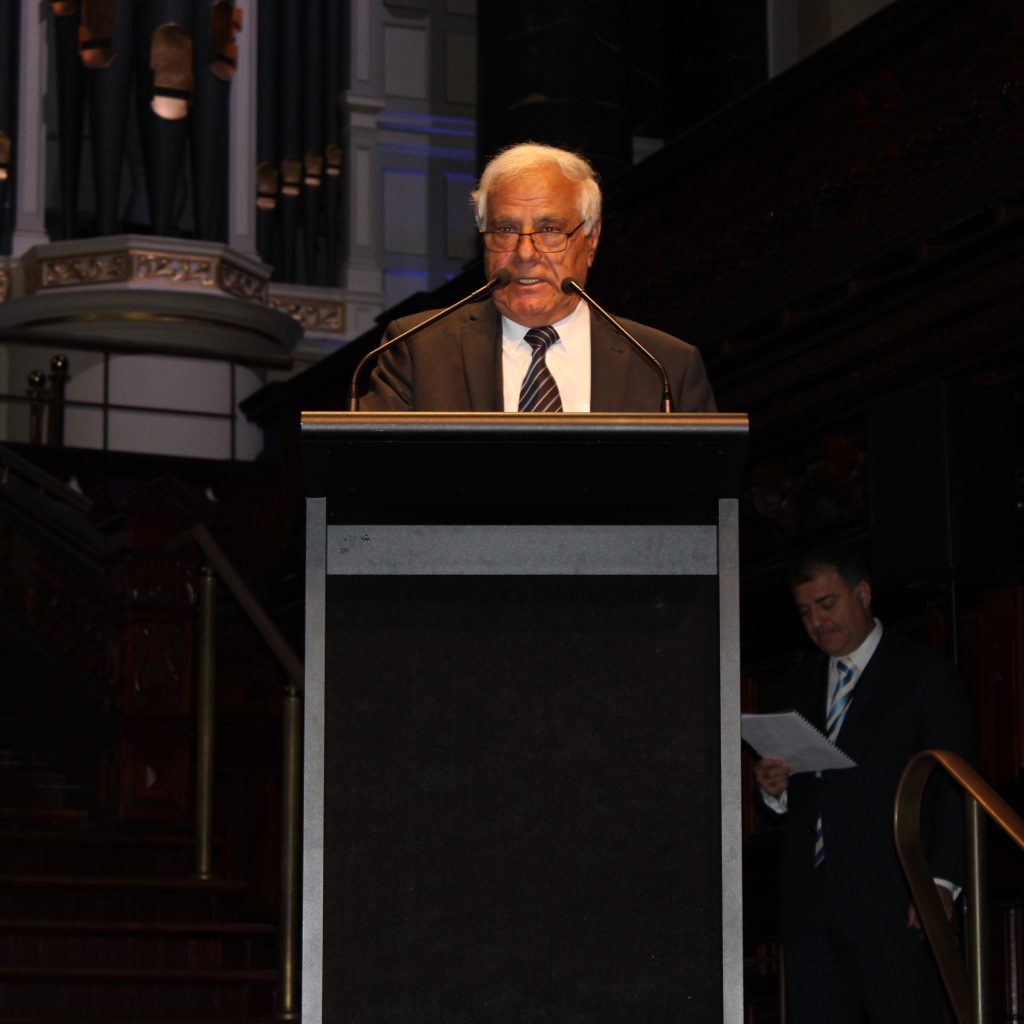
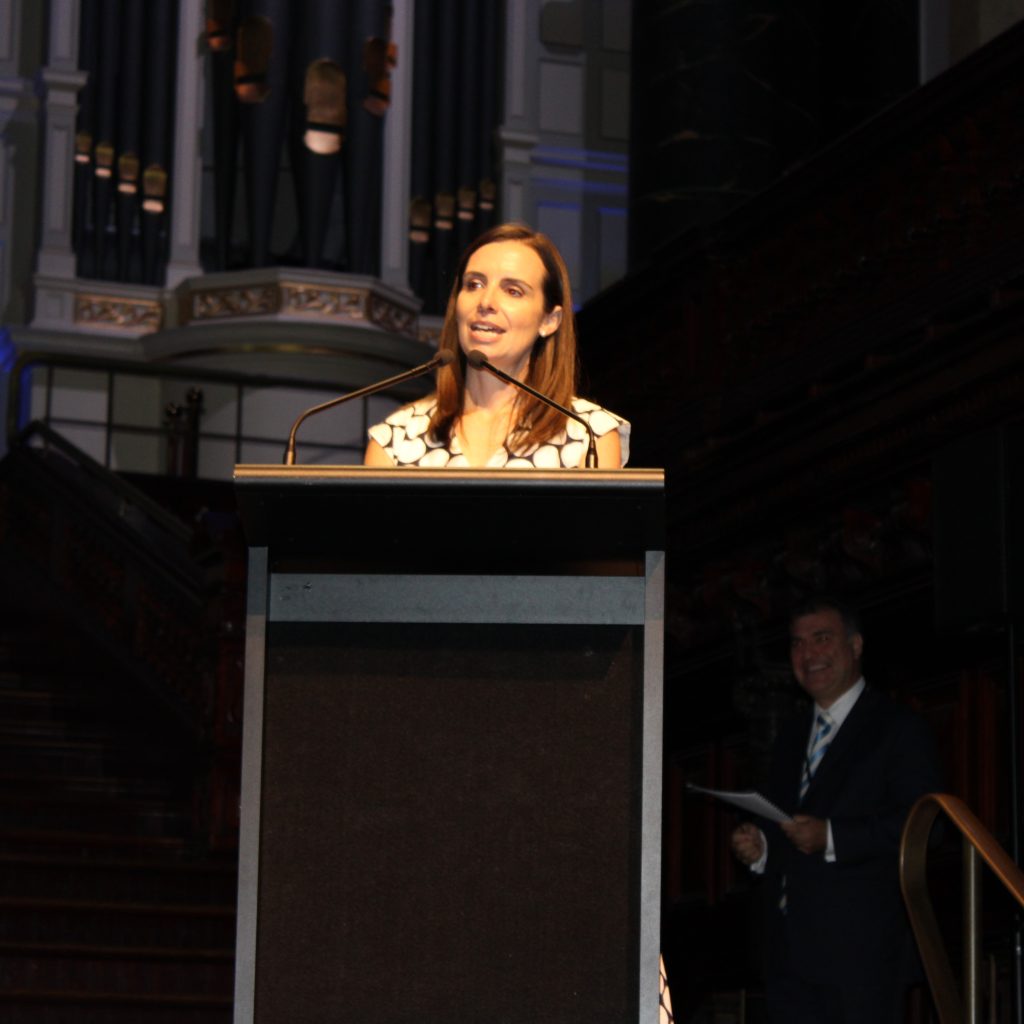
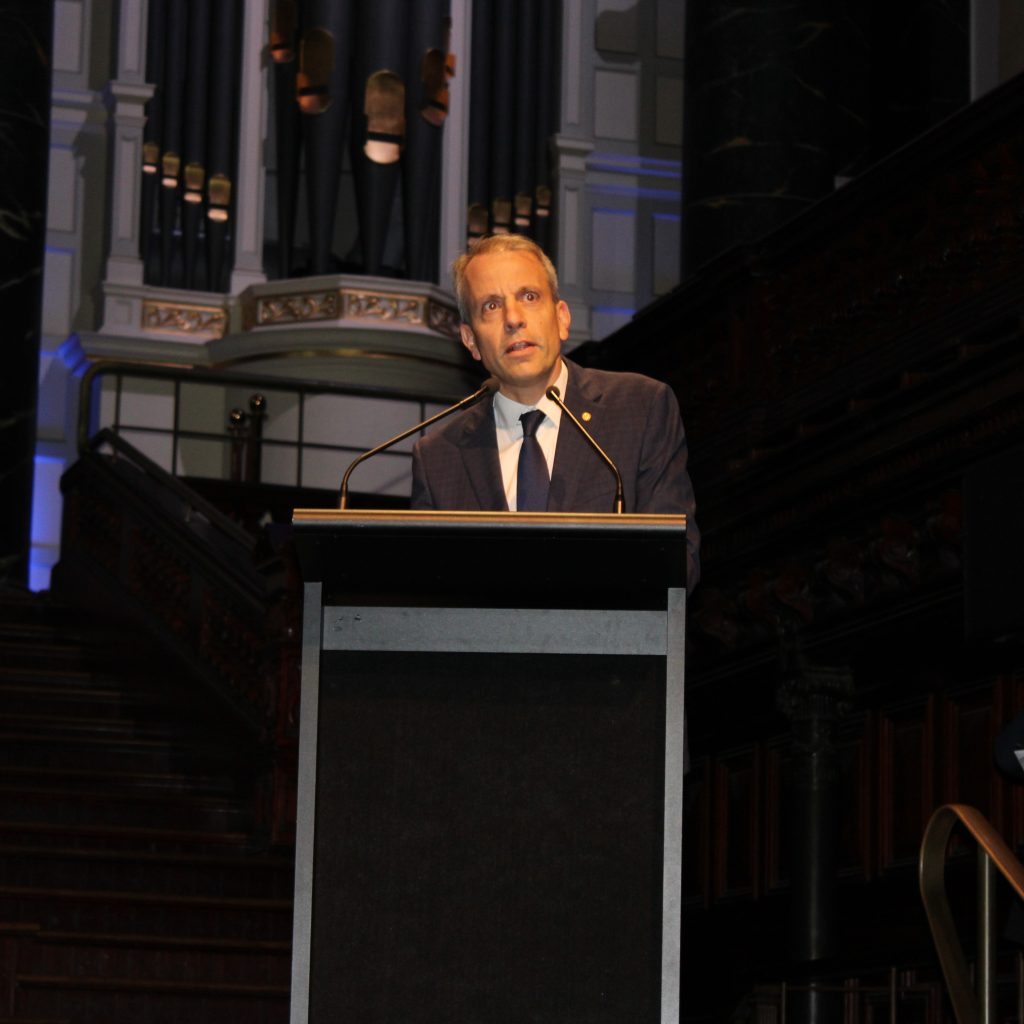
Of course, there were also a number of official speeches given by Archbishop Makarios, the Consul General, Mr Danalis, Ms Houssos and the President of the Inter-Communities Council of NSW, Kos Dimitriou.
Speeches.Speeches.
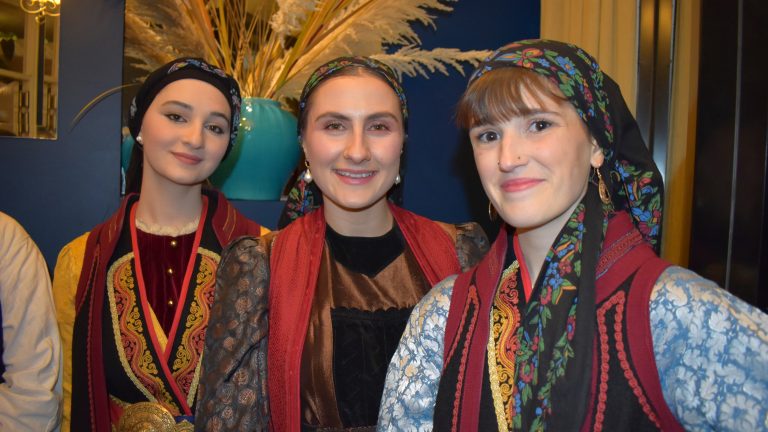
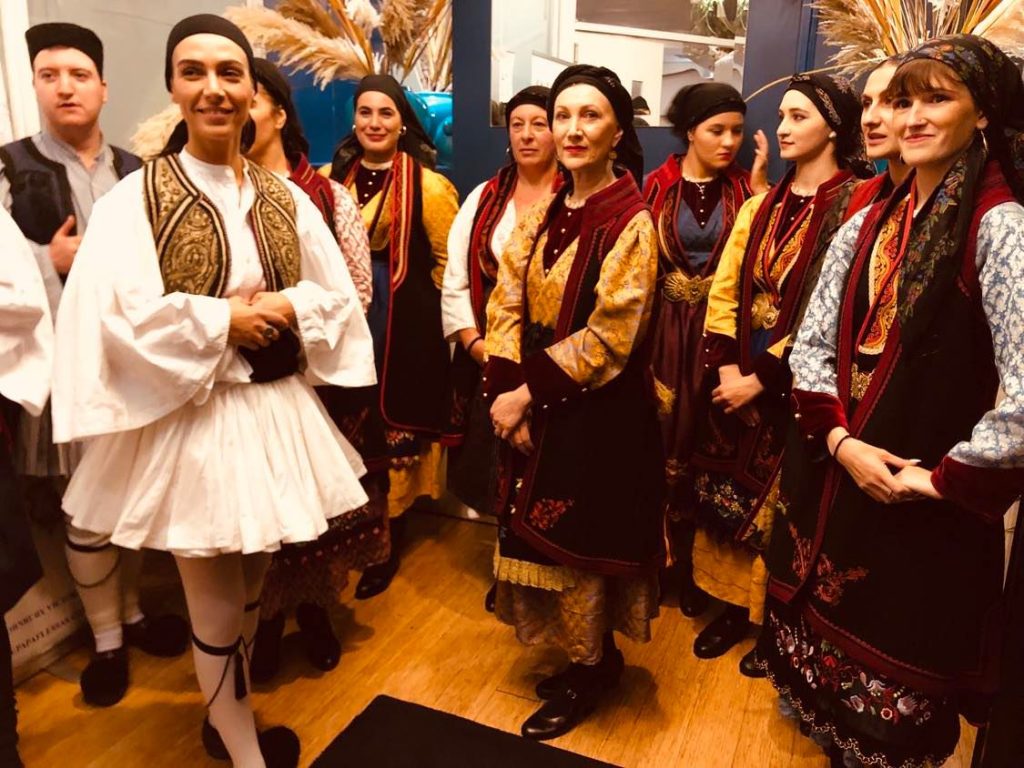
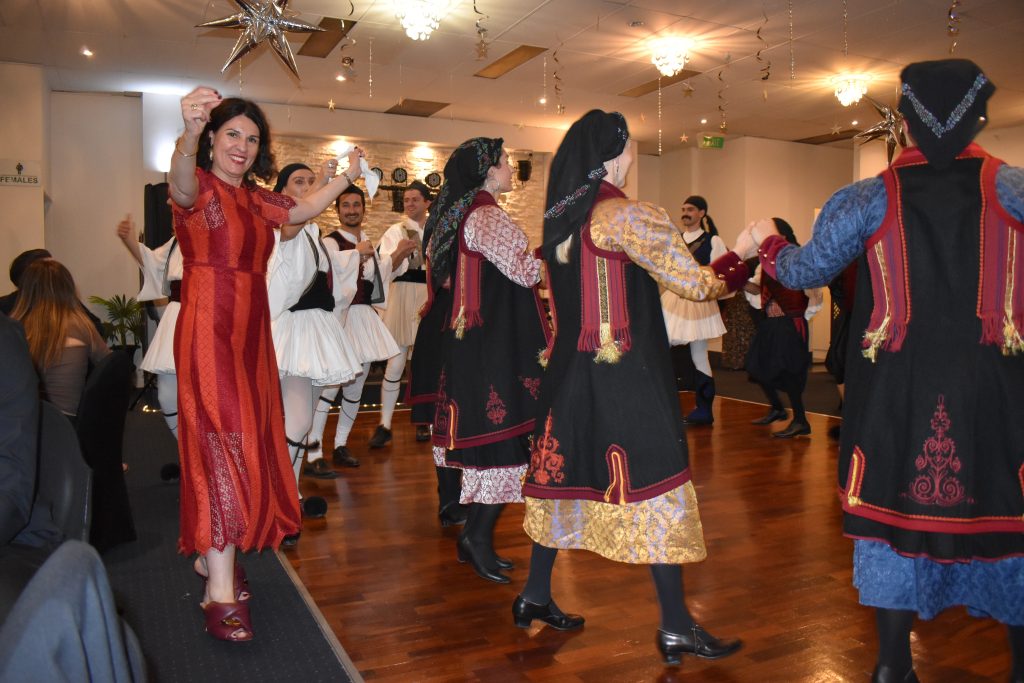
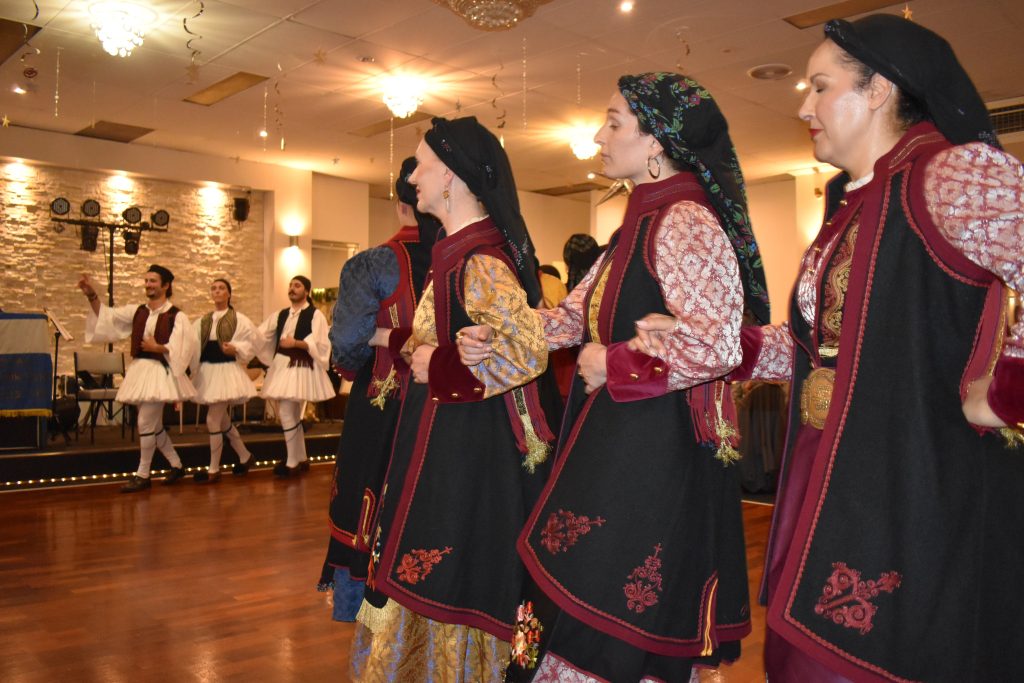
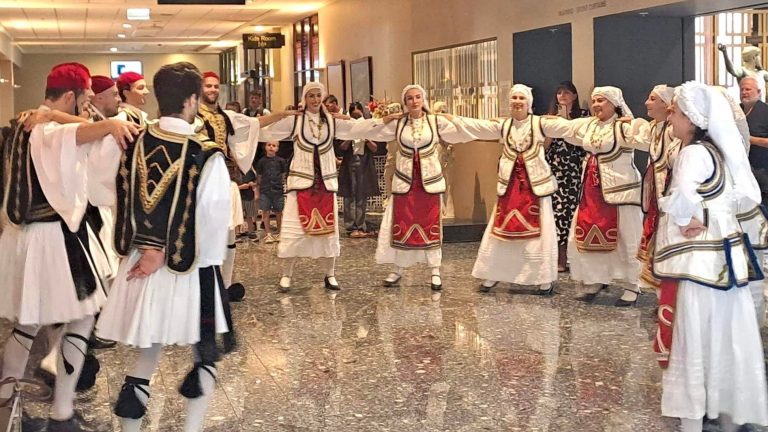
Amongst all this, people in the packed hall were also treated to a visual display of traditional Greek dancing performances by the Paroula Greek Dancing Group, Sophia Haskas Dancers, the Hellenic Lyceum of Sydney Dance Group under instruction by Dimitris Papapetros, the Cretan Association of Sydney & NSW Dance Group, the Cyprus Community of NSW Dance Group, and dancers from Pontoxeniteas NSW.
More dancing.More dancing.More dancing.Everyone enjoyed the event.Official guests.
*All photos copyright: The Greek Herald / Andriana Simos.
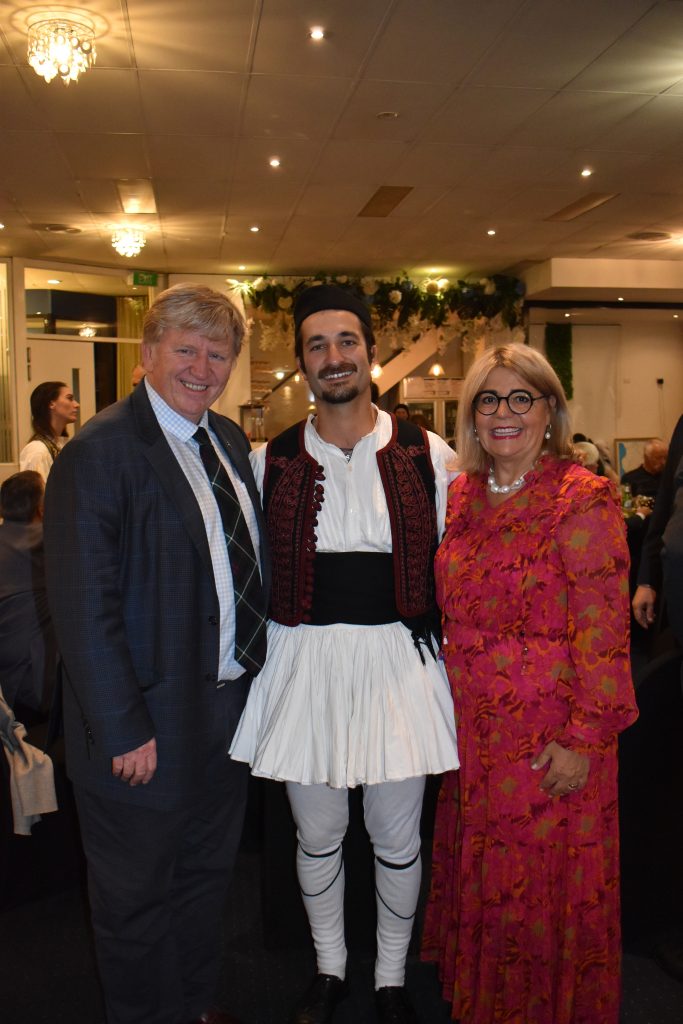
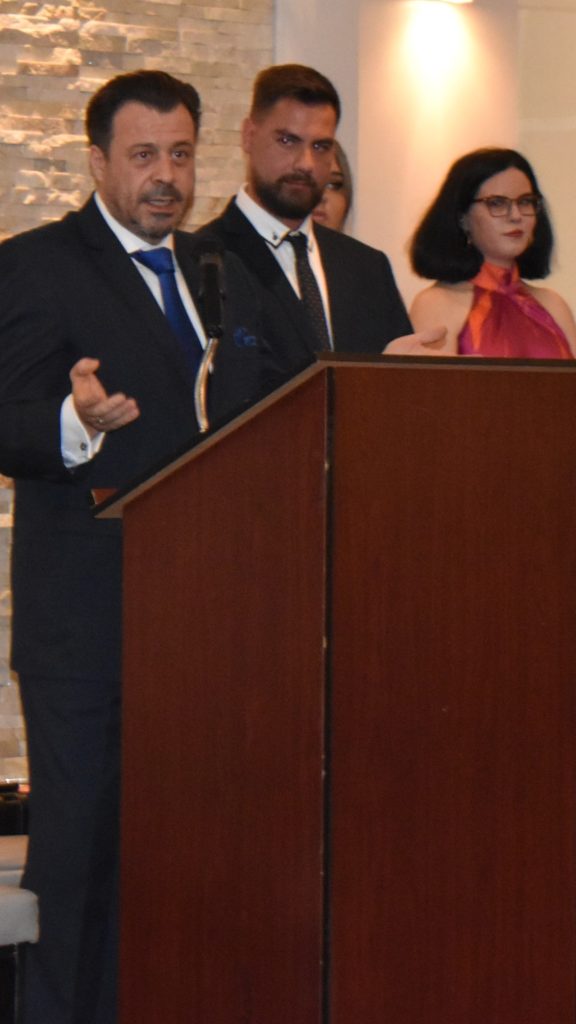
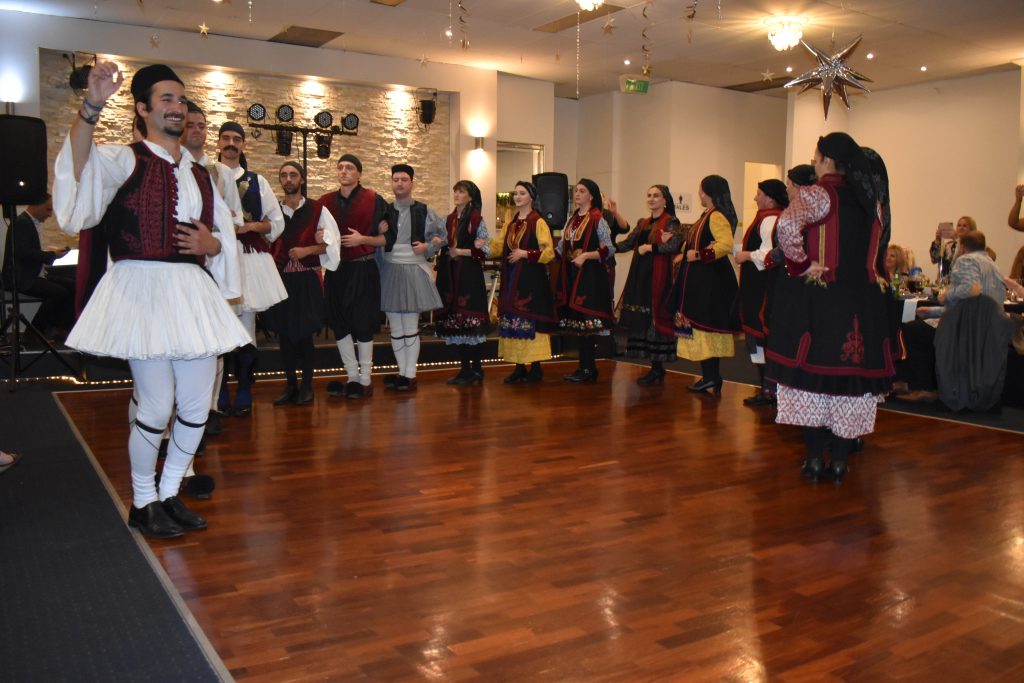
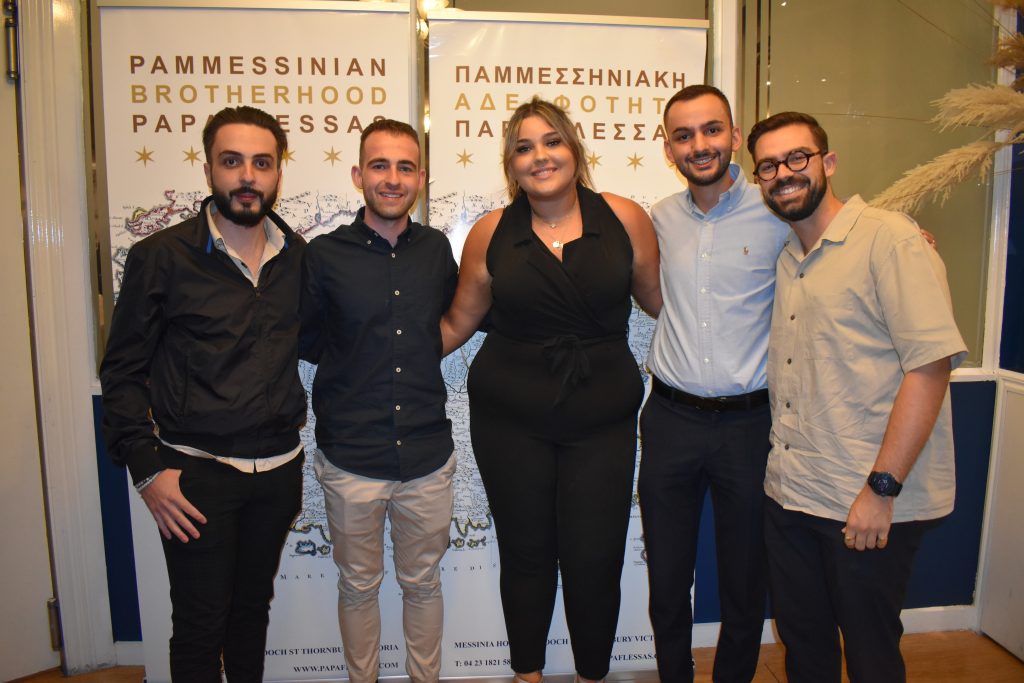
The Greek Consul General to Melbourne, Emmanuel Kakavelakis, gave his fifth 25 March Greek Independence Day speech of the day on Saturday night, at the annual dance held by the Papaflessas Social Club. He said his first experience of Greek national day celebrations in Australia were “a very big surprise” and he was equally amazed with the naming of Kalamata Lane.
“The Revolution concerns us all, and doesn’t just concern yesterday,” he said, adding that there are many “open wounds” still in divided Cyprus and unforgettable lands, usurped areas once occupied by Greeks.
For the migrants present and their forefathers, however, the struggle has never been about going back and reclaiming what has been lost, but about acceptance, celebration, and relevance in modern Australian society. And there was plenty of that at Saturday night’s sold-out dance which coincided with the club’s latest victory – the arrival of the street sign for Kalamata Lane after Darebin Council made good on its promise to honour its early migrants.
Dancers. All photos copyright The Greek Herald / Mary Sinanidis.Photos from the event.Everyone enjoyed themselves.
Mary Tsaganas, who is on the Board of Directors of the Papaflessas Club, told The Greek Herald that future campaigns are being explored, and there will be power in numbers as the sign has also brought with it a renewed interest in the Club.
Greek dancing.
“The arrival of the sign has given people confidence that, as a committee, we’re not in it for our own egos but doing something that will create history and has created history,” she said. “And this is something that the younger generation in years to come will appreciate.”
The younger generation was in full force with tables filled with school-aged children, teens, recent university graduates for a truly intergenerational experience as had been the case in bygone years. What differed from bygone years, was that they didn’t just fill seats but saw themselves represented onstage with emceeing by the Committee’s youngest 20-something-year-old members: George Mastrogiannopoulos, Elleni Tzimas and Taksia Tsaganas, who did a marvellous job welcoming Lee Tarlamis MP, historian Jim Claven, Darebin City’s Citizen of the Year Nola Radiotis and other guests.
The youth.More youth.
“For generations to come anyone who takes a walk down the lane can see our mural,” said Mr Mastrogiannopoulos (in Greek) and Ms Tzimas (in English), remembering the Messenian migrants who created the Club in 1959.
“Although they came to a completely foreign country on the other side of the world, they not only survived but they managed to keep a small Messenia in Australia, keeping their cultural and religious traditions alive. They became respected citizens in the Australian community making a strong contribution to Australian society.”
The youngest members of the 13-membered committee, comprised of six women and seven men, were most visible at the event. Older committee members are experienced public speakers in their professional lives, but purposely have taken a step back.
More Greek dancing.Papaflessas dance group.
“It is good for our younger members to develop their public speaking skills. We want them to lead,” Ms Tsaganas said, adding that though she is not from Kalamata herself, she was attracted by the Club’s “progressive nature and doing things outside the square.”
Apart from more women and young people, the Club is inclusive in other ways. Despite being a Messenian group, it is less about having Messenian background and more about embracing the ideals of its namesake hero who popularly became known as Papaflessas (Grigorios Dimitrios Dikaios-Flessas). For this reason, the outreach stretches beyond the group’s registered members and even the City of Darebin.
Peter Giasoumi told The Greek Herald that Papaflessas has been supportive of the Greek Youth Generator, a group for 18- to 29-year-olds.
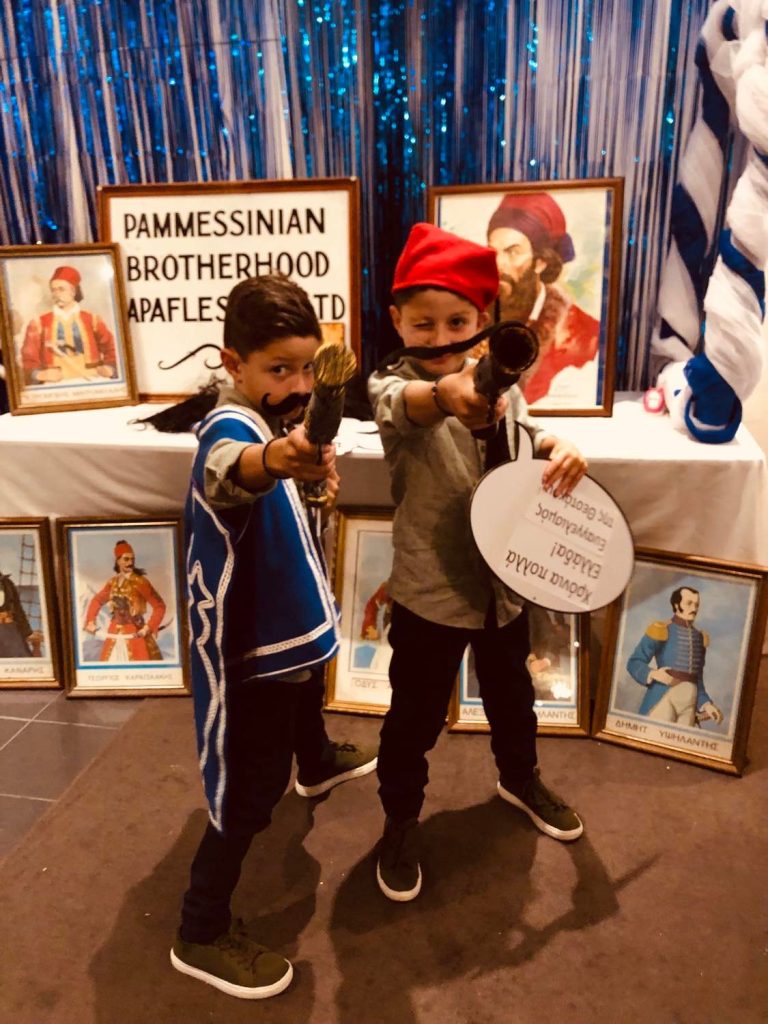
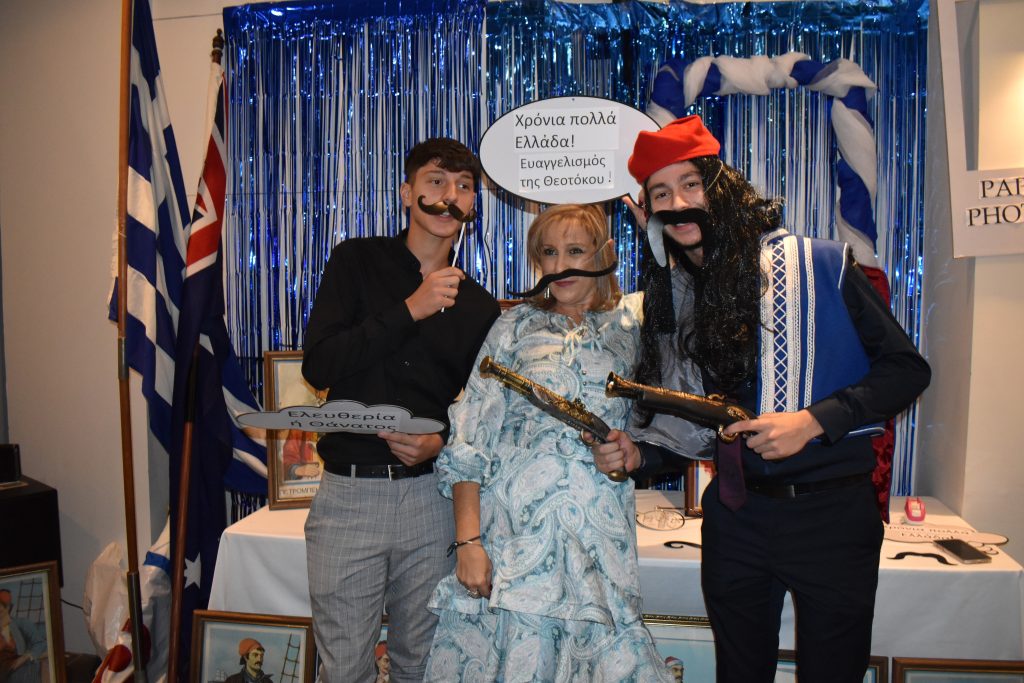
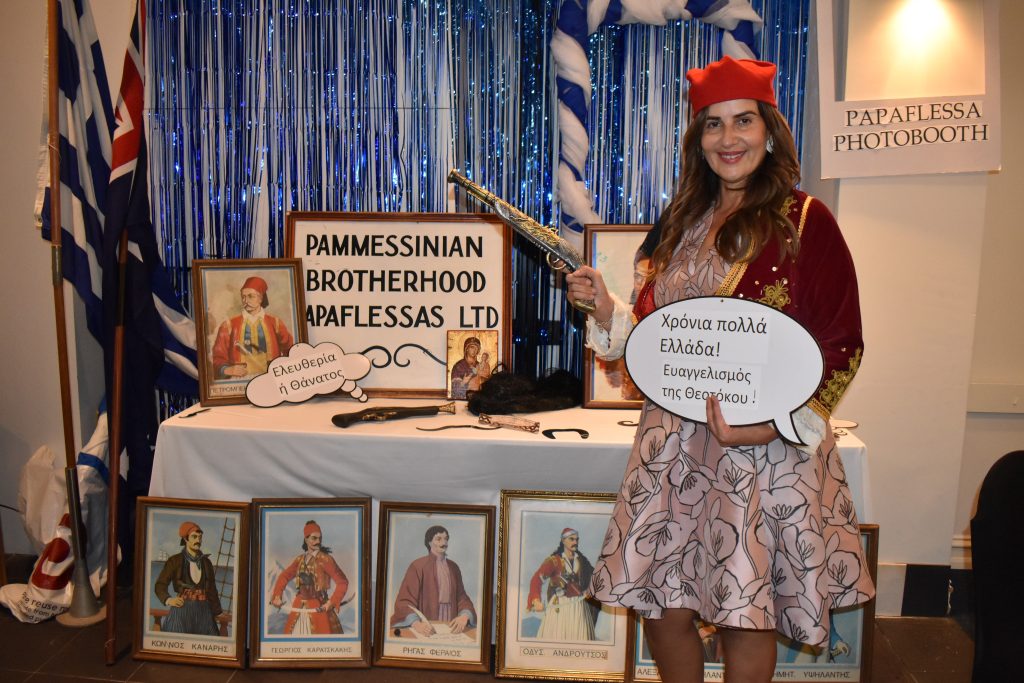
Young people at the event.Props at the event.
“We’re not Messenian, but Apostolis Sougleris (Papaflessas committee member) approached us after he saw what we were doing and liked it. We looked at ways we could work together, and the Club sponsored our film festival. It all came about organically,” Mr Giasoumi said.
Apart from drawing youth interested in exploring their cultural heritage, the Club is attracting more women with its progressive stance. Irene Tsianakas, a high school teacher and mother of two, said she had lost touch with the Club as it didn’t feel relevant to her until her sister urged her to attend a recent Vasilopita cutting.
“I thought about my dad who for years gave so much of the group but I didn’t understand it,” Ms Tsianakas said.
“Then I saw this beautiful mural, and inside the Club, found old reels. I asked the Committee if they’d agree to have these digitised and they agreed. When I saw the footage, I cried and cried because they were memories. They were kids dancing rock and roll and I never really thought of my parents in that light. Now, I want to do the same thing my parents did for this generation.”
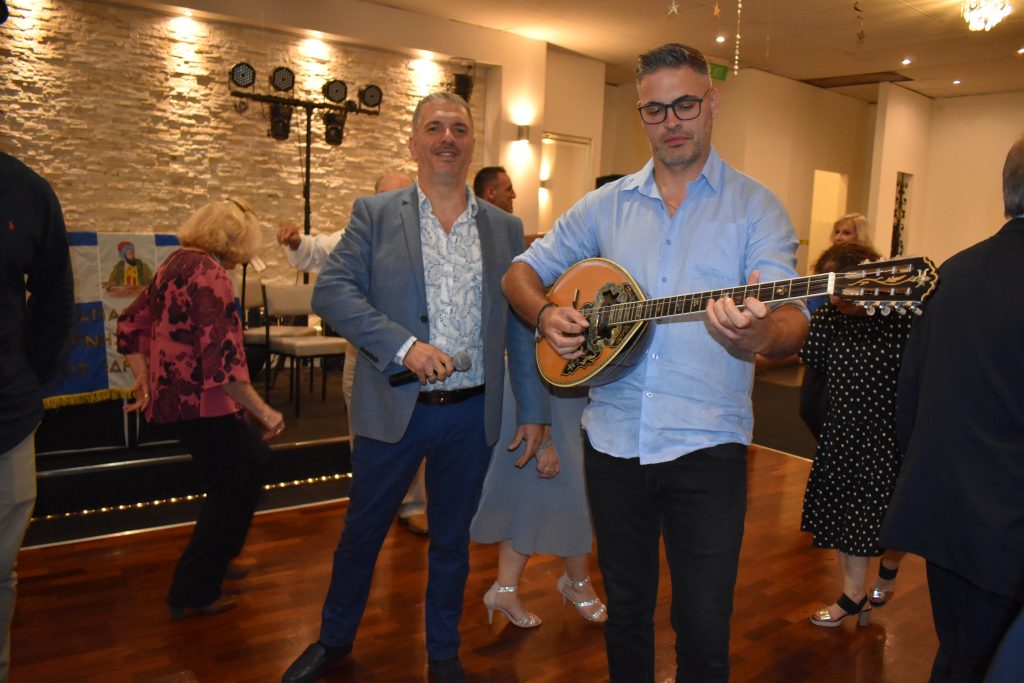
Live music.Guests.A toast.
The old footage of early migrants was loop-played on a screen throughout the night, reminding those present where they had come from.
The example of the Thornbury club is an inspiration for Greek Australian groups, many of them languishing. But at the Papaflessas Social Club’s dance there were people present from far and wide, from different backgrounds, genders, all coming early to photograph the mural and newly-erected signpost.
For this reason, the Messenian story of the Municipality of Darebin is an interesting case study for clubs around the world.
On Sunday, March 26, the Greek community of Canberra in the Australian Capital Territory (ACT) came together to celebrate Greek Independence Day and showcase their love for their faith, language, food, dancing and culture.
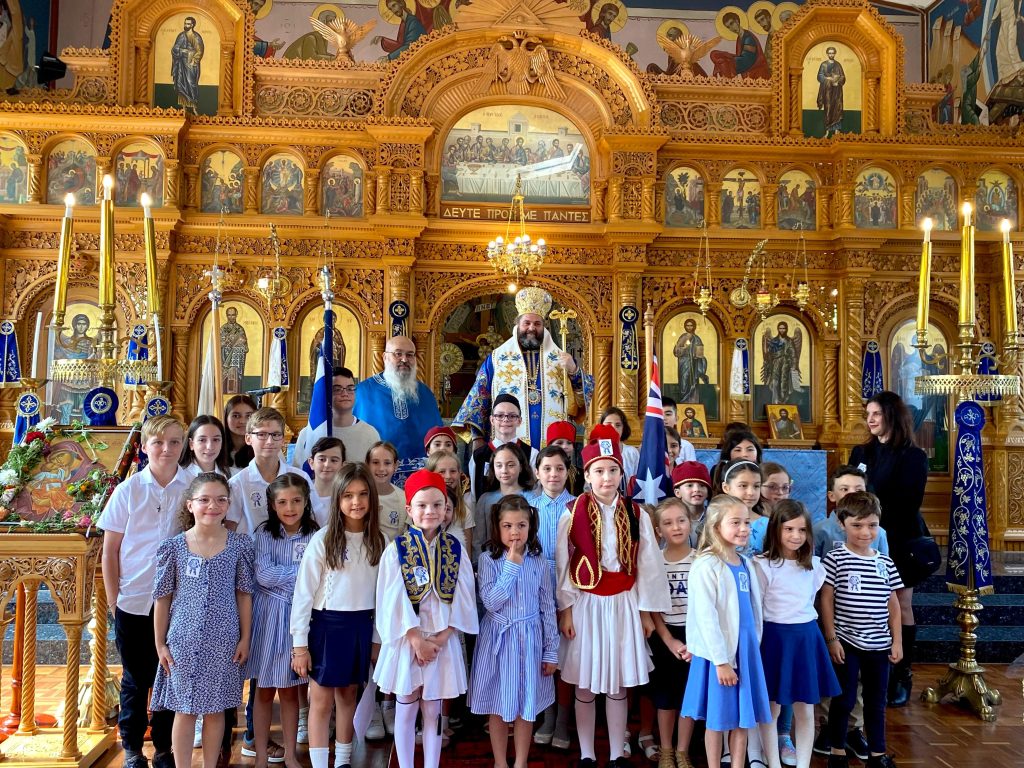
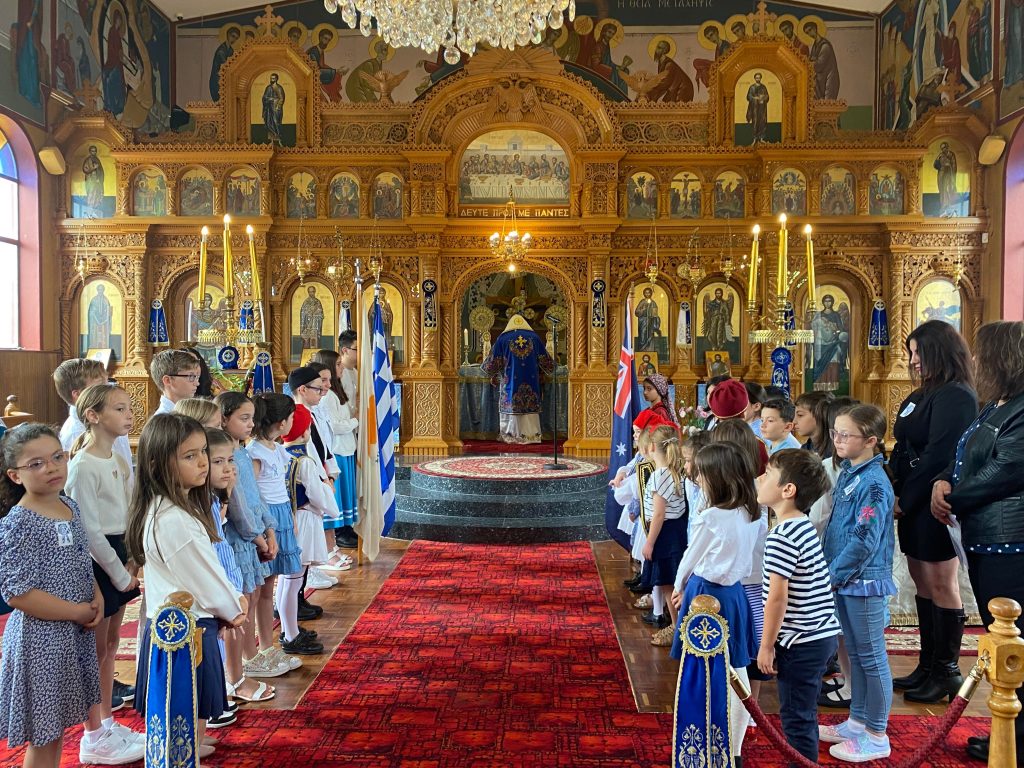
The commemoration events commenced with a church service at Saint Nicholas Greek Orthodox Church in Kingston officiated by Bishop Bartholomew of Charioupolis. This was followed by poem recitals from children of the Greek School of Canberra.
Church service. All photos: The Greek Herald / Evelyn Karatzas.Youth at the church service.
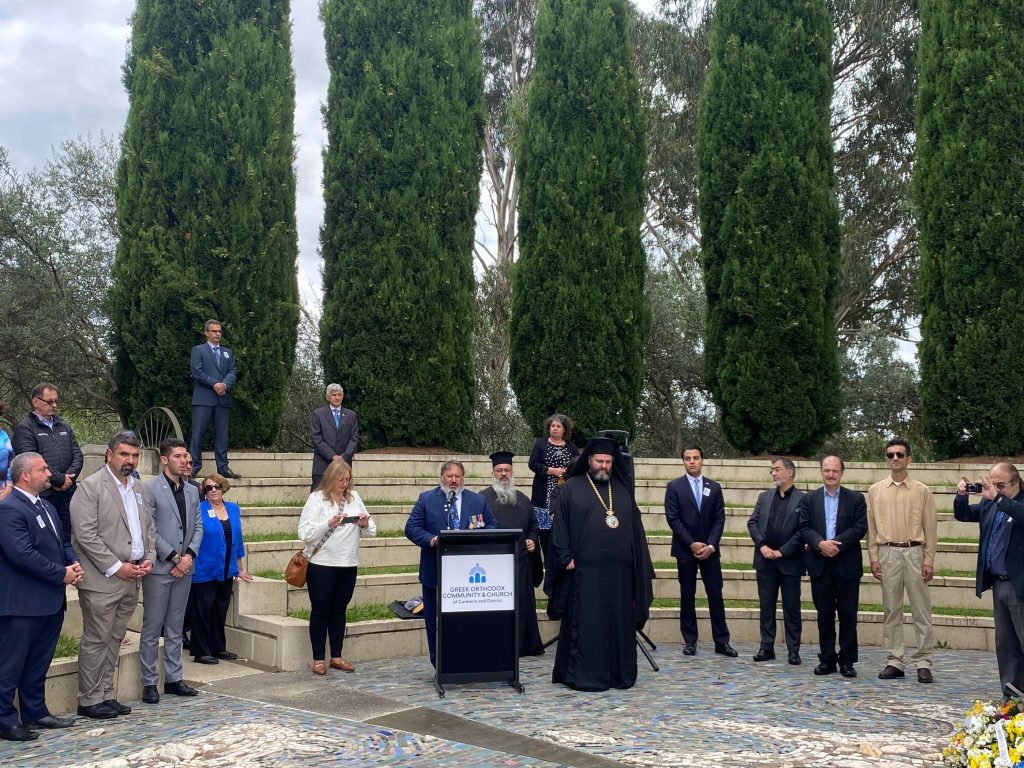
Parents, teachers, students and community members were then invited to join officials at the Australian Hellenic War Memorial where the annual wreath laying event took place and speeches were delivered by the Ambassador of Greece in Australia, George Papacostas; Bishop Bartholomew; and the Secretary of the Hellenic Sub-Branch RSL Melbourne, Major Terry Kanellos (RETD) OAM.
In his speech, Mr Papacostas said Greek Independence Day is a reminder of the Greeks and Philhellenes who’s sacrifices paved the way for a free Greek state.
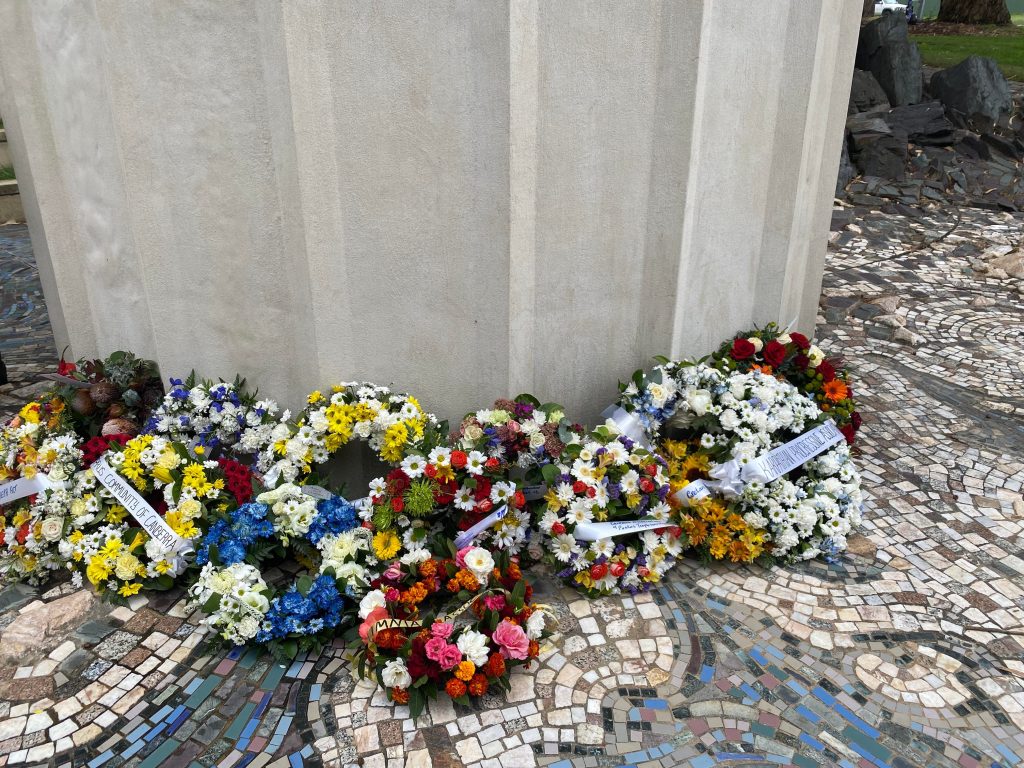
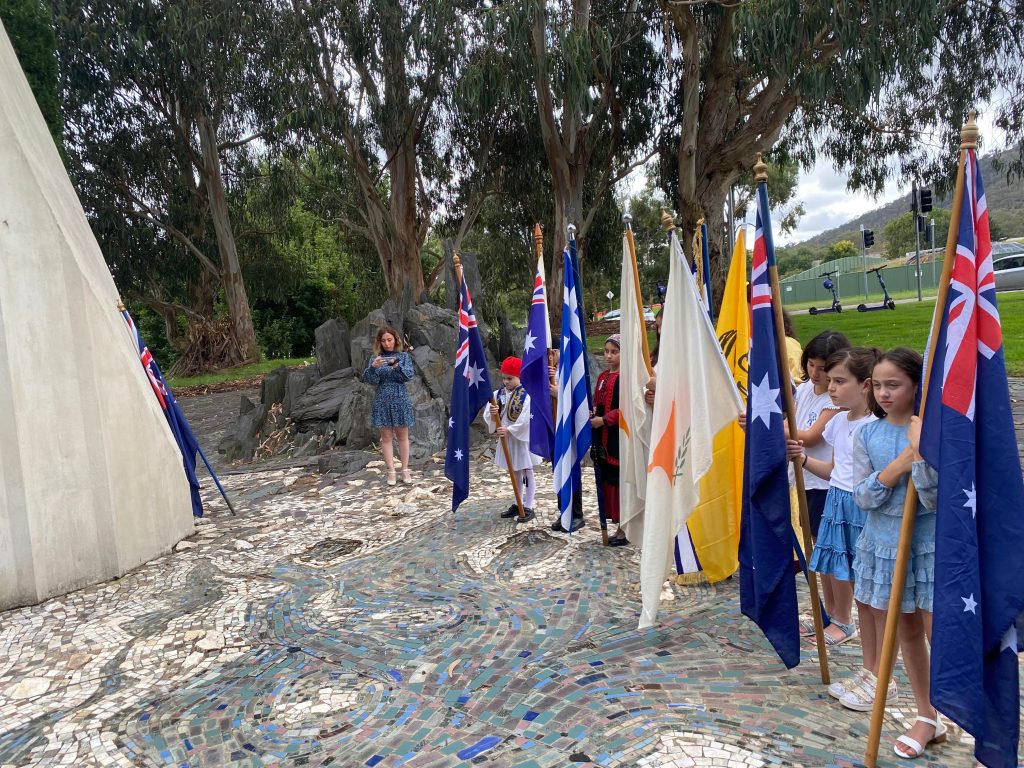
Wreath laying ceremony.Wreaths.Flags.
“On the 25th of March 1821, it marked a new era in the nations fight for gaining democracy, freedom and independence,” Mr Papacostas said.
“Thanks to their sacrifices, Greece is a modern, prosperous and democratic nation today.”
A luncheon followed at Fillos Taverna at the Hellenic Club of Canberra, where members of Parliament, dignitaries, clergy and Greek and Cypriot community presidents attended.
The Canberra Hellenic Dancers Atalanti group entertained guests with their dancing and traditional costumes.
Hellenic Club of Canberra luncheon.Canberra Hellenic Dancers.Canberra Hellenic Dancers.
President of the Greek Community of Canberra (GCC), John Loukadellis, spoke at the luncheon and said he was proud to be a part of the evolving and enriched Greek community of Canberra.
“The three things that the Greek Orthodox Community and Church here power ourselves on, which we use as a map for the future of Hellenism in Canberra, is our three pillar Program – our faith, our culture and traditions, and their language,” Mr Loukadellis said.
Canberra Hellenic Dancers.Andrew Satsias, John Loukadellis and Steve Georganas MP.Luncheon attendees and dancers.
“This is what Greece has based itself on for centuries.
“We are very lucky and blessed to have venues like the Hellenic Club of Canberra, which is our base, the Hellenic War Memorial and the Saint Nicholas Greek Orthodox Church which allow us to celebrate, commemorate and remember cultural events like this.”
Several members of Canberra’s Hellenic Youth Club also attended events throughout the day to show their support, love and pride for their culture and community.
Hellenic Youth Club members.
Hellenic Youth Club general directors, Iliada Mantinaos and Evdoxia Mantinaos, said they felt honoured to represent their community’s youth and be a part of such a significant day.
“Attending events such as the 25th of March are a way to help keep the Greek culture and traditions alive,” Iliada said.
Evdoxia added: “We are the ones that are going to continue the traditions and uphold our legacy, and we’re all just very proud to be a part of such a strong community.”
Sunday’s events came as Canberra lit up in blue and white on Saturday, March 25 to mark Greece’s National Day. Buildings such as the Hellenic Club of Canberra, the Carillon Bell Tower, the National Museum of Australia and Old Parliament House were all lit in the colours of the Greek flag.
40 Greek flags were also flying proudly around Kings Avenue, Petrie Plaza, Garema Place, Vernon Circle, and everywhere in Gold Creek.
Canberra went blue and white.Old Parliament House.
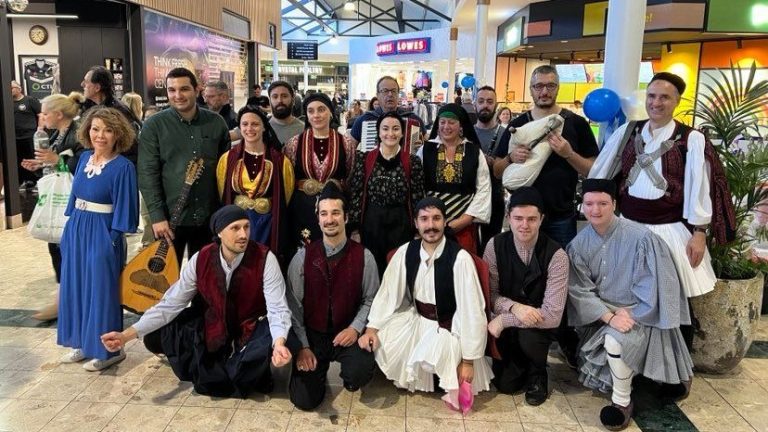
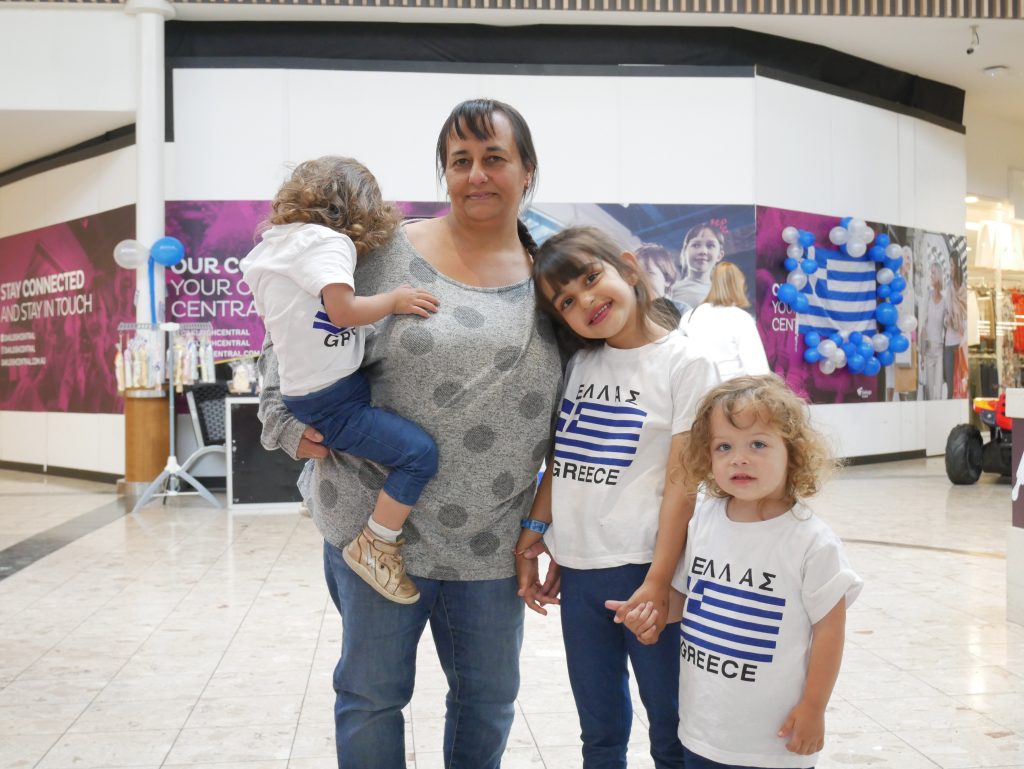
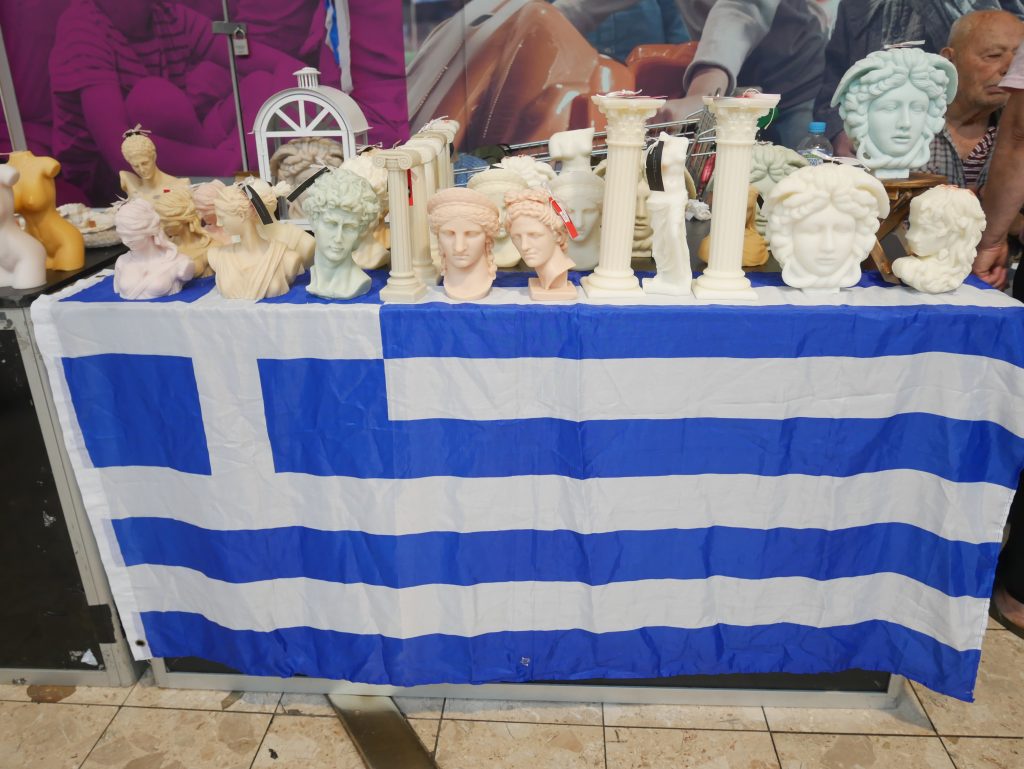
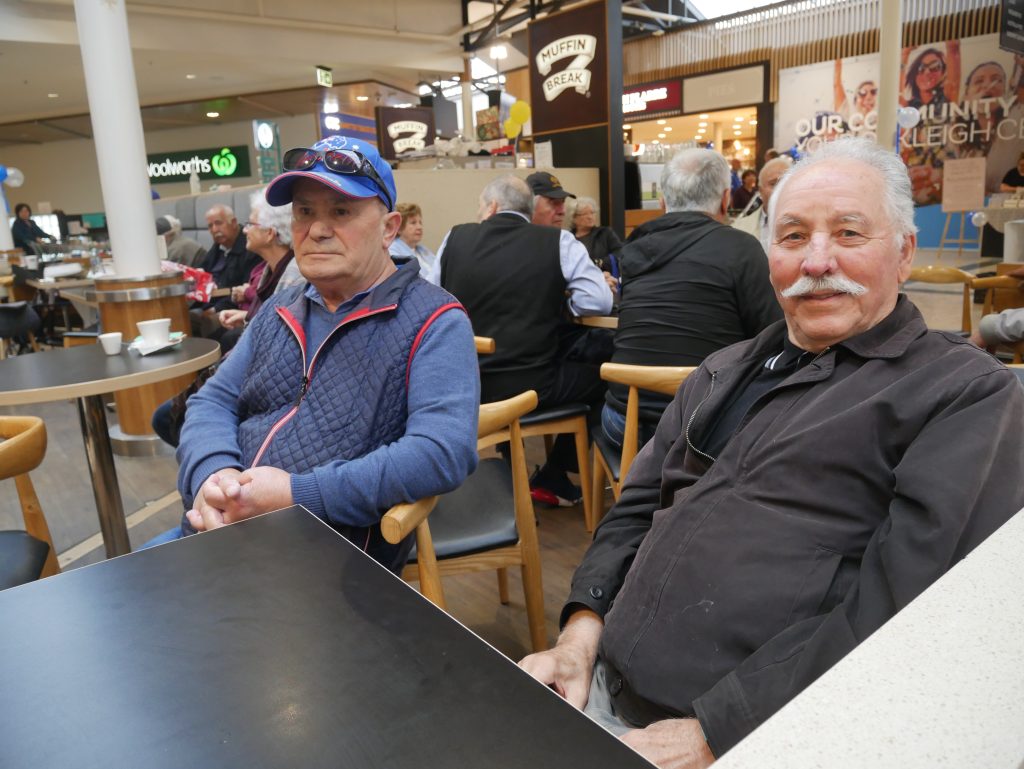
Vicinity Centre’s inaugural Greek Independence Day Festival in Oakleigh brought Greeks of all different ages, as well as visitors from different countries, together on Saturday, March 25 to celebrate Greek Independence Day.
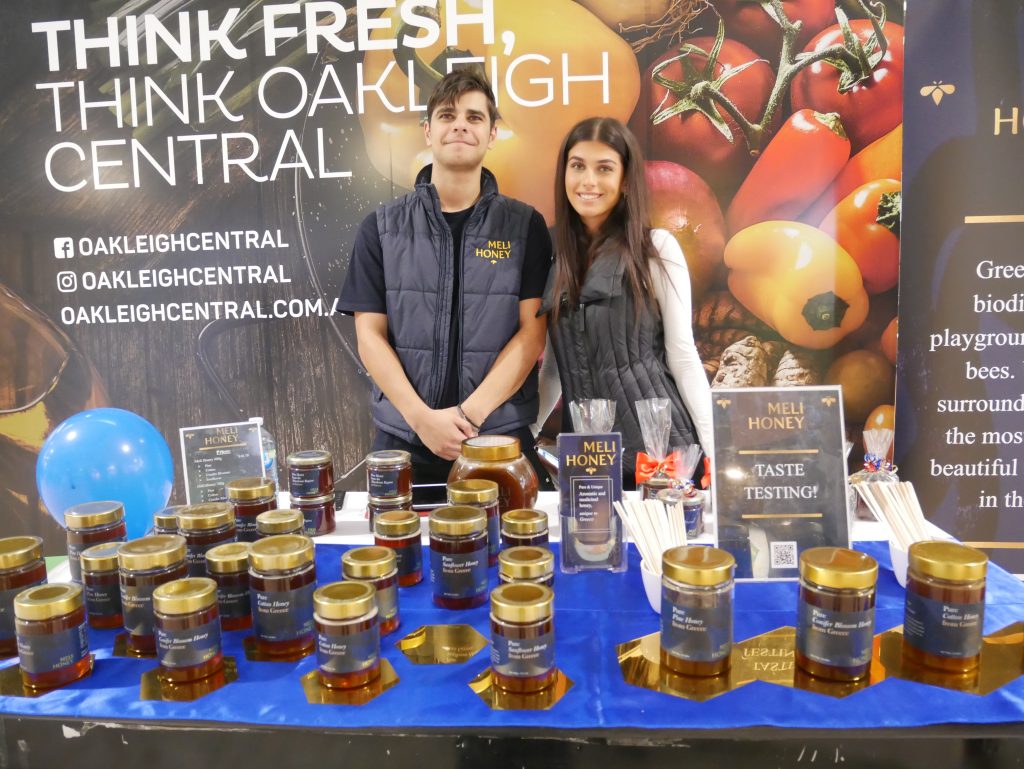
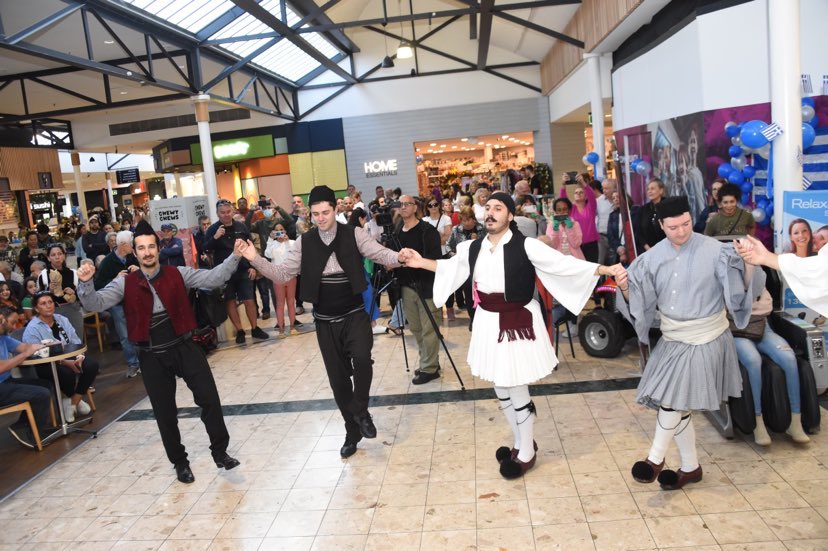
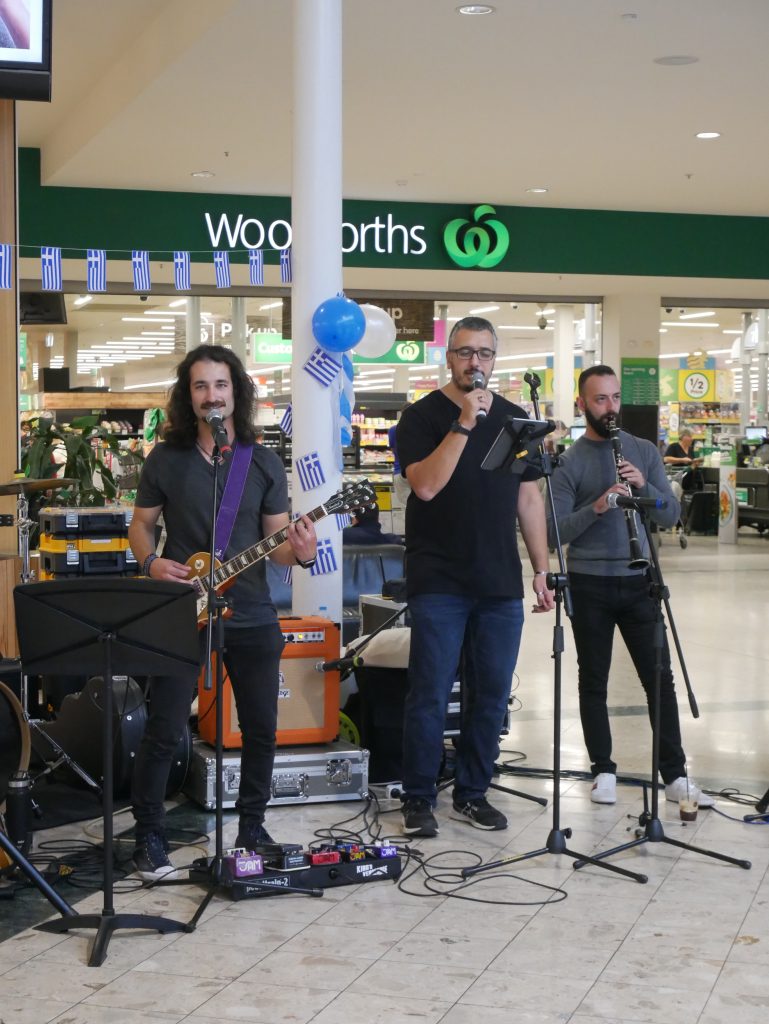
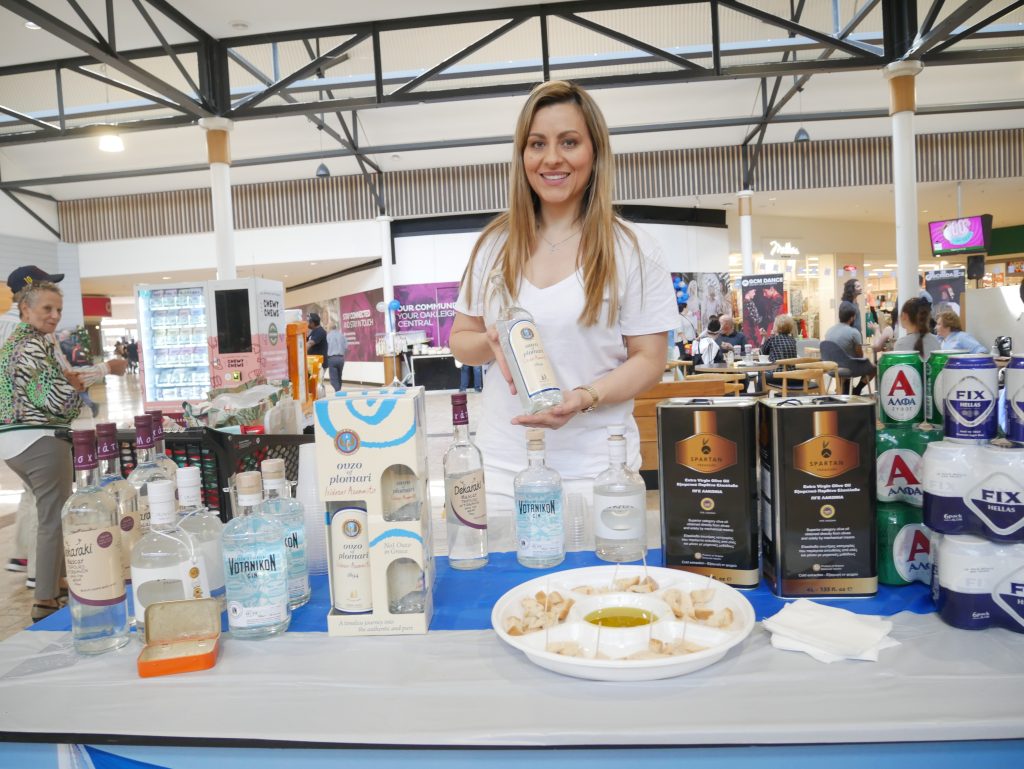
From 9am to 5pm, the centre in Oakleigh was full of live music performances, dances and a pop-up market with Greek products such as ouzo, honey and candles from local businesses. It was a celebration of culture and community, catching the eye of locals who were just passing by for their weekend shopping.
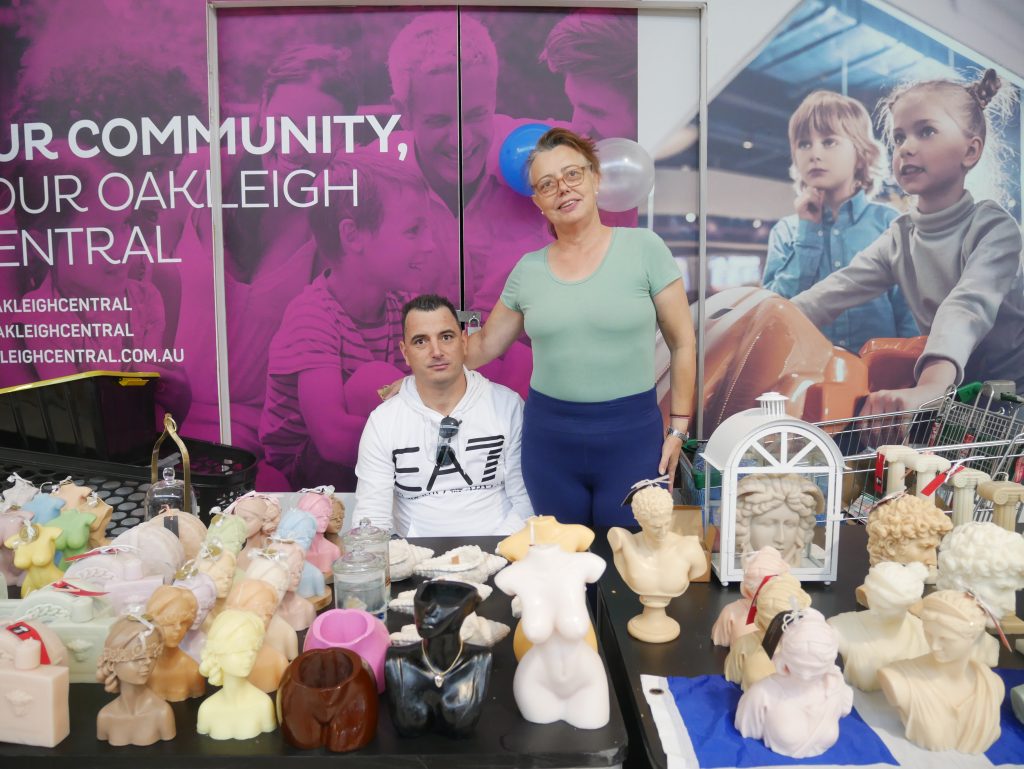
Youth wearing Greec t-shirts at the event. Photo: The Greek Herald / Giorgos Psomiadis.Candle stall. Photo: The Greek Herald / Giorgos Psomiadis.Greek honey was being sold. Photo: The Greek Herald / Giorgos Psomiadis.
“Xronia polla! Today is March 25th. It’s the first time we are here, and it is really beautiful. Here beats the heart of Hellenism,” Maria tells The Greek Herald, before posing in front of her candles display for a photo.
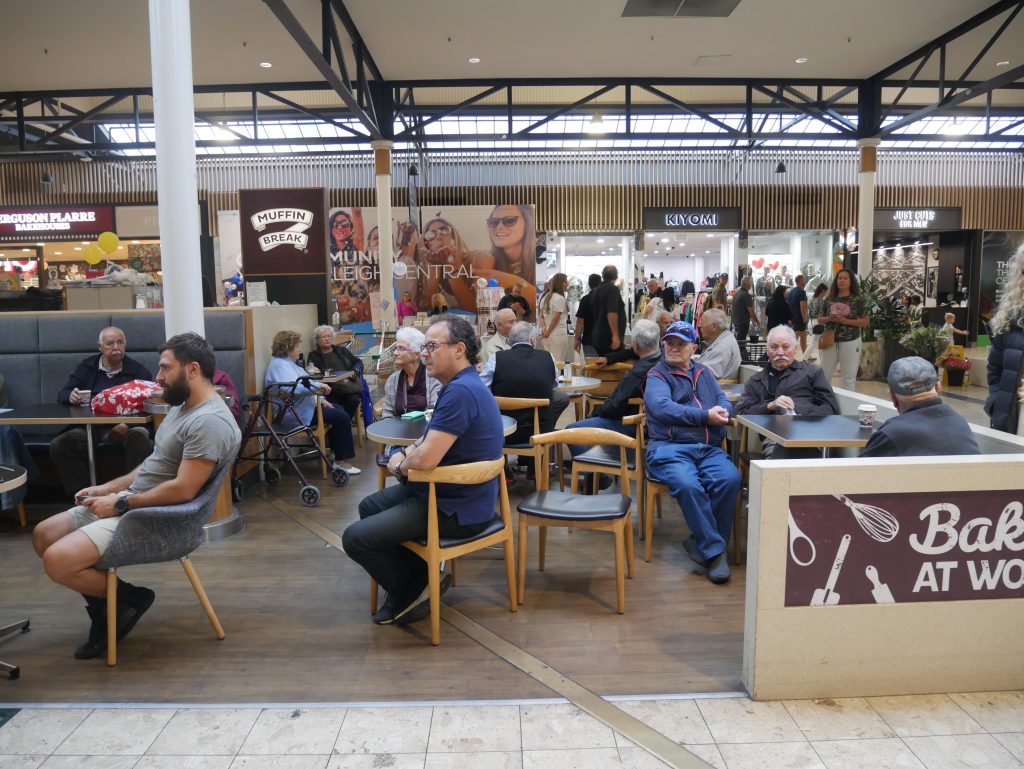
Candle stallholder. Photo: The Greek Herald / Giorgos Psomiadis.People at Oakleigh Central. Photo: The Greek Herald / Giorgos Psomiadis.More people enjoying the festivities. Photo: The Greek Herald / Giorgos Psomiadis.
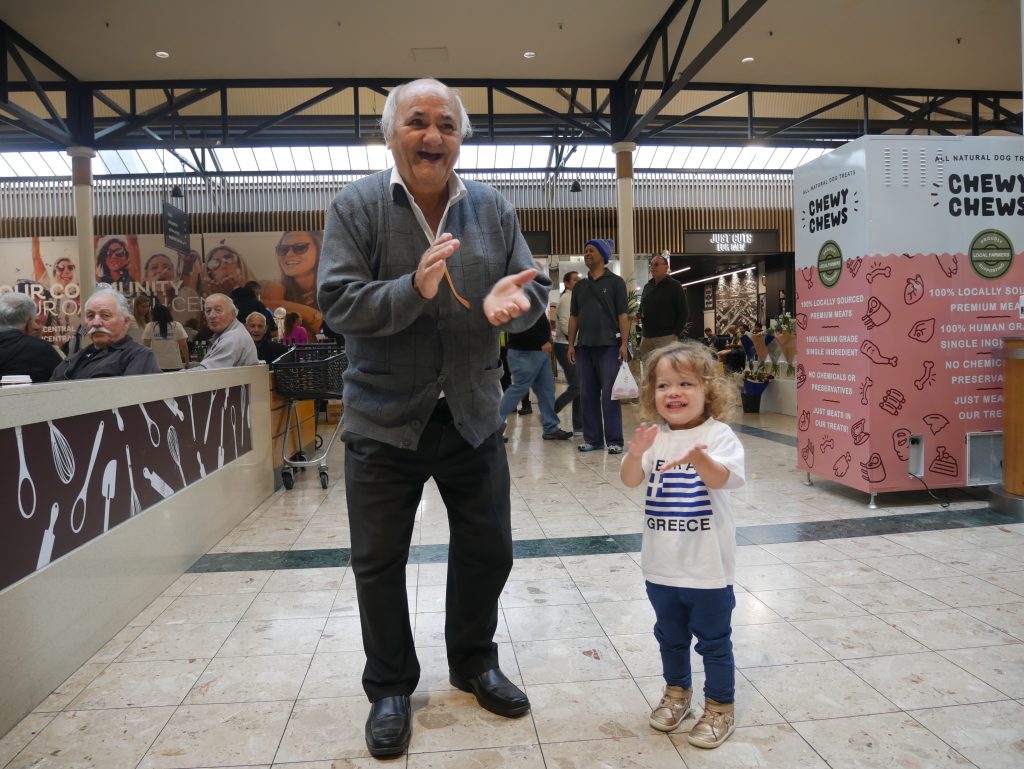
After that, a family passes by and a grandfather starts dancing to the beat of music with his granddaughter. Next to them, others are enjoying the live music, applauding and talking about the national day.
Grandpa with his granddaughter. Photo: The Greek Herald / Giorgos Psomiadis.Greek dancing. Live music. Photo: The Greek Herald / Giorgos Psomiadis.
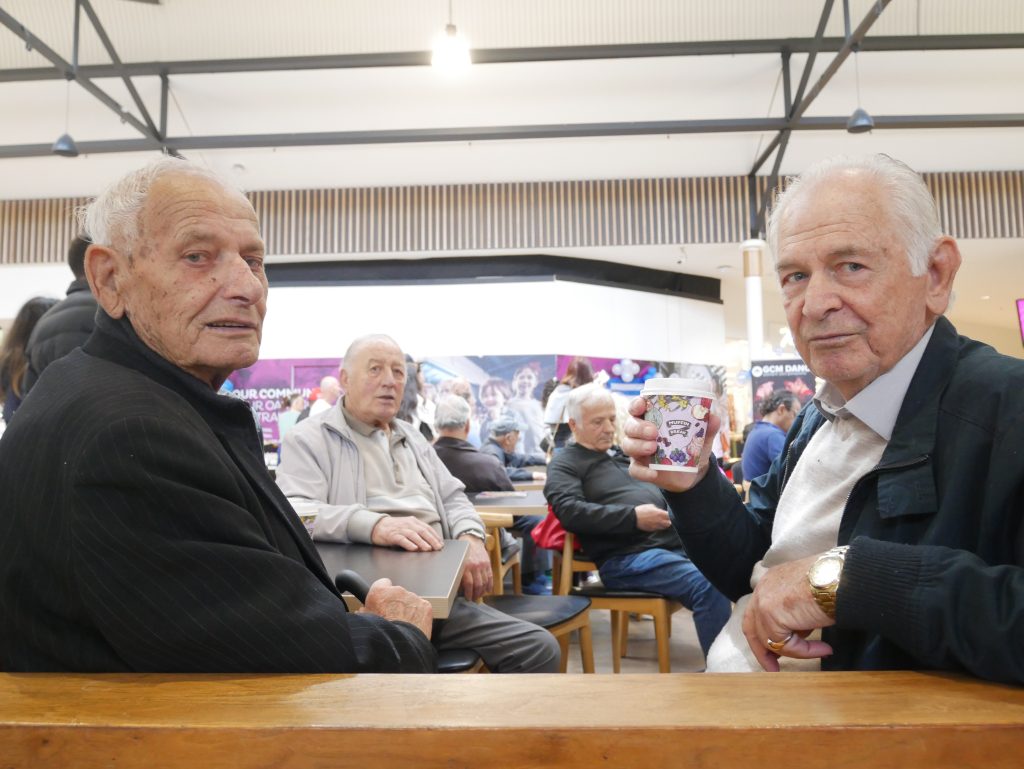
“Today is the celebration of 1821. We honour those who fought for us to be free and to be able to watch these things now. Freedom and love all over the world,” 88-year-old Vasilis, who was enjoying a coffee with his friends, says.
The festival brought the young and old together. Photo: The Greek Herald / Giorgos Psomiadis.
Vicky is standing behind a stall with Greek drinks imported to Australia.
“Events such as this today are not only important for the Greeks but for everyone. The national day we are celebrating today, can be a symbol for every nation. Maybe, during these days, Ukraine can get strength from what the Greeks endured and passed through,” Vicky says.
Stall holder at the festival. Photo: The Greek Herald / Giorgos Psomiadis.
“It is really important to honour and remember these national days… not only for the Greeks, but for other people to come close to the culture, the drinks, the products and the Greek food.”
Even the rainy day in Adelaide couldn’t dampen the spirits of the Greek Orthodox Community of South Australia (GOCSA) as they gathered on Sunday, March 26 for a church service to mark the Annunciation of the Theotokos and a wreath laying service to celebrate Greek Independence Day.
The church service was held at the Cathedral of Archangels Michael and Gabriel in Franklin Street, Adelaide and was presided over by parish priests Father John, Father Panayiotis and Father Andreas, as well as Archimandrite Mark Papanagiotou.
Inside the church service.Children recited poems. Photos: The Greek Herald / Martina Simos.
In attendance on the day were a number of dignitaries including Member for Unley, David Pisoni MP; the Chair of the South Australian Multicultural Commission, Adriana Christopoulos; the Deputy Mayor of Charles Sturt, Councillor Edgar Agius, City of West Torrens Councillor George Demetriou; City of Adelaide Councillor Mary Couros; President of GOCSA, Peter Gardiakos; Vice President of the Cyprus Community of South Australia, Minas Lucas; and President of the Ikarian Brotherhood of South Australia, George Gronthos; among many other local Greek community representatives.
During the church service, a minute of silence was held to remember the recent train tragedy in northern Greece, as well as the heroes and heroines of the 1821 Greek Revolution.
Church service and poem recitals.
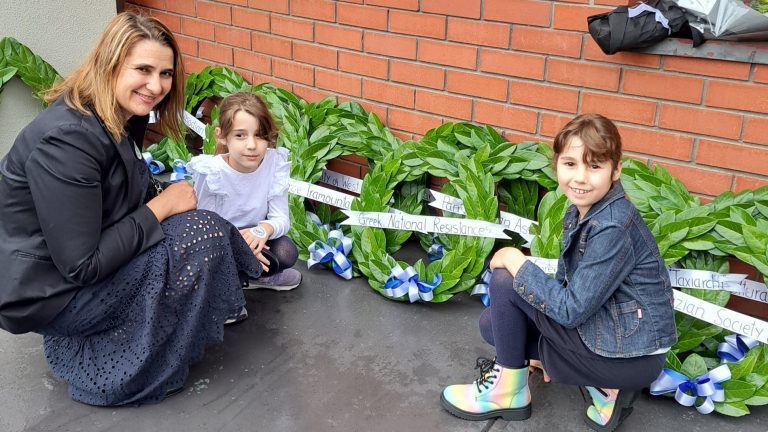
Wreaths were laid by different Greek and multicultural associations and brotherhoods including GOCSA, the Greek Women’s Society of SA, Cyprus Community of SA, Messinian Association of SA, and the Pan Ikarian Brotherhood of SA.
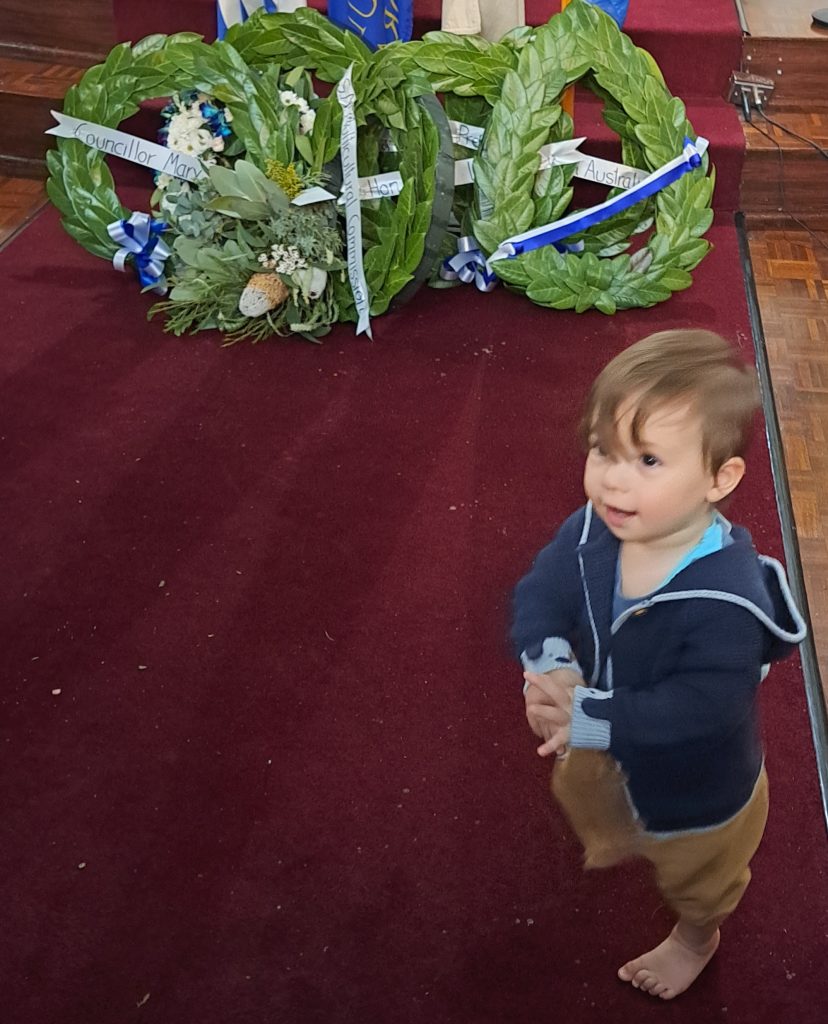
Wreaths were also laid by GOCSA Vice President Peter Gonis on behalf of the South Australian Premier Peter Malinauskas MP, by GOCSA Vice President Stephanie Skordas on behalf of Connie Bonaros MLC and Frank Pangallo MLC, and by Trian Gonis on behalf of Federal Member for Adelaide, Steve Georganas MP.
Wreath laying was held outdoors.
The GOCSA President, Mr Gardiakos, addressed around 500 community members who attended the event and spoke to The Greek Herald about the importance of the event for the community.
“As a community with Greek heritage it is important to recognise significant and important events in Greece’s history which shaped the destiny of Greece, including all Greek migrants who have chosen to migrate to all parts of the world,” Mr Gardiakos said.
Peter Gardiakos.Peter Gardiakos (right) gave a speech.
“Greece, as we know it today, has its freedom and independence because of the brave people who chose to stand up and fight in 1821.”
After the service and wreath laying ceremony, more than 100 children from the Greek Language Schools recited poems and sang songs to celebrate the 202nd Greek Independence Day.
*All photos copyright The Greek Herald / Martina Simos.
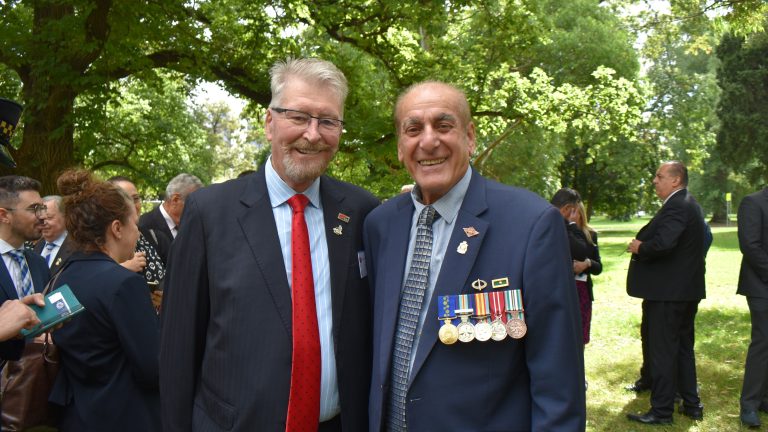
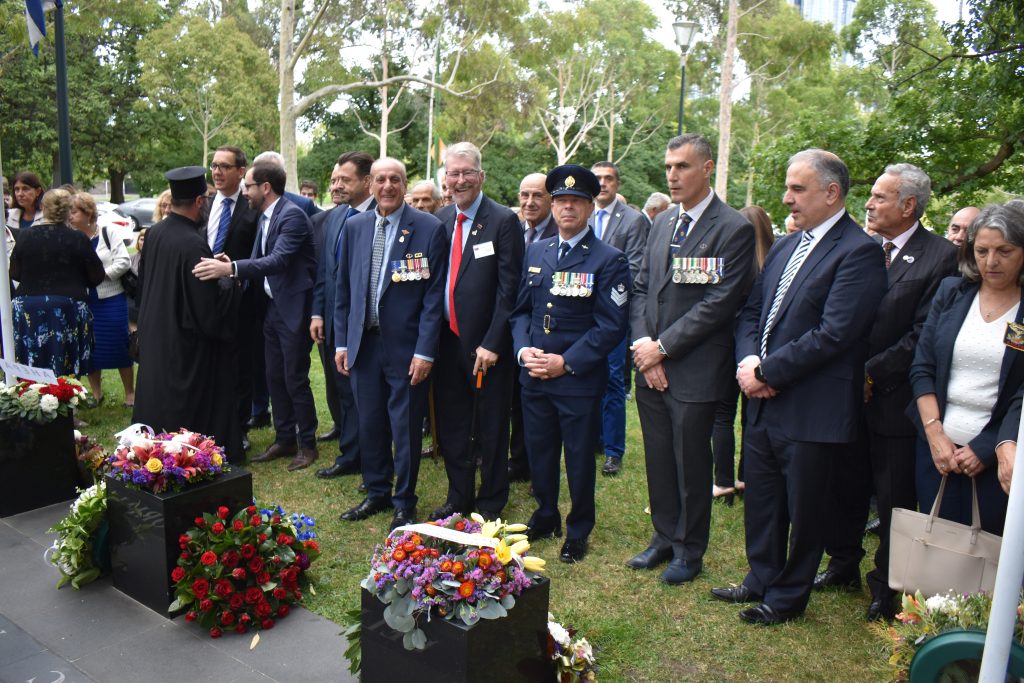
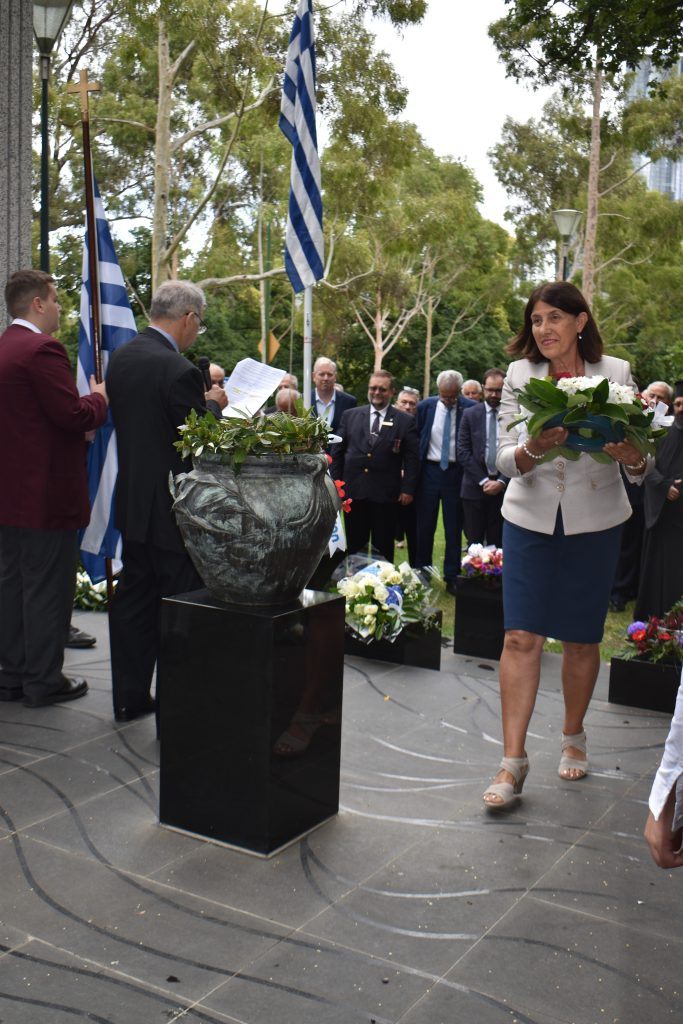
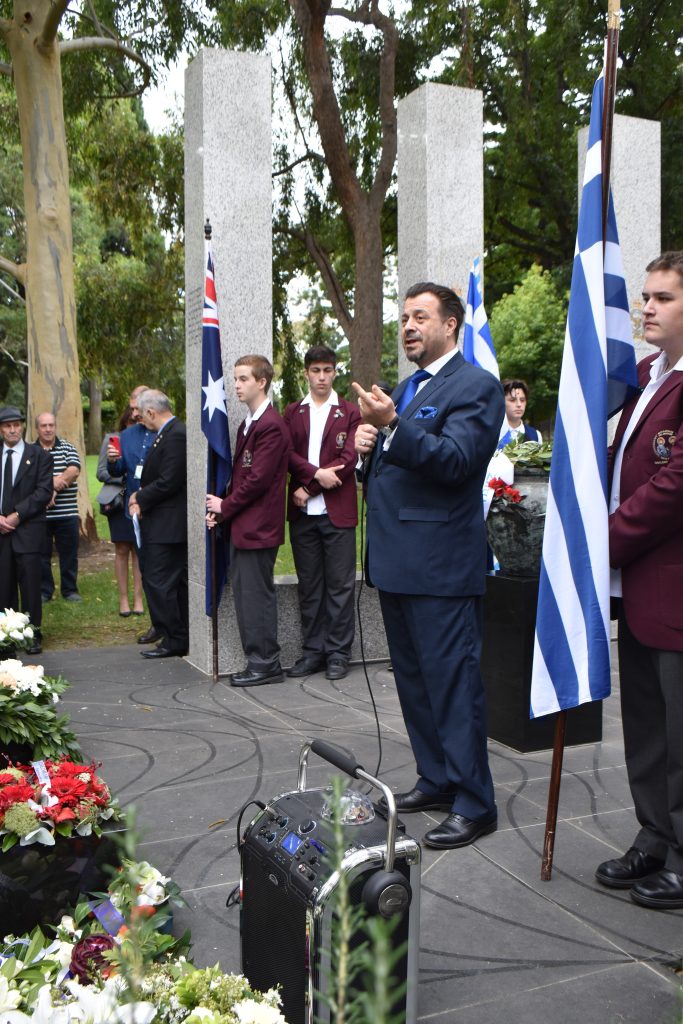
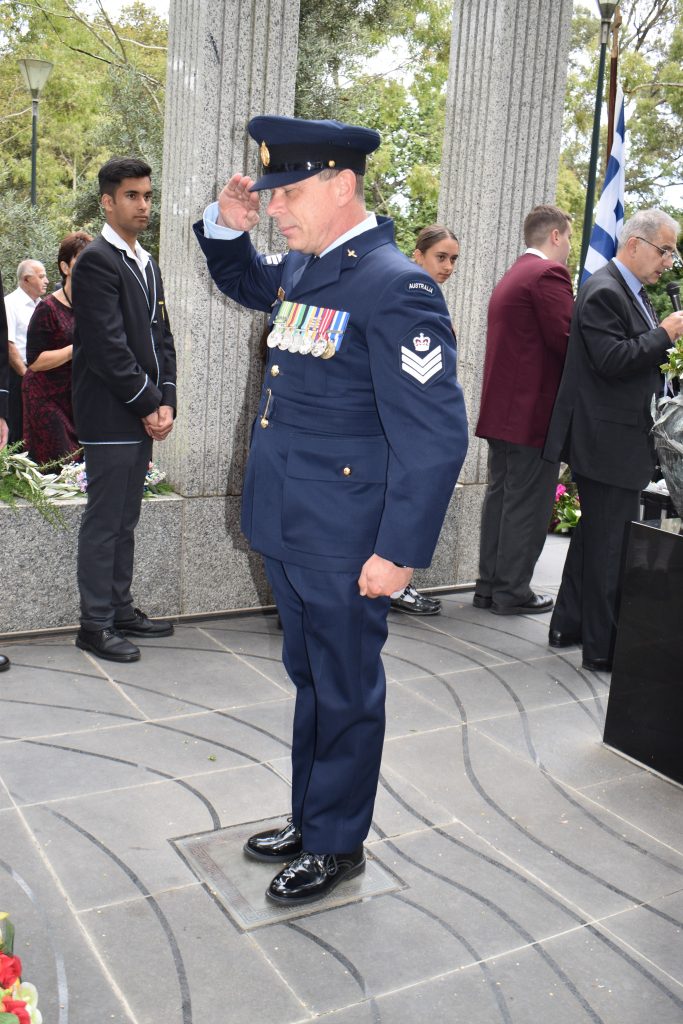
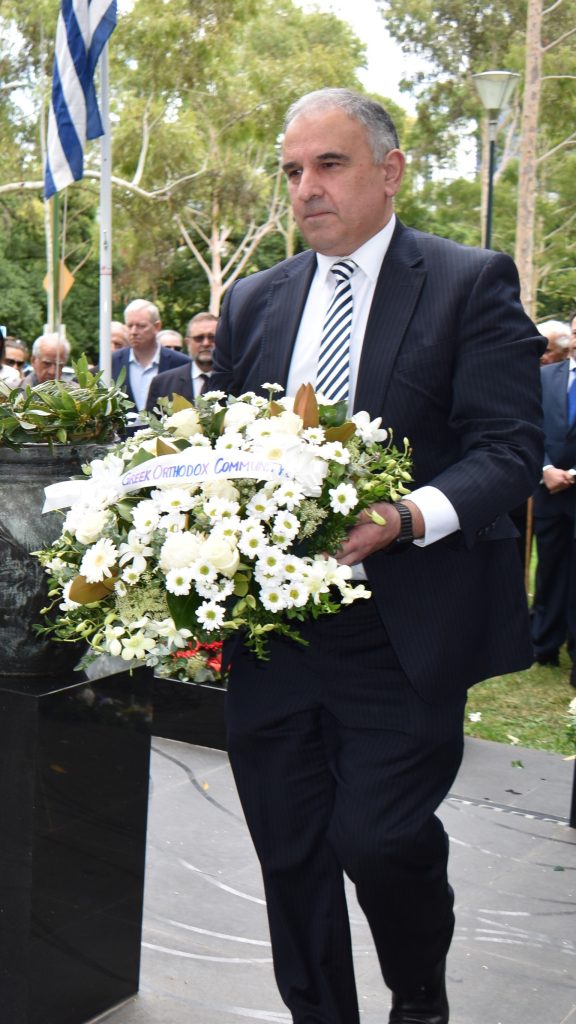
Everything works like clockwork, first a church service, then the noon wreath laying and a small ceremony at the Shrine followed by traditional Greek cuisine at the Hellenic RSL in South Melbourne.
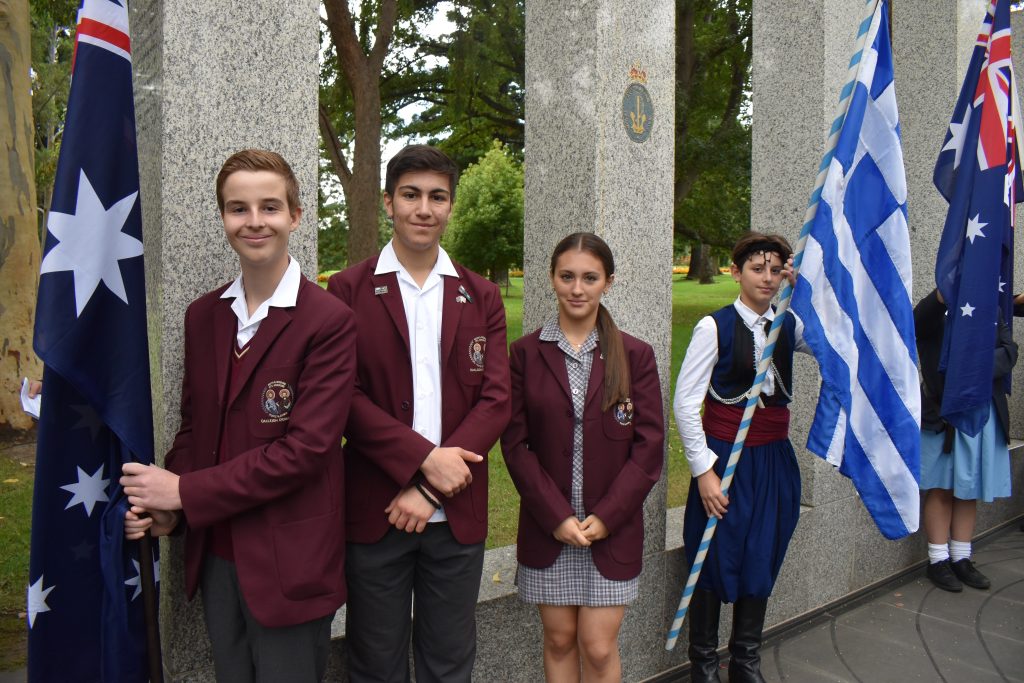
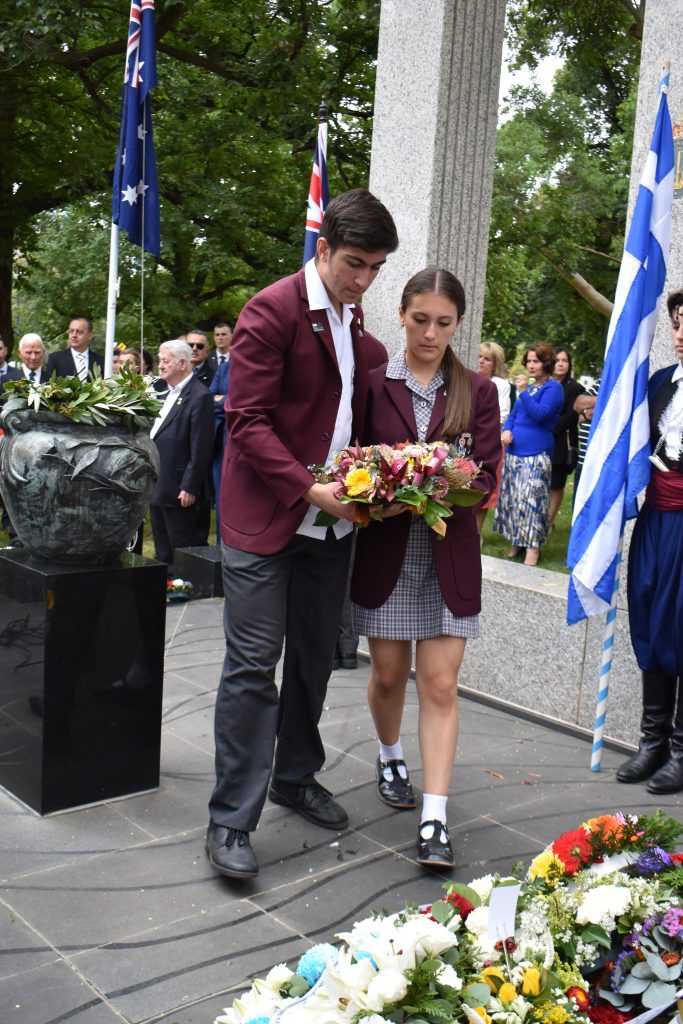
Officials at the Shrine. All photos copyright: The Greek Herald / Mary Sinanidis.Three students from Oakleigh Grammar and one from St Catherine’s.
One could be forgiven for feeling a sense of déjà vu on Saturday, when the event took place again with the only difference being that this year there was continued friction in Ukraine and, closer to home, last Sunday’s decision by a group of men to perform the Nazi salute at Victorian Parliament during a clash between protesters for and against transgender rights.
Regardless of what is going on in the world, ex-veterans, who had once been willing to put their lives on the line, organise the wreath laying to honour the sacrifices of people who died for their country. This is followed by a small ceremony at the Shrine, where the Hellenic RSL has full access.
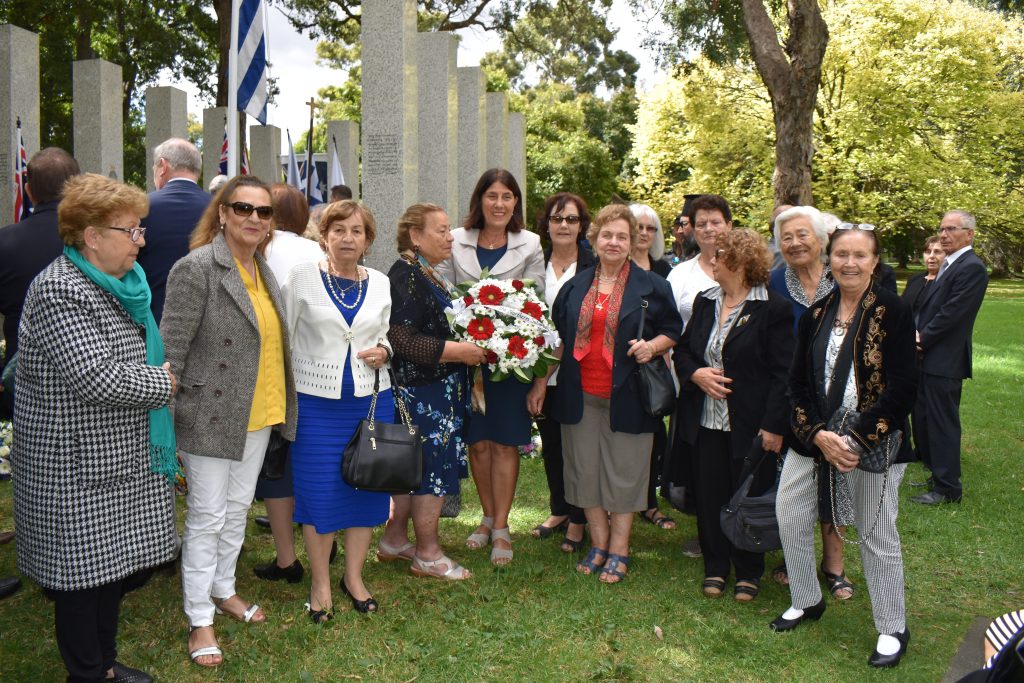
Ladies from the Anemones group.
Australian Hellenic War Memorial President, Steve Kyritsis, a Vietnam veteran, told The Greek Herald the Hellenic RSL has full access to the Shrine because it sits under the umbrella of the Returned and Services League of Australia.
Victorian Minister for Tourism, Sport and Major Events, Steve Dimopoulos MP, said that despite the plethora of events taking place around Melbourne on this particular afternoon, from Oakleigh glentia to a museum gathering, he could not miss this particular ceremony. Member for Bentleigh, Nick Staikos MP, was also in attendance.
Hellenic RSL President Manolis Karvelas and Steve Dimopoulos MP.
“This is our place in the prestigious parklands in Melbourne. And it is very meaningful because it is this country, not Greece, that has recognised the sacrifices of our ancestors in fighting for our independence,” he said.
“There wouldn’t be many places in the world to have public parkland dedicated in a very significant way to another country’s battle for their independence.”
The historical link between both countries did not go unnoticed by St John’s College student, Andreas Cartledge, who comes from a bi-racial family with an Australian father and Greek mother.
Wreath laying.
“I like to see both countries come together,” he said. “It’s sometimes a struggle with different practices but at other times [like this one] it is good.”
A group of CFMEU unionists wearing jumpers with the CFMEU logo and the Greek 1821 catchcry “Freedom or Death” had their own unionists’ perspective. Nikitaras Milonopoulos told The Greek Herald that union delegates created the design for this jumper because they could relate to the struggle for independence.
“Australia is made up of many different nationalities, many different faiths and religions, and though we are proud Australians and put Australia first and love what this country has given us, we honour our roots,” he said.
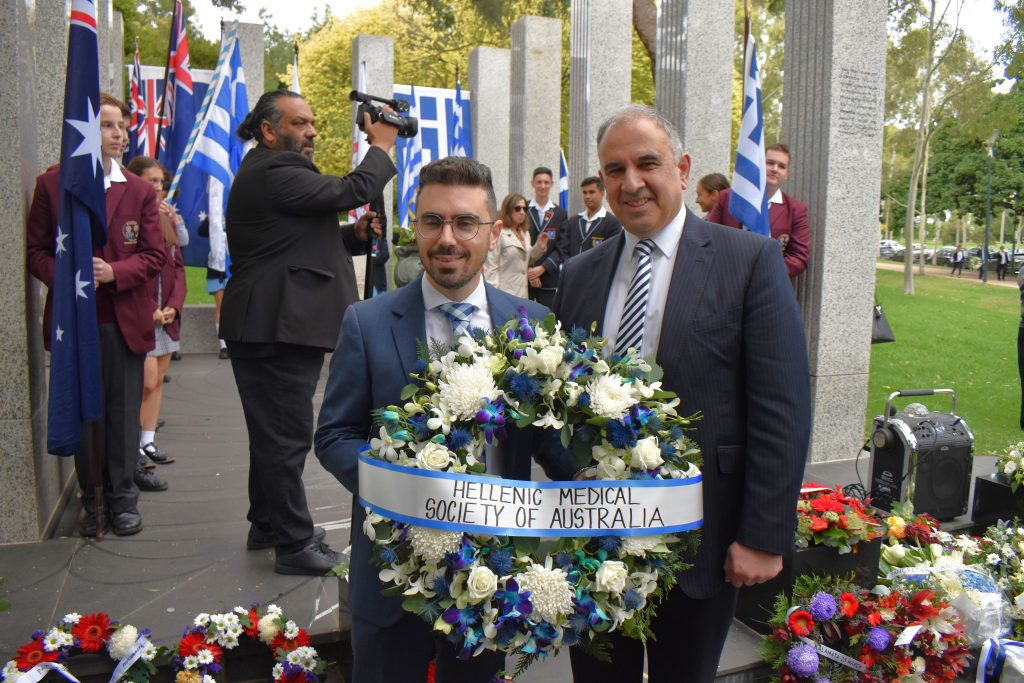
Wreath for the Hellenic Medical Society of Australia.
“We honour those who have come before us and we honour above all the sacrifices made by individuals who gave us our freedom, our independence and made us proud to call ourselves Hellenes and to be proud of our democratic freedoms and rights.”
The ceremony was about wreath laying, honouring heroes and heritage, but it was also about perspectives.
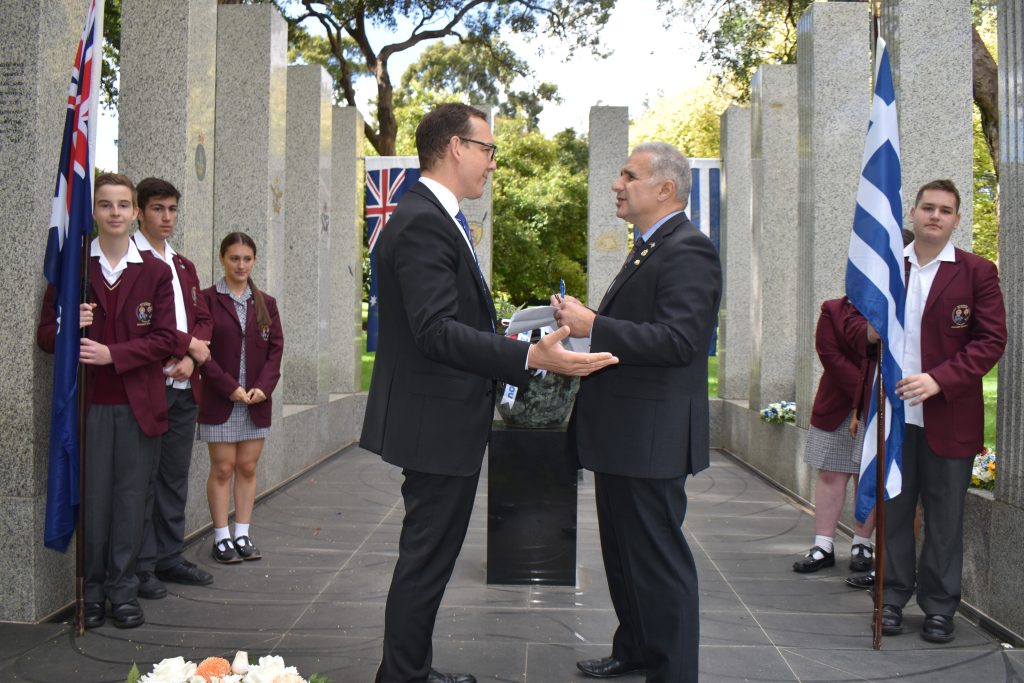
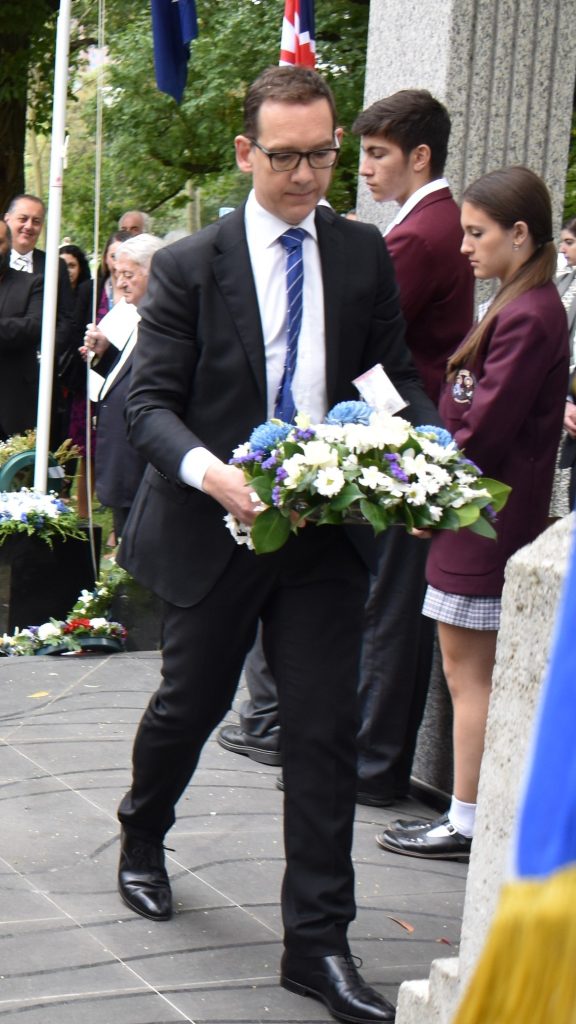
Steve Dimopoulos MP.Greek Consul General of Melbourne Emmanuel Kakavelakis.More wreath laying and speech-giving.
Greek Consul General to Melbourne Emmanuel Kakavelakis told the crowd to “water their roots” to keep alive their heritage.
But for others there from a non-Greek background, from Opposition Parliamentary Secretary David Davis to Field Regiment Association President Malcolm Fallon, it was also very much an Australian celebration.
The event honoured Greek Independence Day.
*All photos copyright The Greek Herald / Mary Sinanidis.
On Friday, March 24, 2023 at 10am the great benefactor, perhaps the greatest humanist of the post-war Hellenism of Australia, the noble patriot Zisis Dardalis (Tsaousis) passed away at the age of 85 after a battle with dementia for at least the last ten years. His family for ten years carried the cross of care and stood by him, supporting him and dedicating their own social life to him.
Zisis Dardalis was born in the town of Siatista in the Prefecture of Kozani on June 29, 1938. His father was Christos Tsaousis or Dardalis and his mother was Polyxeni, née Zisis Prokas. With the declaration of war, Christos Dardalis joined ELAS and launched a campaign together with other Kozanites patriotic fighters against the German and Bulgarian invaders in Macedonia.
In March 1943, Christos Dardalis came down from the lairs of Dilofos, where he was hiding with the other fighters, to transport his sick wife to the hospital in Thessalonike. Polyxeni Dardalis, from the hardships of the occupation and from the shortages caused by the absence of her patriot husband in the mountains, had contracted pneumonia. Her transfer to the Hospital of Thessaloniki or Athens had been judged by the only doctor in the area as a necessary condition for survival.
Unfortunately, the nightmare was lurking. Unknown Greek Germanophile traitors alerted the Gestapo headquarters and arrested Christos Dardalis while he was with his sick wife at the hotel in Kozani, to take him to the basements of the Gestapo in Kozani. Scenes of horror and tragedy followed when his sick wife desperately tried to save him from the hands of the Gestapo with unspeakable woes and pleadings. Christos Dardalis, during his transfer to the headquarters, desperately threw himself from the vehicle to escape. This was followed by a short chase and execution in the streets of Kozani.
However, fate that had not completed its tragic task was looming. Inconsolable as she stood, his wife Polyxeni was soon seized by a high fever and her health deteriorated. Her weak body could not react. Psychologically she had followed her husband to those scenes of horror that preceded the execution. His execution deprived her of the strength for resilience and endurance. About forty days after the execution of her husband, she died of pneumonia, abandoning the five-year-old Zisis Dardalis under the care of her sister Photini Proka.
The aunt protected the restless Zisis until he was nine years old and finally locked him up in the National Orphanage of Florina in 1947. He stayed in the orphanage of Florina until 1951, and after finishing the primary school there he was transferred to the Aristotle Technical School of Kalamaria in Thessaloniki from 1951 to 1953, where he learned the art of the woodcarver, an art that helped him much later to improvise and make the first machines of his factory himself. It was there that for the first time his steps met with another leading figure, who played an important role in the history of Hellenism in Australia, Ierotheos Kourtesis, who as high priest in Kalamaria was also deputy director of Aristotle.
In 1953, his uncle, Nikos Dardalis, a livestock merchant and meat agent throughout Macedonia came to Thessaloniki and took him out of Aristotelis Technical School to take him with him as his slaughterer and assistant. For seven years, Zisis Dardalis followed his uncle to all the villages and towns of Macedonia from where they bought the animals for slaughter: goats, sheep, calves, cows and buffaloes. There were thousands of animals slaughtered by him. But to this day he prided himself on having a light hand and the animals were not tyrannised during the slaughter.
Zisis Dardalis remembered endless days of hard and inhumane labour, remembered the day that began at dawn and ended after midnight; told endless stories with animals that he slaughtered and regretted, with animals that he slaughtered with care not to cause pain; he remembered his difficult relations with his uncle, the difficult days of Christmas and Easter; the dark and ruthless rooms that took the lives of animals for people to live and celebrate Christmas. He remembered the difficult fifties, the uncertain political situation, a present that did not foreshadow a future.
On June 19, 1960, he arrived in Australia. He was tired of slaughtering. He was called by his sister, Nassiou Dardalis, who had been here since 1956. Australia had more animals for slaughter. Australia needed slaughterers and skinners. They approved the invitation with pleasure. He settled in Yarraville at his sister’s house. Tired of his job as a butcher and skinner in Greece, he sought change. He took refuge for work at the Glass Factory, a factory through which half of Melbourne’s Greek immigrants had passed; the other half had passed through Tom Piper. His tenure here was ephemeral. Three days later he left the factory after a dramatic adventure he had on the night shift. Zisis had snatched the caretaker, his supervisor, from the moustache because he did not testify the truth to the factory management about the damage that preceded it. He lost his job for handcuffing.
The next day he sought his fortune at the Swift slaughterhouse in Newport, where he worked for four months in the vast meat refrigerators. The nature of the work did not win him over. Neither did his third job in the skins of William Anglis where he worked for only two months, nor the 2.5 years he spent in the Day Craft textile washing and ironing machine, where he became a supervisor and appointed and protected many Greek labourers.
Meanwhile, working at Day Craft, he had the opportunity to watch his aunt Photini Proka, who was making Dim Sims at the garage of her home in Footscray. His aunt Photini, who hadprotected him during the difficult years of his orphanage, was brought by Zisis at his invitation in 1962. Only nine months Fotini Proka worked with the Chinese, from whom she had learned the art of making the dim sims. Zisis recorded the mechanisms of the preparation and agreed with his aunt to make the Dim Sims so that he could sell them the next day, after his work in Day Craft, in Greek fishing shops. In the morning he would paddle at Day Craft, in the evening at the Greek fishing clubs. In three months he bought an abandoned café shop at 38 Napier Street, Footscray. That’s where mass production began. Everything was then prepared by hand, first in the garage, then in the café. Flour often spoiled; cabbage smelled. Photini was making the products, Zisis was selling them.
South Melbourne FC would like to extend its condolences to the Dardalis family and everyone associated with Marathon Foods on the passing of the great Zisis (Jack) Dardalis.
Jack was a larger than life figure who spent decades supporting the club while at Middle Park right… pic.twitter.com/SfKblArlae
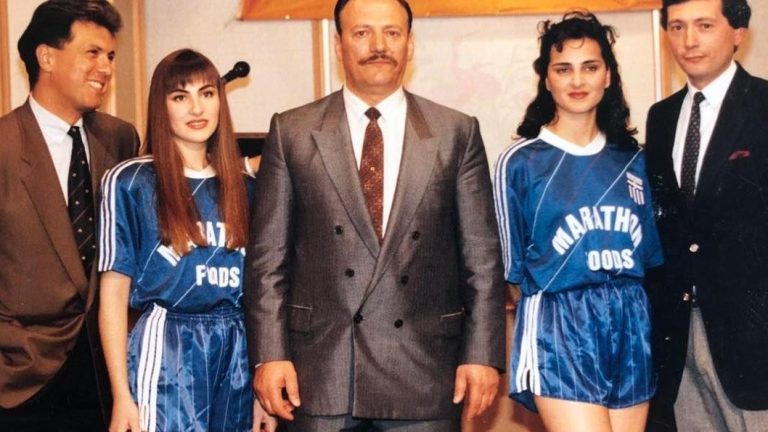
Things changed when Zisis left Day Craft and devoted himself entirely to the factory he opened in Footscray with 14 workers, whom he increased to 22, until 1970 when he stayed there. Along with Dim Sims he began to prepare spring rolls. Up to 140 dozen were prepared per day in the pan, by hand (compare with the 140,000 it produces in 2023 per day). This is how the Marathon Foods Industry was born. The commercial reach and dynamics of the plant did not go beyond the metropolitan area of Melbourne. The commercial target was the Greeks who maintained the “restaurants,” the fishermen, and the wholesalers who distributed in the province. This included Kostas Gellalis (Harcon), Tom Kyvelos, Jim Diamantaris, Giannis and Kostas Kosmas, Borg Brothers, PFD and John Lewis. The itineraries were made with two different rosters: Monday and Thursday the first, Tuesday and Friday the other.
In 1970, the need arose to organise a wider space, to reconstruct and refurbish the factory, to upgrade the products of the Marathon Foods Industry. The factory was moved to 119 Nicholson Street, East Brunswick (1970-1978). The number of workers increased to 40 people, while at the same time machinery was imported and made. Its products enter the central fish market of Melbourne. They opened new horizons for the industry to produce these products.
Easter 1978 offered him the opportunity he had been waiting for. A factory that cleaned guts at 51-53 Hobsons Road, Kensington was closed. The spaces and the possibilities for expansion and landscaping were very positive. The offer for the purchase of the abandoned factory is made quickly and professionally. In three days, the deal was closed. The factory was moved to the new facilities, after these had been upgraded, by maintaining the same products, the machinery and the production. Demand continued to grow by leaps and bounds. Dardalis bought and then dissolved the opposition: two Chinese companies and one Greek one.
On July 18, 1982, in the heyday of commercial activity, strangers set fire to his factory, whilst he was in Greece with his family. On November 21 of the same year, the rigid and unaffected industrialist has the new plant ready. This is where the industrial take-off begins. Zisis, with the engineers he employs, crafts in the factory, creates and produces new machines. He brings his ideas together from his fruitful tours of European and American food machinery exhibitions. But its aim is to expand the industry in Europe and Asia. He is interested in exports. The Australian market no longer satisfies him, it does not represent him. The establishment and operation of a huge industrial plant in Budapest, Hungary, for the markets of Eastern Europe, does not fill him. He looks forward to a complete upgrade of his factory in Australia, to dominate the Asian basin.
In 1997, the production of Marathon Foods Industry factory covered 65 percent of the total production and demand of the Australian market in Dim Sims, Chicken Dim Sims, Chicken and Prawn Rolls, Mini Rolls, Hamburgers, Spring Rolls, and lately in pies of three kinds, cheese balls and since last week in soutzoukakia exported to Greece and to the markets of Eastern and Central Europe. Its products are now exported throughout Asia and New Zealand.
Let’s give a census deposit of the industry. At the Kensington plant, about 90 workers are currently employed, products with a total weight of 80 tons per day are produced, for example 1200 Dim Sims per minute and 120,000 Spring Rolls per eight-hour day. In the 1990s, the annual total value of sales in Australia alone exceeded $20 million, while it was expected to double in the coming years with the start of massive exports to the Asian and European basin. The factory’s engineers nevertheless continue to build new machines and boost production. In return and in addition to the individual services offered, the company offers them every Friday two-hour training on health and safety issues by specialists coming from Melbourne Colleges and Universities. The products of the industry are not touched by human hand, they do not contain preservatives, colours, nor flavour chemicals. In the period that followed the industry spent many millions of dollars to build new wings and equip itself with perfect German and Italian machinery, an investment of many millions also to meet the demands of the future.
I once asked Dardalis about the Marathon name and he said: “I decided after eleven months to call my work Marathonbecause it was a daily Marathon for me. I ran every day at excessive speed to catch up with the fishing boats, a constant Marathon, which in ten months cost me eleven infringements for traffic violations for speeding and withdrawal of my license twice.”
Dardalis decided to pay a dividend on the proceeds of his company Marathon Food, in order to strengthen and germinate the Hellenic Studies in the universities of Melbourne; to demonstrate absolute confidence in the NCHSR (EKEME) and the University of La Trobe, having as his collaborator the Hellenistic Professor of Greek Epigraphy, Professor Michael John Osborne; to cooperate blindly with the eloquent and prudent diplomats Georgios Veis and Georgios Konstantis, and to invest his absolute trust in this writer and his associates since 1992, when the Archives of the Greek Diaspora were founded, to which his name was given, on the proposal of the Director of EKEME.
After Dardalis contracted dementia in 2008, at a time when his creation, EKEME, was going through a difficult crisis, his involvement began to gradually decline. The weakening of his mental functions, perception, judgment, speech and of course memory gradually began to tame Dardalis’ will and passion.
In 2010, his family took over the general state of management. His wife Salli, his daughters Jenny and Christina and his son-in-law Lazarus and the rest of the family members take action and initiative. The giant of endurance and giving, the man who gave to everyone else what he had been deprived of as a child (as he repeated), slowly resigned himself to his surroundings.
Hundreds of expatriates in Australia, as well as Greeks and Cypriots, all those who had received his noble hospitality, his love, his Dardalian affection, for years continued asking about the health of Dardalis. For 13 years his state of health was associated with Australia. They could not understand that there could be Hellenism in Australia without Zisis Dardalis. His figure became legendary.
I will close this note by testifying to the ineffable affection, the titanic struggle that his daughter Jenny and his wife Sally undertook to care for him, daily and unceasingly. For years, day after day, morning and afternoon, the two women shared the care of their husband and father. With patience and perseverance, with pain and optimism, endless hours to take care of him, to look after his needs. They felt the same love for Zisis until the day he crossed the borders of this ephemeral life. They deserve praise. Let them become examples to be imitated by thousands of people who care for the victims of dementia.
*Professor Anastasios M. Tamis taught at Universities in Australia and abroad, was the creator and founding director of the Dardalis Archives of the Hellenic Diaspora and is currently the President of the Australian Institute of Macedonian Studies (AIMS).