Home Blog Page 1079

GCM seminar to focus on Asia Minor refugees and the remaking of Greek left

Historian Dr Kostis Karpozilos will be delivering an online lecture entitled The Asia Minor Refugees and the Remaking of the Greek Left on Thursday, March 30 at 7pm.

The lecture is part of the Greek History and Culture Seminars offered by the Greek Community of Melbourne (GCM) and will be available for viewing on Facebook and YouTube.

In his presentation, Dr Karpozilos aims to illustrate the impact and significance of mobility, political geography, and transnational networks in the early history of Greek communism, specifically the transformative influence of refugees from the declining Ottoman and Russian Empires on the remaking of Greek communism in the 1920s.

The arrival of over one million refugees following the Greek-Turkish war of 1919-1922 marked the end of the country’s expansionist aspirations and ushered in a period of political and social instability.

Dr Karpozilos will explore the interplay between this process and the evolution of the Communist Party of Greece and its integration into the Comintern ecosystem, emphasising the vital role played by refugees, exiles and immigrants in revolutionary projects. He argues that it is necessary to reconsider the importance of mobility and refugeedom in the evolution of radical politics in the 20th century.
GCM seminar to focus on Asia Minor refugees and the remaking of Greek left.

Dr Karpozilos is the director of the Contemporary Social History Archives (ASKI) in Athens, Greece and his forthcoming book, Out of Bounds: A Transnational History of Greek Communism, examines the interplay between diasporic communities, transnational networks, and experiences of displacement in the development of the Greek communist movement.

He is also the author of Red America: Greek Communists in the United States, 1920-1950 (Crete University Press, 2017; Berghahn Books, 2023).

Dr. Karpozilos was a postdoctoral fellow at Columbia University, Princeton University and Oxford University and currently teaches at Panteion University in Athens. He earned his PhD from the University of Crete in 2010 and his M.A. from Sheffield University in 2004.

The lecture promises to be an insightful and thought-provoking event for anyone interested in the history of Greek communism and the impact of refugee movements on political movements.

Event Details:

  • When: Thursday, 30 March 2023, at 7pm
  • Where: Online via Facebook and YouTube

Peter V’landys open to holding NRL grand final in Victoria this year

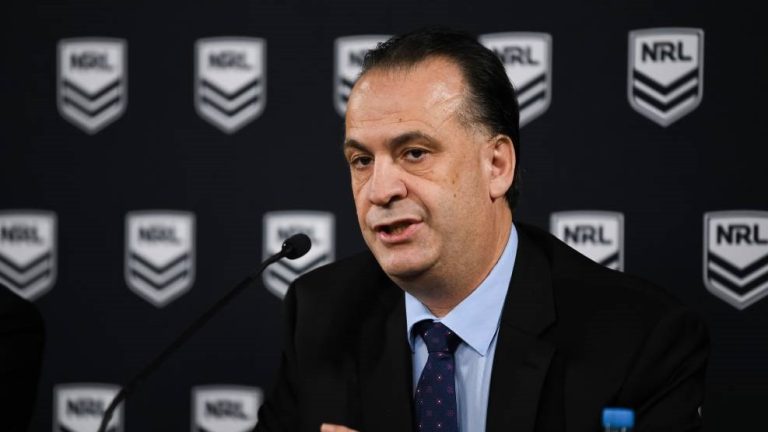
Australian Rugby League Commission Chairman, Peter V’landys, has said today he is open to holding the NRL grand final in Victoria this year.

The announcement comes after V’landys claims the outgoing NSW Liberal government broke promises over stadium funding last year.

According to The Sydney Morning Herald, V’landys told the NSW government “to get the chequebook out” this year otherwise Melbourne will become a serious option for the NRL grand final.

The Chief Executive of Visit Victoria, Brendan McClements, has welcomed V’landys’ interest in Melbourne despite state budgets under growing fiscal pressure.

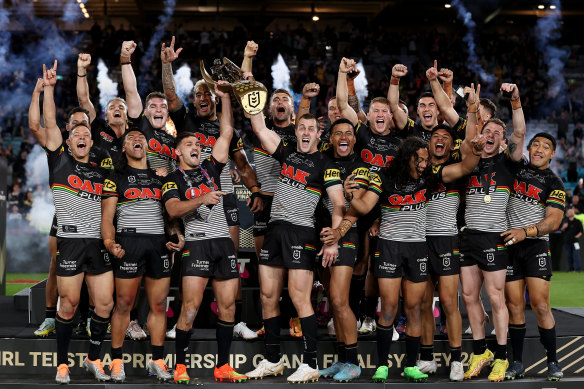
The Panthers are premiers again.
The NRL grand final has been played in Sydney in all but two years, once in 1908 and the other 2021. Credit: Getty.

“Peter also said recently: ‘I haven’t got a deal for the NRL grand final.’ It’s a purely commercial decision. Our phone hasn’t rung. I have got 35,000 more seats for Peter,” McClements told SportNXT conference in Melbourne.

“In a purely commercial decision, that is $4-5 million waiting for him. So, I would like to talk to Peter at some stage about that.”

In response, V’landys told The Sydney Morning Herald and The Age: “I would love to hear from Brendan. It could be an option for us.”

The NRL grand final has been played in Sydney in all but one year since 1908, with the 2021 decider moved to Brisbane due to COVID restrictions in NSW.
Source: The Sydney Morning Herald

Greek police arrest suspects planning terrorist attack at Jewish restaurant

0

Greek police have arrested two Pakistani nationals suspected of planning a terrorist attack against a Jewish restaurant in Athens, according to Ekathimerini.

AMNA has reported that the unnamed suspects, 27 and 29 years old, were receiving orders from other Pakistani nationals in Iran.

Israel‘s Prime Minister Benjamin Netanyahu said late on Tuesday that his country’s intelligence services, Mossad, helped Greece with the operation and the attack was orchestrated from Iran.

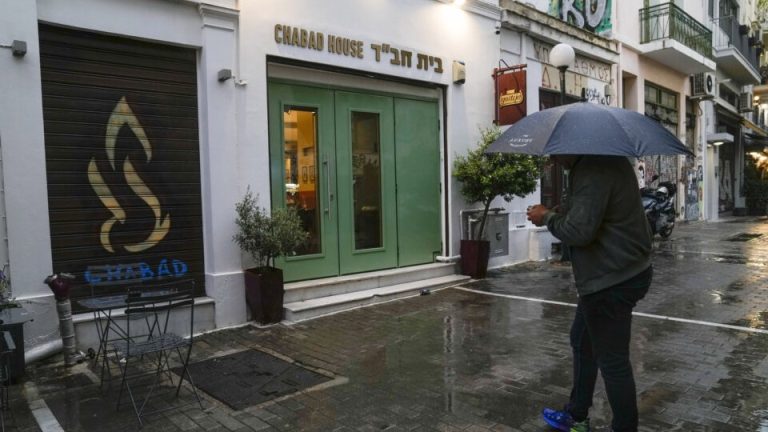
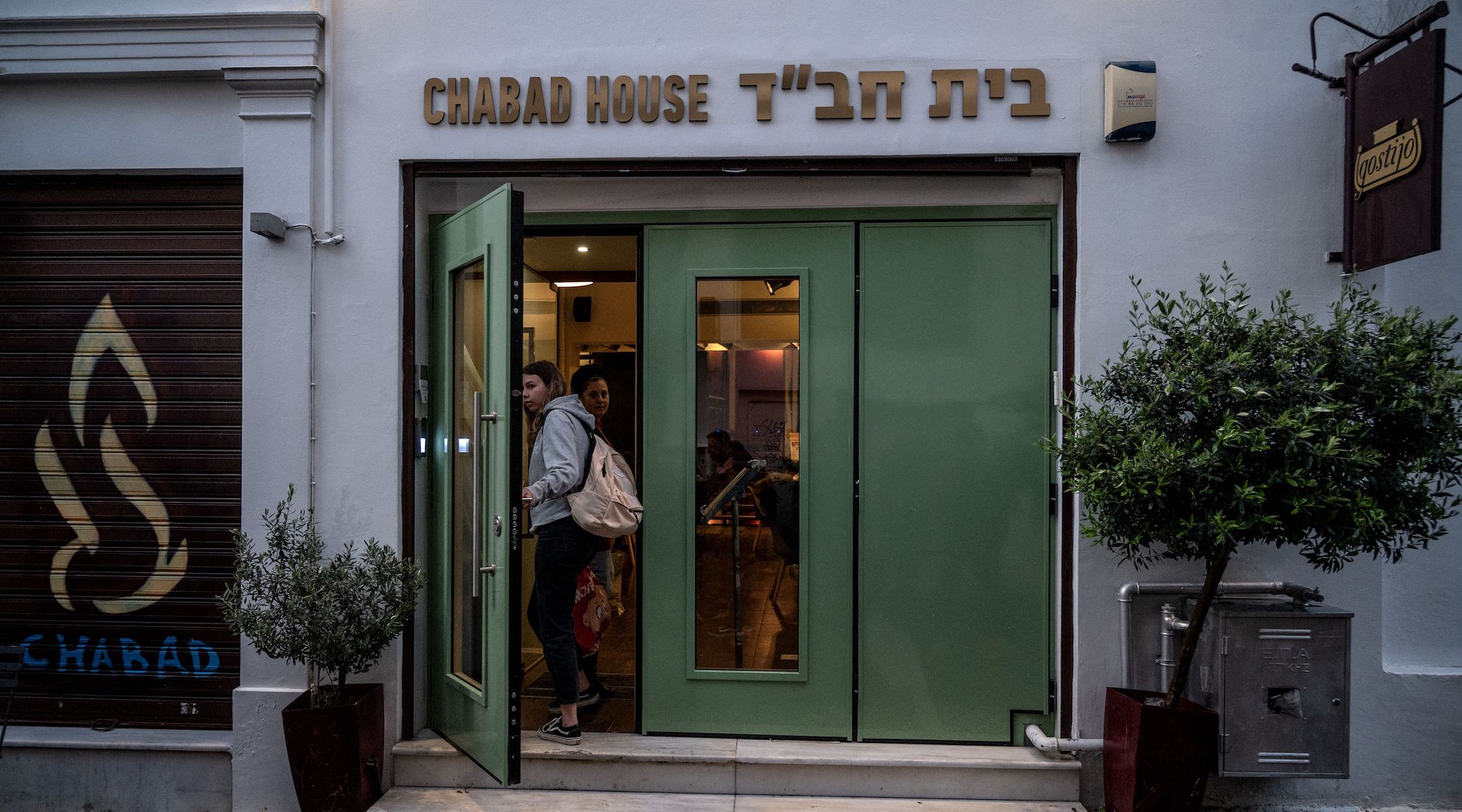
Women enter a Jewish restaurant in central Athens, March 28, 2023. Greek police sources said they arrested two men who targeted the building. (Angelos Tzortzinis/AFP via Getty Images)
Women enter a Jewish restaurant in central Athens, March 28, 2023. Greek police sources said they arrested two men who targeted the building. Photo: Angelos Tzortzinis/AFP via Getty Images.

“The investigation exposed that the operation in Greece was part of a vast Iranian network, operated from Iran across many countries,” a statement from Netanyahu’s office read.

Greek police said they detected digital evidence where a group was looking for people to attack a building with “special significance” in Greece.

The suspects were charged with terrorism offences, while a third man believed to be outside Greece has been charged in absentia with similar offences.

Source: Ekathimerini and AP News

The role of Cyprus in the 1821 Greek Revolution

Cyprus’ role in the 1821 Greek Revolution is an integral part of the rebirth of the Hellenic peoples.

In 1821, most of the Eastern Mediterranean was under Ottoman occupation, a people who had left their  central Asian homeland more than five centuries earlier.

The story of the gathering of Philhellenes throughout the world is well documented.

1821 Cyprus was also under Ottoman occupation. With foreign troops and administrators ruling the island, Cyprus was considered just another “tax farm” – a place to use and exploit.

From the first day of the declaration of liberation March 25, 1821, Ottoman occupying forces and their supporters throughout all the occupied lands led a campaign to terrorise the occupied peoples and quell the rebellion. Cyprus was no exception.

As early as October 1818, Archbishop Kyprianos of Cyprus had met with the Filiki Eteria.

Shortly after March 25, 1821, the Ottoman governor of Cyprus sent to the Sultan a list of leading Greek Cypriots including Archbishop Kyprianos, three other bishops and the abbots of all the monasteries of Cyprus, accusing them of “treason.”

In response, the Sultan sent 4,000 troops from Syria and ordered all Greek Cypriots to be disarmed. Although Archbishop Kyprianos issued a letter to his compatriots to submit to the decree, within days  began the “terror” led by the arbitrary murder of  Greeks.

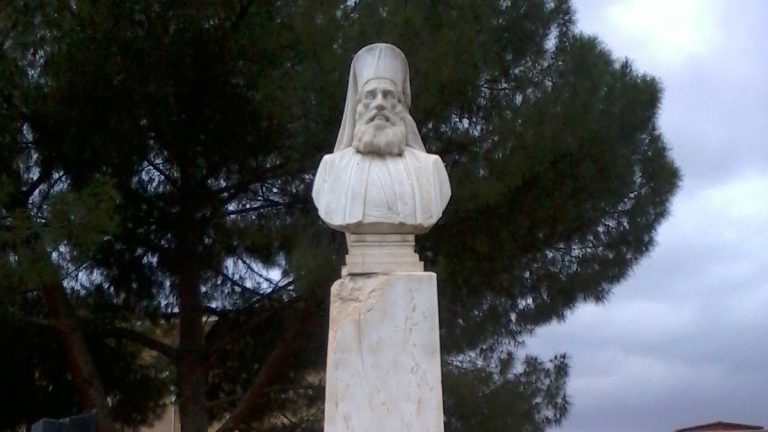
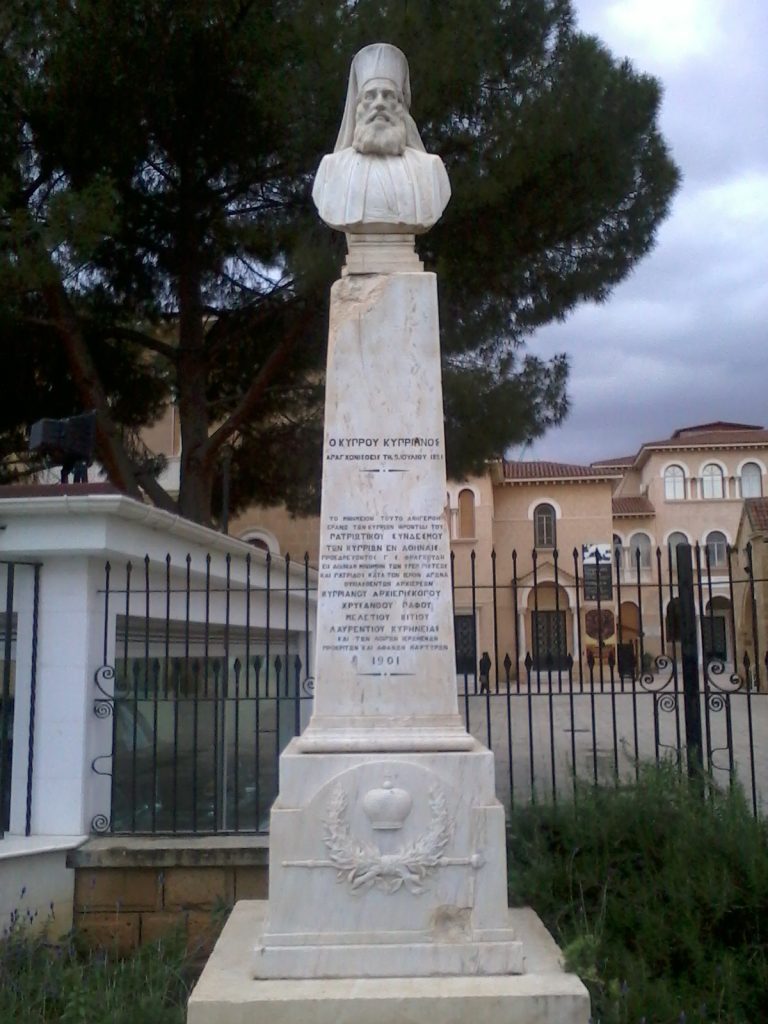
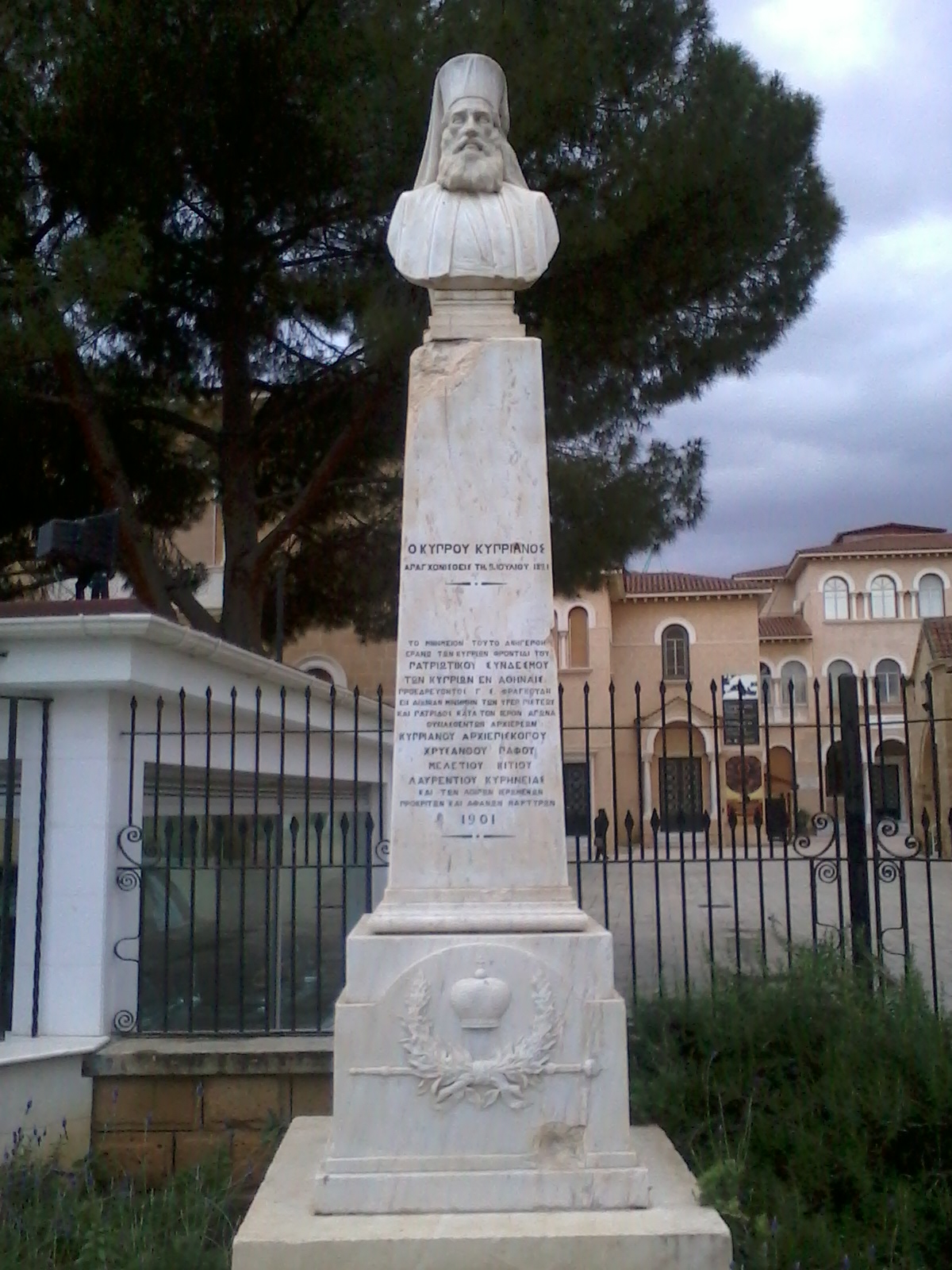
Monument to Archbishop Kyprianos in Nicosia, Cyprus.

By early July 1821, Sultan “formally” ordered the murder of Greeks, witnessed and recorded in detail by the European consuls in Cyprus who went as far as offering asylum to Archbishop Kyprianos, which he declined. On July 9, they hung Archbishop Kyprianos outside the governor’s palace. He told the executor ‘Execute the command of your cruel master’.”

They hung Kyprianos’ secretary, three other bishops of Cyprus (Chrysanthos of Paphos, Meletios of Kition and Lavrentios of Kyrenia) all executed. Hundreds of Greek Cypriots were executed, most of them from wealthy and influential families, their property stolen by the governor.

Ironically the cruelty of the occupiers did the opposite, it was a call to arms.

Greeks from Cyprus raised the “Greek Flag of the Homeland Cyprus” and volunteers found their way to the front line in the Peloponnese and beyond.  

Mesologgi has a monument for the Cypriot dead fighters which died fighting in their attempt to break the siege and exit the town. Cypriots also fought to liberate Lebanon which at the time was also under Ottoman occupation.

Back in Cyprus, in March 1826, Greek Revolutionaries, together with Cypriots, attacked the Turkish Guard and the Turkish Military Department of the Famagusta Guard at Aghia Napa. 

In 1826, Cypriot fighters adopted the Cypriot military flag, white in colour with a big blue cross in the centre, to join the “Ionian Phalange,” who took part in many military operations in the Peloponnese and Mainland Greece until its dissolution in 1827.

Ionian Phalange saw action in the Eastern Aegean and took part in the battles against Kioutahis who sieged the Acropolis of Athens between 1826-1827 where more than 100 Cypriots were killed in the battles in Athens and Phaliro. The Ionian Phalange liberated Chios and Hydra amongst other parts of Greece.

1821 is more than a historic moment, it’s a recognition that human dignity and freedom has a price and the people of Cyprus paid that price. Some are still waiting for the modern day liberation of the island and the unification of its people.

Greece’s Prime Minister calls national election for May 21

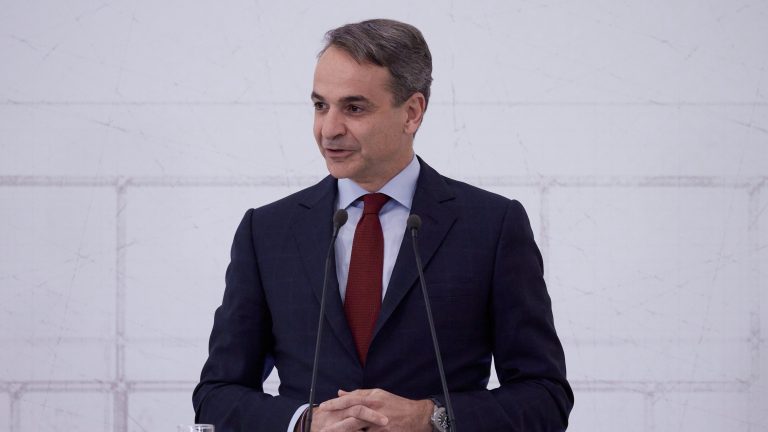
Greece’s Prime Minister, Kyriakos Mitsotakis, has called parliamentary elections for May 21, Ekathimerini has reported.

According to opinion polls, Mitsotakis’ New Democracy party has held a comfortable lead over opposition leftist SYRIZA since it came to power in 2019, but a February 28 rail disaster which killed 57 people has stirred public anger and seen that gap narrow.

“The country and its citizens need clear horizons… the national elections will be held at the end of the four-year term, as I had committed from the start,” Mitsotakis said during a televised cabinet meeting.

The May 21 poll will take place under a newly introduced system of proportional representation. That system makes it difficult for a party to gain a clear majority, setting the stage for a second, run-off round.

That vote will take place “at the latest by early July,” Mitsotakis said.

Greece’s opposition parties have responded to the Greek Prime Minister’s election announcement. SYRIZA-Progressive Alliance leader, Alexis Tsipras, said on Tuesday the national elections “can signal a great change that the country really needs.”

PASOK-Movement for Change leader, Nikos Androulakis, also said on Tuesday the “Greeks in the elections of May 21 will vote for a new hope, for a new prospect.”

From now on, the Parliament will continue its normal work until it closes for Easter on April 11. The dissolution of the Parliament will take place until April 22 when the Presidential Decree will be taped to the entrance of the Parliament.

Source: Ekathimerini.

‘Not to be missed’: Nikos Sousamidis on tribute show for Mimis Plessas, Giorgos Zambetas

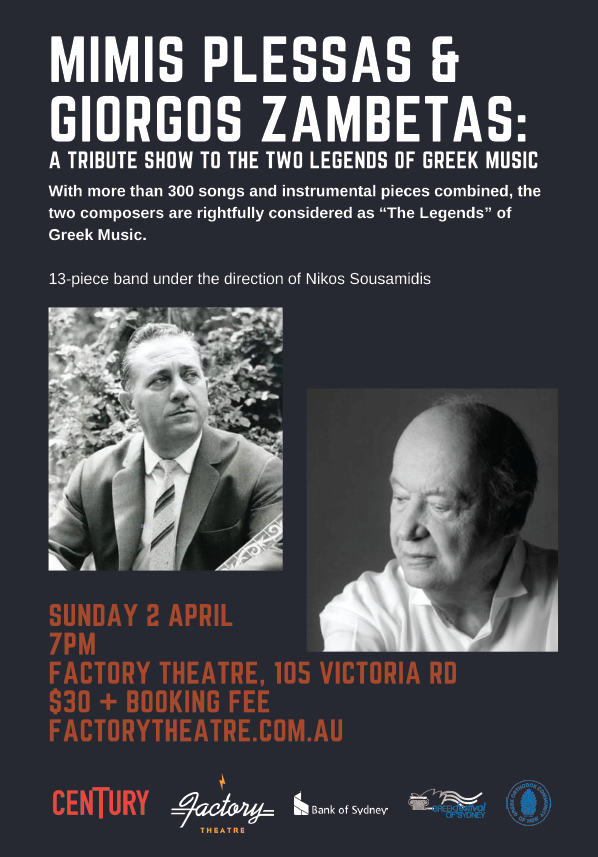
A tribute show for Greek music legends, Mimis Plessas and Giorgos Zambetas, will take place on Sunday, April 2 at the Factory Theatre in Sydney.

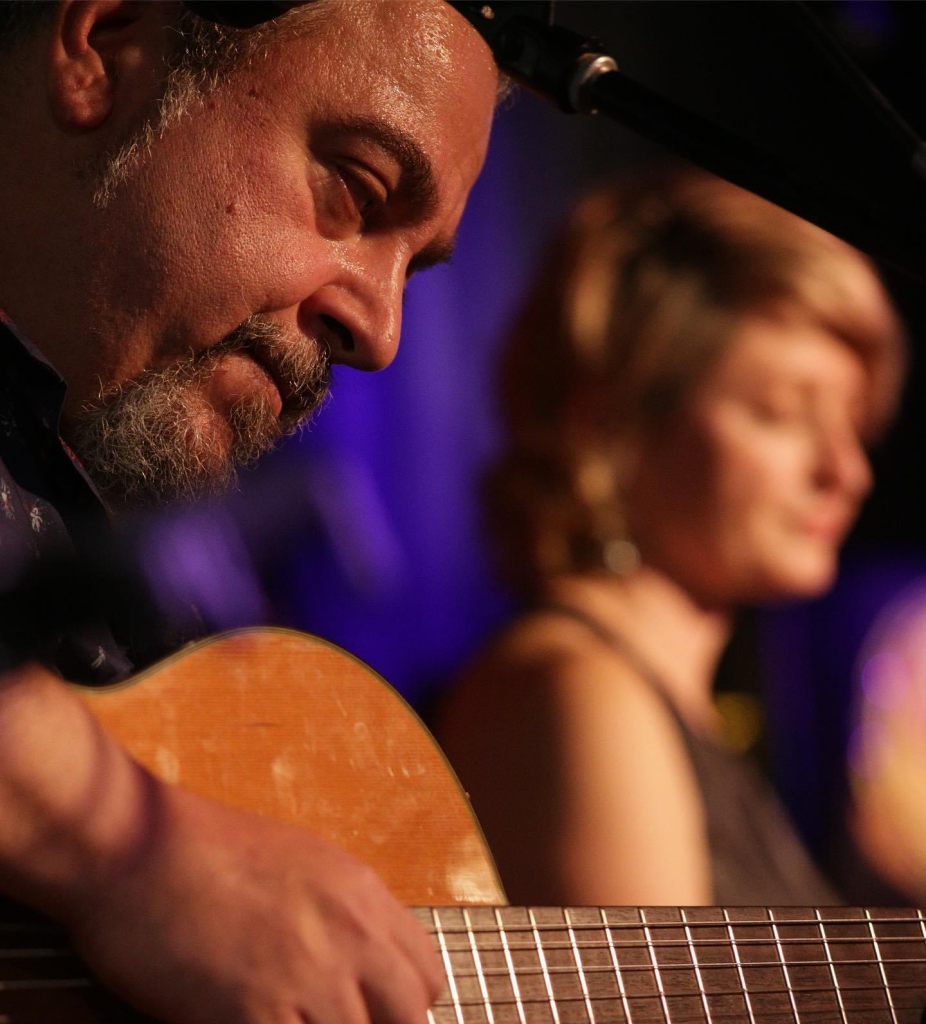
The show, which is part of the Greek Festival of Sydney, will feature a 13-piece band under the musical direction of guitarist, singer, songwriter and composer, Nikos Sousamidis.

Ahead of the tribute show, The Greek Herald spoke with Nikos and he detailed what people can expect on the night.

Tell us a little bit about yourself.

I was born in Adelaide, South Australia in 1970 and we moved to Greece when I was three years old. So I grew up in Greece. I studied music theory and history of music at Thessaloniki university. I first started as a musician at local music venues. After a few years, I ended up as a main guitarist for Stelio Rocko and Peggy Zina for three years. Then Peggy Zina and Giorgos Liras offered me the opportunity to take over the direction of the band and the production of her shows in Athens. For the next six years I was the Maestro for her and my job was to direct her live and TV shows. During these six years as a music director, we collaborated with great artists such as Nikos Vertis, Thanos Petrelis, Nino and Kostas Karafotis, Yianna Terzi, Giorgos Lianos and others.

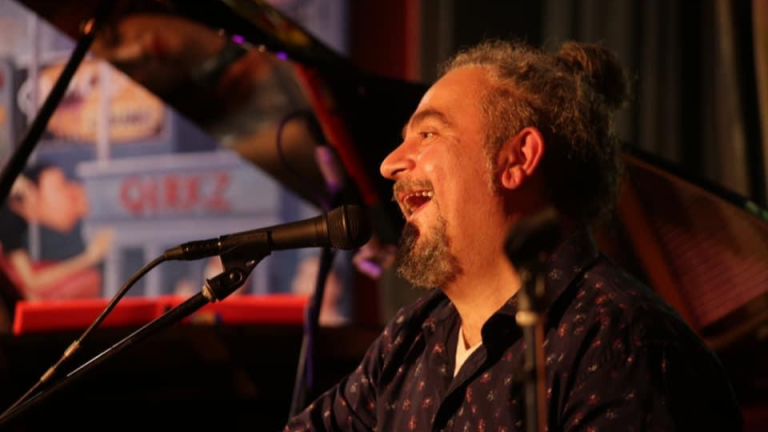
Nikos Sousamidis.

The next chapter of my career was to direct the shows of Nikos Oikonomopoulos for live and TV performances. At that time I was directing the Fame Story Summer concerts with the ANT1’s collaboration as well. After a successful two year period with Nikos Oikonomopoulos, my family and I moved back to Thessaloniki as my son was born and we wanted to have our families closer to us. Giannis Vardis and Mihalis Emirlis are some of the shows that I have directed during my stay in Thessaloniki. Tolis Voskopoulos, Rita Sakelariou, Giorgos Margaritis, Angelos Dionisiou and Themis Adamandidis are some of my collaborations in Greece.

Since moving back to Australia in 2011, I’ve directed shows for the Greek Festival of Sydney with artists such as Vasilis Lekkas, Dimitris Basis and also Melina Aslanidou.

You’re taking part in the Mimi Plessas and Giorgos Zambetas tribute show this weekend. What is your connection to these two artists and their music? 

We grew up with their music. Both composers are at the pantheon of Greek music and definitely both were in my bucket list. 

What can people expect from the tribute concert? 

Mimis Plessas and Giorgos Zambetas are undoubtedly gods among the pantheon of the best and well known Greek composers. Both dominated the film, television and radio facets of music, sparking the Golden Era of Greek film music. With more than 3,000 songs and instrumental pieces combined, the two composers are rightfully considered as “legends” of Greek music. 

After a very difficult decision on which songs we will include in our tribute show, we are very happy with the outcome. With a 13-piece band formed by some of Sydney’s finest musicians, directed by myself, we promise to deliver an unforgettable musical journey.

Is there anything else you’d like to say?

I would like to thank the Greek Festival of Sydney and especially Nia Karteris for hosting my show under their umbrella. And of course, The Greek Herald and you for this interview. It’s a show not to be missed.

Tickets can be purchased directly here, from the website of Factory Theatre or by calling the Box Office on 9550 3666.

Greek Parliament set to pass bill for Greek National Tourism Office in Melbourne

0

By Ilias Karagiannis.

A bill for the establishment of a Greek National Tourism Office (EOT) in Melbourne, Victoria has been put before Greece’s Parliament this week and is currently being discussed by the Committee on Production and Trade.

According to The Greek Herald‘s sources, the Bill will pass through Greek Parliament and the official establishment of EOT’s office in Melbourne is now just a matter of days away.

Greece’s Tourism Minister, Vassilis Kikilias, confirmed in January this year that his ministry wanted to open an EOT office in Melbourne, Victoria by April 2023.

The office will be housed at the Greek Community of Melbourne’s (GCM) landmark Greek Centre in Lonsdale Street.

In an interview with The Greek Herald in January, Mr Kikilias underlined that the EOT office would showcase the beauty of Greece and “make it an attractive destination for Australian travellers.”

The Greek Tourism Minister also thanked the President of the GCM, Bill Papastergiadis, for his “very good and constructive cooperation and also for granting the building facilities that will house the GNTO office.”

Greece’s General Secretary of Tourism Policy and Development, Olympia Anastasopoulou, added that the EOT office is “a historic initiative for the community.”

“We expect bonds between the two countries to tighten up and of course a further increase in tourism flows from Australian visitors,” Ms Anastasopoulou concluded.

The Evzones Collection on display in Athens at world-first exhibition

By Kostas Mastorakis

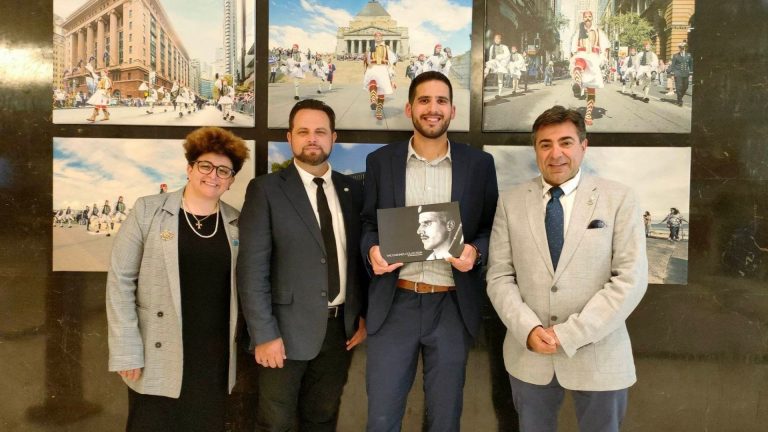
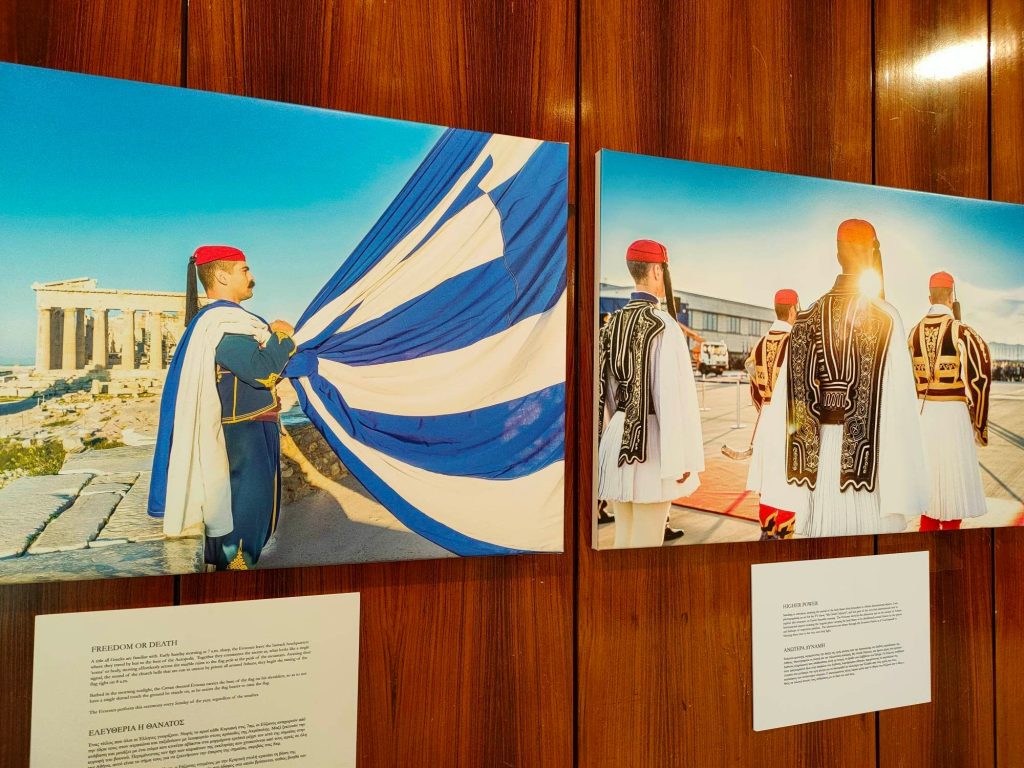
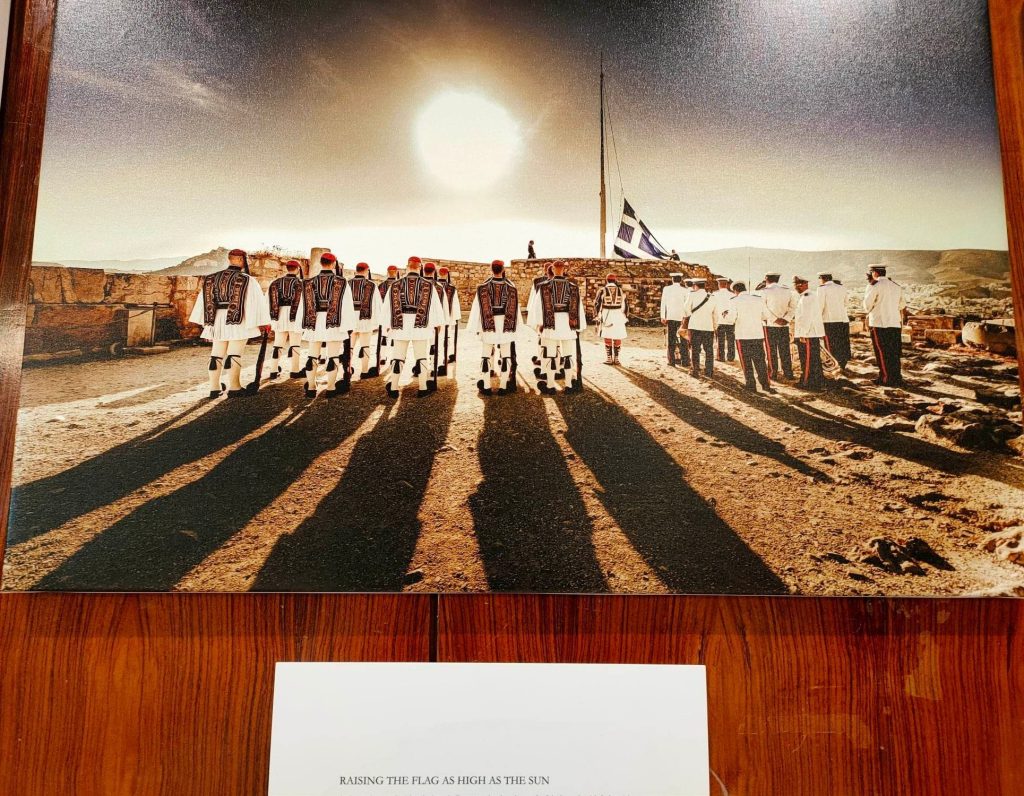
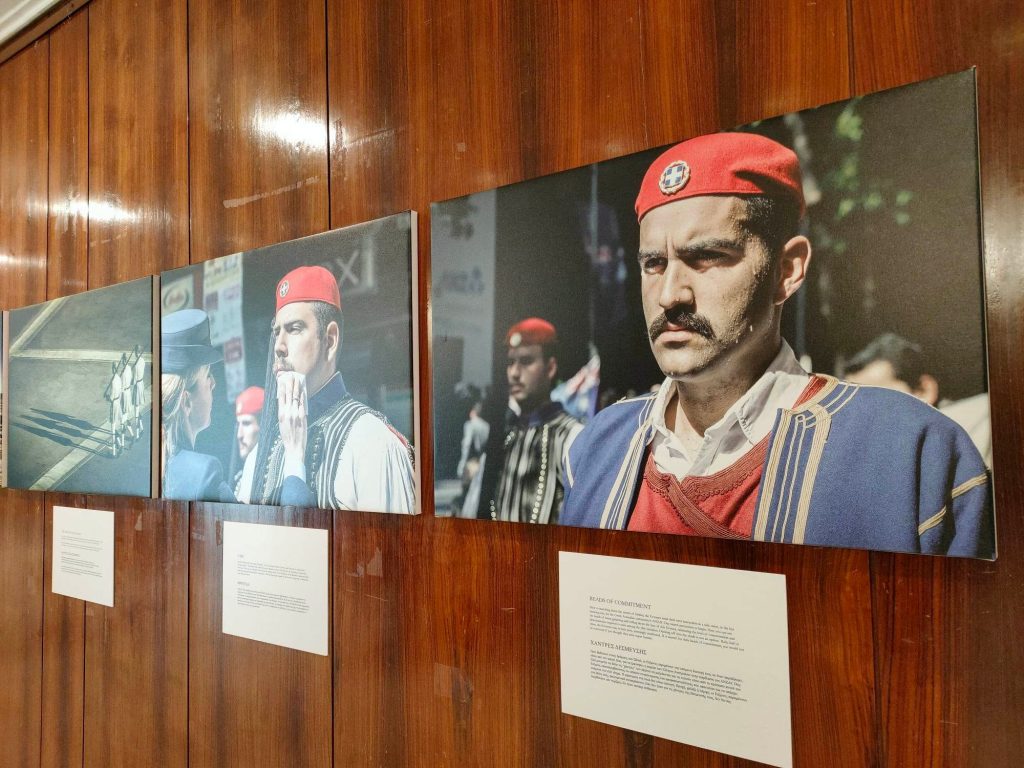
The Evzones Collection by Greek Australian photographer Nick Bourdaniotis has gone on display at the War Museum in Athens, Greece until March 31.

The exhibition is the first time photographs of Greece’s Presidential Guard taken by a Greek from the diaspora have gone on display at the museum.

The exhibition is under the patronage of Greece’s President, Katerina Sakellaropoulou, and includes photographs of the Evzones’ visits to the Australian cities of Sydney, Melbourne and Adelaide for commemoration events such as ANZAC Day and OXI Day.

The Evzones Collection on display in Athens. All photos copyright: The Greek Herald / Kostas Mastorakis.
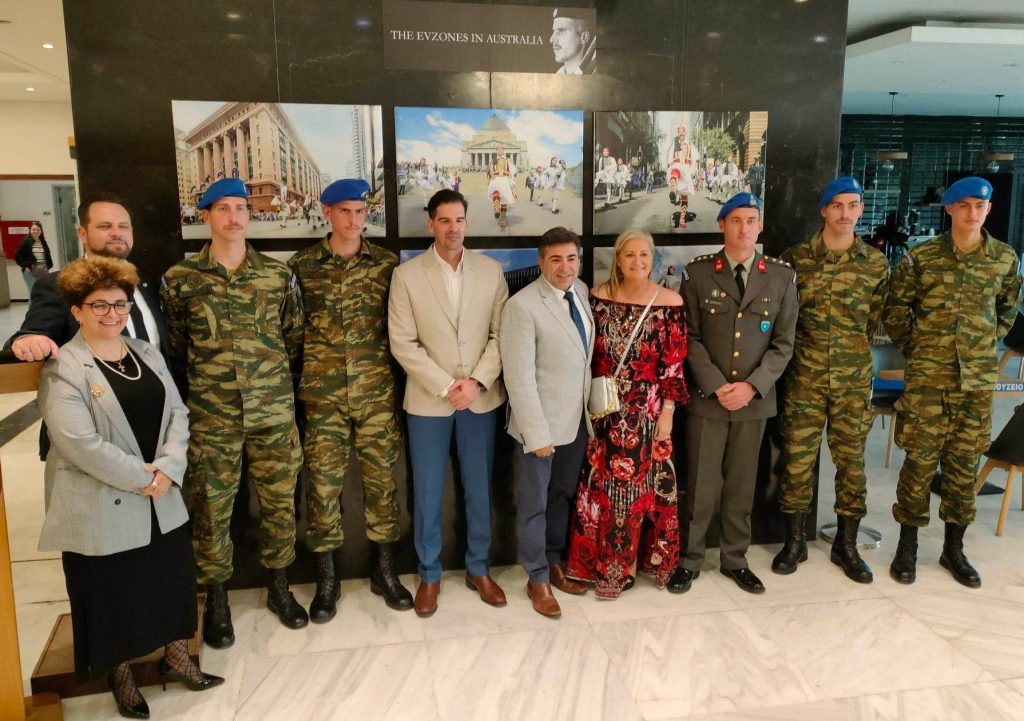
Guests at the opening.


The Greek Herald – loyal to its almost century-old mission of bringing the Australian community closer to its Greek center – could not miss the opening of the exhibition last week.

The opening was attended by representatives of Greece’s political, military and religious leadership, as well as the former Consul General of Greece in Sydney, Christos Karras, and former Trade Commissioner of Greece in Australia, Katia Gkikiza. Members of the Presidential Guard, including some of the photo subjects, were also in attendance.

Photographs on display.
More photographs.

What’s next for The Evzones Collection?

The President of the Board of the Military Museum, Anastasios Liaskos, spoke on the opening night and praised the way Bourdaniotis’ exhibition captured “the pride of the country” – the Evzones.

Next to speak was current MP, Georgios Katrougalos. He congratulated Bourdaniotis because he “managed to capture and prove that diaspora Greeks continue to showcase their heritage despite the distance between them and the motherland.”

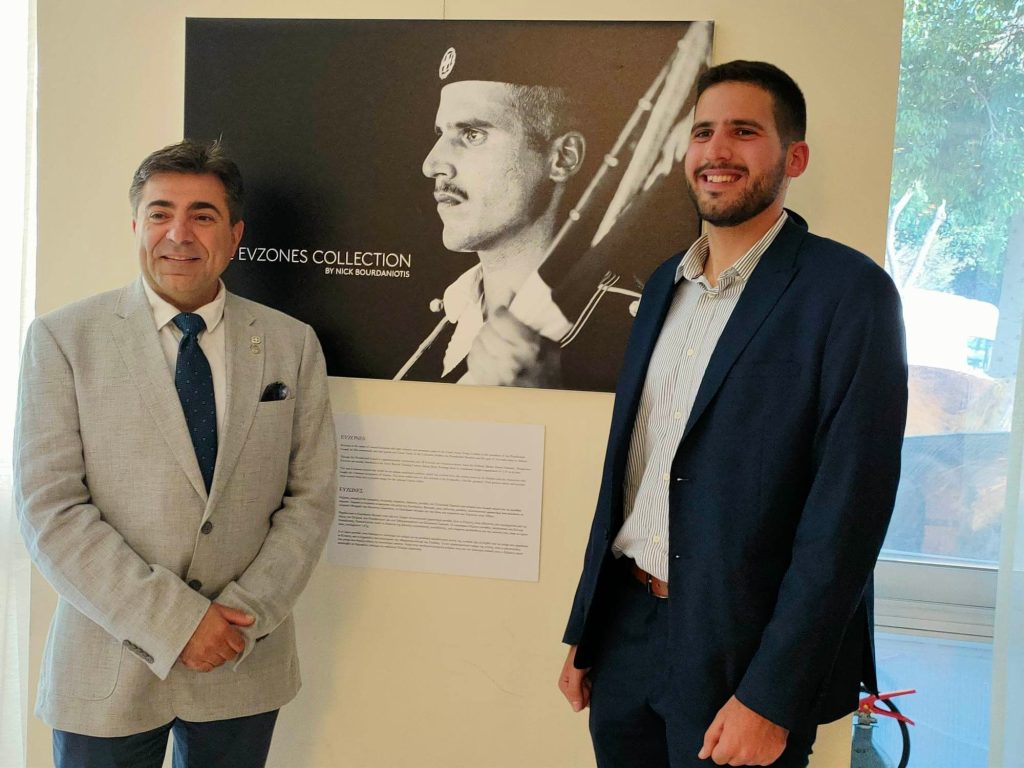
(L) Nick Bourdaniotis with one of the subjects of his photographs.

Bourdaniotis also spoke and admitted it was “a special moment” for him to present his photographs in Athens and thanked the supporters of his exhibition including the Greek President, the Greek Orthodox Archdiocese of Australia, the Kytherian Association of Australia, the Kalymnian Association of NSW, the Nicholas Anthony Aroney Trust, The Greek Orthodox Community and Church of Canberra and District Inc., and St Basil’s NSW/ACT.

“Nothing would have been possible without George [Karantonis, the director of the exhibition] and Erini [Alligiannis, curator of the Australian exhibition],” Bourdaniotis said.

The Evzones Exhibition.

The photographer also made special mention of the contribution of Nikos Roussos from the Athens War Museum for the curation of the exhibition in Athens.

Later, Bourdaniotis revealed to The Greek Herald that The Evzones Collection will soon be travelling to the Australian city of Brisbane in Queensland, while discussions are also underway for it to travel to the United States and the United Kingdom.

Significant contributors of the exhibition are Athens War Museum, Greek City Times, Image Smart and the Hellenic Club Sydney.

Hellenic Art Theatre brings plenty of laughs with ‘The Matchmaker and The Miser’

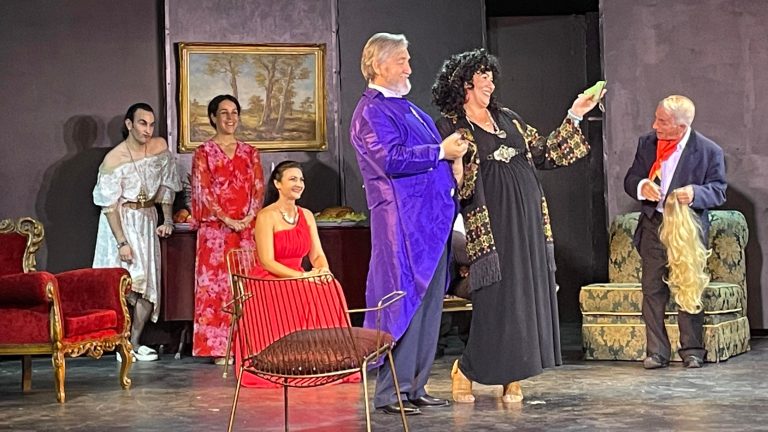
The Hellenic Art Theatre’s new comedy The Matchmaker & The Miser premiered to plenty of laughter at The Greek Theatre – Mantouridion in Marrickville, Sydney on Friday, March 24.

The comedy is directed by Stavros Economidis and performed in Greek with English surtitles. It is part of The Greek Festival of Sydney this year and will run until Sunday, April 9.

The Matchmaker and the Miser. All photos: The Greek Herald / Andriana Simos.

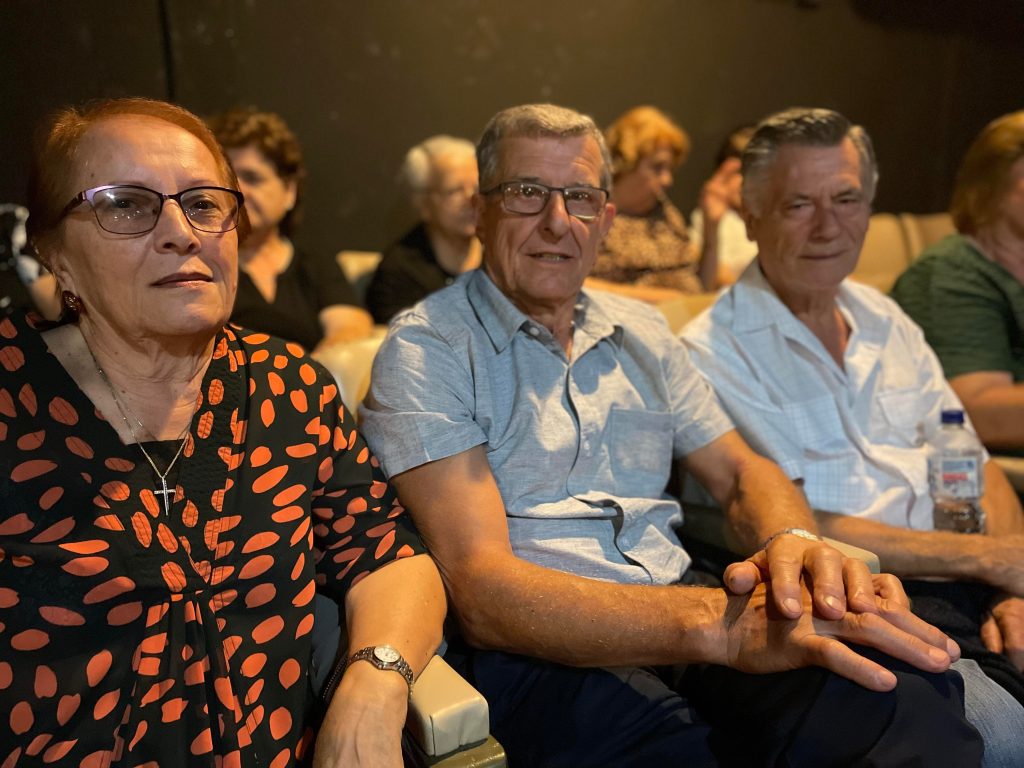
On opening night, the theatre was packed with local Greeks and a number of VIP guests including the President of the Greek Orthodox Community of New South Wales (GOCNSW), Harry Danalis; the Secretary of GOCNSW, Michael Tsilimos; and the Chair of the Greek Festival of Sydney, Nia Karteris, among many others.

People at the theatre.
VIP guests.
Everyone enjoyed the night.

These guests and excited theatre-lovers were glued to their seats and laugher echoed across the room as the main character Menios’ obsession with money impacted the lives of those around him including his two children, Elle and Petros.

Elle is passionately in love with the penniless Angelos but her father has arranged for her to marry a wealthy old man.

The cast of ‘The Matchmaker and the Miser.’

Meanwhile, Petros loves the young, impoverished Marianna but in a shock twist the audience doesn’t see coming, Menios has asked Matchmaker Efterpe to assist him as he intends on marrying Marianna himself.

Comedy was the order of the day.

With the help of Menios’ artful servant Koltsidas and Efterpe, Elle and Petros plot against their frugal father.

“I loved the plot twist,” one audience member told The Greek Herald on the night. “It’s a comedy not to be missed!”

People enjoying light refreshments during intermission.
People inside the theatre.

With such high praise from just its opening night, The Matchmaker & The Miser is expected to continue its success throughout March and April.

Performance details:

  • Cast: Stavros Economidis, Dennis Messaris, Dimitris Perdikis, Marion Anthi, Leonidas Ellinas, John Daviskas, Evelyn Tsavalas and Athanasia Costa.
  • 24 March – 9 April 2023
  • Fri & Sat @ 7.30pm | Sun @ 5pm
  • Greek Theatre – Mantouridion, Building 36, Addison Road Community Centre, 142 Addison Rd, Marrickville.
  • Tickets: www.hellenicarttheatre.com.au or call 0413 989 007.

*All photos copyright The Greek Herald / Andriana Simos.

‘The Embodiment of a Distant Homeland’: Book on history of the GCM launched

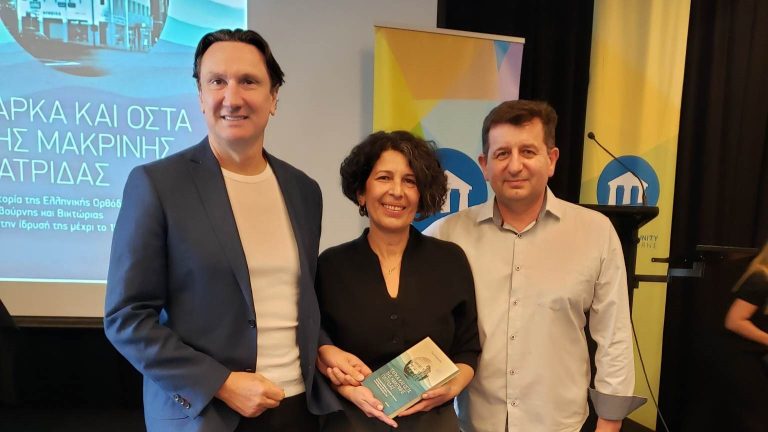
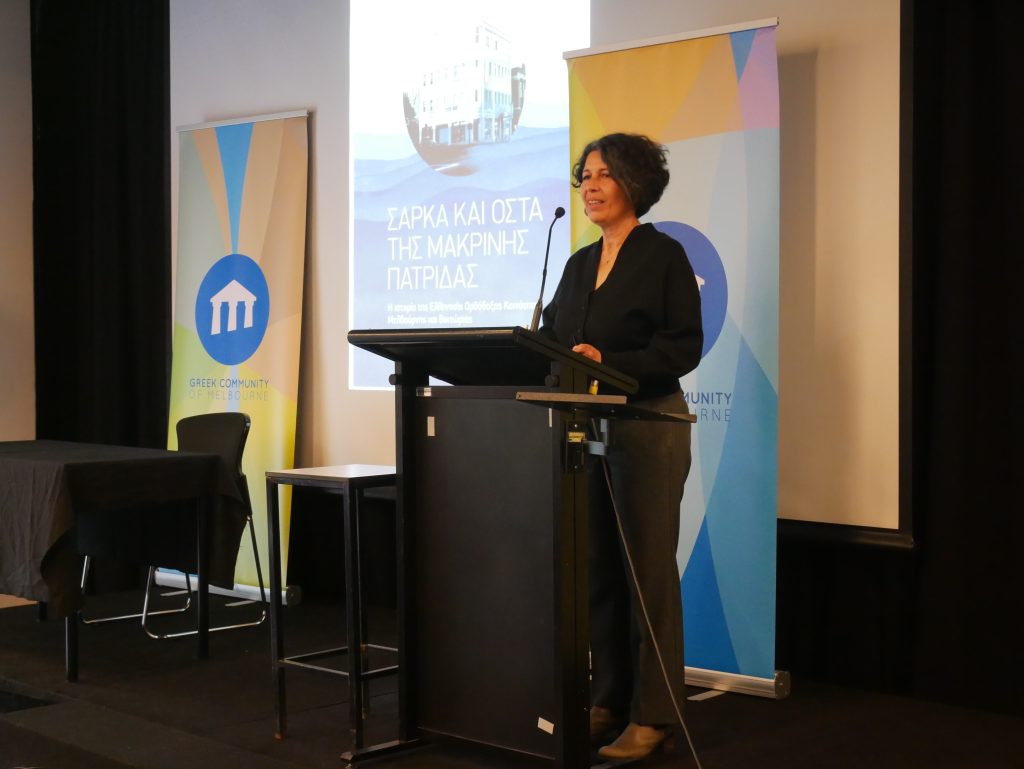
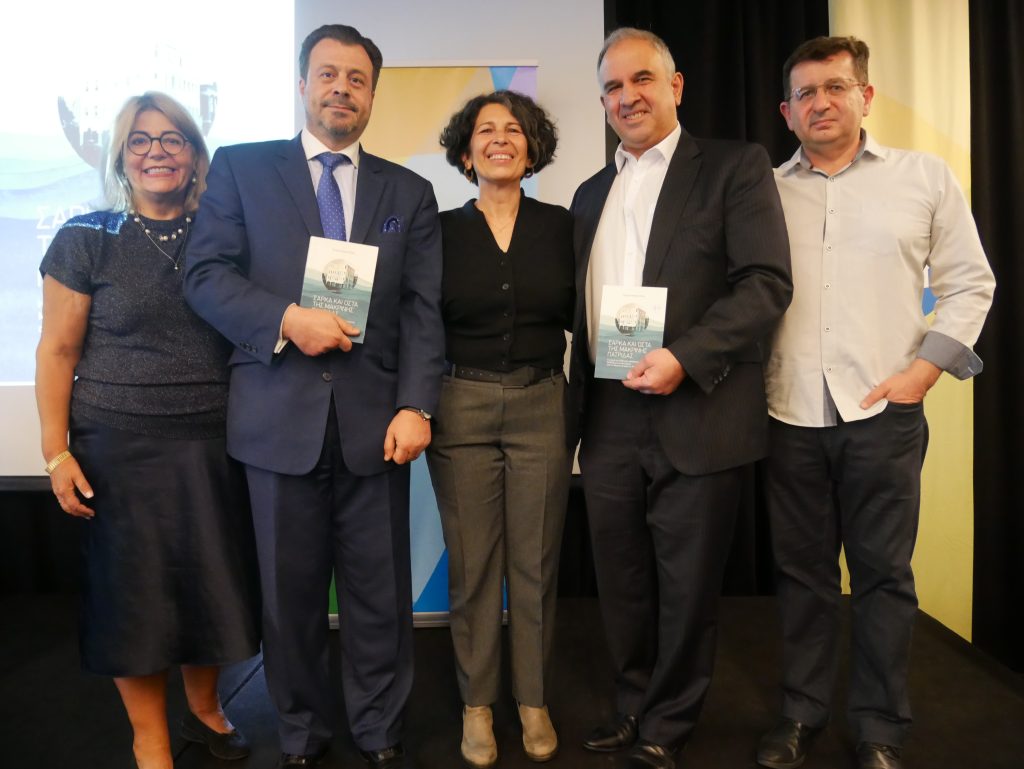
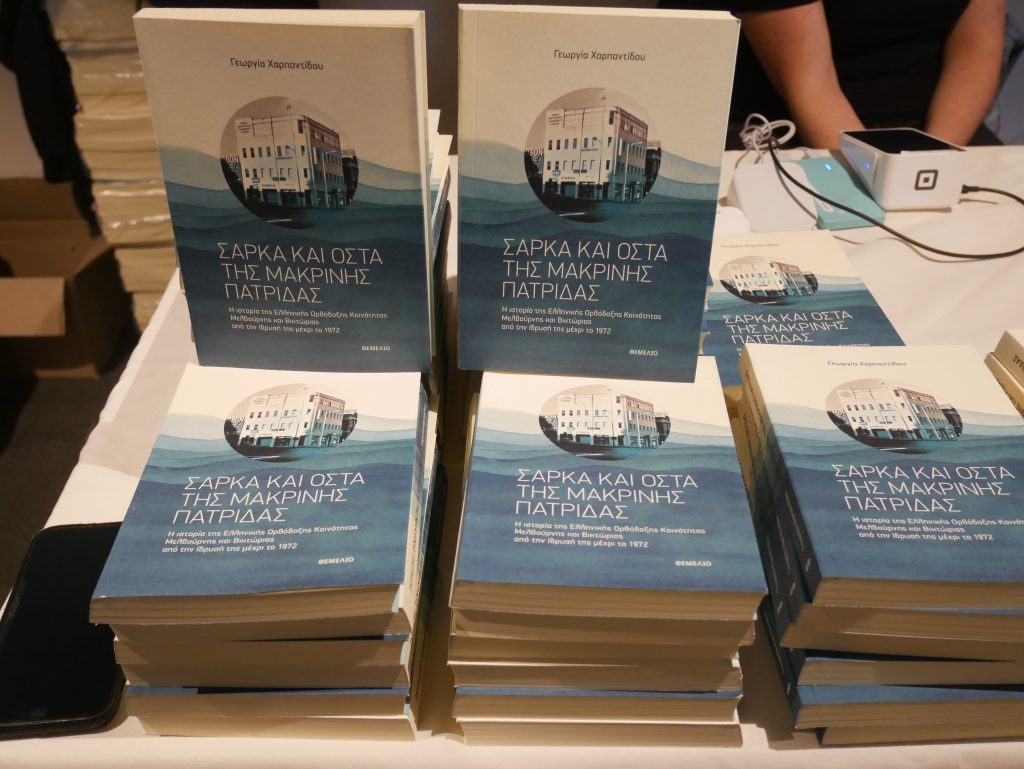
The book of Juliana (Georgia) Charpantidou, The Embodiment of a Distant Homeland, which sheds light on the history of the Greek Community of Melbourne (GCM) from its foundation to 1972, was launched on Sunday at the Greek Centre.

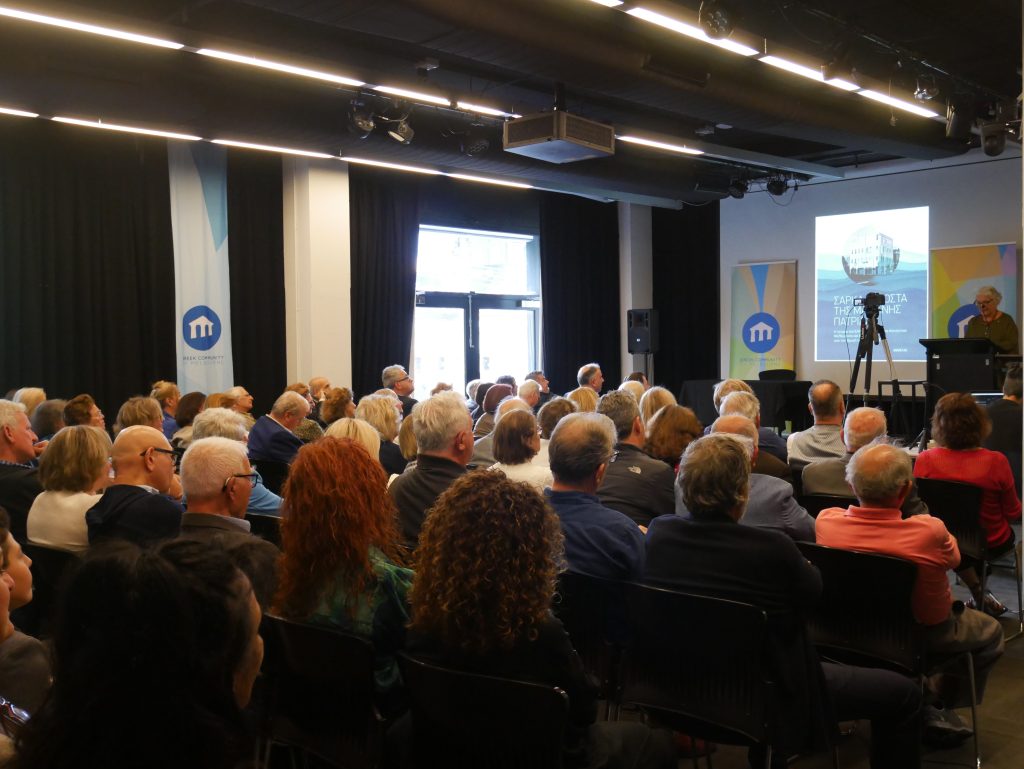
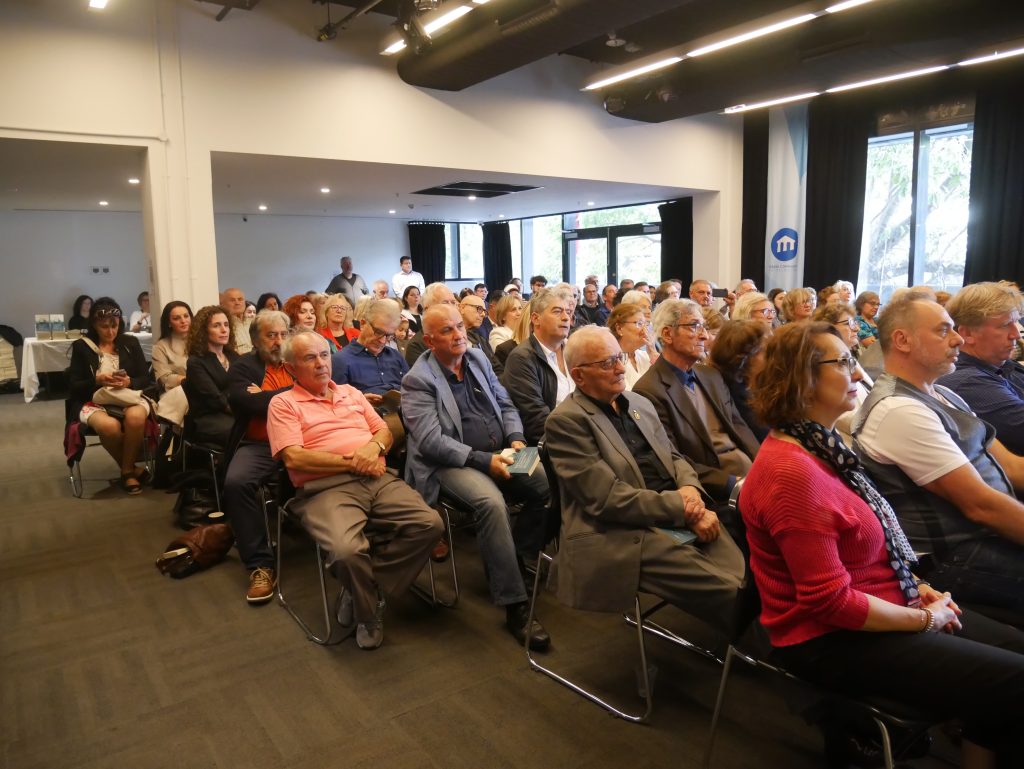
The room was full of attendees and many officials were present, as well as guests who shared their opinion about the book’s content and approach.

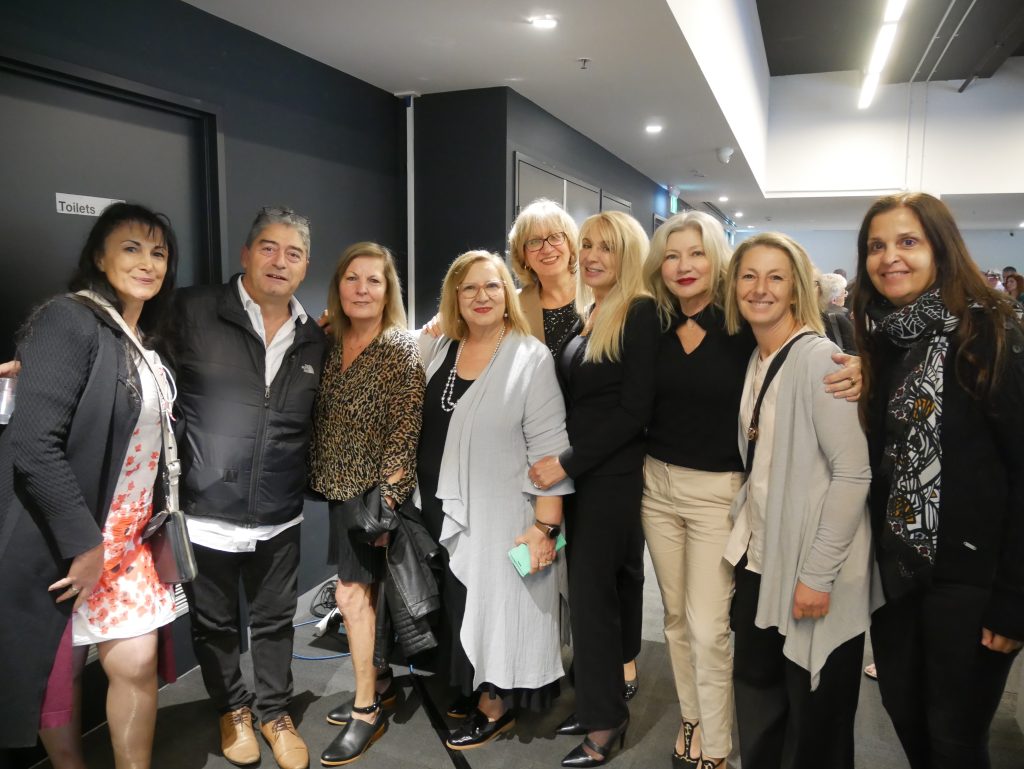
The room was full of attendees

The President of the GCM, Bill Papastergiadis, said: “We feel especially proud and justified by the result of our initiative which was accompanied by a long term and persistent effort to research and write down our past with an objective and thus, a more constructive way for our future.”

Many guests who shared their opinion about the book’s content and approach, were present.

“This book expresses in the clearest way the devotion of our community to one of the basic pillars of its aims: it’s contribution to the perseverance of our collective memory and the necessary reflection of our past.”

The Consul General of Greece in Melbourne, Emmanuel Kakavelakis, spoke to The Greek Herald at the event about the importance of the history of the GCM.

“It is something that the community really needed. It is an organisation which is alive and has reached a point that in order to be able to move forward it has to know where it comes from. And this gap is finally covered by this book,” he said.

Juliana Charpantidou

“Through its pages jumps the Hellenes’ quest of how to maintain in this place his coherence and his identity and how he has, in a big part, achieved that.”

Presentation attendees

The author, Ms Charpantidou, started her academic career in her 30s and graduated from the Department of Sociology of Panteion University of Athens before coming to Australia in 2013, after the outbreak of the economic crisis. Her research for the book was based on sources such as the GCM’s archives and mail, the State Archives of Australia, press archives of the past and the Dardalis Archives for the Greek Diaspora of La Trobe University.

Officials also attended the presentation

“I knew I would never be able, or it would be really hard, to do something research wise in Greece. I came to Australia because of some people I knew. I met with members of the Board here, we had some conversations with the president of the community and he offered me to write about its history,” Juliana told The Greek Herald.

Juliana Chartpantidou and friends

“The first plan was to do a book about all the history of the community. I was given two and a half years to do it. It was not possible and we were limited to the history until 1972, when I found the ideal end point of the research.”

‘The Embodiment of a Distant Homeland’

After explaining the demanding research and digitalisation of the handwritten sources of the past she added: “We have to put the Greek collective activity in a more generic frame to see it in the way it happens to other ethnicities. All migrants create unions and feel the need to create official or unofficial networks to be able to survive in their new homes.” 

For her, every union and organisation has its functions and its purpose.