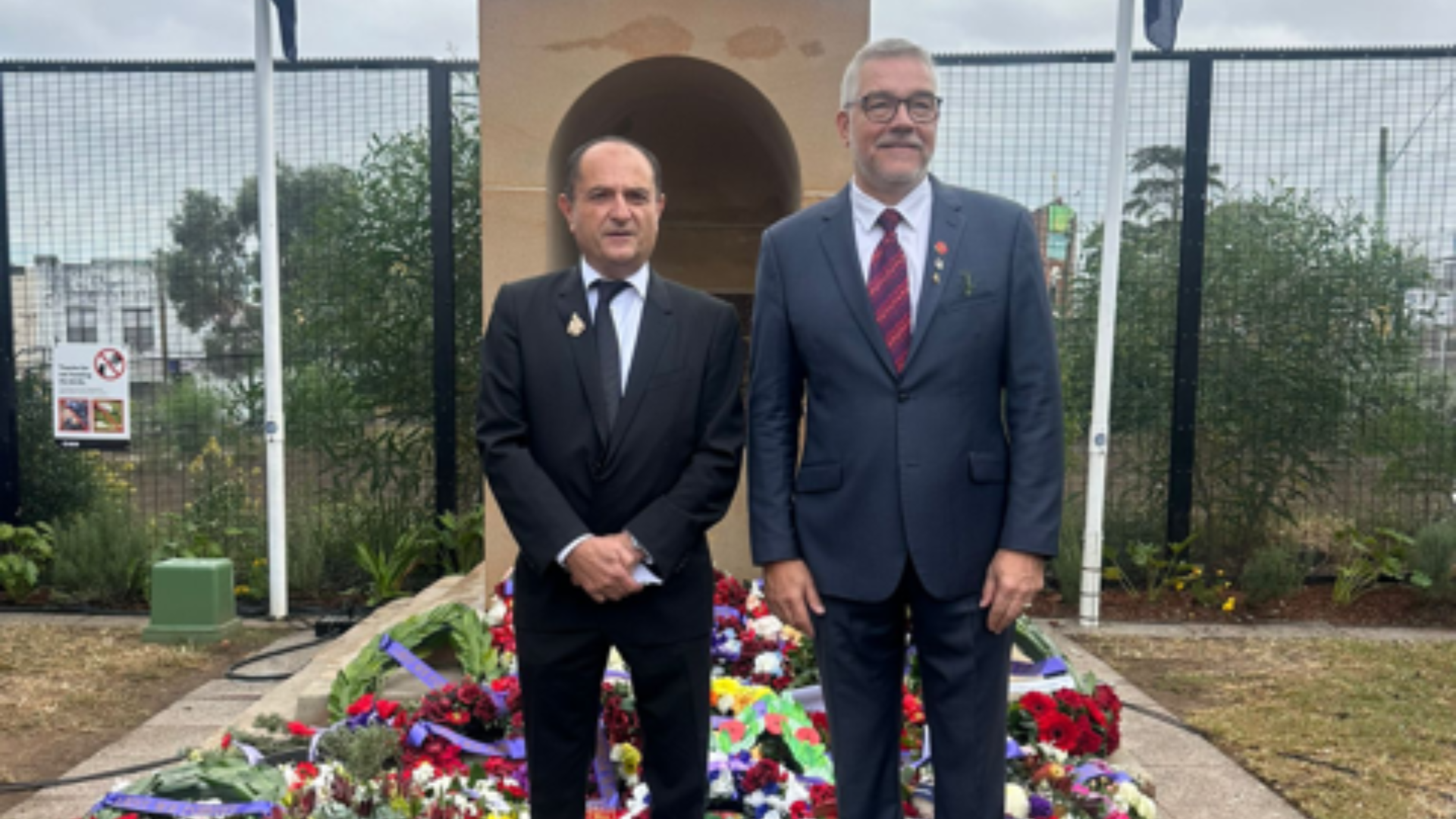
The 2026 ANZAC Day service at Lakemba brought together veterans, families, students, and civic leaders in a formal commemoration that highlighted both local and international wartime histories, including the contribution of Cyprus.
Hosted by the Lakemba sub-branch of the Returned Services League of Australia, the service reflected the area’s longstanding connection to military service. The district has historically contributed significant numbers of servicemen and women during both the World War I and World War II, many of whom served in theatres where contact with Cypriot forces and support units was established.
Proceedings began with a march of approximately 300 participants from Lakemba Club to the First World War memorial adjacent to Lakemba railway station. The assembly included representatives from local public and private schools, faith-based institutions, and community organisations. Among them were members of the Greek Orthodox community, including All Saints Greek Orthodox Parish and Community, Belmore, alongside students from a wide range of educational and cultural backgrounds.
Civic representation was also present, including local Member for Canterbury Sophie Cotsis, who delivered a reading of the poem “Lesvos,” reinforcing the longstanding historical links between Australia and Greece, and by extension Cyprus, which played a role in supporting Allied forces in the region.
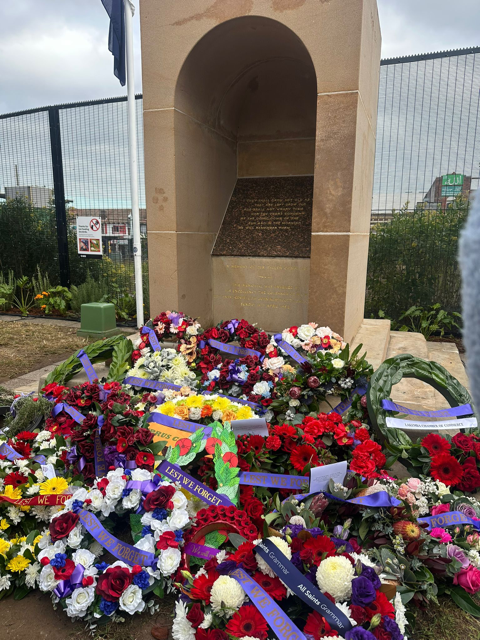
During the service, the Master of Ceremonies drew attention to Cyprus’ wartime contribution, highlighting the role of Cypriot servicemen and, in particular, those who served in the Cyprus Regiment. This acknowledgement placed Cyprus firmly within the broader ANZAC narrative, reinforcing the shared history between Australian forces and Cypriot units across multiple theatres of war.
Importantly, the MC also emphasised the strong local connection. The Lakemba Club hosts the Cyprus Community of NSW, where its offices are based, along with its kafenio, Greek language school, and dance school—each contributing to the cultural life of Lakemba. These institutions have become an established part of the local landscape, reflecting a community that has not only settled in the area, but has been recognised and embraced by its neighbours.
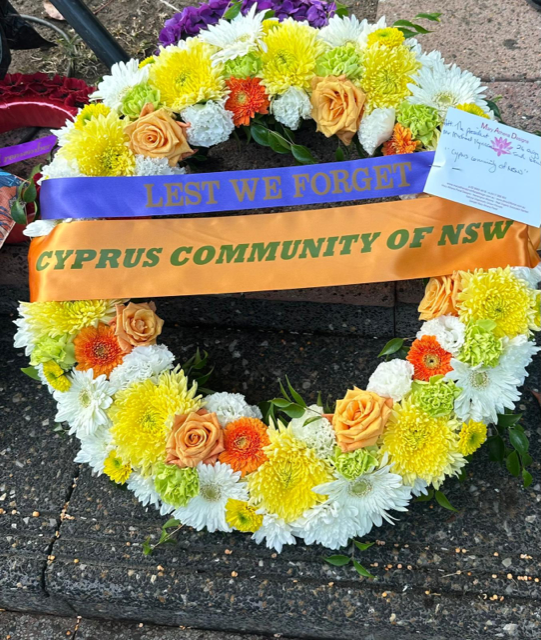
The Cyprus Community of NSW was represented by its President, Michael Kyriacou, also representing Cypriots for ANZACs. As part of the ceremony, a wreath was laid on behalf of the community, alongside a second wreath provided by the sub-branch recognising the contribution of Cypriots during the First World War. Particular reference was made to Cypriot logistics and engineering units that supported Allied operations, including those involving Australian forces in northern Greece.
The sub-branch wreath—composed of purple poppies with a distinct central arrangement of purple and black—served as a symbolic acknowledgement of Cyprus’ contribution to the ANZACs.
Following the ceremony, attendees engaged in discussion and sought to learn more about Cyprus’ role in both World Wars, including the establishment of the Cyprus Regiment in 1940. This prompted broader awareness among those present, many of whom were previously unfamiliar with the extent of Cypriot involvement across multiple theatres, including the Middle East, North Africa, and Europe.
For Greek Cypriots in particular, wartime service often extended beyond the Cyprus Regiment. Many volunteered to serve alongside Greek forces, driven by a strong sense of Hellenic identity and solidarity. Their participation in campaigns connected to the defence of Greece further reinforced the deep historical and cultural ties between Cyprus and the broader Hellenic world.
Following the service, engagement with local residents, dignitaries, and community leaders reinforced the importance of recognising Cyprus’ contribution—not only through wartime service, but also through the generations who later became part of Australia’s social and military fabric.
A notable feature of the gathering was the strong presence of younger participants, many of whom took part in the march and service with clear attentiveness to the significance of the occasion. Their involvement reflected a growing commitment to preserving and understanding the legacy of those who served.
The broader Greek community also participated, laying a wreath in honour of those who served and fell in both World Wars. Within this setting, the recognition of Cyprus—and particularly the Cyprus Regiment—formed a distinct point of engagement and awareness among attendees.
The Lakemba ANZAC Day service continues to provide an important local platform where Cyprus’ wartime contribution is acknowledged within Australia’s ANZAC commemorative tradition.
Lest we forget.
