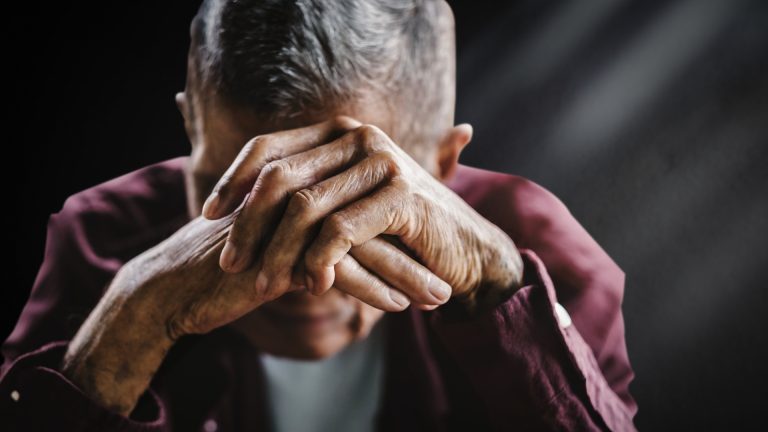
Today, June 15, is World Elder Abuse Awareness Day. The annual day highlights the rights of older people, whilst raising awareness to prevent their mistreatment and abuse.
The World Health Organisation defines elder abuse to include more than just physical harm or assault. It can include single or repeated acts, as well as a failure to take appropriate action. Categories of harm include physical, psychological, emotional, sexual or financial and encompass both intentional or unintentional harm/neglect.
According to a resource by the Department of Health, 600,000 or 14.8% of older Australians experience elder abuse per year.
Reporting of instances of elder abuse is also on the rise.
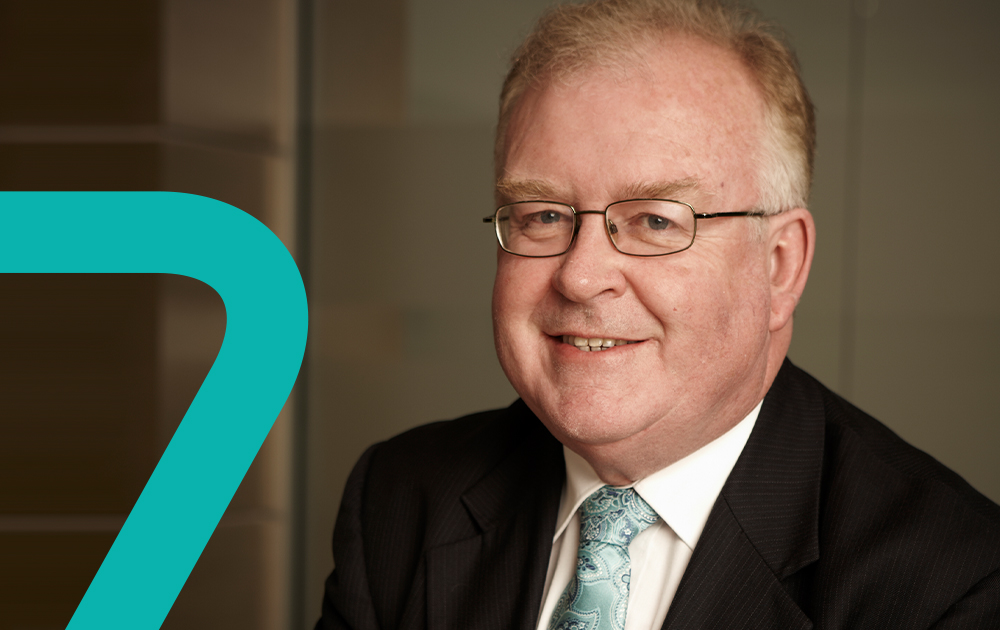
The NSW Ageing and Disability Commissioner, Robert Fitzgerald, told Australian Ageing Agenda there are number of reasons for the rise in the reporting of elder abuse.
Robert Fitzgerald.
“Firstly, it’s absolutely an increased awareness in the community that abuse can happen,” Mr Fitzgerald said and stressed there’s more awareness around financial abuse.
“Financial institutions, banks, superannuation funds and so on, are more aware of it and there’s a greater concern in the community about it.”
This increased knowledge in the rights of older people, coupled with more support, is one solution to tackling elder abuse, Mr Fitzgerald said.
“We’ve got to make sure that we’ve got places to go where people who are concerned can raise those issues… support groups that deal with older people absolutely become familiar with the risk factors or signs that abuse is occurring,” he said.
If you or someone you know is experiencing elder abuse call the Ageing and Disability Abuse Helpline – 1800 628 221 (Monday to Friday, 9.00am-5.00pm) – for information, support or to make a report.
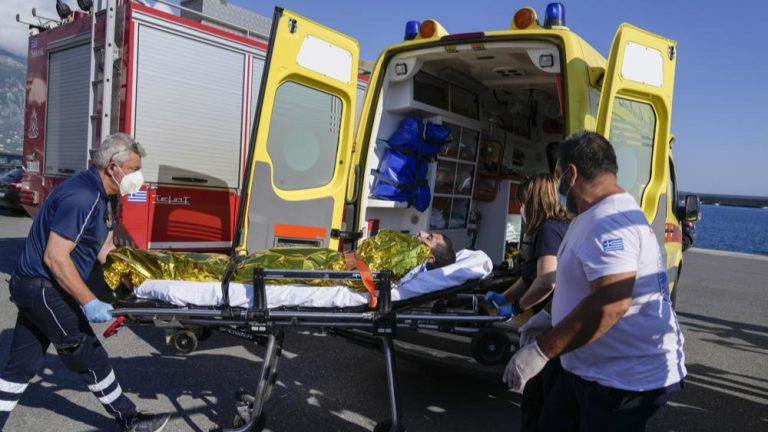
At least 79 migrants have drowned and hundreds more were missing and feared dead after their overcrowded boat capsized and sank in open seas off Greece,AP News has reported.
The incident is one of Europe’s deadliest shipping disasters in recent years.
It was unclear how many passengers were missing but an aerial photograph of the battered blue vessel released by the Greek coast guard showed scores of people covering practically every inch of deck.
This undated handout image provided by Greece’s coast guard on Wednesday, June14, 2023, shows scores of people on a battered fishing boat that later capsized and sank off southern Greece. Photo: Hellenic Coast Guard via AP.
A painstaking search-and-rescue operation for survivors continued overnight with the coast guard, navy and merchant vessels and aircraft in place.
Coast guard spokesman Nikos Alexiou told state ERT TV that the 25- to 30-metre vessel capsized after people abruptly moved to one side.
A coast guard statement added that efforts by its own ships and merchant vessels to assist the boat were repeatedly rebuffed, with people on board insisting they wanted to continue to Italy. Coast guard officials said the trawler’s engines broke down around 1.40 am on Wednesday and just under an hour later, the ship started to list abruptly from side to side before capsizing.
The ship sank 10 to 15 minutes later, the statement said.
So far, 104 people have been rescued. Survivors have been taken to the Greek port of Kalamata near Pylos.
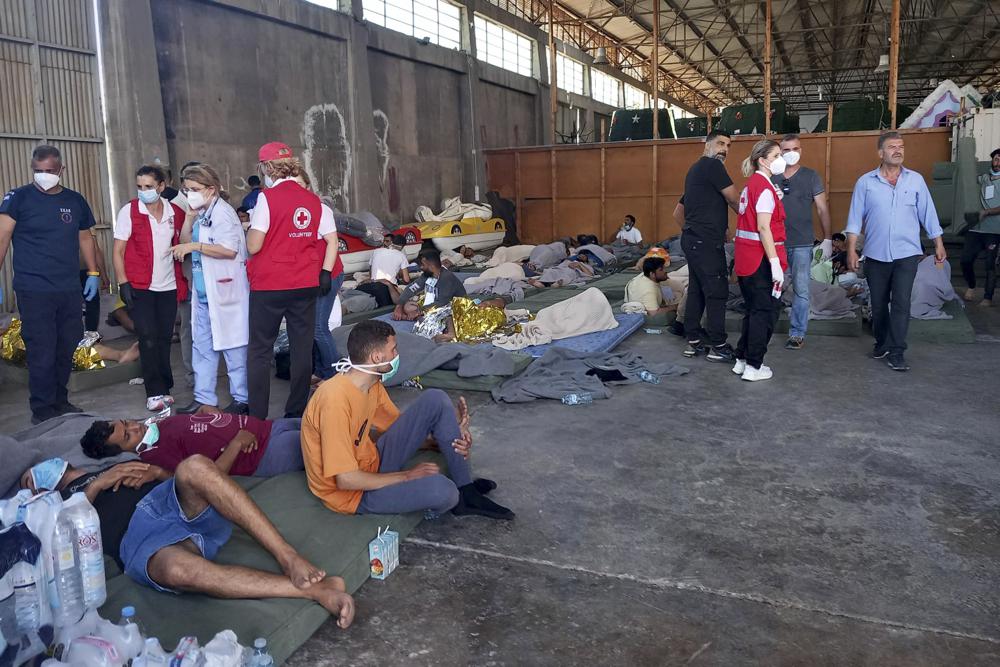
Survivors of a shipwreck rest at a warehouse at the port in Kalamata town, about 240 kilometres southwest of Athens, Wednesday, June 14, 2023. Photo: www.argolikeseidhseis.gr via AP.
At the port of Kalamata, around 70 exhausted survivors bedded down in sleeping bags and blankets provided by rescuers in a large warehouse, while paramedics set up tents outside for anyone who needed first aid.
Greece’s caretaker prime minister, Ioannis Sarmas, has declared three days of national mourning, “with our thoughts on all the victims of the ruthless smugglers who exploit human unhappiness.”
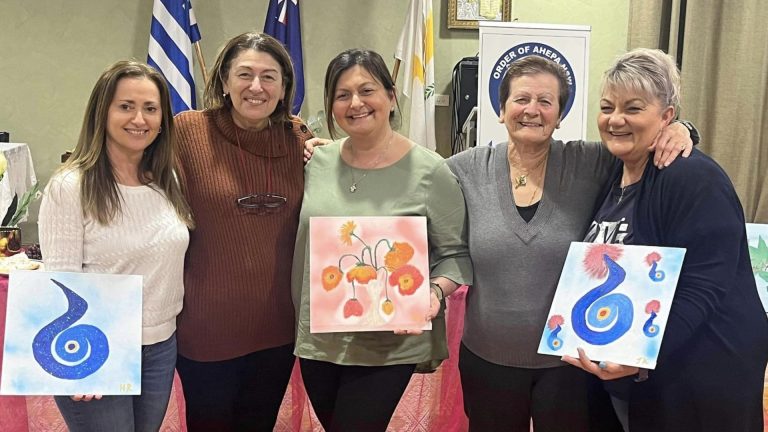
Chapter Chiron of AHEPA NSW INC hosted a wonderful afternoon of art and fun on Sunday, June 11, with guests creating their own ‘masterpieces’ on canvas or ceramic plates while enjoying a sumptuous afternoon tea.
An initiative of Chapter Chiron, the event was a celebration of family and friendship as grandparents painted alongside grandchildren, parents together with sons and daughters, amidst laughter and conversation.
Artist Angela Kiki led the painting and guided the budding artists in their endeavours.
Chapter Chiron members, led by Melpo Kaimasidis, Sonya Kaimasidis, Antigoni Hatzipanagiotou and more, organised the feast of homemade cakes and refreshments. The tables were groaning under the weight of the food on offer.
By every criterion, the art and fun afternoon was a great success. This is reflected by the duration of the event (about five hours from beginning to end) and the demand for another such afternoon.
*SAVE THE DATE: The next art and fun afternoon is scheduled for Sunday, November 26, once the travellers to the northern summer return to Sydney. Further details later.
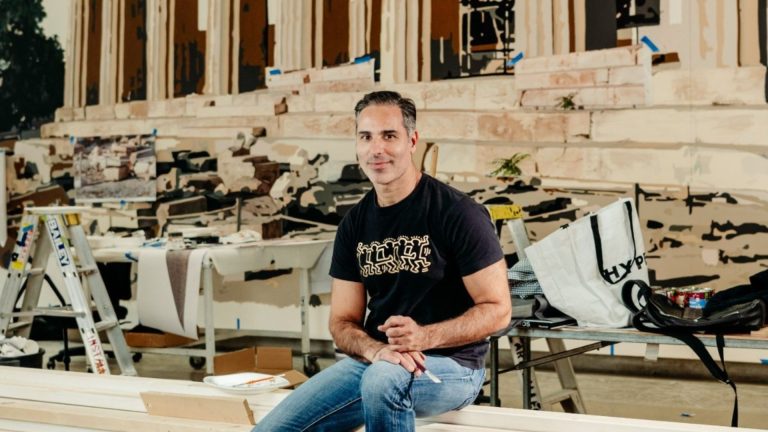
This month, Michael Zavros’ career is the focus of an exhibition at the Queensland Art Gallery of Modern Art (QAGOMA) on Stanley Place in South Brisbane.
While Zavros has had many solo exhibitions in Australia and abroad, the one opening next Saturday, June 24 is a special one for him and for the Greek community too.
According to The Courier Mail, the exhibition, titled The Favourite, features paintings, sculptures and photographs by Zavros, as well as two new installations.
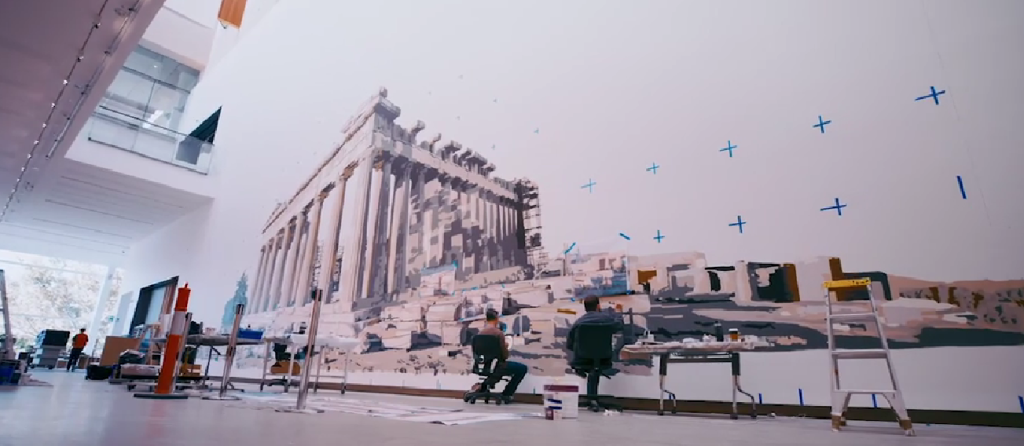
The first of these is The Acropolis – a hyper-realistic mural that shows the heights of Greek civilisation and harks back to Zavros’ Greek-Cypriot roots. This mural, completed with the help of assistants, covers the entry wall of QAGOMA’s Turbine Hall and gives visitors an Instagram-worthy photo opportunity.
Screenshot: news QAGOMAScreenshot: news QAGOMA
Another work is Drowned Mercedes (2023), a luxury car filled with water, fabricated by others to his specifications.
Elsewhere, in V12/Narcissus (2009), Zavros looks into the bonnet of a blue Mercedes, unable to take his eyes from his own reflection. There are of course similarities to Greek mythologies’ Narcissus.
Luxury and wealth are obvious in his work, a characteristic that sometimes leads to him being criticised.
“[The exhibition] exists as this incredibly beautiful folly – like so much of what I paint and what will be in the show. It is a folly, a ruin and, I would say, made so much more beautiful in this ruined state,” Zavros commented to The Courier Mail on his exhibition.
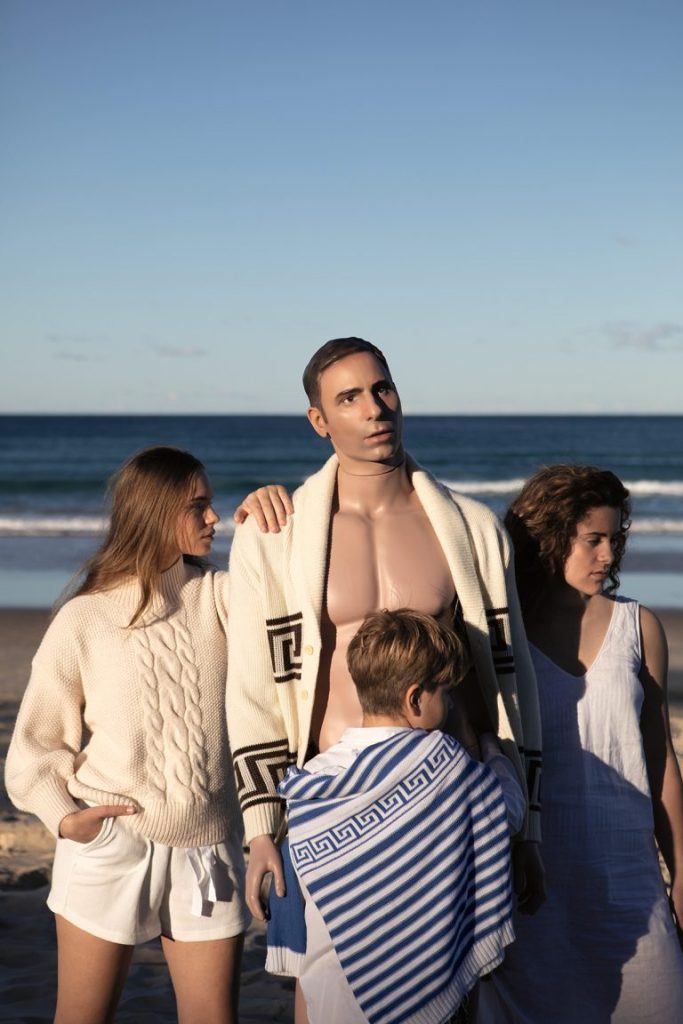
Zavros said the exhibition has been the biggest shift in his artistic practice in recent years.
Screenshot: news QAGOMA.
“I first put down the brushes to start making bronze sculptures and that worked… you have these successes and demonstrate that you’re not just a painter,” he said.
“It’s a growing, incremental confidence about working in a very different way.”
Zavros, whose Instagram has more than 86,000 followers, graduated from the Queensland College of Art in 1996 and has had a successful career as an artist since his early years. His collectors and representative galleries are among the most influential in Australia and New Zealand.
His Greek Cypriot heritage and mythology play an important role his work and the upcoming exhibition is about to showcase that once again.
‘Michael Zavros: The Favourite’ opens at GOMA next Sat 24 Jun: https://fal.cn/3z0mx
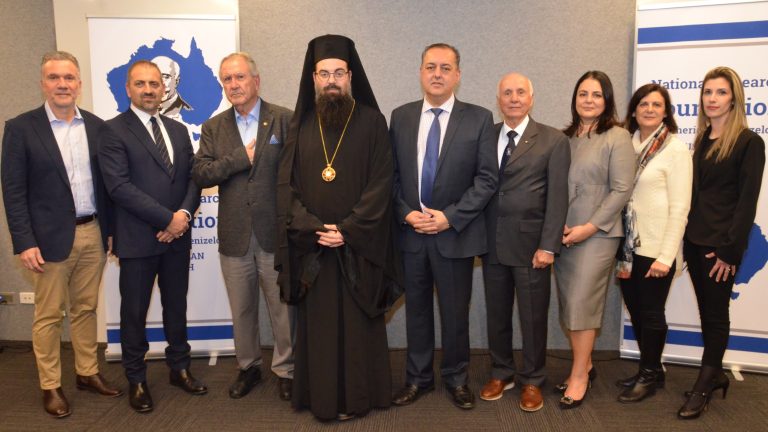
With the full support of the Ministry of Foreign Affairs of Greece and the Greek Orthodox Archdiocese of Australia, a Chapter of the National Research Foundation ‘Eleftherios K. Venizelos’ was established in Melbourne.
It was the wish and goal of the National Foundation and its General Director, historian, writer and jurist, Nikolaos Papadakis-Papadis to operate in Australasia in general and in Oceania with its base in Melbourne – a chapter of it to preserve and promote the historical memory, but also the contribution of Ethnarch Eleftherios Venizelos.
Over 100 leaders of Hellenism, representatives of associations, communities, fraternities, academics, researchers, writers, and intellectuals gathered at the Lyceum Hall, Alphington Grammar, 18 Old Heidelberg Road, Alphington, last week.
The event was honoured from Greece with audiovisual messages by the Secretary General of Hellenes Abroad, Professor John Chrysoulakis on behalf of the Greek Government and the Ministry of Foreign Affairs of Greece and the Director General of the National Hellenic Research Foundation, Mr Papadakis.
On behalf of Archbishop Makarios of Australia, the esteemed assembly was welcomed by Bishop Evmenios of Kerasountos and the Consul General of Greece in the Northern Territory, John Anictomatis AO, while the Consul of Greece in New Zealand, Mr Neonakis, was also involved as member of the inaugural Board. Present at the Founding Assembly were, apart from Mr Anictomatis, the President of the Cretan Association of Sydney & New South Wales, Emmanuel Vitetzakis, from Sydney.
The establishment of the Melbourne-based branch of the National Research Foundation ‘Eleftherios K. Venizelos’ in Oceania is supported by the Ministry of Foreign Affairs of Greece, the Greek Orthodox Archdiocese of Australia, the Cretan Federation of Australia and New Zealand, the Greek Community of Melbourne and Victoria, the Hellenic Community of Western Australia, the Australian Institute of Macedonian Studies, the Australian Institute for Hellenic Research, the Greek-Australian Chamber of Commerce and Industry, the Cretan Association of Melbourne, the Australian Federation of Pontian Associations, the Cretan Association of New South Wales and the Pancretan Association of Melbourne.
This enthusiastic and impressive founding assembly which took place on Thursday, June 8, and which was distinguished for its impeccable organisation and professionalism of all those who had a role in the event, was opened by the ceremonial master and educator Natasa Spanos who, after honouring the First Residents and the fathers of Greek settlement in Australia, invited the Director of Alphington Grammar, Dr Vivian Nikou, to welcome the founding members of the Chapter.
Dr Nikou welcomed in Greek language and stressed that her school supports all the struggles of the Hellenic Diaspora for the preservation of the ethno-linguistic identity of Hellenism and welcomed the establishment of this new Panhellenic cultural action body. Dr Nikou then invited the attendees to recite, with the help of an orchestra, the National Anthems of Australia and Greece.
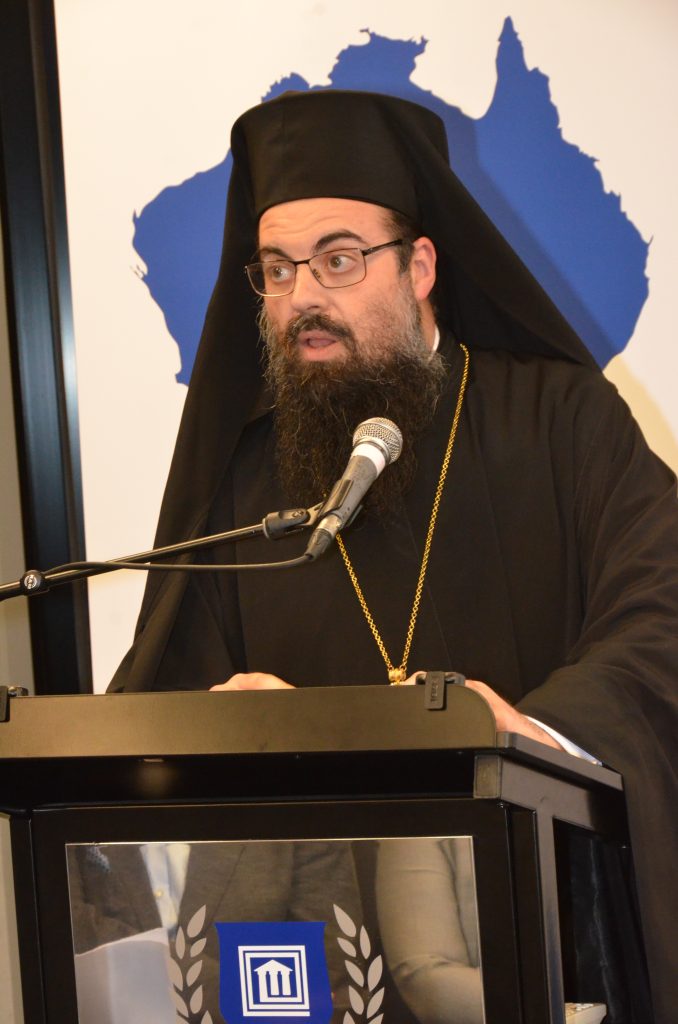
Ms Spanos then invited to the podium Bishop Evmenios who, as representative of Archbishop Makarios, stressed the seriousness of this new cultural venture, its importance as a spiritual bridge between Hellenism in metropolitan Greece and the Greek Diaspora, referred to the importance of the Chapter to highlight historical memory and promote knowledge of Greek, emphatically stressing that “without learning and using the Greek language, even Orthodoxy cannot be maintained.”
Bishop Evmenios.
Bishop Evmenios called on the Greek Diaspora to be vigilant of the constant struggles for the preservation of our linguistic and religious identity and thanked all those who took the initiative to transplant the activities of the National Hellenic Research Foundation from Chania to Melbourne. For the record, Bishop Evmenios was the first to sign the Declaration of the Founding Assembly as a member of the Oceania Chapter.
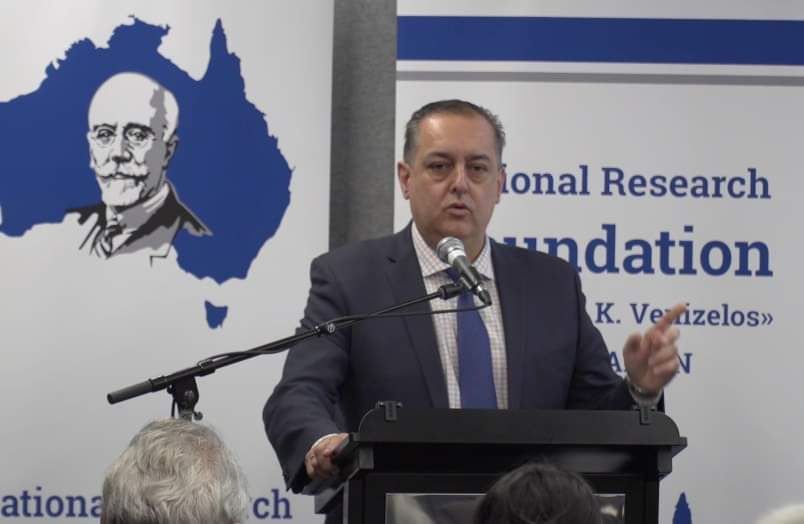
The Consul General of Greece in Northern Australia Mr Anictomatis spoke next and thanked the organisers for the honour they gave him to include him in the founding members of the Chapter, referred to the importance of the Chapter in the wider promotion of Greece and Hellenism in Oceania and Australasia and called on Hellenism to support this cultural action.
“I am recruited to ally myself in this effort and I am committed without restrictions, ideological and personal rigidities to offer wherever and as much as I can,” Mr Anictomatis said.
Mr Anictomatis.
Then, the address of the Secretary General of Hellenes Abroad, Professor John Chrysoulakis, was projected on the screen, who greeted the attendees, referred to the importance for Greece and its national history of the establishment of a branch of the National Foundation “Eleftherios K. Venizelos” and stressed the research and academic work undertaken by these individuals who were called to serve on its Board of Directors.
“The Chapter will be particularly concerned with research and the study of issues concerning Venizelos and his Era, as they appear in Australian bibliography, in the archives of Australia and Britain, in the Greek-language newspapers of the time circulating in Sydney, Brisbane and Melbourne,” Chrysoulakis said.
“It will place particular emphasis on issues of wider and better awareness and will raise awareness among second and third generation Australian-Greeks, history students, Greek language teachers, students, and all those who wish to learn about the history of modern Greece.
“The Chapter will be a documentation and data and information search centre, as well as a reference centre on issues related to Venizelos and his Era. It will be able to convene conferences, invite international personalities, organise student competitions, publish, cultivate Greek-language literature, and encourage research and studies.”
This was followed by the greeting of the Director General of the National Research Foundation “Eleftherios K. Venizelos”, Mr Papadakis-Papadis from Chania.
“I am speaking to you from the Office of Eleftherios Venizelos,” the eminent writer and historian appeared on the screen greeting the members of the Founding Assembly.
Mr Papadakis initially proceeded to the history of the establishment of the National Foundation in 2000, in order to preserve historical memory and to teach the work and contribution of Ethnarch Venizelos, referred to the buildings and their contents in Chania that constitute a reference point in the history of Crete, to the man who seven times ruled Greece, stressed the research and academic activities of the National Foundation in Greece, referred to its branches in Athens and Thessaloniki, Serbia and the USA and stressed the importance of establishing and operating a branch in Oceania based in Melbourne, “the largest Greek-speaking city outside Greece.”
“The establishment of the Eleftherios Venizelos Chapter aims to strengthen Australian-Greek relations, to be a bridge of communication with Greek Hellenism, and to place particular emphasis on the study, study and dissemination of those values of freedom, democracy and inter-allied friendship that characterised the ethnarchical policy and vision of Eleftherios Venizelos,” Mr Papadakis said.
“The operation of the Branch will also aim to inform and create relations of friendship with our Australian fellow citizens, not only with Crete and the national vision of the most far-sighted and communicative Greek politician and nobleman of the 20th century, but also to become a shield of modern Greece in the current challenges.”
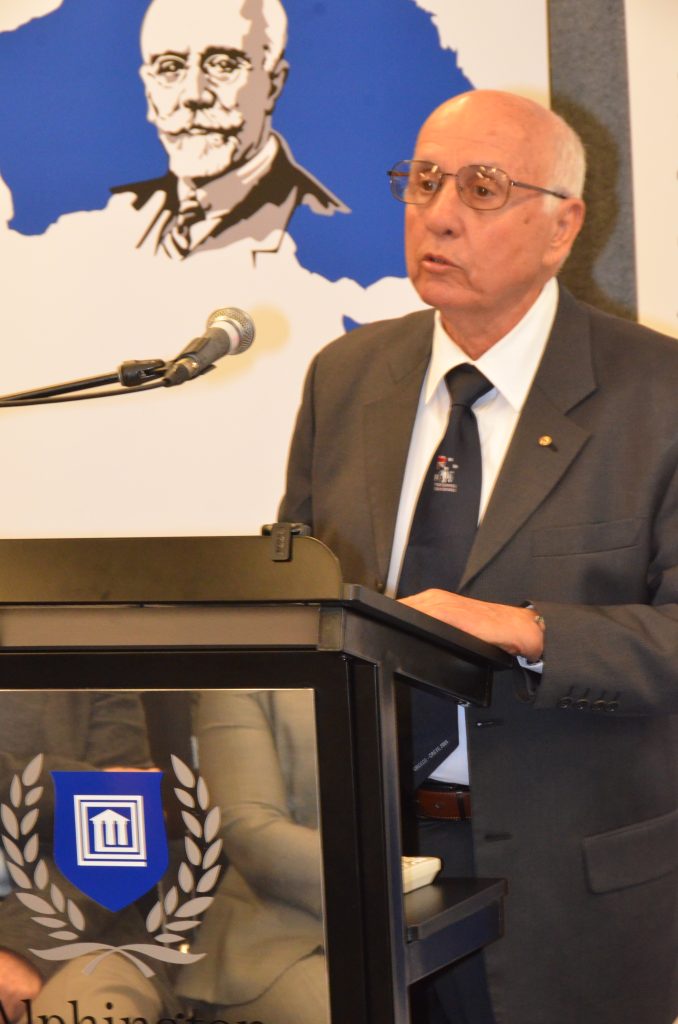
The President of the Cretan Federation of Australia and New Zealand, Tony Tsourdalakis, then took the floor and said: “The fundamental objective of the Branch is to cooperate closely with the National Foundation “Eleftherios Venizelos” in Greece, based on its existing Statute of Operation and to undertake programs and actions to be implemented, always in close cooperation with the officers of the National Foundation in Chania.”
Mr Tsourdalakis.
“The National Research Foundation “Eleftherios K. Venizelos” was established on March 26, 2000, and is based in the historic house of Eleftherios Venizelos in Halepa, Chania. The idea came from the Metropolitan of Kissamos and Selinos Irenaeus Galanakis. Through an effort of the society of Chania and Crete in general, which lasted many years, the vision to create a foundation in honour of the greatest Greek politician of the twentieth century became a reality,” Mr Tsourdalakis added.
“The main purpose of the National Foundation for Research and Studies “Eleftherios K. Venizelos” is to operate at national level, as a dynamic European research and educational centre and to be a central institution coordinating research and study of the work, era and life of the great politician and modern history of Greece without ideological commitments and rigidities.
“The Oceania Branch, the first branch of this level to be established in the third continent… will raise awareness among second and third generation Australian-Greeks, history students, Greek language teachers, students, and all those who wish to learn about the history of modern Greece.
“Through the Foundation’s Branch, we aim to promote on a Pan-Australian level the national vision of the most far-sighted and communicative Greek politician and nobleman of the 20th century, but also to strengthen relations between Greece and Australia so that this bond becomes a shield of modern Greece in the face of current challenges.”
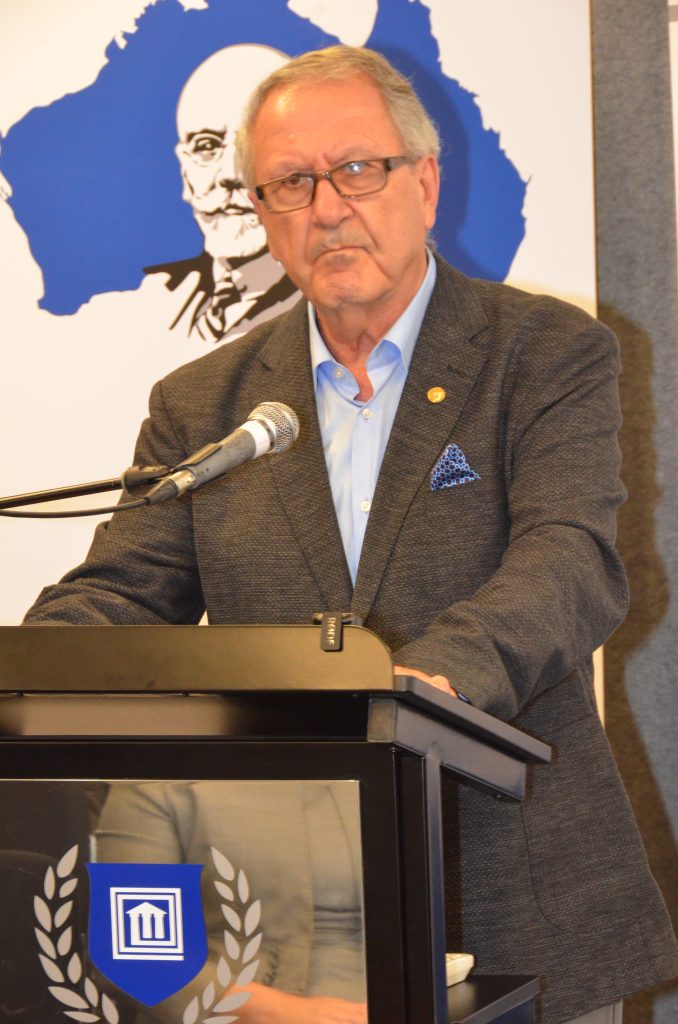
The last speaker was Professor and President of the Australian Institute of Macedonian Studies, Dr Anastasios M. Tamis, who praised the contribution of Eleftherios Venizelos during the most turbulent period of Hellenism since the establishment of the modern Greek State, referred to the narcissism and indispensability of the Greek and his self-destructive rage, and invited the attendees to evaluate the difficult phases of Greek history, and especially the paradox of civil dissension with tolerance and leniency.
Mr Tamis.
“We are unique in the world in the number of civil wars we fought from the 11th century BC to 1949 AD, but we are also unique in having a history of survival in the Diaspora from the 8th century BC to the present day,” Dr Tamis said.
“Eleftherios Venizelos was an ideology and a movement, a model of a sensitised Greek patriot, a pioneer of Greece in its irredentist struggles, a model of political science and an example to be imitated. History, which calmly evaluates and classifies, has placed him in the rank of Ethnarchos, the historical figure who is above political ideology, political factions, and party events. Venizelos belongs to all Greeks, of all factions and times, of all ideologies like Aristotle, like Kolokotronis, like Konstantinos Karamanlis.”
Pan-Australian Working Group:
The first Board of Directors approved by the National Foundation in Chania includes:
Tony Tsourdalakis, as President of the Cretan Federation of Australia & New Zealand
Christina Kotsifaki – Sarris as Director of the Company Pelagos.
Aristea Konstantopoulou, as Academic & Accountant.
Dr. Anastasios Tamis as Director of the Australian Institute of Hellenic Studies and President of the Australian Institute of Macedonian Studies.
Dimitris Papadimitriou, Secretary of the Cretan Association of Melbourne.
Dorothea Sarrisstavrou – Di Batista as Civil Engineer.
Kostas Paterakis, as a Community producer of media programs.
Polychronis Koutsakis from Western Australia, as Author and Professor at Murdoch University.
Ioannis Anopentomatis from the Northern Territory as Consul General of Greece in Darwin.
Dr Vrasidas Karalis from New South Wales as Head of Modern Greek at the University of Sydney.
Emmanuel Vitetzakis as President of the Cretan Association of New South Wales.
George Neonakis, as Honorary Consul of Greece in Wellington, New Zealand.
Argyro Michelaki as President of the Pancretan Association of Melbourne.
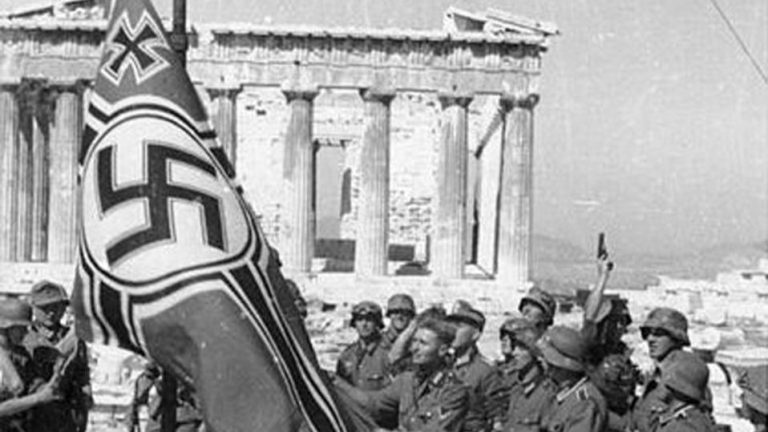
Poland wants to expand a campaign to receive massive World War II reparations from Germany, turning to Greece and other European countries as potential allies.
According to Ekathimerini, deputy Polish Foreign Minister Arkadiusz Mularczyk said on Tuesday his government in Warsaw would collaborate with other countries that suffered under Nazi occupation.
“Countries, individually, have failed to find justice for the victims… Therefore, we must work together to seek justice,” Mularczyk told a conference on reparations, held in Athens and co-organised by the Polish Foreign Ministry.
✅I hope that today, we have taken major steps forward in how to approach #postconflictjustice & that we have reinforced the need to discuss a victim’s possibility, a victim who was harmed by an illegal war, to get access to legal redress. pic.twitter.com/VF6RAHsZRy
— Arkadiusz Mularczyk (@arekmularczyk) June 13, 2023
The conference was attended by the mayors and representatives of Greek towns where Nazi occupiers carried out civilian massacres.
Law professor and Greece’s former President Prokopis Pavlopoulos said while Germany’s post-war division has been used as a reason to limit compensation, the reparation claims can still not be ignored.
“Of course, Germany has apologised for its actions, acting with integrity,” Pavlopoulos said.
“German officials always attend events commemorating [World War II Nazi atrocities]. That is commendable but it does not negate the claims for compensation. Those claims exist.”
Greece’s claims were formally renewed in 2019 under a previous left-wing government.
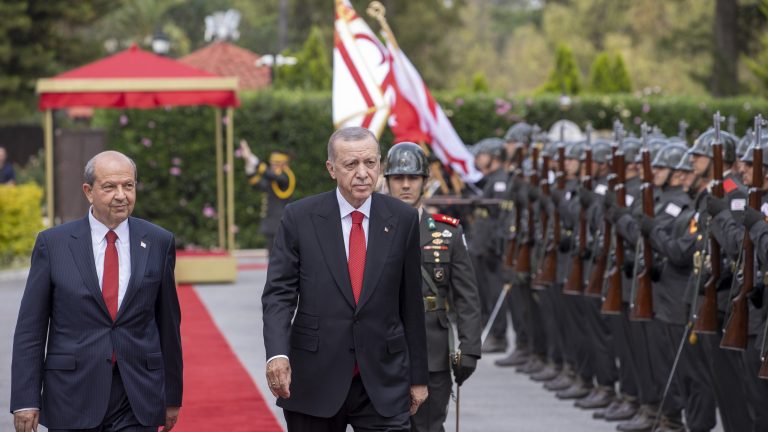
Turkey’s President Recep Tayyip Erdogan visited Turkish-occupied northern Cyprus on Monday and warned “if there are those who want to prevent peace, then we will be forced to implement a different plan.”
According to ekathimerini.com, Erdogan gave this statement during a joint press conference with the Turkish-Cypriot leader Ersin Tatar.
In his comments, Erdogan referred to Greece without naming it and said “those who engage in meaningless armament activities, which are against the balance on the island and in the region, should carefully consider the dangers that these activities will bring.”
“The peace and security of the people on the island means our peace and security,” Erdogan added.
“Over half a century [in Cyprus] has been lost due to the uncompromising and maximalist approaches of the Greek-Cypriot side. No one can afford to lose another 50 years.
“Turkey will continue to resolutely support the rights and interests of Northern Cyprus.”
This is the first trip that Erdogan has made abroad after being re-elected in May. After his visit, Erdogan will travel to Azerbaijan on Tuesday.
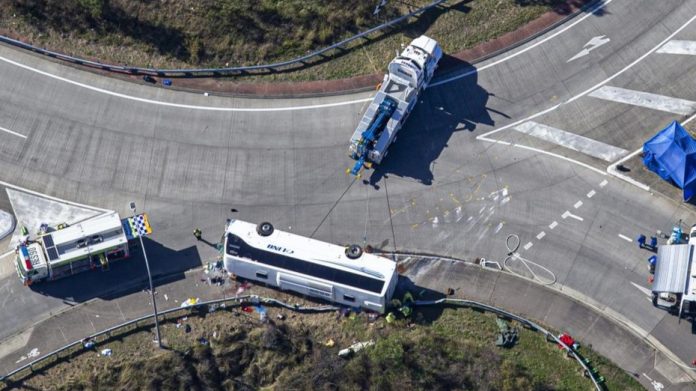
The condition of Melbourne man Nick Dinakis is unknown after he was among 35 passengers who rode the ill-fated bus from a wedding in the New South Wales Hunter Valley region, according to the Brisbane Times.
10 people still remain unaccounted for after Sunday night’s fatal wedding bus crash, with other passengers in stable condition in three different hospitals across NSW.
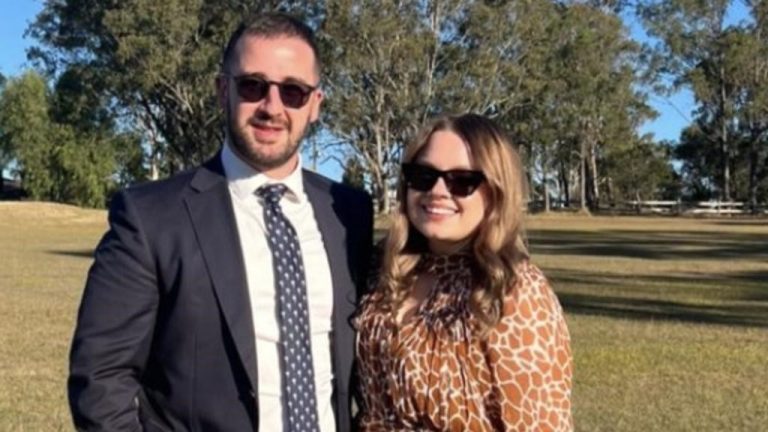
Dinakis, a real estate agent, attended the wedding of Madeleine Edsell and Mitchell Gaffney on Sunday with his partner Darcy Bulman.
The pair was snapped smiling in a photo together at the Wandin Estate venue just hours before the tragedy unfolded.
According to the Herald Sun, Dinakis is not one of the 10 people unaccounted for in the bus crash, but he remained in the Intensive Care Unit on Wednesday morning at the John Hunter Hospital in Newcastle.
Ms Bulman was identified on Tuesday afternoon as the tenth wedding guest who lost her life in the Hunter Valley smash.
Authorities began the grim recovery operation for bodies on Monday afternoon. Photo: NCA NewsWire / Christian Gilles.
Tributes have since flowed for Ms Bulman on social media with friends calling her a “wonderful” person.
Victorian Premier Daniel Andrews said the state government would support Victorian families affected by the tragedy, describing it as “absolutely heartbreaking.”
This comes as NSW Police today continue the long process of formally identifying the victims of the fatal bus crash.
The bus driver, 58-year-old Brett Andrew Button, has also been charged with 10 counts of dangerous driving occasioning death and one count of negligent driving occasioning death.
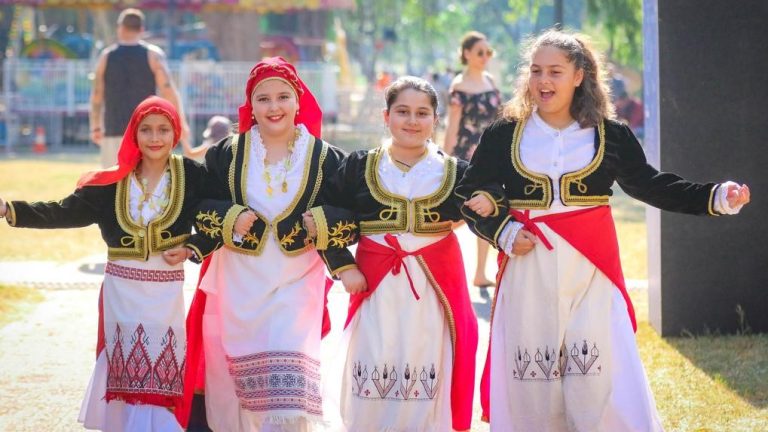
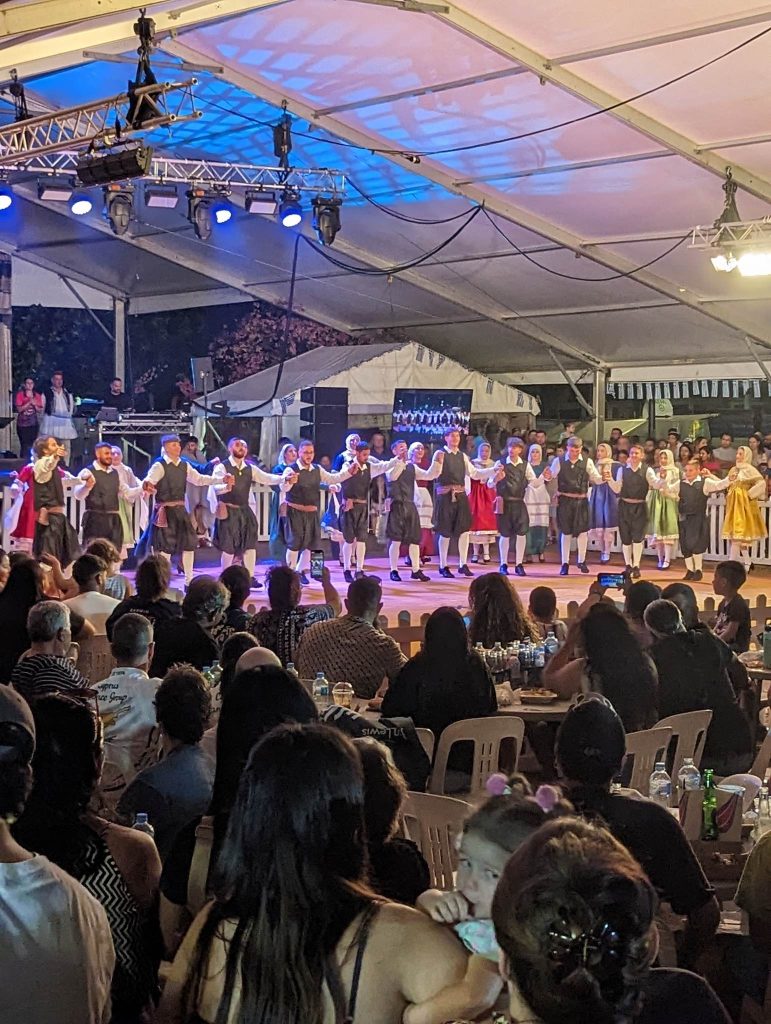
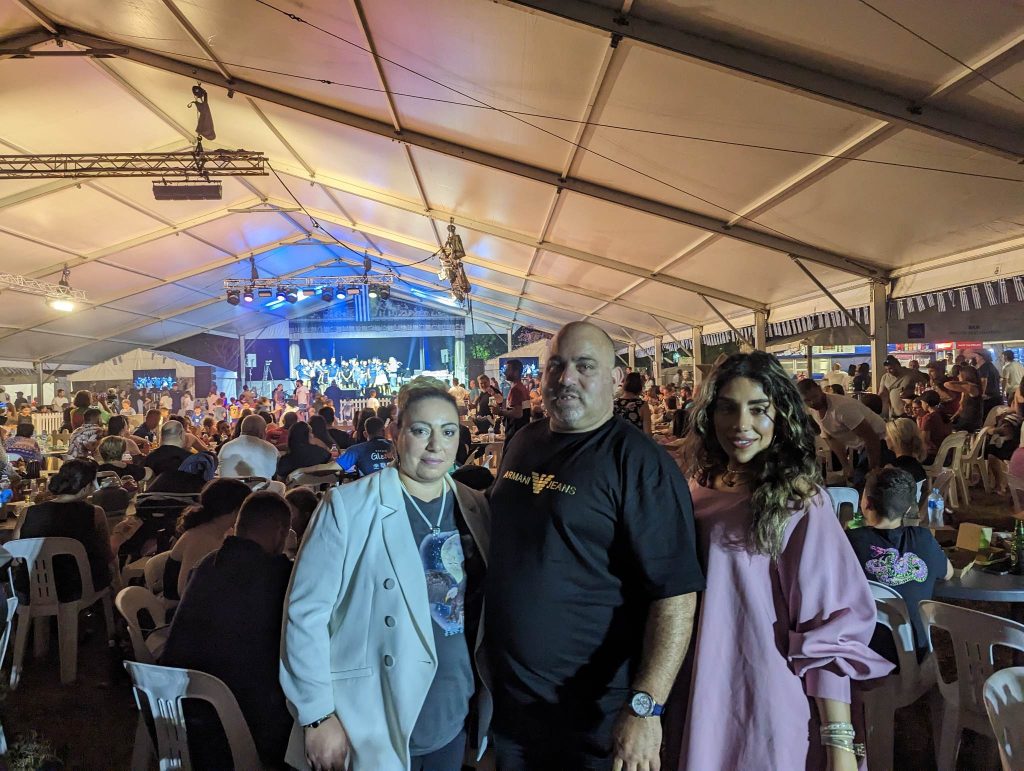
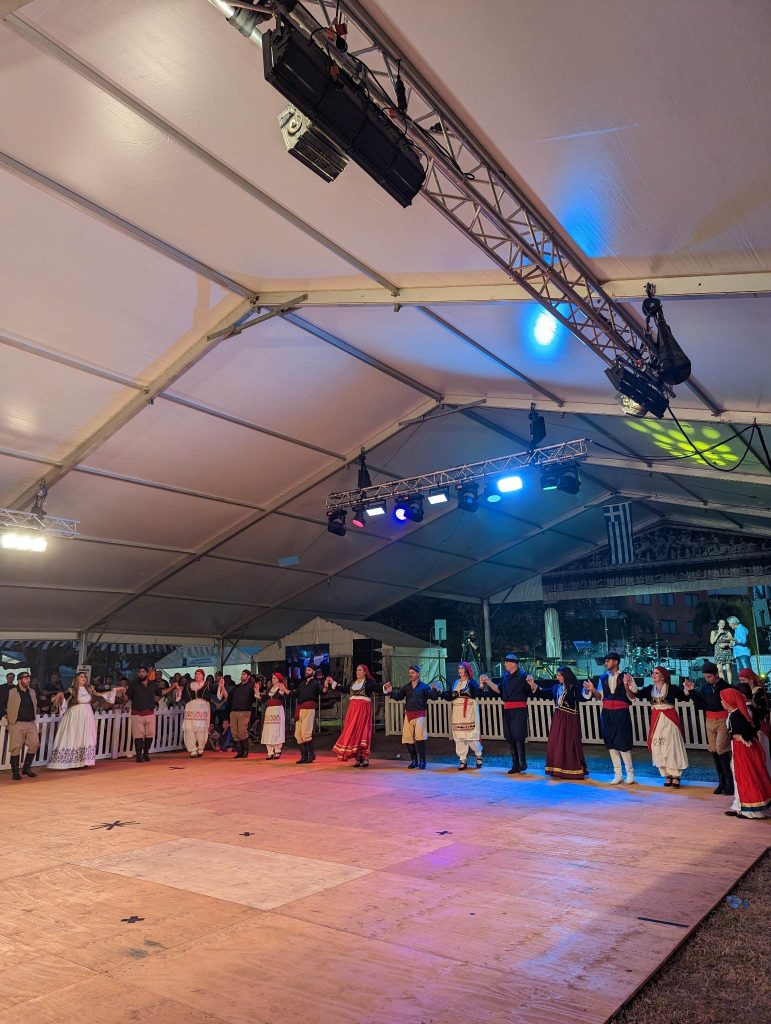
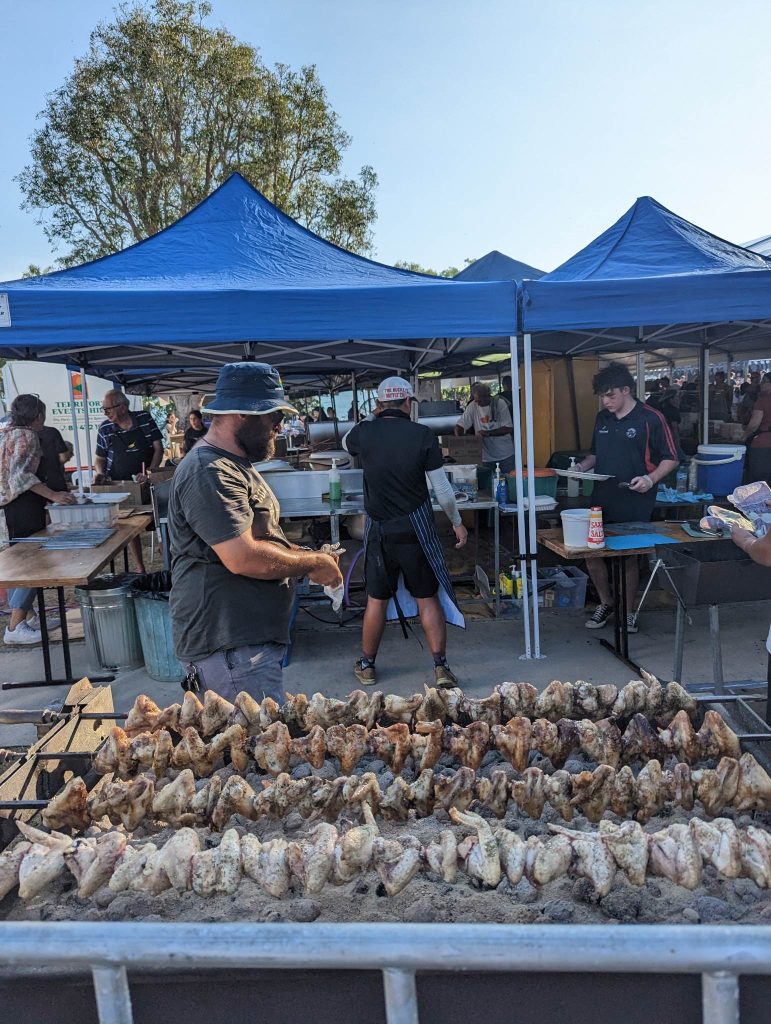
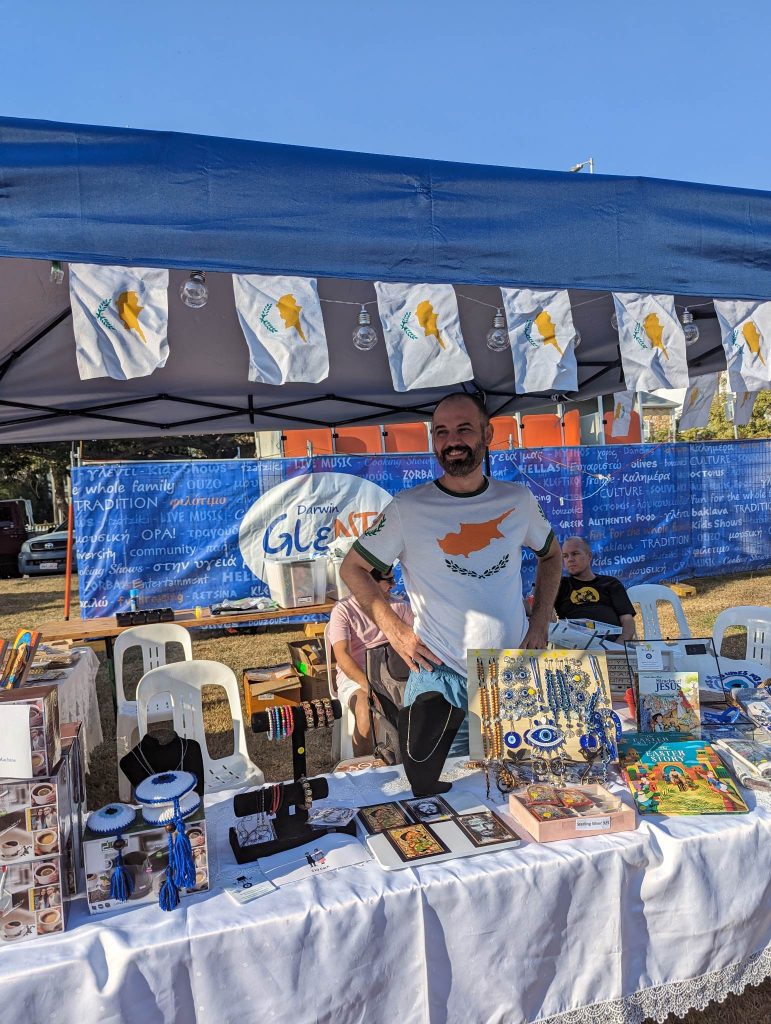
Τhousands of visitors came together over the long weekend for the 2023 Greek GleNTi on the Darwin Esplanade in the Northern Territory.
The festivities included live Greek music, delicious food, traditional Greek dancing performances, and three-on-three basketball games, while this year’s theme was the Dodecanese Islands.
Greek dancing. All photos copyright Gina Tsogas.
In its 33rd year, the festival has established itself as a major multicultural event in the NT and proved it again this year.
The President of the Greek Orthodox Community of North Australia (GOCNA), Nick Poniris, told The Herald Sun that GleNTi brought the experience of Greece to the foreshore of Darwin Harbour.
More than 40.000 visitors were expected at the festivalThere was Greek food and dancing.
“The food is done traditionally as it has been done generations before us,” Mr Poniris said. “It’s all family fun and affordable and is a great event for locals and interstate guests.”
“This really is one of the premier events in the Greek calendar Australia-wide.”
Stalls and attendees
Each food stall represented a traditional part of Greek food that’s prepared and delivered how it used to be in the old country. In fact, more than 10 tonnes of food were prepared for the event.
Profits from the community-run festival go back to the GOCNA to help support soccer clubs and other community groups.
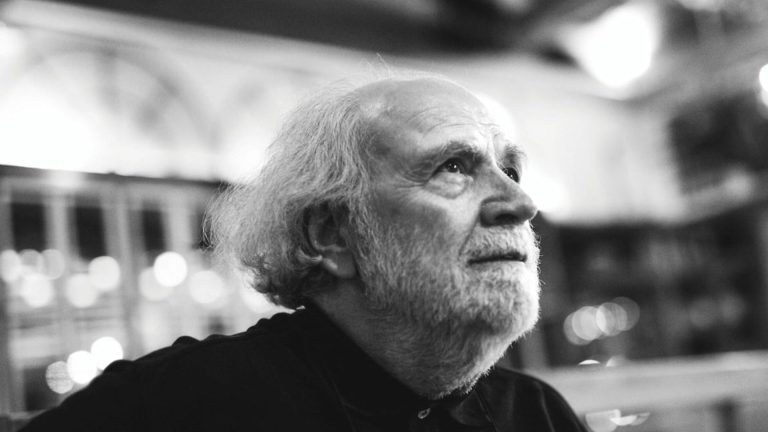
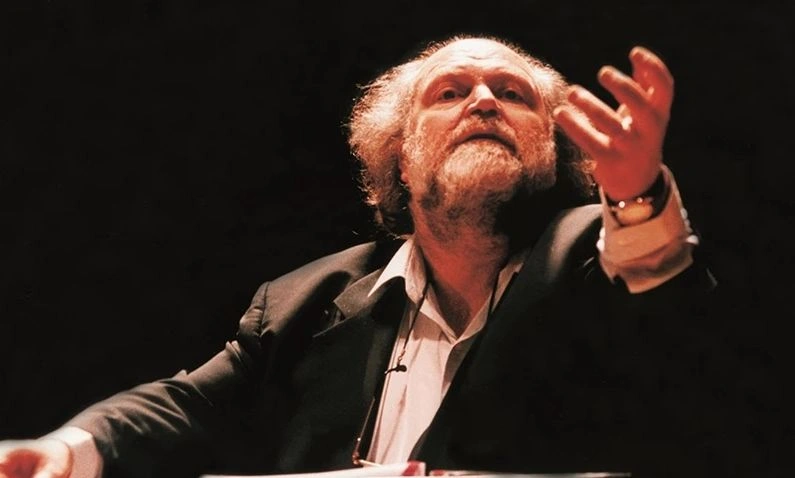
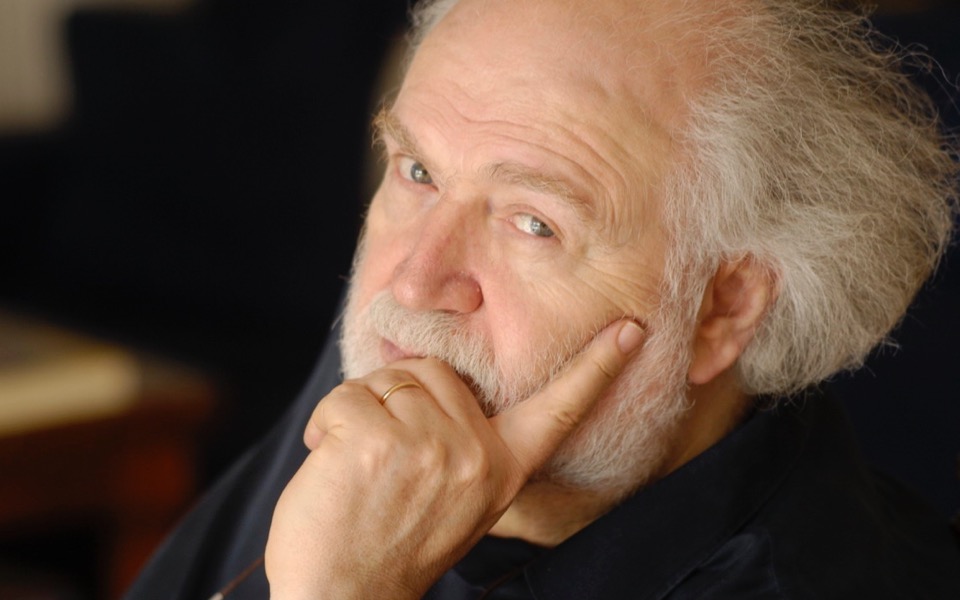
Yannis Markopoulos was part of a very big chapter in the history of Greek music as he inspired a new musical movement where he masterfully combined the traditional with classical and modern sounds.
Markopoulos was prolific writer and he composed, during his long career, works covering a wide range of music from art music and orchestral pieces to operas, oratorios and music for theater and cinema.
He was born in 1939 in Heraklion, Crete. His father is Georgios Markopoulos, former prefect of Lasithi and his mother is Irini Aeraki from Sitia.
He spent his childhood in Ierapetra, where he took his first music lessons in theory and the violin. His first influences came from local music, as well as from classical music, the music of the wider eastern Mediterranean, and especially of nearby Egypt.
Yannis Markopoulos
In 1956, Markopoulos continued his musical studies at the Athens Conservatory, with the composer Georgios Sklavos and the violin teacher Joseph Bustidui. At the same time, he was admitted to Panteion University for social and philosophical studies while also composing for theatre and cinema.
Musical career:
In 1963, Markopoulos won an award for his music in Mikres Aphrodites by Nikos Koundouros at the Thessaloniki Film Festival, and in the same year his musical works Theseas (dance drama), Hiroshima (ballet suite) and Three Sketches for Dance were staged by new dance ensembles.
From October 1965 to April 1984, he provided music for all the plays presented by the Barba Mitoussis Puppet Theater. This Puppet Theater finally ended its operation on April 15, 1984.
In 1967, a dictatorship was imposed on Greece and Markopoulos left for London. There he enriched his musical knowledge with the English composer Elisabeth Lutyens.
Yannis Markopoulos
At the same time, he completed the musical composition Behold the Bridegroom, a work which is remembered as one of his most famous pieces.
In London, he also composed the Choruses and the first Pyrrhic dances A, B, C, (out of the 24 he completed in 2001), which were played, in 1968, by the Concertante Orchestra of London at the Queen Elizabeth Hall. He also wrote the music for Shakespeare’s The Tempest, staged by the National Theater of England, directed by David Jones.
Later Life and Death:
In 1969, Markopoulos returned to Athens to contribute with his works to the path for the restoration of democracy, creating a new movement for art and its utility and seeking the deeper unity of man with his natural and social environment.
Markopoulos died on June 10, 2023 after being submitted to the Intensive Care Unit of the Athens General Hospital “Alexandra”.
The Greek composer had been battling cancer for a year and he underwent an operation to treat it, but since his body was particularly weakened, complications arose leading to his death.