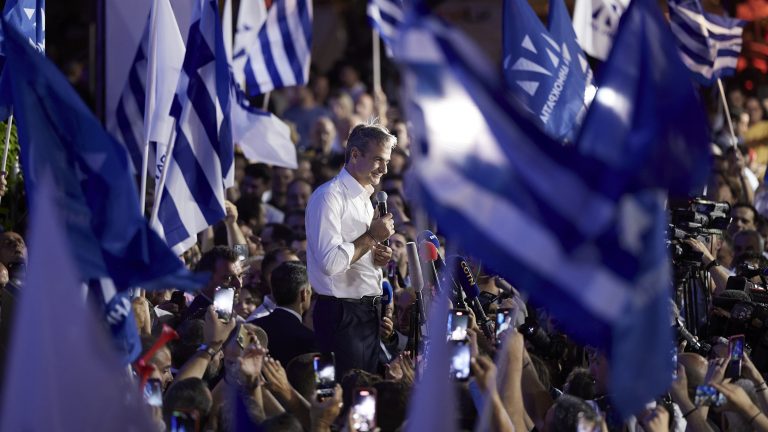
In a resounding victory, Greek conservative leader Kyriakos Mitsotakis and his New Democracy party have emerged as the winners of Greece’s general election, receiving a strong mandate from the voters to bring about significant change.
With over 95% of the votes counted, the New Democracy party (ND) won 40.5% of the vote, almost 23 points ahead of SYRIZA.
Mitsotakis has thanked voters for giving his party a “strong mandate” to move faster on the path of change.
Οι πολίτες μας έδωσαν ισχυρή εντολή να προχωρήσουμε στον δρόμο των μεγάλων αλλαγών που έχει ανάγκη η χώρα. Σας υπόσχομαι πως θα είμαι Πρωθυπουργός όλων των Ελλήνων. Γιατί τα προβλήματα δεν έχουν χρώμα. Και οι πολίτες πρέπει να αισθάνονται το κράτος δίπλα τους σε κάθε δυσκολία. pic.twitter.com/wAyAXRNLTz
“ND is today the most powerful centre-right party in Europe,” Mitsotakis told delighted supporters in Athens. “Today we will celebrate our victory, tomorrow we will roll up our sleeves.”
Last month, his party fell just short of a majority in the 300-seat parliament and his decision to call an election in a bid to form a stable, single-party government was vindicated by Sunday’s result.
Under Greek rules for a second election, the biggest party is awarded a bonus of between 20 and 50 seats. With more than 40% of the vote, New Democracy won all 50.
“The people have given us a secure majority,” Mitsotakis said as the result became clear. “Major reforms will go ahead with speed.”
Former Prime Minister Alexis Tsipras’ SYRIZA party was unable to narrow the margin of last month’s defeat.
Θέλω να ευχαριστήσω από καρδιάς τα χιλιάδες μέλη και φίλους του ΣΥΡΙΖΑ-Προοδευτική Συμμαχία, που έδωσαν μαζί μας αυτή την εκλογική μάχη με αυταπάρνηση, πάθος, πείσμα και αξιοπρέπεια. Ήταν η πιο δύσκολη, αλλά και η πιο όμορφη εκλογική μάχη που έχουμε δώσει ποτέ. Θέλω να…
— Αλέξης Τσίπρας – Alexis Tsipras (@atsipras) June 25, 2023
But one of the big stories of the election was the success of a newly created far-right Spartans party which won almost 4.7% of the vote, crossing the 3% threshold to enter parliament.
Kasiadaris had been the spokesman for neo-Nazi party Golden Dawn, which was banned as a criminal organisation and its leaders given long prison terms.
Greek commentators noted that together with nationalist Greek Solution and ultra-conservative Niki (Victory), the hard right had won a bloc of more than 30 seats.
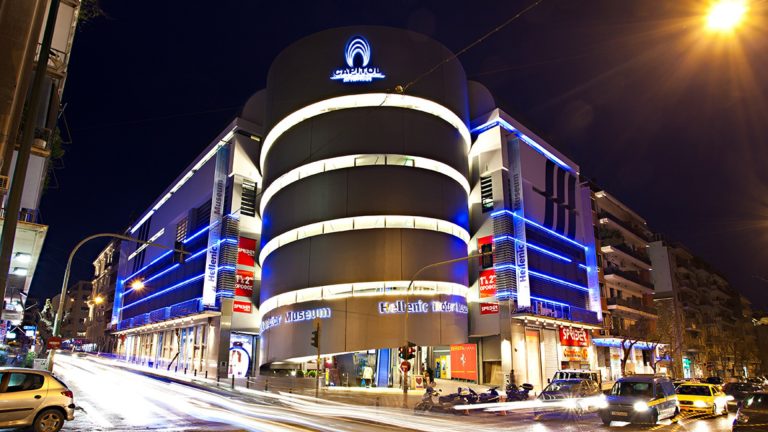
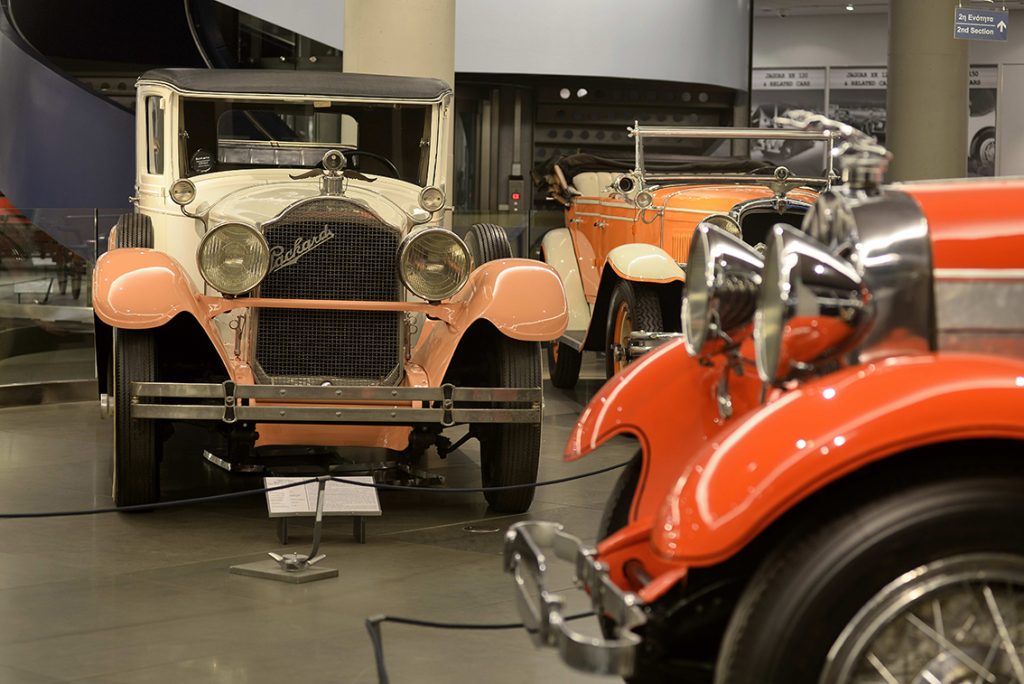
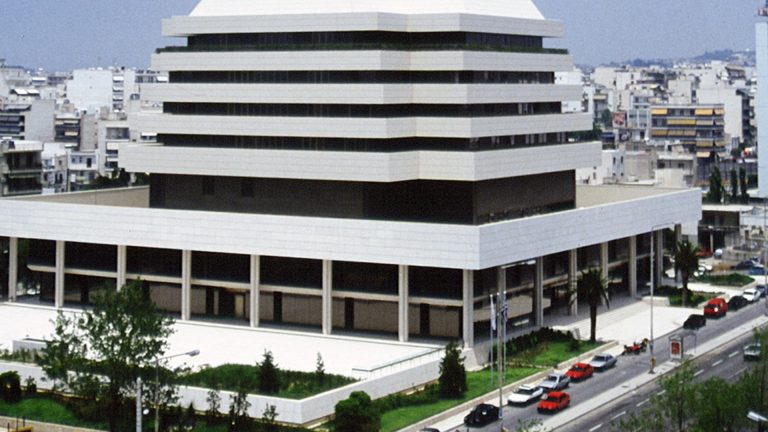
The Hellenic Motor Museum is a very eclectic museum in Athens, Greece. To my mind, the external building’s ‘funky’ design – that of a spiraled type of corner tower, is explained by my excellent museum guide Mr Ioannis Papoulias as being “influenced by the Guggenheim Museum.”
Inside the four storied museum, I am in awe of the hundred or so uniquely beautiful 19th and 20thcentury cars on display. Most are part of a permanent collection but due to the actual three hundred cars owned by the museum’s now deceased founder, Mr Theodore Charagionis, the museum has a rotational scheme of exhibits.
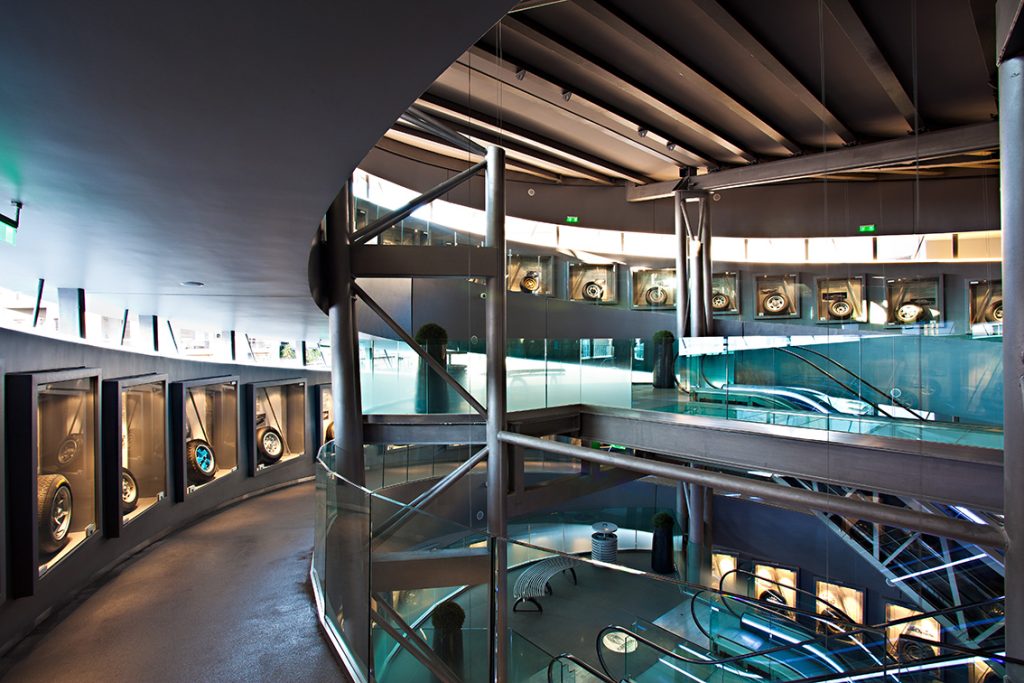
Upon entering the Hellenic Motor Museum, you can use the interior spiral (wheel-chair friendly) ramp, and observe fascinating and descriptive displays of various car wheels.
Inside the main floors of the museum, apart from the prime car exhibits, you’ll see a smaller array of steering wheels. There are also racing trophies of historical value on display, donated by Greece’s Touring and Automobile Association, ELPA.
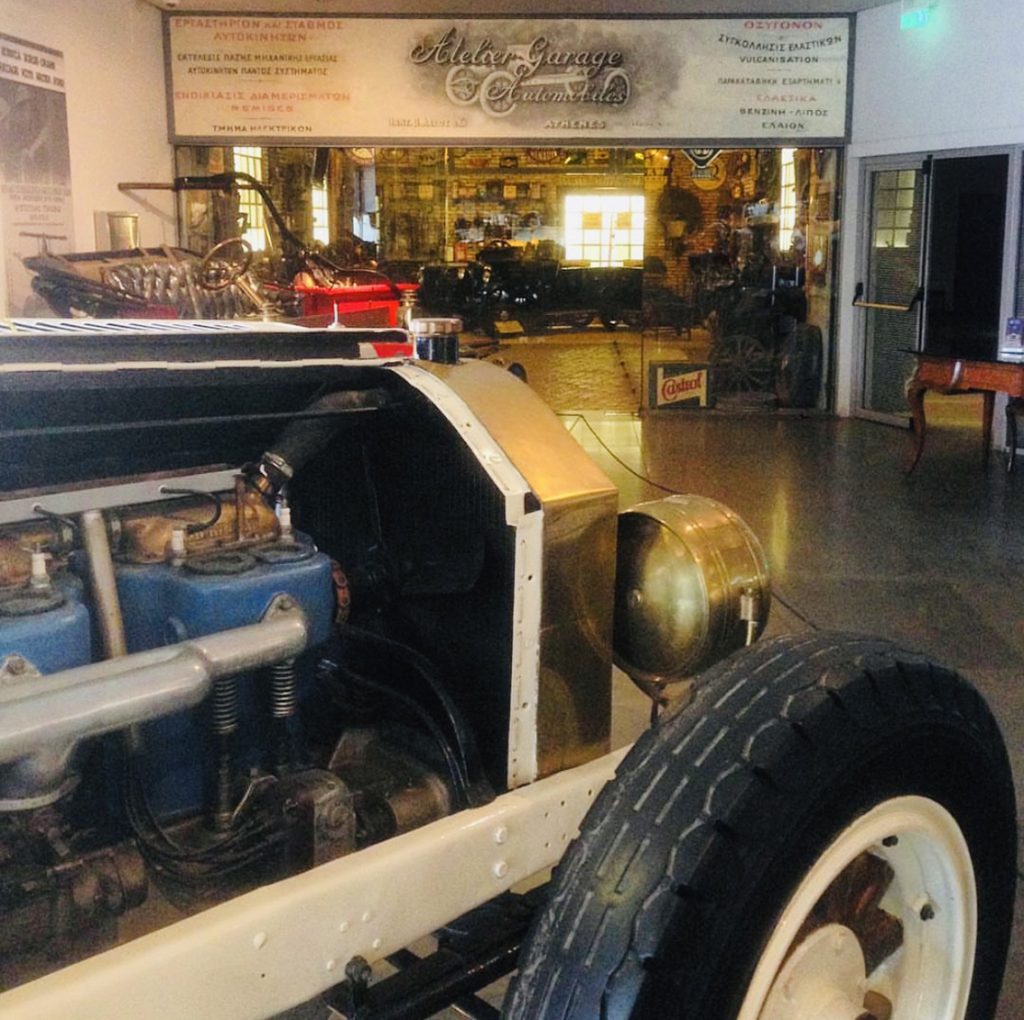
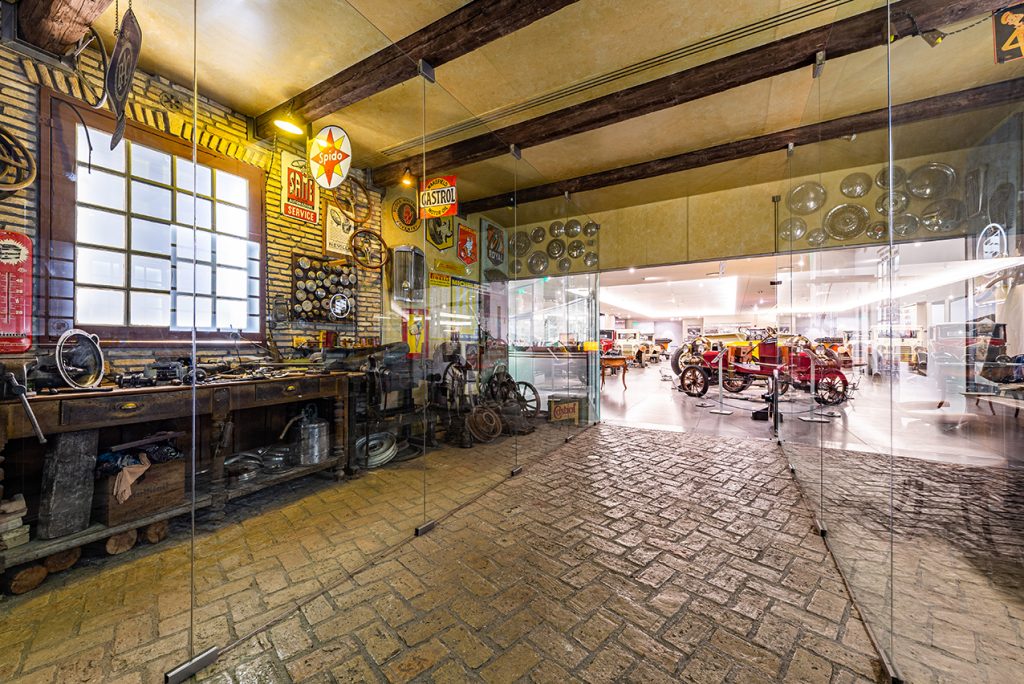
The museum also houses a complete 1930’s era workshop. Its original signage, shows the accommodation service (ENOIKIAΣΙΣ ΔΙΑΜΕΡΙΣΜΑΤΩΝ – see pic. below), offered to customers back in the day while their car was being repaired; because like cars, suitable mechanics in Greece were fewer and farther between then.
And speaking of repairs, my guide informs me, that “the museum’s cars (except for a very old one) are in perfect repair, ready to drive off.”
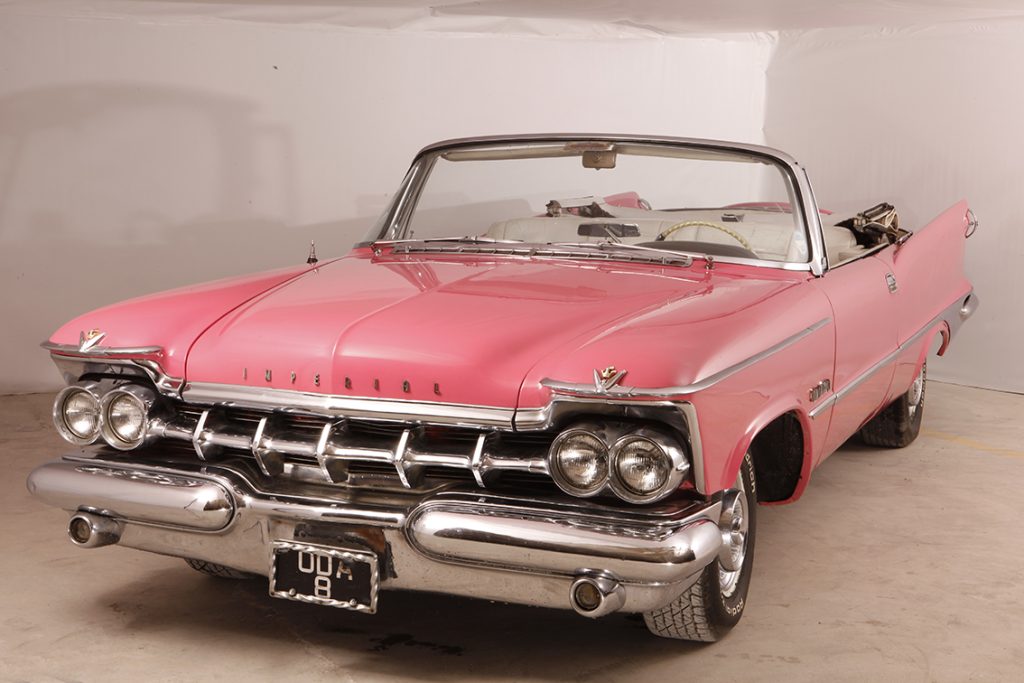
I wouldn’t mind driving off in the car of Led Zeppelin’s Robert Plant I ponder, keen to see this particular Museum’s piece. Upon being led to it though, I am rather shocked to find it painted … pink! “Perhaps the inside is black leather, or perhaps psychedelic patterned?” I quietly muse. “Aah, it’s beige” I add suppressing a grimace. “So much for Led Zeppelin’s dark image!” I voice to my smiling guide.
Robert Plant’s 1959 Chrysler Imperial.
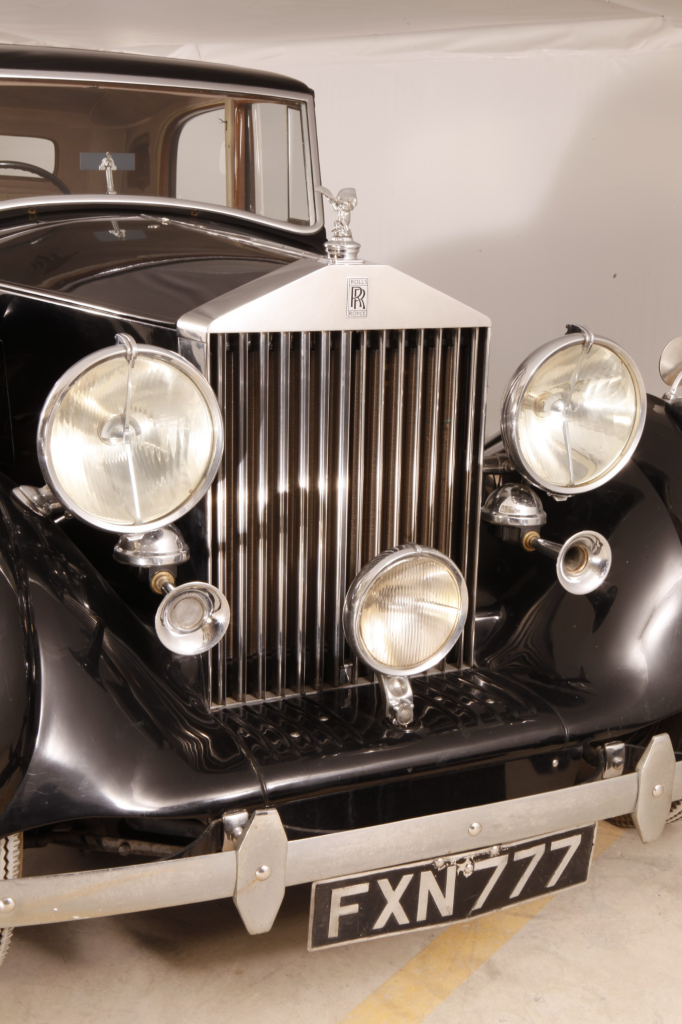
Keen to learn about ‘Greek’ influenced cars, my guide points to a large, shiny black 1939 Rolls Royce. The silver lady emblem on the front of the Rolls Royce is inspired by the Ancient Greek statue of Nike I learn. Yet instead of her wings, they changed it to a billowing dress. To my dismay, my guide then tells me to note, that “the front of this Rolls Royce radiator’s design was influenced by the east side of the Greek Parthenon.”
The 1939 ‘Greek features influenced’ Rolls Royce.
Continuing the Greek theme – this time in a more modern context, I am led to ‘Greek’ cars. The first is a proto Mini Cooper car. My guide explains that the very first actual Mini, was designed by the Asia Minor Greek, Alec Issigonis.
Further on, I see a cute, compact little car. Looks can be deceiving though, as it was a breakthrough in the automotive world. Move over Elon Musk! This was an electric car – designed and made by Greeks. The shipping tycoon Goulandris began producing this car – the Enfield 8000 in Syros between 1973-1976, after perfecting it at his UK plant. The 120 cars made were sold in the UK rather than in Greece, due to Greek government bureaucratic restrictions; and sadly the Syros plant was deemed commercially unviable in Greece, and closed.
The Enfield 8000.
Another Greek car is the 3 wheeled, the Tzen Tonaco ‘city car’, a 1980 model with a German engine but with the rest of the bodywork and equipment made in Greece.
The 1980 Tzen Tonaco
I see another 3 wheeled Greek- German collaborative car, the Alta. Made in a Greek factory in Elefsina between 1968-1973, it’s representative of the similar Attica 200 model comprising a sleek, fibreglass body.
The Alta/Attica car.
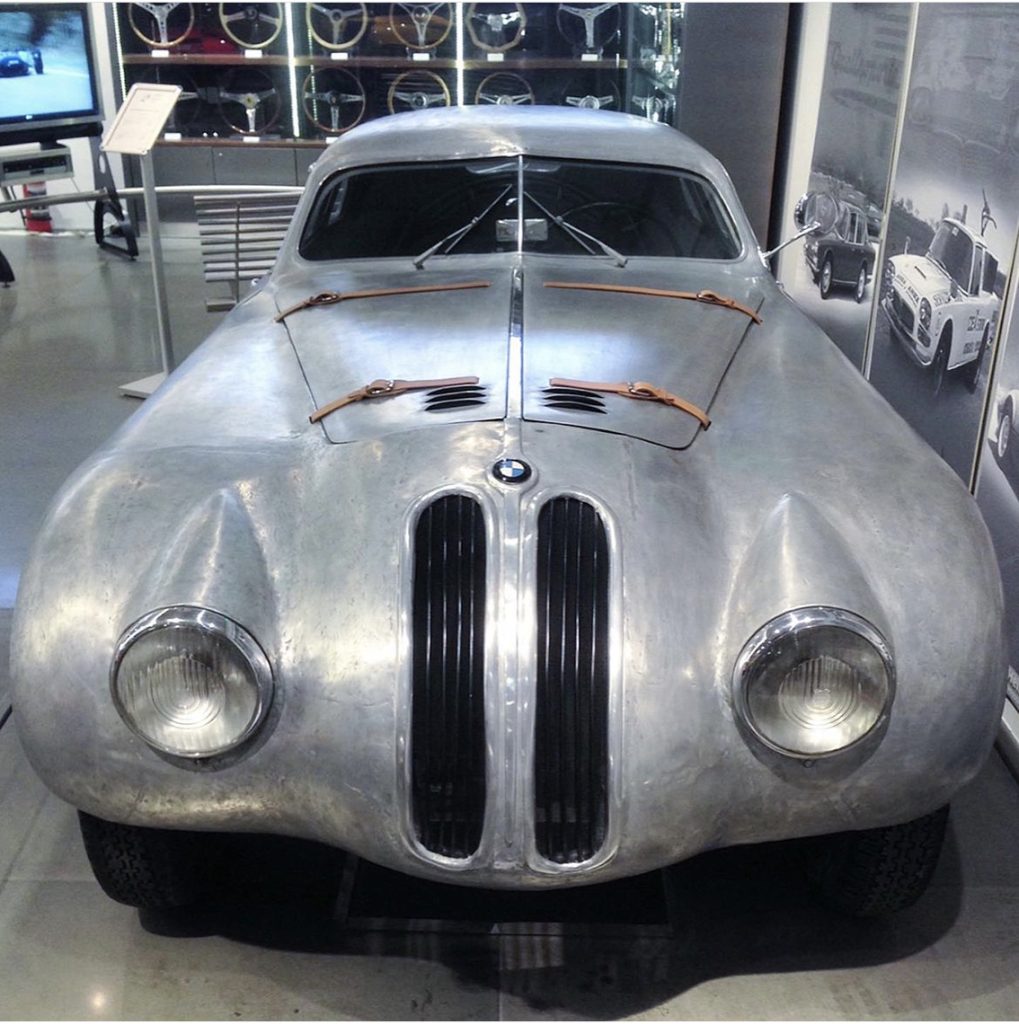
Speaking of car finishes, I am shown an impressive silver aluminium, unpainted, sporty 1939 BMW328 Mille miglia coupe , and learn that paint would add 7 kilograms of weight to the car; potentially compromising its speeding performance.
BMW’s 328 coupe.
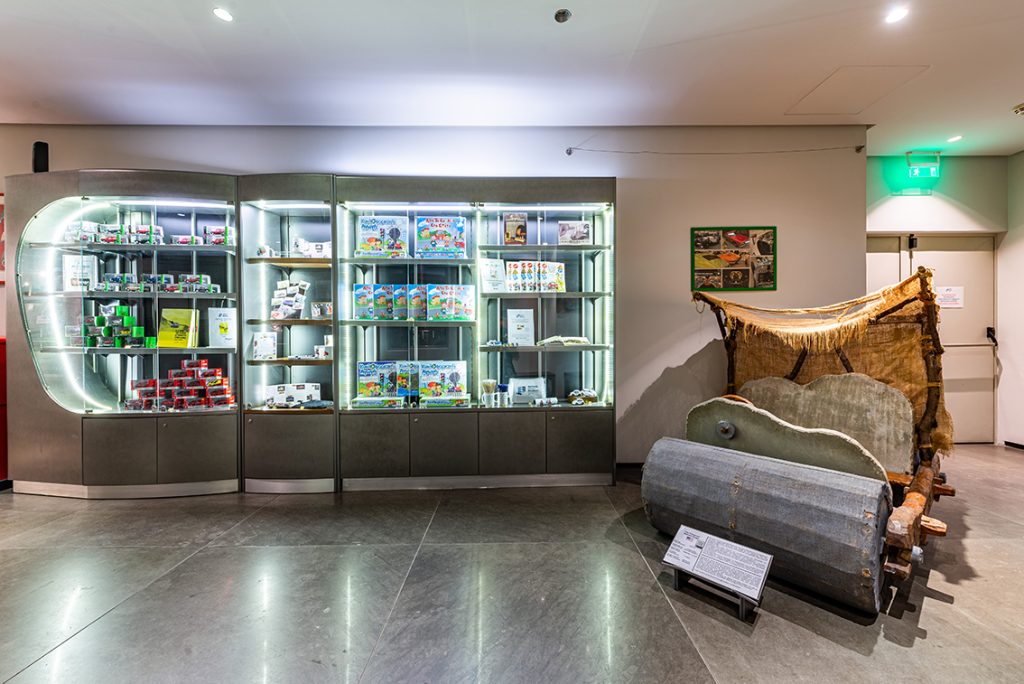
Another interesting car feature is the ‘rumble’ or ‘mother in law’ seat at the rear of a 1928 Packard. And there’s even a Flintstone’s car!
The ‘mother in law’ or Rumbler seat of a 1928 Packard roadster car.The Flintstone’s car, originally from the set of their 1994 movie.
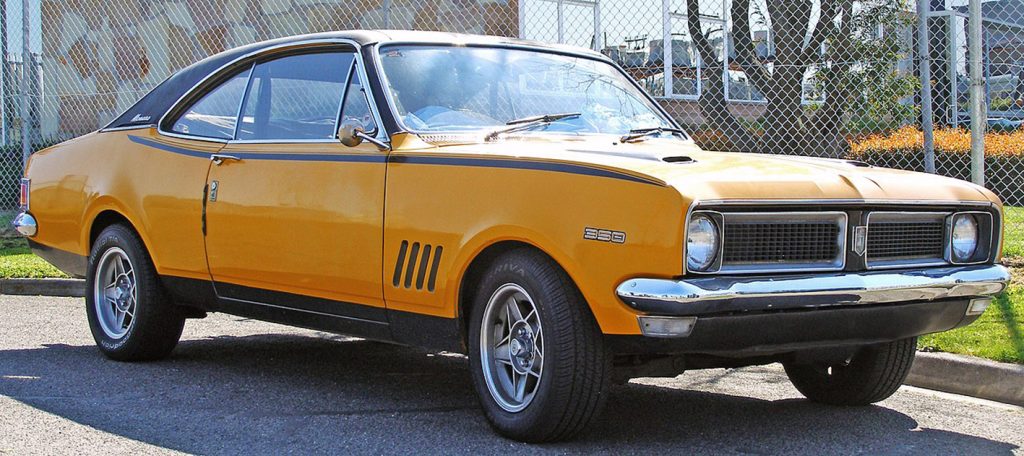
As for Aussie cars, the curator I spoke with showed great interest when I told him about our classic muscle cars such as the Monaro and the Charger. He enthusiastically looked them upon on his phone claiming “this must be mentioned to the Museum’s Board – great looking cars! I had no idea.” Mentioned to the Board to be incorporated as exhibits one day, I certainly hope they will be!
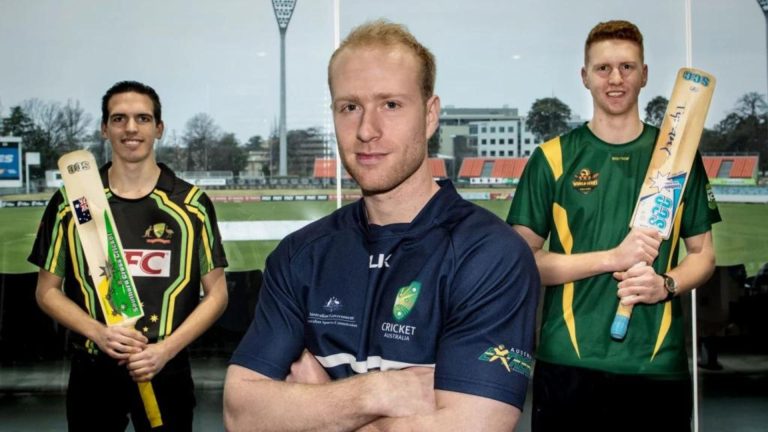
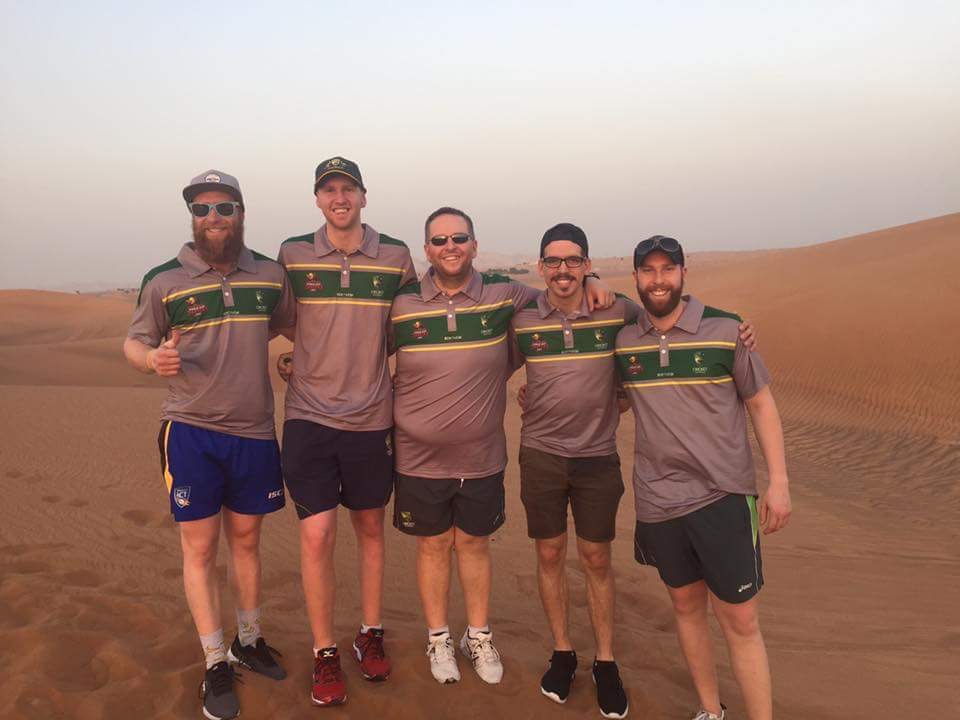
Five members of the Floros family make up the ACT Rockets team at this year’s Australian Indoor Cricket Championships in Ipswich, Queensland.
According to The Riotact, former Australian player Billy Floros is the coach and nephew Matthew, named the world’s best indoor cricketer, is the team captain. Also on the team are Matthew’s brothers, Tim and Benji, as well as their cousin Alexander, an Australian junior representative.
“It’s very interesting. We’re a very close family. It’s probably helped me in my coaching because I understand them so well,” Billy told The Riotact.
Matthew added that the family bond was a distinct advantage.
“We all grew up very close to each other and we spent plenty of time at the indoor cricket centre. We know each other’s games so well. It gives us an advantage,” he said.
Tim Floros, Benji Floros, Bill Floros (Rockets Head Coach), Alexander Floros, and Matthew Floros, in Dubai during the 2017 Indoor Cricket World Cup. Photo: The Riot-Act
“For 13 years, we’ve been at it, with Billy as coach and me as captain. We have such a close relationship we can be very open and honest with each other.”
The Floros family has history when it comes to top-line cricketers.
Jason, Matthew, Tim and Benji’s brother, represented Australia in indoor cricket. He also played for the Queensland Bulls and the Brisbane Heat. Jason has now retired. Another cousin Jake was named in the non-touring Australian squad and is now the coach of the national under-16 indoor cricket team.
The family has been very important to the Rockets success in the sport. The team has been crowned Australian champions four times.
The Australian Indoor Cricket Championships commenced on June 17 in Ipswich and conclude on July 1.
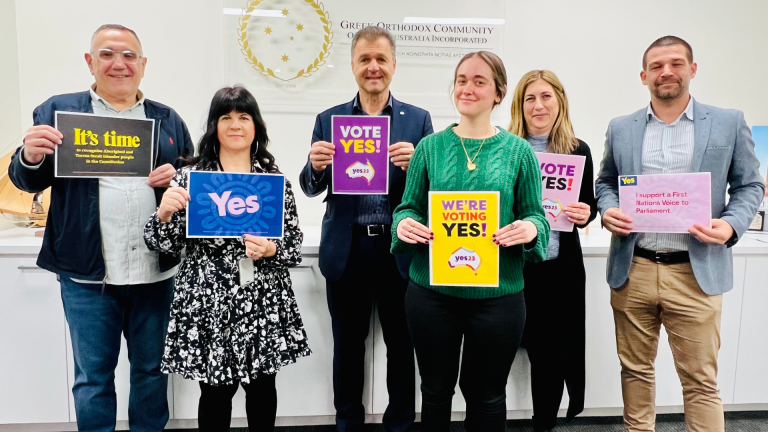
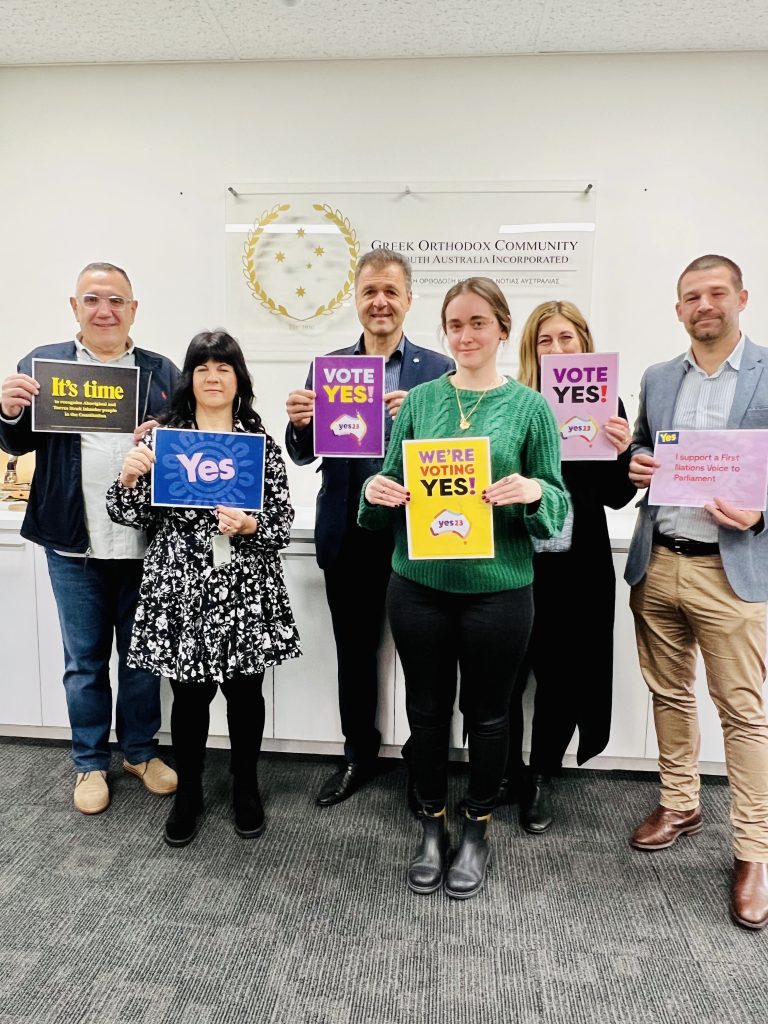
As one of South Australia’s largest ethno-specific organisations established in 1930, the Greek Orthodox Community of South Australia (GOCSA) today reaffirmed its commitment to the Uluru Statement and the call for a Voice for First Nations people.
GOCSA President Peter Gardiakos said that by becoming a signatory to the Joint Resolution of Multicultural Community Organisations, GOCSA commits its steadfast support for a ‘Yes’ vote in the upcoming Voice referendum.
“As a proud Australian with Greek heritage, I believe it is our responsibility to actively contribute to the creation of a more just and inclusive society for all, including honouring and supporting First Nations people. Supporting the First Nations Voice to Parliament is a crucial step towards recognition and reconciliation,” Mr Gardiakos said.
GOCSA supports the Voice.
“The success of this referendum is the responsibility of all Australians regardless of faith or cultural and linguistic background. As migrants and descendants of migrants, we recognise the importance of having a voice in your community’s affairs and we stand with Indigenous Australians for the simple yet profound recognition they seek: a route to help inform policy decisions that impact their lives.”
GOCSA began a journey of reflection 23 years ago, on its 70th anniversary, which culminated in a commitment to reconciliation and the release of a statement in support of the reconciliation process with the First Nations people and the need to fix the exclusion and discrimination of the past.
“By pledging our support for the Voice we join in with 120 multicultural organisations from across the country showing that we are here and ready to engage in this conversation in order to bring people together for the future of our nation,” Mr Gardiakos said.
The Greek Community of Melbourne (GCM) has announced an interesting lecture by Dr Dimitris Kamouzis, a researcher and authority on Greek history.
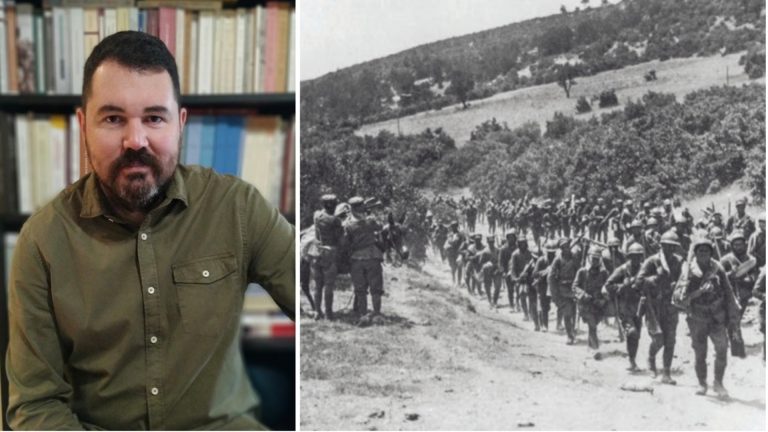
As part of the Greek History and Culture Seminars, this online event will delve into the topic of “The Asia Minor Campaign and the Fate of Returned Soldiers.” The lecture is scheduled for Thursday, 29 June 2023, at 7pm and will be livestreamed on YouTube and Facebook.
Dr Dimitris Kamouzis brings a wealth of expertise and scholarly achievements to his presentation. With a PhD in History from the prestigious Department of Byzantine and Modern Greek Studies at King’s College London, he is a leading figure in the field.
His dedication to the study and preservation of Greek history is exemplified through his roles as a scholar of the Alexander S. Onassis Public Benefit Foundation, a Research Fellow of the John S. Latsis Public Benefit Foundation and the National & Kapodistrian University of Athens, and a Teaching Fellow at King’s College London.
During the lecture, Dr Kamouzis will draw upon his latest monograph, “Greeks in Turkey: Elite Nationalism and Minority Politics in Late Ottoman and Early Republican Istanbul” (Oxon & New York: SOAS/Routledge Studies on the Middle East, 2021).
He also served as the scientific advisor for the research programme “Greek Soldiers, War and Trauma: The Asia Minor Campaign and the Consequences of a Painful Experience,” sponsored by the Research Centre for the Humanities (2021). Furthermore, he co-edited the collective volume “Έλληνες στρατιώτες και Μικρασιατική Εκστρατεία. Πτυχές μια οδυνηρής Εμπειρίας” [Greek soldiers and the Asia Minor Campaign. Aspects of a painful experience] (Athens: Εκδόσεις Βιβλιοπωλείον της Εστίας, 2022).
Dr Kamouzis.
In this lecture, Dr Kamouzis will explore the multifaceted and poignant experiences of Greek troops in Asia Minor. He will shed light on the impact of wartime trauma and the subsequent challenges faced by returning war veterans during the interwar years in Greece.
It is essential to acknowledge that approximately 200,000 out of the 450,000 soldiers who served during the war period of 1912-1922 participated in the Greek-Turkish War (1919-1922). These veterans, along with the refugees who arrived in Greece following the ‘Asia Minor Catastrophe’ of 1922, played a pivotal role in shaping Greek society in the post-war era.
As part of the broader historiographical trends on the “Great” or “Greater War,” Dr Kamouzis will adopt a critical historical analysis, approaching the Asia Minor Campaign as a “history from below.” Through this approach, he will provide valuable insights into the soldiers’ perspectives, their resistance, desertion, and disobedience, as well as the issues of masculinity, gender relations, and the daily realities faced on the front lines.
This lecture holds great significance for the Greek diaspora and the wider community, offering an opportunity to gain a deeper understanding of the historical context and the profound consequences of the Asia Minor Campaign.
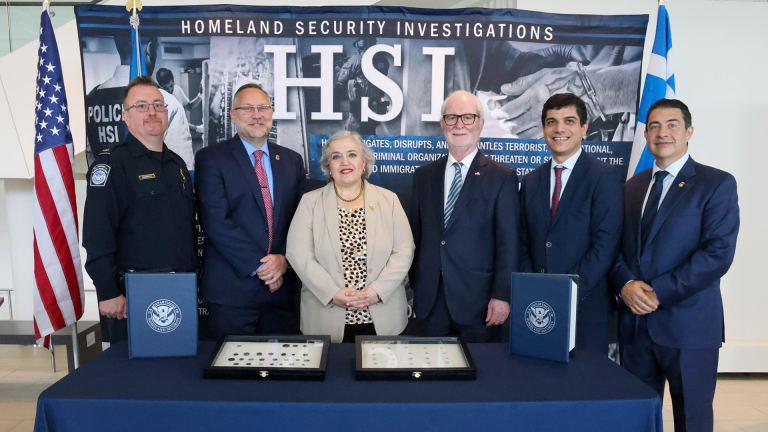
Homeland Security Investigations (HSI) in the United States recently conducted the largest repatriation of ancient coins to Greece in its recent history.
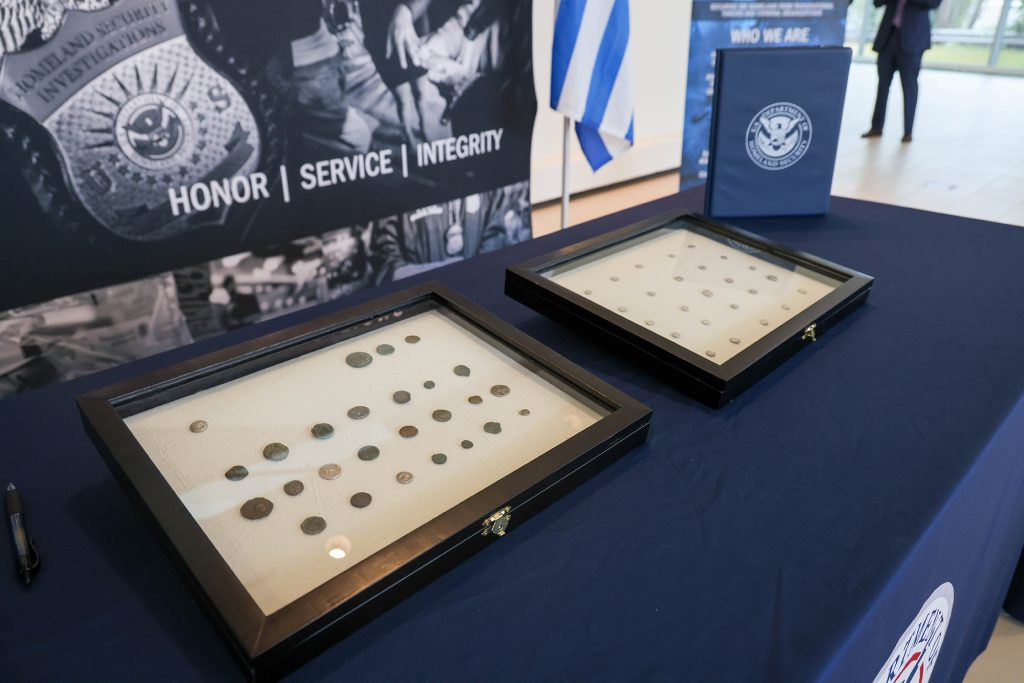
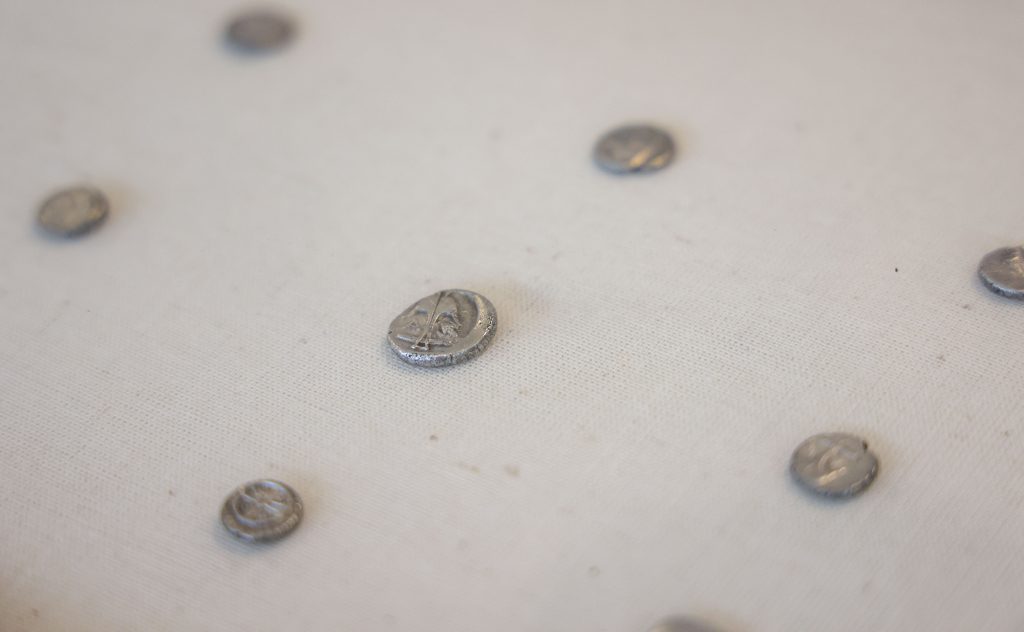
Representatives from Greece and the National Hellenic Museum alongside HSI members, held a ceremony on June 16 to return the artefacts which included 51 ancient Greek coins.
Federal agents, National Hellenic Museum conduct largest repatriation of ancient coins to Greece in recent HSI history. Photo: ICE
According to ICE, the priceless coins were seized by HSI after Customs and Border Protection intercepted four shipments entering the US without official paperwork.
HSI Chicago Special Agent in Charge R. Sean Fitzgerald said: “Trafficking in antiquities is a multibillion-dollar criminal enterprise, but when traffickers steal these antiquities from a country, they’re robbing from the cultural heritage of a nation – solely for their potential to generate profit.”
Ancient coins returned to Greece. Photo: ICE
Ambassador of Greece to the United States Alexandra Papadopoulou, Consul General Emmanuel Koubarakis, and Consul Georgia Tasiopoulou were among distinguished guests who attended the repatriation ceremony.
Ms Papadopoulou said: “This is a successful example of how when we join forces, we can make miracles.”
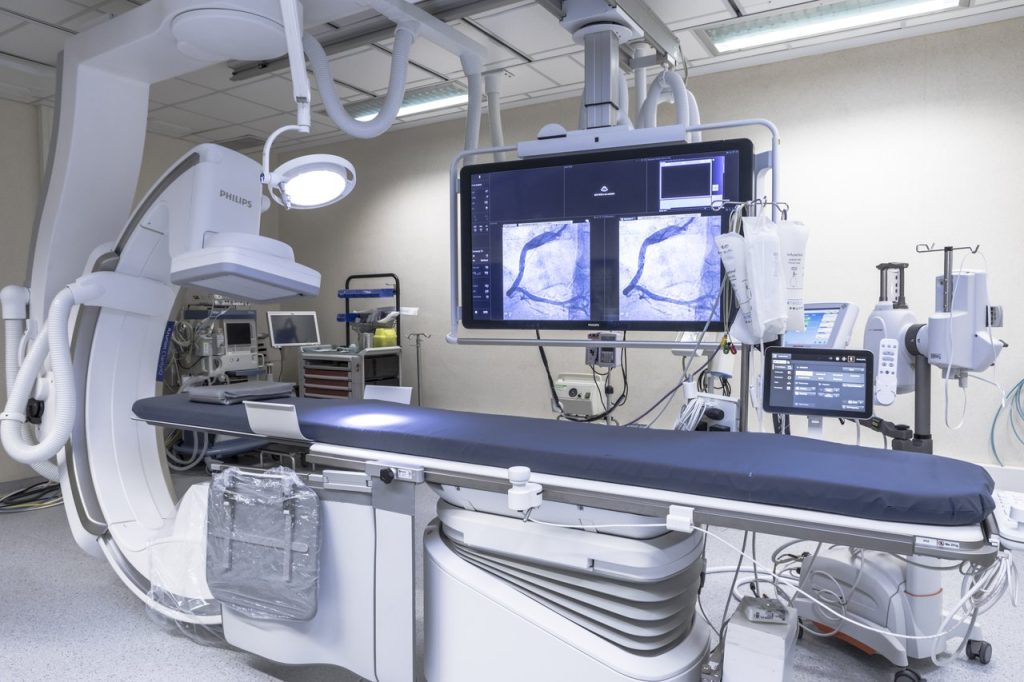
The Onassis Cardiac Surgery Center in southern Athens is set to become the first fully digitised hospital in Greece, with the Transplant Centre also set to be ready by the end of 2024.
The cardiac centre will also be among the first in Europe to install the latest generation of sophisticated imaging systems and artificial intelligence.
Photo: Onassis Cardiac Surgery Center
Accprding to Ekathimerini, President of the Onassis Foundation, Antonis Papadimitriou, said the digitalisation will involve installation of sophisticated “imaging systems” which will help doctors facilitate a diagnosis.
The president also noted software by SAP-CERNER, which is a hospital management system, would be installed.
“It will meet the needs of the country and beyond in heart, lung, liver, pancreas and kidney transplants, to the extent, of course, that these are not covered by existing programs,” President Papadimitriou said.
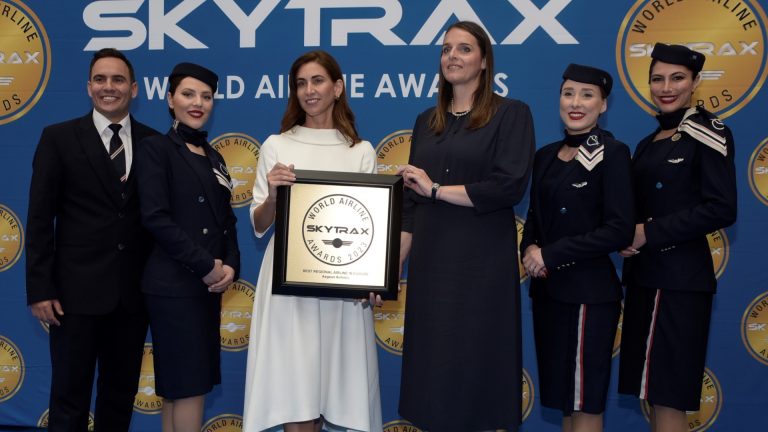
For the 12th consecutive year and 13th overall, AEGEAN has been named the “Best Regional Airline in Europe” at the prestigious 2023 World Airline Awards, held at the Paris Air Show.
Also, AEGEAN ranks among the best airlines for its cabin crew, conquering the 4th position in the ranking for “Best Airline Staff in Europe 2023.”
Edward Plaisted, CEO of Skytrax, said: “AEGEAN continues to deliver a remarkable standard of consistency in the awards survey, and this ongoing recognition from their passengers as the Best Regional Airline in Europe for the twelfth time is a simply fabulous achievement for the airline management and staff.”
Crew of AEGEAN with the award.
Dimitris Gerogiannis, AEGEAN’s CEO, commented: “We are very proud to have been named the Best Regional Airline in Europe for an astounding twelfth time. A recognition that increases our responsibility towards our customers.”
“Our success lies in the passion and tireless efforts of our exceptional team, who consistently go above and beyond to deliver an extraordinary travel experience,” Mr Gerogiannis added.
“We also owe this achievement to the trust and loyalty of our valued passengers, whose unwavering support has been the cornerstone of our success. We thank them for choosing AEGEAN. We remain committed to raising the bar even higher, continuously improving our services, and innovating to meet the evolving needs of our passengers.”
The World Airline Awards are wholly independent and impartial, introduced in 1999 to provide a customer satisfaction study that was truly global. Travelers across the world vote in the largest airline passenger satisfaction survey to determine the award winners.
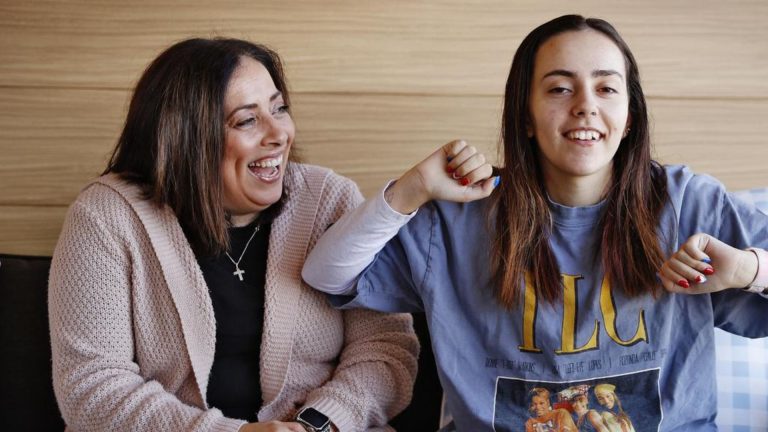
When Angelina Lati was in year eight, her life changed. She began stumbling on stage and experiencing fainting spells and seizures. At age 14, she was diagnosed with Lafora Disease, which is a form of childhood dementia.
Many Australians don’t know much about childhood dementia, which is progressive brain damage that starts before the age of 18. There are over 70 types of the disease, each caused by changes in the DNA because they are genetic diseases.
The signs and symptoms themselves are similar to those you might have seen in an elderly relative suffering from dementia. They include for example, lack of concentration, memory loss, personality and behavioural changes, and even loss of speech and mobility.
Located at the former Manly Hospital Site at North Head, the newly constructed hospital is Australia’s first dedicated service for 15 to 24-year-old patients with life-limiting illnesses.
Families stay in rooms inside the facilities and can speak with social workers, clinical psychologists, bereavement counsellors, and psychiatrists. For many families, this is the first time they could live together.
“We have relief here… and fun. It’s beautiful. It’s like we have a life now,” Niki told The Daily Telegraph about their family’s time in the hospice with Angelina.
“It’s like a family. And that’s what she needs, you know, because she needs that comfort and, you know, especially when you’re scared.”
Emily Karanikolopoulos is an esteemed teacher and practitioner of Japanese floral art ‘Sogetsu Ikebana,’ with a remarkable career spanning over 18 years.
She has dedicated herself to the art form, immersing in intensive studies, workshops and events, both in Australia and at the Sogetsu headquarters in Tokyo.
Emily’s expertise is evident through her extensive body of work, ranging from standard to large-scale installations, showcasing innovative construction methods, ceramic container craftsmanship, and material manipulation.
Her contributions have earned her recognition within and beyond the ikebana community, resulting in several awards.
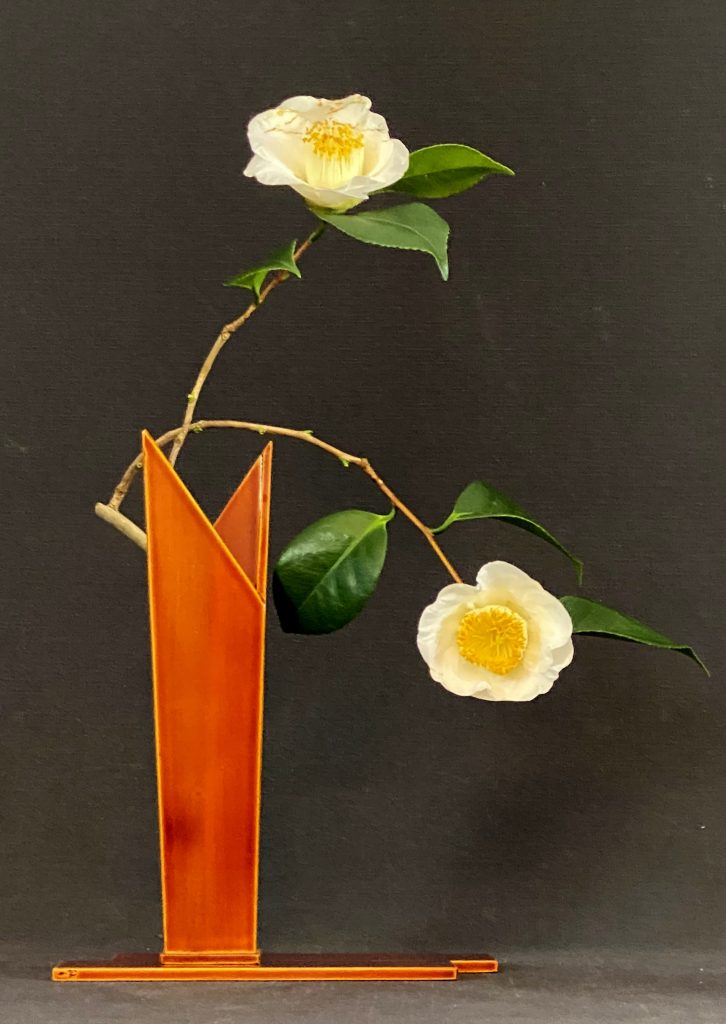
Showcases simplicity, featuring the artist’s favorite camellia (Kamo-hon-Ami) in a lacquered vase with accompanying boards. The artist emphasizes that simplicity requires skill to achieve a visually pleasing arrangement.
As a recipient of the prestigious Norman and Mary Sparnon Scholarship, Emily embarked on a transformative three-month intensive study in Tokyo. Her talent and expertise were further showcased when she was invited as a guest demonstrator at the Ikebana International World Convention in Okinawa, Japan, where she captivated an audience of 1,100 delegates, including three Royal Princesses.
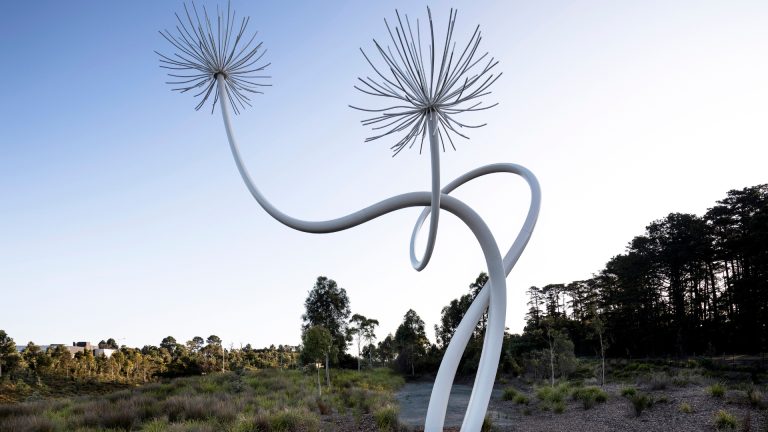
Emily’s artistic collaborations have also been notable. She collaborated with artist John Meade in designing the Southern Way McClelland Commission sculpture titled “Love Flower,” an impressive ten-meter-tall sculpture located along Melbourne’s Peninsula Link Freeway. Furthermore, she completed a commissioned outdoor sculpture in partnership with another artist at an apartment complex.
Emily has exhibited extensively, participating in exhibitions organised by Sogetsu Victoria and at the Ikebana International Convention in Melbourne. In 2022, she curated an exhibition showcasing her own works alongside those of her students at Box Hill Town Hall. Her dedication to spreading the beauty of ikebana led her to appear on Channel 7’s ‘Coxy’s Big Break,’ where she conducted an ikebana demonstration and shared her knowledge on television.
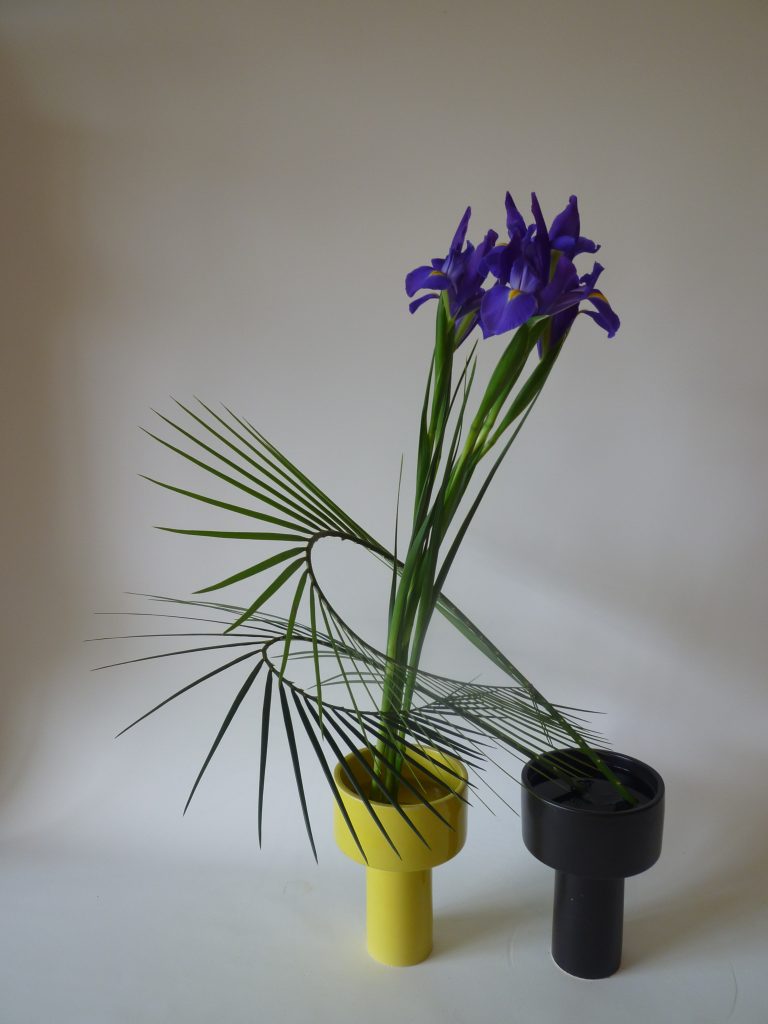
An arrangement using two containers, creating tension through contrasting colors and shapes. The yellow container contrasts with the blue iris, and the curved lines of the palm complement the straight lines of the iris stems.
Beyond Australia, Emily’s talent has reached international audiences. She exhibited her work at the prestigious Takashimaya store in Tokyo as part of a large Sogetsu exhibition. Additionally, she has been a regular participant in the Melbourne International Flower and Garden Show’s Shop Window competition since 2007, where she has received first prize three times, along with several other awards.
Emily’s profound connection with ikebana has influenced her worldview, fostering a greater appreciation for various art forms. Her ikebana arrangements draw inspiration from architecture, paintings, fashion, and even sculpture.
As an experienced instructor, she currently offers classes for beginners to advanced students, including a monthly Masterclass for more advanced ikebanists and her weekly Ikebana blog (emilyintokyo.blogspot.com.au) attracts a global following.
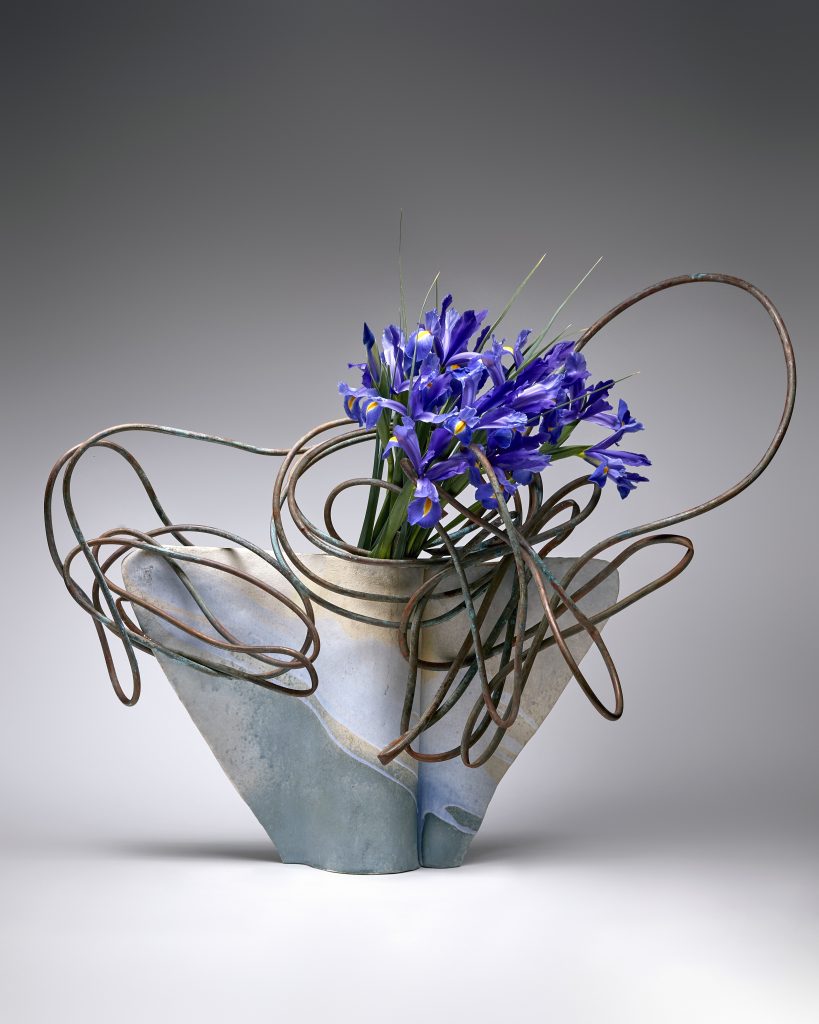
The artist made a large ceramic container and accelerated the tarnishing of copper pipes by brushing them with yogurt and leaving them in the garden. This process resulted in a rustic, less shiny appearance with a blue hue.
Upcoming Ikebana workshop:
The Gasworks Art Studios in Albert Park, South Melbourne will host an introductory two hour ikebana workshop on Saturday, August 19, 2023. Presented by the GACL and facilitated by Emily Karanikopoulos. For all event details and bookings please email infogaclm@gmail.com.
For more information about Emily, visit the GAAD. An archive for Greek art practice in Australia, GAAD is a valuable resource for curators, collectors, researchers, and anyone interested in exploring Greek Australian art. The directory encompasses artists from various backgrounds who have been inspired by Greek culture, showcasing the diverse visual and performing artists who have enriched the Australian arts community.
The initiative was first proposed in 2020 as a means to support artists during and after the Covid pandemic. This proposal came about after recognising the extensive list of local and interstate artists who had previously participated in past GACL art events, particularly the successful ‘Antipodean Palette’ exhibitions. Additionally, it was acknowledged that a few of the artists on the list have unfortunately passed away. Given our proud migratory and cultural history, the GACL invites the Greek Community to contribute information about artists who are no longer with us, but whose artistry and contributions have greatly enriched the Australian arts scene. This approach ensures the preservation of our cultural identity and the recognition of the value and history of Greek artists in Australia.
For artists wishing to register in the GAAD, please visit www.gacl.com.au and click GAAD
For general enquiries infogaclm@gmail.com, or call GACL President Cathy Alexopoulos 0428 968 715, GAAD Co-ordinator Vasy Petros 0412 242 557.