Four years ago, in the midst of the pandemic, The Greek Community of Melbourne’s (GCM) Language & Culture Schools created the distance learning program “Greek for Late Beginners,” which is aimed at children aged 10-18 who did not have the opportunity to start learning Greek at a younger age.
This program allows students to develop their communication skills in Modern Greek and also to learn and understand the Greek language and culture.
Additionally, the program is structured in such a way that students can interact and actively participate using technology.
The classrooms create an educational environment that provides fun and interesting lessons. The educators follow best practices to minimise any gaps, always striving to achieve the best results for each student.
Screenshot for the online class.
The aim of these online classes is to help children in Melbourne, and more broadly in Australia, learn the language of their grandparents and parents and feel closer not only to their roots but also to Greek culture.
The program has been, and continues to be, so successful that it currently has seven online classes with over 40 students in total, and a trained team of experienced educators who meet the educational needs of the students.
The program is offered between 9-11 lessons (depending on the term), each lasting two hours. Open classes for up to 10 people and smaller groups up to four people are available.
Screenshot for the online class.
The new classes start in July, specifically:
New beginners’ class at level A1.1: Thursday, July 13, 4:30-6:30 pm.
In this class, students learn the alphabet, greetings, how to introduce themselves, and how to describe daily activities. No prior knowledge of Greek is required.
Additionally, for the 3rd term, there are classes for:
A1.2, Tuesday, July 11, 4:30-6:30 pm.
A1.3, Wednesday, July 12, 4:30-6:30 pm.
A1.4, Tuesday, July 11, 5:00-7:00 pm.
A1.6, Monday, July 10, 4:30-6:30 pm.
A2.3, Monday, July 10, 4:30-6:30 pm.
A2.3-CLOSED Class, Tuesday, July 11, 4:30-6:30 pm.
Eleni Dimitriou, a teacher at the GCM schools and coordinator of the “Greek for Beginners” program, shared her thoughts on the program.
“With this program, we offer all children who want to learn Greek the opportunity to fulfill their dream and desire from the comfort of their own homes. It doesn’t matter where they are or if they have little or no knowledge of Greek! We start the journey of Greek from scratch, and gradually, through the weekly lessons,” Ms Dimitriou said.
“Also, technology makes things easier. All one needs for these lessons is internet access, a computer, and a willingness to learn. Leave everything else to the experienced team…”
More information about the program and the application form can be found at the following link: greekcommunity.com.au/glb
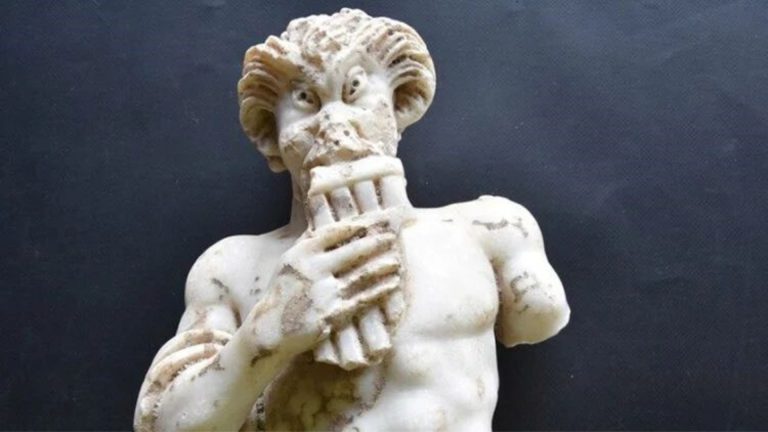
Archaeologists conducting excavations at the ruins of an early Christian church in Istanbul, Turkey, have made an intriguing discovery: a broken statue depicting the Greek god Pan.
The statue, depicting Pan with goat horns, a naked torso, and playing a reed pipe, was found within the remains of the sixth-century church of St Polyeuctus.
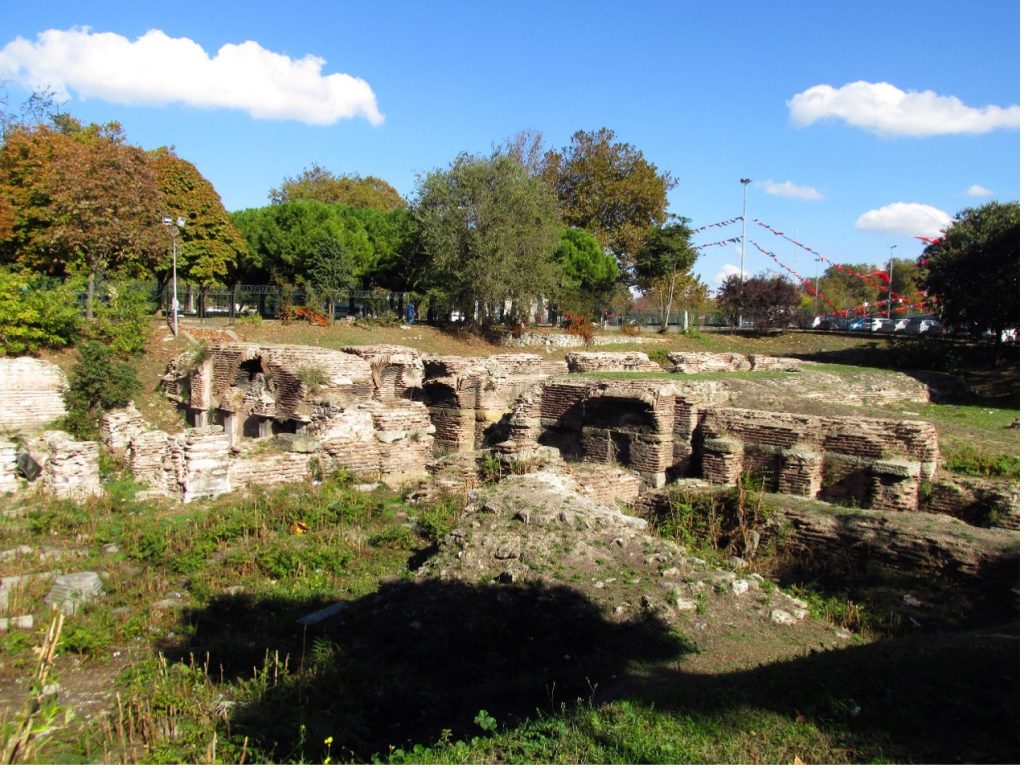
It is unlikely that a Christian church would have kept a statue of such a pagan god. Rather, archaeologists think the statue’s location is the result of a modern mistake.
The ruins of the church of St Polyeuctus.
In the 1960s, workers building a nearby road discovered the remains of the sixth-century church of St Polyeuctus by accident. After an excavation, archaeologists used backfill — earth used to fill holes and level ground — to cover up the ruins.
Mahir Polat, the deputy general secretary of the Istanbul Metropolitan Municipality (IBB), told Live Science it’s likely the statue was part of that backfill.
This Aged Care Week 2023 (June 21 – June 23), The Greek Herald takes a look at the latest reforms the Federal Government has pledged to make to the aged care sector.
The Government has promised pay rises for aged care workers to try and address the shortage of staff, as well as changes to legislation and more in-home-care assistance. As our population ages, many older Australians are preferring to live independently in their own homes for longer while receiving aged care support.
A new regulatory model and framework – to be reflected in reforming of the aged care legislation – is part of the Government’s response to the needs of older Australians.
This reform aims to improve the quality and safety of aged care services to restore trust and confidence in aged care providers.
Pay rise for aged care workers:
In last month’s Federal Budget, the Government pledged to deliver a ‘once in a generation’ reform of aged care that also included a 15 per cent pay rise for aged care workers from July 1.
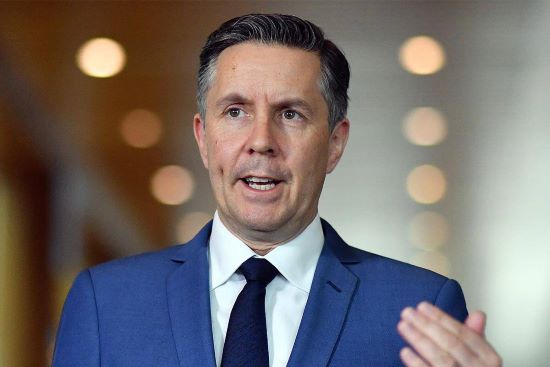
The Minister for Health and Aged Care, Mark Butler MP
The Minister for Health and Aged Care, Mark Butler MP, said the pay increase for aged care workers is the largest ever, making progress towards helping aged care providers to attract and retain staff.
This would be particularly important for rural and remote areas where the aged care crisis has been ‘particularly acute’ with large workforce shortages.
“Aged care workers have been undervalued and underpaid for too long – we are supporting a wage increase for them because it’s the right thing to do,” Minister Butler said.
Home Care Packages:
The Budget also provided 9,500 additional Home Care Packages, to be released in 2023-24, and established new aged care assessment arrangements from July 2024.
From July 2024, there will be a new program that provides in-home care services for older Australians. This new program is called the Support at Home Program and it will replace the current Commonwealth Home Support Programme (CHSP), Home Care Packages (HCP) Program and the Short Term Restorative Care (STRC) Programme.
Aged Care Taskforce and supporting Indigenous communities:
A new Aged Care Taskforce has been established to review aged care funding arrangements and develop options for a fairer and more equitable system.
The Taskforce will inform the final design of the Support at Home program in response to public feedback.
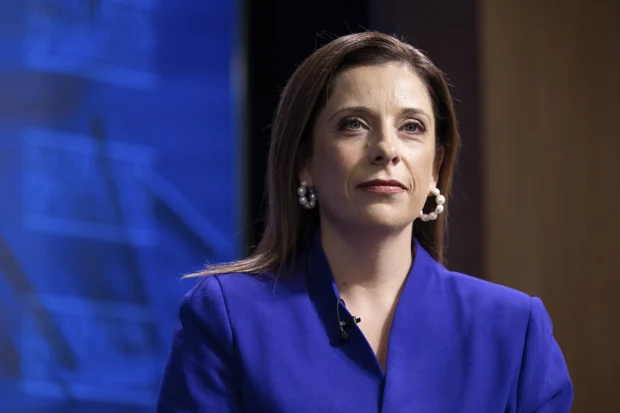
Aged Care Minister Anika Wells said increased taxes, as well as mean testing, will be considered by the task force into aged care sustainability. Photo: Alex Ellinghausen.
Systems will be developed for older people who require residential care to be able to choose their provider through a greater choice and control in decision making.
There is even a funding uplift to the National Aboriginal and Torres Strait Islander Flexible Aged Care Program to build the capacity of Aboriginal Controlled Organisations, so that First Nations elders will continue to receive the care they need on Country.
The Aged Care and Other Legislation Amendment (Royal Commission Response) Act 2020 received royal assent on 5 August 2022 and implemented nine measures to improve accountability and transparency and responds to 17 recommendations of the Royal Commission into Aged Care Quality and Safety.
The nine measures of aged care reforms include:
Serious Incident Response Scheme (SIRS) has been extended from residential aged care to include home care and flexible care delivered in a home or community setting.
Information sharing between Commonwealth agencies across aged care, veterans’ and disability sector under specific circumstances.
Code of conduct to approved providers, governing persons and aged care workers.
Star ratings for residential aged care.
The measures in this Act aim to ensure greater transparency and accountability of approved providers and improve quality of care and safety for older Australians receiving aged care services.
The Royal Commission into Aged Care Quality and Safety (Section 86) also identified that staffing issues are critical to the quality of aged care, with a recommendation of at least one registered nurse (RN) be on site per residential facility at all times.
Approved providers must have at least one RN on-site from 1 July 2023, and on duty 24 hours a day, 7 days a week, at each residential facility.
Want to know more?
The suite of changes with the aged care reform will be presented on June 21-23 at the largest gathering of Australia’s aged care providers at ICC Sydney for the 4th Aged Care Week.
Around 400 attendees will take part in 60 sessions and hear from 80 residential providers presenting on Aged Care Workforce, Aged Care Tech, Aged Care Financial Sustainability and Care Models and Customer Experience.
The event is organised by the Australian Healthcare & Hospitals Association (AHHA) – to present the Government’s plan to reform a sector that is facing challenges of increased costs, staff shortages and new compliance requirements.
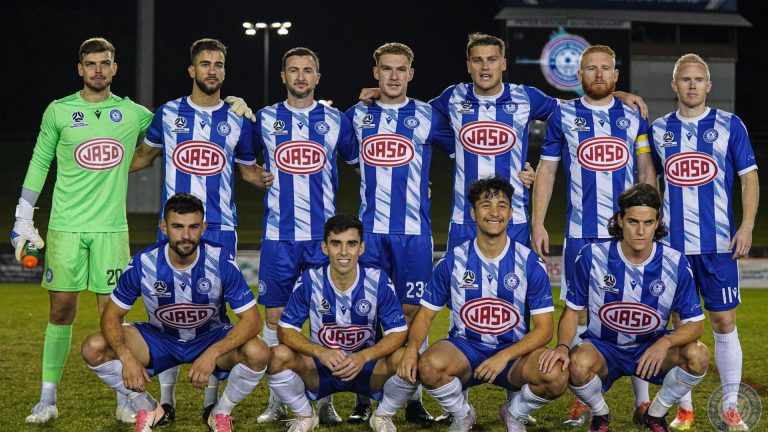
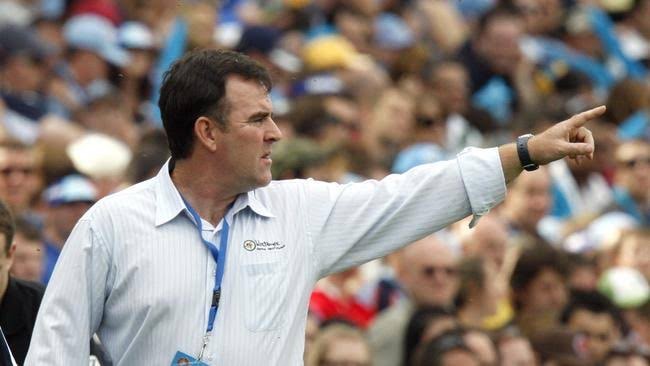
The General Manager of Sydney Olympic FC Lawrie McKinna gave a statement to The Greek Herald after the announcement.
“I have just been notified that we have received an email from Football Australia containing the application form, terms and conditions for participation in the new National Football Championship…” McKinna said.
Lawrie Mackina
“I want to assure the members and friends of Sydney Olympic that the Club president Damon Hatzimanolis, players, coaches and his thousands of fans want to see their team compete in the new National Division and I am sure we will achieve it.
“From the beginning, we have carefully studied all the participation files and our club meets all the conditions for participation.
“We have a stadium with high standards of football facilities, excellent finances, sponsors, fans and a rich long history in Australian football, for this reason I am optimistic that 2024 will find us in the new National Division.”
Maria Sakkari has beaten Belarusian Aliaksandra Sasnovich at Rot-Weiss Tennis Club on Thursday evening to reach the quarter-finals of the Berlin Open.
In the first set, Maria Sakkari reached the break with 2-0 and after that made it 3-0 with her service. Despite efforts from Sasnovich to take back the break, Sakkari ended up winning the set with break (6-2).
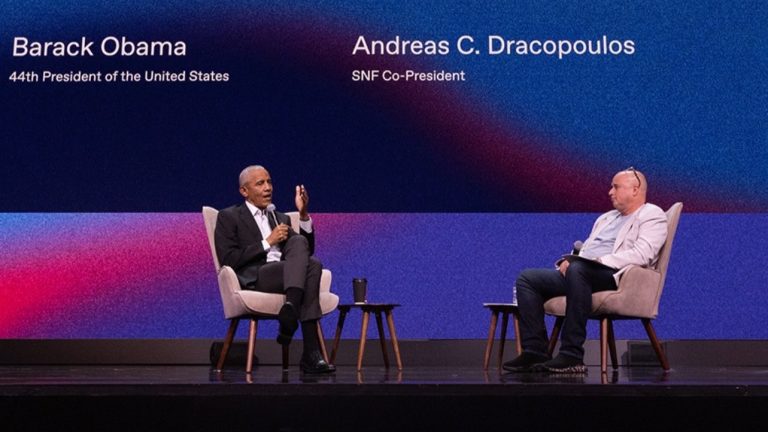
Former US president Barack Obama spoke at the Stavros Niarchos Foundation (SNF) Nostos Conference 2023 in southern Athens on Thursday.
The Conference was held at the Stavros Niarchos Foundation Cultural Center and has seen researchers and activists coming together to discuss the progress of the Child & Adolescent Mental Health Initiative and tackle topics such as loneliness and its effects on mental health.
During the Conference, Obama had a conversation with SNF Co-President Andreas Dracopoulos and discussed strengthening democratic culture, and the significance of investing in the next generation of leaders.
— Stavros Niarchos Foundation (SNF) (@SNForg) June 22, 2023
Obama said democracy can work out if given a chance, but it is also a difficult form of government rule, because you have to coexist with people with different ideas than yourself.
What is particularly dangerous, he noted, is the extreme-right populist parties in Europe and the United States that give the impression that they will do anything to win elections and tear down norms or manipulate voting rules.
This is the second year Obama has appeared at the Conference.
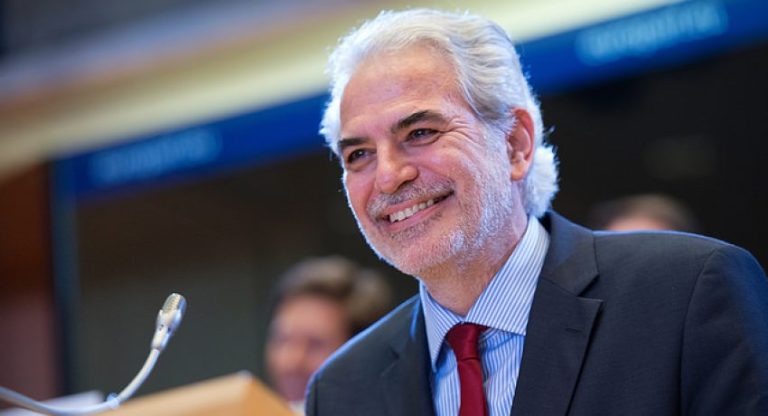
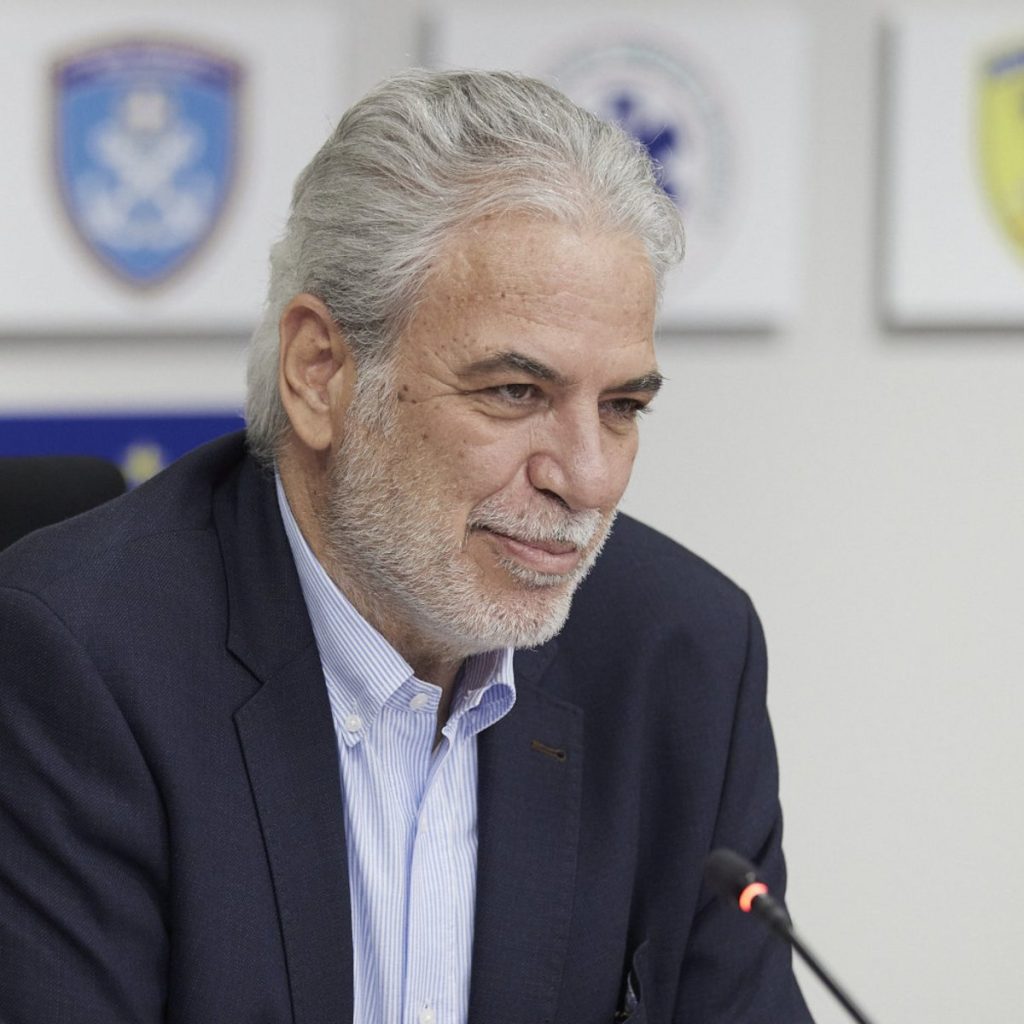
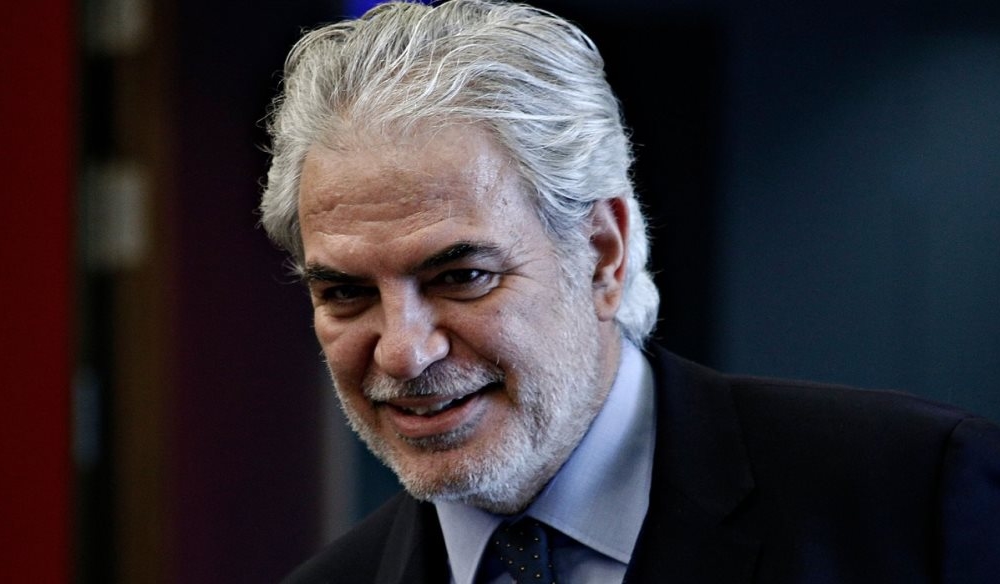
The presence of Christos Stylianides in Greece’s Ministry of Climate Crisis and Civil Protection was the “passport” in order for him to be on the ballot for New Democracy. Mr Stylianides was called by Kyriakos Mitsotakis at a pivotal moment to take a particularly key position in government at the time. He declares himself a soldier and ready to help in any way, as no one is redundant in the struggle for Greece to progress.
Representing Greeks of the diaspora on the blue ballot, the Cypriot politician is a man who is well aware of the agenda regarding the Greeks abroad and is the duly qualified person to give a series of answers that concern Greek diaspora. Mr Stylianides spoke exclusively to The Greek Herald a few days before the second polls and emphasised that Greeks abroad are not second class, nor should they be treated as such.
Among other things, he stated that the aim is to promote a safe and reliable electronic voting system, as it exists in all modern states, and in addition, the adoption of postal voting will be considered, since this is the mandate of Mitsotakis. At the same time, he emphasised that Australia is an important strategic partner of Greece and thanked the crews of Australian pilots who in recent years have been coming to Greece every summer to strengthen the country’s firefighting capabilities. Finally, he said that the Australian community has had a great and multifaceted contribution to the long-term building of ties between Greece and Australia.
Although Australia has a very large number of expatriates, those registered on the electoral rolls were a few hundred. What are your thoughts of the diaspora voting law?
There is no doubt that the initiative of Kyriakos Mitsotakis to institutionalise the vote of expatriate Greeks is a reform with a symbolic and substantial character. It is a political act that makes it clear that Greeks abroad are not second-class Greeks. That the issues that concern them are not of minor importance and there is a will to deal with them methodically and effectively in close cooperation with the diaspora so that they can play a more active role in the political life of Greece. It is a fact that there have been obstacles and difficulties, which the Mitsotakis government tried to deal with.
Mr Stylianides.
However, with the passing of the law, an important step was taken in a long-standing request of the diaspora Greeks. It was the first step. Of course, there is room for improvement and simplification of the legislative framework, so that it becomes possible for the largest possible number of diaspora Greeks to participate in the electoral procedures without unreasonable exclusions. Our purpose is to promote a secure and reliable electronic voting system, as it exists in all modern states. In addition, we will consider the adoption of postal voting. This is the mandate of Mitsotakis. Personally, I will work with my colleagues and contribute with all my strength so that the legislative framework allows the greatest possible participation of diaspora Greeks in the electoral process.
Is Australia a minor strategic ally for Greece? I ask because geographically it is very far away and may not be on the “frontline” of interest, although it is a country with a very strong Greek element.
In the modern era of the technological and communication revolution, geographical distance cannot be considered an obstacle between Greece and Australia. The historical ties of the two countries, which are actively fuelled by the Greek diaspora of Australia, are stable and strong over time. The large Greek community is extremely lively and dynamic, with a valuable and multidimensional contribution to the political, social, economic and cultural development of the country. It also functions as a bridge of friendship and cooperation between two countries. Therefore, Australia is an important strategic partner for Greece.
Greek Australian relations are based on common universal values: respect and defence of the principles of Democracy and Freedom, respect for the Rule of Law and Human Rights. This value framework is the basis on which the already close relations between the two countries develop both bilaterally and in the context of international organisations, as was confirmed during the recent visit of the Governor General of Australia to Greece and the meetings he had with Greece’s President and the Greek Prime Minister.
The large number of Greek diaspora but also the increased tourist flow of Australians, brought back the operation of the EOT office in Melbourne. Should we expect even more joint actions between the two countries in the next four years?
The reopening of the EOT office in Melbourne is yet another tangible proof of the strategic importance of Australia and our will to further develop the relations between the two countries. But let me also refer to the demanding field of Civil Protection and in particular forest firefighting where I have personal experience and involvement as the former Minister of Climate Crisis and Civil Protection. I feel particularly satisfied that during my term, Greece-Australia cooperation on these issues was upgraded and strengthened.
Mr Stylianides speaks with The Greek Herald.
We further promoted the exchange of know-how and good practices in matters of prevention and response to emergencies due to natural disasters. I would also like to take this opportunity to thank the crews of Australian pilots who in recent years have been coming to Greece every summer to strengthen our country’s firefighting capabilities. So, our will for even greater support is a given and we want to broaden the scope of our cooperation to address common global challenges, such as the consequences of the climate crisis.
After a successful stint at the Ministry of Climate Crisis and Civil Protection you found yourself on the ND ballot in an elected position. I would like you to tell me in which field you could offer the most.
My participation in the ballot of the New Democracy, representing the Greeks of the diaspora, is a great honour and responsibility. Just as it was when Prime Minister Kyriakos Mitsotakis asked me to help his ambitious reform project for the modernisation of the state and for Greece to regain its credibility at the European and international level. I could only support the innovative initiative of Mitsotakis to create the new Ministry of Climate Crisis and Civil Protection, which highlights a pioneering approach: the direct connection between the Climate Crisis and of Civil Protection. The challenge was enormous and I am particularly satisfied that this innovation is yielding practical results and was recognised at an international and European level with very positive comments.
I accepted the invitation-challenge of Kyriakos Mitsotakis to be on the ND ballot, representing the Greeks of the diaspora, because I consider it a historical necessity for Kyriakos Mitsotakis to continue to be at the helm of Greece. To advance and accelerate the great effort that began four years ago and to continue the reform work. To continue the upgrading and strengthening of all Hellenism on the European and world stage.
I am a simple soldier for the implementation of the reform project of Mitsotakis, so that Greece and Hellenism can recover the lost ground in terms of their international and geopolitical presence, in a time of geopolitical instability and uncertainty.For me, politics was not and is not a profession. I never perceived it as a “career” nor the posts as an end in themselves. It is simply the vehicle and the possibility to serve my principles, the European ‘project.’ And of course to promote a series of strategic goals in the interest of all Hellenism. After all, I am a Greek from Cyprus. Guided by this fundamental understanding, I will continue to work with Mitsotakis, as he asks me to, in order to complete the great reform effort.
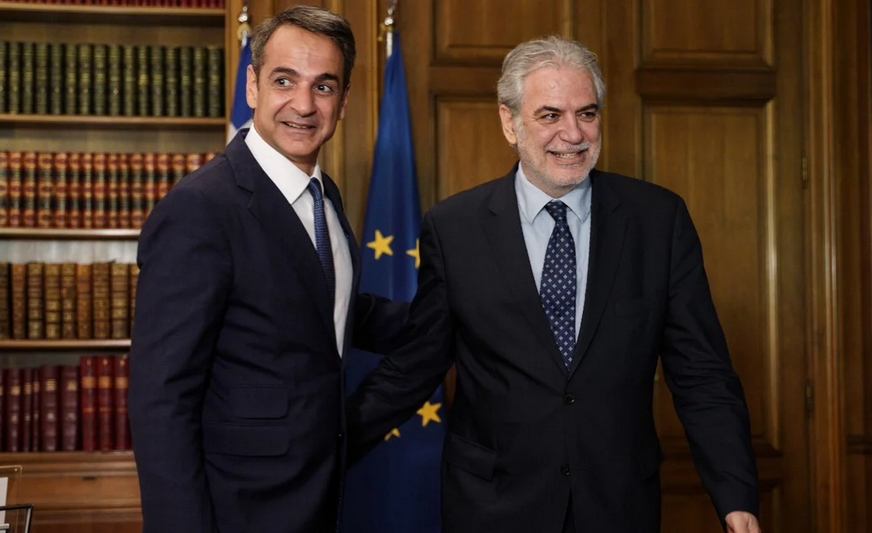
Mr Stylianides with Kyriakos Mitsotakis (left).
In 2027, four years from today, how do you envision Greece? What are the main goals that Mitsotakis government wants to fulfil?
At this critical moment, we must operate with realism and rationality. Without complacency in the face of the great challenge of tomorrow, let’s make bold actions. To keep Greece on the dynamic way of development and security. Transforming the steps we took in the past four years in leaps and bounds. The road to reform and modernisation of the state is long and difficult. That’s why we need Kyriakos Mitsotakis and his solid and reliable leadership, with which he changed the profile of the country for the better.
Based on the international and European experience I have gained over the years, I tell you that Kyriakos Mitsotakis has been recorded as a reliable European and international personality, who is an added value for Greece and all Hellenism. It would be a mistake to underestimate this finding and its importance for the Greek economy, investments, the influence of Greece and Hellenism in European and international institutions.
It is, therefore, of crucial importance to continue what Kyriakos Mitsotakis started: essential reform sections that consolidate the country’s Western and European character and ultimately strengthen its role and self-confidence. And, of course, they upgrade it geopolitically. They make it a reliable partner in the European Union, a reliable ally in NATO and a factor of stability in the south-eastern Mediterranean region. In the elections, Greek citizens, including the Greeks in the diaspora, are invited to vote for a strong government. For a government with a strong mandate that can ensure that the project that started will not only continue but will be accelerated. Dynamic, bold and stable. Having Kyriakos Mitsotakis at the helm – a leader with political weight and international credibility.
Finally, please send a message to the Greek community in Australia.
The Greek community in Australia has a greatly contributed to the creative cooperation and the timeless building of ties between our countries. I repeat that both Kyriakos Mitsotakis and I personally and my colleagues will work with the Diaspora Greeks to upgrade this relationship and to give diaspora the tools they needs to continue their vital work promoting the interests of all Hellenism. Our goal is common: to consolidate a modern institutional relationship of the Greek state with all of Hellenism. Elections concern us all. All Greeks inside and outside Greece. Therefore, I invite you to participate in the polls on June 24, sending a clear message that Greeks abroad are not second class Greeks. They participate and claim the equal role they are entitled to in the affairs of Hellenism.
The Australian Hellenic Medical Charity Inc (AHMCI) has raised $120,000 to purchase medical equipment for Ikaria Hospital in Greece.
AHMCI raised the funds during its annual Gala Dance, which attracted 200 guests and was held on Friday, June 2 at the home of the Cyprus Community of South Australia in Welland.
The funds will go towards the purchase of an Anaesthetic Medical Unit, and 15 medical beds fitted with removeable boards and ABS side rails, drainage bag holders and an IV pole.
President of the AHMCI Kosta Barkoukis told The Greek Herald he was incredibly proud of what the charity has achieved.
“The AHMCI foundation was a dream over seven years ago and thanks to the hard work and support of the SA public, Greek and Cypriot community, we have met our business objectives. However, there is still a great deal of work to do,” Mr Barkoukis said.
Since its beginnings in 2017, the AHMCI has contributed more than $520,000 in support of hospitals across Greece with constrained budgets and in need of assistance. Foodland has been a major sponsor of the AHMCI from the start.
The charity have successfully delivered an endoscopy unit, which was purchased from an SA supplier, to the Aglaia Kyriakou Children’s Hospital. The Greek Fires Appeal committee from the Greek Orthodox Community of SA also assisted with the purchase of the unit.
*The AHMCI board consists of the following members: Hon. Chief Justice Christo Kourakis (Patron), Kosta Barkoukis (President), Connie Loutas Zisos (Vice President), Despina Pastrikos (Treasurer), Prof. Andreas Evdokiou and Dr Andrew Zisos (Medical Advisors), Tim Stivahtaris (Medical Product Advisor), Lukasz Wyszynski (AHMCI lawyer), George Apostolou and Sotos Phillis.
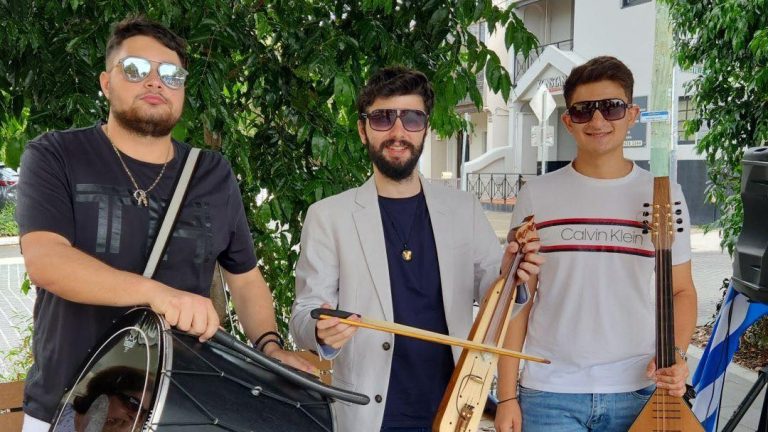
Kosta Papoulidis released on Tuesday the first ever Pontian EP album to be made by an Australian-born musician titled ‘To Vrad so Ouranon’ (At night in the sky).
‘To Vrad so Ouranon’ is also the first ever Pontian album to come out of Sydney, where Mr Papoulidis is based.
Mr Papoulidis is joined on the album by his fellow musicians and close friends, Peter Tsenkas and Alexander Mountakis, and they combine both traditional and all original melodies with new lyrics.
The proud Pontian Australian said the title for the album has multiple layers of symbolism and comes from a music track which talks about the juxtaposition of the dark night sky with the bright stars which shine through that darkness.
“I thought this appropriate for the title of the album as it can also be used to represent our rich, shining Pontian-Hellenic culture,” Mr Papoulidis explained.
“Living in the diaspora, specifically in Australia, our community is in a position where most of our surroundings don’t understand us, don’t understand our mission, our culture, our language or our music, even amongst the Hellenic population. This is represented by the ‘darkness.’
“By bringing our traditional music and ways of making traditional-style music into the modern age and to the foreign lands that many Pontians find themselves in, we create these ‘stars’ that shine through the darkness.”
In a statement to The Greek Herald about the album, Mr Papoulidis added that his aim was “to inspire the young creative minds of our community to produce their own cultural content whether that be music, films, videos or art pieces.”
“We have an amazingly rich traditional Hellenic culture with music that is compiled of many complex poetic nuances that would make Shakespeare go mad,” the young musician said.
“This traditional music is so undervalued and underrepresented amongst today’s young Greek community. My goal is to bring traditional music to the youth of the diaspora and to inspire them to learn about their culture, music and history.”
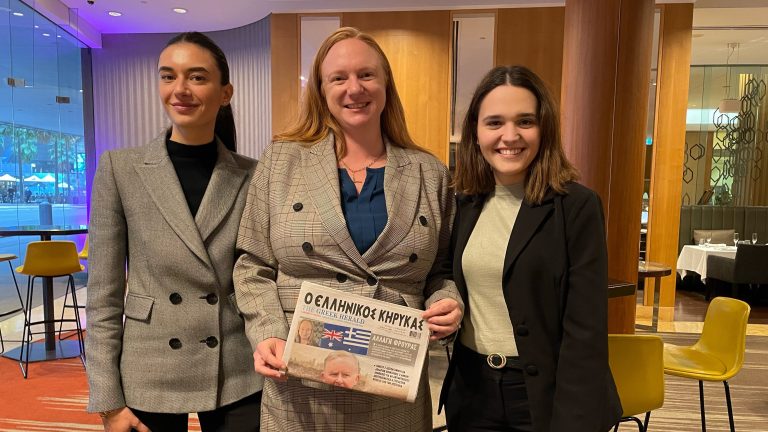
Australia’s new Ambassador to Greece Alison Duncan met with The Greek Herald‘s Publisher Dimitra Skalkos and Digital Editor Andriana Simos in Sydney on Wednesday.
Ms Duncan, who is also accredited to Bulgaria and Romania, will take over from outgoing Ambassador Arthur Spyrou when she arrives in Athens, Greece in early July.
Ms Duncan is a senior career officer with the Department of Foreign Affairs and Trade and was most recently Assistant Secretary of the Consular Communications and Policy Branch. She has previously served overseas in Indonesia, New Zealand and Solomon Islands.
During the meeting with Ms Skalkos and Miss Simos, Ms Duncan discussed her top priorities as Ambassador and said she will follow discussions around the Double Taxation Agreement between Australia and Greece, and increasing Australian investments in Greece.
Thrilled to share the news that I’ve been appointed as Australia’s next Ambassador to Greece, Bulgaria and Romania! 🇬🇷🇧🇬🇷🇴🇦🇺 https://t.co/JGvsDwqUfG
Ms Duncan also spoke passionately about her ideas for strengthening the bilateral relationship between Greece and Australia through Greek language initiatives, the arts, and more educational partnerships between tertiary institutions.
At the end of the meeting, Ms Skalkos presented Ms Duncan with two editions of The Greek Herald‘s print newspaper, including a special edition on ANZAC Day. Ms Duncan is connected to Gallipoli and the Greek island of Lemnos during WWI through her great-grandfather.
“The Greek Herald welcomes the appointment of Ms Duncan as Australia’s new Ambassador to Greece and we look forward to working together in future to continue informing our readers of important government initiatives aimed at the Greek diaspora,” Ms Skalkos said after the meeting.
“We wish Ms Duncan and her team all the best in her posting.”