Home Blog Page 868

Expert says extra virgin olive oil can help stop Alzheimer’s

0

By Lisa Radinovsky from Greek Liquid Gold.

At the Cretan Lifestyle Conference in Rethymno, Crete in November, Dr. Magda Tsolaki shared several types of evidence from a clinical trial to support her claim that extra virgin olive oil is “more promising than any drug being studied or any drug which already has been approved” for prevention of Alzheimer’s disease, as well as being safe and ready to use.

Unlike medications being studied in clinical trials, extra virgin olive oil (EVOO) has been available and safely used for thousands of years.

Unlike medications that have recently been approved by the US Food and Drug Administration (FDA), Tsolaki pointed out, EVOO has no serious side effects, and patients with Mild Cognitive Impairment (MCI, which precedes full-blown Alzheimer’s) had improvement. So why isn’t extra virgin olive oil being used to help prevent Alzheimer’s?

There has not been enough evidence that it can do so. However, according to greekliquidgold.com, Magda Tsolaki, MD, PhD, a neuropsychiatrist who is the Chair of the Panhellenic Alzheimer Federation, Professor Emeritus of Neurology, and Coordinator of the Laboratory of Neurodegenerative Diseases at Aristotle University of Thessaloniki, Greece, has spent ten years gathering such evidence, and EVOO’s time as an Alzheimer’s preventative may be coming.

Larger clinical trials are needed to ensure that early clinical results can be reproduced, but Tsolaki believes EVOO is now patients’ best choice for preventing—and even slowing down–a disease that still has no cure. (Patients should, however, always consult their doctors before making any changes to their treatments; this article must not be considered medical advice.)

As Tsolaki explained, there are not any medications on the market that appear to help prevent Alzheimer’s disease more than EVOO does. In small clinical studies, she has seen cognitive improvement after one year with olive oil, but Tsolaki reported that in its clinical trials Lecanemab (a drug approved by the FDA for early Alzheimer’s treatment) only succeeded in delaying the progression of the disease, not in making any improvement.

Lecanemab may also have potentially serious side effects: it has been associated with edema (fluid formation) and hemorrhage (bleeding) in the brain. There may be a greater risk of these side effects in certain patients, and the drug is not expected to help others. Tsolaki reported that this makes it inappropriate for the majority of Alzheimer’s patients who are carriers of AΡOE ε4 (about 65%) to use Lecanemab. On the other hand, she added, “with olive oil you only have a tasty food to eat. You may gain weight if you eat too much, but only 3 spoons or 50 ml/day of moderately high phenolic EVOO with a health claim is enough.”
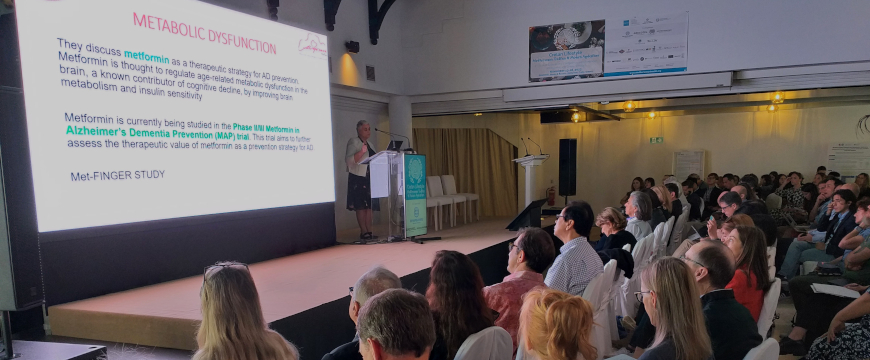
To support her claims, Tsolaki presented a talk titled “Evidence for Olive Oil Supplementation as a Dementia Prevention Strategy” at the Cretan Lifestyle Conference. She started by discussing a recent review article that describes medications now being studied for their ability to combat seven different “mechanisms” of Alzheimer’s disease (AD), or reasons why the symptoms occur (such as inflammation and oxidative stress).

While several of the drugs she mentioned offer some hope, many studies of them have not yet shown results, “so that we will have to wait a long time for an answer about their effectiveness,” as Tsolaki explained. For this reason, and because Alzheimer drugs can have very serious side effects, EVOO may offer a better immediate solution for patients with Mild Cognitive Impairment who need help now.

In her presentation, Tsolaki pointed out that the FDA-approved drug “Lecanemab significantly slowed disease progression” from 6 months to 18 months, while reporting that the MICOIL clinical trial of EVOO showed actual improvement in three scales (not only slowing down disease progression), without any side effects after one year.

As explained in detail in eight scientific articles in the Journal of Alzheimer’s Disease, as well as Experimental Gerontology, and also GSC Advanced Research and Reviews in 2020 and 2021, the MICOIL study provided many different types of evidence (in both clinical and laboratory results) that EVOO containing moderate to high amounts of natural phenolic compounds helped patients with MCI remain at or even return to a better, more normal cognitive state, while a control group progressed toward Alzheimer’s over 12 months. The MICOIL researchers were considering the stage of MCI, but Tsolaki hypothesizes that if someone has entered dementia, EVOO is likely to slow down its progression.

As she explained in her presentation, Tsolaki’s research team believes there are many reasons that EVOO has this positive effect on the brain; the easiest for nonscientists to understand is the established link between Alzheimer’s and chronic inflammation, on the one hand, and the well-known anti-inflammatory effects of the olive oil components oleuropein and hydroxytyrosol, on the other. Extra virgin olive oil’s neuroprotective, anti-coagulent, and anti-oxidant properties also contribute to its ability to fight off Alzheimer’s. As one of Tsolaki’s articles indicates, with regular use EVOO also offers anti-atherosclerotic, anti-cancer, and anti-microbial properties.
Magda-Tsolaki-talk

Since larger clinical trials are necessary to provide stronger proof that EVOO can help Alzheimer’s patients, Tsolaki and her team continued their research with a new clinical trial. In the new trial, 100 patients with MCI regularly consumed high phenolic early harvest EVOO while following the Mediterranean diet, and another 100 patients simply followed the Mediterranean diet, using small amounts of olive oil purchased from the supermarket. The goal was to examine whether high phenolic extra virgin olive oil can stop all the processes that lead to Alzheimer’s, including the underlying causes (or “pathogenetic mechanisms”) that have been discovered recently, to prevent the disease. A statistical analysis of the results is now underway; a report will be submitted to the New England Journal of Medicine (JAMA) in the near future.

Tsolaki concluded her presentation by suggesting that the best treatment for Alzheimer’s may be a “cocktail” of natural products such as extra virgin olive oil and a combination of exercise, positive thinking, a comfortable environment, and a reduction in vascular risk factors (which include smoking, high blood pressure, high cholesterol, and obesity). She quoted Hippocrates, the ancient Greek “father of medicine,” who said 25 centuries ago, “preventing is better than treating” and “let food be thy medicine and medicine be thy food.”

Tsolaki believes “olive oil is a medicine, not a food”—an anti-inflammatory, anti-oxidant, neuroprotective, and anti-coagulent medicine. Of course, olive oil has not yet been approved as a medicine to treat any disease, and scientists do not recommend that anyone discontinue treatment recommended by their doctor, but extra virgin olive oil does already have official health claims according to the European Food Safety Authority and the US FDA, and there is evidence that it helps to prevent or cure numerous diseases. t

Companies and organisations interested in offering donations that could help support research on EVOO’s health benefits for Alzheimer’s patients are invited to email Tsolaki at tsolakim1@gmail.com. Additional funding will be required for larger studies. The results are expected to have far-reaching benefits for millions of people worldwide.

*Originally published on Greek Liquid Gold: Authentic Extra Virgin Olive Oil (greekliquidgold.com). See that site for recipes with olive oil, photos from Greece, agrotourism and food tourism suggestions, and olive oil news and information.

Google’s Artificial Intelligence model now available in Greece

0

Google announced that Bard Gemini Pro, its Artificial Intelligence (AI) model, is now available in Greece.

According to amna.gr, the technology giant announced a significant breakthrough in the field of AI, introducing Gemini – its largest and most capable AI model – in December 2023.

Google’s Bard, its chat-based AI tool, would start using a specially tuned version of the Gemini Pro model, it said.

Bard with Gemini Pro is particularly capable of understanding, summarizing, perceiving, generating code, and programming.

Google said that as part of its responsible approach to AI, it collaborated with experts, legislators, and regulatory authorities to protect privacy regarding this expansion. 

Source: amna.gr

Two antiquities repatriated from Switzerland to Greece

0

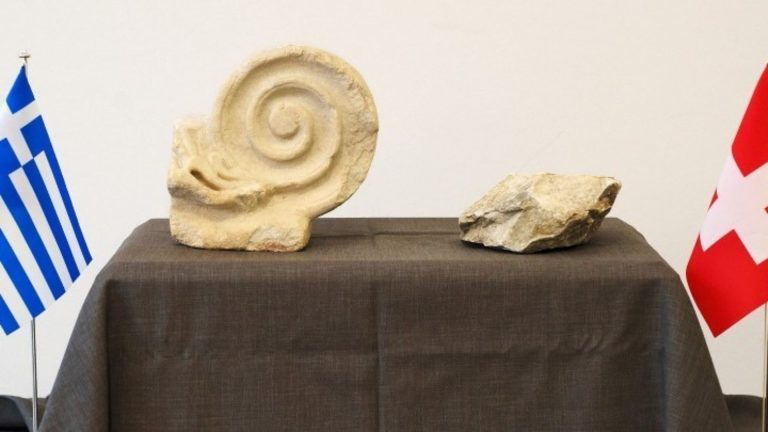
Two antiquities have been repatriated from Switzerland to Greece on January 23, according to a statement by the Greek Ministry of Culture.

The statement mentions that the two antiquities which had been illegally removed from Greek territory at an unknown time were repatriated from Bern.

According to amna.gr the first is a fragment of a stone inscription from which five verses with main names are partially preserved. The inscription dates to the Hellenistic era (late 3rd – early 2nd century BCE) and is said to originate from the island of Kos.

The second is s fragment of a marble Ionic capital dating to the Roman era (1st – 2nd century CE), with its provenance stated as the Ancient Agora of Corinth.

The objects were delivered by Swiss citizens in the autumn of 2022 and spring of 2023, respectively, to the Archaeological Service of the Canton of the Grisons (Canton des Grisons), which documented their Greek origin.

Photo by Pixabay

The ministry stated that the repatriation of the two artifacts “demonstrates the effectiveness of bilateral agreements for preventing and addressing the illegal trafficking of cultural goods that Greece has entered into with many countries, in line with the relevant recommendation of the 1970 UNESCO Convention on the Means of Prohibiting and Preventing the Illicit Import, Export, and Transfer of Ownership of Cultural Property”.

The repatriation also shows how effective have been the initiatives in Greece and abroad which aim to raise awareness about the need to protect cultural heritage and fight against trafficking.

Source: amna.gr

NSW Legislative Council passes motion for Greek genocide education

The NSW Legislative Council unanimously passed the motion ‘Commemorating the 75th Anniversary of the UN Convention on the Prevention and Punishment of Genocides’ on Wednesday, February 7.

The Hon. Chris Rath MLC first presented the Notice of Motion on Thursday, December 7 in the NSW Legislative Council.

In the motion, Hon. Rath acknowledged that December 9, 2023, marked the 75th anniversary of the adoption of the UN Convention on the Prevention and Punishment of the Crime of Genocide.

Hon. Rath’s motion also honoured the primary initiator of the Convention, Dr Raphael Lemkin, influenced by his studies of the Armenian Genocide and the Jewish Holocaust.

As part of his motion, Hon. Rath then urged the NSW Government to expand the secondary school Holocaust education curriculum to encompass Armenian, Assyrian, and Greek Genocides, and establish a museum to create awareness about these genocides.

The motion garnering widespread support on Thursday and saw several members of the NSW Legislative Council express their backing, including Daniel Mookhey MLC (ALP), Dr Amanda Cohn MLC (GRNS), Susan Carter MLC (LIB), Mark Buttigieg MLC (ALP), Jacqui Munro MLC (LIB), Anthony D’Adam MLC (ALP), and Stephen Lawrence MLC (ALP).

The Joint Justice Initiative (JJI), which is a collaborative advocacy endeavour by the Armenians, Assyrians, and Greek communities, extended its heartfelt gratitude to Mr Rath for his support.

The JJI said funding for a dedicated museum will serve as a vital educational resource, enriching students’ comprehension of historical events.

Exploring the Greek language diaspora: The journey of Eva Boleti

By Mary Sinanidis

Eva Boleti, an up-and-coming figure in the study and teaching of the Greek language in Australia, pours over immigrant letters, diaries and recordings. Fascinated by the transformation in their mother tongue as they become acclimatised to the Australian way of life, she cannot help but draw inspiration from her own family’s journey.

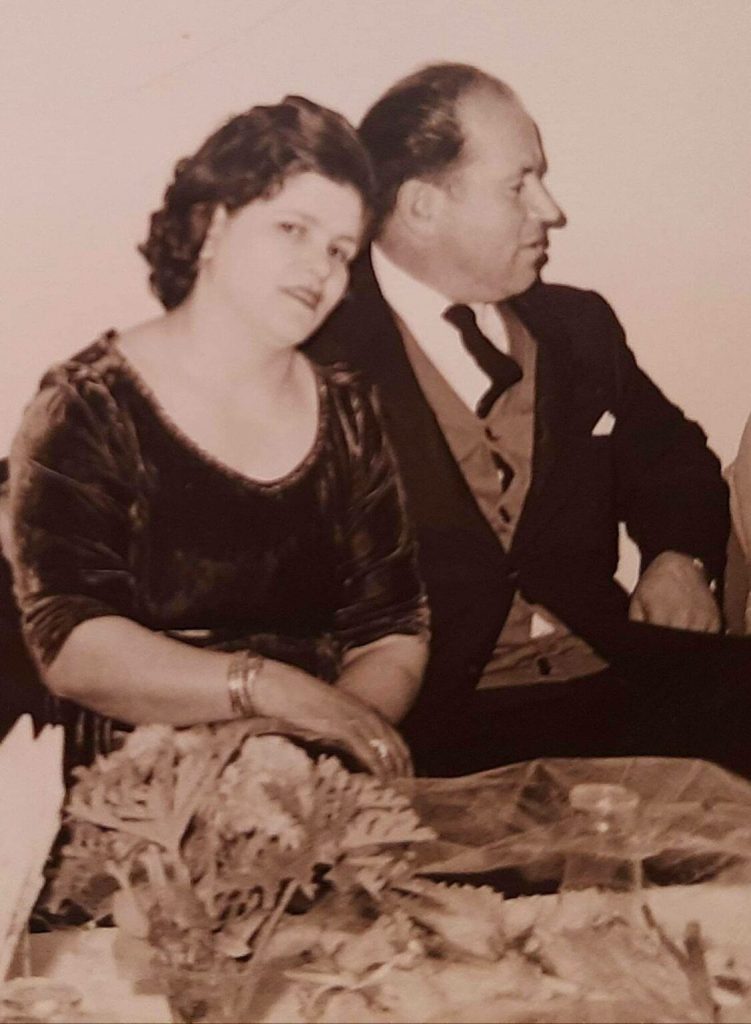
“I was deeply influenced by my grandparents, Alek (Alexis) and Evanthia, who passed away a few years ago,” Eva tells The Greek Herald.

 “Their travels to Australia and then back to Athens, made it easier for me to decide to leave Greece and go to other countries, like Spain, Belgium, Portugal and Vietnam, before coming to Sydney.”

Eva’s grandparents made a life for themselves in Bowral in the 1950s.

Alek (Alexis) and Evanthia
Eva’s grandparents, Alek (Alexis) and Evanthia.
Alek (Alexis) and Evanthia.
Eva’s grandparents, Alek (Alexis) and Evanthia.

“There’s even a building named after my grandfather and his brother – the Syros Bros building. But, despite becoming quite established, my grandparents sold everything and returned to Greece with their daughters,” she says.

Her mother became an English teacher and Eva’s friends would comment that she had kept her Aussie accent, though her aunt had not. And there were the Anglicised words that crept into her family’s vocabulary, remnants of the migrant experience that laid the foundation of Eva’s curiosity and start of her linguistic journey.

Through her PhD research, she explores the interplay between language, culture and identity.

“I’m focusing on differences among the generations in relationship to home and the way they view nostalgia,” Eva explains, adding that her particular focus is on the third generation.

As part of another University of Sydney project, titled Opening the Multilingual Archive of Australia, Eva studies written documentation of migrants.

“To my big surprise, there were many educated Greeks who came here, not just poor people who escaped to Australia for a better life,” she says, pointing to the Metaxas collection of letters from the 1800s.

“Members of this family didn’t just come here to work but to enjoy travel and experience life in Australia, and, from their writing, you could tell they had a high socioeconomic background.”

In other writing, Eva points to the diary of young Fay Sklavos, who came to Australia with her parents.

“Her depictions are so vivid. Filled with youthful optimism, dreams and readiness to embrace change, she described the voyage. Her writing is descriptive with references to dolphins, and chattering families as they approach what she calls the ‘promised land’,” Eva says.

“After a 10-year gap, the same girl resumes writing in the diary. But time has diminished her language and spirit, and the youthful enthusiasm has given way to disappointment and bitterness. Books and writing were not a priority over the 10 years. If you don’t practice language, it leaves you.” 

Eva says the writing shows how the immigration experience evolves, and language also changes. She notes our accents and words also inform our identities and connection with our culture.

“Even the 2nd generation, born and raised in Australia, have their own accents. You can tell from their speech that they are children of Greek immigrants,” she says.

“I feel very privileged to be able to experience what they experienced through their letters – reading about their hopes and aspirations. But I can also empathise through my own experience as someone who has left Greece. And all this also makes me feel closer to my grandparents.”

As a traveller, Eva finds a sense of ‘home’ through the writings of migrants.

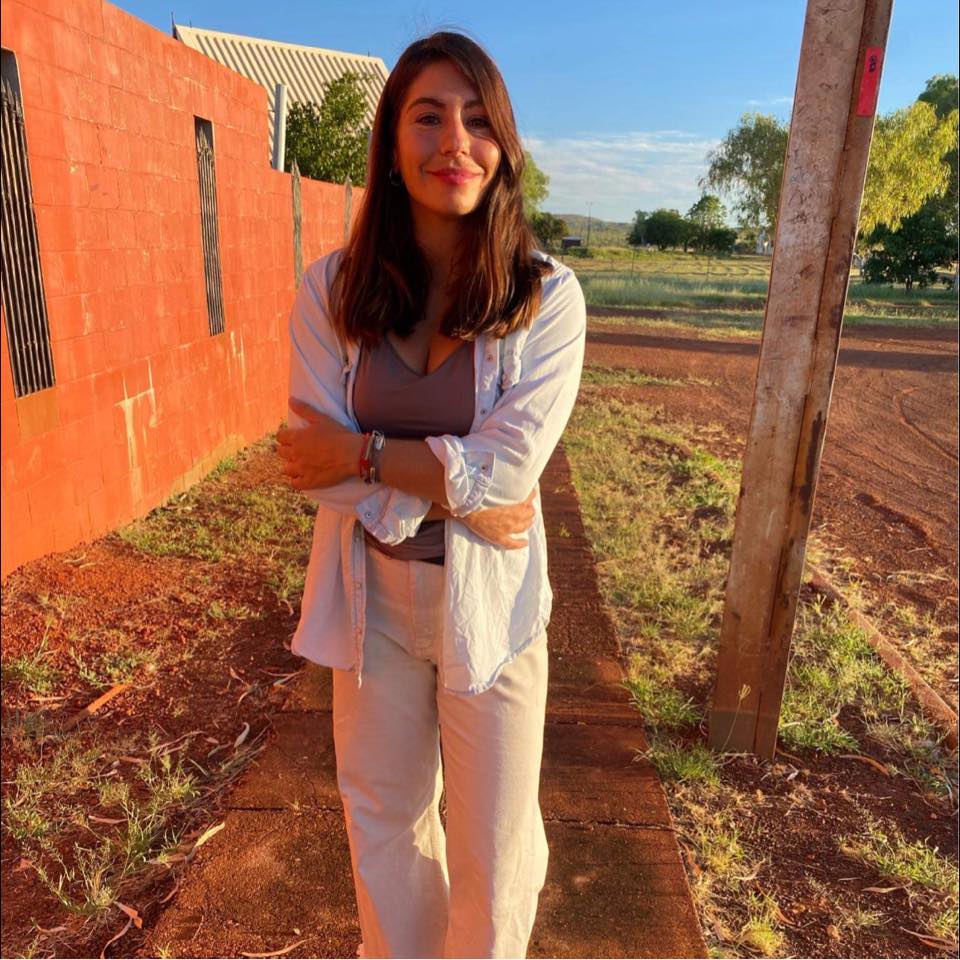
Eva Boleti.
Eva Boleti.

“Heritage language serves as a dynamic link to our immigrant origins, encapsulating the resilience and diversity of our journey. Embracing it not only honours our past but also enriches our present, fostering a meaningful sense of belonging,” she says.

Beyond academia, Eva’s commitment to preserving and promoting the Greek language extends to her role as a high school teacher – including among Indigenous Australians.

“I’ve always wanted to experience living in a remote community from an anthropological interest while paying my respect to the first people of Australia,” Eva shares.

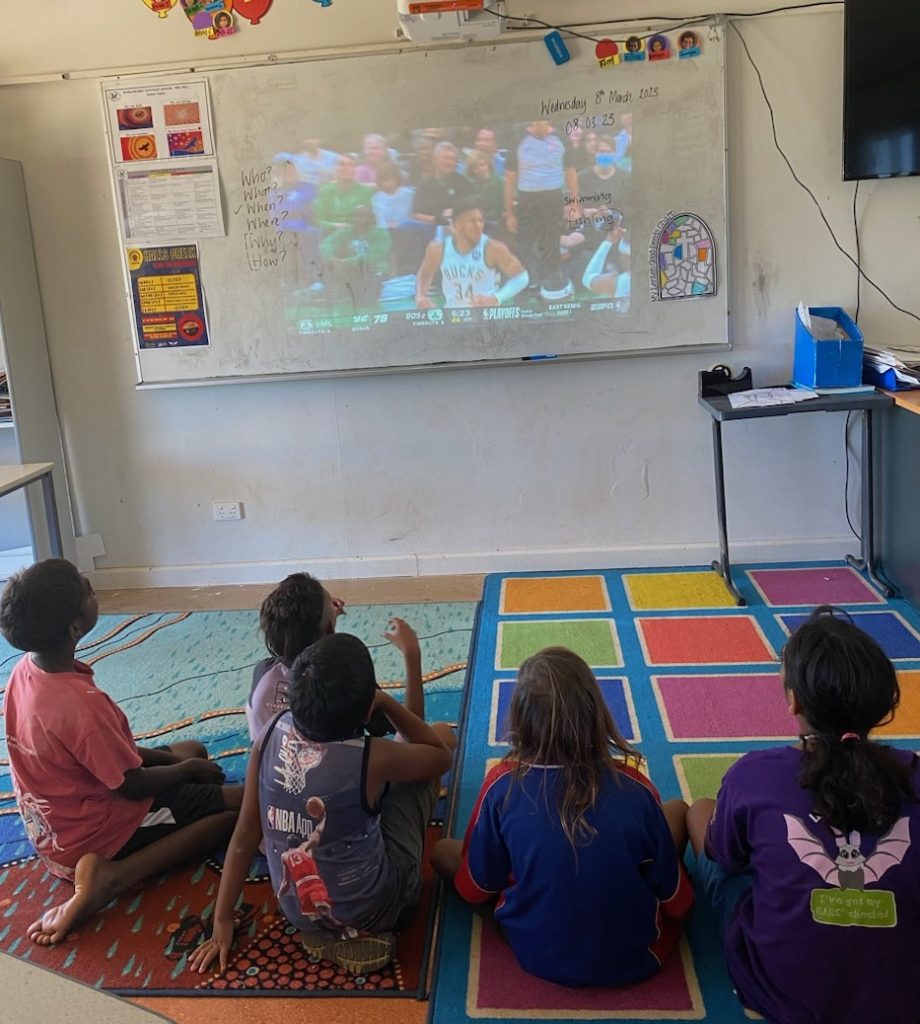
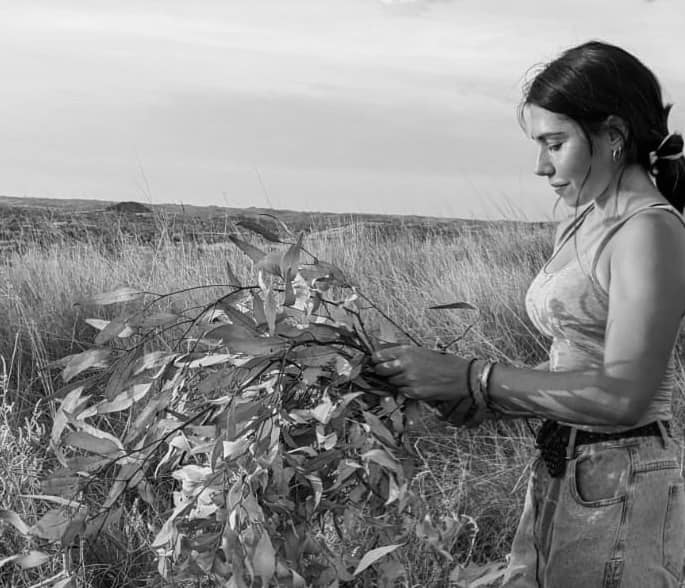
“Imagine my surprise when I went to remote Kununurra in far north Western Australia, east of the Kimberley, and surrounded by heat and red dust, I met with Indigenous Australians who ate what they had hunted, lived very remotely and yet their children still knew about Athens, and asked me about Giannis Antetokoumpo. They said he inspired them.”

Eva Boleti in Western Australia.
Exploring-the-Greek-language-diaspora.-The-journey-of-Eva-Boleti.-1-rotated
Eva Boleti in Western Australia.
Exploring-the-Greek-language-diaspora.-The-journey-of-Eva-Boleti.

Eva says she was impressed by the parallels between Indigenous Australian lifestyles and Mediterranean living.

“Their slower pace of life, connection with their families, resilience, and just being present in the moment was very similar,” she says.

As the Indigenous children had fun learning to write their names using Greek characters, Eva saw in practice the transformative power of language in bridging diverse communities.

“It enriched my own Australian experience,” Eva says.

Back in Sydney, she remains dedicated to unravelling the intricacies of language, culture, and identity.

 “Understanding a language brings you close to your cultural roots. It shapes our sense of belonging and heritage in an ever-evolving diaspora,” Eva concludes.

Eva will be in Melbourne on March 14 to give a lecture titled, “Biculturalism, acculturation, and the Greek women of the diaspora” as part of the 2024 Greek History and Culture Seminars at the Greek Centre (168 Lonsdale Street, Melbourne).

In Good Taste Festival: FiloXenia band to bring music of Greece to south Sydney

The popular FiloXenia band are set to bring the music of Greece to Hurstville in Sydney’s south on Friday, February 16 at the In Good Taste Festival.

In Good Taste is being organised by the Georges River Council and will once again bring the tastes of the world to the streets of Hurstville.

A variety of food stalls will showcase many different cuisines and a diverse entertainment program will ensure there is something for everyone to enjoy.

filoxenia
The popular FiloXenia band are set to bring the music of Greece to Hurstville in Sydney’s south on Friday, February 16 at the In Good Taste Festival.

FiloXenia band will be performing from 7pm. The band features a trio of talented Greek Australian guys who had already built their “filia” (friendship) during a jam sesh that saw them combine their talents to create one of the most authentic sounds of modern Greek and English music.

Head down to MacMahon Street, Hurstville, to enjoy a range of food and drink options or head over to the MacMahon Street carpark to view the amazing entertainment on stage. 

Event Details:

  • Event: In Good Taste Festival 2024.
  • Date: Friday 16 February 2024.
  • Time: 4.30pm – 9.00pm.
  • Location: MacMahon Street, Hurstville.
www.antipodesfestival.com.au

Greece’s Deputy Foreign Affairs Minister marks International Greek Language Day

0

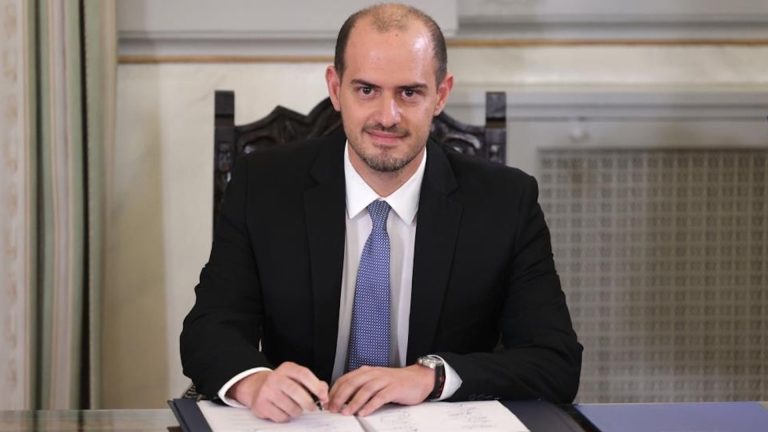
Greece’s Deputy Foreign Affairs Minister Giorgios Kotsiras has sent a special message in honour of International Greek Language Day today.

Full message in English:

“Greek women and men of the world, friends of Greece everywhere and fellow compatriots,

With a pulse of thousands of years and remarkable resilience, the Greek language has accompanied humanity for centuries.

As a result of this rare journey, there has been an accumulation of unparalleled lexical wealth, capable of interpreting the densest and most complex meanings. Serving as the foundation of every science and influencing many Western languages, the Greek language thrives within foreign vocabularies, participating in a timeless cultural assimilation.

Greek, following the phenomenon of linguistic evolution, renews and enriches itself, interpreting modern contemporary frameworks and responds to new needs. Thanks to its unique descriptive power, our language has the potential to function as a compass which gives meaning to a complex world.

Friends, our era does not favour certainties. Reality revolves around a continuous series of small and large crises, prompting us to urgently seek mutual respect, justice, and harmonious coexistence. We seek words that give substance to the above concepts. And these words are Greek: Dialogue, Diplomacy, Democracy.

With these three words starting with the letter “D,” Greek words with a global significance, our country is campaigning for election as a non-permanent member of the United Nations Security Council for 2025-2026.

To close up, I would like to refer to another Greek word starting with “D” with global significance: Diaspora.

From its ancient Greek concept to the present day, the notion and significance of diaspora have remained almost unchanged. Diaspora, is the dispersion of seeds, the journey of Hellenism’s values across the globe. Diaspora, a precious “us” that extends to the ends of the earth and tells its own story, always in Greek…

Thank you, Giorgos Kotsiras.

www.antipodesfestival.com.au

Canberra Greek School teachers highlight the importance of learning Greek

In Australia, Greek is taught nation-wide, offering students the opportunity to immerse themselves in the language of their grandparents and parents.

The Greek Herald spoke with teachers at the Greek School of Canberra to ask them about what teaching the Greek language means to them, and why it is important to pass on the language to the next generation.

Stella Alexiou

Stella has been teaching Greek as a second language since 2016 and said she loves working with young people.

When she first arrived in Australia from Greece, she said the opportunity to teach at the Greek School of Canberra was exactly what she was looking for.

“I was given the opportunity to teach the Greek language, traditions and customs,” Stella told The Greek Herald.

“Through that, I want to be part of teaching Greek to younger and older students and help them discover not only the beauty of the language, but also learn about how Greek people live and enjoy their lives in Greece.”

For Stella, some of the benefits of learning Greek include strengthening the communication between students, their families, and their loved ones in Greece.

“Learning Greek also contributes to students’ understanding of their heritage… and who they are, as well as supports individuals to create a sense of belonging and make connections,” she said.

“Through learning the Greek language there are also opportunities to explore elements of mythology, history, cooking and arts.”

The Greek teacher, who is also a maths teacher and a high school teacher’s aide, said what she loved most about teaching was “the interaction with young people.”

“I also love the ability to be able to assist young people not only learn the language, but its colloquialism, its colour, learn about the culture, the traditions, the customs, the Orthodox faith and just everyday life,” Stella said.

Marilena Christoforaki

Marilena is another teacher who moved from Greece to Australia and has been teaching at the Greek School of Canberra since 2020.

“My last job in Greece was as a Greek language and mathematics tutor for years 1 to 10, and this is what motivated my decision to become a teacher here at the Greek School of Canberra,” Marilena said.

Marilena said she thinks it’s important to learn Greek because the language gives people “the ability to understand more than 100,000 words in English and other languages, and unlocks the ability to delve into Greek history and culture.”

When asked what she loved about teaching, Marilena’s answer was simple – “working with kids.”

“Interacting with them fills me with energy,” she added. “Something I learned from them is that grown-ups can be taught by kids, too.”

Dora Vassiliotis

Dora Vassiliotis has been teaching at the Greek School of Canberra since 2018.

“I started teaching at the Greek School as I was a teacher in Greece for 23 years, and it was just natural for me to continue teaching when I came back here,” Dora said.

The Greek teacher added that she always had a passion for teaching, whether in English or in Greek.

“I love the communication with the kids, the interaction, the innocence of children and I love seeing them grow and develop,” she said.

“You gain a sense of satisfaction when you see that you put [effort] into this child and then as they get older, you watch them grow and achieve great things and use their Greek language skills in the future and then you think, ‘I had something to do with that’.

“Teaching a language is a lot more than just teaching the ABC’s and focusing on the academic aspect. It’s about educating students on morals and ethics and instilling them with life-long skills and habits.”

Dora said learning Greek is vital for young people to establish a connection with Greece.

“A lot of students have never been to Greece and some of them might not speak Greek in their homes, but the Greek School is important as it not only teaches them about the language, but it teaches them about Greece’s culture and its rich history, and helps them connect with their heritage,” Dora said.

Classes at the Greek of Canberra commence on 13 February 2024. Classes are available for primary school students in Years K-6 and Term 1 starts next week on the following days: Tuesday, 13 February 2024 and Friday, 16 February 2024. Enrolment forms are available online at https://www.greekschoolcanberra.com.au. To confirm attendance and for further details, please email school principal Pana Tsironis at greekschoolcbr@gmail.com or call 0405 935 563.

Former Australian Olympian Michael Katsidis pleads guilty to drug trafficking  

Former Olympic lightweight professional boxer, Michael Katsidis, is set to be released from jail after pleading guilty to drug trafficking charges.

According to ABC News, the Brisbane District Court heard on Thursday that 43-year-old Katsidis was on parole after being jailed for earlier drug offenses in 2021 when he joined a “sophisticated” cocaine network.

Police raided a safe house on the Gold Coast back in 2022, where Katsidis was known to spend a few nights every week. More than 8 grams of cocaine and $42,850 in cash was discovered inside the home’s safe.

Michael Katsidis celebrates after defeating Graham Earl in their Interim WBO Lightweight Championship of the World boxing bout at the Wembley Arena, London, 17 Feb 2007. Photo Courier Mail.
Michael Katsidis celebrates after defeating Graham Earl in their Interim WBO Lightweight Championship of the World boxing bout at the Wembley Arena, London, 17 Feb 2007. Photo: Courier Mail.

Katsidis’ barrister, Wayne Tolton, told the court on Thursday that his client’s life spiralled out of control after his brother, Stathi Katsidis, who was regarded as one of Australia’s best jockeys, died in 2010.

“He’s had 22 months almost to reflect upon the stupidity of his actions. He bitterly regrets his conduct. He’s embarrassed, ashamed, but more importantly, determined to turn his life around,” Tolton said.

Justice Muir Catherine Muir had sentenced Katsidis to four years and six months in prison, but having already served more than 660 days in custody, Katsidis was dealt a suspended sentence and granted release.

“You have had, it seems, a drug addiction since 2010 when your brother passed away,” Justice Muir Catherine Muir said in court.

“…If you step out of line and commit an offence punishable by imprisonment, you can expect to be back in custody.”

As a condition of his release, Katsidis cannot commit another offence within the next five years.

Source: ABC News

Alex Xinis to open Greek restaurant ‘Tzaki’ in Melbourne’s Yarraville

Melbourne chef, Alex Xinis, is finally opening his first Greek restaurant, Tzaki, in Melbourne’s suburb of Yarraville. 

The new Athenian-kitchen-style restaurant named ‘Tzaki’, meaning ‘fireplace’ in Greek, is set to be no larger than a one-bedroom apartment.

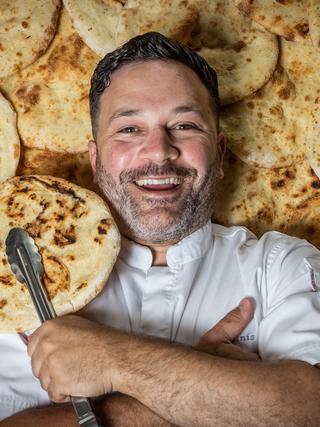
According to the Herald Sun, the George Calombaris protege, Xinis, will prepare traditional breads and pastries throughout the day and offer them with North Melbourne’s Rosso coffee at night, as well as smart nibbles, bigger portions, and Greek pours.

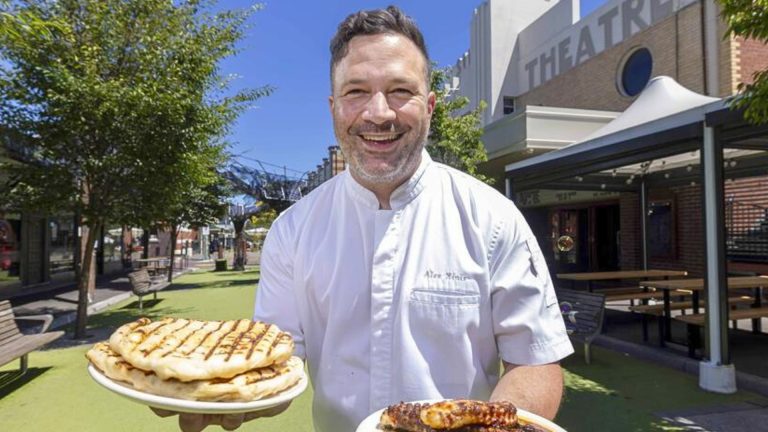
Alex Xinis is best known for his flatbread. Photo Jake Nowakowski.
Alex Xinis is best known for his flatbread. Photo: Jake Nowakowski.

Morning bakes look to contain both sweet and savory bougatsa (custard-filled pastry) and lagana (focaccia). Dinner menu favorites will include air-dried octopus strung on rails above the woodfire oven — the restaurant’s primary cooking source — “the greatest ever” smoked cow’s milk cheese imported from Greece, and flatbread plastered with feta butter.

“I want it to be an all-day hangout. I want [Tzaki to have] an edge,” Xinis said.

“People can come in, perch around for a snack and leave. I don’t want people to feel like they have to come in for two hours for a full-blown meal.”

Tzaki is set to open in March on 31 Ballarat Street in Yarraville.

Source: Herald Sun