After a call for expressions of interest last November, SA Minister for the Arts, Andrea Michaels MP, today announced 27 experts from across the arts, cultural and creative industries would make up the state government’s new Artists at Work Taskforce.
This comes as the Malinauskas Government promised at the state election to create a taskforce to investigate work insecurity and income inequality experienced by some South Australian artists and arts workers.
Taskforce members include Art Gallery of South Australia Chair and former Lord Mayor Sandy Verschoor, Adelaide Festival Chief Executive Kath M Mainland and Artistic Director Ruth Mackenzie, and South Australian actress and writer Elena Carapetis.
Members will convene regularly over a four-month period to provide expertise and advice on current issues and industry trends and developments.
The taskforce will make recommendations to the Minister on actions the State Government can take to address the issues artists and arts workers face in South Australia.
Andrea Michaels.
Minister Michaels said it was fantastic to announce the members of the important new taskforce and thanked all who applied.
“There is tremendous passion and experience in South Australia’s arts, culture and creative sector, reflected by the representatives who have joined this taskforce, and who will help create better outcomes and opportunities for artists and arts workers in our state,” she said.
“Our arts, culture and creative sector contributes so much to South Australia and to the wellbeing of our community and it is vital that we ensure the sustainability of the sector for the long-term.
“I want South Australia to be a place where our arts, culture and creative sector grow and thrive and I look forward to working with the Artists at Work Taskforce to achieve this.”
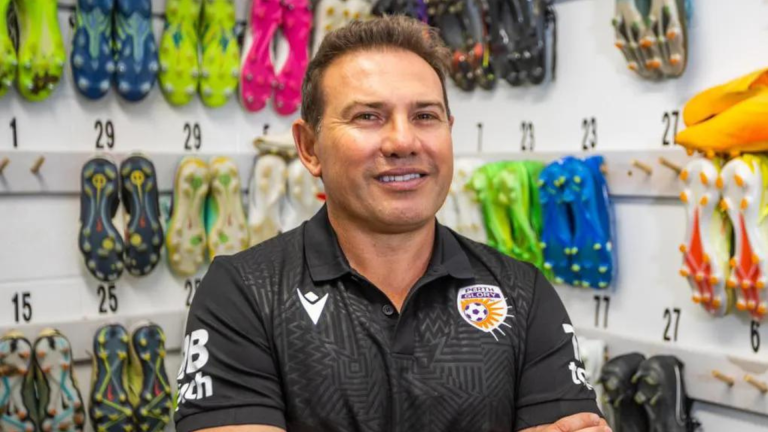
Perth Glory has announced that WA football legend Stan Lazaridis has been appointed as the club’s Football Director.
During a glittering, 17-year playing career, the former Olympic Kingsway junior made over 250 appearances for West Ham United and Birmingham City, won 60 Socceroos caps and spent two A-League seasons with Glory.
Since hanging up his boots in 2008, he has remained immersed in the game and is looking forward to using his wealth of experience and knowledge to drive his hometown club forward.
“For me personally, there’s unfinished business at the club,” he said.
“I feel that when I left, I needed to give something back and this is just the right time to do that.
“My motive for coming back is simply that I want this club to be better. I want us to achieve things again, to be competitive, for fans to come back through the turnstiles and The Shed to be electric again.
“I’m going to work my damnedest to make this club great again and the board have given me full trust. I think when that trust is given to someone, you want to protect it and work even harder.
“I want the books to balance, but I also want a competitive side. I want the coaches to be happy and then there’s the club aspect as well.
“But top of my priority list at the moment is looking at the playing squad because we’re actually quite thin on the player roster.
“I’ll be looking at how we can strengthen for next season, looking at players whose contracts are running out, speaking to them individually and seeing where their minds are at in terms of whether they want to still be here or whether they want to move on.
“We’ve got such a great owner who’s very humble, very financial, but also wants success and he’s given us his ideas of what he wants. It’s going to be a big team effort, we’ve got some wonderful staff here and I just can’t wait to get stuck into it.”
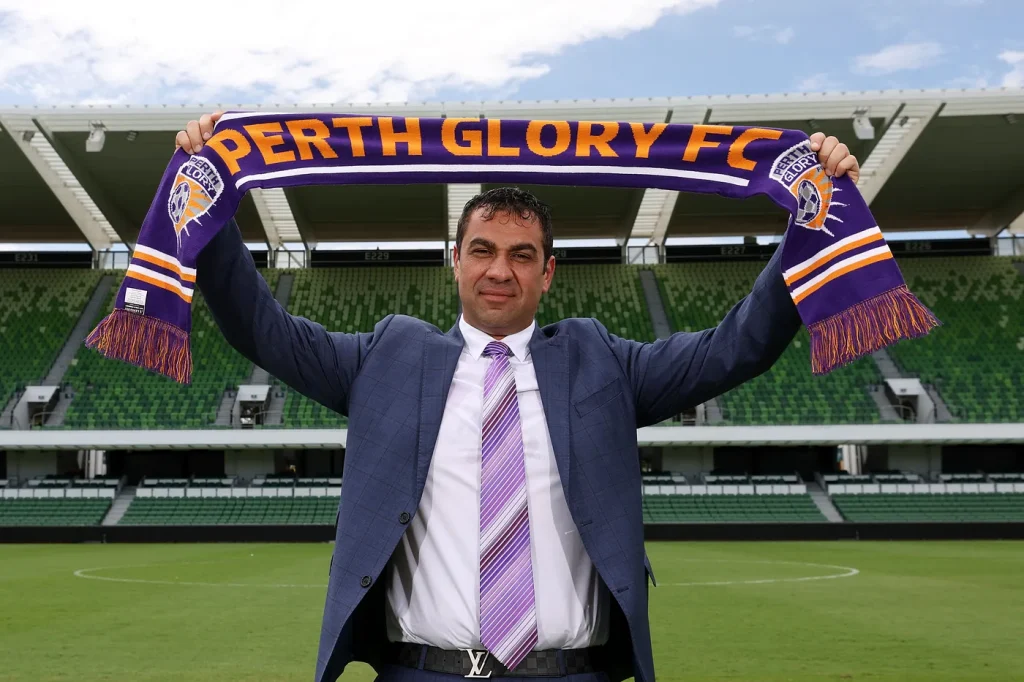
Perth Glory chairman, Ross Pelligra. Photo: Getty Images.
Perth Glory Chairman Ross Pelligra, meanwhile, believes that Lazaridis’ experience and expertise will prove to be invaluable assets for the club.
“Stan was introduced to myself about two months ago, but I already knew of him through the relationship he had with Vince Grella and Mark Bresciano,” he said.
“Then I started doing some research to see what Stan had done in the past and noticed that he was a big leader in football and had also helped Vince and Mark through their careers.
“I could see that he had that leadership in him and as I got to know him more, I realised that we need a person like Stan in our club; someone who understands football, knows football, has lived football and can help the next generation of kids come through.
“That’s why we decided, at board level, to bring Stan on board.”
Stan Lazaridis. Photo: Football Hall of Fame WA.
Stan Lazaridis profile
Having risen to prominence with Stirling Macedonia, Floreat Athena and Olympic Kingsway, Lazaridis continued to impress after his 1992 move to National Soccer League side West Adelaide Hellas.
During a friendly between the South Australian club and West Ham United, he caught the attention of the London side’s then-manager Harry Redknapp who signed him for the Hammers soon after.
The versatile left-footer went on to make nearly 70 appearances in all competitions for the Hammers over the next four years, helping the club to secure three top-ten Premier League finishes.
In 1999, he moved on to Birmingham City and played a key role in driving the Blues to the 2001 League Cup Final and promotion to the Premier League in 2002-03.
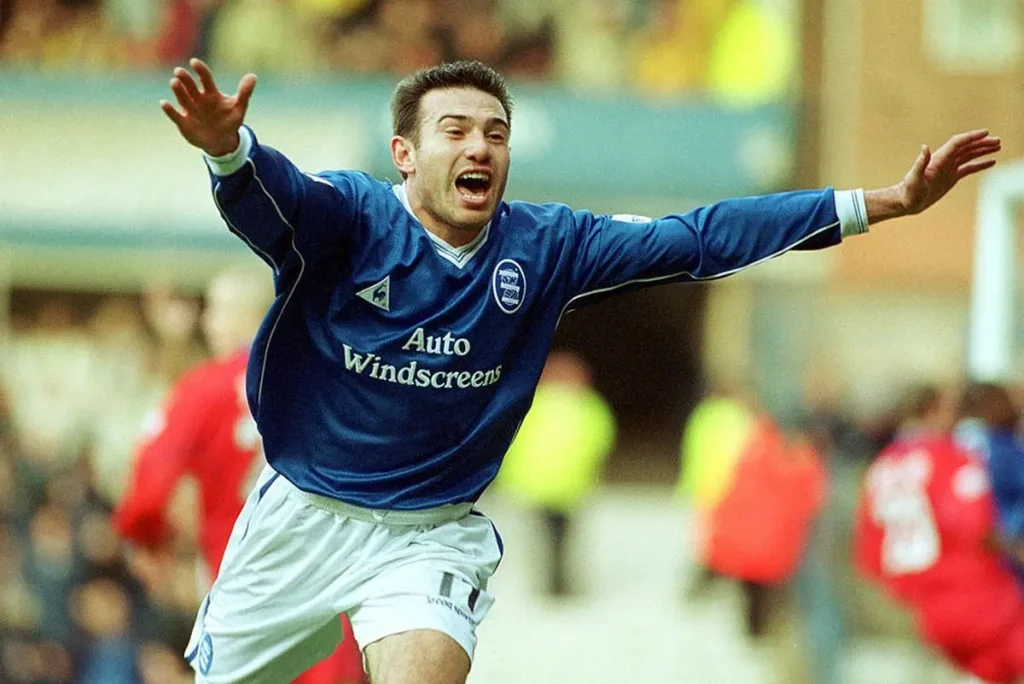
In total, he made more than 190 appearances during a seven-year stint at St. Andrews, further endeared himself to the club’s supporters by scoring the winner against derby rivals Aston Villa in March 2003 and went on to be named in Blues’ Team of the Century.
The proud Western Australian then returned home and spent the final two seasons of his playing career with Glory, wearing the famous purple 13 times between 2006 and 2008.
His first taste of international football, meanwhile, came at the 1989 Under-17 World Youth Championships and he subsequently won the first of his 60 Socceroos caps, a WA record, in a friendly clash with Kuwait four years later.
He would go on to feature in the green and gold in the 1997 Confederations Cup Final, as an over-age player at the 2000 Sydney Olympics and in the squad at the 2006 World Cup.
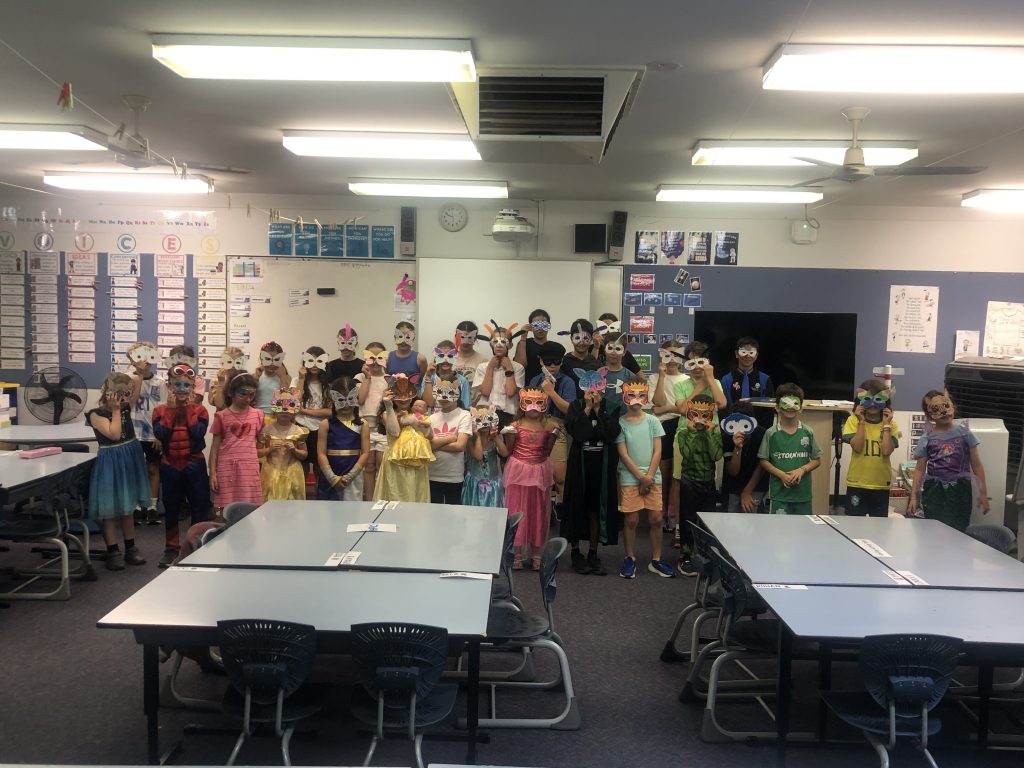
The Greek Community of Melbourne (GCM) Schools recently celebrated Apokries and Clean Monday with a series of activities and events both inside and outside the classroom. These events gave students the chance to experience these important days in Greek tradition.
Students dressed in costumes.
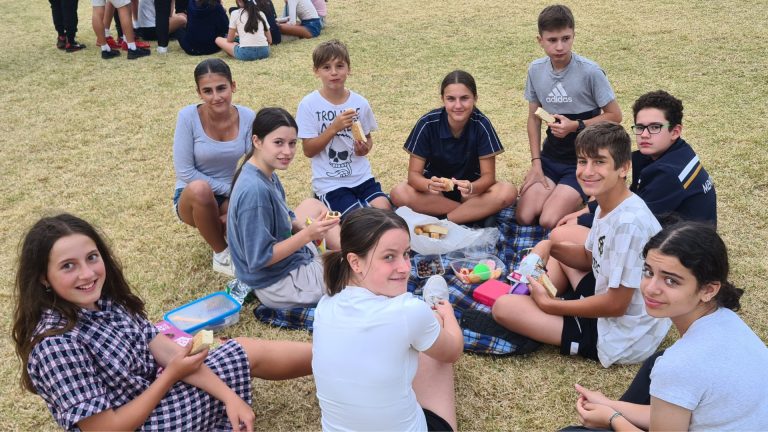
During the celebrations, students and teachers revived customs and traditions from all over Greece, bringing a Greek flavor to the Carnival and Clean Monday festivities. Each school organised events from Friday, March 15 to Tuesday, March 19.
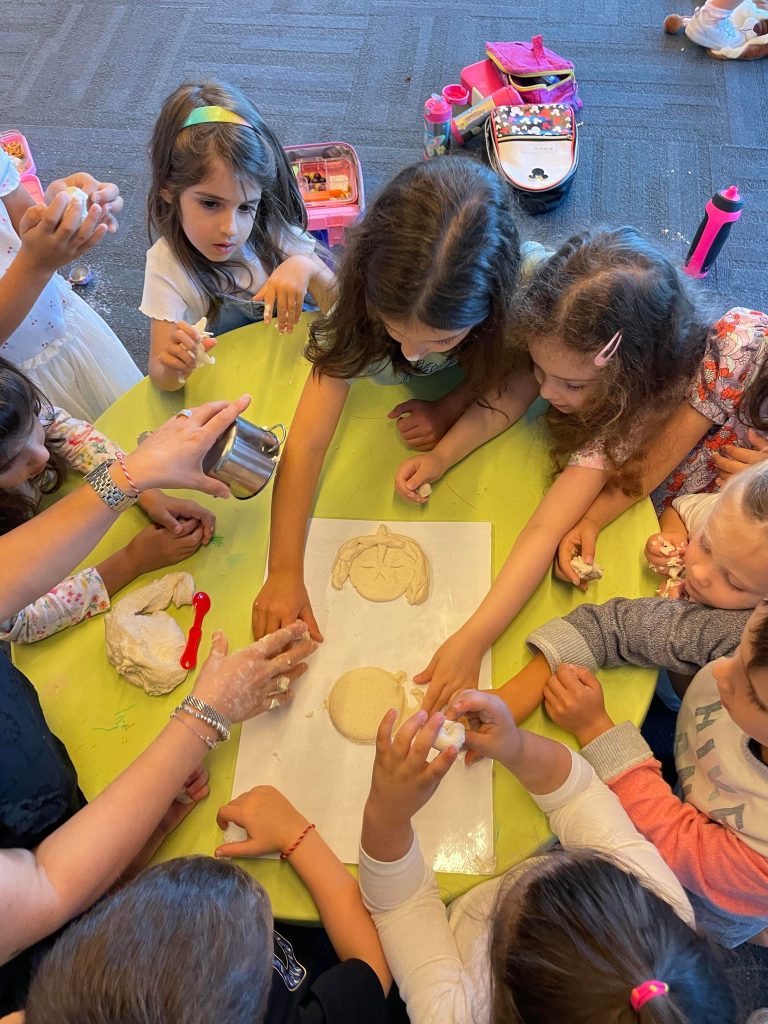
Students participating in activities for Apokries.
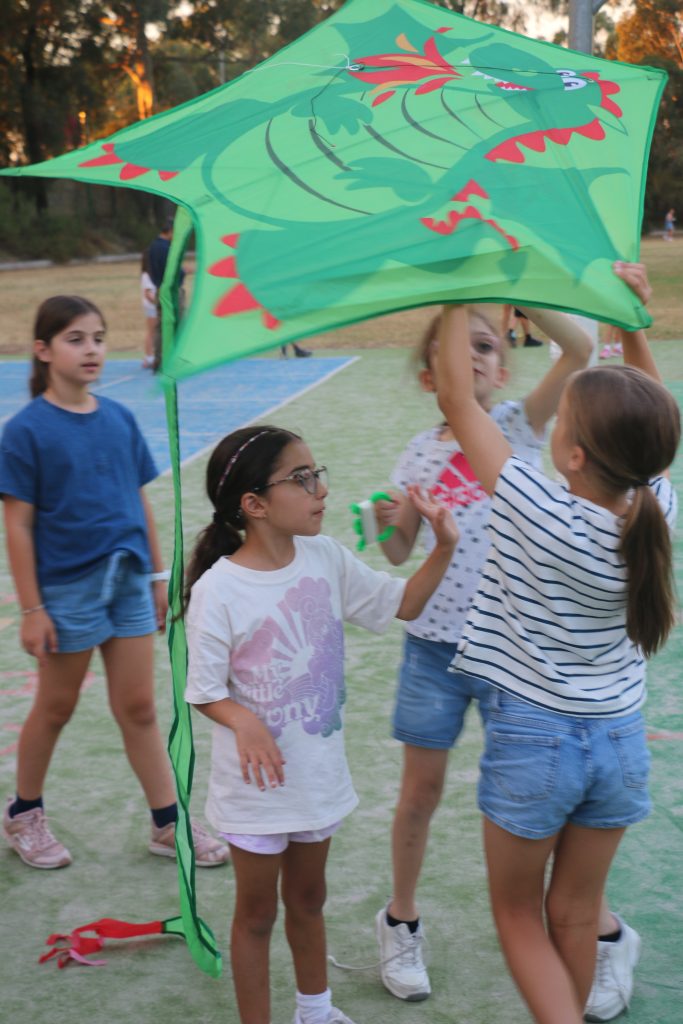
Students and teachers discussed the meaning of Clean Monday and Lent, and brought traditional customs to life, such as the Vlach “Shaving of the groom”, the Pontian “Koukaras”, and the Macedonian “Haskas”. They danced around the “gaitanaki”, flew kites, shared fasting foods, and experienced the atmosphere of the celebrations as they’re done in Greece.
Students dancing gaitanaki.
These events are consistently included in GCM School’s program because the school recognizes their importance in deepening students’ connections with their Greek origins and roots. They understand that forming an identity is a complex process that involves both spiritual and emotional growth and can be achieved by connecting theoretical knowledge to shared experiences.
Students flew kites for Clean Monday.
Guided by the principles of holistic approach and experiential learning, which are included in the educational planning of the Victorian Ministry of Education, GCM Schools strive to develop a dynamic learning program that focuses on students, encourages their active involvement in the educational process, enriches their linguistic and cultural experiences, develops bonds between class members, and ultimately creates communities.
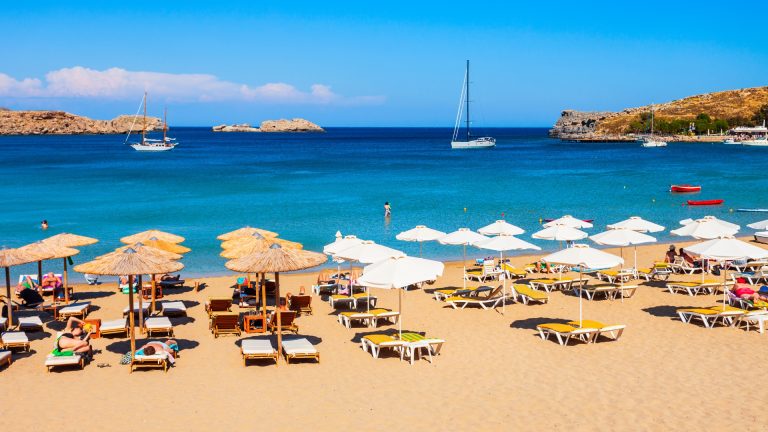
A TikTok video created by Greece’s Prime Minister Kyriakos Mitsotakis has been uploaded, detailing a series of new rules for all holiday beachgoers ahead of Greek summer this year.
The newly introduced regulations, underlined as part of the new ‘beach bill,’ aim to tackle overcrowding issues at beaches and to ensure fairness.
These rules are set to take effect this spring in Greece and come as the country remains one of the most popular beach destinations for tourists.
One of the proposed new rules is that 70 per cent of beaches in Greece will be free of sun-beds, and in some protected areas, this will rise to 85 per cent. Sun-beds will also be completely banned in ecologically sensitive areas, which will be designated ‘untouchable beaches.’
Businesses on the beach will then need to compete for space through online auctions, with drones monitoring compliance. They will also need to incorporate a minimum distance of four meters between the shoreline and the sun-beds.
In Benidorm, Spain, tourists may be fined €1200 for swimming or sleeping on the beach between midnight and 7am.
Portugal is also cracking down on this, with fines of up to €36,000 to be distributed for using portable speakers on beaches.
In Sardinia, Italy, stepping on Spiaggia Rosa beach is prohibited, with fines reaching €3500 for offenders.
Tourists to pay new Climate Tax to protect environment
Greece has also introduced a new climate sustainability fee for overnight visitors. This will address the impact of extreme weather events, such as fires and floods, on the country’s infrastructure.
The Climate Tax is expected to bring in $300 million this year alone, and contribute to restoring climate-damaged infrastructure.
This will affect tourists visiting Greece from March to October this year, as they will need to pay the fee. This will vary depending on different types of accommodation, which will range from €1 to €4 per night.
Visitors staying in apartments and one or two-star hotels will be subject to a €1.50 tax per night. Those staying in three-star hotels will pay €3 per night and an additional €7 tax will be applied for four-star hotel accommodations. If staying at a luxury five-star hotel, people can expect to pay a €10 tax per night.
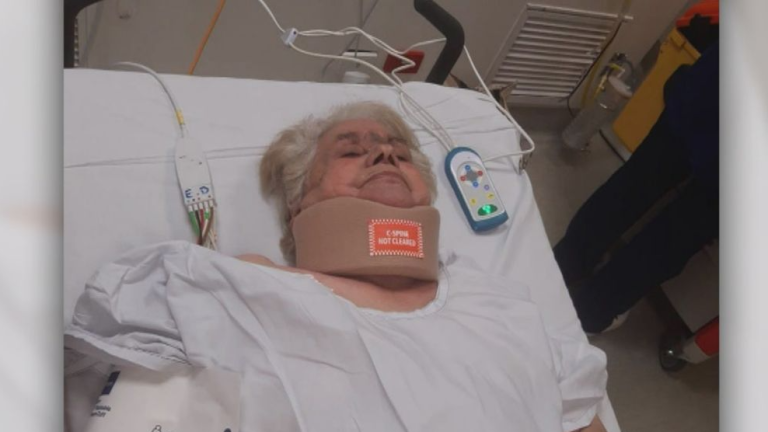
Nicky Panagiotidis has saved her two-year-old great-grandson from a ceiling that collapsed inside her Melbourne home.
The great-grandmother claimed she was looking after Harvey in her Ascot Vale home on Tuesday, when her ceiling suddenly gave way.
Harvey’s mother Nicole Brown told Nine News that when the 88-year-old “heard the roof crack she rolled over off the couch and sort of shielded my son under her chest.”
“I just know that motherly instinct that she has went through her to be a hero – she is actually a hero for him,” Nicole said.
Nicky Panagiotidis and her great- grandson Harvey Brown. Photo: Nine News.
Nicky instantly called her daughter, Julie Polimos, and said “the ceiling is on top of me, and we can’t move.”
Emergency services arrived quickly and found the pair with minimal injuries. Nicky walked to the ambulance and had bruising on her back and shoulders. She was discharged from the hospital on Wednesday.
Julie said her mother was a very strong woman.
“It was the unluckiest situation, with the luckiest outcome possible and we’re so grateful to my grandmother,” Julie said.
The family suspect a potential water leak may have caused the collapse after they noticed cracks and sagging a week ago.
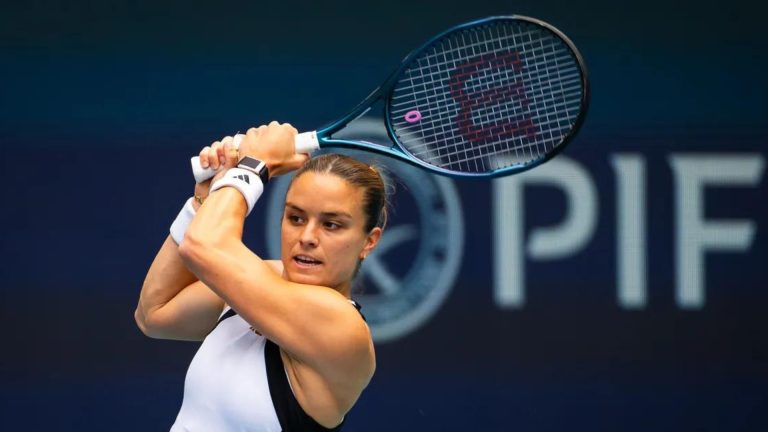
Maria Sakkari carried her form from Indian Wells to the Miami Open, where she celebrated her first victory in three years, making an impressive debut against Yue Yuan.
The leading Greek tennis player defeated Yuan 6-2, 6-2 and qualified for the next round of the Miami Open in 79 minutes.
Sakkari avoided unnecessary mistakes, played very aggressively and came to victory in an imposing manner.
It was the first victory for Sakkari on the main court of the Hard Rock Stadium, where in the last two years she had been eliminated at the start. Her last tournament wins came in 2021, when she had her best run at the Miami tournament, reaching the semi-finals.
Sakkari showed her mood early on and didn’t let Yuan catch her. She led 4-0 in the 1st set and closed it in 8 games.
In the 2nd set, she took control early on and “escaped” with 4-1. She also closed this in the 8th game, in which Yuan served and managed to come back from 0-40, but finally Sakkari made it 6-2 on her 5th match point.
Sakkari finished the match with 20 winners and 13 unforced errors, while Yuan had 8 winners and 18 unforced errors. This was the 2nd meeting of the two players on the tour and the second straight sets victory for the Greek.
In the next round of the Miami Open, the Greek tennis player will face the winner of the match between Daria Saville and Dayana Yastremska.
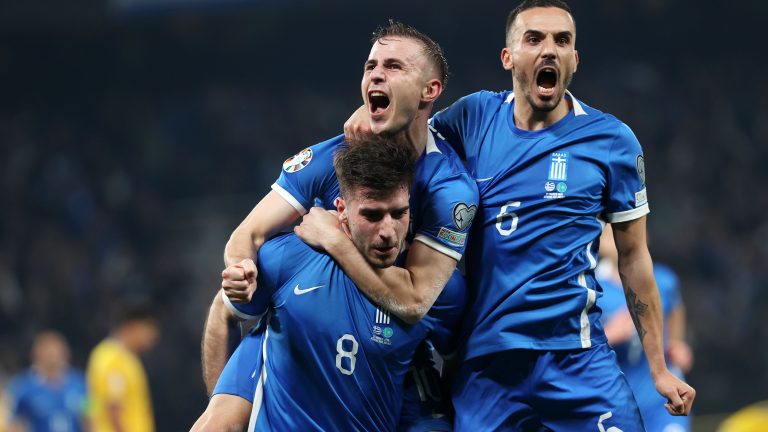
Greece are a step closer to Euro 2024 after defeating Kazakhstan in qualifiers on Friday morning (AEDT) 5-0.
Kazakhstan came full of ambition but accepted the role of punching bag early on. With amazing football, the blue and white team cleaned up the semi-final from the first half.
The quick goal that coach Gus Poyet was waiting for came perhaps faster than we could have imagined.
The quick goal caught Kazakhstan off guard, who stepped up and made it pay immediately. In the first transition attempt, Mandalos found Masoura wonderfully, he with a perfect cross in the heart of the area was waiting for Pelkas to rise and he with a powerful header made it 2-0 (15′) and took off the field.
Το 1ο βήμα για την πρόκριση στο EURO 2024 έγινε! 1 τελικός απομένει για να βρεθεί η Εθνική Ομάδα στο EURO 2024. Ραντεβού την Τρίτη 26 Μαρτίου στις 19:00 για τον τελικό των play-offs του EURO 2024 απέναντι στην Γεωργία. Καλό βράδυ σε όλες και όλους. #EURO2024#GREKAZ#playoffspic.twitter.com/dn6z7IzY8p
The shocked Kazakhs realised early on that this was not their day. And they understood it even better in the 24th minute phase, the only time they came out of their shell with claims.
The stubborn Chesnokov stole the ball from the abstract Tsimikas and caught the left shot from 30 meters, the ball hit the head of Hadzidiakos, but fortunately for us it found the root of the post of the immobilised Vlachodimos.
The flow of the match did not change and what followed was a Greek storm. Poyet’s team with mastery, but also quality, constantly found the cracks, in a creative way with surprising accuracy rates.
The third goal is proof of this. The amazing Kourbelis again found Masouras in isolation, he with a fantastic parallel ball found Ioannidis on the move and he made it 3-0 in an empty net (37′), in a delirium that became even more intense three minutes later.
From a corner kick, the ball reached Tsimikas who filled sweetly with his left and Kourbelis, who jumped higher than everyone with a header, “executed” the opposing goalkeeper for 4-0 (40′) in the most productive half of the national team.
60' 🇬🇷 – 🇰🇿 Συμπληρώθηκε 1 ώρα αγώνα στην OPAP Arena. Παραμένει το προβάδισμα 4-0 υπέρ της Εθνικής Ομάδας. 30 λεπτά ακόμα για να σφραγίσει την πρόκριση στον τελικό των play-off του EURO 2024. #GREKAZ#EURO2024#playoffpic.twitter.com/UFE2ZD9RJf
When you reach a score like that at half-time, the next match automatically comes to mind. Tuesday’s final in Tbilisi against Georgia. Understandably, the Greeks let their foot off the gas, it was time for management.
Poyet protected those who had a card (Hatzidiakos) or those who needed breathers (Bakasetas, Pelkas), refreshed his team and as expected, the degree of cohesion fell.
The Kazakhs had some good moments, the best being a misdirected header by Orozov (58”), but as time went on, they ran out of strength.
Two warning shots from Bakasetas and Mandalo gave the trigger for the fifth goal which finally came from an opponent’s head and Tapalov’s clumsy chase (85′) on a cross from Tsimikas.
Against a surrendered opponent, Giakoumakis (87′) and Masouras (90′) looked for a sixth goal in a festival of attacking football, but it never came before the end of the match.
Greece’s victory was on track to beat the record they set in November 1989 when they beat Syria 8-0.
The national team will next face Georgia to make their dream of playing in Euro 2024 a reality.
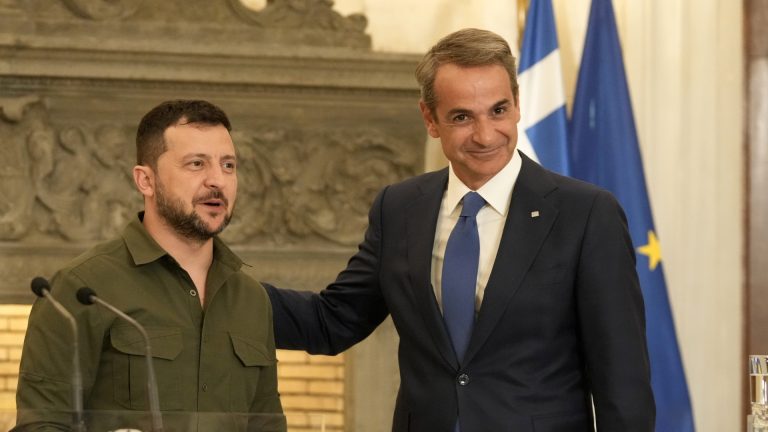
On Thursday, March 21, the Ukrainian President Volodymyr Zelensky spoke with Prime Minister Kyriakos Mitsotakis to discuss defence cooperation between Greece and Ukraine.
Ekathimerini reported that a post made on X (Twitter) revealed that the president and prime minister further spoke about the agreements between the two countries.
They also spoke about the recent Russian attack that took place.
I spoke with @ZelenskyyUa ahead of today's #EUCO discussions on Ukraine. Greece will continue to support Ukraine. My visit to Odessa impressed upon me even more the urgency of stepping up our assistance. I am glad to see Ukraine making steady progress towards EU membership.
Amna.gr however, further revealed that no agreement was signed between Greece and Ukraine during Mitsotakis’ visit to Odessa.
In July, the G7 adopted a joint declaration of support for the security of Ukraine, which the EU and its member states have joined.
I spoke with Greek Prime Minister @KMitsotakis about the implementation of our agreements reached during his recent visit to Ukraine, as well as our ongoing defense cooperation, particularly in terms of strengthening our air defense.
— Volodymyr Zelenskyy / Володимир Зеленський (@ZelenskyyUa) March 21, 2024
They aim to enhance Ukraine’s resilience in areas such as economy, energy, and cyber security.
While France, Germany, Italy, the Netherlands, and Denmark have reached agreements, negotiations continue with Finland, Sweden, Spain, Belgium, Poland, Czech Republic, Slovenia, Romania, Bulgaria, and the Baltic countries.
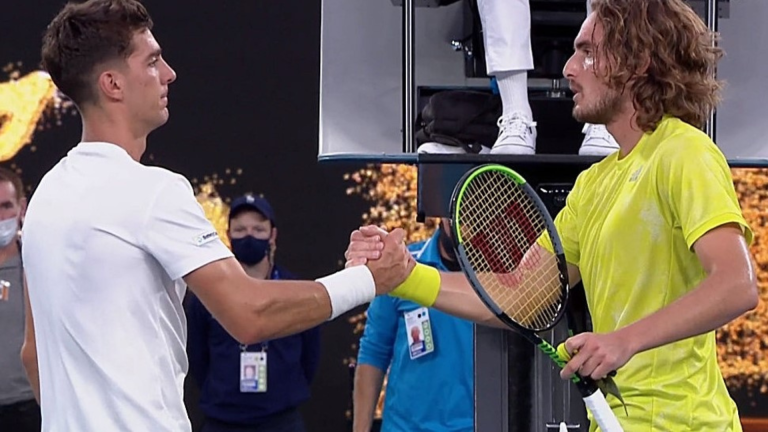
Stefanos Tsitsipas and Thanasi Kokkinakis scored an emphatic victory in their debut doubles match at the Miami Open on Thursday.
Tsitsipas and Kokkinakis worked together perfectly and defeated Alex De Minaur and Rinky Hijikata 6-3, 6-4, without being threatened for a moment by the two Australians.
Neither of the two’s serve was threatened throughout the match, while they broke early in the 1st set, to “escape” with 4-1, while in the 2nd they led with a break at 4-3 and had a triple chance in the 9th game to end the match with a double break, but they finally did it on the serve of Tsitsipas in the 10th game.
The Greek Boys won 🔥👏🇬🇷🇦🇺 Congrats Tsitsinakis 🥳 Great match for the dynamic doubles pairing of Stefanos Tsitsipas & Thanasi Kokkinakis. #MiamiOpen#Tennis 2024
— LavanyaSingerDinesh🌺 (@LavanyaVocalNEW) March 21, 2024
This was Tsitsipas and Kokkinakis’ first ever doubles match, despite having known each other for many years and having a very good relationship.
Both have extensive doubles experience, with Tsitsipas having won the 250 with his brother Petros, the 500 in Acapulco with Feliciano Lopez and was a finalist in the Miami Open with Wesley Koolhof in 2019. Kokkinakis has won a Grand Slam in doubles, along with Nick Kyrgios in Australia in 2022.
Tsitsipas and Kokkinakis will next face the No.3 pair of the board, the American Rajeev Ram and the British Joe Salisbury.
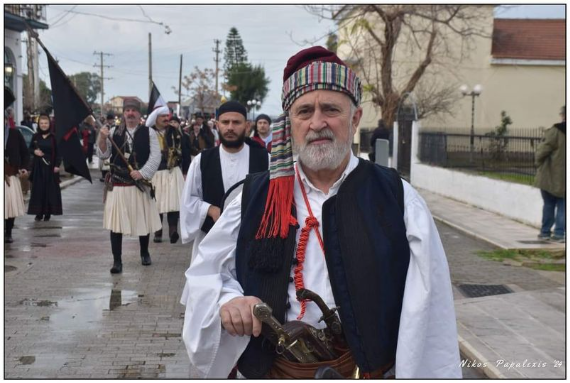
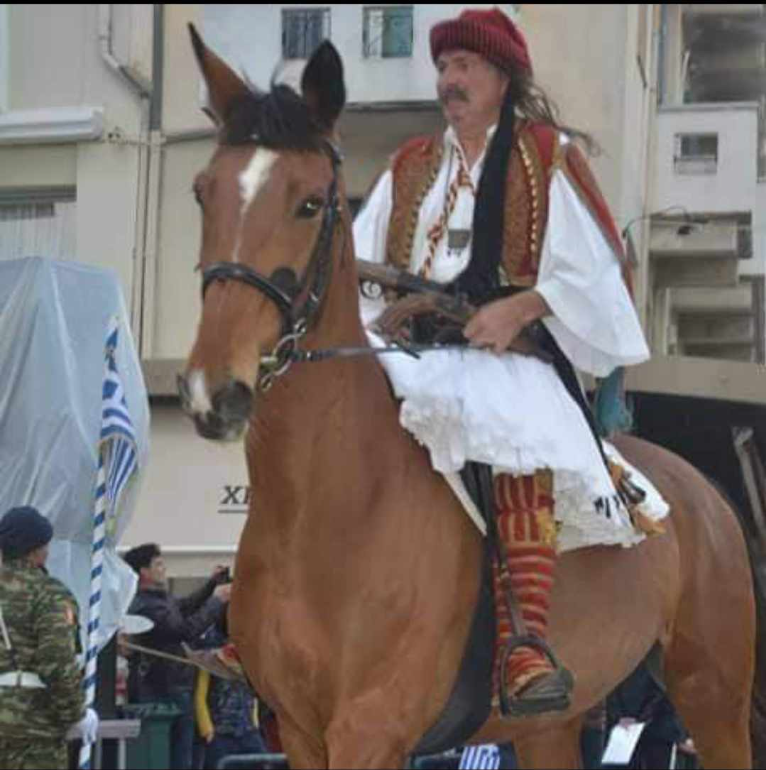
The Cultural Society of Nedousa embodies a crucial role for the Greek village of Nedousa. Its important and heroic involvement in the 1821 Revolution leading to Greek independence from 400 years of Ottoman enslavement, is at the forefront of its social and cultural events.
Australia has something to do with the preservation and liveliness of this active cultural society tucked away in the lush foothills of the Taygetos mountains, 20 kilometres from Kalamata in the Southern Peloponnese.
I spoke to a member of this Cultural Society, Nedousa’s priest, Father Vasilios Verginiadis, aged 40, who has subsequently been to Australia.
Father Vasilios.
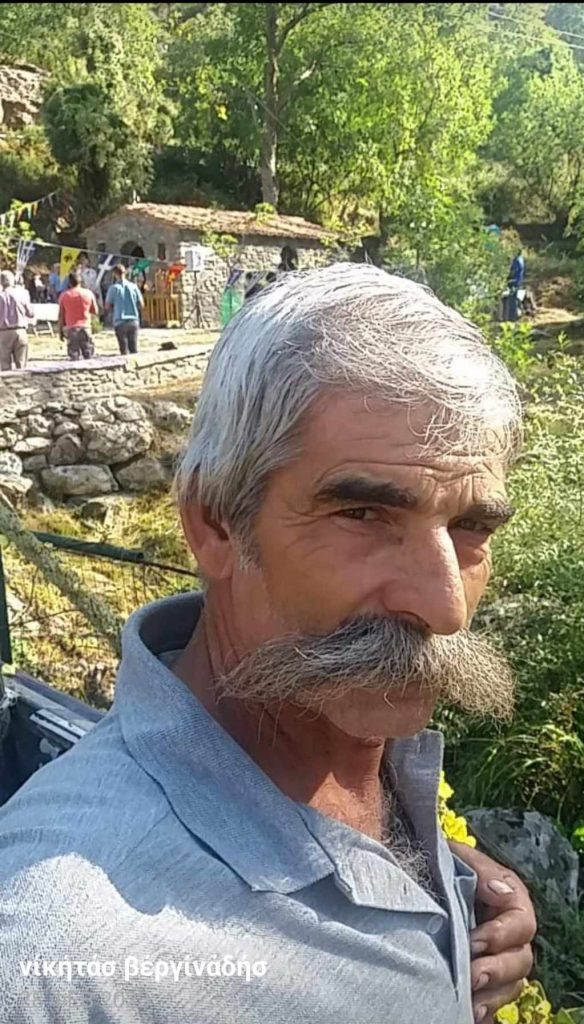
“Most of my relatives on my fathers’ side live there, and my father had also migrated to Australia in the 1970s. He stayed for only eight years though, and returned to be married, remaining in Nedousa where I was born,” he tells me, continuing:
“I have only the fondest memories of my visit to Australia years ago. Apart from visiting my many relatives in Sydney, I also spent time with the Nedousa Society of Melbourne, including at their church Agia Aikaterini.”
Father Vasilios’s father.
He also recalls being impressed by subsequent second and third generation Greek Australians, even those married to non-Greeks, adhering to the traditions of their Greek roots, adding “they keep family values alive such as respect for grandparents, even among multiculturalism and globalism.”
Father Vasilios enthusiastically discusses the history of his beloved Nedousa, including many interesting facts about the village’s role in the Greek Revolution.
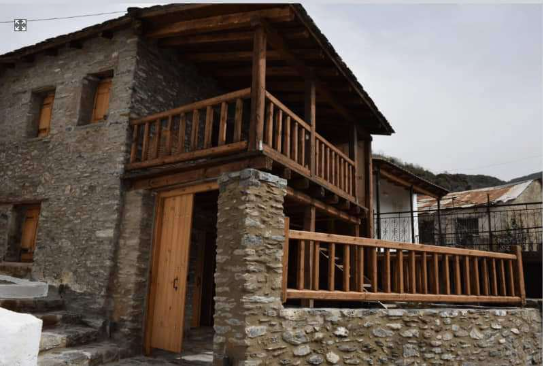
“Nedousa, at 700 metres altitude (along with other small villages close by such as Artemisia, Karveli, Alagonia, Piges and Lada), is still traditional and relatively undeveloped. The population of Nedousa has been declining steadily, with 643 people recorded in 1889 while in 2022 it has a permanent population of less than 30. This decline is in large part due to migrations from the 1950s onwards to the USA and Australia,” he says.
He then informs me that apart from return visits to their village, its former inhabitants, including many Greek Australians, send donations and funding back to Nedousa.
“They kindly and generously support our churches and community projects helping to keep our Cultural Society, and our important historical and heroic village, alive,” the priest explains.
Nedousa.
Father Vasilios proudly relays how Nedousa played a definitive part in the Greek Revolution of 1821 and beyond, including liberating Kalamata on March 23, 1821 where the Ottomans surrendered without even fighting.
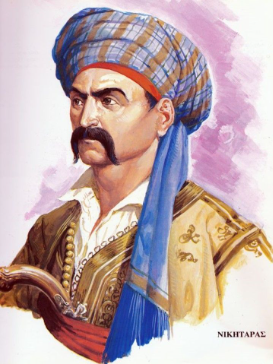
Nikitaras.
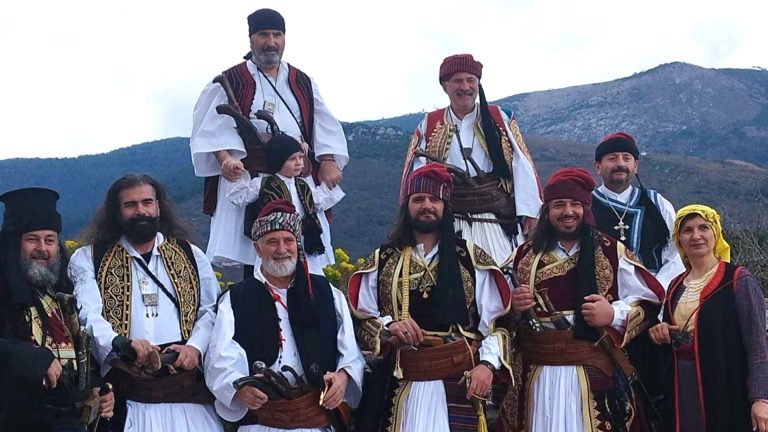
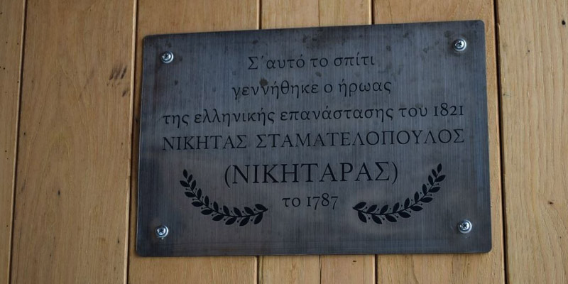
“Nedousa is the birthplace of our hero Nikitaras (Nikitas Stamatelopoulos, 1787-1849). His father had fought in the 1770 Orlov revolt against the Turks. Fighting for freedom under Christ runs in our blood, and we were never conquered by the Turks, though we had to pay taxes. We, and the other surrounding villages, had more than 2,000 armed Revolutionaries,” he says before relating the crucial role the Greek church played in the Revolution, where even simple priests and monks fought for Greek emancipation from the Ottoman yoke.
“Nedousa is also home to the Mardaki monastery, whose monks were well-known experts at healing with local herbs. On the orders of the Patriarch of Constantinople, the priest of the monastery, Nikiforos Pratis, healed the Sultan’s extremely ill daughter. In return, the Sultan issued a decree that the monastery was never to be set foot upon by the Ottomans.”
The Mandraki Monastery.
The Mardaki monastery, in its independence from the Turks, served as a beacon for the exchange of ideas for Greek liberation, but was also a practical base for the storing of munitions for the Greek Revolution.
Nedousa.
Father Vasilios narrates, “Two hundred and fifty men, many from Nedousa, with their 200 sturdy mules, met a ship carrying weapons at the port of Kardamyli in Mani. It was sent specifically from Smyrni (now Turkey), by the famous revolutionary (and priest) Papaflessas. He was also a member of the Filiki Etairia or ‘Society of Friends,’ a secret political and revolutionary organisation founded in 1814, whose purpose was to overthrow the Ottoman rule of Greece and establish an independent Greek State.
Theodoris Giannaras Greek Australian member of the Nedousa Cultural Society.
“These weapons were taken back to Nedousa’s Mardaki monastery to be stored and readied for use in the Revolution. The monastery sacrificed its many books, tearing them up as paper fillers for the guns used back then, in order to push out the gunpowder.
“Apart from our Nikitaras, famous Greek Revolutionaries such Kolokotronis himself (who was Nikitaras’ uncle), Papaflessas, Anagnostaras, and others, even Bouboulina, gathered at the Mardaki monastery to plan their liberating moves.”
Upon asking Father Vasilios how violence and the Church reconcile, he tells me: “The Greek Orthodox Church has always been present among the Greek community, fighting for its survival in many ways – through schools, hospitals, etc. Our faith is the messenger, heralding freedom, and peace. W c v are peace-loving people, who have never had a problem with the average Turk. We stand for equality, freedom and love, and fought to save our own soil and people from oppressive slavery. God was present in their conquering, and so God allowed us to fight.”
Father Vasilios also explains that the Greek Revolution was not only a national and religious liberation, but was a fight for freedom on a social and class level.
“Not only were we enslaved as Greeks and Christians, but also lived like 2nd and even 3rd class citizens. It was also a class war against the feudal lords. The collective struggle of the people – the priest, the shepherd, the farmer, the sailor, etc, complemented the armed revolutionaries fight for freedom,” he says.
Nikitaras plaque.
He considers it important to remind us of the significance of the celebratory March 25 date of the Greek Revolution, which he stresses was chosen in consultation with both the Church and the Revolutionary fighters.
“This 25th of March date commemorates the visit of the Archangel Gabriel to the Virgin Mary, during which he informed her that she would be the mother of Jesus Christ, exactly nine months before his birth at Christmas. Church and nation together, representing hope, freedom; a new dawn for Greece – this is what the Greek Revolution stands for.”