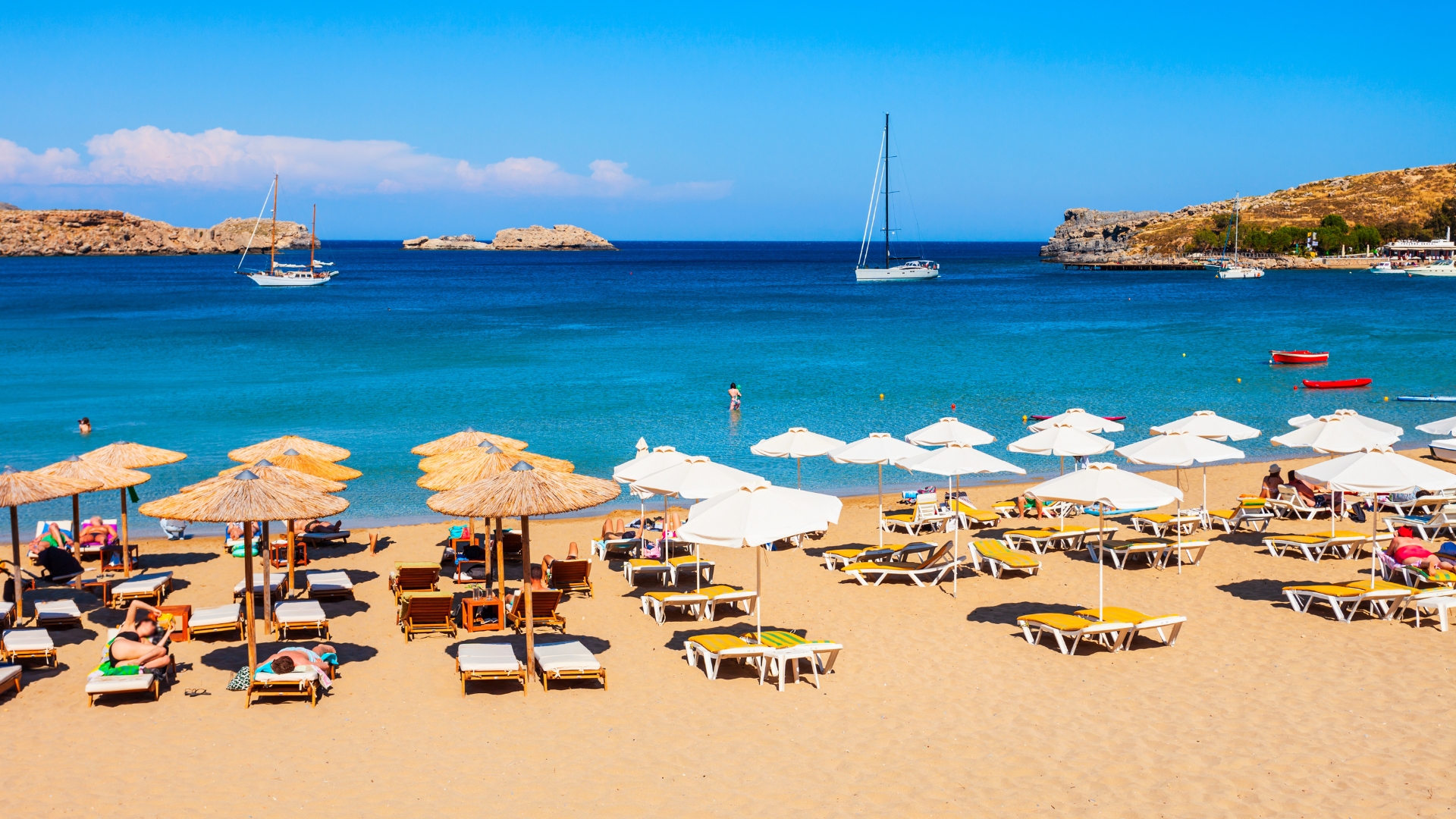
A TikTok video created by Greece’s Prime Minister Kyriakos Mitsotakis has been uploaded, detailing a series of new rules for all holiday beachgoers ahead of Greek summer this year.
The newly introduced regulations, underlined as part of the new ‘beach bill,’ aim to tackle overcrowding issues at beaches and to ensure fairness.
These rules are set to take effect this spring in Greece and come as the country remains one of the most popular beach destinations for tourists.
One of the proposed new rules is that 70 per cent of beaches in Greece will be free of sun-beds, and in some protected areas, this will rise to 85 per cent. Sun-beds will also be completely banned in ecologically sensitive areas, which will be designated ‘untouchable beaches.’
Businesses on the beach will then need to compete for space through online auctions, with drones monitoring compliance. They will also need to incorporate a minimum distance of four meters between the shoreline and the sun-beds.
@kyriakosmitsotakis_ Ελεύθερες παραλίες 🏖️
♬ original sound – Kyriakos Mitsotakis
Fines for violating rules
Greece is not alone in implementing beach rules.
In Benidorm, Spain, tourists may be fined €1200 for swimming or sleeping on the beach between midnight and 7am.
Portugal is also cracking down on this, with fines of up to €36,000 to be distributed for using portable speakers on beaches.
In Sardinia, Italy, stepping on Spiaggia Rosa beach is prohibited, with fines reaching €3500 for offenders.
Tourists to pay new Climate Tax to protect environment
Greece has also introduced a new climate sustainability fee for overnight visitors. This will address the impact of extreme weather events, such as fires and floods, on the country’s infrastructure.
The Climate Tax is expected to bring in $300 million this year alone, and contribute to restoring climate-damaged infrastructure.
This will affect tourists visiting Greece from March to October this year, as they will need to pay the fee. This will vary depending on different types of accommodation, which will range from €1 to €4 per night.
Visitors staying in apartments and one or two-star hotels will be subject to a €1.50 tax per night. Those staying in three-star hotels will pay €3 per night and an additional €7 tax will be applied for four-star hotel accommodations. If staying at a luxury five-star hotel, people can expect to pay a €10 tax per night.
Source: Schengenvisaininfo.com.

