South Melbourne FC has advanced their lead in the NPL Victoria championship by defeating Green Gully SC 3-0, securing their first-place position with 20 points.
During the ninth game of the championship, Esteban Quintas’ team had a very good presence in the game, with plenty of opportunities for goals, leading to a well-deserved victory.
South Melbourne FC’s goals led to their seventh victory in this year’s championship. Nahuel Bonada scored in the 30th minute, Andy Brennan in the 49th minute and Marc Jankovic in the 68th minute.
Finally, in the 85th minute, the goalkeeper of the Greek team, Javier Lopez, saved two penalties from Green Gully, in the first save the referee asked for a replay, but the Spaniard said “no” in the second half of the match, keeping the score 3-0.
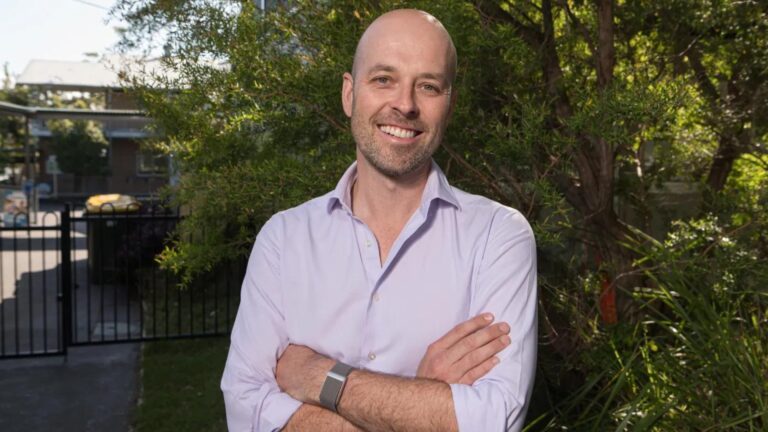
The Liberal MP Simon Kennedy has been announced as the newest federal member of parliament, claiming the seat for Cook.
The Sydney Morning Herald revealed that this marked a new chapter for Kennedy, as he secured almost 63% of the primary vote, backed by a 6.5% swing to the Liberals.
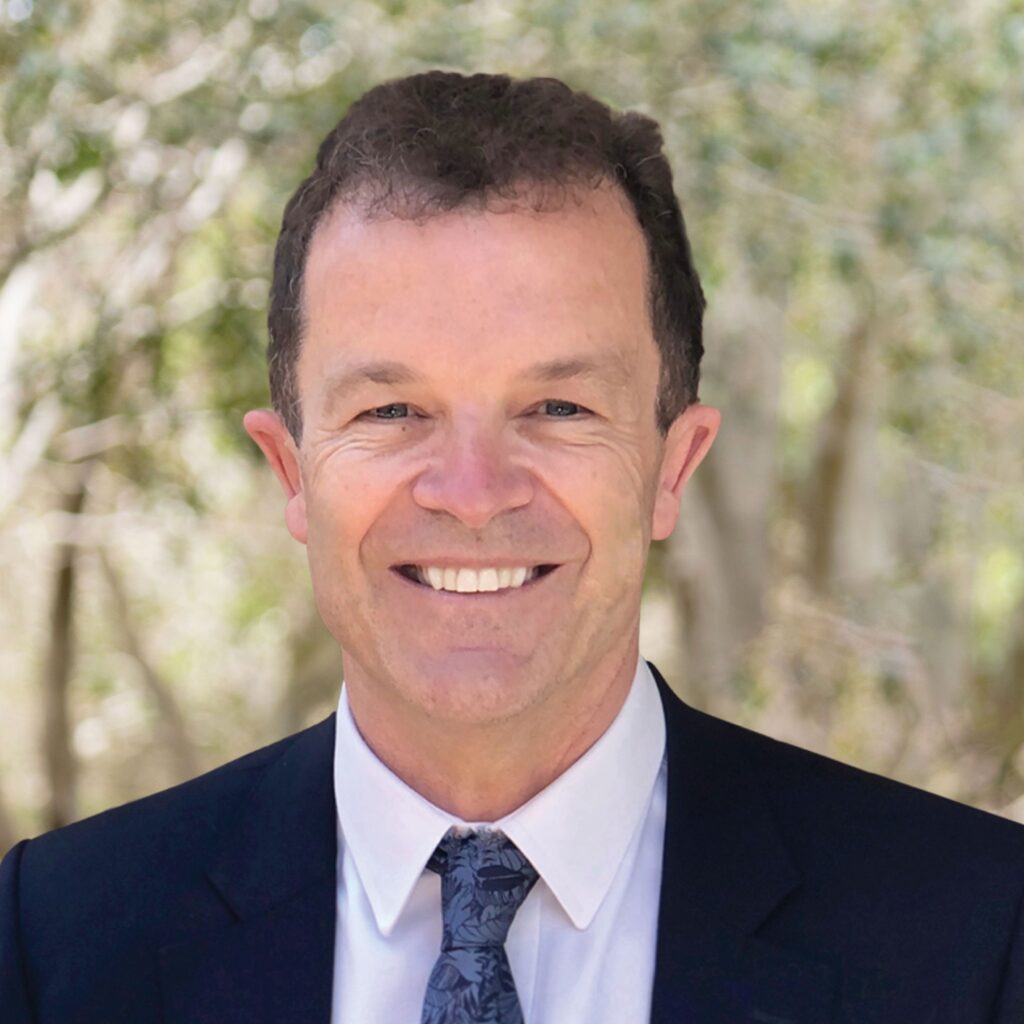
NSW Liberal leader Mark Speakman praised Kennedy’s win, describing him as a “very energetic candidate” who would be a great asset to the federal party.
Mark Speakman. Photo: NSW Liberals.
“He really hit the ground running from day one. I suspect that scared off prospective Teals and Labor. They saw he was not going to take it for granted,” Mr Speakman said.
Mr Kennedy previously ran for the Bennelong electorate in 2022 but was defeated by Labor MP Jerome Laxale.
Following his Liberal preselection win in March, Kennedy relocated from Maroubra to Cook in southern Sydney.
Mr Speakman acknowledged potential resistance from locals to an outsider but noted Kennedy’s swift integration into the community.
Mr Kennedy dismissed concerns about his candidacy’s impact, emphasising his dedication to listening and advocating for constituents’ needs.
“I’ve been out there listening – listening to people and I think that’s what people want,” he said at a polling booth at Burraneer Bay Public School,” Mr Kennedy said.
“They want their local MP to listen to them and advocate hard.”
Scott Morrison also showed his support for Simon Kennedy, stating he would do a “terrific job” in federal parliament.
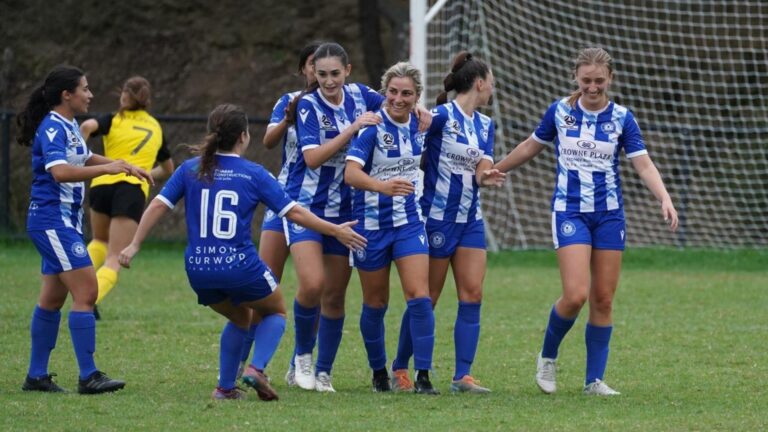
Sydney Olympic FC’s women’s team showed no signs of slowing down this campaign as they secured a 2-1 win over Sydney University at Peter Moore Field on Sunday evening.
Buoyed by the form of their impressive attack, and in particular the form of Golden Boot leader Demi Koulizakis, Olympic will have been determined to ensure the three points over Sydney Uni at home. However, Sydney Uni’s triumphant win over the Blacktown Spartans last weekend will no doubt have given the side the impetus needed to take on a top team in the form of Olympic.
Sydney Uni kicked-off the scoring on the day after Baylee Broomhead lofted a mammoth goal kick up the pitch that bested the Olympic defence and was embraced by Talia Kapetanellis, who did well to wriggle the ball away in a one-on-one with a Jets defender and finish into the bottom right corner. 1-0 to Sydney Uni in the 15th minute.
Olympic would not take long to respond as Ebony McCue-Shore buried a robust header into the back of the net in the 22nd minute, yet again showing she is an excellent threat at corners for the home side.
Rochelle Borromeo would deliver the winner for Olympic with an emphatic hit from distance that bested Broomhead and deflected past the goalkeeper and in for 2-1.
On Sunday, April 14, Sydney Olympic FC lost against their arch-rival team, Rockdale Ilinden, with a score of 2-3.
The game, taking place at Ilindedn Sports Centre with seated 1800 spectators, was reportedly one of the best the football league has seen all year.
Rockdale linden took an early lead thanks to a stunner by Brayden Sorge and then goals to Lachie Constable and yet another quality individual goal by Brendan Cholakian – all 3 cancelled out Roy O’Donovan’s penalty before the Olympic marksman added his second via a deflection but it was to be too little too late as the hosts claimed all the points.
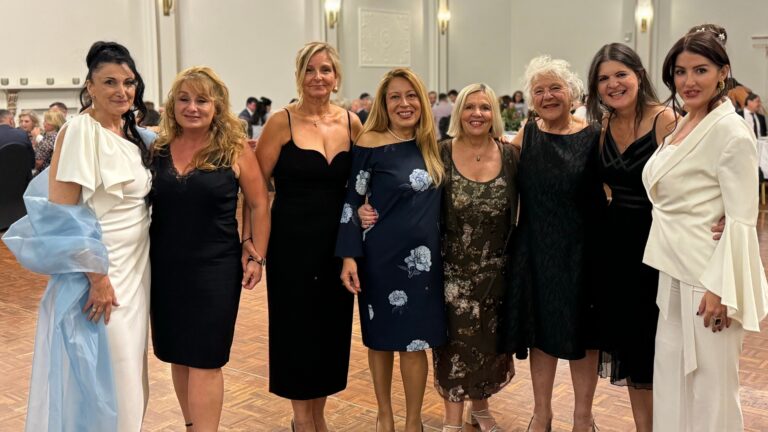
When a group of visionary and determined women unite with a common goal, magic unfolds. This is exactly what’s happening as the dedicated volunteer committee of the Food for Thought Network spearheads the creation of the most exceptional Inaugural Global Conference for Women of Diaspora to date.
The ambitious project is in full swing, bringing together women of Greek heritage to share knowledge and ideas with a view to shaping the future of Hellenic culture.
Women of Greek heritage from across the globe will converge this September in Ioannina – comprising enthusiasts, community influencers, scholars, legal professionals, medical practitioners, entrepreneurs, and pioneers in a wide range of fields.
Founder Varvara Athanasiou-Ioannou, the visionary behind Food for Thought Network, describes the event as a vibrant empowering journey spanning four days and five nights.
“Think keynote speakers, panel discussions, business opportunities, exploring Epirus and loads of knowledge-sharing with like-minded souls. Participants will have the chance to network with inspiring individuals from all walks of life and discover ways to keep our language and culture alive. A remarkable experience you wouldn’t want to miss!” she said.
The conference revolves around three pivotal themes that are essential for advancing the role of women in Hellenism.
Firstly, it aims to explore the intricate relationship between Women and Hellenism. This theme delves into the various interpretations and impacts of Hellenism on women, particularly within the diaspora. It seeks to scrutinise how the values emblematic of Hellenism either impede or foster women’s progress. Secondly, it endeavours to unravel the multifaceted identity of the Modern Woman of Greek heritage.
Through the compelling narratives of accomplished female speakers, it aims to delve into the diverse experiences and achievements that shape the contemporary Greek woman’s identity.
Lastly, it turns people’s focus towards the sustainability of Hellenism. This theme invites critical examination of how Hellenism can endure and evolve in the modern era, ensuring its relevance and continuity.
Over the course of four days, the Women and Hellenism Global Conference will host esteemed speakers who will share their expertise with attendees. With an impressive pool of over 60 abstracts, rigorously evaluated by our esteemed scientific/community committee, led by our wonderful secretary Dr Maria Karidakis we are in the process of confirming speakers before finalising the program.
Topics range widely, touching on issues affecting women of Hellenic descent both presently and in the future. Networking opportunities abound, offering a chance to connect with women across different industries and continents, fostering both new and existing relationships.
The conference will culminate in a celebratory evening, honouring the resilient Hellenic spirit and the achievements of women in the diaspora and Greece.
Take advantage of the early bird ending 30 April and book now.
For further information refer to the website global conference www.fftn.org.au or contact the organisers at info@fftn.org.au.
His name was Theodore and he disembarked on the coast of Florida on April 14, 1528. He was a member of a Spanish exploratory mission.
On June 17, 1527, from the port of Sanlúcar in Andalusia, a fleet of five ships set sail, with the stern captain being the resolute Don Panfilo de Narvaez, destined for the western shores of Mexico and Florida, then colonies of the Spanish crown.
According to sansimera.gr, among the crew members was a Greek named Theodore, as recorded in the diary kept by the treasurer of the mission, Alvar Núñez Cabeza de Vaca.
Narvaez’s fleet, after many adventures, landed on the shores of western Florida, near the present-day city of Tampa, on April 14, 1528. There they were greeted by some Indians who showed them small pieces of gold. When the conquistadors asked them where they found them, the Indians pointed to the mountains in the interior of the area, where the Apalachee, a tribe of Indians, lived. The opportunity presented to them was unique. They immediately set off for the gold-bearing region, but along the way, many of them succumbed to illnesses, while the remaining ones found themselves in inhospitable lands and lost their way.
The Greek, as they called him, got them out of their predicament. Theodore must have had shipbuilding knowledge, as he managed to build boats, with which the gold seekers managed to escape through the tributaries of the Mississippi and on October 28, 1528, reach a bay, near the present-day city of Pensacola, quite far from their initial base.
The Indians of the area offered to supply them with water, and Theodore followed them. Since then, his traces have been lost, despite the efforts of his companions to find him. They assumed that Theodoros had ‘sold them out’ to pocket the gold himself.
Don Panfilo de Narvaez’s mission returned to Spain in 1537, ten years after it had departed from the port of Sanlúcar in Andalusia. Three years later, the secretary of the Spanish conquistador Hernando de Soto, Gonzalo Valdez, was in the area where Theodoros had disappeared and was informed by Indians that he had been murdered for unknown reasons by his fellow countrymen.
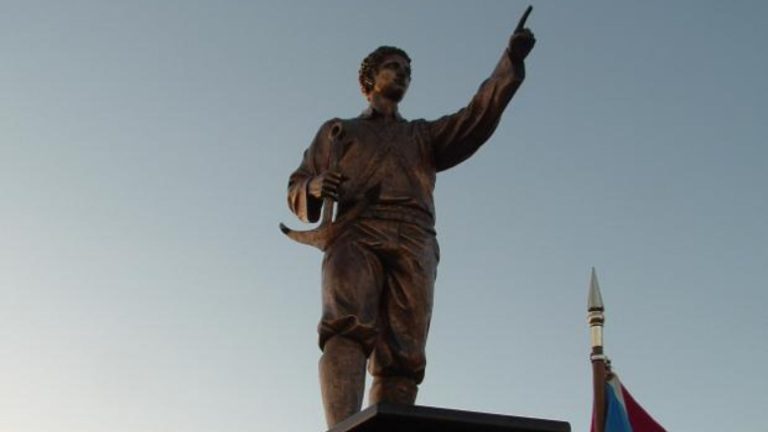
The Greek community of Florida considers Theodore the first Greek to set foot in America. They even erected a statue of him on the beach of the city of Clearwater, Florida, the unveiling of which took place on January 8, 2005.
In anticipation of the upcoming season, BeachAtlas has once again decided to compile its own ranking of the top 100 beaches in the world, gazzetta.gr, has reported.
To create the list, they didn’t just evaluate the natural beauty of each beach, but also the activities available, nightlife, cultural significance, and diversity. Subsequently, a committee voted for their favorite beaches, with Greece securing three spots among the global top 100.
To the surprise of many, Elia Beach in Mykonos claimed the highest ranking among all Greek beaches, specifically landing at number 19 on the BeachAtlas list. It stands as one of the most beautiful and expansive sandy beaches on the island of the winds.
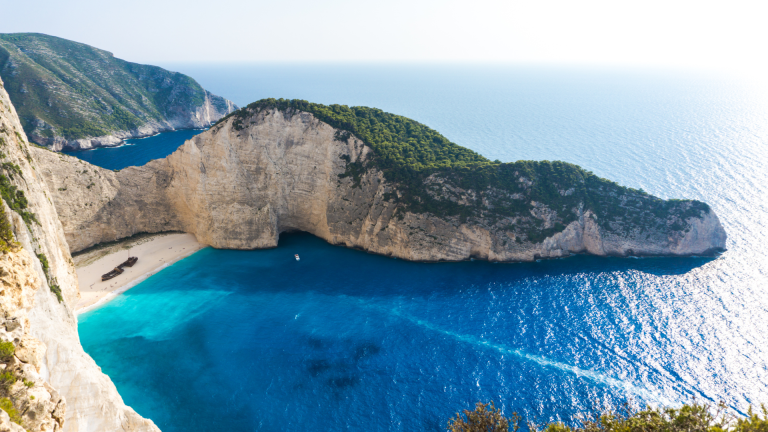
A few spots down the list, at place 24, there is another beach in Mykonos, Paranga Beach, which likely climbed so high on the list due to the entertaining experience it offers. The third Greek entry on the list is Navagio Beach in Zakynthos, one of the most spectacular and unique beaches one can encounter on the planet, which landed at number 71.
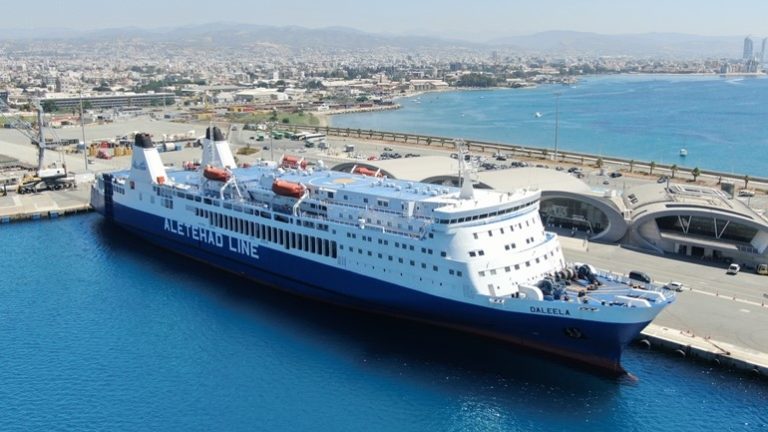
The Cyprus-Greece maritime passenger connection will run for a third consecutive year, subsidized by Nicosia following the European Commission approval.
An announcement from Cyprus’ Deputy Ministry for Shipping is expected on April 16, regarding the resumption of the service, scheduled to commence on May 29. Ticket sales will begin shortly after the announcement.
According to ekathimerini.com, in 2023, 7,407 passengers and 2,518 vehicles utilized the service, demonstrating its popularity .
Photo: Petros Karadjias/AP
Deputy Minister Marina Hadjimanolis expressed the challenge of making the line economically viable but noted ongoing efforts to explore options for improvement.
Prices cater to various budgets, with options for single and double cabins, as well as second-class seating. First-class single cabin tickets are priced at 73 euros one-way per person, with roundtrip prices at €146. Double cabins are priced at €68 for a single journey and €136 for a return ticket.
First-class four-berth cabin tickets are available at €63 one way and €126 for a double journey. Second-class prices are set at €50 one-way and €96 return. For those not wanting a cabin, airline-style seats cost €38 for a single trip and €76 for a return.
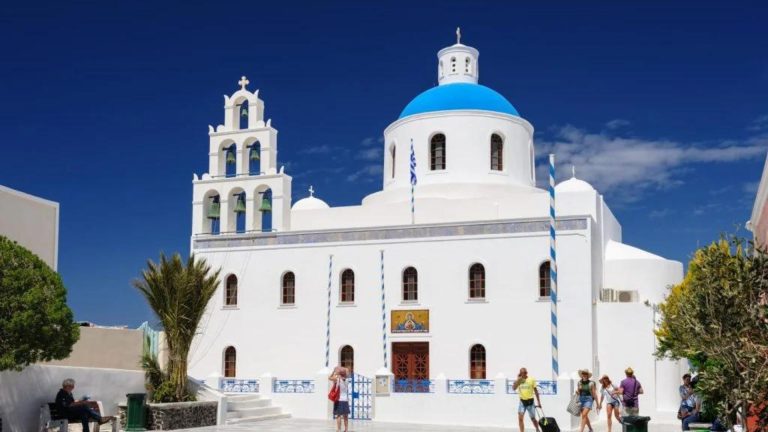
The Church of Panagia Platsani is the most famous church in Oia on the northern part of the Greek island of Santorini.
Situated at the heart of the village, on the main square, the white building is built on a square plan, has five domes, the largest painted blue.
Originally located within the protective walls of the Venetian Castle of Oia, the church faced devastation during the earthquake of July 1956.
According to Santorini-more.com, it was forced to relocate due to instability and the looming threat of collapse and it was reconstructed at its current site.
Photo: jimmy teoh
According to legend, the icon of the Holy Mother placed in the Church of Panagia Platsani was found in the sea.
While fishing, a fisherman saw a light resembling a lit candle in the middle of the sea. Heading towards it, he discovered the sacred icon of the Mother of God, but found himself unable to retrieve it. So he informed the local priest who, together with the inhabitants, while praying and carrying torches, went down to the sea, fished the icon and with great respect moved it to the local church. The next day the icon disappeared.
After a long search, the icon was found by the wall of the Castle in Oia. She was placed in the local church again, but the next day she was not there again. This happened for many days, until the residents understood that the icon chose a location where to build a church – a place from which she could see the sea and the sailors sailing that she could bless.
The name of the church “Platsani” comes from the sound of waves hitting the icon floating in the sea (“plats – plats”). The church is dedicated to the Standing Hymn to the Mother of God (Akathistos Theotokos). According to legend, this name was created to commemorate the siege of Constantinople in 626 C.E. by the Persians, Sassanids and Avars.
Residents managed to defend the city. In the evening they gathered in the Church of St. Mary of Blachernae (Istanbul) to sing thanksgiving songs together. Singing, they stood all night, hence the name of the hymn “akathistos” or standing.
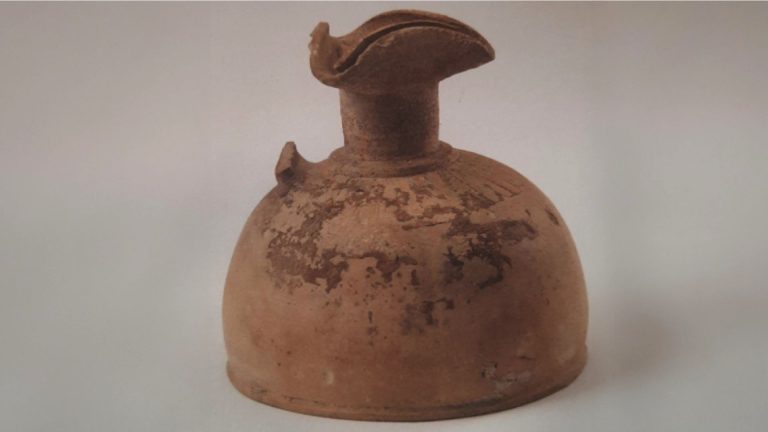
An ancient artifact, missing since German occupation, has been returned to Greece by Hanover’s municipality and the August Kestner Museum, the Greek Culture Ministry announced on Tuesday.
According to ekathimerini.com, the artifact, a 620-600 BC three-leaf oinochoe with a lid, resurfaced with inscribed decoration. Initially acquired in 1986, the museum confirmed its illegal removal during Nazi rule.
Mayor of Hanover Belit Onay handed it over in a ceremony, joined by Greece’s Consul General Ioannis Vikelidis and others.
Minister of Culture Lina Mendoni praised the move, stating it contributes to restoring Greece’s cultural heritage and upholds the museum’s reputation. The gesture aligns with global museum efforts to investigate collection origins.