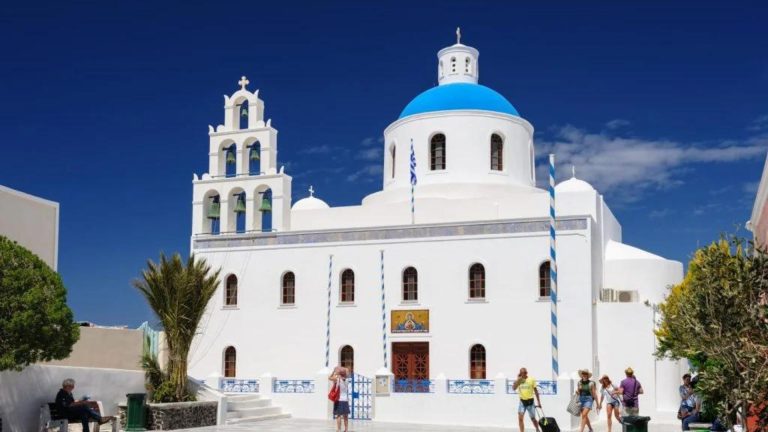
The Church of Panagia Platsani is the most famous church in Oia on the northern part of the Greek island of Santorini.
Situated at the heart of the village, on the main square, the white building is built on a square plan, has five domes, the largest painted blue.
Originally located within the protective walls of the Venetian Castle of Oia, the church faced devastation during the earthquake of July 1956.
According to Santorini-more.com, it was forced to relocate due to instability and the looming threat of collapse and it was reconstructed at its current site.
Photo: jimmy teoh
According to legend, the icon of the Holy Mother placed in the Church of Panagia Platsani was found in the sea.
While fishing, a fisherman saw a light resembling a lit candle in the middle of the sea. Heading towards it, he discovered the sacred icon of the Mother of God, but found himself unable to retrieve it. So he informed the local priest who, together with the inhabitants, while praying and carrying torches, went down to the sea, fished the icon and with great respect moved it to the local church. The next day the icon disappeared.
After a long search, the icon was found by the wall of the Castle in Oia. She was placed in the local church again, but the next day she was not there again. This happened for many days, until the residents understood that the icon chose a location where to build a church – a place from which she could see the sea and the sailors sailing that she could bless.
The name of the church “Platsani” comes from the sound of waves hitting the icon floating in the sea (“plats – plats”). The church is dedicated to the Standing Hymn to the Mother of God (Akathistos Theotokos). According to legend, this name was created to commemorate the siege of Constantinople in 626 C.E. by the Persians, Sassanids and Avars.
Residents managed to defend the city. In the evening they gathered in the Church of St. Mary of Blachernae (Istanbul) to sing thanksgiving songs together. Singing, they stood all night, hence the name of the hymn “akathistos” or standing.
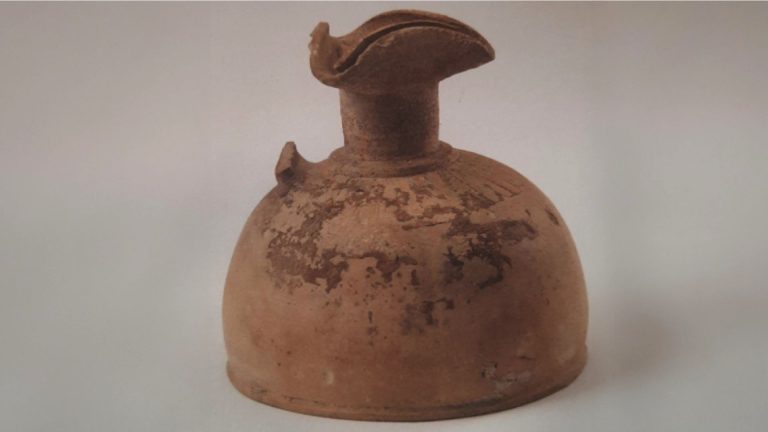
An ancient artifact, missing since German occupation, has been returned to Greece by Hanover’s municipality and the August Kestner Museum, the Greek Culture Ministry announced on Tuesday.
According to ekathimerini.com, the artifact, a 620-600 BC three-leaf oinochoe with a lid, resurfaced with inscribed decoration. Initially acquired in 1986, the museum confirmed its illegal removal during Nazi rule.
Mayor of Hanover Belit Onay handed it over in a ceremony, joined by Greece’s Consul General Ioannis Vikelidis and others.
Minister of Culture Lina Mendoni praised the move, stating it contributes to restoring Greece’s cultural heritage and upholds the museum’s reputation. The gesture aligns with global museum efforts to investigate collection origins.
Greece, hosts of this year’s global conference on protecting oceans, will launch two new marine parks as part of multi-billion-euro pledges expected from 120 participating states and entities.
According to courthousenews.gr, 12 heads of state, around 50 ministers and officials, and representatives from 120 nations and entities, including the U.N., EU and NATO are among the delegates that will be present at Our Ocean conference, which will take place on April 15-17.
“This is the biggest environment conference ever held (in Greece),” Environment and Energy Minister Theodoros Skylakakis stated.
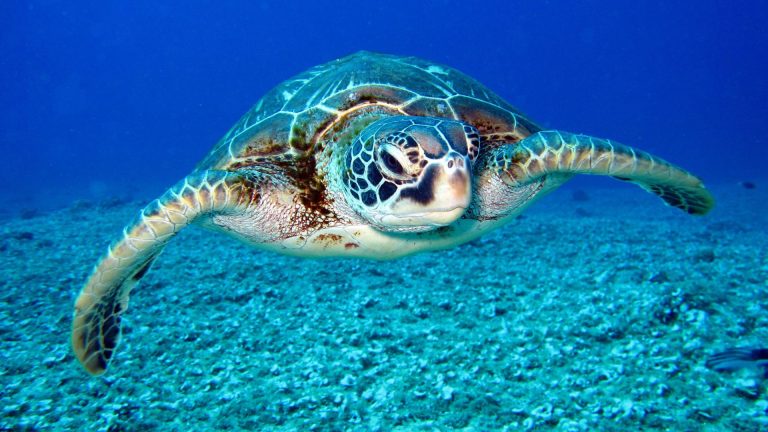
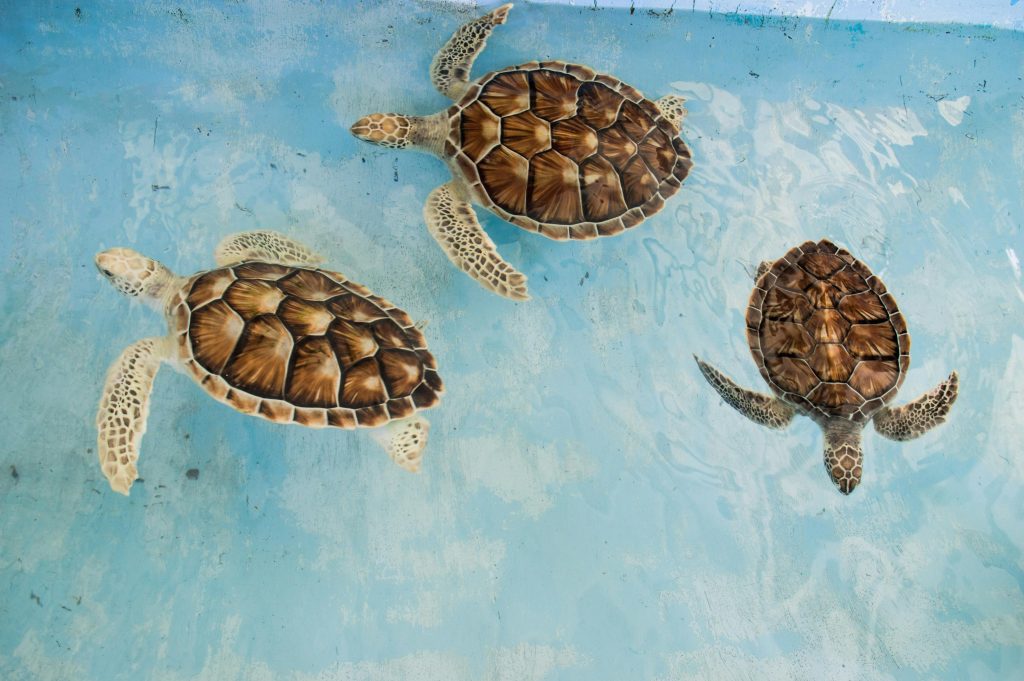
According to Mr.Skylakakis, Athens’ commitments are two new national parks — one in the Ionian Sea for sea mammals and turtles, and another in the Aegean for seabirds, to be set into law by early next year.
“They will be among the largest in the Mediterranean,” he said. Greece has been repeatedly fined by the European Commission on environmental matters in the past decades.
In December, it was referred to the EU court of justice for failing to implement maritime spatial planning guidelines. In a statement on Monday, nine environmental groups including WWF and Greenpeace hailed the new parks announcement as an “important initiative.”
But they noted that the Ionian Sea park is to be created in an area already earmarked by Greece for hydrocarbon exploration.
“There can be no protected maritime area with hydrocarbon extraction,” the groups said.
Skylakakis said the park under consideration is “much, much larger than any extraction area. Sea mammals will be afforded a very high level of protection,” he said.
According to Mr. Skylalakis, Greece will emphasize this year on sustainable tourism, microplastics, eco-friendly shipping and the Mediterranean environment.
“Each of us, especially those in coastal areas, swallows the equivalent of a plastic card each week,” Gerapetritis said, about the amount of microplastics in fish. “And also through salt,” added Skylakakis.
Niki Louca from My Greek Kitchen shares her favourite recipe for potato frittata with The Greek Herald. You can follow her on Instagram @mygreekkitchen for more!
This was one of the first recipes Niki learned to cook at a young age. She used her mum’s leftover filling from her spanakopites and added a few more ingredients to complete the filling. Over the years she has used various fillings – sometimes with leftovers from the night before, such as soutzoukakia or leftover bolognaise from moussaka.
Ingredients:
Filling:
1 packet jumbo pasta shells
400 gm full fat ricotta cheese
600 gm frozen spinach thawed and drained
2 large eggs
1 cup grated kefalograviera cheese
Mozzarella cheese to scatter over the pasta shells
Freshly grated nutmeg
Salt and pepper to taste
Sauce:
700ml passata tomato sauce
1 small onion finely diced
2 cloves garlic minced
1 tsp dried oregano
¼ cup olive oil
Lose handful of basil leaves
Salt and pepper to taste
Instructions:
Cook pasta shells to al dente – as per packet instructions. It is important not to overcook them as they will continue to cook once in the oven.
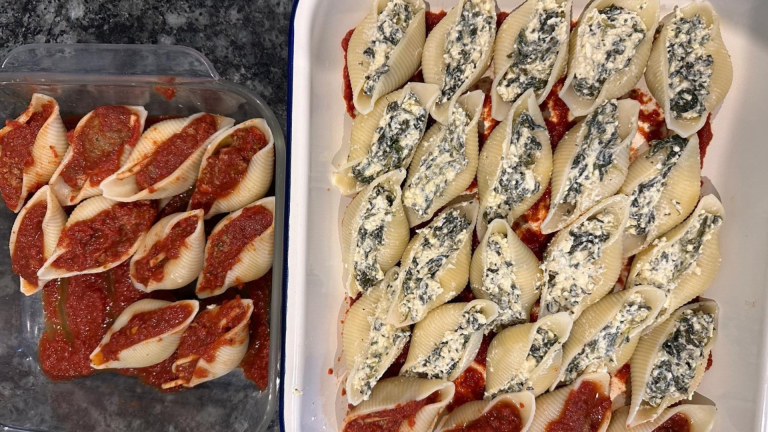
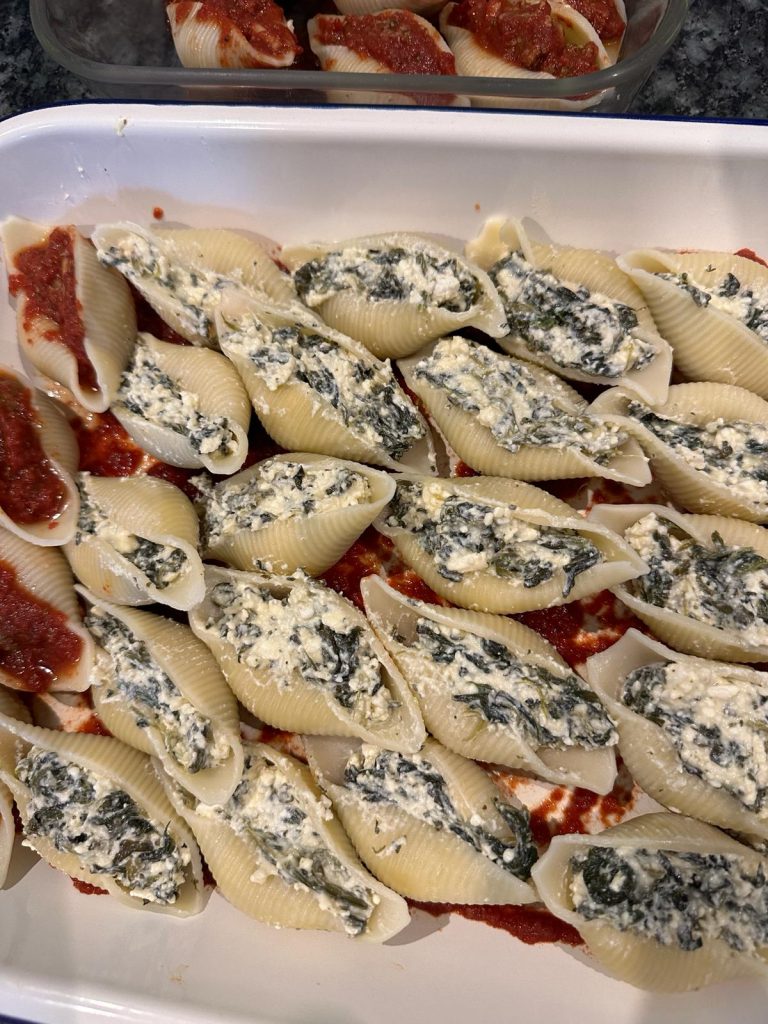
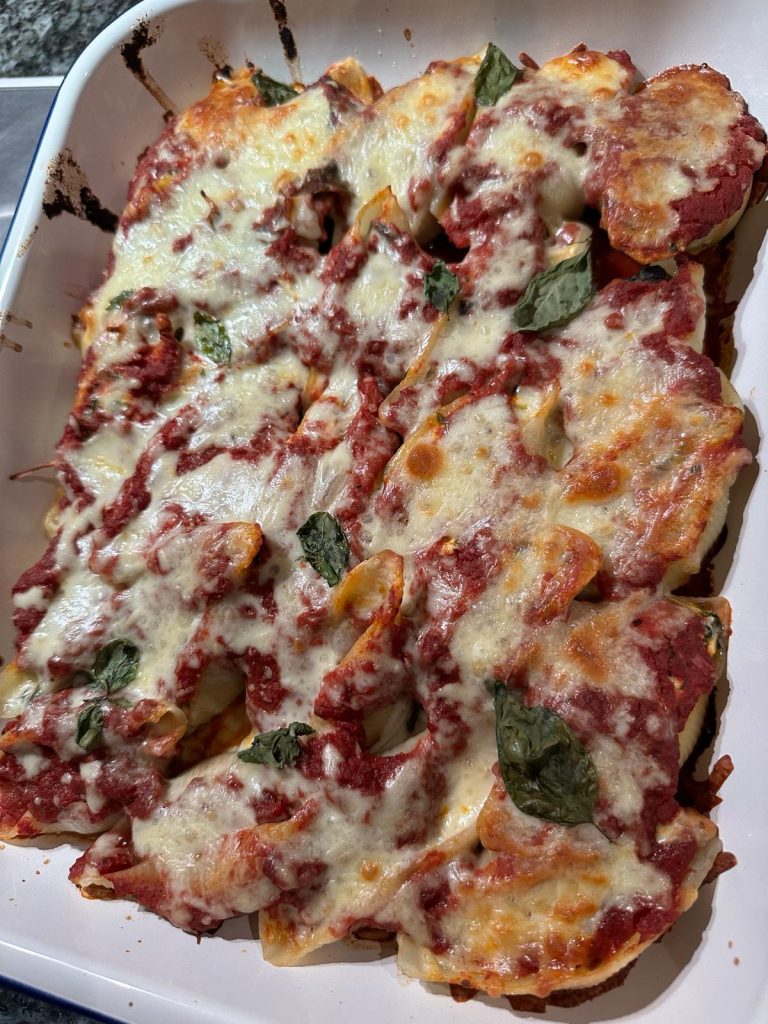
Once pasta shells are cooked, drain them from the water straight away. Allow them to cook enough for you to handle and place them in a tray not overlapping each other – as per photo.
Prepare you sauce – in a medium size saucepan, drizzle the olive oil and saute the onion and garlic. Make sure you don’t burn the garlic as this will make it bitter. Add the passata sauce, oregano, salt and pepper. Stir and let it reduce to about half – about 25-30 minutes.
Whilst the sauce is cooking, prepare your filling. Mix you ricotta, spinach, seasoning, eggs and cheese (not the mozzarella) – set aside.
Fill your pasta shells with the filling and place back in the tray.
Take an oven proof baking dish and put of few spoonful’s of the sauce on the base of it, making sure you spread the sauce to cover the base.
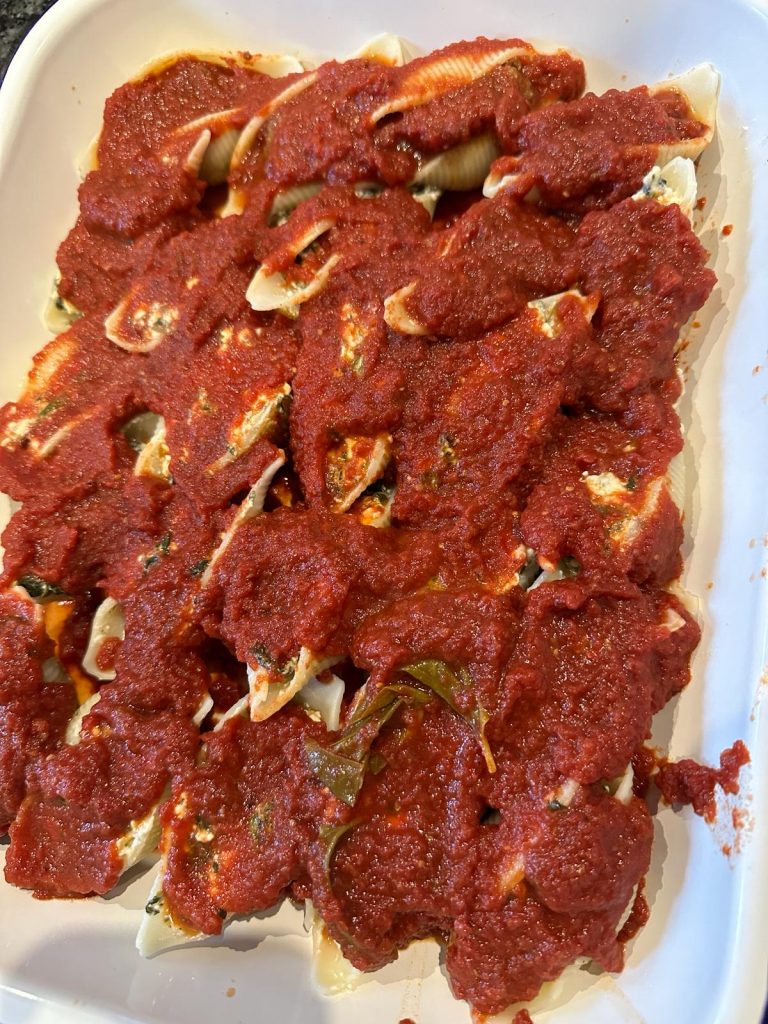
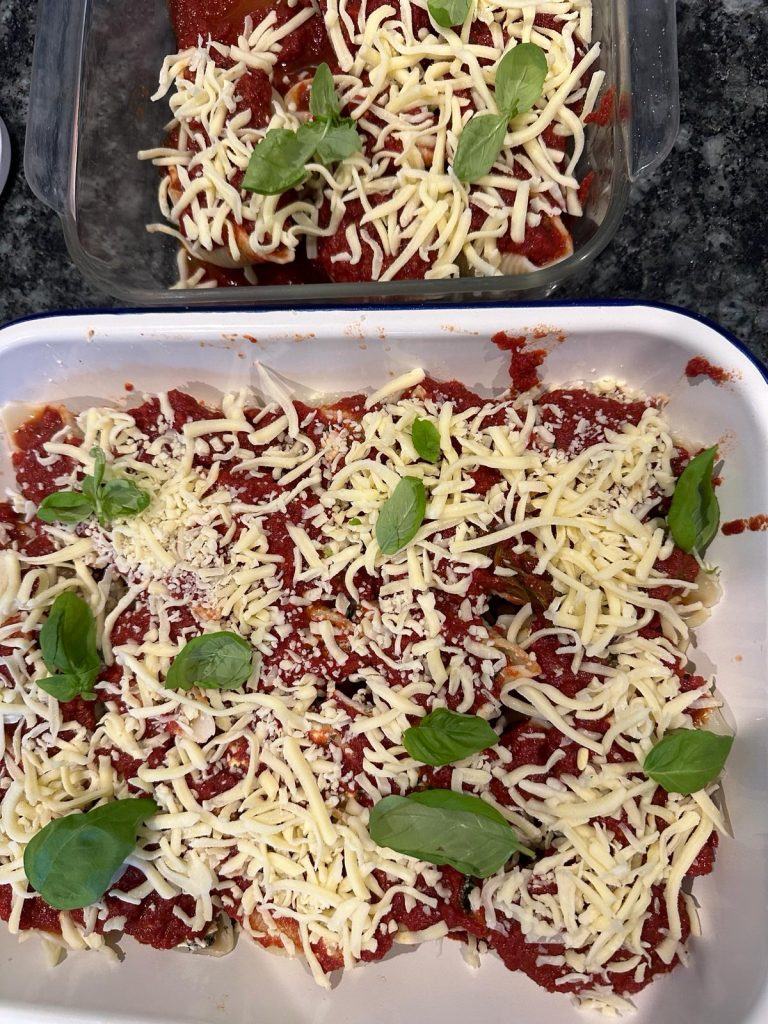
Transfer the filled pasta shells to the baking dish and apply a spoonful of the sauce on each shell – if there is extra sauce go over each shell and add more making sure its evenly distributed. Sprinkle the grated mozzarella cheese on each shell.
Cover baking tray with foil and bake in the oven for approximately 30 minutes. Remove foil and bake for a further 15-20 minutes till the mozzarella cheese has a golden-brown colour. Serve hot with a salad of your choice.
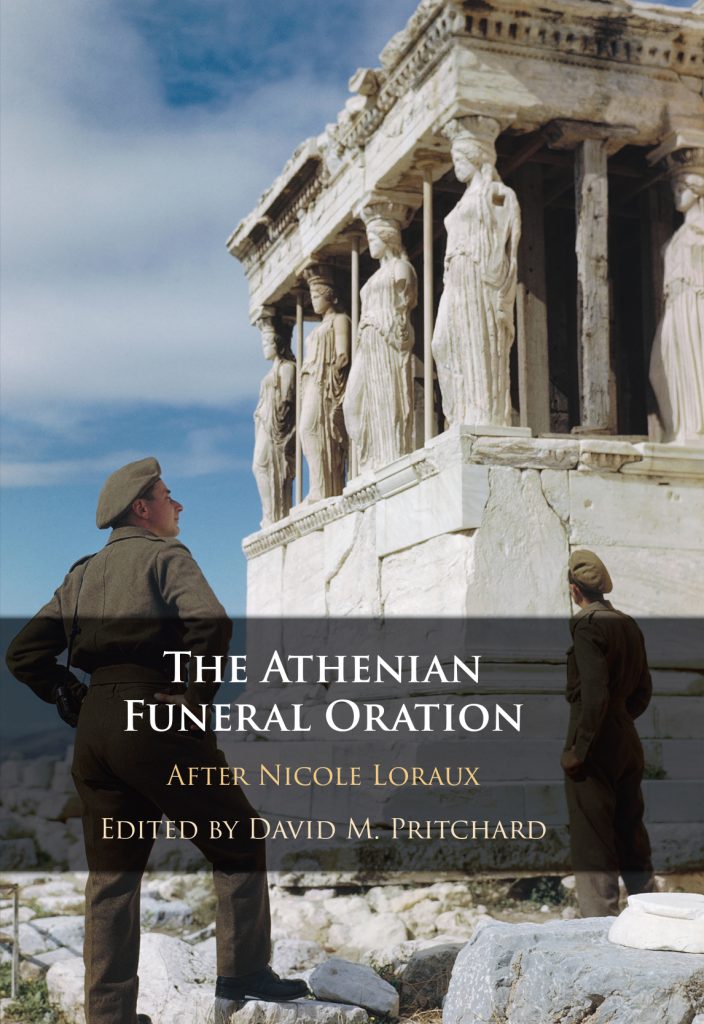
Associate Professor of Greek History at the University of Queensland, David M. Pritchard, is set to deliver an online lecture titled “The Athenian Funeral Oration: After Nicole Loraux” on Thursday 18 April 2024, at 7 pm. This lecture is part of the Greek History and Culture Seminars offered by the Greek Community of Melbourne.
The funeral oration, a tradition observed almost annually for classical Athenians fallen in war, underwent a significant reinterpretation nearly four decades ago by Nicole Loraux. In her seminal work, The Invention of Athens, Loraux shed light on the crucial role of this genre in shaping Athenian identity. She demonstrated how each iteration of the speech contributed to maintaining a consistent self-identity for over a century. However, Loraux’s exploration had its limitations. By minimising the focus on authorship, she neglected crucial questions surrounding individual speeches.
Pritchard, explaining his involvement in a comprehensive project aimed at expanding on The Invention of Athens, stated, “Project members convened initially in Strasbourg in 2018, followed by a subsequent meeting in Lyon in 2020. Our efforts culminated in an edited volume comprising 19 chapters, soon to be published by Cambridge University Press.”
In his lecture, “The Athenian Funeral Oration: After Nicole Loraux,” Professor Pritchard aims to address the significant questions overlooked by Loraux and to provide the intertextual analysis lacking in The Invention of Athens. This examination reveals a deeper political impact of the funeral oration than previously acknowledged.
David M. Pritchard holds the position of Associate Professor of Greek History at the University of Queensland, Australia, where he has chaired the Department of Classics and Ancient History. With 15 research fellowships across Australia, Denmark, France, the Netherlands, the United Kingdom, and the United States, including a term as a research fellow at the Nantes Institute for Advanced Study (France) in 2022-3, Pritchard has established himself as a prolific scholar.
He is the author of several influential works, including Athenian Democracy at War (Cambridge University Press 2019), Sport, Democracy and War in Classical Athens (Cambridge University Press 2013), and Public Spending and Democracy in Classical Athens (University of Texas Press 2015). Additionally, he has edited The Athenian Funeral Oration: After Nicole Loraux (Cambridge University Press 2024) and War, Democracy and Culture in Classical Athens (Cambridge University Press 2010), among others.
Pritchard’s extensive publication record includes 65 journal articles and book chapters, with an h-index of 19 and over 1300 citations. Associate Professor Pritchard frequently contributes to public discourse through radio appearances and op-eds in international newspapers such as Die Süddeutsche Zeitung (Germany), Le Monde (France), Le Figaro (France), Kathimerini (Greece), The Age (Australia), The Australian, and Politike (Brazil). He earned his PhD in Ancient History from Macquarie University (Australia).
The Greek History and Culture Seminars are organised and hosted by The Greek Community of Melbourne and provide the opportunity for everyone to experience the long and fascinating history of Greece and Greek culture in its various forms, stages and aspects of which have formed the foundation of Western civilisation.
Event Details
Date: Thursday 18 April, 7 pm
Platform: The Greek Community of Melbourne’s Facebook, YouTube
Born and raised in Sydney’s southern suburbs – and with a recent portion of her working life in Newcastle too – Liz Vassilacos has both feet on the ground (if one foot in either camp!). And she’s in the middle of the busiest period of her professional life.
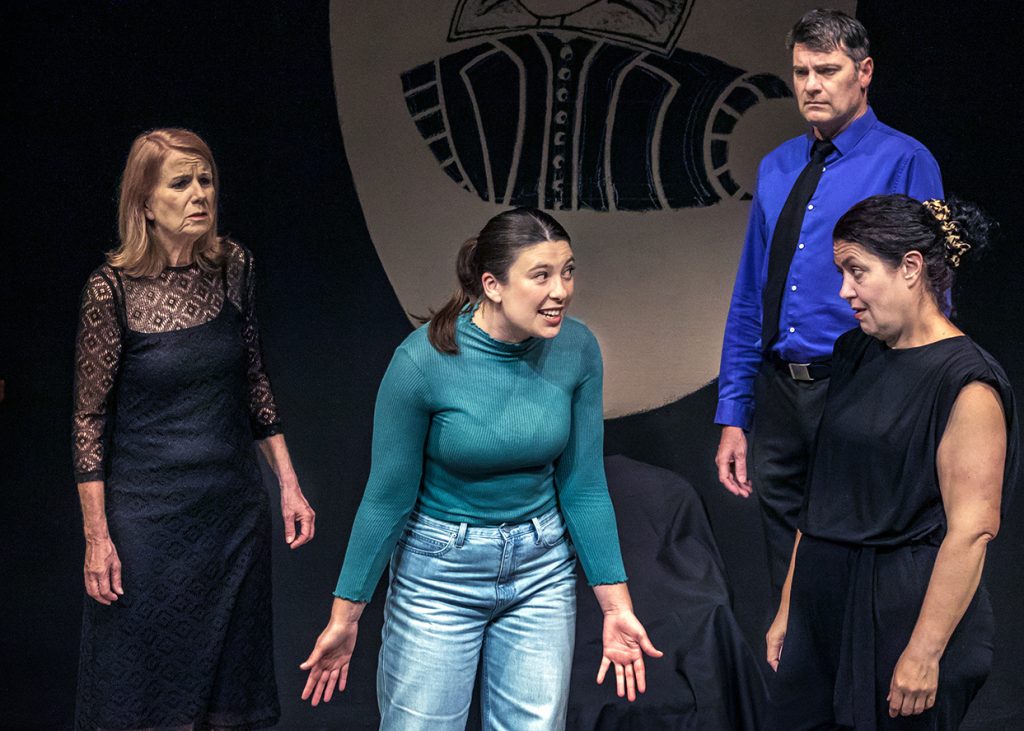
Having just wrapped filming in Newcastle on her first feature film “The Holy Scoundrel” and about to star in a production of “The Ides of March” (a modern re-telling of Shakespeare’s Julius Caesar) at the Catapult Dance & Choreographic Hub, the popular comic actress has even managed to squeeze in an award-winning performance in “The Library” at last weekend’s Lake Macquarie One Act Play Festival.
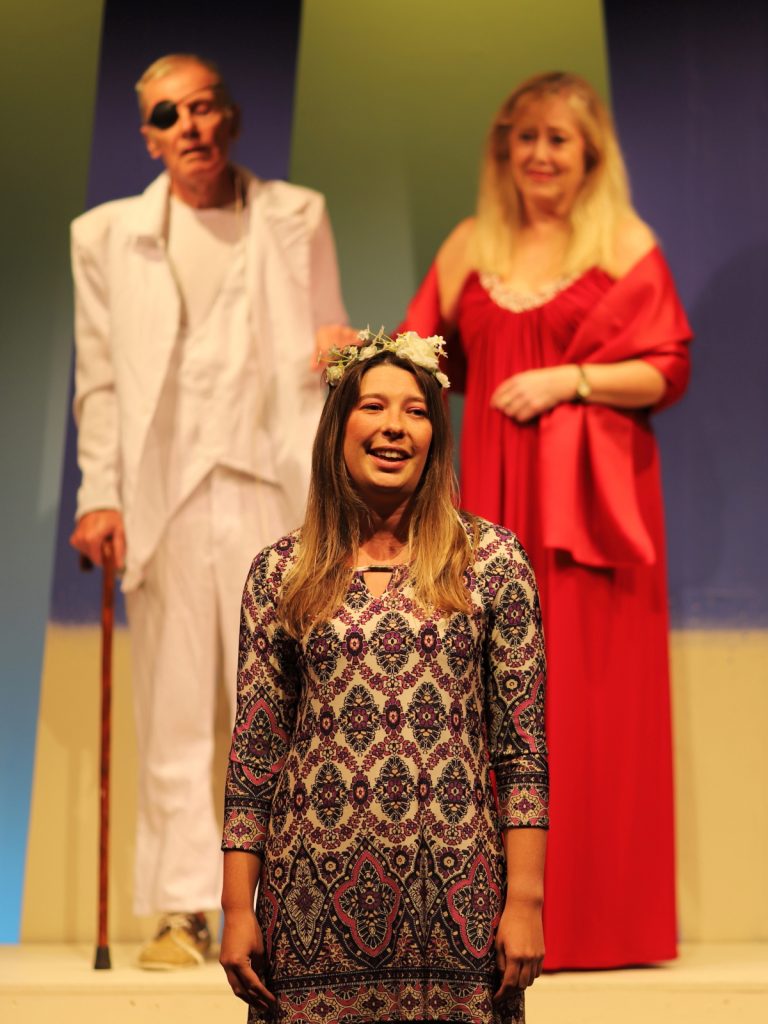
Dead White Males
And – as if that isn’t enough to keep her busy – her own short film “Leftovers” filmed in Kirrawee, which she wrote, produced (with Shire-based Bear and the Owl Productions) and starred in, on the international festival circuit and just picked up a ‘gong’ at the Italian Night of Short Comedy Festival in Milan.
The book of everything
It’s all gris to the mill for Liz, who is set to move back (at least part time) to her childhood locality of Miranda this month to maximise the busy workload her burgeoning acting career demands.
Liz first took to the stage at her local company Arts Theatre Cronulla where she featured in a broad range across comedic and dramatic roles. Since then, she studied under a number of tutors at The Australian Film & Television Academy and enjoyed a stint in Hollywood where she continued to hone her craft and met with local casting directors and filmmakers.
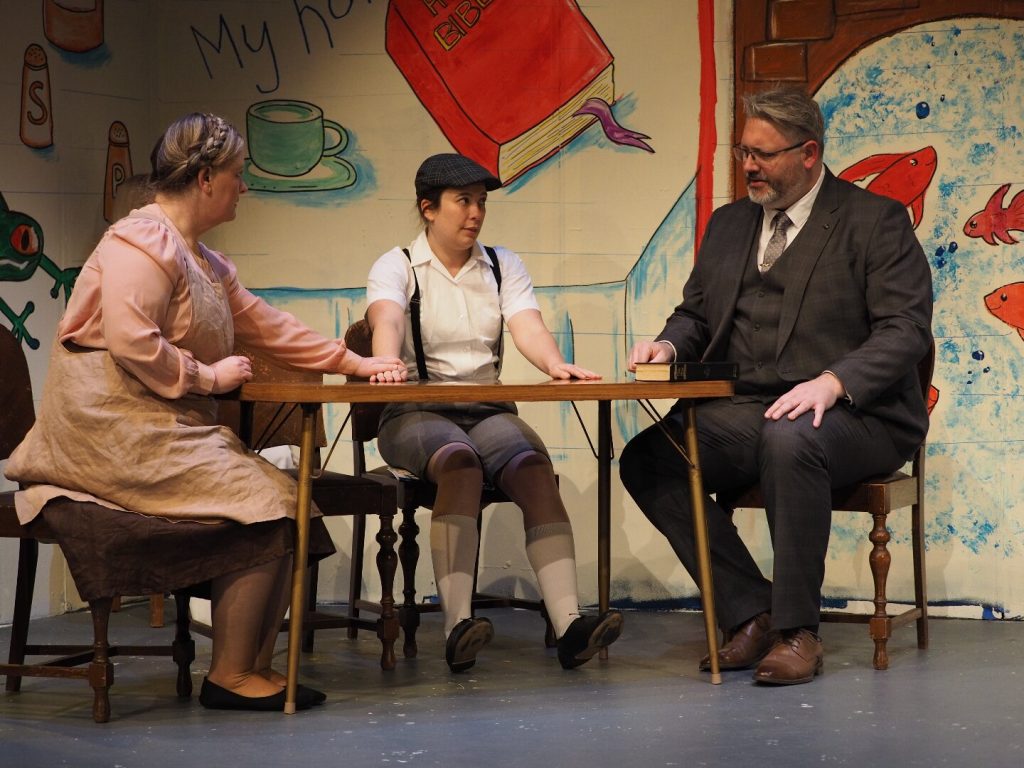
Holy Scoundrel
“I now know a thing or two about improv, stage combat, weapon handling and even motion/performance capture!” she says with a laugh.
Recent stage credits include the lead in David Williamson’s Dead White Males and The Appleton Ladies’ Potato Race, while on screen she has starred in supporting and feature roles in both short and feature films.
What’s next for Liz? Well, until The Holy Scoundrel is released later this year, there’s bound to be some more red-carpet premieres and awards presentations as Leftovers continues to gain plaudits both at home and internationally. And more stage and screen appearances – whether in the Hunter, or further south in Sydney.
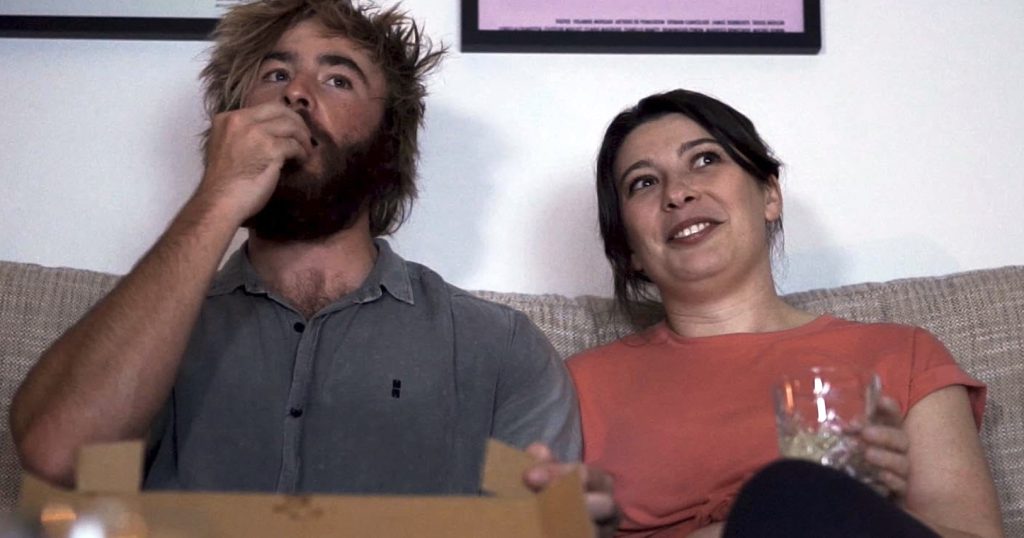
Leftovers
“In this industry you have to work hard and grab the opportunities as they fly by,” Liz said. “It’s a crazy ride, but it helps to have both feet on the ground – wherever that is!”
There is no cutting down this poppy. Elouise Eftos is Australia’s first attractive comedian, which is coincidentally the name of her debut stand up show.
This dance, voice and acting-trained comedian is putting a thick red line through self-deprecating comedy.
Elouise Eftos.
“The show is about how hard it is to be attractive in comedy and that sounds so silly. That’s sort of what the gag is though; it’s this idea that people, especially in Australia, don’t like people being confident, let alone women being confident,” Eftos told The Greek Herald.
“It’s tall poppy syndrome. My comedy is a persona that I play. One of my first opening gigs was for Mary Coustas who plays Effie. She said, ‘you’re almost Effie 2.0, but you’re not wearing a wig and you’re in on the bit.’ I want to challenge the way people see women and women in comedy.”
Eftos is the quintessential ‘Tra la la Girl,’ a term bestowed by her yiayia, but known by many different iterations across Greek culture.
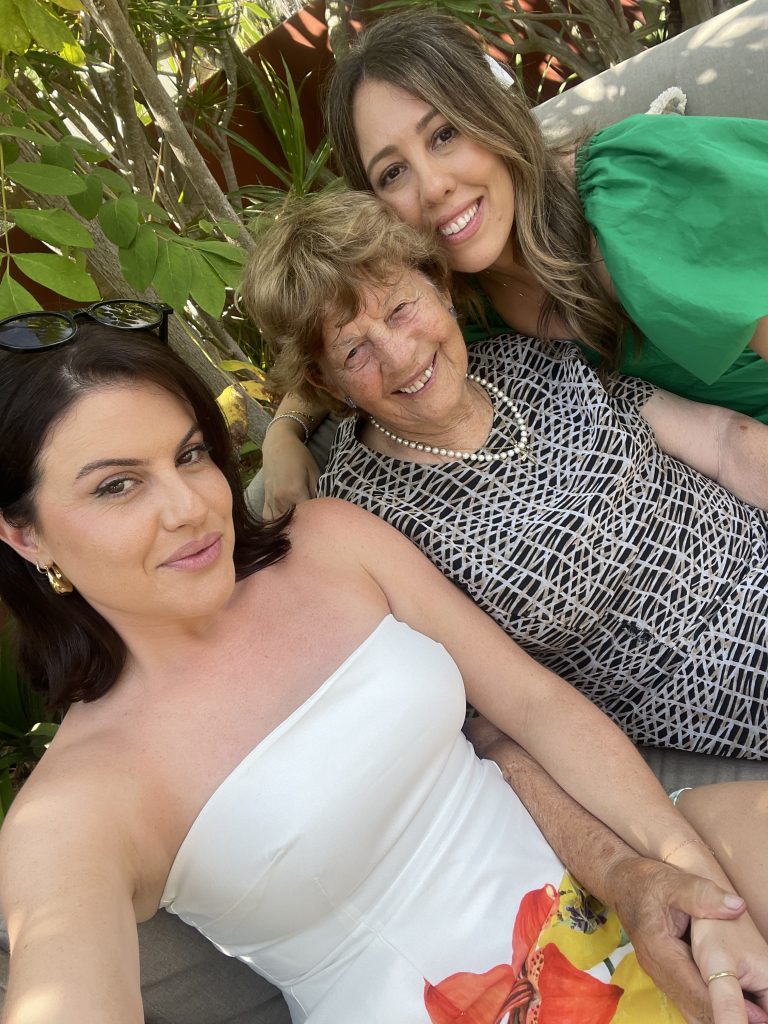
Elouise with her yiayia.
‘Tra la la girl’ is a term of endearment, depending who you ask. For Eftos, it encompasses the creative, the fun and flirtatious between is she serious or is this a joke?
“What I love about performing is being able to step into the shoes of someone else. That’s got nothing to do with me being insecure about who I am, because I think that’s what a lot of people interpret my persona as, but it takes a lot to be that confident on stage. I could be like everybody else and do self-deprecating, but I’m doing the literal opposite,” she said.
Elouise Eftos.
“It’s like a challenge. It’s like a social experiment. What’s so fun is when you can make people laugh. It’s amazing to see the reaction from people when they get what you’re doing. I love having a play and being able to be silly and not take things too seriously. Comedy shouldn’t be this serious, it should be fun.”
When the curtain comes down Eftos is still being watched in the public. She is no stranger to criticism for just having fun… cue Cyndi Lauper. Recently pictured with friend and media personality Abbie Chatfield during Melbourne’s Formula 1 season, the women were lambasted in comments for their choice of clothing and social media posts.
“People like to interpret us being silly and having fun as being these little harlots. It makes me laugh when people just assume we’re stupid, little bimbos and that we don’t know anything about the events we’re attending because of how we look or how we act. Trust me, we’re multifaceted,” she said.
“I talk about how women are policed and these ideas that the patriarchy has put on us in my stand up. We’re also victims of internalised misogyny, but I love the fact that I get to challenge that as this persona, because I wish I was like her all the time. She’s a very heightened version of me. It’s very empowering to play such a strong woman and wear a little dress and be like, ‘I didn’t give a f***, you can’t touch me up here’.”
But who gave her the gall? The gumption?! Well, it’s just in her blood. Eftos credits her “very supportive” immediate family for their foresight and the foundations they laid down for her.
“Everything that I love is from my mum, my dad, my grandparents… My grandfather would always say, ‘I want to see you in Hollywood.’ I get all my humour and my passion and my expression from my family. That’s from my upbringing, my culture,” she said.
“It’s really nice to have that boisterous energy; everyone’s always performing in some way when they tell their stories. I don’t think I could ever avoid being a performer because that’s what I was brought up with; constantly singing, dancing.”
Elouise Eftos attended the Australian Premiere of Babylon at the State Theatre in Sydney. Photo: Brendon Thorne.
Eftos circles back to the theme of her show and its feminist tones. What would the world have looked like if the ethnic women she grew up around had taken the leaps she had into entertainment, without fear of prejudice?
“It made me laugh when yiayia would call me a ‘Tra la la girl,’ which was the name of the trial show that I did in Perth. I was filming her when I was there and I told her ‘you’re a bit of a Tra la la girl.’ She says, ‘yeah!’ Then I asked her, ‘do you think you’d ever do comedy shows?’ Not now, but back in the day she reckons she would have done it as well,” Eftos concluded.
“I feel like there’s so many things the women in our lives would have done, but they were still of that generation. I feel very lucky that my parents are very supportive.”
You can catch Elouis Eftos headlining this year’s First Greek Youth Comedy Gala on Saturday, March 15 at the Canterbury Leagues Club, Sydney.
The Lemnian Association of NSW, in partnership with the Consulate General of Greece in Sydney, will present the documentary Anzac. Lemnos. 1915. at the Lemnos Club in Belmore on Tuesday, April 23.
Many Australians know of Gallipoli. Few know of Lemnos and of this humble Greek island’s critical contribution to the Dardanelles campaign.
For the first time, with rare photo archives and compelling personal accounts, this unique documentary explores a little-known setting during Australia’s first war that was crucial in the shaping of the country’s modern identity.
The one-hour documentary will be broadcast for the first time on Anzac Day 2024 on SBS. A pre-screening will take place at the premises of the Lemnos Club (44 Albert Street, Belmore, NSW 2192).
Event details:
What: Pre-screening of Anzac. Lemnos. 1915.
When: Tuesday, April 23.
Time: 6:30pm for a 7:00pm start.
Cost: Free admission.
A few words about the documentary:
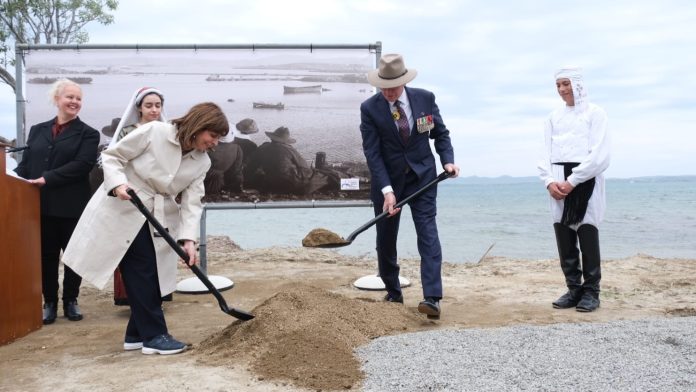
In May 2023, Australia’s Governor-General David Hurley joined the President of the Hellenic Republic Katerina Sakellaropoulou in a ground-breaking ceremony on Lemnos to mark the beginning of construction for an Anzac Remembrance Trail – a project of historical significance for both countries. But why?
Australia’s Governor-General David Hurley joined the President of the Hellenic Republic Katerina Sakellaropoulou in a ground-breaking ceremony on Lemnos to mark the beginning of construction for an Anzac Remembrance Trail.
Supported by rich and rare archive and gripping personal accounts, Anzac. Lemnos. 1915. brings to life a little-known chapter in Australia’s wartime history for the first time.
March 1915 marked the first arrivals of thousands of Allied troops as the island was transformed into a base for the Dardanelles campaign. Mudros Bay became the anchorage for one of the largest fleets ever assembled in the modern world.
50,000 Anzacs passed through Lemnos to and from the Gallipoli frontline. By the end of the first day’s battle, 25th of April, more than 2,000 Allied troops were dead or wounded. Between August 7th and November 11th 96,943 sick and wounded had arrived in Mudros Harbour from the frontlines.
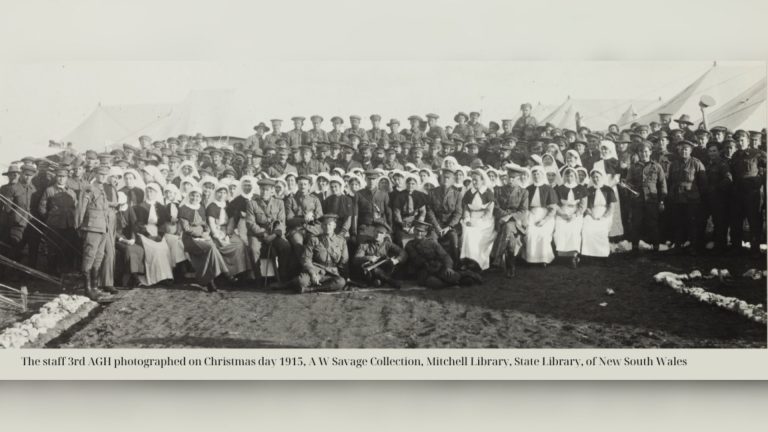
Just 136 Australian nurses cared for thousands of wounded, sick and dying with such limited supplies that they tore their petticoats to use for bandages. They performed their duties through exhaustion and sickness with unflinching stoicism. Australian field hospitals provided pioneering medical practices – ophthalmology, X-Rays and bacteriology.
Lemnos was developed into a substantial support base – hospitals, supply units, camps for R & R (rest and recuperation) throughout the campaign. As Royal Australian Navy historian, John Perryman says, “No Lemnos, no Gallipoli.”
148 Australians and 76 New Zealanders remain in Lemnos buried in two Commonwealth War Graves.
Anzac. Lemnos. 1915. is a fascinating new chapter in Australia’s history of the Gallipoli campaign – a story of courage, sacrifice, resilience and enduring friendship. It is also the story of a small island in the Aegean Sea that shaped an everlasting bond between Greece and Australia.
Head of Melbourne-based firm Velos & Velos Lawyers, John Velos, will appeal a forgery conviction in a Greek court following a family legal dispute over the control of a $1.5 million hotel resort on the edge of the Mediterranean Sea.
The Sydney Morning Herald revealed that the Toorak lawyer, who has been a solicitor for over 40 years, was also the former mayor of the City of Prahran.
He was caught with allegedly committing forgery in Athens, Greece, earlier this year, which then led to a six-month prison sentence.
His conviction stems from his actions in a family disagreement over the management of a Greek company that owns the Skoutari Beach Hotel, a seaside resort located roughly 250 kilometres southwest of Athens. It is valued at approximately $1.5 million (928,000 euros).
Mr Velos has been a lawyer for over 40 years. Photo: Velos Criminal Lawyers.
Earlier this year, in February, he was found guilty of forgery in the Athens Court of Appeals, though he was acquitted of a separate charge related to the use of a forged document.
He received a six-month prison sentence, valid for three years, and was ordered to pay €250 in court fees.
These charges were brought against him in Greece mid-2020. Later that same year, Mr Velos made an unsuccessful bid for a seat as a councillor for the Stonnington City Council in Melbourne’s southeast.
Legal firm Landers & Rogers, who is representing Velos, said Velos denies any wrongdoing in the Greek criminal matter.
The firm said responsibility for the alleged criminal act instead rested with Velos’ Greek lawyer, who failed to correctly complete paperwork for the company that owned the hotel in 2017.