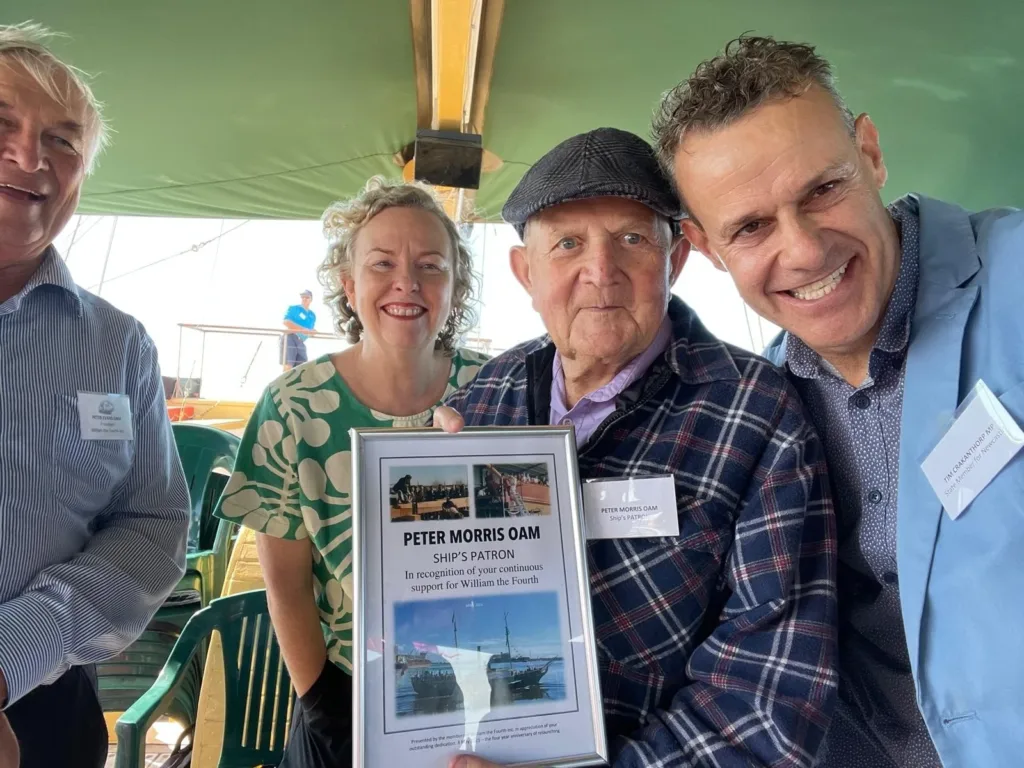
Peter Frederick Morris, the first Australian federal minister of Greek heritage, has died aged 94.
Born in Sydney in 1932, Morris was the son of a migrant from Symi, Jimmy Morris, who anglicised his name from Agapitos Montiadis and ran a coffee shop in Newcastle. After finishing his education, Morris worked in both Canberra and Newcastle before entering public life.
He became involved with the Labor Party in the mid-1960s, served on Newcastle City Council from 1968, and was elected to federal parliament in 1972 as the member for Shortland, a seat he held until 1998.
Morris joined the Hawke government in 1983 as Minister for Transport and later held additional portfolios.
In 1992, as chair of the government’s Standing Committee on Transport, Communications and Infrastructure, he delivered the landmark “Ships of Shame” report, exposing unsafe practices in the shipping industry and recommending tighter oversight at national and international levels.
Photo: Tim Crakanthorp MP / Facebook.
Public service extended through his family, with his brother Allan Morris and son Matthew also serving in federal parliament.
Prime Minister Anthony Albanese said Morris played a defining role in the Hawke era.
“Peter Morris was one of the reasons we look back on the Hawke government with such fondness and admiration,” he said.
“As the MP for Shortland and as a minister, Peter’s work was always guided by Labor values and his deep humanity. When I was Minister for Transport, Peter was a source of sound and constructive advice on shipping, aviation, regulatory reform and regional economic development. He was one of those people who gave heart to our movement. In the process, he helped improve life in the Hunter region and across Australia.”
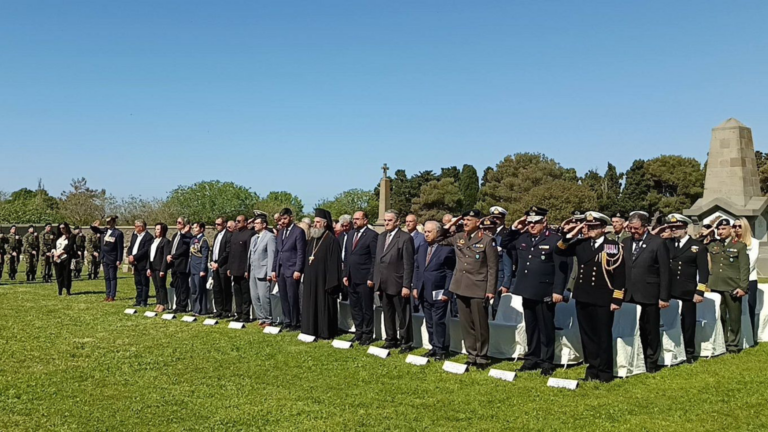
With the presence of representatives of the local government, the armed forces, the educational community and delegations of allied countries, memorial events for the fallen of the Gallipoli Campaign were held in Lemnos on Tuesday, April 28, as part of the celebration of ANZAC Day.
For another year, the special role of the island during the First World War was highlighted, both on a strategic and humanitarian level.
The ceremonies began on Tuesday morning at the Moudros Commonwealth Cemetery, where a memorial service was held, followed by the laying of wreaths and the playing of national anthems.
The atmosphere was charged, with those present paying tribute to the soldiers who participated in the Battle of Gallipoli in 1915, an event that holds a central place in the collective memory of Australia and New Zealand.
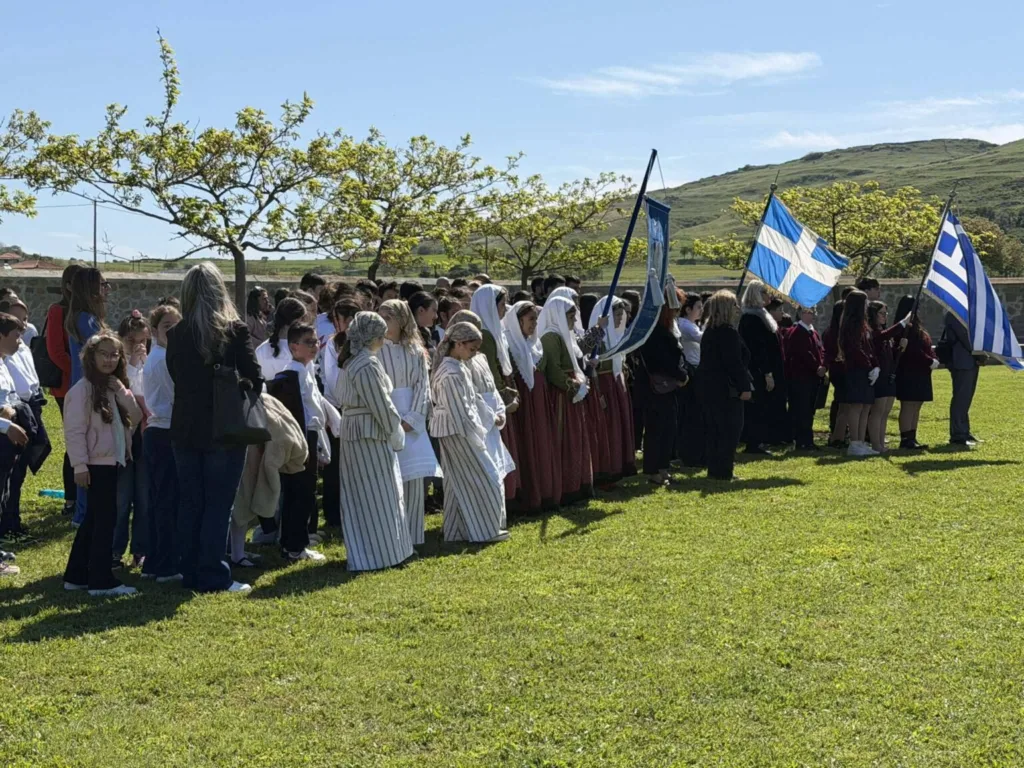
The attention was then transferred to the “Pavlos Kountouriotis” Cultural Centre in Moudros. There, the students of the High School presented the work “Young People Tell the Story of the ANZACs”, attempting to translate the experiences of the young soldiers into the present, through their own eyes.
Their approach connected the local historical imprint with the broader values of peace and collective memory.
The speech of the Vice Admiral emeritus followed. Diogenes Tsipouridis, who analysed the operations of the Gallipoli Campaign, focusing in particular on the role of Moudros as a critical supply and care base. As he underlined, the geographical position of Lemnos was decisive for the development of military operations in the region.
The culmination of the events took place at noon at the Portianos Commonwealth Cemetery, where a new memorial service was held and wreaths were laid.
During the ceremony, Greek-Canadian publisher George Kostandellis referred to the importance of historical memory, emphasising that “those who cannot remember the past are condemned to repeat it.”
As he noted, memory is not a formal obligation, but an essential tool for preventing the mistakes of the past.
This year’s events were part of a broader program of actions of the Regional Unit of Lemnos, which included, among other things, an exhibition dedicated to World War I and the means of war of the time.
The participation of citizens and official missions highlighted Lemnos as a place of historical memory and a meeting point for people with common historical references.
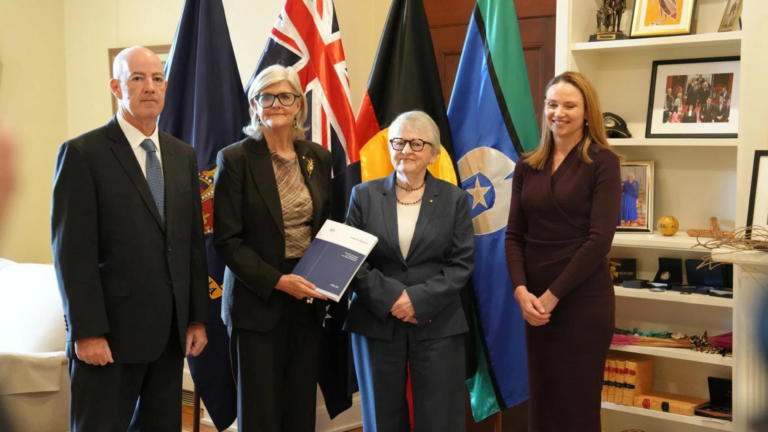
The Royal Commission into Antisemitism and Social Cohesion has released its interim report following its examination of the Bondi terror attack in which 15 people were killed during a Hanukkah celebration on December 14, 2025.
Royal commissioner Virginia Bell said the report contains 14 recommendations, including five that have not been made public. Classified intelligence material and information that could prejudice ongoing criminal proceedings has been removed from the public version.
The attack saw gunman Naveed Akram charged with murder and terrorism offences, while his father and fellow shooter Sajid Akram were shot dead at the scene.
Among the published recommendations, the commission called for a review of Joint Counter Terrorism teams across Australia with an urgent report to police commissioners, and urged all levels of government to prioritise a nationally consistent firearms agreement alongside a national gun buyback scheme. It also recommended NSW Police increase security at high-risk Jewish events.
The report states: “In these respects, no issue requiring urgent or immediate action has been identified,” with Bell saying she found no gaps in legal or regulatory frameworks that would have prevented authorities from responding to or stopping the attack.
However, she said there was still scope for all levels of government to improve counter-terrorism capability.
The commission’s first public hearings will begin next week, with people with lived experience of antisemitism expected to give evidence. Further hearings will be scheduled, and Bell is due to deliver her final report before the first anniversary of the attack.
Prime Minister Anthony Albanese has responded to the interim report by thanking Commissioner Bell for her ongoing work and confirming the government will act on its findings.
Albanese also confirmed the National Security Committee has agreed to adopt and implement all Commonwealth-relevant recommendations from the interim report.
President Donald Trump has held talks with US oil executives on the potential continuation of a months-long blockade of Iran, while urging Tehran to strike a deal as negotiations remain deadlocked.
The White House said Trump met industry leaders to discuss “the steps President Trump has taken to alleviate global oil markets and steps we could take to continue the current blockade for months if needed and minimise impact on American consumers.”
The discussions come as Washington seeks to restrict Iran’s oil exports through a naval blockade aimed at forcing it to reopen the Strait of Hormuz.
Trump also renewed pressure on Tehran, warning it should “get smart soon” and agree to a deal, adding in a social media post: “They don’t know how to sign a non-nuclear deal. They’d better get smart soon!”
Efforts to resolve the conflict have stalled, with mediator Pakistan attempting to prevent escalation while both sides exchange messages. A Pakistani source said Iran had requested time until the end of the week to respond to US “observations” on its latest proposal.
Oil markets reacted sharply, with prices rising more than 6% amid fears of prolonged disruption. A senior Pentagon official said the conflict has already cost the US military $25 billion.
Tehran has warned of “unprecedented military action” if the blockade continues and has pledged to disrupt shipping through the strait while under threat. Iranian officials maintain their nuclear ambitions are peaceful, while the US insists Iran must not obtain nuclear weapons.
Iran’s parliament speaker Mohammad Baqer Qalibaf accused Trump of trying to divide the country, saying: “The solution for confronting the enemy’s new conspiracy is only one thing: maintaining unity, which has been the bane of all the enemy’s conspiracies.”
The conflict has taken a heavy toll inside Iran, with the currency falling to a record low and inflation reaching 65.8% for the month to April 20. The United Nations also reported at least 21 executions and more than 4,000 arrests on national security-related charges since the war began.
Iran has proposed delaying nuclear negotiations until the conflict formally ends and shipping routes are restored, a position that does not meet US demands to address the nuclear issue upfront.
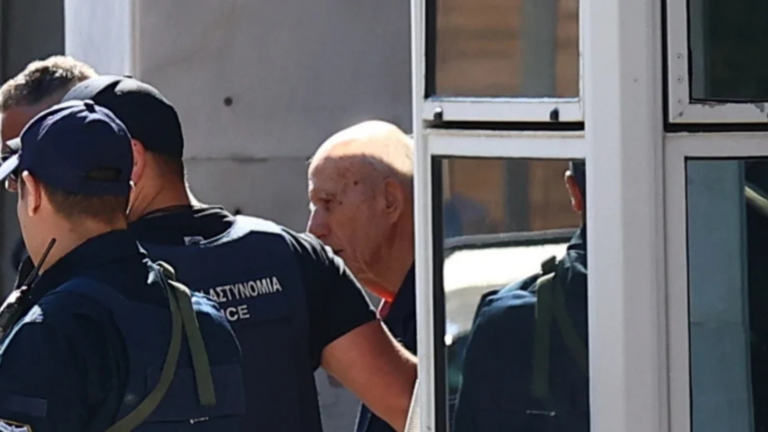
An 89-year-old man arrested over two shootings in Athens has confessed he intended to carry out a further attack at the European Court of Justice in Strasbourg, authorities say.
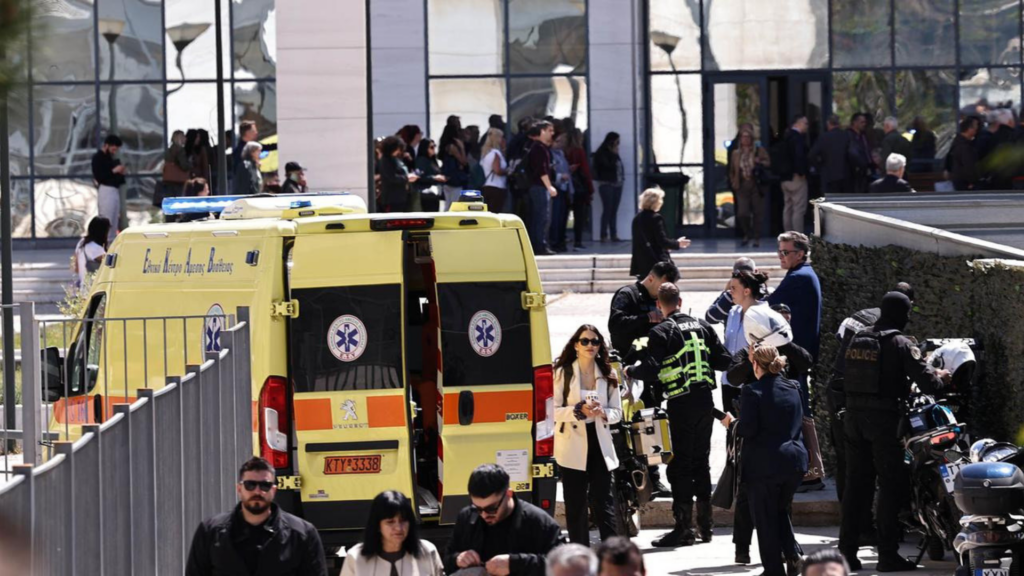
The suspect allegedly opened fire with a shotgun at a branch of EFKA, wounding an employee in the leg, before travelling by taxi to a courthouse where he fired additional shots, lightly injuring four female court clerks.
He appeared before a public prosecutor on Wednesday and is due to testify before an investigating magistrate on Thursday.
In his confession, the man said he had scouted both locations days earlier to assess security, noting he was able to enter without being searched or asked for identification on the day of the attacks.
He told investigators he did not intend to kill anyone but wanted to send a “message” over a dispute concerning his Greek pension, claiming he deliberately aimed at victims’ legs.
Photo: Kathimerini.
After the shootings, he travelled towards an intercity bus station before arranging transport to Patra, where he planned to catch a ferry to Italy and continue to Strasbourg to target employees who had sent him a letter he interpreted as mocking him.
Police arrested him at a hotel in Patra after he encountered problems withdrawing cash from an ATM. He also claimed he had purchased the weapon years earlier.
His lawyer, Vassilis Noulezas, said the incident was “an act of protest and despair” against Greek public services.
He added the man had worked for 40 years as an engineer in Chicago, had previously been hospitalised in a psychiatric clinic in Athens, and had been angered after his application for a supplementary pension was rejected.
A public prosecutor has charged the man with attempted murder and illegal possession of a gun.
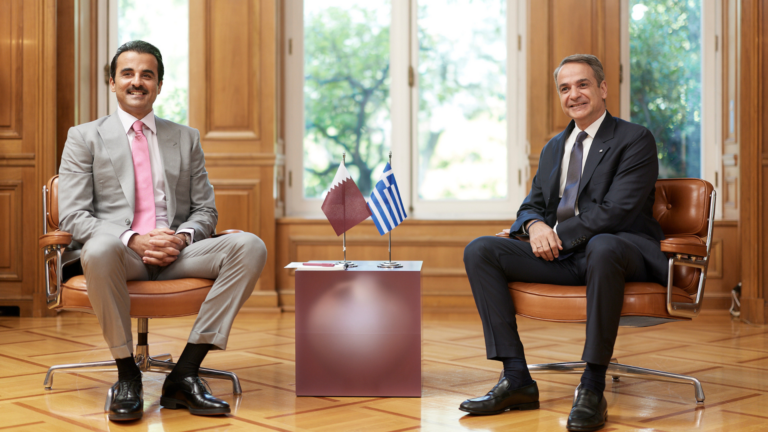
Greece has reaffirmed its support for Gulf nations following Iran’s recent attack while simultaneously strengthening economic and strategic ties with Qatar.
During talks in Athens, Prime Minister Kyriakos Mitsotakis and Qatar’s Emir Sheikh Tamim bin Hamad Al Thani agreed to expand cooperation in trade, energy and defence, building on an agreement first reached in 2024.
Mitsotakis emphasised Greece’s position during the regional tensions, stating: “Greece stood by all the Gulf countries and supported your country against an unprovoked attack by Iran.”
He added: “I appreciate Qatar’s commitment to investing in Greece. Our economy has recorded significant progress compared to previous years.”
The Emir welcomed Greece’s stance, saying: “I would like to thank you, Mr. Prime Minister, for standing by your friends in this conflict. Your economy will do well under your leadership and we look forward to other opportunities for investment in your country.”
Both leaders discussed investment opportunities across Greek infrastructure, energy and data centres, as Athens continues efforts to attract capital from Qatar, a major global gas supplier.
Highlighting broader cooperation, Sheikh Tamim said: “There are also other areas of cooperation we have been discussing lately such as defence cooperation. Taking into consideration the events taking place around the world, I believe it is very important to strengthen these ties as well.”
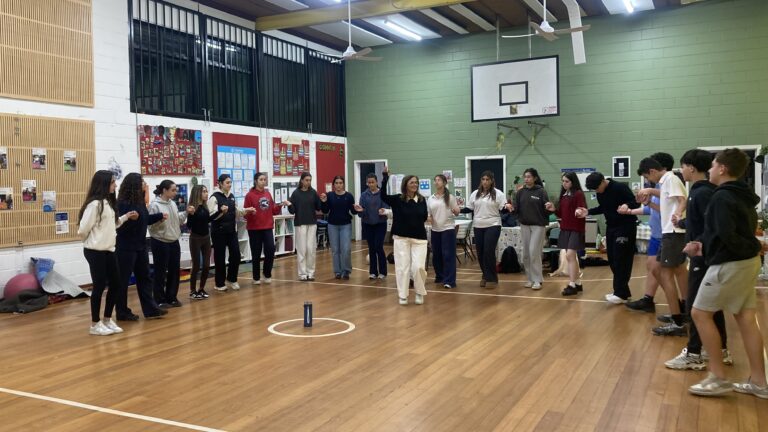
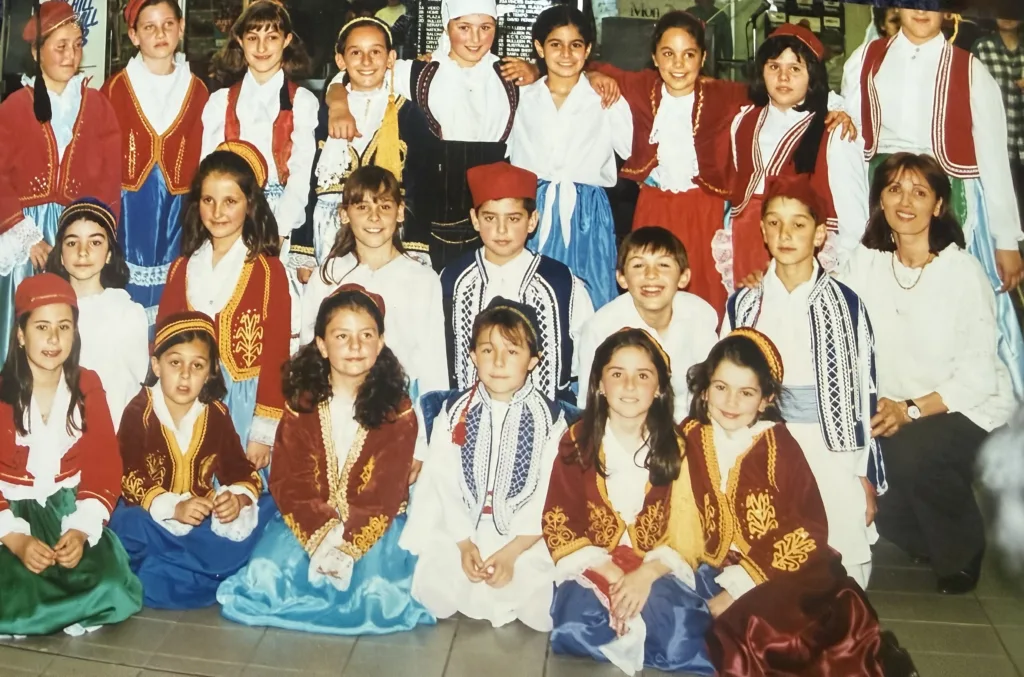
“Whoever dances, writes what their soul wants to say,” Greek dance teacher Jenny Iliou told The Greek Herald.
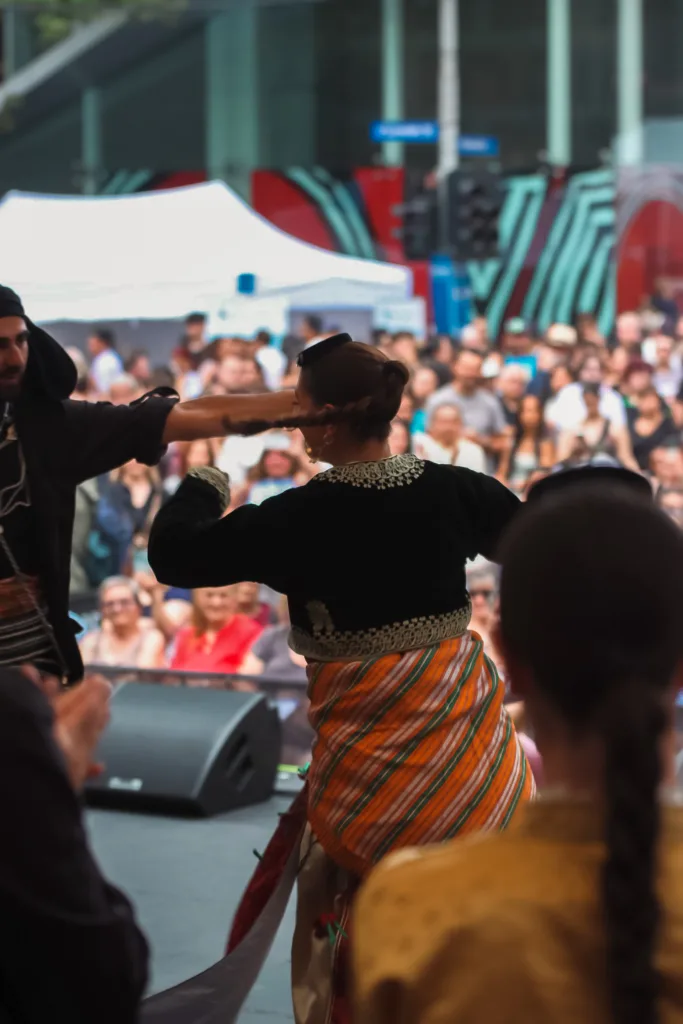
Dance has long been at the heart of Greek culture, particularly within the traditions of Hellenism that continue to be taught and practiced across Australia. For annual International Day of Dance on April 29, The Greek Herald spoke with two respected Greek dance teachers in Melbourne about their passion for teaching and their experiences preserving and passing on the cultural tradition to the next generation.
Iliou’s life has been shaped by dance since childhood, her earliest memories rooted in the rhythms and traditions of her village in Kastoria, Greece. She began teaching Greek dance at just 14 years old, drawing on a deep cultural immersion that came from school lessons and the ever-present spirit of the village glendi.
“As long as I can remember, as a child, I always danced,” she told The Greek Herald.
Iliou’s teaching journey began in high school when she joined a dance group and then started teaching primary-aged students in her village’s dance school. Her commitment quickly expanded to neighbouring communities, followed by training at a specialised dance school in Kastoria and further training in Florina and Thessaloniki.
“That’s where the love and passion began,” she said, describing how dance had become part of her soul and inseparable from her identity. “I lived within dance.”
At 18, Iliou migrated to Melbourne where she wasted no time establishing dance groups connected her Kastorian roots. At a time when Greek dance teachers were scarce, she became a sought-after instructor and worked across multiple schools and community associations. Her teaching has spanned generations and abilities, from young children to elderly participants and students with special needs.
Jenny’s teaching has spanned generations and abilities.
For the past 42 years, Iliou has been a dedicated dance teacher with the Greek Community of Melbourne Schools and has found happiness working with students at the school. She takes pride in watching students master dances and encourages them to understand the origins of each movement and which elements and sounds are traditional and which have been modernised. She loves seeing former students go on to become teachers themselves and would like to see this continue for future generations.
She feels a profound obligation to preserve and share her love of the craft. “I want to pass on the love I have within me to future generations.”
I am fortunate to have been a student of Iliou’s and watching her at work — sharing decades of experience and knowledge — is a truly magnificent experience.
Iliou is optimistic about the future of Greek dance in Melbourne. “In ten years [Greek dance] will continue with good dynamics,” she said, noting that while aspects of traditional style may have faded at times, a growing number of organisations and teachers are committed to its revival and continuity.
Despite decades of teaching, Iliou constantly seeks to deepen her knowledge of Greece’s rich dance traditions.
When asked about continuing to teach dance, Iliou said, “Personally, as long as I can endure — because it’s my passion, my love — as long as my life and health allow me, I will continue.”
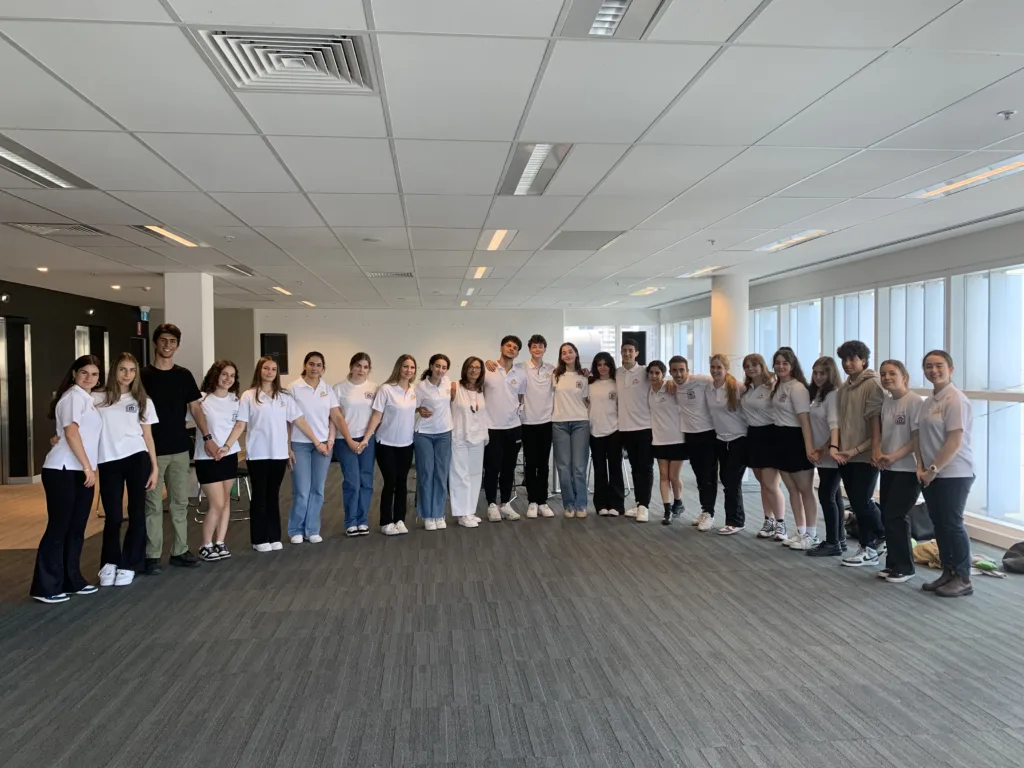
Turning to a younger generation of instructors, Olga Antoniadis represents the evolving future of Greek dance in Melbourne. She has grown up immersed in the rhythm and movement of Pontian culture, a passion that now shapes her role as a junior and intermediate dance teacher with Panagia Soumela.
Raised in a household where music and dance were ever-present, Antoniadis credits her parents for instilling that deep connection from an early age. Her mother has taught Greek dance for nearly 50 years while her father was an active musician.
“I was dancing at the same time I learned how to walk,” Antoniadis told The Greek Herald.
“Growing up, we were surrounded by music all the time, by Pontian music,” she said. After finishing high school, she joined Panagia Soumela as both a dancer and committee member, later stepping into a teaching role where she now guides the next generation.
Olga Antoniades.
You can hear Antoniadis’ passion for teaching Pontian dance and her love for her students in the kind and warm-hearted way she speaks about her experiences.
“[Teaching] is important because it’s something that connects us to our ancestors,” she said.
“Especially, I think, being Pontic Greek, that is so important because it’s something that was trying to be eradicated during our whole period of genocide… The fact that we can still keep that tradition alive, keep the music alive, keep the dancing alive… it’s our closest connection to our ancestors.”
Beyond choreography, Antoniadis uses her classes to educate students about the regional origins of Pontian dances, reinforcing both cultural awareness and historical understanding. She also sees digital platforms as being an increasingly driving force in sustaining that engagement.
“Social media is so powerful in that… we get to reach different people which is really cool,” she said, noting that many stumble across Panagia Soumela online and learn about different dance traditions. “Our group has had so much fun engaging with it and coming up with things as well.”
Looking ahead, Antoniadis is confident in the future of Greek dance in Melbourne.
“Being a junior dance teacher, I look towards the next generation, they are the future. Seeing enthusiasm still be so big amongst the young generation. I think some people think it’s dying out or it’s being lost but it’s definitely not,” she emphasised.
“There’s so much passion with those kids and I think through educating them and through them practicing it’s just going to foster the next generation of teachers and learners and of this passion.”
The 2026 ANZAC Day service at Lakemba brought together veterans, families, students, and civic leaders in a formal commemoration that highlighted both local and international wartime histories, including the contribution of Cyprus.
Hosted by the Lakemba sub-branch of the Returned Services League of Australia, the service reflected the area’s longstanding connection to military service. The district has historically contributed significant numbers of servicemen and women during both the World War I and World War II, many of whom served in theatres where contact with Cypriot forces and support units was established.
Proceedings began with a march of approximately 300 participants from Lakemba Club to the First World War memorial adjacent to Lakemba railway station. The assembly included representatives from local public and private schools, faith-based institutions, and community organisations. Among them were members of the Greek Orthodox community, including All Saints Greek Orthodox Parish and Community, Belmore, alongside students from a wide range of educational and cultural backgrounds.
Civic representation was also present, including local Member for Canterbury Sophie Cotsis, who delivered a reading of the poem “Lesvos,” reinforcing the longstanding historical links between Australia and Greece, and by extension Cyprus, which played a role in supporting Allied forces in the region.
During the service, the Master of Ceremonies drew attention to Cyprus’ wartime contribution, highlighting the role of Cypriot servicemen and, in particular, those who served in the Cyprus Regiment. This acknowledgement placed Cyprus firmly within the broader ANZAC narrative, reinforcing the shared history between Australian forces and Cypriot units across multiple theatres of war.
Importantly, the MC also emphasised the strong local connection. The Lakemba Club hosts the Cyprus Community of NSW, where its offices are based, along with its kafenio, Greek language school, and dance school—each contributing to the cultural life of Lakemba. These institutions have become an established part of the local landscape, reflecting a community that has not only settled in the area, but has been recognised and embraced by its neighbours.
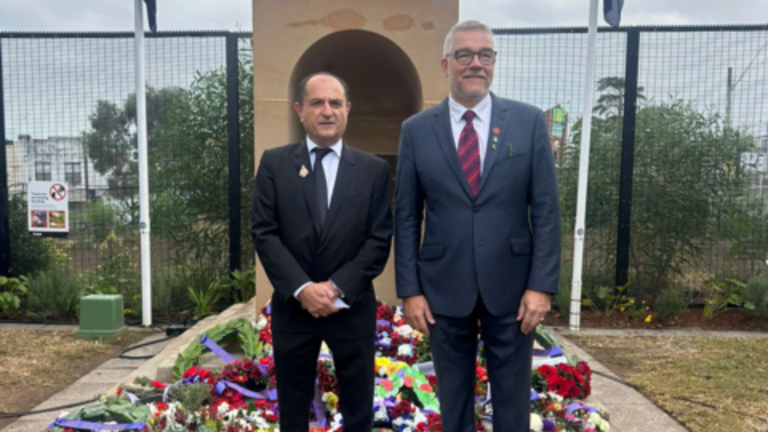
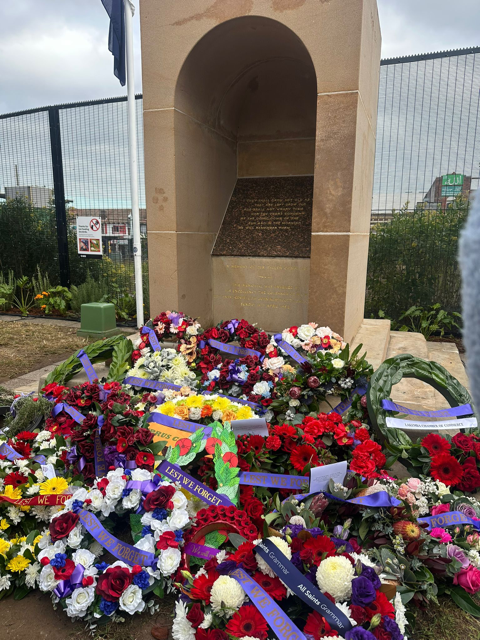
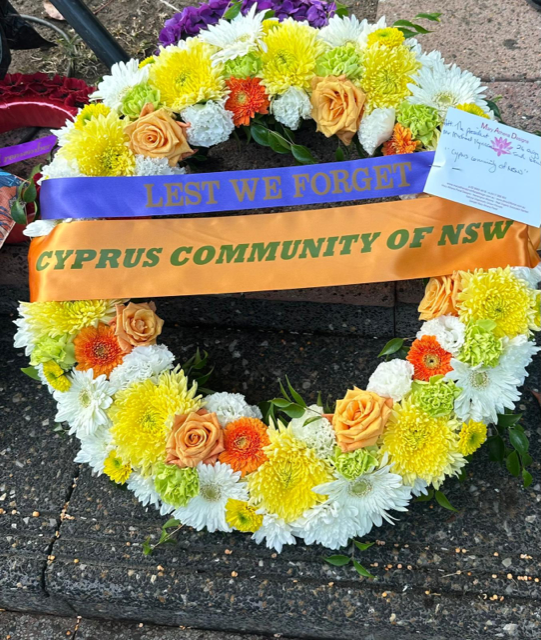
The Cyprus Community of NSW was represented by its President, Michael Kyriacou, also representing Cypriots for ANZACs. As part of the ceremony, a wreath was laid on behalf of the community, alongside a second wreath provided by the sub-branch recognising the contribution of Cypriots during the First World War. Particular reference was made to Cypriot logistics and engineering units that supported Allied operations, including those involving Australian forces in northern Greece.
The sub-branch wreath—composed of purple poppies with a distinct central arrangement of purple and black—served as a symbolic acknowledgement of Cyprus’ contribution to the ANZACs.
Following the ceremony, attendees engaged in discussion and sought to learn more about Cyprus’ role in both World Wars, including the establishment of the Cyprus Regiment in 1940. This prompted broader awareness among those present, many of whom were previously unfamiliar with the extent of Cypriot involvement across multiple theatres, including the Middle East, North Africa, and Europe.
For Greek Cypriots in particular, wartime service often extended beyond the Cyprus Regiment. Many volunteered to serve alongside Greek forces, driven by a strong sense of Hellenic identity and solidarity. Their participation in campaigns connected to the defence of Greece further reinforced the deep historical and cultural ties between Cyprus and the broader Hellenic world.
Following the service, engagement with local residents, dignitaries, and community leaders reinforced the importance of recognising Cyprus’ contribution—not only through wartime service, but also through the generations who later became part of Australia’s social and military fabric.
A notable feature of the gathering was the strong presence of younger participants, many of whom took part in the march and service with clear attentiveness to the significance of the occasion. Their involvement reflected a growing commitment to preserving and understanding the legacy of those who served.
The broader Greek community also participated, laying a wreath in honour of those who served and fell in both World Wars. Within this setting, the recognition of Cyprus—and particularly the Cyprus Regiment—formed a distinct point of engagement and awareness among attendees.
The Lakemba ANZAC Day service continues to provide an important local platform where Cyprus’ wartime contribution is acknowledged within Australia’s ANZAC commemorative tradition.
The Cyprus Diaspora Forum has announced the nominees for the CYDIA Awards® 2026, the annual celebration recognising the outstanding achievements and contributions of Cypriots abroad and friends of Cyprus.
The CYDIA Awards® form part of the Cyprus Diaspora Forum®, which will take place in Limassol from 6–9 May 2026, bringing together leading members of the global Cypriot community from across business, government, academia, science, culture and philanthropy.
The awards honour exceptional individuals across a wide range of categories, including the highly anticipated Lifetime Achievement Award.
The 2026 Lifetime Achievement Award will be presented to Theo Paphitis, the renowned British Cypriot retail entrepreneur, television Dragon and philanthropist.
Among the other distinguished honours, the Diaspora Ambassador Award will be presented to Despina Panayiotou Theodosiou, Joint CEO of Tototheo Global and President of the Board of the Association of Cypriot Professionals in Greece.
The Cyprus Chamber of Commerce and Industry Diaspora Entrepreneur Award will be presented to Christos A. Poullaides, a prominent Bahrain-based construction industry leader with operations across the Middle East and Europe.
The Diaspora Ambassador Legacy Award will be awarded to Panos A. Panay, President of The Recording Academy and presenter of the Grammy Awards.
The Diaspora Honorary Award, which recognises an exceptional individual whose achievements, leadership and enduring contribution have brought distinction to the global diaspora, will be awarded to Demetrios Mallios.
In the remaining 15 categories, the nominees are as follows:
CYDIA Awards 2026 Nominees and Categories
Advocating Cyprus
Effie Athanassiou
Irene Matys
Martin Zarian
Sergey Polivar
‘Artemis Pouroulis’ Culture and Arts
Andreani Panayides
Andreas Charalambous
Avgi Pourgoura
Elly Symons
Contribution to Society
Christos Charalambous
Kelly Christodoulou
Lucy Loizou
Niklas Wilhelm
Education
Androulla Poutziouris
Georgia Solomou
Professor Katerina Kaouri
Sean Alimov
Finance and Commerce
Carissa Louca
Dr. Demetrios Zamboglou
George S. Georgiades
James Demetriades
‘George Michael’ Entertainment Award
Chryso Makariou
Daphne Alexander
Dimitri Leonidas
Dr. Marios Joannou Elia
Health
Dr. Eleni Toumarides
Maria Hadjidemetriou
Professor Natasha Kyprianou
SOZO Brain Center
Impact
Andreas Farmakalidis
Eleni Savva
Dr. Maria Krambia-Kapardis
Maria Petrides
Literature
Alex Christofi
Christy Lefteri
Eva Asprakis
Soulla Christodoulou
Marketing and Media
Matthew Zorpas
Rafaella Mehmet
Savvas Agathangelou
Tom Toumazis
Movement for Change
Charalambos Toumazis
Marianna Konina
Michalis Pantelidis
Panos Englezos
Real Estate
Anastasia Yianni
Artemis Ansell
Nick Salatas
Omar Awartani
Social and Philanthropy
Chris Christofi
The Cyprus Environment Foundation
Filli Kaoullas
Sophia For Children
Sports
Evagoras Papasavvas
George Panagiotakis
Kyrenia Nautical Club
Michael Georgiou
Startups and Innovation
Connie Christofi
Stavros Therapontos
Stelios Alexandrou
William Demetriou
The CYDIA Awards® 2026 ceremony and Gala Dinner will take place at the Parklane Resort in Limassol, Cyprus, on Saturday, 9 May 2026, as the closing event of the Cyprus Diaspora Forum®.
The evening will feature a spectacular entertainment programme with performances by Alexandros Tsangarides, The Amalgamation Choir, Sofia Patsalides, Savvas Mouskos, Chryso Makariou, Stavros Konstantinou and Antri Karantoni.
The event will also include a specially choreographed performance by Antigoni Tasouri and will be hosted by Emilia Papadopoulos and Yanna Darilis.
This landmark occasion will celebrate the achievements of the global Cypriot community and international friends of Cyprus, highlighting the extraordinary impact Cypriots continue to have around the world.
For many Greeks in Australia, owning a home in Athens is more than an investment. It is a connection to family, identity and the idea of returning one day. Whether inherited from parents, purchased as a holiday base or held for future plans, these properties often sit empty for long stretches while their owners remain based in Australia, often only visiting when they can.
What happens in between those visits, however, is often overlooked.
Small issues rarely stay small. A minor leak can quietly develop into structural damage. Humidity builds up in closed homes, leading to mould. Drains block, pipes seize and electrical faults go unnoticed. By the time the problem is discovered, what could have been a simple fix often becomes a costly repair.
For diaspora owners, having a reliable person on the ground is often the difference between prevention and expense.
It is this gap that led Giannis Zisis to establish Home Watch Athens, a service designed specifically for Greeks living abroad who want their homes actively cared for while they are away.
For many Greeks in Australia, owning a home in Athens is more than an investment.
After nearly 15 years working in fintech in London, Zisis experienced the risks firsthand.
“I bought a property in Athens as an investment and a future base. What I discovered was that owning a home from another country is genuinely hard,” he says.
“A hidden kitchen leak went unnoticed while I was away. By the time it was found, it had damaged my apartment and the one below. Because I had no documented proof the property had been regularly checked, my insurance refused the claim entirely. I paid for everything myself.”
That experience led him to build the service he had spent years wishing existed.
A highly personal approach
What sets Home Watch Athens apart is its direct and highly controlled approach.
Every property is overseen personally by Zisis. He is the sole keyholder, the single point of contact and the person who conducts every inspection. There are no call centres, no rotating staff and no unsupervised third-party access.
When contractors need entry, he attends in person and supervises all work.
After each visit, clients receive a timestamped photo report via WhatsApp, showing exactly what has been checked and the condition of the property.
For overseas owners, that level of consistency and transparency is often difficult to find, but critical when managing a home from afar.
Every property is overseen personally by Zisis.
A common diaspora reality
According to Zisis, this is a widespread issue among Greek Australians.
“The pattern is consistent. The home remains in Greece while the owner lives abroad, visiting when they can and hoping for the best in between,” he says.
“That gap between visits is exactly where problems develop.”
Unattended homes can quickly deteriorate. Leaks, mould, pest issues and blocked drainage are among the most common problems identified during inspections. Even smaller oversights such as open windows or accumulated mail can signal vulnerability and increase risk.
Extreme weather is also becoming a factor.
“Athens summers are getting hotter, and storms and flooding are becoming more frequent. After any major weather event, someone needs to physically check the property and act quickly if there is damage,” he says.
The insurance risk many overlook
Beyond physical damage, there is another issue many owners are unaware of.
“Greek home insurance policies typically contain vacancy clauses,” Zisis says. “If your property is left unattended for 30 to 60 days without documented visits, your coverage can become invalid.”
For many, this only becomes apparent when they attempt to make a claim.
“That means if something goes wrong, the insurer can reject the claim entirely. Most owners don’t realise this until it’s too late.”
Regular, documented inspections are essential.
“Timestamped photo reports are the evidence that keeps your policy valid. It’s not just peace of mind – it’s financial protection.”
Unattended homes can quickly deteriorate.
What the service includes
Each Home Watch Athens visit follows a structured checklist, covering the interior, balconies, plumbing, ventilation, electrical systems and any signs of damage or moisture.
Homes are aired, mail is collected and early issues are identified before they escalate.
“If something needs attention, I provide options and estimated costs. Nothing is actioned without the owner’s approval,” Zisis says.
The service also extends beyond inspections, including utility bill management, coordination of repairs and oversight of trusted local contractors.
For owners using their property as a short-term rental, Home Watch Athens also offers Airbnb oversight and management.
Zisis independently sets up and manages operations by selecting local partners and overseeing their work. This includes listing setup, inspections, financial checks and compliance.
Unlike traditional models, the service operates on a flat monthly fee structure, with no commission taken from rental income, ensuring decisions remain aligned with the owner’s interests.
For those returning to Athens, additional concierge services are available, including pre-arrival cleaning, restocking and airport transfers.
“The goal is simple,” he says. “You land, and your home is ready.”
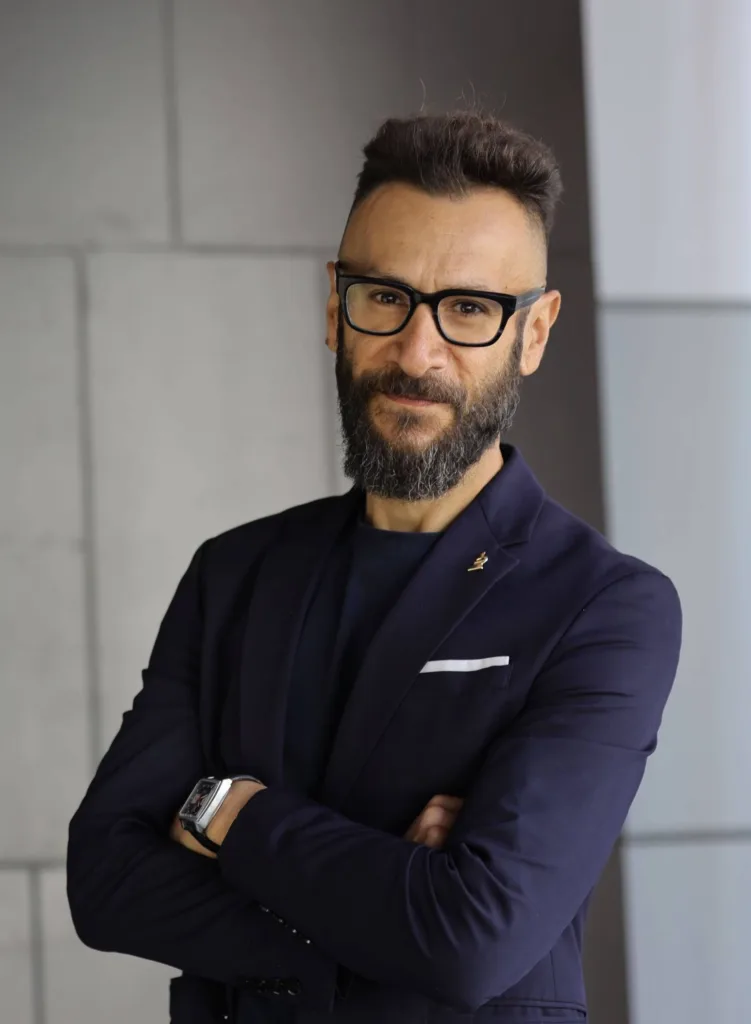
Yanis Zisis from Home Watch Athens.
Practical steps for owners
For Greeks in Australia with property in Athens, Zisis recommends a proactive approach.
First, understand your insurance policy, particularly any vacancy clauses. Second, ensure your property is inspected regularly with proper documentation. Third, take preventative measures.
“Installing a dehumidifier with auto-drainage is one of the most effective ways to prevent mould and moisture issues,” he says. “It’s one of the first things I set up for clients.”
Ultimately, distance does not remove responsibility.
“Your home in Athens deserves the same level of care and attention as any asset. The distance makes it feel abstract, but the risks are very real.”