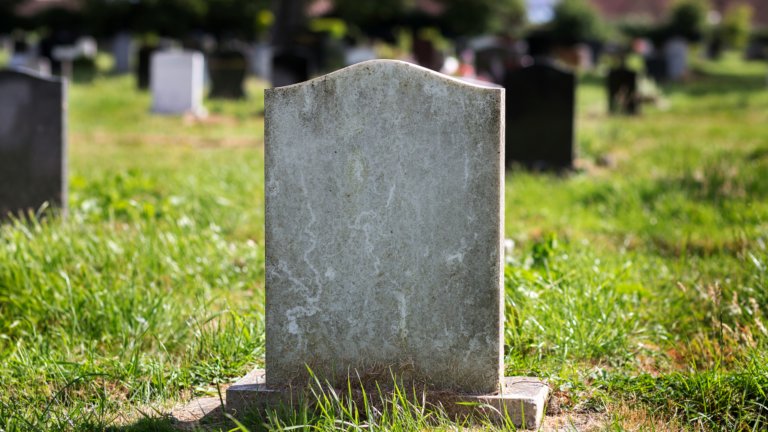
Larissa has opened its first pet cemetery, offering a dignified resting place for beloved animals. Located at the 12th kilometer of the Old National Road from Larissa to Volos, near Glafki, the 2.5-acre site provides a peaceful, green space where pet owners can say their goodbyes in a respectful setting.
According to tovima.com, the initiative addresses a growing emotional and social need. Until now, Larissa’s pet owners had few respectful options, often resorting to landfills, trash bins, or improvised graves. The new cemetery offers a regulated alternative, receiving strong support from veterinarians who frequently help grieving owners navigate their loss.
The cemetery, named “Saint Modestos,” complies with all necessary regulations, according to AMNA. Plans are also underway to build an on-site crematorium for those who prefer cremation.
This development aligns Larissa with a global trend recognizing pets as family members. Around the world, pet cemeteries have long provided spaces for remembrance. Notable examples include Le Cimetière des Chiens (France), Hartsdale Pet Cemetery (USA), Tokyo Pet Cemetery (Japan), and Hyde Park Pet Cemetery (UK). These sites reflect a shared desire for respectful farewells to animal companions.
The rise of pet cemeteries worldwide underscores shifting cultural attitudes toward animals, offering families dignified ways to honor their pets—much like they would human loved ones.
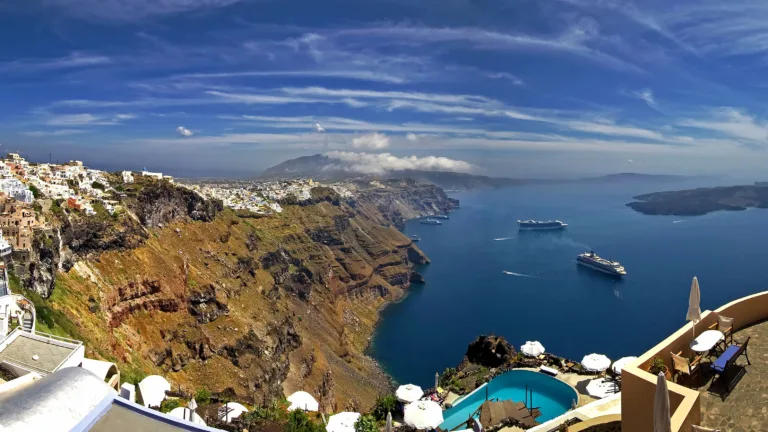
Santorini, one of the most iconic tourist destinations worldwide, is fully prepared for the new tourism season. The island’s infrastructure is operational, the local economy is thriving, and visitors can enjoy its unique natural and cultural wealth in complete safety.
Greek Tourism Minister, Ms. Olga Kefalogianni, visited the island and participated in an extensive meeting with local authorities, where it was confirmed that:
There are no issues with the island’s tourism and essential infrastructure, which are functioning normally.
Scientific committees are continuously monitoring the situation to ensure timely and responsible updates.
The government remains on high alert, taking all necessary measures to safeguard the safety of both residents and visitors.
Civil protection plans have been updated, further reinforcing the sense of security.
Visitor interest in Santorini remains exceptionally strong. At the ITB Berlin International Tourism Fair, the response was outstanding, reaffirming that travellers from around the world continue to choose Santorini as a top holiday destination.
Following the meeting, the Minister of Tourism stated: “Santorini is a safe, well-organised, and responsible tourism destination, fully prepared to welcome travellers from all over the world. With proper management and collaboration, this tourism season will have a positive trajectory for the island. We are not just returning—we are moving forward!”
The Mayor of Thira, Nikos Zorzos, added: “Santorini can now operate as a tourist destination just as in previous years. Santorini is ready to welcome tourism.”
The Australian has released its annual Rich List for 2025, highlighting the 250 wealthiest individuals in the country.
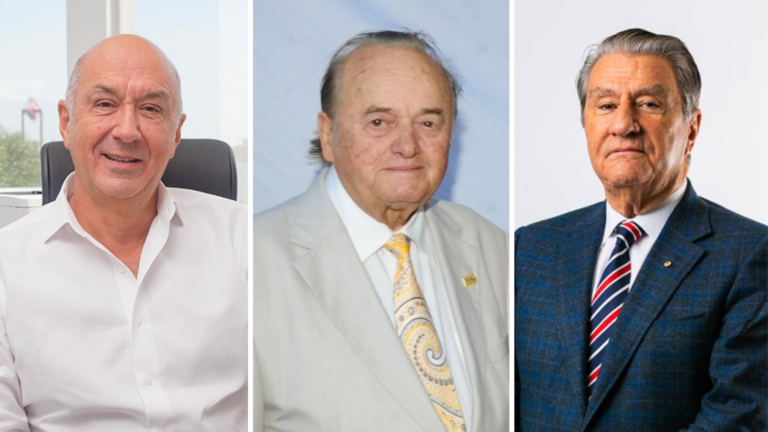
Among them, at least 13 Australians of Greek heritage have made notable appearances, reflecting their significant contributions across various industries.
55. Dennis Bastas, $3.00bn
Dennis Bastas. Photo: Julian Kingma.
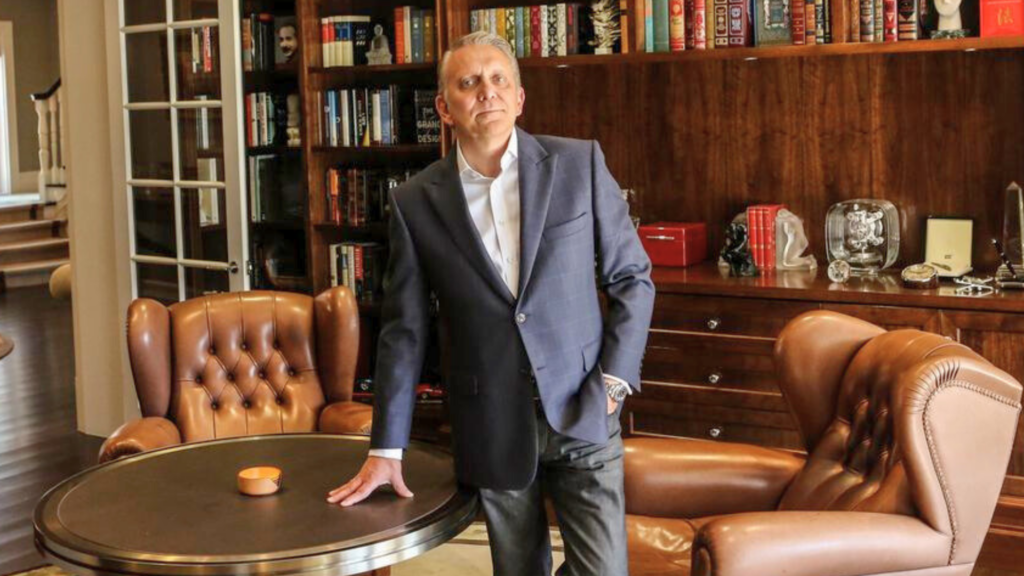
Dennis Bastas is considering selling a small stake in his DGB Health group, which reported $1.4 billion in revenue and $313 million in EBITDA last year. Over the past decade, he has built DGB into a major healthcare conglomerate through mergers and acquisitions, including a $1 billion deal in 2023 merging Arrotex with Juno Pharmaceuticals. The group includes Arrotex, wellness and beauty brands like MCo Beauty and Nude by Nature, health services arm Axe, and a pharmacy support business. Bastas also founded and chairs genomic company myDNA.
66. Nick Politis, $2.50bn
Rich Lister and Sydney Roosters chairman Nick Politis.
In 2026, Nick Politis is expected to mark 50 years with the Sydney Roosters NRL club, having first sponsored the then-Eastern Suburbs team in 1976 and serving as chairman since 1993. His wealth was built on City Ford, the dealership he purchased in 1974, which funded that initial sponsorship and became the cornerstone of his car dealership empire. The son of Greek migrants, Politis is now the major shareholder in ASX-listed Eagers Automotive and oversees a substantial privately-held automotive and property business.
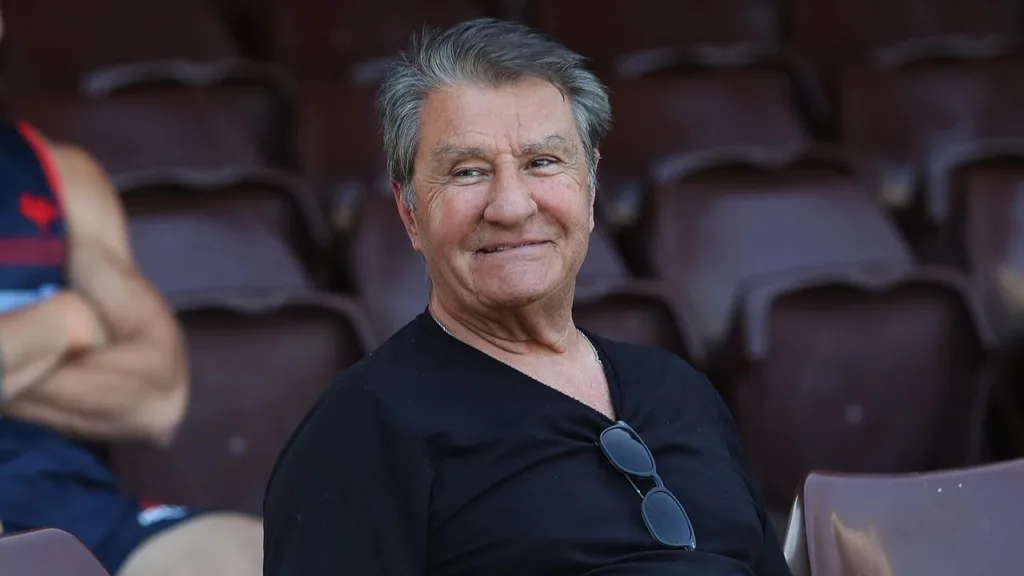
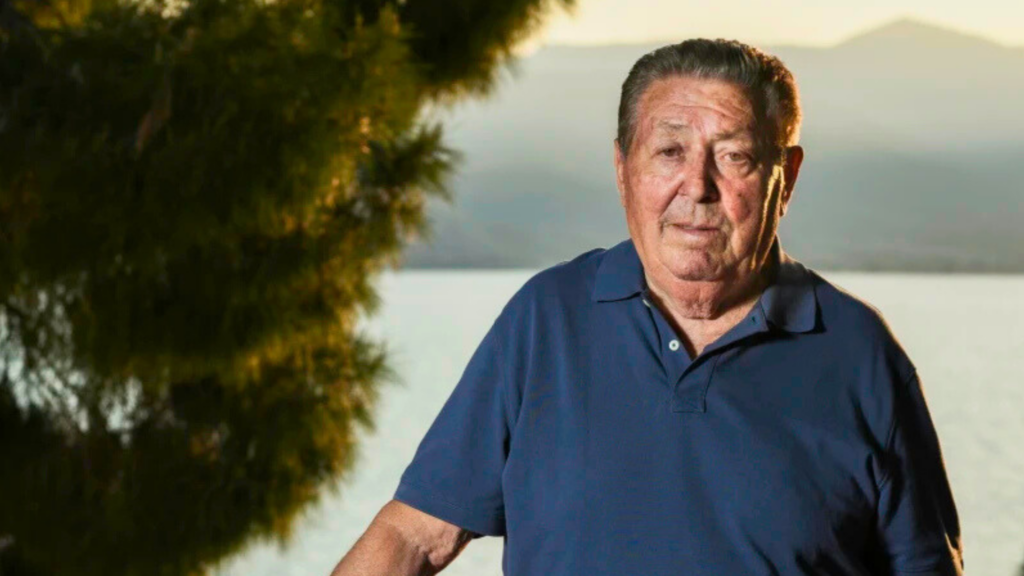
88. Nick Andrianakos & Family, $1.85bn
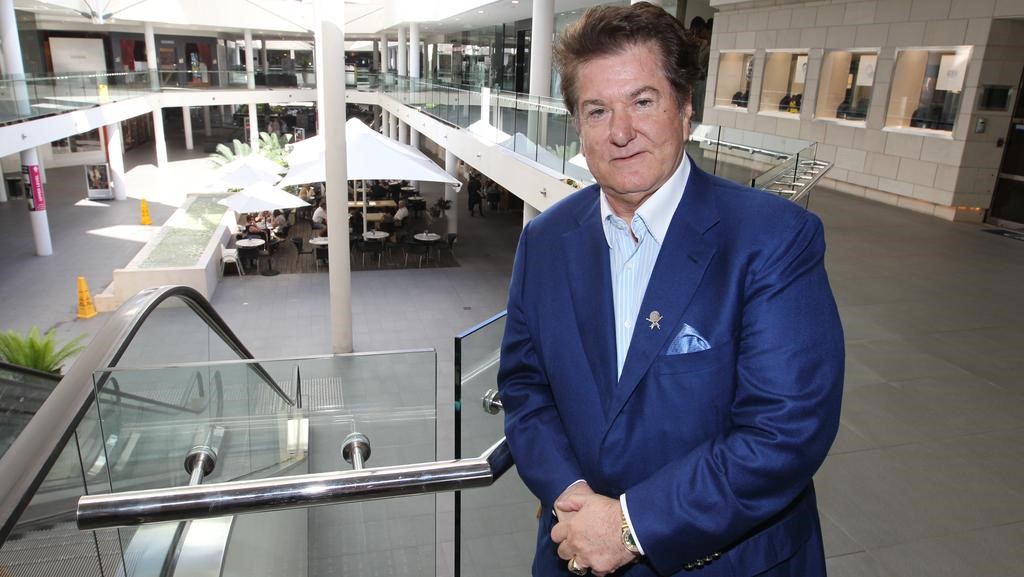
Nick Andrianakos passed away this week. Photo: Athina Souli.
Nick Andrianakos, who built his fortune in petrol before moving into property, died in March in Argos, Greece, reportedly from a heart attack. His family, now led by son Theo, recently bought half of Melbourne’s Northland Shopping Centre for $385 million and continues to expand a property portfolio across major Australian cities. Andrianakos had been spending more time in Greece, where he was developing a hotel.
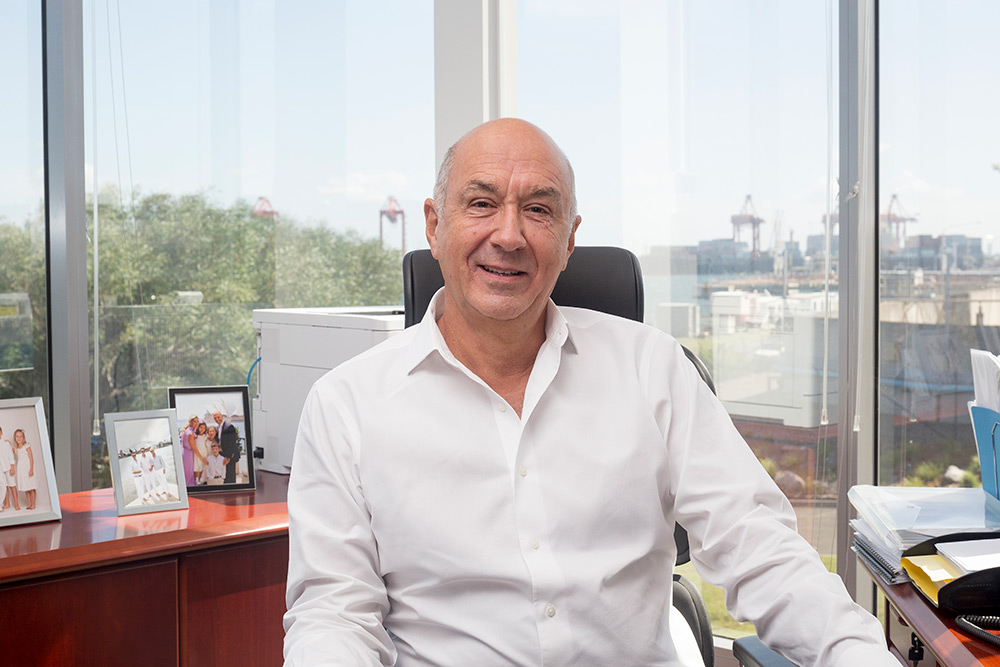
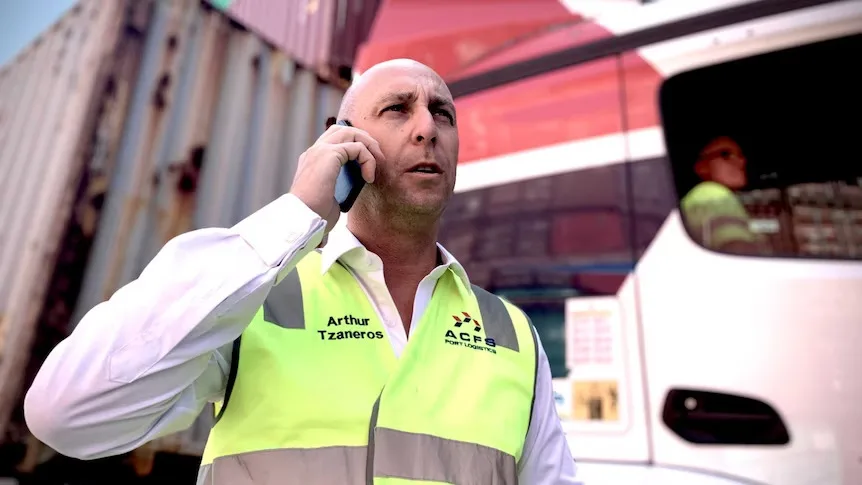
107 and 108. Arthur and Terry Tzaneros, $1.62bn
Terry Tzaneros.Arthur Tzaneros.
Father and son duo Arthur and Terry Tzaneros run ACFS Port Logistics, Australia’s largest privately owned container logistics company, which marks its 20th anniversary this year and employs over 1,500 staff across Australia and New Zealand. The family also fully owns freight forwarding firm AGS World Transport, having taken complete control in 2016.
127. Nicholas Paspaley & Family, $1.32bn
Nicholas Paspaley.
The Paspaley family, led by Nick Paspaley, oversees a wide-ranging business empire that extends well beyond its famous pearling operations. Originally founded in 1935 by Nicholas Paspalis, a migrant from Kastellorizo, the company remains a leader in luxury pearls and high-end retail. Over the years, the family has expanded into various sectors, including farming, aviation, ship repair, and pearl meat production. Their property portfolio includes assets in Sydney and Darwin, as well as the prestigious Wall Street Hotel in New York, along with two vineyards in NSW, making Paspaley Group one of Australia’s most diverse family enterprises.
133. Theo Karedis & Family, $1.28bn
Theo Karedis.
Seventy years after emigrating from Kythera, Theo Karedis has built a lasting business legacy in Australia. Starting with a milk bar in Neutral Bay, he later founded Theo’s, a major liquor retail chain that became the country’s fourth-largest before being sold to Coles for around $200 million in 2002. Today, Karedis and his son Greg oversee Arkadia Group, a family-owned property business with a portfolio of 11 shopping centres, retail homemaker centres, and hotels—some acquired in partnership with the Laundy family.
206. Harry Stamoulis & Family, $797m
Harry Stamoulis.
Harry Stamoulis, son of the late Spiros Stamoulis, continues his family’s legacy in property investment following the sale of their Gold Medal soft drinks business to Cadbury-Schweppes in 2004. Well known for his $70 million mansion in Toorak, Stamoulis has expanded his real estate ventures, with strong sales at his Gold Coast luxury apartment project, ARI, including a $12.7 million off-the-plan purchase by an international buyer last year.
213. Spiros Alysandratos, $776m
Spiros Alysandratos.
Spiros Alysandratos is the founder of Consolidated Travel, one of Australia’s most successful yet low-profile travel businesses, established in 1967. The company is the nation’s largest private airline wholesaler, providing ticketing services to over 250 airlines globally, as well as support for travel agencies. Alysandratos also holds a number of commercial property assets in Melbourne’s CBD.
224. Ilias Pavlopoulos, $754m
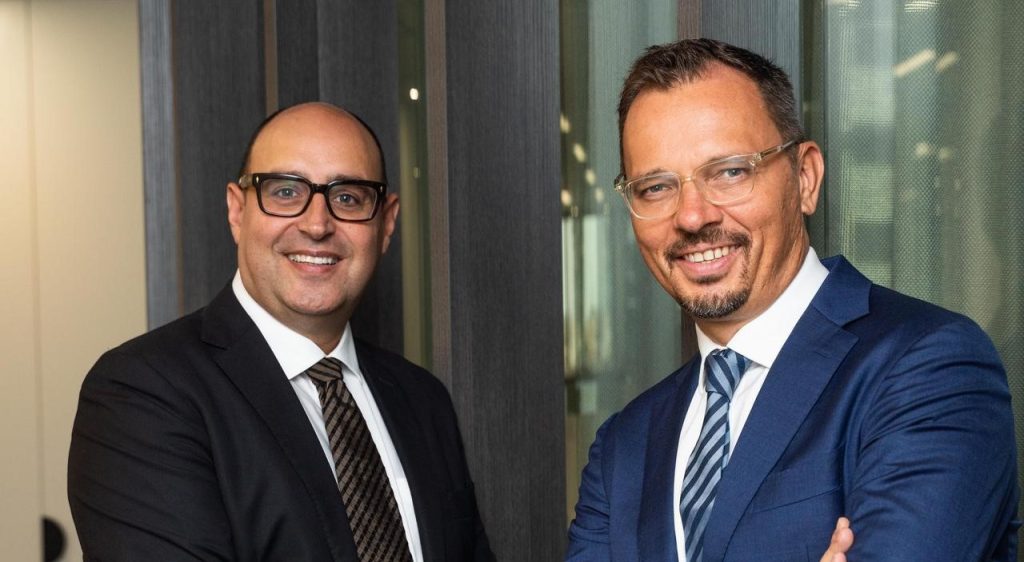
Brothers-in-law Simon Chepul and Ilias Pavlopoulos.
Non-bank lender ColCap, founded in 2006 by brothers-in-law Simon Chepul and Ilias Pavlopoulos, now manages a loan book exceeding $15 billion. In 2024, the company took full ownership of UK-based digital lender Molo, having initially acquired an 80% stake the previous year. ColCap operates several brands, including Granite Home Loans, Origin Mortgage Management Services, and Homestar Finance, establishing itself as a major player in the lending space both in Australia and abroad.
229. Con Makris & Family, $739m
Con Makris.
The Makris family’s wealth is built on a substantial portfolio of commercial properties and land across South Australia and Queensland. Con Makris began his business journey with a barbecue chicken shop after migrating to Adelaide from Greece at age 16. Today, the Makris Group owns Endeavour Hills Shopping Centre in Melbourne and remains focused on a $500 million redevelopment of the Marina Mirage resort on the Gold Coast, expected to open in 2027. Makris also retains significant property holdings in Adelaide.
232. Kerry Harmanis, $712m
Kerry Harmanis. Photo: Iain Gillespie The West Australian
After a short career in law, Kerry Harmanis founded Jubilee Mines in 1987, building it into a major nickel business. He famously sold the company in 2007 for $3.1 billion—just before nickel prices plummeted by 90 per cent—crediting the timing of the deal to a moment of clarity during meditation. Harmanis continues to be active in the mining sector, serving as chair of Talisman Mining, and has since launched Mindful Meditation Australia, an initiative providing mindfulness and meditation education to schools and young people.
244. Andreas Andrianopoulos, $663m
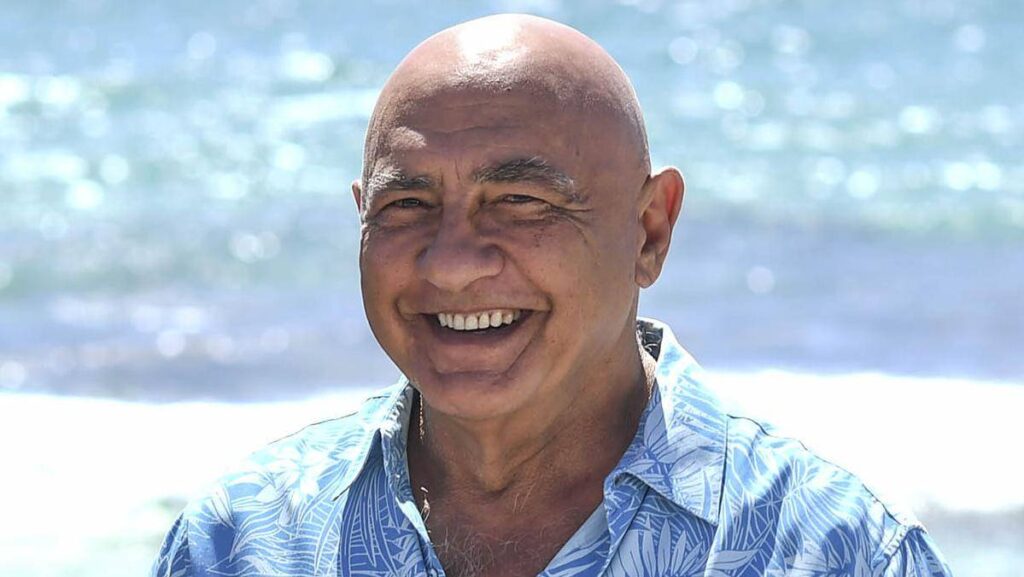
Andreas Andrianopoulos.
Andreas Andrianopoulos, the oldest newcomer on the Richest 250 list, owns one of Australia’s largest and most discreet petrol station networks. His company, AA Holdings, recorded $864 million in revenue and a $47 million net profit last year. Andrianopoulos began his journey in 1970 with a single BP-branded service station and now, together with his four sons, operates over 55 sites. A prominent philanthropist within the Greek community, he was awarded the Order of the Christ-Loving Medal last year—the highest honour from the Greek Orthodox Archdiocese of Australia.
JayZed isn’t your average affluent Melburnian eastern suburbs resident spinning suburban fairytales. Forget the manicured lawns and polite chit-chat—his life is a raw saga of high highs, crushing lows, drugs, money, heartbreak, and poetic rebirth. He’s a tradie with a past, an investor who lost it all, but along the way, he discovered a passion for poetry.
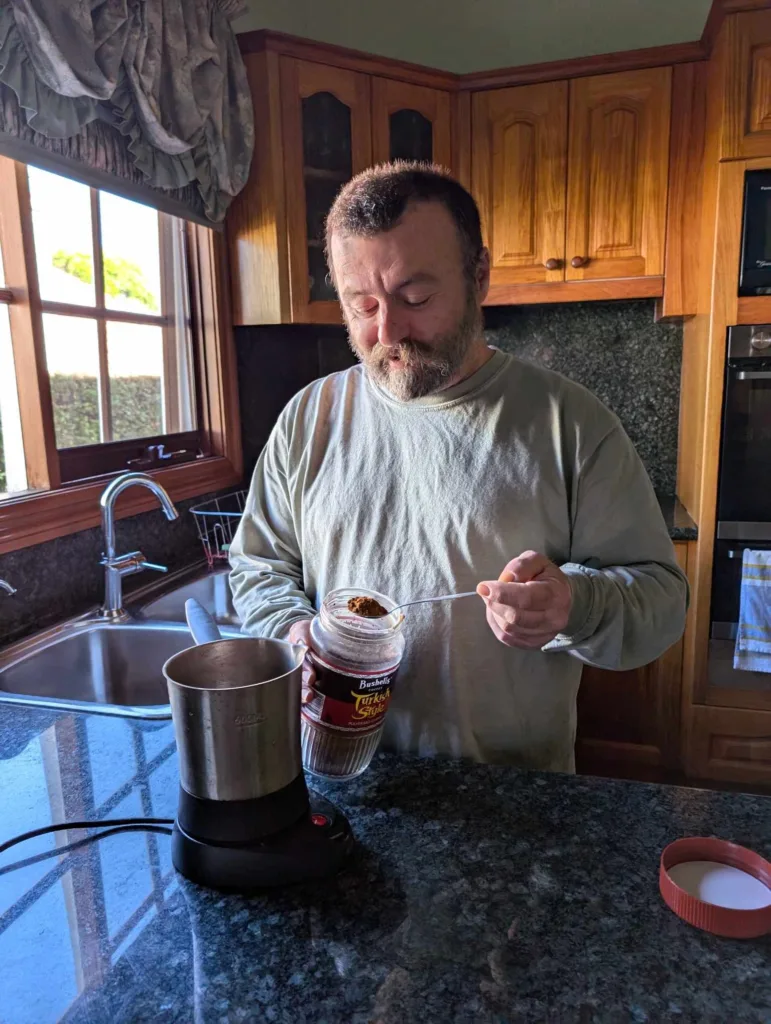
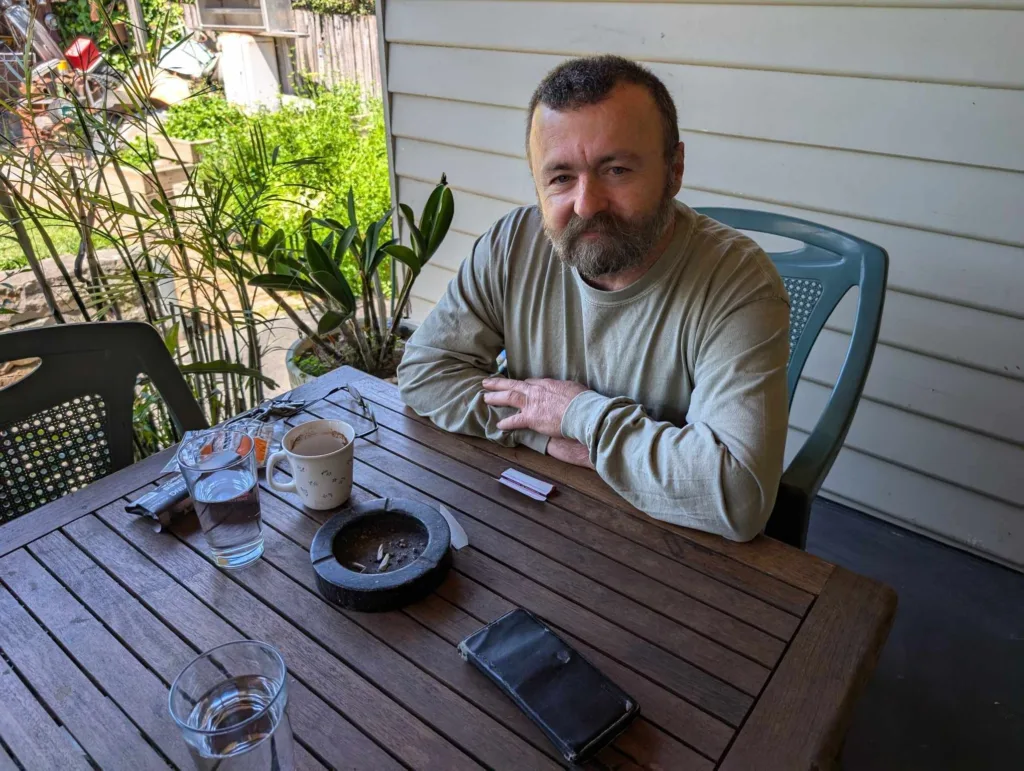
“A lot of memories here,” he says, inviting me into his childhood home. He takes out the briki and makes a Greek coffee, still bleary-eyed though it’s 10 am. “Sleep apnea,” he explains.
Texting a poemJayZed makes a Greek coffee in his childhood home, he lives out the back
Everything inside the house is perfect and pristine, but he lives in a unit at the back—less ordered, chaotic, but more interesting.
“Nobody lives in this house now,” he says, remembering a childhood filled with life: weekend cricket games played by the Aussies down the road, his local primary school, and a diverse community that included fellow Greeks.
An admitted introvert, JayZed—his artistic alias—contrasts himself with his “life of the party” brother and father.
“I’m not one for small talk,” he states. “Almost every time there’s a lull in the conversation, they fill the space talking about the weather—just benign conversation.”
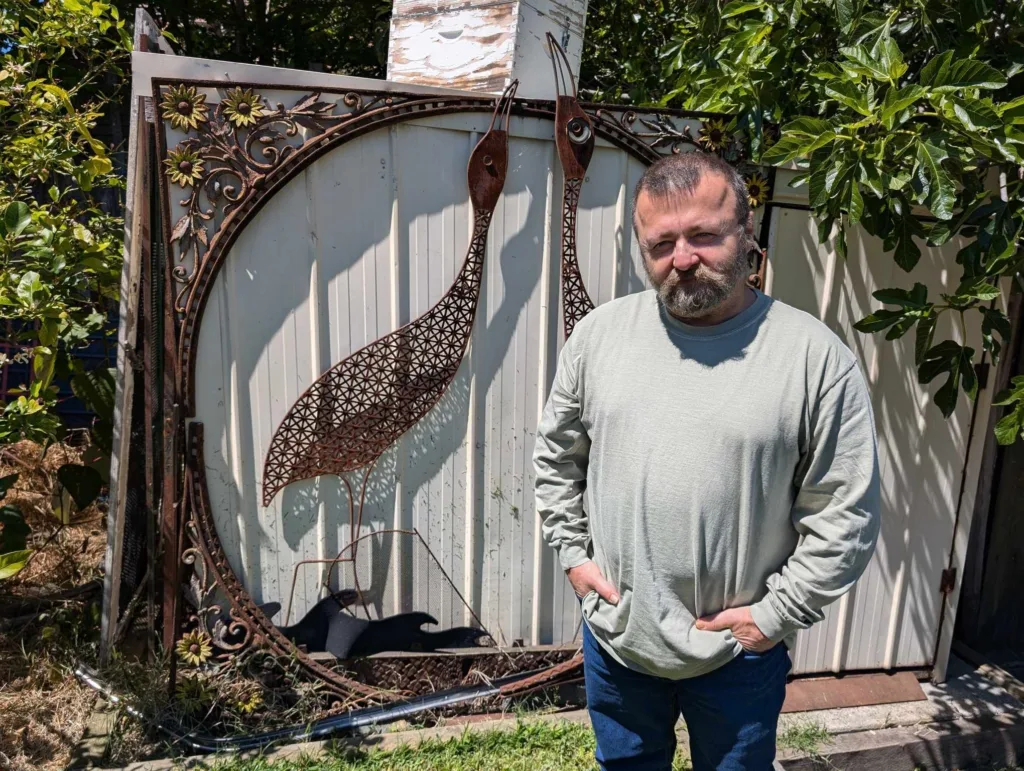
JayZed is a collector of arts and knick-knacks.
Instead, he finds solace in observation and poetry, sharing his soul through a constant stream of text messages.
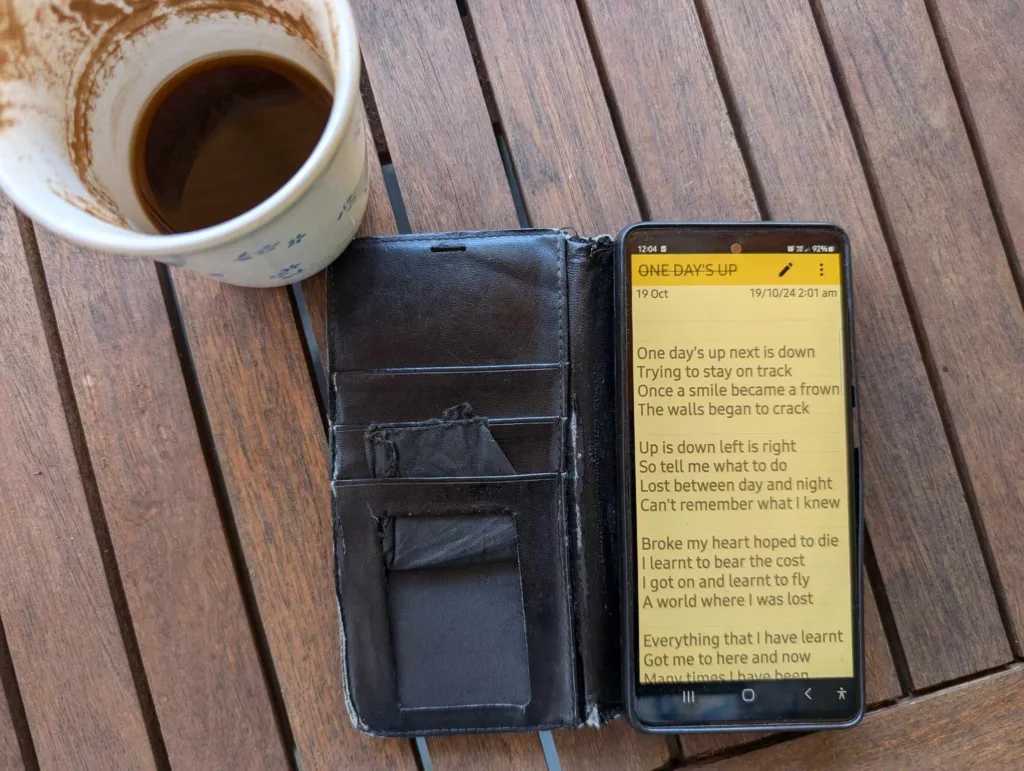
“My life, it turned like the wind has changes | I grabbed it and I held on for dear life | Always in awe, aware of the strangeness | Earning to live after going through strife…”
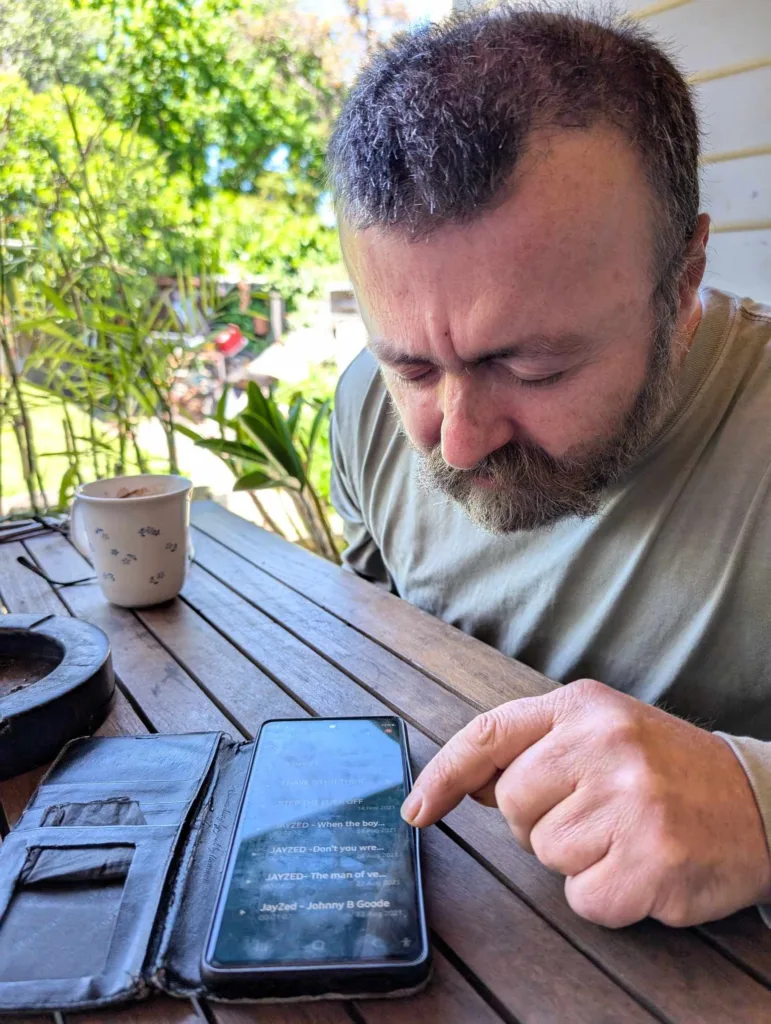
My phone pings with a steady stream of his poetry, sent at all hours—initially written for himself but now shared in bulk SMS. Monetisation doesn’t interest him.
A list of friends and acquaintances get texted a poem a day, JayZed is prolific.
His tradie success, once bringing in “an easy 400 grand a year,” proved hollow.
“I lost respect for money,” he confesses.
His “soulmate,” a Thai woman he met at a Doncaster over-28s club, was his anchor, but when family issues forced her to break things off, he spiraled.
“I was heartbroken when she kicked me out. Rejection was brutal,” he says.
At 41, he found himself drawn into a destructive cycle.
“It’s a fallacy that only young people can get caught up in drugs. There’s a guy I met at my mechanic. He introduced me to his friends, and they all started coming over for drugs. It was just a social thing, and I was okay. And then one day, I wasn’t,” he explains.
Addiction took hold.
“I just kept using. I just kept going there,” he says.
He sold a property, hoping to “get the hell out of Melbourne to break the routine,” but the bank seized the earnings to offset another loan, and things did not go as planned.
Amidst the chaos, poetry emerged.
JayZed enjoys a coffee and shares his poetry with me in his backyard.
“It was around 2014 when I started writing poetry while I was still using,” he says. He views it as therapy.
“For me, it’s therapy when I write—whether it be about war, shit I’m going through, my ex, my sister, my brother—anything, you know. I write it down, it’s like therapy, and I just get it out.”
He doesn’t read poetry or poet biographies, preferring to explore his own expression. He writes at night, edits, and shares.
“Poetry got me through some of my hardest periods,” he recalls, remembering the discomfort, sweats, and restlessness of withdrawal.
JayZed’s path to sobriety was harrowing. “Yeah, it took me another three years to get off drugs,” he admits. His father’s attempt to “boot me out” was a turning point, but it was a health scare during COVID that provided the final break from drug use.
A gallbladder removal in 2020 forced him into recovery at his father’s house in Rosebud. His mother’s tears solidified his resolve, and he swore never to touch drugs again. He’s now “four years clean.”
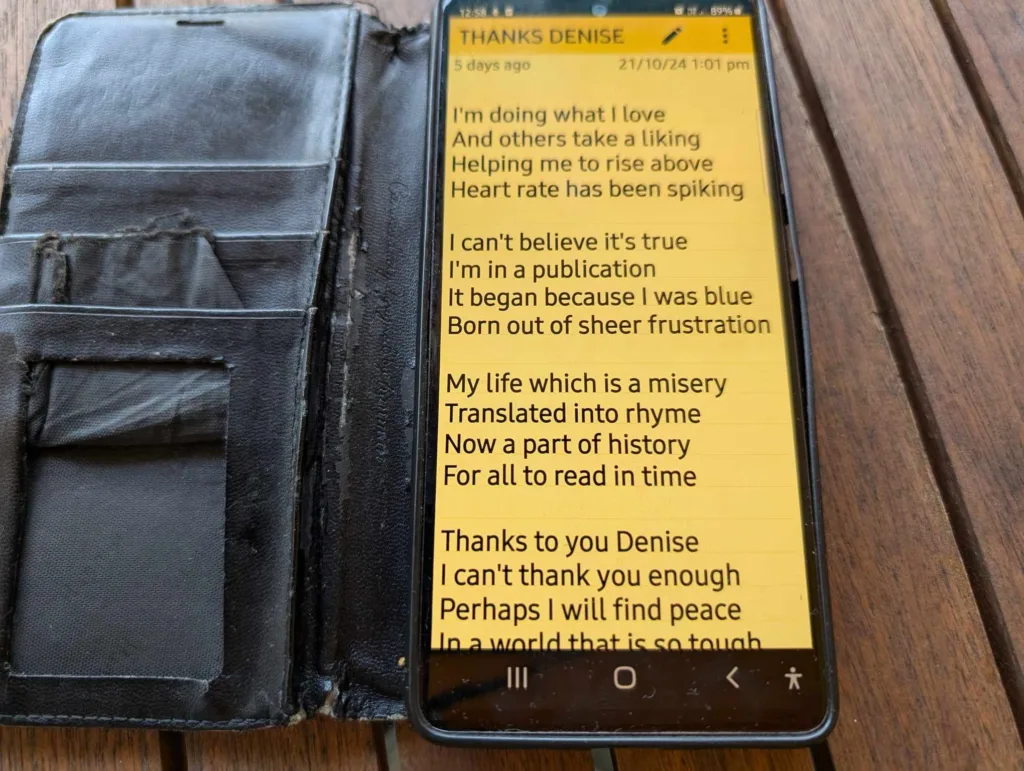
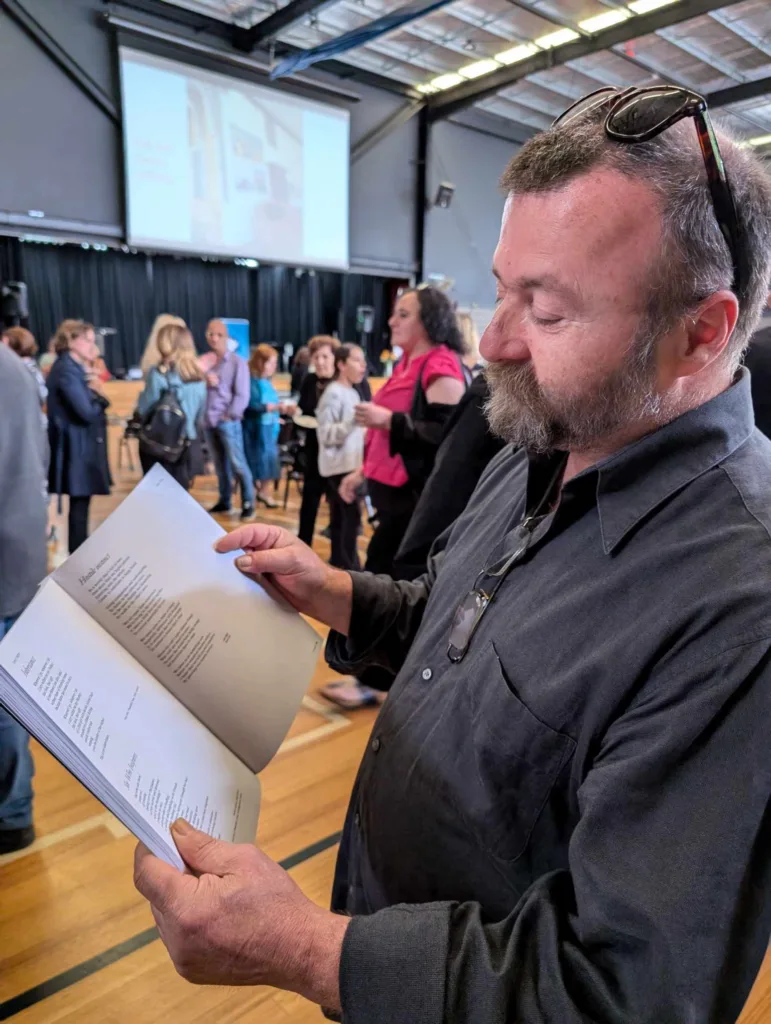
JayZed admires his first published poem in the Antipodes Periodical.English teacher Denise Zapantis first submitted JayZed’s post to the periodical.
Poetry has become a routine, a nightly ritual. He texts his work on his phone, re-reads it the next day, edits, and shares.
“Almost every night, I write something. Not all of them are good, you know—some of them are quite depressing…” he says.
Though he’d “love it if they got published,” he’s not actively chasing fame. He was thrilled when English teacher Denise Zapantis submitted his poem Hostile Instinct for the Greek Australian Cultural League’s Antipodes periodical.
JayZed’s story is one of raw honesty and hard-won wisdom. He’s a man who stared into the abyss and found his voice—a voice that speaks with unflinching clarity.
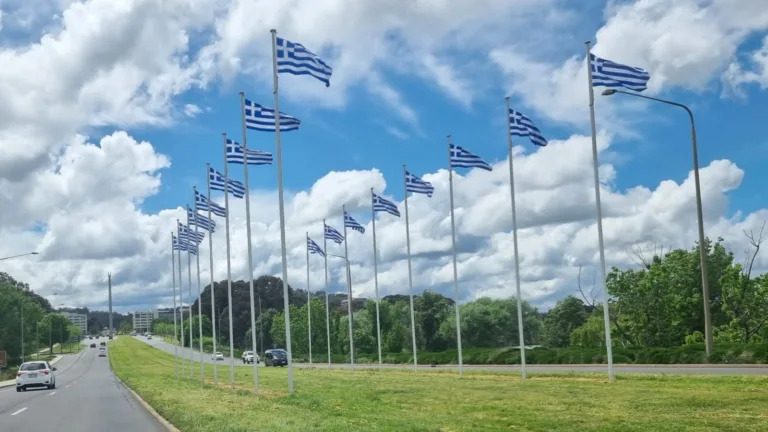
Canberra is set to transform into Australia’s most Hellenic city this March, as the local Greek community prepare to mark Greek Independence Day with a series of events and symbolic displays across the capital.
Greek flags will fly from Monday, March 24 in honour of Greek Independence Day, officially commemorated on March 25. The flags will be prominently displayed along key locations including Commonwealth Avenue leading to Parliament House, Kings Avenue enroute to Canberra Airport, and around Canberra Walk near the city centre.
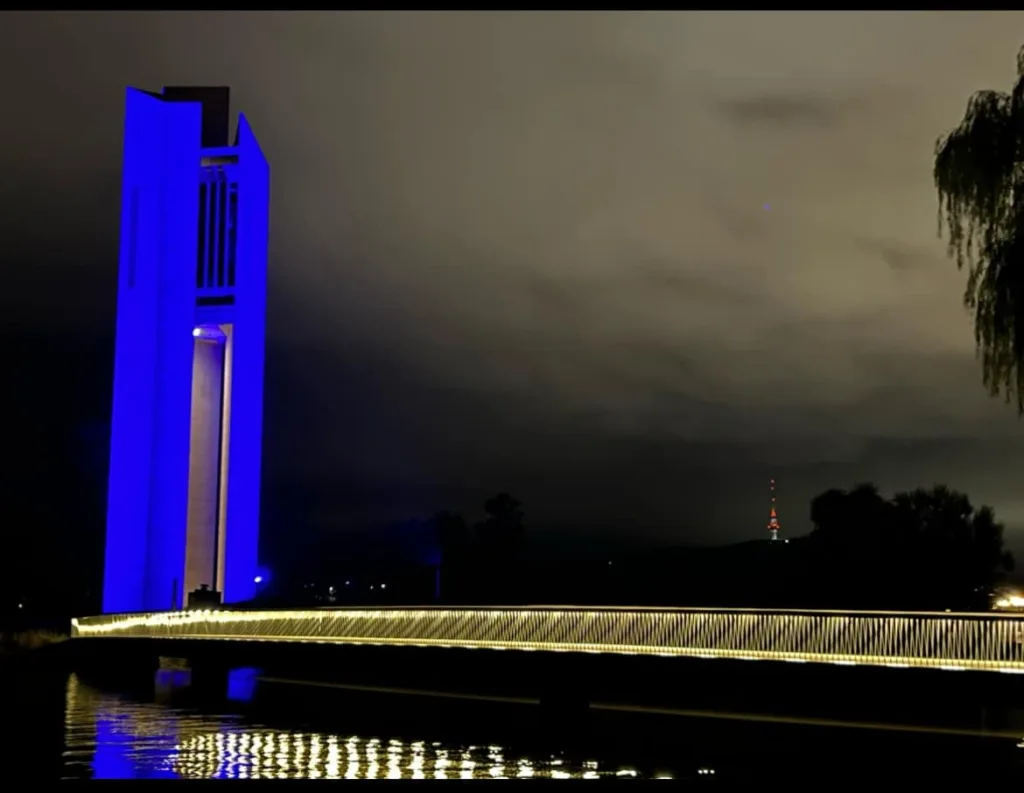
On the night of Tuesday, March 25, a number of iconic Canberra landmarks and government buildings will be illuminated in blue as a tribute to Greek history and heritage. Sites include Old Parliament House, the Carillon Bell Tower, the National Museum of Australia, Questacon, the Canberra Times Fountain, and various lightrail stops across the city. Cranes operated by GEOCON will also light up in blue, along with the Hellenic Club of Canberra.
A number of iconic Canberra landmarks and government buildings will be illuminated in blue.
“Canberra will be the most Hellenic city in the country for the day, and we’re grateful for the strong support of the ACT Government, Infrastructure Canberra, and the National Capital Authority,” Mr Loukadellis added.
Celebrations will continue on Sunday, March 30 with a church service at St Nicholas Greek Orthodox Church in Kingston, followed by a wreath-laying ceremony at the Hellenic Australian War Memorial at midday. A festive luncheon will follow from 1pm, featuring live music from the Kefi Band and performances by the Canberra Hellenic Dancers.
The Greek community invites Canberrans and visitors alike to join in the celebrations, honouring the spirit of independence and the enduring contributions of Greek Australians to the nation’s cultural fabric.
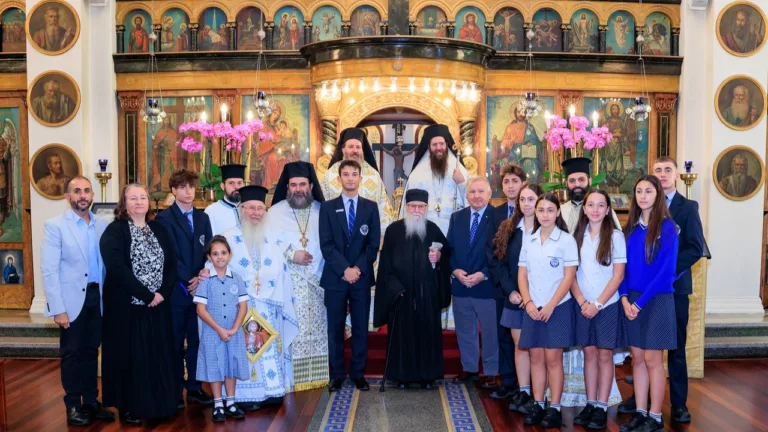
The Holy Diocese of Perth welcomed His Grace Bishop Prodromos of Toliara and Southern Madagascar for a three-day pastoral visit from 15 to 17 March 2025.
His Grace arrived in Perth on Saturday, March 15 and was warmly received by His Grace Bishop Elpidios of Perth.
That evening, Bishop Prodromos presided over the Hierarchical Vespers service at St Nektarios Church in Dianella, followed by a Lenten fundraising supper organised by the Parish of Sts Constantine and Helene. A moving video presentation showcased the missionary work of the Orthodox Church in Southern Madagascar, prompting generous donations from the faithful. The Consul for Greece in Perth, Eleni Georgopoulou, was among those in attendance.
On Sunday, Bishop Prodromos co-celebrated the Matins and Hierarchical Divine Liturgy with Bishop Elpidios at Sts Constantine and Helene Church in Northbridge. The service was attended by Paul Afkos OAM, President of the Hellenic Community of WA, along with staff and students from St Andrew’s Grammar.
The two bishops exchanged gifts and expressed mutual admiration, with Bishop Elpidios extending an invitation for a future visit.
That evening, Bishop Prodromos presided over the third Lenten Vespers at St Nektarios, followed by a dinner in his honour attended by clergy and presvyteras of the Diocese.
Over the course of the visit, $36,000 was raised to support the Orthodox Church’s missionary efforts in Southern Madagascar.
On Monday, Bishop Prodromos departed for Melbourne, expressing deep gratitude to His Eminence Archbishop Makarios of Australia, Bishop Elpidios, and the faithful of Perth.
Finance expert Mark Bouris has criticised the Albanese government’s new housing policy, arguing it will do little to ease pressure on the market.
The policy, set to take effect on April 1, bans foreign investors from buying established homes for at least two years, but Bouris believes it is largely symbolic.
“Foreign buyers are not flooding the market,” he said on his Property Insights Podcast, adding that the ban primarily targets high-end properties. “It’s not like they are keeping a nice, young family out of a $12m home…”
Finance expert Mark Bouris has criticised the Albanese government’s new housing policy.
According to realestate.com.au, the measure will impact only around 1,600 of the 520,000 homes sold annually—just 0.3% of transactions—leading Bouris to dismiss it as “window dressing.”
Legal expert Nicole Leggat agreed, arguing that restricting foreign purchases of existing homes alone won’t significantly affect prices.
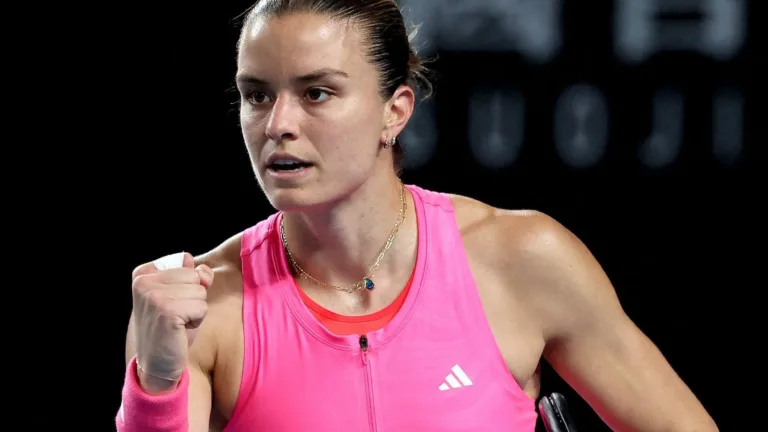
The second set was also the longest, lasting 1 hour and 9 minutes. The Italian escaped with two games to 4-2 after a break, Sakkari tied it at 4-4 with her own break, but Bronzetti at the most crucial point made it 7-5, avoided the tie break and tied the sets at 1-1.
In the third and decisive set, Sakkari broke her opponent’s serve in the fifth game, missed an opportunity to win in the ninth game, but defended her serve, resulting in a 6-4 win in the games, giving her a second set and also qualifying for the last 32 of the Miami Open.
Sakkari’s next opponent is world number 3 Coco Gauff, with the American having eliminated her last week in the round of 32 of the Miami Open.
The case, brought by law professor Panagiotis Lazaratos, argues that these privileges create unfair distinctions among citizens and violate democratic principles.
Lazaratos claims that former royals registered to vote lack lawful citizenship, compromising the principle of popular sovereignty. He also asserts that they should not use a name tied to their past rule.
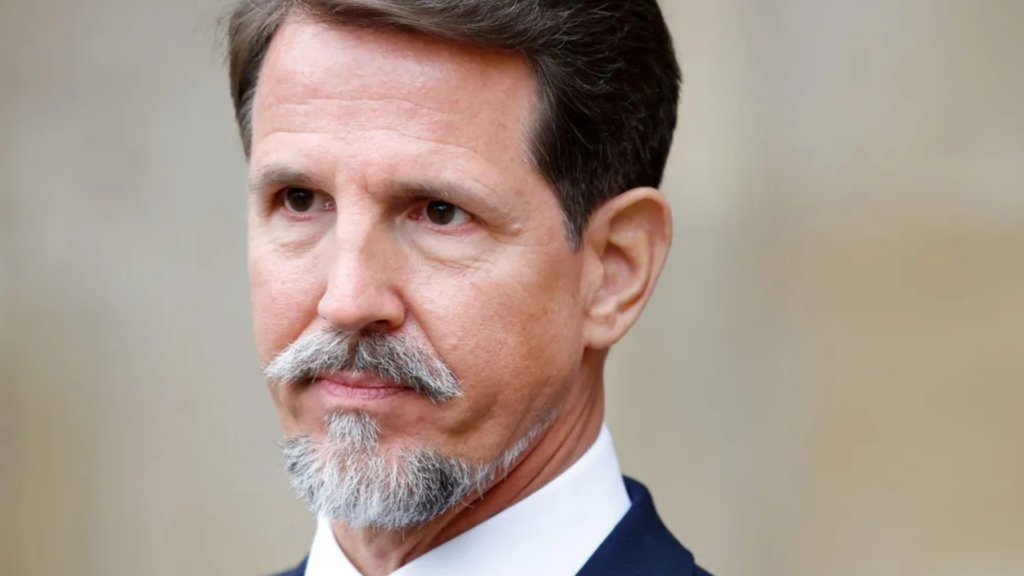
Former prince Pavlos of Greece.
This comes after the Decentralised Administration of the Peloponnese has also initiated an investigation into an incident where the mayor of eastern Mani, Petros Andreakos, referred to Pavlos De Grece, the son of Greece’s last king, as “prince” during an event.
In response to the controversy, Pavlos said everyone has the right to call him whatever they wish, although he personally considers himself an ordinary citizen.
“I don’t want to say anything more. How someone chooses to address me is their own business. My name is clear—I am just an ordinary citizen,” Pavlos told ANT1.
Libby Mettam has announced she will step down as leader of the Western Australian Liberal Party following its poor election performance, paving the way for former broadcaster and Perth lord mayor Basil Zempilas to take the role.
Mettam attributed the party’s heavy defeat—expected to leave them with just six to eight seats—to internal destabilisation.
“While I take responsibility for our result, it is very clear that the constant and ongoing leadership speculation and destabilisation in late 2024 was a significant contributing factor to our outcome,” she said.
He blamed his narrow victory margin on “a well-funded Labor smear campaign.”
Mettam stated she would seek the deputy leadership instead: “While I would have liked and hoped to continue as leader, it has become clear that I do not have that support of my colleagues to continue as leader through to the election in 2029.”
Zempilas welcomed her bid for deputy, saying, “We’re all on a steep learning curve … everything about this journey is challenging. It’s a big task ahead of us.”
Liberal insiders believe Zempilas is well-positioned for the leadership role when the party meets next week. However, polling suggests his net favourability is negative across all age groups, high-income households, and university-educated voters.
WA Labor is set to win at least 44 of the 59 lower house seats, reinforcing its dominance in the state.