Home Blog Page 2016

Lively and successful: The 8th Symposium of Kytheraismos

By Kyriaki Orfanos

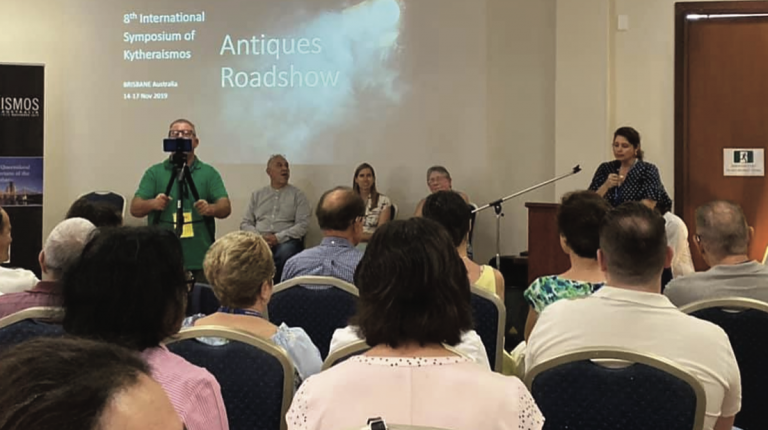
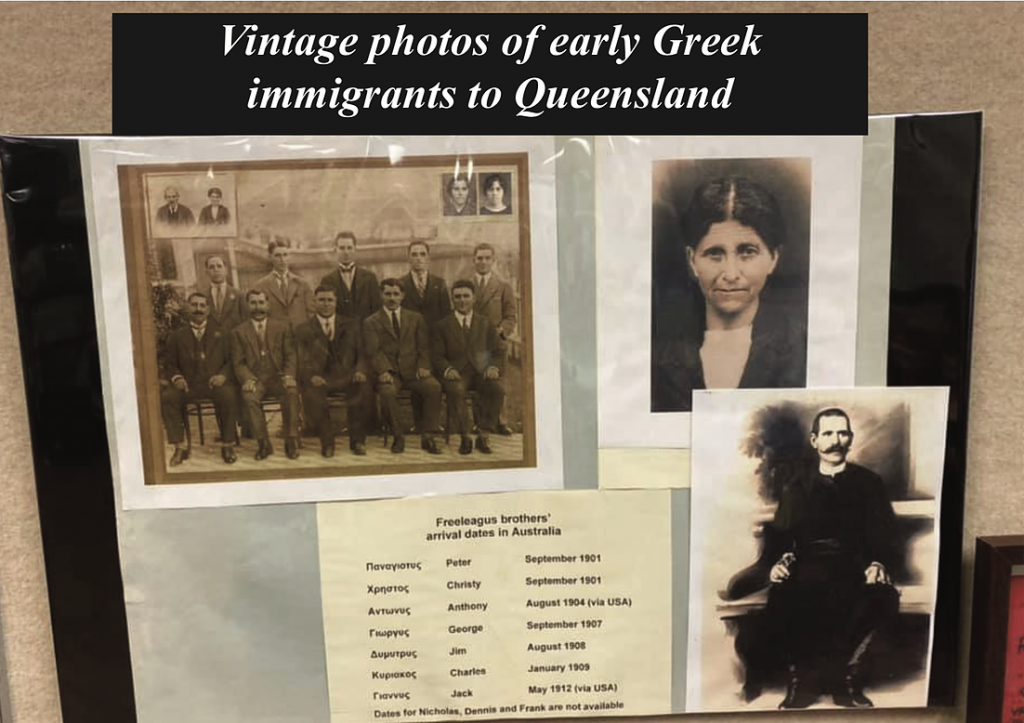
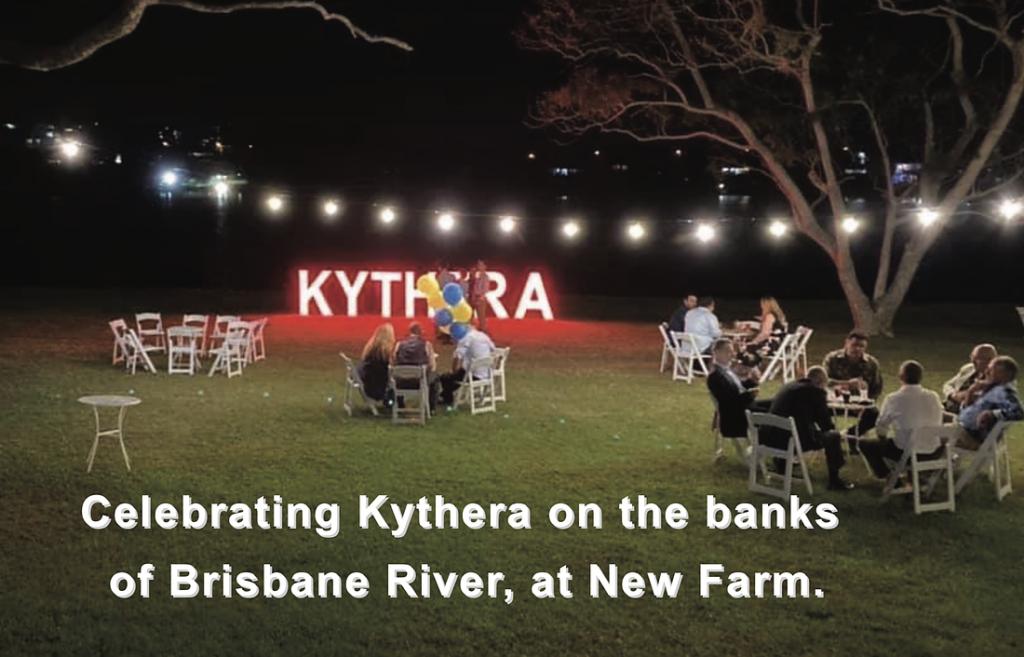
A lively and successful Symposium took place in Brisbane over the weekend when the 8th Kytheraismos provided an excuse for Kytherians and lovers of Kythera to get together. It offered a diverse series of events ranging from booked-out Genealogy and Diples workshops, an exhibition featuring talented artists, jewellery-makers, and photographers, a vintage photo-montage showing the lives of early Greek- Queenslanders, and several social events, to a standing-room-only Speakers program which was both informative and entertaining.

George Vardas and Kallie Zervos gave well-researched papers about the influence of the British in the Ionian. George focused on their legacy, including the roads and bridges and the introduction of the Lancastrian education system, while Kallie spoke about what could be learned about life in the village of Potamos through the genealogy records of that period. Of course, no discussion about the British would be complete without an allusion the Parthenon Marbles, both George and Emmanuel Comino had much to say about them.
Dr. Maria Zarimis spoke of the poetics of Kythera through the work of Nicholas Souris, a man who had spent most of his life in Australia and documented it, and the nostos of living away from his homeland, through the medium of Madinades. Denis Conomos spoke about pioneering Kytherian immigrants to Queensland and their influence on their adopted homeland, as well as on the fortunes of future immigrants. Peter Vamvakaris presented a tribute to Father Gregory and his wife, Presbytera Roula, and their 6-decade contribution to Brisbane society. Kytherians who have brought more of their homeland with them than a pithari and a kourelou, include Sally Cominos Dakin, who described the adventure of establishing a successful olive grove in Queensland, using traditional techniques, and Tony Comino who spoke about Comino Wines.
Three speakers discussed Kytherian history and archaeology, Emmanuel Cassimatis, Dr. Amelia Brown, and Spiridoula Magoula, while George Poulos spoke of Lefcadio Hearn, whose mother was Rosa Kassimatis of Chora.

Paul Mathers who is a 3rd generation Greek Australian, spoke of the concept of Philotimo, through the history of his family, while John Carras recounted his experience of set- ting up the first morgue in Kythera.

Emanuel Kasimatis and John Kallinicos discussed investment opportunities on Kythera, and the role of the Kytherian diaspora in the future economic development of the island. Kiriaki Orfanos talked about how Kythera inspires, giving an account of running a successful writers’ retreat there.

The President of the Kytherian Association of Australia, Emmanuel Alfieris spoke of the future of Greek Australian associations and the role Kytherians can play, while the former president of the Association, Dr. Victor Kepreotis gave a talk titled Kythera, Back to the Future.
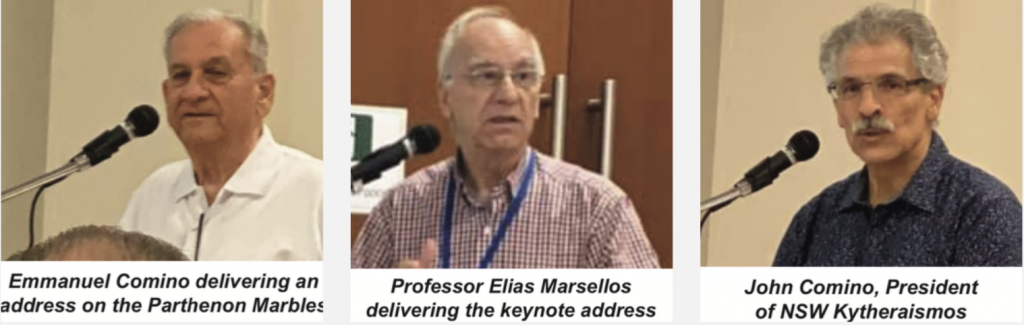
The keynote address, titled The Ecumenical Dimension of the term KYTHERA, as a Myth, as a Name, as a Place, as a Community Outside Kythera, and as Subject for Research, Over the Centuries. was given by the founder and International President of Kytheraismos, Professor Elias Marsellos.

‘The bursting-at-the-seams success of this Symposium is testament to the dedication and hard work of the Brisbane Kytheraismos Committee.’
Haihoutes: The Kos village that turned from abandoned to tourist attraction

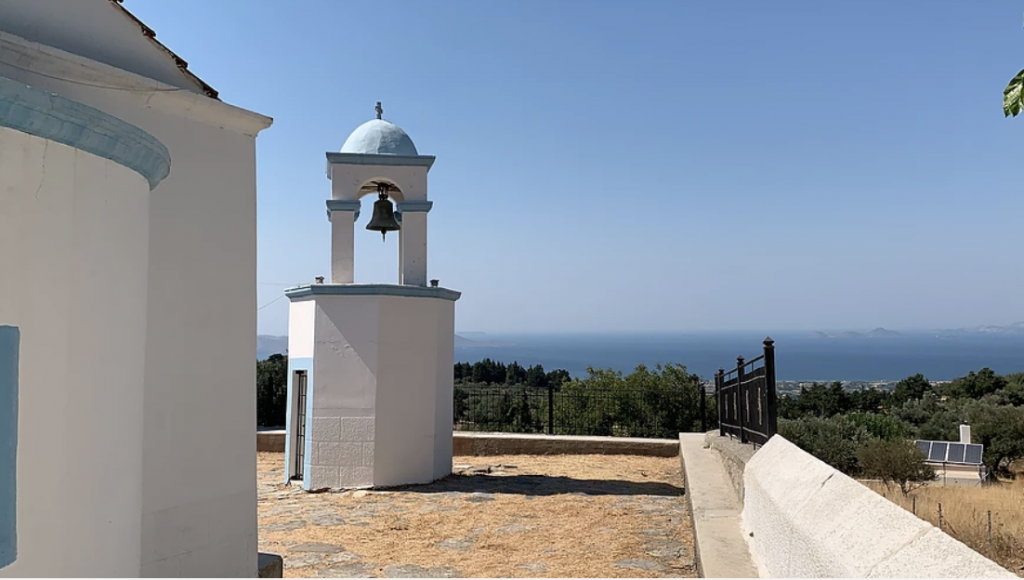
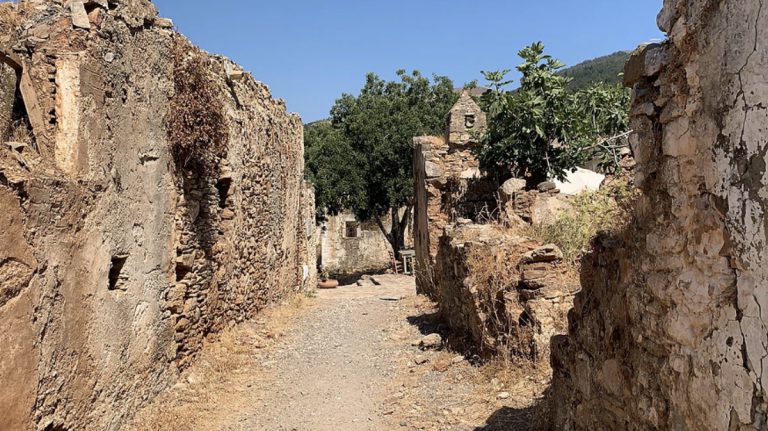
Haihoutes, also known as Agios Dimitros, is a ghost village located on the island of Kos, Greece. The village was one of the smallest in Kos since the 1850’s until it’s complete abandonment in the 1970’s.

In the early to mid 1900’s, Haihoutes contained only 35 to 40 houses, and only about 5 or 6 different extended families among them. During this time, a school was also founded and took place in the Church of Agios Dimitrios, which still remains intact and situated on the mountain. There were about 40 to 50 students within the school and was the first established school on the island of Kos.

The town was used as a safe point by Kos residents during WWII when fighting against the Turkish soldiers, as its high location in the mountains meant that enemy soldiers were channelled up by one steep incline path.

By the 1970’s, most people had left the town due to a severe lack of infrastructure and moved to other towns in Kos. Following its abandonment and repeated earthquakes, the town’s infrastructure completely collapsed, with houses crumbling to one or two standing walls.

In 2012, when the village was completely deserted, a couple from Athens brought life to the town by opening up a taverna called “Haihoutes”, named after the town. During the day it operates as a coffee shop for people to sit and admire the deserted village and view overlooking Kos. Additionally, on selected nights, the café holds live events with bouzouki music and Greek dancing, transforming the “ghost town” into a village full of life.

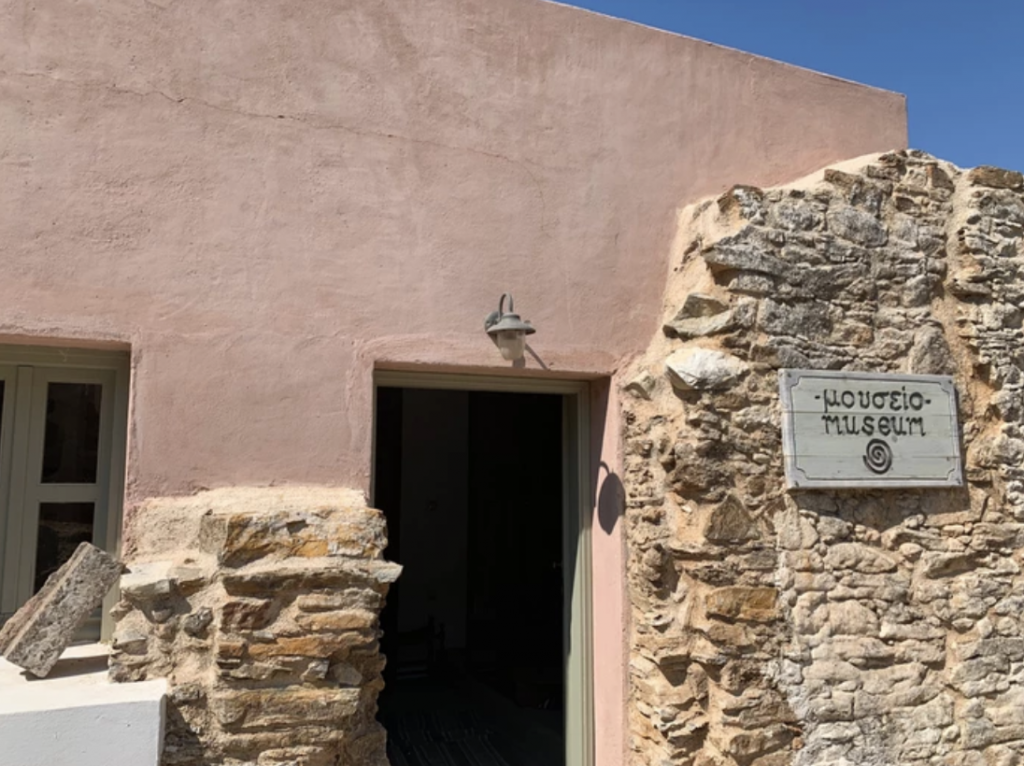
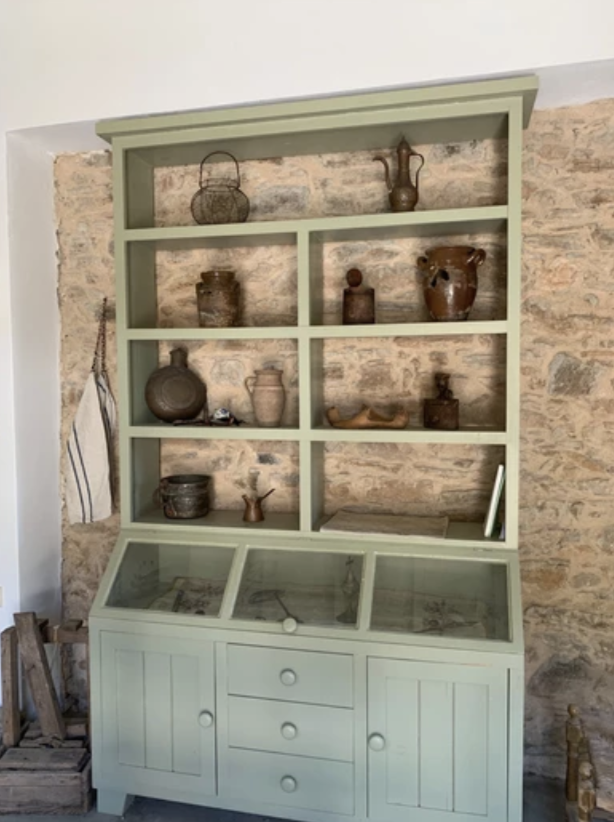
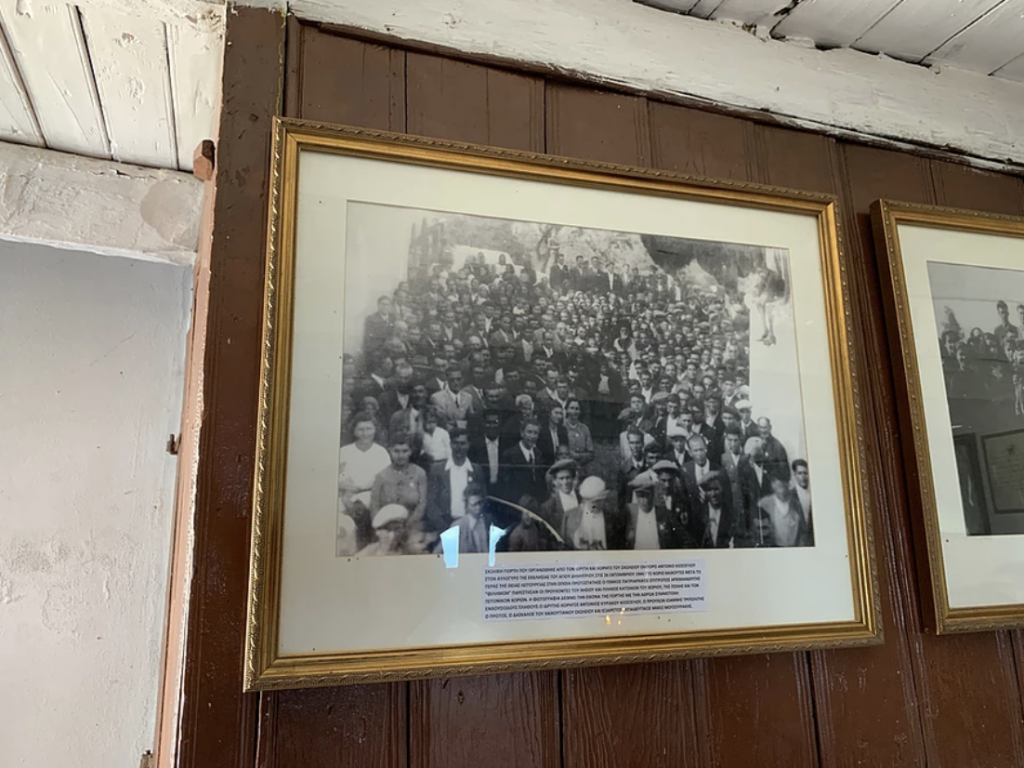
Along with the café, the couple opened up a small private museum in a restored house, showing off some of the history of the town, exhibiting items such as utensils and tools used in the early 1900’s.

With the future of the mostly abandoned town left undetermined, the free standing church and café remain active for tourists to visit and experience the recovered history from a forgotten town.

Archbishop Makarios visits Saint Euphemia Greek Orthodox College

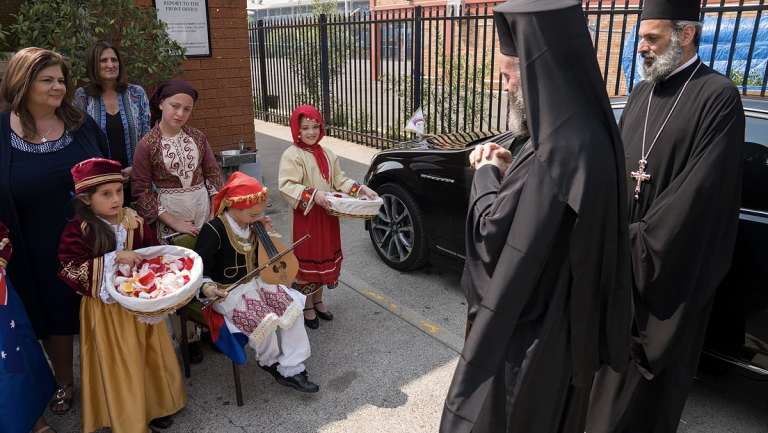
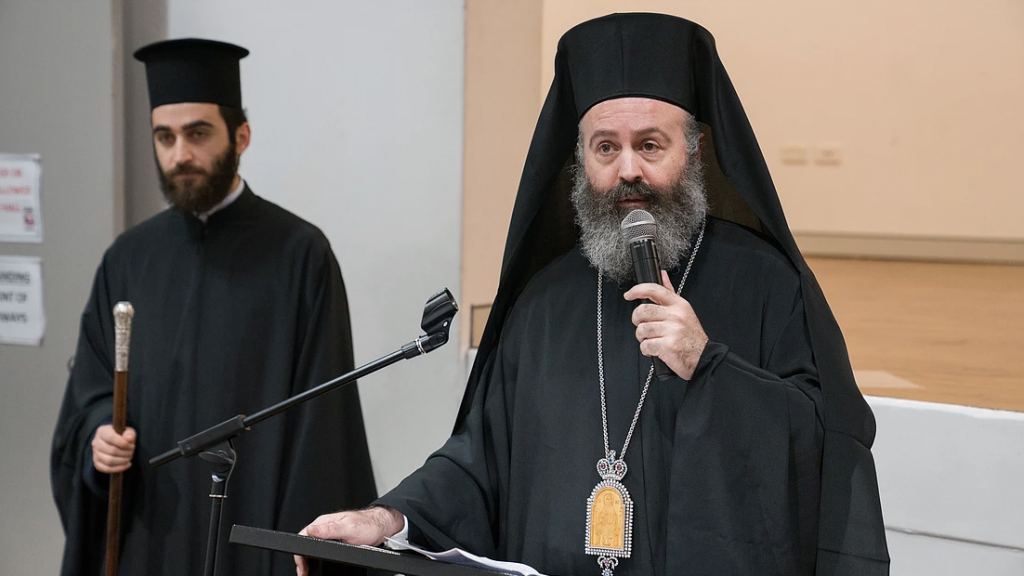
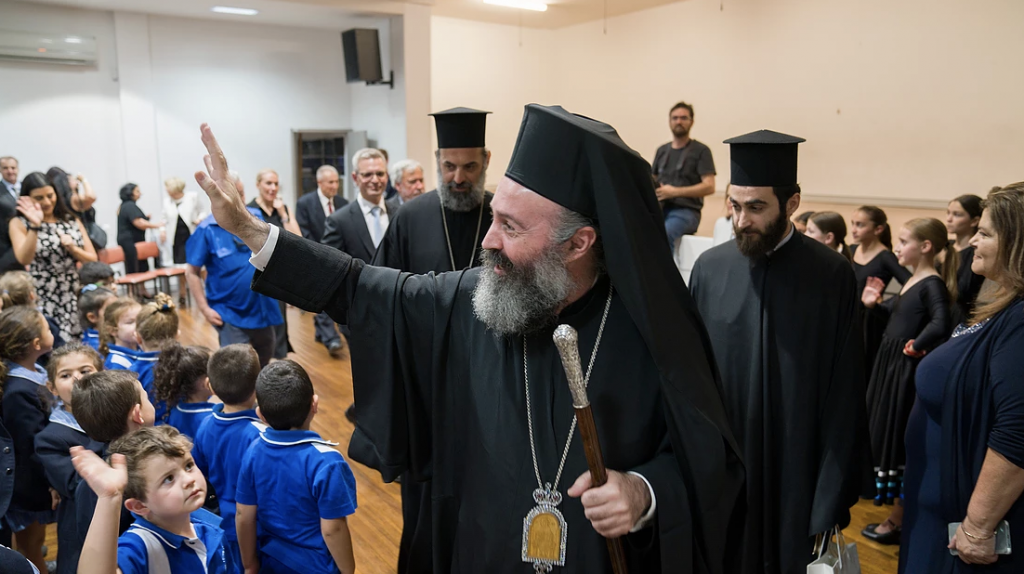
On Tuesday, 19 November, His Eminence Archbishop Makarios made his first official visit to the Greek Orthodox College of Saint Euphemia, in the suburb of Bankstown, Sydney.

His Eminence was welcomed into the college by many young students who were decorated in traditional Greek costumes. Among them was a schoolgirl who welcomed him with her Cretan lyre, wearing a traditional Cretan costume.

The welcoming event for the Archbishop, which was organised by the administration, teaching staff and students, included activities which were undertaken by the school children, such as reciting Cretan Mantinades, dancing sirtaki and singing to classic Greek songs.

n his brief address, Archbishop Makarios drew the attention of the students to the importance of studying in a Greek Orthodox college and highlighting what makes them stand out from the rest of the country’s schools, despite potentially less facilities or greater financial opportunities. The Archbishop explained that the greatest difference is observed through the Colleges’ opportunity of being close to the Church and having Christ constantly in their lives.

“You can have a lot of things in your life, they can give you a lot of gifts,” he said, “but the most important thing is what this particular school will offer you”.

During the event, the students of the College offered Archbishop Makarios a pen as a commemorative gift, after which he promised to use the pen to sign their diplomas.

Vasili’s Taxidi: Hellenic Patisserie and Gelato Bar – Shops Synonymous with Marrickville

By Vasilios Vasilas

One interesting aspect about shops and businesses is the way they become associated with a suburb; as soon as you say their name to people, they know exactly where they are located. It feels as though these shops and businesses have been there all the time; it does not matter if they may have moved to different locations and built new premises, they continue to be synonymous with their locality.

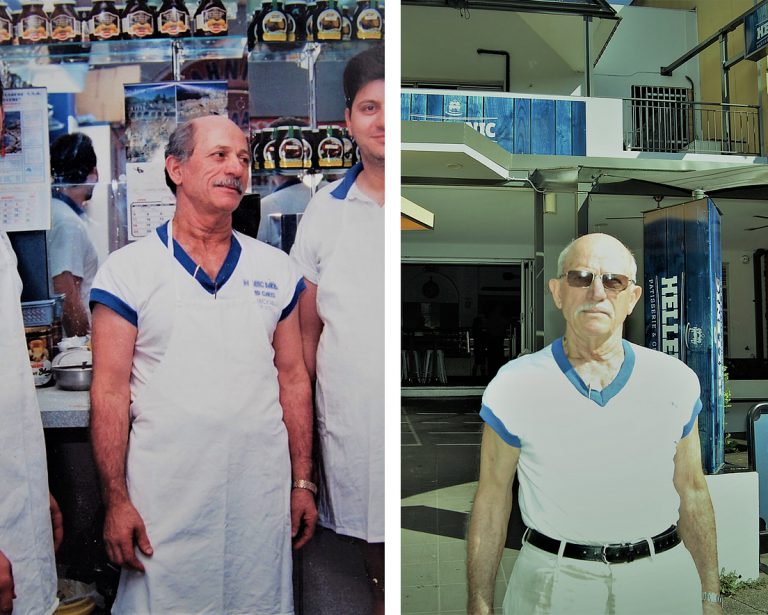
It was late 2017 when I interviewed Dimos Scoullis of Hellenic Patisserie and Gelato Bar, one of the ‘institutions’ of Marrickville, or as so many people fondly remember it as ‘Hellenic Bakery’.

Dimos migrated to Australia in 1965; although he was meant to begin ‘pick and shovel’ work at the Sydney Waterboard on Monday, he worked (during the weekend) in the takeaway shop under the Cecil Hotel, Cronulla…. peeling potatoes! This was Dimos’ first experiences of work in Australia!

A couple of years later, he married Vasiliki (nee: Konstantopoulos) and they eventually settled in Carlton.

It was Dimos’ brother, Giorgos, and his cousin, Yannis (Hatzikyriakou) who initially wanted to buy thr Artos Bakery off Peter Zefkilis, which was situated towards the crossroads of Illawarra and Marrickville Roads. As Yannis was tied up with the Corinthian Rotisserie, Giorgos asked Dimos to go into partnership (1977). There is a great story of how the bakers’ strike in January 1978 kickstarted their business and they did not look back after this.

With business booming, Dimos’ brother-in-law, Tasos Kotsogiorgis, came to work with Dimos and Giorgos. In 1981, the brothers bought another shop in Rockdale and transformed it into a bakery. Giorgos and Tasos ended up working in the new Rockdale bakery, while Dimos stayed in the Marrickville shop.

The early 1990s was a turning point for the business; with the lease ending, an opportunity arose for Dimos and Giorgos to part ways and Dimos daringly bought the property the business stands on today- the house was demolished and Hellenic Bakery re- opened there in 1992. In the early 2000s, the business continued to expand with the opening of the Glasshouse Cafe.

Times, people’s tastes and demographics change. These days, the bakery section of the business has decreased and morphed into a bustling patisserie and gelato bar (which also explains the business’ name change in 2016). With Dimos’ sons, Diamandis and Giorgos, this iconic business will continue to grow!

What I love about Hellenic Patisserie and Gelato Bar is the way it nurtured the tastes of Marrickville’s Greeks over the years; positioned near the railways station, thousands of locals come out of the station and will drop into the shop on their way home- where they will pick up something Greek to take home to eat. They have played a huge role in transitioning Greek food into the Australian cuisine.

Asked what Marrickville means to him, Dimos states, ‘For so many decades, I only saw Carlton, where we live, at nights because I was always working in Marrickville. If you look at Marrickville that way, I spent more time there than at my home in Carlton. Marrickville is like my home.’

NASA launch mission to Kolumbo volcano in Santorini

0

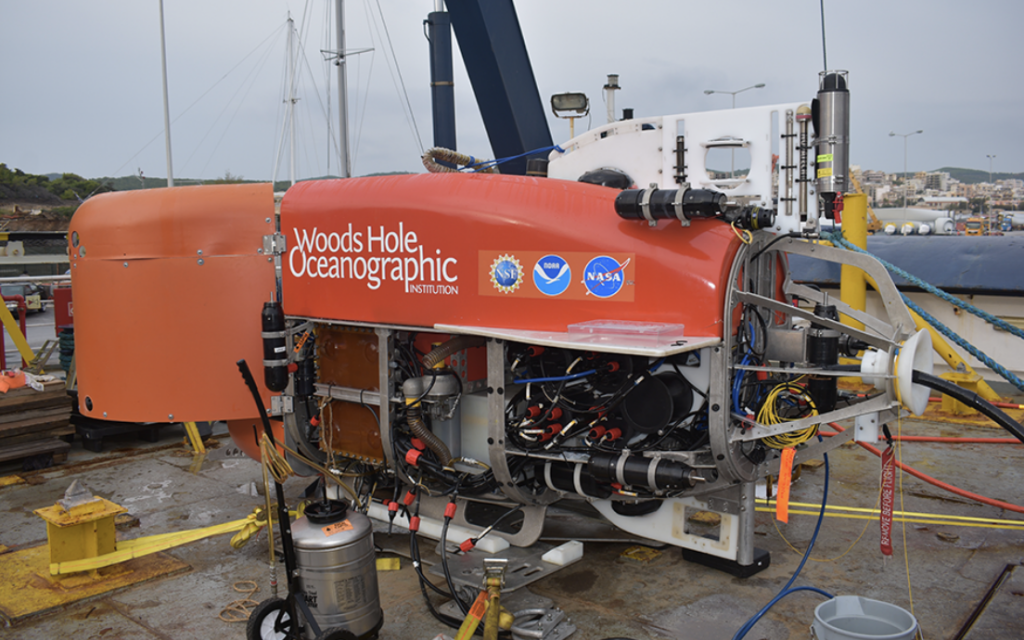
Launched last night from the port of Lavrion and will last until November 27, an international oceanographic seabed submarine will surveillance the Kolumbo volcano, about seven kilometres northeast of Santorini.

Funded by the US Agency for International Development, the international mission is made up of 30 scientists from the US, Greece, Australia and Germany, and is backed by the Greek interests of Maritech International’s DP-2 CLV Ocean Link.

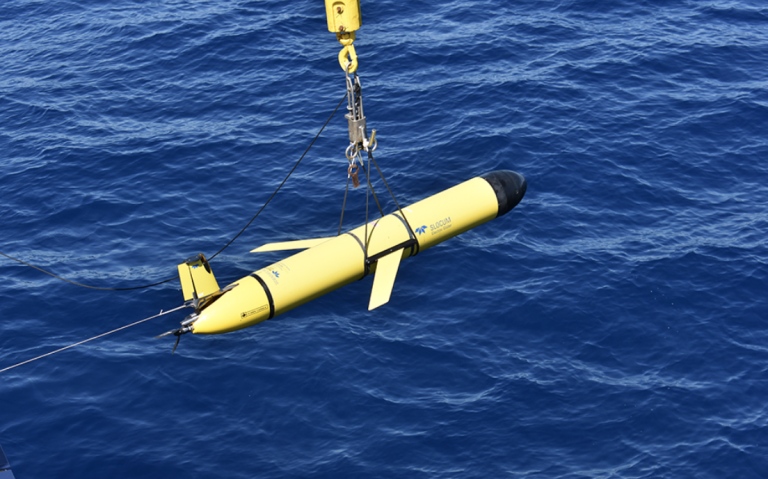
NASA’s goal is to test new and “intelligent” technologies in the seas of the Earth with Autonomous Underwater Vehicles (AUVs), which in the coming decades are intended to be used to explore extra-terrestrial oceans such as Jupiter’s distant moons. The submarine will detect traces of life in extreme, uncharted and potentially dangerous environments that will be explored.

The program, aimed at optimising robotic probe technology, is being attended by the Woods Hole Oceanographic Institute of Massachusetts (led by Dr. Richard Camille, who is also the head of the mission), The Institute of Technology the University of Michigan, the University of Sydney, the Department of Geology and Environment of the University of Athens, and the Institute of Marine Biology, Biotechnology and Aquaculture (ITHAW.V.Y.K.) of the Hellenic Centre for Marine Science (ELKETHE).

An assistant Professor of Greek Law at the University of Athens Paraskevi, who played a key role in conducting NASA’s research in Greece and not in any other country, told RES-EIA: “The Columbus volcano faces us with those of planetary exploration. Although remote-controlled submarines have previously landed in the Kolumbo Crater, autonomous underwater vehicles (AUVs and gliders) will be used in this mission to collect oceanographic data due to the complex and potentially dangerous environment.”

As explained, the Kolumbo volcanic cone has a base diameter of three kilometres and forms a crater of 170 meters in diameter, rising from a depth of 504 meters to a depth of 18 meters below sea level. This submarine caldera is located in a highly geodetic environment, very close to the caldera of the Santorini volcano, and has an important hydrothermal system, from which almost pure carbon dioxide is released.

“Self-propelled submarines will move through the Kolumbo Crater and study its hydrothermal sources and other areas of biogeochemical interest. The robots, which have chemical sensors, among other things, will look for conditions inside the caldera that could favour the development of life forms, as if they were in an extra-terrestrial ocean,” Ms Nomikou said.

Sourced by: RES-EIA

Papastergiadis: Proposed legislation for expatriate vote is insufficient

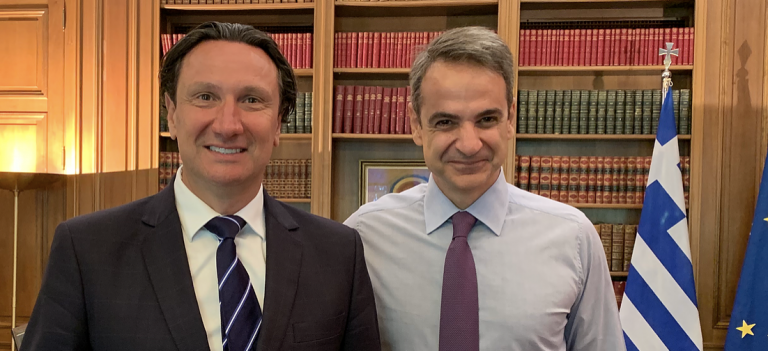
President of the Greek Orthodox Community in Melbourne, Mr Bill Papastergiadis, recently sent a letter to the Prime Minister of Greece, Mr Kyriakos Mitsotaki, regarding the current restrictions of the diaspora vote that are affecting Greek Australian citizens.

Mr Papastergiadis believes that this legislation is a positive one and congratulated both the government and the political parties on the agreement of the vote. However, Papastergiadis added that alterations to the agreement are necessary to properly convey the voices of Greek’s living abroad.

Despite being positive and congratulating both the government and the political parties on the agreement of the vote, Papastergiadis believes that alterations to the agreement are necessary to properly convey the voices of Greek international people.

The main concerns Papastergiadis raises with the proposed legislation are:

• It excludes the majority of expatriates from voting.

• It does not practically accommodate expatriates in the election process

• Creates two categories of Greek citizens

• Does not provide a ballot vote, forcing expatriates to travel long distances to vote at consulates, embassies or elsewhere. We, as expatriates, propose the universal introduction of the postal vote for Greeks both within Greece and those abroad.

• It creates contradictions. On the one hand, Greece forces and trusts a Greek-born foreigner to serve as a soldier and to protect the homeland, and on the other it restricts the right to vote because they have not been in Greece for two consecutive years.

Mr Papastergiadia continues to explain that because of these voting restrictions, instead of helping expatriates on the issue of voting, the legislation poses a number of obstacles that will ultimately have the opposite effect of what is expected.

“Greeks abroad, and especially in Australia, are fighting for Greece’s national issues and for its economic development, and we are trying to promote the interests of Greece in the governments of the countries where we live.”

In Australia, Greeks must visit the nearest Greek Consulate or Embassy to vote, however due to Australian cities such as Sydney and Melbourne having very large perimeters, some voters may have to travel up to 120 kilometres to vote.

“Even if ballots are eventually erected elsewhere, such as Communities, etc., in the event of multiple registrations from certain areas, the problem is not resolved. There will also be Greeks who will not be able to visit these centres.”

The president of the Greek Orthodox Community voiced that the criterion of requiring 35 years of residence abroad automatically deprives those living outside Greece more years to vote. Additionally, he argues that the criterion of a two-year stay in Greece prevents the majority of Greeks (up to 90%) from voting.

“Most Greeks return to Greece for holidays and stay from two weeks to three months…. As employees, having businesses and families abroad, we are unable to stay two years in Greece. Only a very small percentage may meet this criterion.”

Mr Papastergiadis requests that Prime Minister Mitsotaki reviews the presented concerns and finds a suitable solution that accommodates the Greek Australian community.

Acropolis lights up blue in respect of Children’s Rights

0

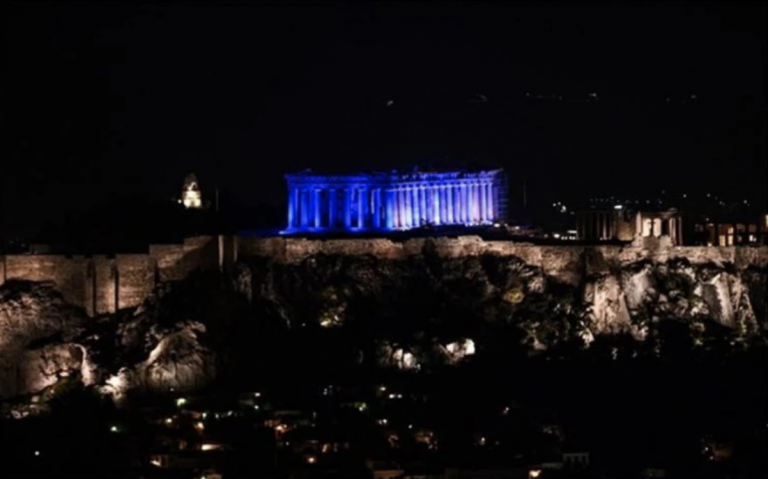
As a sign of respect for children’s rights and for their right to be protected, one of the world’s greatest monuments, the Athens Acropolis, lit up blue on November 20.

The colourful display signified Greece’s support of UNICEF’s World Children’s Day 2019 celebrations, which coincide this year with the 30th anniversary of the adoption of the Convention on the Rights of the Child.

The Greek Minister of Culture and Sports, Lina Mendoni, released a statement expressing its support to the UN cause:

« The Ministry of Culture and Sports, supporting the aims of the organisation (UN) and the work it has been doing for decades with actions, interventions and initiatives concerning all aspects of child protection, has approved the UNICEF request. The Acropolis is among the monuments and major buildings around the world, lit up blue, to promote the work of the organisation and raise public awareness of children’s rights. Among them, this year are the European Parliament in Brussels, the Shanghai Tower in China, the Pantheon in France, and the Petra in Jordan. »

Moria refugee camp ordered to close and a proposed five new camps to open on Greek islands

0

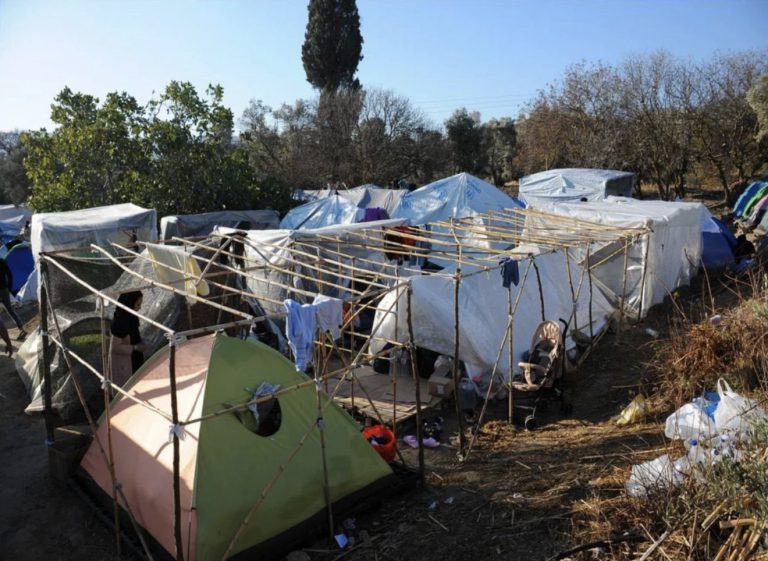
Government spokesman Stelios Petsas and responsible coordinator, Deputy Defence Minister Alcibiades Stefanis, have presented the government’s plan for migrant-refugee centres.

The plan announced calls for stricter border guarding with the establishment of a single body, closed centres in the Aegean islands, decommissioning of structures and compensatory benefits for local communities where refugees and migrants are housed.

The Greek Government foresees the establishment of closed centres in Samos, Chios, Lesvos, Kos and Leros. In three of them, the capacity will be at least 5,000, while in Kos it will be 2,000 and in Leros it will be 1,000. Mr Stefanis voiced that the government plans to transfer 20,000 refugees from the Aegean islands by the end of 2020.

The new centres will replace existing ones, such as Moria and Vathi, which are open and closed, while the government aims to implement a comprehensive set of standards. These such standards include:

  1. Deterrence,
  2. Enhancing border guard,
  3. Speeding up asylum procedures and returns, as well as managing the issue effectively.
Newly proposed centres

The Government also predicts that the deterioration of weather conditions will reduce flows of protectionists and families being moved to inland (hotels).

“In the short term we are restoring control and security to the crisis-affected areas, while in the medium term we are implementing a number of actions aimed at not only restoring regularity to all aspects of Greek people’s lives, but creating the conditions for them to be shielded” said Mr. Stephanis.

As mentioned above, Stephanis announced the following 5 + 1 actions for the governments second phase and medium term planning:

a) Unaccompanied children

“Today, on the International Day for the Rights of the Child, we announce a special action. A National Coordinator is appointed through the Presidency of the Government, in co-operation with the Ministry of Labor and the Ministry of Citizen Protection. Expect announcements from the Prime Minister himself,” said Mr Stephanis.

(b) NGOs

Defining the framework of their obligations and the specific criteria they are required to have. Stay and operate in the country, only those who qualify.

(c) Asylum and Returns

The adoption of the new law provides the framework needed to speed up procedures and either approve asylum or return non-eligible persons to their country of origin or entry. At the same time, the recruitment of 500 people is underway, which will strengthen the Asylum Services.

d) Construction and Extension of Closed Structures to Islands Molea, Vial, Samos Cyta, closed structure of Kos and Leros

Lesvos are closed: In Lesvos, the existing Structure in Molea will be gradually closed, while a new closed Structure will be created, which will be used as a Pre-departure Centre and a Reception and Identification Centre. (CT), capacity: 5,000+

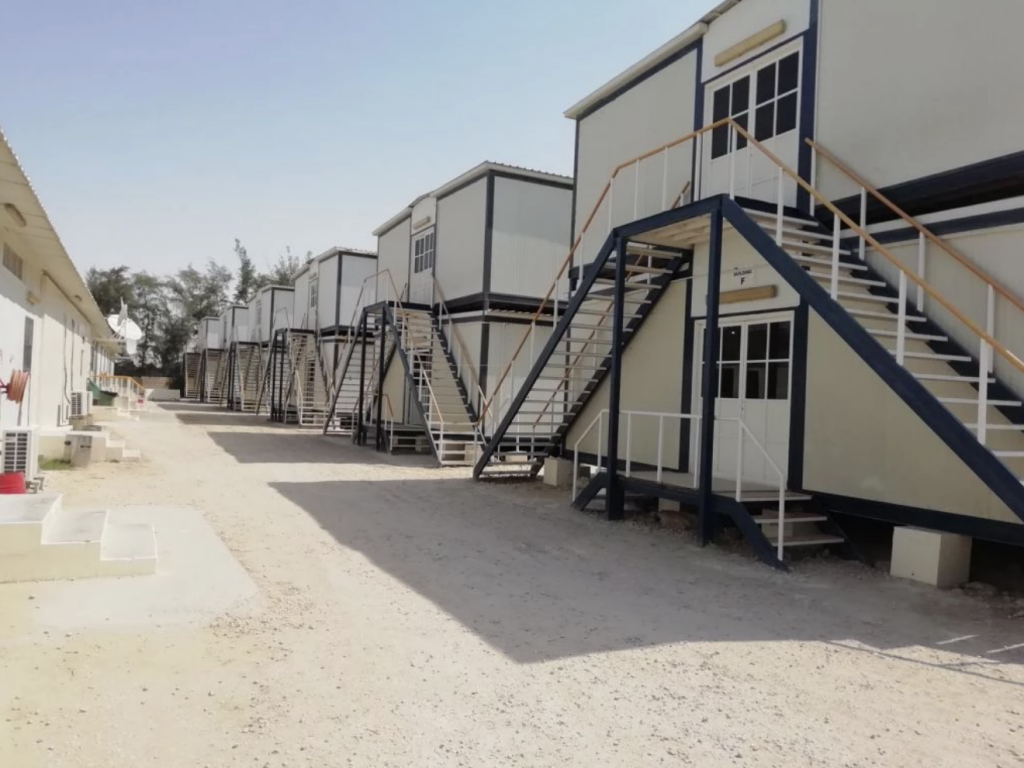
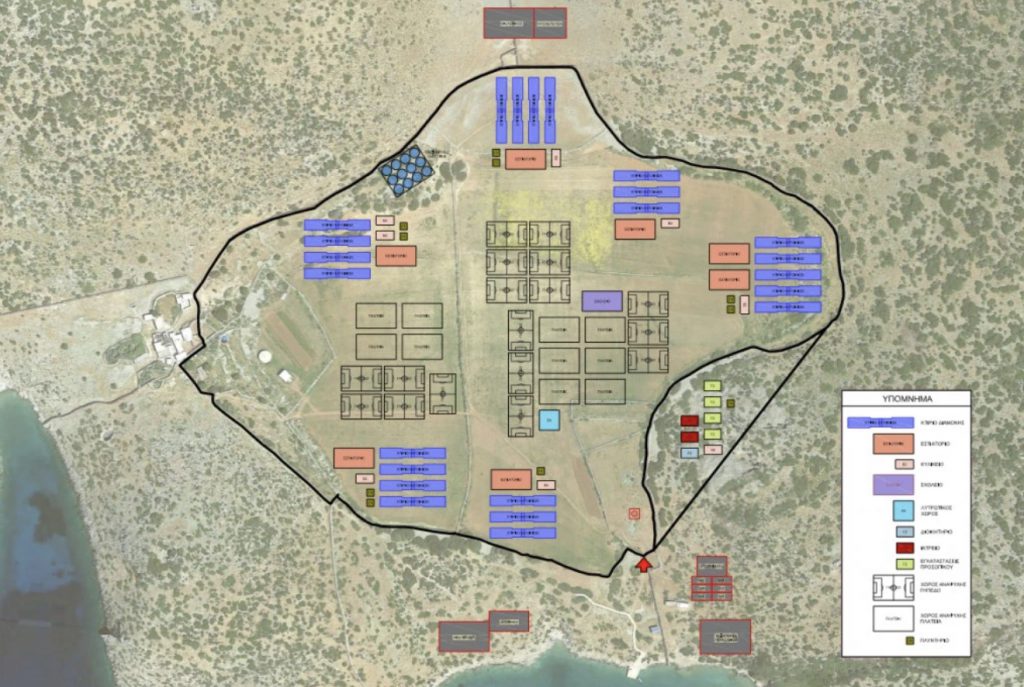
Drawing plan of a new refugee structure

Chios: In Chios, the existing Structure in Vial will be closed (near Chalkio), while a new closed Structure will be created, which will be used as a Pre-Departure Centre and Reception and Identification Centre (TSD), with a capacity of: 5,000+

Samos: In Samos, the existing Structure – CTO will be closed in Vathi, while the Structure under construction will be expanded and used as a Pre-Concession Centre and Reception and Identification Centre (CTO), with a capacity of: 5,000+

Kos: In Kos, the existing Structure will be turned into a Closed, as a Pre-Concession Centre and Reception and Identification Centre (TSO), with a capacity of: 2,000+

Leros: At LERO, the existing Structure will be transformed to a Closed, as a Pre-Departure Centre and Reception and Identification Centre (CTR), capacity: 1,000+

At this point I would like to show you where we are now and what is the desired situation.

(e) Local community support measures

• The extension – up to 31.12.2020 – of the 30% reduced VAT rates for the islands of Leros, Lesvos, Kos, Samos, Chios.

• Improving the structures of Health, Education, Public Welfare and Tourism in areas where migrants and refugees are welcomed. The government is also committed to making the most of the benefit to local communities of Structures / CTs once the issue is completed.

• The government is also committed to taking account of the locality required when recruiting to the Structures / CTs.

• Finally, at the behest of the Prime Minister, a Special Fund of 20 million euros is set up for 2020 to finance the “Solidarity Program” implemented by the Ministry of Interior to support the municipalities that will be burdened by refugees and immigrants.

“The legal framework is in place, staffing is planned with the recruitment of 400 Border Guards for Evros and 800 for the islands, € 14m has already been allocated (on 08 Nov 19) to address immediate needs, procedures have been stepped up for the unblocking of the National Integrated Maritime Surveillance System (ESSOTE) (work started in 2014 and initial forecast is to be completed in August 2022, which is unacceptable), with the Prime Minister’s personal intervention provided by the shipowners association. 10 modern fast p touch to HCG, which meet the specifications required for the fulfilment of their mission, and their delivery will take place in the coming months, and many more.“

The migrant story still lives on in fourth-generation Greek-Australians

The Greek Studies Department at Macquarie University is a melting pot of different students with some type of connection to the Greek language, or a passion to allow the language to live on.

Dr Elizabeth Kefallinos, a Senior Lecturer and Head of Greek Studies at Macquarie University, recognises this daily in her classes. When the time came for her to draft the assessment tasks for her 2nd year class, she decided to appoint them a task that would truly educate them on the importance of continuing the language.

“The topic of migration was given as a reflective task to students to create a micro-historical model from their family’s migration endeavour to Australia,” said Dr Kefallinos.

“I realised that the conceptualisation of the past, in the form of their family roots, gave them further knowledge and understanding of themselves and a strong sense of belonging to a broader family tree.”

One student, Eleanor Skinner, extended a particularly personal attachment to the assessment task, using the opportunity as a ‘mnimosyno’ to her Great-Great-Grandmother who migrated from Greece to Australia.

Eleanor was able to investigate her ancestors journey to Australia from a naturalisation certificate she located, and the National Archive of Australia records.

She describes the story of a young man, her great-great-grandfather ‘Mick’, who arrived in a very young and insecure Australia in 1914. At time, Australia was establishing its cultural identity, and the majority of its inhabitants were British emigrants. Mick’s naturalisation papers were reflective of the shift in Australia’s cultural identity, where in 1922 he swore allegiance to ‘King George V’, whereas today citizens must swear allegiance to ‘Australia and its people’.

Eleanor used historical data to explain the racist culture that was highly prevalent in Australia at that time.

She was able to use records to discover that her grandfather was an “agricultural labourer” in Queensland, but could not find any documentation of what his profession was in Greece.

She also found documentation that confirmed that Mick’s daughter, Zepharina, lived in a boarding school in Australia so that Mick was able to work, as he was a widow.

A chunk of her research was focused on the loss of Grecian identity and assimilation that Mick and Zepharina were subjected to upon arrival in Australia.

“There was a loss of their Grecian identity on the part of both Mick and Zepharina. Mick was required to officially renounce his Greek citizenship in order to apply for naturalisation, and Zepharina lost the majority of her knowledge of the Greek language, only regaining it when she studied the language as an adult,” wrote Eleanor.

Eleanor was able to gain a perspective on her great-great-grandfather Mick’s character, through character witness statements on his naturalisation papers.

This research gave Eleanor an opportunity to understand and empathise with the difficult decision her ancestors once faced over 100 years ago. She was able to comment on the political, economic and family conflicts that her ancestors once went through and try to understand them for herself, giving her a closer connection to the people who unknowingly shaped her life here today.

She found out that Zepharina was trained as a teacher, nurse and dressmaker, which is something that has been translated to her grandmother and mother.

“This value and emphasis on education has continued in our family, from Zepharina…to my grandmother, to my mother, who became a teacher herself,” wrote Eleanor.

The research task gave Eleanor a greater appreciation and understanding of how her life in Australia came to be.

“Overall, Mick’s courageous decision to leave Greece for the unknown risks of starting a new life in Australia has been a great success for his descendants.”

“On a personal level, writing the article has made me empathize more with my ancestors’ experiences and the difficulties they faced in deciding to emigrate, making the journey, integrating into Australia and having to face losing much of their culture and language,” wrote Eleanor.

She noted her connection to Zepharina and Mick, and how learning it accelerated her desire to learn the Greek language in order to keep this connection alive.

“Similarly to learning the Greek language, researching their context and story made them seem to me like real people I knew, rather than just the subject of family stories. I believe experiencing this connection to family and personal history is an important factor in forming our sense of self and embracing where we come from,” she wrote.

Dr Kefallinos was moved by all the personal anecdotes and research her class submitted.

“The task proved that the students indeed created a communicative avenue from the past to present and a connective path with their ancestors between one, two, three and, in the case of Eleanor’s history, even four generations,” said Dr Kefallinos.

When it came to Eleanor’s story, as a fourth-generation Greek-Australian, Dr Kefallinos was inspired to learn that Hellenism is still very much alive, even as generations move further away from direct lineage to Greece.

“Her personal story as a fourth-generation Greek…constitutes a living paradigm for young people to immerse educationally with their heritage… the Greekness is still alive in her soul,” said Dr Kefallinos.

British tourist suffers from intense burns after falling into Nisyros volcano

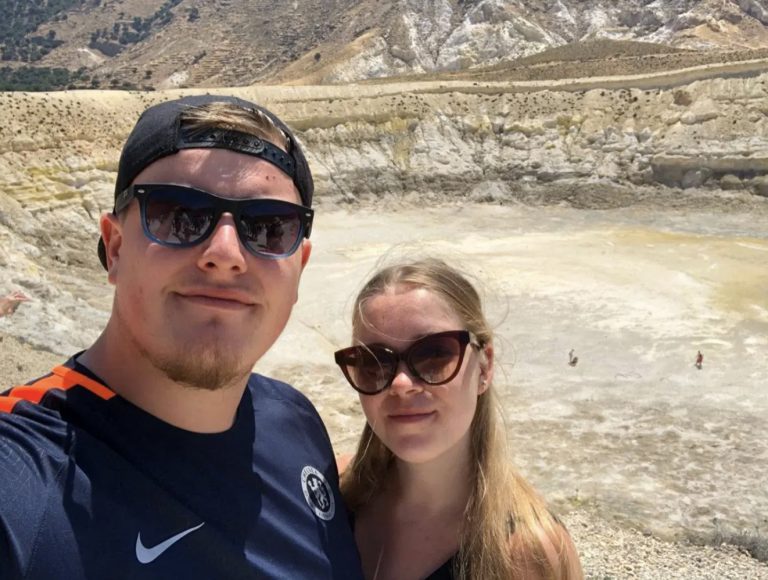
A planned sightseeing trip to the Greek island Nisyros for a pair of British tourists turned for the worst as the young man fell into a volcano, suffering from severe burns.

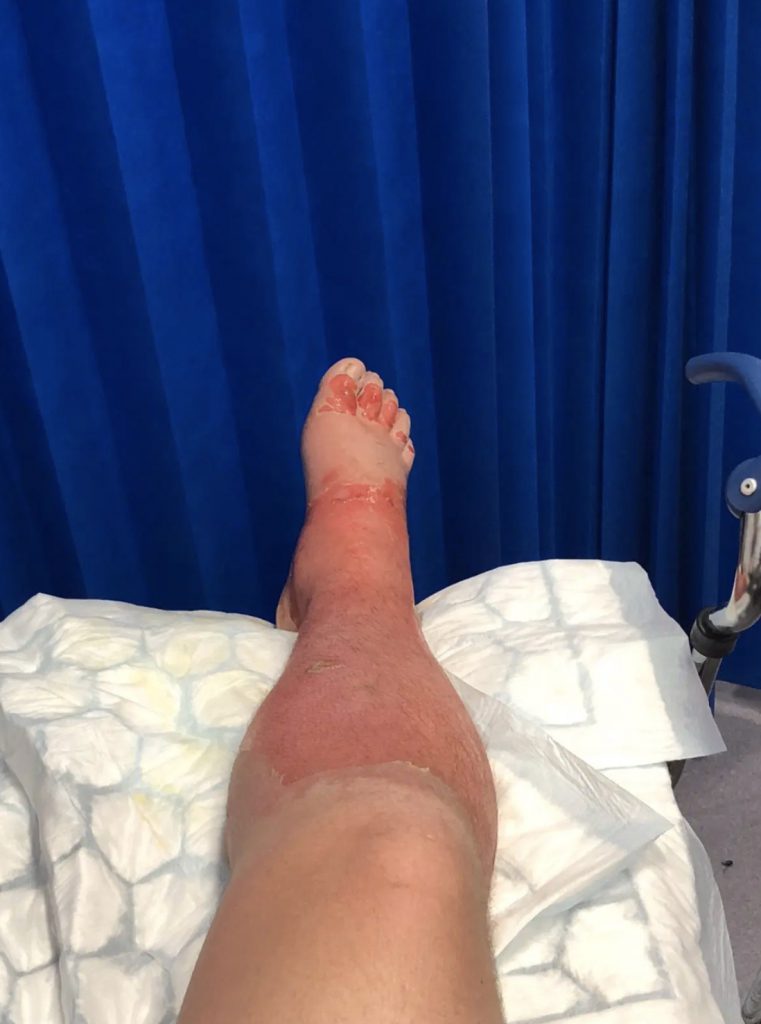
The victim, 22 year old tourist Thomas Grundon, fell into the volcano and pierced his foot on the thin volcanic crust on the ground, thereby releasing steam at a temperature of 165 degrees Celsius.

“I was screaming in pain,” Thomas Grundon told the British Sun.

The 22-year-old screamed out in pain as the steam hit his leg

The 22 year old, who went on the adventure trip with his girlfriend Charlotte, reportedly blamed the tourist agency that took them on a tour of the site, stating that there was no protective barrier preventing access to the dangerous site.

“I was crying, my girlfriend Charlotte was crying. I was burned from my knee to my toes.”

“My leg burned from my knee to my ankle,” he added.

Following Thomas’s return to Britain, he required five days of specialist treatment for first and second degree burns.