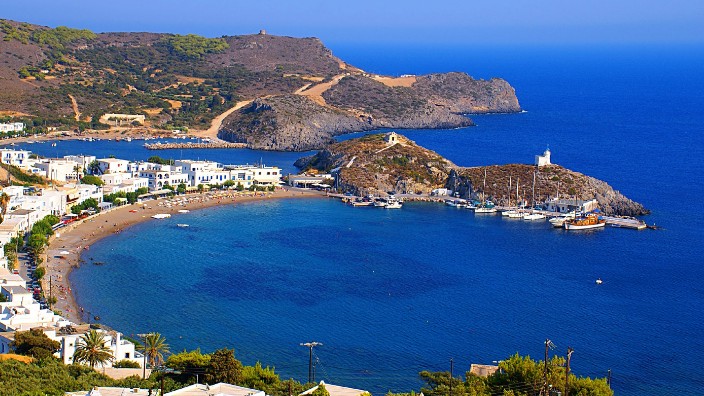
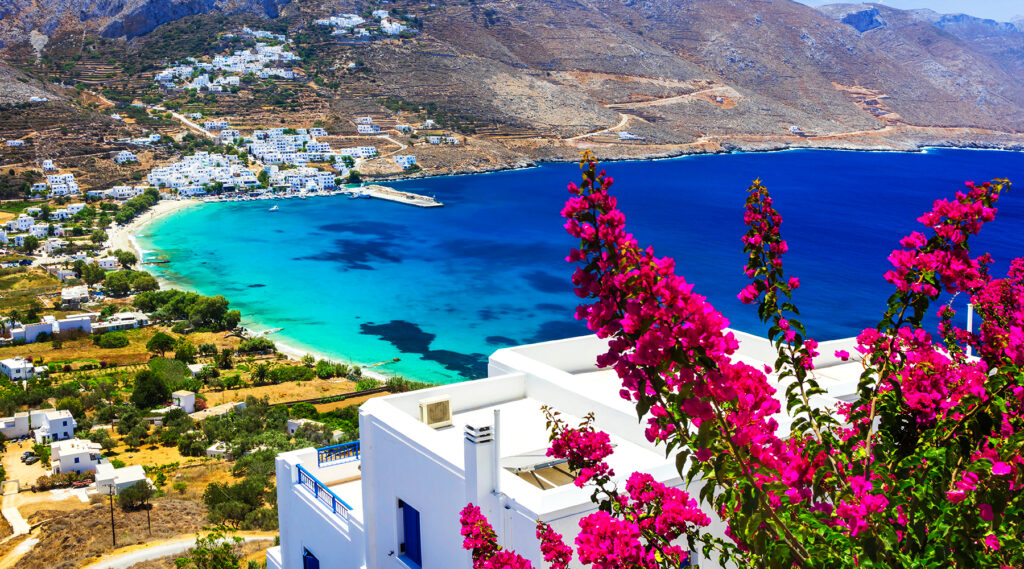
Five Greek islands have been symbolically added to Europa Nostra’s list of endangered cultural heritage sites this year due to the increased risk to landscapes posed by the excessive development of wind farms.
These islands are Amorgos, Kimolos, Sikinos, Tinos and Kythira in the southern Aegean.
Amorgos island in Greece is at risk due to wind farm development. Source: Azamara.
The announcement was made on Thursday by Europa Nostra and the Institute of the European Investment Bank, which cooperate with the Hellenic Society for the Protection of the Environment and the Cultural Heritage to draft the annual list of endangered sites.
“The choice is representative, because it is impossible to include all the Greek islands that face the same problem,” Dimitris Leventis, the Head of the Council for Architectural Heritage, said.
“The natural landscape is a monument. It is something that survives for hundreds of years, something that supports life and human activity,” he added, stressing that it hosts a range of society’s activities from agriculture and tourism to services.
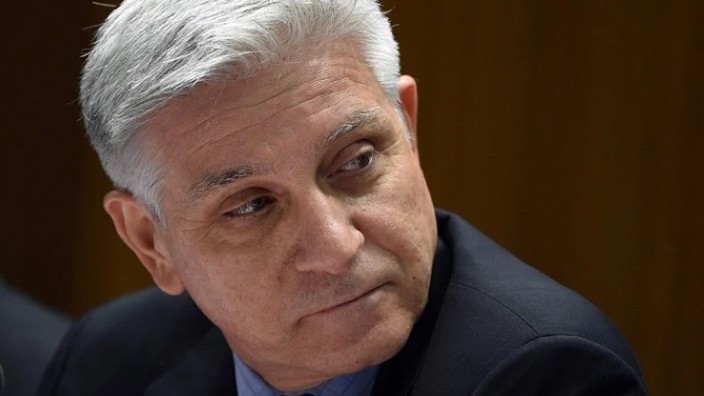
The Morrison government is expected to announce this week that Attorney-General Department Chief, Chris Moraitis, will lead the investigation into alleged war crimes perpetrated by ADF personnel in Afghanistan, according to Sky News.
Mr Moraitis would lead a team of top-tier detectives and lawyers to further examine claims made in the Brereton report.
The Attorney-General’s Department Chief previously worked as a deputy secretary at DFAT, a diplomat and a barrister.
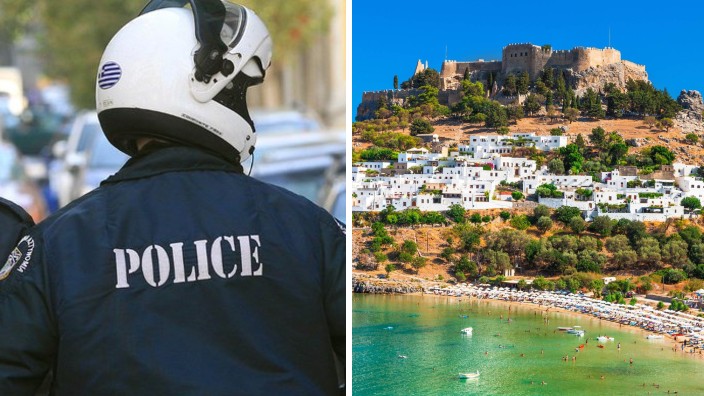
Greek authorities will press charges for espionage against two Greek citizens working on the southeastern island of Rhodes, police said Saturday.
According to Greek media, the two men are believed to have been spying for Turkey.
One of the suspects has been working aboard a ferry from Rhodes to the Greek island of Kastellorizo, just off the Turkish coast.
The other was said to be working at the Turkish consulate in Rhodes.
The tiny island of Kastellorizo, just two kilometers off the Turkish coast, lies in disputed waters that have been a source of escalating tensions between Turkey and Greece.
CNN Greece reported that the man working on the ferry was reporting the position of Greek Navy ships, and providing other information concerning Greek army forces on the islands to the other suspect.
According to the Greek police’s statement, the investigation that led to the charges ‘was conducted in close cooperation with the Greek National Intelligence Service, EYP.
With Christmas just around the corner, The Greek Herald has compiled a list of our favourite Christmas books to keep you entertained this holiday period!
How the Grinch Stole Christmas – Dr. Seuss, 1957
Dr. Seuss’ comedic romp through Whoville is an unforgettable novel that was later transformed into a popular film. This story is a tale of redemption and reform in the lead up to Christmas, while also teaching young children to focus on the joy and spirit of Christmas over the commercial elements.
A Christmas Carol – Charles Dickens, 1843
This classic Christmas story tracks the transformation of Ebenezer Scrooge from a greedy old miser to a joyful kind chum through a series of supernatural visits from the Christmas ghost’s of the past, present and future. The book was later adapted into the famous 1951 film, ‘Scrooge’.
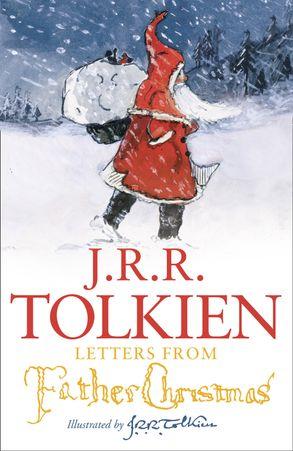
Letters from Father Christmas – J.R.R. Tolkien, 1976
This beloved holiday favourite is a collection of letters written by J.R.R. Tolkien to his children. The letters are written from the perspective of Father Christmas and each tell wonderful tales about life at the North Pole.
The Polar Express – Chris Van Allsburg, 1985
While technically a children’s book, the Polar Express gives us a trip down memory lane and a free ticket back to our childhood. From magic trains and a believable Santa Claus, this book is filled with so much Christmas spirit and is sure to be a pleasurable read in the leadup to the holiday season.
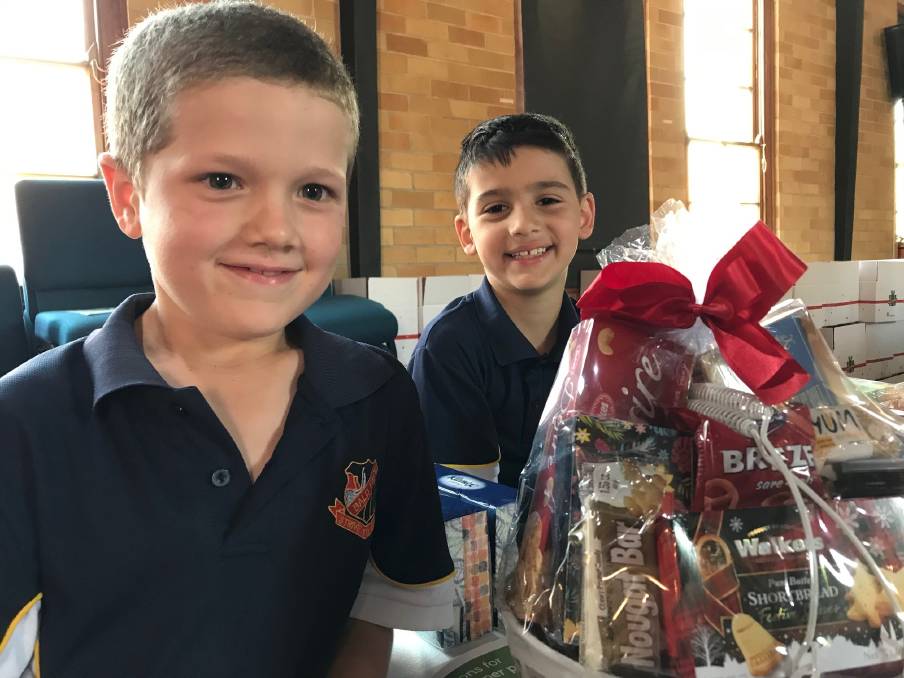
Last Friday, students from Bald Face Public School joined members of the Blakehurst Anglican Church’s youth group to package up 65 food hampers and 200 toys that will be distributed through Anglicare’s Toys ‘n’ Tucker program.
The school has participated in the program for several years. This year, it aims to deliver 6,000 food hampers and 4,500 toy hampers throughout Sydney, and as far afield as Moree.
Speaking to The Leader, President of the P&C, Stella Christofi, said when Covid-19 hit, she thought they wouldn’t be able to get involved.
“This is the first year the kids have got to actually pack the hampers, not just collect the items, and that extra bit of hands on work really gave them an insight into what helping others is all about,” she said.
Bald Face Public School pupils Josh Davidson (L) and Peter Christofi with one of the 65 hampers that will be distributed through Anglicare to those in need this Christmas. Picture: The Leader
“We love to do something each year where the kids get to serve the community. But because of all the Covid restrictions, we were unsure whether we would be able to pack the hampers this year.
“Then, when things opened up a bit, the church got in touch and suggested we work together. We jumped at the chance.”
This is also the first time Blakehurst Anglican has been involved with Toys ‘n’ Tucker and, while they too were uncertain about what they could do this year, Senior Minister Ross Ryan saw a great opportunity to strengthen the local community.
“Working with the school was a real highlight for us after what has been a very difficult year without a lot of community connection,” Mr Ryan said.
“And the fact that the connection was made through helping families who are facing a very uncertain Christmas makes it all the more special.”
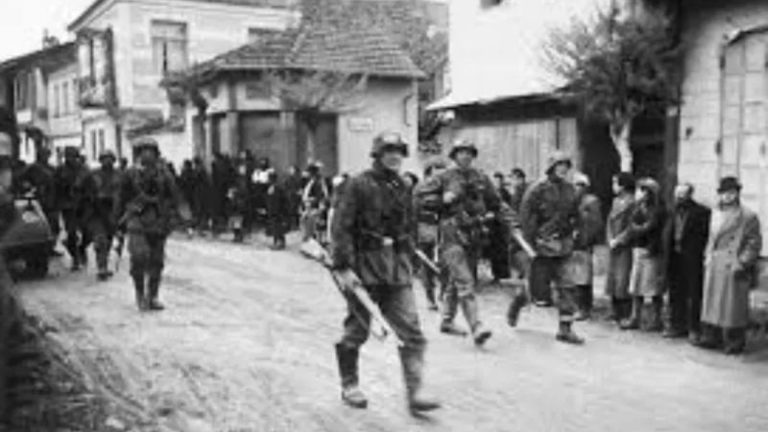
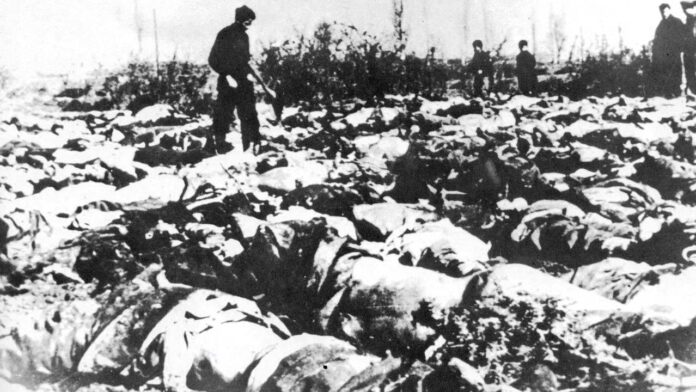
The gruesome massacre of innocent Greek people in Kalavryta occurred in 1943, at the time where the Axis had Greece occupied (April 1941-October 1944) by German, Bulgarian and Italian armed forces.
The operation to massacre the Greek village of Kalavryta began in October 1943, after Greek resistance forces captured 80 German soldiers during a battle in the village of Kerpini, near Kalavryta.
After the soldiers were captured and held as prisoners, Nazi forces threatened to massacre nearby villages out of revenge if the Greeks didn’t release the prisoners.
However, despite the church in the village trying to reason with the resistance forces to free the German prisoners, the leaders all refused.
After the Greeks refused, the German 117th Jäger Division took action. On December 8th 1943, the German troops entered nearby villages of Kerpini and Pogi, killing the entire male population of both villages.
The Greek forces retaliated by executing the German prisoners, with one German soldier managing to escape.
By December 13th, 1943, The German troops entered Kalavryta, demanding they speak with the Greek forces who held the Germans captive, however, the Greek soldiers had already left the area once the execution was completed.
Despite the villagers pleading with the German soldiers to leave, telling them the Greek soldiers already left, the Germans refused.
The Nazis ordered everyone living in Kalavryta to go to the town’s school. From there, the Nazis locked the women and children in the schoolyard, meanwhile forcing every male aged over 12 to walk up to Kapi Hill. They were ordered to the top of the hill because the men were forced to look down to the city of Kalavryta, and see the women and children locked in the schoolyard.
From there, the gruesome massacre began. The Nazis lit the school on fire with the women and children trapped, waiting to be burnt alive while the men would watch the horror unfold. As the school was being burnt down, the men on the hill were brutally massacred, shot dead by the Nazis.
Of the 700 odd men that were standing atop of the hill, only 13 managed to survive.
Fortunately for the women and children, they managed to escape from the burning school, it is believed that an Austrian soldier freed them, while the some other Nazi soldiers also allowed them to be freed.
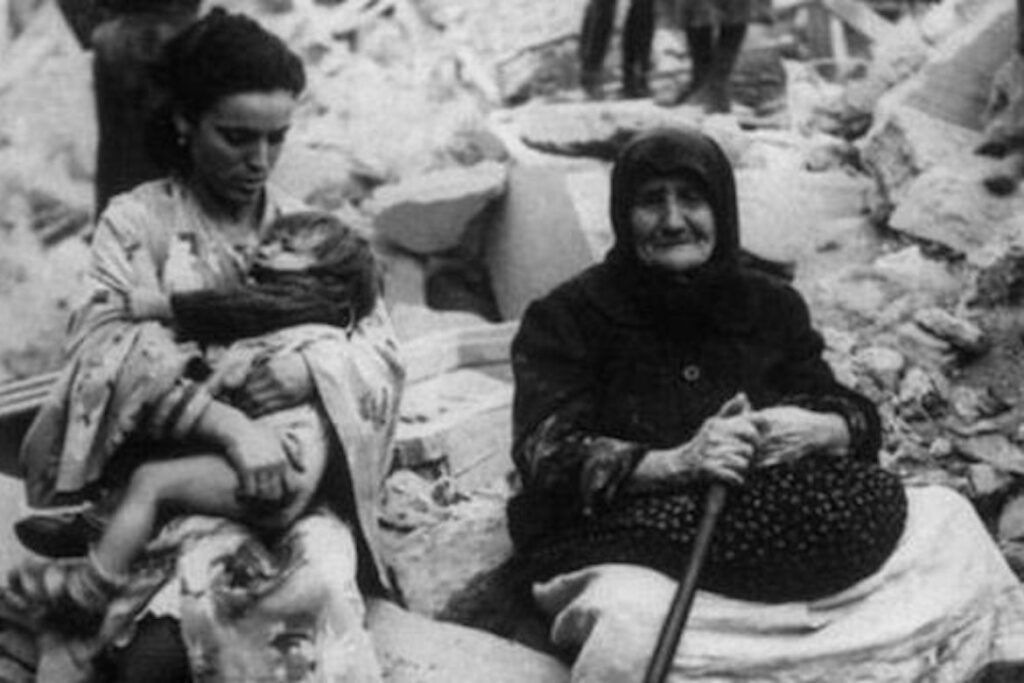
The days after Operation Kalavryta were horrific. The wives, sisters and children of the men who were brutally murdered were now forced to bury their beloved loved ones.
Despite being granted the right to live, Kalavryta had been completely burnt down and ransacked by the Nazis. The women and children were left homeless and starved.
Unfortunately, the Germans didn’t stop there. They continued their onslaught of nearby Greek villages, as well as the monastery of Agia Lavra, an important landmark of the Greek War of Independence.
The town’s cathedral was eventually rebuilt once the German occupation was over. The clock that is on the cathedral shows the time of 2:34pm, and will remain that way forever. The time is stopped to mark the exact time the murdering of the men had begun.
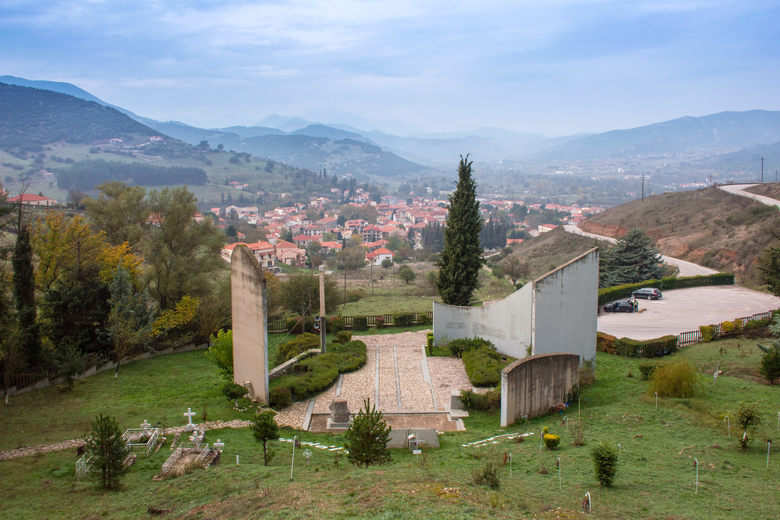
Moreover, the site of the schoolyard where the women and children were locked up, became the Kalavryta Holocaust Museum in 2005. The museum has objects on display from the Nazi occupation, photographs depicting the events, as well as newspapers and documents from that specific dark time in Greek history. In the museum, some of the floors are still burnt to remember the horrific events of that fatal day.
The Kalavryta massacre remains one of the darkest days in modern Greek history.
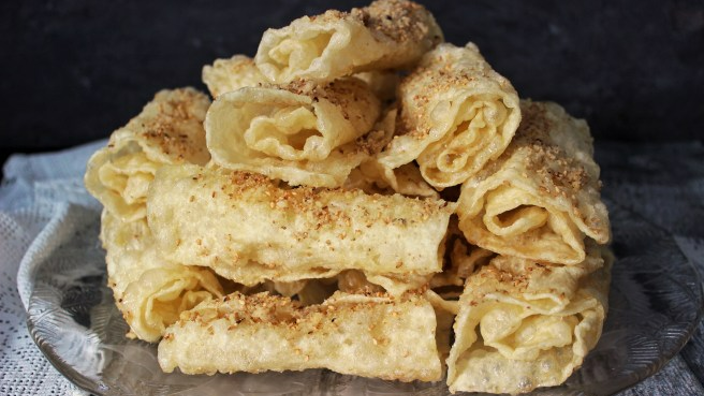
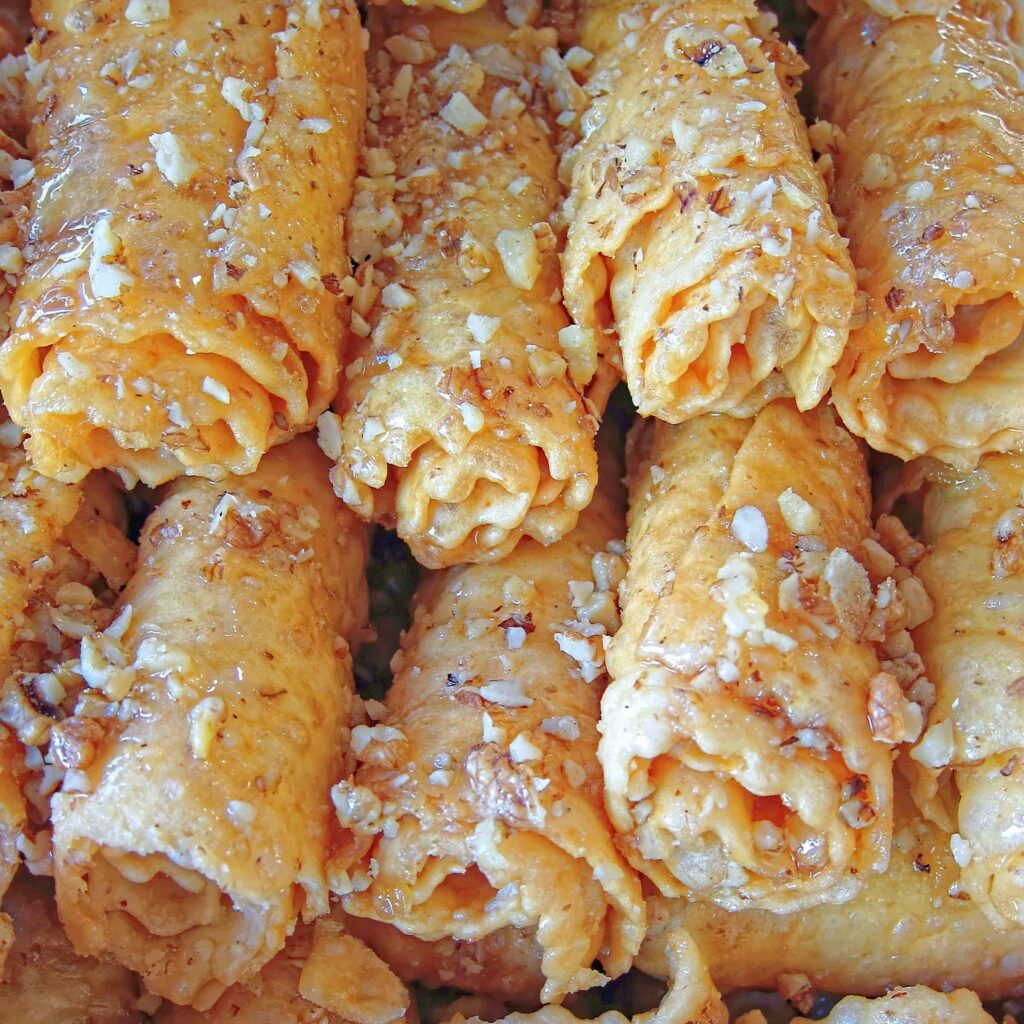
Diples are traditional, sweet Greek pastries that are topped with walnuts and drizzled with honey. They originated in the Peloponnese region and are often made in large batches and offered on a platter at Greek celebrations! This sweet dessert gets its name from the Greek word for fold because of the folding layers within diples.
Ingredients
For the diples;
2 tbsps sugar
2 tbsps baking soda
400g all-purpose flour
5 eggs (divide into yolks and whites)
Juice of 1 lemon
Juice of 1 orange
1 bsp white win vinegar
½ cup corn oil
A pinch of salt
Vegetable oil
For the syrup
¼ cup sugar
¼ cup water
½ cup honey
Juice of ½ lemon
1 cinnamon stick
150g chopped walnuts (to top)
Cinnamon
Photo: My Greek Dish
Method
Begin by placing the five egg whites and a pinch of salt into a bowl. Whisk the egg whites with an electric mixer until the mixture is thick and glossy.
Add the egg yolks into the mixture, one at a time whilst continuing to mix. In a separate cup, add the orange and lemon juice and baking soda and blend until dissolved. Once dissolved, add into the egg mixture.
Add the white wine vinegar and sugar and mix into the egg mixture.
Transfer the mixture into a large bowl and sift in the flour in small batches. Then, add the oil and knead the dough using your hand until smooth and elastic. If needed, add more flour.
Separate the dough into four pieces and cover with plastic wrap. Let the dough mix for 30 minutes.
After 30 minutes, roll out the dough into thin, large rectangular pieces. Using a knife or rolling cutter, cut the dough into rectangular sheets into the sizing of your choice.
Heat vegetable oil in a deep frying pan, until shimmering but not smoking hot. Place the sheet into the hot oil using two forks. Hold the dough with the fork in the oil and roll the pastry sheet away from you, to eventually form a circular shape.
Repeat this step with all rectangular sheets.
Remove the diples from the oil and place on some kitchen towelette to drain.
Begin preparing the syrup for the diples. Pour all of the syrup ingredients into a pot over heat and bring to a boil. The syrup is ready once the sugar has dissolved.
Depending on how sweet you like your diples, you can either drizzle the pastries with the syrup or soak in the syrup for a few seconds. Sprinkle with crushed walnuts and cinnamon and enjoy!
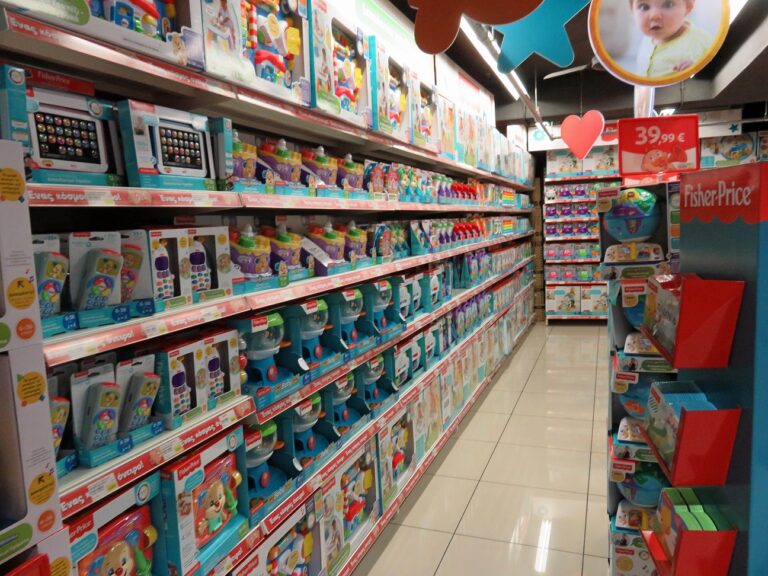
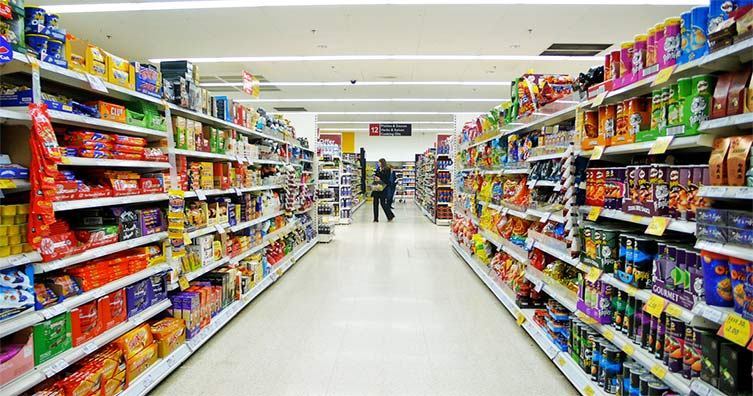
“Supermarkets will not be allowed to sell toys,” Development Minister Adonis Georgiadis said on Saturday just hours after the government announced that retail shops will remain closed over the Christmas season, with the exception of click and collect services.
“Toy stores make 30% of their turnover every year during the holidays and now we do not allow them to open, so we want them to work with delivery,” he said.
“If we allowed supermarkets to sell toys, we would greatly reduce the chances of someone buying from the stores through the order process over the internet and over the phone,” he added.
However, he said if supermarkets have a click and collect service, they will be able to sell toys, as long as it is not inside the store.
Georgiadis explained that if the sale of toys inside supermarkets is allowed, mobility will increase, as “whole families would go together so that the child chooses the toy.”
The Minister reiterated that during through the click and collect process “only one person will be allowed to go to a shop to pick up the ordered product,” and that there will be flexibility of “one hour before and one hour after” the fixed time set by the shop for pick up.
He threatened to cancel ‘click and collect’ services if Ermou, the main commercial street in Athens, gets too crowded.
A study by Athens University of Economics and Business tracking the attitudes of the public to vaccines and their behaviour after two lockdowns, showed that 42% said they will get the jab and that most are complying with restrictions.
The study sampling 3,571 people of all ages and socio-economic backgrounds from across Greece, showed that 68% said they practise physical distancing, 86% wear a mask and 90% send an SMS to move around.
A majority of 63% of respondents said they choose a fabric mask, versus one in three who opt for a disposable, non-surgical, version.
Another 58% said they leave home “when this is necessary.”
“Women are a little bit more consistent, while older respondents are significantly more consistent,” explains Marina Psiloutsikou, member of the laboratory teaching staff who was in charge of the survey.
When it comes to the Covid-19 vaccines, only 42 percent of those asked said they are ready to be inoculated. The vaccine and the vaccination process are seen more positively by women and older people.
“Fear of side effects and doubts about its effectiveness are the main reasons for hesitation towards vaccination. However, one in three people in the population believe that the vaccine should be mandatory for everyone,” said Psiloutsikou.
Providing an opportunity to choose between the Covid-19 vaccines that will become available “will encourage those who are already favourably disposed about it, and impact negatively those who already have reservations,” she added.
They immigrated to Australia in search of a better life.
In their suitcases, together with their belongings, they brought the customs and traditions of the homeland which despite the hardships they preserved as unwavering habits in time, and passed on to the next generations.
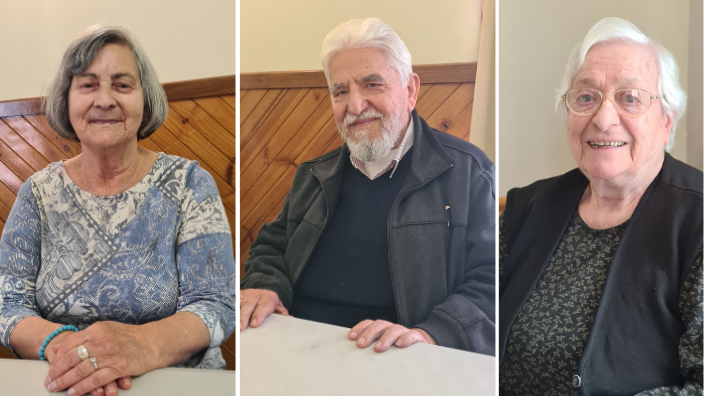
Three Fronditha Care residents remember how they used to spend Christmas and New Year’s in Greece, how they maintained their customs and traditions in Australia and they send their messages to the younger generations of Greeks abroad.
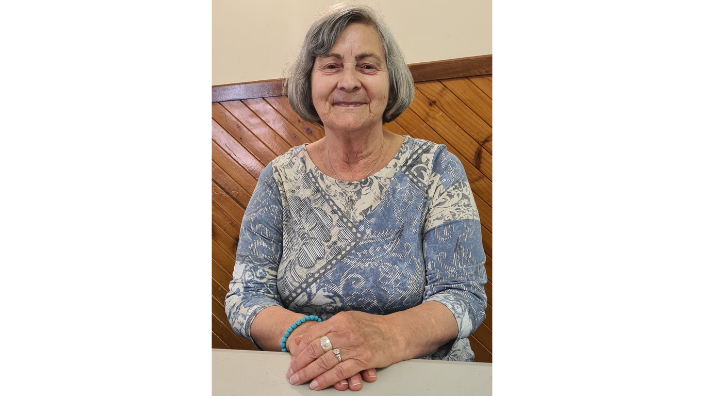
Sofia Pagrati: “I will continue to preserve the Greek traditions”
Sofia Pagrati immigrated from Athens to Australia approximately fifty years ago.
“There was poverty after the war, whether you lived in the village or in the city,” said Mrs Pagrati, a member of one of Fronditha’s Social Support Groups.
“We could not always buy sweets and waited for the holidays to buy kourabiedes and melomakarona”.
Mrs. Pagrati talks about the fragile Christmas ornaments with which she decorated the tree and describes how eagerly she and her brother were waiting for Santa Claus.
“As we grew older, we realized that mom was buying the presents. She then used to take us to Aiolou Street in Athens and let us choose toys from the stalls. My mother would usually buy me sawdust filled cloth dolls.
“When I was fighting with my brother, he would pull the doll’s hand from one side, I would pull from the other. The sawdust would drop and this would leave me with the cloth in my hands,” Ms. Sofia, describes and smiles, as she remembers her childhood.
Although so many years passed Mrs Pagrati is keeping her childhood memories close to her heart and as she says, in turn managed to pass them on to her children as well.
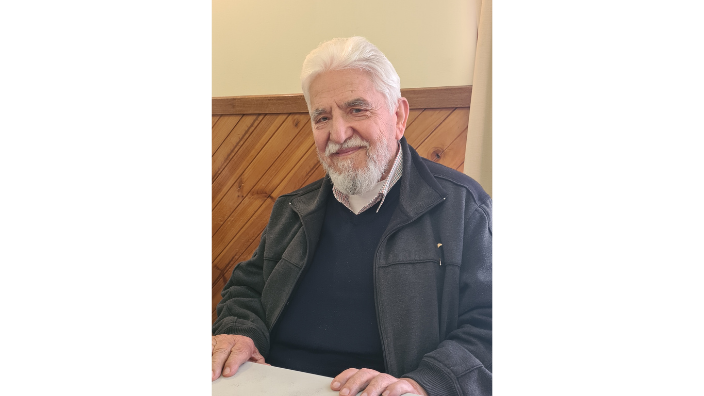
George Fifis: “We always celebrated the Greek way”
George Fifis immigrated to Australia from Aitoloakarnania in 1954.
“I was a blacksmith by trade and came to Australia with the intention to stay for only two years. I found a good job and stayed. Australia was much better than Greece back then,” Mr Fifis says and goes on to describe his difficult youth.
“Growing up in Greece, I used to blacksmith far from my village and waited for Christmas to go and visit my sisters and my mother.
“You see, my father died when I was six years old,” says Mr Fifis moved.
” Christmas however, was a happy season for the whole family. We would invite our relatives over and we’d celebrate together.
“When I came to Australia, I didn’t have my family but I had Greek friends. We’d gather and celebrate Christmas the Greek way.”
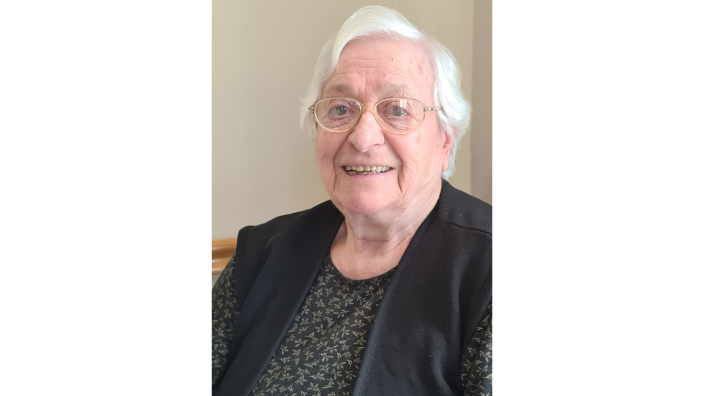
Stamatiki Athanasakou: “Young Greeks should mingle with Australians”
Stamatiki Athanasakou, originally from Arna, Laconia, came to Australia following her husband who had immigrated under a program of the then Intergovernmental Committee for European Migration (ICEM).
The Program, was initially established in 1951 to help resettle people displaced by World War II.
“He came to Australia first and later on he was allowed to invite me, for free. Because my parents had six girls, they wanted me to get married and they let me go,” says Mrs Athanasakou.
“During the first years, we would socialize with both Greeks and Australians. We followed our traditions as we would in Greece. Like Greeks do.”
Asking her for her advice to the younger generation of Greek Australians, Mrs Athanasakou urges them “to have courage, patience, to work hard and socialize with Australians as well.”
“Australians were happy to meet us and always took good care of us,” says Mrs Stamatiki, not omitting to thank Fronditha’s staff for looking after her and her friends during an especially challenging year.