Home Blog Page 1687

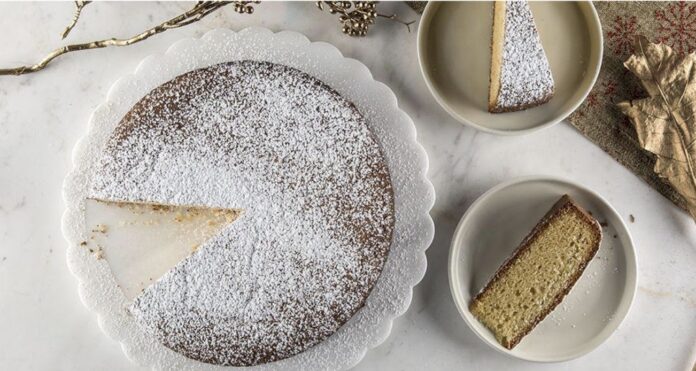
Traditional Greek Recipes: Melomakarona Cheesecake

It’s not uncommon for Greeks to make one too many melomakarona for guests, and in a year where visiting family is restricted, many Greek families will be looking at leftover plates of this delicious Greek treat.

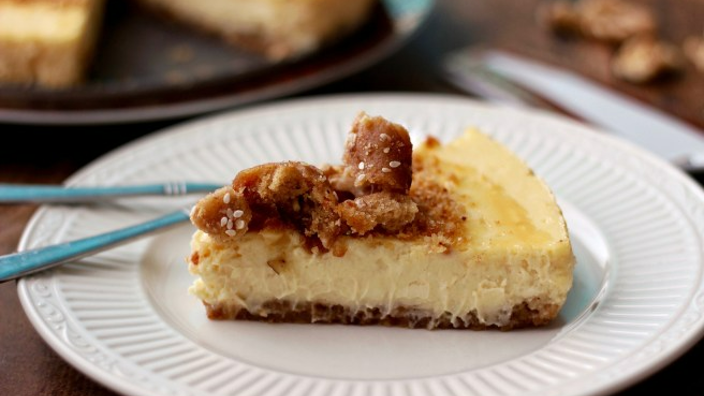
But why let it go to waste? Instead, Mia Kouppa has created a new dessert for people to fall in love with: Melomakarona cheesecake.

The dessert is a must-eat for sweet treat addicts, combining the moist texture of melomakarona with the savoury goodness of cheese.

Note: You will need about 8 – 10 melomakarona to make this cheesecake. The exact number will depend on the size of each cookie.

Melomakarona Cheesecake Recipe

Serves: 12

Time: 1hr 30mins + 4 hours to chill

Ingredients

  • 1 1/2 cups (375 ml) crumbled melomakarona
  • 1/4 cup (60 ml) melted butter
  • 3 packages of cream cheese (24 ounces or 678 grams)
  • 3 large eggs
  • 3/4 cup (180 ml) granulated white sugar
  • 1/4 cup (60 ml) honey
  • 2 melomakarona cookies, broken into bite size pieces
  • 1/4 cup (60 ml) melomakarona crumbs
  • 3 – 4 tablespoons (45 – 60 ml) walnuts
  • honey for drizzling

Directions

  • Preheat your oven to 350 degrees Fahrenheit.
  • Cut 2 large pieces of aluminum foil, larger than the bottom of the spring form pan you will be using to bake your cheesecake.  Wrap your pan tightly so that the seam between your pan bottom and the pan ring is completely and securely covered with foil.  This is because your cake will be baked in a water bath and you need to prevent water from seeping in to the cake.
  • Prepare your melomakarona crumb by placing approximately 6 – 7 honey dipped melomakarona in a food processor or blender, until you end up with a fine crumb.  Mix together with the melted butter until well combined.  Place the crumb into a 9 inch spring form pan and pat it down with your hand in order to make a compact crust.  It does not need to come up the side of the pan at all; just be sure that the bottom is completely covered, with no holes, and no areas which are thinner than others.
  • In the bowl of a stand mixer add the cream cheese.  Mix well until softened.  Add the eggs, one at a time, beating well after each addition.  Add the sugar and honey and continue to beat until well combined and fluffy.  You might find that you have round balls or pieces of cream cheese that have not been perfectly beaten into the mix.  Don’t worry about this.  The cream cheese will melt during baking and everything will be uniform and lovely.  Pour the cream cheese mixture into the pan.  Smooth the top so that it is evenly distributed over the crust.
  • Place your spring form pan in a larger pan.  Place the pans in the middle rack of your preheated oven.  Pull the rack out and fill the larger pan with about 1 – 1 1/2  inches of water.  Baking your cheesecake this way will ensure that it does not crack, and the filling will be rich and creamy.
  • Bake for 60 minutes.
  • Remove from oven.  Carefully remove the aluminum foil that was protecting your cake.  Be careful, there may be hot water in there.  Allow your cheesecake to cool in the spring form pan and then place it in the refrigerator, covered loosely, for at least 3 hours or overnight.
  • Decorate your cheesecake with the melomakarona crumb, melomakarona pieces, walnuts and honey.  Prior to serving, remove the ring of the spring form pan.

Sourced By: Mia Kouppa

‘For we are one and free’: Australian anthem changes to recognise Indigenous history

One word changed, thousand of years of history recognised.

Advance Australia Fair will change from January 1, 2021, and Australians will no longer be referred to as “young” in the national anthem.

Instead, Aussies will be “one”.

The change will see a minor tweak to the second line of the anthem.

“For we are young and free” will now be “for we are one and free”.

Change to Advance Australia Fair

Prime Minister Scott Morrison on Thursday announced that the lyric change had been long sought and finally signed off by Governor-General David Hurley.

“While Australia as a modern nation may be relatively young, our country’s story is ancient, as are the stories of the many First Nations peoples whose stewardship we rightly acknowledge and respect,” Prime Minister Scott Morrison said.

“In the spirit of unity, it is only right that we ensure our national anthem reflects this truth and shared appreciation.”

Morrison said the change also reflects the “the united effort that has always enabled us to prevail as a nation”, demonstrated particularly in 2020.

Advance Australian Fair, composed by Peter Dodds McCormick and first performed in 1878, was adopted as the national anthem after a plebiscite in 1977.

It’s not the first time the lyrics have changed.

The original version began, “Australia’s sons let us rejoice”, rather than the current, “Australians all let us rejoice”.

It also paid tribute to “gallant” Captain James Cook and his “British courage”.

Full lyrics of Advance Australia Fair

VERSE ONE

Australians all let us rejoice,

For we are one and free;

We’ve golden soil and wealth for toil;

Our home is girt by sea;

Our land abounds in nature’s gifts

Of beauty rich and rare;

In history’s page, let every stage

Advance Australia Fair.

In joyful strains then let us sing,

Advance Australia Fair.

VERSE TWO

Beneath our radiant Southern Cross

We’ll toil with hearts and hands;

To make this Commonwealth of ours

Renowned of all the lands;

For those who’ve come across the seas

We’ve boundless plains to share;

With courage let us all combine

To Advance Australia Fair.

In joyful strains then let us sing,

Advance Australia Fair.

Con Ouzounidis looking for right path to enter Olyroos squad

One of many youngsters determined to join Graham Arnold’s Olyroos Olympics squad, Con Ouzounidis is currently fighting in Everton’s U-23’s to make a good impression.

Yet, the youngster may look to break off and explore other footballing options, understanding that first-team football is crucial to be noticed by the experienced coach.

Speaking to SBS World Game, Con denounced UK claims that he will be leaving England, saying the claims are premature “and doesn’t know where they’ve come from”.

“I’m playing week-in week-out right now but I’ll sit down with my family and agent soon to see what’s the best thing to do when the window opens,” Ouzounidis told The World Game.

Con Ouzounidis. Photo: Optus Sport

“Whether or not that’s to go and get experience of first-team football (on loan), whether it’s to move on (permanently) or whether it’s to stay at Everton, I don’t know.

“These are things I’ll talk to the club about and take it from there really.

“I’d love to break into that Olympic Games squad and if I’m playing first-team football it gives me a better chance of achieving that.

“It definitely factors into my thinking.”

Growing up in Sydney’s inner-west, Con has been backed previously by Australian great Tim Cahill. Whilst eligible for Greece, through his parents, Con hopes to follow in his mentors footsteps and play for Australia.

Sourced By: SBS World Game

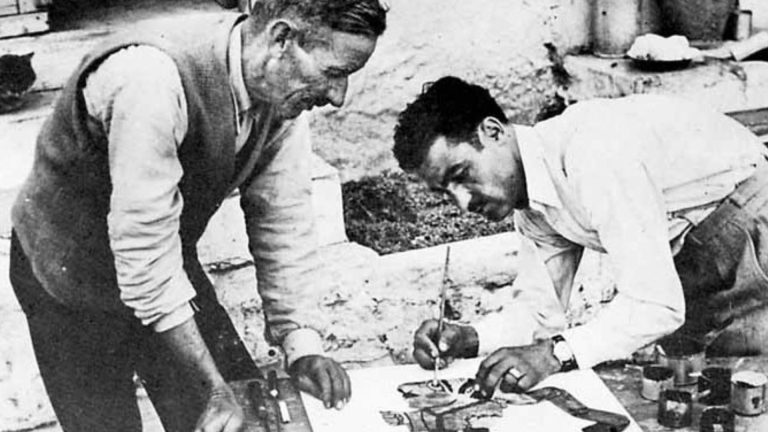
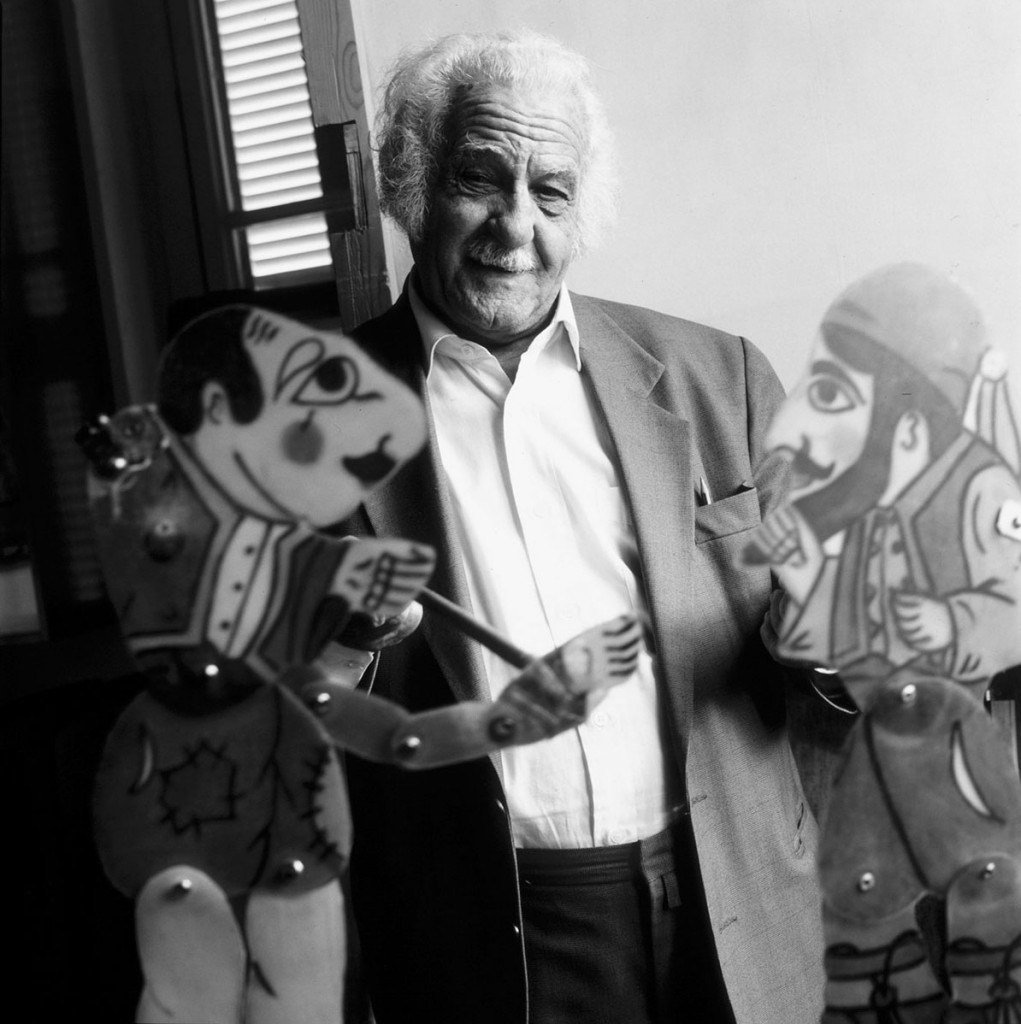
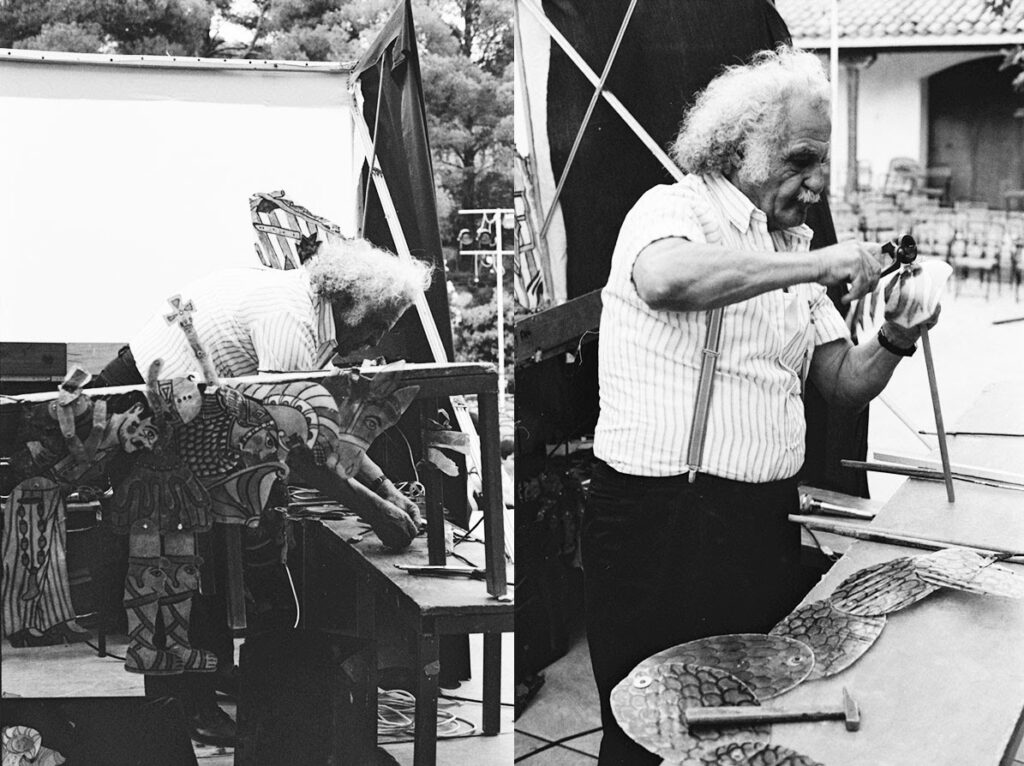
Remembering Shadow theatre genius Evgenios Spatharis

Evgenios Spatharis was the leading representative of Shadow Theatre in Greece. He was a genuine folk artist, who kept the tradition of Karagiozis alive and attempted to teach it to younger pupils.

Evgenios was born on January 2, 1924 in Kifissia, Attica and was the son and successor of the great karaoke player Sotiris Spatharis (1892-1974).

His career began in 1942 and since then he toured and gave performances in theatres and cinemas in Greece. In 1962 he recorded every classic performance of Karagiozis in ‘Columbia’, which were all released on records. In 1966 he was one of the first collaborators of the Experimental Television Station of EIR (ERT), which lasted until 1992.

His action in the field of theatre is considered remarkable, directing or staging with great success the performances of ‘Alexander the Great’, with the Greek Dance Drama (1950) and Sofia Vembo (1954). Spatharis also had critical involvement in ‘The Journey’ by George Themelis (1965), ‘Karagiozis Dictator’ by George Giannakopoulos (1969), and ‘Our big circus’ by Iakovos Kampanellis (1972).

In 2001, in collaboration with musicians Ludovico of Anogia and Psarantoni, presenting in Greece and abroad ‘Erotokritos’ by Vicenza Kornaros. In the same year, the Art Theatre staged the play ‘Wealth’ by Aristophanes, starring Evgenios Spatharis. According to him, his presence in the theatre of Epidaurus was the most important stage of his life. 

In addition to his huge accomplishments in the field of shadow theatre, Evgenios Spatharis was a distinguished painter, with more than 50 solo and group exhibitions in Greece and abroad. In his artwork he strongly preserved the main features of folk painting, connecting them with unprecedented realism and great colour vibrancy.

Photo: Ellines.com

Evgenios Spatharis was honoured with commemorative awards, both in Greece and abroad, for his important and long-standing contribution to the shadow theatre. In 1980, at the Ithaca Festival, he received awards for best director, set design and costume design for the play ‘O Tilalis; by Michalis Bourboulis.

In February 2007, the Ministry of Culture honoured him for his valuable contribution to art and Greek folk tradition, awarding him a commemorative plaque and organising an event dedicated to his sixty-year career.

Evgenios Spatharis died on May 9, 2009, at the age of 85. 

Sourced By: San Simera

Chairman of the AAFC, Nick Galatas, discusses what’s planned for 2021

The Chairman of the Australian Association of Football Clubs (AAFC), Nick Galatas, has spoken exclusively to The Greek Herald about the association’s plans for 2021.

Mr Galatas lists these four initiatives:

  1. Member Federations across Australia relating first to the pausing of football with COVID in March and then efforts to resume across Australia with different results based on government attitude and COVID in each state;
  2. Consulting Football Federation Australia (now Football Australia) on the XI Principles draft before the final document;
  3. Working on the national NPL review initiated by FA before it was suspended by COVID;
  4. Working on the National Second Division, including: (a) Convening over 60 interested NPL Clubs nationally; (b) Establishing a Partner Group of more than 30 NPL Clubs nationally to develop and represent the AAFC position on the NSD to be introduced by FA; (c) Developing the position through detailed meetings of subcommittees of these clubs, appointing a Consultant MI Consultants to assist with the preparation of our report; and (d) Finalising a preliminary report to be released in January before our final report to follow in March/April.

Mr Galatas says that now the “unbundling” of the A League from FA is complete, “we expect FA to move to implement a National Second Division to start as soon as possible.”

“It is a measure contained in the FA XI Principles. We will work with FA to introduce the best possible NSD as soon as possible,” Mr Galatas tells The Greek Herald.

“It has been a very busy and intense year involving a lot of work by our volunteer board and conducted remotely in very challenging circumstances and without the pleasure of watching our teams play, mixing with our friends, sharing great food and a drink at the fantastic grounds of our passionate clubs.”

6 New Year’s traditions from cultures around the world

Happy New Year from The Greek Herald! Whether it’s sharing a meal with family and friends or throwing old furniture out the window, many customary, luck-filled New Year’s traditions derive from a unique origin. 

We take you through our top 10 traditions to mark the beginning of the new year.

1. Festival of Saint Basil (Greece):

Each year in Greece and countries where Greek diaspora live, there are a number of celebrations that take place as a means to attract luck and bring prosperity. An onion, for example, is traditionally hung on the door of homes as a symbol of rebirth and on New Year’s Day, parents wake children by tapping them on the head with the onion.

Another customary Greek tradition is consuming Vasilopita, or Saint Basil’s cake. This cake is baked with a silver or gold coin inside and whoever finds the coin in their slice is considered especially lucky in the coming year.

READ MORE: Traditional Greek Recipes: Vasilopita.

Vasilopita, or Saint Basil’s cake. Photo: invaluable.com.

2. Wearing White (Brazil):

In Brazil, the new year is regarded as a time to reflect upon the past and make new resolutions for the coming year. Everyone wears white because the color signifies luck, prosperity, and is meant to ward off bad spirits.

As the tradition goes, revelers gather on the beaches donning white clothing where they jump seven waves—a lucky number in Brazilian culture—for good fortune and throw flowers into the water as an offering to Lemanjá, the goddess of the sea.

3. Carrying Suitcases (Colombia):

Partygoers carry empty suitcases at midnight in hopes of inducing a year rife with travel. They also bear money in hand to attract financial security and stability in the coming year. Lentils are believed to bring luck and affluence, so many bake them into their rice or carry them in their pockets.

Colombians carry empty suitcases at midnight in hopes of inducing a year rife with travel. Photo: invaluable.com.

4. Smashing Plates (Denmark):

One of the most popular New Year’s traditions in Denmark involves smashing plates and old dishes. Danish residents save their unused dinnerware and affectionately shatter them against doors of their families and friends as a way to ward off bad spirits.

Other traditions include jumping off chairs at midnight to “leap” into the new year and consuming Kransekage, a wreath-shaped cake created using marzipan rings stacked on top of each other with a bottle of wine in the center. The cake is decorated with ornaments and flags.

5. Consuming Grapes (Spain):

The most prominent New Year’s tradition in Spain involves consuming grapes. Each year, Spaniards partake in the annual tradition of eating one grape for every toll of the clock at midnight. The twelve grapes consumed are meant to represent good luck for each month of the year. Some even prepare their grapes by peeling and seeding beforehand to ensure they’re easy to consume.

The most prominent New Year’s tradition in Spain involves consuming grapes. Photo: invaluable.com.

The tradition is believed to have originated at the turn of the 20th century in the southern part of the country where makers of wine worked to boost demand for grapes in the winter.

6. Dropping Ice Cream (Switzerland):

In celebration of the New Year, the Swiss channel good luck, wealth and abundance by dropping a dollop of ice cream on the floor at midnight. They also line the streets in colorful costumes and perform symbolic ceremonies intended to chase away negative spirits.

Source: invaluable.com.

Insight or Perspective: If we lose the language we lose everything!

Part 9

By Eleni Elefterias

How do we select a good children’s book for our bilingual child?

There are lots of Greek and English bilingual books around and most of them are not very good.

Most are written by people who have no idea about language acquisition of toddlers and young children learning a second language. 

But the greatest issue is that either the book is overloaded with text for the age group it is geared towards or the book appears to be too babyish for the age group that could actually read it. 

The topic of the book is another big issue. It must be appropriate to the readership. A book about baby animals and their mothers may be more suited to two year olds, whereas a trip to the zoo with a character and storyline may be suitable for an older reader. An excursion to the cinema to watch a dinosaur movie may be inappropriate for a toddler but great for primary aged child, however, a young adult, over 12 years old, may be more interested in their favourite music band or an actor. 

Sometimes we think it is better to give young children word books with vocabulary that they are somehow supposed to devour like sponges. Many of these are board books and most always include the same simple vocabulary each time. An Alphabet book is just like this. After a while it is boring. There needs to be something more. 

Often, we underestimate out children’s ability to learn the correct word, which we perceive as more difficult, and instead we teach them nonsense words. For example, “Θέλεις μαμ-μαμ” instead of “Would you like to eat?” or “Do you want some food?” 

Children need good books whether in Greek or bilingual.

More on language acquisition and what makes a good bilingual book next week

*Eleni Elefterias-Kostakidis is a teacher of Modern Greek and University lecturer. 

Read Eleni Elefterias’ column ‘Insight or Perspective’ in Greek, every Saturday in The Greek Herald’s print edition or get your subscription here.

Greek nurse turns home into makeshift ICU to care for family with COVID-19

0

When Gabriel Tachtatzoglou’s wife, both her parents and her brother tested positive for COVID-19 he decided to take matters into his own hands.

Tachtatzoglou had to quarantine and could not go to work once his relatives tested positive for the virus. But as a critical care nurse, he decided to put his ICU experience to use by looking after them himself.

That decision, his family says, probably saved their lives.

“If we had gone to the hospital, I don’t know where we would have ended up,” Polychoni Stergiou, the nurse’s 64-year-old mother-in-law, told the Associated Press. “That didn’t happen, thanks to my son-in-law.”

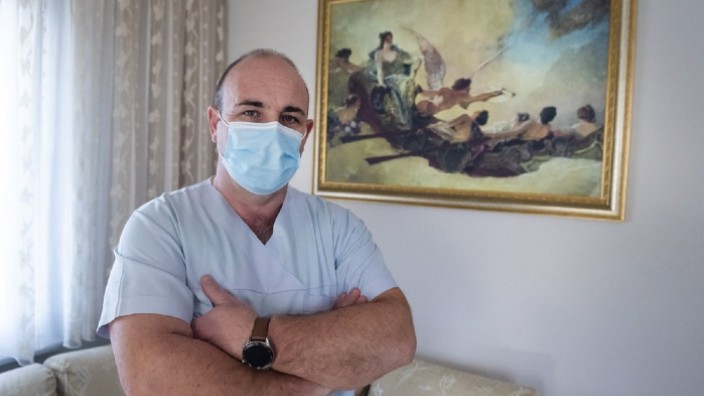
In this Saturday, December 12, 2020 photo, Gabriel Tachtatzoglou poses at his home in Agios Athanassios, outside Thessaloniki city, northern Greece. Photo: AP Photo/Giannis Papanikos.

Tachtatzoglou set up a makeshift ICU in the downstairs apartment of his family’s two-story home in the village of Agios Athanasios, located about 30 kilometers from the city of Thessaloniki. He rented, borrowed and modified the monitors, oxygen delivery machines and other equipment his loved ones might need.

READ MORE: Army field hospital set up in Thessaloniki as Greece’s COVID deaths hit record high.

“I’ve been working in the intensive care ward for 20 years, and I didn’t want to put my in-laws through the psychological strain of separation. Plus, there was already a lot of pressure on the health service,” Tachtatzoglou told the AP in an interview.

Tachtatzoglou says he remained in daily contact with doctors at Papageorgiou Hospital, the overwhelmed facility where he works, while caring for his sick family members, and that he would have hospitalised any of the four if they needed to be intubated.

“I looked after them up until the point where it would pose no danger,” he said. “At all times, I was ready to move them to the hospital if needed.”

Greece, which has a population of 10.7 million, spent the first phase of the coronavirus pandemic with some of the lowest infection rates in Europe. As cold weather set in, the number of confirmed cases and virus-related deaths began doubling.

READ MORE: Greeks to spend Christmas in lockdown after restrictions extended until January 7.

With ICU wards in Thessaloniki pushed to capacity, COVID-19 patients deemed too sick to a wait for a bed were taken to hospitals in other parts of Greece. Meanwhile, the situation for Tachtatzoglou’s family deteriorated as his wife and in-laws fell ill in alarming succession.

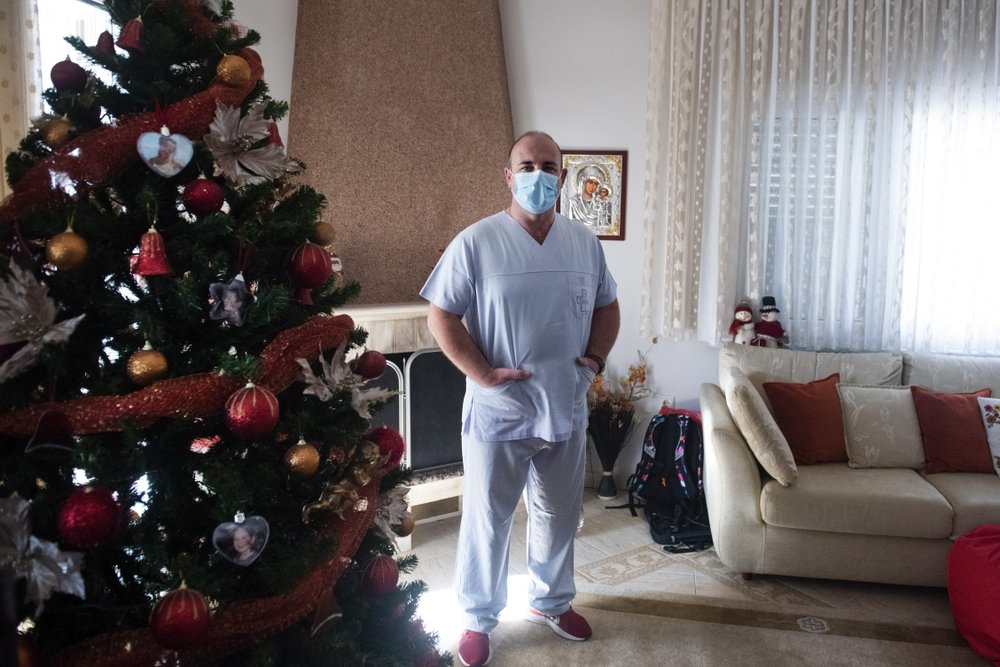
In this Saturday, December 12, 2020 photo, Gabriel Tachtatzoglou poses at his home in Agios Athanassios, outside Thessaloniki city, northern Greece. Photo: AP Photo/Giannis Papanikos.

Tachtatzoglou said he agonised constantly over whether to transfer his relatives to hospitals in Thessaloniki, knowing it would mean they would not be able to see each other and might get moved to a hospitals farther away.

“We were reduced to tears. There were times when I was desperate, and I was really afraid I would lose them,” the nurse said.

They all pulled through, although Tachtatzoglou eventually became infected with the virus himself.

“I took precautions when I treated them, but I didn’t have the personal protection gear you find in hospitals,” he said. “That’s probably how I got sick.”

Source: Costas Kantouris / AP News.

Greek Australian, Christos Alefantis, recognised for his work supporting the vulnerable

The Gastronomos Quality Awards were held on December 21 and this time, a Greek Australian was recognised for his work in supporting vulnerable people in Greece.

Christos Alefantis, who is the founder and editor-in-chief of street magazine Shedia, was given an ‘Honorary Award’ at the virtual ceremony.

He was recognised for Schedia Home, a restaurant he founded in downtown Athens that also offers support to vulnerable residents.

The Gastronomos Quality Awards were held for the 13th year on December 21. Hosts Lambros Fisfis and Dimitris Makalias. Photo: Nikos Karanikolas.

“The objective of Schedia Home is to energise, empower, train and create job opportunities for the poorest of the poor of this country,” Alefantis told Ekathimerini in 2019 when the building first opened.

The building is wheelchair-accessible, while the menu is also available on audio for visually impaired patrons. It also makes limited use of plastic and uses organic milk, eggs and chicken in its food preparation.

Schedia Home, founded by Alefantis, is a restaurant in downtown Athens that also offers support to vulnerable residents.

This year’s Gastronomos awards were aimed at showcasing the “Little Heroes,” the generation that dared to create during the financial crisis and succeeded with whatever means they had at their disposal.

Among the list of winners were Theodoros Koutsotheodoris, who claimed an ‘Olive Oil Production Award,’ and Vassilis Koutroulakis, who won the ‘Honey Production Award.’

Kostas Voutsas: A renowned actor, writer and director in Greece

By Georgene Dilernia and Victoria Loutas.

Kostas Voutsas was a famous Greek actor, director and writer. Known for his cinematic work during the ‘Golden Era’ of Greek commercial cinema, Voutsas touched the hearts of many Greeks through his performances.

Let’s take a look into the life of this great actor and see what he accomplished during his career.

Early Life:

Voutsas was born in Vyronas, Athens in 1931 to a refugee family from Epivates. They later moved to Thessaloniki in 1932. During his youth, Voutsas studied drama at the Drama School of the Macedonian Conservatory of Thessaloniki and made his stage and screen debut in 1953.

Acting Career:

Voutsas was a major actor in Finos Films and went on to star in about 60 movies, mostly comedies and musicals of the ‘golden era’ of Greek commercial cinema.

In 1961, his breakthrough came when the Greek film director, Giannis Dalianidis, gave him a leading role in his youth melodrama O Katiforos. He soon became one of the best and most popular comic actors of his generation.

He received many lifetime achievement awards including at the Thessaloniki International Film Festival and more.

Kostas Voutsas with member of The Greek Herald team Georgia Patsalides at The Greek Herald presses in Glebe.

Personal Life and Death:

Voutsas married three times during his life. First to Erika Broyer in 1958, then to Theano Papaspyrou in 1975 and last to Aliki Katsavou in 2016.

Voutsas also had four children during his life span.

On February 26, 2020, Voutsas passed away at the age of 88 after being in the Intensive Care Unit of Attikon University Hospital in Athens with lung problems.