In 2014, Emanuel Tsardoulias passed away after a battle with cancer, leaving behind a loving wife, Zoi Tsardoulias, and two beautiful twin boys, Stavros and Dimitri.
Mr Tsardoulias also left behind an impressive legacy in public life, having been a Marrickville councillor of six years and a one-time Deputy Mayor.
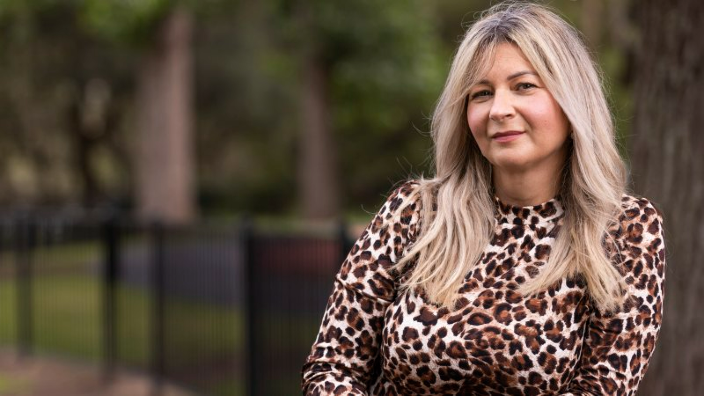
Now, in a touching turn of events, Mr Tsardoulias’ wife Zoi has followed in his footsteps and will take a seat at her first meeting as an Inner West councillor this week.
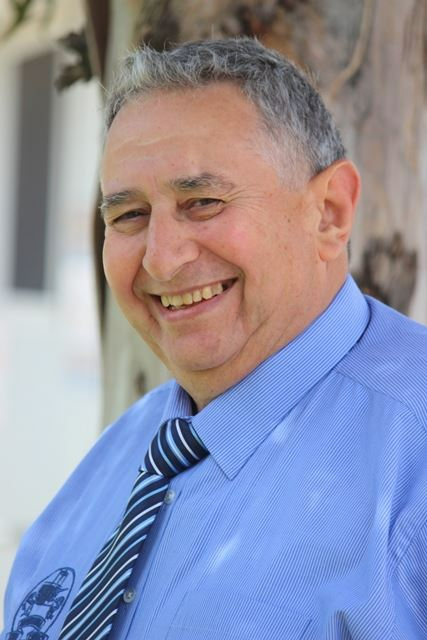
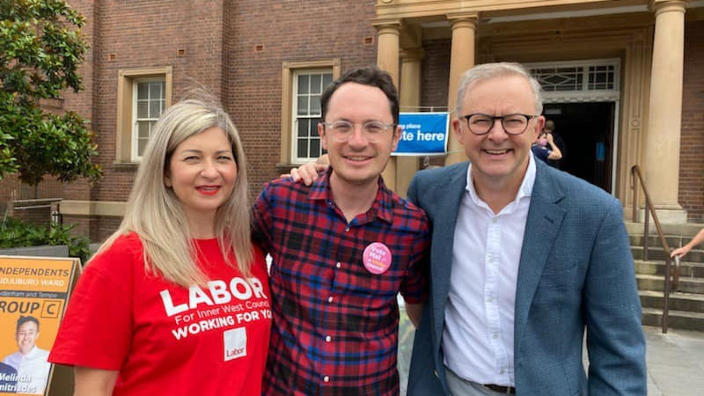
Emanuel Tsardoulias (third from left) passed away from cancer in 2014. He is pictured here with Labor Leader, Anthony Albanese (second from left).
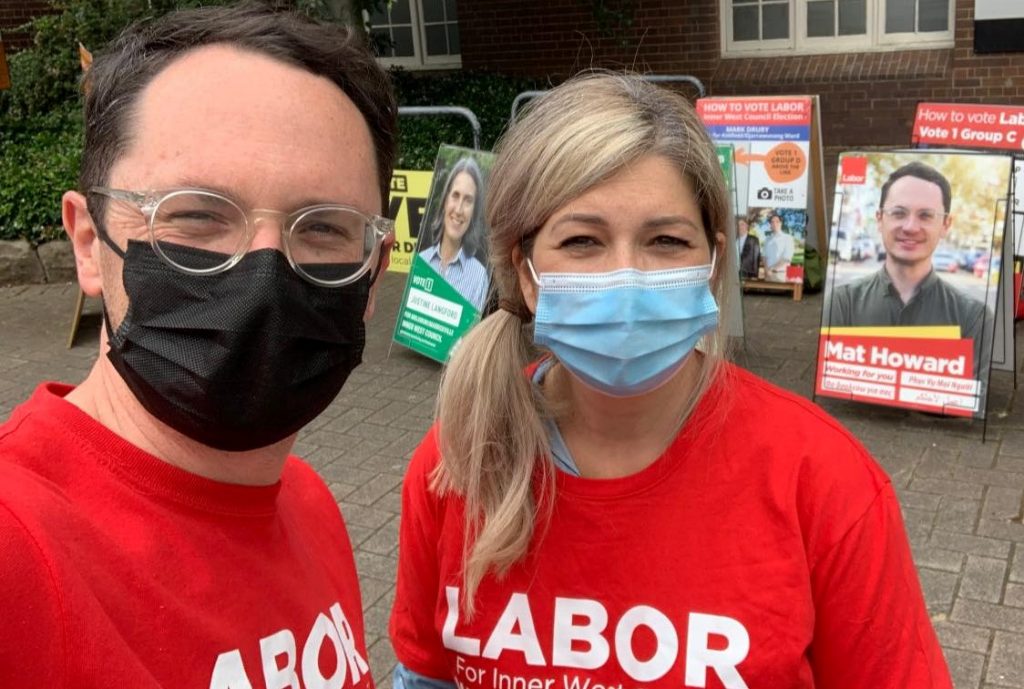
Zoi was elected to the council’s Marrickville ward on the second spot of colleague Mat Howard’s ticket and helped the Labor Party land a majority.
In an interview with The Sydney Morning Herald, Zoi says her late husband would have been her “biggest support.”
“Emanuel approached every task with enthusiasm, optimism and commitment and I believe I can also do the same and honour his legacy,” she told the newspaper.
Zoi was elected to the council’s Marrickville ward on the second spot of colleague Mat Howard’s (left) ticket and helped the Labor Party land a majority.
One of Zoi’s key aims while on Council will be early learning centres, as she is currently the sole carer of Stavros and Dimitri, who have autism, and she believes the services have offered her much-needed support.
“I just thought I needed to give something back to the community… I’ll give it a crack,” she concluded.
Tributes have been pouring in from across the Greek political world to honour former President of the Hellenic Republic, Karolos Papoulias, after his passing on Sunday at the age of 92.
Papoulias served in the largely ceremonial office for two terms, from 2005 to 2015. One of the founding members of the socialist PASOK party, he was its foreign minister in 1985-89 and 1993-96, and served as MP for his native Ioannina for 26 years.
Greek Prime Minister, Kyriakos Mitsotakis, was one of the first to release a statement following Papoulias’ death, calling him a “visionary minister… and dedicated patriot.”
Η πατρίδα αποχαιρετά έναν μεγάλο Έλληνα. Γιατί ο Κάρολος Παπούλιας την υπηρέτησε πιστά σε όλη τη διάρκεια της ζωής του. Για την απώλειά του εκφράζω τη βαθιά μου θλίψη. Στην οικογένειά του, στους αγαπημένους του Ηπειρώτες, στους αμέτρητους φίλους του. https://t.co/zrLjIqFAE0pic.twitter.com/8bvJx4ndBZ
“Greeks bow their head in respect to the responsible President… They hold up the decades of his life as an exemplary journey of a true public servant. They are inspired by his message of unity and dignity that he will eternally stand for,” Mitsotakis wrote in his statement.
Opposition leader, Alexis Tsipras, said Papoulias will be commemorated “respectfully and with deep emotion as a politician and a President who brought together what is true with what is patriotic.”
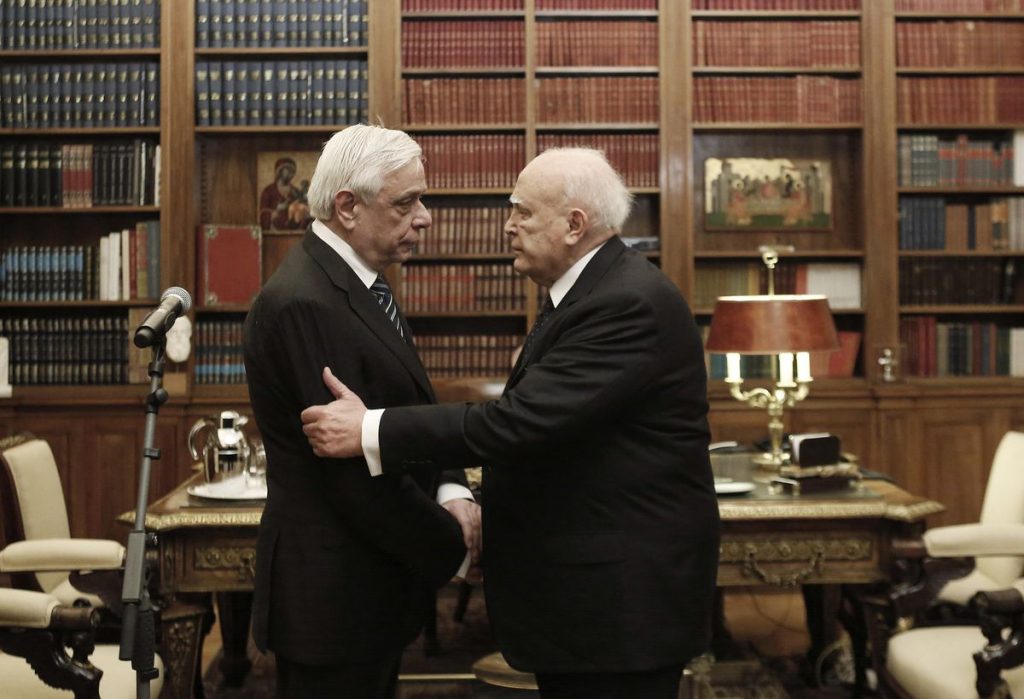
Papoulias’ successor and former President, Prokopis Pavlopoulos, also paid his respects and said: “He served Greek public life in many ways, especially as President of the Republic, with a high feeling of patriotism, selfless dedication, and impeccable morals.”
Papoulias (R) shakes hands with Pavlopoulos. Photo: Reuters.
Current President, Katerina Sakellaropoulou, said Papoulias “vigorously defended social cohesion and national unity,” whilst noting his role in the fight against WWII Nazi occupation and the 1967-74 junta.
The new leader of the Movement for Change party, Nikos Androulakis, also added to the tributes, praising Papoulias’ long tenure with the party and calling him “a visionary of peace and humanism, a tireless defender of democracy.”
Παρέμεινε μέχρι τέλους ένας οραματιστής της ειρήνης και του ανθρωπισμού, ένας ακούραστος υπερασπιστής της Δημοκρατίας. Θα τον θυμόμαστε με σεβασμό. Τα ειλικρινή μου συλλυπητήρια στους οικείους του
Papoulias’ funeral service will be held at the Church of Agios Spyridonas in Pangrati in Athens on Wednesday and he will be buried in Ioannina on Thursday.
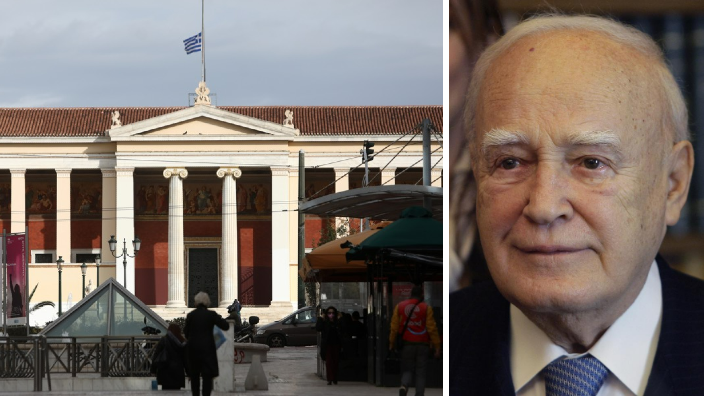
Greek flags also flew at half-mast over Athens University and other public buildings on Monday, after three days of mourning were declared in Greece over Papoulias’ death.
Greece on Tuesday announced the highest ever number of new coronavirus infections with a whopping 21,657 cases.
This is the first time authorities have reported a five-digit number. The previous record was set just one day before, with 9,284 new cases.
The National Organisation for Public Health (EODY) also announced 60 deaths, down from 66 on the previous day. There were 629 patients on ventilators.
Greece sets pandemic record for new cases with whopping 21,657.
These record cases come as the Greek government announced new restrictions on Monday to contain the spread of the Omicron variant.
The restrictions, which will be in force from January 3-16, include entertainment venues having to close by midnight and half of the employees in the public and public sectors having to work from home.
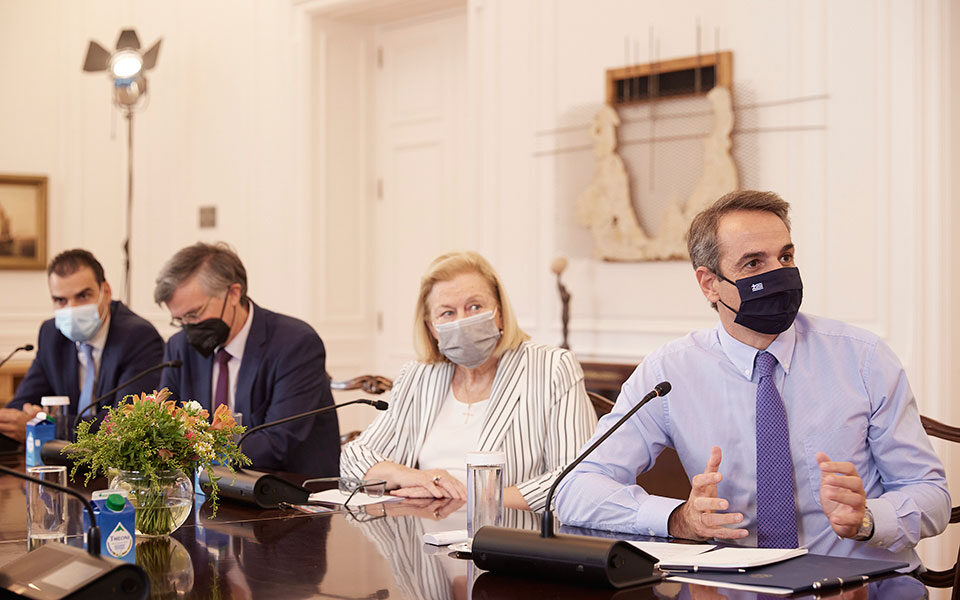
Greek Prime Minister, Kyriakos Mitsotakis, will chair a meeting on Wednesday morning to discuss whether the implementation of these new measures should be sped up.
Mitsotakis will chair a coronavirus meeting on Wednesday.
But this hasn’t stopped Mitsotakis, who is currently on holiday, from coming under fire by the Opposition leader, Alexis Tsipras, over the weekend.
Mr Tsipras accused the government and Mitsotakis in particular of ignoring calls from the opposition and from experts for measures earlier to stem the spread of the virus.
Με διπλασιασμό των κρουσμάτων σε μία μέρα, ο κ.Μητσοτάκης δεν μπορεί να συνεχίζει αμέριμνος τις διακοπές του. Να επιστρέψει σήμερα κιόλας, να αφήσει τις ανοησίες για μεταχρονολογημένα μέτρα και να λάβει άμεσα τα ουσιαστικά μέτρα που τόσο καιρό ζητάμε και εμείς και οι επιστήμονες.
“The only person who is not outraged by the government’s incredible incompetence is Mr Mitsotakis himself, who continues to be on vacation, while the country is on the brink,” a statement by the SYRIZA party said.
Since the start of the pandemic, there have been 1,105,885 confirmed coronavirus cases in Greece, with 20,557 fatalities.
What a year for Greeks in sport! From an NBA champion to a Greek Australian lightweight king, Greeks made their mark on the sporting scene in 2021.
The Greek Herald has ranked the top seven Greek athletes of 2021!
#7 – Marcus Stoinis
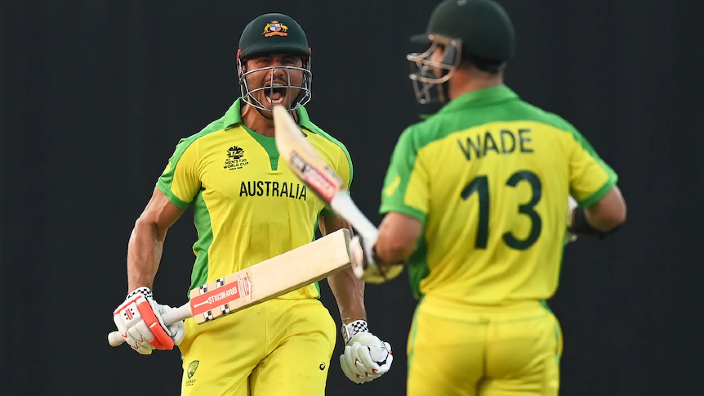
Not even Marcus Stoinis himself could have predicted the incredible year he would have. The Greek Australian cricketer helped Australia secure their first-ever T20 World Cup title, shining in the tournament’s opener against South Africa and in Australia’s semi-final against Pakistan.
Stoinis also continued to impress on the BBL stage, hitting 443 runs of 326 balls across 16 matches between the end of 2020 and late 2021.
Marcus Stoinis steered Australia home against South Africa. Photo: Indranil Mukherjee AFP.
#6 – Eleftherios Petrounias
The lack of competitions meant Greeks rarely saw Eleftherios Petrounias show his artistic talents on the world stage, but the gymnast still managed to make his mark on 2021.
Petrounias earned a bronze at the 2020 Tokyo Olympics, also carrying the flag in the opening ceremony alongside Anna Korakaki.
#5 – Anna Ntountounaki
Anna Ntountounaki made history for Greece in the Budapest European Championships, becoming the first Greek woman to win a gold medal in swimming at the tournament.
Claiming a joint-gold with France’s Marie Wattel, who both hit a 57.37, she drastically improved upon her 5th place finish back in 2018.
At the 2020 Summer Olympics she finished 9th, achieving a new national record with a time of 57.25 seconds.
#4 – Maria Sakkari
Maria Sakkari’s ranking at the end of 2020: 22 Maria Sakkari’s ranking at the end of 2021: 6
If that doesn’t show her growth in 2021, then we’re not sure what will. Maria Sakkari had a meteoric rise in women’s tennis this year, reaching a WTA singles final and becoming the first female Greek tennis player to break into the world’s top 10.
Sakkari also became the first Greek woman to reach a Grand Slam semi-final, achieving the feat both at the Roland Garros and US Open.
#3 – Stefanos Tsitsipas
It’s hard to believe Stefanos Tsitsipas is only 23-years-old after looking at what he’s accomplished in the last few years. In 2021, the accolades kept coming with his first Masters 1000 title at the Monte-Carlo Masters.
The Greek tennis sensation made history at the French Open, becoming the first Greek player in history to reach a Grand Slam final. Despite losing to Novak Djokovic, he rose to a career-high world ranking of No. 3.
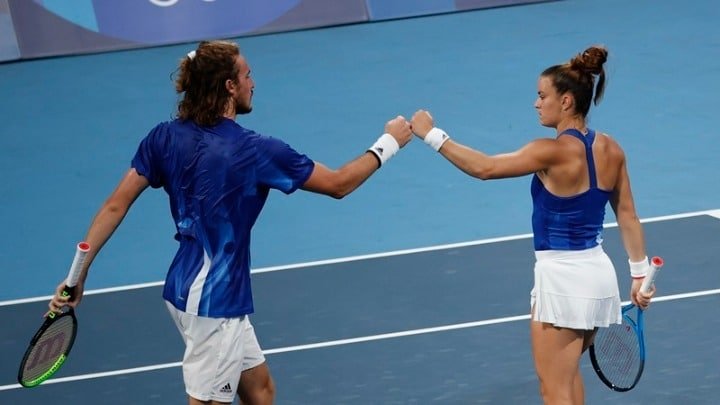
Stefanos Tsitsipas and Maria Sakkari won in a mixed doubles tennis match at the Tokyo Olympics against the pair representing Canada on Wednesday. Credit: AMNA
#2 – Giannis Antetokounmpo
The Greek Freak would be on cloud nine after the year he’s just had. From having a baby to winning his second-straight MVP award to, most importantly, helping the Milwaukee Bucks win the 2020/21 NBA championship.
Scoring 50 points in Game 6 against the Phoenix Suns (truly, what a freak), the Greek star practically carried his team to their first championship in 50 years, also becoming the youngest player since Kawhi Leonard in 2014 to be named Finals MVP.
Giannis Antetokounmpo celebrates after the Milwaukee Bucks defeated the Phoenix Suns to win the NBA championship [Paul Sancya/AP Photo]
#1 – George Kambosos Jr.
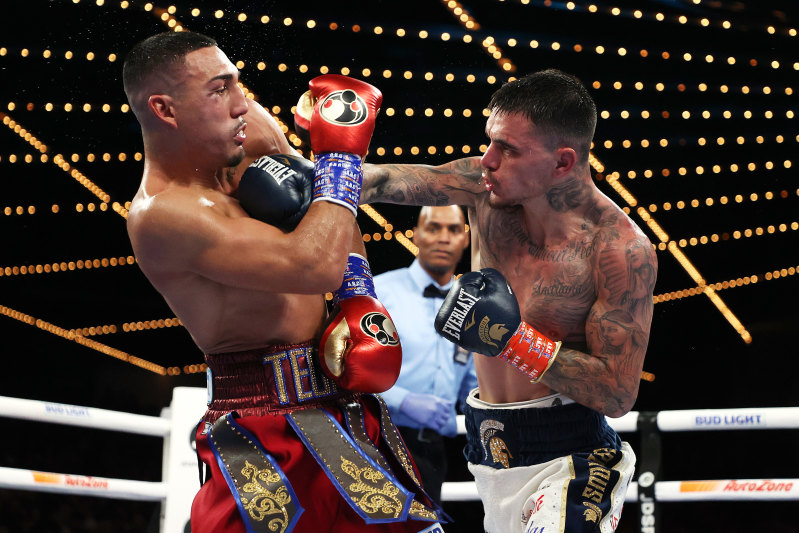
Just when the year was wrapping up, and all Greek sporting achievements seemed accomplished, into the ring stepped George Kambosos Jr. In a high-stakes boxing match between himself and Teófimo López, where all the odds were against the ‘ferocious’ Greek Australian, Kambosos made history.
Kambosos defeated López to become the new unified lightweight world champion, instantly becoming a boxing legend in both Australia and Greece.
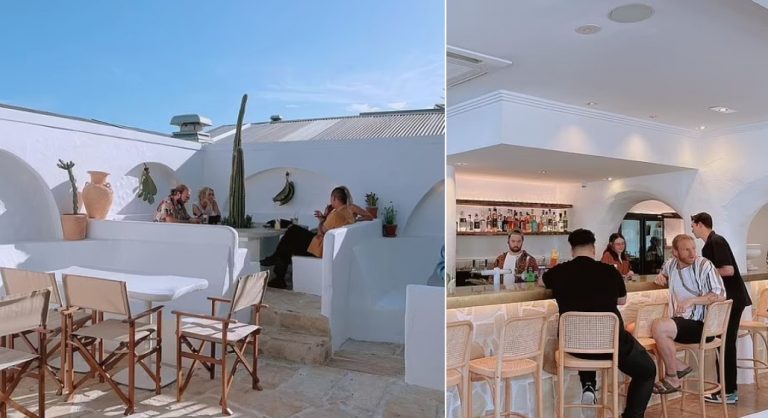
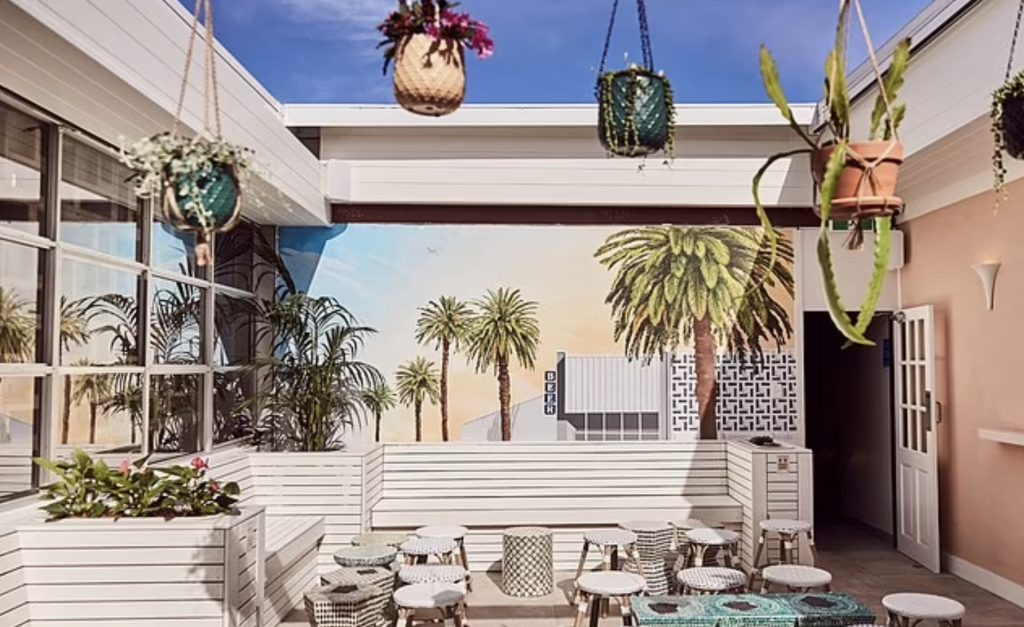
A incredible Mediterranean-style rooftop bar has brought Santorini to Melbourne to satisfy those dreaming of a Greek holiday.
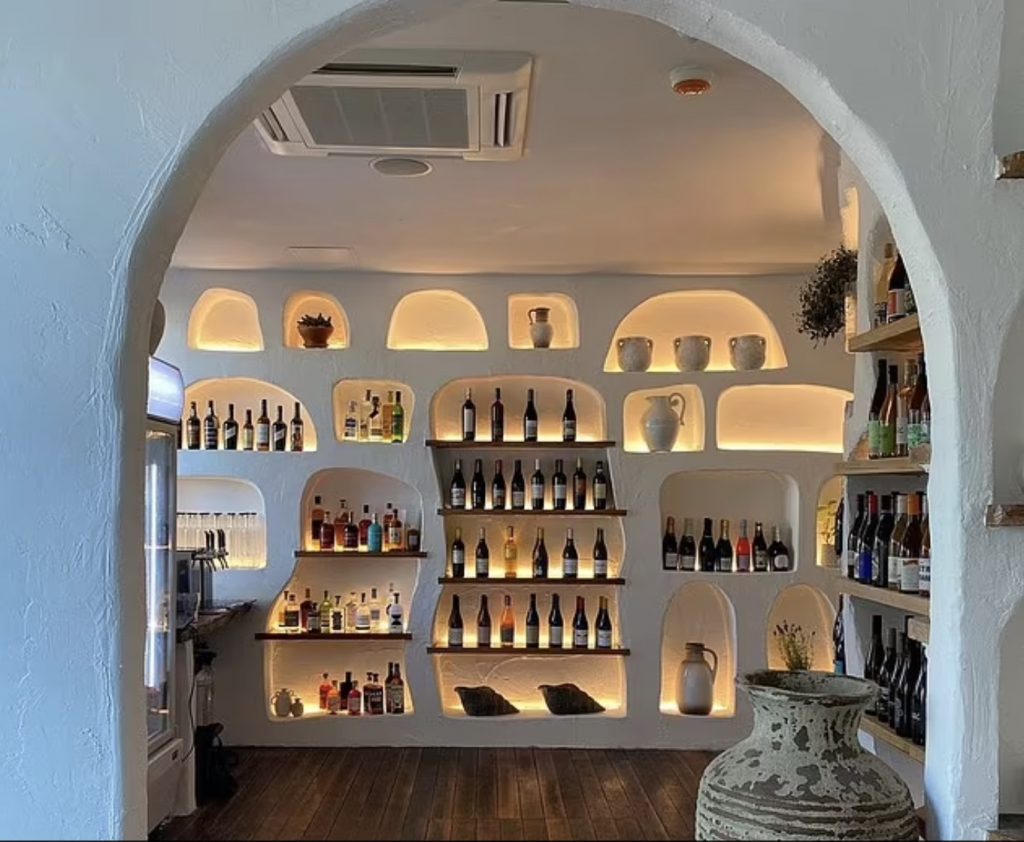
The Golden Fleece has just opened in South Yarra and features a stunning fit out to make you feel like you’re on a Mediterranean holiday with white rendered walls, colourful mosaic details and curved archways decorated with ceramic pots and cacti.
Serving a range of wines, beers and signature cocktails, the Golden Fleece features two chic floors of dining space with a rooftop terrace on the upper level and its own onsite bottle shop.
The bottle shop will have a subscription service where you can order your favourite wines, cocktails and beers delivered to your door each month.
The onsite bottle shop will have a subscription service where you can order your favourite wines, cocktails and beers delivered to your door each month.
Guests can order from the Greek-inspired menu of eclectic pizzas, fresh pastas, and a tapas menu including saganaki, salt and pepper calamari, white anchovies, arancini, house olives, bread, and dips.
Isaac Constantine and Zachary Riggs who foundered the Chapel Street dive bar, Two Wrongs, are the brains behind the new Greek eatery.
The new venue is set to host live music and DJs, collaborative events, art gallery showings and more.
Earlier this year, a Palm Spring-style bar opened up on the rooftop of one of Sydney’s trendiest breweries.
Perched atop the warehouse taproom of Philter Brewing, Marrickville Springs is a pastel-coloured oasis inspired by the iconic desert resort of Palm Springs.
Perched atop the warehouse taproom of Philter Brewing, Marrickville Springs is a pastel-coloured oasis complete with a white breezeblock cocktail bar, custom neon lighting and a 10-metre retractable roof that makes the space usable all year round.
Philter co-founder Stefan Constantoulas describes his latest venture as an ‘oasis in the middle of the city’ where drinkers can enjoy a menu that includes the brewery’s award-winning XPA, classic cocktails and a polarising craft beer slushie.
‘If you think of Palm Springs as an oasis in the middle of the desert, Marrickville Springs is like an oasis in the middle of the city,’ Mr Constantoulas told Broadsheet.
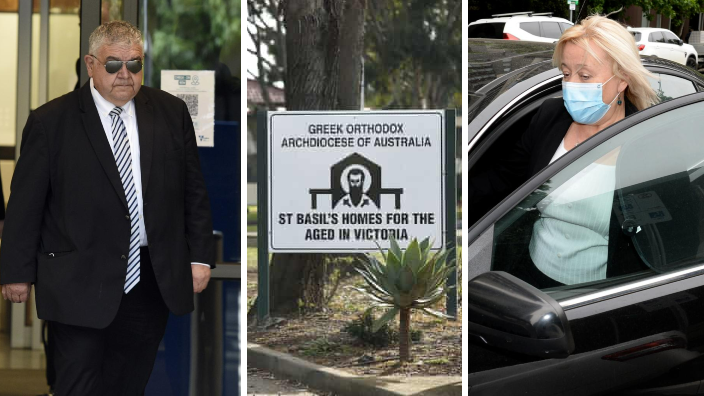
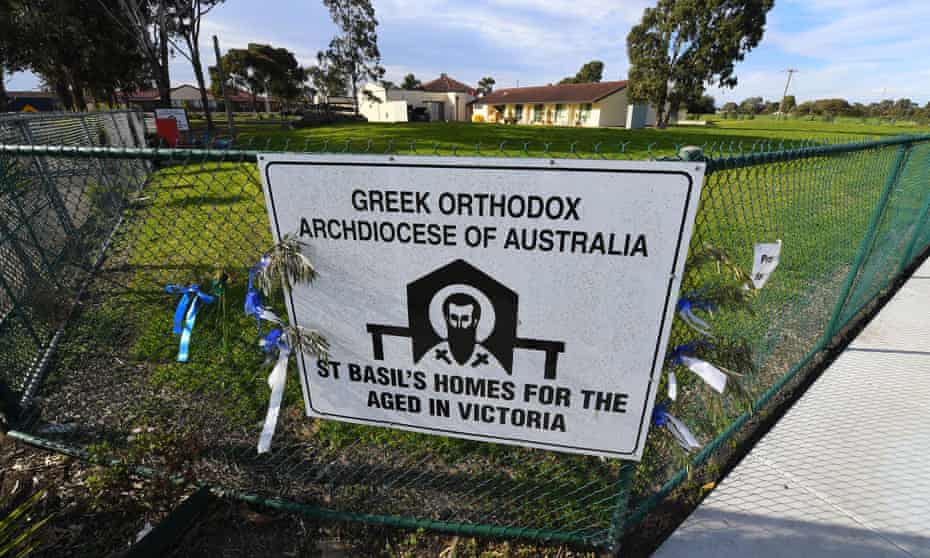
Two managers at St Basil’s Homes for the Aged in Fawkner, where 50 residents died during a coronavirus outbreak last year, have been directed by State Coroner John Cain to give evidence at an inquest into the deaths, The Agereports.
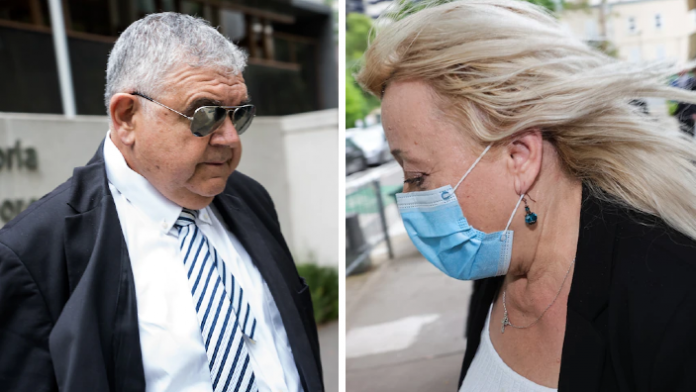
Former chairman, Kon Kontis, and the home’s nursing director, Vicky Kos, have so far refused to give detailed evidence to investigators or to a coronial inquest examining the deaths of 50 residents at the aged care facility in 2020.
Last week, a lawyer for the pair argued they risked self-incrimination if they took to the stand at the inquest.
Under the Coroners Act, a witness may decline to give evidence if it is likely to incriminate them. However, the coroner can overrule this if it is in the interests of justice for the person to be forced to give evidence.
Judge Cain said this was the case for Mr Kontis and Ms Kos, who played central roles in the management of St Basil’s Fawkner during the outbreak and are the only two people to not yet give evidence to the inquest.
“… they played important roles in preparing for a possible outbreak of COVID-19 at the facility and responding to such an outbreak once it commenced on 9 July 2020,” the coroner said.
“They are, therefore, clearly in a position to give direct evidence about nearly all of the topics identified in the scope of this inquiry.”
Judge Cain said a key question that would be put to the pair was why St Basil’s did not send a message to the Commonwealth Department of Health, via a specific email address set up to notify the department about COVID-19 cases.
Counsel assisting the inquiry Peter Rozen, QC, also wants to quiz the pair about whether they had read numerous emails from the department which set out instructions of what to do if an outbreak occurred.
John Karantzis, a partner at Carbone Lawyers which is representing about 20 families who lost relatives at the home, said “the families of those loved ones who died at St Basil’s welcome the decision of the coroner and look forward to hearing from those in charge as to why this disaster occurred.”
If the pair do not appeal the ruling, their evidence is likely to be heard in 2022.
The Deputy Minister of Labor and Social Affairs, Domna Michailidou, said on Greek national television on Thursday that she has filed criminal complaints against an Athens orphanage for the sexual abuse of boys.
Speaking to ANT1 TV, Deputy Minister Michailidou confirmed that four boys between the ages of 7 and 11 have been removed from the unnamed orphanage and were being evaluated by experts.
This comes after Michailidou said she received a written complain from three people with ties to the orphanage, claiming that the boys were being forced by female staff members to perform sexual and violent acts on each other.
Deputy Minister of Labor and Social Affairs, Domna Michailidou.
Michailidou said she immediately froze the state funding of the facility and filed a request for an official investigation with the Athens Prosecutor’s Office.
According to the Deputy Minister, another investigation against the facility is also pending due to previous denouncement that the orphanage was hosting a higher number of children than officially reported.
Christmas concerts and other events have been cancelled in Greece under new restrictions announced on Thursday.
Masks will also be obligatory in both indoor and outdoor areas – including churches – while a double mask or a KN95 will be required to travel in public transport or visit a supermarket.
Incoming travellers will be required to have follow-up tests for COVID-19 on the second and fourth days after their arrival.
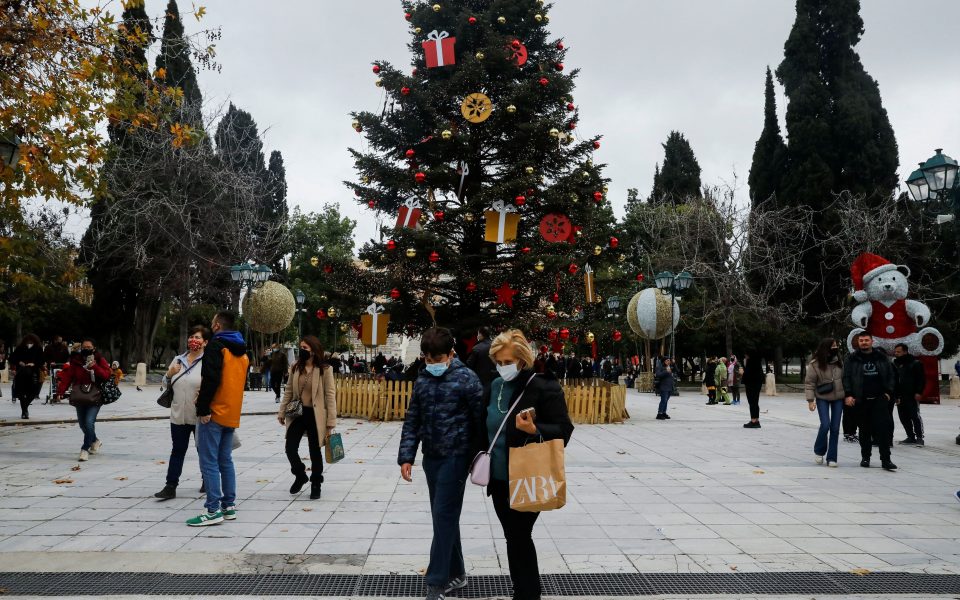
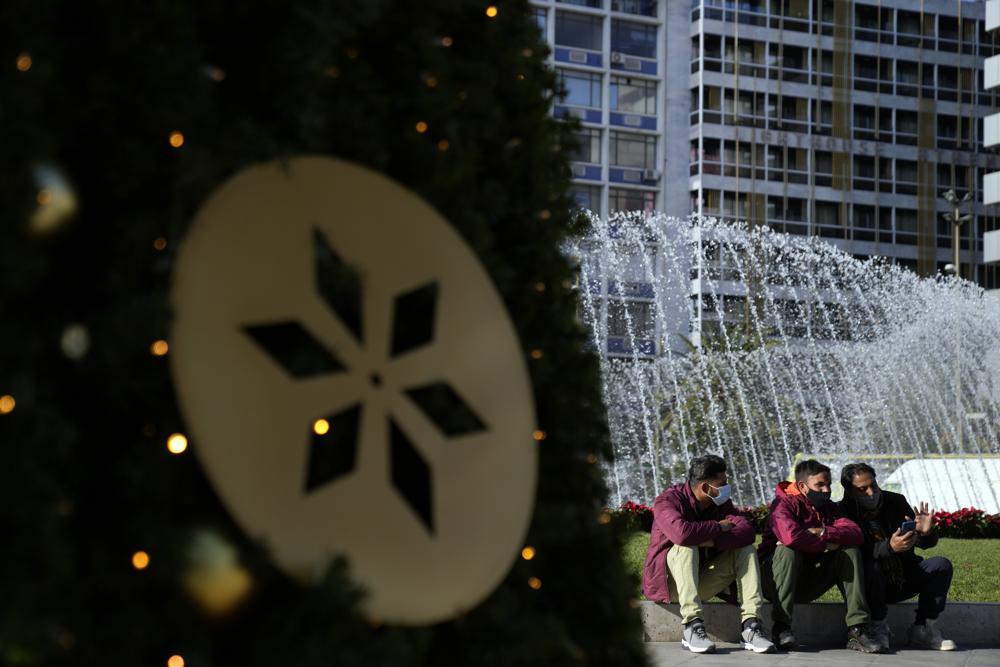
Men wearing face masks against the spread of COVID-19 sit in front of a fountain at Omonia square in Athens, Greece. Photo: AP Photo/Thanassis Stavrakis.
The restrictions will take effect on Friday as the country braces for the expected impact of the omicron variant of the coronavirus, with the public health service already under pressure and intensive care space at more than 90% capacity.
“Omicron is in our country,” Health Minister Thanos Plevris said during a special briefing on Thursday.
Minister Plevris said these new measures will continue until January 3 and “are enough to celebrate Christmas and New Years safely.”
Greece cancels Christmas events, brings back mask mandate.
After January 3, the government will introduce more restrictive measures that will affect entertainment, sports events and non-essential activities, Minister Plevris said, but clarified that these do not include local or general lockdowns or a return of the SMS system for leaving the house.
Greece suffered a spike in pandemic-related deaths in November and December with the infection level easing in recent days. But the emergence of the omicron variant has renewed concern in the country where about a quarter of the adult population remains unvaccinated.
Greece recorded 6,667 new COVID-19 cases on Thursday, 33 of which were the omicron variant. There were 71 deaths.
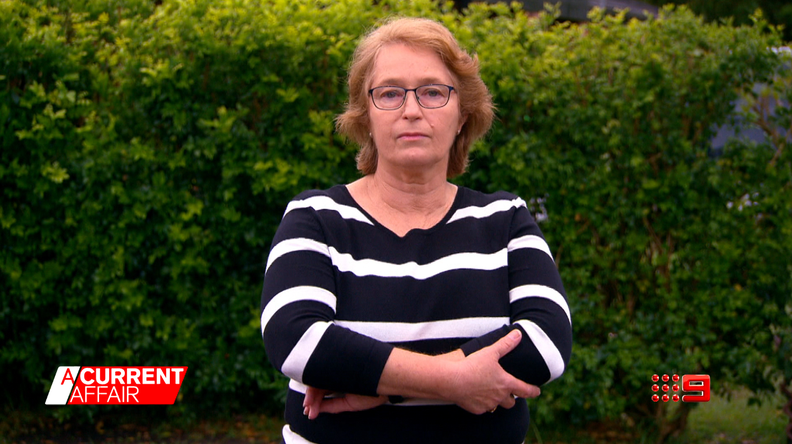
For more than three months, 61-year-old, Wendy Tucker, has had to borrow her daughter’s car to get to work after the Central Coast Council accidently crushed her 1997 Toyota Camry Conquest.
The Toyota was parked outside her daughter’s home at Point Clare for eight weeks during the lockdown but after a neighbour complained that the vehicle had been parked illegally, the Council assumed it had been abandoned, removed the vehicle and crushed it without contacting Wendy.
Despite this, the hardworking grandmother has finally had some good news.
Wendy Tucker, 61. Photo: A Current Affair.
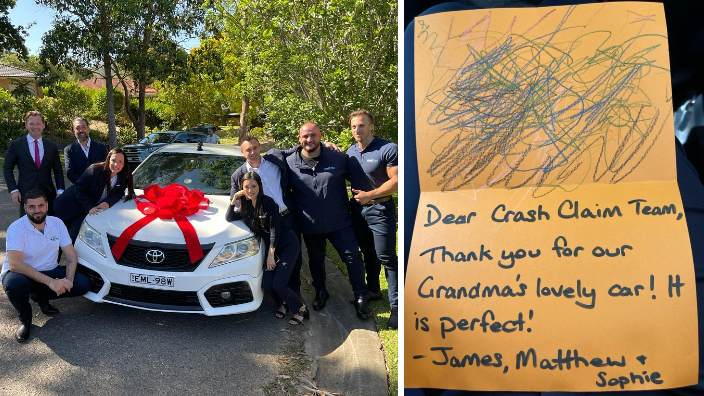
After her story aired on A Current Affair, Nick Karagiannis and his team at Crash Claim presented Wendy with a 2012 Toyota Aurion, a baby seat, flowers and a $2,000 cheque to help with insurance and other things she needed.
“We were absolutely overwhelmed with your story and having that happen to you after such a tough year. So me and my crew got together – The Crash Claim crew – and got you a little something for Christmas that should put a smile on your face,” Mr Karagiannis said while handing over the keys to the car.
Nick Karagiannis and his Crash Claim team.
Wendy was over the moon when she caught sight of her new car, wrapped in a bright red ribbon.
“Thank you so much,” she said. “It’s beautiful, it really is beautiful.”
Since the car had been delivered by Karagiannis and his team, Wendy has also been given $3000 from Central Coast Council, according to a media release by Crash Claim.
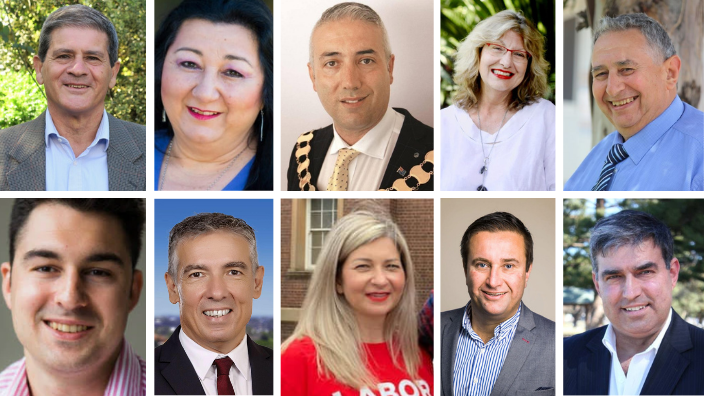
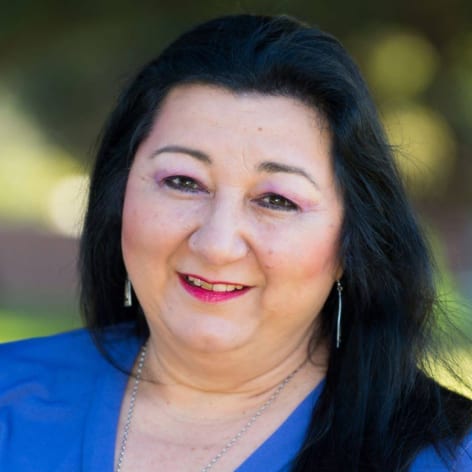
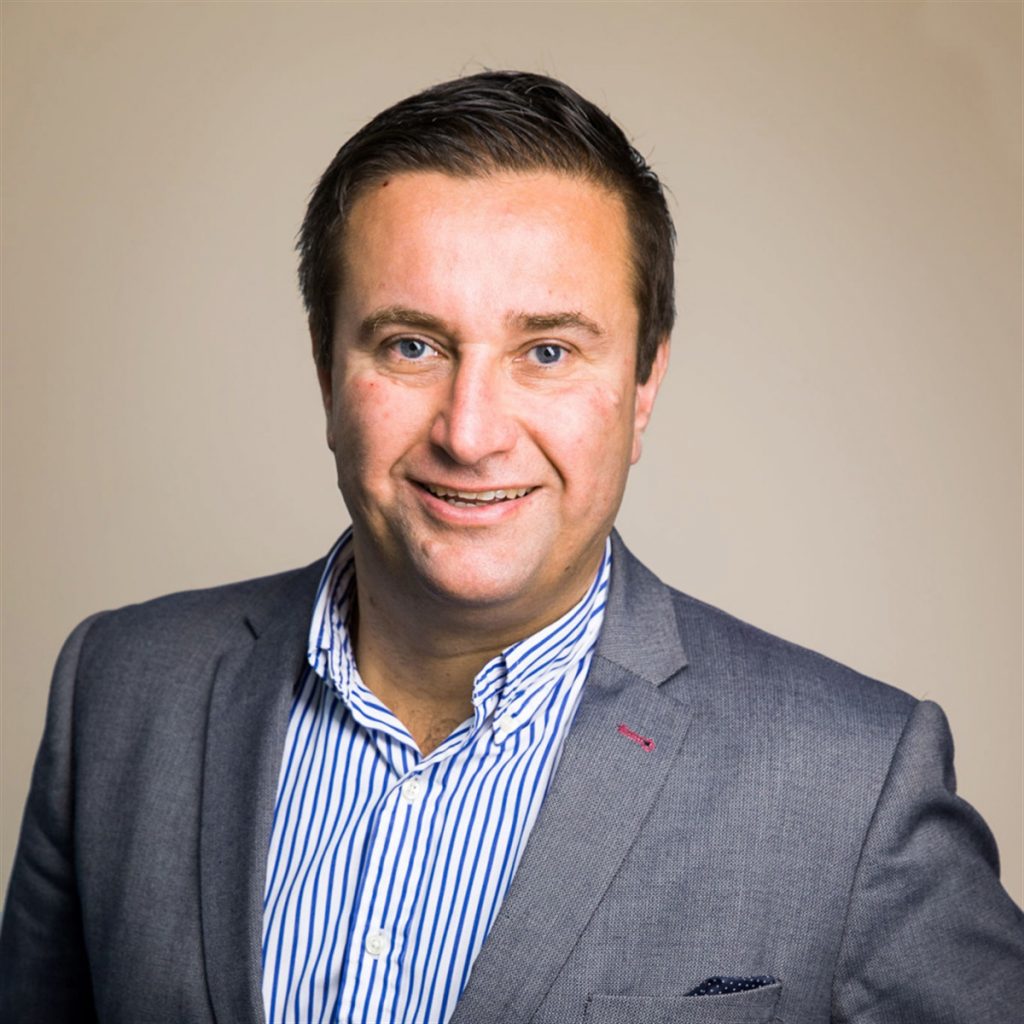
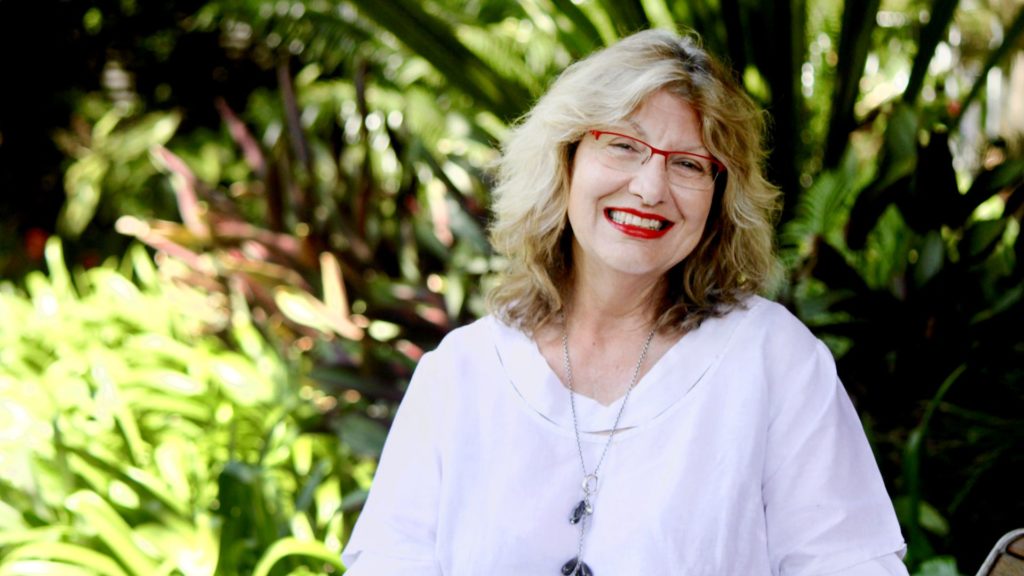
Votes have been counted after the New South Wales local government elections on December 4, 2021 and The Greek Herald has compiled this list of all the councillors of Greek heritage who have been elected in your area.
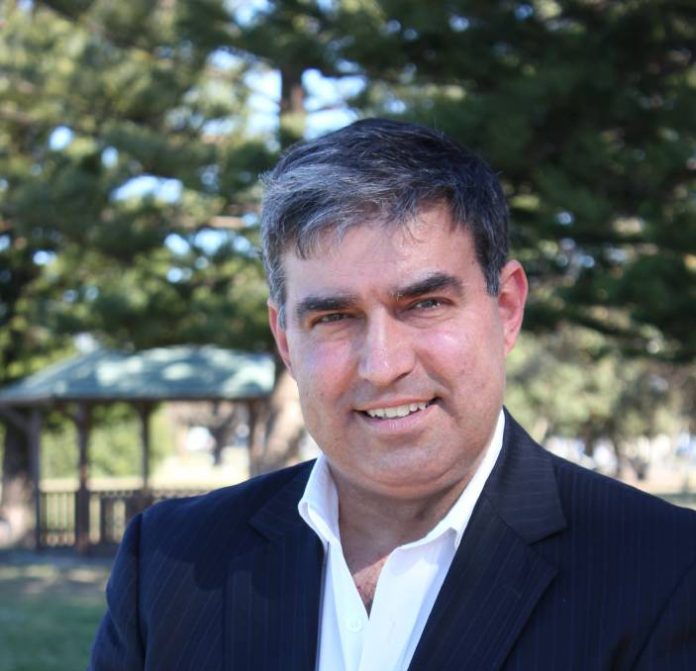
Andrew Tsounis is a first-generation Greek Australian running as an independent candidate for his community, which he has been a resident of for almost 20 years. He is passionate about protecting green spaces and taking a stance against overdevelopment.
Bogan Council:
– Anthony John Elias (Tony Elias), Councillor
Brewarrina Council:
–Angelo George Pippos (Angelo Pippos), Councillor
Angelo Pippos.
Angelo George Pippos was elected to Brewarrina Council in 2008. He has been on various committees including the Aged Care Committee, Big Sky Library, and the Tourism and Cultural Committee.
Canada Bay Council:
–Angelo Tsirekas, Canada Bay Ward, Our Local Community, Mayor
Angelo Tsirekas.
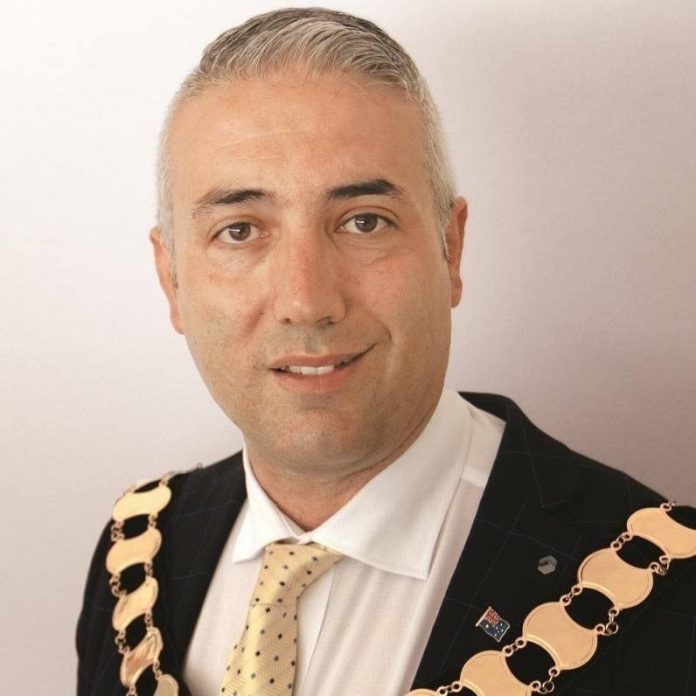
Angelo Tsirekas started his service as a local councillor with Canada Bay Council in 1995, served as deputy mayor for three terms and was elected Mayor of the City of Canada Bay in 2002 and again as popularly elected Mayor in 2004, 2008, 2012 and 2017.
He has served as President and Vice-President of the Inner Metropolitan Regional Organisation Council, Director of the Inner Sydney Waste Board and the NSW Architects Registration Board.
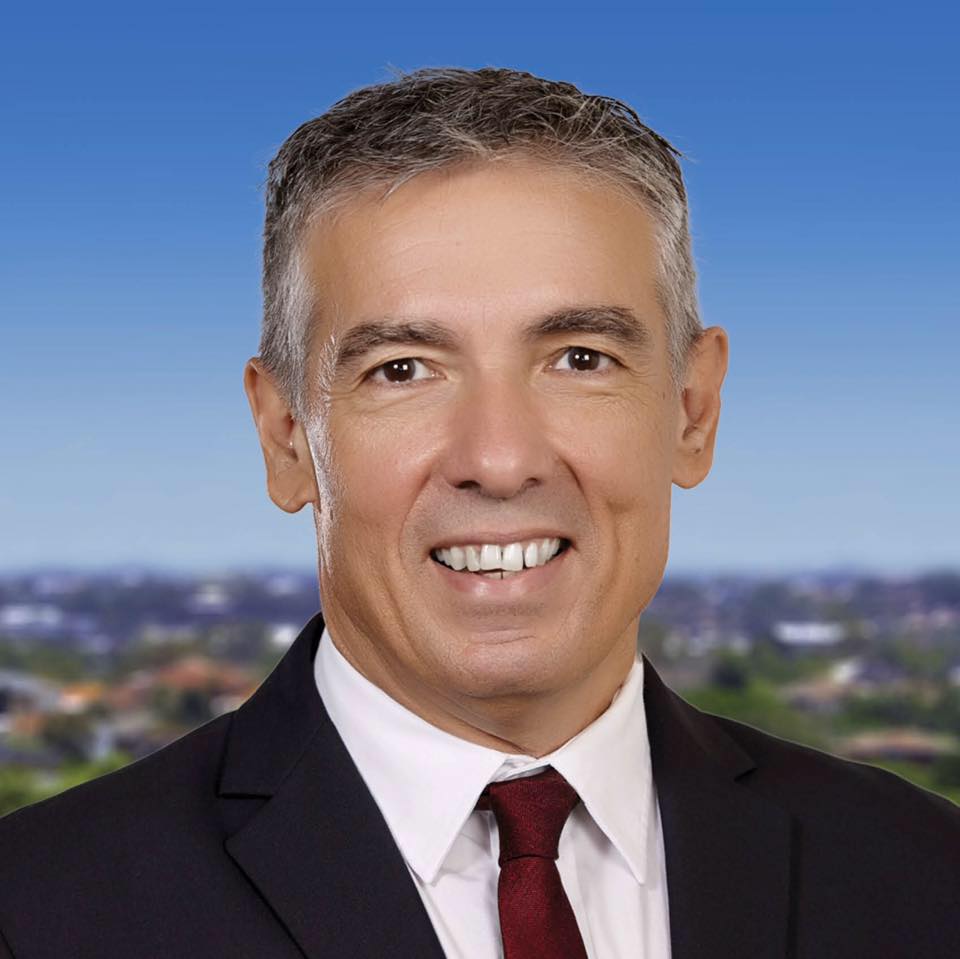
Steve Christou is an elected Councillor and Mayor of Cumberland City Council. He was elected on September 9, 2017 representing the Granville Ward after receiving a high Primary Vote of 43.5%.
Cr Christou has made numerous major achievements including the completion of the Granville Centre, Eric Tweedale Stadium, restoring Granville Town Hall and revamping Wentworthville Swimming Centre, in addition to countless community-focused programs and steadfast advocacy for the people of Cumberland amidst the COVID-19 lockdowns.
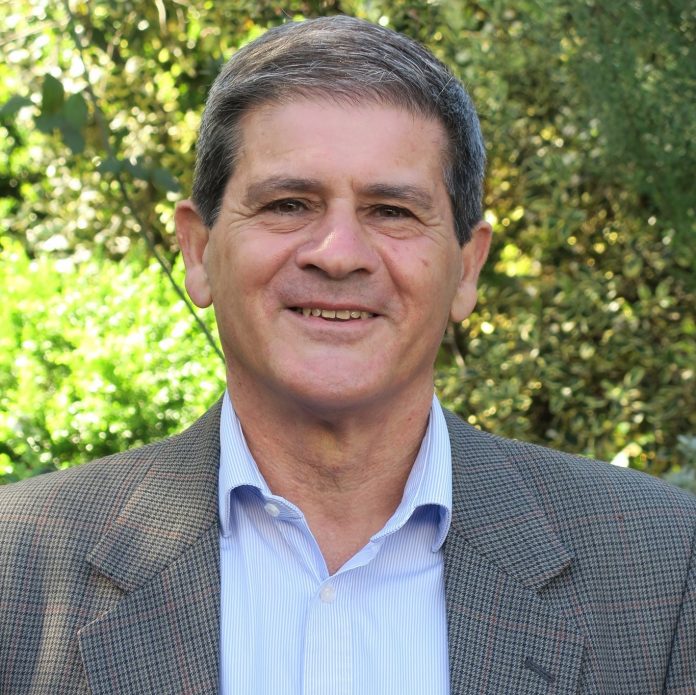
John Stamolis was born in Adelaide and move to Balmain in 1986. He studied maths and statistics at the University of Adelaide and has obtained qualifications in management and finance in Sydney.
He is a professional statistician. He worked for the Australian Bureau of Statistics for 20 years. He has also served on the Southern Sydney Regional Organisation of Councils (SSROC).
Labor’s Zoi Tsardoulias (left), Mat Howard, and federal Labor leader Anthony Albanese outside the Marrickville Town Hall polling station on December 4.
Alexandra Luxford was first elected to Randwick City Council in 2017 and has resided in the area for 50 years. Her key objectives as Councillor have been to be a strong voice for the community, to stop overdevelopment, to protect Randwick’s green spaces and to promote cultural diversity.
Cr Luxford has been a Delegate on the Australia Day Committee, the Community Affairs Committee, the Sport Committee and the Southern Sydney Regional Organisation of Councils Committee. She has also been Chairperson of the Multicultural Advisory Committee.
Angelo Rozos has been a Willoughby City Councillor for almost nine years. He grew up in Willoughby and raises his young family in the area with his wife Megan.
In his role as Middle Harbour Ward Councillor, Rozos has championed upgrades at Willoughby Park and surrounding ovals. He has a passion for developing open space, playgrounds and parks and is a supporter of small businesses and local sporting groups.
Paula Masselos was the first woman of Greek heritage to be elected Mayor of Waverley in September 2019. She is a highly experienced and award-winning strategist and communicator with a career spanning almost 35 years. She has held a number of senior positions including Director SBS Radio. She was also the Director of Education in the Human Rights and Equal Opportunity Commission.
Paula was also Chair of Sydney’s Carnivale Multicultural Arts Festival and served for six years as a Community Relations Commissioner in NSW. She was on the National Women’s Advisory Council and shaped multicultural TV broadcasting as a member of the Ethnic Television Review Panel.