Home Blog Page 1258

Two Greek Australian filmmakers navigate their heritage through new film ‘Concrete’

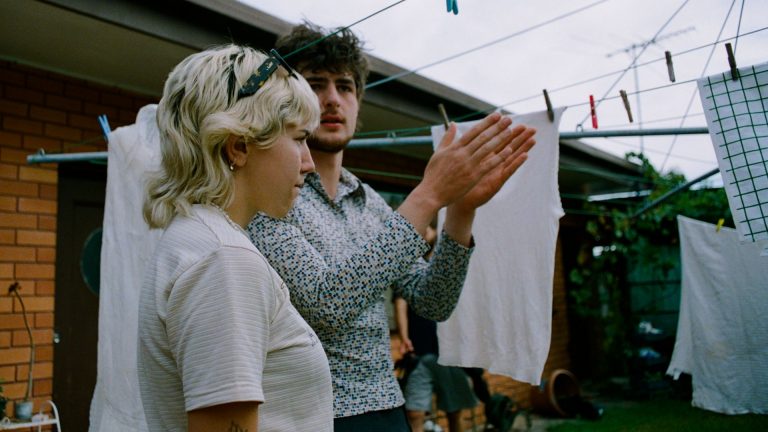
Greek Australian filmmakers, Ari Kwasner-Castri and Renee Kypriotis, created a bond and working relationship years ago over their shared love of art and film.

As third generation Greek Australians, they also found a shared feeling of disconnect to their heritage and so their film Concrete was born.

In an interview with The Greek Herald, Ari and Renee detail how they created the film and how their own journey to connecting to their heritage inspired it.

Tell us about yourselves.

We are both third-generation Greek Australians who grew up in Sydney. We have been friends since 2019 and also share a working relationship within the film industry. Our love for film and our shared experiences as Greeks drew us to creating this film, as we wanted to further explore our experiences. 
What drew you both to film?

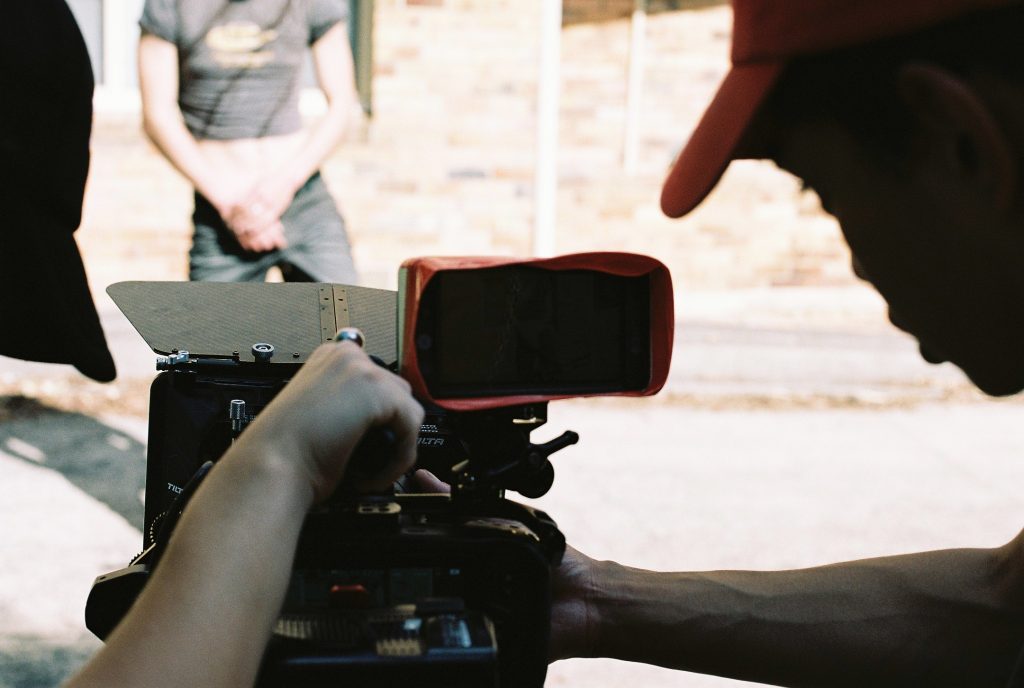
​For both of us, our passion for film started early, and we both were drawn to it through our love of acting. Because of this, our works are often very character-driven and grounded within our personal experiences.

We both are still very interested in acting and Ari will actually be starring in the film, however we both made the shift towards directing as we wanted to have more creative control when it came to the work we wanted to create for ourselves.

At this stage in our careers, we have found a way to align our equal love of being behind and in front of the camera, and encourage this fluidity in our practice. 

What was the inspiration behind the film?

The inspiration for ‘CONCRETE’ comes from our own experiences as Greek Australians; the more and more we spoke to each other about our feelings of disconnection towards our Greek culture, the more we found a need to tell this story and share those experiences.

Similarly, as we spoke with other third-generation Greek Australians, we found that a lot of people shared these feelings of disconnection, which is why we think it is important that we tell this story. 

How does the film translate intergenerationally as a migrant story?

The film translates intergenerationally as a migrant story as we explore the generational gap of the migrant experience through our protagonist, Aggelos. We have built this character once again drawing from personal experiences, as we explore the strong cultural shift in our sense of identity that contrasts with that of our parents and our grandparents.

Generations before us may have felt shame when exploring their Greek identity, as it was far from celebrated during that time. In contrast, we take every spare moment to mention to someone that we are Greek, and yet we still feel isolated and disconnected from that part of our identity as we either don’t speak Greek or we have a lack of understanding of our culture.

The way our protagonist navigates his familial relationships throughout our film is a key representation of this. It’s very complex to explore, but it’s incredible how many people have felt the same way and how common it is for the ideas and associations surrounding Greek culture to change and shift throughout the generations. 

What is next for you both as filmmakers?

We both plan to move from our hometowns and continue our filmmaking journeys in new and exciting places. We want to grow out, network, and find further film opportunities both nationally and internationally. We are also both making the shift into narrative productions, and ‘CONCRETE’ is the first step towards that.  

Evocative reimagining of the Parthenon coming to National Gallery of Victoria

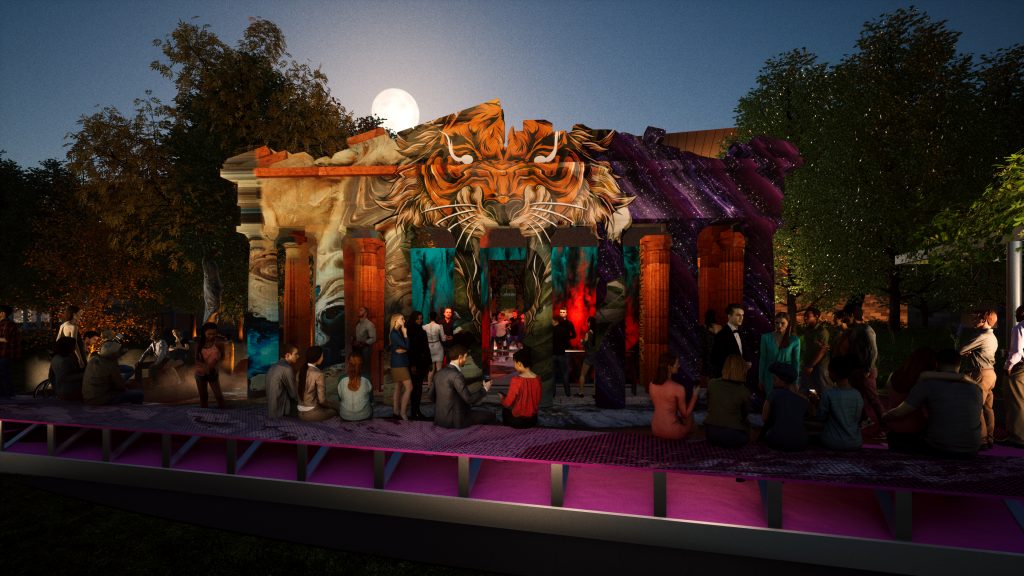
An evocative reimagining of the Parthenon on the Acropolis in Athens, by Australian architects Adam Newman and Kelvin Tsang, will be on display from 16 November 2022 in Melbourne.

The work titled Temple of Boom, is the National Gallery of Victoria (NGV) Architecture Commission for 2022, an annual series that invites Australian architects to create a work of site-specific, ephemeral architecture for the NGV Garden.

Render of 2022 NGV Architecture Commission Temple of Boom 2022 by Adam Newman and Kelvin Tsang. Courtesy of Adam Newman and Kelvin Tsang.

The Temple of Boom celebrates interpretations of the Parthenon as a global architectural icon that is an apex symbol of Western civilisation, democracy and perfection.

Newman and Tsang’s reimagination envisions the Parthenon as a contemporary meeting place for the community and an outdoor venue for a diverse program of NVG-curated performances, programs and live music across the summer period.

Minister for Creative Industries, Steve Dimopoulos MP, described the work as “a subject close to my own heart”, going on to say that the Temple of Boom “reimagines an ancient Greek icon while celebrating all things Melbourne – architecture, art and music.”

“It offers a place for the whole community to meet, connect, reflect – and even dance, while showcasing Victorian design excellence,” he concluded.

The NGV Architecture Commission 2022: Temple of Boom will be on display from 16 November 2022 at NGV International, St Kilda Road, Melbourne. Free entry. Further information is available via the NGV website.

Greek olive oils win big at Anatolian Oil Competition

Olive oils from all over Greece including Crete and the Peloponnese have taken home some high scores and even higher honours by winning Best in Class awards at this year’s Anatolian International Olive Oil Competition. 

Extra virgin olive oils and Greek flavoured oils won 18 gold awards, 21 silvers and 2 Monovarietal Best in Class awards. In the second year of this competition, 302 samples were evaluated by 25 judges. 

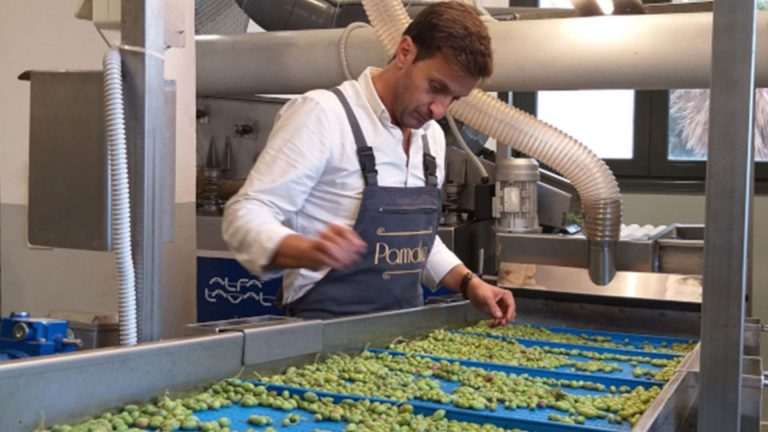
Cretan native, Pamako Organic Premium Monovarietal extra virgin olive oil (EVOO) took home three awards: a gold medal, a Monovarietal Best in Class distinction, and the Best of Country Award for Greece.

Founder of Pamako, Eftychis Androulakis told Greek Liquid Gold that he is very proud of these “amazing” awards from “our neighbour country Turkey.” He says he is “very happy to be among the best olive oils in this competition. 

“This gives us strength to make better and better olive oils every year.”

Another Monovarietal Best of Class award went to Terra Creta Grand Cru Koroneiki EVOO, also native to Crete.

Emmanouil Karpadakis is the olive oil innovation and area exports manager of Grand Cru’s and attributes a lot of their success to the natural Cretan environment and heritage in combination with a scientific approach throughout the harvesting and production chain.  

“The producers and teams of farmers who work with our agronomists throughout the year play a significant role in our success, and of course they benefit from this cooperation as well.”

This young competition saw the recognition of high quality oils from a number of well-established Greek olive oil companies produced throughout Greece.

Source: Greek Liquid Gold

Spiro Stavis becomes permanent CEO of St Basil’s NSW/ACT

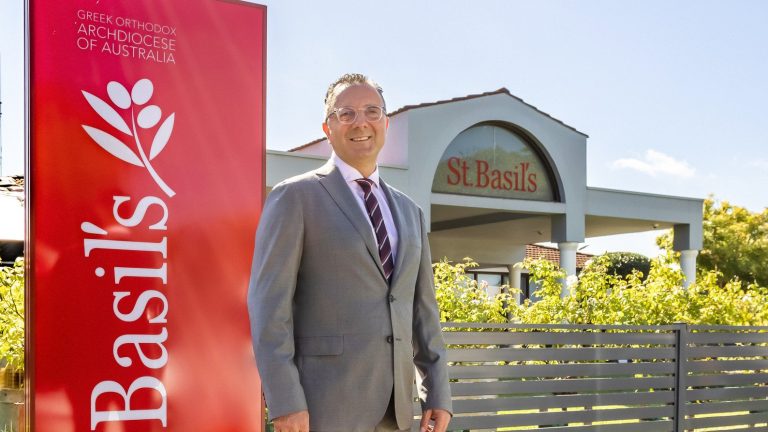
St Basil’s NSW/ACT has announced the permanent appointment of Spiro Stavis as their Chief Executive Officer (CEO).

Stavis has worked for the organisation for six years and has been the interim CEO over the last 18 months. In a press release, St Basil’s said the permanent appointment will enable Stavis to “continue the vital role of leading the organisation to deliver quality aged care services.”

Chairman of St Basil’s Board of Directors, James Jordan, said: “In the last 18 months as interim CEO, Spiro was instrumental in driving the development of St Basils’ five-year pathway as outlined in the organisation’s strategic plan with a person-centred approach and the ageing community at the heart of it.”

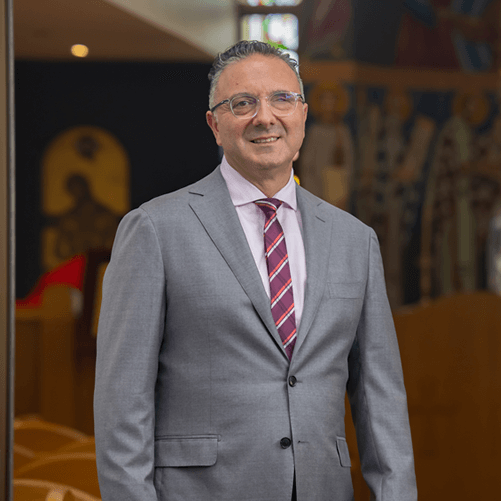
CEO of St Basil’s NSW & ACT, Spiro Stavis.

Jordan praised Stavis for leading a restructure of the organisation and his most recent introduction of an ‘Emotional Wellbeing for Older People’ program.

The Chairman went on to say that Stavis had also “obtained grant funding for new HR and Governance systems to support the operational aspects of our services, and invested in improved infection control measures and planning for the ultimate health and safety of residents.”

“I am confident that he will continue to drive the St Basil’s team on its current trajectory to fulfil its mission of delivering quality services to support individual needs of ageing Australians including Greek Australians,” Jordan concluded.

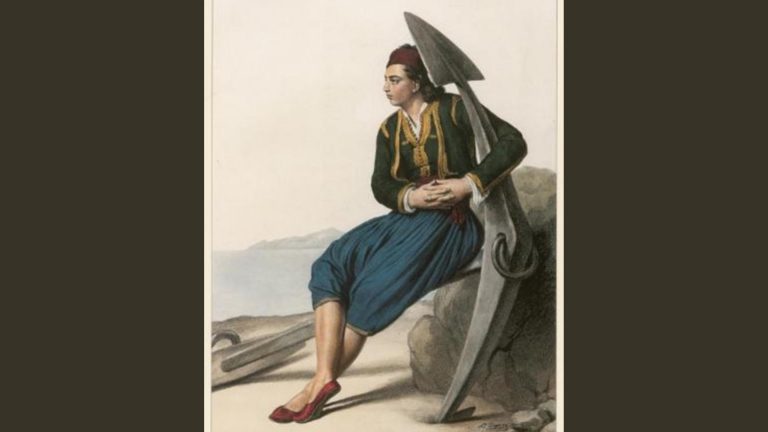
The Greek Sailor: On his broad shoulders Greece was built

By Alexander Billinis*

The story of Greek sailors is one of the oldest Greek narratives. 

One of the first classics of literature chronicled the travels of one Odysseus. We have the far-flung Classical Greek colonies all across the Mediterranean and the Black Seas, the Triremes of Themistocles, and later the Greek-Fire breathing Dromons of the Byzantines. The Greek sailors who played a pivotal role in the emergence of the Greek merchant fleet in the 1700s and fought hard and successfully for Greece’s freedom drew on a tradition that spread back millennia.

It is perhaps ironic that the most important islands in the Greek revolution and the commercial acme that took place in the fifty years prior had little or no maritime history. Hydra and Spetses were largely barren islands off the coast of the eastern Peloponnesus, populated largely by refugees fleeing the constant struggles between Ottoman and Venetian, and the periodic attempts at throwing off the Ottoman yoke.

In the case of Hydra, population pressures pushed the islanders to the sea, as it had for Greeks since the dawn of history. I also believe, strongly that the sea represented the opportunity for a freedom and personal agency unavailable on lands under the Ottoman foot. From a crude vessel in 1657, the Hydriots felled their trees and set every cove on the island to work with shipbuilding.

 As retired Captain Dimitris Tsigkaris told me, “The sea is a university.” Hydriots learned from other Aegean islanders, from the Venetians, and even from captivity. One of Hydra’s premier shipbuilders had been taken by Barbary Pirates and put to work in shipyards in Algiers. Upon his release, he brought his skills home. Interacting with other sailors and captains in ports near and far expanded the Hydriots’ and Spetsiotes’ education. They could draw upon the nautical skills of an archipelago with four thousand years of navigation expertise, as well as the latest naval technology from Spain, Italy, or Britain.

Then of course, there is on-the-job training. For the Greek islander, this may have started at the age of seven. An eighteenth-century sailing ship required mental and physical agility and granular knowledge. It was not just the shoals and winds they needed to pilot, but also the dangers of pirates, of negotiating various national authorities, multiple languages, and a keen understanding of financial, and market forces. The great American Philhellene Dr. Samuel Gridley Howe marveled at the shipbuilding skills of the common sailor, who might be called upon to repair his vessel on some foreign beach. 

It is hardly a wonder that the Hydriots set up their own nautical academy, the world’s oldest, which remains running to the present day. They understood that their fortunes rested on human capital, and they made the necessary investments.

By 1820 Hydra, Spetses, and the even more diminutive Psara had built considerable fortunes based on their human capital. The shipping prowess dovetailed with an emerging merchant diaspora and guerilla captains growing in confidence. The ships carried more than just grain and merchandise—they carried messages of the Philike Etairia and plans for revolution. 

When the time came, these sailors trained their cannon on the Turks, and their older ships were turned into floating bombs as fireships, recalling their Byzantine ancestors’ deadly efficacy with Greek Fire. Far too many met an early grave that Greece might live.

Though Hydra, Spetses, and Psara never recovered from the losses of the Revolution, the Greek sailor lived on, manning ships from other islands. Though a portion of Greece was free, many of the same institutional failings of the Ottomans remained (and remain) so the quest for agency at sea remained. On the backs, quite literally, of some of the finest sailors on the planet, the Greek Merchant fleet grew again, incorporating many of the merchant families and succeeding despite the many failings of the Greek state.

By 1939, the Greek Merchant Marine was the ninth largest in the world, creating a whole class of wealthy shipowners, and keeping thousands of Greeks, including my father’s family, in middle class circumstances. Like other merchant mariners, the Greeks suffered a death rate in the slaughterhouse of the Atlantic well higher than that suffered by nearly every other branch fighting in the war, and by the end of the war a good seventy percent of tonnage was beneath the waves.

A British-American wartime mass production freighter, the Liberty Ship, came to the rescue of Allied fleets decimated by the U-Boat attacks. American industrial might—coupled with increasingly effective anti-submarine warfare, did the job too well and the end of the war found a glut of ships, prudently sold by the US government to Allied nationals. Nobody took more ships than the Greeks, and the “Blessed Liberty Ships” set the stage for the Greek-owned fleet to become the world’s largest.

 But once again, at the core of this shipping miracle, lay the Greek sailor. His resourcefulness and skill, from deckhand to captain to shipowner, made all this possible. He is a technocrat, with pride in his trade, and respected by Greek society. Shipping provided Greeks with an agency unavailable in Greece—without the pain of expatriation that so many Greeks eventually chose.

So much of Greece as we know it today—even the existence of the country—is owed to the Greek sailor.

Honor is due.

READ MORE: Spectral Smyrna in Izmir

*Alexander Billinis is an instructor at Clemson University, in South Carolina, USA. He is a licensed attorney, with a former career in law, real estate management, and international banking. He has lived and worked in Greece, the UK, and Serbia, as well as shorter work or study assignments in Bulgaria, Hungary, Germany, and Chile. A citizen of both the United States and Greece, he is married and the father of two teenage children.

Australia’s first photon-counting CT scanner welcomed by medical professionals and patients

Adelaide’s Clinical & Research Imaging Centre will be the home to Australia’s first photon-counting CT scanner.

The machine and its unmatched resolution will allow doctors to look deeper inside cancer cells and artery walls with more clarity and less radiation. The cutting-edge scanner promises to help early diagnoses and guide treatment for major diseases like cancer and heart disease.

Speaking with The Advertiser, radiologist and head of imaging at the South Australian Health and Medical Research Institute (SAHMRI), Dr Andrew Dwyer, said the machine gives medical professionals the unprecedented ability to “visualise inside coronary artery plaques and identify people who are at risk of heart attack.”

The latter capability is being welcomed by Royal Adelaide Hospital cardiology nurse, Sue Tselikidis.

A photon-counting CT scanner. Photo: Siemens Healthineers

Two years ago, aged 52, Sue who has a family history of heart disease, decided to have a scan to see if any plaque was developing.

“Lo and behold, the doctor rang the next day and told me I had 90 per cent blockage in a major artery,” she told The Advertiser.

“If it was not for that scan, I was headed for a major heart attack and might not be here today.”

Her cardiologist, Dr Johan Verjans, arranged an angiogram and a stent was inserted to restore healthy blood flow.

Dr Verjans, who works at SAHMRI and at the Royal Adelaide Hospital with Sue, said: “Having access to the best CT technology is a win for patients.”

SOURCE: The Advertiser

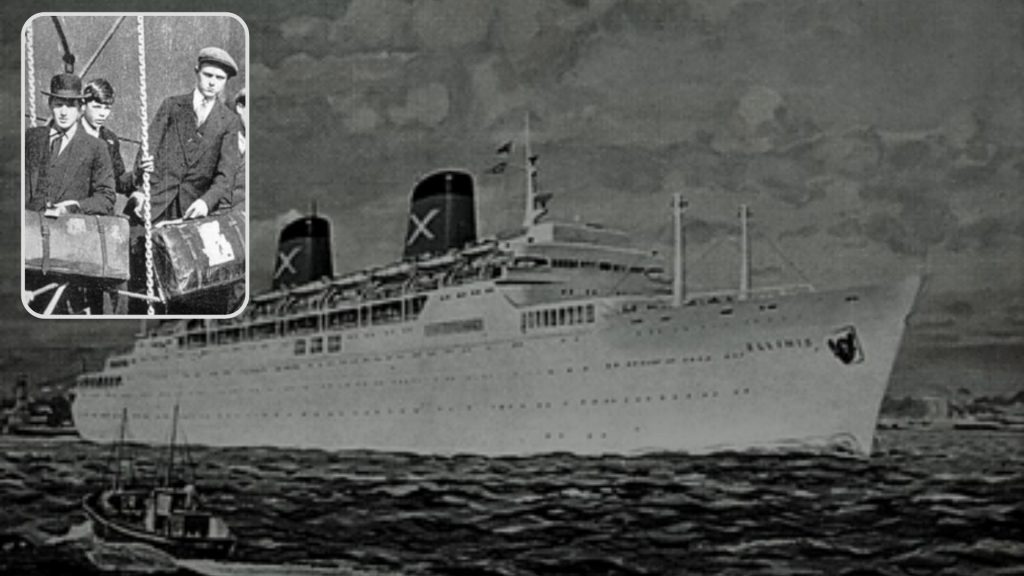
Aboard the Ellinis in the 1960s: A traveller’s tale

By Kathy Karageorgiou

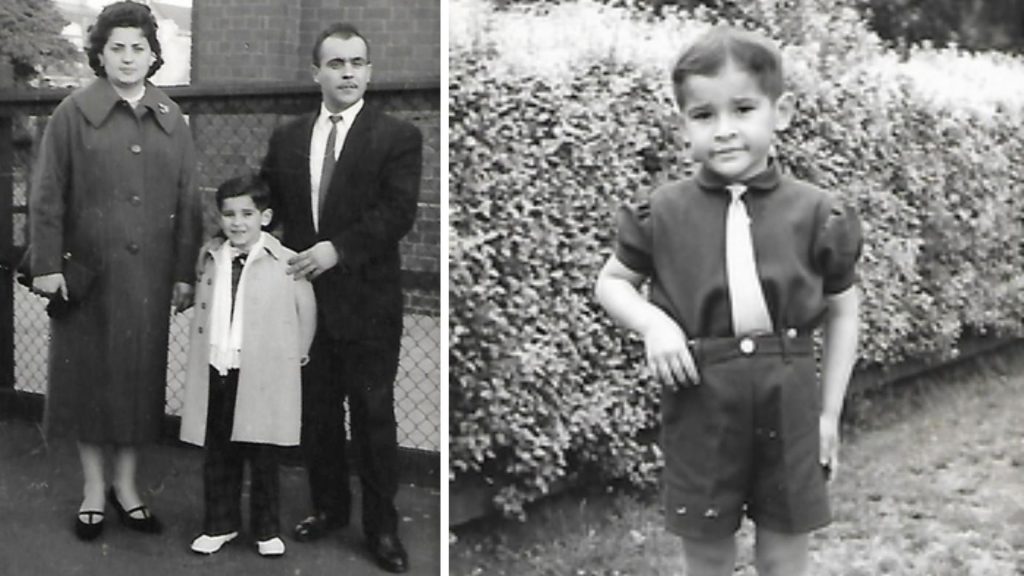
Most migration stories in the 1960s from Greece to Australia and sometimes back again, echo with sadness and nostalgia for what is left behind and trepidation for what follows into the often unknown.

There are migration stories of leaving and arriving with only one suitcase, and of brides whose only knowledge of their betrothed is a photograph. And there are young men seeking opportunities beyond their homeland, bravely trying to carve out their own fate; as well as the entire families too, more often than not leaving poverty and seeking a dignified livelihood.

We don’t hear much about the actual, approximately 40 day sea voyages; as we have focused more on emotions of farewelling familiar lands and hoping to embrace new shores.

Hollywood often portrays such migratory journeys as cramped and chaotic affairs with segregated class areas. And after the long voyage, as Greek-Australians, we perhaps take for granted that most migrants stayed in Australia. But there are those who did return to Greece after a few years, for whatever reason.

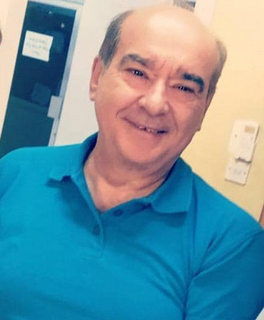
Mr Gerasimos Alexopoulos (or Makis), is one of these early Greek-Australian returnees to Greece.

He initially arrived in Australia by plane with his parents as a toddler, but returned to Greece at the age of 11 on the Ellinis ship, in 1964.

“Being on board the Ellinis was the best time of my life. The ultimate pleasure cruise – an unforgettable good time throughout,” he reminisces.

Perhaps Makis’ fond memories coincide with both his pre pubescent age, and the fact that he was travelling without supervising parents, but instead with his 30 year old bachelor uncle.

“He let me do what I wanted,” Maki laughs.

“I hardly saw him – he had so many girlfriends. There were also Scandinavians and English on the ship that boarded from Melbourne and Sydney,” he exclaims.

I prompt him to continue, as an unknown world begins opening up for me.

“We passed under the Sydney Harbour Bridge – what a magnificent sight! And we headed to exotic Tahiti, after a stop in New Zealand. In Tahiti, we got off the ship for three days. They treated us like royalty, putting floral necklaces around our neck – like the ones in Hawaii, and I’ll never forget how beautiful nature was there: the sea, the plants, the tropical flowers.”

I ask if they encountered any rough seas on the way to Greece, but he tells me that the Pacific Ocean part of the journey was smooth, and goes on to contentedly convey these other worlds of yesteryear.

“On the ship we had swimming pools, a cinema, dances, live music, theme parties like fancy dress. Kids and adults mixed together at these parties till all hours, but they also had separate kid’s parties.”

“How was the staff, and were there first and second class sections?” I interject.

Makis responds: “I don’t remember there being such divisions, and the staff were professional and friendly. Even the captain who was Greek, would spend time with the passengers. And everything was very clean. The food was great; mainly Greek but also some international cuisine.”

Laughing, he then adds: “There was an English man on board who was a teacher and with the Captain’s and parents consent decided to begin teaching lessons there, for us children. Well, that lasted for three days! From day 4 none of us showed up because we preferred learning our way on board!”

Mr Gerasimos Alexopoulos

I almost feel guilty interrupting his glorious memories, by inquiring why he was travelling to Greece.

“My parents were going to come a year later, but they sent me first to go to my grandmother there and to school, to assimilate into Greece, as I was becoming too Australian, for my mum’s liking in particular,” he says smiling.

He adds that he had no time to feel nostalgic or sad without his parents because he was having a ball with the other kids on board the Ellinis.

The only slightly unpleasant stop of the trip he tells me was Panama, were the people looked sad but also threatening, “due to extreme poverty there”. Then he tells me it was back to paradise on the Carribean, stopping at the island of Curacao, a Dutch colony, with “wide boulevards, beautiful shops and cafes and well dressed people of various cultures as it was a trading port.”

Next stop he recalls being en route to England, traversing the choppy Atlantic ocean. “Were you seasick then?” I ask. He explains that by then, most people get used to being on a ship, whereas he and others were seasick on the first few days of sailing out of Port Melbourne.

The Ellinis then arrived in England’s South Hampton Maki explains, from where he and his uncle journeyed to London, spending five days there.

Makis continues his exciting tale, “We saw all the main sites in London with my Uncle, and a few friends he had made on board also joined us. And we went to nice restaurants and pubs too. But I didn’t like the weather and wouldn’t stay there.”

As fate would have it, Makis, went on to study Electrical Engineering at Manchester University, many years later.

“The travel bug stayed with me since my wonderful Ellinis trip. I have travelled around Europe and lived and worked in the Middle East. And for the past 14 years, I was Director of English, at the Greek Orthodox Patriarchate of Jerusalem Schools in Jordan. Now I’m retired, but I still want to travel,” he says.

Asking him where he’d like to go now, without hesitation he says “Australia – to visit my old neighbourhoods in Melbourne: Collingwood, Richmond and Fitzroy, and my old school – Richmond Primary. Nothing else!”.

Hopefully his dream will be realised, and in the meantime as the saying goes: ‘it’s all about the journey not the destination.’

May all our journeys be as pleasingly memorable as Makis’.

READ MORE: A different migrant story: The Girl from the Ashes and her gilded life in Australia

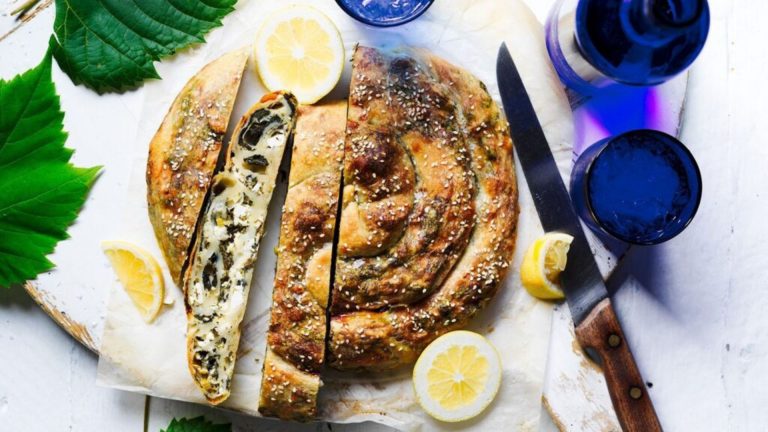
Anna Polyviou shares her ‘crowd pleasing’ Spanakopita recipe

One of Australia’s most loved chef, Anna Polyviou, shares her special spanakopita recipe with The Greek Herald. A recipe that is close to heart as it was always something she made alongside her mum.

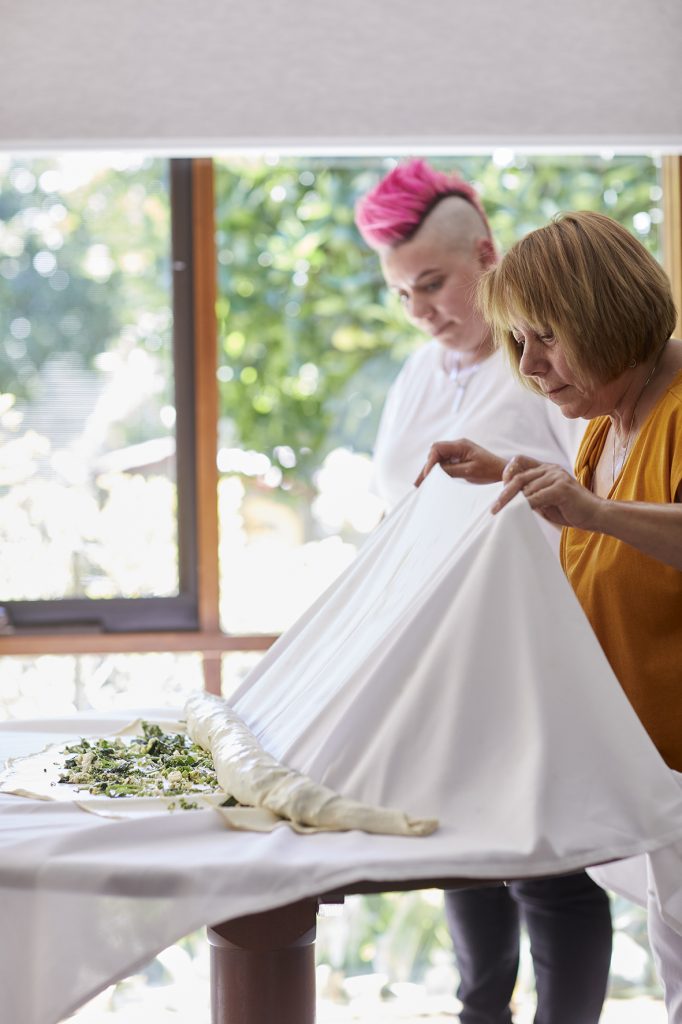
“Mum always uses a tablecloth to roll the spanakopita, she stretches it out on it and then flips it so it rolls up together,” Anna says.

“I feel like it’s her party trick when guests are over and she’s showing off!  It is definitely one of those dishes that is a crowd pleaser.”

FILO DOUGH

  • 250g plain flour
  • 200ml water, warm 
  • 25ml olive oil
  • Sea salt
Anna making spanakopita with her mum. Photo: Delicious Magazine.

FILLING

  • 300g spinach, blanched (squeeze out excess water)
  • 10g dill, finely chopped 
  • 10g mint, finely chopped
  • 3 spring onions, finely chopped 
  • 2 eggs
  • 250g feta, crumbled
  • Olive oil
  • Salt & pepper, to season
  • White sesame seeds

METHOD

  1. In the bowl of an electric mixer with a dough hook attachment, add in flour, warm water, olive oil and a pinch of salt.  Mix on a medium speed for 8-10 minutes till the dough has combined and gluten has developed.
  2. Remove dough from the machine, place in a greased bowl and cover with cling wrap. Allow to rest for about 3-4 hours.
  3. Place the spinach, herbs, spring onion and eggs in a medium sized bowl and mix together. Place in the fridge, covered, till required.
  4. Remove pastry dough from the fridge and stretch it out as long as possible before it starts ripping.  Drizzle with olive oil, then scatter the spinach mix over evenly. Scatter over crumbled feta and season. Roll the spanakopita into a tight log, then coil. Place in a 26cm round baking dish, drizzle with olive oil and scatter sesame seeds on top.
  5. Bake in a preheated oven at 200C for 25-30minutes.
  6. Once cooked, remove from the oven and allow to sit for a few minutes before removing from the tin.

TIP

You can upgrade your spanakopita by doing what mum does and adding in ricotta and haloumi. You can also shape it and freeze it until you’re ready to bake it fresh.  A squeeze of lemon juice is also great.

‘Like a second home’: Greek Australian shares thoughts on summer camp in Northern Greece

By Panos Stamatopoulos*

The opportunity to visit the birthplace of my grandparents and my spiritual homeland was given to me earlier this year with the Greek Community of Melbourne’s invitation to participate in an organised tour of Northern Greece which was coined as a ‘summer camp’.

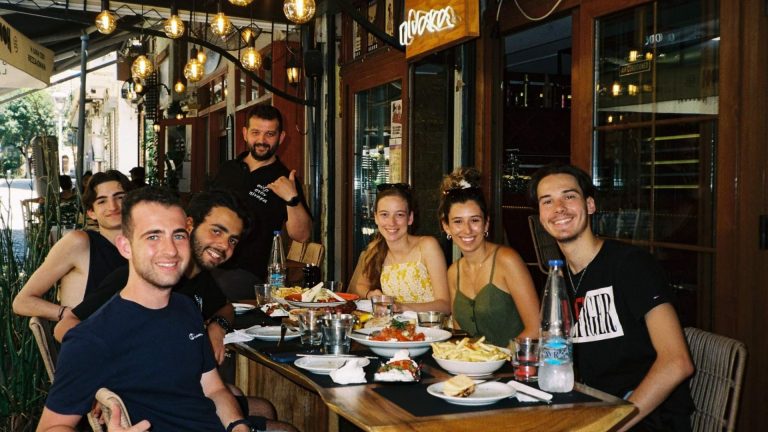
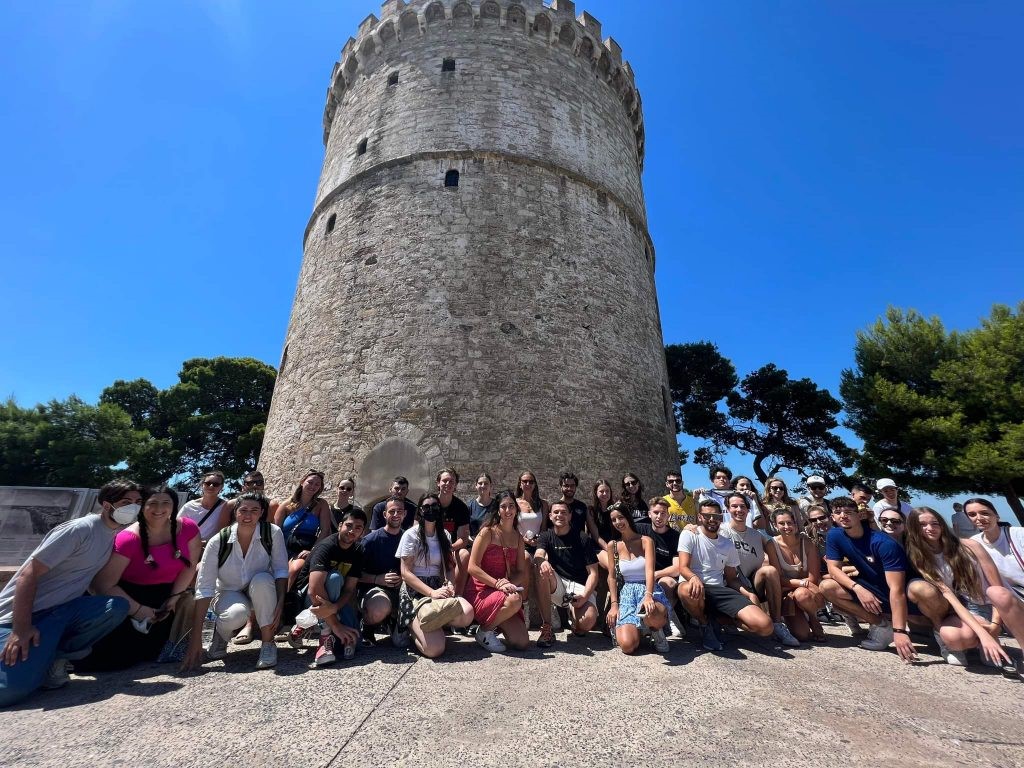
I arrived in Greece with an open mind and a willingness to explore all that was offered to me. I was not disappointed. Together with 45 other young Australians of Greek heritage, I was treated to a plethora of visual and emotional experiences which have left me with a desire to explore Greece further. Most exciting was the opportunity to meet other young Australians of Greek heritage and to share these experiences, bonding while exploring our common history.

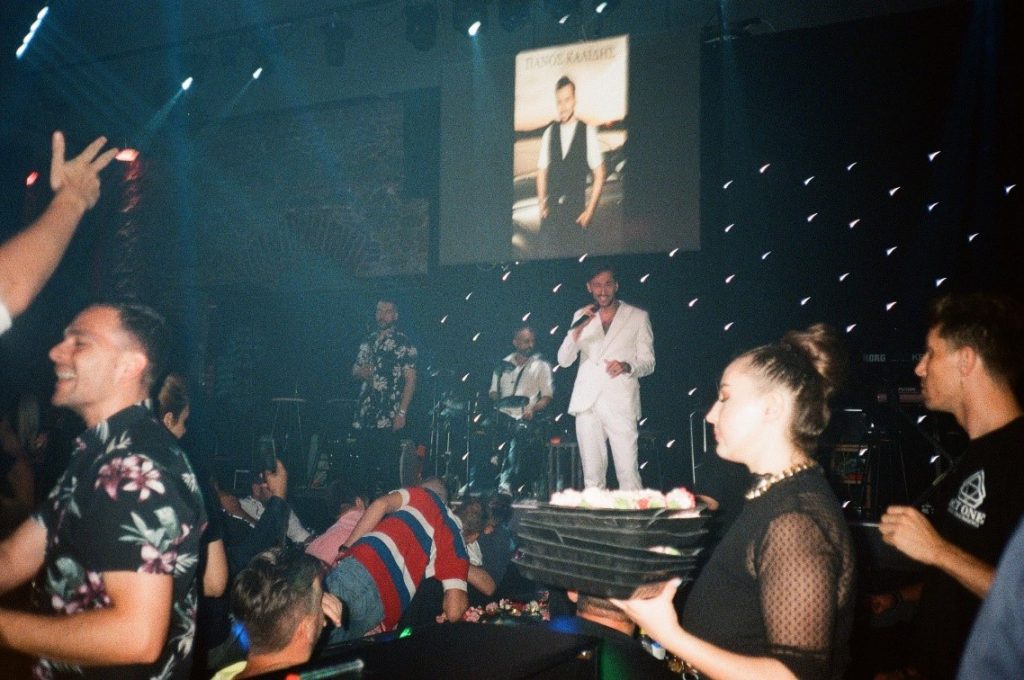
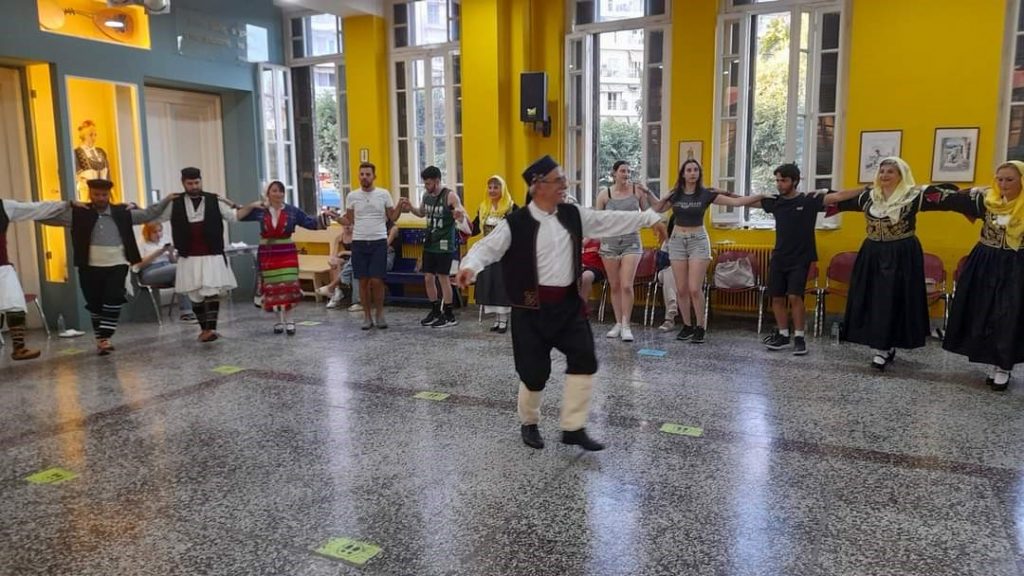
The connections forged between us during the Thessaloniki summer camp really showed me how strong the connection can be within the Greek diaspora of Australia. During the wonderful events organised by Χ.Α.Ν.Θ (YMCA of Thessaloniki) and the exciting nights out at bars and clubs, we were constantly bonding and discovering more about ourselves and each other. The memories from the trip have helped us form a relationship that will last a lifetime.

The trip was also a unique opportunity to gain an insight into modern and ancient Greek history. Activities organised by the Thessaloniki YMCA varied from visits to Phillip II’s tomb to live music performances and The Aristotle University World Medical Forum.

We all gained a better understanding of our heritage and an insight into the different institutions of Greece. Although all of these events were both interesting and enjoyable, the most important thing we gained was an insight into who we are as Australians of Greek heritage.

Ultimately, the summer camp was a once in a lifetime opportunity both to meet new people and see a side of Greek history and culture that would otherwise remain unknown to us. The organisers of the trip clearly put a lot of effort to give us the opportunity to see and experience as much as possible of all that Thessaloniki and northern Greece has to offer. From bear sanctuaries to monasteries, from small towns to the centre of Thessaloniki, we saw a wide spectrum of Greek civilisation, that gave us all a new appreciation for how complex and beautiful the world (and especially Greece) can be.

READ MORE: ‘Unforgettable’: Greek Australians share how it felt to return to Greece for summer camp – Greek Herald

And of course, I cannot forget how lovely it was to experience the famous Greek hospitality. Wherever we went we were welcomed with open arms and treated with great warmth by the locals. We truly felt immersed in the Greek culture and history. I only wish it could have lasted longer. Thessaloniki now feels like a second home to me, and the memories that were made will last a lifetime.

With the experience still fresh in my mind and the momentum very much alive, I ponder on the great opportunity that is now open for further community engagement by the participants of this ‘summer camp.’ Where they are encouraged to share their experiences with future participants and perhaps even be given the opportunity to be part of the organising committee of future ‘summer camps,’ they naturally integrate meaningfully into their local Greek community and share their learned experiences and appreciation for the Greek culture. There is much potential for future Greek leaders to be formed from such experiences.

*Panos Stamatopoulos is a first year university student and 3rd Generation Greek Australian.

Kyrgios continues ranking surge at Canadian Open

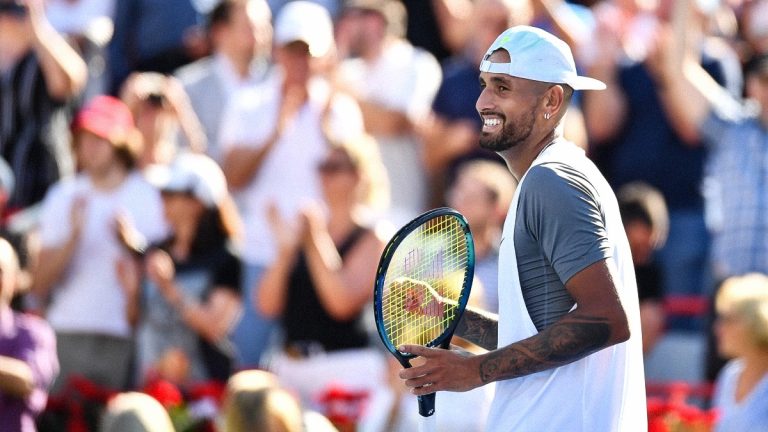
Fresh off his three-set victory over world No.1 Daniil Medvedev yesterday, Nick Kyrgios has delivered yet another masterclass defeating Australian compatriot Alex de Minaur in straight sets (6-2, 6-3).

“As flawless as sets come,” was said in commentary this morning. “A quite ridiculous level from Nick Kyrgios.”

The 62-minute victory sees Kyrgios move into the quarter-finals, and reclaim a place in the top-30 ATP rankings.

Speaking on-court after the match, the now world No. 27 said: “After yesterday’s big high, today was really hard mentally for me to go out and play Alex.”

“We’re such good friends and he’s been having such a good career so far and carrying the Australian flag for so long, it was tough mentally to play a friend, especially if they’re Australian.”

Kyrgios is set to face off tomorrow against Poland’s Hubert Hurkacz in the quarter-final. If he wins, it will see him climb as high as No.21.

This morning’s victory also guarantees Kyrgios seeded status at the US Open commencing on August 29.

If Kyrgios wins the Canadian Open on Sunday, it will not only mark his eighth career title but will secure him a crucial top-16 seeding in New York.

Pointing to his prospective seeding, Kyrgios said: “It was a goal so I didn’t get one of the big titans or gods first round, I can actually work my way into the draw if the draw’s kind.”

“Today I felt amazing and hopefully I can keep it going,” he concluded.