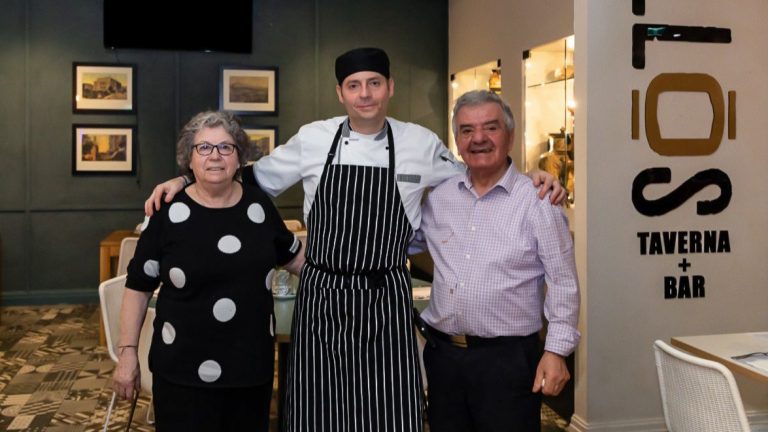
Tim Moustakas is the owner of Fillos Taverna and Bar at the Hellenic Club of Canberra in Woden.
Tim recently featured in The Riotact’s ‘Five Minutes With’ series, where he spoke about his cullinary influences and how he has been shaped by his Greek heritage and upbringing.
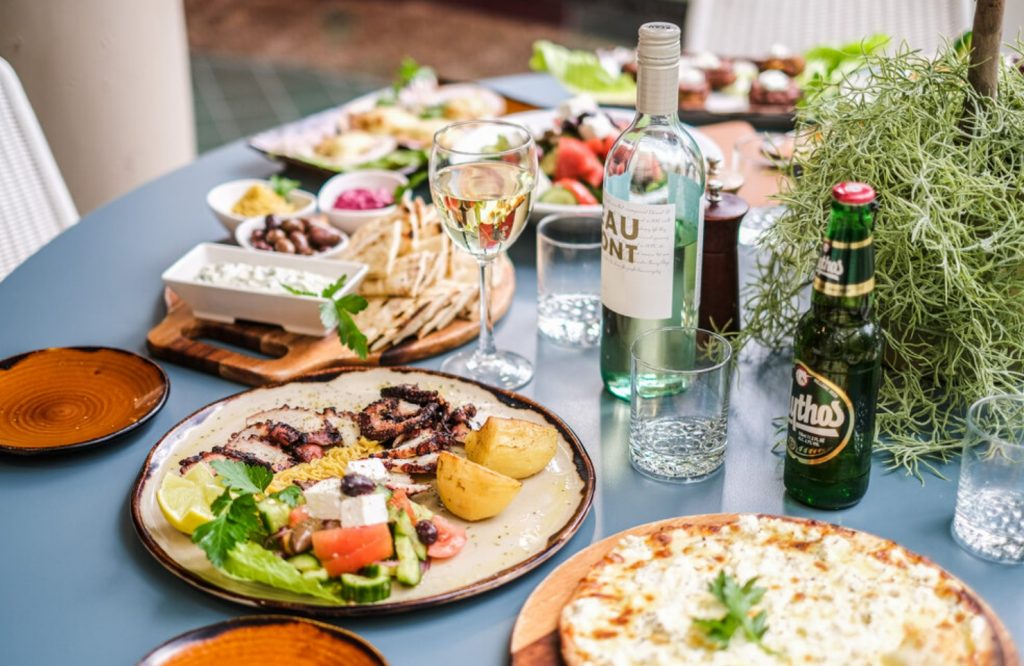
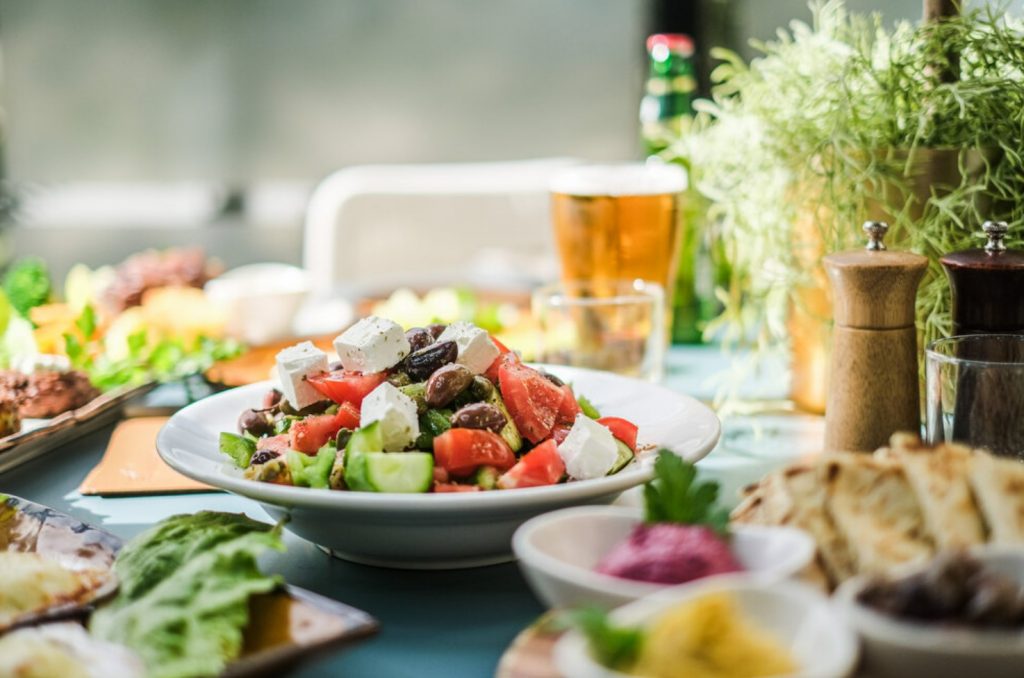
“I have grown up eating good, clean Greek food all my life, so I really love eating and cooking fresh seafood and lamb – the flavours are just beautiful!” he shared.
When asked what menu item is a “must-try” at Filos, he said it’s the lamb shoulder.
“It’s the best dish in the house. People always come back with positive feedback for it, and it’s our signature dish.
“I would also say our beautiful fresh fish. My dad, who also works with me, is a bit of a perfectionist, so he’ll go and see it with his own eyes and handpick it to make sure we get the best quality seafood to cook in the restaurant.”
Pointing to his relationship with his father, Tim described him as his biggest culinary influence.
“We’ve always been in the kitchen together and even though I’m the boss of the restaurant, he’s still my boss,” he said.
“Ever since I was young, he’s been my idol as he always does everything he can to help me and help me perfect my skills and he is very hard working.
“One of the most important things he taught me was, ‘If you don’t want to eat it, don’t serve it’, and that’s something I’ve always kept in mind.”
“When that extension is completed, I’m planning on introducing a new authentic Greek tavern that will be something that Canberra has never seen, so it’s very exciting for me!”
“I think this extension will be out of this world and the precinct will be a hub for everybody in Canberra with plenty of eateries and entertaining spaces like a cinema, bowling alley and arcade games on offer.”
A new phase of the Antikythera expedition has now been undertaken by the Swiss School of Archeology under the direction of Dr Angeliki G Simosi, and is expected to run until 2025.
As the research teams dive deep to uncover the mystery that is the Antikythera shipwreck, the use of new technologies is proving to be of great help in the process of removing tonnes of rock from the sea floor surrounding the shipwreck.
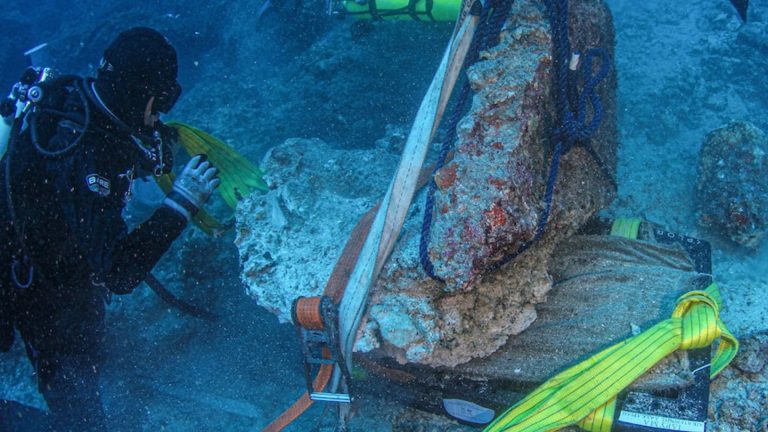
The skill and precision required to unearth these rocks is aided by the advanced technology of underwater balloons, designed by the Swiss watchmaker Hublot, which are filled with air by a compressor sitting on a ship above and help lift the rocks so that they can be moved.
These floating balloons are used to help lift the 8.5-tonne boulders. Photo: Antikythera Expedition
Professor of Archeology at the University of Geneva and one of the lead researchers on the project, Lorenz Baumer told the ABC that they are really trying to understand the site and find out what would have caused the ship to sink.
“The approach is really an archaeological one. We want to understand the site, we want to understand the history, and to learn about how this disaster happened,” said Baumer.
As the research team searches for clues at the bottom of the sea, the task is proving to be somewhat of a mammoth task, with the smallest hope of locating more fragments of the mechanism.
By Connie Skibinski, PhD candidate at the University of Newcastle.
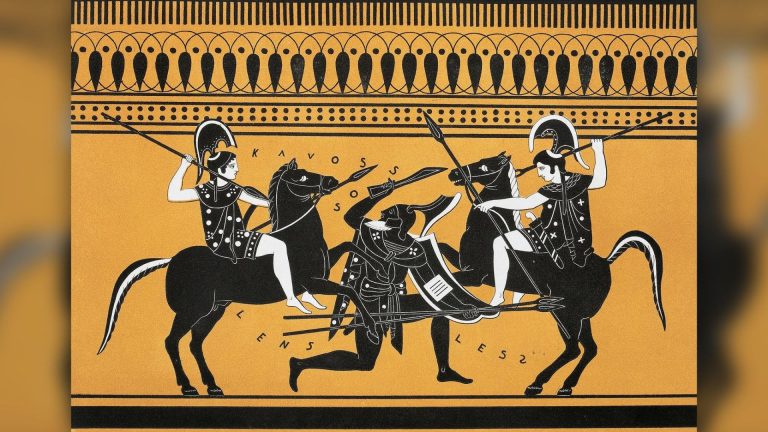
Imagine a society run by women for women, where men are only used for breeding purposes. Women who can rule themselves, found distant lands, and beat men in battle. It may sound like some far-fetched futuristic society, yet stories of the Amazons have been told since pre-Homeric times.
Though it was long assumed that the Amazons were purely fictitious figures, historian and classical folklorist Adrienne Mayor illustrates that they were based (in part) on historical fact, influenced by the Greek’s observations of the Scythians. Archaeological evidence indicates that Scythian women were engaged in hunting and warfare alongside men and were proficient with a bow and arrow, the choice weapons of the Amazons.
In Greco-Roman mythology, these real historical elements were embellished to create compelling narratives. Amazons are the daughters of Ares – the God of War – who devote their time to hunting and war-training. They put up a formidable and unflinching fight against many renowned Greek heroes, including Herakles, Theseus and Achilles. The Amazons represented an extreme inversion of the patriarchal status quo, as Strabo (1st century BC) describes them as an all-female society capable of governing their own people, conquering distant lands and founding cities – all without the aid of men.
Of course, there was never an all-female society in the ancient Greek world. In fact, women there lived under the rule of men and weren’t even considered citizens. Yet, the notion of powerful women living independently from men has continued to fascinate audiences across the millennia. In our own era this come into sharper focus with the growth of the feminist movement, as we look to the past to see how these mythical women can speak to the world today. The Amazons’ autonomy and proficiency in traditionally masculine realms has made them the perfect candidates to be refashioned as contemporary feminist icons. Here I will look at representations of two such women in recent films: Wonder Woman and Andromachie.
Wonder Woman: Modern-day Amazon and Feminist Icon
Wonder Woman (Warner Bros., 2017 & 2020) invokes the ancient Amazon warrior – but with a superhero twist. As princess of Themiscyra and daughter of the Amazon Queen Hippolyta, her connection to Greek mythology is made explicit. Like the ancient Amazons, she was taught to fight from a young age, undergoing intensive war-training in her homeland. As part of the superhero tradition, she also has superhuman powers which surpass those of her counterparts in ancient myth, such as superspeed, superstrength, and the ability to fly. With these attributes she can transcend the limits of human potential, regardless of gender, and is a formidable opponent for anyone who stands against her.
A woman walks past a billboard in Hong Kong featuring Gal Gadot as Wonder Woman in “Wonder Woman 1984” (Warner Bros. 2020). Image: Jackee Lainebla MC (Wikicommons)
As an Amazon warrior endowed with superhuman abilities, Wonder Woman does not shy away from warfare. In her debut in All Star Comics #8 (DC Comics, 1941), she helps US intelligence officer Steve Trevor fight Nazi forces. The feature film Wonder Woman (2017) is also set in war times, but revolves around her attempts to stop World War I by defeating Ares, the god responsible for the conflict. The 2020 film Wonder Woman 1984 shows a more complex attitude towards violence. Wonder Woman has an extensive fight scene with the antagonist Cheetah, but refrains from fighting the archvillain Maxwell Lord, instead convincing him to renounce his power of his own accord. Nonetheless, she is willing to use violence against her opponents, when innocent citizens’ lives are at threat. This points to a striking divergence from the ancient myths. While the ancient Amazons revelled in war for its own sake, Wonder Woman only fights for the end means of achieving justice, in true superhero fashion.
From her DC Comic debut in 1941, the character of Wonder Woman had strong feminist underpinnings. Her creator, William Moulton Marston, was an outspoken feminist and supporter of the suffragette movement. He sought to challenge the damsel in distress trope by creating a strong and empowered female hero who “encourages women to stand up for themselves, to learn to fight, and be strong, so they don’t have to be scared, or depend on men”. With his focus on female empowerment and independence, it is no surprise that Marston turned to the mythic Amazons for inspiration. Their all-female matriarchal society perhaps held special appeal in this first-wave feminist context. Wonder Woman saw renewed appeal during the 1960s, emerging with the rise in second-wave feminism. Feminist activist Gloria Steinem saw her as a positive female role model, representing gender equality and the importance of sisterhood. The cover of first issue of Steinem’s Ms. magazine (1972) featured one of Marston’s illustrations along with the title “Wonder Woman for President”, cementing Wonder Woman’s place as a feminist icon.[1]
Even now, decades after Wonder Woman’s debut, she continues to be a powerful female role model. In 2016, the United Nations chose Wonder Woman as the ‘Honorary Ambassador for the Empowerment of Women and Girls.’ Gal Gadot – who played the starring role in Wonder Woman (2017) and Wonder Woman 1984 (2020) – also sees the character as a role model for young women, upholding the values of love, compassion, acceptance and truth.
However, no singular feminist icon can appeal to all women. There are many who feel that her sexualised appearance furthers the objectification of women, reinforcing male fantasies surrounding the female body. There is also the issue of her lack of intersectionality – as a young, (generally perceived as) straight woman who adheres to traditional (Eurocentric) standards of beauty, Wonder Woman’s image may be alienating to women with differing lived experiences. For some of these women, perhaps The Old Guard’s Andromache is a more relatable role model.
“The Old Guard” (Netflix, 2020), Official Trailer
Netflix’s The Old Guard (2020) – based on Greg Rucka’s[2] 2017 comic book series of the same name – provides another striking example of an ancient warrior woman refashioned for the modern day. Andromache the Scythian (Andy) leads a team of immortal warriors who intervene in history for the betterment of humanity. Initially, Andy is elusive about her origins. As the film progresses, small details emerge which hint at her ancient past. She mentions that she was once worshipped as a God, and numerous flashbacks show her in elaborately embroidered ancient clothing, fighting on horseback with a bow and arrow.
“The Old Guard Through History” (Netflix, 2020) highlights Andy’s Scythian origins.
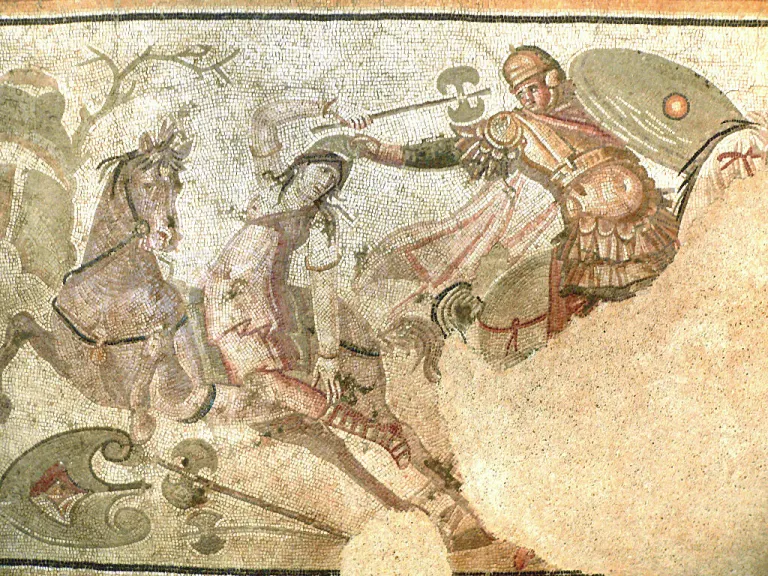
This all comes together when we see the information that James Copley (a former CIA operative) has gathered about Andy and the other immortals. Referring to her as “the eternal warrior”, Copley stands in front of a bulletin board covered in ancient paraphernalia. This includes: a mosaic of an Amazon fighting a Greco-Roman soldier; a page from Jean Racine’s Andromaque (based on Euripides’ Andromache); an old map of Scythia; and a photograph of a labrys (double-headed axe). This situates Andy as a millennia old Scythian warrior, with strong links to Amazon mythology.
This ancient mosaic from Antioch – dated to the 4th century AD – is among the images on Copley’s bulletin board. The original mosaic is on display in the Louvre, Inv: MA3457. (Wikicommons)
As an eternal warrior, Andy has lived through countless battles and wars, and is desensitized to violence. Throughout the film, she engages in multiple combat scenes, fighting off (predominantly male) opponents with her battle-axe and gun. And yet, Andy never kills gratuitously. She has a strong respect for human life, only killing if it is necessary to save innocent people, or protect her fellow immortals. Much like Wonder Woman, Andy uses violence as a tool for justice, and is therefore a heroic figure.
Conclusion
Through the creation of strong female characters like Wonder Woman and Andromache the Scythian, the legacy of ancient warrior women lives on in the modern day, while being adjusted to suit the changing interests of the contemporary audience. In both the ancient and modern world, representations of Amazons shed light on societal attitudes towards women. To the ancient male audience, the Amazons reflected the polar opposite of the ideal subservient woman, thus providing a model of how women shouldn’t be. By contrast, in our contemporary feminist climate, Wonder Woman and Andy are positive role models for women and girls, standing as powerful examples of female strength and compassion.
Connie Skibinski is a PhD (Classics) candidate at The University of Newcastle, having completed an honours degree in Ancient History/Ancient Greek at The University of Sydney. Her doctoral research examines the complex and multifaceted portrayal of the Amazons in ancient literature and art, and analyses how Amazon mythology has been reconfigured from the Medieval era to the twenty-first century. Connie was interviewed by ABC Radio National to discuss mythological links in ‘Wonder Woman 1984’ (2021) when the movie debuted, and she continues to explore modern receptions of Amazon mythology, currently focusing on the Amazons in ‘Xena: Warrior Princess’.
[1] Wonder Woman has repeatedly featured on the cover of Ms Magazine, particularly on anniversary issues.
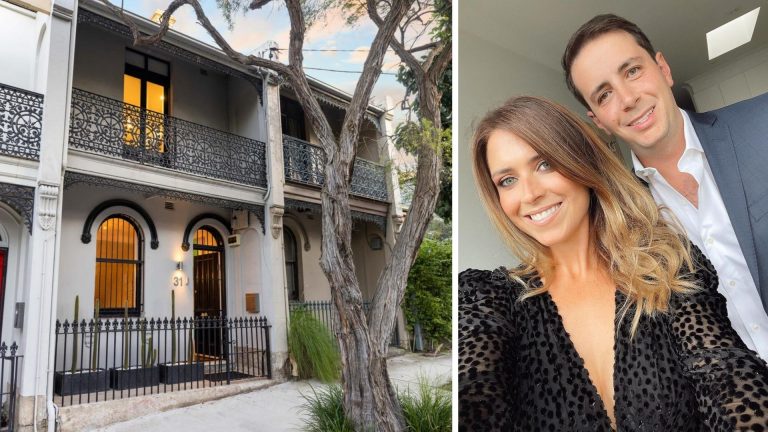
Ahead of the arrival of their first child, billionaire freight heir Anthony Tzaneros and interior designer wife Poppy, are selling their recently renovated Woollahra terrace in Sydney’s east.
The classic Rush street terrace, built in the 1890s, sits on a 120 sqm block of land featuring three bedrooms and a studio apartment above the garage.
The Woolhara Terrace. Photos: realestate.com.au
The Woollahra property was purchased for $2.1 million in 2016 and is currently placed within a $3.25 million guide for its September 10 auction.
The couple tied the knot last October, and following their traditional Greek ceremony, took over the Rockpool restaurant for their reception.
The couple will be relocating to their recently purchased $7.45 million Bellevue Hill home.
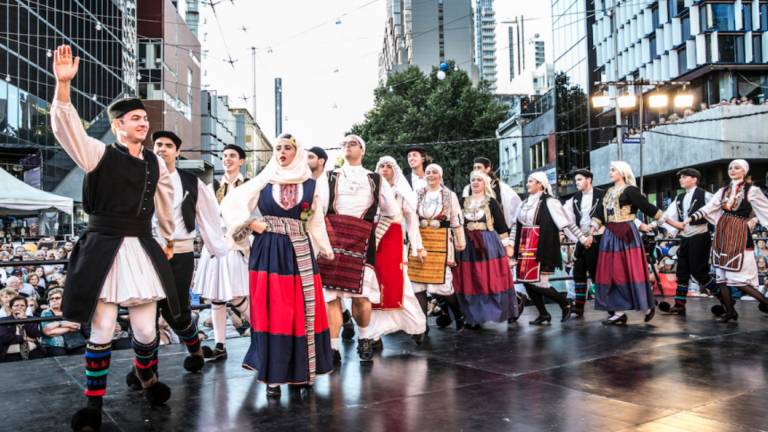
Melbourne’s largest Greek cultural celebration is back for another epic street party. This year’s Greek fest will take over Lonsdale Street for a weekend packed with music, dancing and carnival rides.
The Antipodes festival holds the title of Melbourne’s longest running Greek festival. Launched in 1987, Antipodes, or the Lonsdale Street Greek Festival, has been a rich showcase of Hellenic arts and culture for delighted audiences.
This year’s Antipodes festival (Lonsdale Street Greek Festival) was originally planned for March 5 and 6, but has been postponed until late October.
— Greek Community of Melbourne (@gocmv) July 27, 2022
This is the third proposed date for the festival after two postponements due to coronavirus concerns. They replaced the event last year with a Greek music event which featured food trucks and live music to keep the ‘Greek spirit alive’ despite the setback.
The event sees community, traditional and contemporary groups come together to present and perform across three stages. 80 stalls will adorn the street and will be complemented by the Lonsdale St Precinct traders, who will extend their trade for the weekend
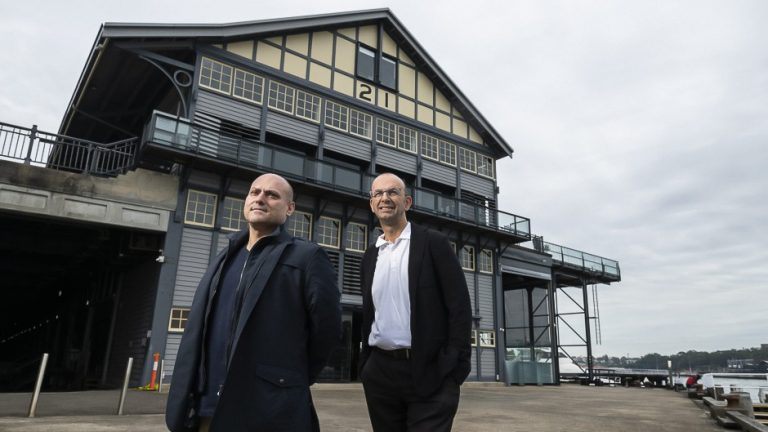
Flying Fish owner, Con Dedes and chef, Danny Russo’s new venture Sala is an Italian seafood restaurant that will open in October at Sydney’s Pyrmont wharf.
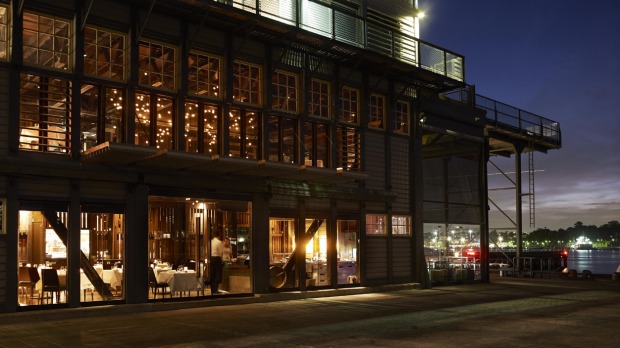
The historic waterfront location was the original home of Flying Fish before it moved to The Star in 2018, going on to become a Japanese and Chinese fusion restaurant in 2019 prior to its closing last year.
“It’s a clever move, Sydney having lost many of its harbourside seafood restaurants,” wrote Scott Bolles from Good Food.
The Pyrmont site when it was originally Flying Fish.
Speaking with Good Food, Danny said: “We thought there was a gap in the market. The whole idea is built around putting the best Australian seafood on the plate.”
Con added that dishes will include some of Russo’s signature dishes.
“We did a tasting and Danny’s squid ink tortellini on tomato sugo lives on in my mind. It’s going on the menu,” Con said.
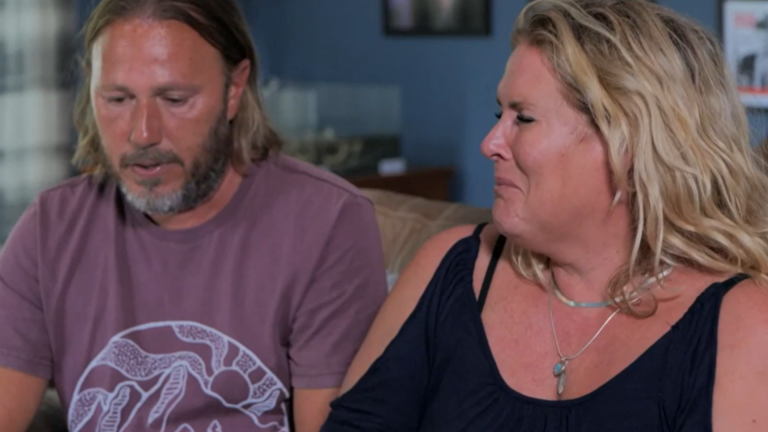
The parents of Jack Fenton, the 22-year-old British tourist struck by a helicopter blade in Greece are seeking justice for their son.
Jack was killed instantly when he was struck by the tail rotor of a Bell 407 helicopter that had only minutes earlier landed at the Lolos helipad close to Athens international airport. The privately chartered aircraft had brought him and a group of six friends from Mykonos following a birthday celebration holiday.
The initial explanation provided by Greek authorities claimed that Jack had ignored safety instructions and ran back towards the helicopter to take a selfie.
Jack’s parents, Miguel and Tori, dispute this, alleging that safety protocols weren’t followed by the helicopter company, Superior Air.
“We’re having to defend our son and we shouldn’t have to,” Tori told ITV News.
“We know he’s not that stupid, everybody that was there said it was nothing of the sort and it makes me angry.”
Jack with his father Miguel. Photo: Supplied to ITV News
Family friend, Robin Stanton-Gleaves accompanied the boys on their Grecian trip, and his son watched the incident unfold.
“Accidents happen in life … but there are accidents that are preventable,” Robin said.
“This is one of those. This is a preventable accident. Because if they disembarked the helicopter and they turned the helicopter off, Jack would still be alive.”
Alternatively he says, had protocals been followed, Jack would have been escorted given the helicopter blade was still spinning.
Jack Fenton
Speaking of the accident, Miguel said: “It’s brutal in every manner and it should never have happened”.
“To have that as a lasting memory, you don’t ever want to think that of your child.”
“There are glaring errors which has taken Jack … and ended his life.”
Tori and Miguel are desperate for answers, but the Greek authorities have not been in contact with them, refusing to comment while the investigation is underway.
Miguel recounted to ITV News how that night he was expecting to awaken to Jack returning home from holidays. Rather, he and wife Tori woke to police knocking on the door informing them of what had happened.
“The gap that he’s left in our lives is just unreal. We won’t ever get over it and it’s a scary, scary path that we’re going to have to take forever,” Miguel said.
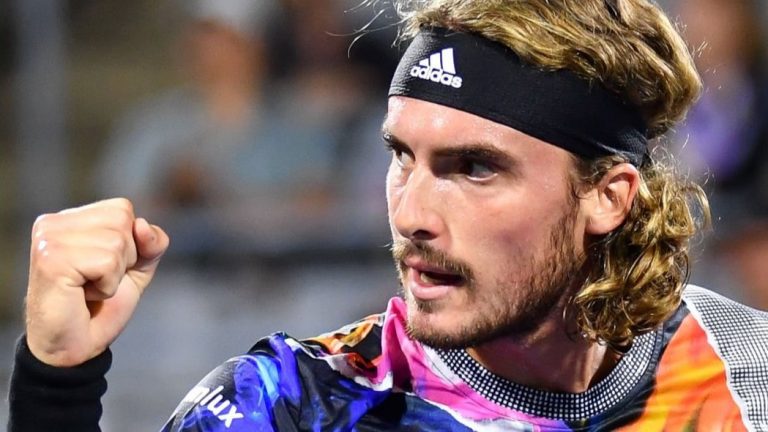
Greek tennis star, Stefanos Tsitsipas, is into the quarter-final of the Cincinnati Masters after defeating Filip Krajinovic in straight sets 6-3, 6-3.
This was Tsitsipas’ first victory in two events, after being defeating by Nick Kyrgios in a third-round encounter at Wimbledon and later lost to Briton Jack Draper last week in Montreal.
Tsitsipas scored six love service holds, including each of his final four service games, and dropped just three points on first serve in the one-hour, nine minute match.
Following on the success of gold medal race walker Antigoni Ntrismpioti and long jumper Miltiadis Tentoglou on Wednesday, Greece has continued to climb in the medal rankings at the 2022 European Championships in Munich.
With a total of seven medals: three gold and four silver – Greece is currently ranked ninth of 29 on the medal table.
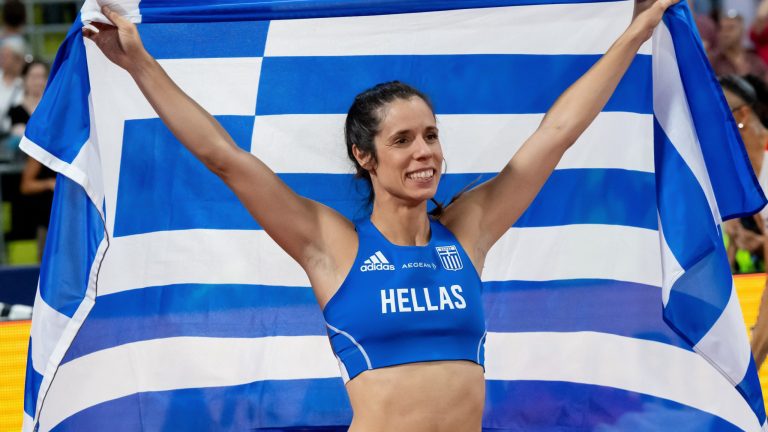
Yesterday, 32-year-old pole vaulter Katerina Stefanidi made history when she won silver in the women’s pole vault final, becoming the first pole vaulter to win four consecutive medals in the European Championships.
The medal marks her 11th in a major championship and a decade of European Championship finals.
Η καταπληκτική Κατερίνα Στεφανίδη έγινε η πρώτη αθλήτρια που κερδίζει τέταρτο και συνεχόμενο μάλιστα μετάλλιο στο Ευρωπαϊκό πρωτάθλημα στίβου κατακτώντας την δεύτερη θέση με φετινό ρεκόρ στα 4,75μ.! Πολλά συγχαρητήρια Κατερίνα#teamhellas#stefanidi#EuropeanChampionshippic.twitter.com/6Jgmn30XZp
— Ηellenic Olympic Committee (@HellenicOlympic) August 18, 2022
Greece’s success in athletics at the European Championships was also matched in the water, with the nation claiming four medals in rowing: one gold and three silver.
Earlier in the week, 23-year-old Antonios Papakonstantinou won gold after claiming the lightweight men’s single sculls titles. With a 2 minute and 37 second lead ahead of Italy’s Gabriel Soares, Papakonstantinou completed the2km race in 7 minutes and 21 seconds.
In the lightweight women’s single sculls, 26-year-old Zoi Fitsiou claimed a silver medal. Taking to Instagram, the 26-year-old said she was “very happy” to be part of Greece’s 2022 European Championship team.
The medalists have been celebrated in Greece, with Prime Minister Kyriakos Mitsotakis congratulating the winners on Twitter.
Οι Έλληνες αθλητές συνεχίζουν να πρωταγωνιστούν στην Ευρώπη. Μπράβο στην Κατερίνα, τον Απόστολο και τον Κριστιάν. Τα αληθινά μετάλλιά μας είναι τα παιδιά μας! pic.twitter.com/1XeSLAdz16
Θερμά συγχαρητήρια στους αθλητές μας που υψώνουν τη γαλανόλευκη στα βάθρα του Ευρωπαϊκού Πρωταθλήματος Στίβου #Munich2022. Αντιγόνη, Μίλτο, Αντώνη, σας ευχαριστούμε. Τα Ελληνόπουλα που αγωνίζονται εκεί, οδηγούν τη χώρα μακριά και ψηλά. Μας κάνουν όλους περήφανους και χαρούμενους. pic.twitter.com/wf0PXGtPzA
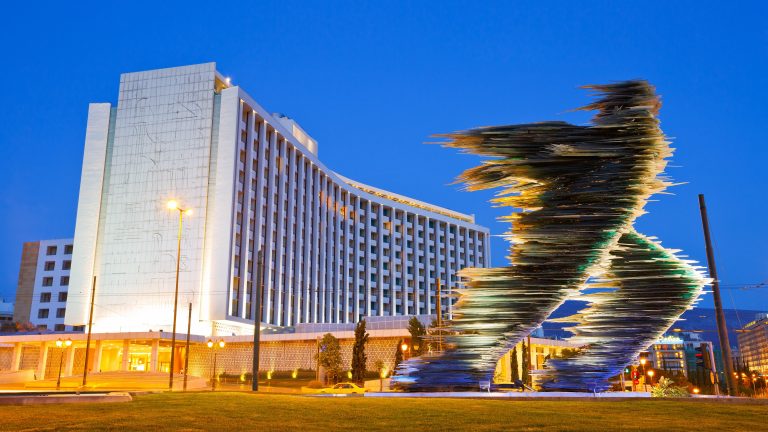
There is a fascinating and unique landmark in Athens referred to as the ‘Dromeas’ or in English – the ‘Runner.’ It is a sculpture, created by the artist Costas Varotsos, which now (since 1995), stands majestically across from the Athens Hilton Hotel on Vasilisis Sofias Street. Perhaps ‘stands’ isn’t quite the right word to describe the placing of this majestic sculpture, as it is so representative of motion, that to me it seems ready to take to the surrounding streets and join the traffic!
Like so many, I’m moved and fascinated both consciously and viscerally by the originality of Dromeas. Every time I see it, it stirs within me an awe of its uniqueness, but also a sense of sadness. I perceive it as a lonely figure, not being able to find peace; restless, always on the move, unable to settle, as its blurred imagery suggests to me. And in its glass jaggedness, I sense a ‘don’t get too close to me’ vibe.
Like a porcupine’s or echidna’s needles of defence, the sharp edges of my Dromeas (everyone interprets it their way), denote its protective mechanism – after being hurt, criticised, shunned even. The exterior may be sharp and hard, but it – glass, is also fragile. He (or perhaps she), is a beautiful sensitive creature to me, trying to escape perhaps persecution, or poverty or just his/her own wanderlust: like Greeks migrating to Australia.
I want to posit my own queries about this art work to its creator, as my interest has been provoked by not only the glass statue itself, but also from the many interviews of Mr Varotsos that I’ve come across over the years.
For example, in one of his interviews he compares Dromeas’ motion to Greece and its civilisation whereby it moves horizontally and vertically, like the zembekiko dance, as though trying to reach the sacred. I also recall Mr Varotsos talking about his studies in Rome and how he noticed the strong Ancient Greek influences there so much so, that being a Greek abroad made him come back to Greece, more Greek.
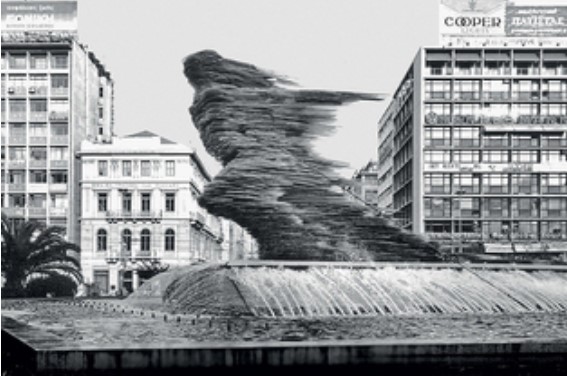
It is interesting that the ‘Dromeas’ as much admired as it is, was apparently initially shunned: A recurring theme in relevant articles was that Greeks didn’t know how to ‘take’ this ‘modernist’ sculpture by a fellow Greek no less. Hence, the initially placed in Omonia Square in 1988, 12meter (30ft) ‘Dromeas’, was in turn much discussed and written about. (It was moved from its original Omonia location due to the building of the metro station there, which caused vibrating that could adversely affect the glass sculpture.)
Dromeas in Omonia (1988)
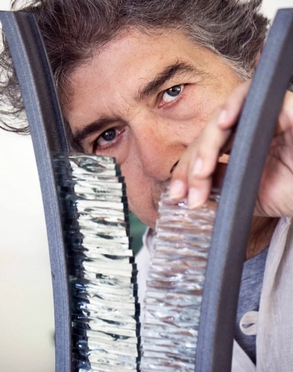
Eager to get to the ‘source’ of this work of art and its fanfare, I managed to catch up with Mr Costas Varotsos, who – even after his multiple interviews about the Dromeas sculpture in particular, keenly and patiently spoke with me: “The Dromeas is about the human condition; life’s constant movement – even from birth to death. And the people in Greece eventually understood this.
It signifies a person passing through a place, going elsewhere, not knowing when he or she will return. And so, the original name of the sculpture was ‘O Xenos’ (The Stranger). It was actually later on that it became Dromeas – or The Runner, or even The Traveller. In 1988 there was talk of the Olympics for Greece, and because of the ‘motion’ of the sculpture too, the public saw it as ‘The Runner’. But from my point of view a stranger is always a runner, a traveller.”
Costas Varotsos
I ask Mr Varotsos if he knows much about Australia, including the Greek Australian migration experience and whether he’s been there?
“I would like to go to Australia, because I’ve been to many places, but not there. I’ve lived in the States, and in Europe … and as Greeks, we all have someone there (in Australia). It’s something I want to do. I even have distant relatives there who keep in touch with me,” he asserts.
In response to my question: “What would you as a sculptor design in Australia?” he thoughtfully answers: “It depends on the place, on the environment; on the influence of the environment – it has to blend in.
“I don’t put my works in a place, but rather, the work is born from the place. It’s not an egotistical placement. I have an interest in Aboriginal art as it has always had this identification with place that gives it its authenticity, which I admire.”
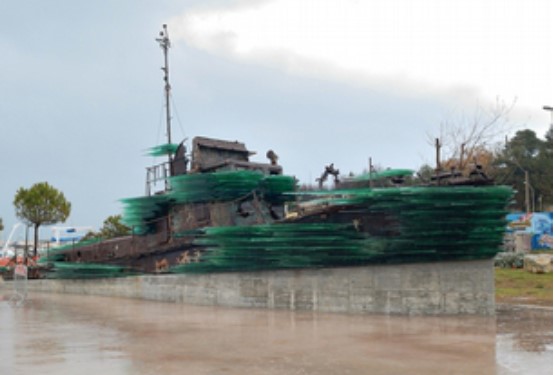
Referring to another of his sculptures, based in Italy – L’approdo (The Landing), he gives an example of his art in the context of place and symbolism.
“My sculpture in Ortrando, Italy was important because it’s a remembrance to the tragic occurrence of people in motion. It was in the early 90’s, and they were trying to get to Italy from Albania. All 85 of them died at sea – 60 were women and children. I took what was left of the destroyed boat and with my glass sculpting paid homage to the dead and to their movement,” he says.
L’approdo – The Landing (2012)
“Hence, my work is not about designing for a country… It’s about the human condition, in place; life’s constant movement, even from birth to death. And in the case of Greek Australians, their movement from Greece to Australia relates to my Dromeas sculpture of course, but also beyond, to the constantly shifting paradigm of the place transforming people and vice versa.”
He continues, “Australians now seem to be in motion, as avid travellers abroad. That is what the Dromeas symbolises – the life force, of energy and motion.”
Hopefully, Mr Costas Varotsos will visit our Aussie shores soon and be inspired – and perhaps invited, by our beautiful place to create a sculpture for us.