Advanced technologies used in a new phase of Antikythera excavation

·

A new phase of the Antikythera expedition has now been undertaken by the Swiss School of Archeology under the direction of Dr Angeliki G Simosi, and is expected to run until 2025. 

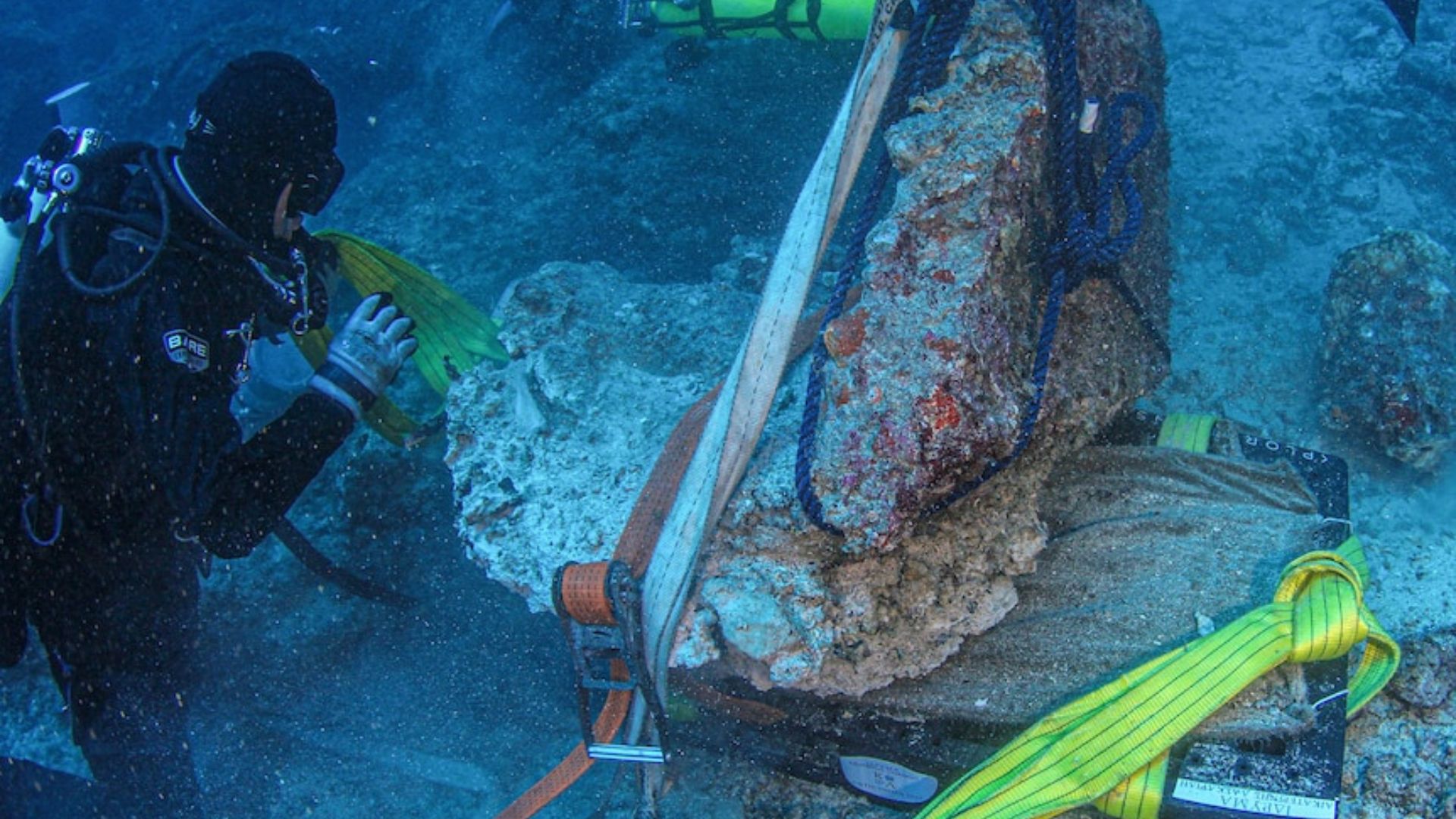
As the research teams dive deep to uncover the mystery that is the Antikythera shipwreck, the use of new technologies is proving to be of great help in the process of removing tonnes of rock from the sea floor surrounding the shipwreck. 

The skill and precision required to unearth these rocks is aided by the advanced technology of underwater balloons, designed by the Swiss watchmaker Hublot, which are filled with air by a compressor sitting on a ship above and help lift the rocks so that they can be moved. 

These floating balloons are used to help lift the 8.5-tonne boulders. Photo: Antikythera Expedition

Professor of Archeology at the University of Geneva and one of the lead researchers on the project, Lorenz Baumer told the ABC that they are really trying to understand the site and find out what would have caused the ship to sink. 

“The approach is really an archaeological one. We want to understand the site, we want to understand the history, and to learn about how this disaster happened,” said Baumer. 

As the research team searches for clues at the bottom of the sea, the task is proving to be somewhat of a mammoth task, with the smallest hope of locating more fragments of the mechanism.

Source: ABC

Share:

KEEP UP TO DATE WITH TGH

By subscribing you accept our Terms of Service and Privacy Policy.

Latest News

Dr Yianni Cartledge traces the stories of Ikarians in Australia through archival research

Inspired by his own family history and the broader migrant experience, Dr Yianni Cartledge has published a book exploring Ikarian migration.

Elfa Moraitakis included among the most powerful people in Western Sydney

Elfa Moraitakis has been named among the most powerful people in Western Sydney in The Daily Telegraph’s list.

Chicago family returns ancient Greek artefacts to Greece

Five ancient Greek artefacts spanning from the 6th century BC to the Roman period have been returned to Greece by a family from Chicago.

Kefalonia beach voted as the second best beach in the world

Fteri Beach has been ranked the second most spectacular beach in the world for 2026 in the annual World’s 50 Beaches list.

Frank Alexopoulos says leaving construction job transformed his approach to fatherhood

Frank Alexopoulos says a call to Lifeline during a difficult period in his life transformed the way he approached fatherhood.

You May Also Like

Two dead as Houthis strike Greek-owned ship in Red Sea

Two sailors were killed in a Houthi missile attack on Wednesday, March 6 on the Greek-owned freight vessel - 'True Confidence' in the Red Sea.

Aqueduct and hidden treasures discovered in ‘lost’ city of Tenea in Greece

Part of the Hadrianic aqueduct, one of the largest hydraulic works of the 2nd century AD in Greece, has been brought to light.

Cypriots for ANZACs: Placing Cyprus’ wartime legacy on the map in Sydney

The 2026 ANZAC Day march in Sydney provided a platform for communities to represent their wartime histories within the Australian narrative