Home Blog Page 1236

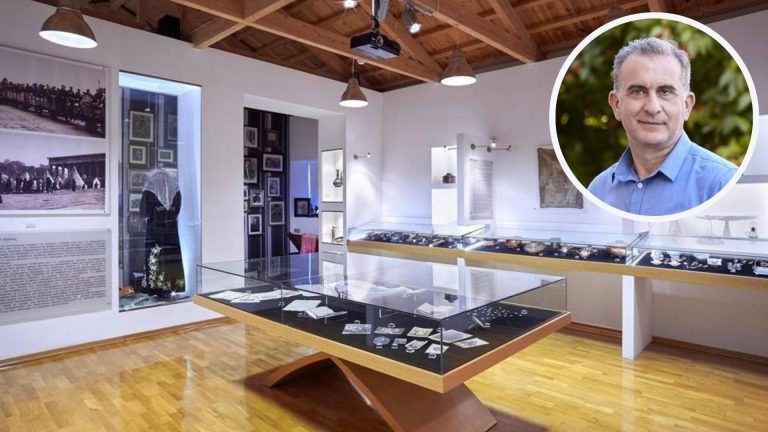
Giannis Koutoulias on fighting to preserve history at the Museum of Asia Minor Culture

By Thodoris Roussos.

In the Museum of Asia Minor Culture, the presence of the Greeks in Asia Minor is revived through the relics, the aura and the people who keep history “alive.” The Greek Herald travelled, through the President of the Museum, Giannis Koutoulias, to Ionia, Cappadocia, Ayvali and Pontus, turning time back a century.

We uncover the history with help from Mr Koutoulias, who starts our interview by praising the Association of Asia Minor Culture of Egaleo and Nea Kydonies for its contribution to the preservation of memory and tradition.

“The Association of Asia Minor Culture of Egaleo and Nea Kydoniesis, one of the largest in the region, envisioned the establishment of a museum that will house the objects and historical evidence (photos – documents) that were rescued by the refugees who lived in the area from 1922 onwards,” Mr Koutoulias explains.
When did you start this precious legacy?

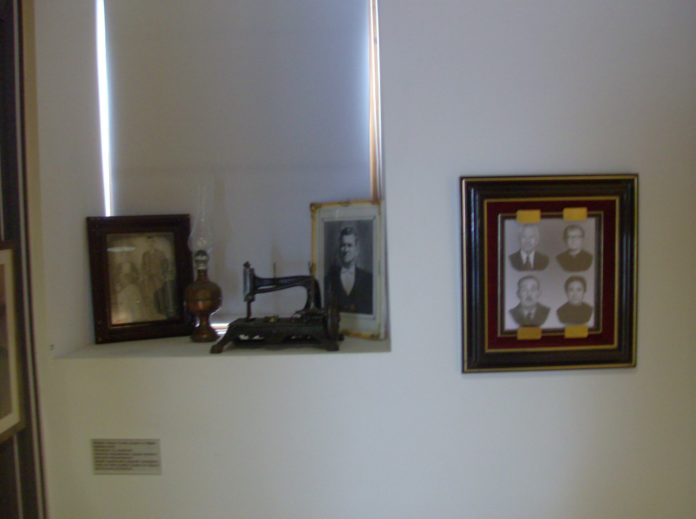
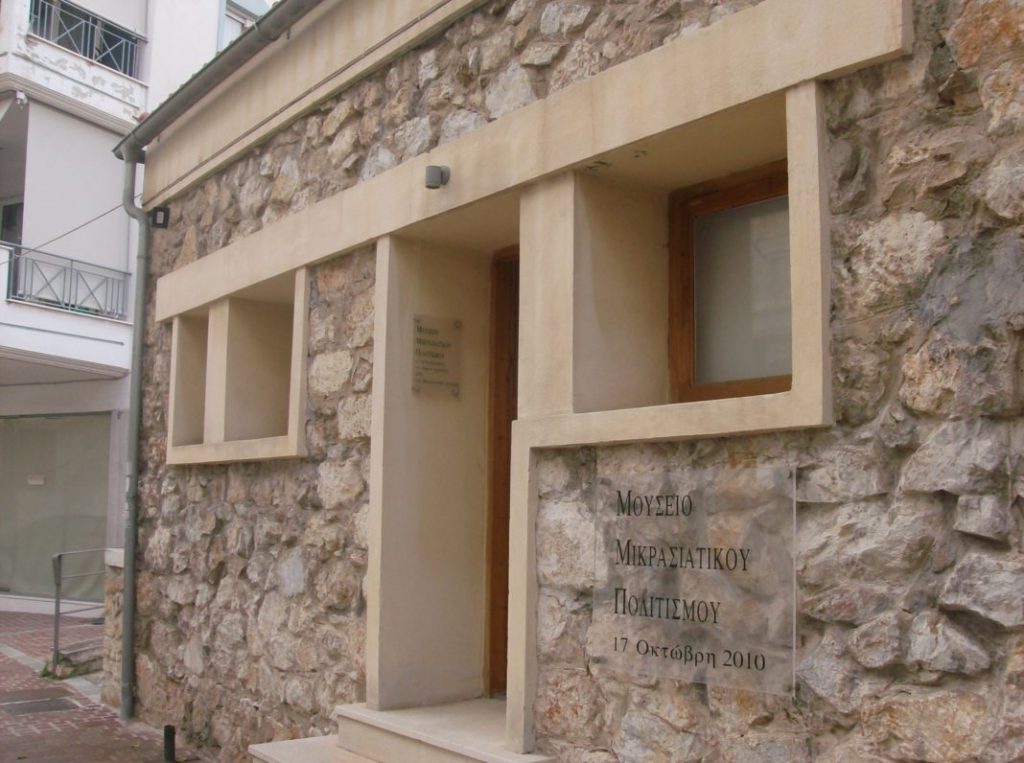
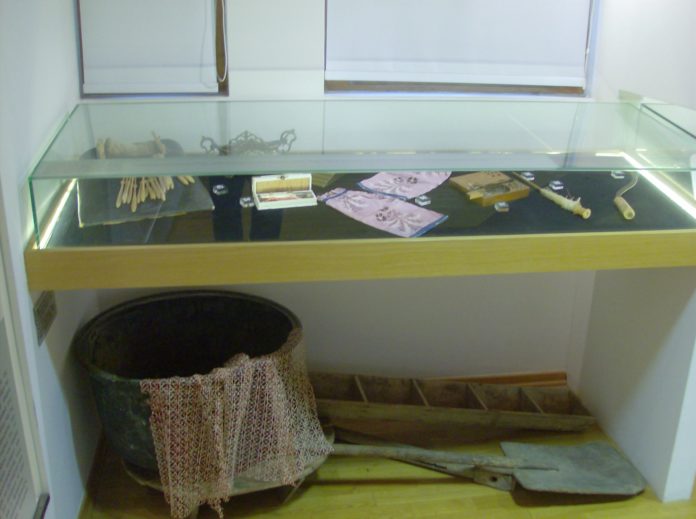
After many efforts, both to collect the objects and to find the space, on October 17, 2010, the Museum of Asia Minor Culture of Egaleo was inaugurated. In the two halls of old refugee houses, visitors wander through the exhibits and especially the stories they hide in Ionia, Cappadocia and Pontus and the rest of Asia Minor through the objects of everyday life and the historical evidence – donations by friends of the museum.

What is the aim of the museum?

The aim of the museum is to make clear to its visitors the historical context of the presence of Greeks in Asia Minor, the Asia Minor Catastrophe and the settlement of refugees in Greece and especially in the former settlement ‘Nea Kydoniesis’ and now the Municipality of Egaleo through the relics that the refugees brought with them to preserve the memories of their homeland.
What kind of exhibits can be seen at the museum?

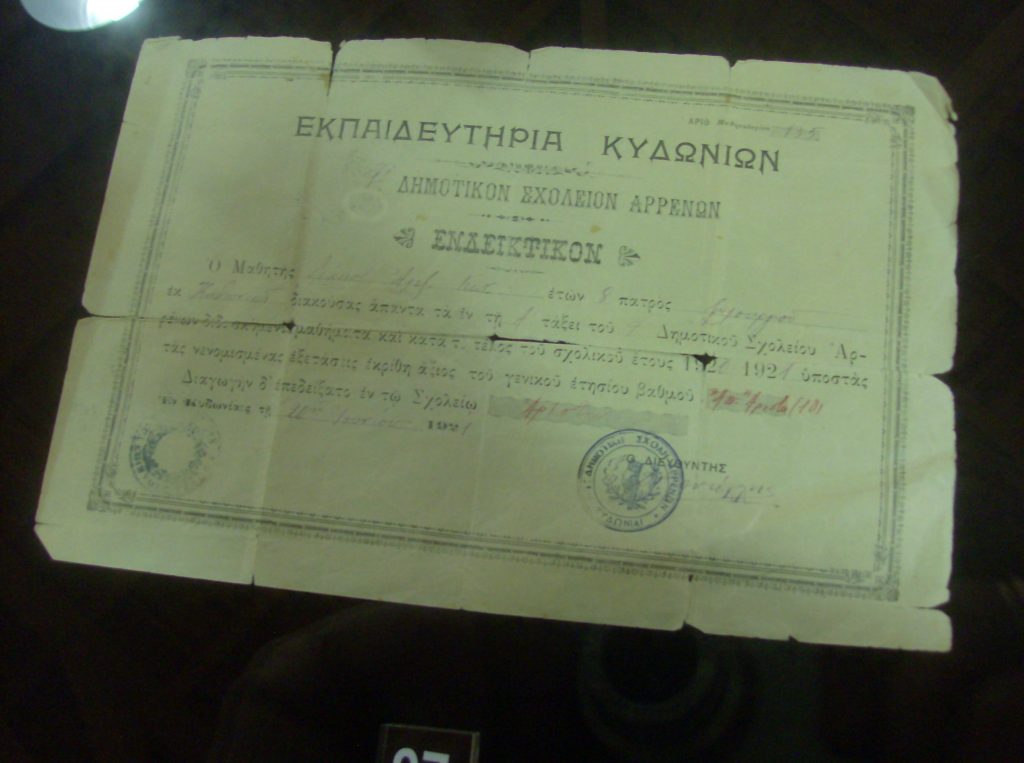
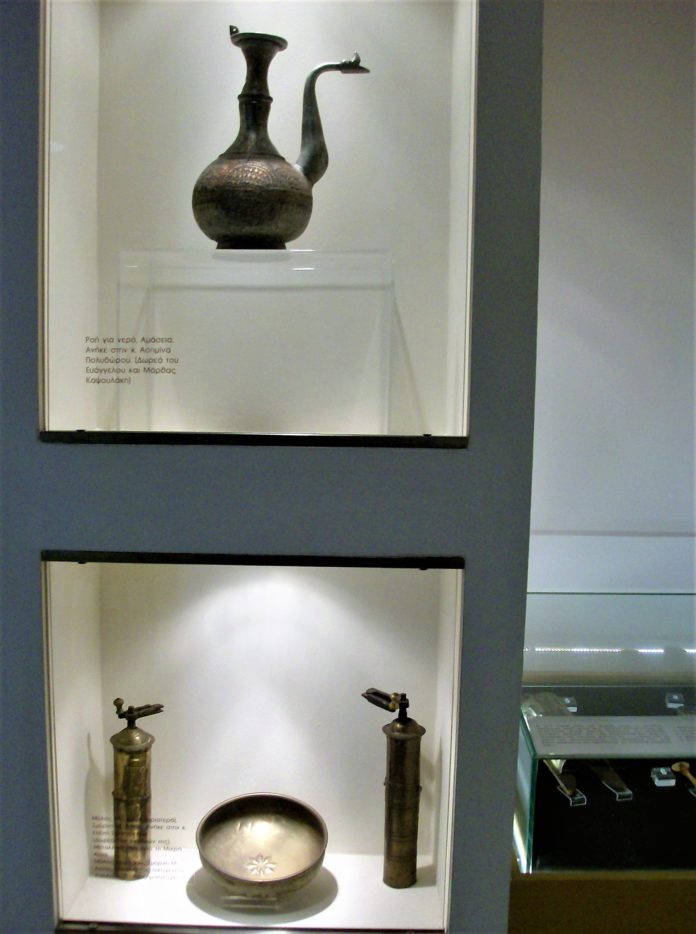
The museum’s exhibits cover aspects of private and public life with an emphasis on cooking, treating, professions, cleanliness and clothing. At the same time, a series of documents, literary books, photographs and coins from Asia Minor, as well as the refugee settlement in Attica and especially Egaleo, are exhibited. It is important that short accompanying wall texts provide the visitor with the opportunity to form a more complete picture of the museum’s exhibits and the historical period they cover.

What is the response of people visiting the museum?

Thousands of visitors to the museum over the years, of all ages, are making a landmark of the area, proving in practice the seriousness of the project. In fact, the exhibition is being digitised in order to be seen online by people in any corner of the world, an element that will strengthen its importance. We are very happy as this project will be completed within the year, which is symbolic for us since this year marks a century since the tragic events of the Asia Minor Catastrophe.

At the same time, a series of publications about the museum have given it prominence in the Asia Minor community. From testimonies we had gathered, from recipes of food, sweets, liqueurs, cosmetics but also fairy tales, all have become printed in order not to lose the slightest information of the unique culture that the persecuted and afflicted people brought from Asia Minor.
How does the Association contribute to this?

The Association has a set of activities covering all aspects of this rich culture: dance, choir, traditional song, theatre, cooking seminars, needlework and many other activities that attract people of all ages and demonstrate its multifaceted action.

Has anything been done in Turkey?

In 2017, the Association and the museum organised with huge success the temporary exhibition entitled Izmir, beautiful city, beautiful people in the Turkish city of Izmir, where for the first time the Turkish authorities gave permission to display in the City Hall of Izmir objects and photographs belonging to Greek residents of the area before the horror.

The exhibition was repeated in Athens in 2019 at the Old Parliament with similar actions at the Acropolis Museum, while it is preparing to travel to New York and Chicago.
Do you think it is time to take action in Australia?

We have made a request to the Museum of Immigration in Melbourne for the exhibition to be held there, so that our Australian expatriates can visit it and at the same time descendants of Asia Minor refugees can tell us their own stories in order to be recorded. We would be really happy if we managed to achieve this goal in this museum or in any place indicated to us by the very active Greek community of Australia.

Do you have a message for the Greek diaspora in Australia?

Memory is the most important thing we have and it should never be forgotten and any testimony of a refugee or immigrant leaves a legacy and a historical source for the future, so we hope at some point in the near future to visit Australia to convey the idea of Asia Minor to the Greek community.

Special thanks to Mrs Dina Kalliontzis for her valuable help in making this interview possible.

*Giannis Koutoulias is a historian-archaeologist with postgraduate studies in Diplomatic History as well as in the Management of Cultural Units. He is head of the Department of Educational Programs at the Acropolis Museum and head of the Museum of Asia Minor Culture of Egaleo. He is an elected municipal councillor and has served as Deputy Mayor of Education, Culture and Sports and President of the Immigrant Integration Council. He has given numerous lectures in Greece and abroad and has participated in many publications as a writer or editor.

‘She looked at me and smiled’: Greek Australians remember Queen Elizabeth II

Although Queen Elizabeth II died last week after 70 years on the British throne, her legacy will be remembered by some Greek Australians who had personal experiences with the monarch during her 16 visits to Australia.

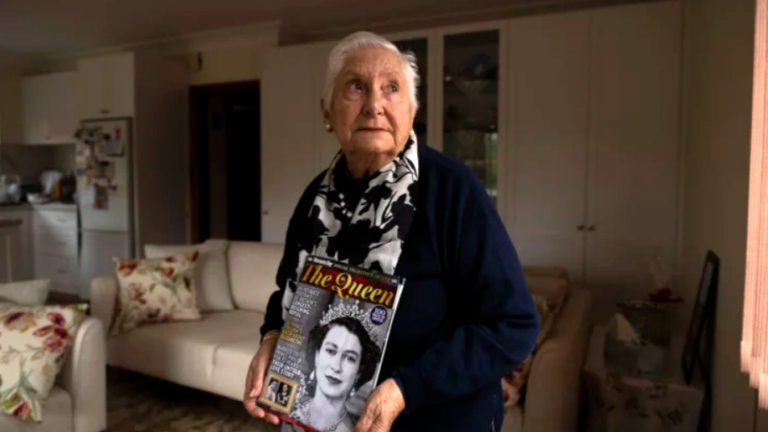
One such Greek Australian was Zaharoula Zervos from Kingsford in Sydney’s eastern suburbs.

Speaking to The Sydney Morning Herald, Ms Zervos remembered waving to a young Queen Elizabeth when she visited Katoomba in 1954 and yelling out “Yassou Philip” to the Queen’s Greece-born husband, who passed away in 2021 at the age of 99.

Ms Zervos was “delighted” to see the Prince wave back at her in response.

Later in 1970, the 85-year-old had a second chance to see the monarch when she drove along Sydney’s Macquarie Street to Government House.

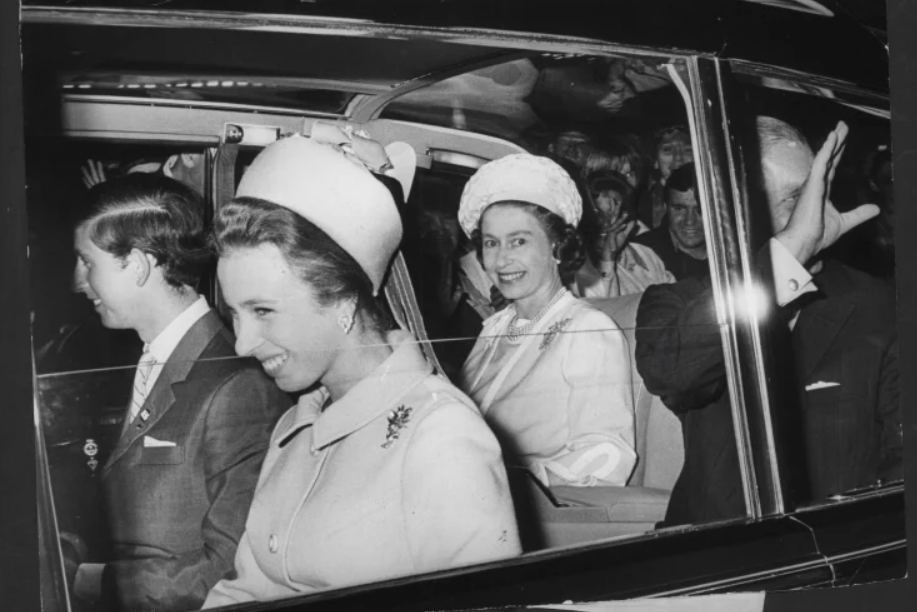
Prince Charles, Princess Anne, the Queen and Prince Phillip leaving the Trocadero for Government House in Sydney in April 1970. Photo: George Lipman.

“When we were on Macquarie Street, the car was going very, very slowly and my daughter Kaliopi was right at the front and looked at the car. And the Queen turned around and looked at Kaliopi who still remembers it,” Ms Zervos told the SMH.

Kaliopi picked up the story at this stage and described how she was pushed onto the car window by the surging crowd and the Queen “looked at me and smiled.”

Ms Zervos and Kaliopi weren’t the only Greek Australians to have fond memories of the Queen.

94-year-old Kytherian, Stephen Zantiotis, who The Greek Herald interviewed last week, also shared a small movie he made when Queen Elizabeth visited his hometown of Wollongong in 1954.

Stephen Zantiotis’ video of the Queen’s visit to Wollongong.

The boss of Racing NSW and Chairman of the Australian Rugby League (ARL) Commission, Peter V’landys, also recalled his recent lunch with Queen Elizabeth this year at Windsor Castle on the outskirts of London.

“She was mischievous,” the proud Kytherian told the SMH. “I gave a few barbs and she gave as good as she got. You could tell she was enjoying it because she had a little grin on her face.”

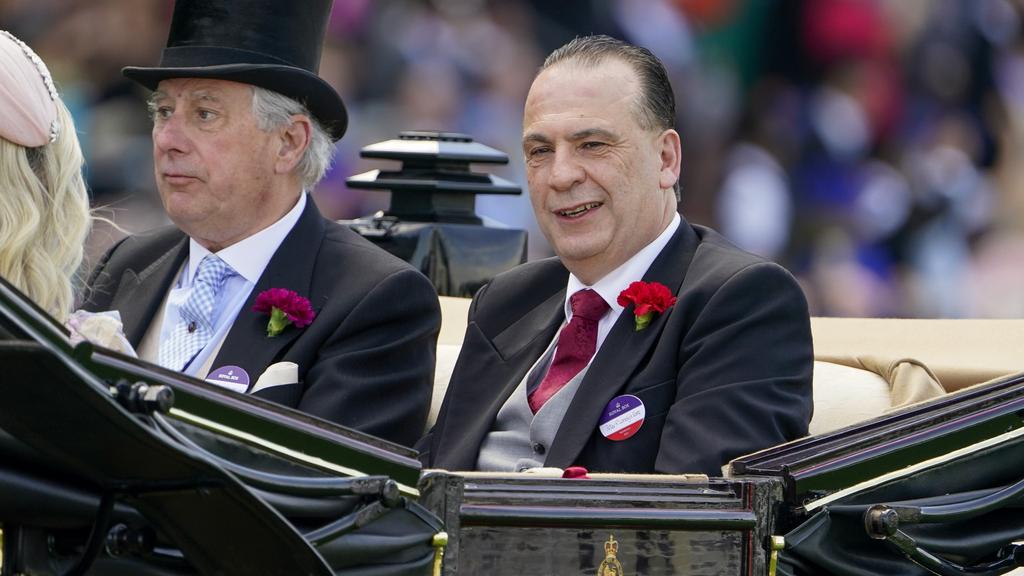
Peter V’landys had lunch with the Queen earlier this year. Photo: Alan Crowhurst/Getty Images.

Over lunch, which was also attended by the newly-proclaimed King Charles III, V’landys said the late Queen shared the origins of her passion for horses and questioned him on his background as a Greek immigrant to Australia.

READ MORE: From Kythera to Rugby League: Peter V’landys on how Greek parents influenced his career.

Source: The Sydney Morning Herald.

New High Commissioner of Cyprus in Australia welcomed to Canberra at luncheon

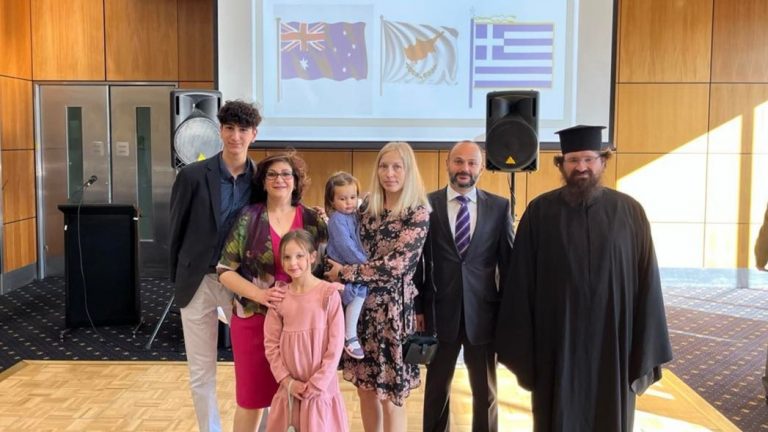
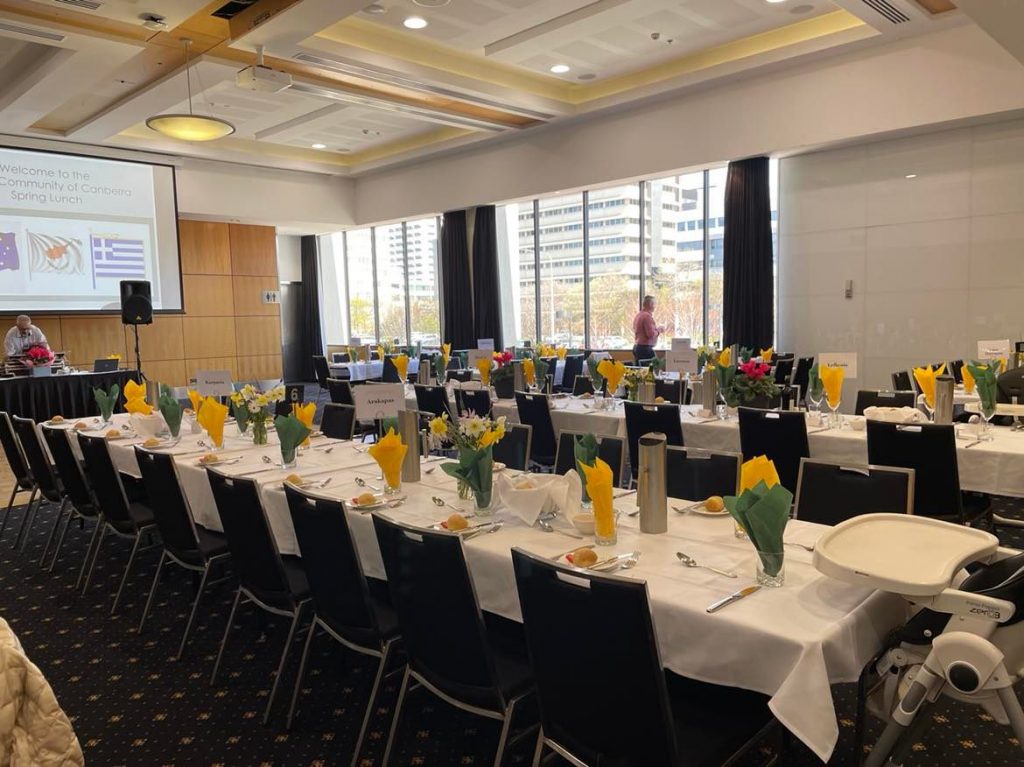
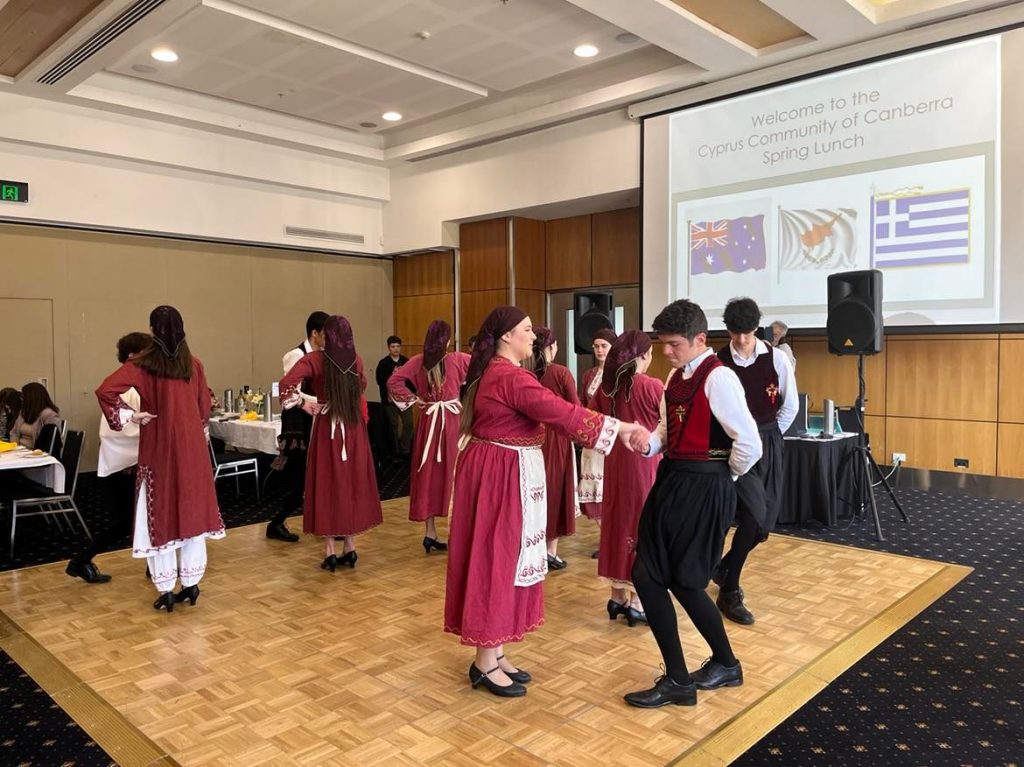
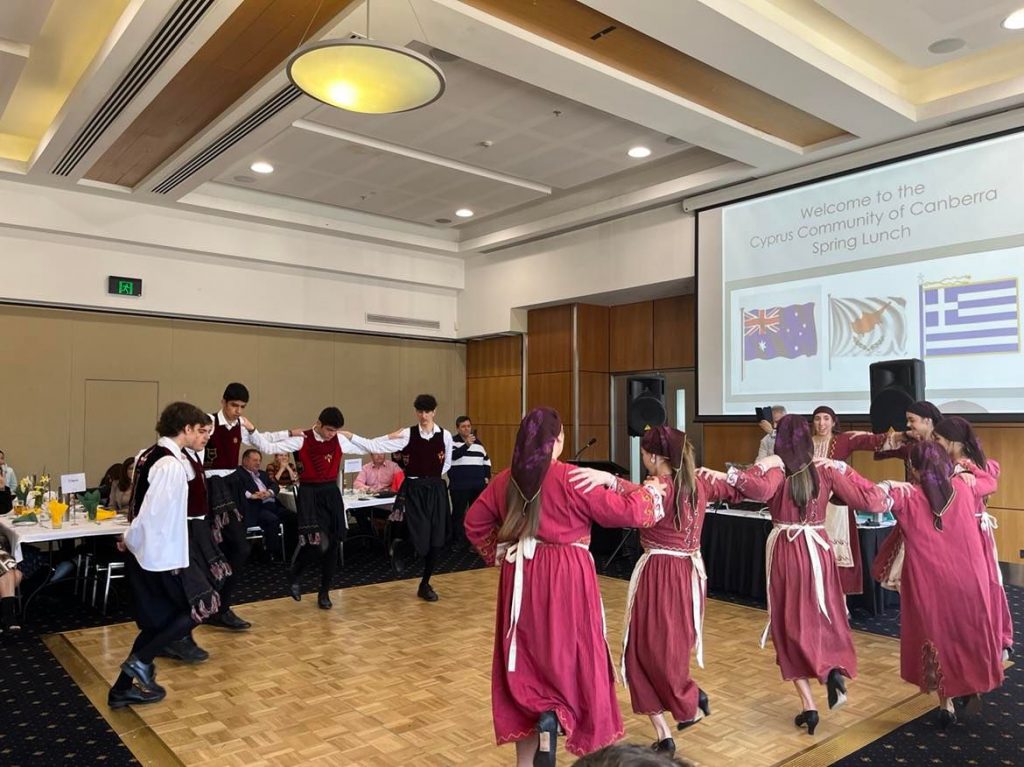
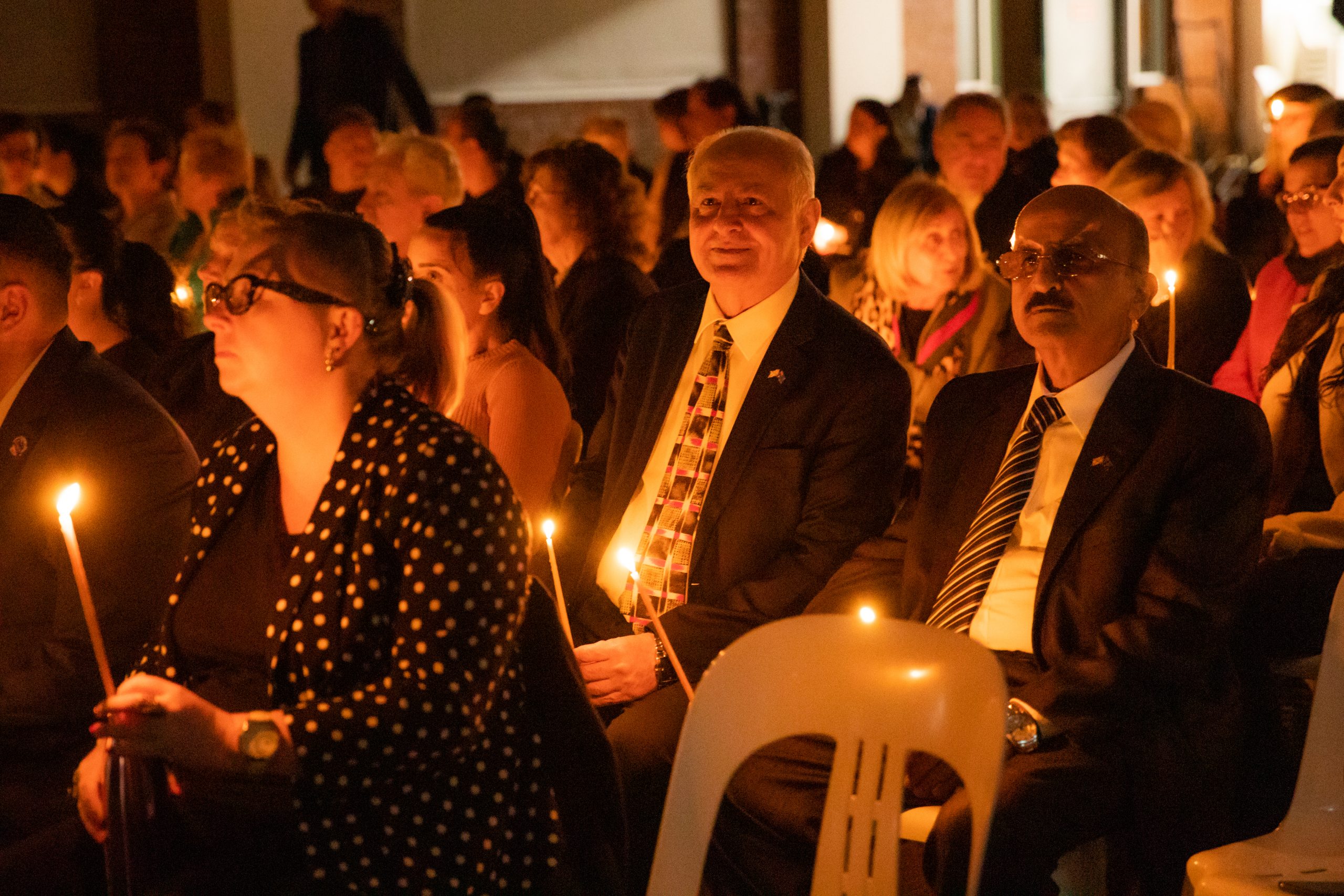
The Cyprus Community of Canberra welcomed the new High Commissioner of the Republic of Cyprus in Australia, Antonis Sammoutis, on Sunday with a spring lunch event at the Hellenic Club in Woden.

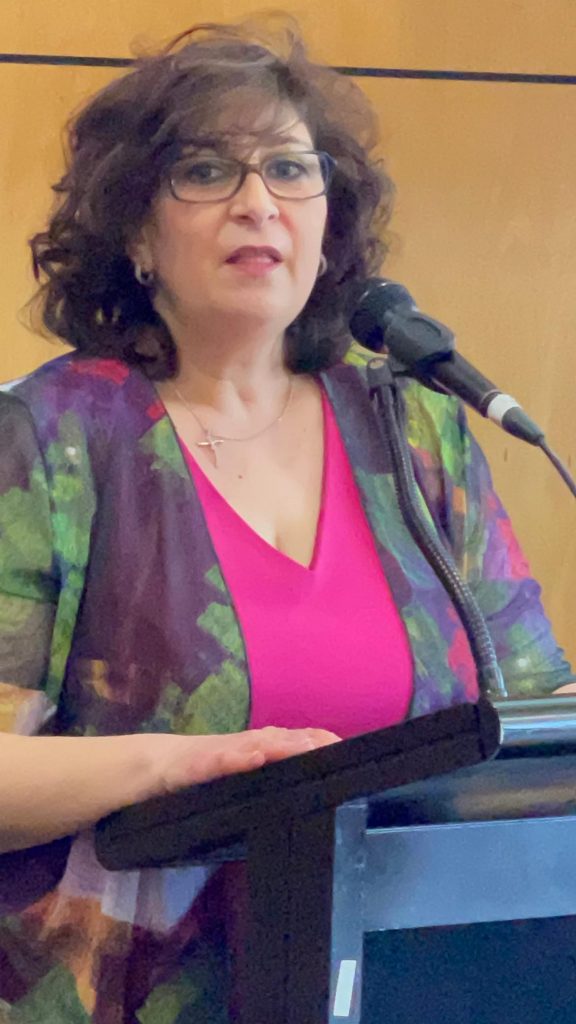
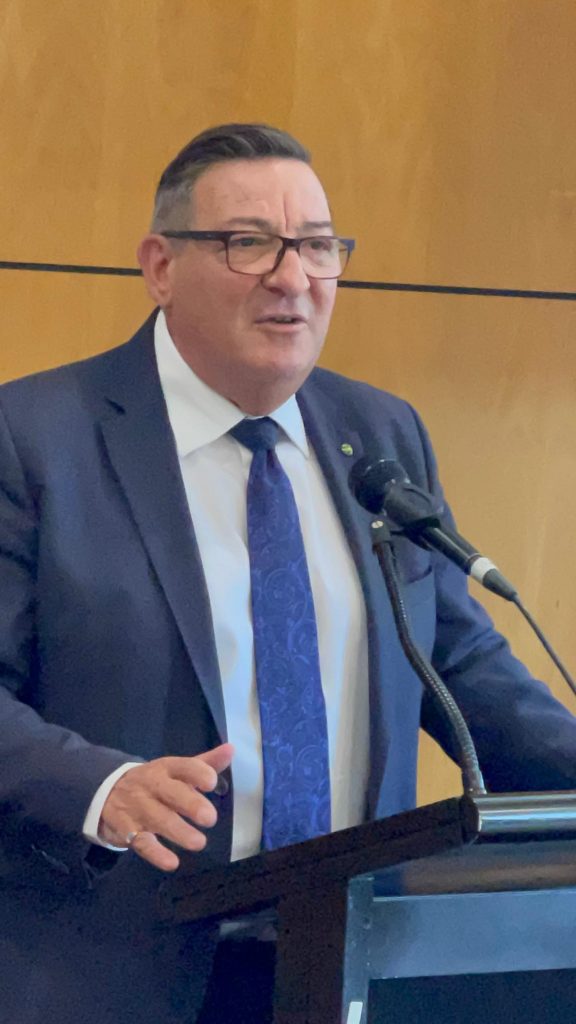
The event was attended by over 100 people including a number of officials such as the Deputy Head of Mission at the Cyprus High Commission, Stavros Nikolaou; the Ambassador of Greece to Australia, George Papakostas; the Federal Member for Adelaide, Steve Georganas MP; the Defence Attaché at the Embassy of Greece, Colonel Ioannis Fasianos; Reverend Father Athanasios; the President of the Cyprus Community of Canberra and President of the Pan-Australian Justice for Cyprus Coordinating Committee (PASEKA), Georgia Alexandrou; the President of the Greek Orthodox Community and Church of Canberra (GOCCC), John Loukadellis; and the Vice President of the Hellenic Club, Jim Andriopoulos; among many others.

During the event, these official guests and all attendees were able to speak with the new High Commissioner whilst enjoying a lunch prepared by the Hellenic Club, as well as desserts by Yiayia’s Bakery.

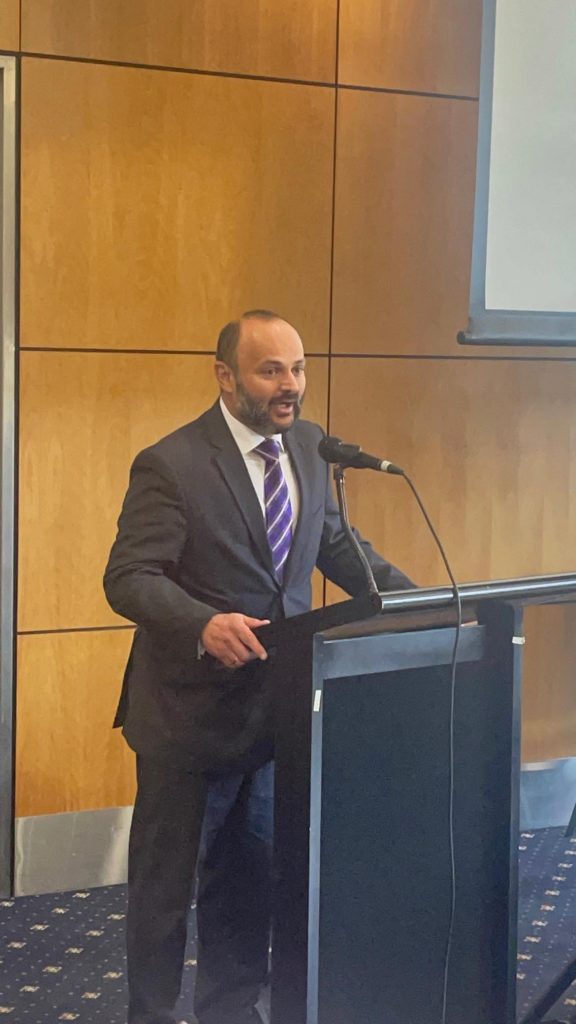
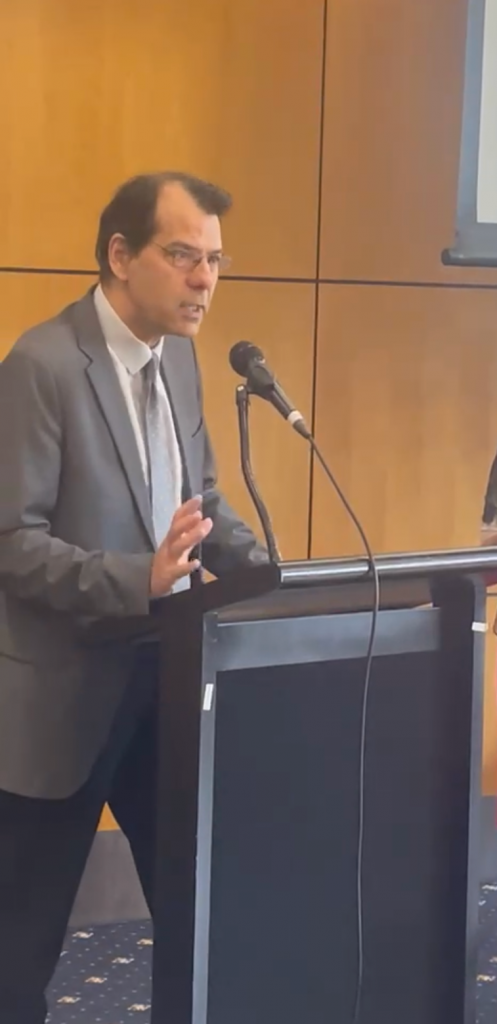
A number of speeches were also given by Cypriot High Commissioner Sammoutis, Ambassador Papakostas, Mr Georganas, and Ms Alexandrou.

In his speech, the High Commissioner thanked everyone for their warm welcome and congratulated the Cypriot community in Australia for being “an example of successful integration in this country.”

Ambassador Papakostas spoke next and praised the Cyprus Community for hosting the successful spring lunch event, before Mr Georganas took to the floor.
Mr Georganas spoke openly in his speech about a parliamentary motion he has been working on with PASEKA regarding the Cyprus issue. The Adelaide MP said he tabled the motion to Australian Parliament on Monday, September 5.

Last to speak was Ms Alexandrou who referred to the long history of the small Cypriot Community of Canberra, and also congratulated Cypriot youth for their recent involvement in national and global NEPOMAK conferences for the diaspora.

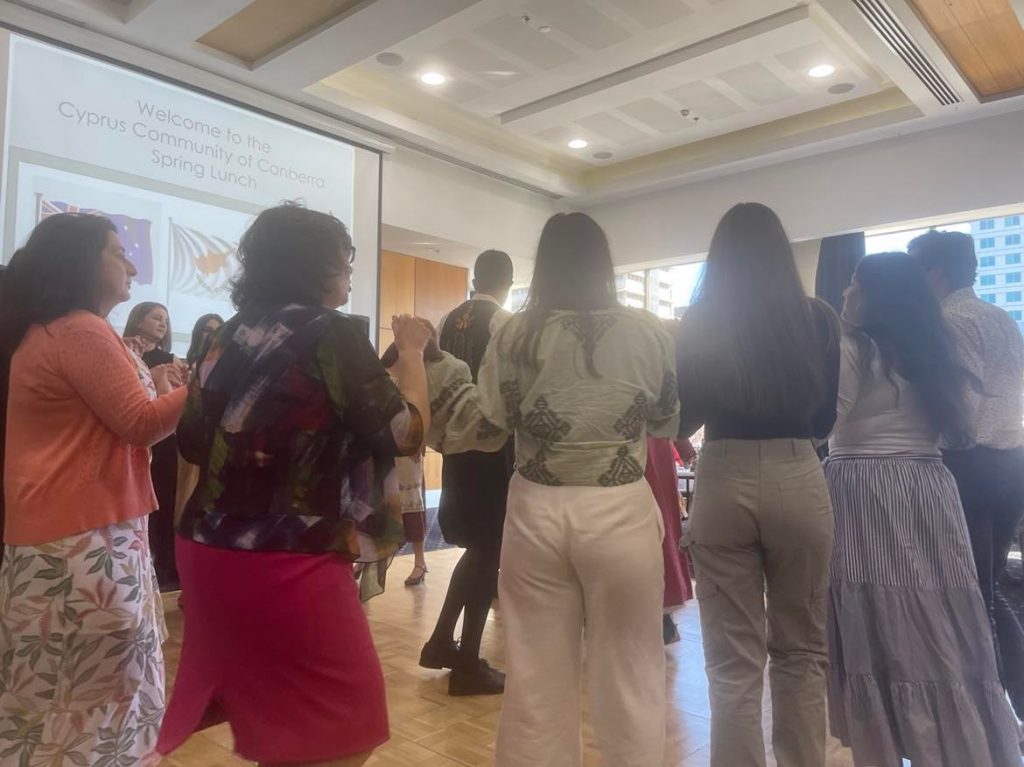
The event concluded with a number of dance performances by the Apollo Group of the Canberra Hellenic Dancers.

Jennifer Assiminios goes viral after kissing King Charles on cheek at first public appearance

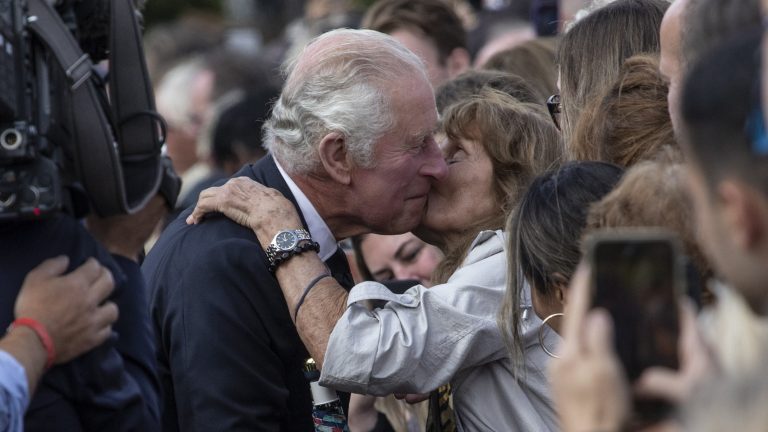
Jennifer Assiminios from Cyprus has gone viral across the world after she stole a kiss from the newly-proclaimed King Charles III at his first public appearance in London, UK on Friday, September 9.

King Charles was greeting people who had gathered outside Buckingham Palace on Friday to pay their respects to Queen Elizabeth II who died last week at the age of 96.

Video footage captured from the scene, showed Assiminios exchanging a few words with the King before he leaned forward so she could kiss his cheek.

Speaking to CNN, Assiminios said the King ‘looked sad’ and she ‘couldn’t believe’ he was right there in front of her.
Explaining that she asked for Charles’ permission before kissing him, Assiminios shared: “I have seen him in front of me. I couldn’t believe it and I said ‘may I kiss you?’ He said ‘well, yes’ so I grabbed him.”
“I am very happy. Thank you God for letting me see him and kiss him.”

Assiminios said she loves the royal family and follows their lives. When asked what it was like to kiss the King, she answered: “Oh, my God I nearly fell. I am going to take that kiss forever.”

Hours after Assiminios and Charles’ brief encounter, the King officially addressed the nation for the first time and praised his “darling mama’s warmth, humour and an unerring ability always to see the best in people.”

The King also promised his “lifelong service” to the United Kingdom and expressed his “profound sorrow” at the loss of the Queen.

This address came just hours before the ascension of King Charles III was officially proclaimed across the Commonwealth countries, including Australia, over the weekend.

The Queen’s body is now also lying in rest at the Palace of Holyroodhouse in Edinburgh, Scotland after travelling from Balmoral overnight.

Source: The Independent.

Oakleigh Cannons defeat South Melbourne to be crowned NPL Victoria champions

Oakleigh Cannons FC have been crowned National Premier Leagues (NPL) Victoria Men’s Champions for 2022 after defeating South Melbourne FC 5-0 at Olympic Village on Sunday night.

It was a tough start to the match, with a first minute header by Oakleigh’s Aryn Williams the only goal scored, setting the stage for a thrilling second half.

Things heated up in the second half but South Melbourne still weren’t able to make any gains.

Oakleigh’s Williams scored again in the 47th minute, Chris Lucas in the 78th minute, Joe Guest in the 84th minute, and Wade Dekker sealed the match win in the 90th minute with the final goal.

After scoring the first two goals and putting in a mighty shift all night, Williams was awarded the 2022 Jimmy Rooney Medal for Player of the Match.

In a post on Facebook, Oakleigh congratulated its players on their win and wished South Melbourne all the best for next season.

“Congratulations to South Melbourne on a great 2022 and we wish them the best,” the Club’s post read.

“To the Oakleigh Cannons players, congratulations on an extraordinary year!!! You played with heart and soul and you deserve the championship!!”

South Melbourne acknowledged their loss on Facebook and thanked the fans for their support.

“It clearly wasn’t a night to remember for us on the park, but everyone at the club would like to thank our amazing and loyal fans who turned out in the driving rain to support the club once again,” South Melbourne’s post read.

“We thank each and every one of you for continuing to support us and keeping that flame alive.”

This match was the first time South Melbourne had qualified for an NPL Victoria Grand Final since 2016. The Club secured the NPL Victoria Men’s Premiership earlier this year with a sensational 1-0 defeat of Dandenong City at Melbourne’s Lakeside Stadium.

Pensions and energy subsidies the focus of Greece’s new 5.5 billion euro economic package

Greek Prime Minister, Kyriakos Mitsotakis, announced on Saturday 21 initiatives worth 5.5 billion euros to support households and businesses buffeted by the energy crisis and high inflation.

According to Ekathimerini, the package includes, among other things, a 250 euro one-off cost-of-living check aimed at 2.3 million recipients; the boosting of the heating fuel subsidy to 300 million euros; an emergency subsidy of about 150 million euros to farmers to cover rising fuel and animal feed costs; and a hefty rise in housing cost allowances to university students.

Kicking in after the new year will be a rise in pensions and the minimum wage, as well as the wages of national health service and armed forces personnel.

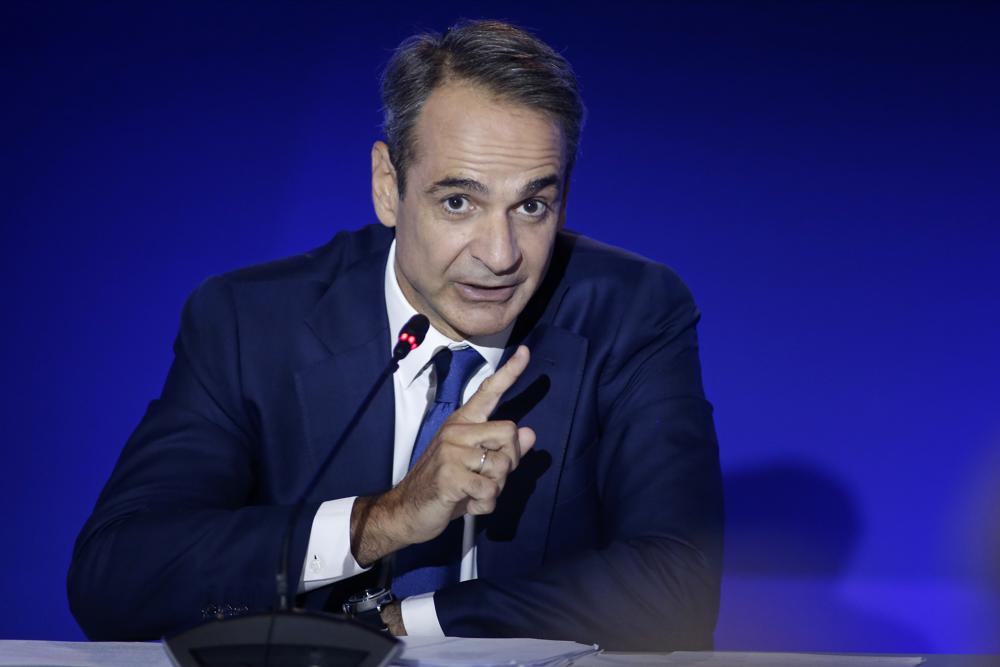
“After many years, pensions will increase for 1.5 million pensioners,” Mitsotakis said during his annual economic policy speech from the northern city of Thessaloniki.

The minimum wage which the government raised to 713 euros ($716) a month earlier this year, would go up again in May, Mitsotakis added, without giving a new figure.

His government will also abolish a so-called solidarity levy on private and public sector workers, a legacy of Greece’s multi-year debt crisis, the Greek Prime Minister said.

“We can achieve high growth rates and support society. The measures we are taking are fully harmonised with the budget targets,” he said.

According to Mitsotakis, the high rates of growth create the fiscal space to support the economy and society at a difficult time, adding that “Greece will present the greatest and fastest reduction of debt as a percentage of GDP.”

On the topic of elections, Mitsotakis repeated that they will take place at the end of his four-year term.

Source: Ekathimerini.

Greek Prime Minister doesn’t believe armed conflict with Turkey ‘will ever happen’

0

Greece’s Prime Minister, Kyriakos Mitsotakis, said on Sunday that he can’t imagine tensions with Turkey could ever escalate into armed conflict.

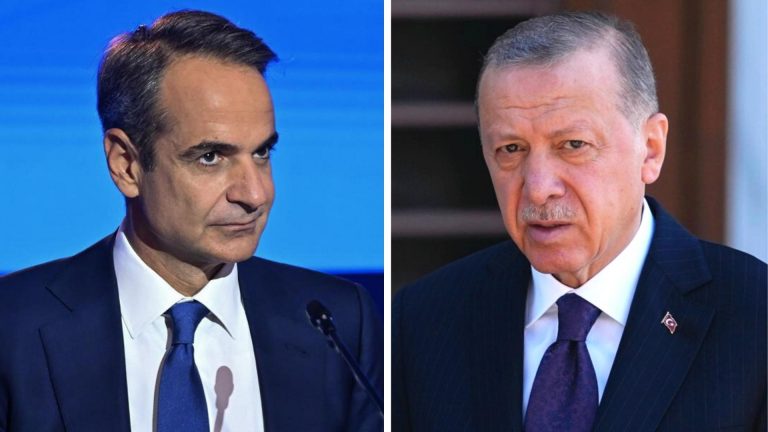
When asked by The Associated Press whether a recent escalation in rhetoric from Turkey’s President Recep Tayyip Erdogan could be the prelude to military action, Mitsotakis replied negatively.

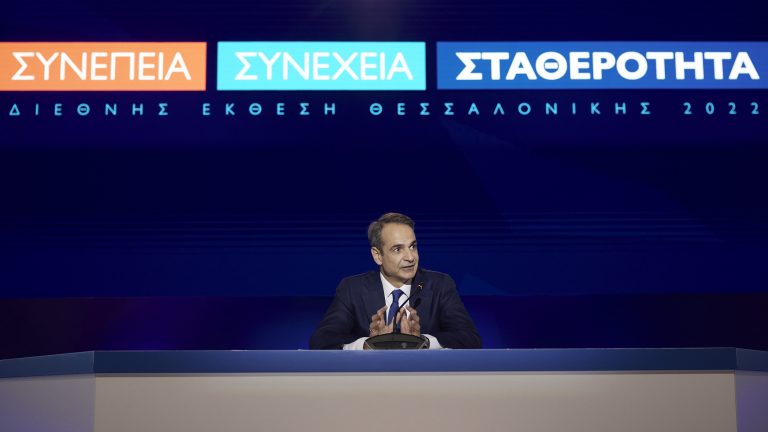
“I don’t believe [armed conflict] will ever happen. And if, God forbid, it happened, Turkey would receive an absolutely devastating response. And I think they know it very well. Turkey knows the competence of the Greek (armed) forces,” Mitsotakis said during a press conference at the Thessaloniki International Fair.

Kyriakos Mitsotakis speaking at the Thessaloniki International Fair on Sunday. Photo: AP Photo/Giannis Papanikos.

The Greek Prime Minister added that, despite Erdogan’s “unacceptable” comments, he was still open to dialogue and a meeting with him.

This comes as Erdogan said in May this year that he has no intention of ever meeting with Mitsotakis again.

Since then, Erdogan has recently warned Greece it would pay a “heavy price” if it continues to harass Turkish fighter jets over the Aegean and hinted at military action.

This comes as Erdogan has made provocative statements recently.

According to AP News, Turkey’s coast guard also alleged on Saturday that Greek coast guard ships opened fire on a cargo vessel sailing in international waters in the Aegean Sea.

There were no casualties in the shooting 11 nautical miles southwest of the Turkish island of Bozcaada on Saturday, the Turkish statement said.

These ongoing tensions come at a low point in relations between the two NATO allies, who are separated by centuries-long enmity and contemporary disputes, including Aegean Sea boundaries and immigration.

Source: AP News.

Greece defeats Czech Republic to storm into EuroBasket quarter final

Greece defeated the Czech Republic 94-88 this morning to advance to the EuroBasket quarterfinals.

The Czechs focused on the defence of Giannis Antetokounmpo at the start of the match, but Greece found a solution thanks to Georgios Papagiannis and Kostas Papanikolaou, reaching 11-2 and forcing the Czech coach to call a time-out.

Four minutes before the end of the quarter, Papagiannis made it 16-6, sending Greece to +10. But a 12-0 run by the Czech Republic, turned the tide. At the end of the first quarter, the score was 20-20.

At half time, the score was 45-41 in favour of the Czech Republic.

In the third quarter, Nick Kalathis played well while Antetokounmpo began to have better contact with the opposing basket, helping the team reach the 50-49 score. The third quarter ended with Greece at -4, (63-67).

Greece made it 69-67 with back-to-back points by Ioannis Papapetrou. This was followed by a three-pointer by Kostas Sloukas, as well as a layup by Antetokounmpo, which sent Greece to +4 (74-70).

The national team took control of the match in the last part of the game and kept the lead until the end, claiming victory with 94-88.

Greece will now face Germany in the quarter finals of the EuroBasket.

Source: Action24.

Major George Devine Treloar: The Australian hero of Greek refugees from Asia Minor

Humanitarian, hero, saviour – three words which perfectly describe Australian Major George Devine Treloar.

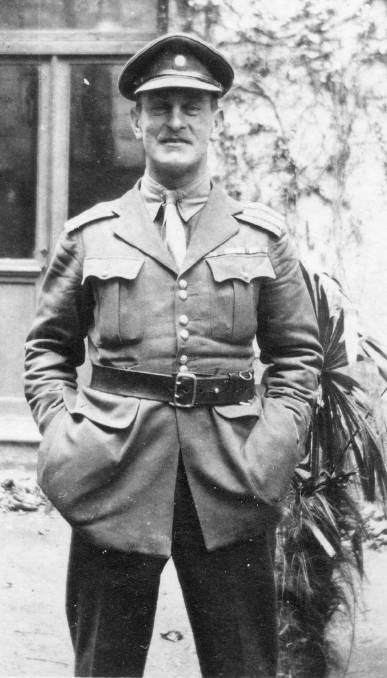
Born on April 23, 1884 in the rural Victorian town of Ballarat, Treloar had a fulfilling and eventful upbringing. He worked as a bank clerk in town, as a jackeroo in outback Australia, as an actor in England and even served as a Major in the British Coldstream Guards during World War I.

After that conflict, Treloar fought with the pro-Tsar White Russians before his appointment as Commissioner for Refugees of the League of Nations – a predecessor to the United Nations – in northern Greece in 1922.

In this role, Treloar was engaged in the resettlement of Greek refugees from Asia Minor.

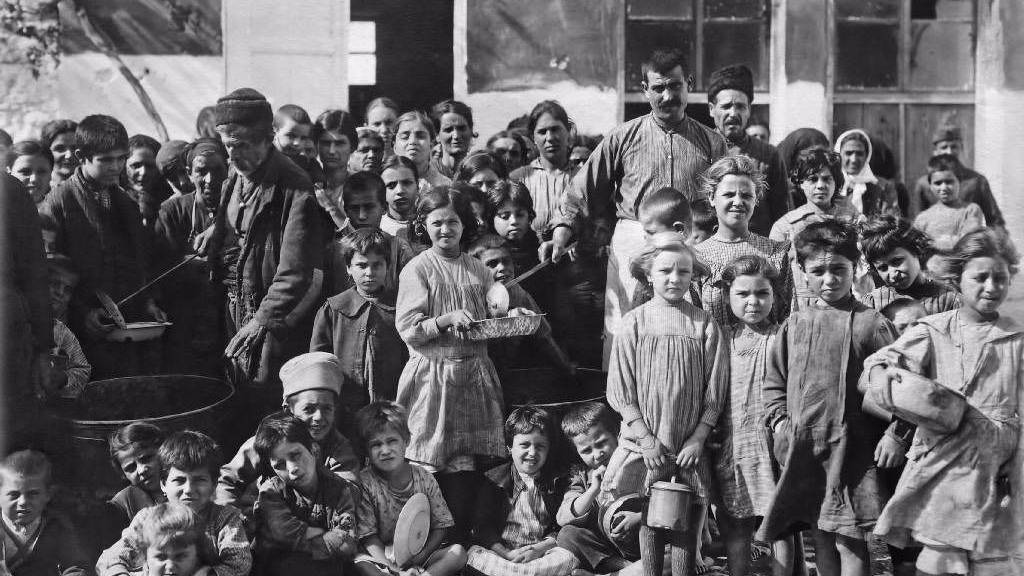
The Greeks, who had lived in the Pontus region south of the Black Sea for thousands of years, were either massacred or fled Asia Minor due to the Turkish nationalist movement’s expulsion of Christians at the time.

George Devine Treloar.

Treloar worked at Komotini in Thrace and later in Salonika to organise food, shelter, medical care and resettlement for these refugees, often in the face of bureaucratic opposition or indifference.

According to The Australian Institute of International Affairs, Treloar’s actions saved an estimated 108,000 lives.

‘He’s a saviour to Victoria’s Greek community’:

It’s no surprise then that Treloar has been honoured by Greek communities across the world for years.

In Greece, a village along the Komotini-Alexandroupolis road was named Thrylorio in Treloar’s honour. The village’s population is entirely made up of Pontic Greek survivors of the genocide by the Turks in Asia Minor.

Refugees from Asia Minor. Photo by George Treloar Memorial Committee.

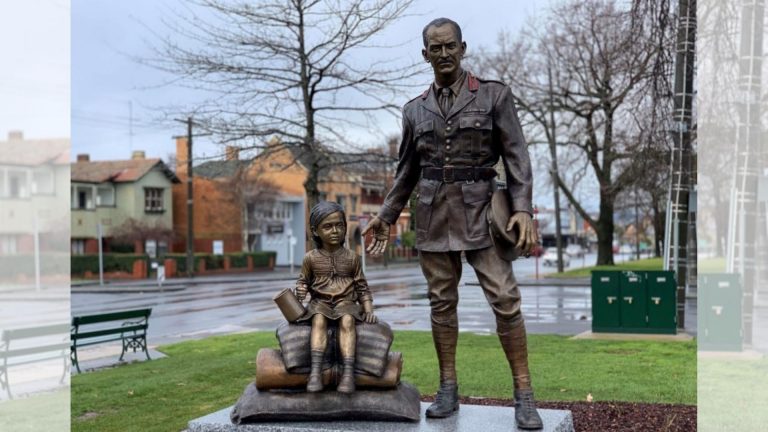
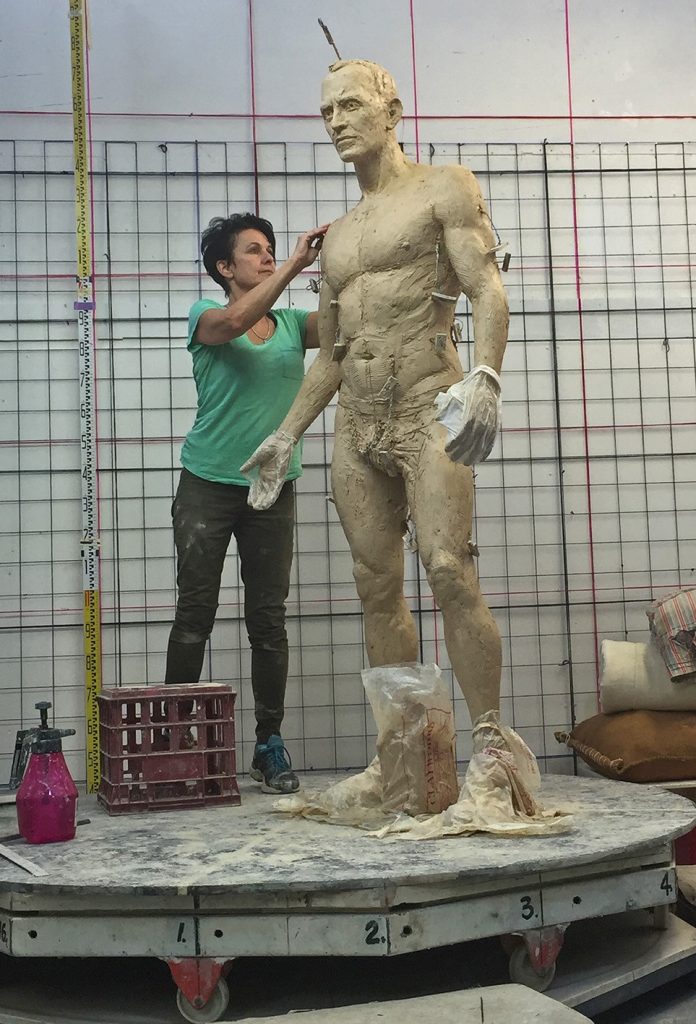
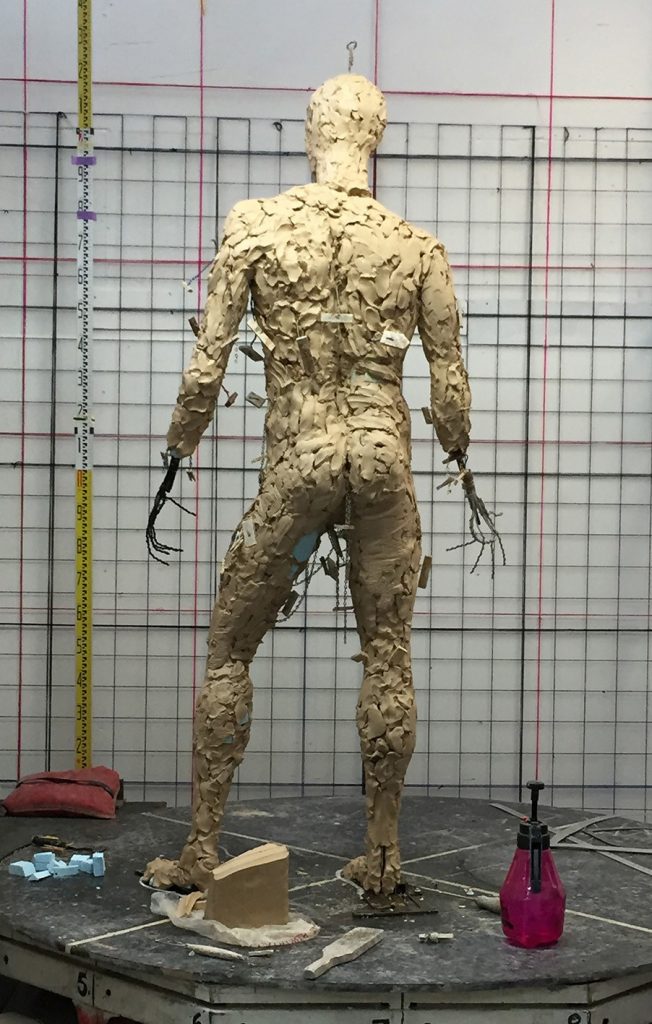
In Treloar’s Victorian hometown of Ballarat, the local Greek community has also paid tribute to the hero with an impressive statue on Sturt Street.

The statue was an initiative of the Merimna Pontion Kyrion of Oceania organisation and the George Devine Treloar Memorial Committee (GDT Memorial Committee).

They commissioned renowned Australian artist, Lis Johnson, to take on the project and she definitely didn’t disappoint.

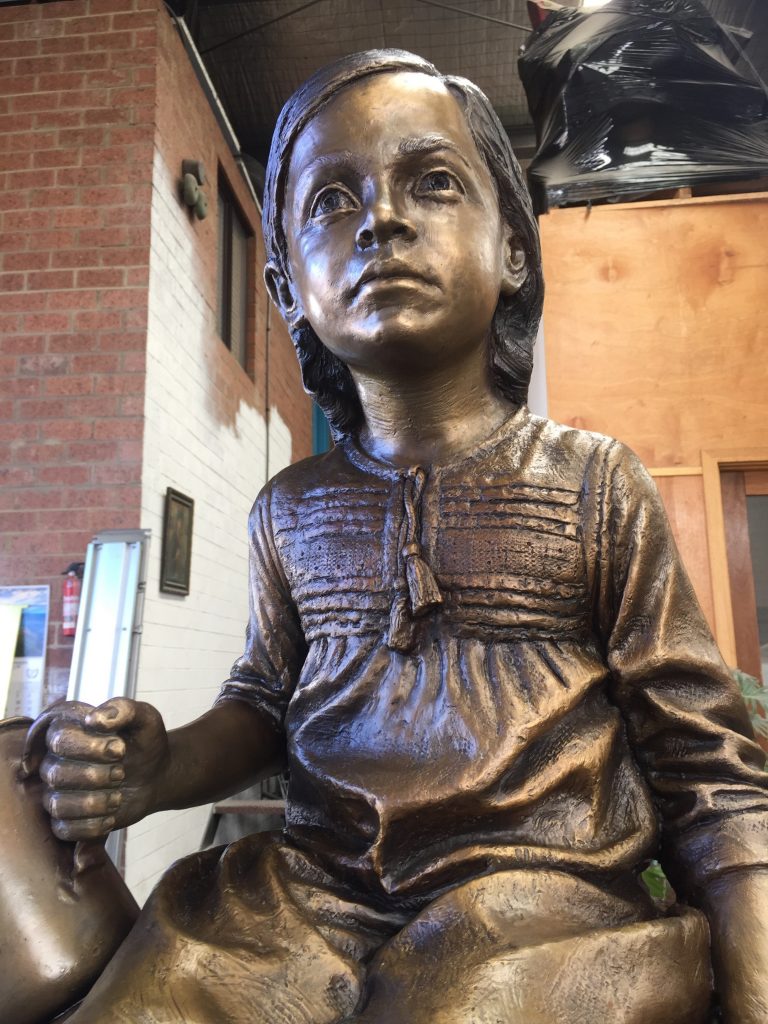
The statue features Treloar himself standing proudly in his military uniform with his arm outstretched towards a young girl, who is sitting on her luggage and holding a jug.

Lemona – the refugee girl.

According to an article in The Age, the young girl has been nicknamed Lemona by Litsa Athanasiadis – the Chair of the GDT Memorial Committee – in honour of her grandmother’s little sister, who was presumed drowned after falling into the sea when attempting to flee Trabzon in Asia Minor. The young girl was actually still alive and had an emotional reunion with Litsa’s grandmother 18 years later.

Ms Johnson tells The Greek Herald she created the statue in this way to showcase the dignity of Treloar, as well as the vulnerability of the refugees through the young girl.

“It’s Treloar standing there being all dignified and then there’s the contrast with people that are very vulnerable and carrying their baggage,” the artist tells The Greek Herald.

“Treloar is a military man but not in a military mode. He’s not being celebrated for being a military man. He’s being celebrated for being a compassionate man that, using his military power, rescued these refugees who would have otherwise been in peril.”

When we ask Ms Johnson why she felt it was important to immortalise Treloar in this way, her answer was simple.

“He’s like a saviour to a community of Greeks living in Victoria and that’s what is lovely about it. He obviously was a very compassionate man and these people just adore him,” she concludes.

“Their love for him was infectious and so I wanted to depict this lovely man that helped them and their community.”

‘We must remember and speak the truth’: NSW marks 100 years since the Smyrna catastrophe

One hundred years ago today, on September 9, 1922, Smyrna was invaded and captured by Ottoman soldiers led by Kemal Ataturk.

Upon entering the city, the Turkish forces immediately massacred 1000 civilians and five days later, on September 14, set the Greek and Armenian quarters of the city ablaze.

The fire endured nine days and the results were catastrophic, with over 1000,000 Greeks and 30,000 Armenians being killed. It is a genocide that the Turkish government has refused to acknowledge as such to this day.

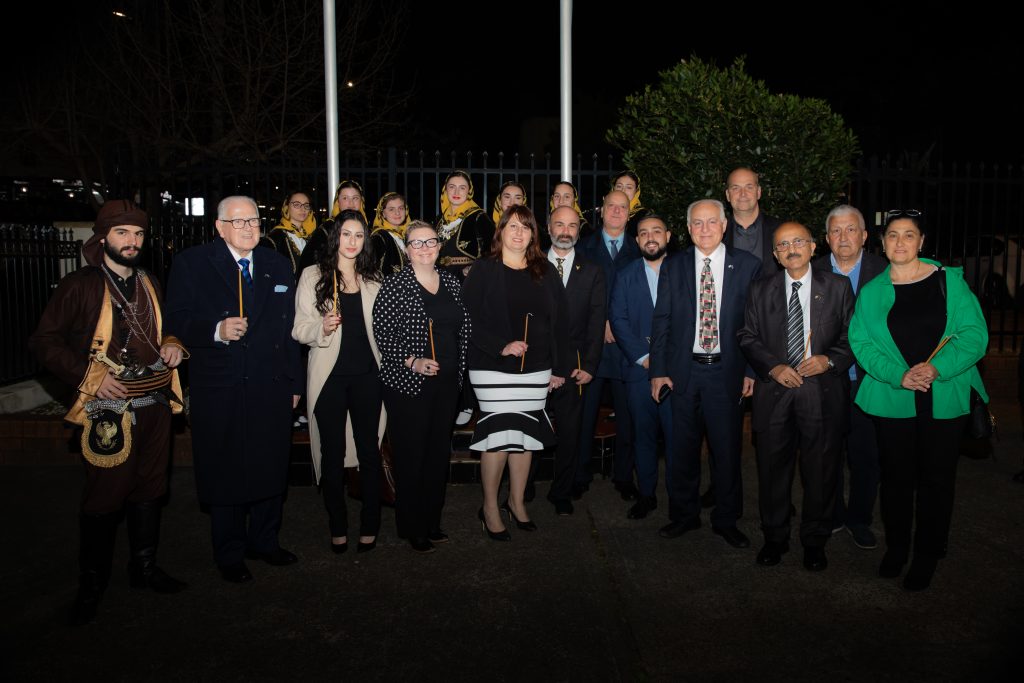
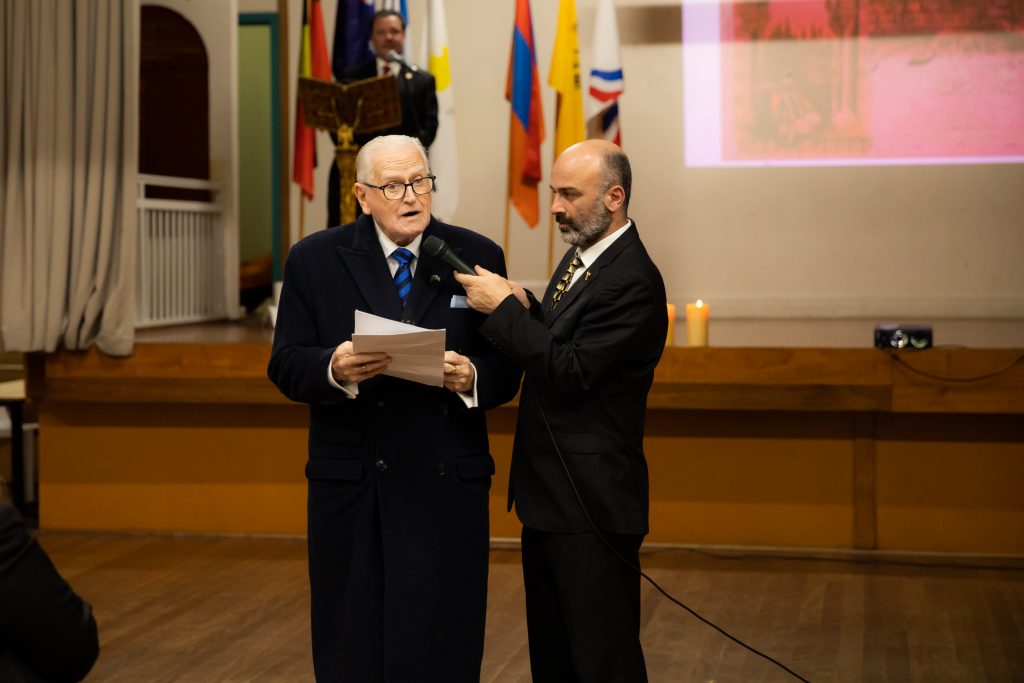
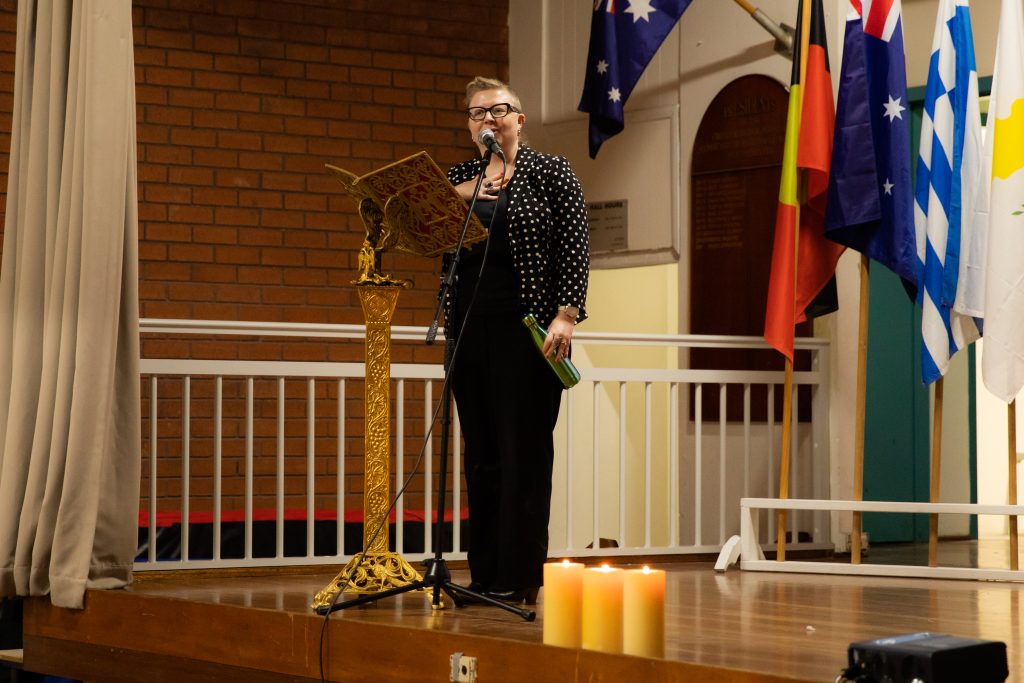
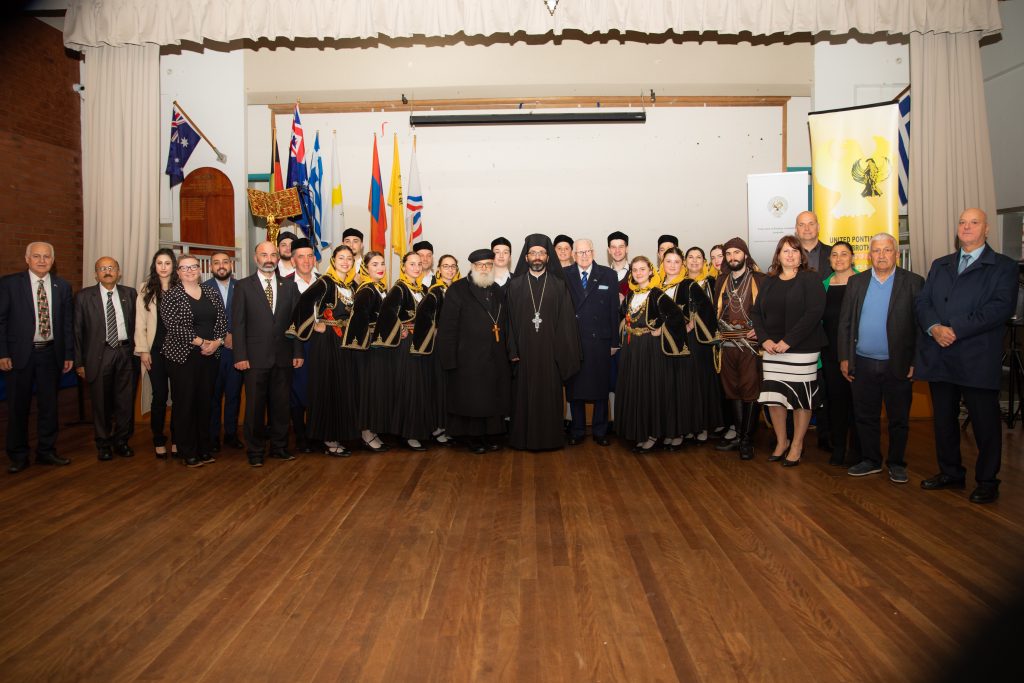
In an event commemorating 100 years since the Smyrna catastrophe, as it has come to be known, over a hundred people from Greek, Armenian and Assyrian communities across Sydney gathered to honour those who were lost and to celebrate the culture that survived.

The commemoration, which was coordinated by the Hellenic Pontian Genocide Commemorative Committee NSW along with the Federation of Pontian Associations of Australia, took place on Thursday evening at the grounds of St Euphemia Greek Orthodox Church in Bankstown.

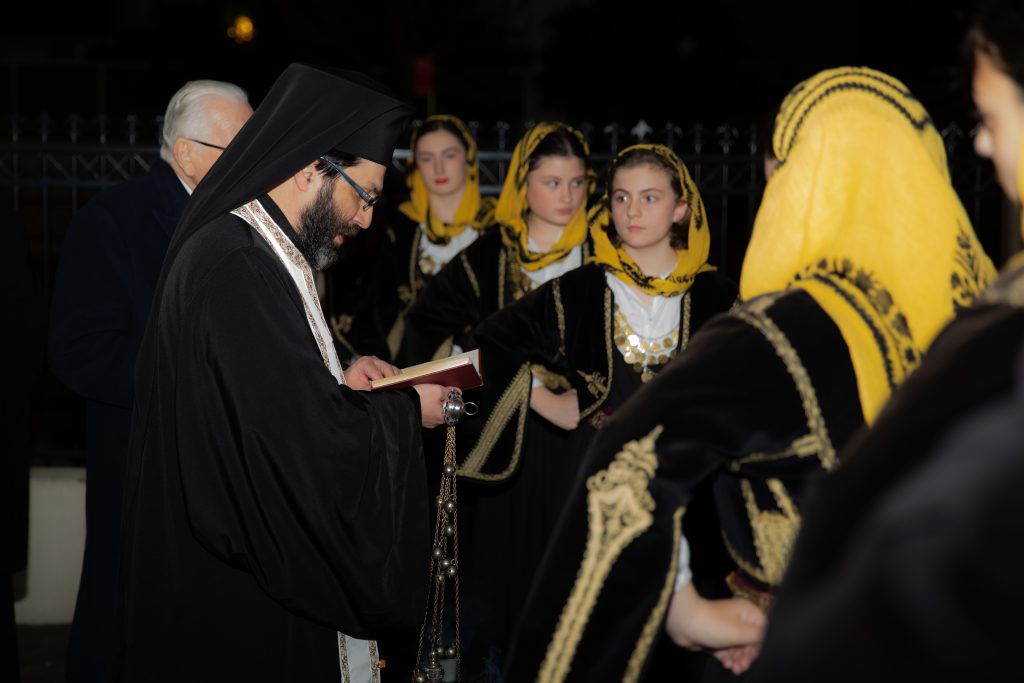
In attendance was Archimandrite Amphilohios, representing His Eminence Archbishop Makarios; Constantinos Giannakodimos, Head of the Public Diplomacy Office of Greece in Sydney representing the Consul General of Greece in Sydney Mr Christos Karras; the Honourable Reverend Fred Nile MLC; and Associate Professor Dr Melanie O’Brien of The University of Western Australia.

There were also representatives of Australia’s Pontian, Armenian and Assyrian communities, including Michael Kolokossian, Executive Director of the Armenian National Committee of Australia; Hermiz Shahen, David David and Albert Shlemon from the Assyrian National Council of Australia; Peter Papoulidis, President of the Pontian Society of Sydney ‘Panagia Soumela’; Nick Chrissostomidis and Olga Seitaridis from the Pontian Society of Wollongong ‘Diogenes’; Maria Anthony, President of Pontoxeniteas NSW; as well as many others.

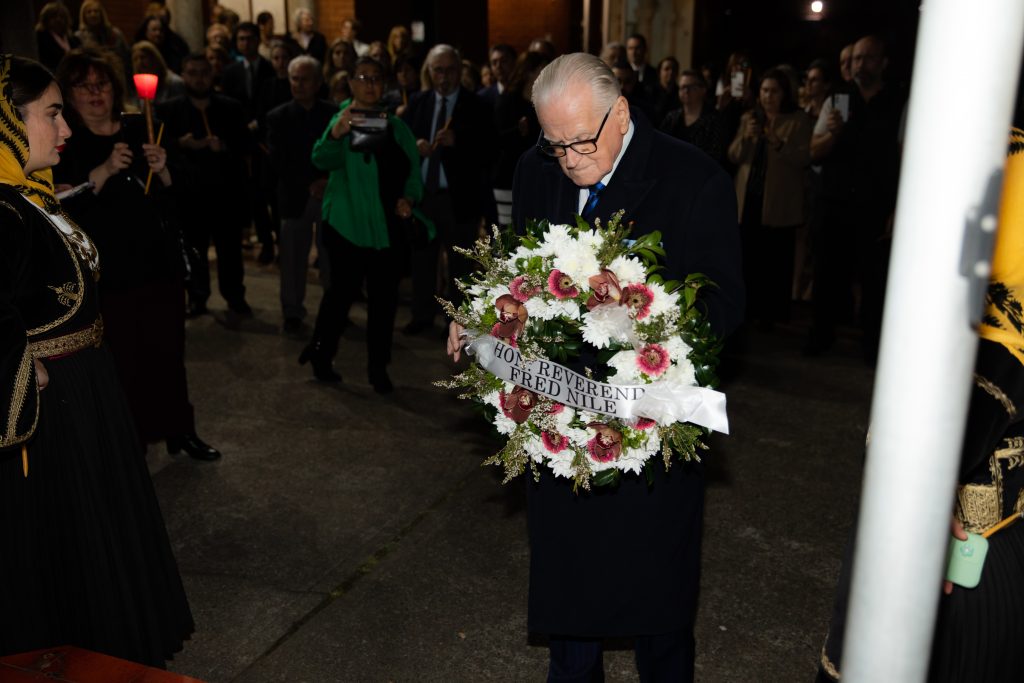
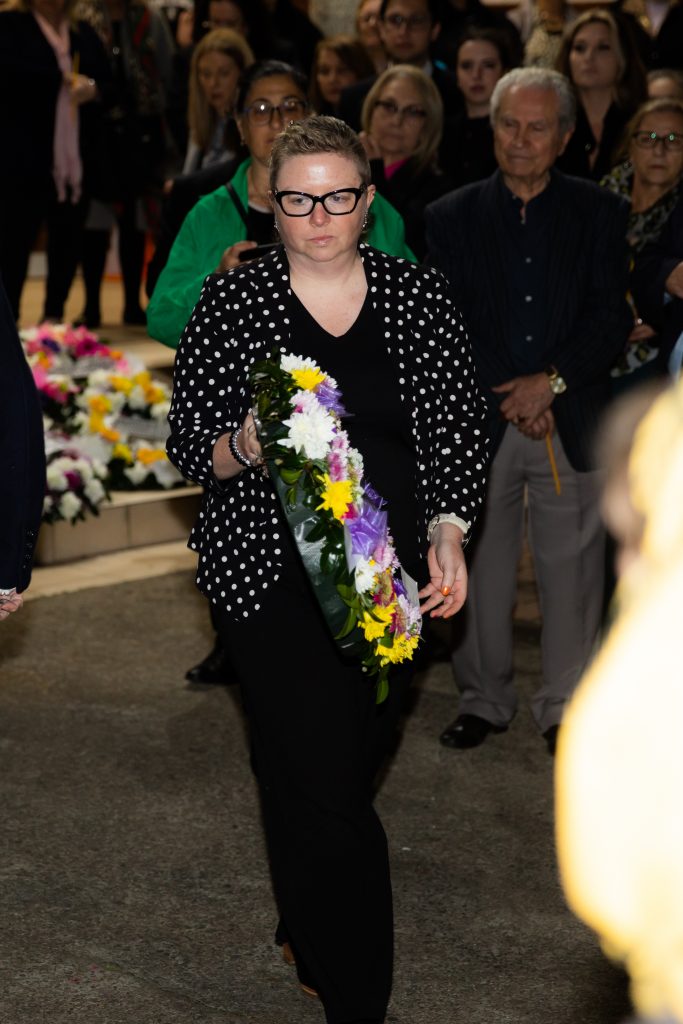
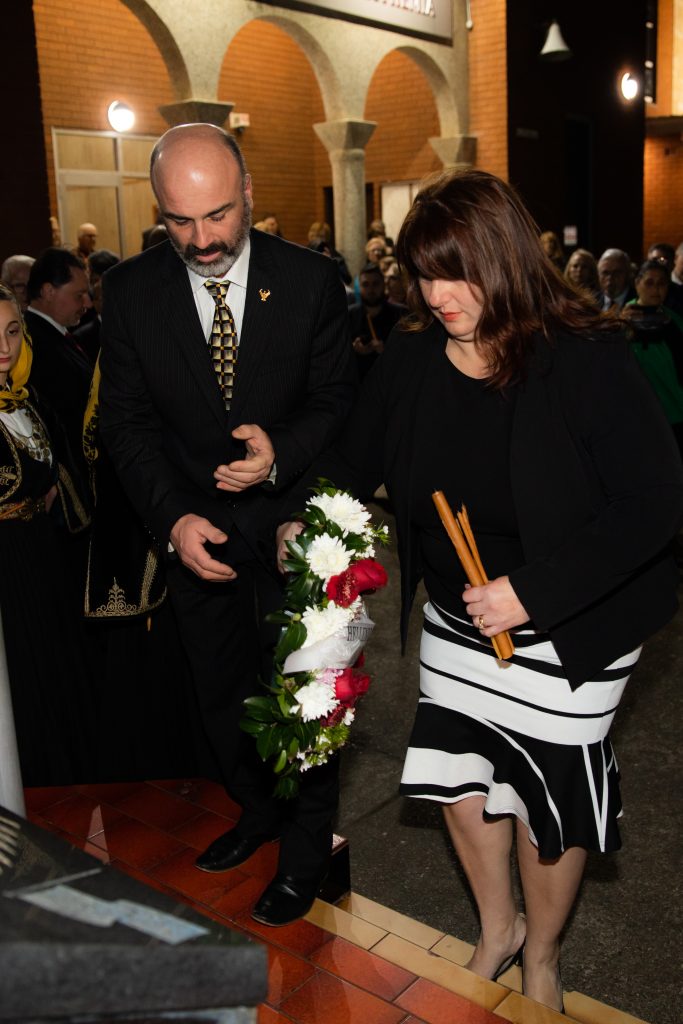
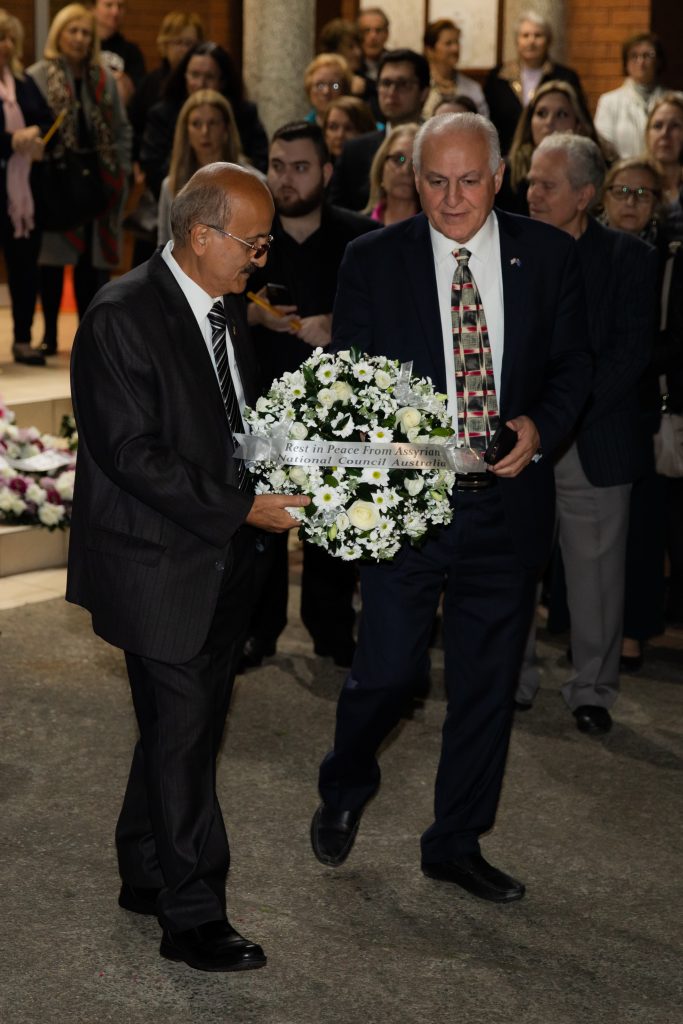
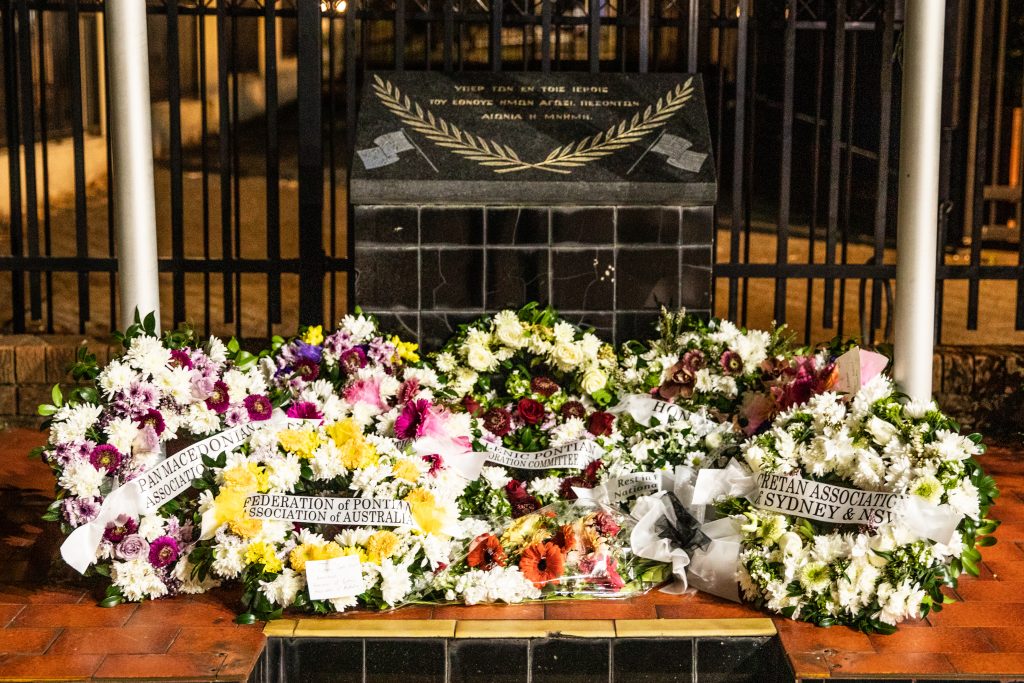
The commemoration began with a trisagio conducted by Archimandrite Amphilohios at the St Euphemia Parish War Memorial, followed by a wreath laying service.

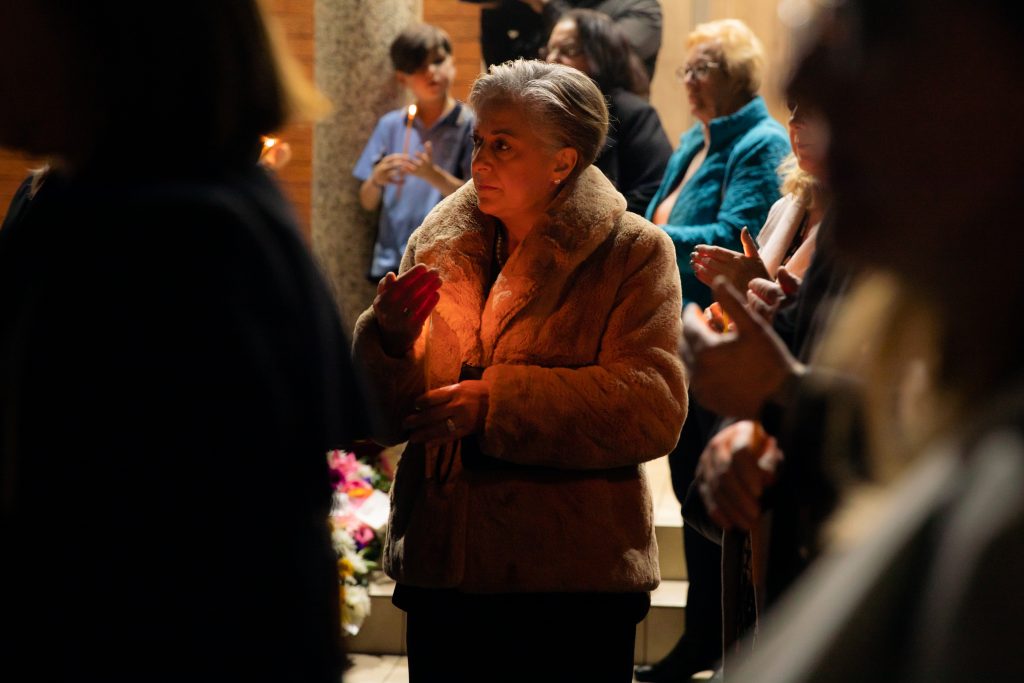
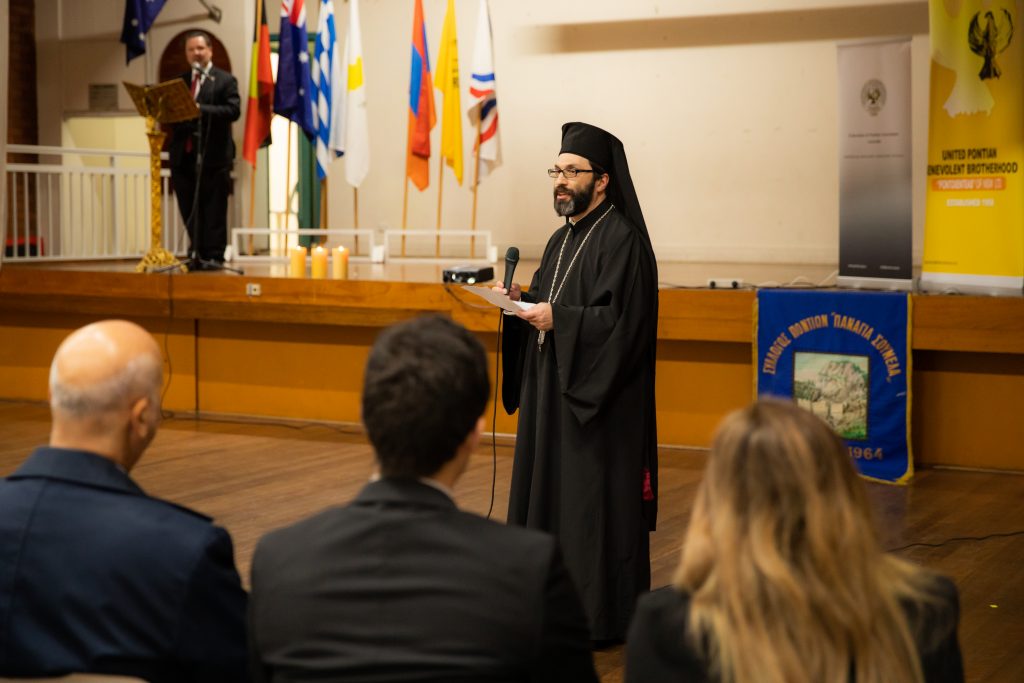
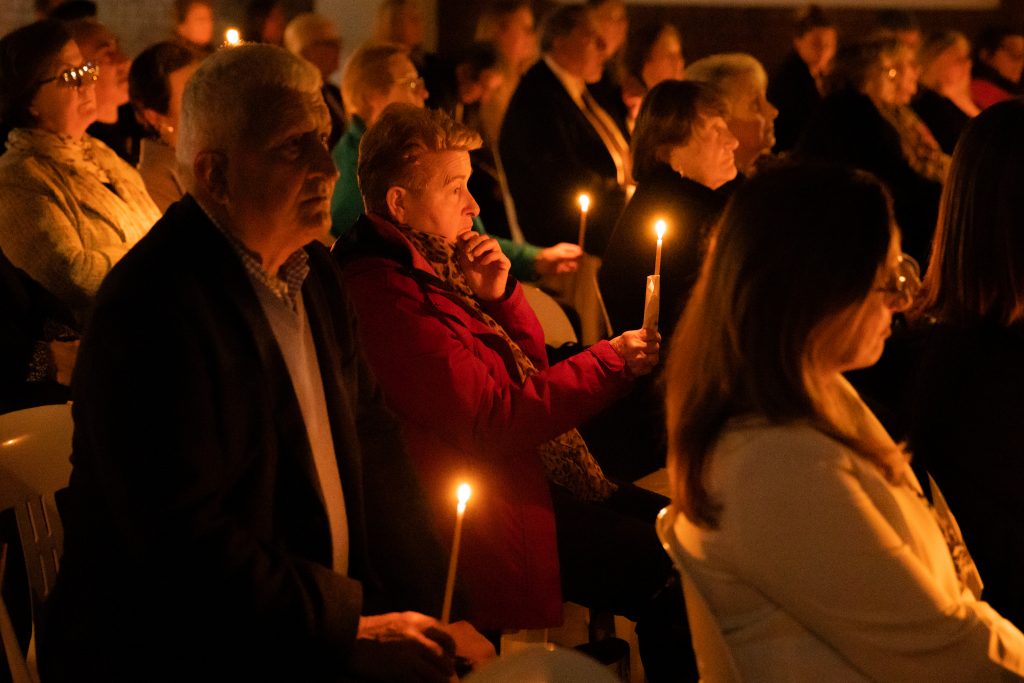
Attendees then moved indoors for formal proceedings which began with a candlelit vigil and a minute silence for the hundreds of thousands of victims of the catastrophe and 105-year-old Battle of Crete veteran, Alf Carpenter, who passed away on Wednesday.

Master of ceremonies and genocide scholar, Panagiotis Diamadis, then introduced a number of people for short speeches.

Archimandrite Amphilohios spoke first about the history of the Smyrna Catastrophe and the importance of commemorating those who lost their lives.

“Through this we honour and pay homage to those who heroically sacrificed or lost their lives for the highest of values and ideals – our orthodox Christian faith, our Greek cultural identity and our centuries-old Hellenic motherland itself,” the priest said.

Mr Nile was next to speak and called on the Federal Government to officially recognise the genocide.

“The Australian Federal Government still hasn’t followed the precedent [of NSW] and has been silent on the genocide,” Mr Nile said.

“It’s important for all governments around the world to recognise the catastrophe as a genocide. This is a matter of history and history must not be erased or forgotten. We must remember and speak the truth.”

Following Mr Nile was keynote speaker, Dr Melanie O’Brien, who said Smyrna “was a hub of Greek and Armenian culture, a main financial and cultural centre of Greek settlement in Western Anatolia.”

She further stated that unrecognised genocidal actions have global ramifications, pointing to Hitler’s admiration of the catastrophe as a roadmap for the Holocaust.

“This shows us that recognition is more important than ever… Open and clear recognition by governments sends a message to perpetrator states that their denial of genocide will not be tolerated,” she said.

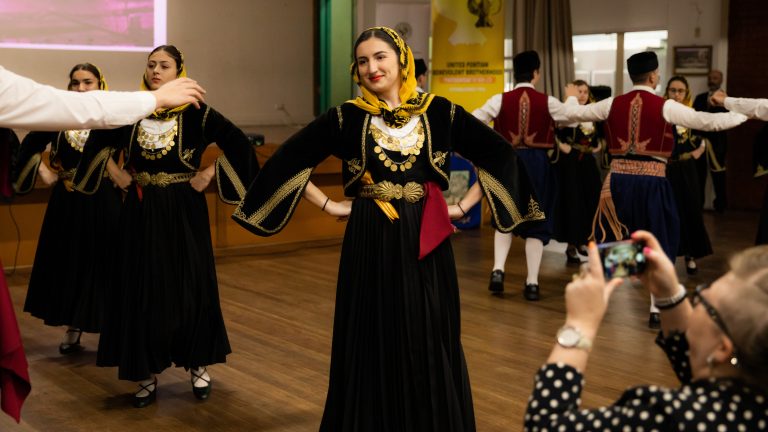
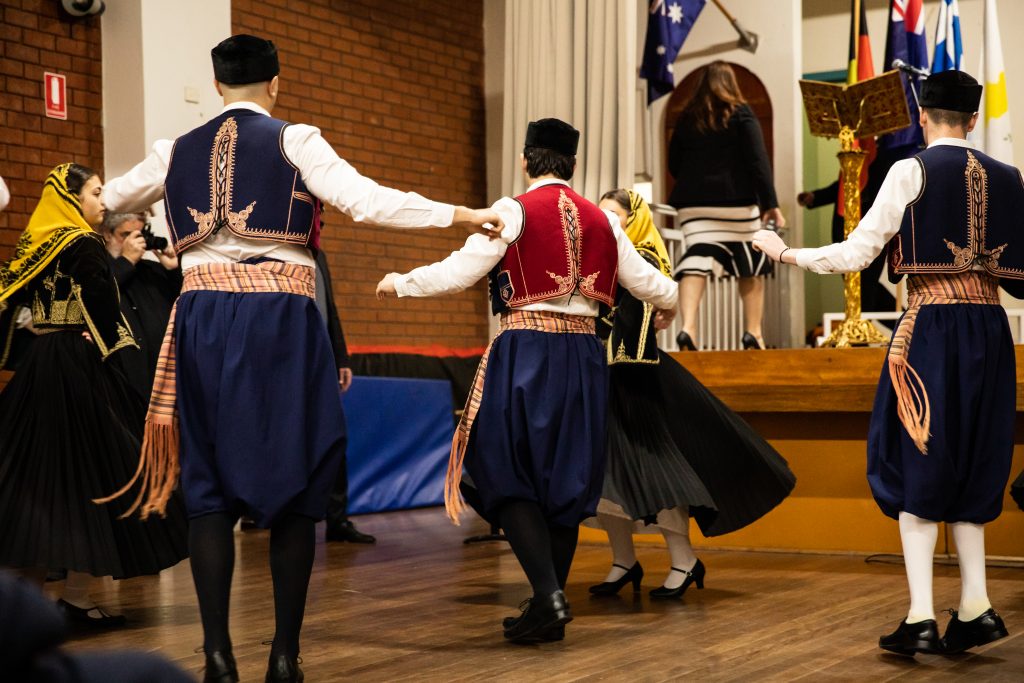
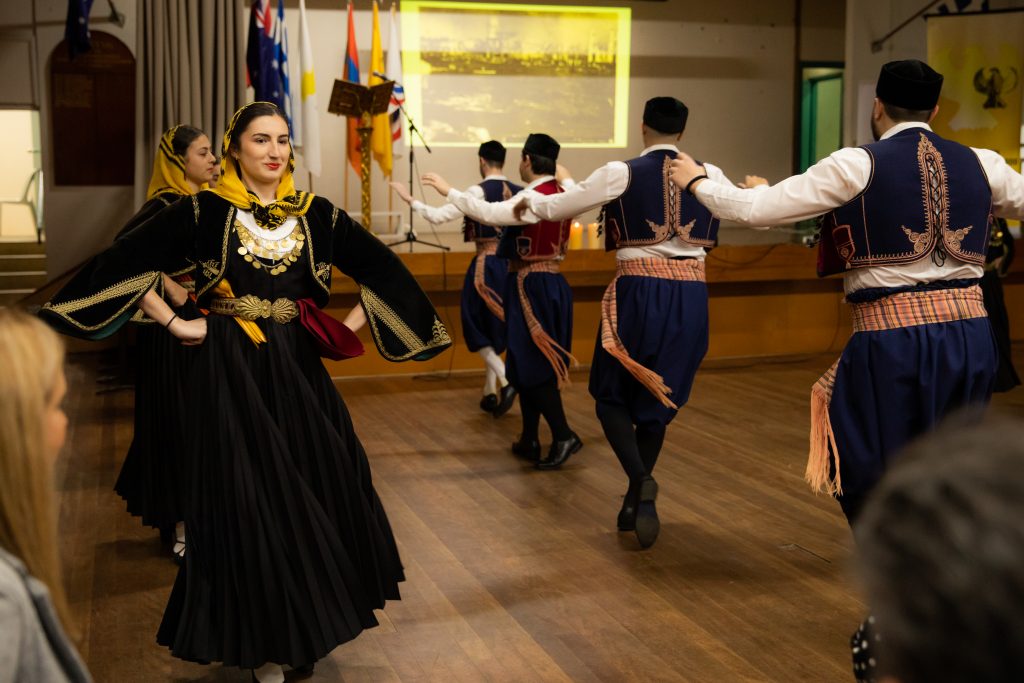
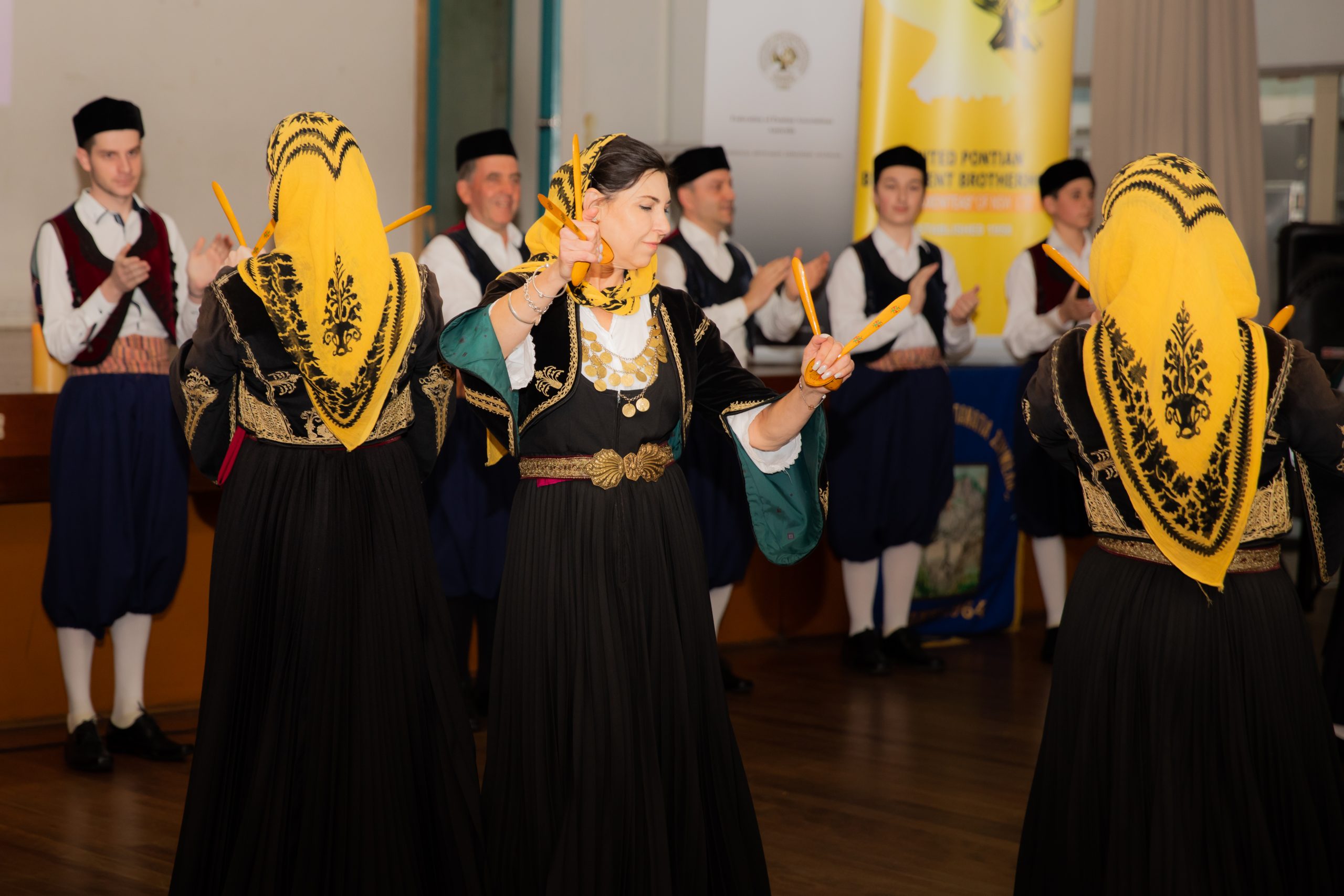
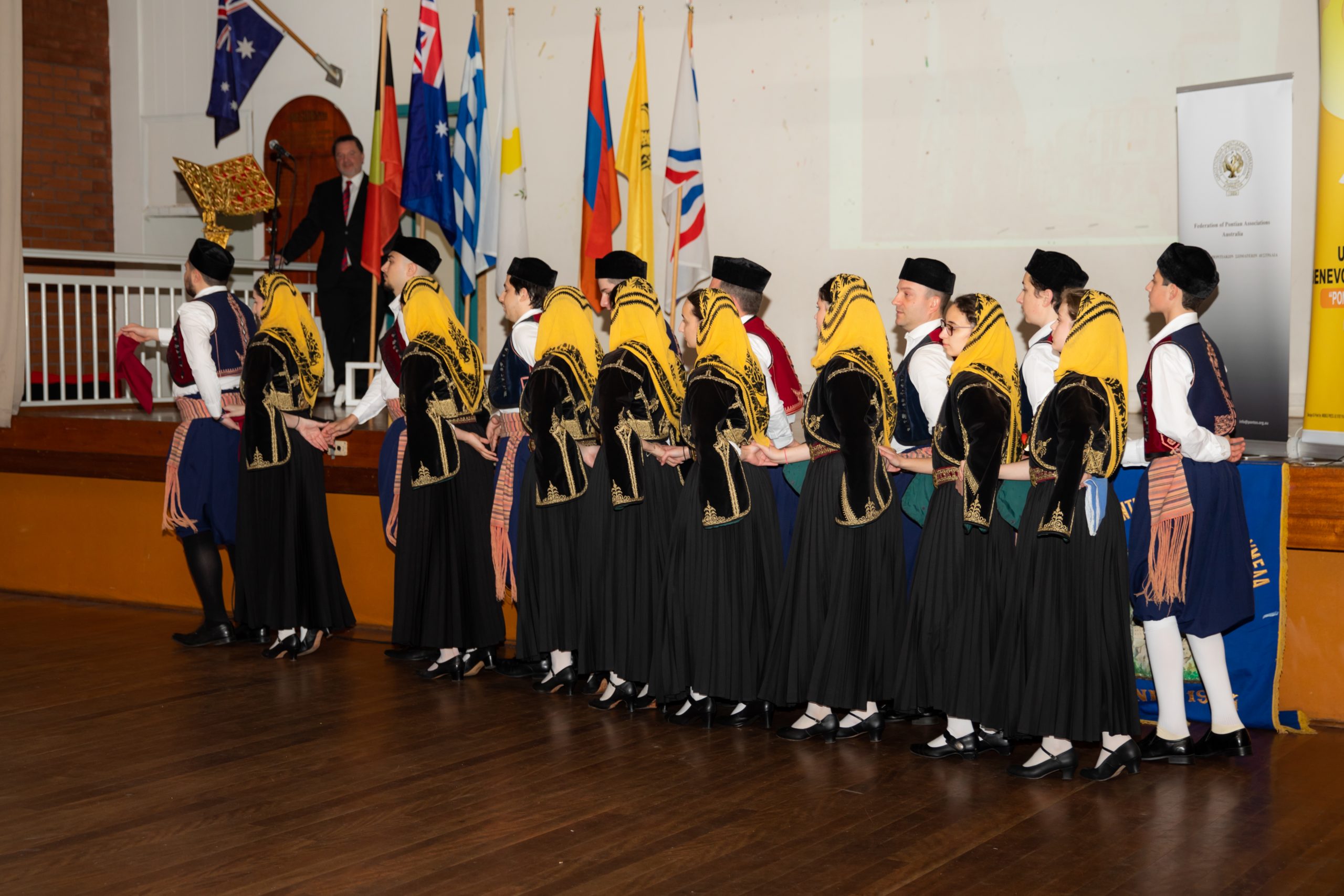
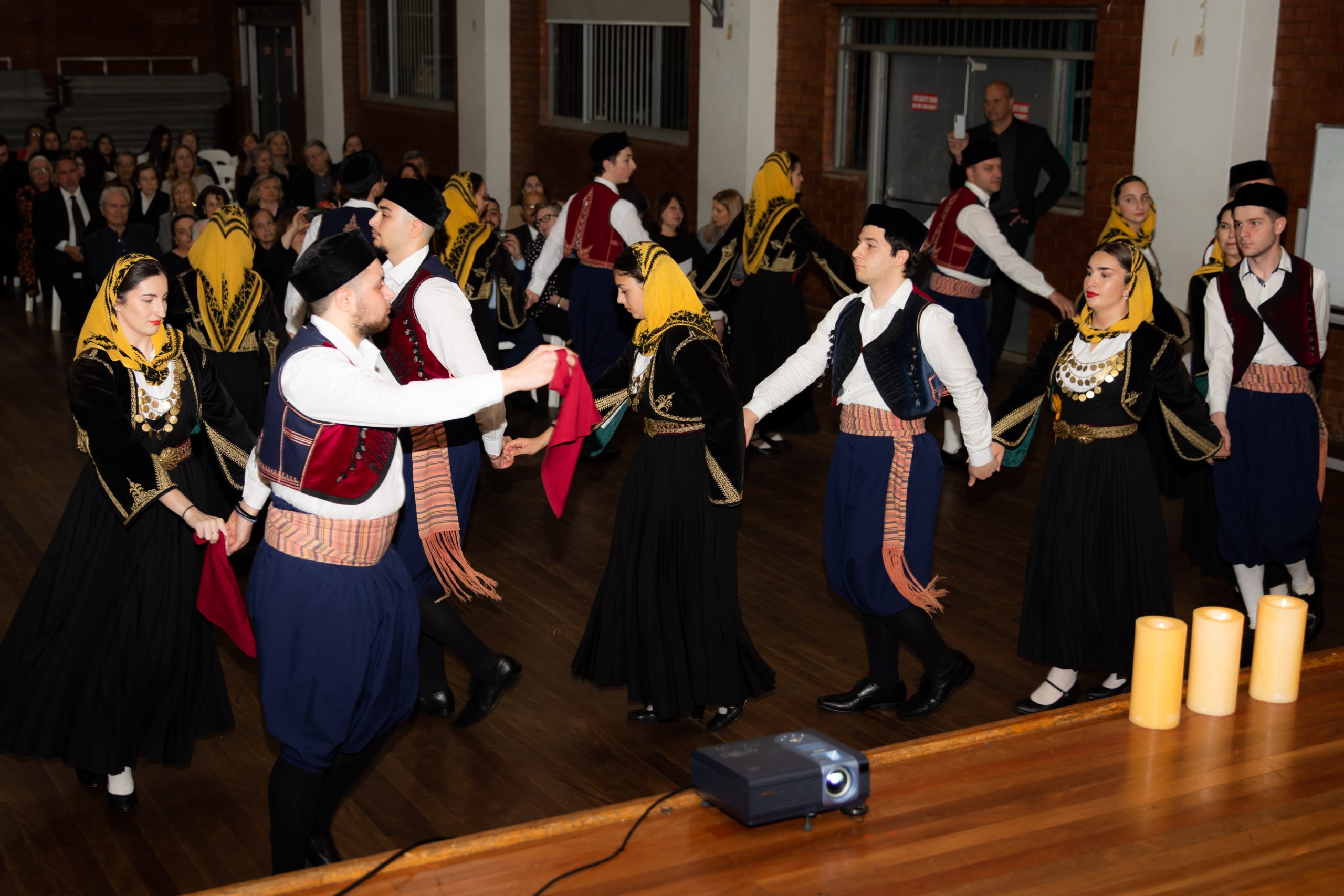
The event concluded with a traditional performance of Asia Minor and Kappadokia dances by the Aristotelian Academy of Traditional Greek Dance.