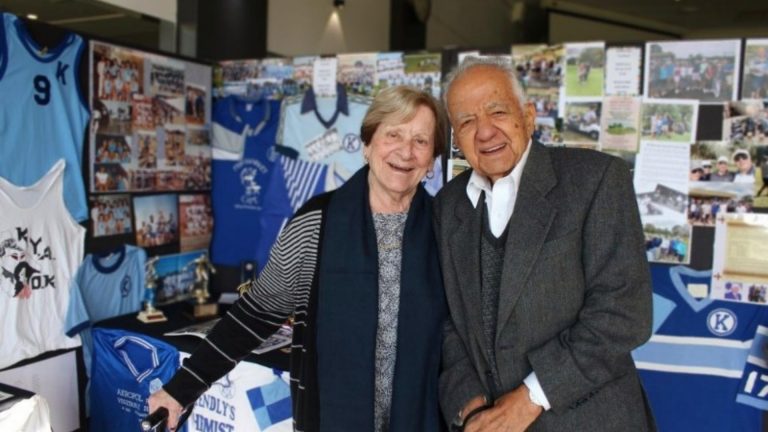
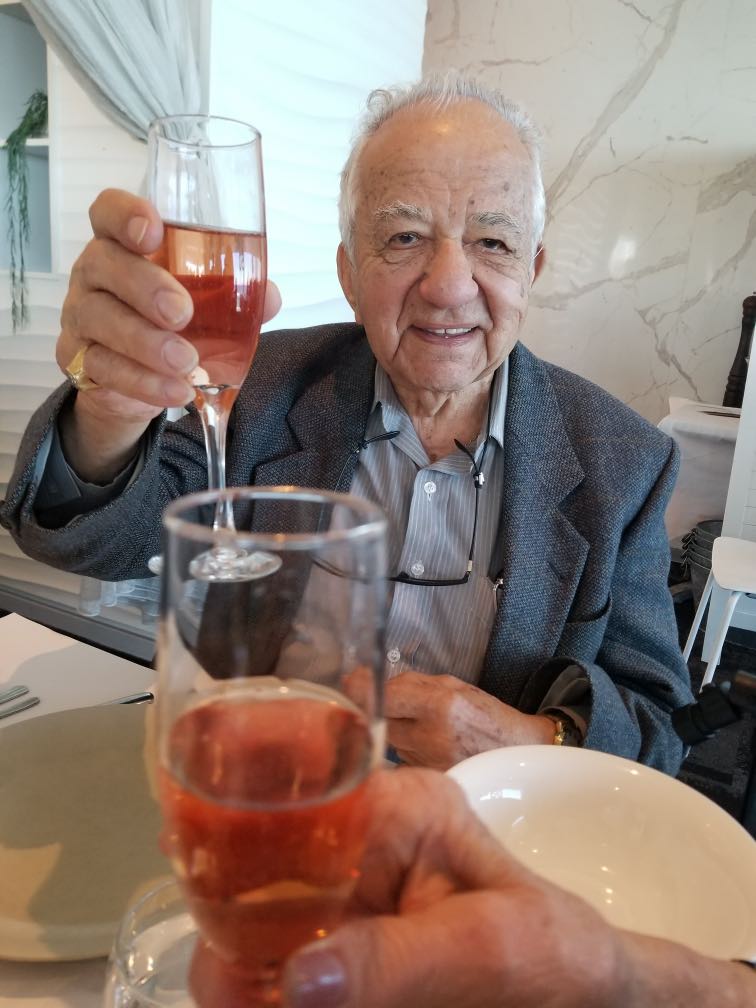
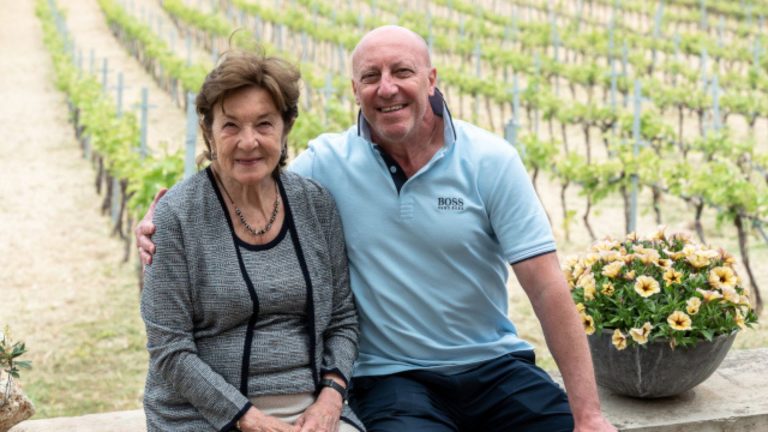
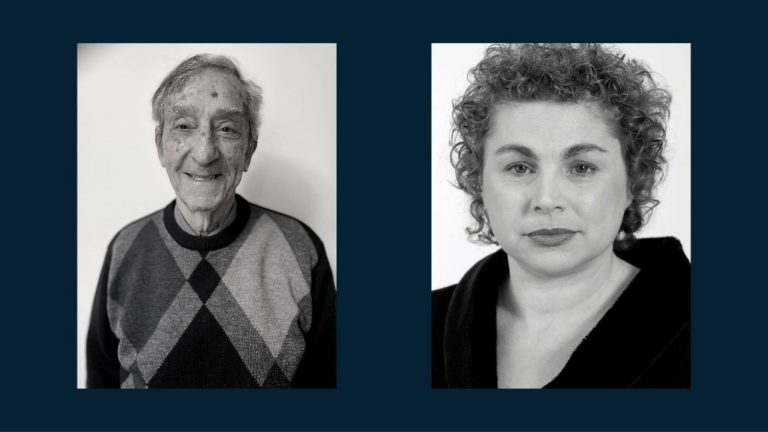
“I never had an opportunity to be naughty. I can say I stayed squeaky clean until I got married,” 94-year-old Kytherian, Stephen Zantiotis, tells The Greek Herald with a charismatic laugh.
As I sit down to interview one of the oldest members of the Kytherian Association of Australia (KAA), I can instantly tell that beneath Stephen’s cheeky sense of humour is a man who has led a hard yet interesting life.
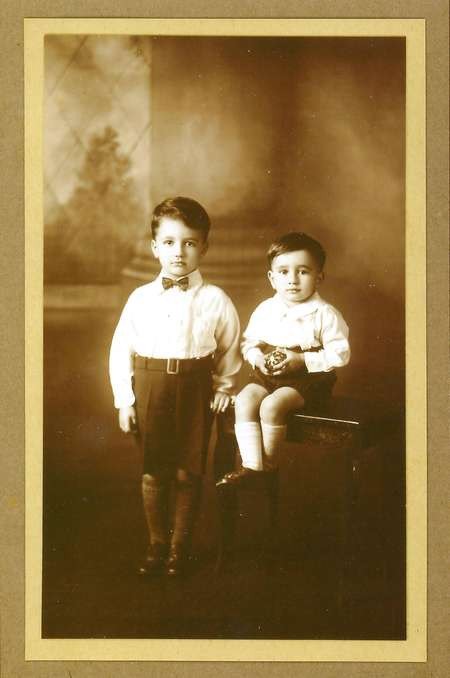
Born in 1928 in the rural New South Wales town of Weston to Kytherian migrants, Stephen was one of three sons. His oldest brother died at a young age from diphtheria.
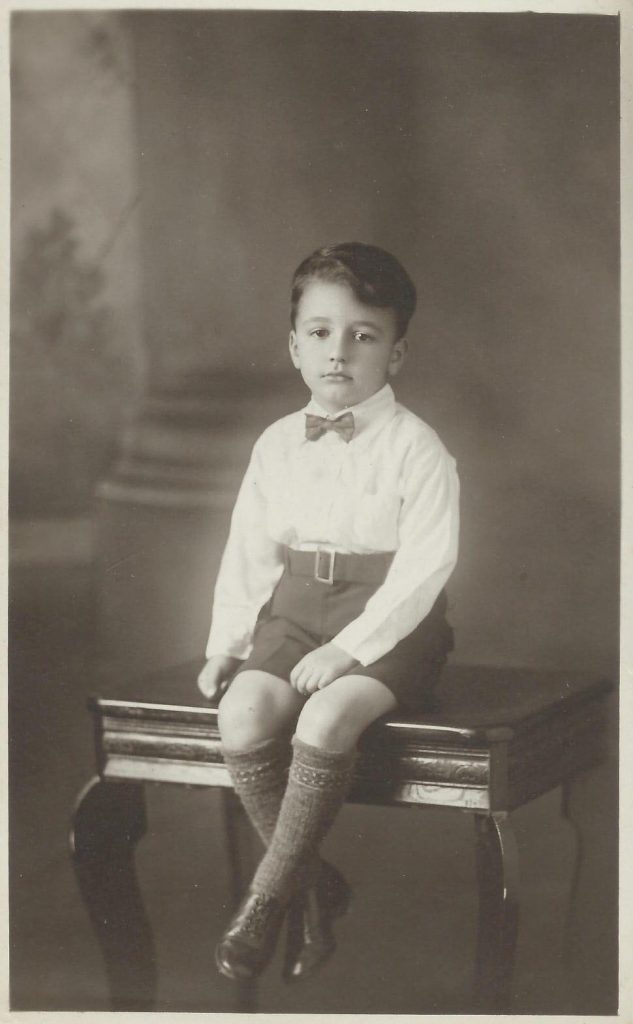
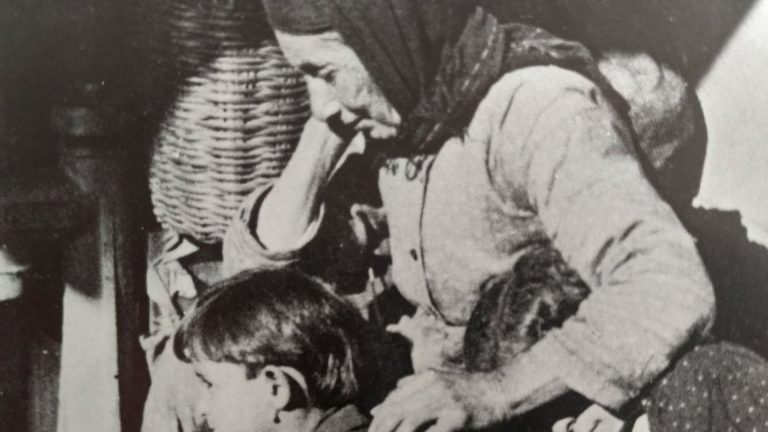
Stephen (left) with his brother, Arthur.Stephen as a young boy.
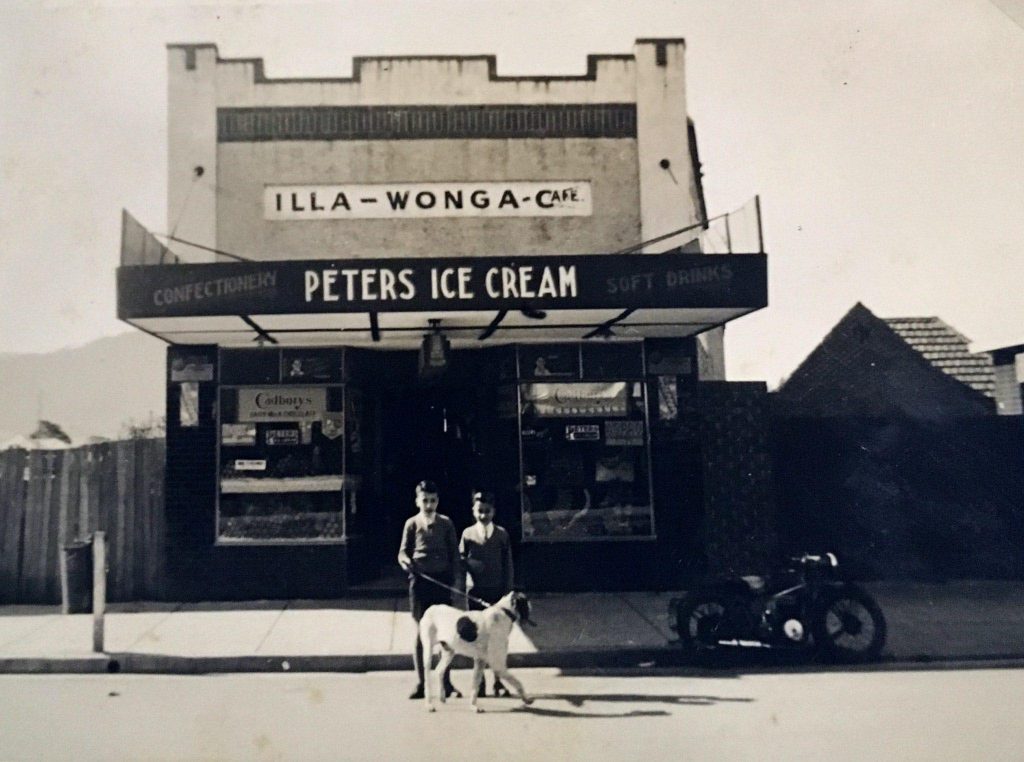
Stephen’s dad worked with his brothers in a café in Weston and they also owned a gymnasium and billiard saloon. The family later moved to the Wollongong suburb of Dapto where they opened another café.
When I ask Stephen what life was like growing up Greek in a rural town, he answers: “It wasn’t too bad.”
“The town was small. The townspeople embraced dad,” he added. “Later on, dad became a Freemason and then I joined the Freemasons as well and we were respected in Dapto.”
Dapto cafe. Stephen is on the left.
‘Life wasn’t easy’:
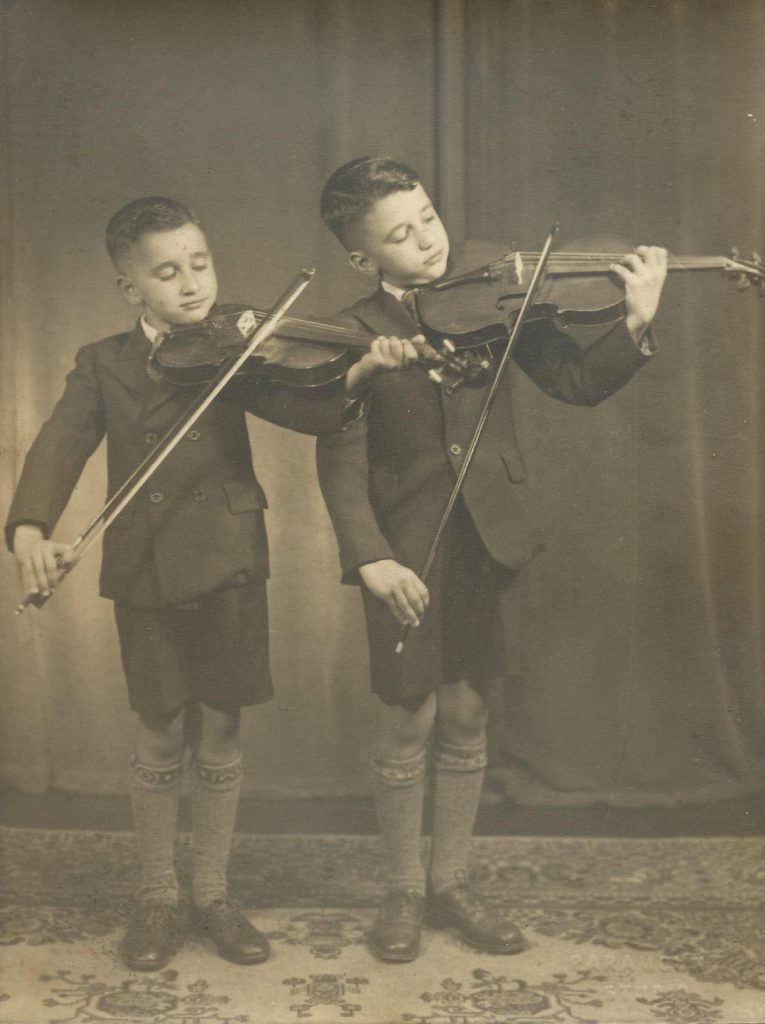
In Stephen’s spare time, when he wasn’t helping his dad at the café or going to school, he was also an avid fan of classical music and learnt to play the violin.
“Dad had my brother and I learn the violin but my brother wouldn’t practice. I liked it,” Stephen explains.
“Dad must’ve had early plans for me because I’ve got a full-size violin that he bought which was too big for me to play when I was little but I’ve still got it today.”
Stephen and his brother playing the violin.
Ultimately, Stephen’s musical talent saw him join the City of Wollongong Symphony Orchestra.
But that wasn’t all he got up to in his younger years.
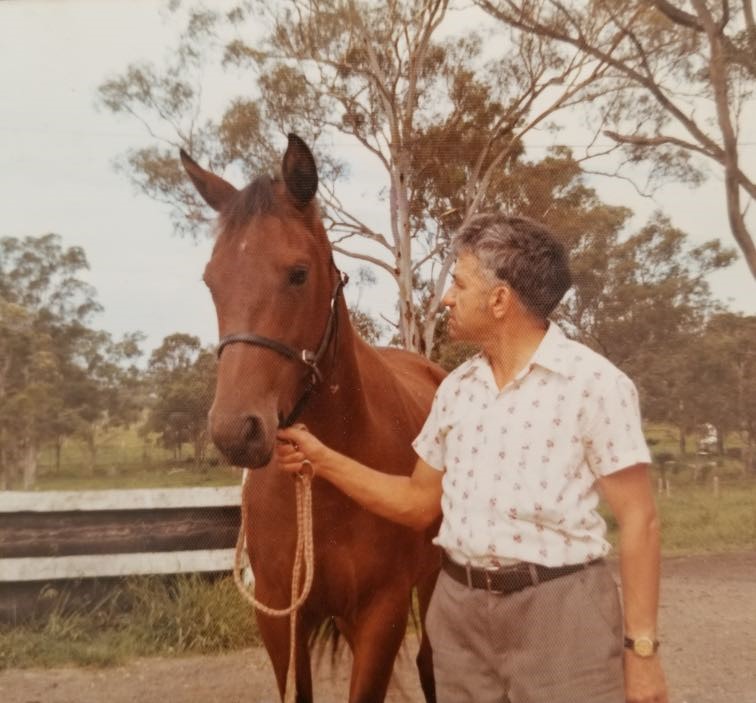
In the 60s and 70s, Stephen owned a number of race horses because, as he says, “I loved horses and animals, being one myself of course.”
Stephen owned race horses.
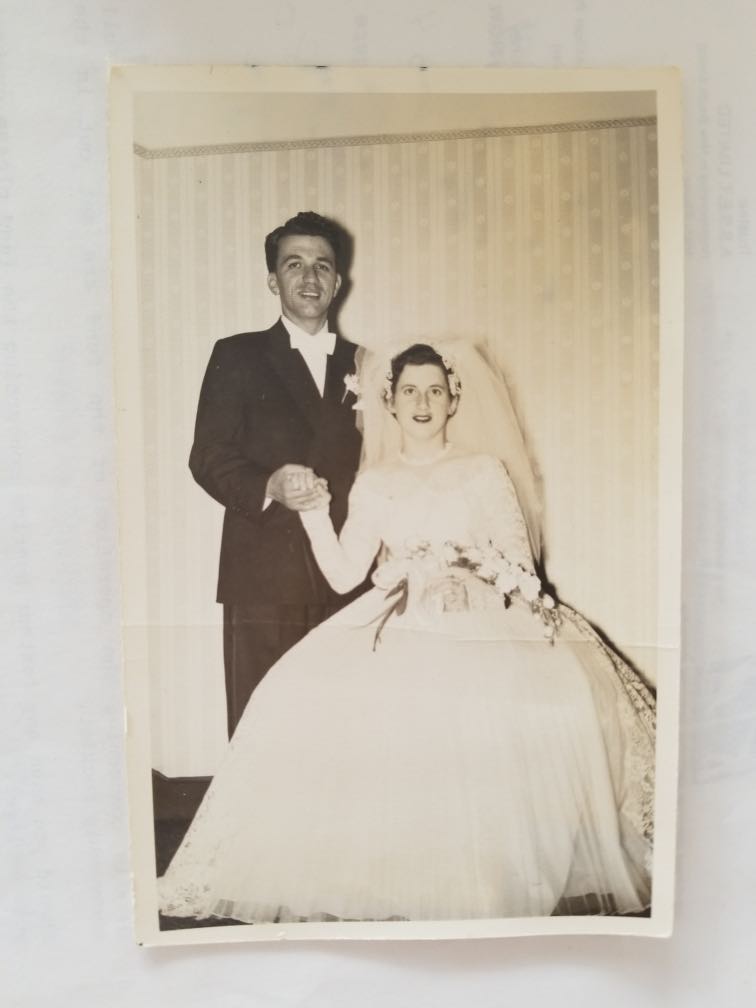
He also became a taxi driver for many years, supported along the way by his wife Anna – who he married in 1956.
Stephen and Anna on their wedding day.
“My dad saw a need for a taxi service in Dapto and helped my brother and I get a taxi each. This is something I did for most of my life,” Stephen says.
“Before two-way radio was installed, Anna used to wait in the street to give me bookings, so what I did was I bought a two-way radio and had that installed so that Anna could contact me.
“It was very interesting. In the city maybe you’d be lucky to see the same person again, but in a small town you knew everything that was going on.
“But it wasn’t easy. You can imagine back in those days things were pretty primitive… I didn’t have time for holidays, I can assure you.”
Life hasn’t been easy for Stephen and his family but he always has a positive attitude.
‘I’m a proud Kytherian’:
Despite this limited time for holidays, Stephen was able to visit Greece and the Greek island of Kythera two times with Anna and their three children – Barbara, Steve and Peter.
“It was very different to Australia,” he says.
“It was nice to go and have a look… I’m a proud Kytherian but I was born here [in Australia], this is my country.”
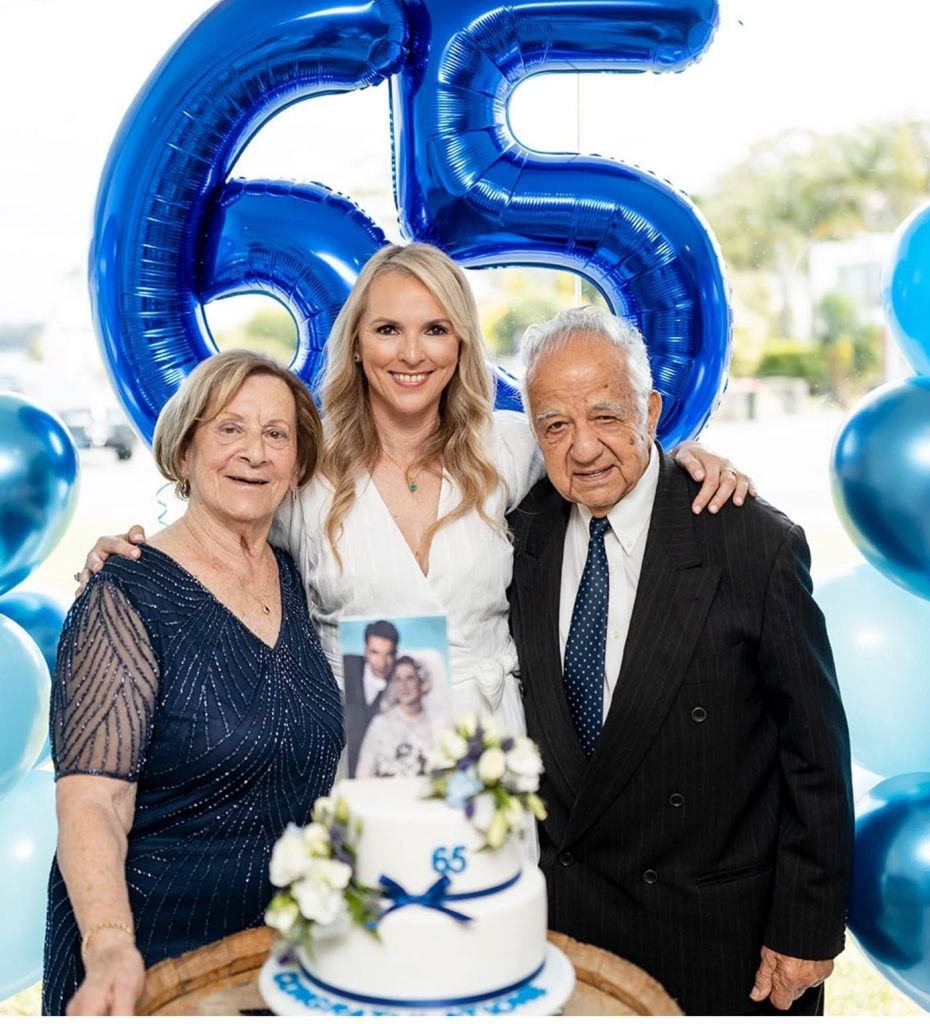
This strong connection to both Australia and Kythera has even filtered through to his daughter Barbara who was recently appointed the first-ever female President of the KAA.
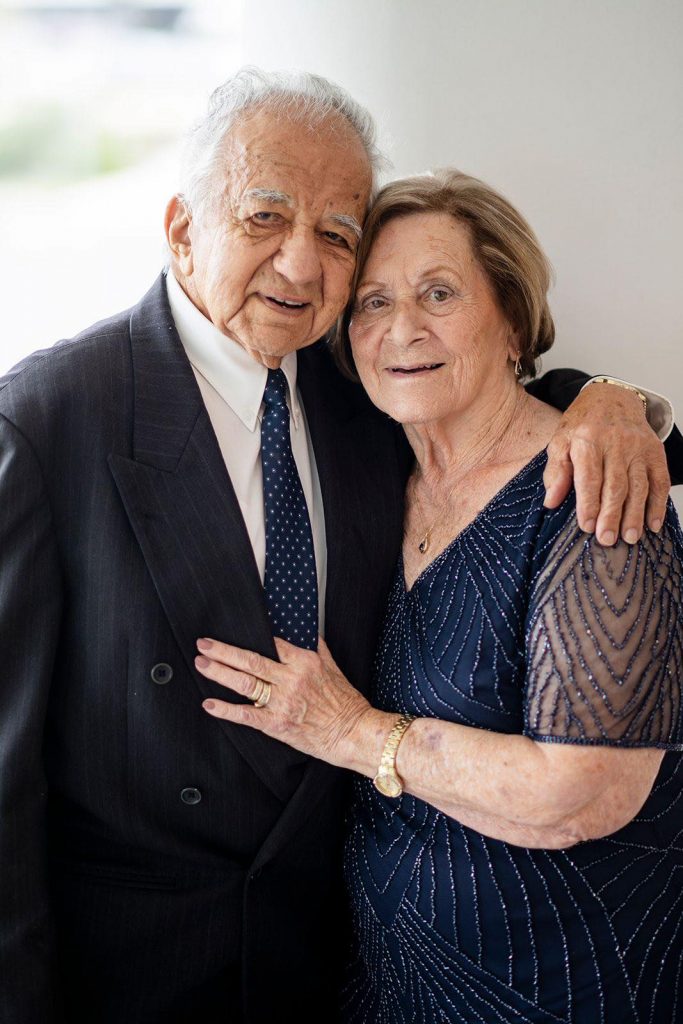
Stephen and Anna with their daughter, Barbara (centre).
When I ask Stephen his thoughts on this achievement, as well as the Association’s centenary celebrations this year, he says “it’s a wonderful thing” and he couldn’t be prouder.
“Barbara is a proud Kytherian and she does it with her heart,” he concludes with a smile. “My dad was one of the early members of the Association and now look at the Kytherians!”
Young Melbourne artist, Lauren Mavromati-Bourke, recently featured in the ‘Ahead of the Curve Digital Artwork Commission.’
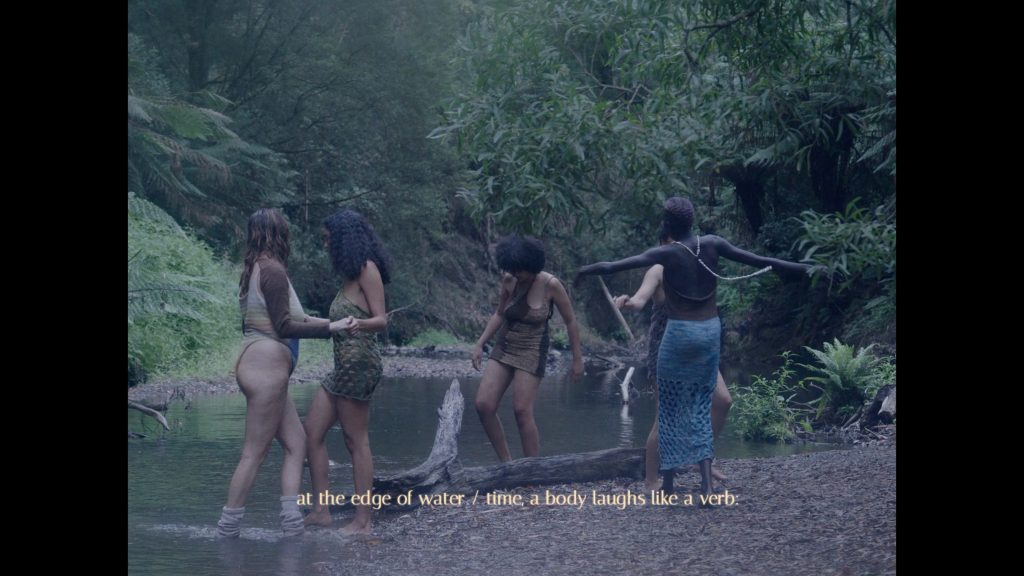
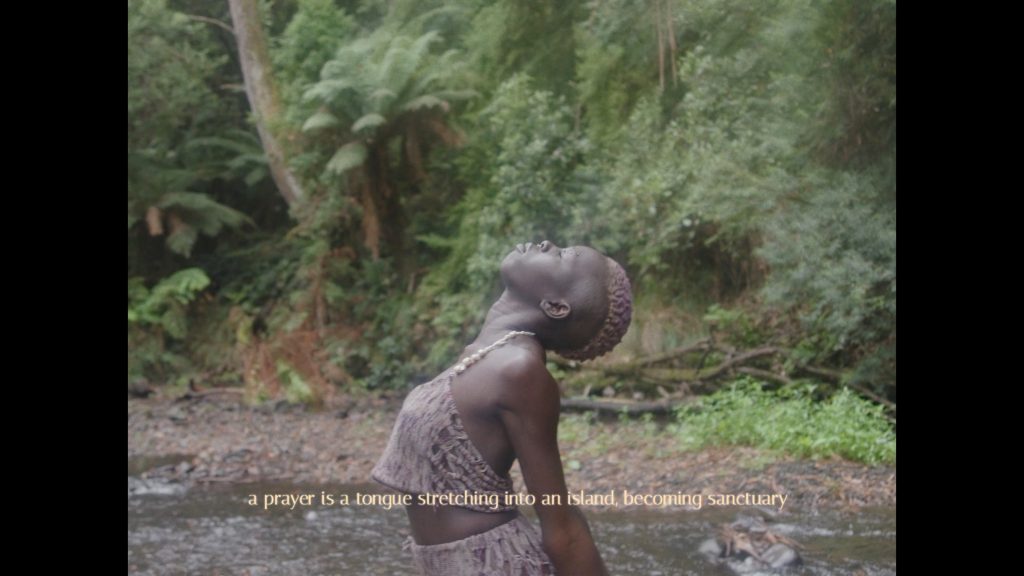
In her artwork, Lauren showcases her Cypriot ancestry through a short film featuring her own collection of knitwear that she says is reminiscent of the women that came before her.
Speaking with The Greek Herald, Lauren details her journey to design and how she came up with the idea for her new collection.
Tell us about your journey to design.
I always wanted to be in design but wasn’t sure of my place. About two years ago, I was exploring my own personal and cultural experiences, including researching the intersections of transgenerational trauma, gendered trauma and the ongoing effects of colonisation. As I spent more time learning about my Cypriot culture and my identities, I found that design was a way to explore who I was, as well as a way to connect with my community. I continued developing these themes by researching the literature and engaging in conversations and storytelling with BIPOC (Black, Indigenous and People of Colour), queer and gender diverse communities.
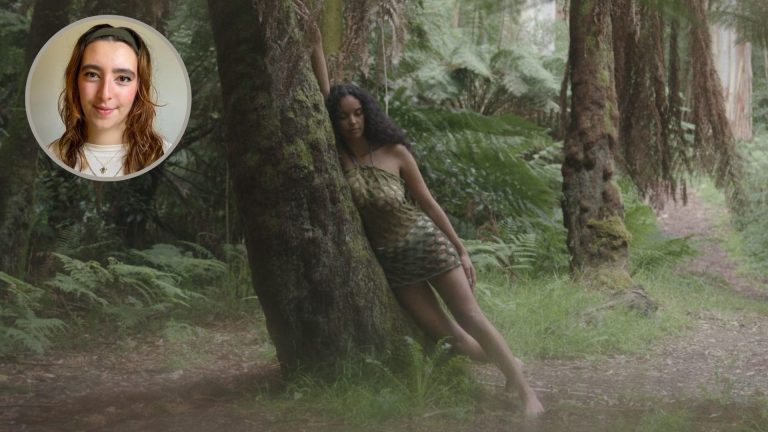
An outtake from Bourke’s short film. Photo: Lauren Mavromati Bourke/supplied.
I explored different mediums and eventually focused on knit, reflecting how textile practices have been passed down by women across generations as a form of communication and expression. By connecting with these cultural textile practices through my knitwear, I was able to show how transgenerational trauma can be represented through transgenerational cultural practice, as well as the therapeutic benefits of textile-based handicrafts.
In combining knitwear with queer, gender diverse and cultural gazes, I started designing garments for my communities.
We saw your work with the ‘Ahead of the Curve Digital Artwork Commission.’ How did you get involved with this?
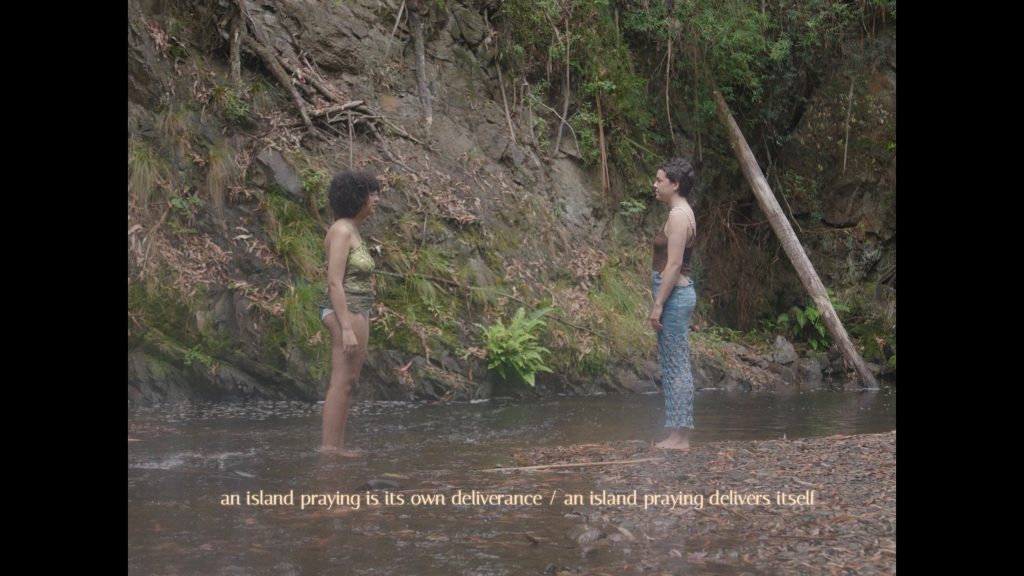
My girlfriend sent me the commission saying it would suit me and we applied! I always wanted to make a short film but wanted support making it as it would be my first time, so this seemed like the perfect opportunity. The film features my graduate collection of knitted garments, and depicts a queer sanctuary in the form of an imagined island that is shielded from colonial cis- and heteronormative gazes. Although these textile practices are borne out of transgenerational patterns of trauma, the knits are shown as pieces to be worn joyfully, designed for queer communities to wear as they move, dance and stretch.
A lot of things inspired the film. It’s a continuation of my graduate collection called ‘Entanglements Between Bodies & Borders,’ which was inspired by women’s and gender diverse communities’ resistance following the 1974 Turkish invasion of Cyprus and its ongoing impacts for marginalised communities. I had read and heard a lot about how collective experiences of invasion were mostly understood from patriarchal perspectives, with marginalised communities’ stories often left untold or hidden from the dominant narratives. By focusing on textile practices which were used by women to express these stories, I was able to instead explore how knitwear and other textile handicrafts can be used therapeutically and to connect across generations.
An outtake from Bourke’s short film. Photo: Lauren Mavromati Bourke/supplied.
How do you think your Cypriot heritage influences your work?
My Cypriot heritage greatly influences my work. My yiayia was a huge part of my life and her encouragement and support meant that I never felt limited to only exploring Cypriot culture without also exploring other parts of my identity.
As I mentioned before, I began this project through exploring different communities’ experiences after the invasion of Cyprus in 1974 and the lasting transgenerational impacts. I’m really interested in how culture has been passed down through generations of matriarchs and it has been a formative journey to connect with textile practices, like so many in my culture have before me, through knitting.
What is next for you as a designer?
Working on my brand! I just released my first collection of knitted tops a few weeks ago, and am also creating custom garments as I begin work on the second collection. I’m planning to release this next collection at the end of the year, and will be experimenting with new designs including more masculine silhouettes. As well as designing knitted garments, I also enjoy creating soft sculptures and would love to explore this further in future.
Eventually, I hope to also one day open a shop that stocks emerging designers, as well as being a hub for community events and local art.
An outtake from Bourke’s short film. Photo: Lauren Mavromati Bourke/supplied.
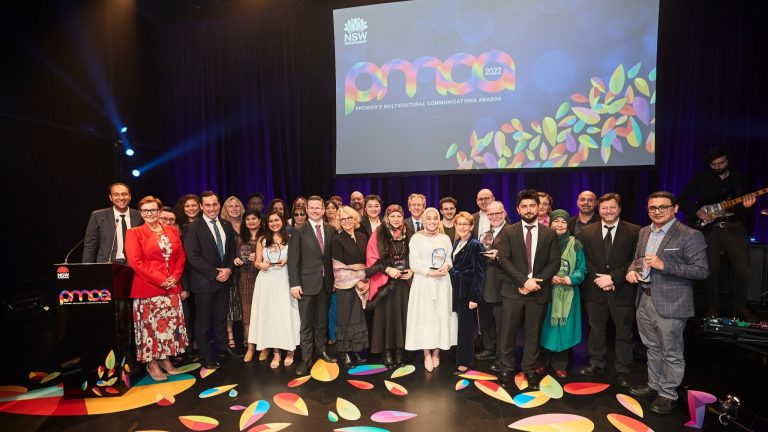
The winners of the 2022 Premier’s Multicultural Media and Communications Awards have been named, recognising the important contributions they make to supporting NSW’s diverse communities.
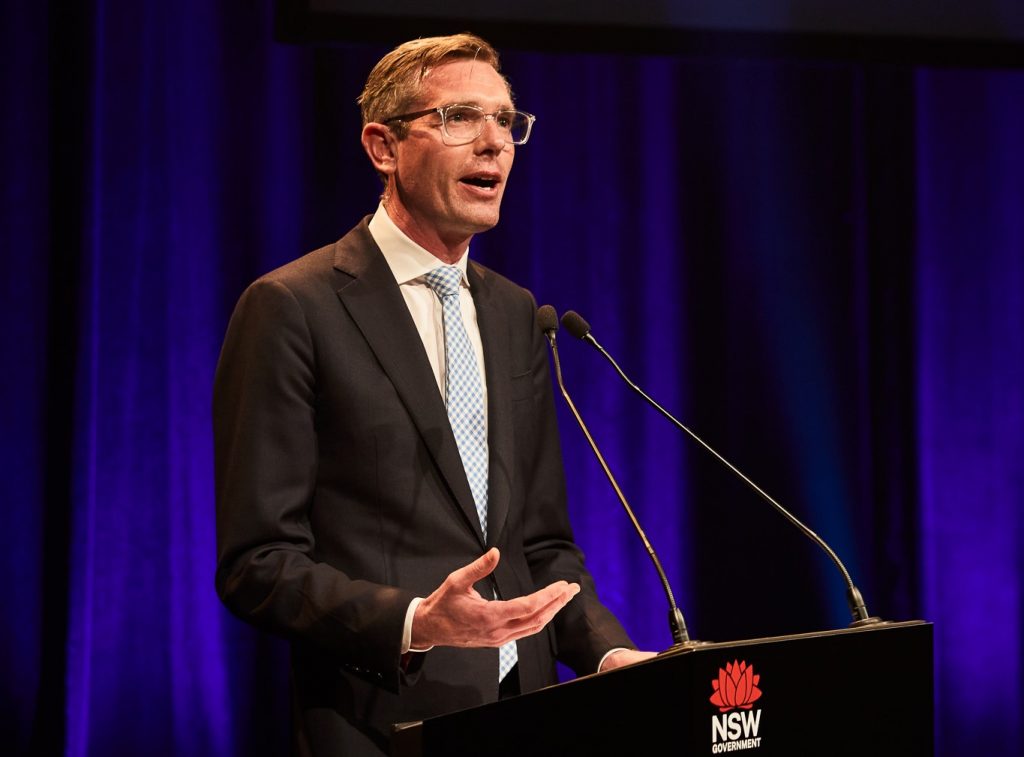
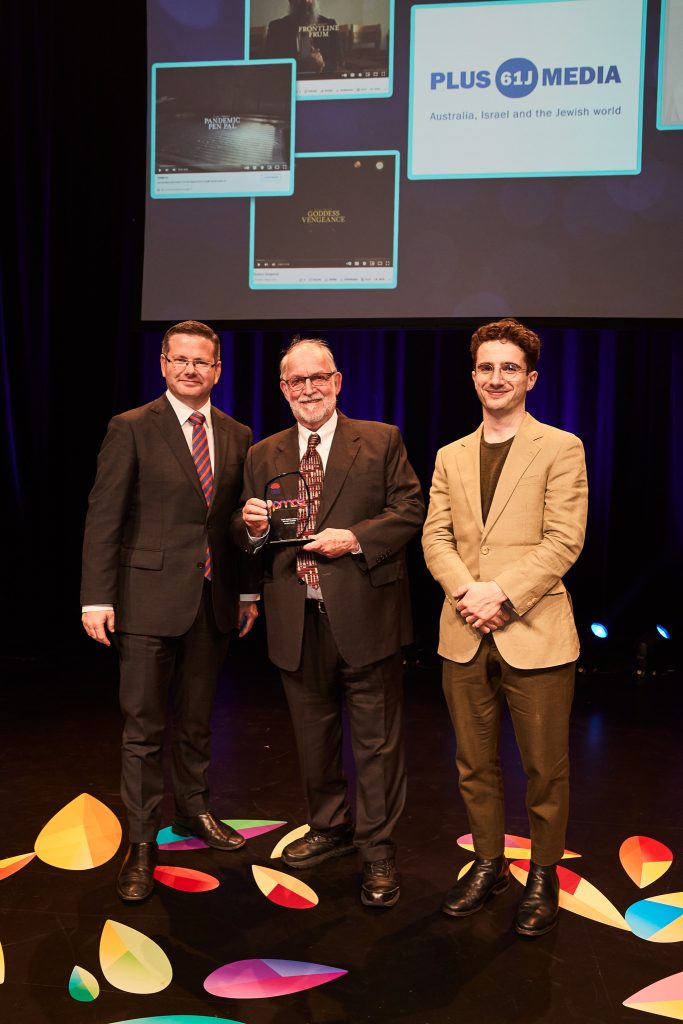
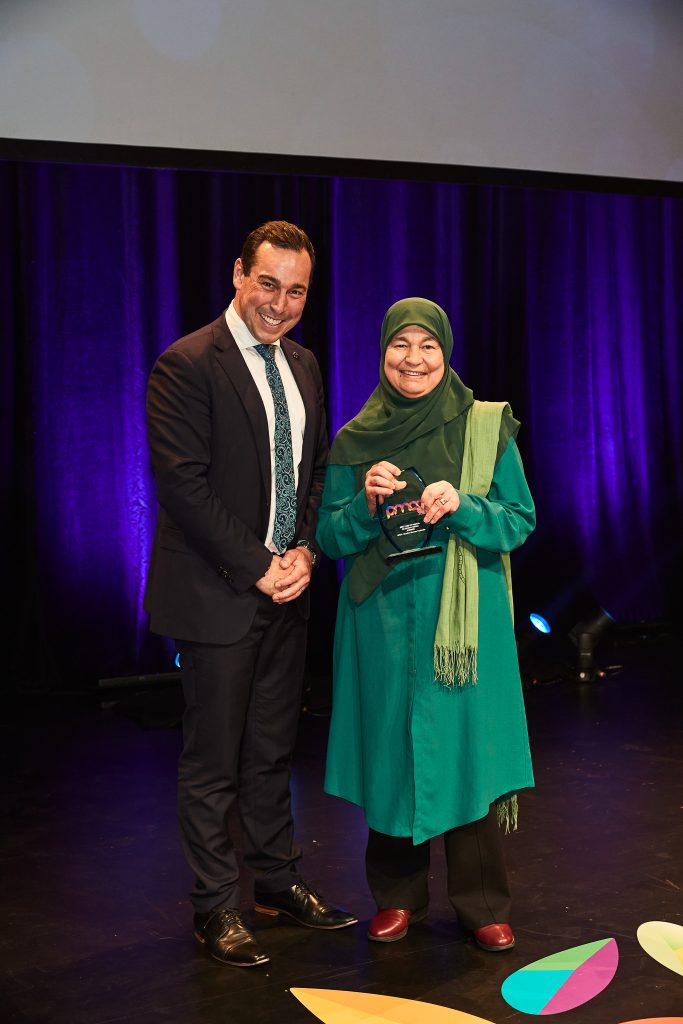
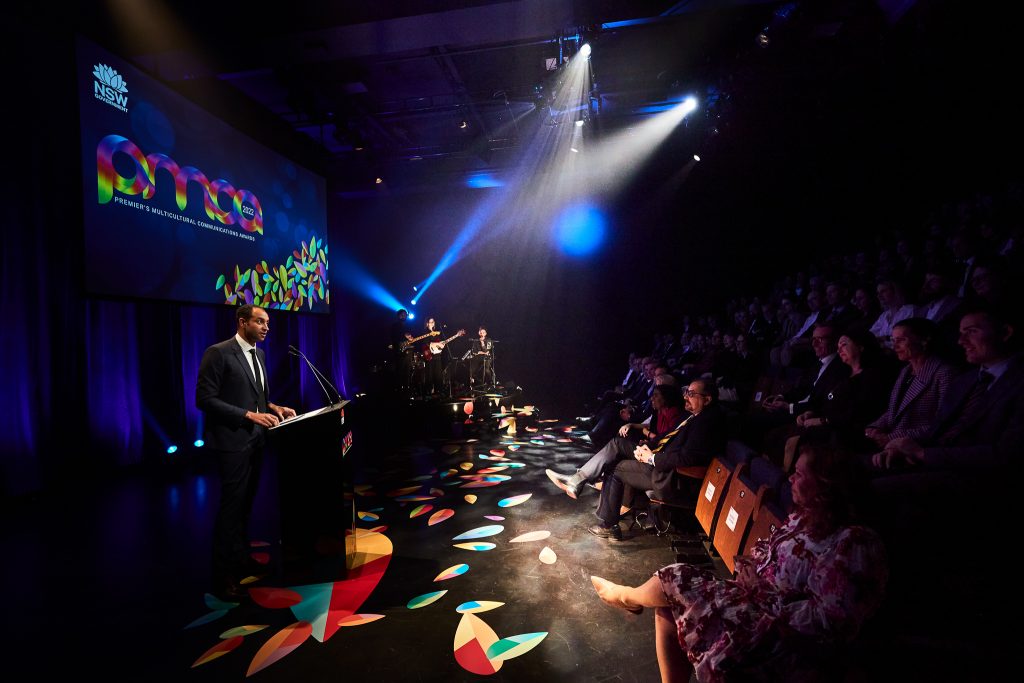
NSW Premier Dominic Perrottet and Minister for Multiculturalism Mark Coure announced the winners at a special ceremony on Thursday, September 8.
“The NSW Government has been proudly hosting this awards ceremony for five years, and it is the only one of its kind in Australia that celebrates the valued contributions of the multicultural media and marketing industry,” Mr Perrottet said.
“I commend this year’s winners and finalists and would like to personally thank them for their ongoing work in supporting, engaging with and informing diverse audiences across our state.”
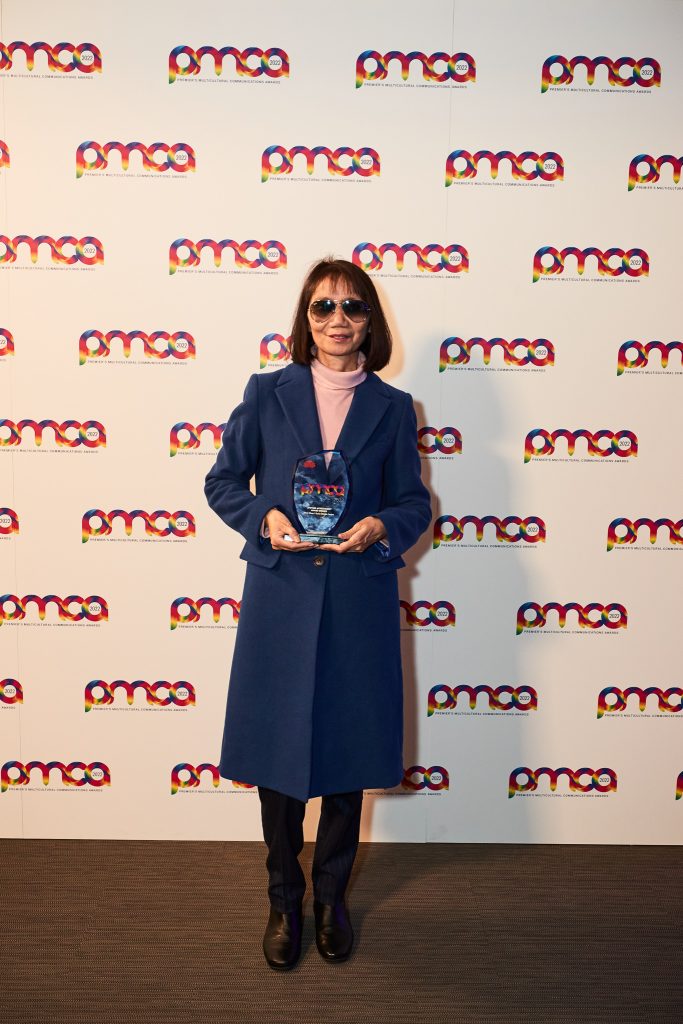
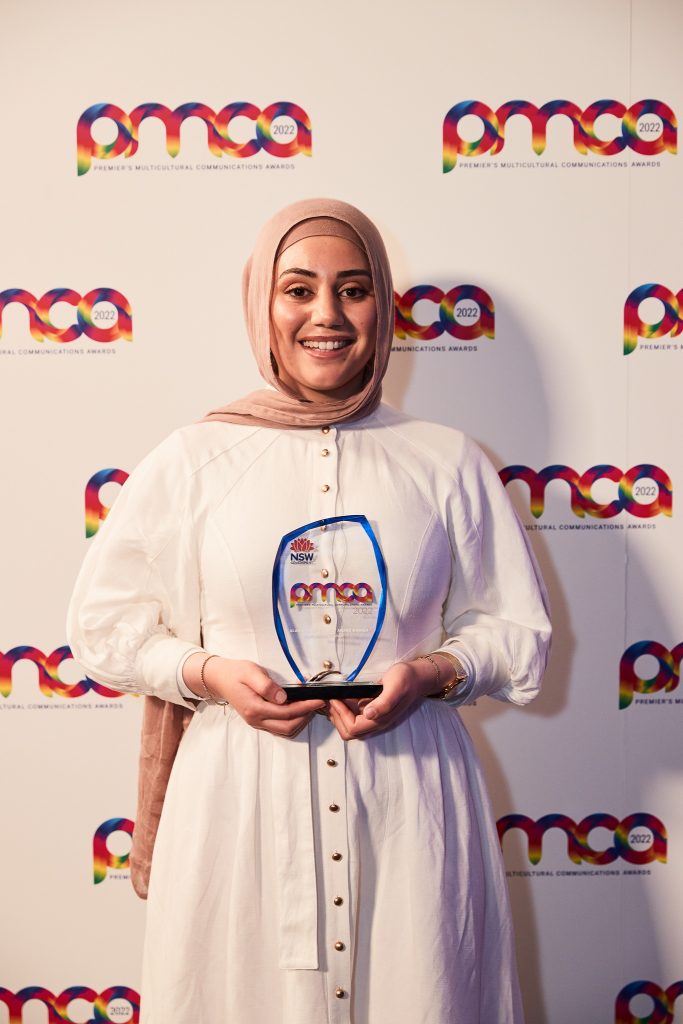
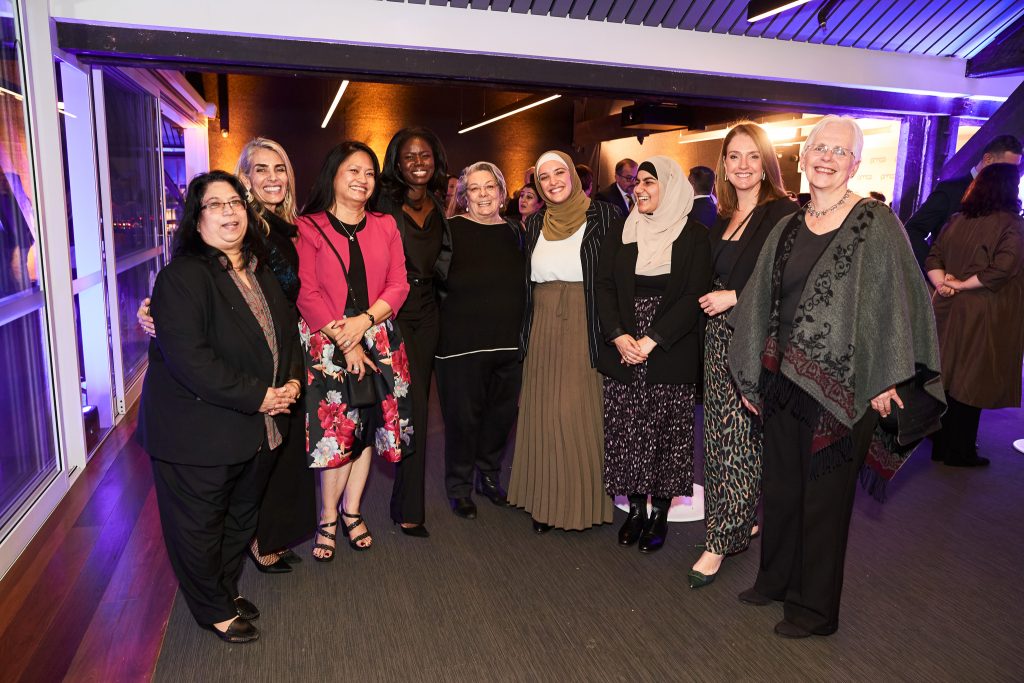
Among the 12 winners were Mimi Chau who won the Lifetime Achievement Award, India Link’s Rhea L Nath who won Young Journalist of the Year, and Muslim Women Australia who won Best Use of Digital or Social Media.
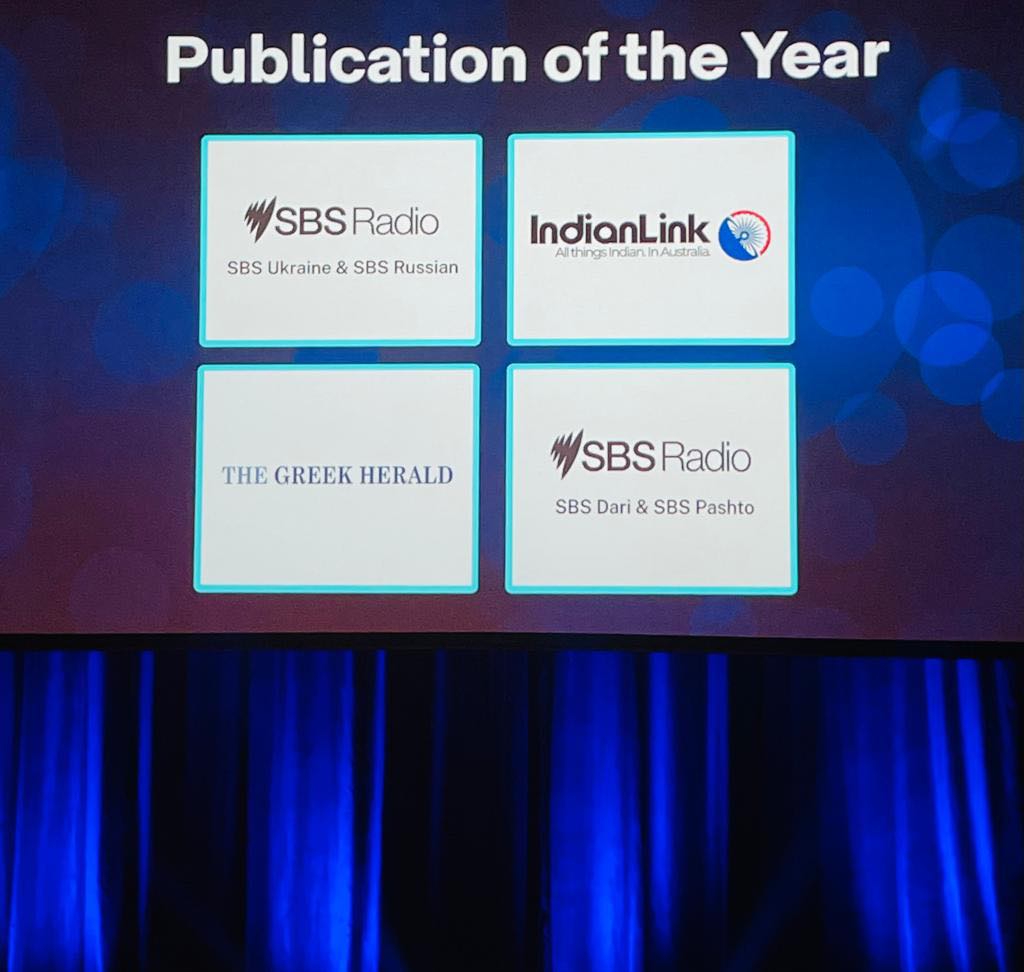
The Greek Herald was a finalist in the ‘Publication of the Year’ category for the second consecutive year, whilst The Greek Herald digital journalist, Andriana Simos, was also shortlisted as a finalist for ‘Young Journalist of the Year.’
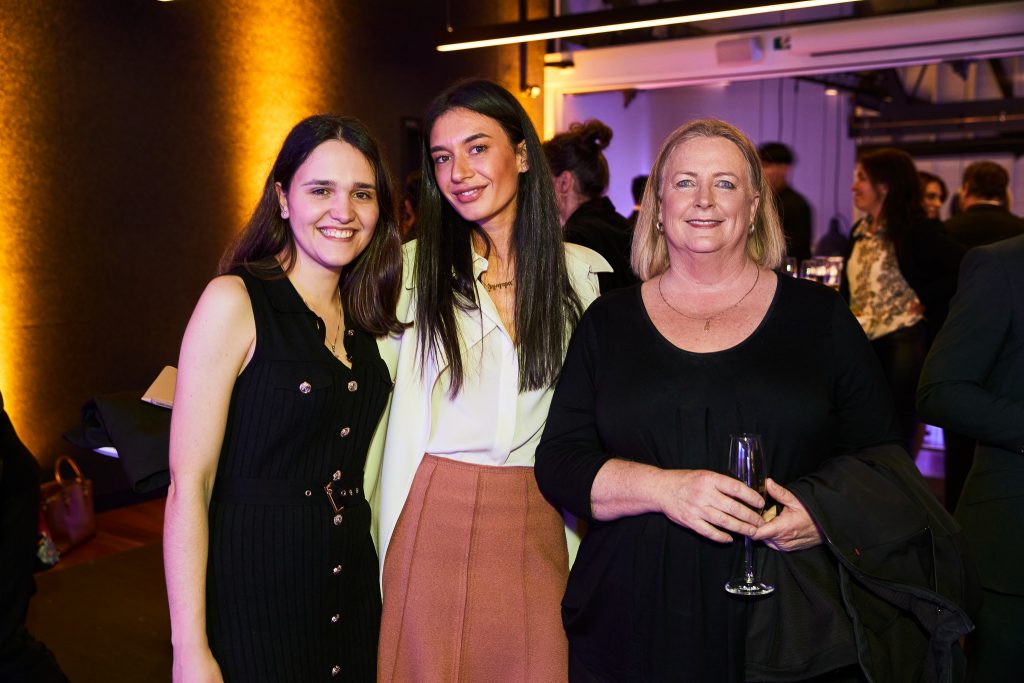
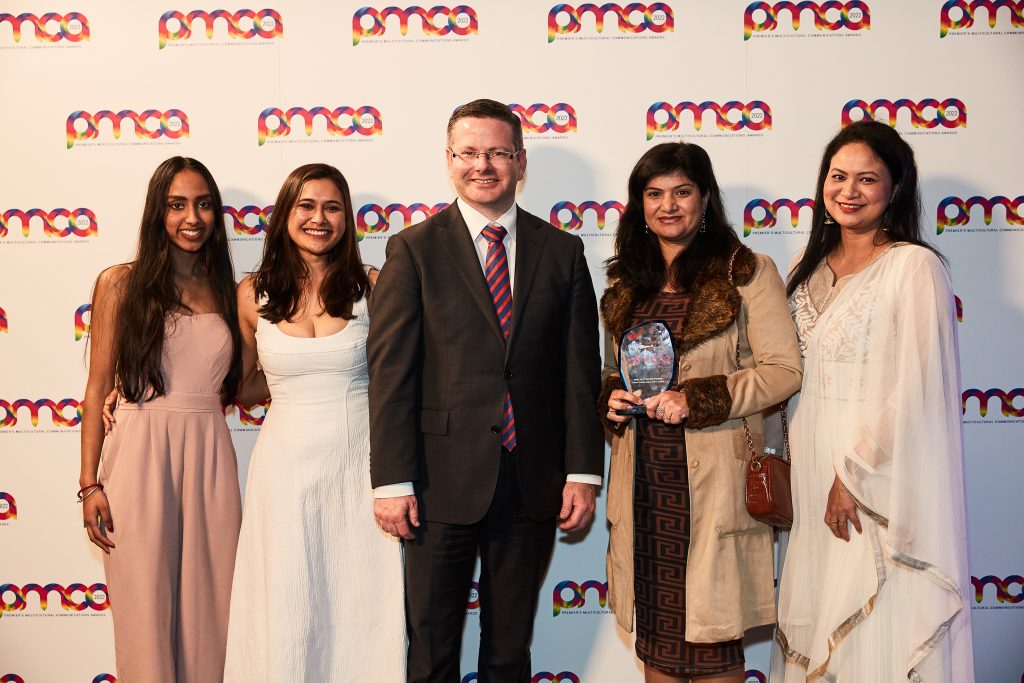
The Greek Herald was named finalist in the ‘Publication of the Year category.’(L-R) The Greek Herald journalist, Andriana Simos; The Greek Herald publisher, Dimitra Skalkos, and a representative from Multicultural NSW.
Publisher of The Greek Herald, Dimitra Skalkos, said it was an honour to be acknowledged on the night.
“We are proud to see the work of The Greek Herald team recognised in the multicultural media landscape of NSW for the second consecutive year,” Ms Skalkos said.
“Multicultural media play a vital role in communicating key messages to diverse communities across the state and country and being acknowledged at these awards ensures we can continue to connect and inform our readers with relevant and innovative content.”
Minister for Multiculturalism, Mark Coure, said our diverse media and marketing landscape is a testament to NSW’s rich multicultural society.
“There is a newspaper, magazine, online publication or radio station for almost every language and culture here in NSW,” Mr Coure said.
“They speak directly to those communities, keeping them not only informed, but also connected to their culture and language.
“I am proud that NSW is the only state in the country to recognise multicultural communicators with this standalone awards ceremony.”
The winners were:
Best audio-visual report – Plus61j Media
Best text report – Indian Link’s Pawan Luthra, Rajni Anand Luthra
Publication of the Year – SBS Dari/SBS Pashto
Young Journalist of the Year – Rhea L Nath from Indian Link
Alan Knight Student Award – Boushra Elkheir
Best Audio Report – National Ethnic and Multicultural Broadcasters Council
Lifetime Achievement Award – Mimi Chau
Public Interest Award – SBS Insight
Best Use of Digital or Social Media – Muslim Women Australia
Agency Campaign of the Year – Loud and Identity Comms
Business Campaign of the Year – NSW Department of Customer Service, NSW Health and MHCS, UM/Identity, Etcom
Community Campaign of the Year – South Eastern Community Connect
The Hellenic Center for Excellence in Health & Wellness is being established as a non-profit in the USA to sponsor research and educational programs in Crete, Greece in partnership with the Grecotel hotel chain. The goal is to increase awareness of the health benefits of the traditional Cretan diet and lifestyle, starting with an autumn conference in Crete.
“The center will be a US non-profit, with a US-based board of directors and US and international advisors in three areas: science/health, agro-culinary issues, and business/innovation. Advised by world-famous scientists and gastronomy experts from Harvard, Yale and other leading universities, the center will offer hands-on immersion experiences in Crete,” Dr. Stefanos Kales explained to Greek Liquid Gold. Kales, who is a Professor of Medicine at Harvard Medical School and a Professor at the Harvard T.H. Chan School of Public Health, is the founder of the center and its CEO and Chief Scientific Officer.
Kales was inspired by a collaboration between the Culinary Institute of America and the University of Barcelona, who together created a center for the Mediterranean diet. Kales told Isabella Zambetaki, “As a third generation Greek, … I wanted to find a way to establish something similar in Greece.” As he explained to Greek Liquid Gold, his proposal was embraced by Grecotel, the Greek Minister of Tourism, the Greek National Tourism Organization (GNTO), the Governor of Crete, and the president of the association of travel agents of Crete. According to Kales, “all of the authorities trusted in the gravitas and high caliber of the advisors, while they had confidence in the experience and resources of Grecotel as an in-country strategic partner.”
In a presentation at the Aristotle Medical Forum in Thessaloniki, Kales pointed out that the collaboration with Grecotel, a major Greek luxury hotel chain, makes it unnecessary to seek funding to build a conference center. It also supports the Greek government’s goals of expanding wellness tourism and year-round tourism. This November’s conference will already extend one hotel’s active period beyond the typical tourist season, and next year the center hopes to pilot wellness tourism services in collaboration with Grecotel.
Long established on Crete and now prominent throughout Greece, Grecotel includes 40 award-winning luxury hotels and resorts in beachfront locations. Kales was especially impressed by Grecotel’s organic agrotourism farm in Crete, Agreco Farm, as well as the company’s longstanding dedication to environmental sustainability “and the close connection of the company with the agri-food sector,” as he told Zambetaki, since one goal of the Hellenic Center for Excellence in Health & Wellness is to provide “sustainable experiences” that highlight the traditional Cretan diet and lifestyle. Set up like a traditional village, Agreco Farm offers a tour, plus activities and demonstrations that include milking goats, beekeeping, and traditional cooking and baking.
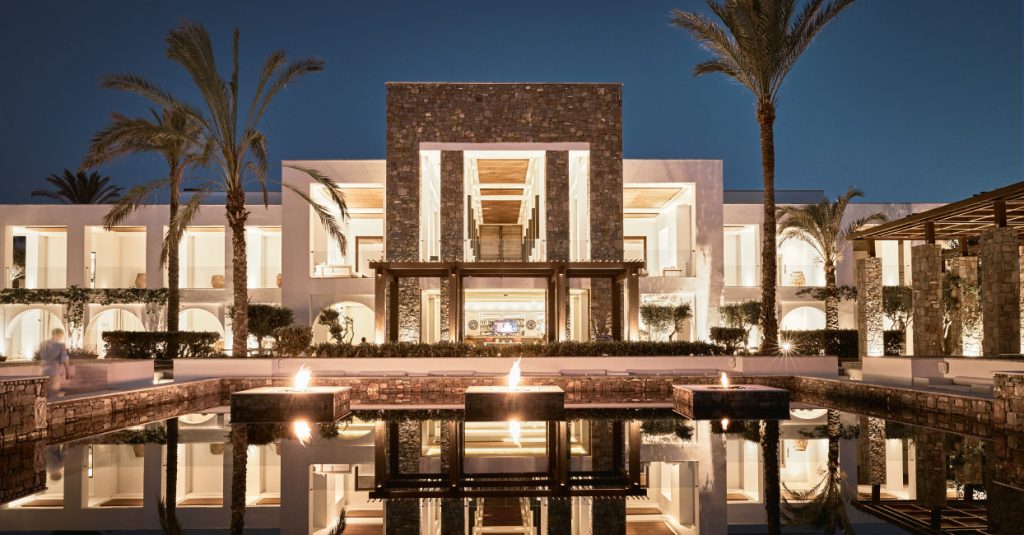
Grecotel Hotel, Crete.
Crete’s mild, sunny climate makes it an excellent choice as a base for the center, as members of the advisory committee confirmed last spring. In May, the establishment of the Hellenic Center for Excellence in Health & Wellness was officially announced at an invitation-only symposium on the value of olive oil and the Mediterranean diet at the Vatican in Rome, where Kales and a number of other advisory committee members were featured speakers. Immediately following the symposium, they visited Crete to gain first-hand experience with the Cretan diet and lifestyle in the land where it developed over the centuries. Visiting Agreco Farm, a winery, and artisanal food producers, enjoying Greek Orthodox fasting cuisine at a monastery, and speaking with local producers, the scientists were able to “directly experience the results of the Seven Countries Study,” as Kales told Zambetaki.
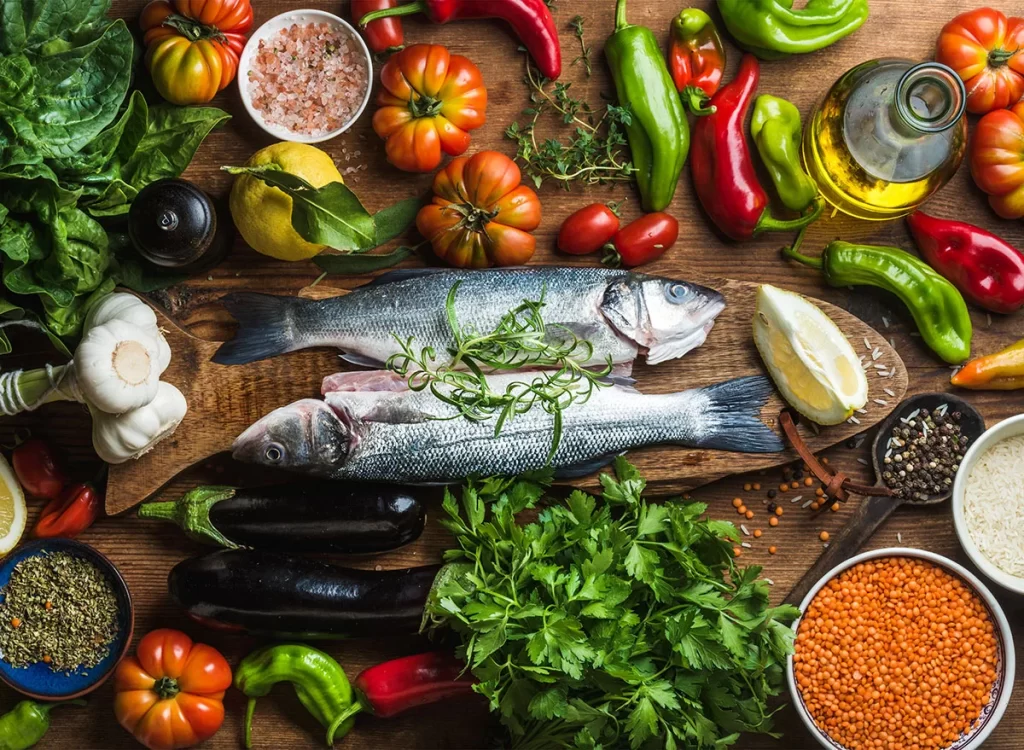
Kales explained this in his Thessaloniki presentation: “Historically, what we call the Mediterranean diet is really based on the Cretan diet,” as the Rockefeller Report (1953) and Ancel Keys’s Seven Countries Study (1970) indicated. “Crete was the star of the study” in the latter case, “with the longest life expectancy, and the lowest rates of heart disease, as well as cancer.” For what Ancel Keys later called the Mediterranean diet, “the gold standard, the prototype, was the Cretan diet and the traditional Greek diet.” Now, Kales added, “the so-called Mediterranean diet” is considered “the healthiest eating pattern for almost everyone in every country.” The US government joins many others in recommending it.
This is not only about food, as Kales pointed out in his presentation; lifestyle is also crucial for our health. So the new center “seeks to advance healthier food and lifestyle choices worldwide, using the traditions and history of the Cretan diet as the gold standard reference point for learning and research” in various educational offerings and “hands-on immersion experiences in Greece.” An international team of prestigious scientific and culinary advisors is sharing their expertise with the center, enabling interdisciplinary research and education on nutrition, olives, olive oil, and wine.
The center’s advisory committee will seek to develop partnerships with Greek and foreign institutions and universities, and with local producers of traditional products in Crete. As Kales told Greek Liquid Gold, they would be glad to hear suggestions from the community in Crete about research projects that could help preserve traditional practices and improve nutrition and wellness on the island. Moreover, they “would be happy to engage with local producers to discuss with them any type of sponsorship, logistical or technical partnerships,” or other contributions.
This will all start with an inaugural experiential conference at Creta Palace Resort in Rethymno this November entitled “Cretan Lifestyle: Mediterranean Tradition & Modern Applications.” As Kales said in his presentation, conference participants will “see, they will hear, they will taste, they will try, and they will live unique and unforgettable experiences in Crete, inspired by the land of Crete, the people, their history, and their legendary hospitality.” They will also learn from experts from Harvard, Yale, the Culinary Institute of America, the PREDIMED study, Spain, and Greece. This “hands-on, mouth-watering immersion course on the health benefits of the traditional Mediterranean Lifestyle” is open to all: students, professionals, foodies, chefs, producers, exporters, and wellness enthusiasts.
Plans for immersion experiences include visits to wineries, olive groves/mills, a cheese maker, a monastery, and Agreco Farm. The preliminary program calls for the following sessions:
• Crete: From Past to Present • Lifestyle Medicine and Medical Tourism • Spirituality and Health (from Orthodox Christian Fasting to Mindful Eating) • Prevention of Dementia and Cognitive Decline • PREDIMED / PREDIMED PLUS Updates • Young Investigators and Professionals (Poster and Presentation Competition) • Making Greek Products Successful in the US Market • Phenols and Antioxidants
*Originally published on Greek Liquid Gold: Authentic Extra Virgin Olive Oil (greekliquidgold.com). See that site for recipes with olive oil, photos from Greece, agrotourism and food tourism suggestions, and olive oil news and information.
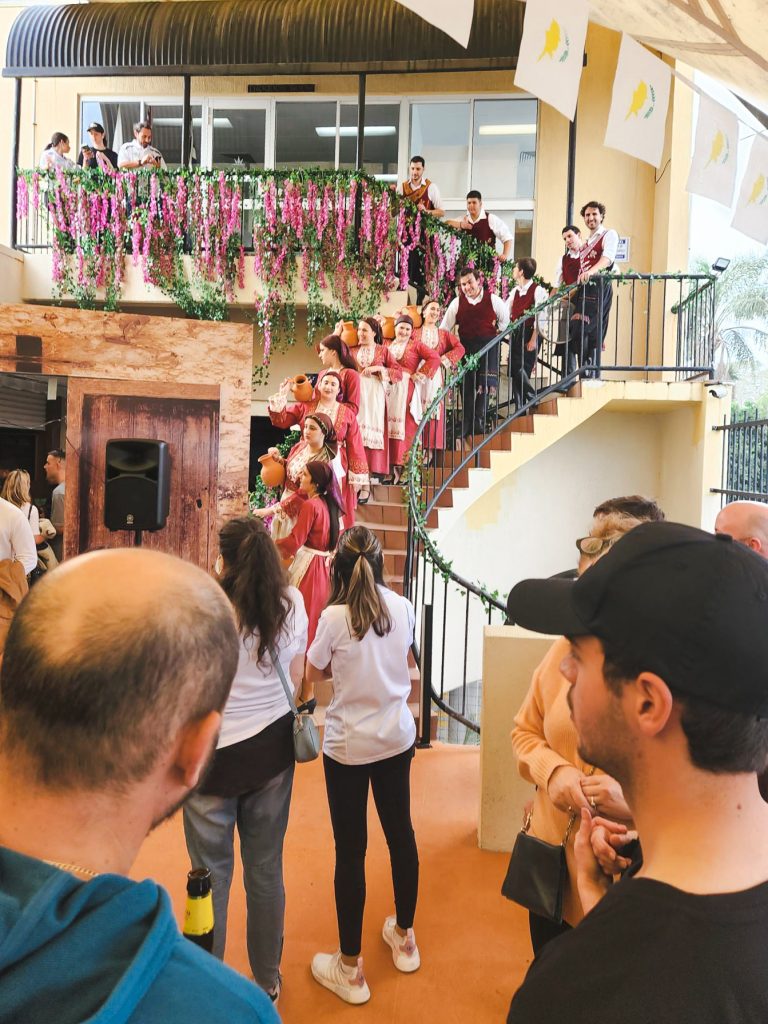
Brisbane, the capital city of Queensland, was turned into the ultimate Cypriot experience on Saturday, September 3.
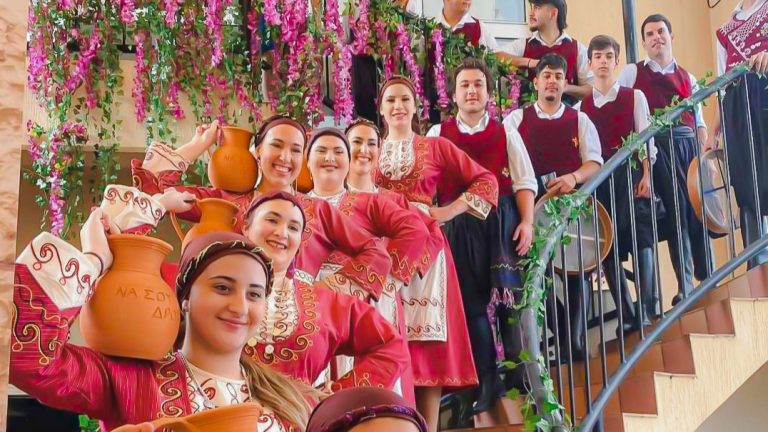
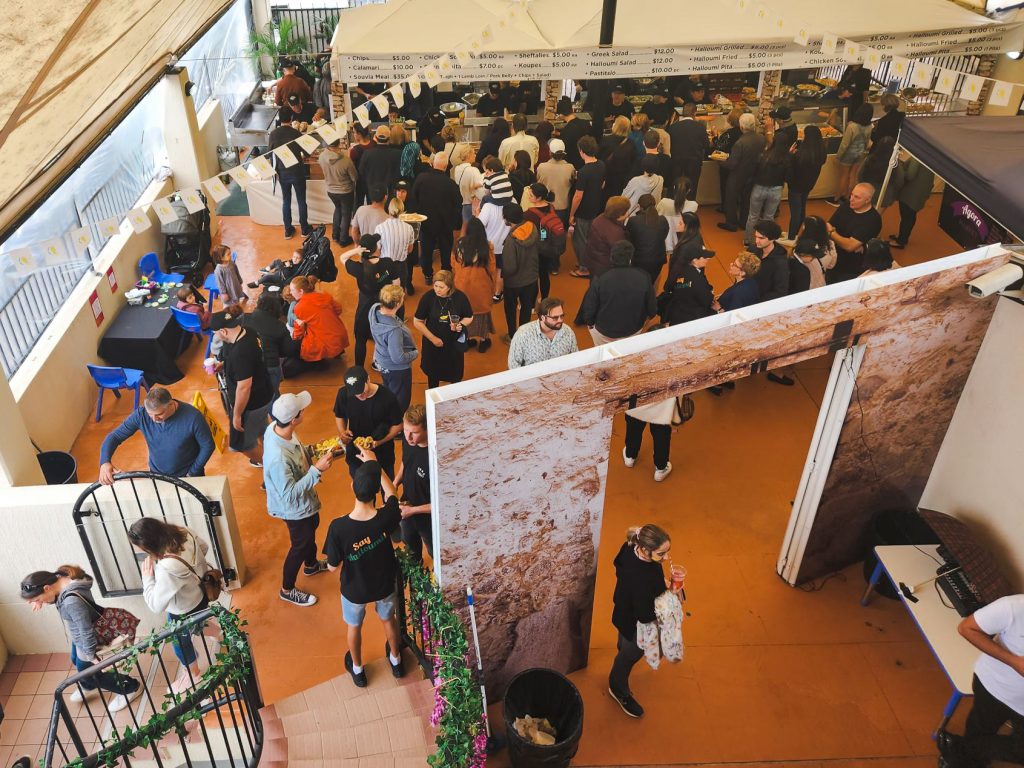
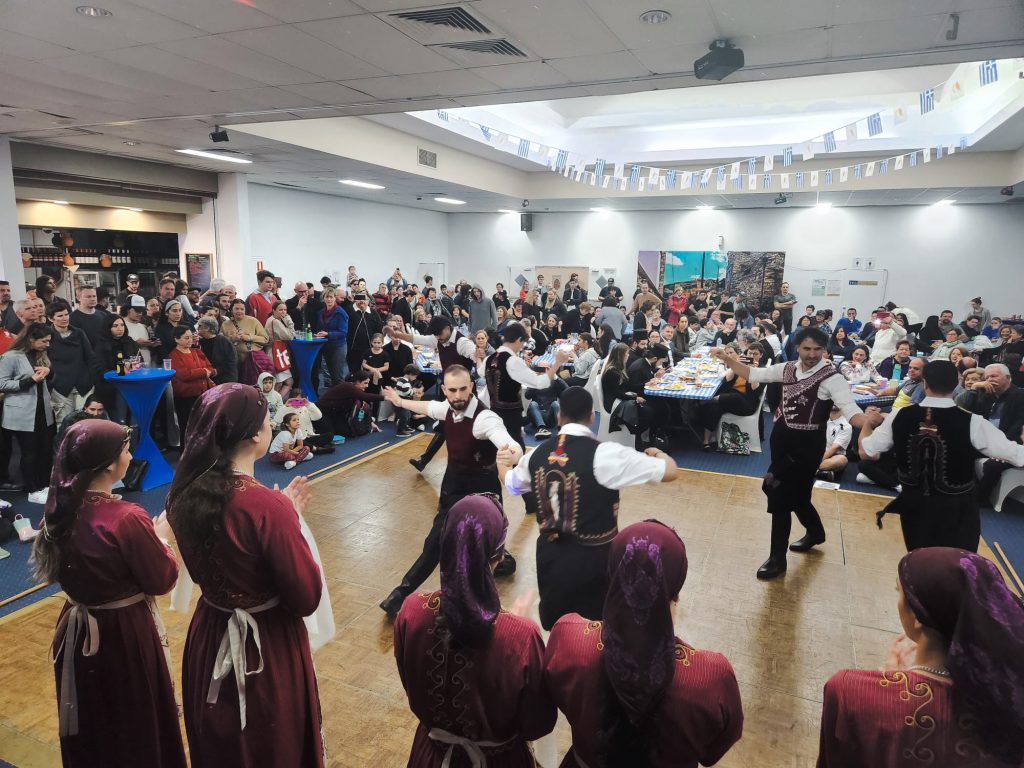
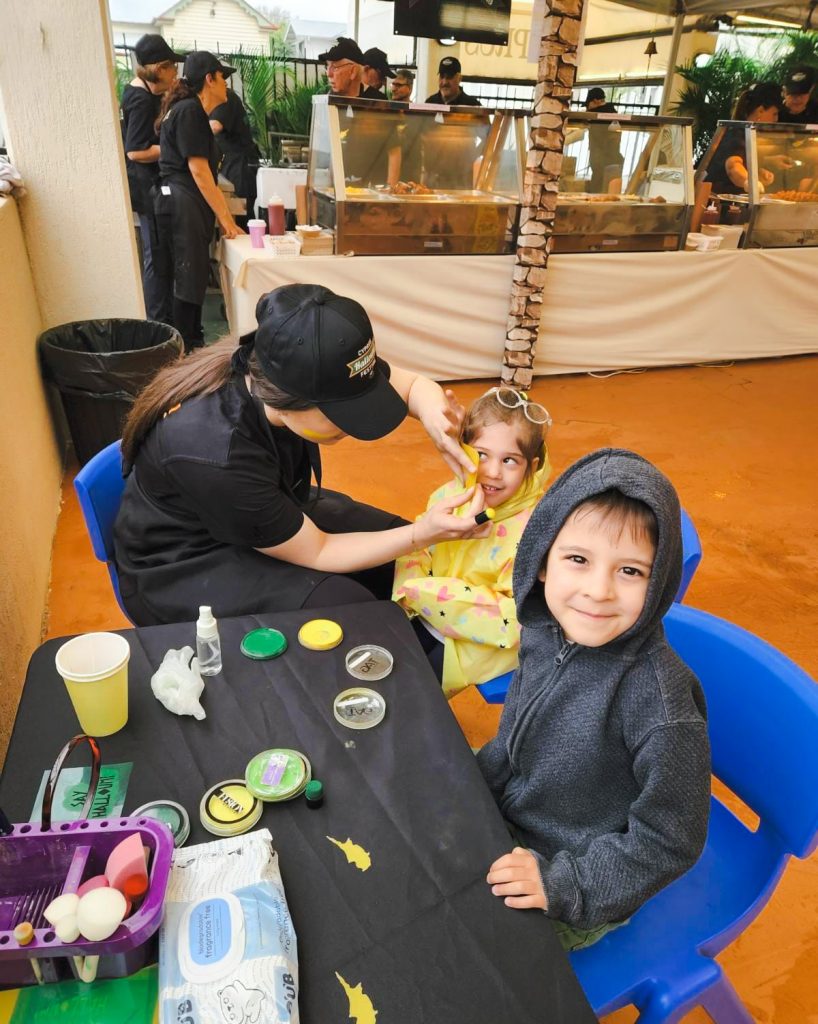
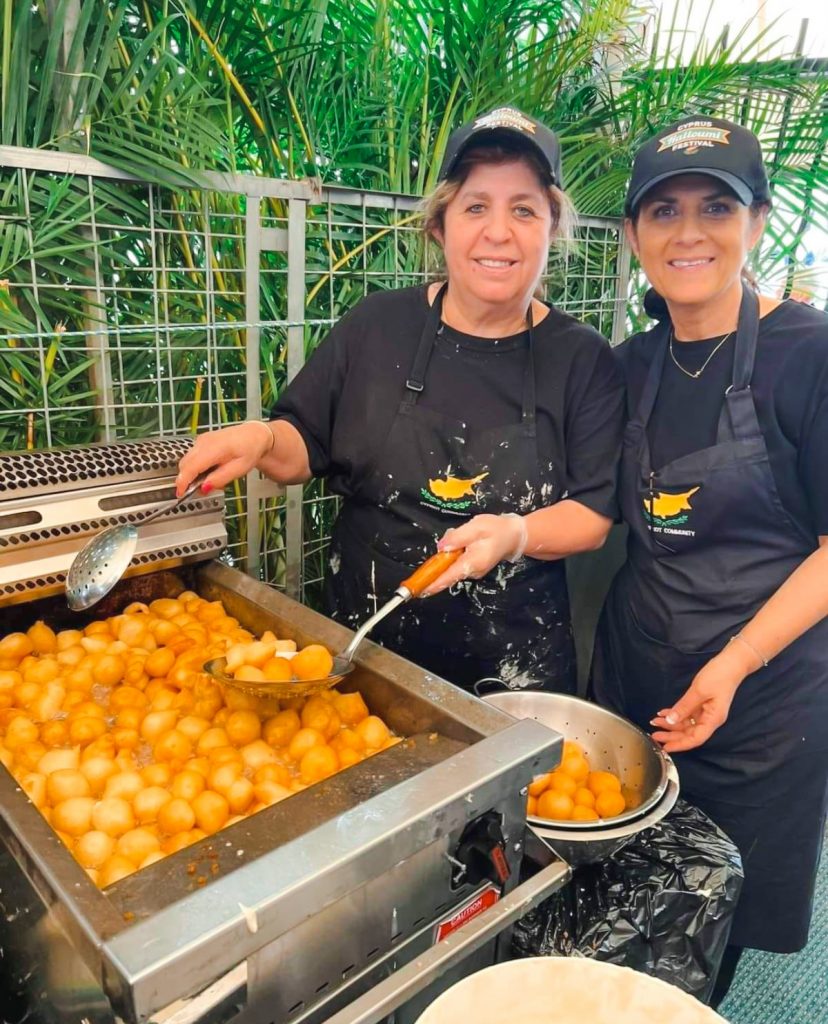
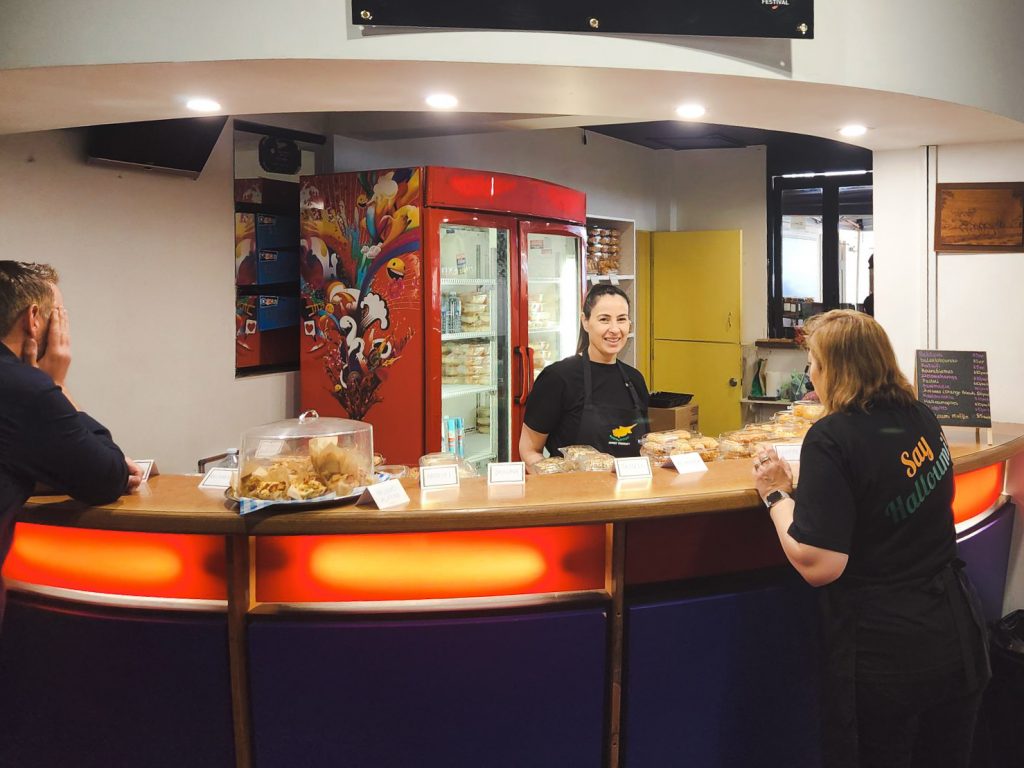
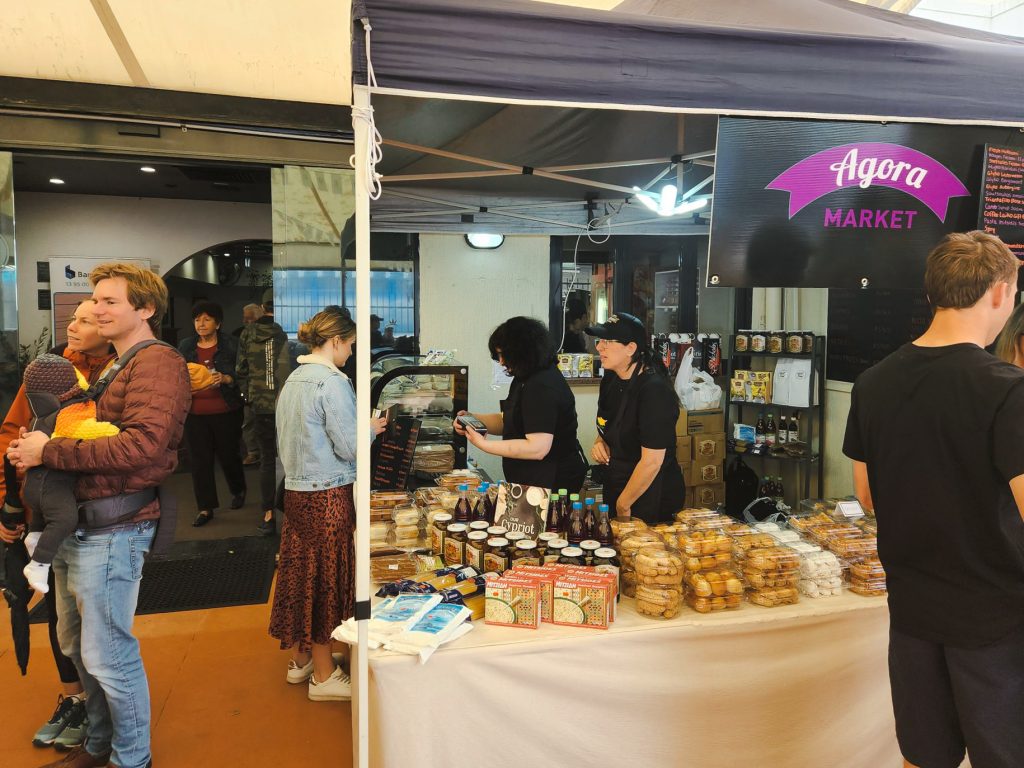
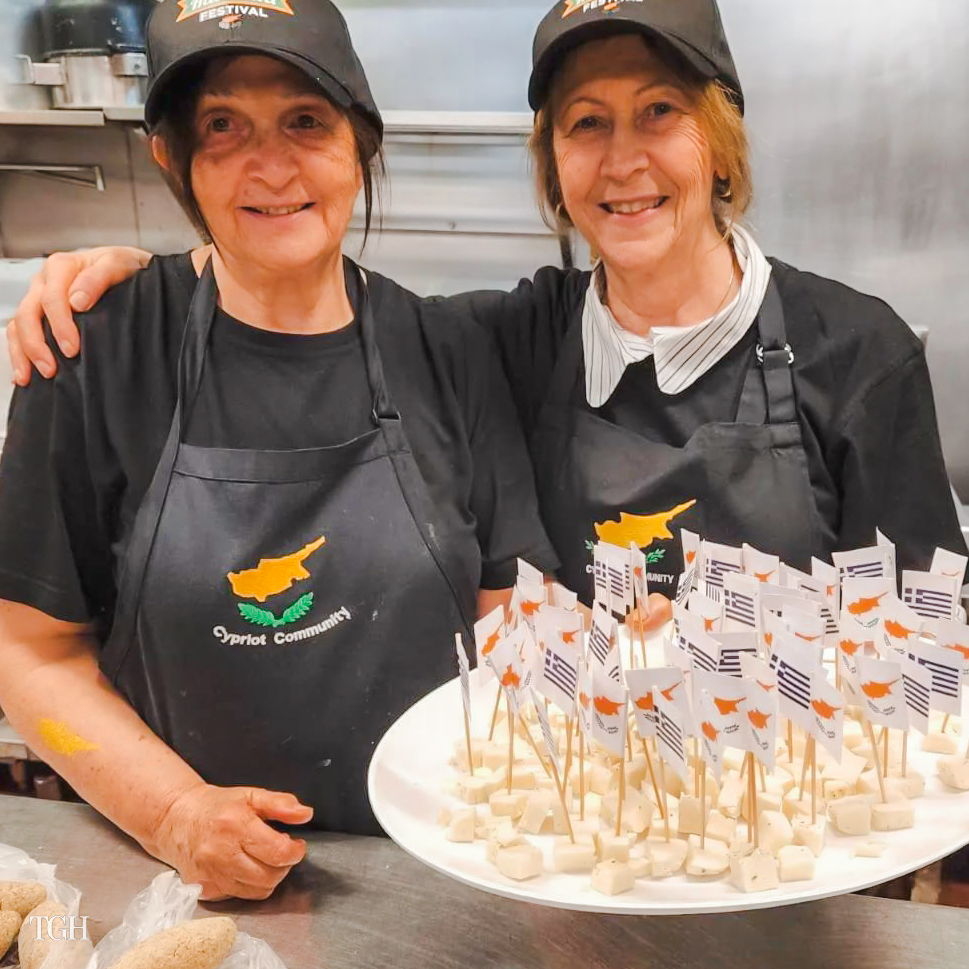
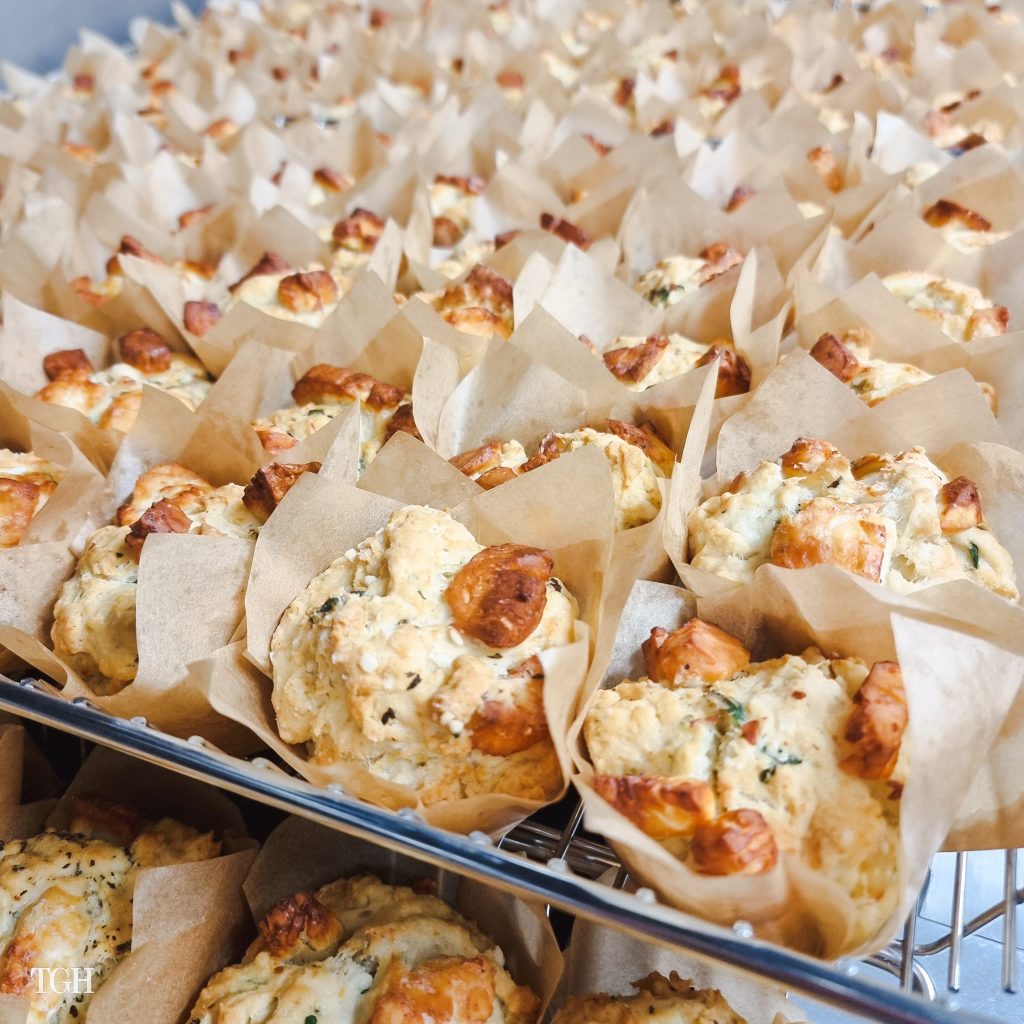
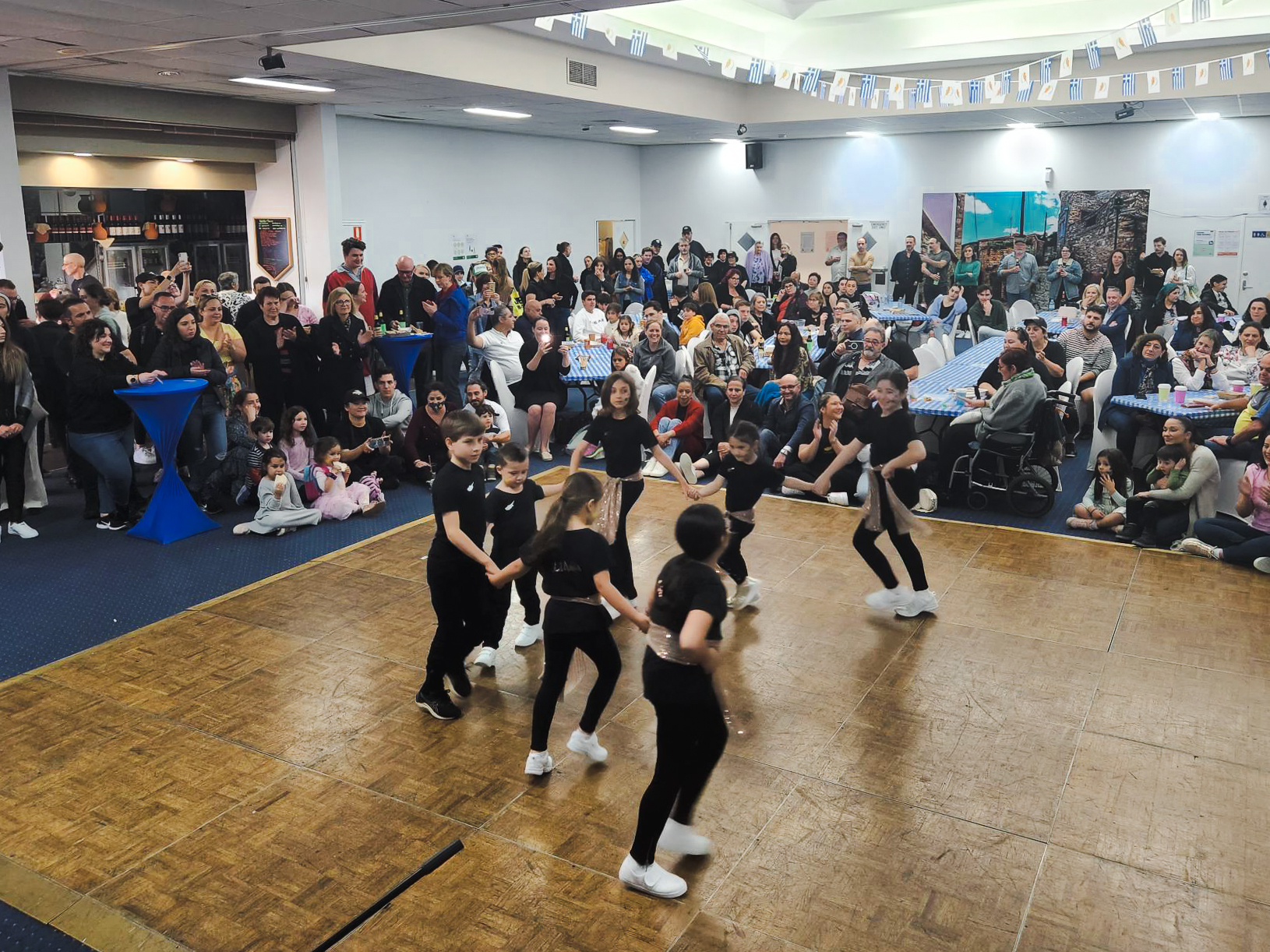
From the aromas of fresh halloumi being cooked and sheftalies being grilled, to the soothing sounds of live music and traditional dance performances, the inaugural Cyprus Halloumi Festival had it all.
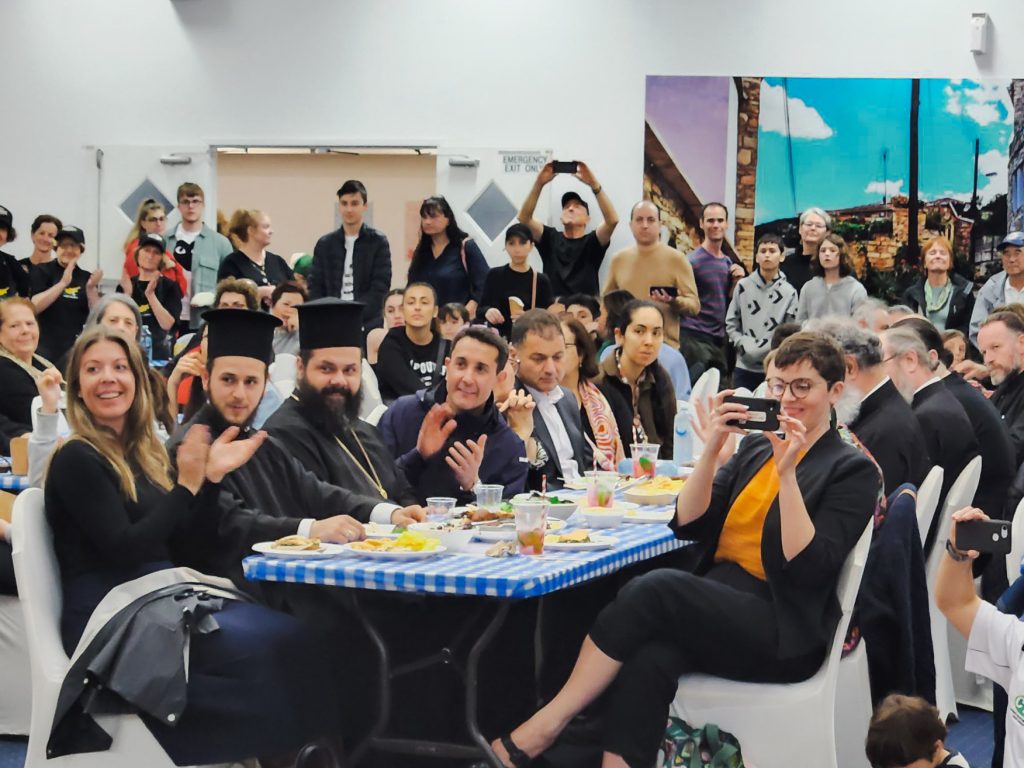
Organised by the Cypriot Community Association of Queensland, 5,000 people passed through West End’s Cyprus House to celebrate the history, culture and traditions of Cypriot people.
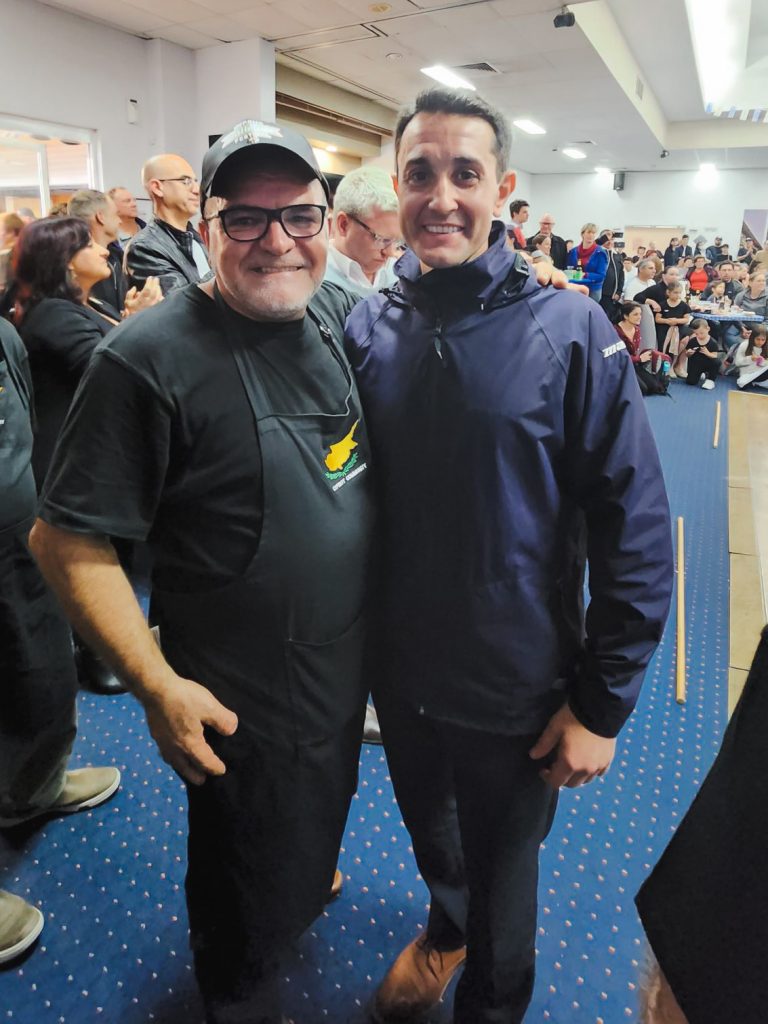
Among the attendees were His Grace Bishop Emilianos of Meloa; Queensland’s Leader of the Opposition and Shadow Minister for Tourism, and Olympics and Paralympics, Mr David Chrisafulli MP; and Greens Minister for South Brisbane, Dr Amy MacMahon; as well as many others.
The President of the Cypriot Association, Stathis Zambis, told The Greek Herald the event was a huge success.
“The Cypriot community has been here in Queensland since the 1940s and this festival celebrates our unique country and our unique culture and history,” Mr Zambas said.
“I’ve been the president for the past 10 years and it’s been my dream to have the festival for our community. Saturday was a dream come true.”
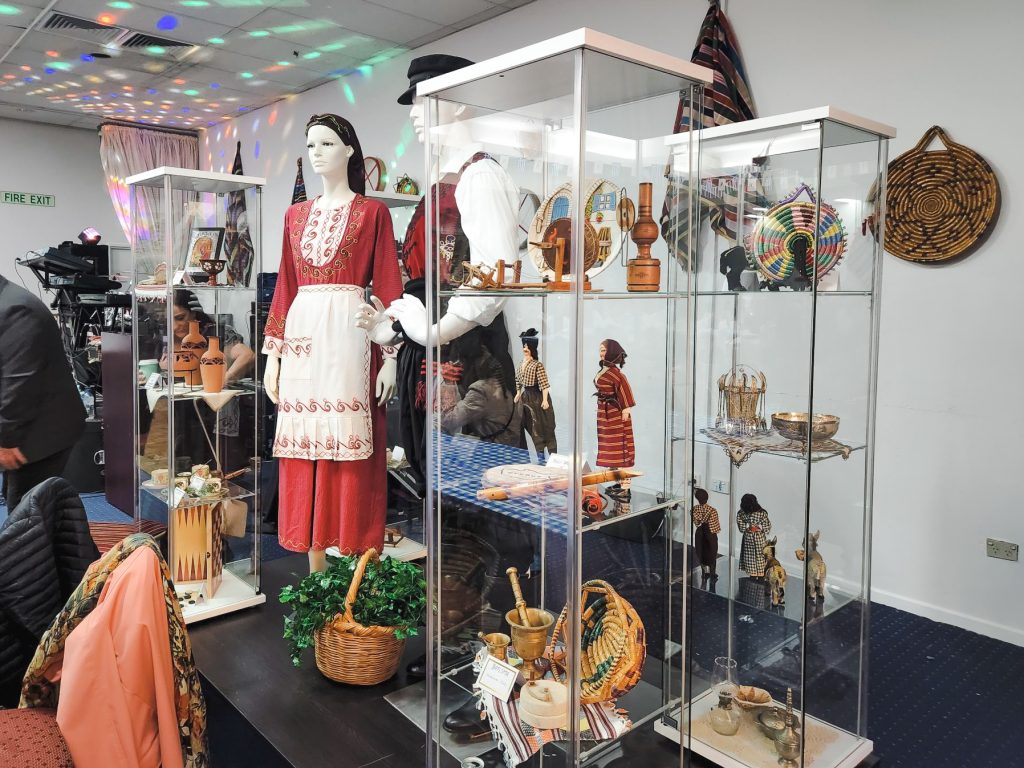
Attendees took part in halloumi and loukoumades-eating competitions, as well as live demonstrations of halloumi-making and browsed displays of Cypriot items people had brought from home.
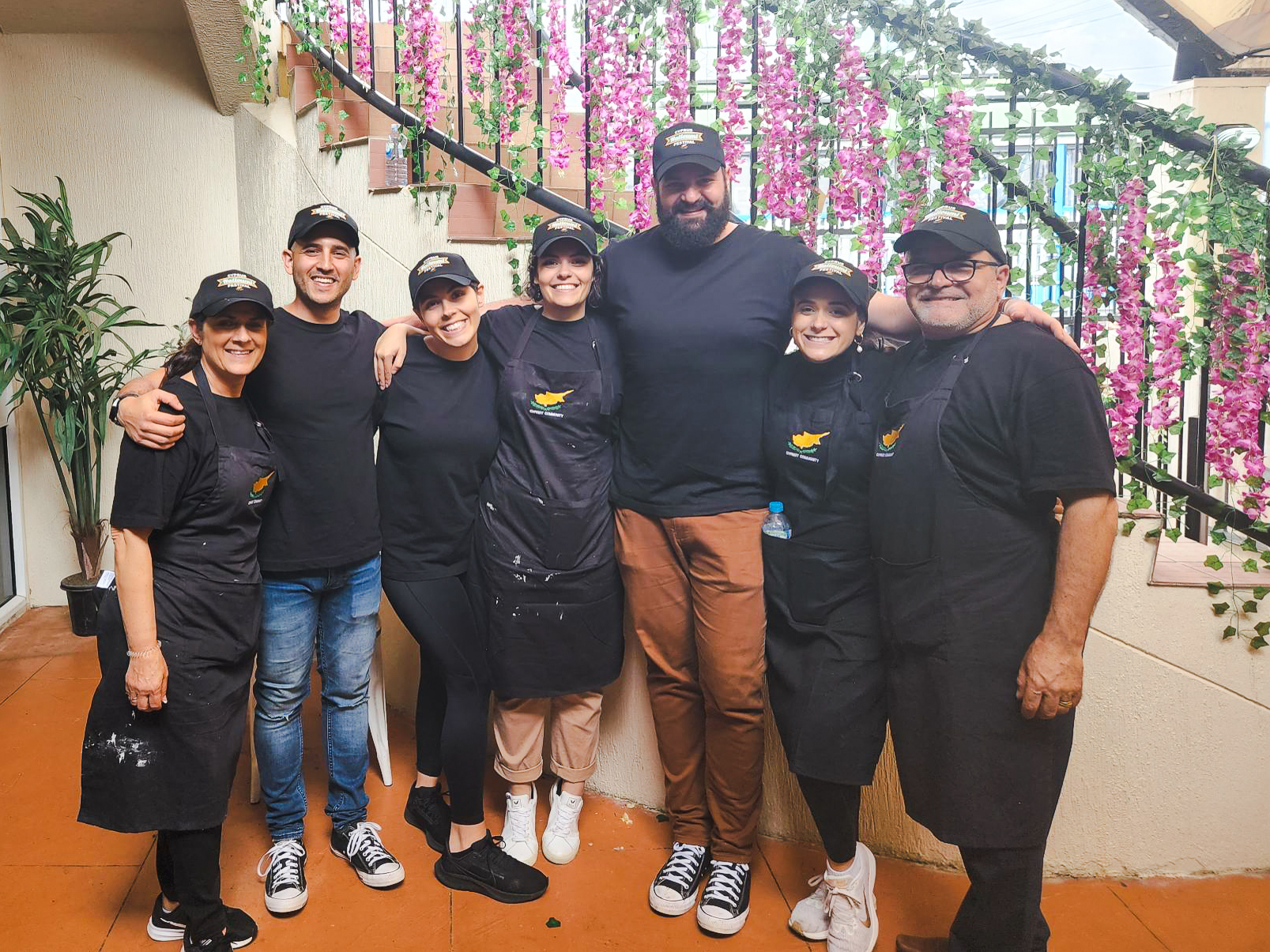
“We used half a ton of halloumi on the day and 200 kilos of flour to make the loukoumades. We also had more than 100 volunteers help us on the day which was a huge shock,” Mr Zambas said.
“It was a very successful event and we couldn’t do it without our volunteers. We’re just so proud that we were able to promote our culture and pass on our customs to the new generations of Cypriots living in Queensland.”
In a speech at the event, the Shadow Minister for Tourism, Mr Chrisafulli, said the festival was a celebration of the things that drive Cyprus and make it “a wonderful nation: faith, food and family.”
“You left a homeland for a better opportunity for your kids and you got it,” he told the Cypriots in attendance.
“You’re here for your community and you’re here because you want to share your culture and make sure that this generation understands the sacrifices that the one before made.
“I look forward to coming back next year and enjoying this for years to come.”
Greens Minister for South Brisbane, Dr MacMahon, also gave a speech and congratulated the Cypriot Association for their organisation of the event and continued service to the community.
“You have been doing such a great job to not only put on this event today but to be a huge part of this community here for many decades,” she said.
“You are an important part of the community, of the multiculturalism and the rich culture we have here in West End.”
The Greek Community of Melbourne is pleased to announce a special event with poets Nikos Nomikos and Dr. Tina Giannoukos, at the Greek Centre, on Sunday 25 September, at 3pm.
Nikos Nomikos is a poet and painter whose search for the truth of human existence is the essence of his work. He talks to poet Tina Giannoukos about his long devotion to poetry and art and their complex relationship in his work.
Nikos Nomikos was born in Egypt. He has received awards for his poetry and his painting. He has published ten collections of poetry to date. His most recent poetry collection is Poreía tis Vathiás Pigís. He worked as an aerodynamic draughtsman.
The discussion will be moderated by Dr. Tina Giannoukos, an acclaimed poet, writer, critic, editor, and teacher of creative writing. She has published two collections of poetry. Her most recent poetry collection is Bull Days. She has a PhD in Creative Writing from the University of Melbourne.
The discussion will be in Greek with summary reports in English.
For more information, you can call the Community office on 9662-2722 or email info@greekcommunity.com.au
When: Sunday 25 September 2022, 3pm
Where: The Greek Centre (Delphi Bank Mezzanine, 168 Lonsdale St., Melbourne)
“Homeland is something one becomes aware of only through its loss.” Gunter Grass.
The GACL is organising a group art exhibition on the theme of “Lost Homelands”, to align with this year’s commemoration of the 100 years from the Asia Minor Catastrophe (1922-2022). This exhibition is dedicated to all people’s loss of Homeland and the search for a new existence in either their own country or a foreign land.
Artists are invited to submit work relating to ‘Lost Homelands’, by Monday 10th October, 2022. The theme may be interpreted in any way, genre and medium.
The exhibition will take place from Tuesday 1st November-Sunday 13th November, 2022, at Steps Gallery, 62 Lygon St, Carlton.
For further details contact Aphroditi Karalis 0448 136 441 or Vasy Petros 0412 242 557 or email enquiries to infogaclm@gmail.com.
Greece has secured a complex deal for the return of 161 ancient Greek artefacts from the collection of a US billionaire after Athens had conceded there was no evidence that it had been illegally excavated and exported.
Most of the pieces are marble works that date from 5300- 2200 BC and are from the Early Bronze Age Cycladic civilization whose elegantly abstract but enigmatic marble figurines inspired artists from Pablo Picasso to Constantin Bancrusi.
These pieces are usually highly prized by collectors and museums which has recently begun a wave of illegal excavations in Greece – and countless forgeries.
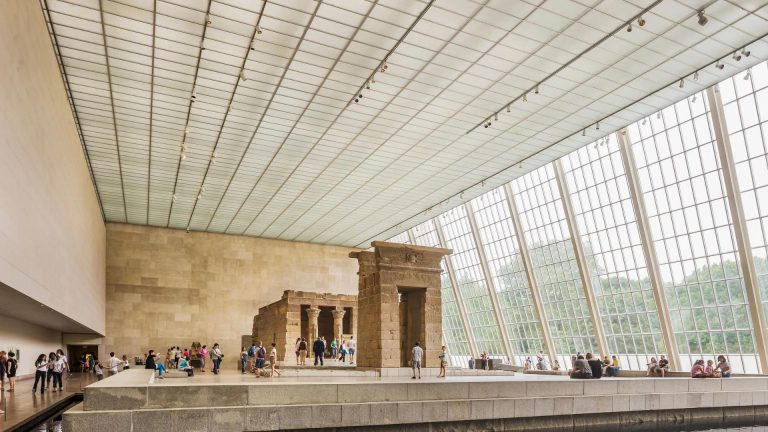
Greece’s parliament approved the agreement with the New York Metropolitan Museum of Art, a top Athens museum and a Delaware-based cultural institution to which the pieces will be transferred to over the coming years.
As part of the deal, it was agreed that the works will stagger their return to Greece from 2033-2048, after being displayed in the MET during the same time period.
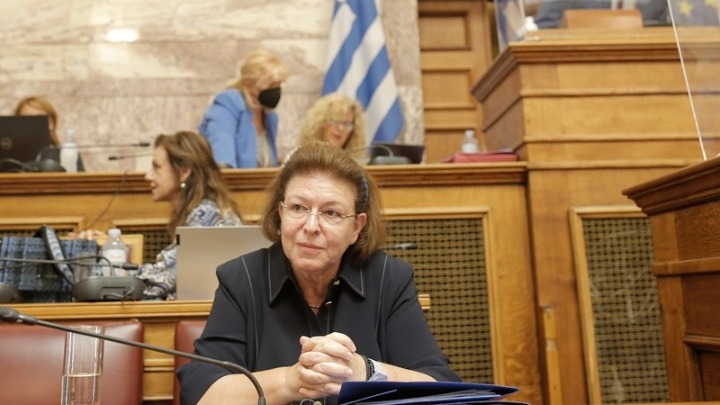
Culture Minister, Lina Mendoni described the pieces as masterpieces of unique value, both archaeological and scientifically, that Greece is getting without a messy court battle.
“They won’t return tomorrow.. But they will (gradually) return,” Mendoni said.
“This collection was completely unknown to the ministry.”
Most of the pieces in the collection are typical, broad-faced, flat-white marble statues depicting nude women with folded arms, although there are definitely some interesting and unusual type sculptures as well. In addition there are marble bowls, vases, a terracotta frying-pan shaped dish and a pair of bracelets.
Minister Mendoni also explained that the ministry had no evidence that the artefacts were illegally exported from Greece, even though it was something they knew, there was no way to prove it.
“A legal effort to claim the collection was estimated to have minimal chances of success, and would not have secured the return of all 161 antiquities,” she added.
Anthony James Georgiou might not have died in September 2016 if Bunnings Warehouse security hadn’t tackled him to the ground, the Victorian Coroner’s Court heard on Wednesday.
During the 2016 incident, the two contracted security guards were acting on suspicion that Georgiou was trying to steal a saw blade from the Frankston Bunnings store in Melbourne’s southeast.
When approached by the “loss prevention officers,” Georgiou, 31, allegedly became aggressive and the officers attempted to stop him from getting away.
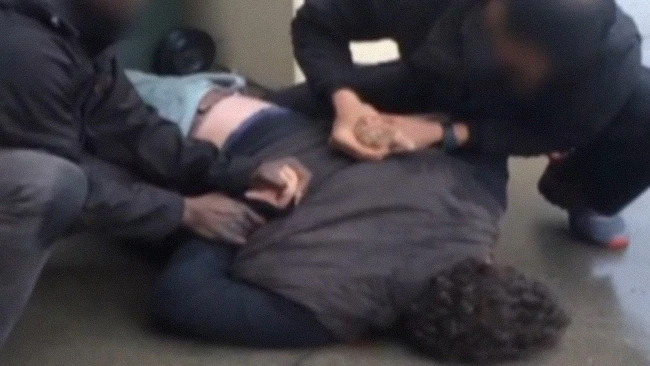
In the ensuing struggle, he was tackled to the ground and one of the guards placed him in a headlock.
Whilst detained, Georgiou was heard screaming “help me, let me go,” before he fell unconscious.
Georgiou being detained by the contracted security guards in September 2016. Photo: Nine.
He was taken to hospital where he passed later in the day. He was found to have drugs in his system and a heart problem.
Coroner Darren Bracken found that the combination of Georgiou’s use of methamphetamine, his weight, pre-existing heart condition and his detainment by the Bunnings guards was fatal.
“There seems little doubt that had Mr Georgiou not been involved in the struggle with [the security personnel] he would have walked away from Bunnings that day,” Bracken said.
“Mr Georgiou’s death was a tragedy for his family as well as for all others involved.”
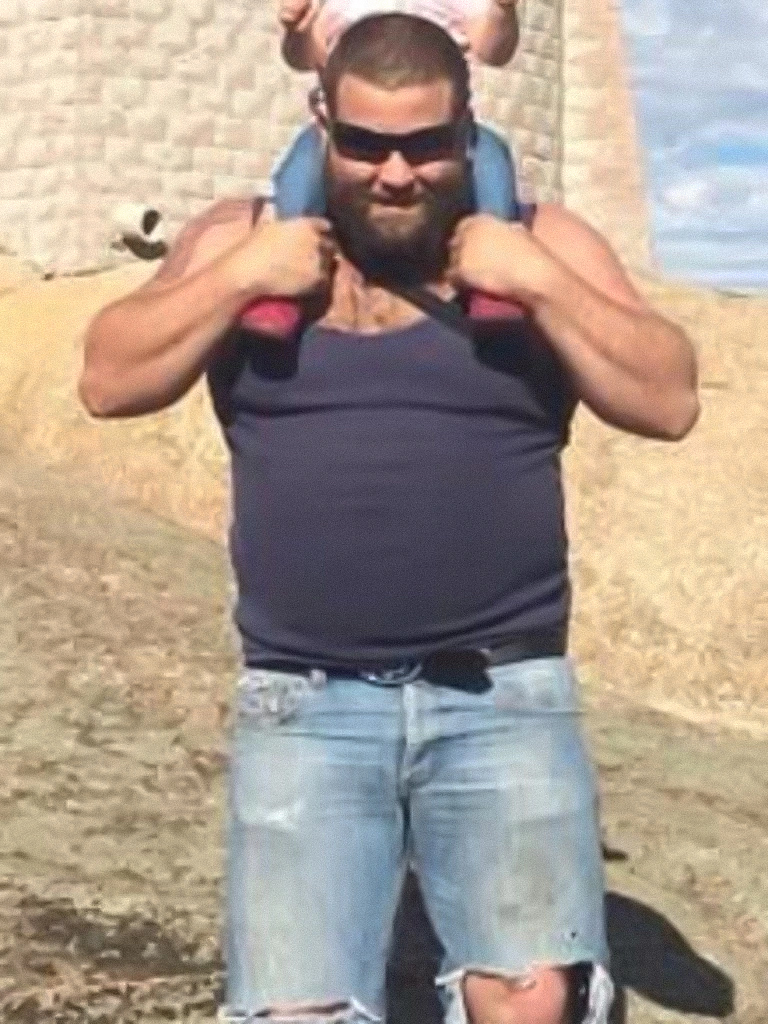
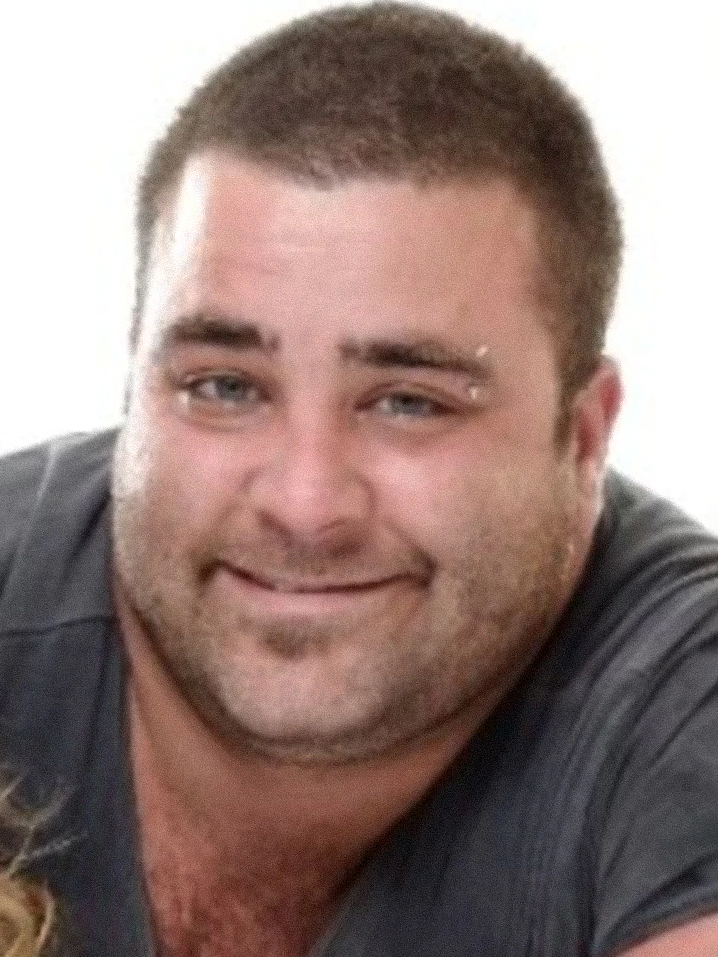
Anthony James Georgiou, known as AJ, died after an altercation with security guards at Bunnings in Frankston in 2016.
According to Bunnings’ code of conduct at the time, loss prevention officers were never to physically restrain an offender except in self-defence.
Bracken found that both officers involved in the 2016 incident had not been adequately trained to deal with the situation or shown the Bunnings code of conduct. He said this might have prevented the altercation from turning violent.
Georgiou’s daughter and former partner are also pursuing a separate legal claim against the security officers, their employer (New Security Solutions) and Bunnings, maintaining they have suffered psychological injuries that will continue to require treatment.
“As the coroner has found, Mr Georgiou’s death was preventable and had it not been for the struggle that occurred with the untrained loss prevention officers working at Bunnings that day, he most likely would not have died in the hours that followed,” their lawyer, Neha Pratap said.
“No one should have to pay for a mistake they’ve made with their life.”