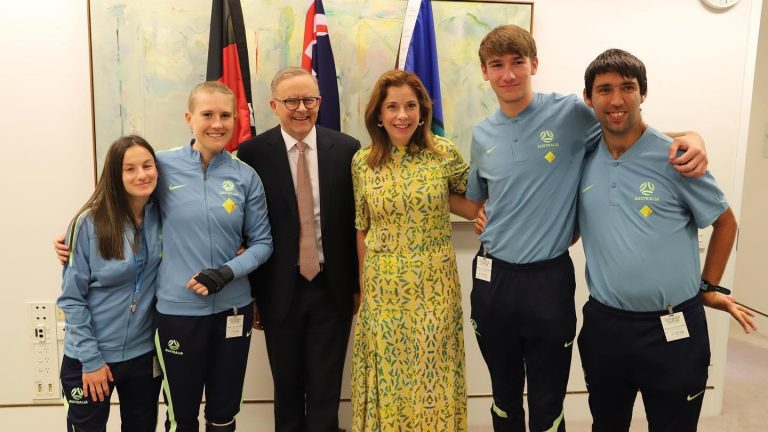
Christodoulou, along with other players from the ParaMatildas and Pararoos, also met with the Federal Minister for Sport Anika Wells and the Federal Minister for the National Disability Insurance Scheme (NDIS) Bill Shorten.
In a post on LinkedIn, Christodoulou said the meetings gave the group a chance to share their stories with the Ministers and speak about the ParaMatildas – Football Australia’s first national team for women and girls with cerebral palsy (CP), acquired brain injury and symptoms of stroke.
“All three members of parliament expressed immense support for our teams and our overall achievements,” her post read.
The footballer also stressed that Minister Shorten “spent time listening to all of our stories, the issues we face everyday as people living with neurological conditions, the benefits of football and how it has helped us develop our cognitive abilities and how we live day to day outside of our football to work and study full time whilst being elite athletes.”
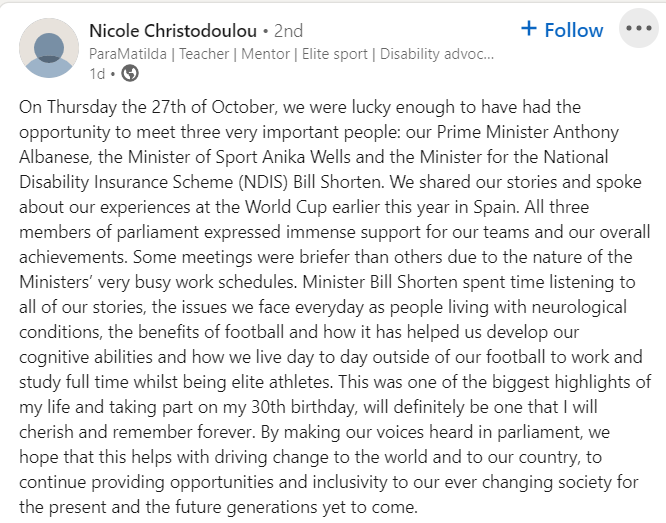
Nicole’s LinkedIn post.
“This was one of the biggest highlights of my life and taking part on my 30th birthday, will definitely be one that I will cherish and remember forever,” Christodoulou said.
“By making our voices heard in parliament, we hope that this helps with driving change to the world and to our country, to continue providing opportunities and inclusivity to our ever changing society for the present and the future generations yet to come.”
Christodoulou joined the ParaMatildas earlier this year. She experienced two strokes at the age of 21 which left her paralysed down the left side of her body. But this never stopped her from achieving her football dreams.
Nobody copped a bigger loss through the group stages of the Rugby League World Cup this year than Greece, but that doesn’t mean the national team’s future is bleak.
Their first World Cup campaign ended with three big losses against France, Samoa and England. In their final match against England, Greece was lucky to avoid conceding a century in their 94-4 loss.
Now, with this renewed exposure and pride in the Greek team across the world, it’s time to focus on the future of the sport. This is something Greece’s head coach, Steve Georgallis, is looking forward to.
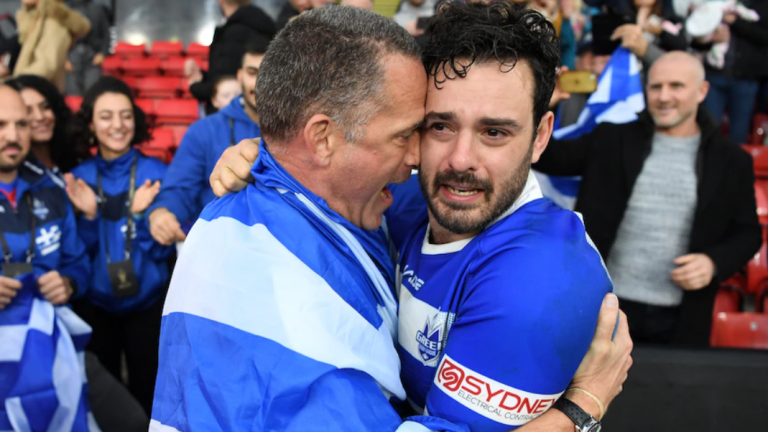
“I’m proud and happy and a little bit emotional,” Georgallis said after Greece’s match loss to England.
“I don’t think you get to walk around the field after being beaten by 90 and have the crowd cheering and calling out the name of your country, Greece. I think that just goes to show the effort the players put in.
1/2 If there is one myth that has been busted by this #RLWC2021 it is that Rugby League fans are "negative". We are overwhelmed by the love we got from fans in Sheffield, Doncaster and beyond! Rugby League fans with no connection to Greece, getting right behind us! pic.twitter.com/NAtzWfCBcq
“With the World Cup and the game now being legal, we’re hoping to get into schools and start from the grassroots and try and get that as part of sport in the country.”
“We’ll never forget our journey, but we’re keen to shed that victim mentality and really push forward with rugby league in Greece and I can’t wait to be a part of it,” Meads told SkySports.com.
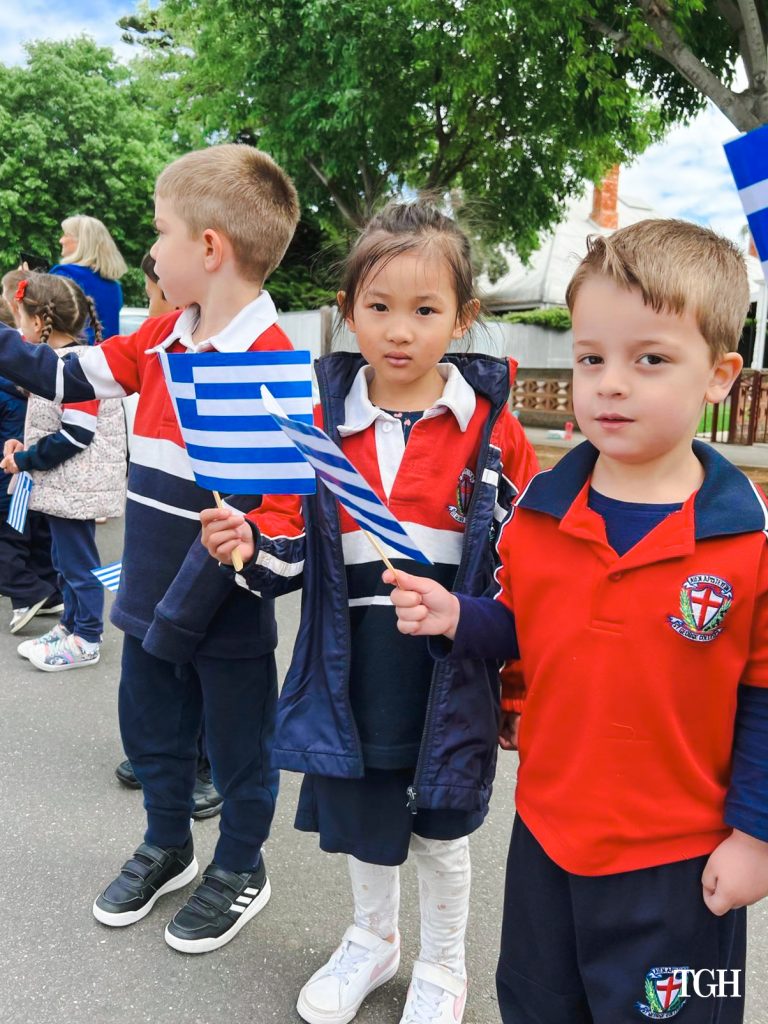
People across Greece gathered in their cities and villages on Friday and over the weekend to commemorate the 82nd anniversary of Greece’s National Day (‘OXI’ Day).
In Thessaloniki on Friday, the customary military parade celebrating the anniversary of Greece’s entry into World War II took place.
As usual, the parade was attended by several officials including Greece’s President Katerina Sakellaropoulou and foreign dignitaries such as US Ambassador to Greece George Tsunis.
Τιμάμε σήμερα μια από τις πιο ένδοξες σελίδες της νεότερης ιστορίας μας, το «ΟΧΙ» στις 28 Οκτωβρίου του 1940 και την ηρωική αντίσταση του λαού μας κατά της φασιστικής εισβολής. Είμαστε περήφανοι για τις Ένοπλες Δυνάμεις, που με αυταπάρνηση προασπίζουν την εθνική μας ακεραιότητα. pic.twitter.com/2OlWu7Gx2K
In a speech after the parade, Sakellaropoulou said: “The ‘No’ of October 28, 1940, to the fascist invasion and our people’s heroic resistance are one of the most glorious moments of our modern history, which we respectfully commemorated in today’s parade.”
“The spirit of national unity forged in the Albanian epic is a precious legacy for all of us.”
Elsewhere, Greece’s Prime Minister Kyriakos Mitsotakis also attended a commemorative event in the north-western Greek city of Ioannina.
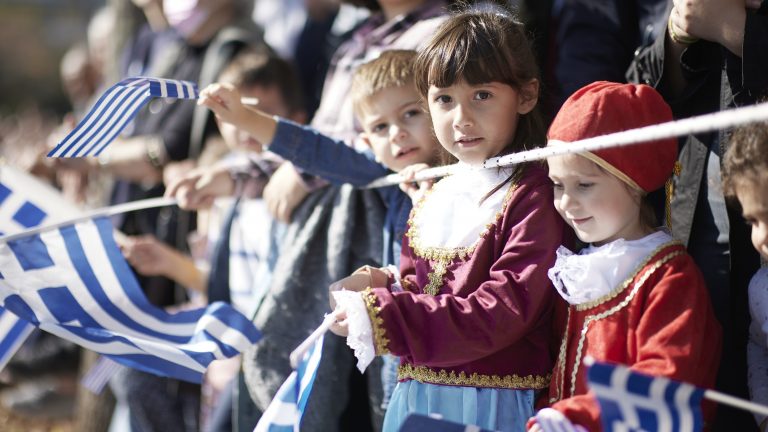
Δικό μας χρέος είναι να παραδώσουμε στην επόμενη γενιά, σε αυτά τα παιδιά που παρέλασαν κρατώντας ψηλά την Ελληνική Σημαία με χαμόγελο, με αισιοδοξία, με υπερηφάνεια, μια πατρίδα πιο ισχυρή, πιο ασφαλή, πιο ευημερούσα, πιο δίκαιη. Είμαι σίγουρος ότι θα το πετύχουμε. Χρόνια πολλά! pic.twitter.com/iLGdX0gbeE
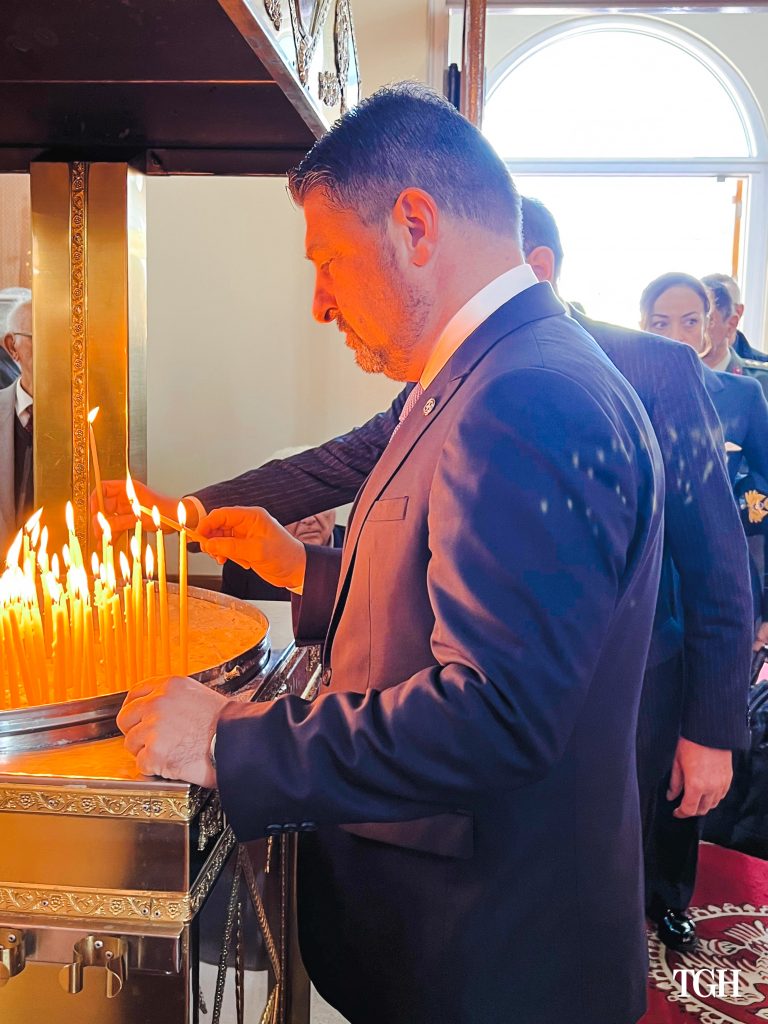
During his visit, Mitsotakis attended a memorial service, laid a wreath and lit a candle in honour of the 167 fallen soldiers whose remains are kept in the Tomb of the Unknown Soldier.
“Our own duty is to bequeath to the younger generation a stronger, more secure, more prosperous and more just fatherland,” the Prime Minister said during his speech.
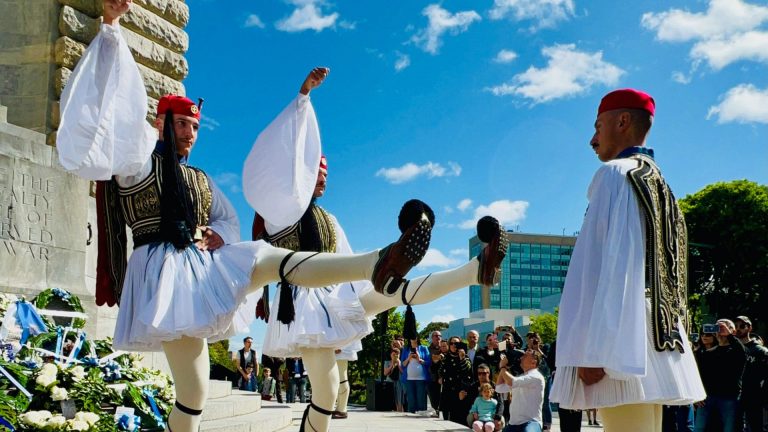
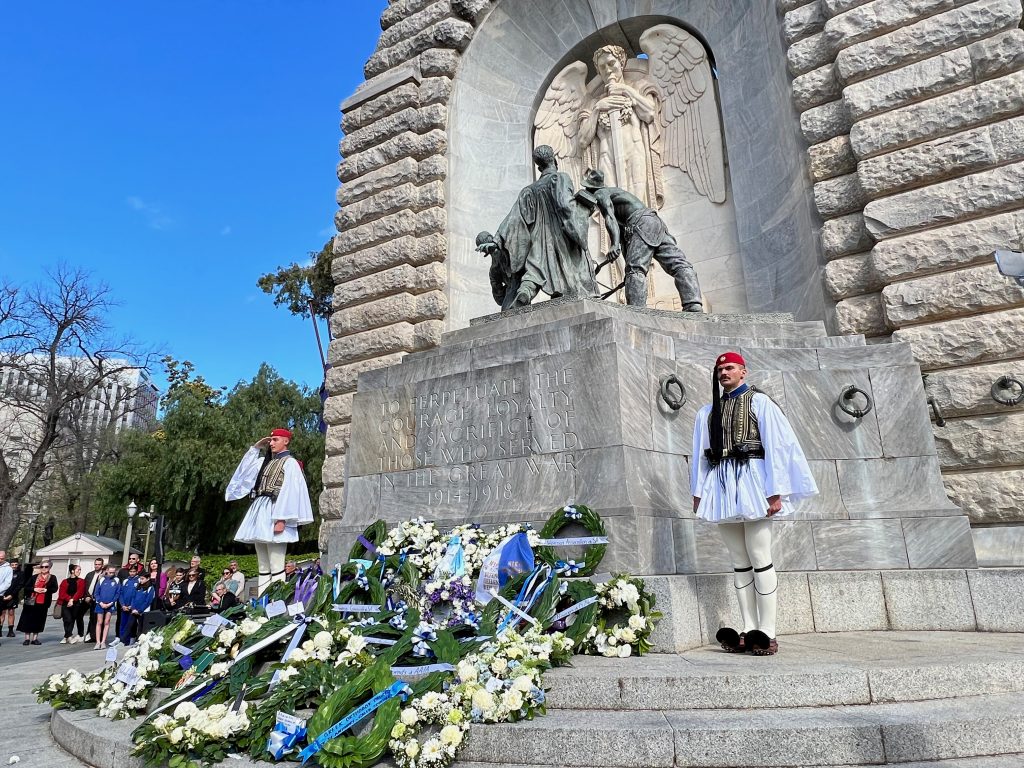
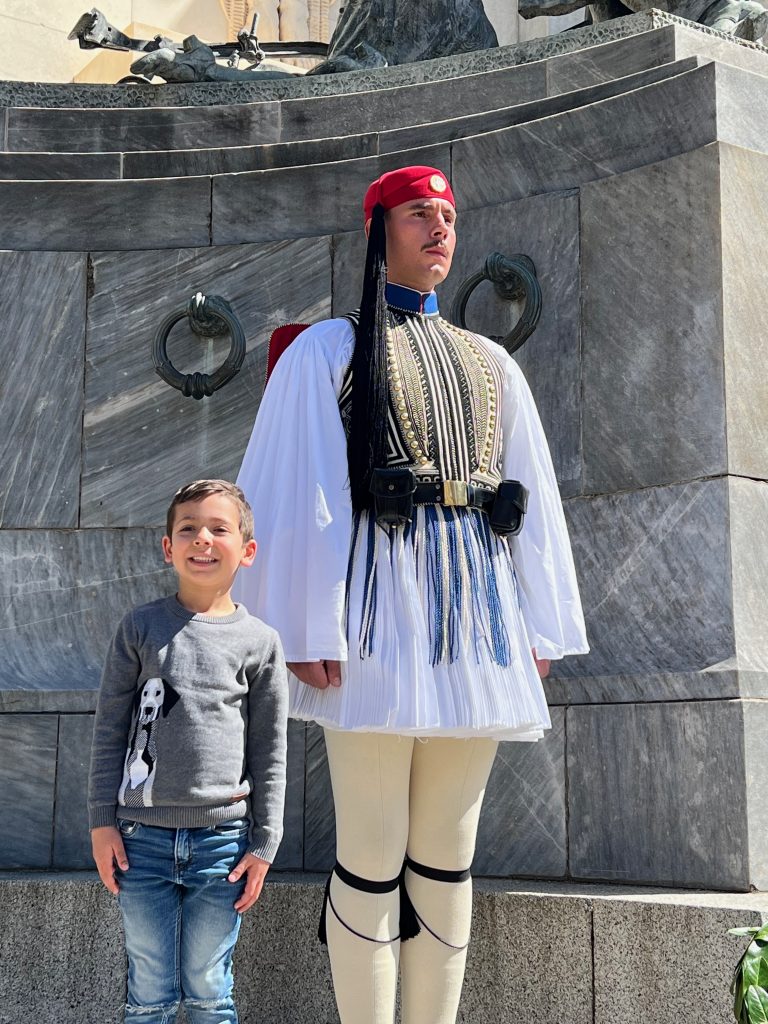
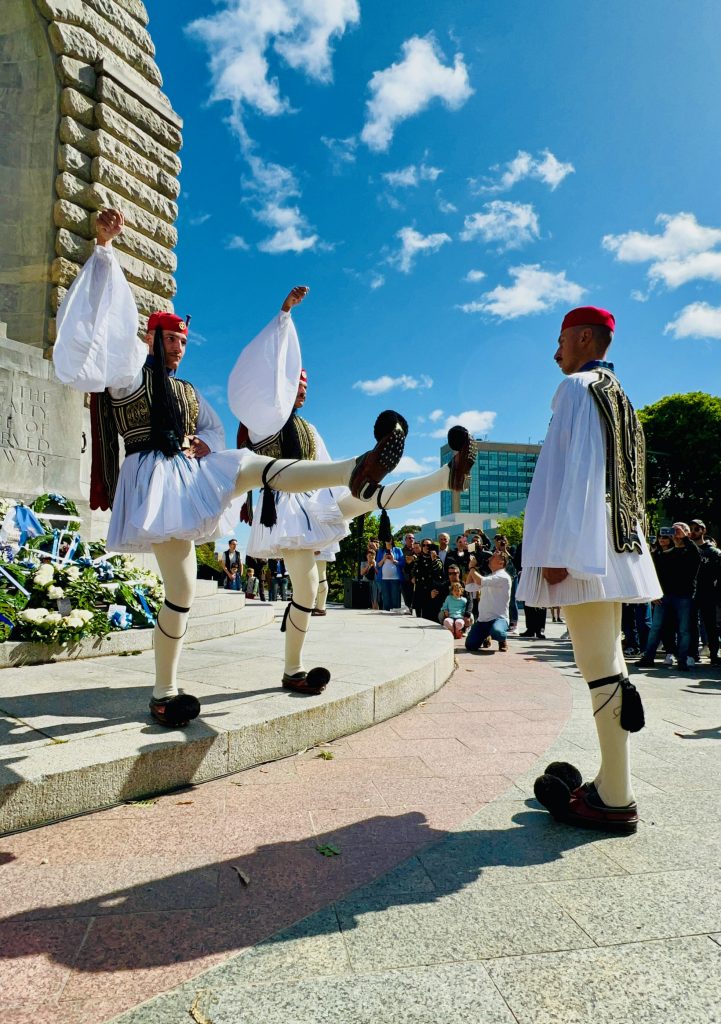
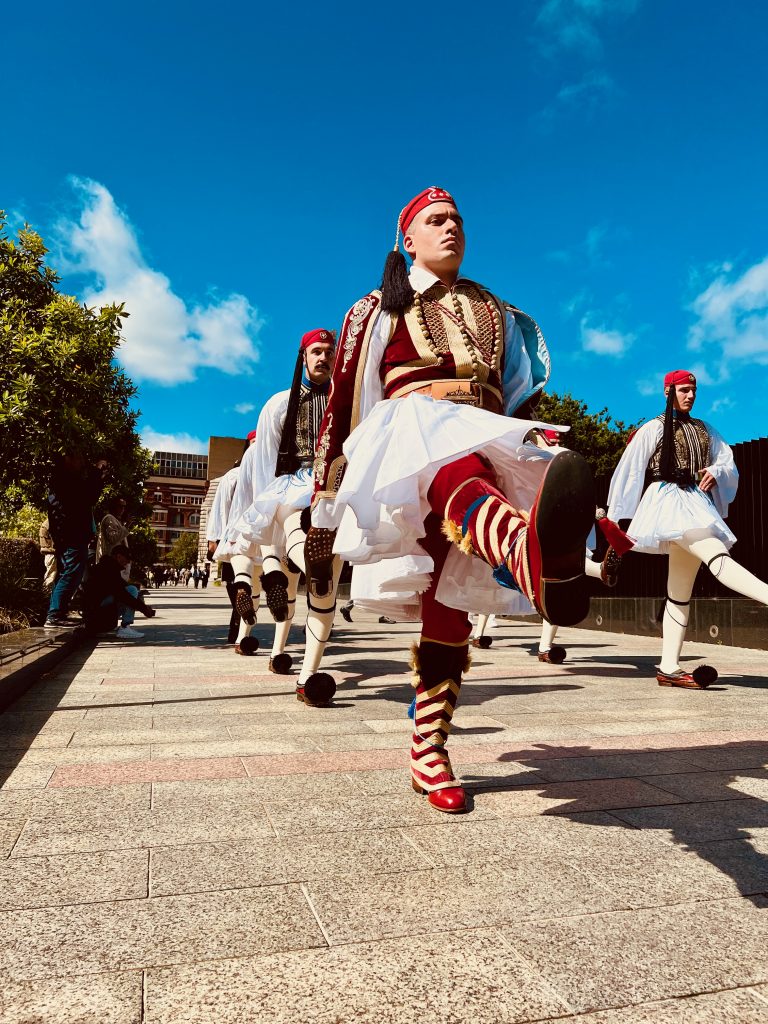
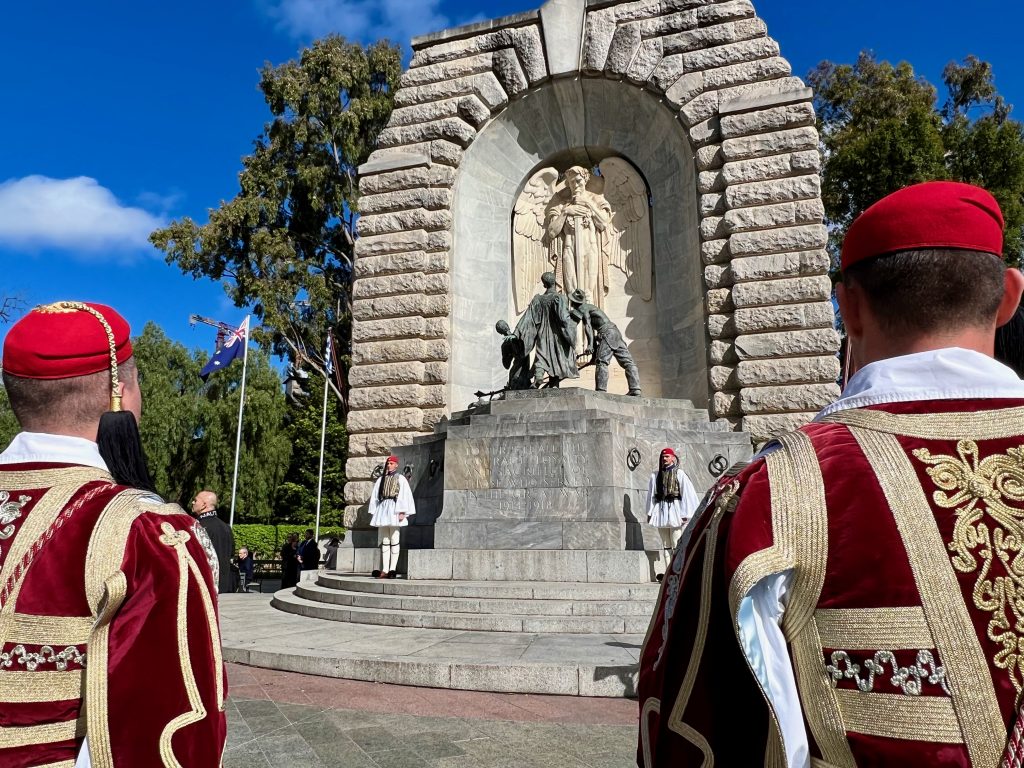
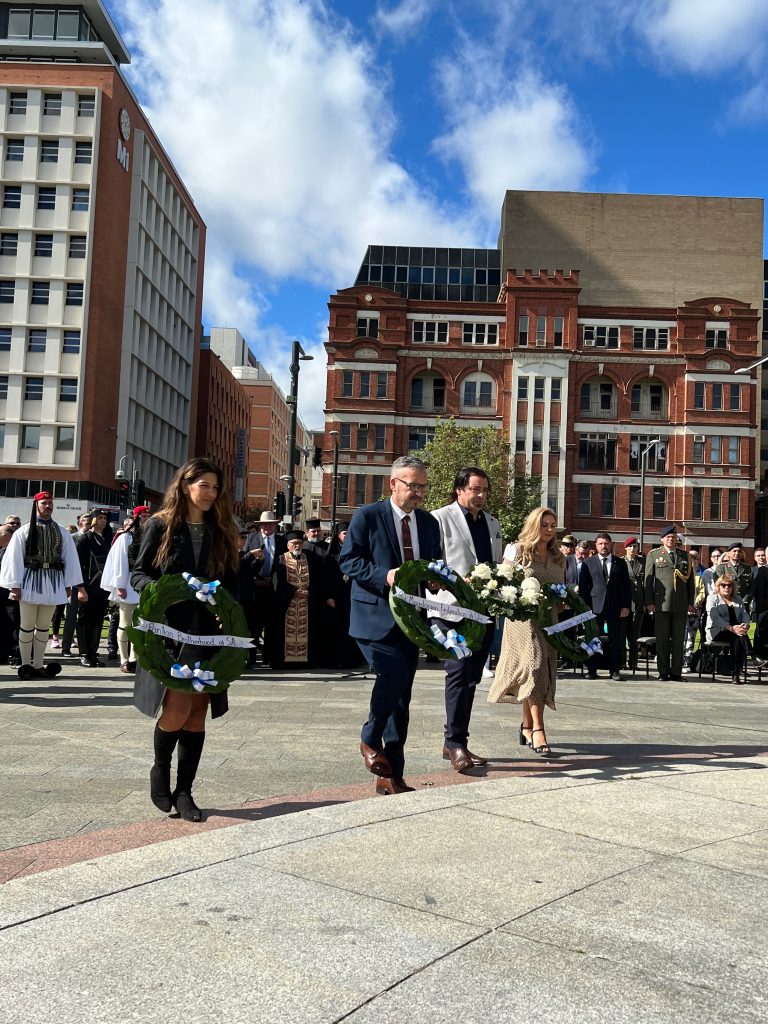
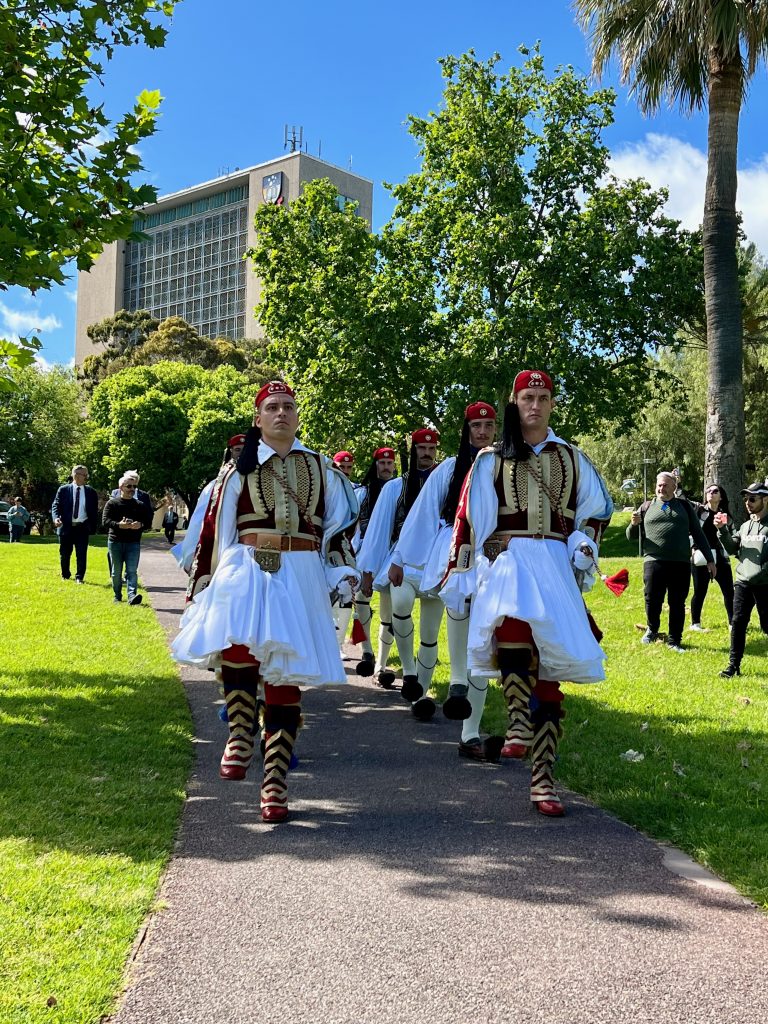
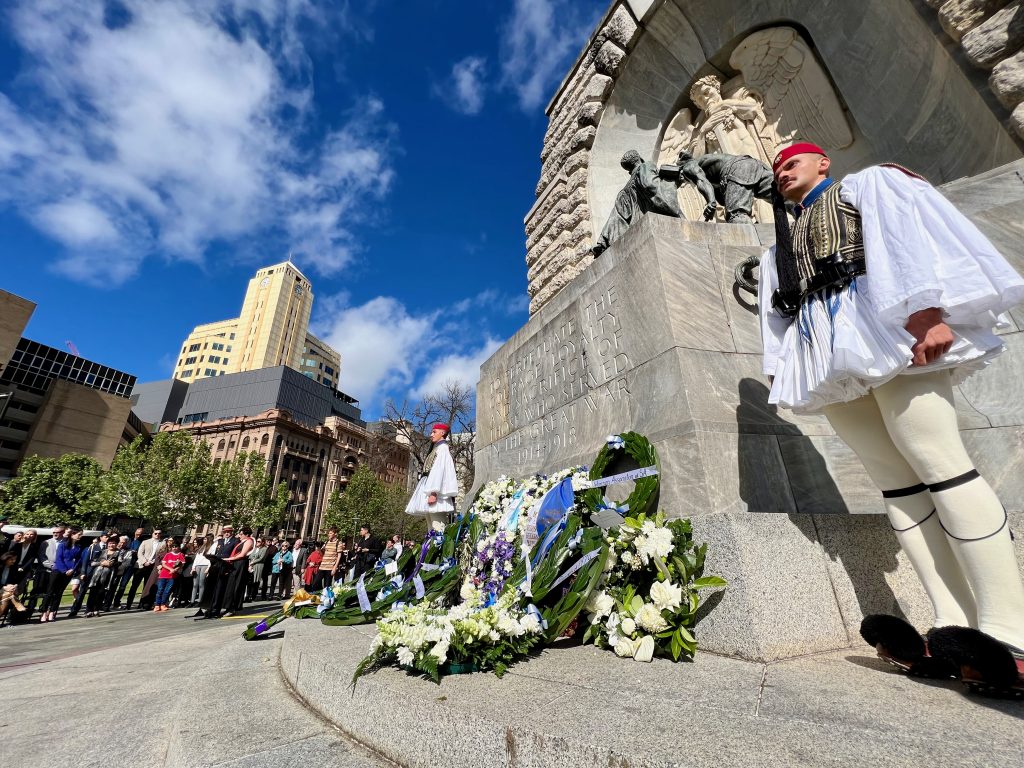
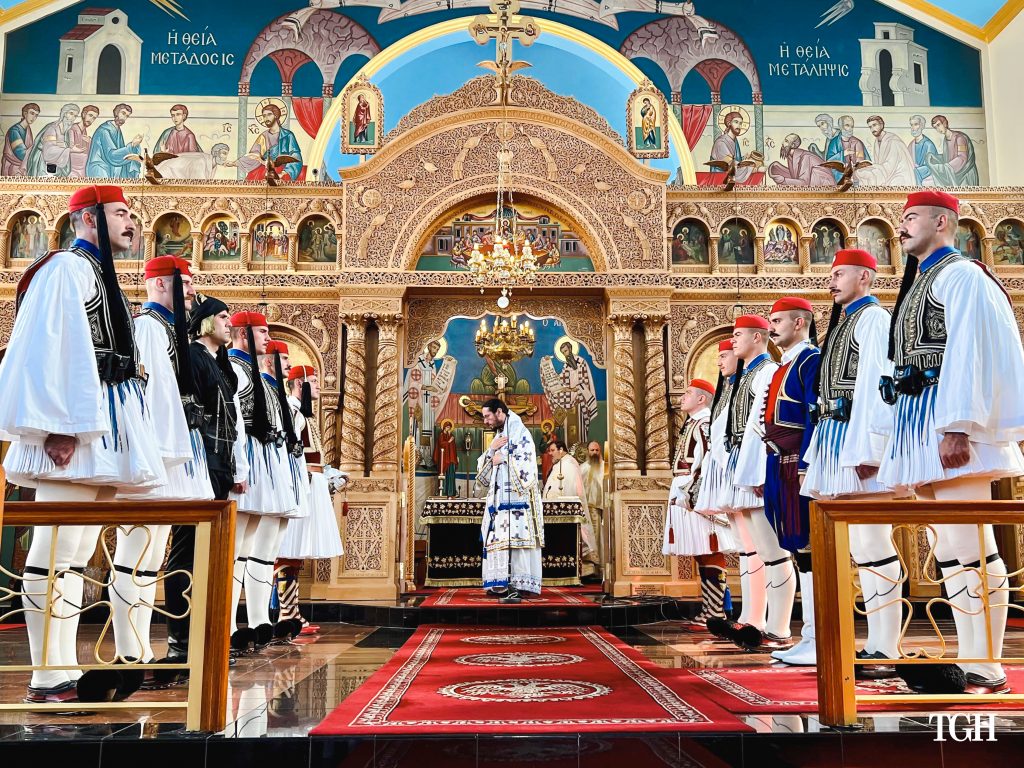
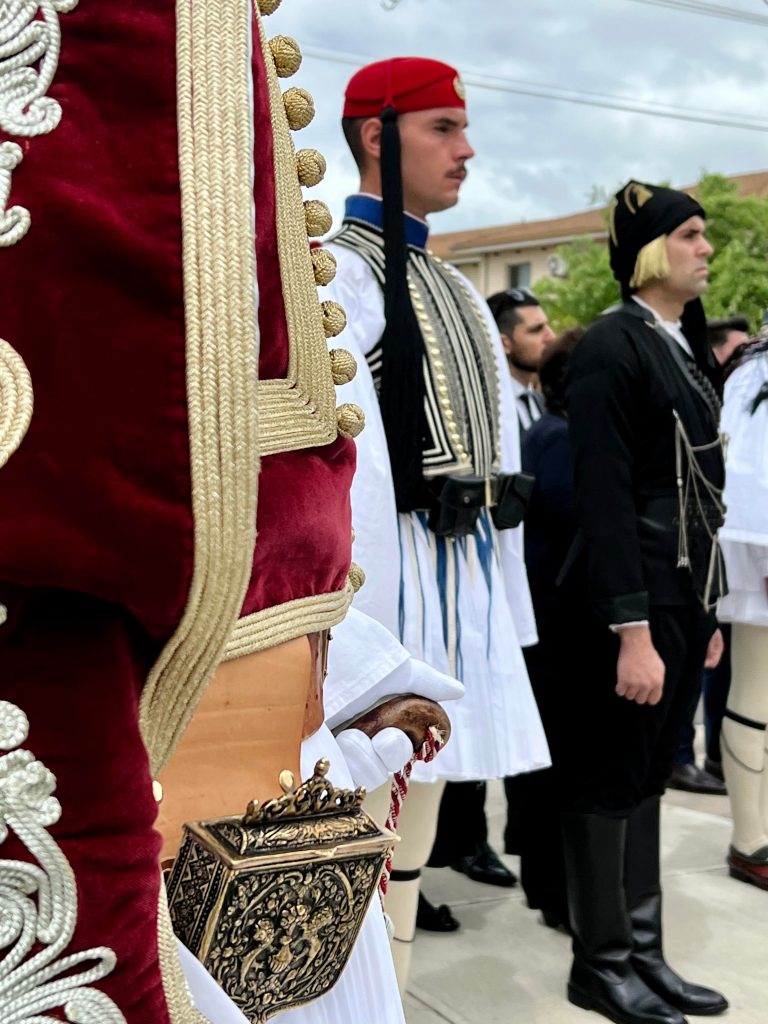
“Your pappou (grandfather) would be really proud of you,” a lady told her young grandson as he was posing next to an Evzone at Adelaide’s War Memorial on Saturday morning, where the Service of Remembrance for ‘OXI’ Day was held.
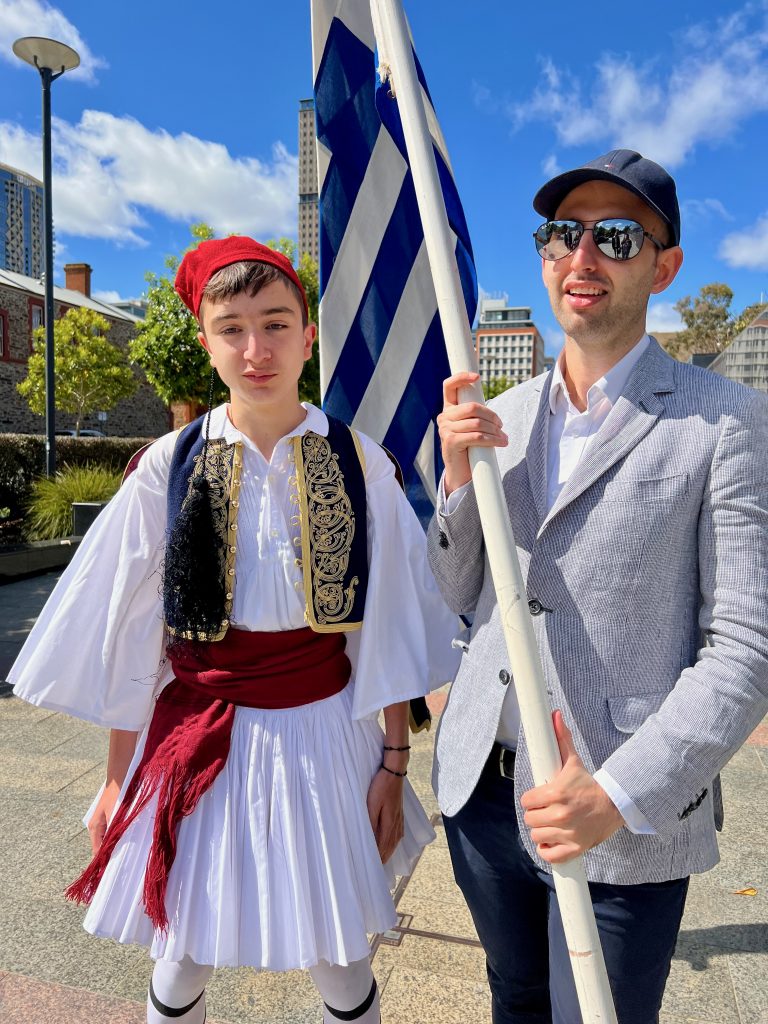
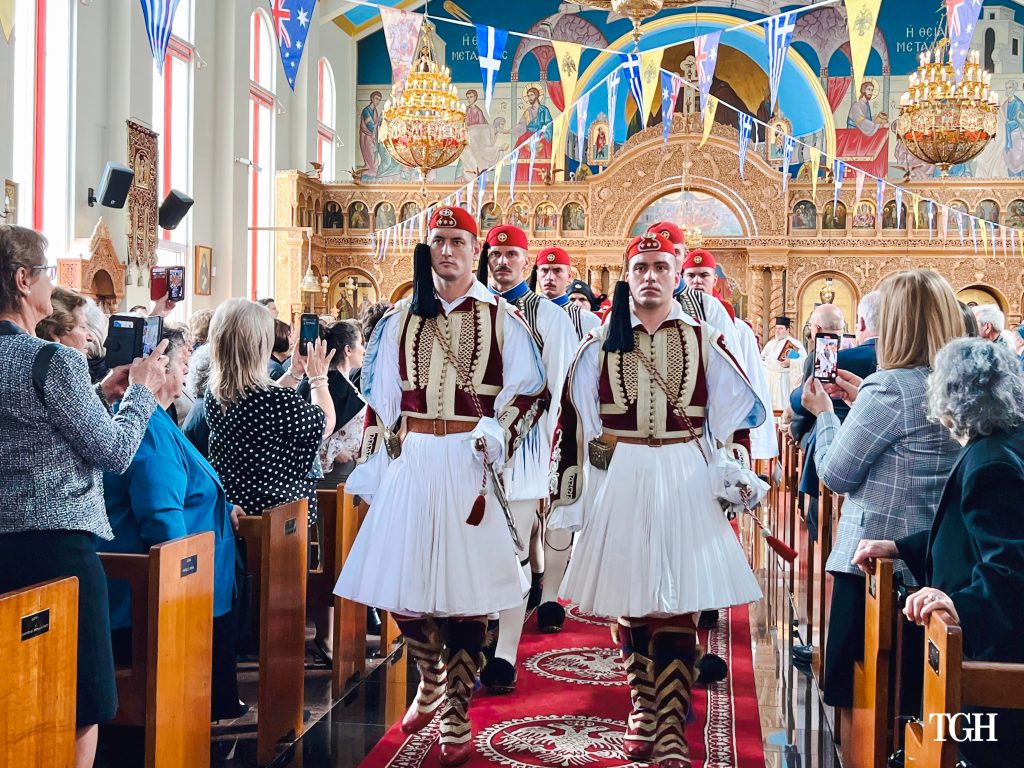
And although for some the sight of Members of the Hellenic Presidential Guard marching slowly through Adelaide’s city centre dressed in their ceremonial uniform might have been unusual, for younger Greek Australians who live thousands of kilometres away from their home country, the visit is a way to stay connected with their heritage.
“Events like this give us the opportunity to experience the tradition and learn about the history and the sacrifices our ancestors made for us. This is what keeps us going in our everyday life,” Modern Greek Teacher at Prophet Elias Norwood, Pyrros Radimissis, told The Greek Herald.
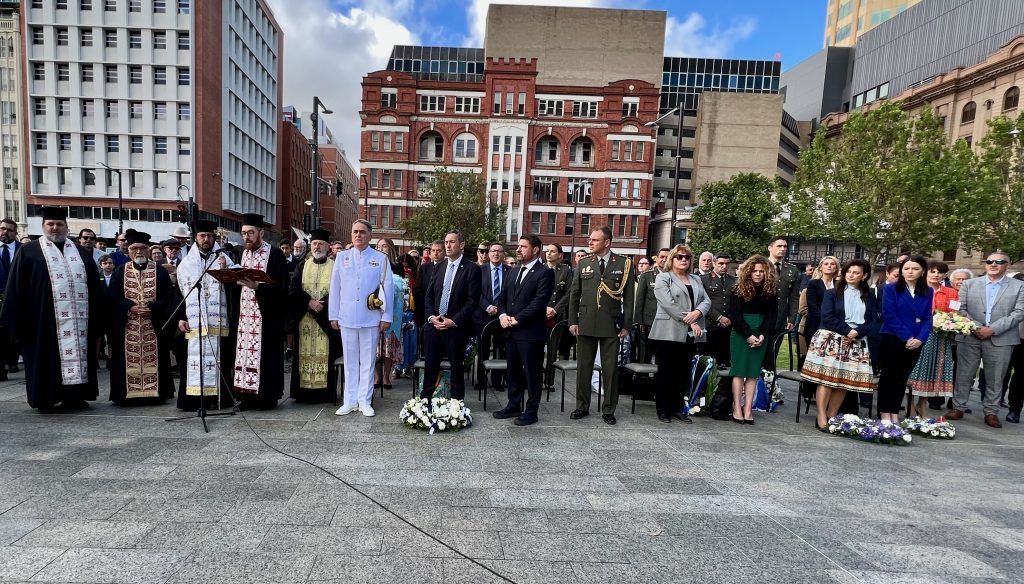
Hosted by the Foundation for Hellenic Studies with the support of the SA Government, the Service of Remembrance and wreath laying ceremony honoured the heroism of the Greek people who stood in defiance against fascism and highlighted the bonds between Australia and Greece.
“It is with great humility that I stand by the South Australian War Memorial today to pay my respects to the fallen of the Australian Defence Forces,” said Greece’s Deputy Defence Minister, Nikos Hardalias, who attended the event among many officials, dignitaries and members of the Greek and the wider community.
“I feel honoured and proud. I feel honoured, because this year I have the chance to commemorate OXI Day, one of the most important Greek national anniversaries, in a country whose gallant soldiers fought side by side with ours in many conflicts including the second World War and proud, because today I see the Members of the Hellenic Presidential Guard, our Evzones, so far away from home standing proudly to honour the heroes who made the ultimate sacrifice,” said Hardalias.
Representing the Premier, Peter Malinauskas, Energy and Mining Minister Tom Koutsantonis, recounted the historic collaborations between the ANZACs and the Hellenic Army in the course of history and mentioned that relationships created under challenging circumstances are everlasting.
“The first ever time the Evzones honoured any foreign memorial was here in Adelaide in 2017,” he said and thanked the Foundation for Hellenic Studies for their efforts in bringing the Evzones to South Australia and for keeping the values of Hellenism in Australia alive.
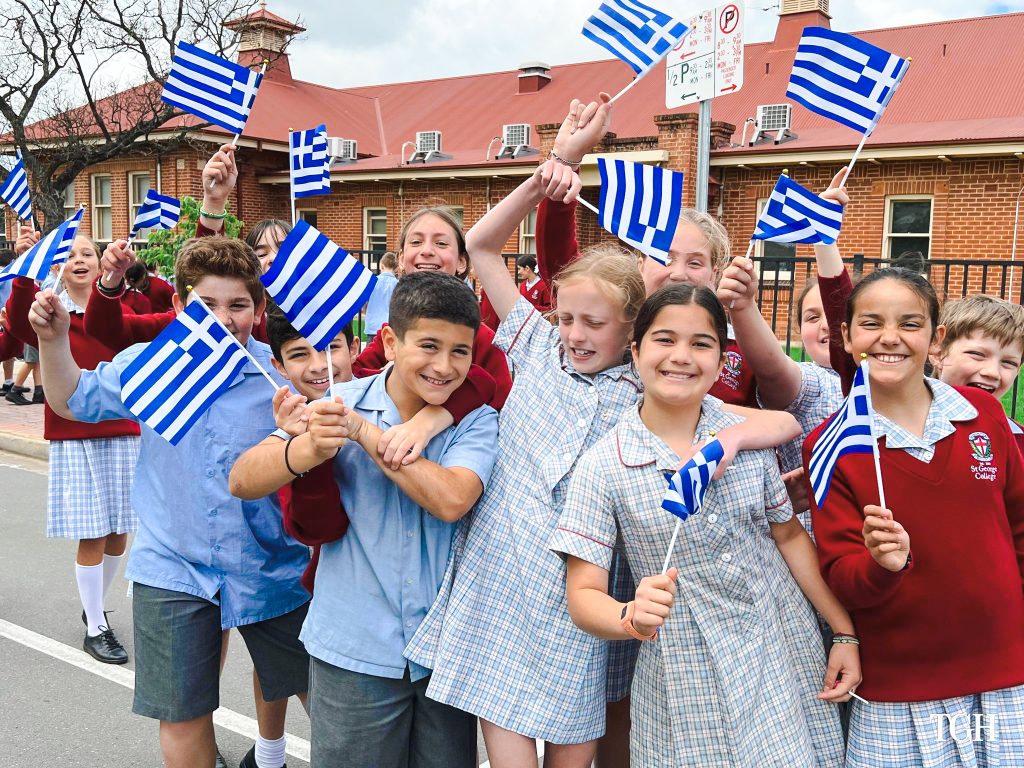
On Monday, Adelaide High School and St George College will host special assemblies to honour the Evzones who on Tuesday evening will depart for their first ever visit to Perth.
Every year on October 28, the Greek people, including the diaspora, commemorate ‘OXI’ (NO) Day – the anniversary of the historic response of Greeks against Nazism, Fascism and Totalitarianism during WWII.
On October 28, 1940, Greece said ‘NO’ to an Italian Fascist invasion, pushed them back and gave the Axis Powers their first defeat.
To discuss the legacy of this historic day and its influence on post war migration to Australia, The Greek Herald spoke with Nick Andriotakis, the Secretary of the Joint Committee for the Commemoration of the Battle of Crete and the Greek Campaign. This is what he had to say.
1. What was the role of the Anzacs in Greece during WWII?
On the early hours of October 28, Italy gave then-Greek Prime Minister Ioannis Metaxas an ultimatum to enter Greek territory and occupy certain unspecified “strategic locations” or otherwise face war.
That morning throughout Greece, the Greek people ran out to the streets and defiantly said OXI or ‘No.’ Thereafter, the Greek army defeated and pushed back the Italian invader into Albania. This was the first defeat of an Axis power and it was clear Greece, along with the United Kingdom, were the only counties that had successfully resisted invasion by the Axis powers.
Greeks said ‘OXI’ to the Italian invasion.
Because of the Greek victory, Hitler decided in early 1941 to invade Greece to support fascist Italy. The UK, as an ally of Greece, garnered support from all over the Commonwealth to assist the defence of Greece by the invasion of Germany and Italy. Commonwealth forces, including 34,000 men and women from Australia and New Zealand, volunteered and together with the Greek Defence Forces formed an integral part of the defence of Greece.
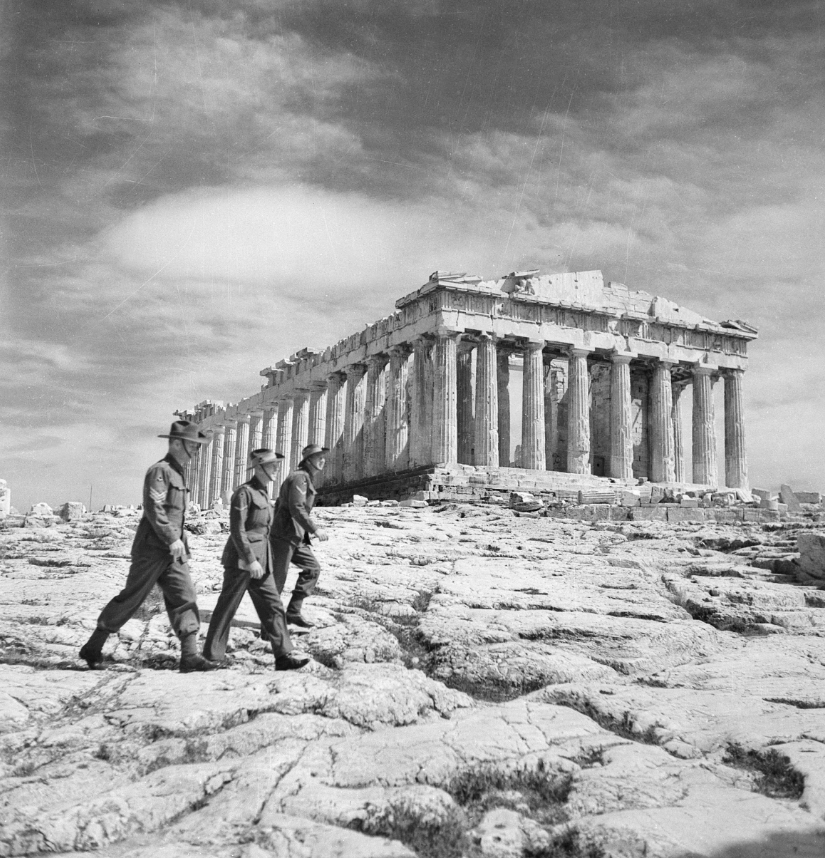
On April 6, 1941, the 2nd Anzac Corps was formed by General Blamey in Macedonia. The Anzacs traversed nearly 1,000 kilometres of Greece’s mountainous terrain whilst fighting the Germans and engaged in the Battles of Vevi, Tempe, Thermopylae/ Brallos and finally, in the Battle of Crete. From OXI Day 1940, the Greeks, together with the support of the ANZACs and Commonwealth Allies, resisted for over seven months the invasion of the Axis Powers.
Part 1 of the OXI legacy: The unquestionable defiance and recognition of the invasion by the Greek people and the immediate defence of the country.
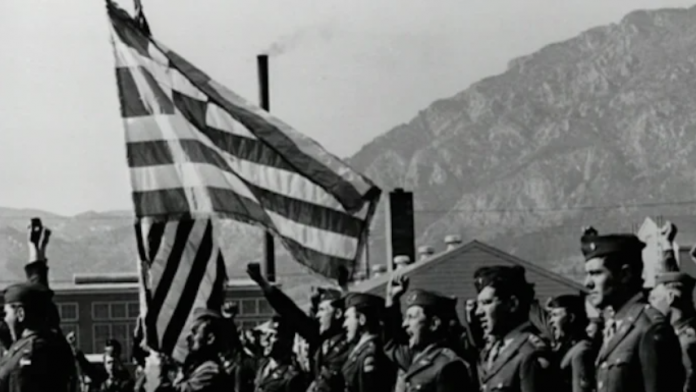
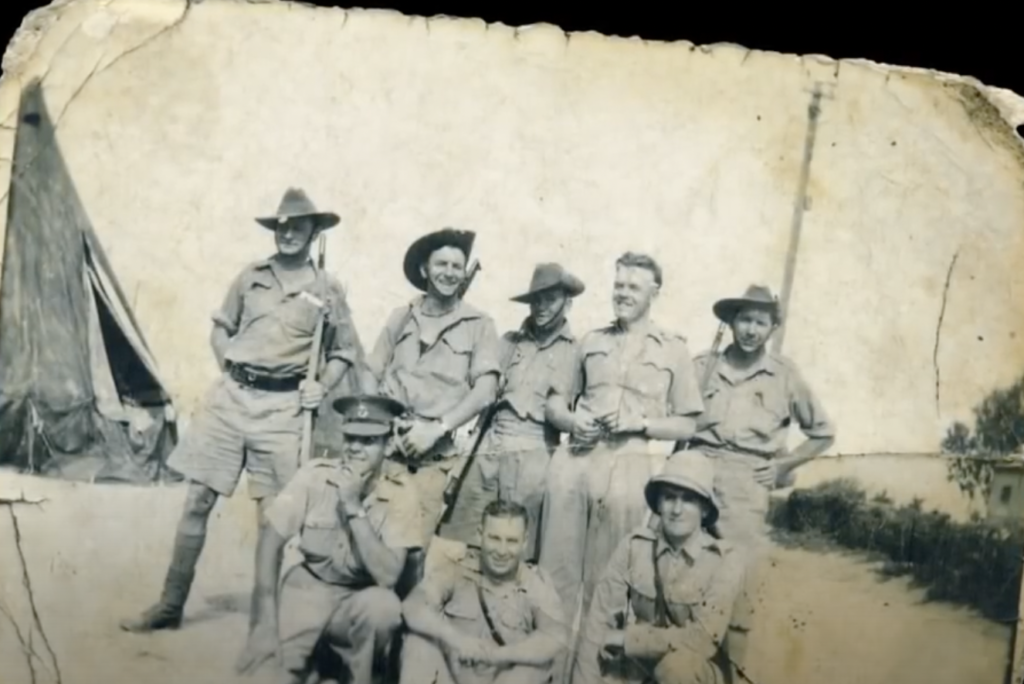
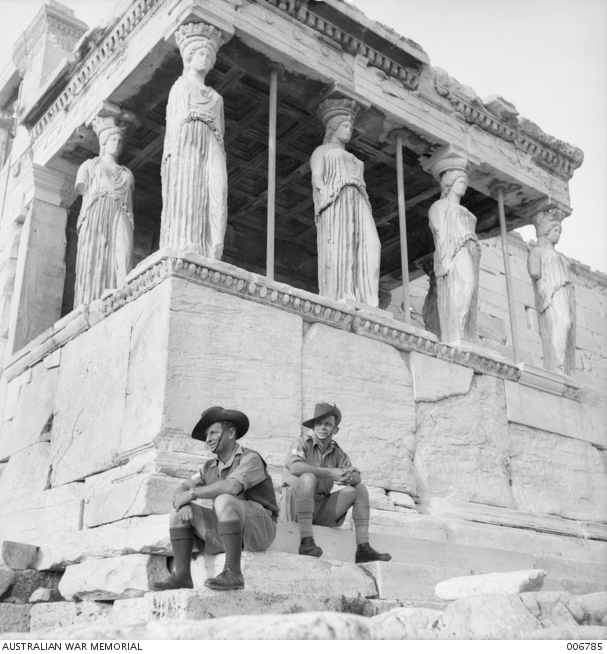
Anzacs in Greece during WWII.
2.How would you describe the relationship between the Anzacs and Greeks during WWII?
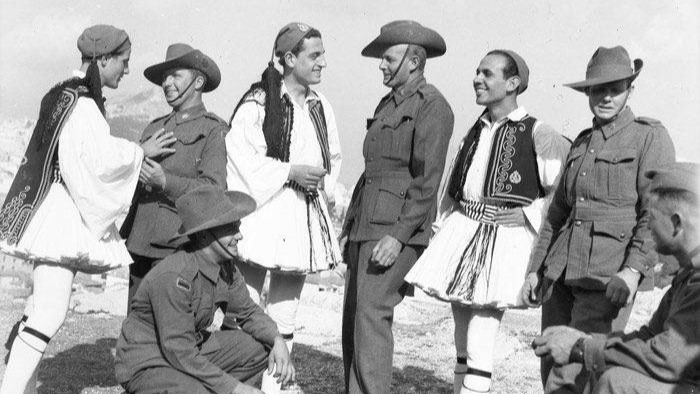
Greece and its people were a total surprise for the Anzacs following their experiences in North Africa and the Middle East. The Anzacs were warmly welcomed as heroes by the Greek people with flowers and food. During the war, many Greeks harboured and supported Anzac escapers and evaders at great cost to their lives and property.
The combined experience under the horrors of war created unbreakable bonds between Australia, NZ and Greece that endure to this day. Many Anzacs would return to Greece in the post war period and when people heard who they were, Greeks would spontaneously pay their bills at restaurants, petrol stations and hotels. Such was the admiration of the Anzacs of Greece and their legacy. The experiences and friendship of Anzacs and Greeks formed during WWII in Greece contributed to the shaping of post war societies in Greece and Australia.
There was a strong bonds between Greeks and the ANZACs.
3.What are your top four lesser-known Anzac stories?
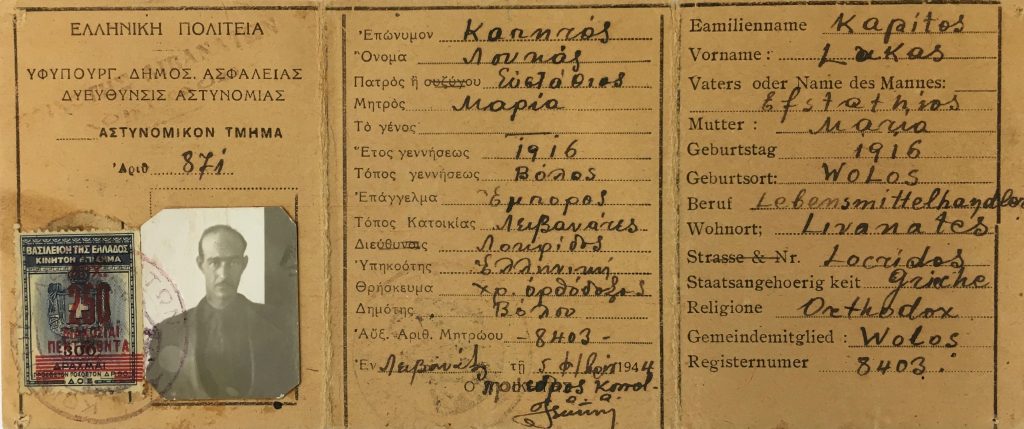
Anzac Greek Marriages: Many Anzac men and Greek women met during the war as Greek families would hide and support the Anzacs left behind after the evacuation. In many cases, the Anzacs became close with these families and after the war continued to correspond by letters with them. Some of the letters were addressed to young women and through the shared experience, romantic bonds developed. The Anzacs sponsored many Greek women to come to Australia and NZ in the post war period and married them.
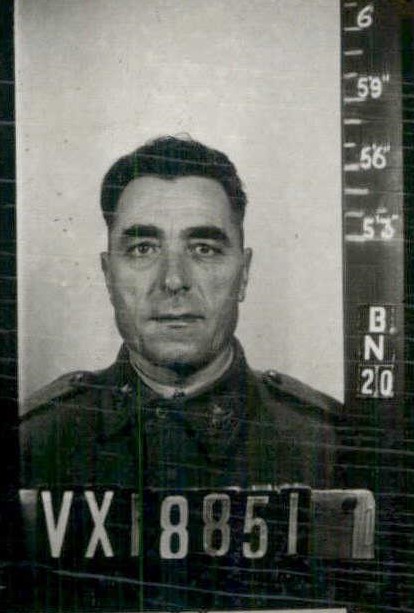
Greek Australian Anzacs in Greece during 1941: Some 2,500 Australians of Greek heritage enlisted in WWI and WWII. These were Greek migrants or the offspring of Greek migrants that had come to Australia around the turn of the 20th century, driven out by earlier conflicts such as the Balkan Wars, the Greco Turkish Wars and WWI. Some of these fought in Greece, in particular Constantine Aroney. Born in Greece, Aroney enlisted for Australia and fought in both World Wars. In WW1, he enlisted in 1915 at age 21 and served in the 1st Anzac campaign in Gallipoli and then onto France and Belgium. In WWII, he enlisted again and served in the 2nd Anzac Campaign in mainland Greece and on Crete. While serving in Greece, Aroney’s cultural background proved extremely valuable with his knowledge of the Greek language and customs. Retreating from the Greek mainland, he managed to escape to Crete in an open boat, taking 23 other soldiers with him, whom he cared for with the help of Greeks on Crete – a heroic feat for which he was awarded the British Empire Medal. Aroney is one of only a handful of ‘Dual Anzacs’ that served in the two Anzac Campaigns which both involved Greece.
Constantine Aroney.
Australian nurses in Greece: Australian nurses have served in Greece in three conflicts. They served in 1915 on Lemnos, during 1916 on the Salonika Front and in 1941 during the Battle of Crete and the Greek campaign. The courage, tenacity, resilience and significant contribution of these women has never been fully acknowledged. Currently much is being done to recognise the roles of these unsung Aussie heroines.
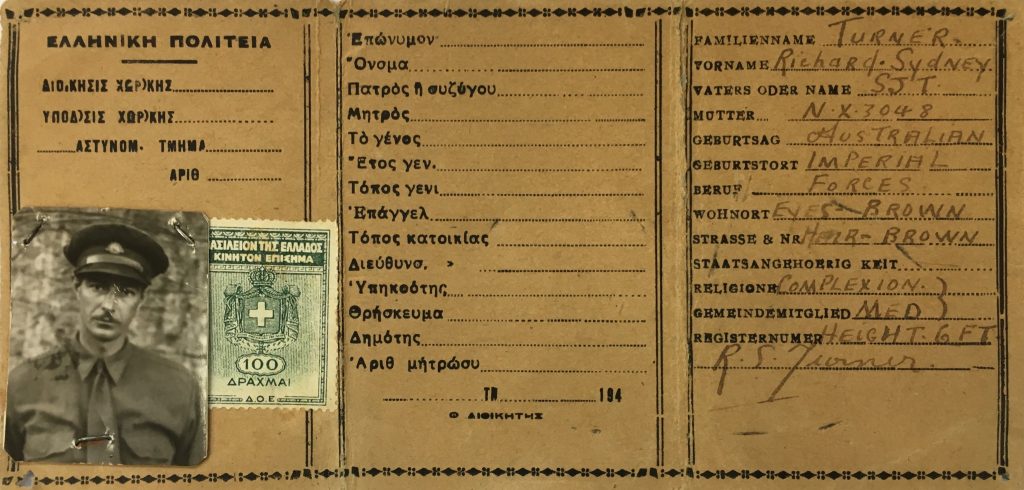
Anzac Resistance Fighters: Little is known of Anzacs that evaded capture and hid in the mountains of Greece fighting with Greek resistance fighters after the Nazi takeover. Anzac Richard Sydney Turner of Rozelle, NSW served in Greece and was captured by the Germans near Megara. After being taken to a prison camp, he was put on a train for deportation to Germany but jumped off and escaped. He roamed the mountains south of Thessaly living in caves and at one point in a hollow tree. Weak from malnutrition and malaria, he was considering giving himself up when he met Greeks who took him in and looked after him. In 1943, after regaining his strength, Turner joined the Greek resistance (ELAS), becoming the leader of fifty Greek Andartes (resistance fighters). Turner was awarded the Military Medal by Australia for the resistance work he carried out in Greece. On Sunday, December 17, 1944 he was scheduled to fly home from Athens and sat in the back of a truck going to the airport. He was killed by Greek communist insurgents who opened fire from a brewery as the truck passed by. He is buried in the Commonwealth War Cemetery at Phaleron, Athens.
Part 2 of the OXI legacy: The determined and continued resistance to the invasion by common men and women within Greece and the final removal of the invaders 1940-1949.
Sydney Turner.
4.How did OXI Day influence the post war migration of Greeks to Australia and other places?
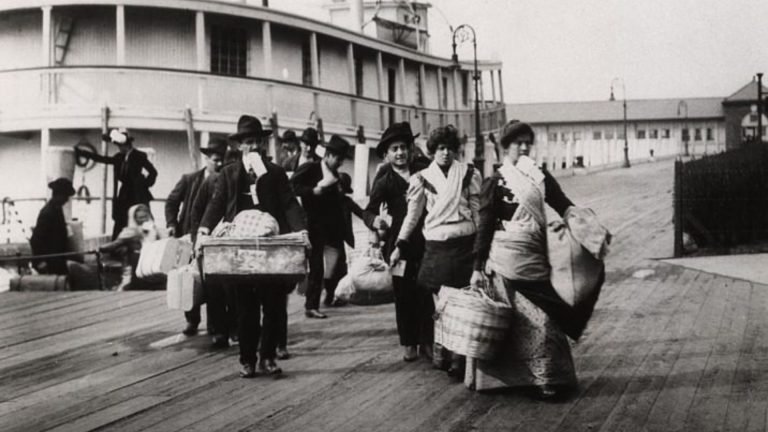
From OXI Day (October 28, 1940) until 1949, Greece was invaded by four countries suffering a significant loss of its population, massive destruction to its infrastructure, dislocation and fragmentation of society, and experienced a political vacuum resulting in the civil war. The villages, towns and cities had lost 10 percent of their population due to war fatalities, war crimes against humanity and starvation. Many children were orphaned and many had lost family members. The generation of Greeks born between 1930 and 1940 had suffered much, grew up in traumatic circumstances and had little or no education. By the 1950s, this generation were tenacious, resilient, young Greek men and women shaped by a tough and difficult upbringing but also had dreams of a better life that could not be fulfilled for all of them by a country not yet recovered from the ravages of WWII. This new generation wanted to set up their future through new opportunities and looked to the far corners of the earth. Many Anzacs supported them either behind the scenes, encouraging the government to accept Greek migrants, or personally sponsoring them.
Part 3 of the OXI legacy: The creation of the post war Greek diaspora.
5. Why do you believe the Anzac legend and OXI Day should continue to be commemorated in Australia?
OXI Day is the resurrection of the defiant Greek spirit of freedom always present in Greece. When Greece is threatened of invasion by larger superior empires and nations full of hubris, this spark ignites and the Greeks say OXI – No. Think for example, the invasions at Salamis, Thermopylae, Marathon and Platea, and the Greek War of Independence in 1821. In all cases, tenacious outnumbered Greeks defended themselves against larger and more imposing invaders and OXI 1940 is the latest resurrection of this eternal spirit of freedom. The message of OXI was a lightning rod to similar-thinking people like British, Australians and New Zealanders who came to the aid of Greece. As described above, the journey after OXI resulted in the establishment of the post war Greek diaspora.
Anzacs in Greece.
The legacy of OXI is within living memory and is very much linked to Australia through the 2nd Anzac Corps. In Australia, OXI Day deserves and should be commemorated much more than what it currently is.
Part 4 of the OXI legacy: The education and commemoration of OXI Day to inspire and encourage humanity to be free from authoritarianism.
6.Is there anything else you’d like to say?
Today we see OXI again in the defiant stance of Ukraine against the invasion by Russia. The force of an authoritarian will by Russia against a neighbouring Ukraine wanting to chart an independent future. History is repeating!
Some 1,686 Anzacs from both world wars (including Lemnos Salonika WWI) lie in Greece, of which nearly half were never found, or their remains identified.
I encourage all Australians who have an Anzac ancestor or are of Greek heritage to support a free and open society to engage, learn, commemorate, and continue the legacy of the unbreakable bonds of Australians and Greeks that started from OXI Day.
The Global Greek Diaspora is estimated to amount to about six-seven million people. This number also includes children and descendants born from transnational (mixed) marriages. We can also add a few thousand foreigners, who nevertheless experience the Greek way of life and identify themselves as Greeks or “Grecian”. This Diaspora covers numerous countries of all continents of our planet. Almost all of them were usually economic migrants or settlers who had fled the Greek Historic Diaspora (Greece, Asia Minor), the Black Sea regions and Eastern Europe for social and political reasons. In all the neighborhoods of the world, these inquisitive, active, and inventive Greeks set up their own households, built families, raised children and descendants, and contributed to the development of the countries that hosted them.
Almost all Greek immigrants without exception, upon their departure from their native lands where they had lived as landless citizens, stockbreeders and villagers or unskilled workers, had placed two bets: First, to return from emigration in four or five years and secondly to maintain where they go unpolluted, unaffected their ethno-religious and linguistic identity. They made these promises to their own parents and their people that had left behind.
All of us, or most of us know very well, that we lost the first bet, perhaps after the first ten months of settlement. For most of us the first four years became ten, twenty, thirty, and then the grandchildren came and blocked every door to return home. The settled in their host countries, grew old and made the land that hosted them as their burial place. The first generations of immigrants worked hard in factories and yards, in quarries and mines, in foundries and meat fries, in taxis and automaker factories, in railways and large hydroelectric projects, in construction and grocery stores, in fishing, bakery and tailor shops. This first generation of immigrants, those who were deprived of the affection of their mother and escaped as a surplus from Greece, were, as a matter of fact, completely sacrificed. They made bloody savings, were deprived of comforts and luxuries to give opportunities for progress to their children.
These sacrifices were made by the Greek immigrants who also came to Australia from 1949-1979, to win at least the second bet. After losing the first bet miserably and never being able to return to their ancestral homes, to their parental homes, at least to win the second bet. The second bet was the sacred promise to preserve for them and their children their ethno-religious and linguistic identity, the conscience of their parents and forefathers.
For thousands of years, the Greeks of the Diaspora had won this bet in all the neighborhoods of the world. From Italy, the Latin America of the South, the Black Sea coast, South Russia and Ukraine, Manchuria and China, the countries of Africa and Asia, the communities of the Greeks preserved their language, their faith, and their cultural ties with metropolitan Greece.
This bet was honored with dedication and loyalty by the first Greek immigrants in Australia. Even though the first systematic community afternoon schools in Australia were founded in 1927, with the exception of Perth, which officially operated a community school there since 1912, the Greeks in the hinterland, on the vast continent, in the villages and settlements of the rural, regional areas, in the sugarcane and banana plantations of Queensland, in the isolated farms and forests, the parents taught the little Greek they knew to their children. The use of English was forbidden; they used to punish their children if they were not answered in Greek. Mothers attached special importance to learning Greek, which is why our first language is called “mother tongue” and not “paternal” language.
This bet was won by the Greeks of the pre-war period. Their children showed devotion to the language of their parents. They continued to speak Greek and when the organized schools operated systematically, they sent their children and grandchildren.
So, when the post-war immigrants came to Australia, 270,000 young people, the old settlers felt strong and blessed next to the young. Day and afternoon as well as Saturday schools were opened; there were Chairs of Greek Studies, academic and research, special curricula of the Greek language were formed for children living in isolated areas, the distance teaching of the Greek language was organized, bridges of communication and cooperation with school communities in Greece were opened. By the end of the last century we were all living the optimism of the winner. We believed that the bet we gave as immigrants to our parents was won. We believed with optimism that our language would not be defeated. Greek will also be a primary language for our grandchildren. We believed that the Greek family and our Orthodox Church would come together and work together. That Greek will remain the language of our home (oicolect) and the language of our faith, will remain the language of the Church.
The reconciled Greek and Christ worked together over the centuries, coordinated their efforts, succeeding within the family and within the Church, the Greek language to become the main factor of our culture. This concurrence must not be in crisis. The cooperation of Orthodoxy with the Greek language must continue. We owe this as Greeks and as Christians. It was on this language that Christianity relied on to convey the Holy Gospels and messages of love, it was in this language that the Apostles spoke, and in it Paul wrote His Epistles. In the Greek Diaspora, our Church, together with the Greek family and the organized Communities will play the saving role. Let us work together.
*Professor Anastasios M. Tamis taught at Universities in Australia and abroad, was the creator and founding director of the Dardalis Archives of the Hellenic Diaspora and is currently the President of the Australian Institute of Macedonian Studies (AIMS).
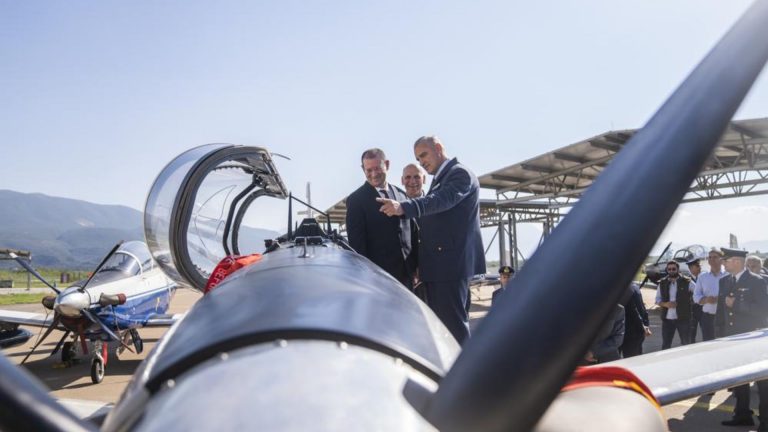
In an effort to increase its relative air force advantage over regional foe Turkey, Greece has begun operations at a brand-new international pilot training facility that was jointly developed by Israel and Greece.
Elbit, an Israeli defence contractor, will assist in managing the facility, which is situated on an air force base outside of the southern Greek city of Kalamata. The Israel defence contractor and the Greek government reached a $1.65 billion agreement last year.
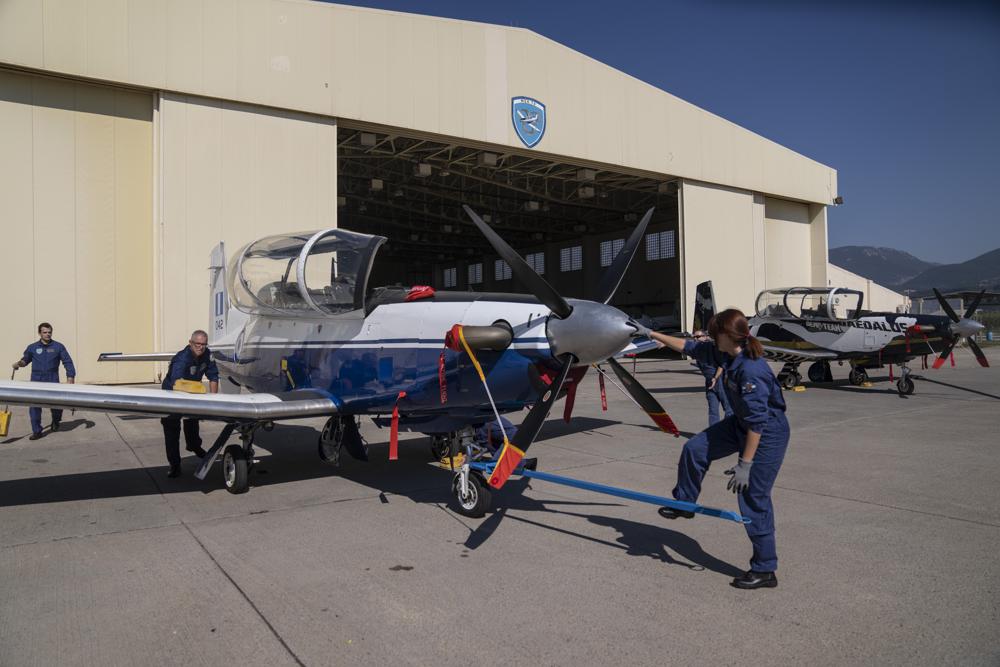
The new training centre started operating on Friday with 14 of an expected 25 T-6 single-engine turboprop aircraft.
Greek air force maintenance stuff parks a T-6 single-engine turboprop training aircraft at an airbase outside the southern Greek city of Kalamata, Greece, on Friday, Oct. 21, 2022. Photo: AP Photo/Petros Giannakouris
The fleet is set to expand next year with the delivery of 19 Italian-built M-346 training jets equipped with embedded virtual avionics that simulate combat and flight scenarios.
In an effort to surpass Turkey, Greece is modernising its military, with a strong emphasis on its air force, Athens is updating its ageing F-16 fighter jet fleet, purchasing modern French-built Rafale fighters, and aspiring to join the American F-35 jet programme.
Greece and Turkey, both NATO members, continue to disagree over maritime boundaries and Turkey’s claim that Greece’s military presence on islands in the east of its territory breaches international law.
The Australian Financial Review (AFR) has released its Young Rich List for 2022 and amongst the 100 wealthiest Australians aged 40 and younger are three entrepreneurs of Greek heritage.
In 35th place this year is Adelaide-based Kayla Itsines, who is worth $165 million.
The Greek Australian fitness queen has amassed an additional 2 million Instagram followers in the past year, which has taken her total followers on the app just above 15 million.
Kayla Itsines launched her first program 10 years ago
31-year-old Itsines sold Sweat, an app she developed with former fiance Tobi Pearce, to iFit last year.
Sweat was created out of Itsines’ desire to provide a training manual that would be useful to women outside of her hometown of Adelaide.
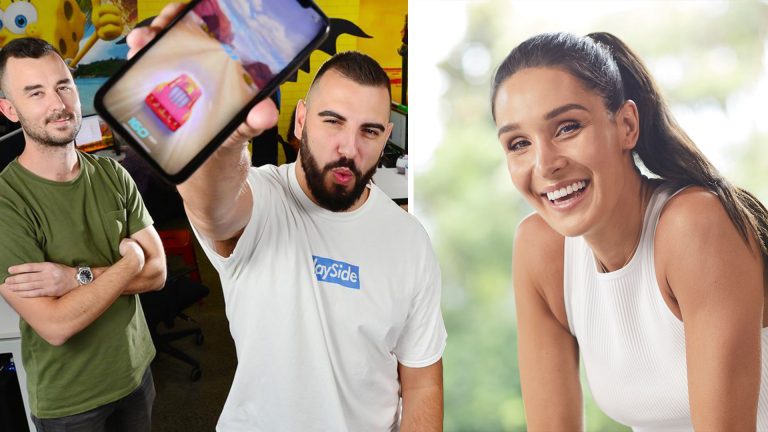
Also making the list were the co-founders of video game developer PlaySide, 35-year-old Gerry Sakkas and 37-year-old Aaron Pasias who ranked 73rd and 74th respectively.
Lto R: Playside game developers and partners Aaron Pasias, CFO, Gerry Sakkas, CEO and TJ Munusamy, COO. Photo: Nicki Connolly
Playside was founded in 2012 and partly funded by Sakkas’ $15,000 redundancy from now competitor, EA Games.
As Australia’s sole public game developer, Playside produces games for mobile, PC and augmented and virtual reality developed in collaboration with major studios including Disney, Pixar, Warner Bros and Nickelodeon.
Listed on the ASX last December, PlaySide turned profitable in 2021-22 with revenue of $30 million and a net profit of $5 million.
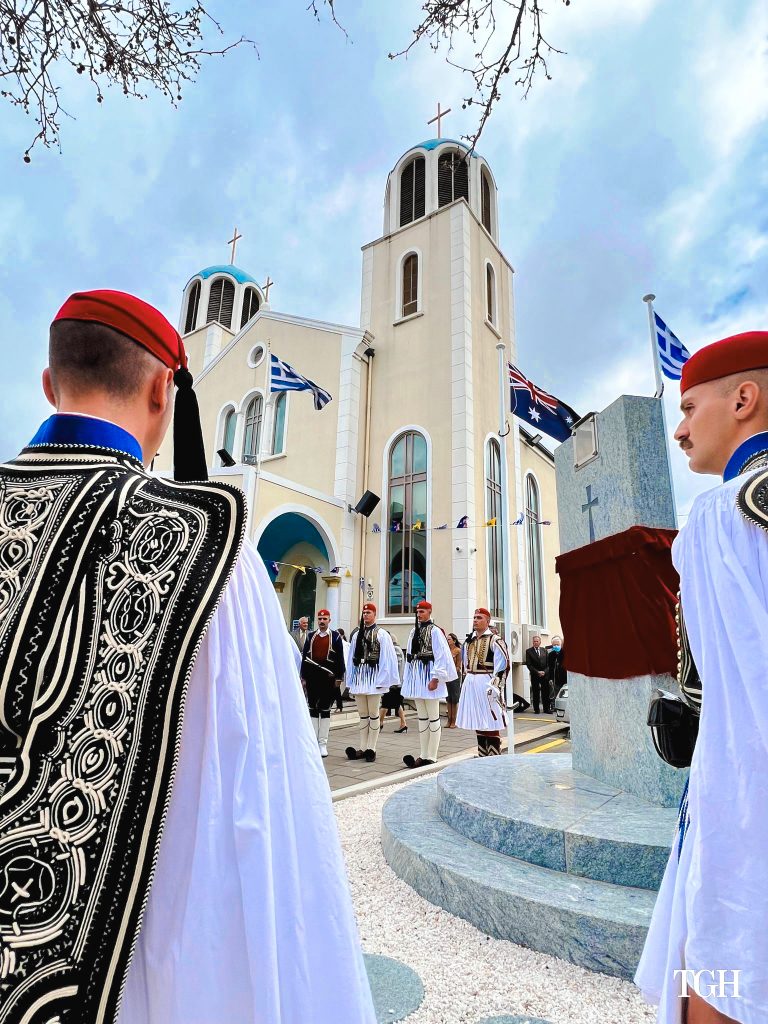
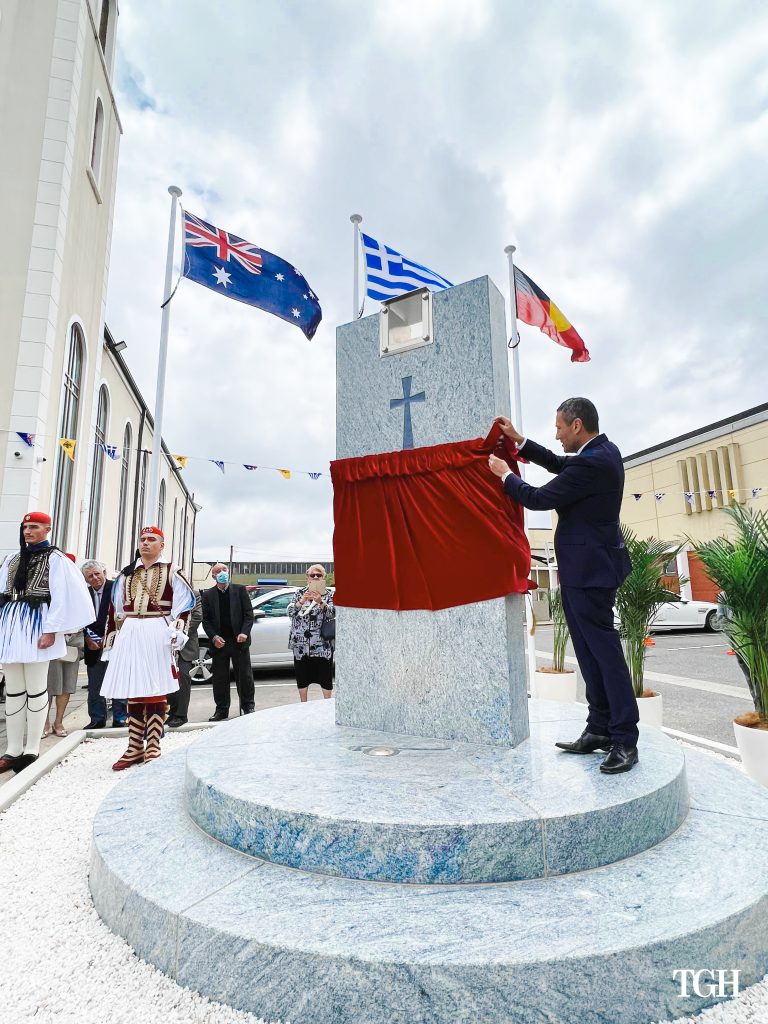
A memorial to commemorate the bicentenary of the Greek Revolution has been unveiled at St George Greek Orthodox Church in Thebarton, South Australia this morning in the presence of Greece’s Presidential Guard.
The memorial was set to be erected in 2021 but due to the COVID-19 pandemic the unveiling was postponed until this Friday – which marks the 82nd anniversary of Greece’s National Day (‘OXI’ Day).
The unveiling ceremony began with a contingent from the Hellenic Presidential Guard standing guard inside St George church in the morning for a Doxology service led by Bishop Silouan of Sinope and parish priest Father Diogenis Patsouris.
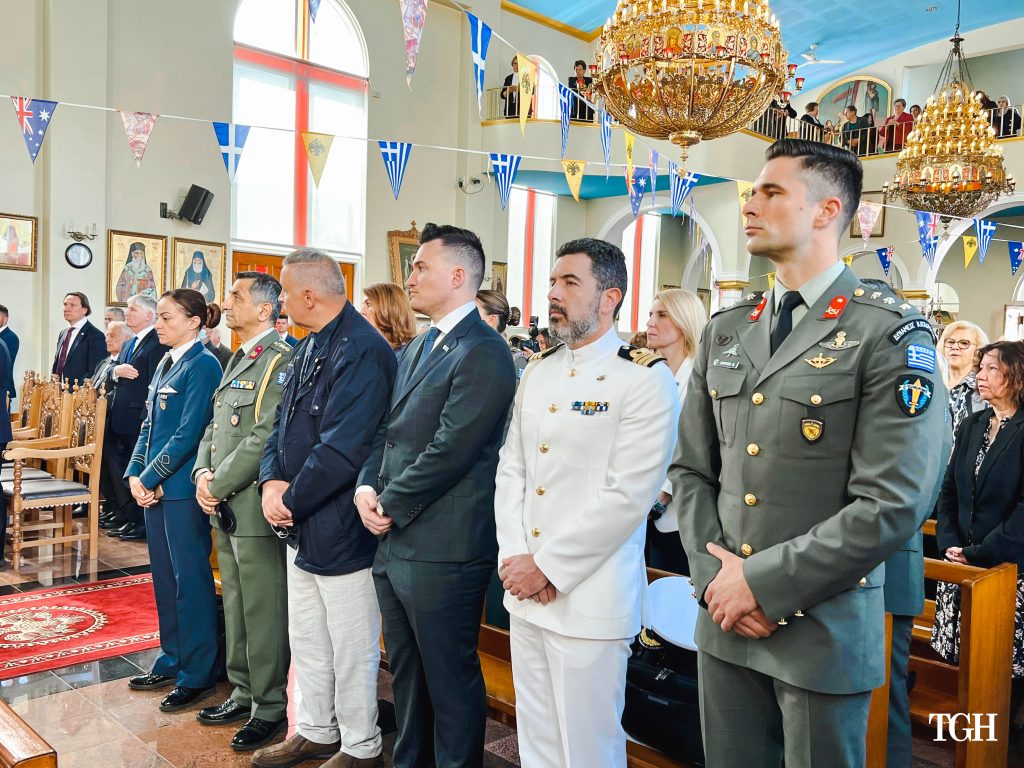
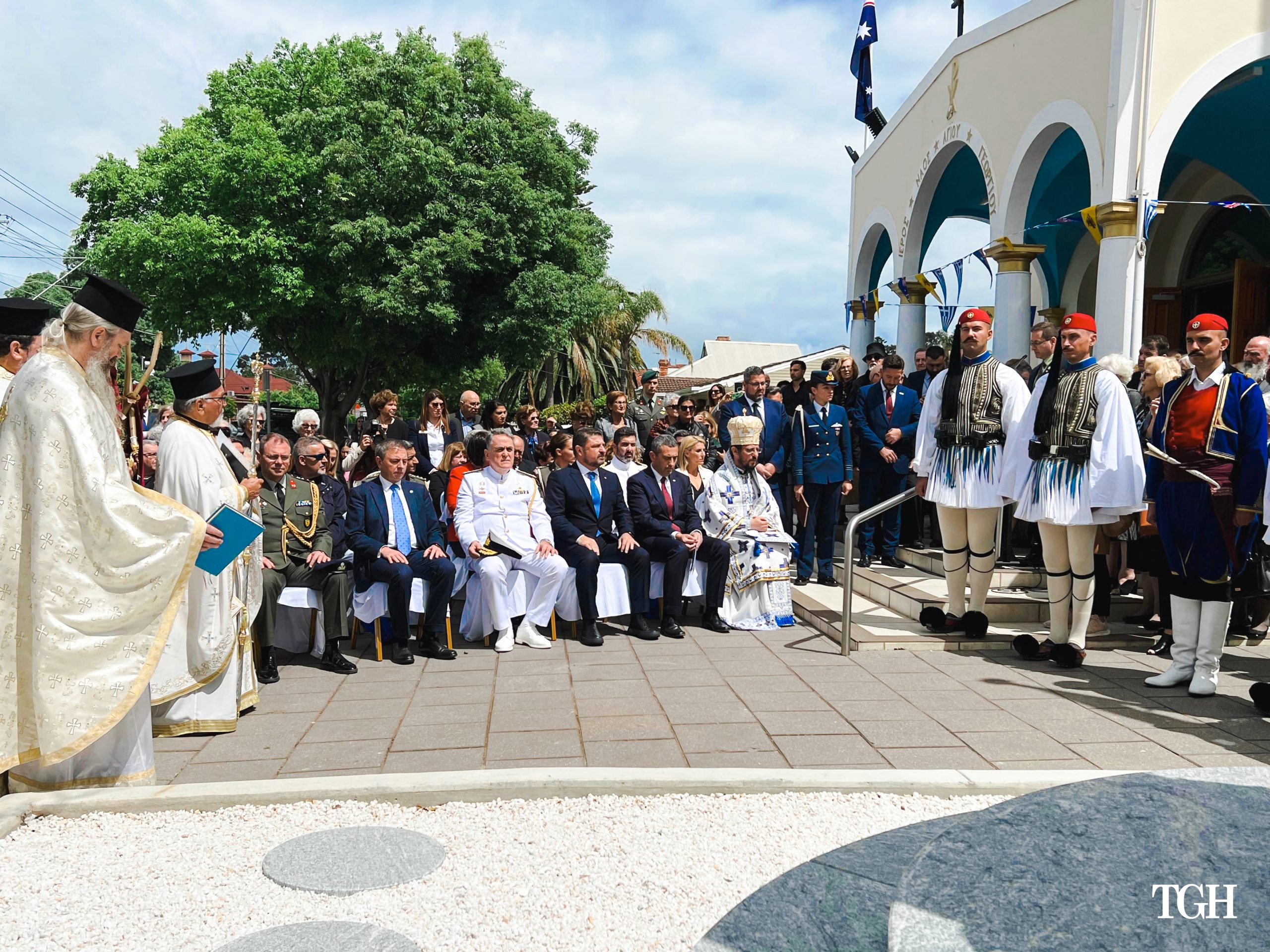
There were a number of officials present during the Doxology including Greece’s Deputy Defence Minister, Nikos Hardalias; the Consul General of Greece in Adelaide, George Psiachas; Federal Member for Adelaide, Steve Georganas; SA Minister for Transport and Infrastructure, Tom Koutsantonis; SA Minister for Multiculturalism, Zoe Bettison; SA Best MLC Connie Bonaros; Mayor of the City of West Torrens, Michael Coxon; Chair of the Foundation for Hellenic Studies, Greg Crafter; Chair of the SA Multicultural and Ethnic Affairs Commission, Adriana Christopoulos; and the President of the Greek Community of Melbourne, Bill Papastergiadis; among many others.
After the Doxology, these attendees moved outdoors for a number of speeches and the unveiling of the memorial by Mr Koutsantonis. The memorial has been supported by the SA Government.
Mr Koutsantonis spoke first about the “long connection” between Australia and Greece which stems from when the Greeks and the Anzacs fought together during WWI and WWII.
The SA Minister also described the importance of the flame which will be constantly lit inside the memorial.
“In 1821, the light of Greek Independence had not gone out after 400 years of occupation. It burnt bright. Today, at St George, in Australia, that flame burns again. We will never forget… Freedom or Death!” Mr Koutsantonis said.
Next to speak was Greece’s Deputy Defence Minister. Mr Hardalias spoke about the history of OXI Day, before thanking local Greeks for their warm welcome of him during his official visit to Australia this week.
The official ceremony concluded with the national anthems of Greece and Australia, as well as refreshments and canapes.
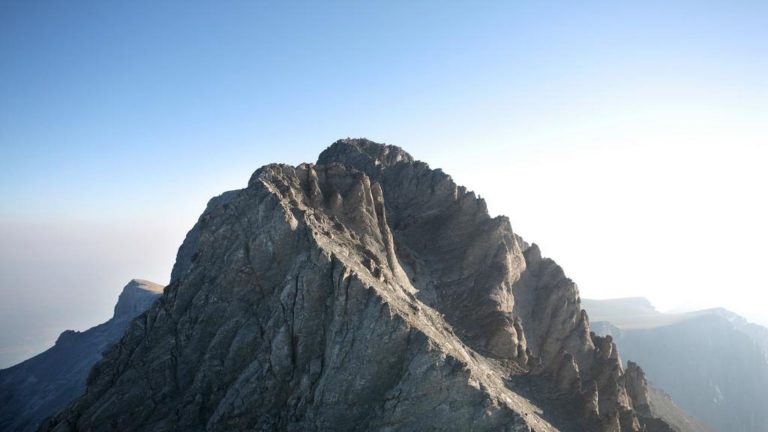
Greek Minister of Culture and Sports, Lina Mendoni has announced that Mount Olympus has been nominated as a UNESCO Natural World Heritage Site.
Together with the Greek Environment Ministry and the Natural Environment and Climate Change Organisation, the preliminary nomination dossier was submitted.
“A symbol name, one of the most recognizable internationally, Olympus, is connected to the mythology of the Greek Dodecatheon, while it stands out for its valuable biodiversity,” says Ms Mendoni.
“It is the ideal combination of nature, mythology and history.”
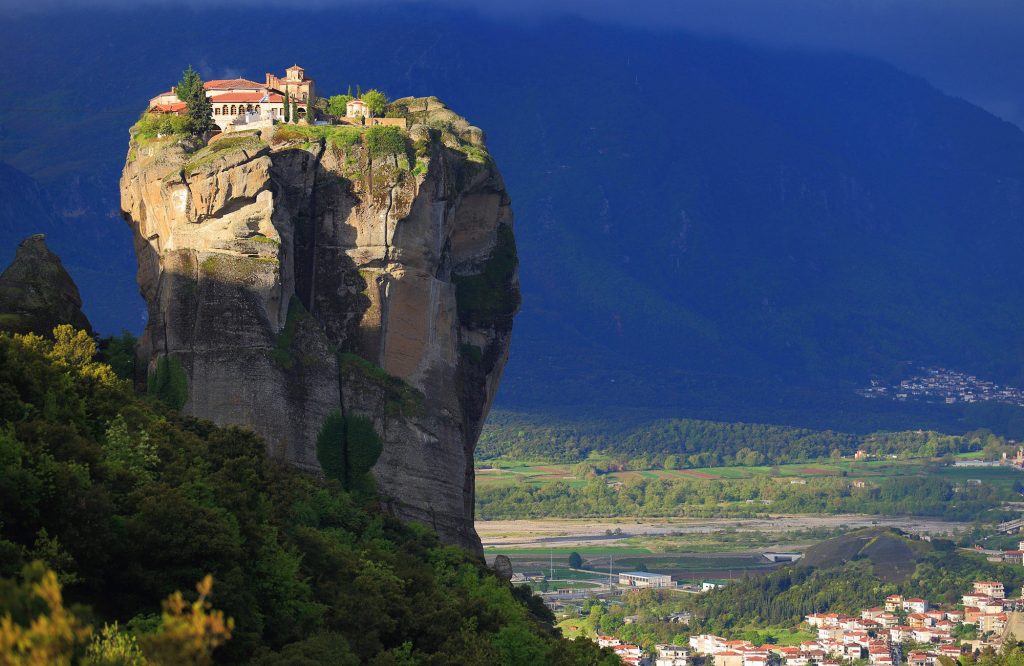
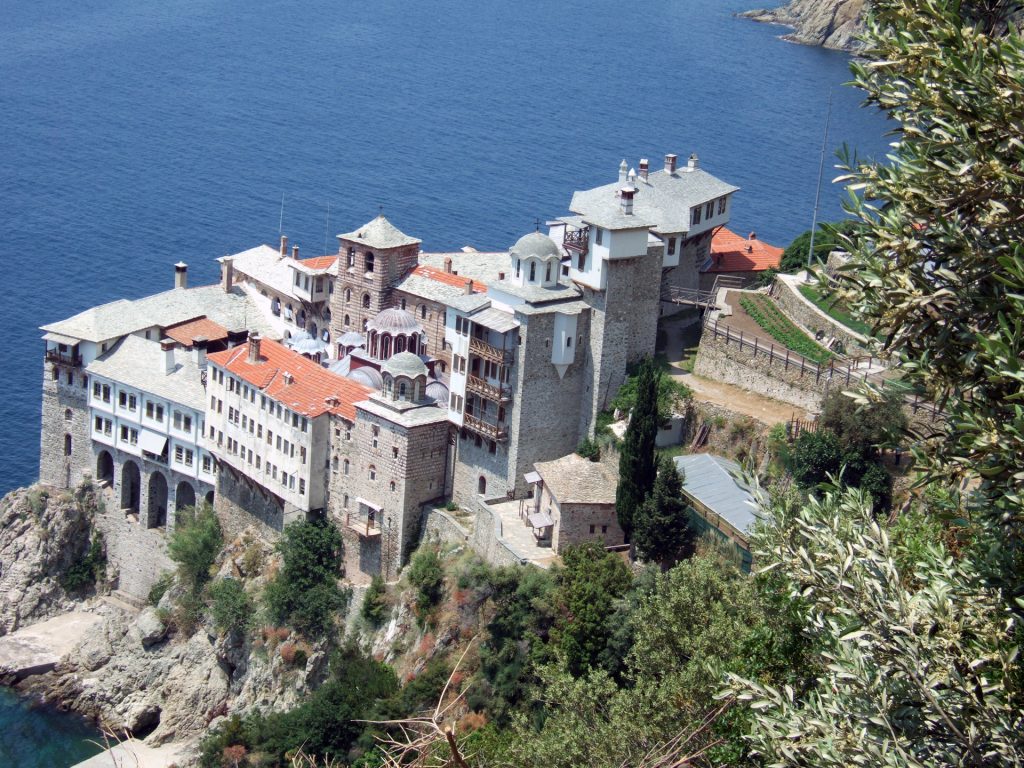
If this submission is successful, it would make it the third site in Greece to join the infamous index, along with Agios Oros and Meteora.
MeteoraAgios Oros.
In order to qualify, an area must meet a series of criteria related to intangible cultural heritage elements, geological-morphological features, rich biodiversity, and the existence of important ecological-biological processes for the evolution of life.
3.5 million square kilometres in more than 250 terrestrial and marine locations in more than 100 nations have so far been included to the list, according to UNESCO data.
Mount Olympus became the first National Park in Greece in 1938, and it is currently also recognized as a World Biosphere Reserve.
As part of the nomination process for the designation of Mount Olympus as a Natural World Heritage site, UNESCO is required to provide input on the preliminary Mount Olympus dossier to the Greek ministries over the next several months so that a revised final dossier can be presented in early 2023.