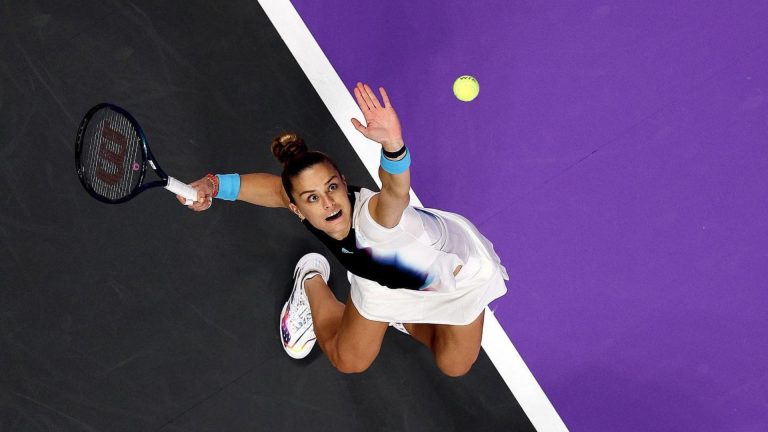
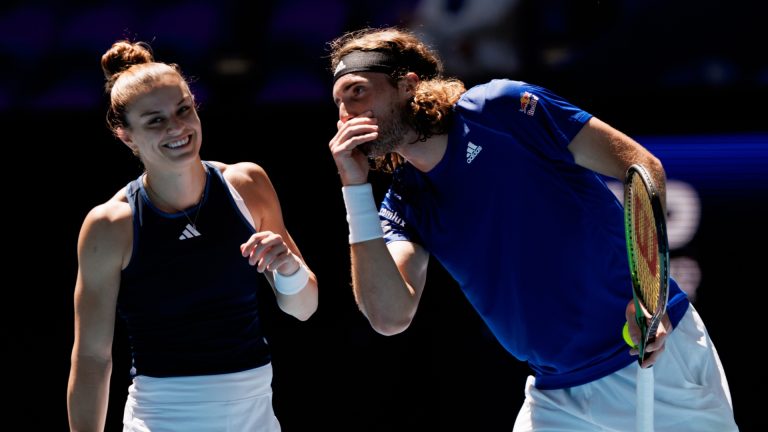
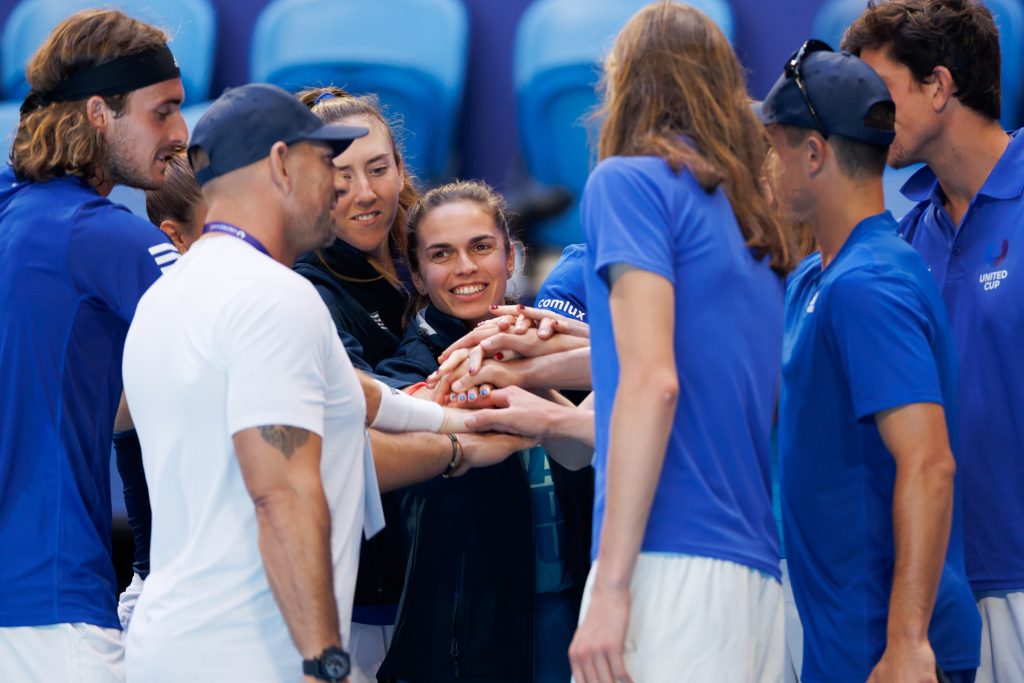
Greek tennis player Maria Sakkari will participate in the Tennis Plays for Peace charity event at the Rod Laver Arena in Melbourne on Wednesday, January 11.
Sakkari is currently in Western Australia where she sealed Greece’s first Group A win at the United Cup in Perth after defeating Viktoriya Tomova 6-3, 6-2.
Accompanying Sakkari in the upcoming charity event will be tennis players Carlos Alcaraz, Rafael Nadal, Coco Gauff, Alex Zverev, Frances Tiafoe and Alex de Minaur.
Tennis Plays for Peace is a global initiative supported by all the Grand Slams, the Association of Tennis Professionals, Women’s Tennis Association and International Tennis Federation to bring together the tennis community and fans in support of relief efforts for the war in Ukraine.
The funds raised from the tennis charity event will support the on-ground relief work in Ukraine by the United Nations International Children’s Emergency Fund Australia (UNICEF) and Global Giving, also contributing to the Ukraine Crisis Relief Fund.
Photo: Ukraine Crisis Relief Fund
Australian Open Tournament Director, Craig Tiley, said about the event: “Through Tennis Plays for Peace the tennis community can offer practical assistance through fundraising, as well as show our heartfelt support for the victims of the war.”
“We look forward to a spectacular night of tennis and entertainment and a wonderful opportunity to come together and raise much-needed funds,” Tiley added.
So far, Tennis Plays for Peace has raised $1,143,034 of the $89,292 goal for the Ukraine Crisis Relief Fund.
Tickets for Tennis Plays for Peace are $25 for adults and $5 for children and available here. For more information, visit the AO website here.
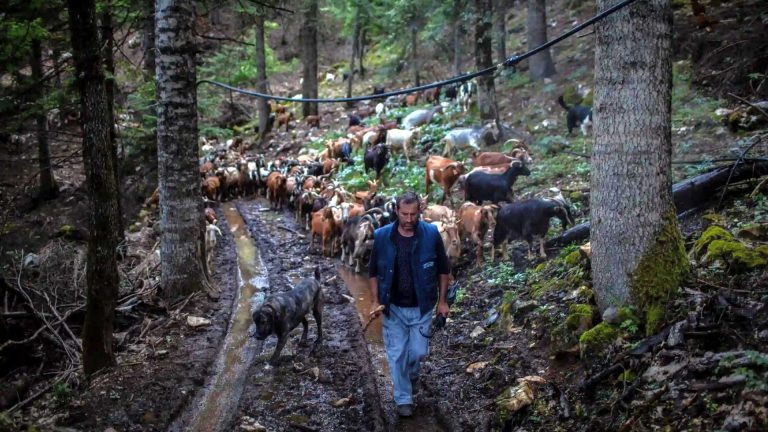
Every spring, brothers Kostas and Efthymios Papastavros, along with Kosta’s wife Fotini, herd their 800 goats on foot to the Koziakas mountain in Thessaly, Central Greece, according to The Guardian.
The family are descended from nomadic herders and breeders who have existed in the Greek and Balkan region for hundreds of years, known as the Vlachs.
Starting their day at 5.30 am, the Papastavros family milk their goats by hand, before transporting their raw goat’s milk to plants for processing, twice a day.
“People say that herders are uncivilised and uneducated and unable to do other jobs,” Kostas told The Guardian.
“But they don’t realise that you have to be passionate to be one. You have to love the animals and love the job. I am very proud of what I do.”
A herd of goats in the mountains of Greece. Photo by Dimitris Tosidis.
But despite the years of love and appreciation for their lifestyle, they are currently at risk of being the last generation of nomadic herders in Greece due to increasing financial hardship.
Many herders have had to sell or slaughter their livestock as a result of soaring energy costs. The mountain roads used to transport the goat milk are in dire need of government support and reconstruction.
The Papastavros’ are one of just over 3,000 herder families that still remain in Greece.
“I don’t know if it is going to be preserved after our generation, we are probably the last ones,” Kostas said.
Greek Finance Minister Christos Staikouras has been named Finance Minister of the Year 2023 for Europe. The result was revealed by the Financial Times Group’s The Banker magazine.
In a statement, Staikouras said the recognition was a “distinction for Greece.”
“[The distinction] reflects the international community’s recognition and approval for the country’s progress and performance in the critical and repeatedly challenged field of the economy in recent years,” Staikouras added.
Η βράβευσή μου ως Υπουργός Οικονομικών της Χρονιάς για την Ευρώπη, από το @TheBanker των @FT, αποτελεί ξεχωριστή τιμή & διάκριση που αντικατοπτρίζει την αναγνώριση & την επιδοκιμασία της διεθνούς κοινότητας για την πρόοδο & τις επιδόσεις της Ελλάδας στο πεδίο της οικονομίας. pic.twitter.com/vEtwZgINQ6
The Greek Finance Minister also recognised the efforts of the Greek people in improving the economy, mentioning “the adaptability and resilience of Greek businesses, and the hard work of the government of Kyriakos Mitsotakis.”
“This is an award that belongs to all: state, citizens, and businesses,” Staikouras said.
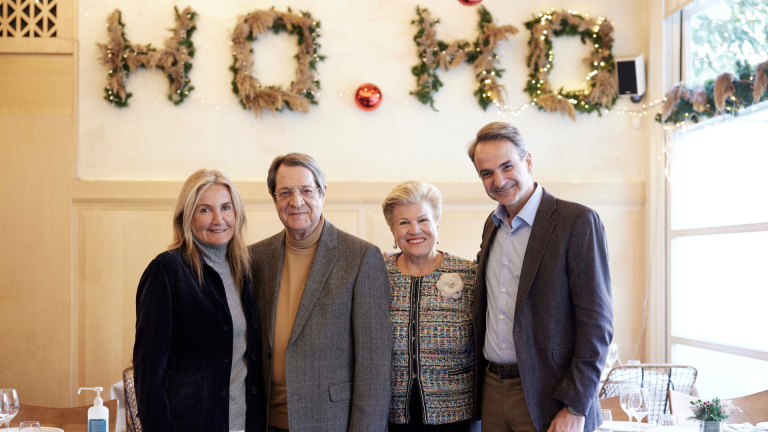
Greek Prime Minister Kyriakos Mitsotakis and his wife Mareva Grabowski-Mitsotaki hosted a lunch for outgoing Cypriot President Nicos Anastasiades and his wife Andri Anastasiades on Tuesday.
In a Twitter post, Mitsotakis welcomed the President and his wife to Athens.
According to Ekathimerini, Mitsotakis also thanked President Anastasiades for the long and close cooperation between Greece and Cyprus both at a bilateral and Europe level.
Σήμερα στην Αθήνα, με τον Πρόεδρο της Κυπριακής Δημοκρατίας @AnastasiadesCY και τη σύζυγό του Άντρη Αναστασιάδου. Αγαπητέ φίλε Νίκο θέλω να σε ευχαριστήσω ακόμα μία φορά για την πολυετή και στενή συνεργασία μας, τόσο σε διμερές επίπεδο, όσο και σε επίπεδο Ευρωπαϊκής Ένωσης. pic.twitter.com/d6lMUCGJnA
The Greek Prime Minister also expressed his support for the ongoing and fair solution to the Cyprus issue.
It was further discussed at the lunch that Greece and Cyprus are pillars of stability in the East Mediterranean, committed to international law and its rules.
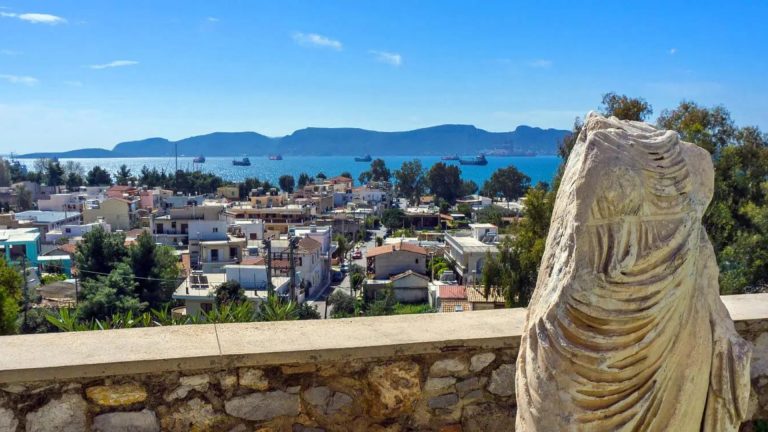
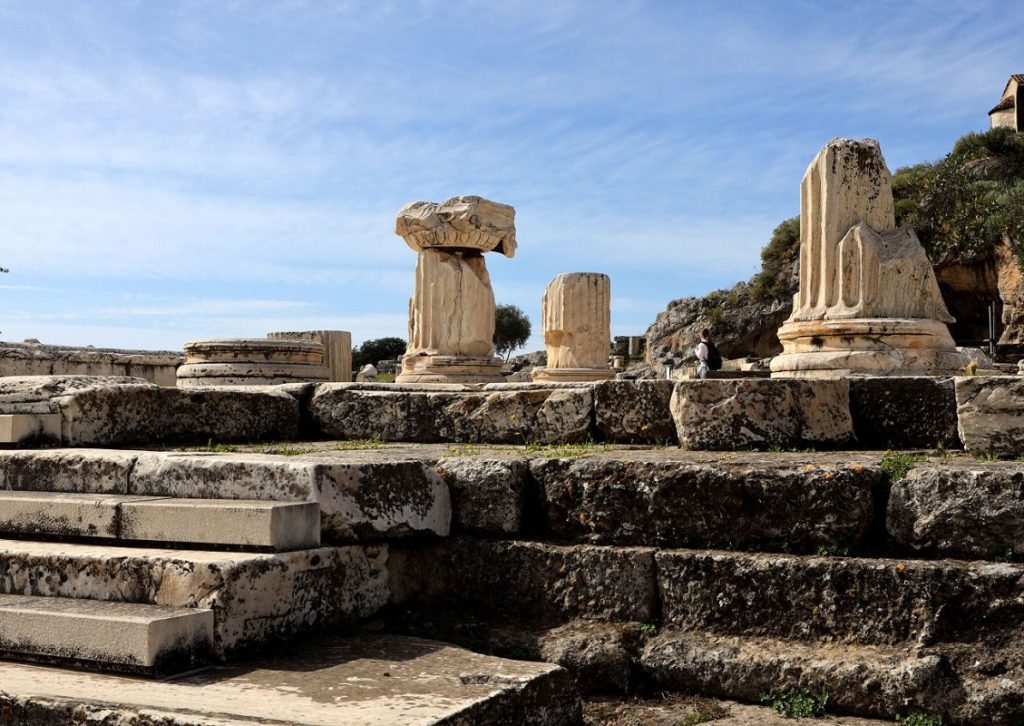
The city of Elefsina, in the West Attica region of Greece, has been named one of the European Capitals of Culture for 2023.
Elefsina is a city rich in history, with Roman emperors such as Marcus Aurelius and his son Commodus being initiated into its secret religion based on Greek mythology.
The city has since become an industrial centre, with factories, steel mills, refineries and ship yards attracting thousands of visitors looking to flee the poverty of rural Greece over the last century.
Local leaders hope to bring the city back to life with exhibitions, concerts and events to help boost its tourism.
According to The Star, Elefsina’s 2023 CEO Nana Spyropoulou said local leaders had faith a small but historically significant city can draw the international and European cultural spotlight.
“Our goal is to make use of Elefsina’s cultural wealth, and to leave a legacy for the future,” she said.
A number of derelict buildings have already been repurposed, including a former olive oil mill which is becoming an archaeological museum.
The city’s Mayor, Argiris Economou, said Elefsina has gained use of infrastructure it never had before.
“This is a great legacy and an opportunity to upgrade the city,” Economou said.
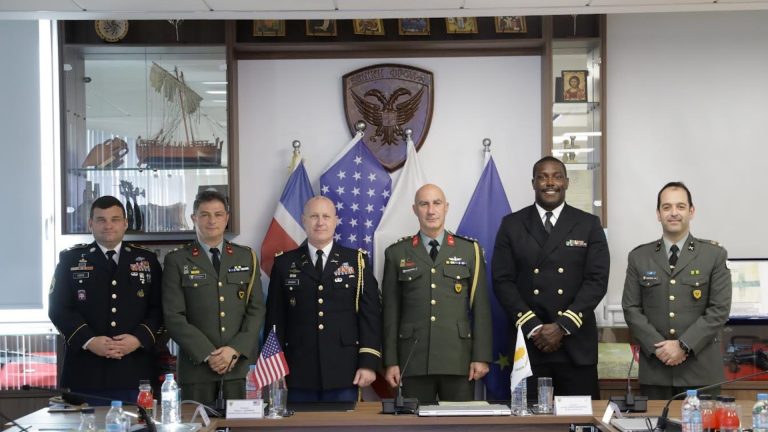
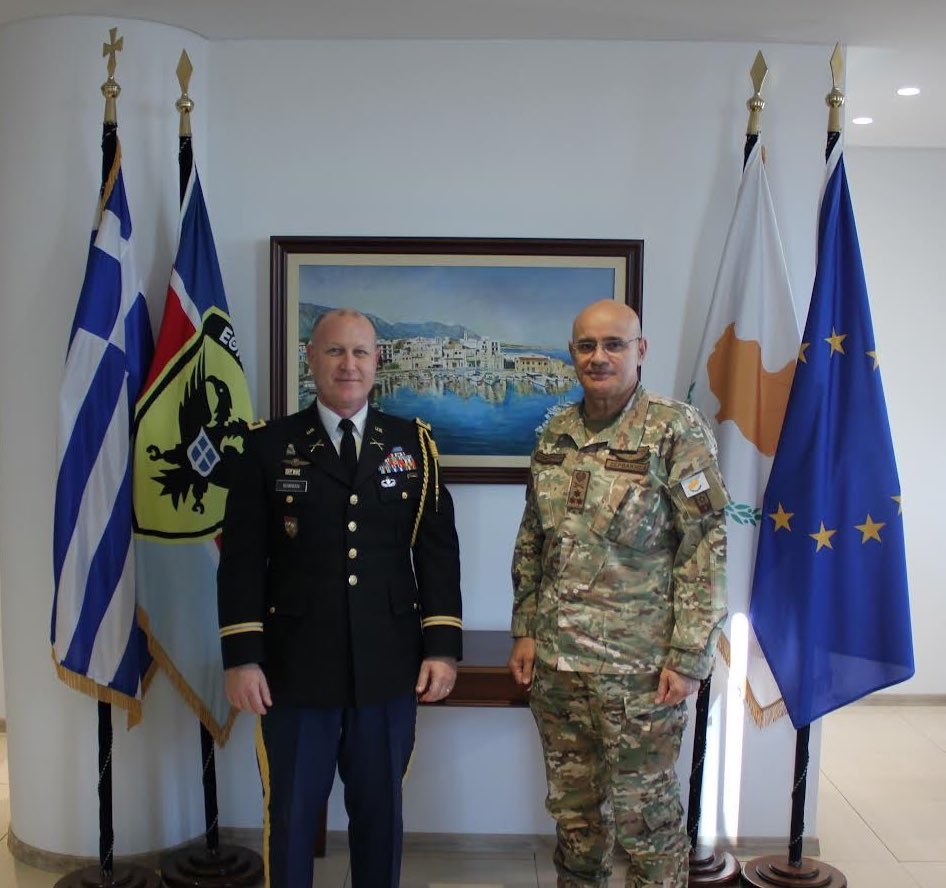
According to the The Cyprus Mail, the signing ceremony was held in Nicosia, Cyprus on December 29.
The agreement involves joint training of armed forces personnel, the sharing of military expertise, and joint exercises (including air and naval).
Cypriot Chief National Guard Lieutenant General Demokritos Zervakis wrote on Twitter after signing the Cyprus-USA Bilateral Defence Cooperation Program that he was “delighted.”
“A flourishing and mutually reinforcing relation is steadily expanding,” he added.
US Defence Attaché Colonel Roger Bowman signed on behalf of the US.
Delighted for the signing of our first ever 🇨🇾-🇺🇸 Bilateral Defence Cooperation Program. A flourishing and mutually reinforcing relation is steadily expanding. More to follow.#StrongerTogetherpic.twitter.com/kOd1rSBEpe
The United Cup’s schedule for today’s three city finals across the Australian cities of Sydney, Perth and Brisbane has been announced.
The Perth City final, which features Greece and Croatia, will start this afternoon at 3.30 pm, with the match between Despina Papamichail and Donna Vekic.
The big match between Stefanos Tsitsipas and Borna Coric will follow. After a short break, the night session will start at 8.30 pm with a match between Maria Sakkari and Petra Martic.
The final will continue with the game of Michalis Pervolarakis against Borna Gojo. Pervolarakis is in doubt due to a hand injury and could be replaced by Stefanos Sakellaridis.
Team Greece celebrates on RAC Arena during their Group A match on Day 2 of the 2023 United Cup in Perth on Friday, December 30, 2022. Photo: Tennis Australia/ Mark Peterson.
Finally, the mixed doubles match will be played where Sakkari and Tsitsipas, undefeated so far, will face Vekic and Coric.
In Sydney and Brisbane, the action will start earlier. In Sydney, the United States will face Great Britain from 12.30 pm. An hour later, the matches will start in Brisbane, where Poland and Italy will compete.
The three winning teams from the city finals will advance to the semi-final stage, as well as the loser that has the best results throughout the tournament.
Greek teenager Stefanos Sakellaridis has caused one of the biggest upsets at Australia’s United Cup, downing Belgium’s Zizou Bergs who is ranked more than six times higher than him.
Sakellaridis, who is the current world No.830, was swamped by his Greek teammates after his stunning 5-7, 6-1, 6-3 win over Bergs, the world No.129.
What a win!
Greek teen Stefanos Sakellaridis has just scored the biggest win of his young career, leading to emotional scenes in Perth#UnitedCuppic.twitter.com/6pZtnsMSf1
“Of course [the team’s reactions helped the win]. You can see that the team chemistry is unbelievable,” the 18-year-old said after his match.
Sakellaridis was substituted into the match at the last minute after teammate Michail Pervolarakis was forced to withdraw.
According to Nine’s Wide World of Sports, Sakellaridis said he had prepared for his late call up after learning on Monday that Pervolarakis was injured and might pull out.
Mark Philippoussis interviews Greek youngster Stefanos Sakellaridis. Just for those who are interested and missed it. Part 1 pic.twitter.com/8hGZS9oRtk
Sakellaridis’ upset win is made even more incredible by the fact that he is currently without a racquet sponsor.
This victory came as Team Greece progressed to the United Cup City Finals in Perth, Western Australia after Maria Sakkari defeated Belgium’s Elise Mertens 6-1 7-5 at the RAC Arena on Tuesday afternoon.
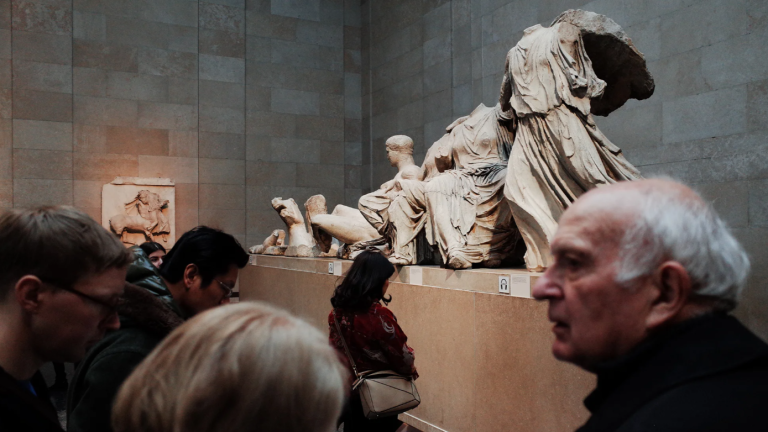
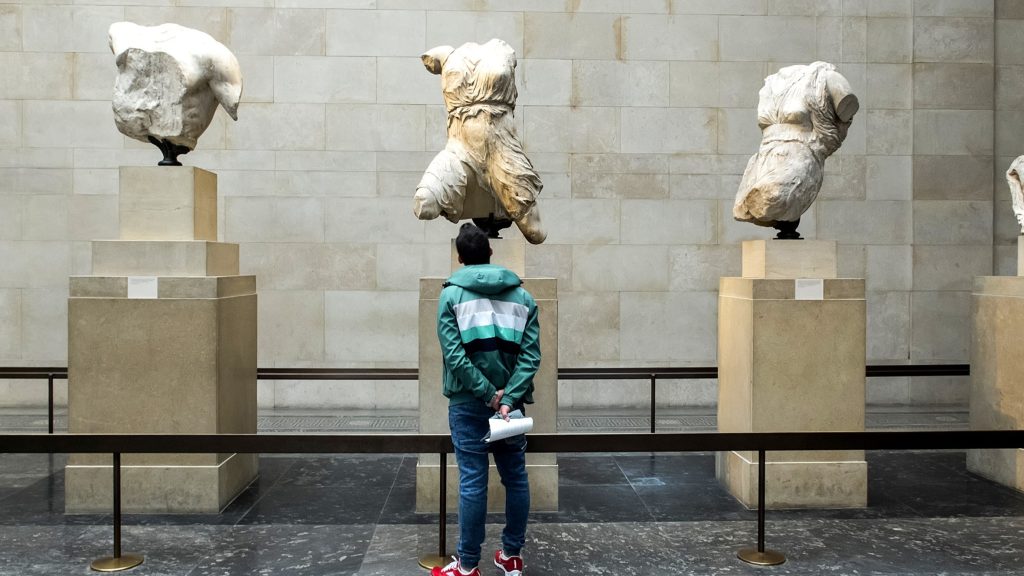
The British Museum and the Acropolis Museum are nearing a deal that would see the Parthenon Marbles returned to Greece from the United Kingdom over time as part of a cultural exchange, according to a report by Bloomberg on Tuesday.
Citing persons familiar with the matter who declined to be identified because a deal hasn’t been finalised, Bloomberg said an agreement would see a proportion of the marbles sent to Athens on rotation over several years.
Parthenon Marbles displayed in the British Museum.
In exchange, other objects would effectively be loaned to The British Museum in London, and Britain could also get plaster copies of the Parthenon Marbles.
According to Ekathimerini, sources within the Greek Culture Ministry have dismissed this Bloomberg report.
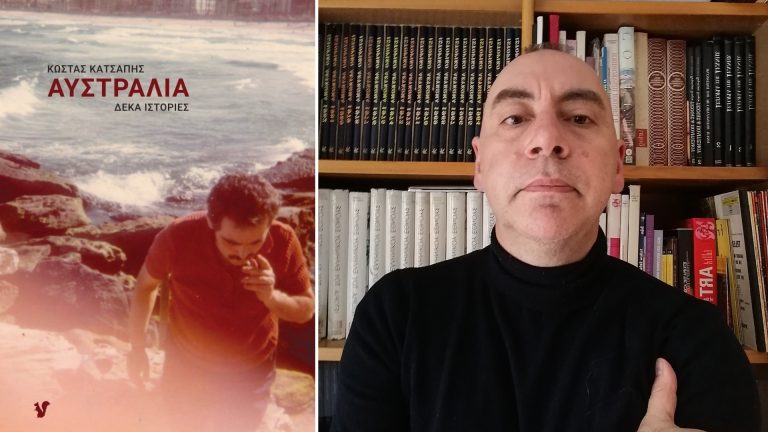
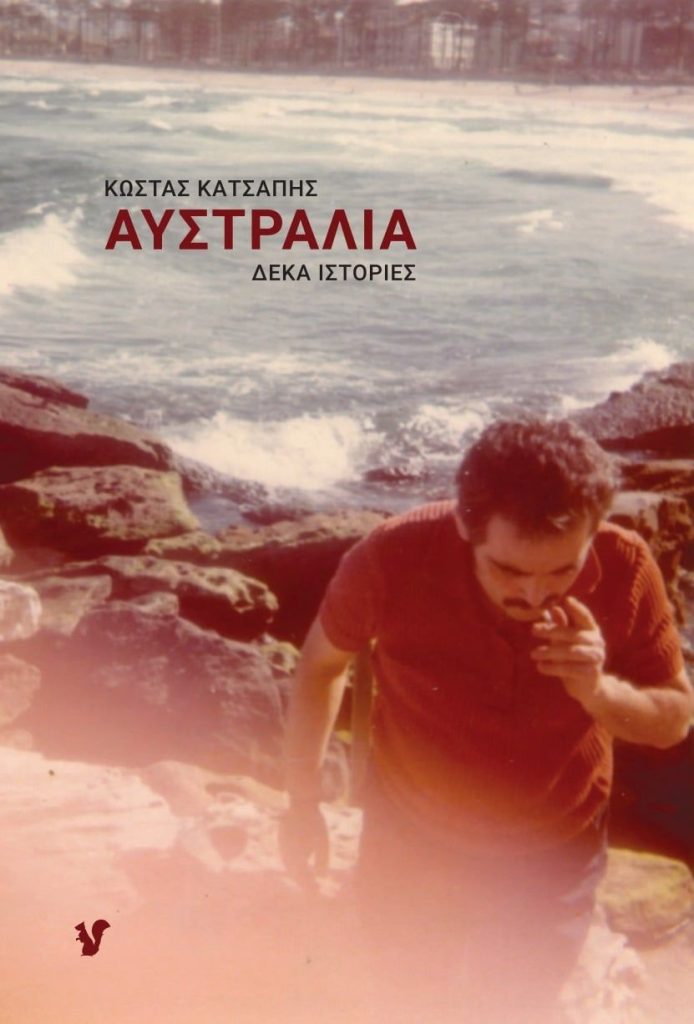
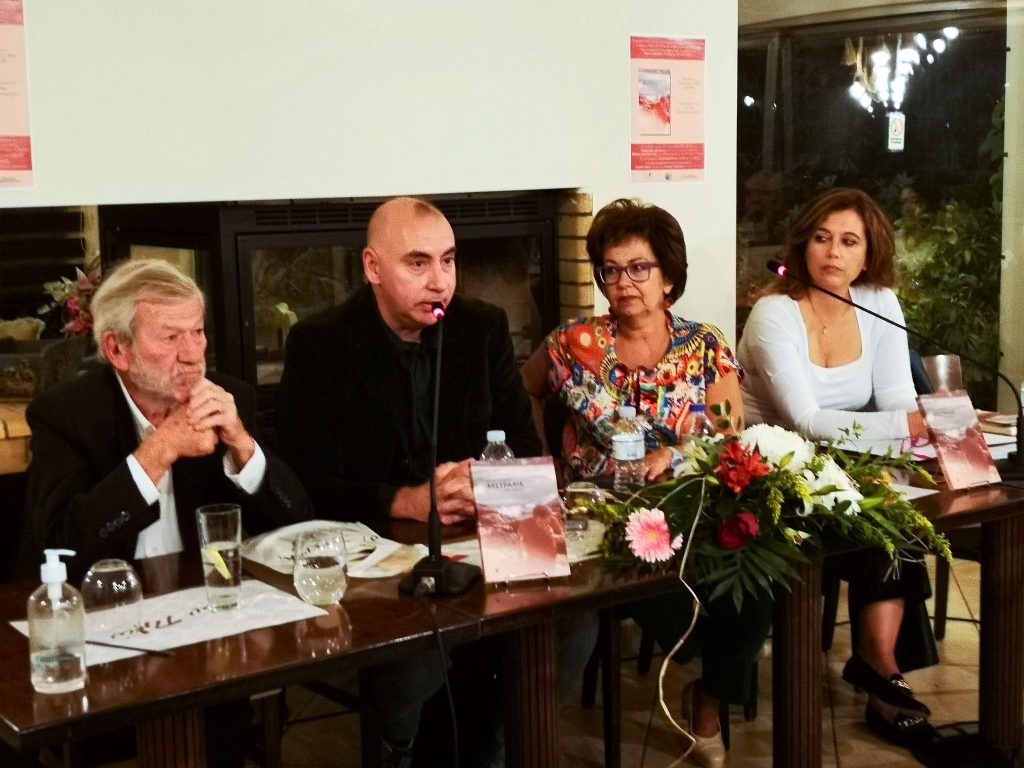
The book Australia: Ten Stories by Kostas Katsapis is a mosaic where hope, dreams, fear of the unknown, emigration and of course, immigration are interlinked.
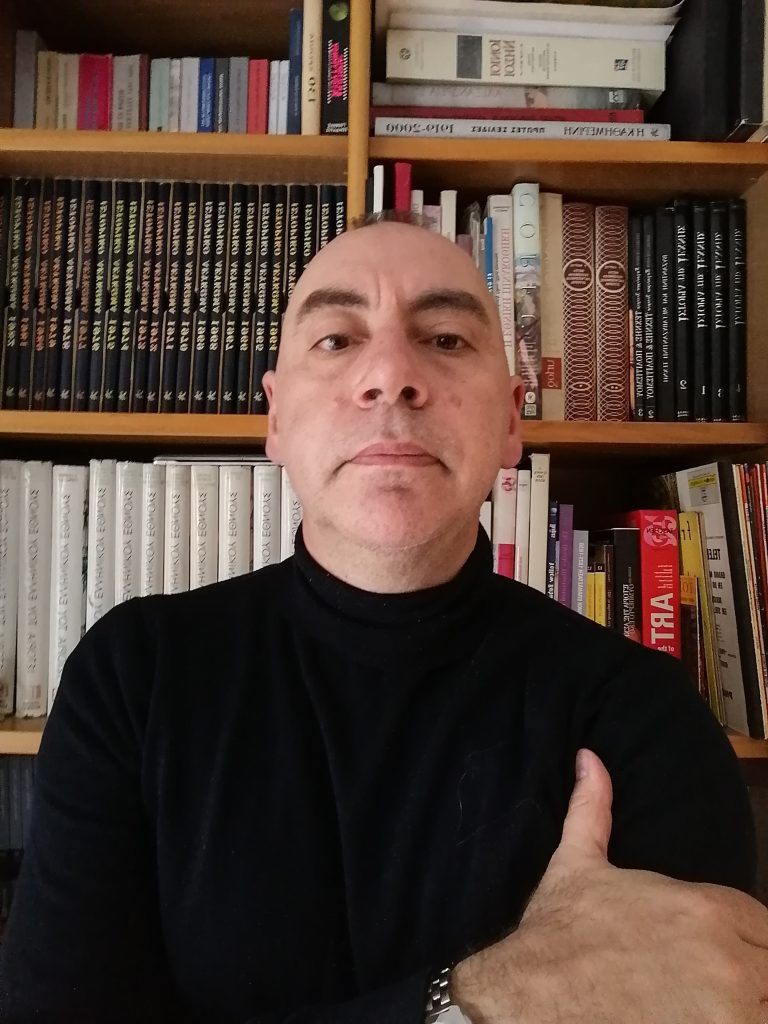
The Professor of Cultural History at Panteion University of Social and Political Sciences in Athens, Greece tells The Greek Herald he wants his new book to be a “mosaic of Greek Australian migration, bringing to the fore different voices, and therefore different perceptions, of this defining experience.”
Australia for Kostas, whose parents left the Antipodes in 1972 a year before he was born in Athens, was a “lifeline.”
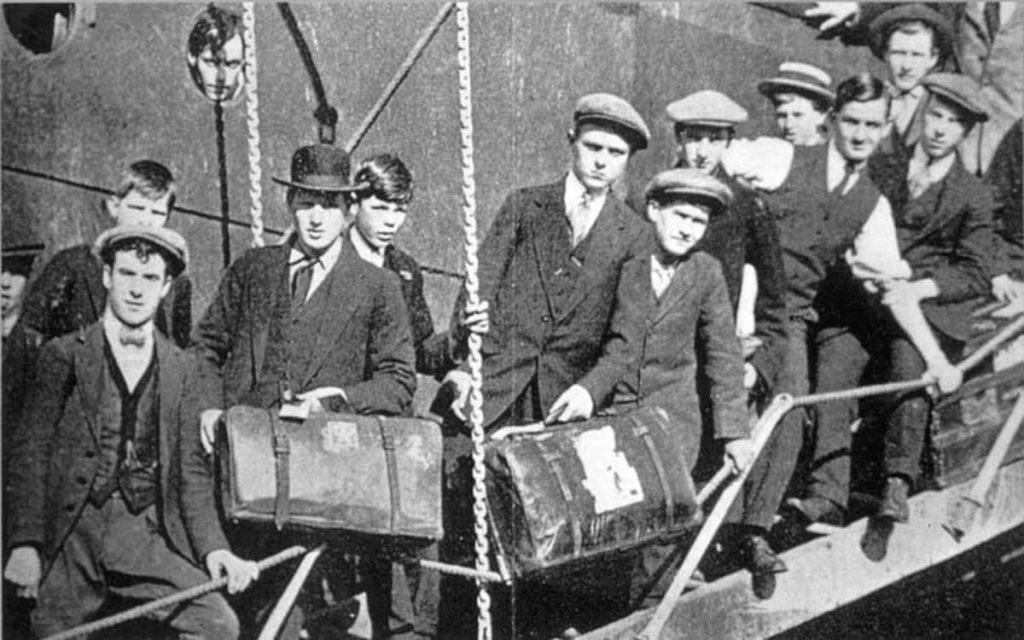
In this collection of 10 stories, the problems faced by immigrants in the 1960s as they arrived in Australia on ships such as the Ellinis,Australis and the Patris are illuminated.
“First of all, I would like to thank you warmly for your hospitality and through this interview, allowing me to send a warm greeting to our compatriots who are in Australia,” Kostas tells The Greek Herald.
“The ten stories balance between the real and the imaginary. However, contrary to what we believe, many times the “real” is socially and historically constituted so its “authenticity” is checked, while the “imaginary” echoes truths that the documentation finds difficult to serve.
“In the book I paint characteristic types of immigrants, who are “imaginary,” but at the same time they are a synthesis of real persons, or persons who could be based on historical and social conditions.
“Although the plot is mostly a product of fiction, it responds – to be precise – to the problems and situations faced by immigrants coming to Australia. At this point, which is crucial, historical editing has a special weight and is the bet I set myself.
“It is not easy to construct characters that correspond to the historical conditions of another era. In other words, the book is in its own way “true” as it incorporates the feelings and ways of thinking of people of an era that is very different from ours.”
‘Australia is synonymous with hard work’:
Kostas has visited Australia twice and even extracted material from sources such as the historical archive of the Greek Orthodox Community of New South Wales. As we discovered facts about the book, the question arose about its connection with the country.
“My parents were immigrants to Sydney, where they married in 1965. My sister was born in this city in 1966 and in 1972 my parents returned to Greece. A year later I was born in Athens,” Kostas explains.
“As you can see, family memories from Australia are very intense, and I still have relatives, uncles and first cousins in Sydney. I especially love this country. For my family, Australia was a country synonymous with hard work, but it was also a lifeline from Greece’s difficulties.”
We wonder what the author’s goal was while he was immersed in memories and sources. Perhaps it was to be the guardian of historical memory for a phenomenon, migration, that has not been thoroughly recorded?
“When I started writing the book I wanted to write a history book in a different, purely experimental, way. Outside and beyond the commitments of formal, academic history. The reason I decided to choose this method is because through fiction you can talk about things that in a strictly academic text you cannot approach,” Kostas says.
“As I said before, my goal was to create a mosaic of Greek Australian migration, bringing to the fore different voices, and therefore different perceptions of this defining experience. It should be said here that the experience of emigration was not common to all.
“For some it was liberating, for others it was excruciating. I was interested in illuminating this very plurality, which is why the heroes of the book seem to stand in a different way against the great problems of the time or themselves and their families: some want to return, others do not.
“Some want to continue the political struggle in the Antipodes and others to put political passions aside and make a fresh start. Of course, in these conditions, things are not exclusively white or black, on the contrary they depend on the person, his experiences and his expectations. And of course, one is the perspective of women with their own specific problems, and another of children who had to balance between two often conflicting identities.”
Kostas’ love for Sydney:
In Kostas’ previous book The Damned, he dealt with the 1960s. We wondered what attracted him to this period given he was not even born then.
“Your question is very good, but I confess I have no answer yet. Certainly in the science of history it is not necessary to have experiences in order to have a special relation to a period. Certainly, I have always been particularly drawn to the sixties, perhaps because I recognised in it the roots of my identity,” he says.
“The sixties is a time of many contradictions but it is governed by the optimism of a better tomorrow, which is difficult to meet in other times. It is definitely a flexible era, between the “old ” world and the modern one and this makes it very special. Certainly this is all in my own opinion, for others the sixties may be a dull or even unbearably dull period.”
Concluding his interview with The Greek Herald, Kostas revealed to us his love for Sydney.
“I have visited Australia twice, and both times I was hosted by my beloved relatives in Sydney. It is an amazing city with warm and happy people that is worth visiting even time,” Kostas concludes.
“I especially like the sense of multiculturalism that exists is everywhere: in food, in shops, in the neighbourhoods. I especially love the centre of the city and if I could be beamed there I would like to be at the Queen Victoria Building having a coffee. I hope at some point this will be possible.”