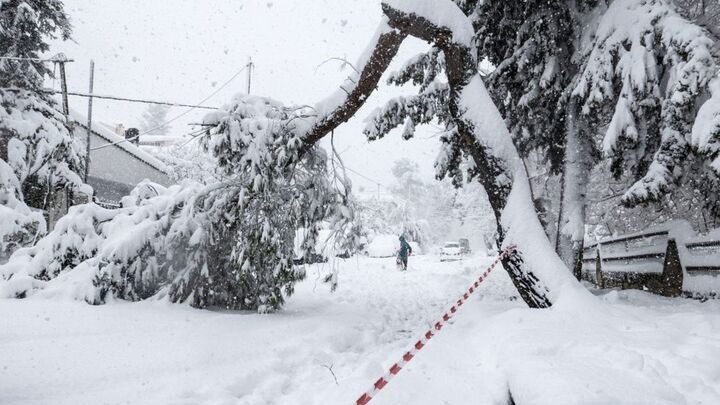
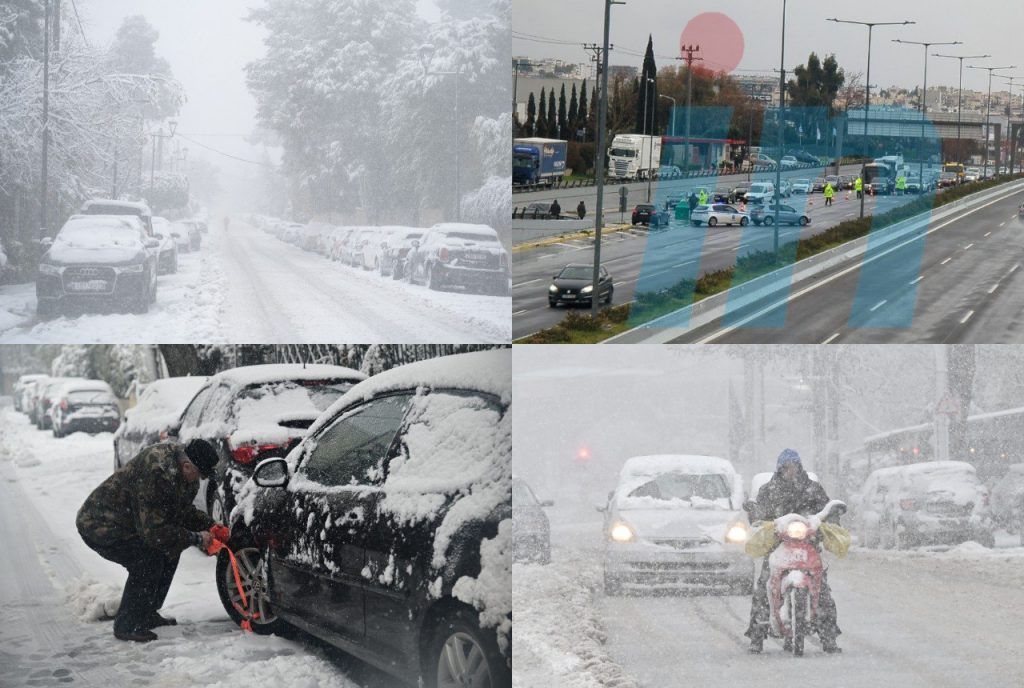
Greece is facing an unprecedented snowstorm, known as ‘Barbara,’ which has resulted in widespread disruptions and cancellations.
According to Ekathimerini, the public sector, schools and most retail stores have shut down, while transportation has been severely impacted.
The national highway from Lamia to Athens has been shut down in several sections, and heavy machinery is being used to remove snow and spread salt in a bid to keep the main road arteries operational.
In Thessaloniki, over 150 heavy trucks from abroad have been immobilised due to the weather, and train schedules 62 & 63 on the Athens-Thessaloniki line have been suspended. Court trials in several cities including Athens, Piraeus, Thebes, Livadia, and Chalkida have been cancelled, along with open markets.
The Hellenic Electricity Distribution Network Operator has declared a state of alert for potential power cuts due to the weather, with over 150 people on call on Evia island and over 800 staff on call in Attica.
Attica region has 117 heavy machines, including 58 large snow plows and 22 smaller ones, cranes, and 4×4 cars to assist people who may be trapped in their vehicles on the roads and for possible transport to hospitals.
Traffic police in Attica have mandated that all drivers on the entire road network must carry snow chains or other non-slip equipment, and have banned heavy trucks of over 3.5 tons from several highways.
Traffic has been banned in the suburbs of Athens, as well as on several streets in Attica.
Ship schedules have been suspended at the ports of Piraeus, Rafina, and Lavrio due to high-velocity winds, and the strong gale winds have also forced the suspension of the Kyllini-Zakinthos and Arkitsa-Edipsos schedules.
Most of the problems in Central Greece are being experienced in Central Evia and the Mt. Dirfys area.
In the Fthiotida region of Central Greece, heavy machinery is dealing with icy conditions on roads from Lamia to Domokos, Amfissa, and Karpenissi.
Alexander McQueen said, “I want people to be afraid of the women I dress.”
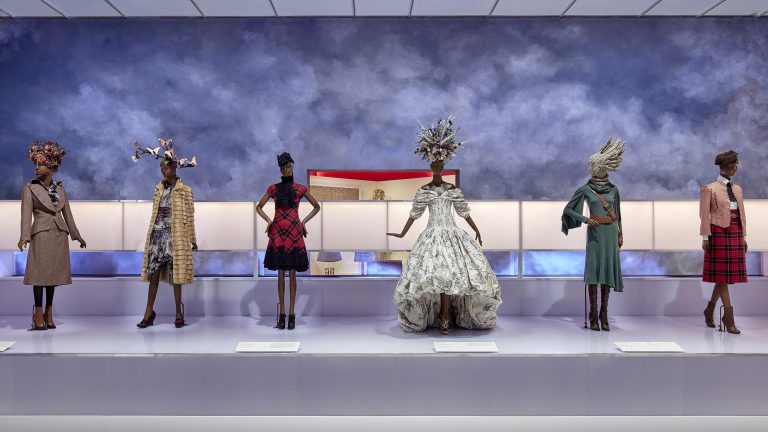
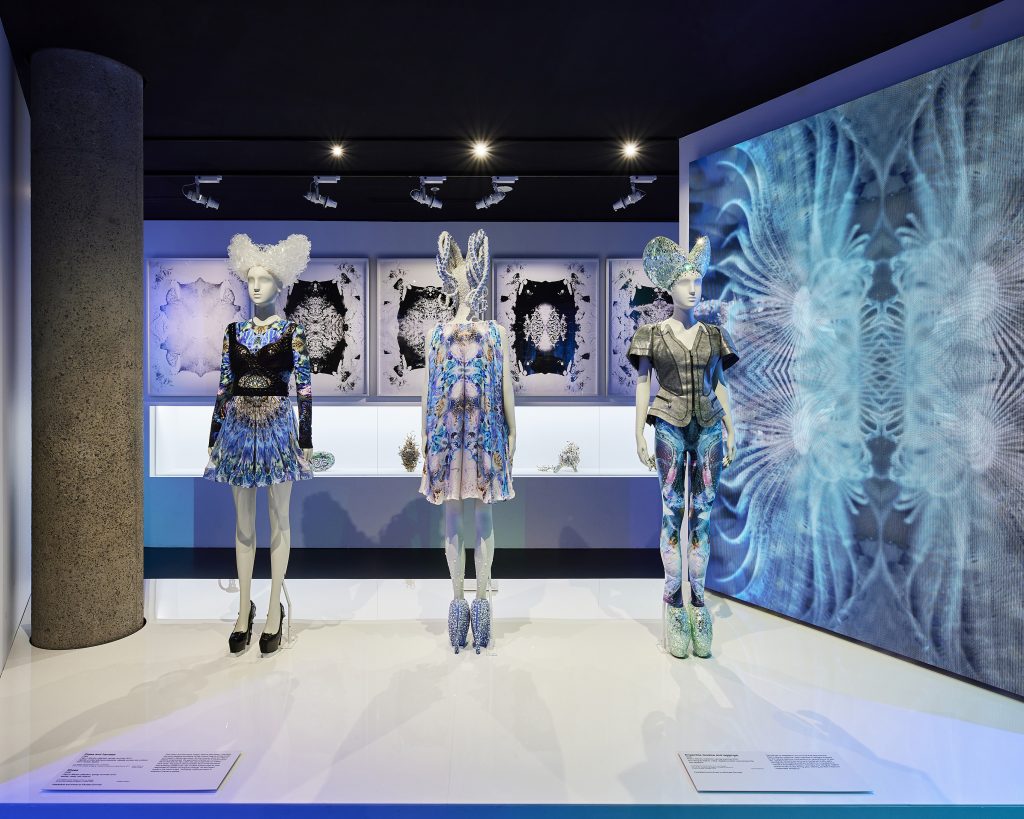
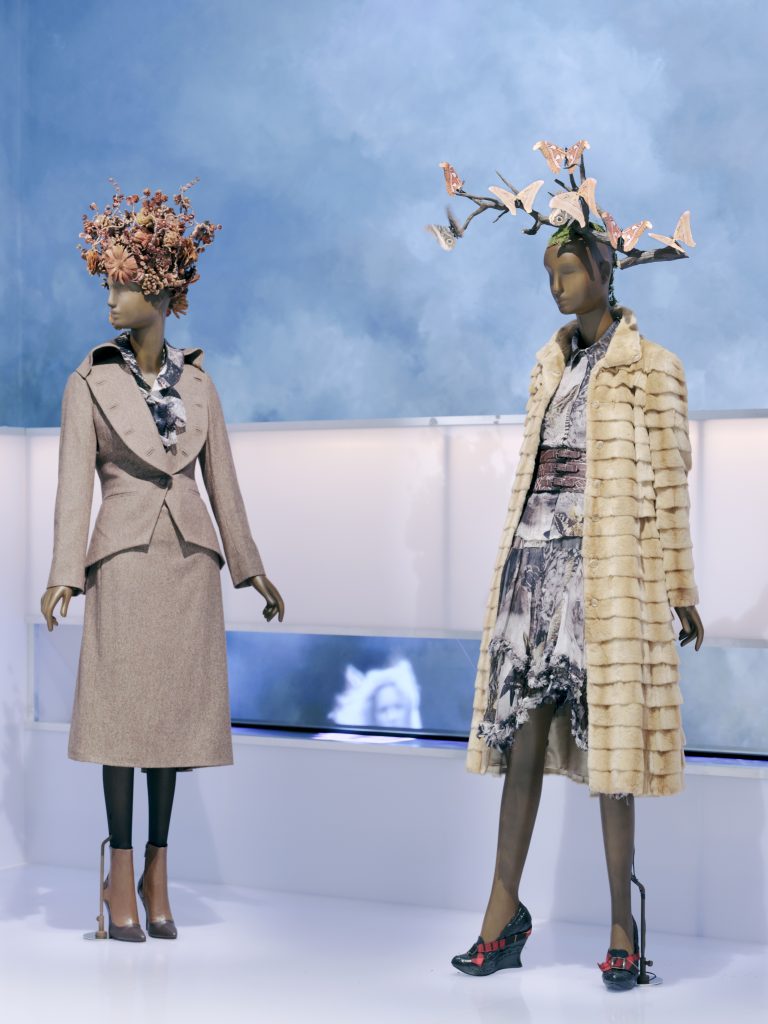
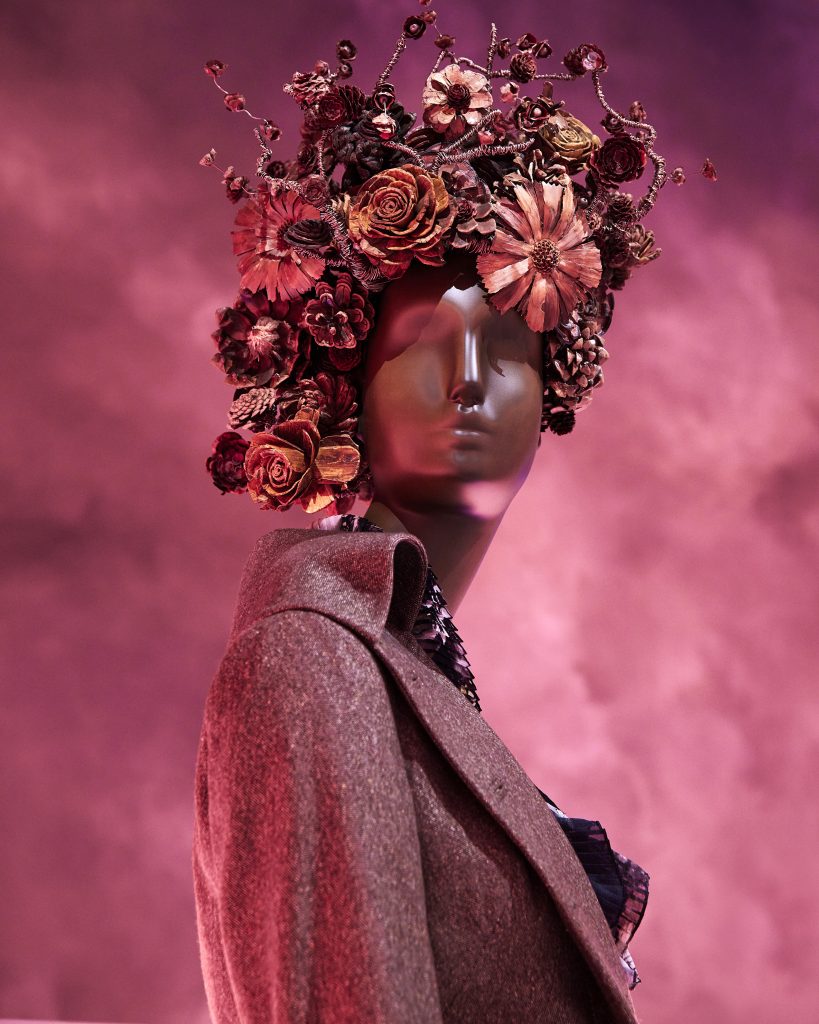
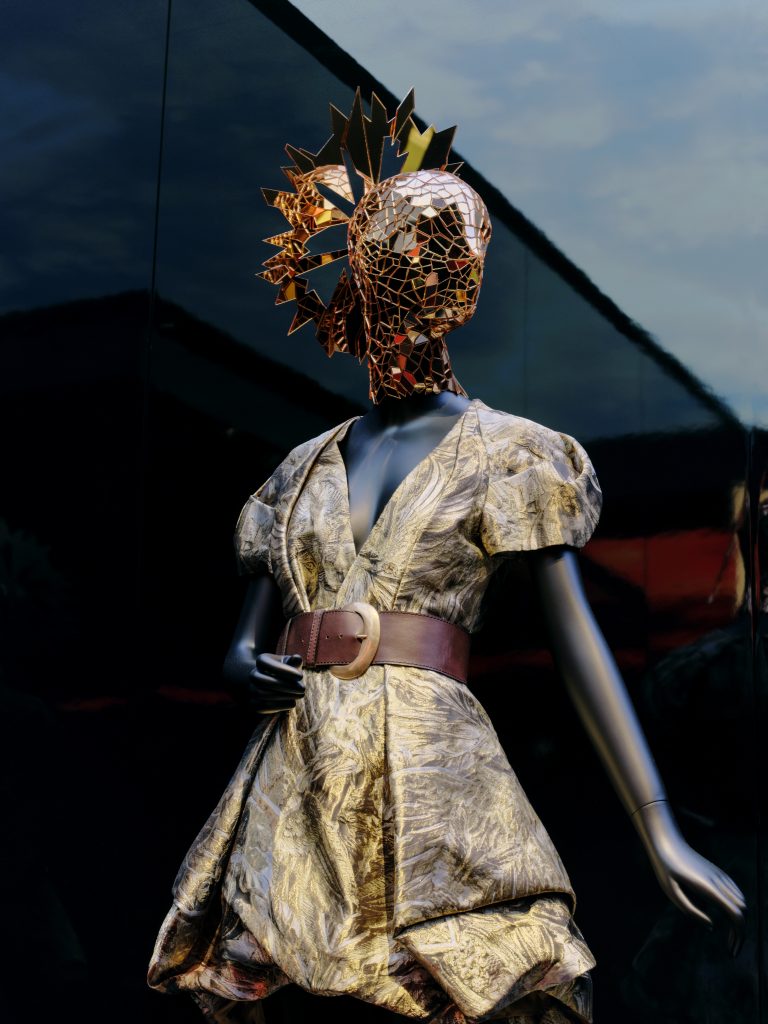
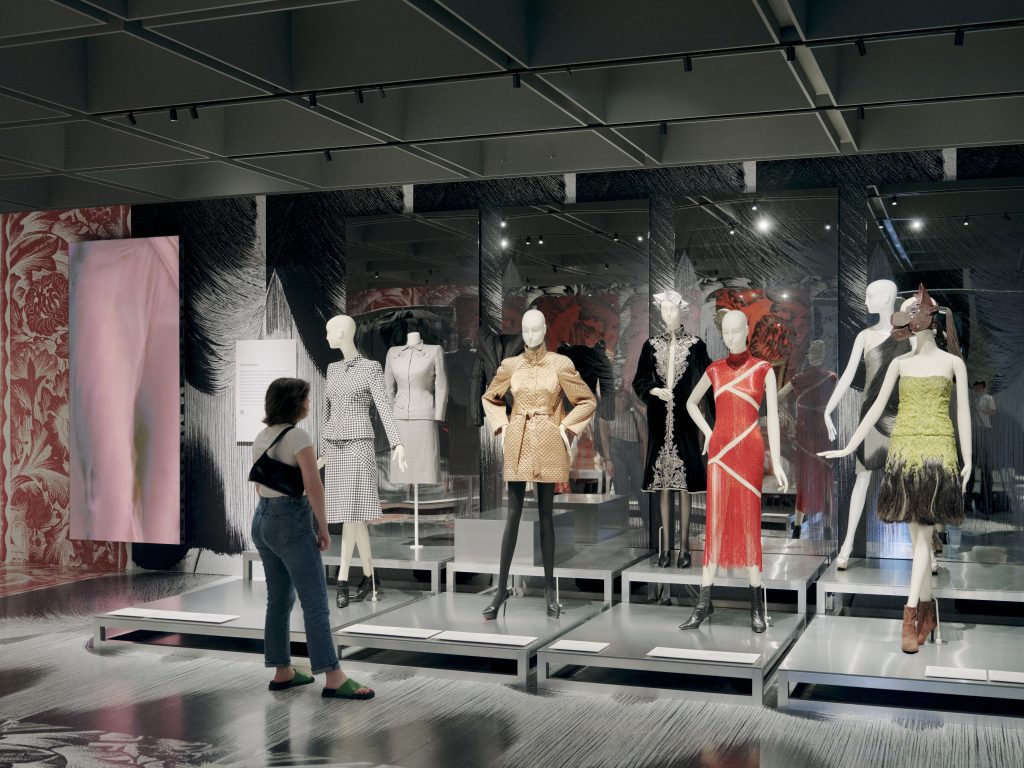
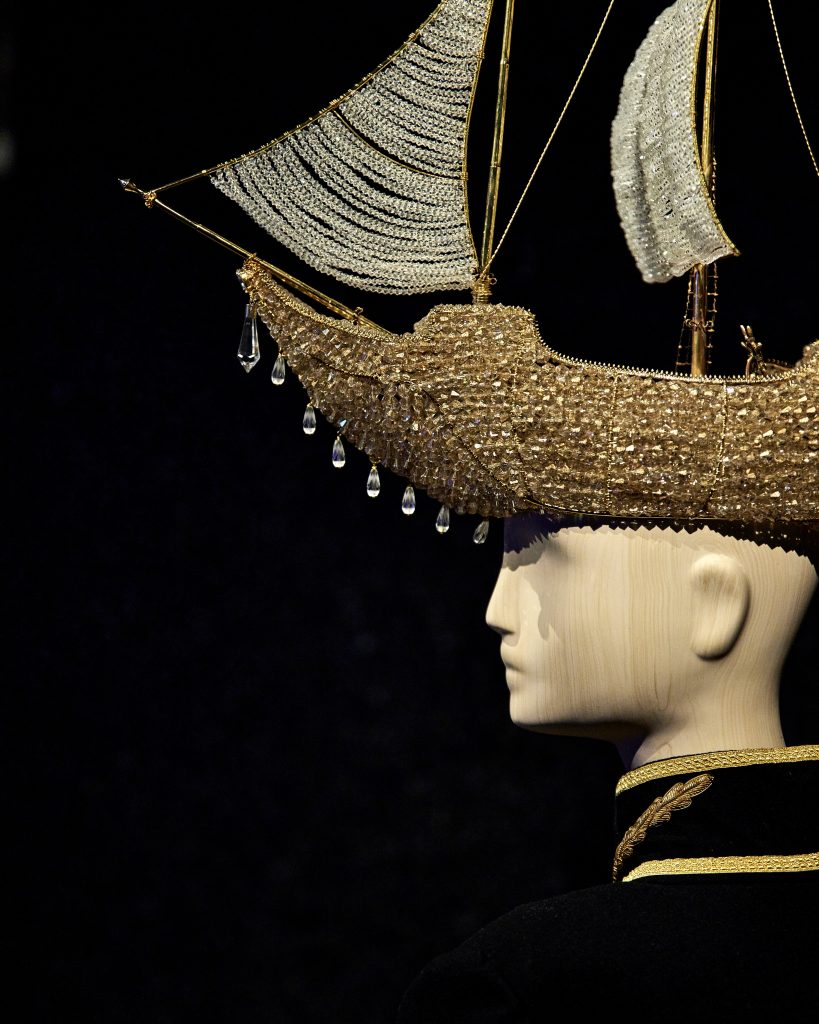
He kept that promise through collections featured at the National Gallery of Victoria’s (NGV) latest exhibition titled Alexander McQueen: Mind, Mythos, Muse.
The Greek-inspired title gives a taste of the Hellenic ideals discreetly netted between threads of McQueen’s philosophy of fashion – and life.
NGV curator Danielle Whitfield told The Greek Herald she is sure people of many cultures, and not just those of Greek background, would be able to identify with the display.
Ms Whitfield said the prolific fashion designer was a “complete sponge” who “would draw inspiration from everywhere – a nightclub and street, his travels to India, or it could be art from the 15th century.”
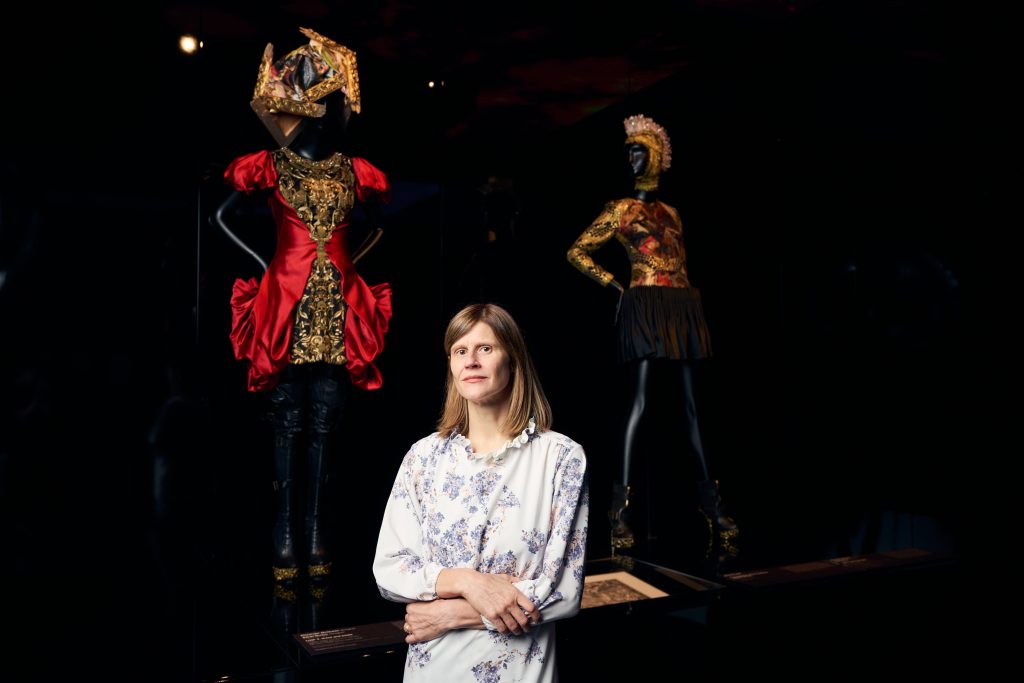
Portrait of Danielle Whitfield, Curator, Fashion and Textiles, NGV inside Alexander McQueen: Mind, Mythos, Muse on display at NGV International from 11 December 2022-16 April 2023. Photo: Eugene Hyland.
A strong period of globalisation in the mid-1990s was seen in McQueen’s work, and this global influence permeated the world of fashion.
“You’d see designers, and not just McQueen but also [John] Galliano [from Galliano, Givenchy and Dior], looking at other cultures and bringing this into practice. McQueen later identified as a Buddhist and had also spent time in India,” Ms Whitfield said.
Inspired by antiquity:
From a Greek perspective, Mind, Mythos, Muse includes fashion alluding to emancipated women of classical mythology with influences coming from fierce Amazon warriors, mystical figures from Byzantium and even arresting Grecian goddesses.
“There is no proof he ever visited Greece,” Ms Whitfield said.
“He lived in Paris and spent time in Italy [working with revolutionary Italian designer Romeo Gigli from February to November 1990], but I don’t know whether he had travelled to Greece. He was an avid reader, however.”
Regardless of lived experience, the Mind, Mythos, Muse display begins and ends with Hellenic inspiration. We are taken on a trek through classical notions of beauty permeating McQueen’s Neptune collection (spring 2006) with ancient Greek and Roman influences. Twisting and turning through thought-provoking fashion trends and displays, the exhibition ends with Plato’s Atlantis, McQueen’s final runway presentation referencing Plato’s legendary island which was swallowed by the sea.
Photo: Sean Fennessy.
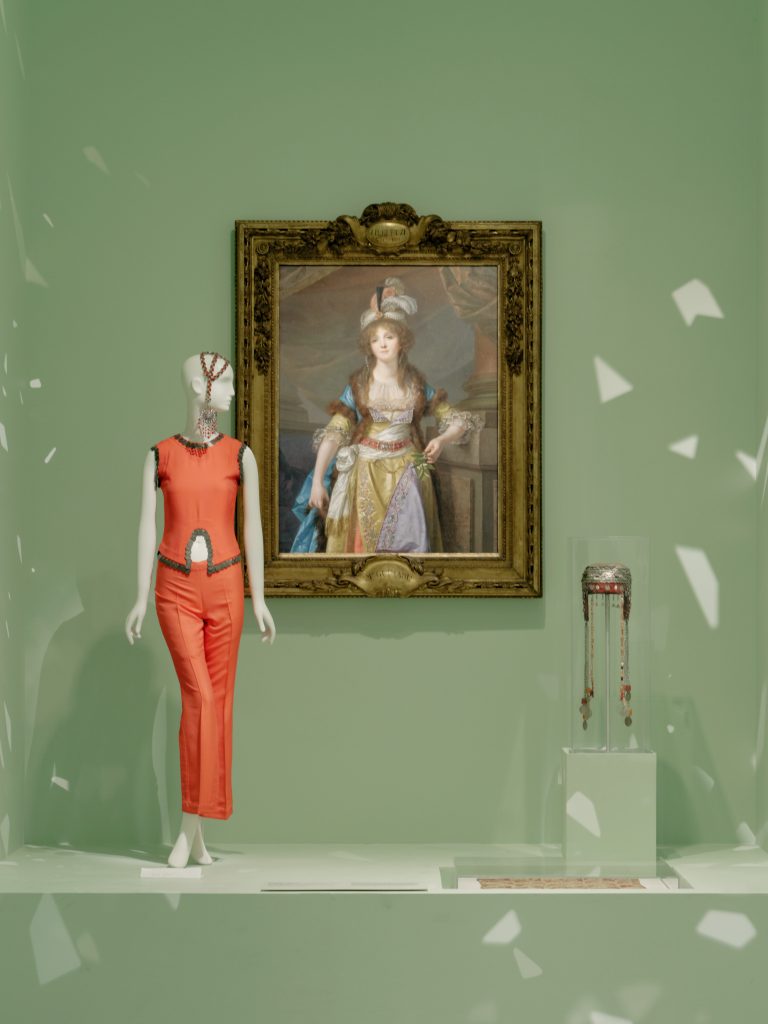
“Mythos [in the title of the display] recognises that Greco-Roman mythology was a source of inspiration for the Neptune collection, and at the other end, we have Plato’s Atlantis, while the Eye collection deep-dives into Ottoman Turkey. You see his use of motif from the Ottoman era in a way, and the cut of clothing in reference to traditions,” Ms Whitfield said, adding that his collections are built to be “multi-layered narratives, and never simplistic”.
Ms Whitfield also described how “in the Eye collection [referencing Middle Eastern culture] there’s a reverent fusion of different representations of Turkey,” but it is “less about Turkey than it is a history of colonisation.”
In Neptune’s collection, he interpreted how classical ideals inspire. When conjuring the sea god Neptune/Poseidon, McQueen married the turbulence and seduction of the oceans with a soundtrack featuring Missy Elliott, Aretha Franklin and Suzi Quatro and neoclassical motifs such as columns, sea horses and phoenixes.
Photo: Tom Ross.Photo: Sean Fennessy.
Plato’s Atlantis, widely acclaimed as his finest collection and a pivotal moment in fashion, merges Darwin’s theories of evolution with Plato’s philosophy while utilising cameras on giant robotic arms to move along the catwalk as an androgynous army of other-worldly human-animal-alien hybrid models strutted the runway on bizarre hooflike platforms.
It debuted in October 2009 as the first livestreamed fashion show. Though digital fashion has come a long way since then, there has never been another revolutionary milestone quite like Plato’s Atlantis.
“It’s a very powerful collection because at the heart of it is an issue facing humanity today, like climate change,” Ms Whitfield said. “He did it in a way that is powerful and emotional.”
Ms Whitfield paints a picture of McQueen’s studio filled with gigantic boards with pinned images like a National Geographic of creatures with scales and textures.
“And that would happen for all collections, and you’d sit there, and he would have music blaring, and you’d be immersed sonically and visually,” she said.
Photo: Tom Ross.
Vogue magazine described Plato’s Atlantis, his last runway, as “one of the most unforgiving platitudes: Hindsight is 20/20.” It was also McQueen’s swan song before he took his life in February 2010 after struggling with depression following the death of his mum Joyce a month earlier. It had been Joyce, his greatest supporter, who had always believed “Lee was different.”
Kleos and McQueen’s legacy
Dr Paul Knapman, the Westminster coroner who recorded the verdict of suicide following McQueen’s hanging, said: “It’s such a pity for a man who, from a modest start, climbed to the top of his profession only to die in such tragedy.”
The East Londoner, who grew up on an estate as the youngest of six siblings, managed to rise to the finest houses of couture influencing fashion forevermore and collaborating with the likes of Givenchy (1996-2001) and Gucci [to whom he sold his fashion house in 2000]. He fuelled imaginations as “the hooligan of fashion,” creating emotive shows which broke rules but kept tradition, changing the way people viewed the fashion industry.
He had said: “When I’m dead and gone, people will know that the 21st century was started by Alexander McQueen.”
Photo: Tom Ross.
It’s hard to know whether McQueen had studied Homeric notions of kleos, the Greek philosophy of posthumous glory after a life of heroic deeds. He did, however, carefully consider his posthumous reputation, steadily forging a legacy to influence the way he would be remembered.
One last untitled exhibition, the fall/winter 2011 collection, came to be known as ‘Angels and Demons’ inspired by iconography, Icarus wings, and Hieronymos Bosch’s demons implanted on jackets and draped dresses. It leaves a lingering taste of what more could have, should have been achieved. The first room of the display begins with this posthumous collection which McQueen was working on when he died.
From rags to riches
Born in 1969, Lee McQueen came to be known by his middle name of Alexander, following the suggestion of eccentric magazine editor/fashion stylist Isabella “Issie” Blow, who thought it would resonate better with the fashion world at the launching of his career. It was also a way for him to keep his unemployment benefits while still struggling as a fledging designer.
Much like his warrior namesake, Alexander the Great, who conquered the known world in his time, Alexander McQueen staged a blitzkrieg in the fashion world with every emotive show extending beyond the realms of fashion, performance and art.
Ms Whitfield said NGV visitors who may not know that much about McQueen’s fashion, beyond the fact that Kate Middleton’s wedding dress bore his label, are struck by the “scope and depth” of the display.
Photo: Sean Fennessy.Photo: Tom Ross.
“They think of that Scottish and gothic designer, but are surprised to see there is a delicacy, lightness and incredible range. There are just some people who have an extraordinary capacity for great breadth, people like Mariah Carey and her range of five octaves. In fashion, McQueen has artworks which conceptualise what he is trying to say,” Ms Whitfield said.
“He was a designer, who is an artist, who thinks deeply about culture, society and tackling difficult topics. He is very brave.”
In his own words, “you never move forward if you want to play it safe”.
The “Mind, Mythos, Muse” exhibition was first conceived by the Los Angeles County Museum of Art, embracing fashion as art. It showcases more than 120 garments and accessories paired with inspiration behind them to help illuminate the interdisciplinary impulse that defined his career. The works are drawn from the collections of the NGV and the Los Angeles County Museum of Art and are paired with photographs, photographs, music and movies which inspired them. The NGV is at 180 St Kilda Road Melbourne, and the display runs through to 16 April 2023.
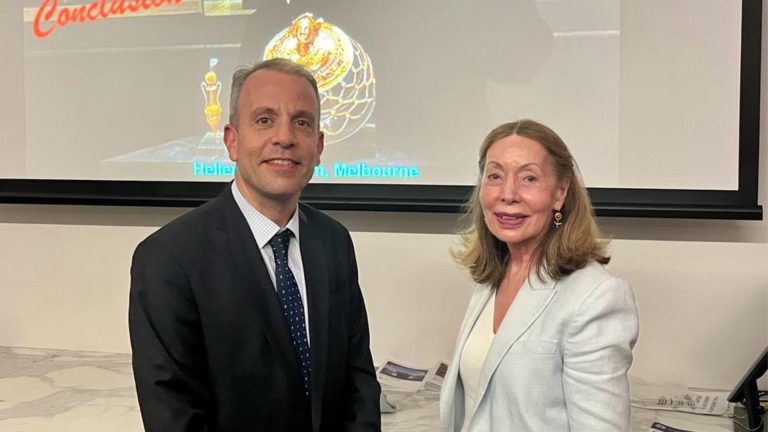
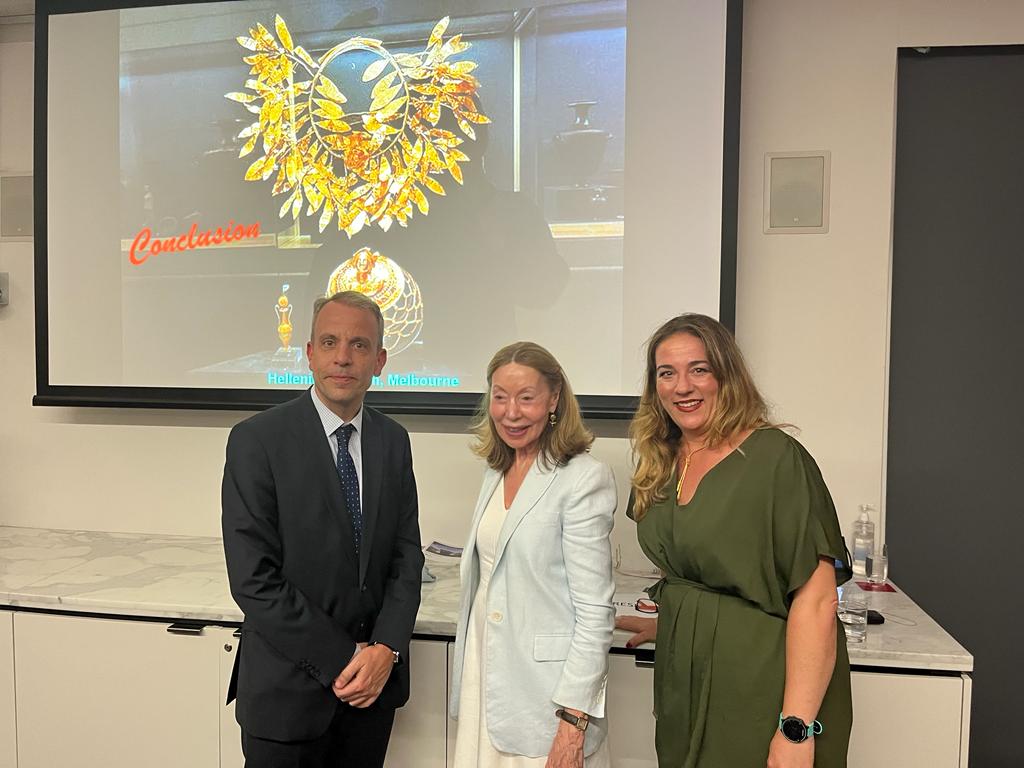
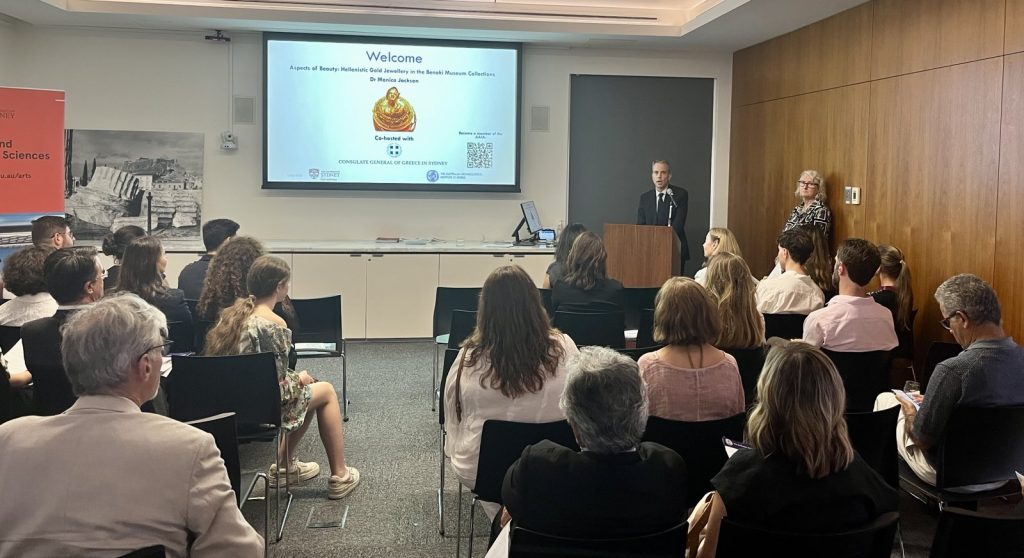
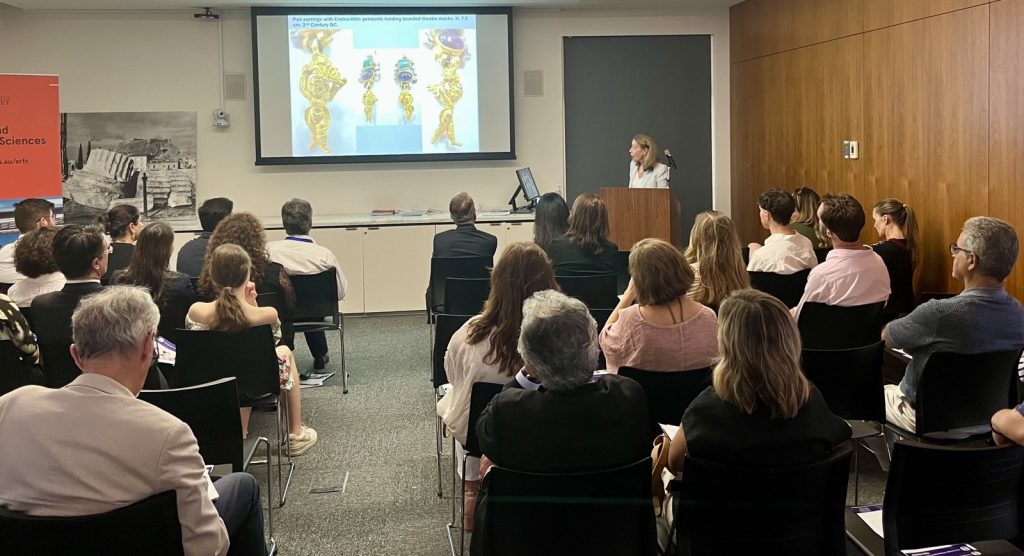
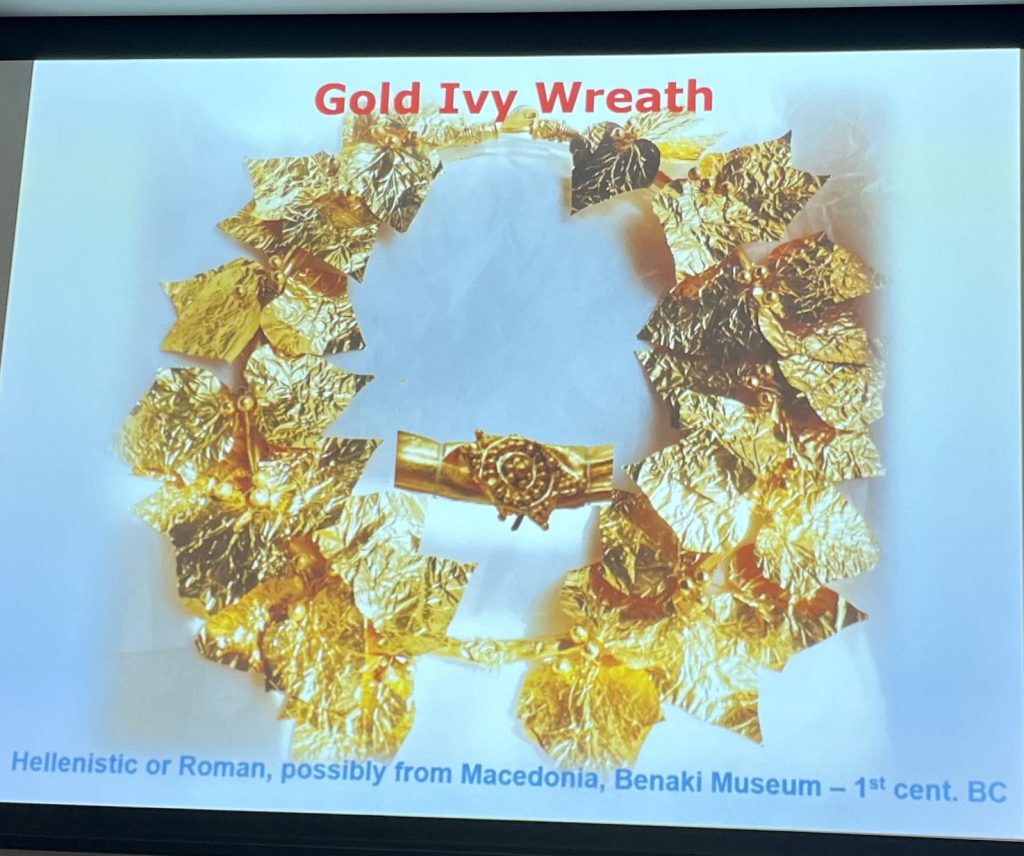
The lecture, titled Aspects of Beauty: Hellenistic Gold Jewellery in the Benaki Museum Collections, reflected on Dr Jackson’s research in the Benaki Museum, which culminated in a book published in 2017.
“These bonds are also sealed by the relationship of the Benaki Museum in Athens with Australia. It is a relationship that dates back many decades, reflecting the close political and social ties between Greece and Australia,” Mr Mallikourtis said.
Mr Mallikourtis also underlined that, like its founder Antonis Benakis, the Benaki Museum is a model of “Greekness open to the world, outside of the geographical boundaries of our country.”
“It is an institution that symbolises the idealism, romance, cosmopolitanism and generosity of the Greek diaspora. Their unwavering commitment to leave a legacy for the good of their community and their country, but also their nostalgia, their desire to return,” Mr Mallikourtis added.
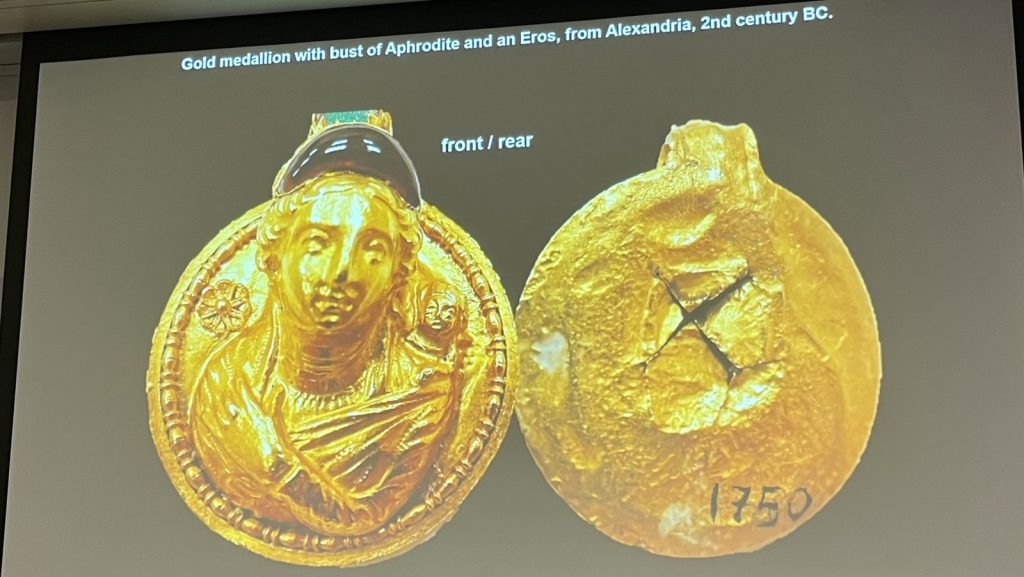
For her part, Dr Jackson thoroughly discussed the Benaki Museum’s gold jewellery collection, explaining the complex manufacturing techniques of the jewellery, with reference to the historical context in which goldsmithing of the period developed.
Dr Jackson also gave an outline of the Benaki family itself, whose history begins in cosmopolitan Alexandria, Egypt in the late 19th to early 20th century, where Antonis Benakis (1873-1954) laid the foundations for the creation of his Museum.
Football Australia has formally commenced its process to create a national Second Tier Men’s competition currently earmarked to commence in March 2024.
Football Australia has today invited all interested parties wishing to participate in the yet to be named, National Second Tier, to respond to an Invitation for Expression of Interest (EOI).
The EOI process will provide Football Australia with relevant information to assess the level of interest, and to refine the strategy, vision, competition format, operation, and administration of the National Second Tier.
The process is designed for Australian football clubs with a deep connection and demonstrated history in Australian football to participate in a tier of football that is anticipated to comprise of an individual league in a ‘home and away’ structure with the proposed competition parameters as follows:
A new national tier of football between the A-League Men competition and the National Premier Leagues, with the opportunity for promotion and relegation to be considered once mature
A home and away league structure with finals, comprised of between 10 and 16 teams and featuring between 24 to 36 games
Successful Respondents to the Application Process would be required to depart their existing football competitions for the National Second Tier
National Second Tier Clubs will enter into a Club Participation Agreement setting out the terms of participation, including but not limited to the following requirements:
professional playing contracts for all players, with salaries paid 52 weeks of the year;
‘off field’ operations run by employed staff throughout 12 months of the year;
investment in and operation of a full talent development pathway within their club structure; and
access to a suitable high-quality match day facility 12 months of the year.
Should the level of interest not validate the required number of Clubs with the capability to formulate an independent tier of competition, the option remains for Football Australia to institute a phased ‘group based’ competition model that will utilise the National Premier Leagues competition to determine the make-up of this format of competition (the ‘Champions League’ model).
The Invitation for EOI is the first phase of what is envisaged will be a multistage process, with this phase opening today and closing on 3 March 2023.
At the conclusion of the EOI stage of the process, Football Australia intends to issue a Request for Proposal (RFP) to shortlisted parties inviting the submission of detailed proposals. Additional information through detailed Bid Documents will be provided to shortlisted parties during the RFP phase to assist with their formal detailed proposal.
This information during the RFP phase may include, an information memorandum, NST related data, including financial forecasts and benchmarking, key terms of a Club Participation Agreement, and draft transaction documents.
The following subsequent phases are envisaged: Phase 2 – Request for Proposal (April – June indicative), Phase 3 – Assessment and Recommendation (June – August indicative), Phase 4 – Completion (August – September indicative). Further information on these remaining phases will be outlined at a future date.
There will be an interactive process to assist both shortlisted bidders and Football Australia to aid the development of high quality, well considered proposals and further refining the overall vision of the NST. This structured process will occur following the release of the RFP.
Football Australia Chief Executive Officer James Johnson said many potential respondents had already expressed their interest through a consultation phase across Australia in 2022, and more could emerge during the process.
“Developing a national second tier competition is a key component of our 15-year vision for the game and our efforts to reconnect and realign Australian football competitions. Australian football has gone on a journey of transformation over the last two years and this is the latest example of us bringing our vision for the game to life.
“In 2022, we did extensive financial and competition modelling followed by a series of consultations with clubs and other stakeholders across the game. We know from this process that there is a lot of interest in a national second tier so we expect that we will receive a strong number of responses in this first EOI phase.
“Some of these clubs have a rich history in Australian football and aspire to grow and compete at a national level. The national second tier will now provide a platform for these aspirational clubs and to be a part of a connected football pyramid in the long term.
“With football booming in Asia, our national teams competing strongly on the world stage and as the largest team participation base in Australian sport, this is the right time to create a national second tier.
“We look forward to the process we have now launched and working collaboratively with all stakeholders and interested parties in building a successful National Second Tier and kicking the league off as early as March 2024,” Johnson said.
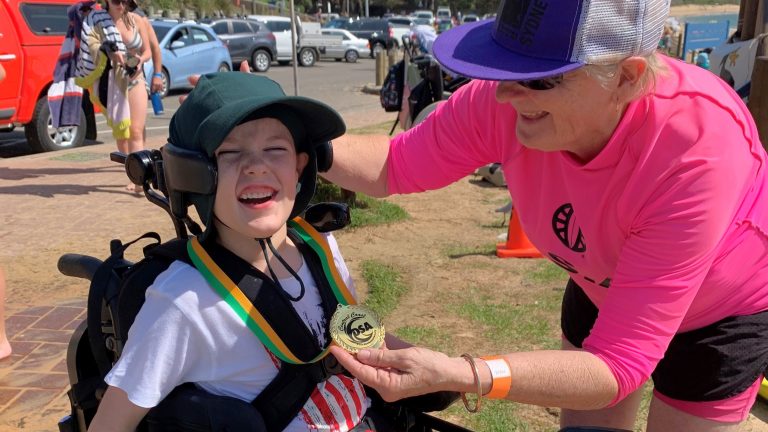
“We call it ‘smiles on dials’,” Pauline Maniskas tells The Greek Herald when asked about the reaction of people with a disability the moment they get into the water. “You can see their excitement as well as their parents’, straight away.”
For the last 16 years, Mrs Maniskas has been volunteering for the NSW Central Coast branch of Disabled Surfers Association of Australia (DSA). She is currently the Secretary and spends her time picking up phones, setting up activities and guiding volunteers.
This is only one part of her life-long volunteer history though and a small piece of her Greek-related journey. For her work, Mrs Maniskas’ name has just been included in the Australia Day Honours list, as reported by The Greek Herald.
Riding the waves:
Disabled surfing has been around for 36 years in Australia. Under the DSA, there are 19 branches in Australia and one in New Zealand. At the beginning of COVID-19 on the Central Coast, there were about 70 participants and about 130 volunteers helping to put people with a disability in the water.
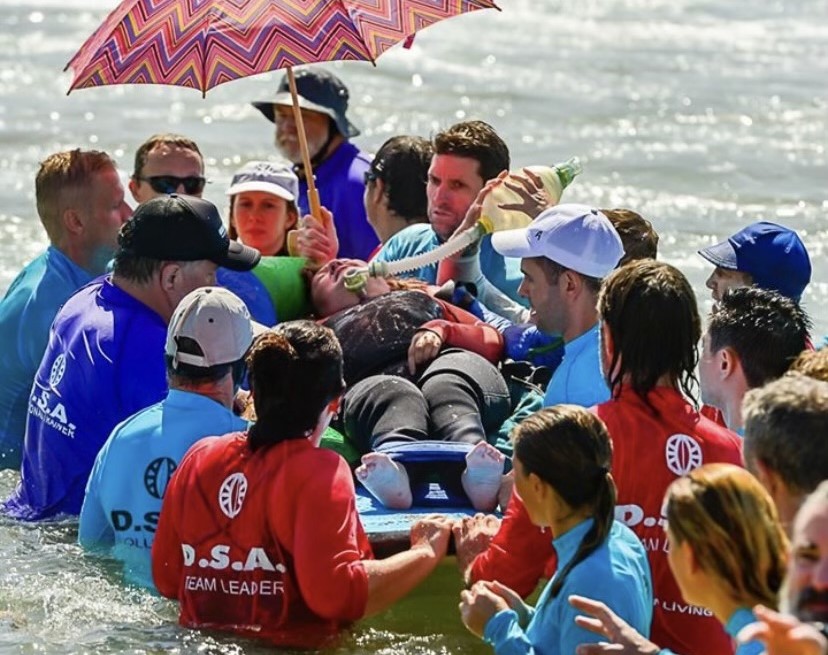
To do that, the person with the disability needs a surf board and a volunteer on the board guiding them in the right direction. In the meantime, there is a corridor of 10-15 people on each side of the surfer creating a safety channel, pulling them off the water if necessary. Volunteers with yellow, grey, blue, green and red shirts are also spread across the beach.
Volunteers help people with a disability surf.
“We will attempt to get everybody in the water. People with any disability you can think of: blind, deaf, Down Syndrome, autistic, quadriplegics…” Mrs Maniskas explains.
The past and the Greek connection:
Mrs Maniskas is the middle child of nine siblings. Growing up as a Roman Catholic in the Sydney suburb of Eastlakes, she always felt a connection with the church. The place also had a very strong Greek Castellorizan community, to which she was introduced playing basketball at a local club. There she met her Greek husband.
There was a moment during her engagement party when she was surrounded by Greek relatives who put golden rings and necklaces on her.
“I didn’t know that this was going to happen. Everybody was rushing, putting things around my neck and my hands and I was like, ‘what is going on’,” she recalls.
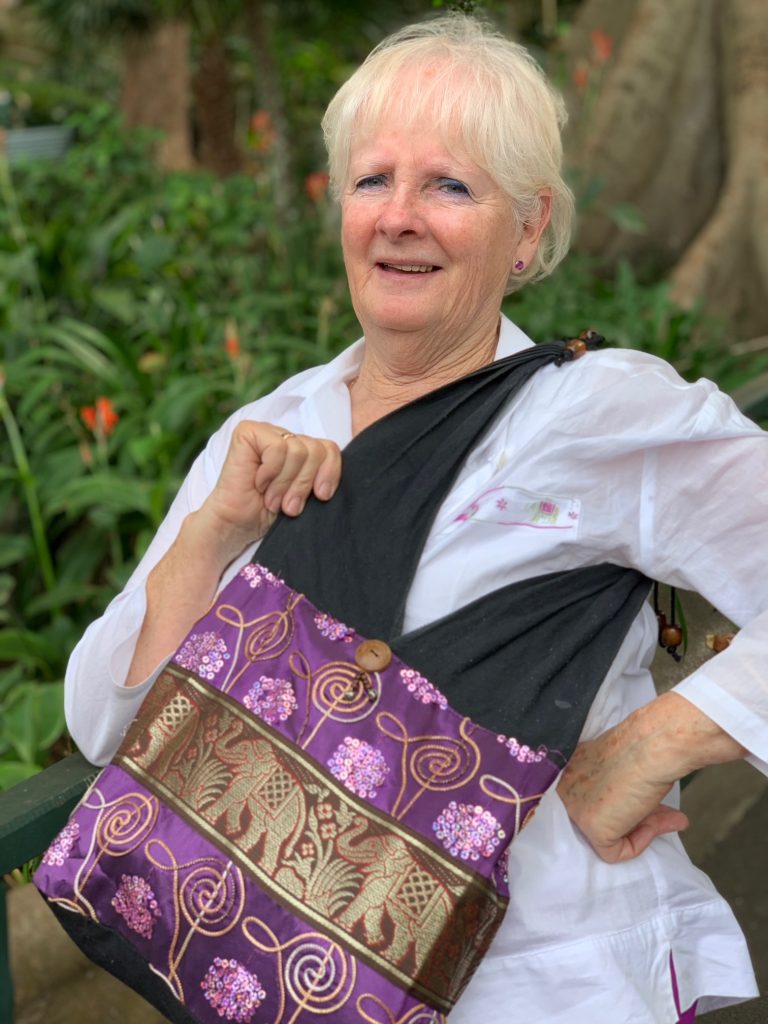
Pauline Maniskas.
“I was very accepted by the Greek community and I accepted it, as well as the culture. Most people used to say that I was more Greek than my husband.”
She later moved to Sydney where she tried to take her children to a Greek school.
“I wanted them to have the Greek culture, and to learn things such as dancing,” she says.
Today, many of her grandchildren call her “yiayia.”
Committed to volunteering:
Mrs Maniskas moved to the Central Coast in 1980 and raised her family by herself. She started volunteering in the area by helping a priest at the charity ‘Youth Off The Streets.’ This was a role she held for the next 21 years.
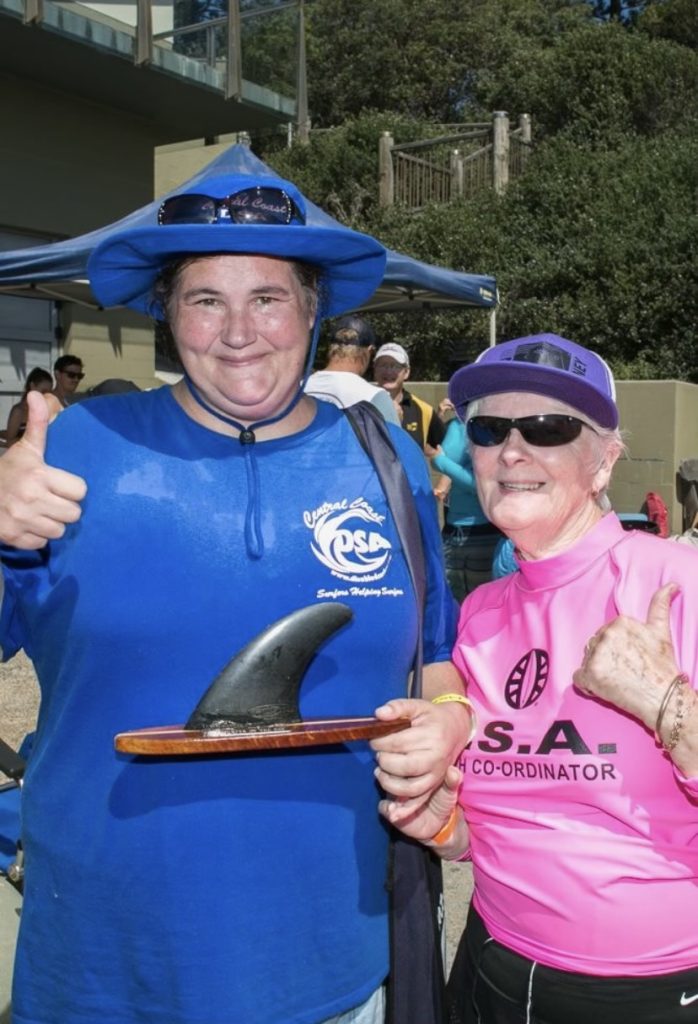
One of the people Pauline has worked with.
At the same time, she attended an assistant nursing course and later joined Camp Breakaway, a facility that gives respite to adults with a disability, sick children and their families. She has been a volunteer at Camp Breakaway for the last 22 years, and a board director from 2009 until 2022.
“I was in Camp Breakaway for about five years when I read in the local newspaper that there was a community forum about disabled surfing on the Central Coast,” she says.
“I was swimming in the ocean 5-7 days a week in summer and in winter. I could do this. I reached out to the man who started the organisation and said, ‘I am committed to Camp Breakaway, now I am committed to you too’.”
Over the following years, Mrs Maniskas has helped many people with a disability go into the water. She remembers many emotional stories, such as a girl with artificial legs, who’s life changed when she started surfing.
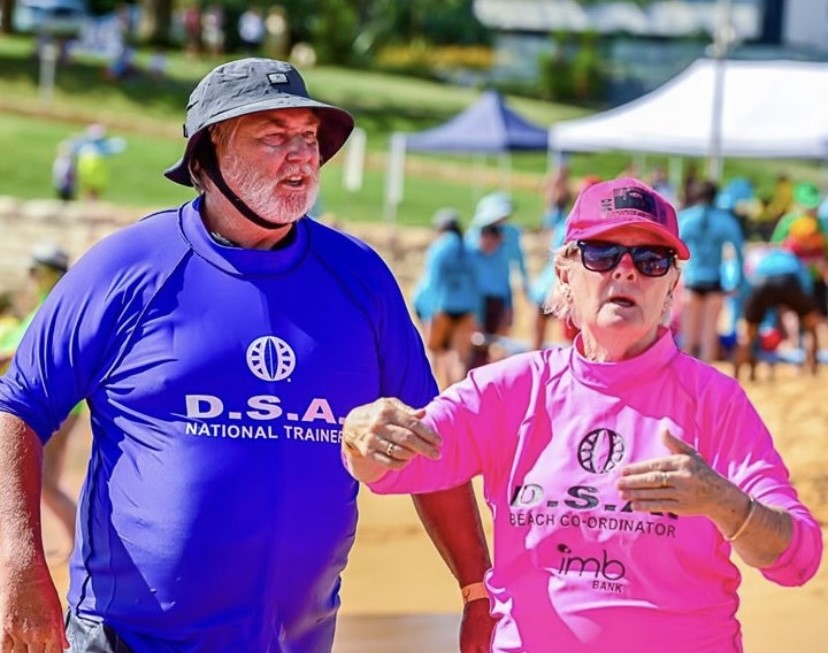
Pauline as a volunteer.
A quadriplegic friend of Mrs Maniskas, who used to surf before having an accident, also returned to the water and said afterwards it felt like he was “born again.”
“They are really putting their lives in our hands,” Mrs Maniskas says.
“I always said that when you give your time, you get back so much more. It is just joyful to see the smile on a face and to know that you made a difference in somebody’s life.”
The next generation of performers, inventors and creators have put their talents on display in a NSW-first ceremony to launch the 2023 HSC Showcase season.
NSW Minister for Education and Early Learning, Sarah Mitchell, said for the first time, all 458 students selected for special HSC showcases were celebrated at an Oscars-like awards ceremony.
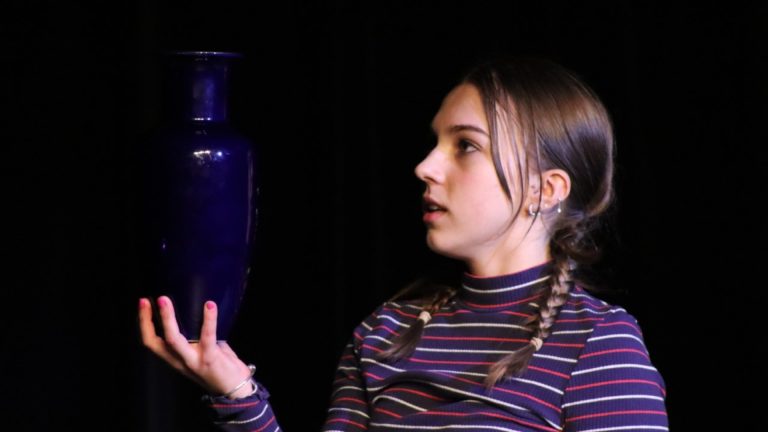
Sophia Tsoltoudis from George’s River College Oatley Senior Campus was selected for the OnSTAGE showcase with her drama piece, Tatty Hennessey’s A Hundred Words for Snow — a coming-of-age play about love, life, death and rebirth.
“I loved my Year 12 experience so much, going to school every day was fun. I only took subjects I felt really passionate about, so working on them never felt like a chore,” Sophia said.
Minister Mitchell spoke about the ceremony being a fantastic opportunity for schools and the general public to witness the talents of young people and provide another platform for graduates to launch future careers in the field they are passionate about.
“It really felt like the Oscars of the HSC creative arts world,” Ms Mitchell said.
Minister for the Arts Ben Franklin said he was honoured to celebrate the success of students from the HSC Class of 2022.
“The work they have produced is simply outstanding. I know we will be seeing many of these talented young people excel in the future, whether that’s on stage, on the screen, or behind the curtain,” Mr Franklin said.
HSC Showcases are a selection of top major works from students across the creative and performing arts and technologies.
The NSW Government has appointed a new specialist careers adviser who has been tasked with showing the employment opportunities available to the state’s multi-lingual young people and boosting its interpreting and translating ranks.
A first-of-its-kind in Australia, the new adviser will work with students fluent in another language across high schools, community language schools, and universities to show them the opportunities to work as interpreters and translators.
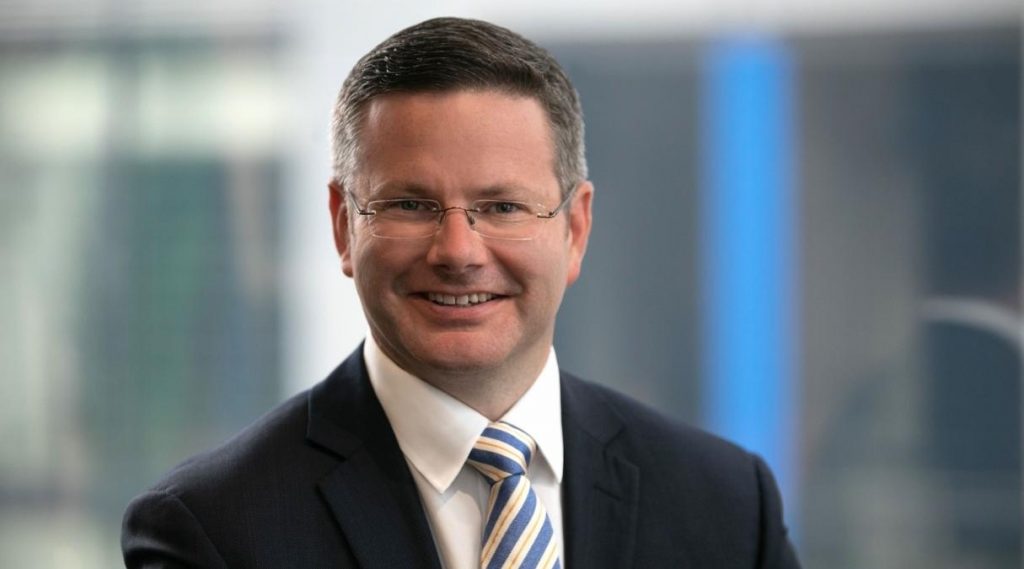
NSW Minister for Multiculturalism Mark Coure said this new role will be a big win for multi-lingual young people and the NSW Government’s language services.
“The NSW Liberals and Nationals are committed to supporting our multicultural state. But, to do that, we need to increase our interpreting ranks, especially with people that speak languages from new and emerging communities that weren’t prevalent five or ten years ago,” Mr Coure said.
NSW Minister for Multiculturalism and Seniors, Mark Coure
“Through this new adviser, we will be able to strengthen our language services while also connecting young people with opportunities that are available simply for being fluent in another language, whether as a professional interpreter or as a means to earn money while undertaking further study.”
Identified students will have the opportunity to secure a partial or full interpreting and translating scholarship, where those who complete the program can access employment, mentoring and professional development opportunities with Multicultural NSW.
“With more and more people speaking a language other than English at home and people needing help accessing services or information, we should be empowering those that can speak a second or third language with these opportunities,” Mr Coure said.
“Thanks to an $8 million investment into the NSW Government’s language services, we will provide 450 scholarships a year to people wanting to become interpreters and translators.
“While this will give opportunities to people to find employment using their language skills, it will also mean we have more people to call on to help make sure our services and information are accessible to everyone.”
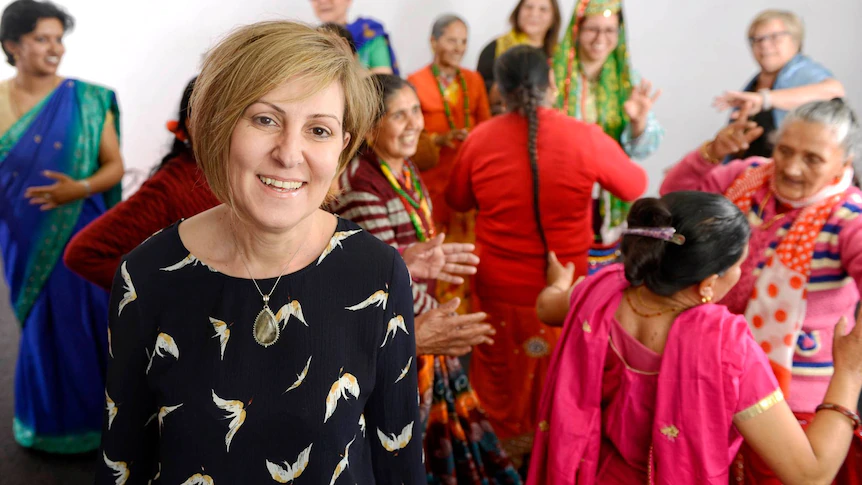
Chief Executive of SydWest Multicultural Services Elfa Moraitakis hailed the new initiative as a great investment into the state’s multicultural future.
Elfa Moraitakis. Photo: ABC
“Speaking a second language myself and being very passionate about language and culture, I am very pleased to see the level of investment that has been made into increasing the opportunities for young people to use these skills as a profession,” Ms Moraitakis said.
“Recognising the importance of speaking another language will give our youth a sense of pride and belonging. It is a skill that is not easily obtained, and it is great to see that it is appreciated and valued.”
Over the past four years, the NSW Government has provided more than 400 Scholarships to budding interpreters covering more than 55 different languages.
In December, the NSW Government announced that HSC language students who achieved a Band 6 score in targeted extension languages would also be eligible for scholarships to become interpreters or translators.
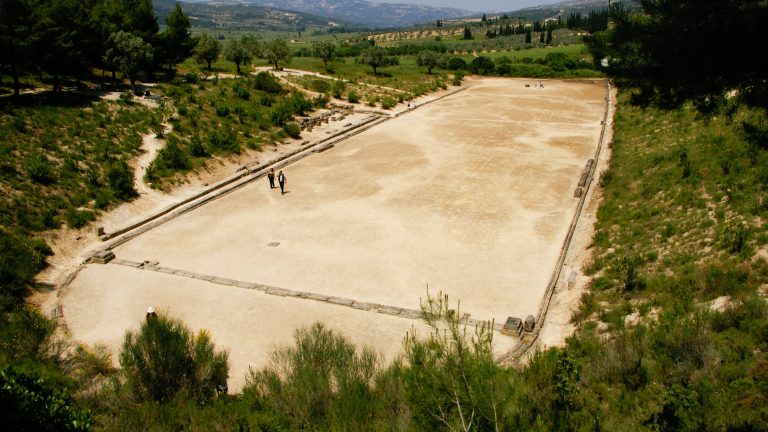
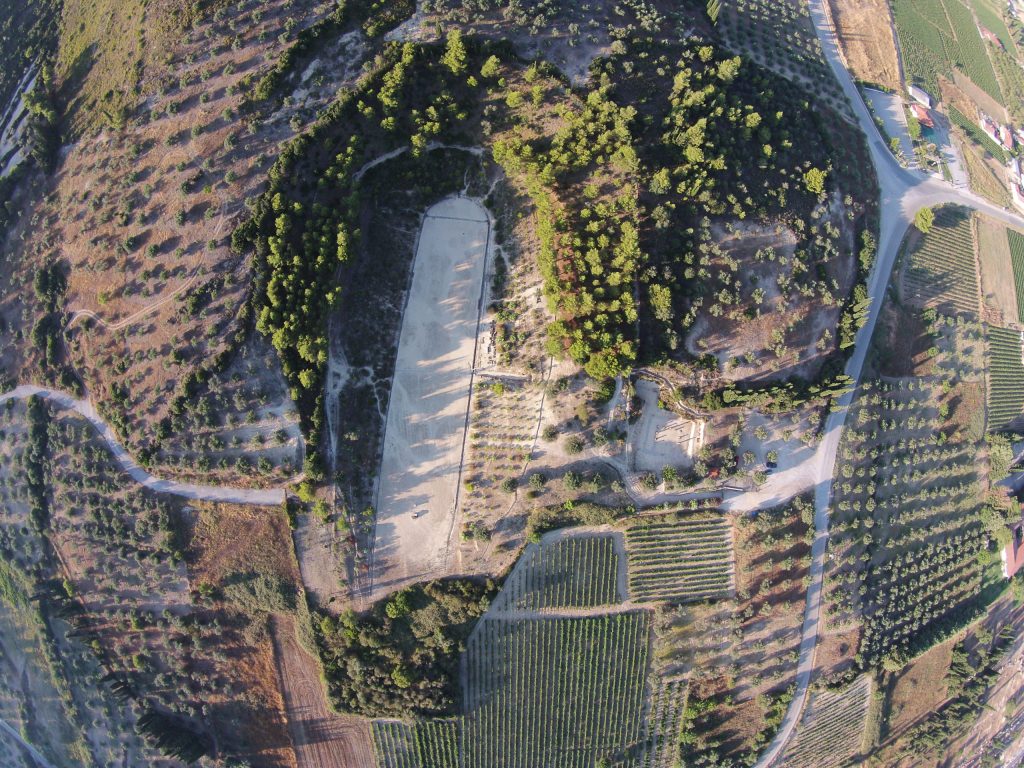
The Ancient Nemea stadium in Greece reopened this week to visitors, amna.grhas reported.
The 4th-century BC stadium in Corinthia is located in the northeastern part of the Peloponnese. The stadium played a big part in the Ancient Olympic Games and is only meters away from the Temple of Zeus.
It was previously shut down due to a lack of security. Efforts to reopen it involved the Society for the Revival of Nemean Games, the local mayor, the Antiquities Ephorate of Corinthia, and the Culture Ministry.
Photo: nemeacenter.berkeley.edu
At the official opening ceremony, Greece’s Alternate Development and Investments Minister Christos Dimas thanked everyone for their support.
“Ancient Nemea is one of the most significant archaeological sites of Greece. Its museum, the Temple of Zeus and the stadium attract the interest of thousands of visitors from Greece and abroad annually, and have turned the region into a cultural attraction. It is something we all owe Stephen Miller,” Dimas said.
Mr Miller was the late archaeologist and professor (1942-1921) who devoted his career to the excavation of the site, and specifically of the temple and the stadium, and founded the Society for the Revival of the Nemean Games.