When Ellice Tsiaprazis graduated from high school there were many career plans in sight. But her love of cooking was too great so she followed its path to wherever it led.
“I honestly had no idea what I wanted to do. I was one of those high school students who had many ideas of career paths to pursue,” Ellice tells The Greek Herald.
“But cooking was something I was great at. It was natural and I enjoyed it, so I took a leap of faith and followed my heart and passion. It just grew from there.
“When you’re talking a decade of being a chef well, I think that speaks to itself. I made the right decision as I still love it to this day.’’
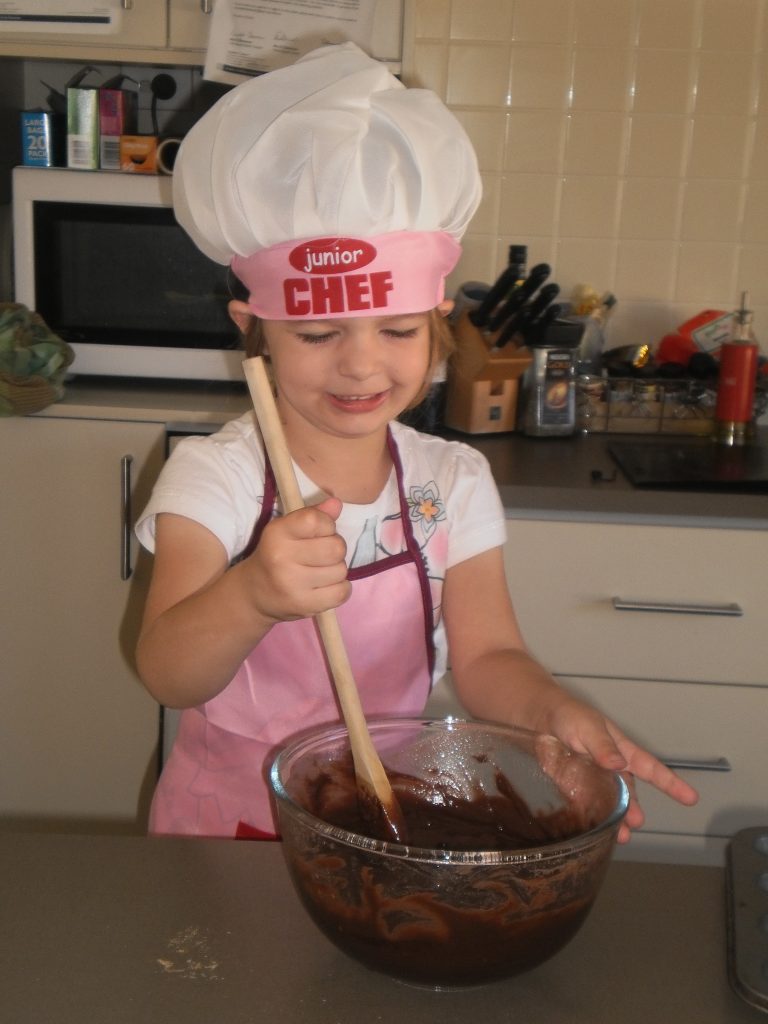
Ellice Tsiaprazis cooking as a young child.
The 28-year-old from Sydney is proud of her Pontian Greek and Kiwi heritage. She says she connects to both cultures through cooking, dancing and sport.
In fact, Ellice credits her love of cooking to those early days as a youngster where she gave a helping hand in the kitchen to her mum, aunties, godmother and Greek yiayia. It’s also where she discovered her weakness for Greek sweets, especially bougatsa.
“I was in awe of how they all had their own recipes that had been passed down and made everything by scratch,” Ellice says.
“I was taught that our hands are our best tools.”
In 2013, Ellice followed her passion for creating desserts and studied at the Le Cordon Bleu in Sydney. She graduated with a Grand Diplome of Pattisserie and Cuisine.
Her culinary career is impressive and long for someone who left school just over a decade ago.
Ellice first started working under a French Michelin star chef at a bar and restaurant called the Rabbit Hole in Sydney’s CBD. From there she worked at a large catering company, as a chocolatier at Adora’s Handmade Chocolates, as a chef de partie at Novotel Darling Square, and later as a food and beverage supervisor at the hotel operation and pub.
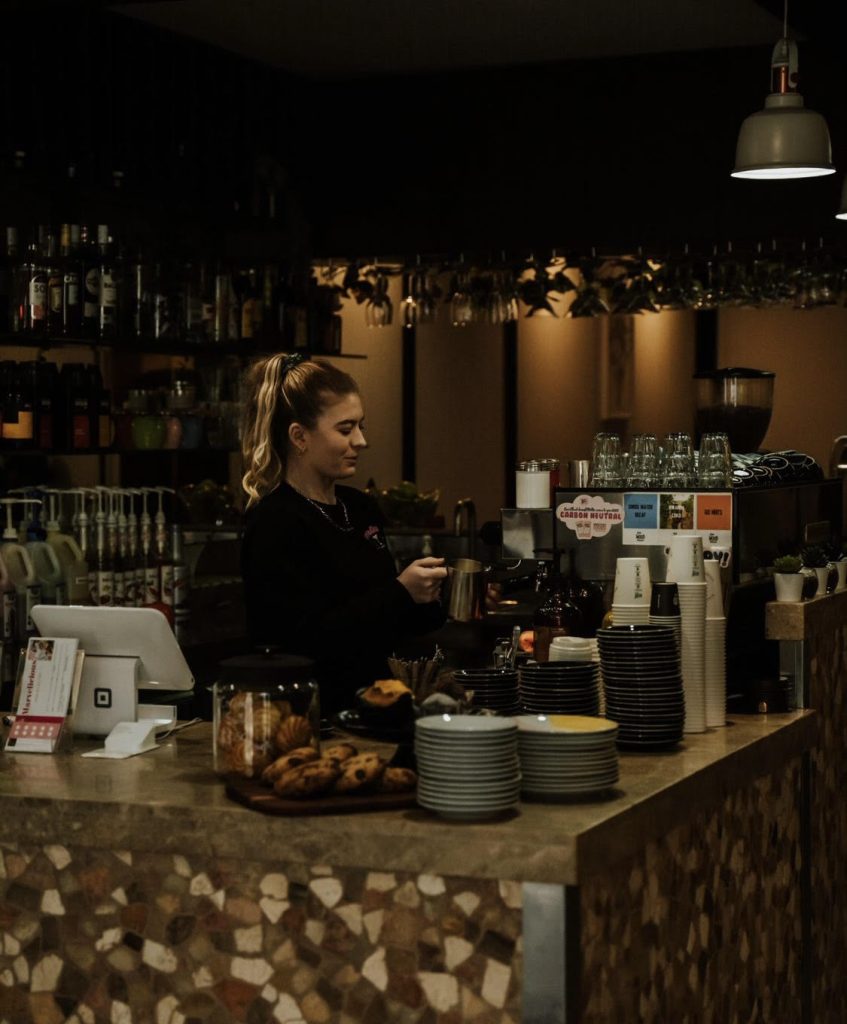
The culinary path was a step in the right direction for Ellice as these days she can be found creating sweets and running her own business – Marvelicious Dessert Bar & Café.
“I love how something sweet can brighten up anyone’s day and how universally it’s a celebratory gift,” Ellice says.
“I also love how it is a skill and the world of sweets and desserts is always evolving with new techniques, styles and trends so you are forever learning and updating your skill set.”
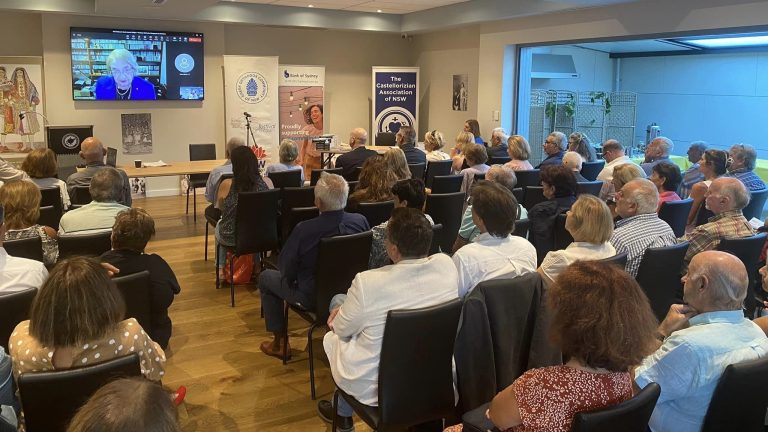
The book launch was part of the Greek Festival of Sydney’s cultural program of events for this year.
My Father’s Daughter tells the story of a Greek woman on the island of Castellorizo who went against all odds and laws and followed her heart.
On the day, Secretary of the Castellorizian Association of NSW, Victoria Kazaglis Gallagher, emceed the event and introduced a number of official guests.
The guests included the President of the Greek Orthodox Community of NSW (GOCNSW), Harry Danalis; the Chair of the Greek Festival of Sydney, Nia Karteris; Press Counsellor at the Consulate of Greece in Sydney, Costas Giannakodimos; and Councillor of Randwick City Council, Alexandra Luxford; among many others.
The book was then launched by Professor Katherine Georgouras OAM before Mr Malaxos took to the stage to provide some background to how it all came together.
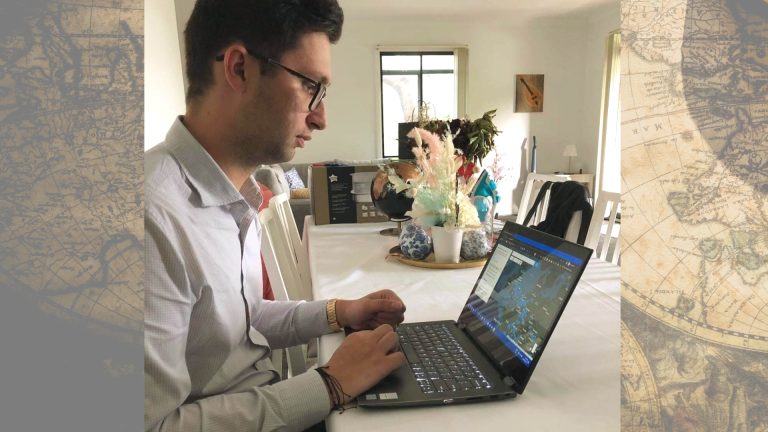
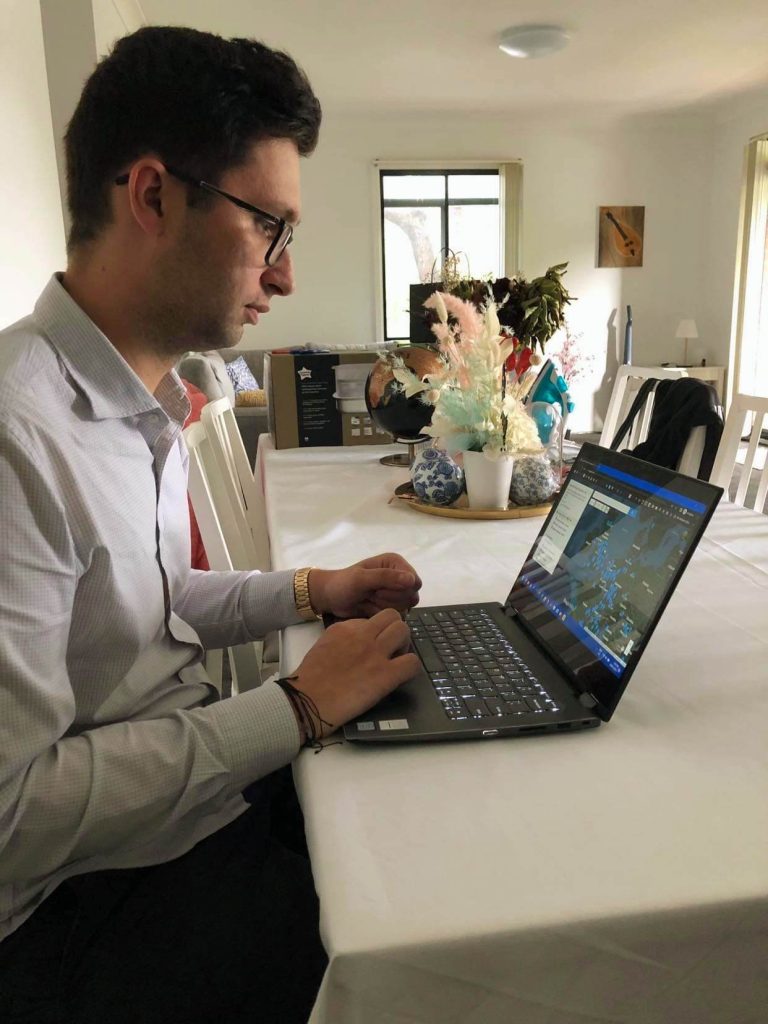
There are 172 Greek churches in Australia (including Father Lefteri’s church in Dromana), up from 163 in 2021. In the world there are more than 1,300 parishes outside Greece and Cyprus. We know this because of the work of Costa Dantos, a 24-year-old urban planner from New South Wales, who had a fascination for mapping cities, settlements, associations and more from a very young age.
Mapping the Greek churches of the world is the result of a two-year process, which Mr Dantos told The Greek Herald has been “exhausting and fun” and took up most of his weekends. But he persevered and created the only existing church mapping source covering more than one country. He said there are countries without a list of churches, a problem now rectified thanks to his research.
“It was not easy mapping every church and monastery in the world today. I had technological glitches along the way where I sometimes lost two hours worth of work and had to start over, but luckily I know geography very well or it would have been almost impossible. Plus, I learnt a few languages along the way,” he said, adding his efforts to learn the words Archdiocese, Greek, Orthodox and Church in most European languages.
“Some (of the church lists) were outdated, and some dioceses didn’t really have a website. I had to check through mapping sources, even on aerial images through large sections of cities just to spot a Greek church, find it on the map and get a photo of them all to make sure it was the right one.
“Some I looked up through journal articles, others through reports, others I found through Facebook pages written in foreign languages where I scoured for ages just for a picture of their church.”
It was tedious and time-consuming but COVID-19 lockdowns worked in his favour, offering ample time for research. He was rewarded with several realisations.
“One of the most eye-opening things I found through this project is that Greeks are truly everywhere, except for Antarctica. And there’s a Greek diaspora even in countries that do not promote or support multiculturalism much. Even in those countries, Greeks still hold our flag with pride,” he said, pointing to Zambia, the Democratic Republic of Congo, Venezuela and Cambodia to name but few.
The project brought together five of Costa’s passions: urban planning, geography, history, demographics, and Hellenism.
“I noticed very interesting things from a planning perspective,” he said.
“Greeks in the United States generally have larger churches than other countries on larger land areas. In American suburbia, everything is built bigger with huge gardens and ample sized parking lots.
Costa Dantos.
“Many of their churches have domes and built structures like Hagia Sophia as many parishioners are from Asia Minor and create designs resembling those of Smyrna. This is different to Australia where many churches have bell towers on either side of the front church facades. I believe this is more the modernist and Catholic architectural style.”
A Greek church, Mr Dantos said, is telling of the people who built it.
“Many churches around the world, where there are people with island heritage (nisiotes), are painted in blue and white, whereas communities of Macedonian Greeks use stones as one of the features,” he said.
“Northern European churches often have Gothic elements as some countries don’t offer government benefits for churches without traditional Lutheran and Gothic-styled architectures.”
Greek flags are typically hoisted alongside those of the host country of the churches in Australia, Canada and most of the United States, whereas Greek churches in Turkey are fortified behind big walls for privacy and protection.
“Many Turkish and Albanian churches were built in the 1500s way before other diaspora communities,” Mr Dantos said.
The names of churches are also interesting with many dedicated to patron saints of parishioners’ homelands with Macedonians opting for Saint Demetrios and Saints Cyrillos and Methodius, whereas Kytherians opt for St Elessa, and Saint Dionysios for Zakynthian clusters, etc.
Mr Dantos included all Greek churches he could find based on whether the priest or most committee members had Greek names, which was frequently the case for Scandinavian countries.
The interesting facts are posted on Dantos’ website which not only maps churches but other interesting community clusters: including Greek settlements in Turkey in the 1900s, non-Greek Orthodox places of worship in Greece and Cyprus (eg pagan, Jehovah’s Witnesses, Jewish synagagues etc), and even his university thesis of Greeks in Newcastle and how cultural infrastructure helps retain the Greekness of a population.
Two years ago, his maps of Greek churches in Australia went viral. There was even some local controversy as parishioners complained when they didn’t see their church.
“I haven’t posted churches which hold services in buildings not solely used as Greek Orthodox Churches,” he said.
Since his launch of the Australian maps two years ago, he has become engaged and will soon be a father.
“I spend a lot of time on my maps,” he said. “My fiancé is supportive though sometimes she complains that I lose track of the time once I start mapping because I can’t get off as I have to finish things off once I start.”
While many of the maps Mr Dantos offers are free, others come at a small cost for his hard work.
“The maps which killed me to do and took over all my weekends include an unlocking fee, and the easier ones are free. I hold them with lots of love and I want to share those with more personal meaning to me with people who would really want them,” he said.
“That being said, I’ve also allowed for free access to some of the harder ones, including the Greeks in Turkey (Asia Minor and Thrace) as a service for all Greeks and Philhellenes interested in researching these areas. There’s also a list of Greek associations and organisations in Sydney too!”
Among the listed Sydney’s organisations are those which Mr Dantos is involved with. He is the Secretary of two Greek associations, the President of another and sits on the committee of several others.
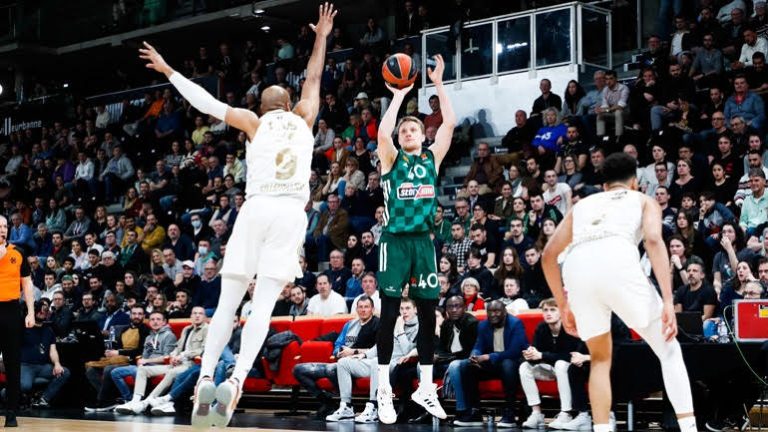
Panathinaikos has defeated Villeurbanne 86-82 and achieved their 2nd consecutive victory and 10th in this year’s EuroLeague, maintaining a distance of 2 wins from the French in 16th place with a record of 10-19.
The “Greens” prevailed in the 29th game of the EuroLeague, forcing the French to their eighth consecutive defeat and 21st overall.
Emphasizing defence, Panathinaikos scored its third European ‘double’ of 2023 “Astroball” and is now focusing on the upcoming A1 Men’s/Basket League derby, with Olympiacos at OAKA (19/3) .
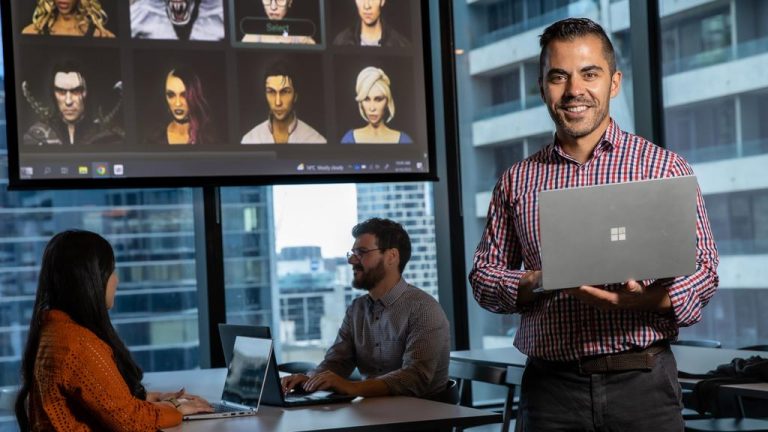
One of Australia’s leading experts on online gaming addictions, Dr Vasileios Stavropoulos, predicts a rise in the phenomenon as games become more advanceed and children more engaged in the virtual world.
A senior lecturer in psychology at Victoria University, Dr Vasileios Stavropoulos says about 4 per cent of children and young adults are at risk of addiction to online gaming.
One of the most common signs of addiction is disengagement with education, Dr Vasileios Stavropoulos said in an interview with The Sydney Morning Herald.
“They will develop a disorder, they will withdraw, they will put on weight, they will be sleepless at night because they are committed to the gaming groups who play overseas.
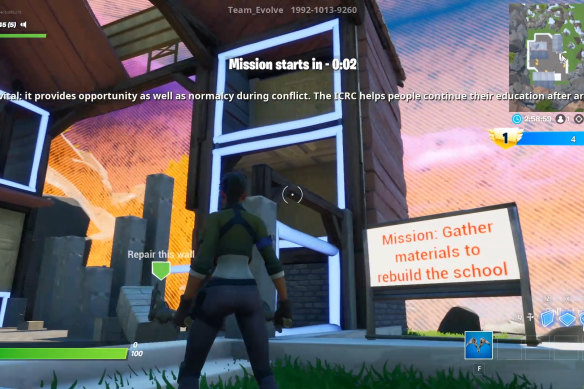
A screenshot from the popular online game Fortnite.
“They socialise with the game and they withdraw from real life and through that, progressively accumulate problems,” he added.
Stavropoulos expressed concerns for Victoria’s virtual school which help children with online gaming addiction saying it was “wrong” as “the biggest issue with gaming disorder is difficulty in relationships”.
“If you keep them at home they lose the possibility of developing a sense of belonging in real life,” he said.
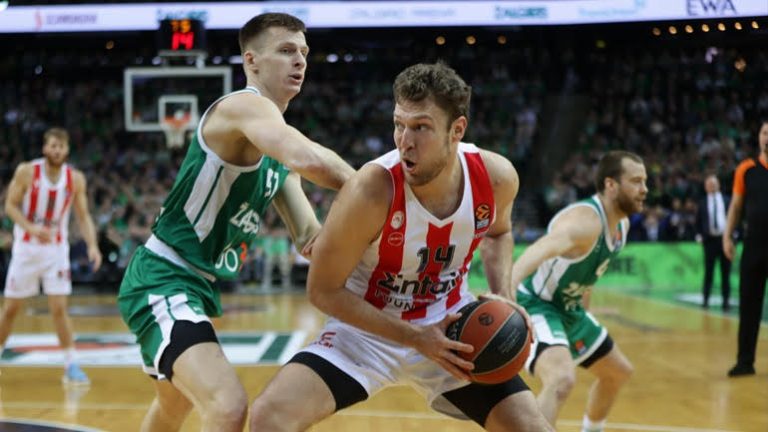
By the hand of Sasha Vezenkov, Olympiacos was victorious on Thursday with 74-72 from the home of Zalgiris Kaunas, continuing its progress to remain in first place in the EuroLeague.
This win means the Reds became the first team to mathematically secure their presence in the playoffs.
On the other hand, the Lithuanians after tonight’s defeat dropped to 15-14 in ninth place.
“I felt good, I felt confident as soon as the guys trusted me and the coaches gave me the ball,” Vezenkov said.
He finished with also eight rebounds, two assists, and two steals. “I always think positive, so I was thinking I would make it [the game-winning shot]. In the beginning, I saw the ball a little bit short but in the end, everything went well.”
Olympiacos head coach Georgios Bartzokas admitted that his team at some point of the game when they were leading simply stopped playing: “We lost our minds a little bit. When we took this difference, we missed a layup in transition and made a lot of mistakes.
“Basically, we stopped running on offense. They made three crucial three-point shots and came back to the game. They had the momentum but we managed to win the game.
“I really appreciate this win; it is always difficult to play here. You couldn’t hear anybody besides you, so it was a great win with this crucial basket by Vezenkov at the end and the last defense. It was really important for us”.
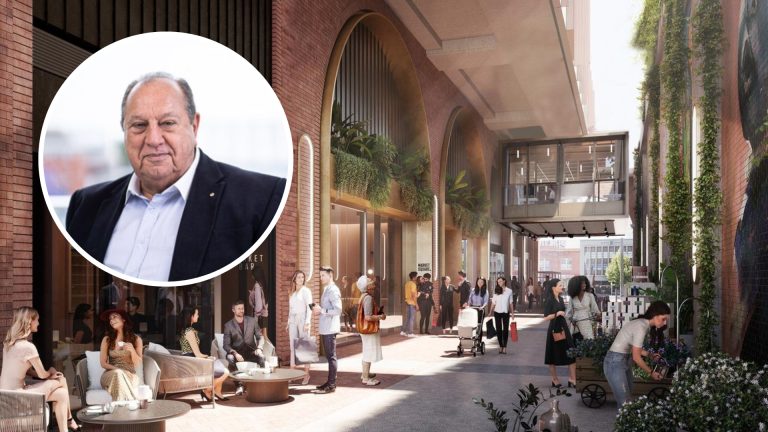
The $400 million Adelaide Central Market development will start in June this year after approval from Adelaide City Council, The Advertiser has reported.
The project will see a new retail space, offices and an apartment tower, with a $10 million penthouse, constructed. All are expected to be completed within three years.
On Tuesday night, the Council approved an additional 21 apartments for the tower, as well as other design changes to the project whose budget rose over $9.3 million than originally planned.
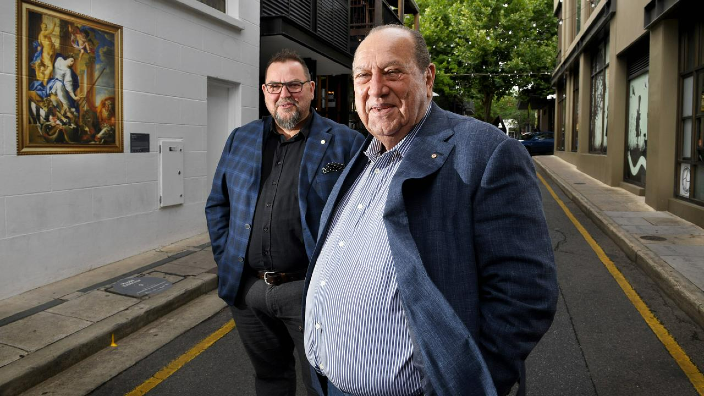
Theo Maras with son Steve, pictured in Adelaide’s East End Picture: The Advertiser
“I have been coming to the Adelaide Central Market since the 1950s and this is truly a one-in-a-100-year opportunity to expand our iconic market and ensure its future in the hearts and minds of the next generation of South Australians and all who do business and visit here,” Mr Maras told The Advertiser.
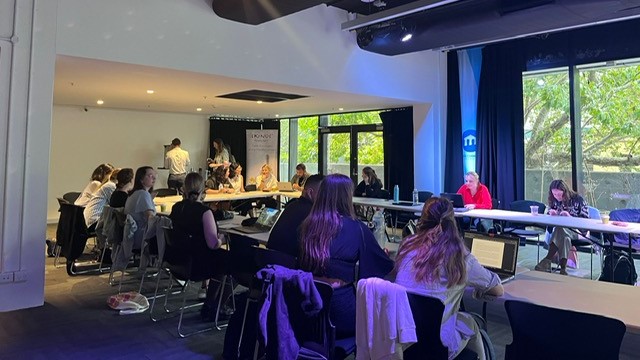
The Greek Community of Melbourne (GCM) recently hosted a diverse group of students from Breda University of Applied Sciences (The Netherlands) as part of their Master of International Tourism Destination Management program.
The visit was an enriching experience for all involved, including students from Greece and other nationalities.
The program focused on the dynamics of a destination, with particular emphasis on stakeholder management, as well as understanding the historical, social, economic, financial, political, and cultural factors that can influence a destination’s success or failure.
This study tour offered the students an excellent opportunity to deepen their knowledge of the tourism industry and its impact on the local community.
The GCM was pleased to facilitate the group’s cultural exchange. “We were delighted to experience cultural exchange and facilitate student presentations. We look forward to hosting the group again next year,” said GCM’s President, Bill Papastergiadis, OAM.
The Greek Community of Melbourne is dedicated to fostering partnerships and promoting cultural exchange between Australia and the international community. The successful study tour with Breda University of Applied Sciences is a testament to its commitment to this mission.
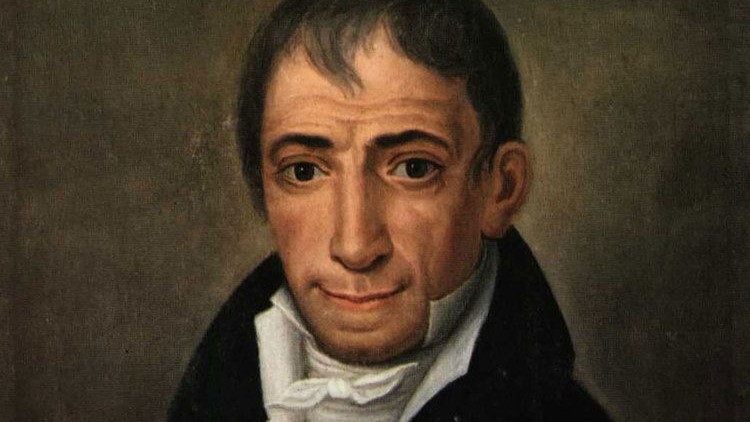
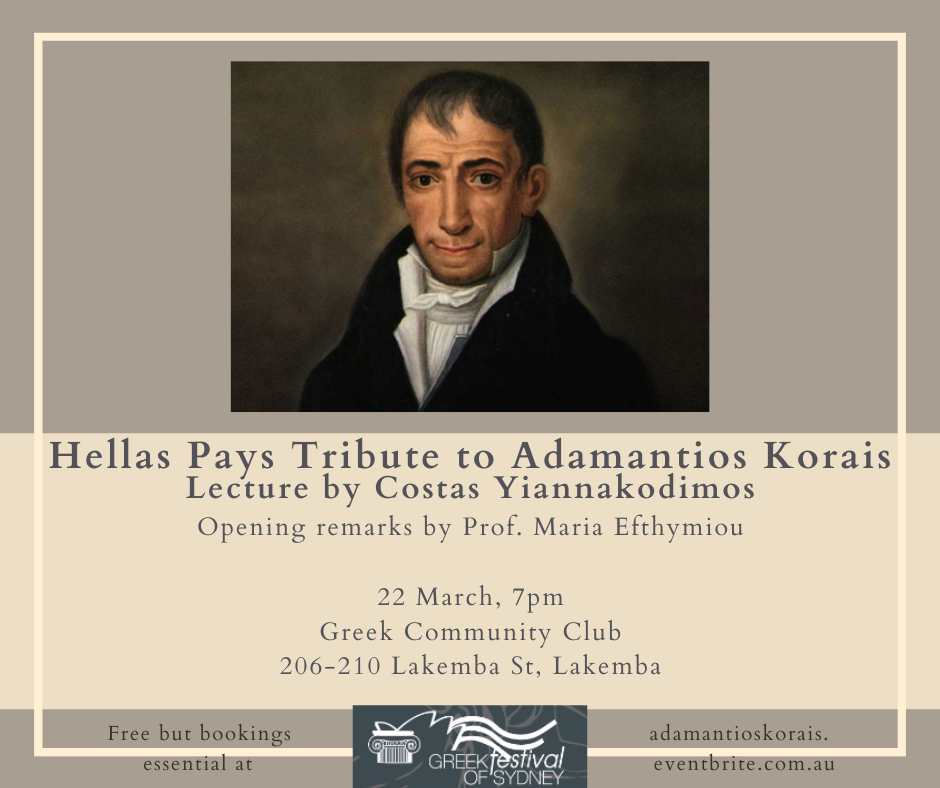
The Consulate General of Greece in Sydney, in collaboration with the Greek Orthodox Community of New South Wales (GOCNSW), is holding a lecture titled Hellas Pays Tribute to Adamantios Korais on Wednesday, March 22 at the Greek Community Club in Lakemba from 7pm.
The lecture will be delivered by Konstantinos Giannakodimos, Head of the Public Diplomacy Office of the Consulate General of Greece in Sydney, while Dr Maria Efthymiou, Professor at the University of Athens, will address a foreword.
The speaker will provide a depiction of Korais’ work with a special emphasis on its importance for the upcoming Greek Revolution.
Event details: Wednesday, March 22, 7pm, Greek Community Club, 206-210 Lakemba St, Lakemba
The Hellenic National Defense General Staff (HNDGSS) has recently announced Greece and Israel signed the 2023 Defence Cooperation Program.
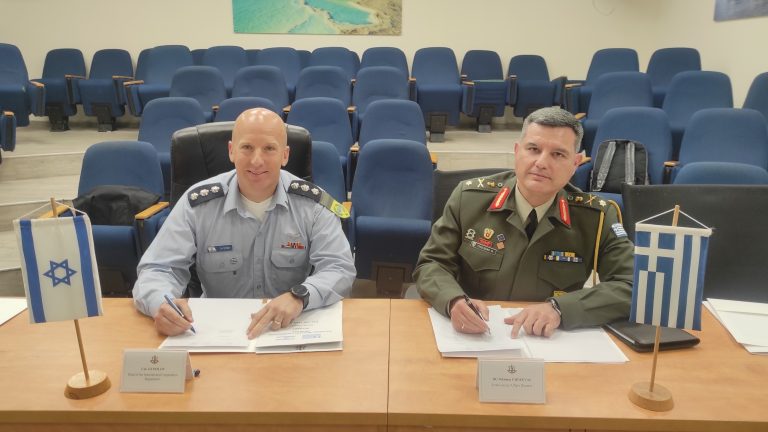
The new joint program was signed in Israel’s capital, Tel Aviv, on Wednesday between two of the country’s officials.
According to Ekathimerini, on Greece’s side, the program was signed by HNDGS’s Director of International Relations Brigadier General Nikolaos Holevas, and from Israel by Colonel Gil Dolov, the Head of the International Cooperation Department of the General Staff of the country’s Armed Forces.
Left to right: Colonel Gil Dolov and Brigadier General Nikolaos Holevas. Photo: hndgspio
The program also includes actions regarding the Greece-Cyprus-Israel Joint Action Plan 2022.
Greece and Israel’s individual Branches of Armed Forces, Special Forces and Special Operation Forces will participate in joint and cross-branch training.
Seminars and staff meetings will also be completed during training in national-interdisciplinary and multi-national schools.
In total, the program includes 58 activities, including 25 joint exercises, 15 joint training and remaining 18 which is scheduled to take place in Greece and Israel.