Home Blog Page 1085

Victorian Premier praises Greeks at Shrine of Remembrance but few present

By Mary Sinanidis.

“I thank you all for accepting our invitation for honouring this event with your attendance and your presence,” Tony Tsourdalakis, Chairman of the Victorian Council for Greek National Day, said at the Shrine of Remembrance on Saturday.

The event, kicking off celebrations for the 202nd anniversary of the Greek War of Independence, was one mainly attended by invited guests and officials. There were many empty seats – even less than last year – and hardly indicative of the robust Greek Australian community Melbourne is famed for.

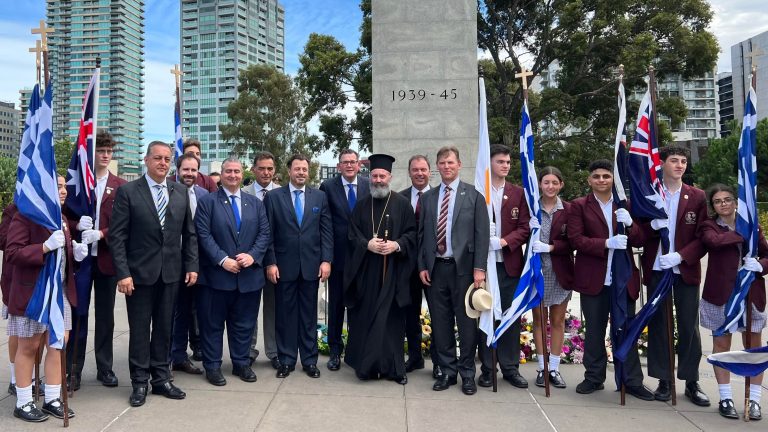
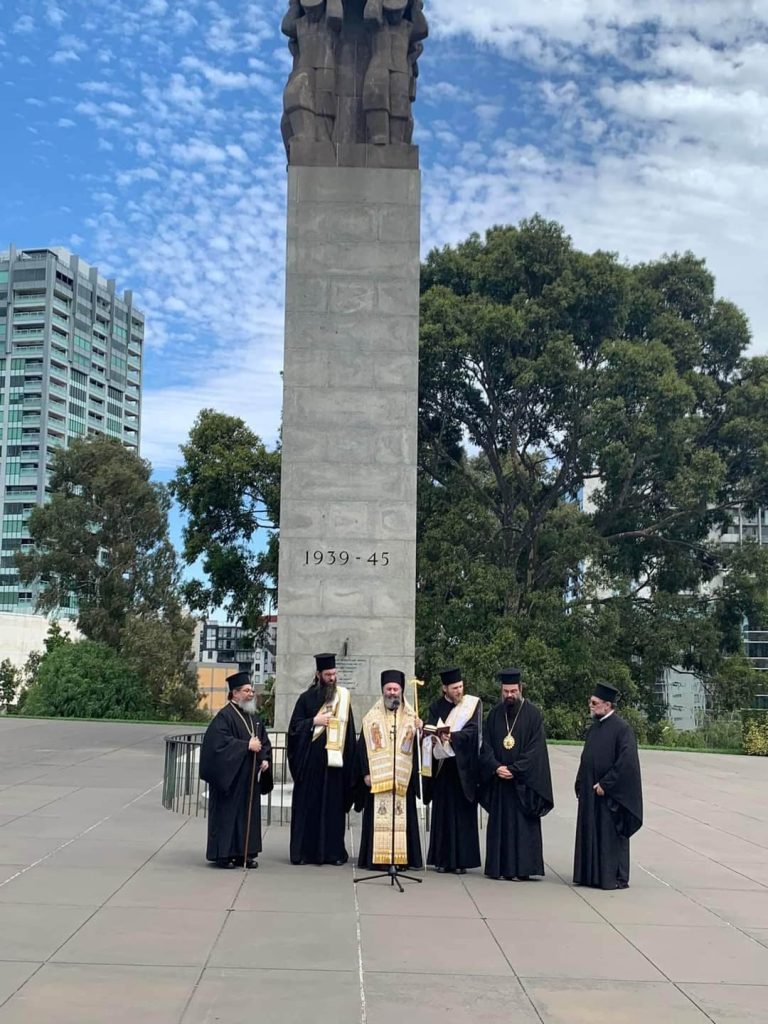
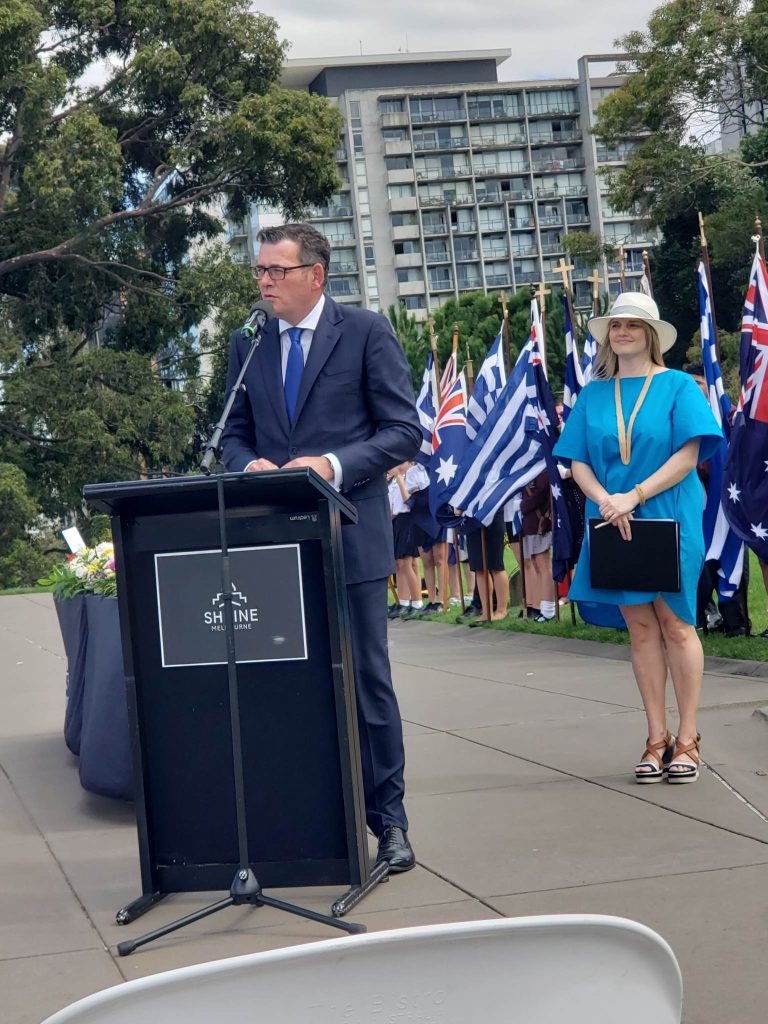
Invited guests included Victorian Premier Daniel Andrews; Victoria’s Opposition Leader John Pesutto; Maria Vamvakinou MP, representing Australia’s Prime Minister Anthony Albanese; Lee Tarlamis MP; Nick Staikos MP; Archbishop Makarios of Australia; Consul General of Greece in Melbourne, Emmanuel Kakavelakis; Greek Community of Melbourne President, Bill Papastergiadis; and other dignitaries. The emcee was Sophia Siachos.
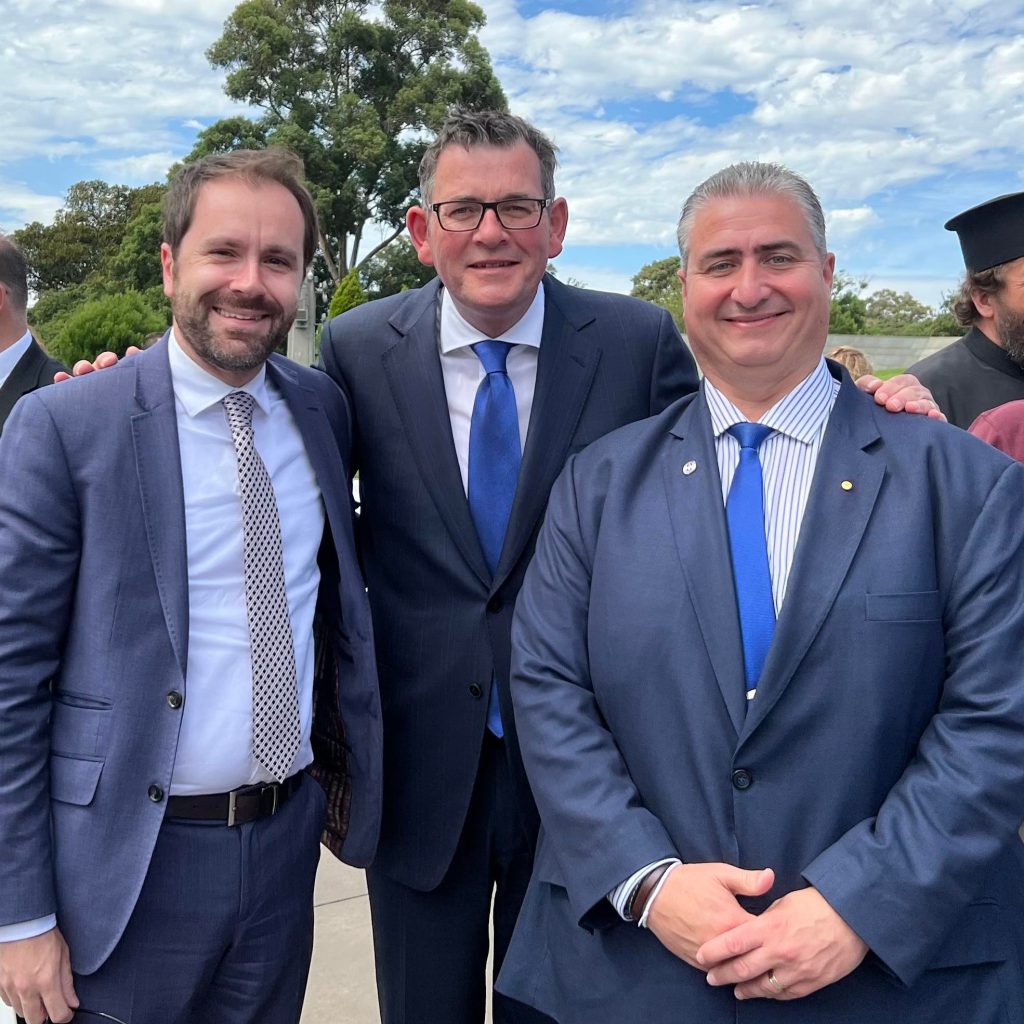
(L-R) Nick Staikos MP, Victorian Premier Daniel Andrews and Lee Tarlamis MP.
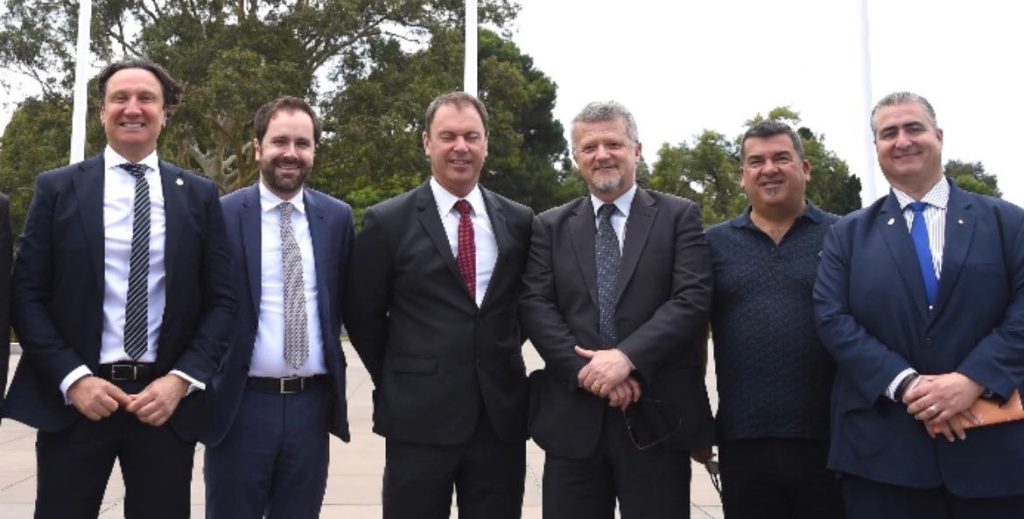
Official guests at the event.
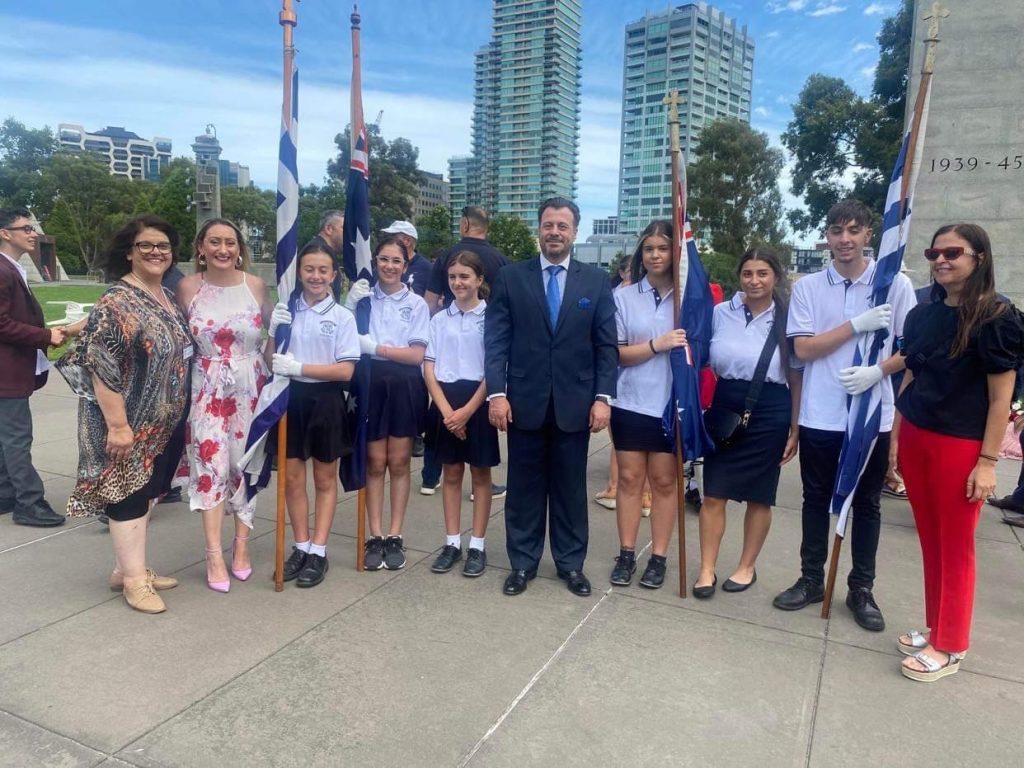
School students with the Consul General (centre).

Premier Andrews took the opportunity to thank the “biggest Greek diaspora outside Greece, the proud and magnificent Greek community of Melbourne and Victoria” – though few ordinary Greeks were present giving the false impression that Greeks aren’t as “interested” in the celebration as in past years.

Some present blamed the windy weather, others blamed the fact it was for a March 25 celebration being held on March 18, and others still wondered why the event had not been publicised resulting also in the absence of several multicultural media outlets as some had not been notified.  
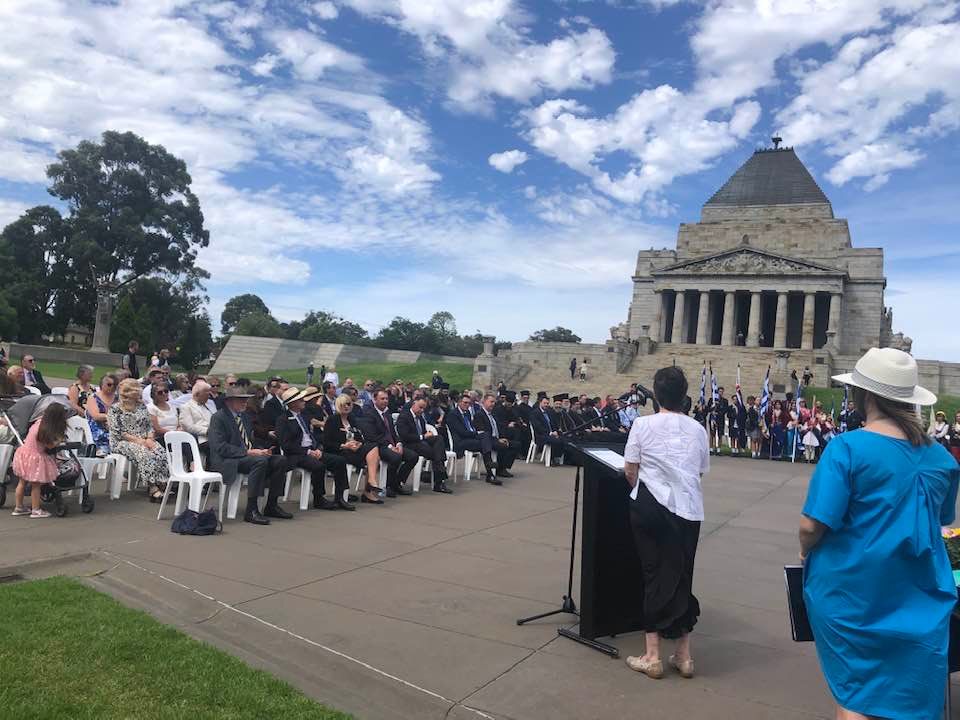
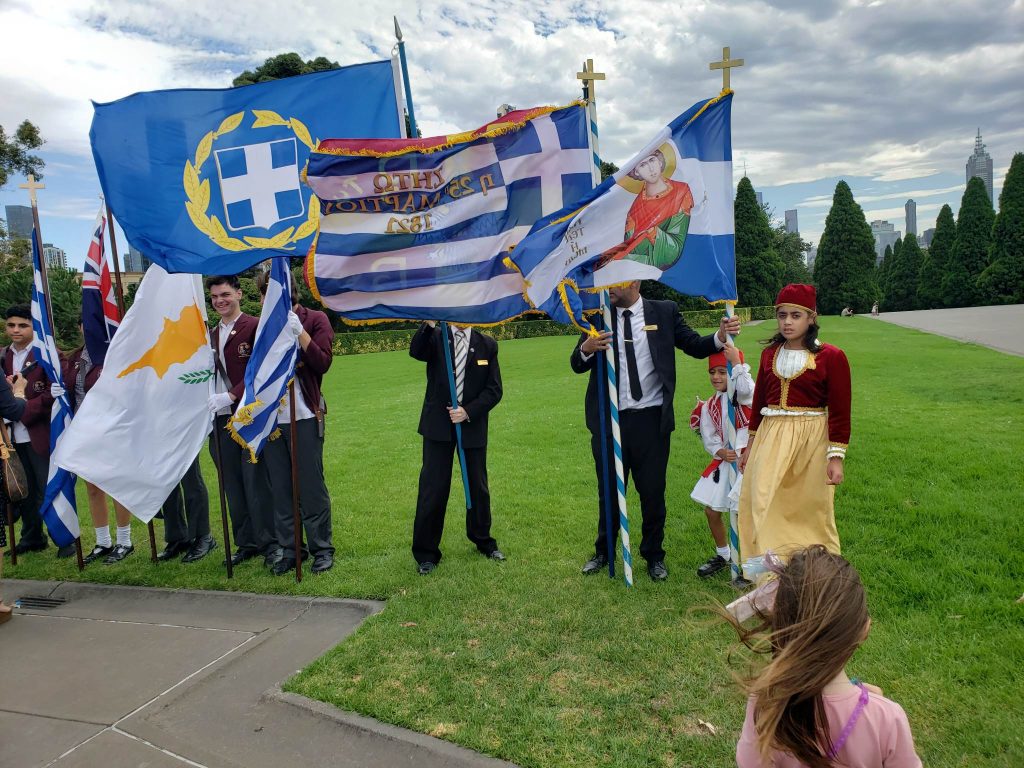
Smaller crowd than usual at the commemorative event.
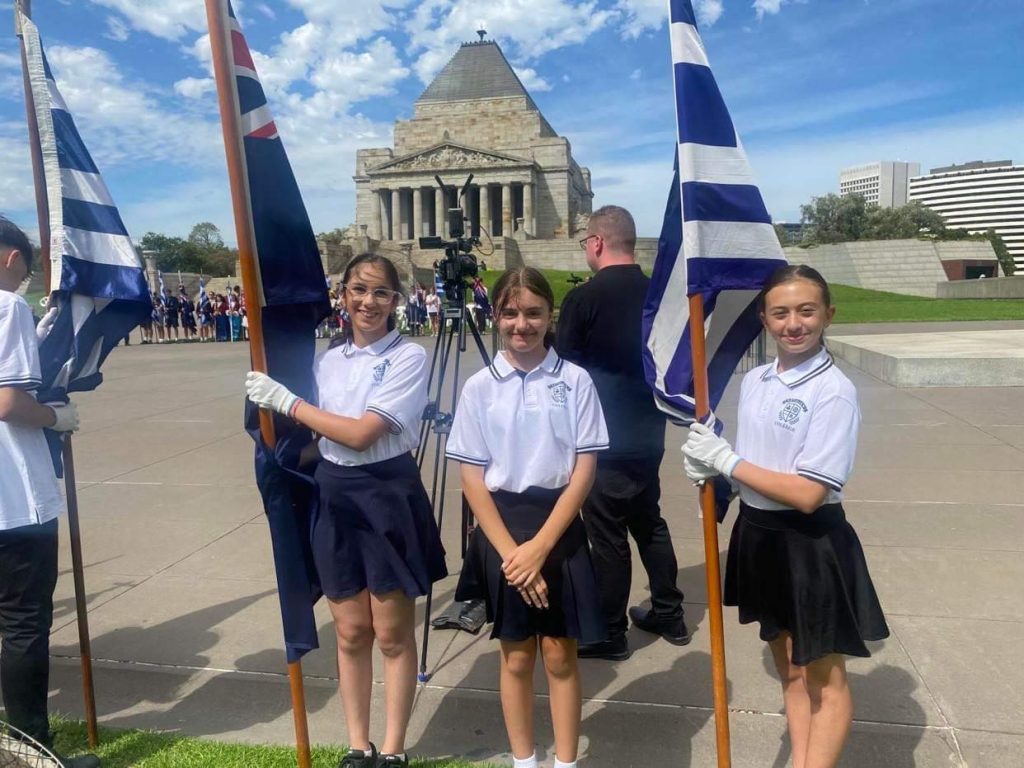
School students.
More school students.

“We can’t imagine Melbourne and our state of Victoria without the contribution that Greek families have made and continue to make, a fairer state, a stronger state, a more prosperous state,” Premier Andrews said.

“Today is an opportunity to thank them and acknowledge the many ways in which they make us not only the multicultural capital but the centre of critical thought, of innovation, of economic growth, of prosperity, a state where equality matters, where inclusion is important, and where our multiculturalism is not tolerated but celebrated. The Greek community can be rightly proud of all that they have contributed to all that we cherish as a state.”
Mr Pesutto, Victoria’s Liberal party leader, is no stranger to Greek Australian events due to having married a Greek Australian.

“I married a Greek, so I am used to Greek rule in my own home,” he said. “The contribution Greeks have made to Australia cannot be understated, and I know and share the comments the Premier made. […] So I say to all the young people here today. Today’s celebration does not just honour and dignify the past, it shines a light on the way forward,” Mr Pesutto said.

Greek PM promises to turn public outcry into action after deadly train crash

0

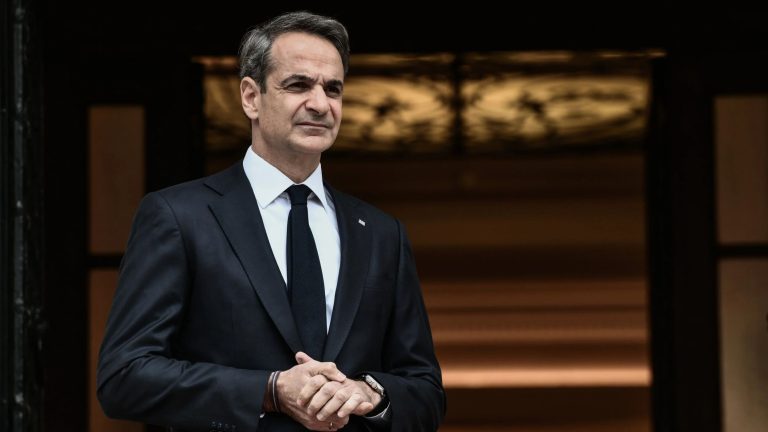
Greece’s Prime Minister, Kyriakos Mitsotakis, pledged on Sunday to take action to prevent future accidents like the deadly train crash at Tempi last month.

“I want to begin by saying, with my hand on my heart, that I will never forget what happened at Tempi and why it happened,” Mitsotakis said in his weekly Facebook post.

“I feel that it is now my personal wager to find a solution so that something like this never happens again.”

The Greek Prime Minister said he had noted people’s “perfectly reasonable reaction” to the deaths of 57 people in the train crash and fully sympathised with the unanimous demand of society to finally “change more things more quickly so that we have the country we deserve.”

“I have an obligation to turn these feelings into creative action and this is what I intend to do,” he said.

The first step, Mitsotakis said, was to support families of the dead and injured with a series of financial measures and continued psychological support.

The Greek Prime Minister also said that alongside the management of the train crash, the normal work of government had to continue.

Mitsotakis referred to measures taken over the previous week, such as an increase in the minimum wage to 780 euros a month. He noted Greece was gradually converging with average European incomes and that the new minimum wage was now higher than that of the pre-crisis period.

He also noted the progress made in issuing new pensions and other issues relating to pensioners, as well as the passing of a law to help increase organ donation in Greece.

Source: AMNA.gr.

Thessaloniki commemorates 80th anniversary of Holocaust deportations

0

The Greek city of Thessaloniki held a memorial march on Sunday to commemorate the 80th anniversary of the first deportations of Greek Jews to Auschwitz-Birkenau concentration camp.

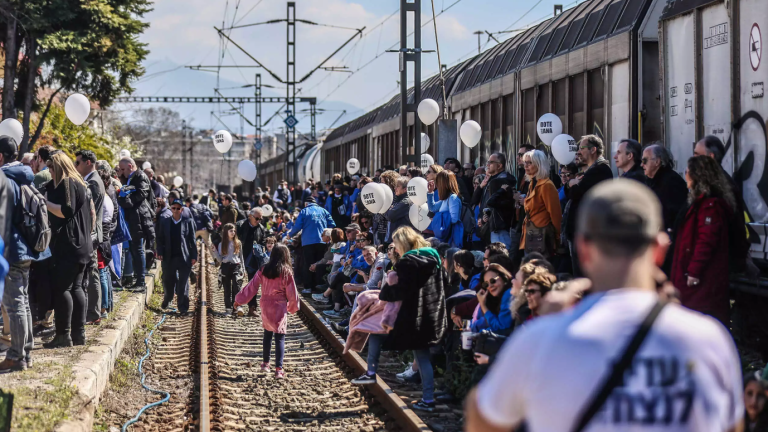
Around a thousand people of all ages marched from Eleftherias (‘Freedom’) Square to the old railway station of Thessaloniki, where the deportations began on March 15, 1943.

Some marchers held a banner reading ‘Thessaloniki Auschwitz 80 years: Never again’ and white balloons captioned with the same slogan were released into the air. Many people left red carnations on the train tracks.

Sunday’s event, organised by the European March of the Living together with local city and state government officials, was attended by Greek President Katerina Sakellaropoulou, senior Greek and Israeli officials and Holocaust survivors and their families. 

In her address, Sakellaropoulou said: “With this memorial march we honour the victims of Nazism, Fascism, antisemitism and share in the grief of their descendants, listen to the revealing words of the few survivors and unite our voice with the thousands of citizens that walk the same route… putting into action the universal human message ‘Never Again’.”

Sakellaropoulou also said Thessaloniki had, over the last two years, accepted its share of responsibility for the tragedy that took place when the Germans occupied their city.

Before World War II, about 80,000 Jews lived in Greece in 31 communities, two-thirds of whom lived in Thessaloniki. Only 10,000 survived the Holocaust. Today about 5,000 Jews live in Greece.

Work has begun on a Holocaust museum in Thessaloniki to honour the memory of those who died in the Nazi camps.

Source: Jewish News Syndicate and AP News.

‘Rebetiko unites the soul of Hellenism’: Ifigeneia Ioannou ahead of Sydney concert

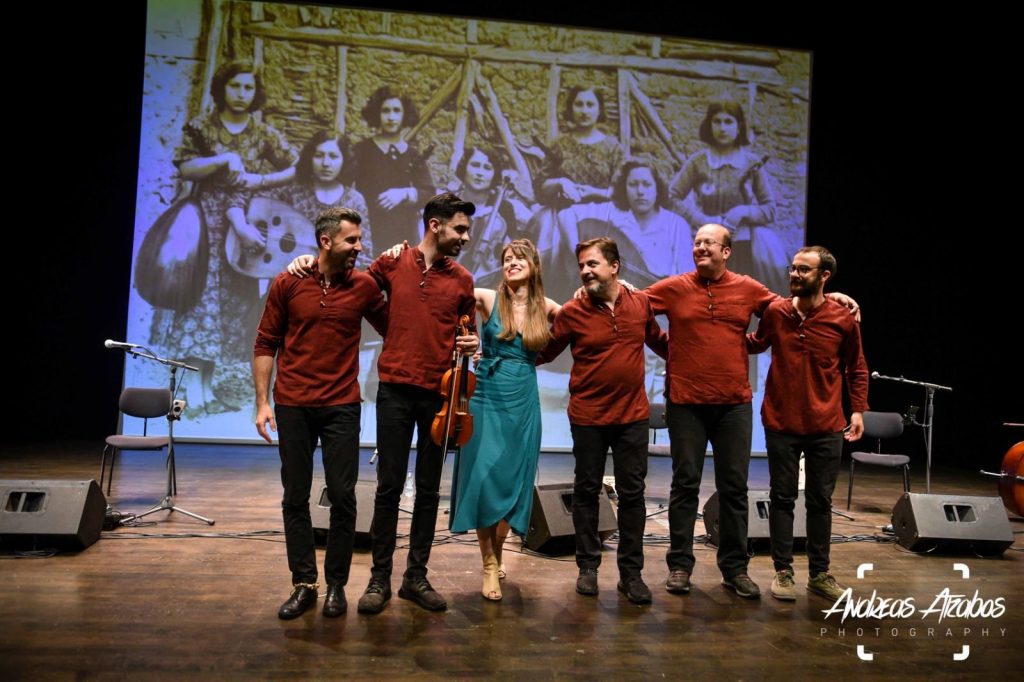
One of the stand out events of the Greek Festival of Sydney’s cultural program this year is the Rebetiko – Symphony Concert on Friday, April 21 at the City Recital Hall in Sydney.

The concert, which is being presented by the Greek Orthodox Community of NSW (GOCNSW), will see international vocalist Ifigeneia Ioannou come direct from Greece to perform classics from the iconic Rebetiko film by Costas Ferris, and the original music by Stavros Xarchakos.

The performance will also feature music by Kostas Skarvelis, Vassilis Tsitsanis and Panayiotis Toundas, under the direction of George Ellis.

Ifigeneia.

Ahead of the event, The Greek Herald spoke with Ifigeneia about her passion for rebetiko and what people can expect when she arrives in Sydney.

Please tell our readers about yourself, Ifigeneia. What inspired you to become a singer?

It was clear from early on in my life that I would become involved in music since I come from a musical family. Both my parents are professional teachers of music and my grandmother and grandfather used to sing at home. I started my musical studies from a young age with classic guitar. I attended a music school and later on a music university and that is how singing came into my life because I simply started singing the songs I listened to.

Ifigeneia playing a musical instrument.

What has been a highlight of your career so far?

I can recall a number of significant moments and collaborations with renowned artists, however I think that the highlight of my career was the moment I discovered the qanun because it opened up new musical paths for me and also helped me with my singing.

You will be performing at a Rebetiko concert in Sydney this year. What is your connection to rebetiko music?

Rebetiko is the source of Greek folk music and expresses the popular Greek soul. This music was created under conditions of poverty and migration and the lyrics speak with all the eternal things that concern everyone such as love, death, poverty, being and immigrant or refugee and so on. That was the way it spoke to my own soul when I first listened to Rebetiko songs.

Ifigeneia with other musicians.

What can people expect to see from your concert?

In the first part, together with the Sydney Symphony Orchestra, we are going to present the work of the great Greek composer Stavros Xarchakos, who wrote the music for the film Rebetiko. In the second part we are going to play selected, classic Rebetiko songs that the audience can all sing along to and enjoy. 

Do you have a message for the Greek community in Australia?

Greek traditional and folk songs unite us and the soul of Hellenism because through such songs we get to share our common history once again and all the joys and sorrows we have been through. Through our music we are reunited, and I am grateful to be given the chance to contribute to the reconnection with our roots.  

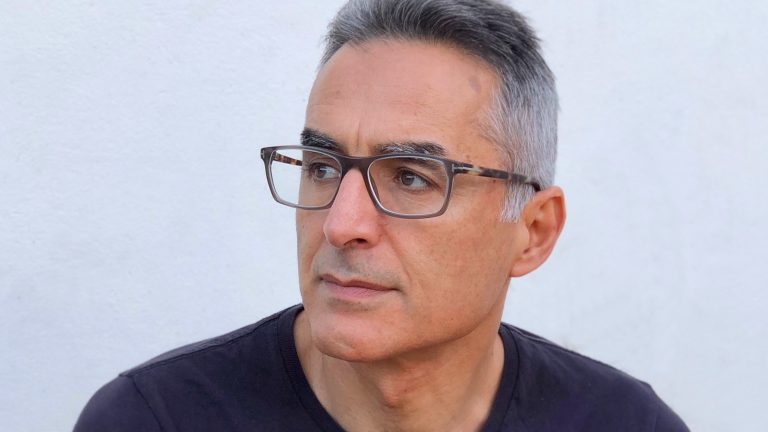
Ifigeneia Ioannou.

Is there anything else you’d like to say?

The invitation I received from the Greek Festival of Sydney is a great honour and I can’t wait to find myself with all these people and to celebrate with music. 

Event Details:

  • What: Rebetiko – Symphony Concert
  • When: Friday 21 April 2023
  • Where: City Recital Hall, 2 Angel Pl, Sydney
  • Book: cityrecitalhall.com or phone 02 8256 2222.

Diasporic visibility in Sydney’s post-war Greek areas to be explored in seminar

Professor George Kouvaros from the University of New South Wales will present a lecture entitled Diasporic Visibility in Sydney’s Post-War Greek Neighbourhoods at the Greek Centre on Thursday, March 23 at 7pm.

The seminar will be conducted in English and is part of the Greek History and Culture Seminars offered by the Greek Community of Melbourne (GCM).

This seminar will consider how the generation of Greek migrants that settled in Sydney during the post-war period approached the task of making themselves visible — to themselves and others. In particular, it will focus on the role played by vernacular photography (snapshots and family portraits, wedding and christening photographs) in this process.

The assumption underpinning this study is that a neighbourhood is not only a geographic entity, but also a place of recognition. This seminar will reflect on the role played by photography in establishing the terms of this recognition. It will draw out what the photographs produced by this generation of Greek migrants reveal (about their material circumstances and habits), as well as the type of work they performed.

What do these enactments tell us about the unspoken tensions and ambivalences that underpinned diasporic home-making in the post-war period?

George Kouvaros is a Professor of Film Studies in the School of the Arts and Media, University of New South Wales. His most recent book is The Old Greeks: Photography, Cinema, Migration (University of Western Australia Press, 2018). In 2020, he was awarded an Australian Research Council Linkage Grant for the project ‘Remembering Sydney’s Post-war Greek Neighbourhoods, 1949-1972.’ In partnership with the State Library of NSW, UNSW and the Greek Orthodox Community of NSW, this grant is being used to fund the creation of the Greek Australian Archive.

This seminar offers a rare opportunity to learn from one of Australia’s foremost cultural theorists and film scholars and to gain insights into the rich history and culture of the Greek Australian community.

Event Details:

  • When: Thursday, March 23, 2023, at 7pm
  • Where: The Greek Centre, Mezzanine Level, 168 Lonsdale Street, Melbourne
  • Language: English
  • Admission: Free

Alex Levonis on his struggle to secure housing amid Victoria’s rental crisis

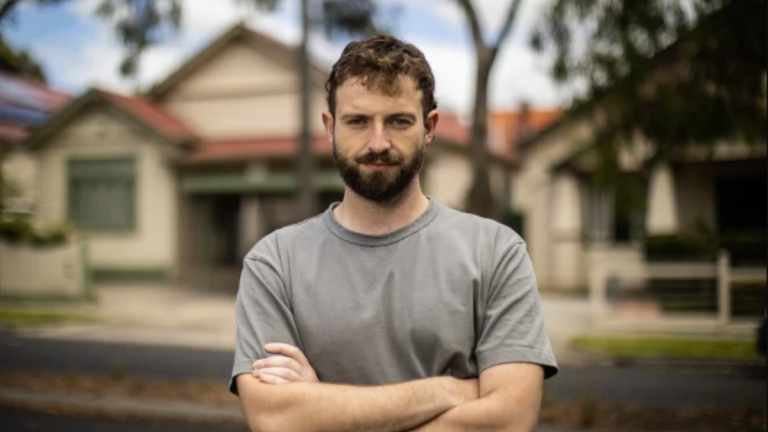
Alex Levonis has revealed his struggle to secure a suitable living place amid Victoria’s rental housing crisis.

In a recent interview with ABC News, Mr Levonis said he applied for 30 Melbourne rental properties over a few weeks and called real estate agents, only to be left with no response.

Eventually the full-time freelance graphic designer found a lease on Facebook from a stranger, but the place needs repair. He said he’s afraid to ask the landlord for any improvements in case they increase the rent.

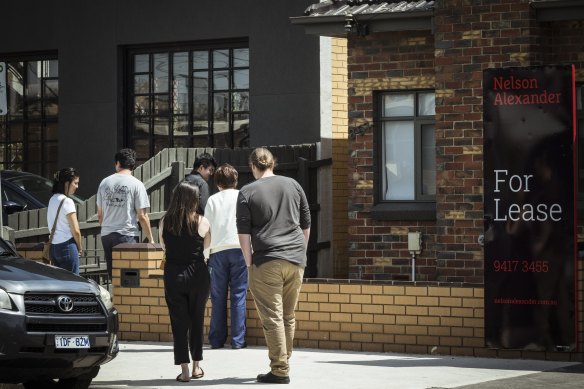
Vacancy rates are just 1.4 per cent in Melbourne, where rents have hit record highs.
Vacancy rates are just 1.4 per cent in Melbourne, where rents have hit record highs. Photo: Chris Hopkins.

This comes as Victoria’s rental crisis begins to affect not just those traditionally facing hardship, such as the long-term unemployed, but also people who are in work and have good rental histories. 

Tenants Victoria has called for action at all levels of government in the form of increasing housing stock — by the thousands — and caps on rental hikes.

In a statement, a spokesman for the Victorian government said it is providing support “that is making a difference” with reference to Build-to-Rent projects designed to be long term rentals.

Source: msn.com

Greek island of Kefalonia crowned ‘best place’ to visit this summer

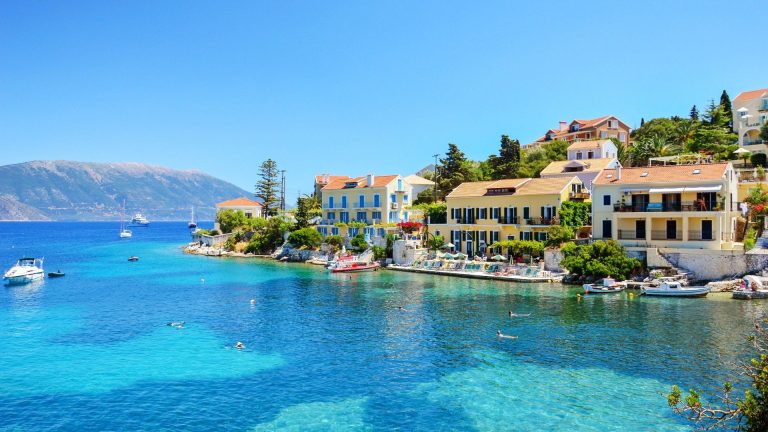
While the beauty of Mykonos, Santorini, Paros and Crete is undeniable, the Greek island of Kefalonia has emerged as the new ‘best place’ to visit this summer.

According to a UK travel magazine, Which?, Kefalonia’s “rugged beauty” and “peace and quiet” won the hearts of 1,000 voters.

The Greek island of Kefalonia.

The villages of Mousata, Trapezaki, Afrato and Lourdata, alongside the sweeping views of the Ionian Sea, were the most favourable.

The Melissani caves and Cycladic architecture also captured voters as it differs from the traditional white-painted houses and flat beaches of other Greek islands.

Source: Travel off Path

Giannis Antetokounmpo basketball court begins construction in Ghana

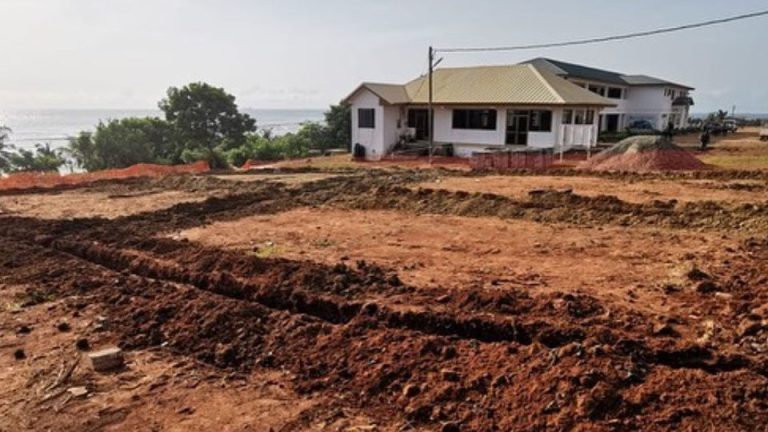
A basketball court in Ghana, named after the NBA Greek Nigerian star, Giannis Antetokounmpo, has begun construction.

According to a tweet by the Greek Foreign Ministry, the new basketball court will be jointly funded by the Greek government.

The idea for a basketball court was proposed by Greek Foreign Minister Nikos Dendias after his visit to St Nicholas Greek School in January.

Antetokounmpo made his NBA debut on October 13, 2013 at the age of 18 as one of the youngest NBA players ever.

Since then, Antetokounmpo won back-to-back NBA Most Valuable Player Awards in 2019 and 2020, joining Kareem Abdul-Jabbar and LeBron James as the only players in NBA history to win two MVPs before turning 26.

Source: Ekathimerini

NSW must support independent multicultural media

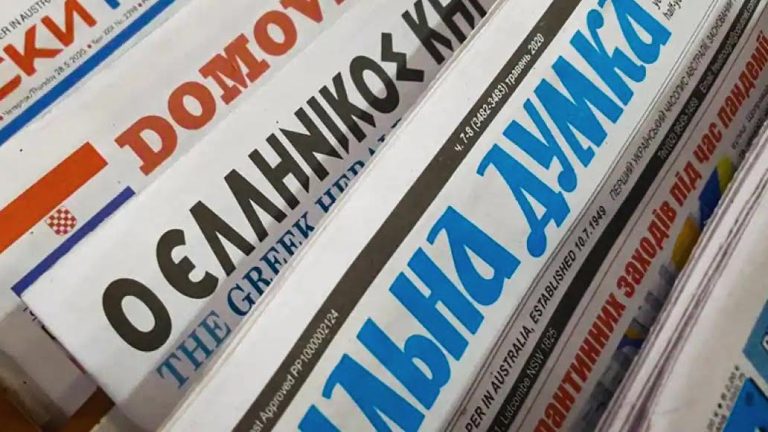
Independent Multicultural Media Australia (IMMA) is calling on the NSW government and the Opposition to support independent multicultural media with a resilience and digital transformation fund.

Federal and state governments have spent over $100 million in support to regional and mainstream media over the last five years. 

Although IMMA supports efforts to bolster local and national media, the sustainability of the independent multicultural media ecology remains at risk in NSW due to insufficient government support.

Multicultural media is critical for providing information and acting as a platform for multicultural communities. IMMA members are a trusted source of culturally relevant and targeted information and connection for those communities. 

Communication with multicultural communities is effective when provided in culturally, faith and linguistically specific ways from trusted sources embedded in the communities they serve. 

And yet, the ability of independent multicultural media to continue to do public interest journalism for communities is under threat. 

Independent multicultural media organisations in print, radio, broadcast and online have experienced enormous challenges as tech giants and digital disruption encroach on our traditional revenue streams.

Print prices alone have increased by 50 percent since last year and costs keep augmenting as incomes continue to decline in media spend, specifically on government messaging.

The COVID crisis brought to light the importance of independent multicultural media in communicating to diverse communities. We communicated COVID-Safe information with integrity, authority, and in the nuanced voice our members understand.

Funds have been allocated to regional and mainstream media over the years, whilst governments also spent big on mainstream campaigns and big tech platforms during COVID, without prioritising independent multicultural media and often at great detriment to multicultural communities and the wider Australian community.

In June 2022, the NSW Government announced a $28 million package to support whole-of-Government Language Services.

Today, the NSW Liberal government also announced it will double the proportion of mandatory advertising spend for government departments to better communicate with diverse communities from 7.5 percent to 15 percent.

Whilst members of IMMA welcome this recent announcement, there are still concerns around the allocated spend reaching media outlets.  

“We welcome that the government has finally recognised independent multicultural media,” Julius Larobina, the publisher of Il Globo, La Fiamma, Niche Radio Network and Il Globo TV, said.

“The 15 percent is a great milestone and recognises the role we play in public interest journalism. We look forward to further policy clarification that ensures spending actually goes to independent media outlets.”

For years now, government messaging has been pushed through government departments and language services – not always in a timely matter – rather than providing direct financial support to independent multicultural media to continue to provide their own in-language information.

IMMA calls on the NSW government and the Opposition to commit to supporting a diverse media landscape with a sustainability and digital transformation fund as it has with the current $3 million Regional Media Fund.

“We are not just media outlets, but institutions. We are trusted and valued as a voice of and for our communities. Our platforms continue to deliver government messages or announcements relevant to our communities using our resources with reduced support being provided in return,” Dimitra Skalkos, publisher of The Greek Herald, said.

“It’s not just about language. Even when produced in English, the language reflects the tenor of culturally diverse Australians.”

Fotis Kapetopoulos, the Secretary of IMMA, explained: “Our audiences account for 40 percent of Australians, up to 5 million every month and they are intergenerational audiences – we talk to individuals, to families, and to communities, we ignite word of mouth.”

“IMMA was formed to advocate for effective government communications and for the advertising allocation set by all governments for independent multicultural media to be spent on independent multicultural media,” Mr Kapetopoulos added.

Wendy Huang, the publisher of the Chinese Herald, emphasised: “We are important to the whole media ecology, many of us are family businesses, that employ professional and emerging journalists and our role is essential in a democratic society.”

“I’ve reiterated to both parties that not only are we the trusted source and the voice of our Chinese Asian Communities, we are also the bridge between the government and the communities,” Keith Tan, publisher of the Australian Chinese Daily, concluded.

NSW Liberals commit to increasing support for multicultural media outlets

Recognising the valuable work of multicultural media outlets, a re-elected NSW Liberal and Nationals Government will double the proportion of mandatory advertising spend for government departments to better communicate with diverse communities.

The commitment will see all major campaigns coordinated by NSW government departments required to increase the minimum multicultural advertising spend from 7.5 percent to 15 percent.

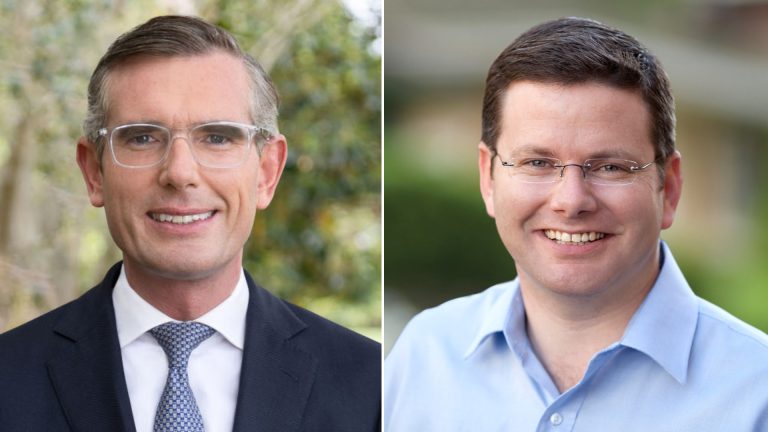
NSW Premier Dominic Perrottet said this commitment by the NSW Liberals and Nationals is about recognising the importance of multicultural media outlets in keeping diverse communities connected and informed.

“Each outlet speaks directly to their respective communities and plays an integral role in informing them, which we saw clearly during the crises of the past few years,” Mr Perrottet said.

“This is especially the case for making sure that people with limited English proficiency can understand and engage with the key government messages, especially regarding access to government services.”

This commitment builds upon the ongoing review into the multicultural advertising policy, which will give greater consideration to departments advertising with independent multicultural media outlets in all campaigns.

Through this policy revision, departments will be required to regularly report on their advertising spends, so the government can review and continuously improve how we communicate and engage with communities.

Minister for Multiculturalism Mark Coure said it is important departments are working with these outlets to ensure that our communities are as well informed as possible as NSW continues to grow and become more diverse.

“A strong multicultural media industry means we have well-informed and engaged diverse communities,” Mr Coure said.