Ancient Troy coin discovered in Berlin reveals early Greek connections to northern Europe

·

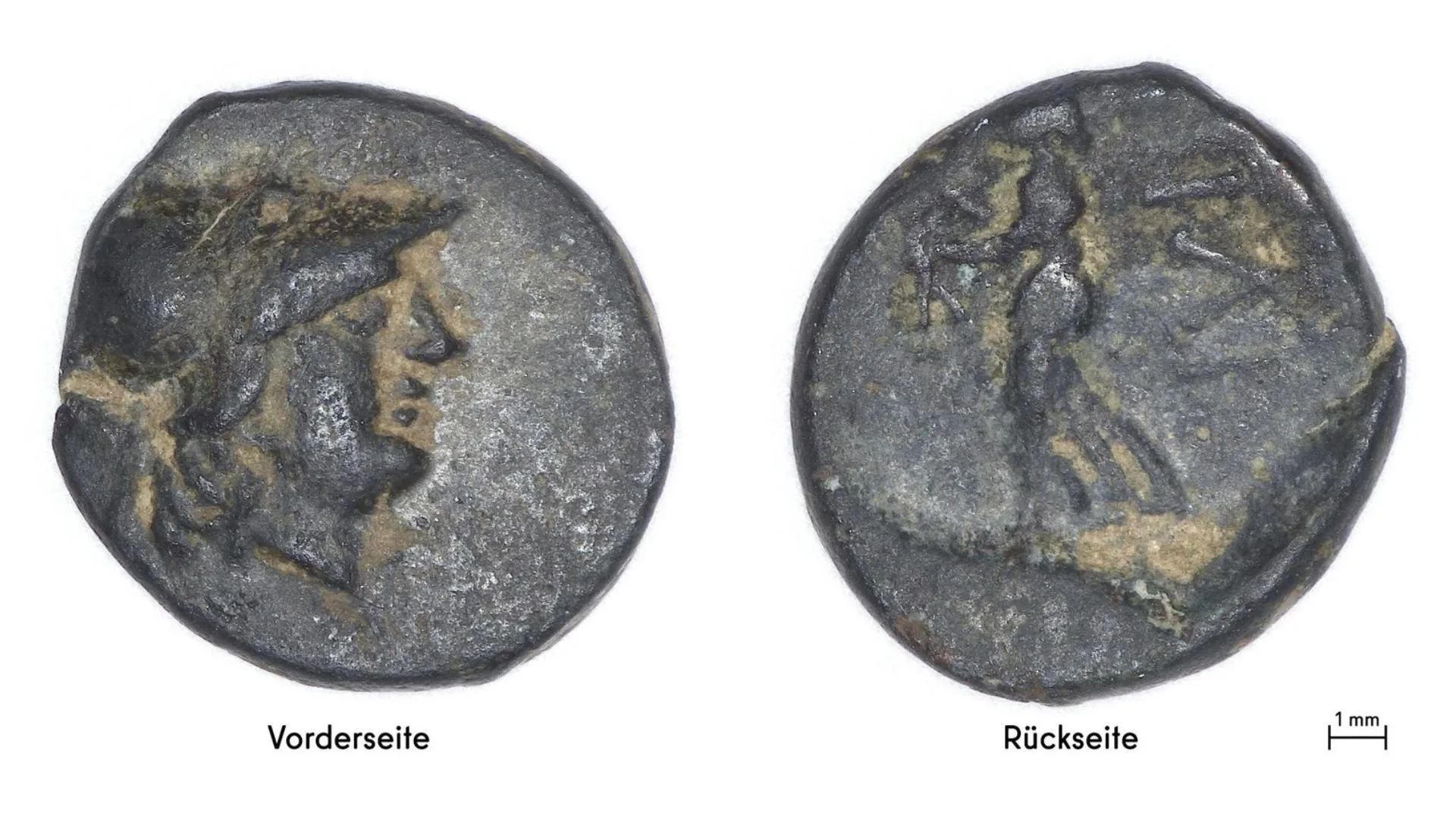
A simple walk across farmland in Berlin led to an extraordinary discovery linking the city to the ancient Greek world, according to arkeonews.com. In the Spandau district, a 13-year-old student found a small bronze coin later identified as a rare artifact from Troy, dating back around 2,300 years.

The coin, just 12 millimeters wide and weighing about seven grams, was minted between 281 and 261 BC during the Hellenistic period in Ilion. Its design reflects strong Greek influence: one side shows the goddess Athena wearing a Corinthian helmet, while the other depicts Athena Ilias holding a spear and spindle, highlighting its cultural and artistic significance.

Initially, archaeologists questioned whether the object had been recently lost. However, further investigation of the site confirmed its authenticity. Excavations revealed evidence of long-term human activity, including a burial ground with cremated remains, pottery fragments, and objects from the Bronze Age, Iron Age, Roman period, and even Slavic times. This layered context suggests the coin was part of an ancient cultural landscape rather than a modern intrusion.

The find is especially important as it represents the first confirmed Greek antiquity discovered in Berlin, where only Roman artifacts had previously been recorded.

Although its exact journey remains unclear, experts believe it may have traveled along ancient trade routes connecting the Mediterranean with Northern Europe, possibly linked to the amber trade. Given its modest value, the coin may have served a symbolic or ritual purpose, perhaps as a grave offering.

Now displayed at PETRI Berlin, the coin offers a rare glimpse into ancient connections across distant regions.

Source: arkeonews.com

Share:

KEEP UP TO DATE WITH TGH

By subscribing you accept our Terms of Service and Privacy Policy.

Latest News

A century on, Cypriot and Australian wartime ties meet again in Lakemba

A century after fighting side by side, Cypriot and Australian histories reconnect in Lakemba as the Cyprus Community marks ANZAC Day.

Skopelos and Andros featured among top surprise travel destinations for 2026

Two Greek islands, Skopelos and Andros, have been named among the top “surprise destinations” for 2026 in a feature by Euronews.

Homeric-era broth at center of Greek heritage claim, drawing response from Turkey

A centuries-old dish made from bovine bellies and legs has sparked a fresh cultural dispute between Greece and Turkey.

Greece strengthens its position in Australia’s growing olive oil market

During October 2025 to January 2026, imports in key markets rose by 9.2% compared to the same period a year earlier.

‘Anyone for spanakopita?’ Vasilis Vasilas headlines Marrickville cultural evening

Vasilis Vasilas led a packed Marrickville event exploring Greek migration and cuisine, with spanakopita at the centre of the celebration.

You May Also Like

Melbourne Greek school students shine in 2020 VCE results

Congratulations to the students of Alphington Grammar and Oakleigh Grammar for their incredible VCE results!

Professor Anastasios Tamis: The Australian Government disgraced the Greek language

The decision of the Government of Australia not to vote in favour World Greek Language Day is a historic hybris to our homeland Greece.

Sardella Day returns: Mytilenian Brotherhood bringing a taste of Lesvos to Sydney

The Mytilenian Brotherhood of Sydney has announced the return of its annual ‘Sardella Day’ event on Sunday, September 22.