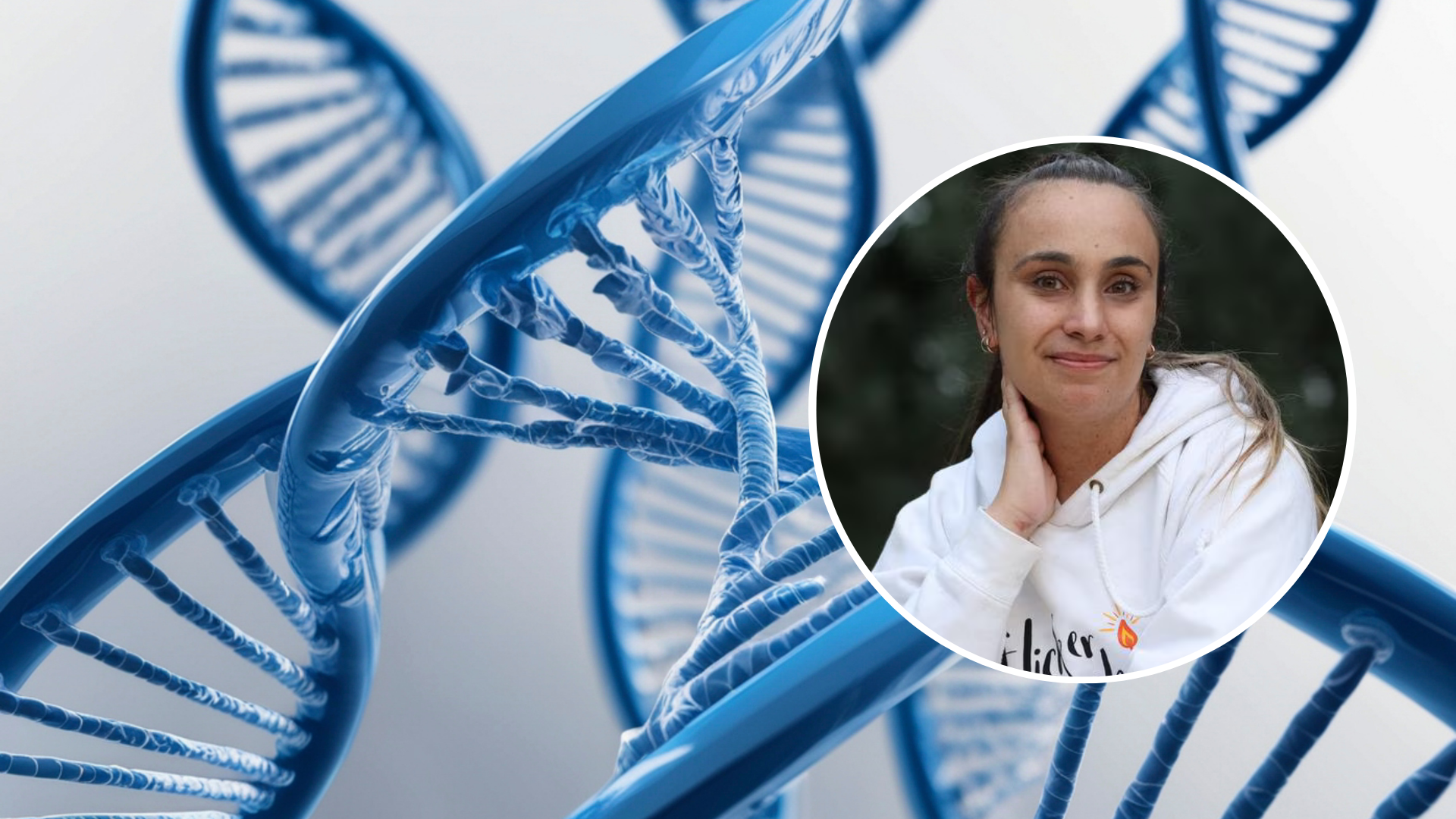
Years of fundraising by Zoe Petropoulos and her family have helped support research behind a promising breakthrough that could lead to simple, low-cost treatments for neurofibromatosis (NF), a genetic disorder affecting around one in 2,500 Australians.
The 25-year-old teacher’s aide has spent years raising awareness and research funds through the family’s Flicker of Hope Foundation, which has contributed more than $4 million to NF research projects around the world, including work at Melbourne’s The Florey Institute of Neuroscience and Mental Health.
The cause is deeply personal for Petropoulos, who lives with NF and has undergone regular scans since a tumour was discovered in her sinus cavity at age 12.
“I consider myself really lucky because I’ve got it relatively mildly in comparison to other people,” she said.
“I’ve had to have scans from the age of 12 when they found a tumour in my sinus cavity. They removed it and we thought that was that. Fast-track a few years and I had a full body scan that found I had five tumours that could have been there for years undetected.”
The disorder has also devastated her family. Her sister-in-law, Liz, died from NF3 in 2023 at the age of 33, leaving behind her husband Nick and two children. Weeks later, Liz’s mother, who also had NF, died.
Researchers at The Florey have now identified significant differences in the gut microbiome of mice with NF1, a discovery that could open the door to new treatments for cognitive and behavioural difficulties associated with the condition, including autism and ADHD.
Lead researcher Sonali Reisinger said the findings suggest future therapies may be as simple as dietary changes or probiotics.
“We might be able to just modulate the diet or give prebiotic or probiotic treatments which are easily tolerated and also cheap and easily available,” she said.
The research team, led by Anthony Hannan, hopes to secure funding for clinical trials to determine whether similar gut microbiome changes occur in people with NF1.
“Recent research has focused on whether bacteria in the gut might be involved in brain conditions, but this has not been studied in NF1 until now,” Professor Hannan said.
“Our new findings add to mounting evidence about the connection between the brain and gut. If we can replicate this study in humans, it paves the way for potential new therapies to help people living with NF1-related cognitive and behavioural difficulties, including autism and ADHD.”
The findings have been published in Molecular Psychiatry, offering fresh hope to families like the Petropouloses who have spent years funding the search for better treatments and, ultimately, a cure.
Source: Daily Telegraph.
