Minister for Finance Courtney Houssos today announced the NSW Government will move to pause payroll tax audits for GPs and their practices for 12 months to allow for ongoing consultation with the Royal Australian College of General Practitioners and Australian Medical Association (RACGP).
This follows the release on 11 August 2023 of a practice note by Revenue NSW on payroll tax rules affecting GPs. The note was released after the conclusion of a series of court cases contested by the former Government on the matter.
“This matter is historic and dates back to before 2018. Its resolution has been hampered by multiple court hearings and the neglect of the previous Coalition Government. We understand this neglect has created great uncertainty in the GP community.
“This will take time but we are committed to doing this carefully and thoughtfully to achieve the best result we can.” Ms Houssos said.
There will also be a 12 month pause on tax penalties and interest accrued on outstanding payroll tax debts incurred before and at the commencement of the 12-month period.
The RACGP has welcomed the recent announcement by New South Wales Government.
“I thank the NSW Government for taking this important first step to stop any forced closures of GP clinics due to the new application of payroll tax – I know GPs and their patients across NSW will be doing the same.” Dr Nicole Higgins, President of RACGP said.
The change will be implemented through an amendment to the Revenue, Fines and Other Legislation Amendment Bill.
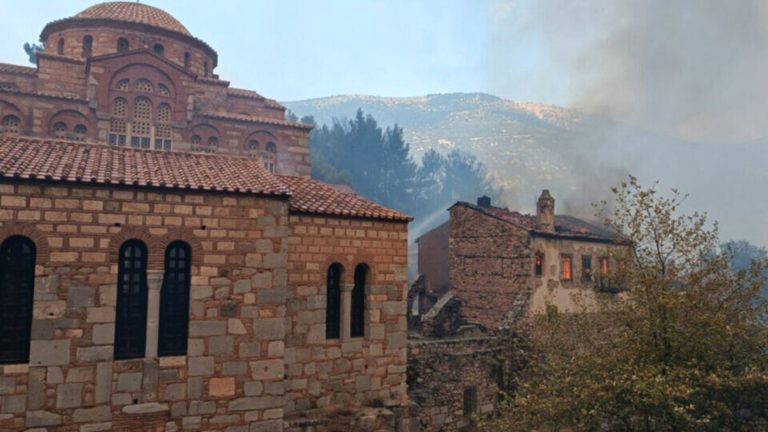
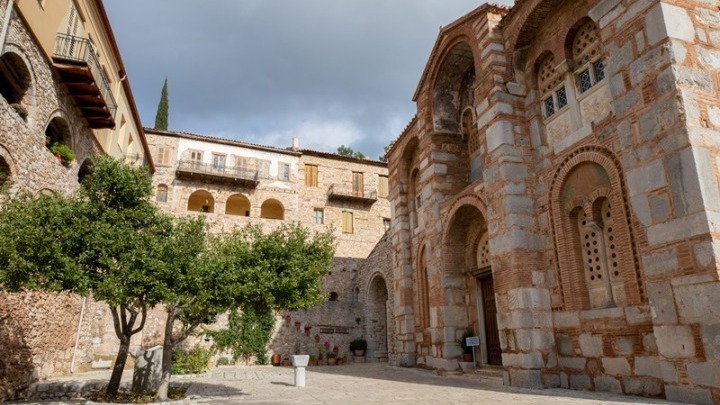
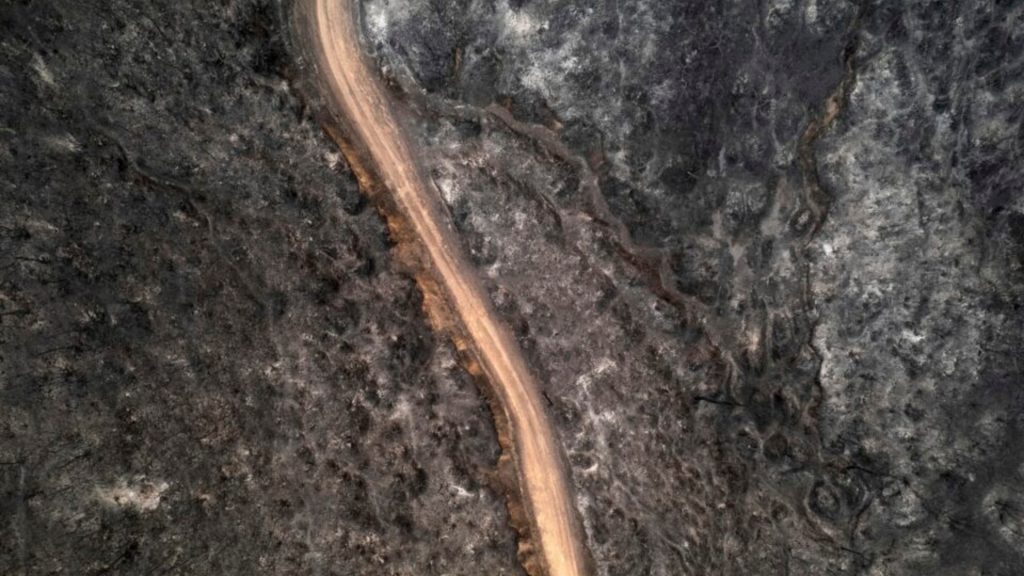
UNESCO World Heritage site, the monastery of Hosios Loukas in Stiri central Greece, has been under siege by raging fires which reached the area on Wednesday.
One of the oldest edifices on the premises was reportedly affected including its roof. As part of the response, the evacuation of the monastery took place earlier on Wednesday.
The site is one of the most important Byzantine monuments in the world and firefighters have been working to save the monastery from total destruction, reported Ekathimerini.
The Bishop of Thiva, Livadia, and Avlida is also on-site, lending support to the endeavours aimed at safeguarding the monastery, according to amna.gr.
Fires approach the Hosios Loukas monastery in central Greece. Photo: amna.gr.
Within the confines of this site lies a remarkable assortment of mosaics from the Macedonian Renaissance of Byzantium, making it one of the best-preserved repositories of its kind.
Braga beat Panathinaikos 2-1 in a entertaining and hard-fought encounter in Portugal on Wednesday, as both teams attempt to make the Champions League group stage after an absence of more than a decade.
Artur Jorge’s team struggled to get their game going before the break, but Abel Ruiz and Álvaro Djaló scored in the second half to put Braga in command, with Rony Lopes seeing a golden chance to make it 3-0 saved by Italian goalkeeper Alberto Brignoli.
Moments later Daniel Mancini scored for the visitors, meaning the Portuguese team will have to defend a single-goal lead in Athens next week.
Panathinaikos face Braga again next Wednesday, August 30, in the second round of the play-offs.
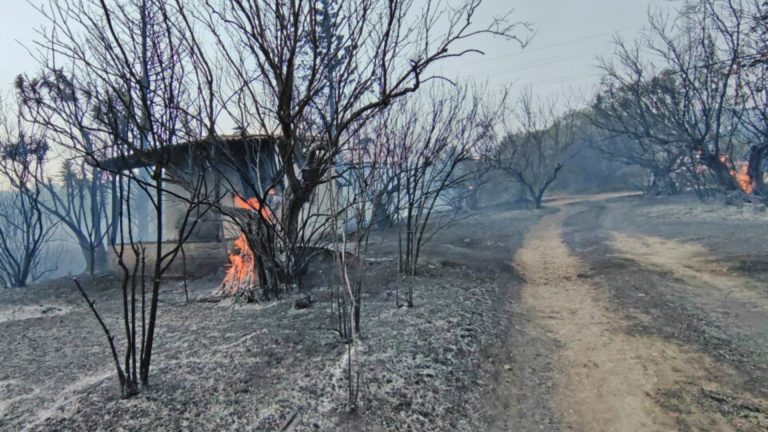
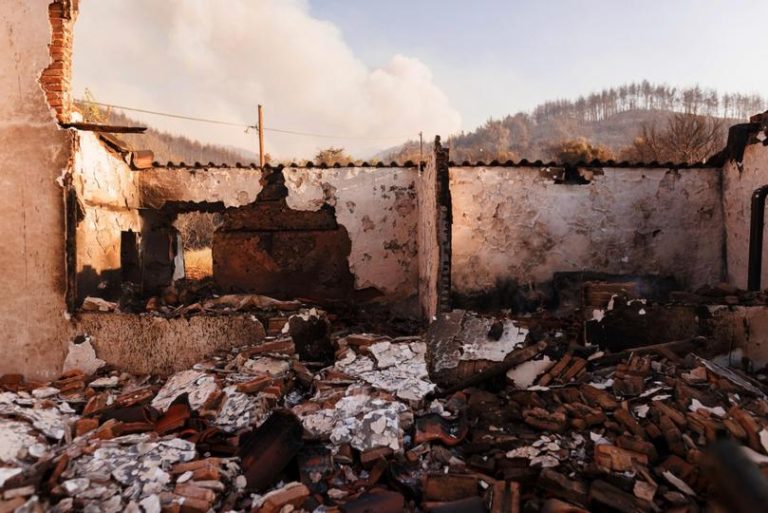
The death toll has risen to 20 people over the past three days as the fires burn out of control for the second time this summer in Greece, according to the latest reports on Wednesday, August 23.
A suspected migrant was found dead in the area and an elderly shepherd had also been found dead in the north of Athens on Monday.
According to Ekathimerini, the wildfires have been burning in the city of Alexandroupolis in the northeast, in the northwestern fringe of Athens and into Parnitha national park.
Climate Crisis and Civil Protection Minister Vassilis Kikilias, said in a statement, firefighters have tackled 355 forest fires over five days from Friday to Tuesday. This includes 209 over the last 48 hours alone.
“Any firefighting forces, no matter how strong they were, would not have been able to bring it under control,” Kikilias said.
Georgia Adeilini, the Supreme Court Prosecutor of Greece, has called for an investigation into the origins of the devastating fire in the northeastern Evros region, alongside an exhaustive examination into reported instances of racially motivated violence against migrants.
According to Ekathimerini, this high-ranking legal authority has issued a directive to launch a combined preliminary inquiry led by the prosecutor of first instance in Alexandroupoli.
These incidents have come to light following the tragic demise of 18 individuals in the Dadia forest.
Photo: Ekathimerini.
The Supreme Court prosecutor is particularly focused on probing specific offenses, including the potential establishment, membership, and leadership of a criminal organization suspected to be connected to the arson attacks.
Concerning the aspect of her mandate that pertains to migrants, she has also underscored the necessity for a meticulous examination of crimes encompassing violence, endangerment, and abduction.
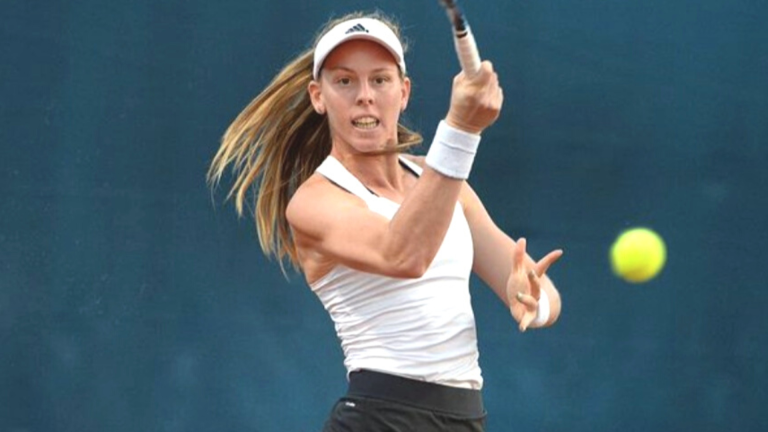
Despina Papamichail eliminated Jule Niemeier, No.89 in world ranking, with 2-0 sets, in her first match for the US Open qualifiers.
With a great victory, Despina Papamichael started her attempt at the US Open qualifiers, who defeated Jule Niemeier, No.4 on the board and No.89 in the world, with 6-3, 6-4 .
Despina came on strong from the start, taking a 3-0 lead in the 1st set. The 24-year-old German initially reduced to 3-2, but with a new break, Greek champion reached 5-2 and closed the set in the 9th game.
In the 2nd set, Niemeier gave it her all to stay in the tournament. Papamichail found herself with her back against the wall at 2-3, 0-40, but she erased all three break points of the German and managed to equalize at 3-3.
Papamichail held her serve throughout the 2nd set and in the 9th game she reached the big break, which put her ahead 5-4. She was then under pressure, losing 3 match points to see 40-0 become 40-40, but fearless, she reached a 4th match point and capitalized on it to complete her triumph in 89 minutes of play.
This victory sends Papamichael to the 2nd qualifying round of the US Open, for the 2nd time in her career, after 2021.
At the same time as Papamichail, Valentini Grammatikopoulou was also competing, who unfortunately did not succeed against the Japanese Haruka Kaji, losing 6-3, 6-3 .
Valentini Grammatikopoulou lost to the Japanese Haruka Kaji and was out of the US Open qualifiers.
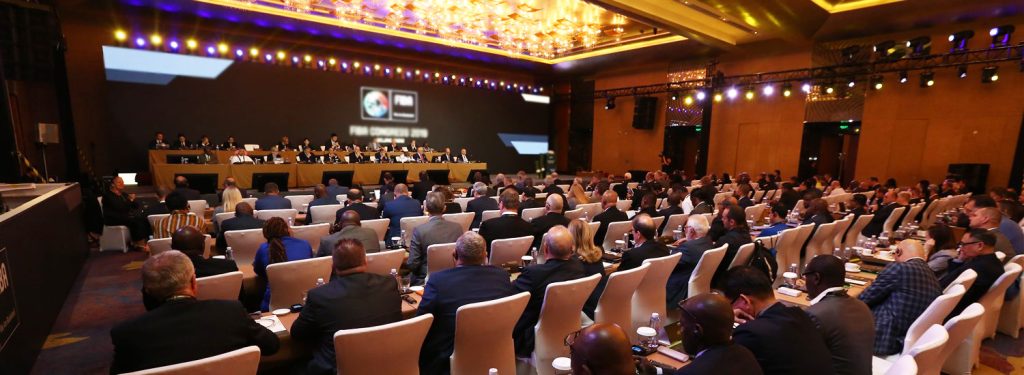
On Wednesday, August 23, in Manilla, the 22nd FIBA congress elected its new president Sheikh Saud Ali Al Thani and new members of the Central Board, among them the Greek Asterios Zois, for the upcoming cycle 2023-2027.
Sheikh Saud Ali Al Thani, who succeeds Hamane Niang in becoming the new President of FIBA, was elected unanimously by all in attendance. Sheikh Saud Ali Al Thani has been FIBA Vice President for the previous cycle, which began in 2019, and President of FIBA Asia since 2002, having formerly been President of the Qatar Basketball Federation and a Vice President of the Qatar Olympic Committee.
Sheikh Saud Ali Al Thani said upon his election: “It is a great honor to take over this responsibility: for me, for my country of Qatar, and for our continent of Asia. I now represent the interests of all 212 National Federations across all five Regions.
The following are the members of the Central Board for the term of 2023 to 2027:
Ms. Carol Callan from USA Mr. Yamil Alejandro Bukele Perez of El Salvador Mr. Usie Richards of Virgin Islands Ms. Yuko Mitsuya of Japan Mr. Yao Ming of China Ms. Carmen Tocala of Romania Mr. Matej Erjavec of Slovenia Mr. Asterios Zois of Greece Mr. Tor Christian Bakken of Norway Ms. Jubilee Kuartei of Palau Mr. Burton Ross Shipley of New Zealand Ms. Pascale Mugwaneza of Rwanda Mr. Jean-Michel Ramaroson of Madagascar
FIBA Congress has elected a new President and members of the Central Board for the upcoming 2023-2027 cycle in Manila.
These Central Board members, along with the newly elected President and Treasurer, will join FIBA Secretary General Andreas Zagklis as well as the Presidents of FIBA’s five Regions for the term of 2023-2027: Mr. Anibal Manave of Africa, Mr. Fabian Borro of the Americas, Dr. K Govindraj of Asia, Mr. Jorge Garbajosa of Europe and Mr. David Reid of Oceania.
The newly-formed Central Board will meet for the first time on Saturday, September 9, in Manila, on the occasion of the Finals weekend of the FIBA Basketball World Cup 2023.
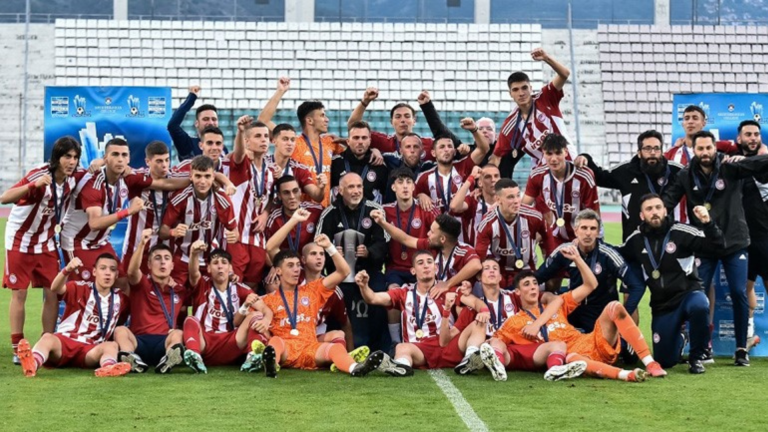
Paraskevas Pleionis will continue his career in Italy, who last season won the championship of Greece with the Olympiakos U17 team.
The Italian team reached an agreement with Olympiacos for the acquisition of the 17-year-old midfielder, so the young player, who made his presence felt in last year’s Super League U17 championship, is packing his bags for the neighboring country.
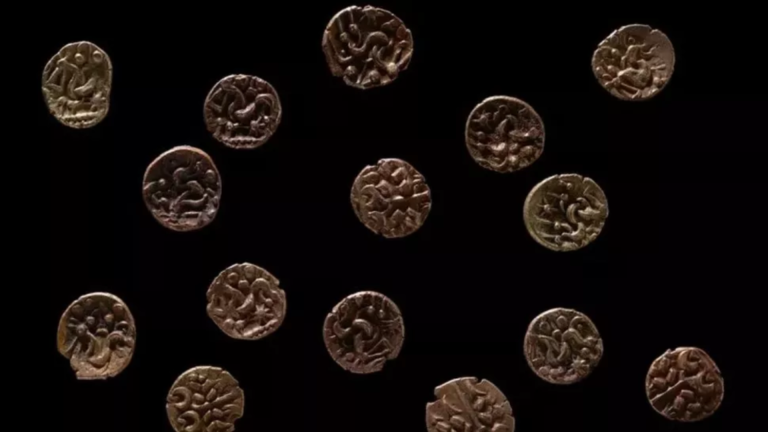
Scattered across an open field in Anglesey, Wales, metal detectorists have found a trove of Iron Age gold coins depicting the Greek God Apollo.
The hoard consisting of 15 rare coins are believed to have been minted between 60 and 20 BC, with their distinct design features influenced from the time of Phillip II, the king of the ancient Macedonian kingdom.
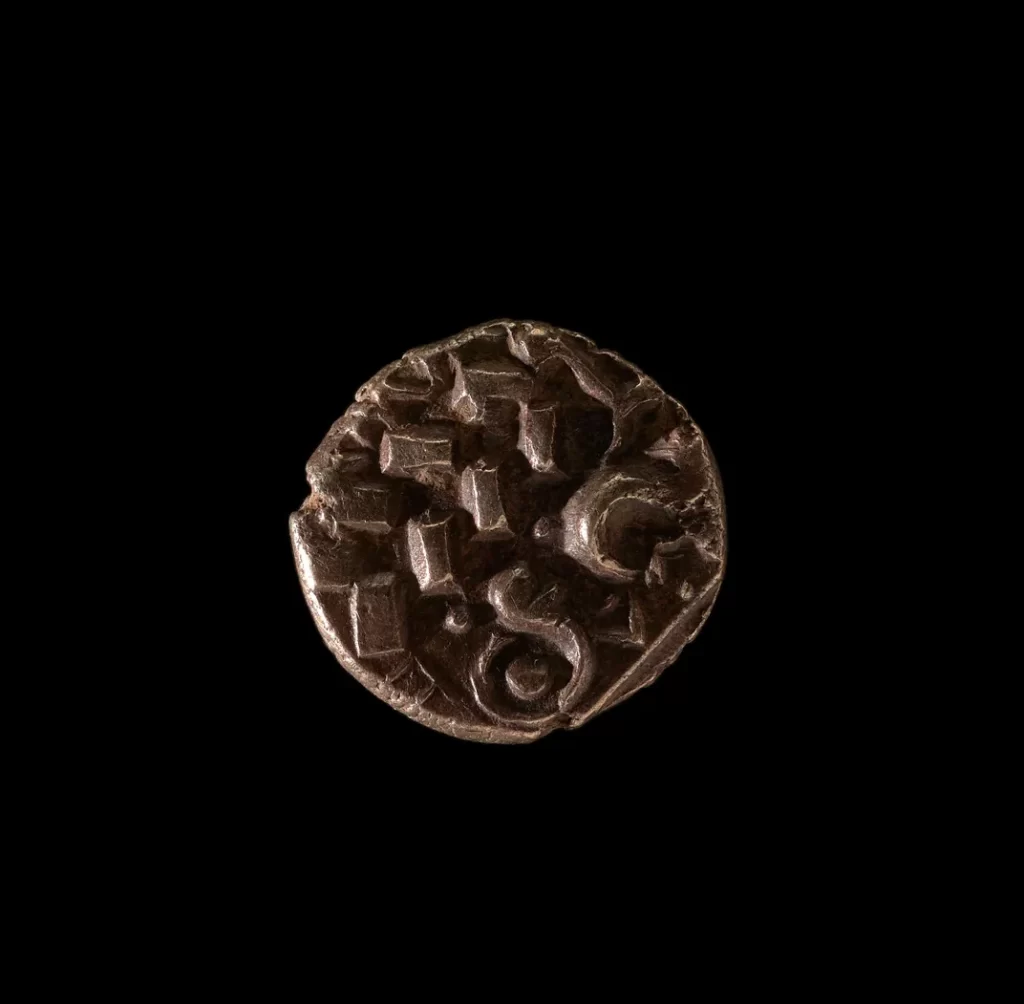
On one side, the coins showcase the Greek God Apollo, adorned with a wreath, whilst on the other side sees a two-horse chariot with a rider.
One of the coins discovered depicting a range of different symbols. Photo: Smithsonian Magazine.
During the Iron Age, these well-preserved coins were known as ‘staters’, with many being used not for traditional currency but as gifts between the elite and as offerings to the gods.
According to experts from the Gwynedd Archaeologist Trust, the hoard is a fantastic example of the rich archaeological landscape and helps increase our understanding of this region.
The historical and religious monuments of the peoples are universal legacies, property of all the people of our planet, as well as the property of the unborn. These monuments are and should be a universal heritage, and consequently they demand our respect, away from nationalist outbursts and libertarian tendencies. As monuments of culture, they must rightfully have the welfare of the states and governments that host them, but also the respect of the citizens entrusted with their preservation, guardianship and welfare.
With these thoughts I had the good fortune to walk the streets of the ancient city of Thessaloniki, the capital of Macedonia and the co-capital of Byzantium and the modern Greek state, a city that flourished during the last 2400 years.
It is so enchanting, so unique to gaze from afar and up close at a city with its castles, its towers, its monuments, its alleys, its hills that pour into the Thermaikos Gulf. A story unique on a global scale.
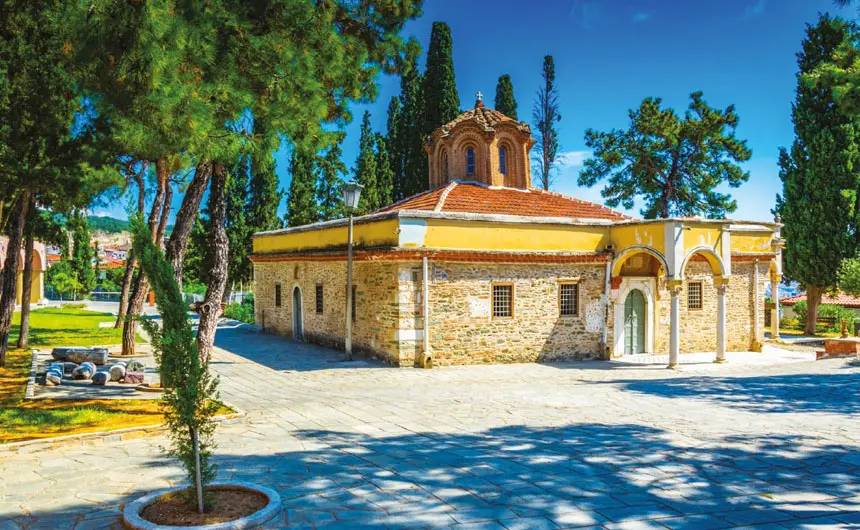
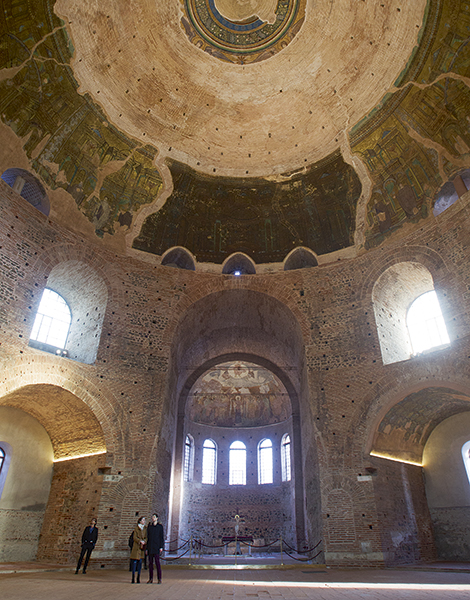
No other city in Greece combines Classical, Roman, Byzantine, Ottoman, and Neoclassical so consistently, so vividly, so intensely and so significantly. At every turn of the road it is thrown and emerges through the centuries that have passed, sometimes its Hellenistic monuments, sometimes the Roman agora, sometimes the palaces of the Roman Emperors, the famous Rotunda, when Thessaloniki was the capital of the Romans, sometimes the hippodrome of the Byzantines, where thousands of national Greeks were martyred and fell from the swords of Spaniard Theodosius, sometimes its Byzantine castles, sometimes the dozens of churches of Christianity that are about to complete two thousand years of history, sometimes the Tribune of Apostle Paul at the Monastery of Vlatades.
Tribune of Apostle Paul at the Monastery of Vlatades. Photo: Celestyal Cruises.
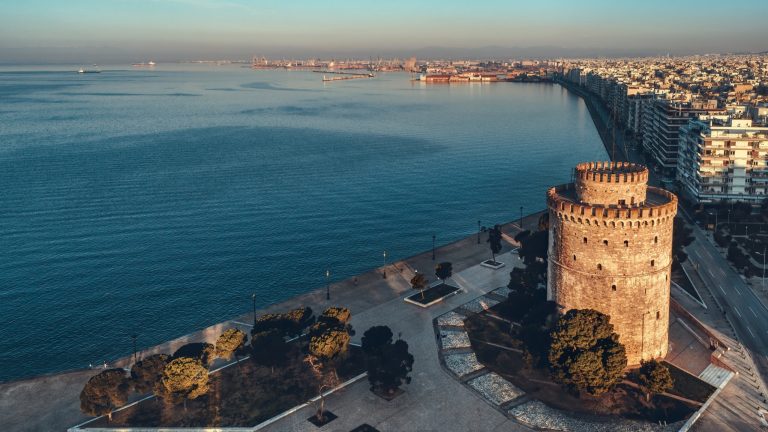
Elsewhere appear the Ottoman monuments that the city was dressed by its conquerors, the Tower of Blood and Martyrdom, which was euphemistically named “White Tower,” the majestic mosques of their worship that adorn Thessaloniki, the Yeni Mosque but also the only in the Balkans and only second in the entire Ottoman Empire mosque with a peristyle on the Via Egnatia, the other beautiful monuments of the Ottomans, their neighbourhoods, and houses, left behind by the exchanged Ottomans.
And what can one say about the magnificent mansions of Jewish merchants and bankers in the suburbs of the countryside, the endless streets with mansions and neoclassical buildings in the city center that did not have time to be devoured by the greed of the builders and developers of the 1960s, the decade that essentially destroyed the architectural face and the history of centuries throwing in ruins and destruction many such architectural artifacts. What can one say about this city with a continuous living history of 2400 years (Athens, as a city, could not have life for more than 700 years), with the cohabitation of peoples, Balkans, and Jews, with the historical characteristics that each people left as culture on its body.
Many times, we, Greeks, are fascinated by the national philotimo and we take on the ruthless Erdogan, who, for the second time, “humiliatingly” transformed the seat of Orthodoxy, Hagia Sophia, the largest monument of Christianity into an Islamic temple, into a mosque. Our wounded national pride makes us hurt to see Muslims praying at Hagia Sophia. The case of Thessaloniki may offer us another dimension of approach and interpretation, if we consider that on many cemeteries of Ottomans, Jews, Romanians, Armenians of Thessaloniki, we built our universities, the Thessaloniki International Fair, amusement parks and playgrounds.
Let me also point out that at least two Ottoman mosques in the centre of Thessaloniki, where for 500 years Muslim believers prayed to their own God, had been transformed after the Second World War into cinemas, where for decades pornographic works were shown, flooded with soldiers, sailors and deprived husbands.
Inside one of the Ottoman Mosques in Thessaloniki. Photo: Greece Is
Thessaloniki, which had been baptised as “Mother Jerusalem” by its Jewish citizens and of course was demographically a population Babel, maintained its multicosmic character and multiculturalism through its neighborhoods and districts, with buildings and squares and hundreds of neoclassical buildings that give it, without exaggeration, the title of Little Paris.
These cities of world heritage and unique importance on a global scale need to be surrounded with equal affection not only by state care but also by all of us who visit them, and feel their history teaching us and making us responsible to continue the preservation of this heritage.
In my book about the Cretan hero Ioannis Kouromichelakis, I had devoted a few pages of chronicle testimony to some of the monuments of Thessaloniki, as experienced by this Cretan officer, as he landed in Thessaloniki for the Macedonian front during the First World War. Readers will have the opportunity to learn about how thousands of Greek soldiers from the Aegean islands and Crete saw the City of Thessaloniki 110 years ago. The brave Cretan Lieutenant Ioannis Kouromichelakis was an officer of the 2nd Regiment Cretan Evzones, and had dedicated a third of his life to the struggle of his homeland, Greece, fighting on the fronts of Macedonia and Asia Minor, where he finally fell fighting in August 1921.
*Professor Anastasios M. Tamis taught at Universities in Australia and abroad, was the creator and founding director of the Dardalis Archives of the Hellenic Diaspora and is currently the President of the Australian Institute of Macedonian Studies (AIMS).