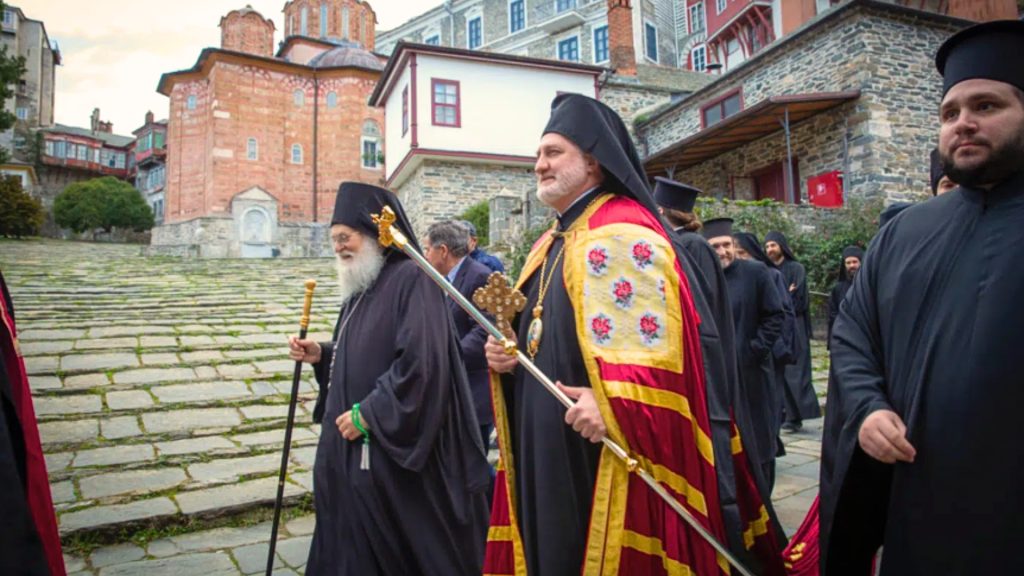
The Monastic Community of Mount Athos in Greece has stated that the head of the Greek Orthodox Church in America, Archbishop Elpidophoros is not welcome to visit the Holy Mountain due to his views on same-sex marriage.
In a letter addressed to the Ecumenical Patriarch Bartholomew, the representatives of the Greek Orthodox Monasteries expressed their reasoning behind their opposition to the visit.
“We regret to have found, through the published photographs of the Archbishop of America, a wrong impression was created regarding the Church’s acceptance of the marriage of individuals of the same sex. This message is contrary to the doctrines and teachings of the Orthodox Church,” the letter read.
Archbishop Elpidophoros at Mt. Athos at a previous visit to Mount Athos. Photo: Vatopedi Monastery.
In 2022, Archbishop Elpidophoros traveled to Vouliagmeni, south of Athens, to baptise the children of actor, Evangelo Bousis and fashion designer, Peter Dundas.
“Anyone who asks me to baptise their child I will do it, regardless of who it is. I baptise children and I don’t care about the personal life of their parents. I don’t judge people’s lives,” Archbishop Elpidophoros previously stated in relation to his views.
Elpidophoros had hoped to visit Mount Athos on the way to Thessaloniki later in January.
The announcement to oppose the visit has also come soon after Greece’s government indicated that it will carry out a commitment to allow same-sex marriage, defying the country’s powerful Orthodox Church.
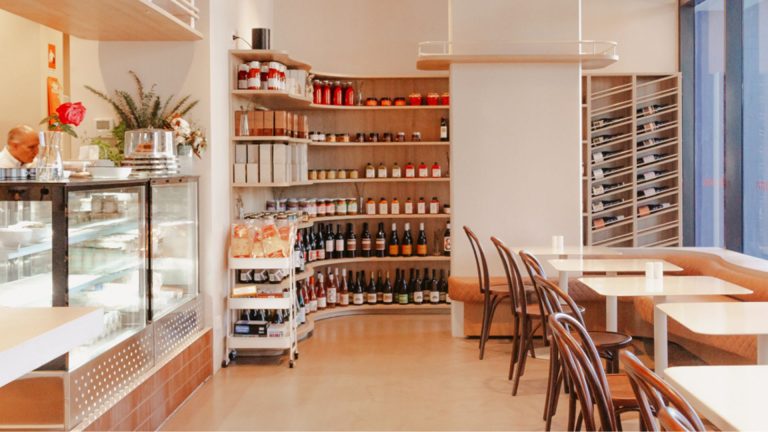
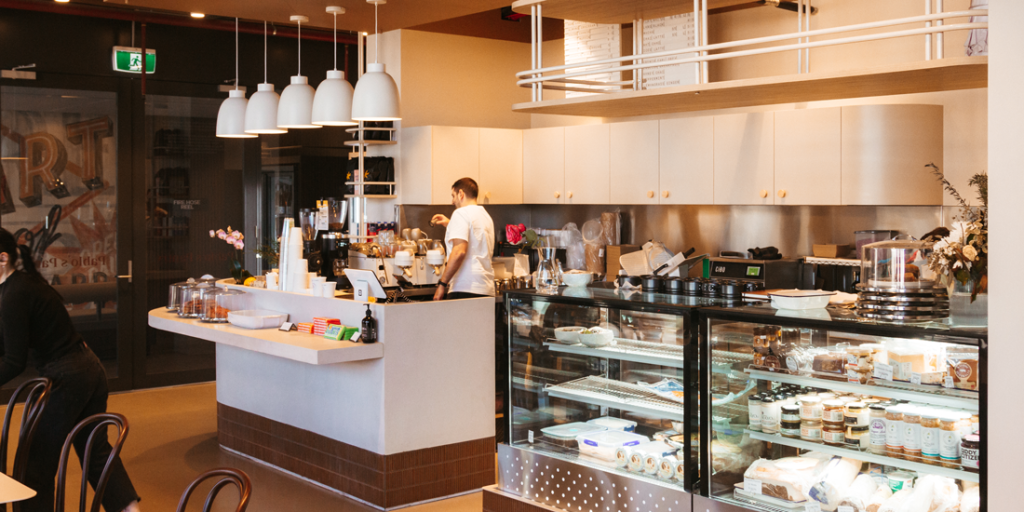
Pablo’s Pantry is a new café, deli and wine bar in Woolloongabba, Queensland, owned and operated by mother-daughter duo Helen and Marissa Kentrotis.
Tucked away in the backstreets of the neighbourhoud, it provides an escape from the chaos and traffic of the area.
According toBroadsheet, it feels like Pablo’s Pantry was plucked from the Grecian isles. The fit-out, by Fortitude Valley interior designers Collectivus, is inspired by the Greek island of Cythira – the Kentrotis family’s ancestral home – with soft furnishings offset by the pastel banquet seating.
“There is nothing like this in Brisbane,” Marissa Kentrotis told Broadsheet. “We make everything here. I spent my childhood with Mum in the kitchen, and she spent her childhood watching my grandmother in the kitchen.”
Photo: theweekendedition.com.au
All the items at Pablo’s are crafted daily using family recipes, ranging from cookies and muffins to pastitsio and spanakopita.
The breakfast menu includes a variety of traditional Australian dishes with added Greek influences, such as fried eggs come with pistachio-and-kale pesto, feta and “lots of herbs”.
Lunch includes a selection of sandwiches on sourdough and ciabatta sourced from Doughcraft in Albion. The most popular dish until now is the roast pork layered with apple sauce and coleslaw.
There’s also a distinct selection of character-driven drops from small-batch Australian winemakers, designed to reflect Greek tastes, and takeaway meals to reheat at home, including kefthedes pastitsio and spanakopita.
Every year, Google publishes its ‘Year in Search’ data, a report showing what users have Googled over the past 12 months.
According to CNtraveller, the travel section of the data has been contextualised to take into account current events and is now presented in order to provide inspiration for those who wish to travel in 2024.
The 10 cities and countries that have seen the biggest search increases on Google year on year, have been spotted and Greece tops the list.
Photo: jimmy teoh:
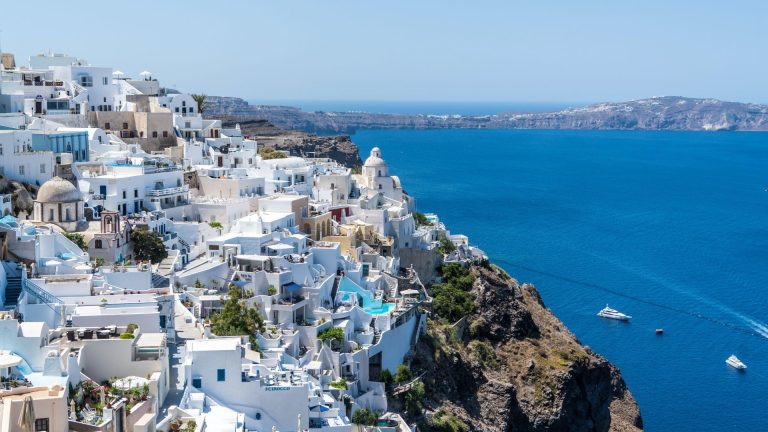
CNtraveller highlights Greece’s diverse attractions, from Mykonos‘ picturesque architecture to Kefalonia’s natural beauty. It also mentions Athens with the boasting world-class bars and culinary delights, and concludes that whether it’s Santorini’s sunsets, Corfu’s quiet beaches, or Crete’s late-summer weather, Greece consistently captivates with its varied offerings.
Spain and Italy come second and third in the list, while Cyrpus, which is found at sixth place, is presented as a melting pot of cultures. “Come for craggy mountains topped with snow, powdery soft beaches lapped by the twinkling Mediterranean and some excellent Cypriot food dotted around the island.”
Greece has been chosen among the best places in the world for those who wish to retire in 2024, by International Living.
The network, which includes expert expats across the globe, mentions that the Index is informed by hundreds of opinions and real-life experiences—information—compiled trusted sources in the best retirement destinations in the world.
According to the annual Global Retirement Index findings, Greece secures the seventh spot globally. Costa Rica tops the list while Portugal, Mexico, Spain and Ecuador are also above Greece.
Photo: Pexels, Tirachard-kumtanom
International Living notes that housing costs in Greece are estimated to be up to 75% lower than those in the US. Additionally, the cost of living in Greece falls between 30% and 50% below that in the United States, ensuring relatively modest everyday expenses. The ancient history, the sun-splashed islands and the healthy cuisine are also presented as key factors for visitors who choose Greece to retire.
Suellen Curkendall, who recently relocated with her husband to Syros Island, said to International Living “We opted for Greece because it stands among the few countries offering a Golden Visa option tied to property ownership rather than requiring a substantial investment in a business. Coupled with milder winters, this sealed the deal for us.”
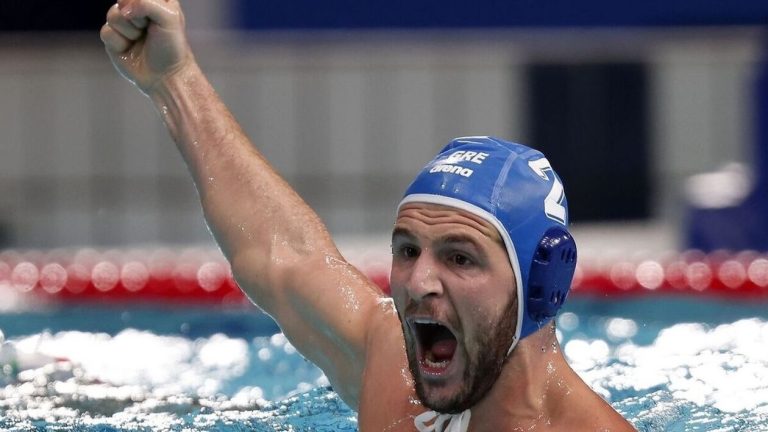
Greece’s national men’s team started its fight at the European Water Polo Championship in Zagreb, Croatia with a victory over Hungary 10 – 8.
In the first eight minutes, the two teams entered without taking many risks. The ones who opened the scoring in the match were the Hungarians, who after a steal launched a counter attack.
After the goal, the Greek team of Thodoris Vlachos tried to include the strikers in their game, which immediately gave them the equaliser with Nicolaidis hitting from close range to level the score. Nicolaidis also scored a penalty later in the match.
The second period had nothing to do with the first. Greece took a two-goal lead early on (1-3), but Hungary responded immediately (2-3). This task was repeated with the two teams scoring one goal each, in the same order, and the score becoming 3-4 in favour of the “blue and white.” The end of the first half found Greece at +2 (3-5), after a lucky goal by Ioannis Fountoulis.
At the beginning of the second half, the Hungarians entered better, immediately reducing to a minimum with Tatrai’s goal (4-5), but the Greek national team immediately found it with Kakkari in an attack with one more player (4-6). The Hungarians again managed to reduce the score with Fekete, to whose goal the “blue and white” found an immediate answer with Fountoulis to maintain +2 (5-7). However, before the end of the eighth minute, the Hungarians found their way to the net, with Burian making it 6-7.
In the last eight minutes, Greece regained the lead of two goals (6-8), receiving an immediate response from the Hungarians. Of course, the team of Vlachos improved defensively and with the right choices in the attack sent the difference to three goals, forming 7-10. All Hungary did in the final minutes was cut to two goals, with Greece taking the win 10-8.
Greece’s victory avenged their loss to the Hungarians in the 2023 World Cup final and they will next play Italy on Saturday.
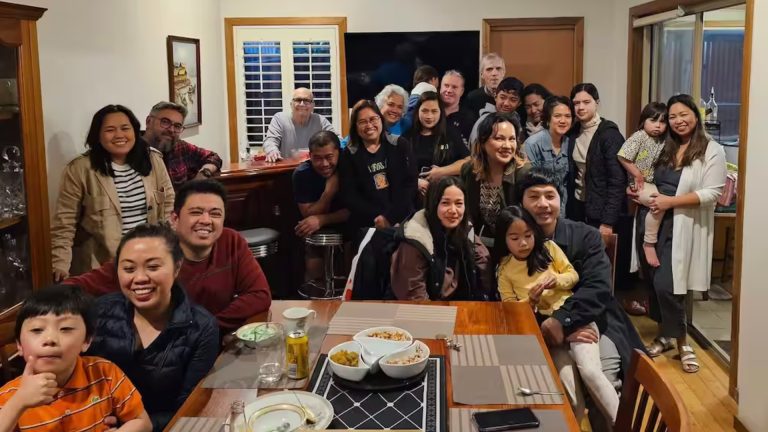
A Melbourne-based Filipino-Greek couple has opened their home to international students from the Philippines to help them avoid feeling homesick while visiting Australia.
The married couple, Elias and Angelina Chambi, who have been living in Australia for more than 10 years, shared with SBS that although they are of different ethnicities, they share the same values and beliefs.
“I am lucky because more or less we have the same culture, hospitable, generous, very kind, welcoming,” Angelina said.
Elias added that “if you marry a Filipina, you marry the whole country.”
Angelina and Elias. Photo: SBS.
The couple decided to take in the Filipino students and give them a home-away-from-home by hosting various celebrations at their home.
As feeling homesick was something one could not avoid while being away from their loved ones, Angelina said connecting to ones roots may help ease the negative feelings.
“You need to connect with people, especially Filipinos, to lessen your stress with homesickness and your academics as international students,” Angelina said.
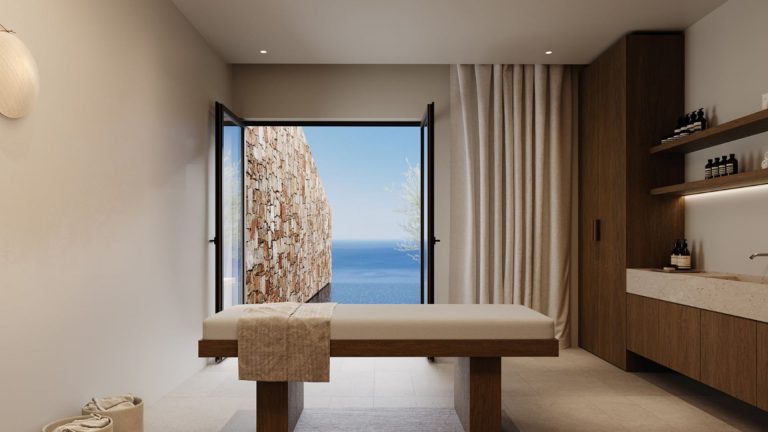
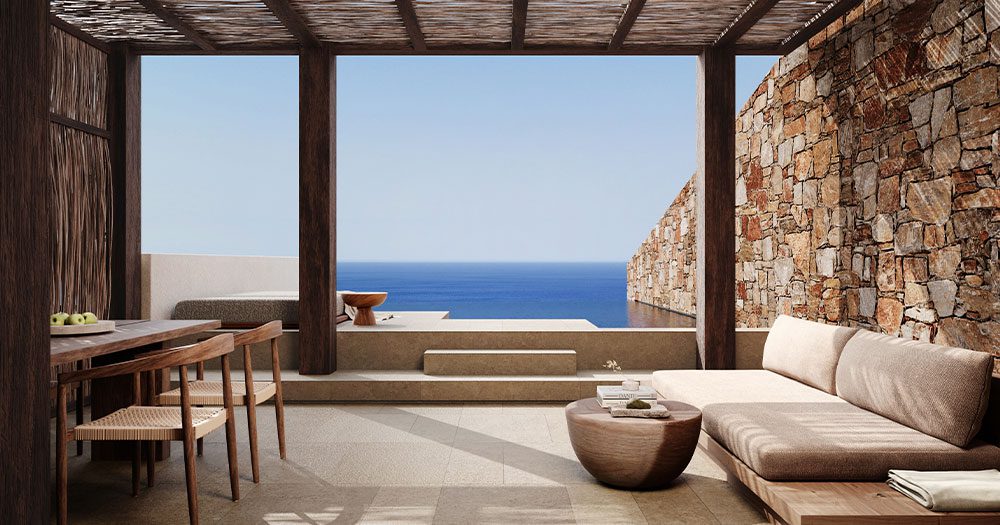
Gundari Resort on the Greek island of Folegandros, has appointed Slojourn Studio as its sales and marketing representatives in Australia. According to karryon.com.au, this will mark the first collaboration of Slojourn Studio with a European property.
Positioned on 32 hectares, the resort, scheduled to open its doors in May 2024, epitomizes sustainable luxury, dedicated to the concept of ‘raw luxury’ and it embraces regenerative practices, holistic wellness principles and a menu inspired by soul food.
Gundari, is the brainchild of an Australian, Ricardo Larriera, who aspires to create a commercial name for himself by creating luxury hotels which promote sustainable tourism development.
A suite in Gundari Resort. Photo: karryon.com.au
As a 5-star eco-conscious retreat, Gundari Resort aligns with Slojourn Studio’s mission to convey the essence of each destination it represents.
Tess Willcox, co-owner of Slojourn Studio, expressed enthusiasm about the partnership. “Partnering with Gundari Resort allows us to unveil the raw luxury and unexplored beauty of this well-kept secret island,” he said.
“Gundari Resort captures the essence of the region, where unspoiled landscapes meet unparalleled hospitality and offers an intimate and exclusive experience for those seeking the extraordinary.”
The collaboration involves trade sales and representation, partnerships and collaborations, marketing and digital promotions, public relations, and opportunities for brand placement.
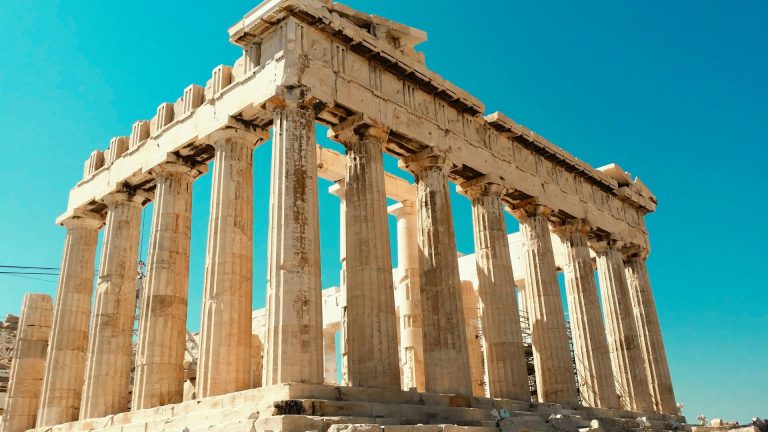
Greece is set to introduce an exclusive opportunity for visitors to enjoy a private, two-hour guided tour of the renowned Acropolis Hill.
According to ekathimerini.com, the private visit will cost 5,000 euros. The decision, which was approved by the Central Archaeological Council (KAS) on Wednesday, targets small groups seeking a unique experience. The first private tours are scheduled to begin on April 1, 2024.
The private tours, accommodating up to four individuals, will be available during sunrise (7-9 a.m.) or sunset (8-10 p.m.) in the summer months on Tuesdays, Fridays, and Saturdays, excluding full moon nights. Participants will receive souvenirs as part of the package.
KAS also announced a revised ticket policy after five years. The changes will apply from April 1, 2025, and involve increased entrance fees for museums and archaeological sites. The Acropolis Hill’s general entrance ticket will rise to 30 euros, with other sites and museums varying from 5 to 20 euros, contingent on visitor numbers and location.
Photo: Matias-Callone-CC2-Flickr.
Free admission will be extended to two Sundays monthly. Additionally, five major Greek museums, now independent entities, will establish their own pricing policies. These museums are the National Archaeological Museum in Athens, the Archaeological Museum of Thessaloniki, the Archaeological Museum of Iraklio, the Byzantine & Christian Museum (Athens), and the Museum of Byzantine Culture (Thessaloniki).
These ticket prices will be applicable throughout the year, as the previous practice of lower winter prices is abolished.
Athanasios (Arthur) Kalamaras, a Greek Australian artist known as one of West Australia’s foremost figurative sculptors, has a rich artistic heritage in both Greek and Australian culture.
Born in Florina, Greece in 1950, he emigrated with his family to Western Australia at the age of one. His father Leonidas, a celebrated Greek artist, and his mother Vasso, poet and writer, instilled in him a profound love for art. Surrounded by sculptors like his uncle Dimitris Kalamaras, he found inspiration in family.
His artistic exploration began with extensive travels across Europe from 1968 to 1972. He later pursued formal studies in sculpture, graduating from W.A.I.T (Curtin University) in Perth in 1974, simultaneously obtaining a diploma from the Pedagogic Academy. His study and travel to museums and archaeological sites across Bulgaria, Poland, Italy, and Greece, introduced him to diverse sculptural styles and techniques.
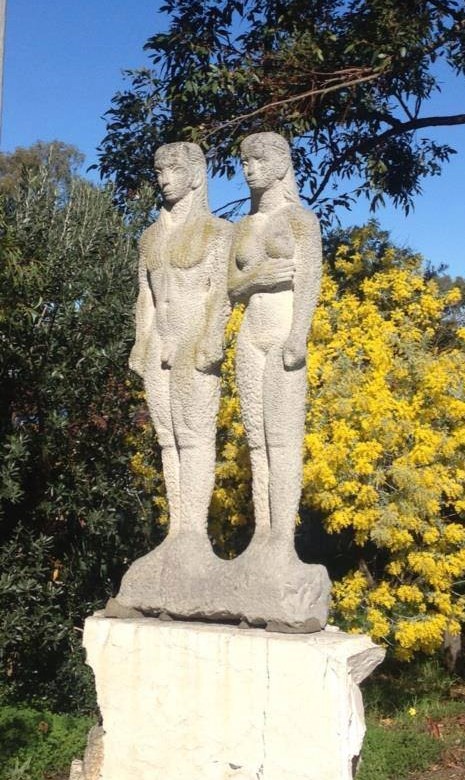
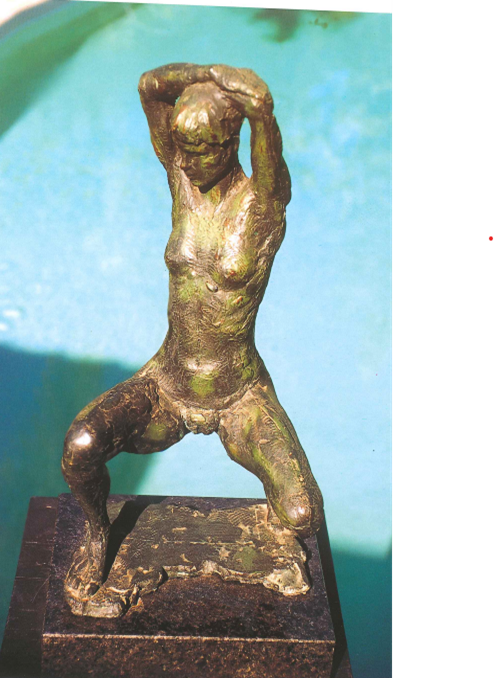
Man and woman, PerthAthanasios Kalamaras
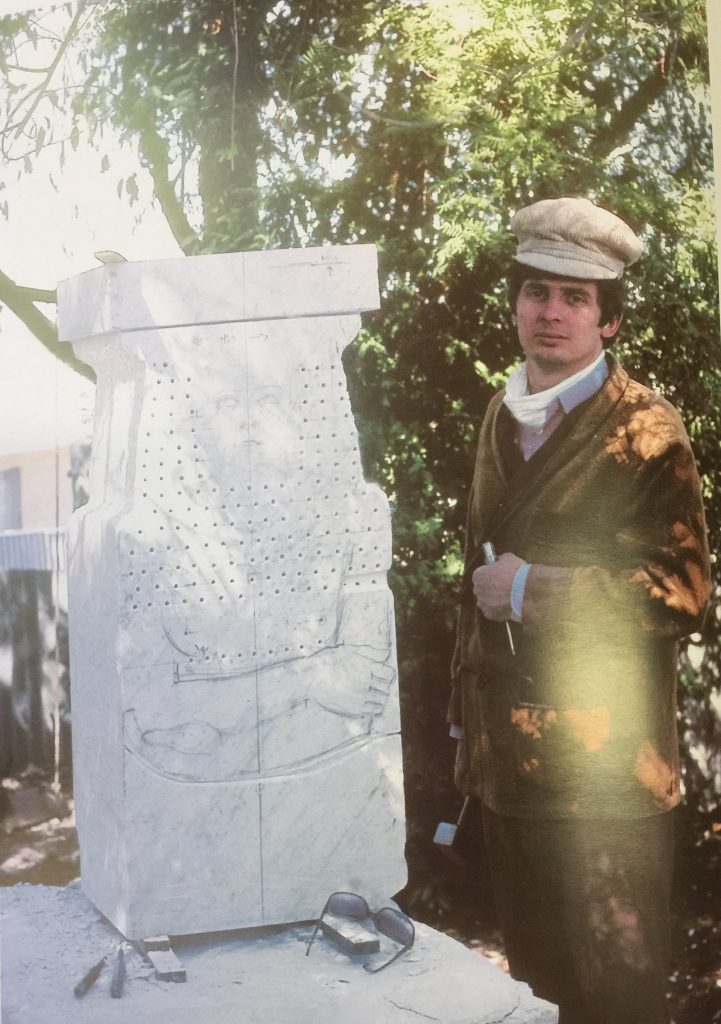
As a sculptor, he delved into modern abstract experimentation inspired by Renaissance and Classical Greek aesthetics. His craftsmanship spans various mediums, mastering the art of stone and marble carving, reviving ancient techniques in his creations. Kalamaras also played an important role in establishing the “J Shed Art Studio” in Fremantle, WA, fostering an artistic precinct of creativity and cultural enrichment.
One of his notable works, the “Minmarra – Gun Gun” memorial, unveiled in 1979, stands as a testament to his reverence for history and culture. This homage to pioneer women of Western Australia, blended Aboriginal symbolism, highlighting the fusion of diverse cultural elements.
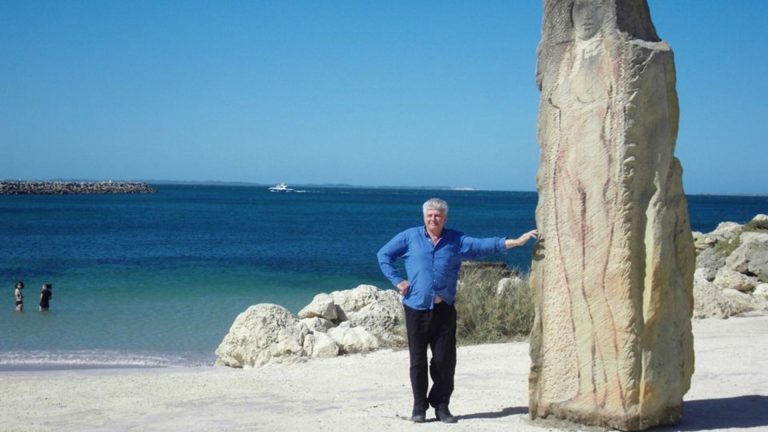
His monumental stone sculptures, such as the “Goddess of Athena” and “The Mel of the Wargle,” stand proudly at Bathers Beach, Fremantle. His works are showcased in various Australian states. Canberra hosts two of his bronze sculptures commissioned by the Ministry for Ethnic Affairs.
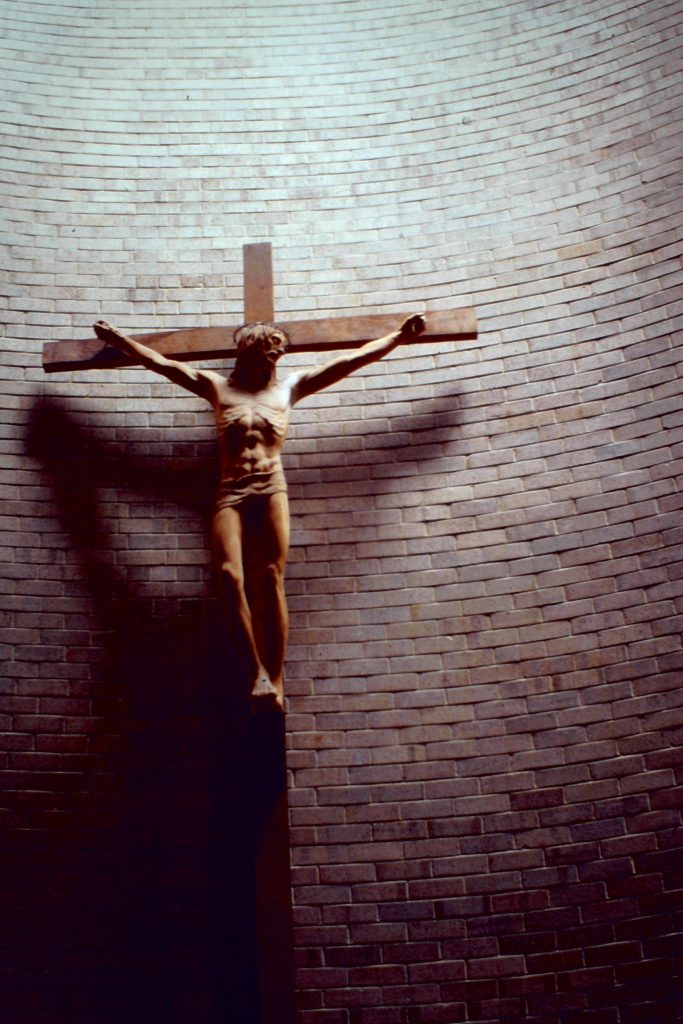
Amongst his commissions is the 1978 life-size wood carving sculpture of Christ on the Cross, towering at 6 meters in height, and the accompanying 14 panels of wood carving reliefs for the New Catholic Church in City Beach, Perth. Another striking piece, the 1979 sandstone relief titled “Yorkas Nyinning,” measuring 2 meters in height and 16 meters in length, situated in the Botanical Gardens Kings Park.
Other works include includes the four stone carving sculptures, “Caryatios,” at the Wittenoom Apartments in Kings Park. His works also extend globally, from New Zealand’s wood carving sculpture to Greece’s Church in Attica.
Christ on crossExcercise, Bronze
Kalamaras’ contribution to art, his significant commissions and international representations are featured in an extensive bibliography. References in renowned publications like “Hellenic Sculpture” by Stelios Lydakis and “Greek Artists Abroad” by Niki Loizidi, serve as a testament to his recognition.
Kalamaras’ 2006 exhibition at the Vafopouleio Cultural Centre in Thessaloniki marked a significant homecoming to his birthplace in Greece, where he was welcomed with many accolades and appreciation.
At the exhibition launch, Xeni Milara Vlachaki, President of the Supervisory Committee of Vafopouleio Cultural Centre of Thessaloniki stated, “The Vafopouleio Cultural Centre pays homage to the artist with a retrospective exhibition, the first held in Greece, so that the people of our city will have the opportunity to get to know this artist from the Diaspora.”
“I hope that such initiatives, which promote the creations of Greek living and working abroad, will continue with the same fervour; they contribute to research and the recording of our country’s artistic resources throughout the world, while offering new cultural and aesthetic experiences to the general public,” Vasilios Papageorgopoulos, Mayor of Thessaloniki, added in 2006.
The legacy of Athanasios Kalamaras lives through his sculptures and exhibitions, blending cultural narratives and solidifying his stature as a renowned Greek Australian artist.
Athanasios Kalamaras is amongst many Greek Australian artists who are registered in the GAAD (Greek Australian Artist Directory). An initiative by the Greek Australian Cultural League (GACL), the GAAD celebrates Greek Australian visual and performing artists by showcasing their works and contributions to the Australian arts landscape.
By preserving and promoting the artistic legacy of Greek Australian artists, the directory ensures that their talents are duly acknowledged and cherished, cementing their place in Australia’s artistic narrative.
Interested artists can register their profiles by visiting www.gacl.com.au and clicking on the dedicated GAAD section. For any inquiries related to the GAAD, individuals can either email GACL President Cathy Alexopoulos infogaclm@gmail.com or contact GAAD Co-ordinator Vasy Petros on 0412 242 557.
*Written by Vasy Petros. This is a Greek Australian Cultural League Initiative supported by The Greek Herald.
With my next three articles I would like to justify the title of earthly paradise that I offer to Australia, starting from the difficult years of settlement and survival. I will attempt to give tangible historical and social examples with which contemporary Australia is emerging indeed as a country with the highest performance and achievements in the world in the quality of education, in medical-hospital and research care, sports, arts and culture, theater, cinema and arts, in social maturation, in the level of security it provides and the quality of life.
Australia is a country of immigrants, western, with main European characteristics, multicultural, English-speaking, developed as a British colony, on a continent inhabited for years by other older settlers who also came from Asia and developed here one of the oldest primordial civilisations.
The main characteristic of Australia is that it is a European structured country, cut off from the old continent and transplanted to the far south, having as its neighbour to the north, the largest Islamic country on the planet, Indonesia. Australia, which until the beginning of the Second World War had not exceeded seven million souls, among them 15,000 Greeks, mainly islanders, lived not only with the tyranny of distance, but also with the fear of a conquering aggression from the north, mainly from Japan and China.
The 15,000 Greeks of the pre-war period were manual workers, agrarians, loggers, travelling workers of all kinds in the vast countryside, specialists in deforestation and the distillation of eucalyptus oil, working in groups, with an improvised hierarchy and rotating assignment of duties to those who would take care of the maintenance and cleanliness of the group, in tents and camps. Close to them were the unskilled workers in the vast sugar cane and banana plantations, in the tobacco plantations, as well as those who made a living in the foundries and refineries, in the mines and in the pits where they melted the lime.
The few Greek settlers in the cities were small shop owners, small businessmen, waiters, few bakers and even fewer privileged workers in shoe factories and construction. Working in the cities was the prerogative exclusively of British subjects. Foreign nationals, mainly southern Europeans, were forbidden to work in the few factories, and factories were scarce, because the metropolis, the United Kingdom, did not allow goods to be produced in the colonies, but to be exported to the colonies so the metropolitan workforce to have work. The only exceptions were shoe-manufacturing factories and some sewing factories.
For the Greek settlers of pre-war Australia, the country was not an earthly paradise. Work was hard, state care almost non-existent, welfare benefits did not exist, solidarity and care for the unemployed were the duty of the church, missions, communities and collective bodies. There was no easy enrichment, and the prosperity of goods was limited. People were generally more frugal in their needs and less consuming, caring for necessities, trying to give their children better opportunities for education and prosperity.
Australians, like their colonial ancestors, were less accessible to outsiders. They were not used socially, economically, culturally, to living with others, with ethnically different people. Their ancestors used to oppress the foreigners as colonisers, as slaves. Thus, Australians as descendants in the colonies, did not accept them as equal citizens. Australians of the pre-war period behaved with intense xenophobia, with misoxenia, with feelings of racism, with intense prejudice and suspicion.
In the Commonwealth Parliament, racist speeches were made by MPs against Greeks, Italians and Maltese, with painful epithets that fostered hatred and prejudice. The immigrants were cursed for working all day from Dawn to Sunset, and were decorated by their fellow Australians as “degos” and “stools,” they were kicked out of work; Australians went on strike if some merciful and pitiful Australian decided to give work to a Greek or a Maltese; stoned them in the countryside and bombed immigrant cafes.
In the pre-war period, ignorance and prejudice prevailed. First, were the Chinese, whom they considered a “yellow terror” and a “yellow menace”. Then, the Albanians, who were not even allowed to disembark in Australian ports and were sent back by the boat that they came as “unwanted scams.” Then were the Yugoslavs, Maltese, Greeks and even Italians, whereby their houses and shops were set on fire in Broken Hill, Boulder, Kalgoorlie, and other rural towns of NSW and Queensland. Some were deported, some were exiled, others were excluded. State governments banned banks from giving loans to Southern Europeans, cutting them off from any bank transactions. Premiers even punished Australians who broke restrictions and gave money or loans to Greeks in the decades of 1924-1935. Other states recorded their names and addresses, policing them as enemies of Australia and the Empire. Since 1932, the Cypriots have been officially described as “terrorists” and enemies of the Crown and the Empire.
In the Australian Archives there are thousands of documents of the Security Forces and the Ministry of Justice, where hundreds of Greek leaders and ordinary citizens have “glaring files” with surveillance reports and scenarios of “hostile behavior” either as communists, anarchists, or enemies of the Throne and Australia. And on top of all this is the Act of 1701, a law passed by the British Parliament, which until today, in 2024, prohibits any non-British or citizen who was not born in one of the British possessions from “claiming or obtaining a position in the public service of Australia.”
In this climate of xenophobia, a wonderful Hellenism functioned and matured in Australia; a Hellenism that laid the foundations for the operation of secular communities, a Hellenism that founded the first Orthodox Churches, the first newspapers, published the first books, organised the first theatrical workshops, the first Greek schools, the first choirs. A Hellenism that accepted and gave meaning and purpose to the existence of the Metropolis of Australia and the institution of Consuls and Our diplomats. A Hellenism that laid the strong foundations and essentially bankrupted the xenophobia and prejudice of their Australian fellow citizens, against the 270,000 Greek immigrants who settled Australia in the period 1949-1978 and 2009-2019, in order to offer them today’s Australia, the earthly paradise enjoyed today by the 550,000 Australian citizens of Greek origin (Greeks and Cypriots). This is what we will examine in the next two editions of The Greek Herald.
*Professor Anastasios M. Tamis taught at Universities in Australia and abroad, was the creator and founding director of the Dardalis Archives of the Hellenic Diaspora and is currently the President of the Australian Institute of Macedonian Studies (AIMS).