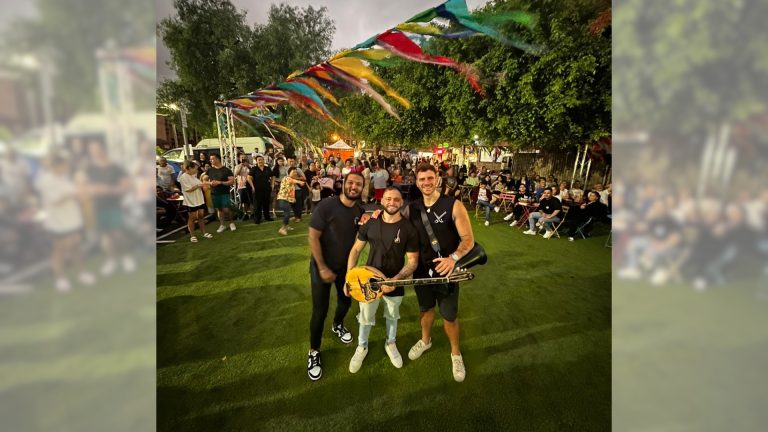
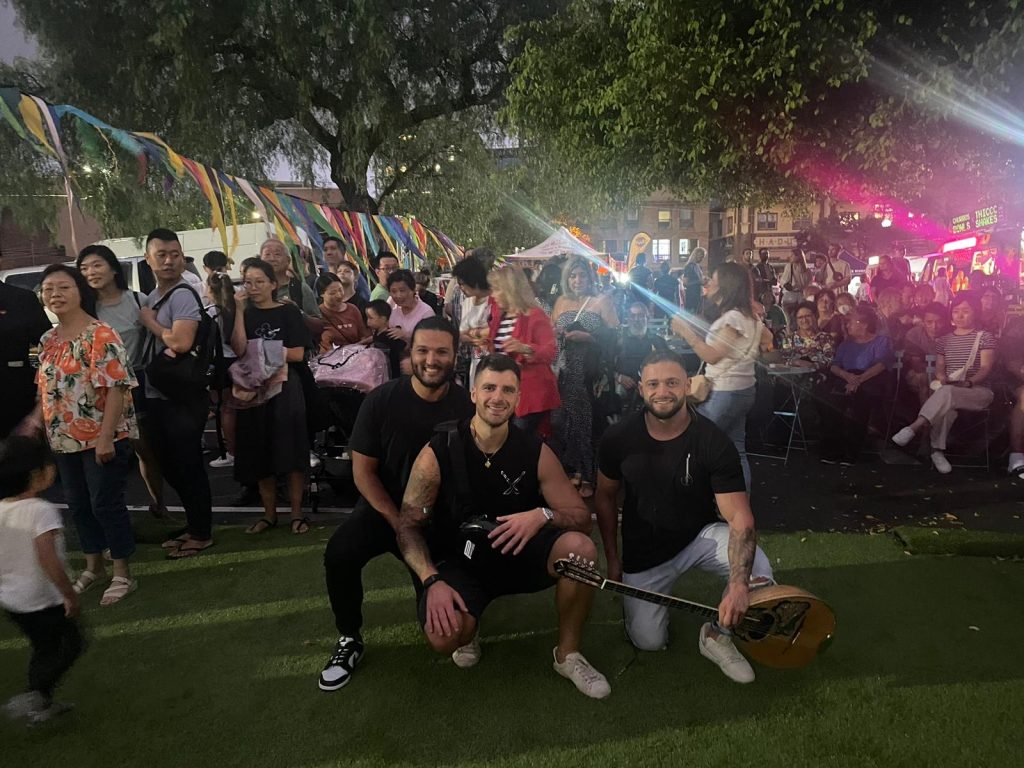
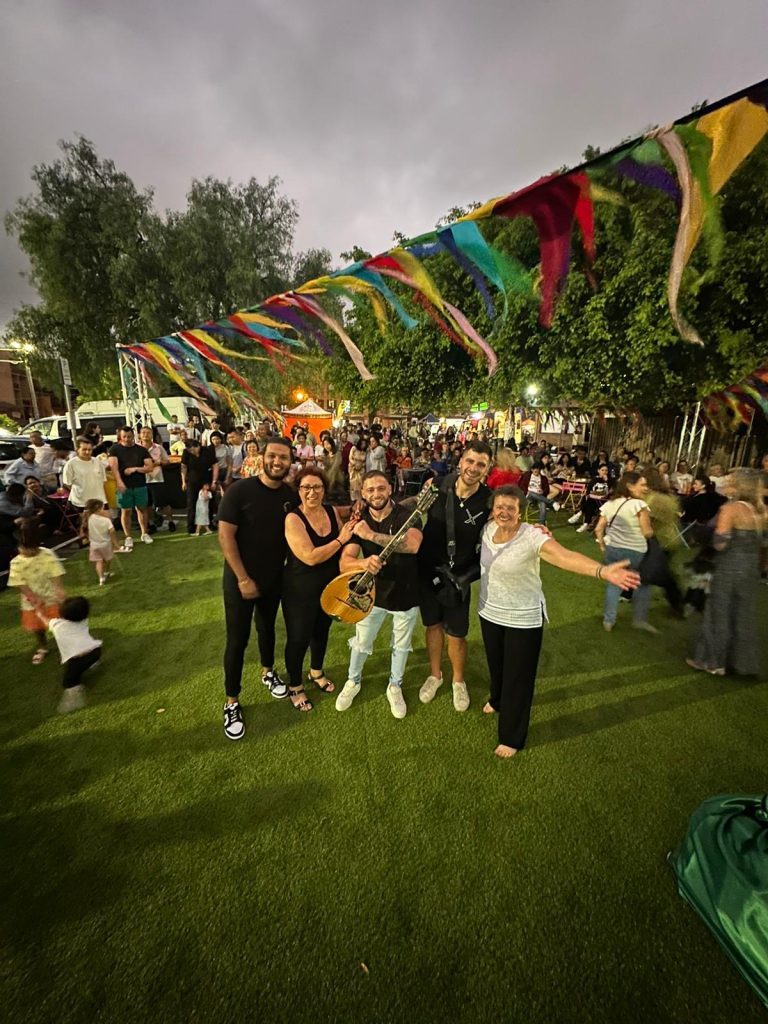
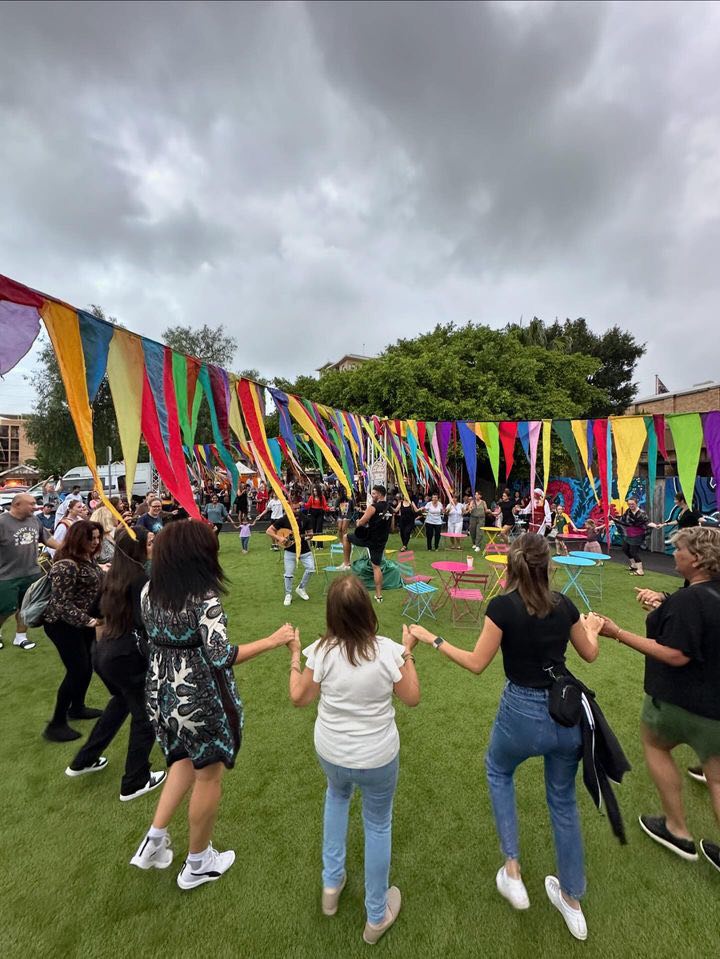
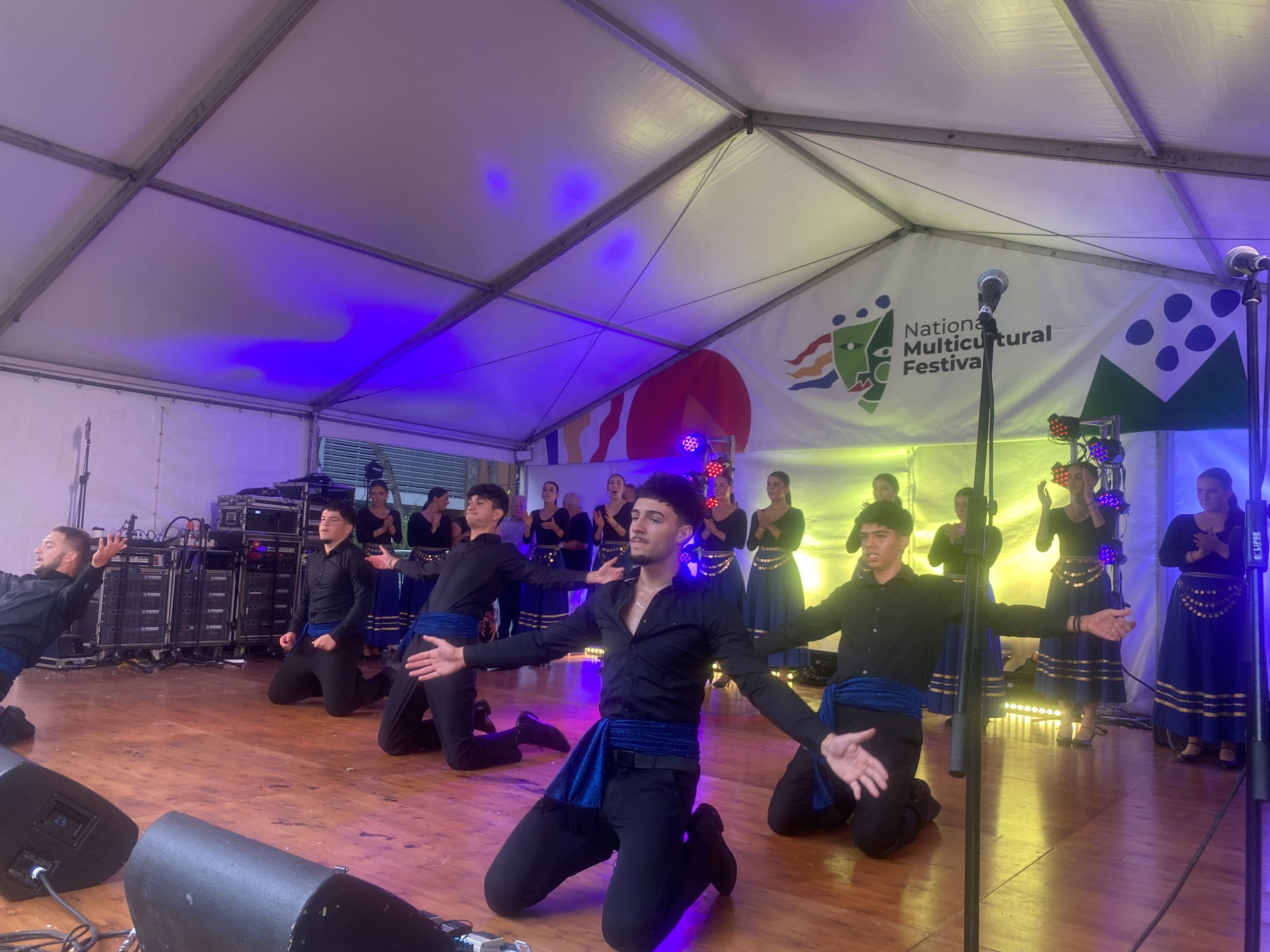
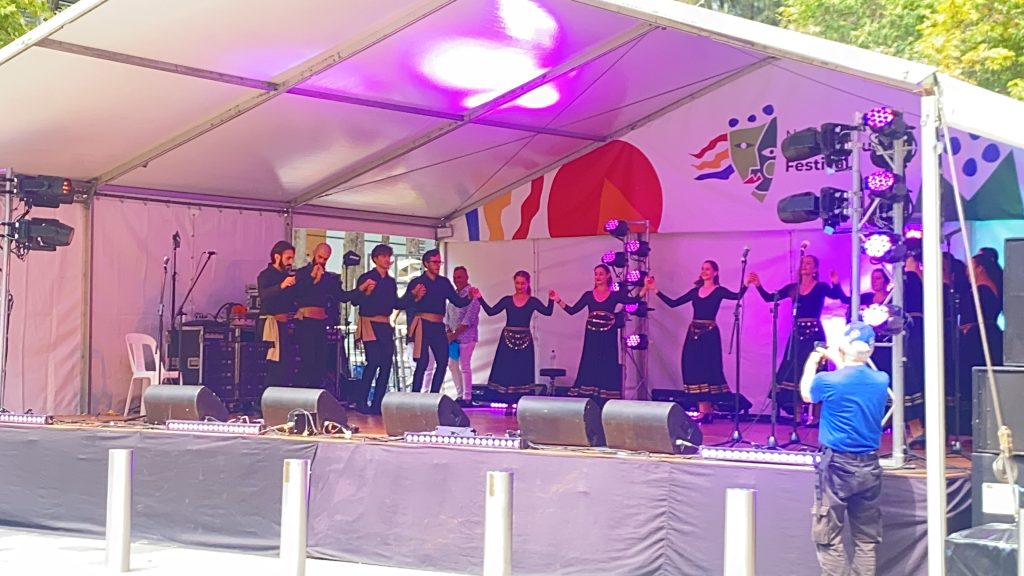
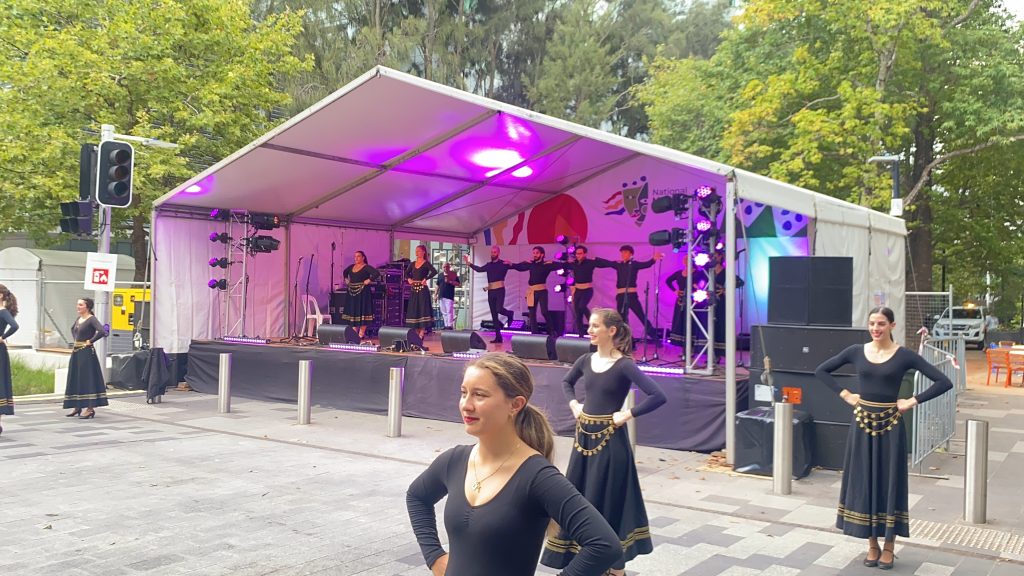
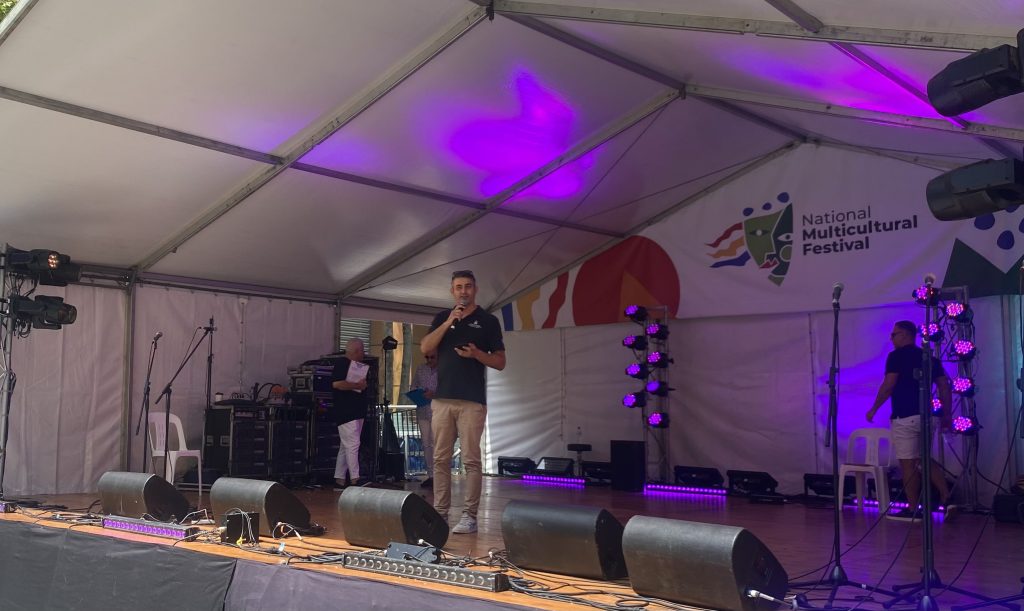
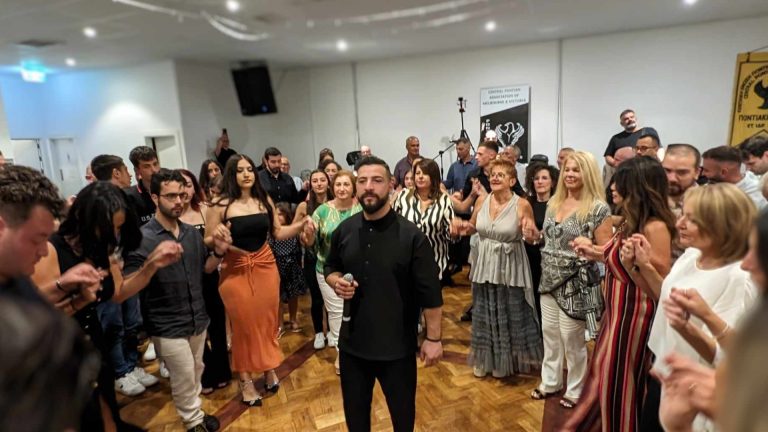
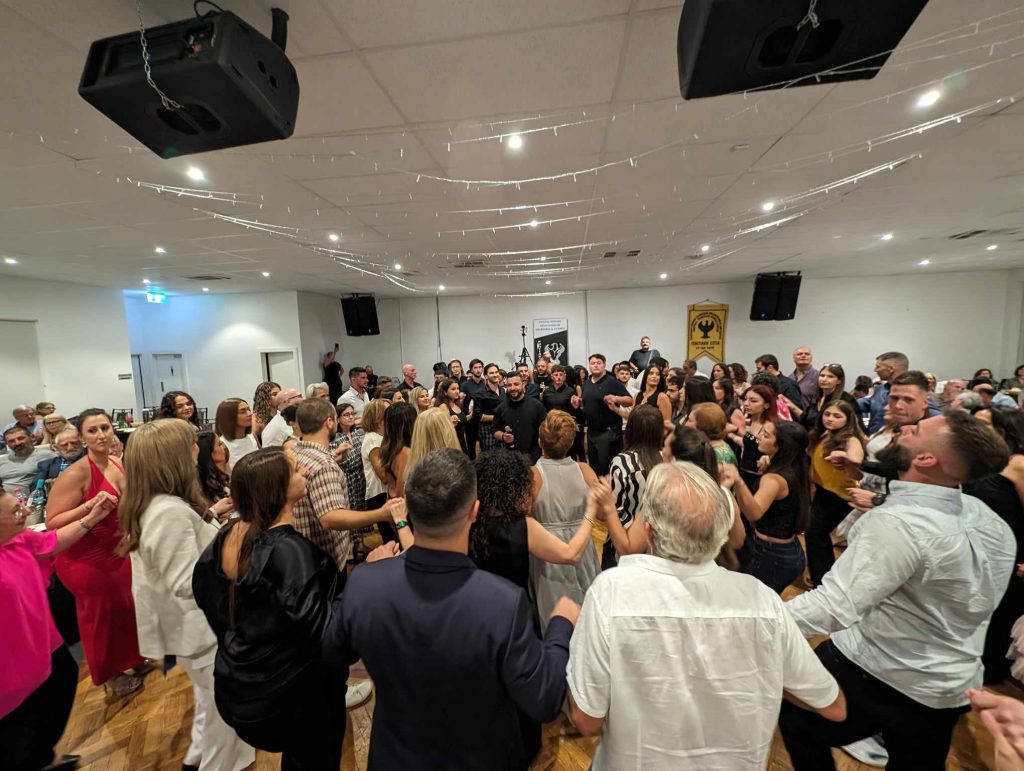
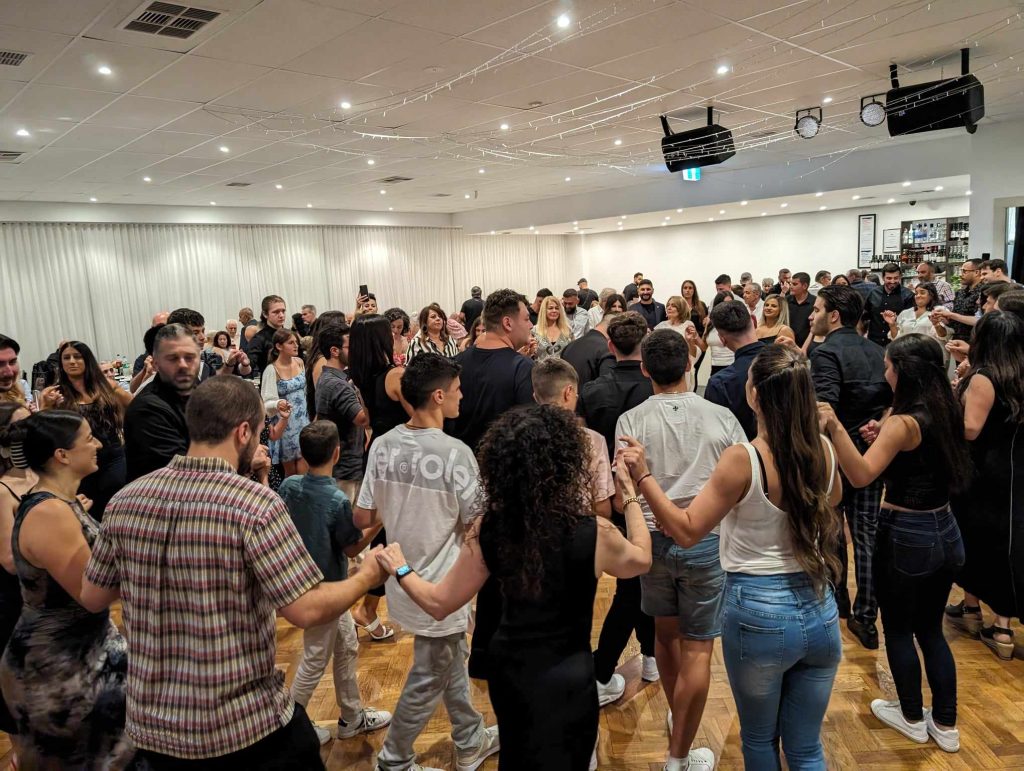
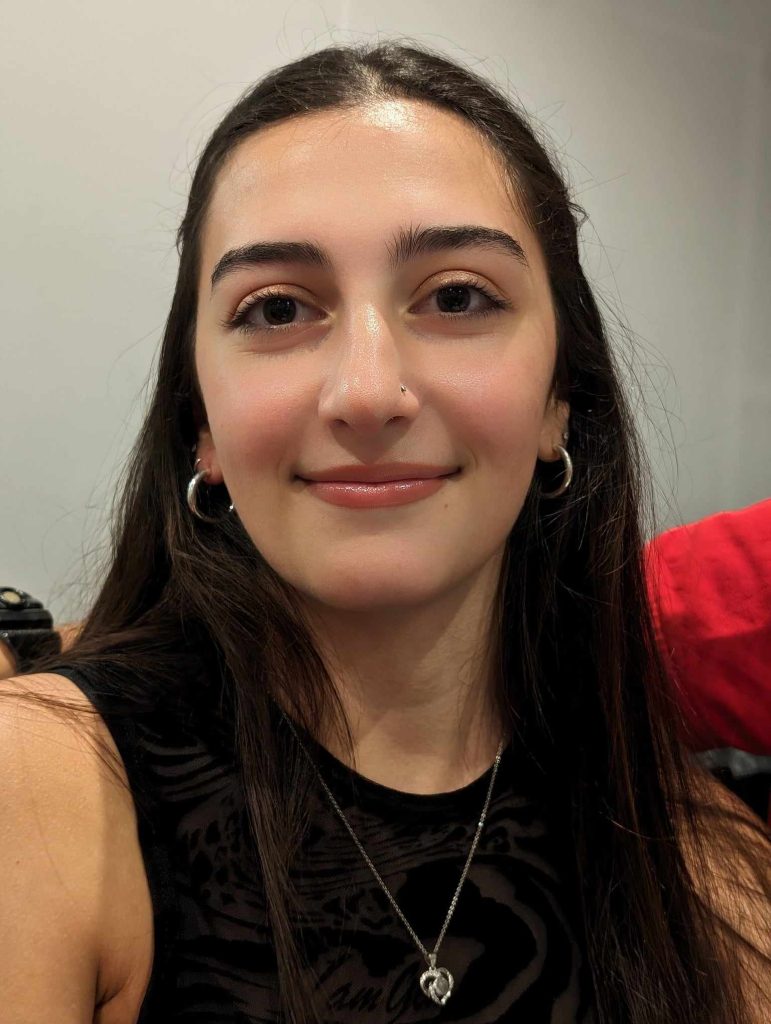
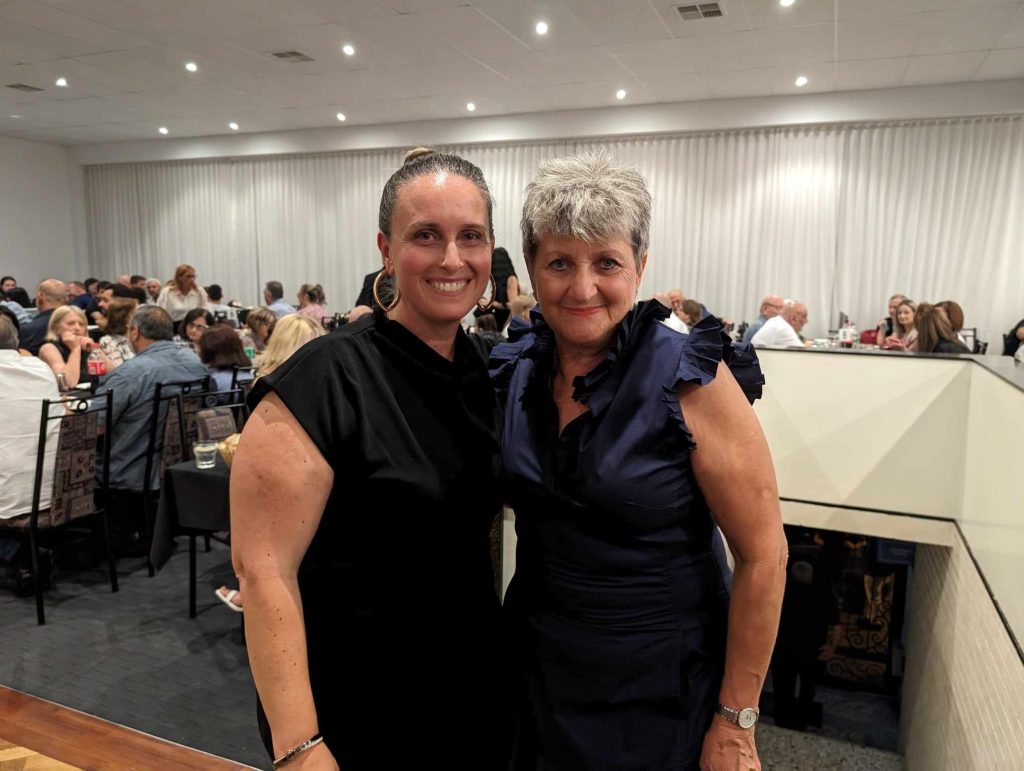
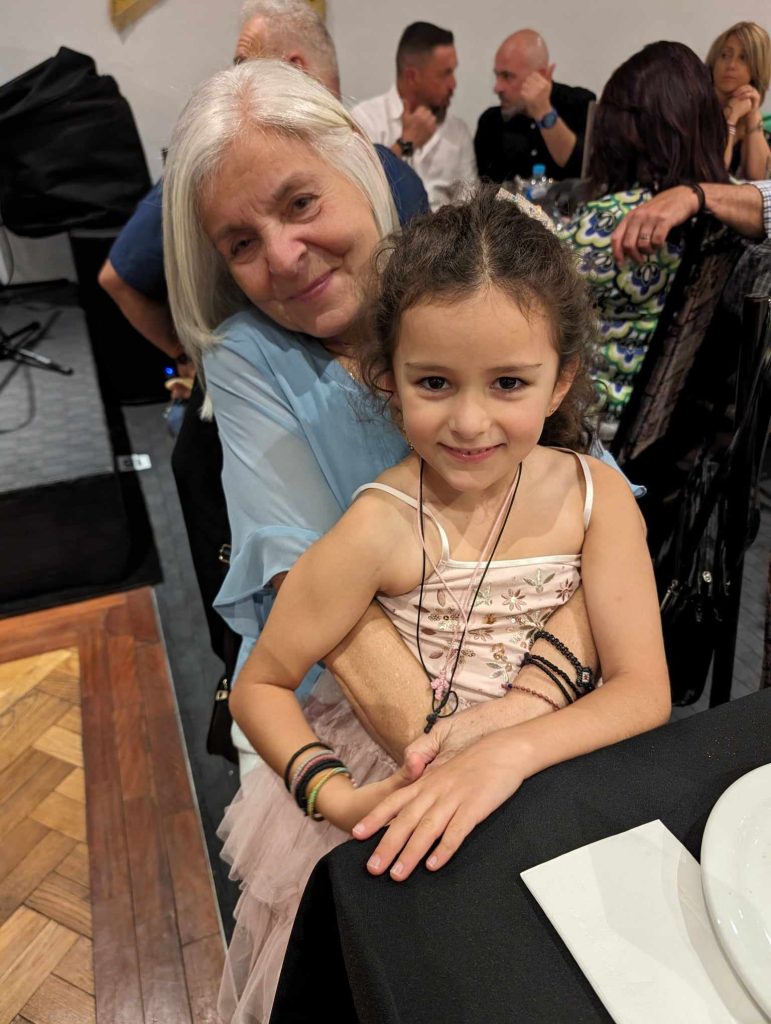
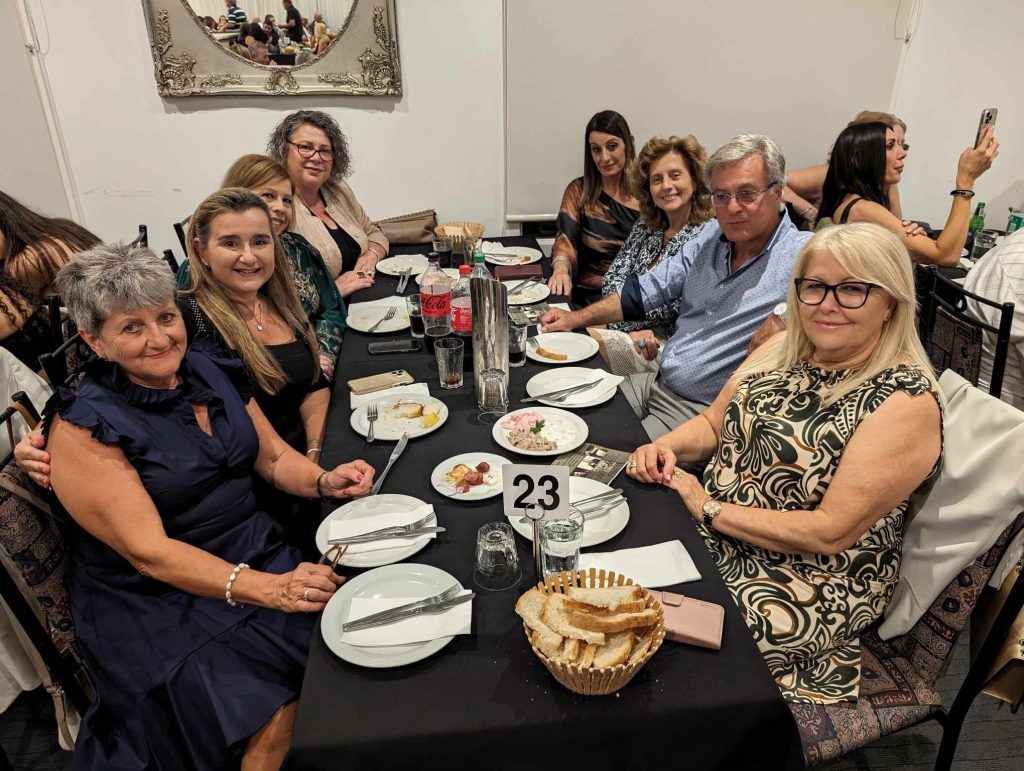
The Greek Australian trio band, FiloXenia, performed at the In Good Taste Festival on MacMahon Street in Hurstville, Sydney on Friday, February 16.
Organised by the George’s River Council, the event featured a variety of food stalls offering tastes of different cuisines, as well as a diverse entertainment program.
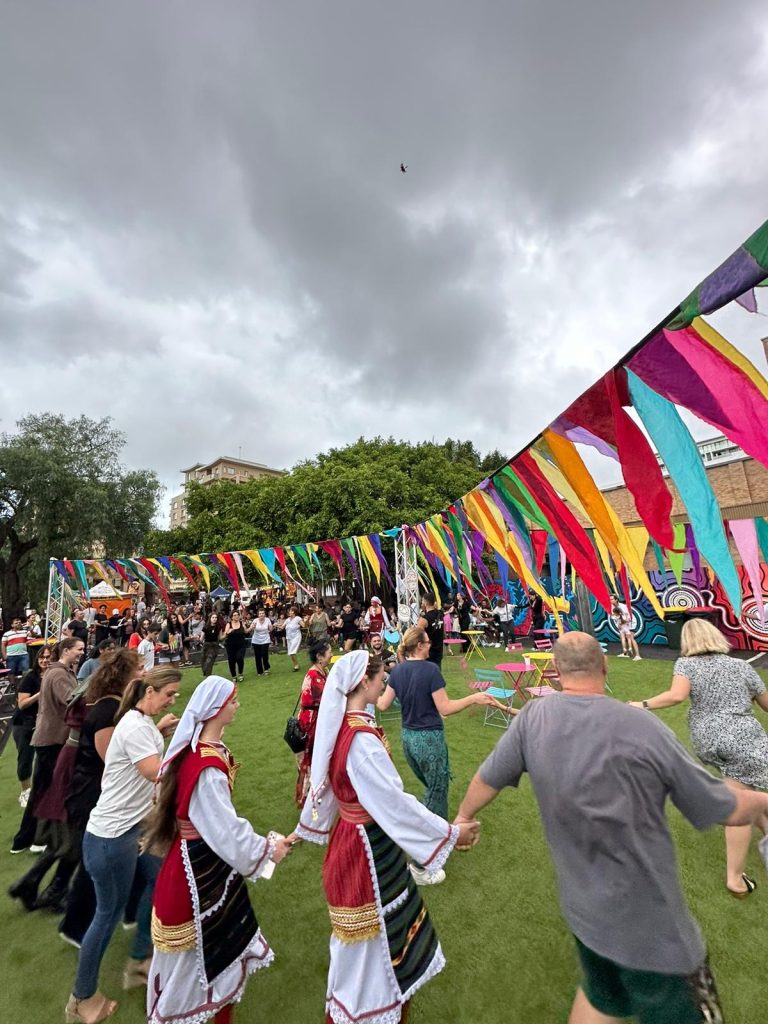
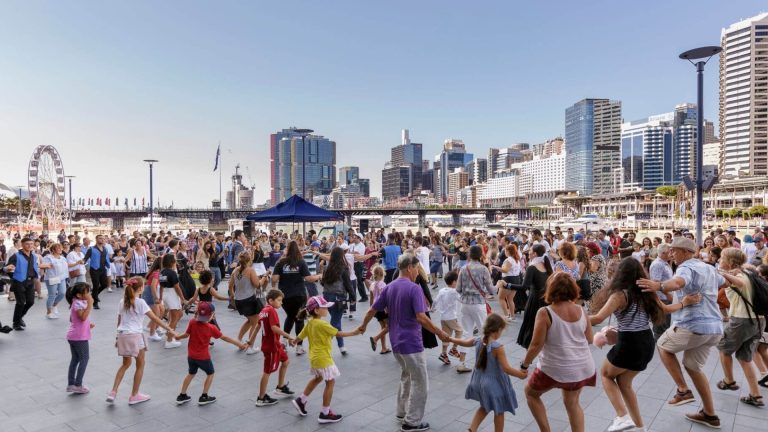
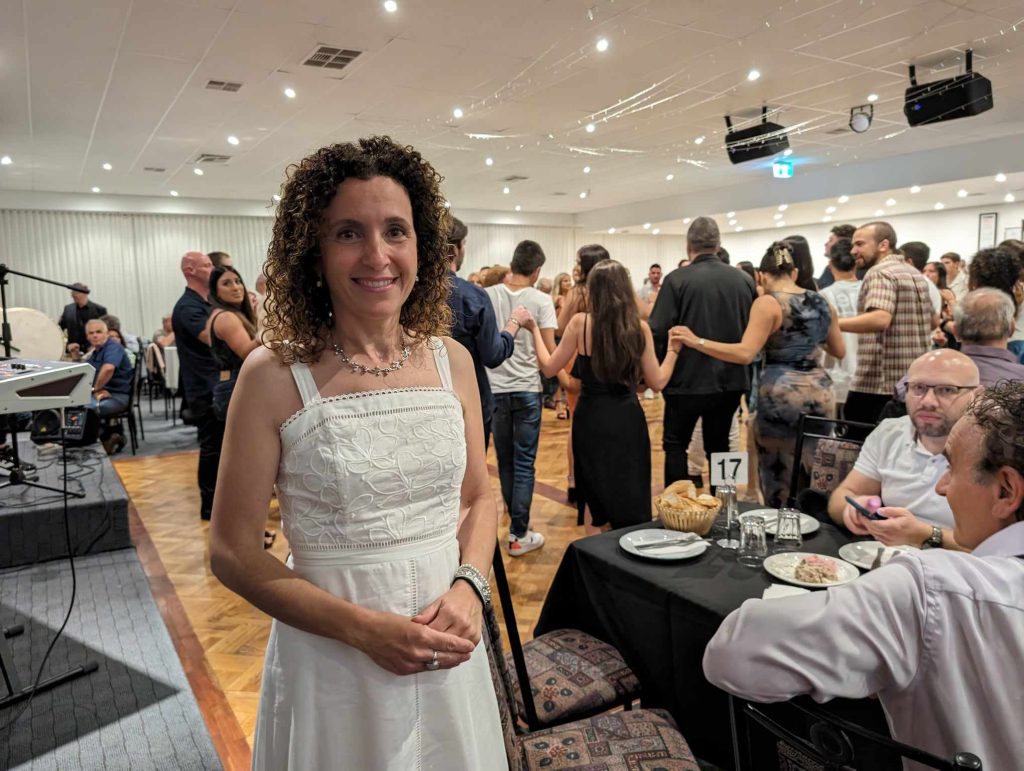
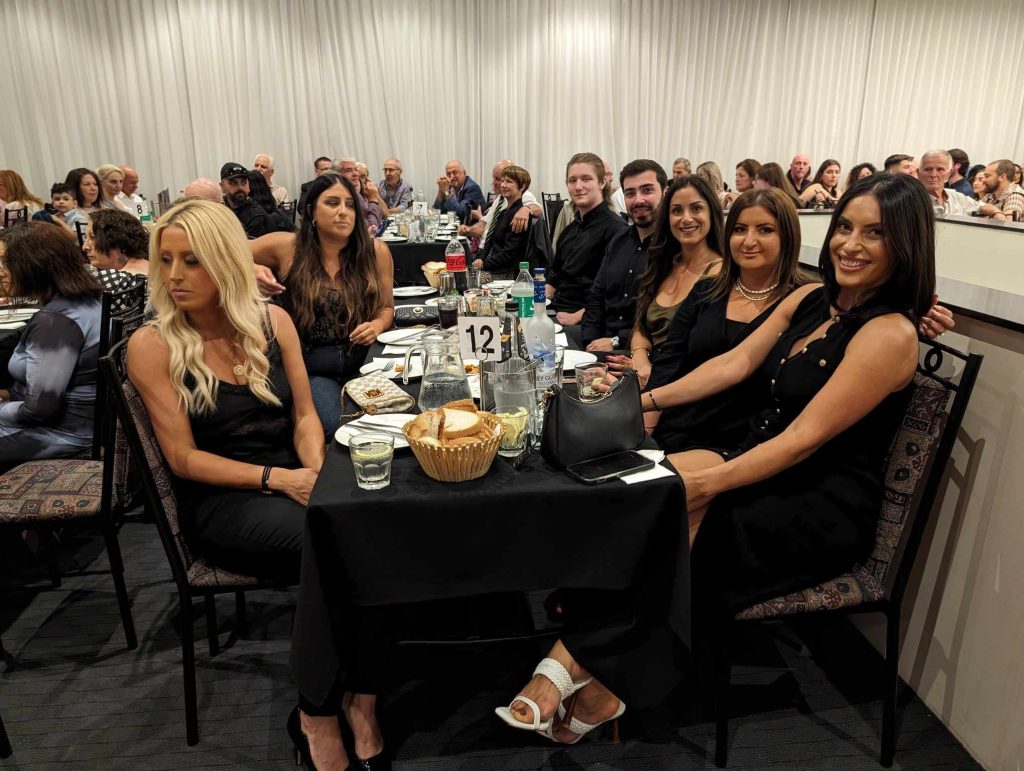
FiloXenia was a crowd favourite at the Festival. Photo: FiloXenia.People dancing at the In Good Taste Festival. Photo: FiloXenia.
FiloXenia performed at 7pm, showcasing authentic sounds of modern Greek and English music.
In a statement to The Greek Herald, the band said it was great to see “a beautiful range of cultural performances” at the event.
“To then realise we were part of it by representing Greece and Cyprus was truly special,” the band added.
During their set, the traditional kalamatiano songs drew a large crowd of different ethnicities.
“The best part was seeing the non-Greeks/non-Cypriots holding hands in the circle dancing, focusing on the feet movements of the Greek people to catch along. Whether they were successful or not, the smile on their face was more than any of us could have wanted to achieve,” they said.
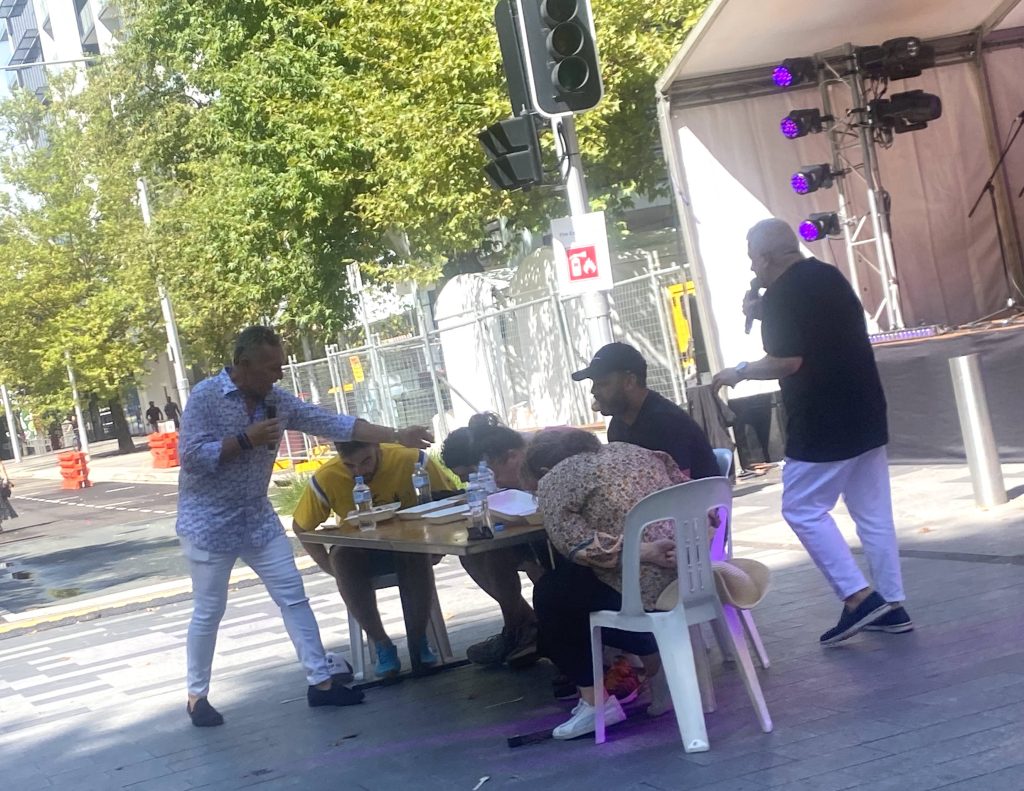
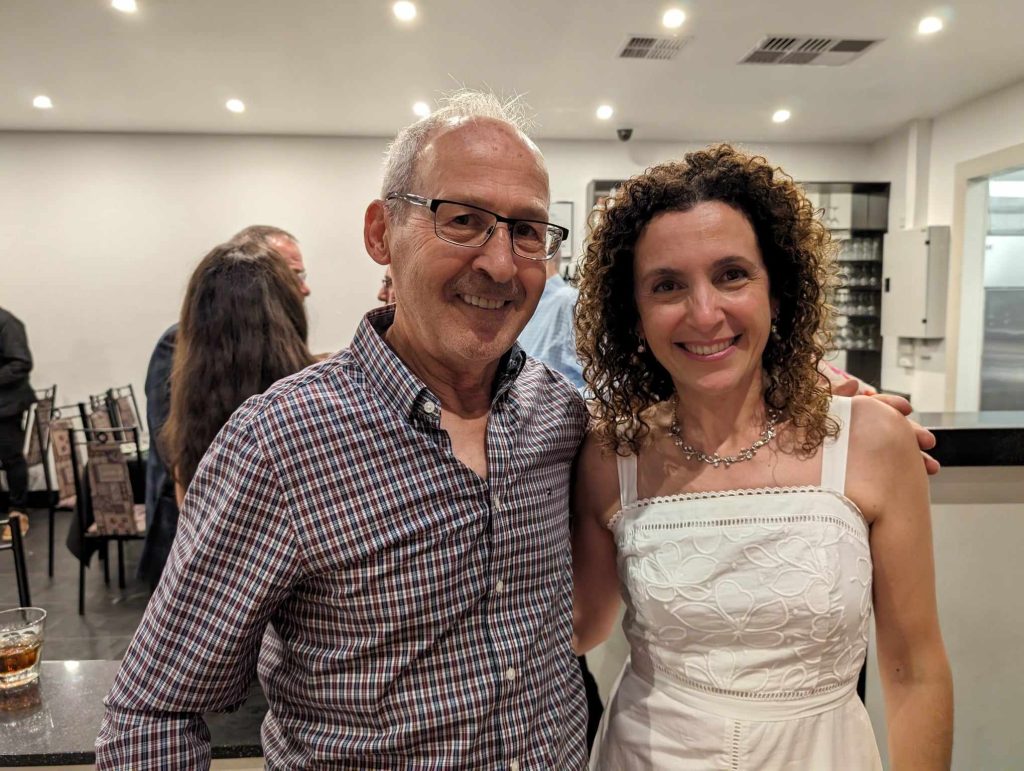
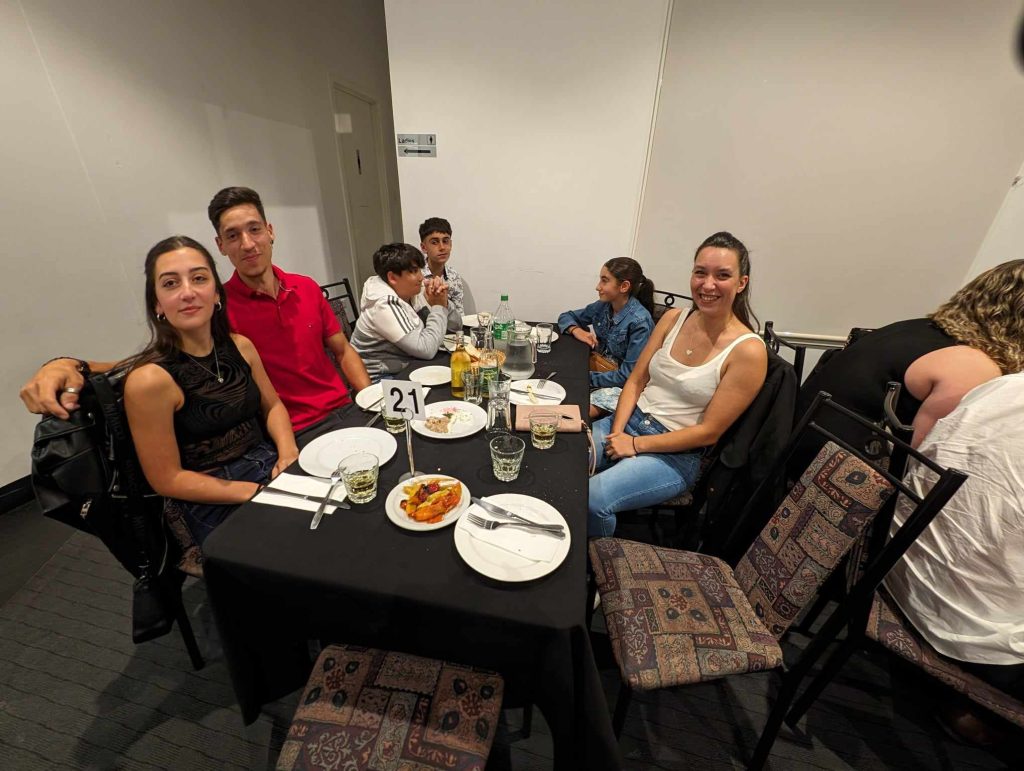
The FiloXenia boys with some of the festival attendees. Photo: FiloXenia.Despite some temporary rain, the crowds continued to dance and enjoy the festival. Photo: FiloXenia.
For those who didn’t get up to dance, two of the boys – Arky and Greg – came around with their instruments and approached different groups at tables to encourage them to get up and dance.
“We have been proud to have been representing our culture in Australia for the last six years,” the band said, adding that their pride in Greek culture has led to them travelling to Greece and Cyprus- in 2023 to perform.
FiloXenia will be going overseas again this year and they said their goal is to “continue sharing our passion and hopefully inspiring all people to do the same.”
Having evolved into one of the most significant cultural events in Australia the last 42 years, the Greek Festival of Sydney has announced its celebrations for its 20th anniversary edition of the Greek Fest @ Darling Harbour, taking place on February 24 and 25.
Tumbalong Park, the picturesque venue for the celebrations, will come alive with numerous dance performances by traditional and modern Greek and Cypriot dancers, multiple children entertainment options like magic shows, colouring and face painting, the 1st Rap Competition in Greek and a plethora of international and local performers.
An array of Greek delicacies will be served by food vendors during the weekend celebrations. From classic to modern twists on Greek snacks and sweets, attendees can savour the flavours of souvlakia, haloumi, loukoumades, and more.
Beyond the singing, dancing and traditional food tasting, multiple stalls of cultural advocates and Greek product retailers will make the visit to the heart of Sydney a celebration of embracing the Greek culture as an evolving part into Australia’s multicultural modern society.
The 20th edition of the Greek Fest @ Darling Harbour will be honoured to have:
The Consul General of Greece in Sydney, Ioannis Mallikourtis;
Federal Minister for Indigenous Affairs, Linda Burney MP;
Federal Member for Banks, David Coleman MP;
Premier of NSW, Chris Minns MP;
Leader of NSW Opposition, Mark Speakman SC MP;
The Lord Mayor of Sydney, Clover Moore OA;
Minister for Small Business, Lands and Property, Multiculturalism, and Sport, Steve Kamper MP;
and many other members of the Parliament, officials and dignitaries participating on its official opening ceremony at Tumbalong Park on Sunday, 25 February at 6:00pm.
President of the Greek Orthodox Community of NSW (GOCNSW), Harry Danalis, expressed excitement about celebrating 20 years of Greek Fest @ Darling Harbour, stating, “We are thrilled and proud to have our presence as Greek Community in the heart of Sydney’s CBD embraced for the last 20 years not only by the Greek Australians but by the extended Australian community. We know this is an event that the public looks forward to, and we are prepared to do everything in our power to make it memorable.”
Chair of the Greek Festival of Sydney, Nia Karteris, also gave her insights on the very much anticipated event.
“Greek Fest @ Darling Harbour is not just an average Festival event; its an event statement for our Community, a weekend of cultural elevation and expression and this year we will take it even further; we want to celebrate our 20 years at Darling Harbour by changing the way we offer celebrations to our community, we want to have our youth engaged more, we advocate for a Greek Youth that will showcase their identity and evolve more in the fabulous and multicultural Australian society,” Ms Karteris said.
The Greek Fest Darling Harbour is a cornerstone of the fifteen-week-long Greek Festival of Sydney, featuring over 30 events in this year’s quality program lineup. Organised by the Greek Orthodox Community of NSW, the festival invites all Sydneysiders to explore and celebrate the beauty of Greek culture through the arts, history, entertainment, and food.
Event Details:
WHAT: Celebrating 20 years Greek Festival @ Darling Harbour
WHEN: Saturday 24 & Sunday 25 February 2024, 10 am -10 pm
WHERE: Tumbalong Park, Darling Harbour, Sydney
Welcome to one of Australia’s leading multicultural festivals, where everyone is invited to celebrate and explore the beauty of Greek culture through the arts, history, entertainment, and food.
South Australian man Kosta Pehlivanidis has been ordered to stand trial after allegedly attempting to traffic 8 kilograms of cocaine, worth more than $3 million.
The 31-year-old appeared in the Adelaide Magistrates Court on Monday, February 19, and pleaded not guilty to his charge of attempting to traffic in a large commercial quantity of a controlled drug.
According to The Advertiser, Alex Scott, who represents Mr Pehlivanidis, had previously told the court he was considering arguing his client had no case to answer, but on Monday, he said his client did have a case to answer.
Eudoxia Pehlivanidis was arrested alongside her grandson in February 2023. Photo: 7 News.
Mrs Pehlivanidis had her charges withdrawn after the court was previously told she had “significant dementia.”
Court documents indicated that the delivery person (on the day of the arrest) was directed to leave the package of cocaine at the back of Mrs Pehlivanidis’ house, however police attended hours later and found Mrs Pehlivanidis and her grandson with the open package.
Mr Pehlivanidis is expected in the District Court for arraignment in May.
A family has urged employers to think twice before taking deadly risks following the death of their 25-year-old son Michael Tsahrelias in a forklift incident at work.
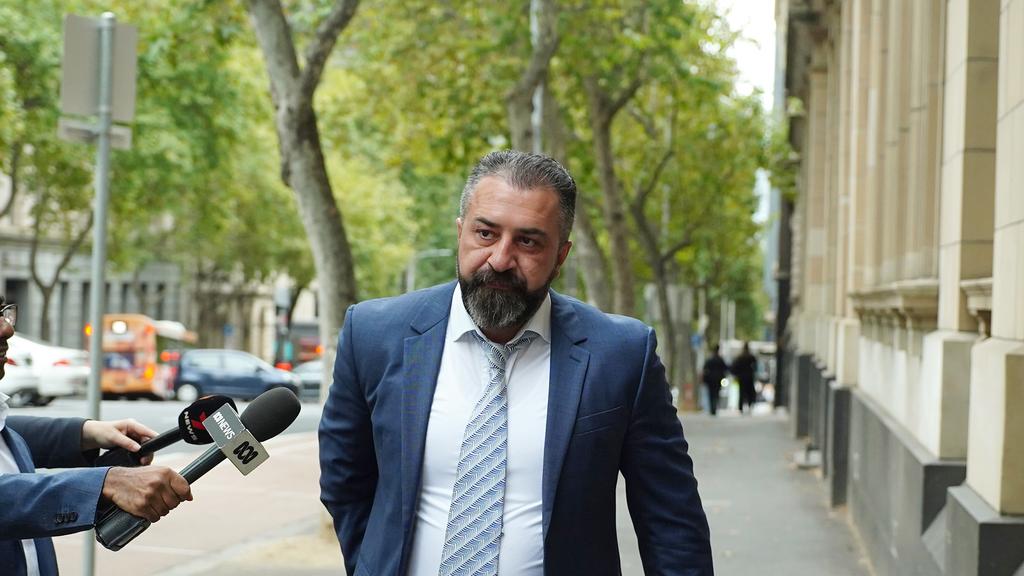
Tsahrelias was working as a contractor on site with his father Steve at Universal Stone and Marble at Somerton, Melbourne in October 2021, when the company’s owner, Laith Hanna, was driving a forklift carrying a metal A-frame.
Hanna turned the forklift on a downhill slope while carrying the load as it hung suspended about two metres off the ground. This went against safety standards.
According to Nine News, Tsahrelias tried to steady the forklift, but it lost balance, tipped over and crushed him. Hanna screamed for help and Tsahrelias’ father found him crushed under the machine.
Tsahrelias’ father was among those who attempted to revive his son, but he died at the scene.
The owner of the construction company, Laith Hanna. Photo: NCA NewsWire / Luis Enrique Ascui.
On Monday, February 19, the case was before the Supreme Court, where Judge Michael Croucher sentenced Hanna to a two-year community corrections order, where he will have to complete 200 hours of community service.
Hanna’s company, Holding Management Pty Ltd, was also fined $1.3 million in the state’s first workplace manslaughter prosecution.
The Tsahrelias’ family lawyer, Tony Carbone, said the family wanted employers to stop taking risks to avoid further tragedies.
“Don’t leave anything to chance. Just stop (and think), ‘is everyone clear? Is it safe?'” he said to reporters outside the court.
Hanna will also be required to pay $120,000 in compensation to Tsahrelias’ sister.
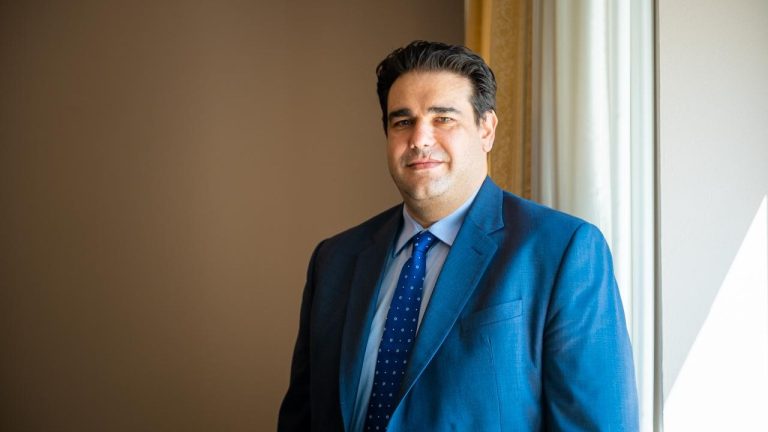
Greece’s Deputy Interior Minister, Theodoros Livanios, will be in Australia for the celebrations of March 25th to mark Greek Independence Day and the Annunciation of the Theotokos.
The 47-year-old politician will visit Melbourne from March 21 – 23 and Sydney from March 24 – 27.
During his visit, Mr Livanios is expected to hold meetings with political, church, and community leaders, and will attend Greek Independence Day events.
Theodoros Livanios.
This comes as Greece’s Prime Minister Kyriakos Mitsotakis plans to travel to Canada for Greek Independence Day this year. He will meet with the Canadian Prime Minister and the Greek diaspora in various cities.
Mitsotakis is later expected to be in the United States, where he will meet with President Joe Biden. Topics of discussion on the agenda include the economy and armaments, with the Greek side seeking to emphasise that Greek-American relations are autonomous and do not depend on Turkey and its own military supplies.
The Greek Prime Minister is also expected to travel to Australia this year.
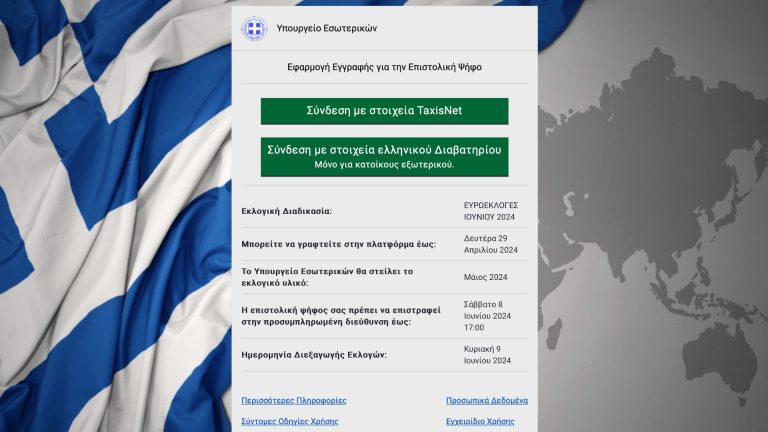
A platform for Greek citizens to register in the electoral roll for postal voting launched on Monday, February 19.
This new platform has been designed so that Greek citizens can exercise their voting rights in elections in European Parliament and national referendums.
Ekathimerini reported that it will cater to all citizens who are registered in the electoral rolls that wish to participate in the elections.
Άνοιξε η ηλεκτρονική πλατφόρμα https://t.co/3eKTR7LfXH για την Επιστολική Ψήφο. 🇬🇷 Αφορά κάθε Έλληνα πολίτη, είτε ζει στην Ελλάδα, είτε ζει στο εξωτερικό. 🗓️ Προθεσμία: 29 Απριλίου 2024 🖥️ Χρήση εφαρμογής https://t.co/3eKTR7LfXH με TaxisNet κωδικούς, ελληνικό διαβατήριο ή… pic.twitter.com/d298qgqR3W
They will be welcomed to participate in the online platform-style voting regardless of their location within Greece or outside its borders. However, Greek residents living abroad will only be able to participate in the European elections through postal voting.
The online platform for Greek citizens can be accessed here.
On Monday, February 19, a Red Sea naval mission was launched by the European Union to assist and protect cargo ships.
This announcement follows a series of missile attacks by Iranian-backed Houthi rebels in Yemen who are threatening maritime traffic, hamper trade and drive up prices.
Ekathimerini reported that the new mission, called ASPIDES (meaning shield in Greek), will be operated in Larissa, Central Greece, which is home to the Hellenic Air Force and a NATO headquarters.
It will operate under the command of Greek Commodore Vasilios Griparis.
Despite the US and British forces gifting back at the Houthis by bombing multiple targets, the new Red Sea mission will not take part in any military strikes.
The EU launched a new maritime operation in the Red Sea, called ASPIDES after the ancient Greek word for “shield”.
It will:
☑️ ensure freedom of navigation ☑️ protect commercial vessels from Houthi attacks ☑️ have a defensive nature ☑️ provide maritime situational awareness
It will only operate at sea. Germany and Belgium will also contribute a frigate to the mission.
“Within its defensive mandate, the operation will provide maritime situational awareness, accompany vessels, and protect them against possible multi-domain attacks at sea,” the European Union headquarters said in a statement.
“The entire global economy is being hit. It’s not just European ships that are repeatedly jeopardized by Houthi missiles in the Red Sea, but the entire international shipping industry,” German Foreign Minister Annalena Baerbock said.
The German Foreign Minister said the Red Sea mission “makes it clear that we as an international community stand together in the face of attacks; terrorist attacks on the freedom of the sea lanes.”
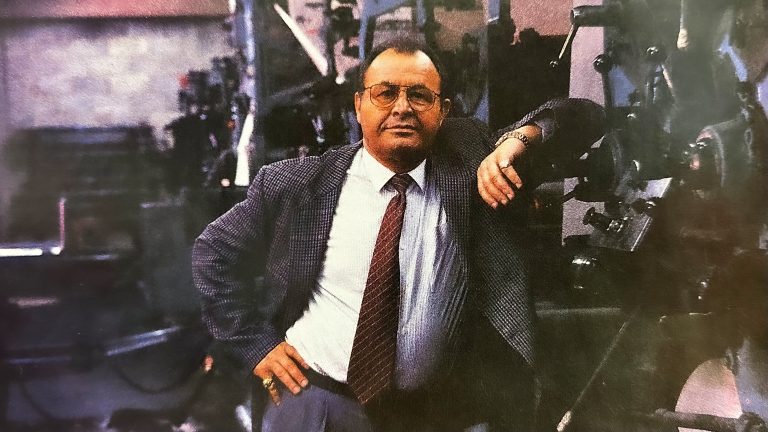
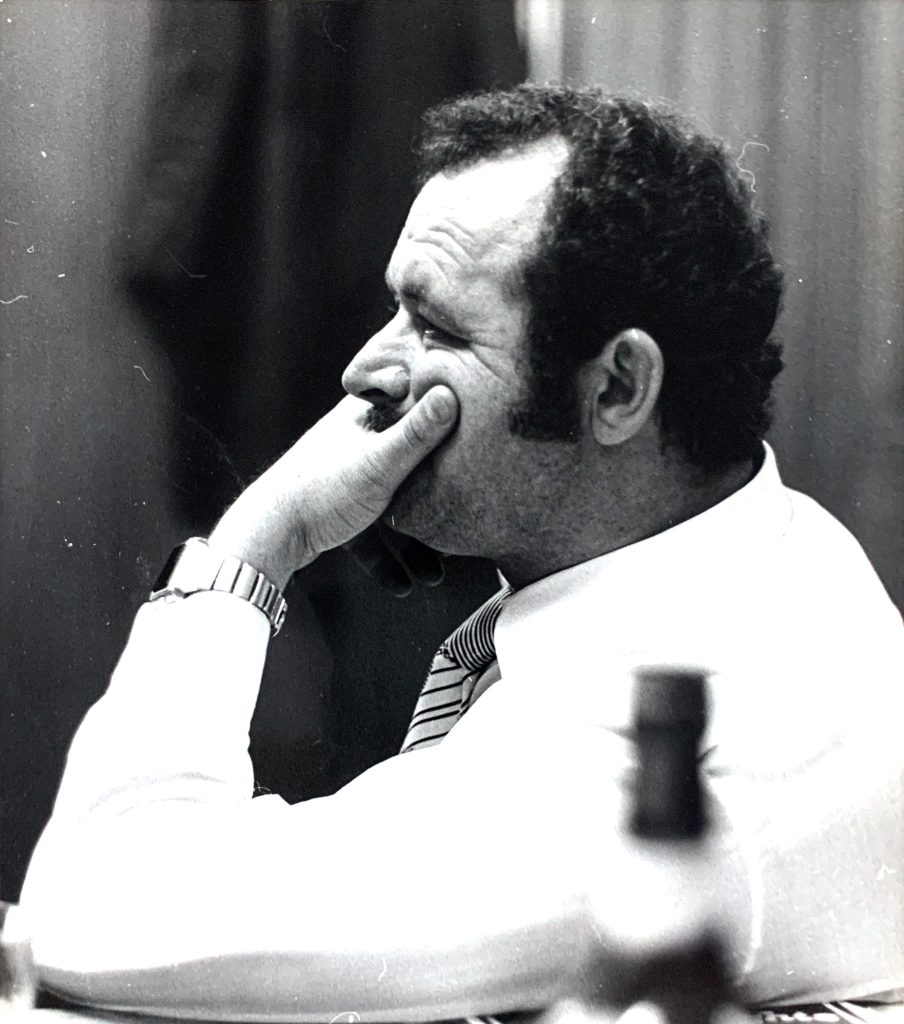
When the late publisher of The Greek Herald, Theodore Skalkos sat down for an interview with the National Library of Australia in March 2000, he was asked how he wanted to be remembered. After a brief pause, Mr Skalkos’ answer was simple.
“As I am…” he replied. “As Theodore Skalkos.”
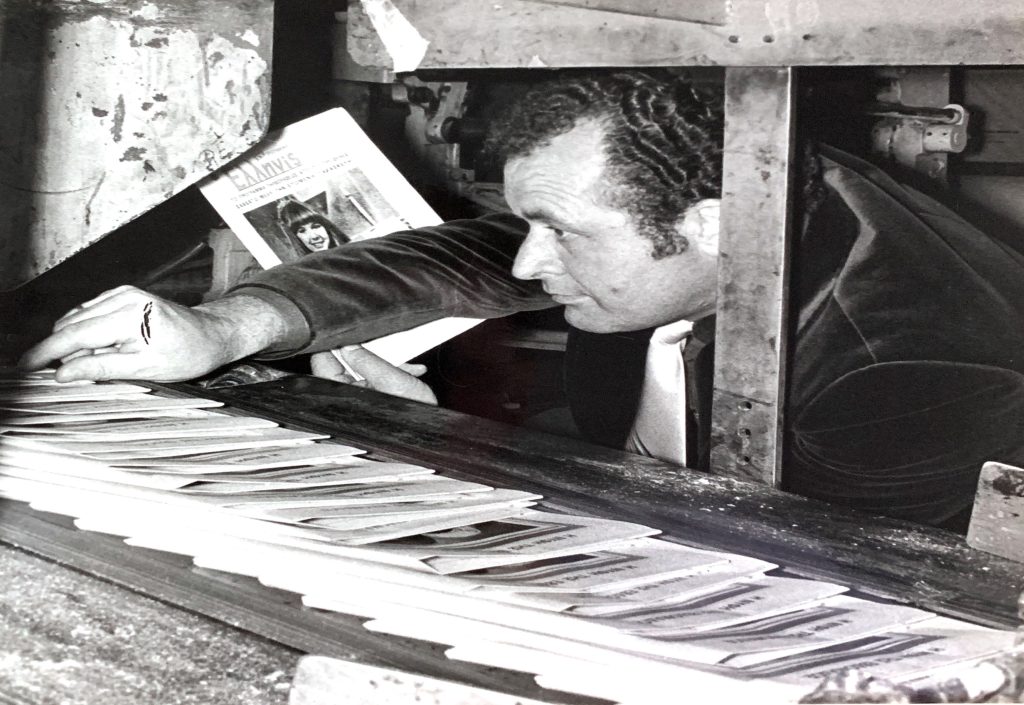
Mr Skalkos inspecting his printing presses.
Even five years after his death on 19 February 2019 at the age of 87, Mr Skalkos’ name remains synonymous with Australia’s ethnic media and the ground-breaking printing reforms he championed.
Political, community and sport leaders who knew Mr Skalkos also remember him fondly, whilst admitting he could be a controversial figure.
“He was part of Australia’s transition, often boisterous and argumentative but there to help,” former New South Wales Premier Bob Carr once wrote about Mr Skalkos. “Someone like Theo took risks and produced a successful business model. In the process he gained the respect and affection of many people across Australian leadership.”
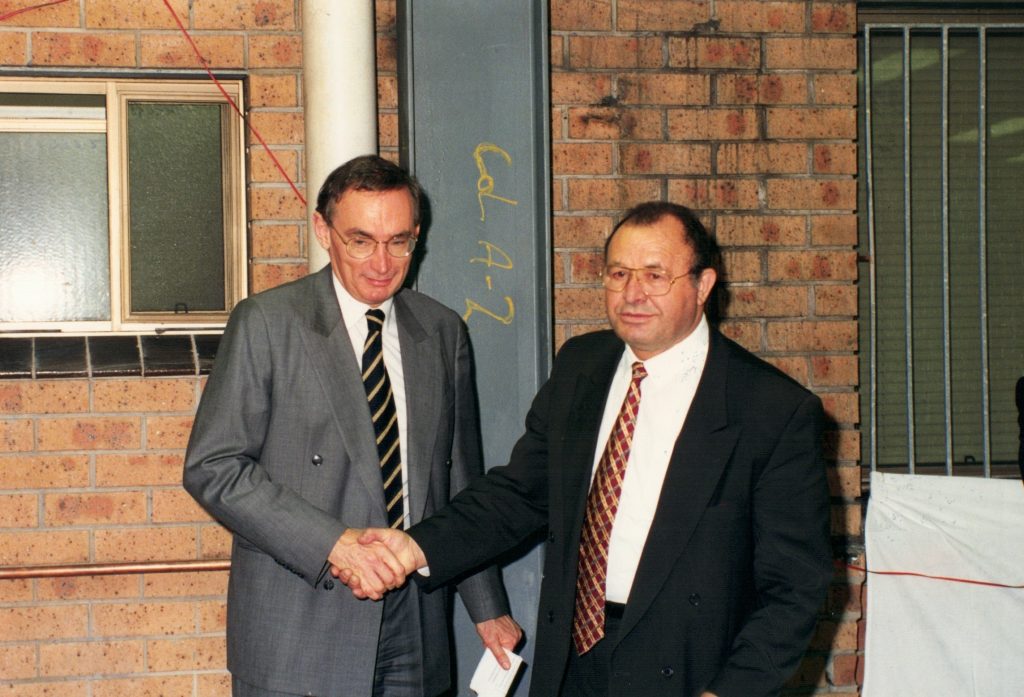
Former Premier of NSW Bob Carr and Theo Skalkos at his Marrickville offices.
Former Australian Ambassador to the United States, Arthur Sinodinos added, “Theo Skalkos was a larger-than-life character who lived life his way and never took a backward step. He could be the most generous of friends and the most unrelenting of adversaries.”
They weren’t wrong.
Skalkos’ entrepreneurial spirit:
Born in Skala, Laconia, Greece on 2 February 1932, Mr Skalkos was always a hard worker, helping his dad on the family farm whilst trying to get an education and fulfilling responsibilities for his local church on Sundays. He finished high school in the Greek Air Force and left to join the Belgian airline, Sabena, which stationed him for a year in the Belgian Congo and then Australia.
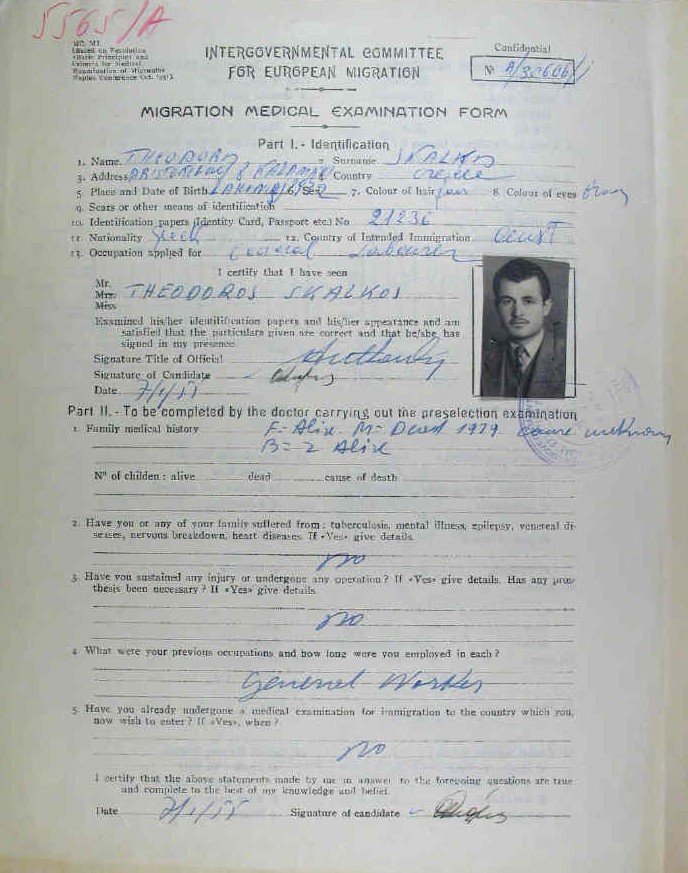
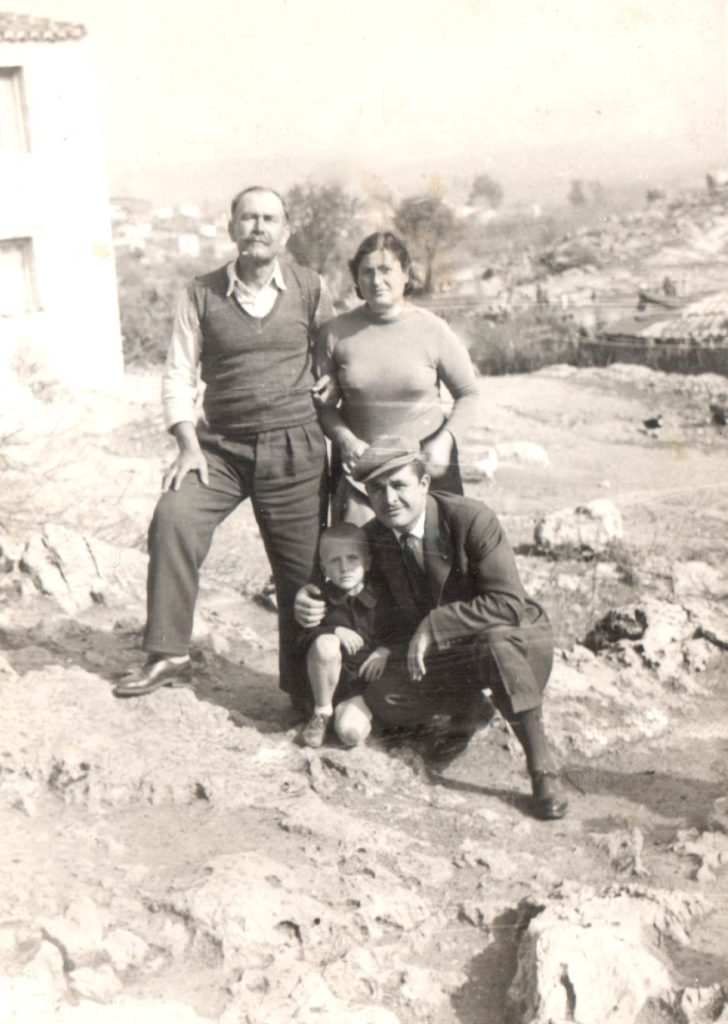
Theo’s migration papers. Theo Skalkos (bottom right) in Skala, Lakonia with his father Panagiotis and brother George.
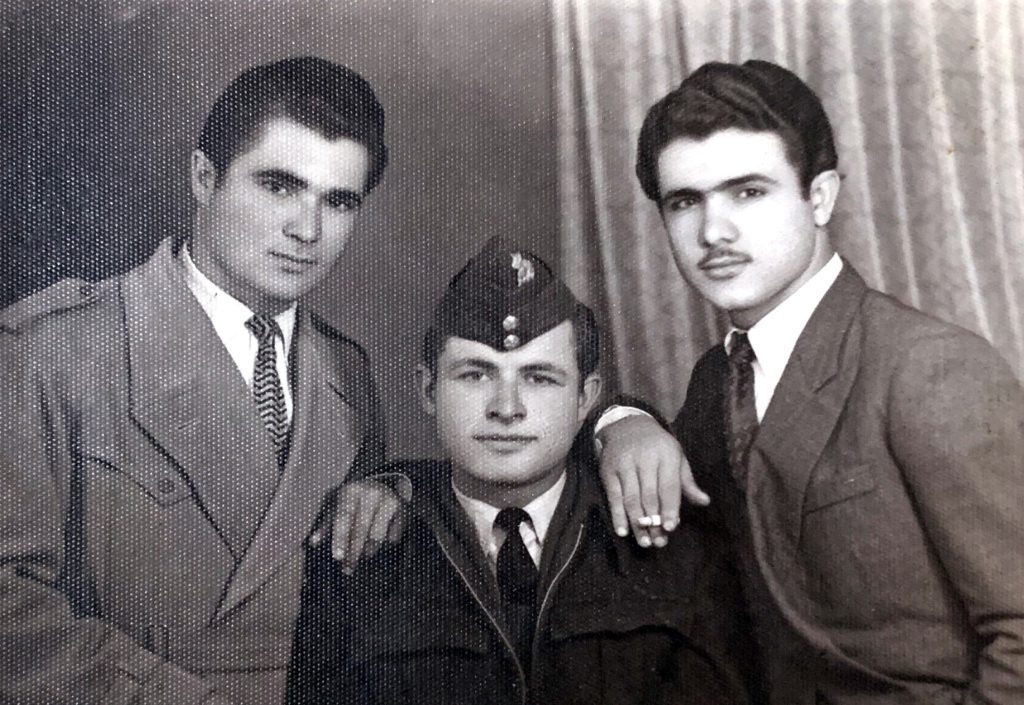
Theo Skalkos (centre) during his time in the Greek Airforce.
He landed in Melbourne on 3 March 1955 and spent three months fixing machines at the Hilton’s stocking factory before he, along with five friends, went to work on a sugar cane farm in Queensland.
Eventually his five friends left the cane farm due to the demanding nature of the job and only Mr Skalkos and a Ukrainian man remained. When the season finished, the accumulated bonuses of all those who had come and gone went to Mr Skalkos and the Ukrainian. They split the money and ended up with 1,250 pounds each.
Later moving to Sydney, Mr Skalkos worked at Warragamba dam for three months and then at a vinyl veneer factory in Rosebery, which was located next to the Department of Transport.
During his interview with the National Library of Australia, Mr Skalkos described how an interaction he had at the factory led to his first business endeavour.
“During lunch one time, one of the driving examiners [from the Transport Department] said to me, ‘why don’t you buy a car to teach the silly Greeks to drive instead of working at the factory?’” Mr Skalkos explained.
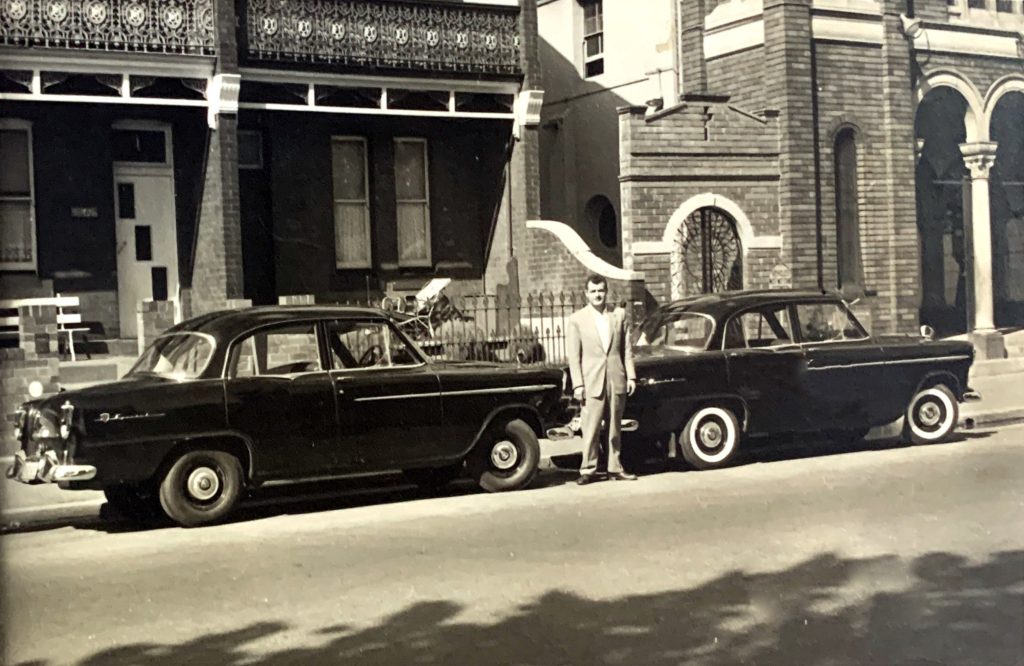
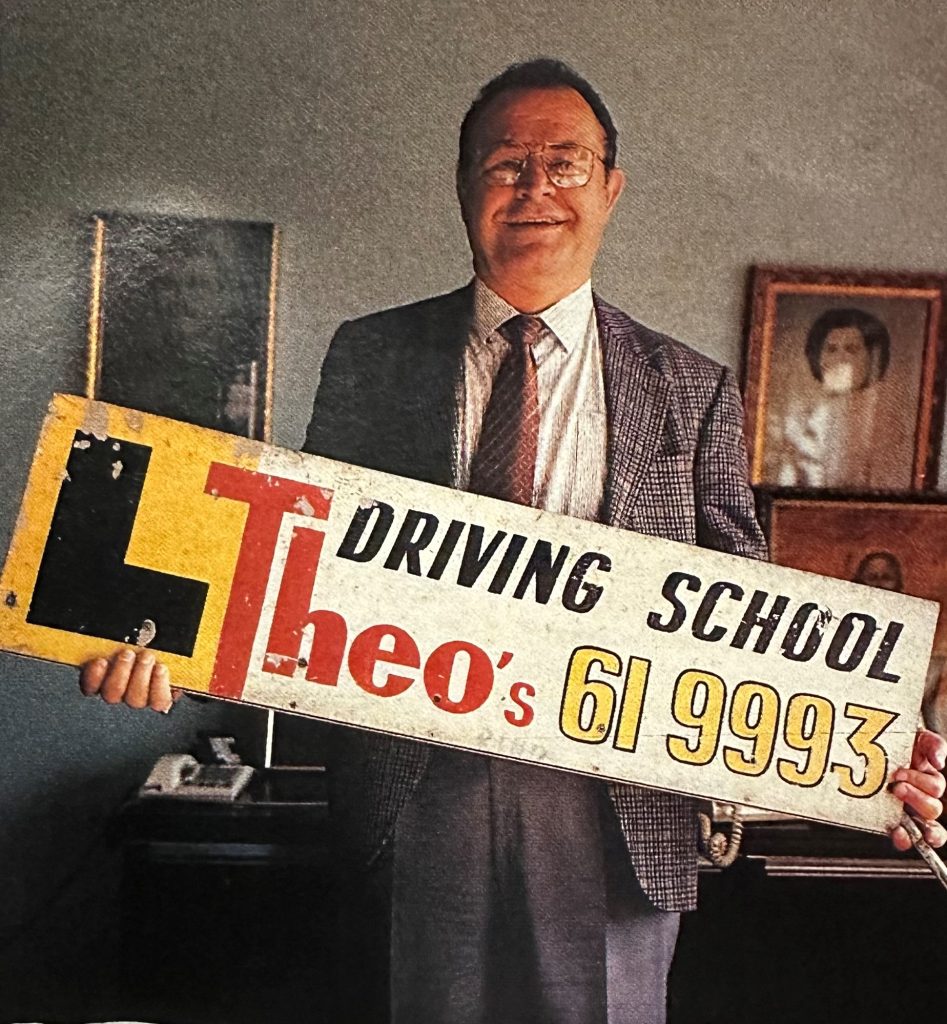
The idea stuck and the next day, Mr Skalkos bought a ’52 Holden, added his own double braking clutch, and started the first Greek driving school in Australia in 1956. He called it ‘Theo’s Driving School’ and it grew to have up to 17 black Holdens. To maximise the use of the Holden fleet, he would lease them for weddings and christenings on weekends.
Mr Skalkos with his ’52 Holden fleet for his driving school that he rented out for weddings and christenings on weekends.
But Mr Skalkos didn’t stop there. His second business enterprise started soon after he visited another Greek who was running a sewing machine import business in Sydney.
“I was there to interpret for my cousin who wanted to buy a sewing machine. This old Yugoslavian woman comes in and she said, ‘will you teach me how to use the sewing machine so I can get a job in the factory? I will pay you.’ Three days later, I ordered sewing machines and started my sewing school in Castlereagh Street,” Mr Skalkos said.
Over 10 years, his sewing school taught 15,000 migrant women. Mr Skalkos said it was “the best business” he had.
Mr Skalkos proudly held onto Theo’s Driving School signage. Photo: The Australian Magazine.
Skalkos’ ethnic media empire:
By 1958, Mr Skalkos was an expert of both the sewing needle and the driving wheel. He didn’t know it at the time, but he was also on the threshold of becoming a legend in Australia’s publishing and printing world.
“I got into printing by accident,” Mr Skalkos always said.
He had paid 50 pounds for his business cards to be printed when one of his driving students, Bob, took him to the closing down sale of a printing shop opposite Sydney’s Town Hall. Mr Skalkos ended up buying a pedal-powered press for 75 pounds, and had it delivered to his Kensington flat.
Despite not knowing how to use the printing press at first, Bob taught Mr Skalkos and Hellas Press (later Media Press then Foreign Language Press) was born. He was soon printing business cards, then wedding invitations and later commercial printing jobs.
The idea that changed Mr Skalkos’ life was a simple one – printing wedding invitations with pictures of one of the three Greek Orthodox churches in Sydney at Bourke Street, Darling Street and Abercrombie Street.
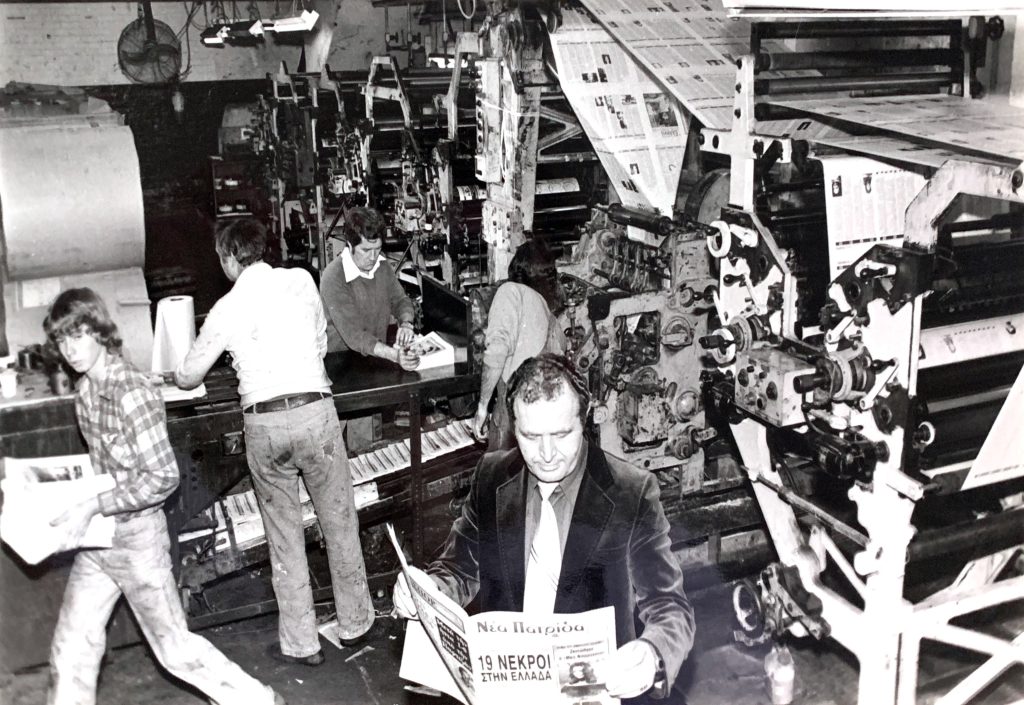
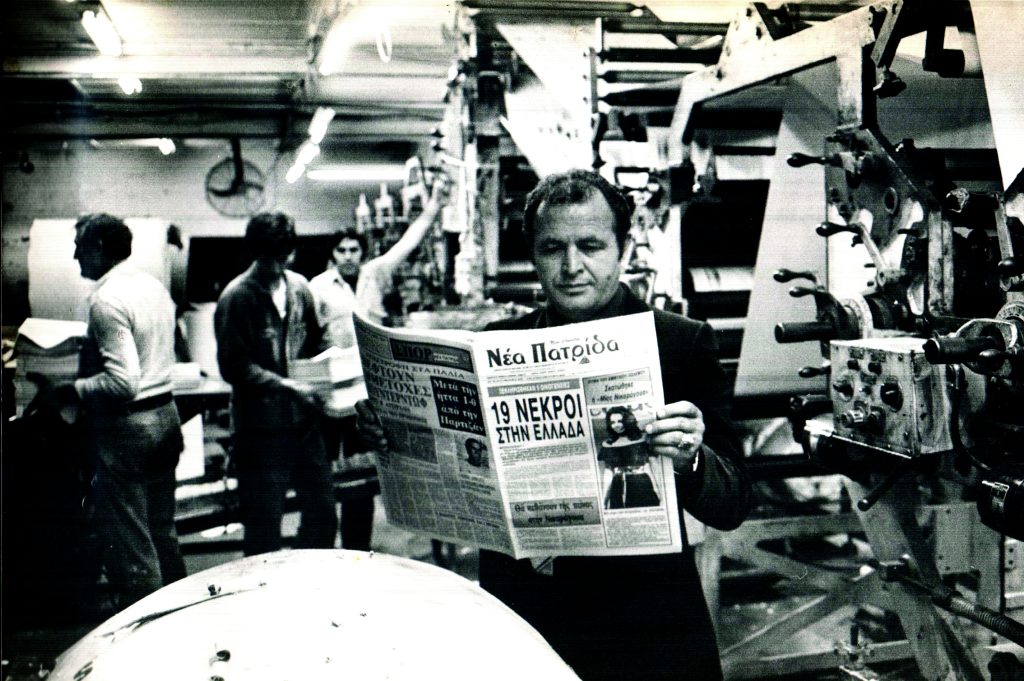
Theo Skalkos reads his first ethnic publication Nea Patrida. Theo Skalkos with his first publication Nea Patrida.
In 1965, he went to The Greek Herald (formerly Hellenic Herald), which at the time was owned by Alexander Grivas, and paid 12 pounds to place an advertisement to promote the wedding invitations.
“They put my ad but the rest of the page they put an ad for their own wedding invitations to kill my advertisement – the entire rest of the page. I was mad, I was upset…” Mr Skalkos explained.
Following this incident that Mr Skalkos deemed a betrayal, the Greek migrant decided to order his own typesetters and, knowing they would have taken up to 18 months to come, he asked the late publisher of Neos Kosmos in Melbourne, Dimitri Gogos, if he had anything second-hand that he could acquire instead. Mr Gogos did and after picking up the equipment, Mr Skalkos set up his publishing business.
On 3 November 1966, Mr Skalkos started the Nea Patrida newspaper in direct competition to The Greek Herald. Νea Patrida was given out to readers for free as opposed to The Greek Herald which had a cover price cost. Mr Skalkos’ free newspaper quickly grew in popularity and became much more attractive to advertisers.
When asked about his competitors in Greek media at the time, Mr Skalkos said he was never afraid.
“We didn’t have strong competition because I was experienced, I had the facilities, I was never afraid to spend money to improve and update our equipment,” he said.
“Ethical competition is good business. The dirty competition is bad. I am a good fighter and I like to be at the top. I like to be first and that’s more or less why the business is successful. I’m not going for money, but I want to be successful in everything I do.”
No one can say Mr Skalkos wasn’t successful in business.
After launching Nea Patrida, Mr Skalkos continued to distribute the newspaper for free for 18 months before introducing subscriptions. In 1970, he eventually bought half of The Greek Herald for $66,000 and in 1972, he paid $186,000 for the other half.
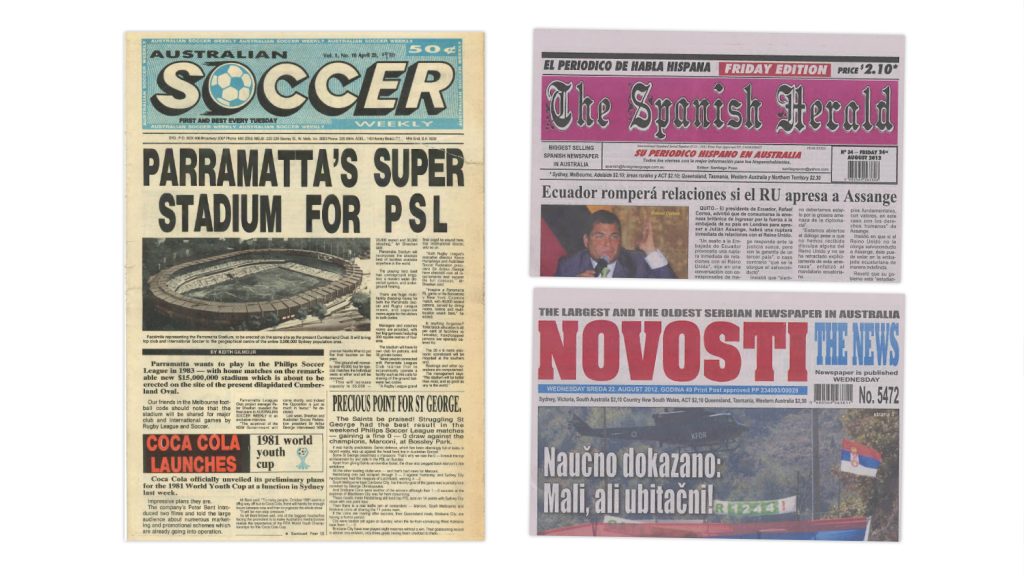
Mr Skalkos went on to buy a handful of foreign language newspapers and specialised publications, including the Serbian paper Novosti, The Spanish Herald and later the Arabic paper, Al-Bairak. He also started the Greek weekly magazine The Ellinis (which continues to this day), the Australian Soccer Weekly, and the Italian Il Mondo.
The print business also built up alongside the publishing, with Media Press having two printing presses, one each in Sydney and Melbourne. Mr Skalkos said he bought the first Goss Webb offset printing presses in Australia. He was also one of the first to abolish linotype and introduce electronic typesetting.
Media Press was soon printing more than 80 publications in over 40 languages, including prestigious News Corp Ltd titles such as the Sunday Telegraph and Sunday Mirror for a short timeat the request of then-publisher Rupert Murdoch. The titles he printed accounted for more than three-quarters of the ethnic media in Australia.
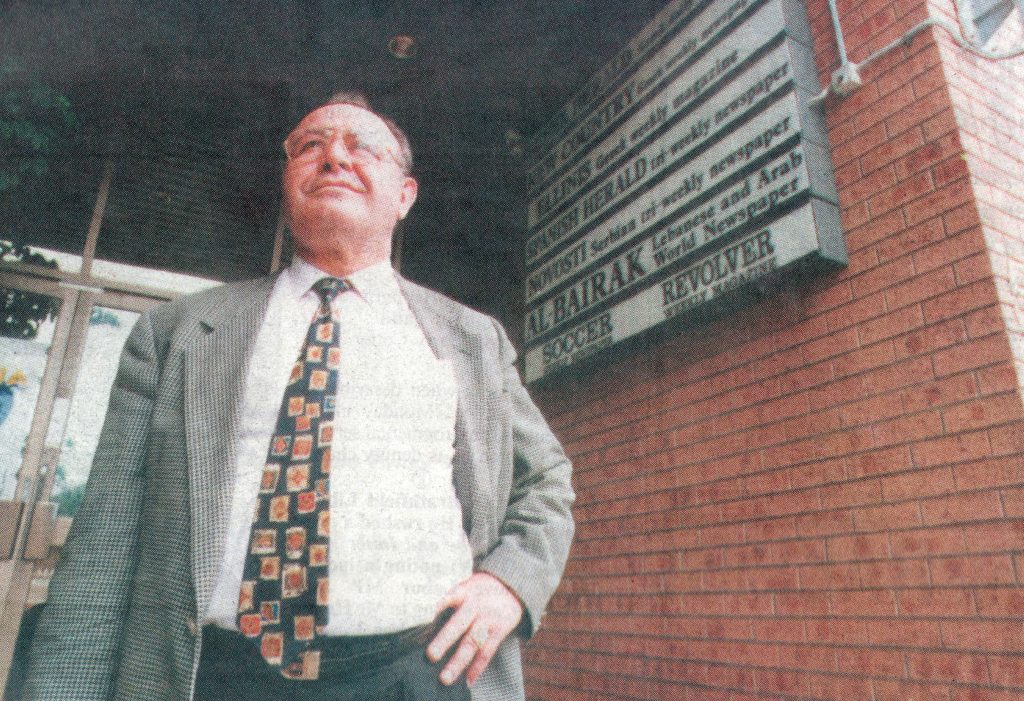
Theo Skalkos at his media headquarters.
For Mr Skalkos, the key to his success was hard work and keeping the needs of the ethnic communities he was writing for at the core of his publications.
With The Greek Herald, he spent weekends personally attending community events, taking photographs and placing up to four pages worth of coverage in the newspaper. It was something he took immense pride in.
“The Greek Herald is a bible to the Greek community. If The Greek Herald write about it, people believe it… because I wasn’t bought by Consulates, the Australian government, the Archdiocese, from nobody. I’m fully, fully independent. The people who read the paper and who advertise with the paper help me with what I do,” Mr Skalkos once said.
Skalkos’ controversies:
This independent stance saw Mr Skalkos become a controversial figure in Australia’s Greek community, and he became involved in several defamation legal cases. He also had a long-standing dispute with the late Archbishop Stylianos of Australia and the Greek Orthodox Archdiocese of Australia (GOAA) for almost 40 years.
But this didn’t stop Mr Skalkos. His motto was that in business, you couldn’t please everyone.
“It’s a hard game,” he said during his interview with the National Library of Australia.
“If you do something and you go against the big boys… you fight the war. It’s no good. When I try to do something which doesn’t affect the big people, they help you. This is why it’s a hard game and no one wants to do it.”
Diversifying ventures:
Despite the challenges Mr Skalkos faced, he continued growing his printing empire and even branched out into radio and television.
He first brought Greek television to Australia with his show Let’s Go Greek on Channel 10. As part of the show, Mr Skalkos brought out popular Greek singers and actors to perform.
Mr Skalkos also organised concerts in Australia featuring artists from Greece, such as Yiannis Parios at the Sydney Opera House and the Sydney Entertainment Centre, which drew an audience of 15,000 people. Additionally, he hosted performances by Marinella, George Dalaras, Litsa Diamanti and numerous other renowned artists.
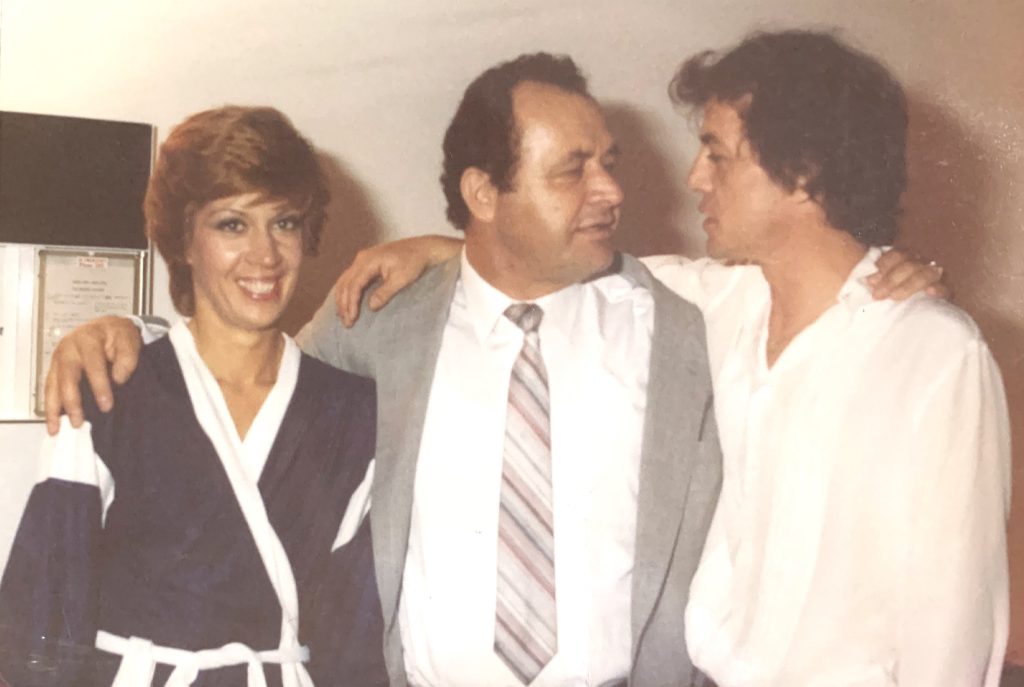
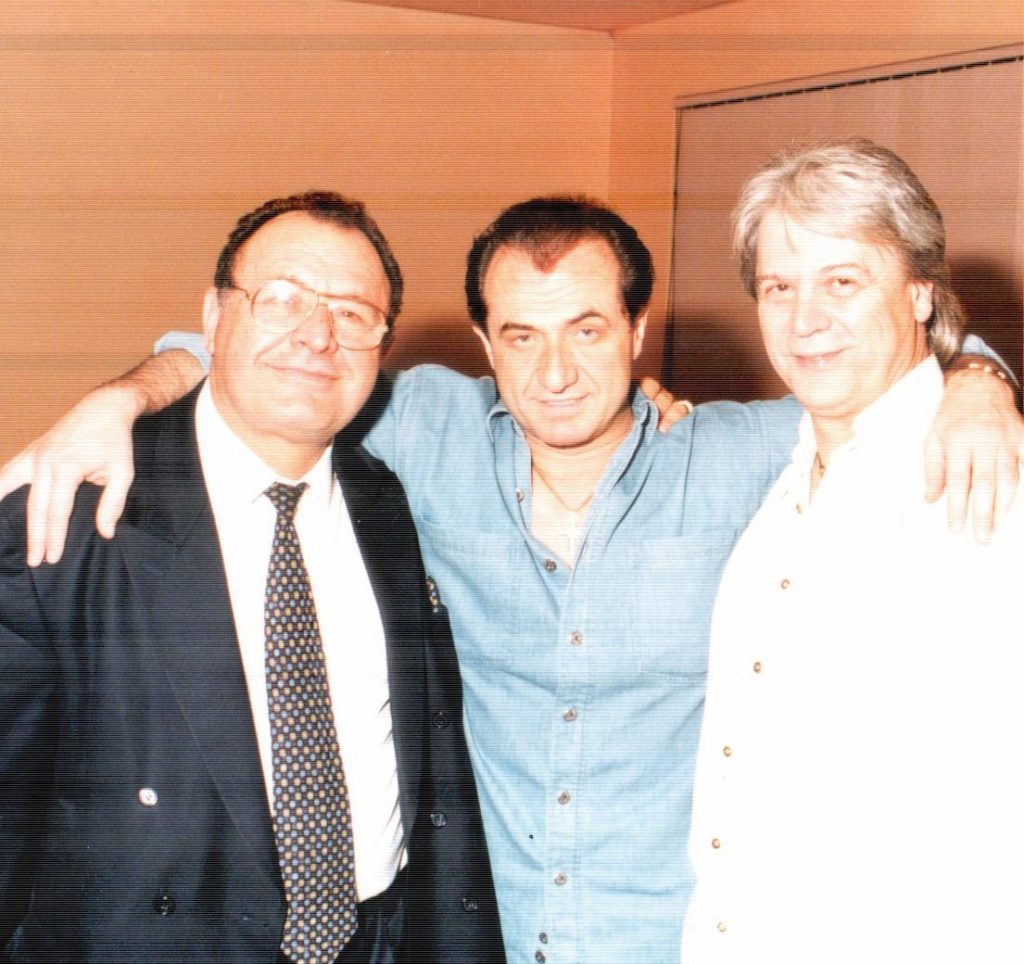
Greek singers Lista Diamanti (left) and Yiannis Parios (right) with Theo Skalkos (centre) during their visit to Australia.
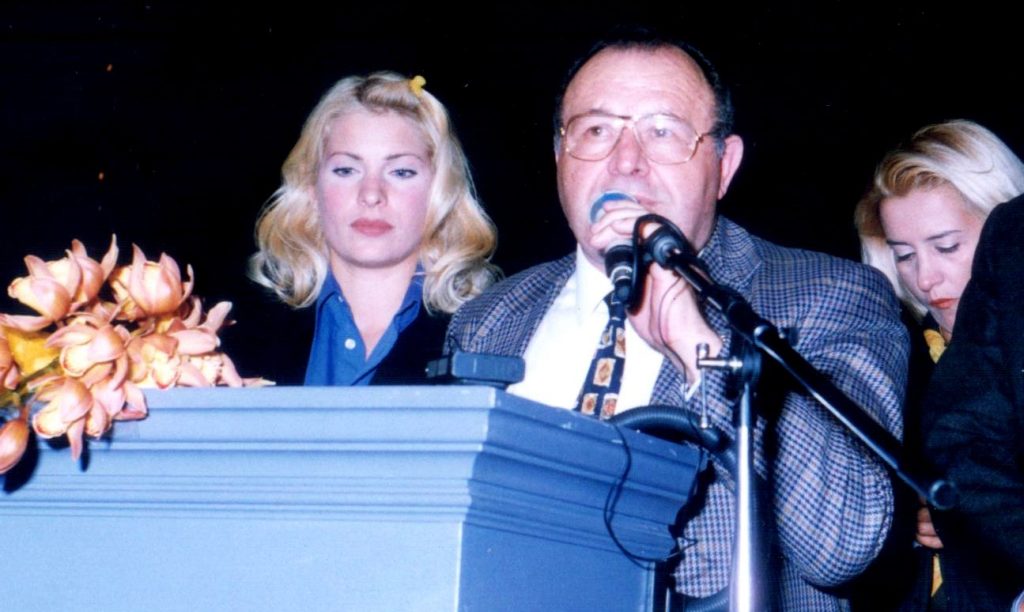
Theo Skalkos and Alkistis Protopsalti during her visit to Australia as part of the Greek Festival of Sydney. Theo Skalkos (left) and Lefteris Pantazis (centre).
Mr Skalkos facilitated the introduction of the Greek channel Antenna (ANT1) to Australia. Subsequently, he organised a Miss Hellas pageant competition to boost Antenna’s presence in Australia, broadcast on Foxtel.
Theo Skalkos promoting Antenna in Australia with Greek TV presenter Eleni Menegaki.
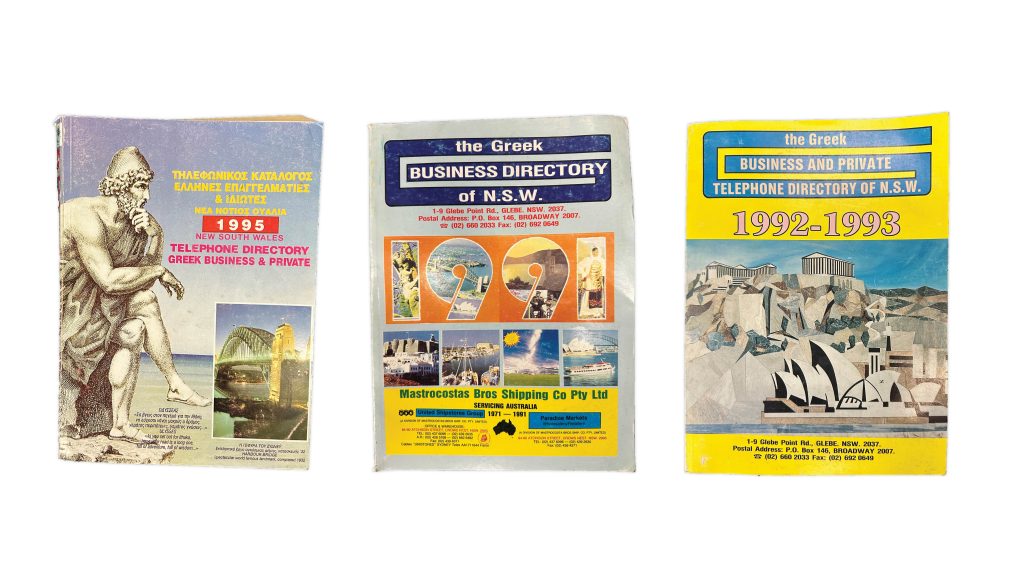
Demonstrating his commitment to connecting the Greek business community across the country, Mr Skalkos initiated the Greek Business Directory in Australia. To compile and maintain the directory, he deployed members of his team to travel extensively by car across Australia. In the 90s, Mr Skalkos also ventured into the travel industry with Alfa Travel, a travel agency located in Sydney’s Marrickville.
Editions of the Greek Business Directory.
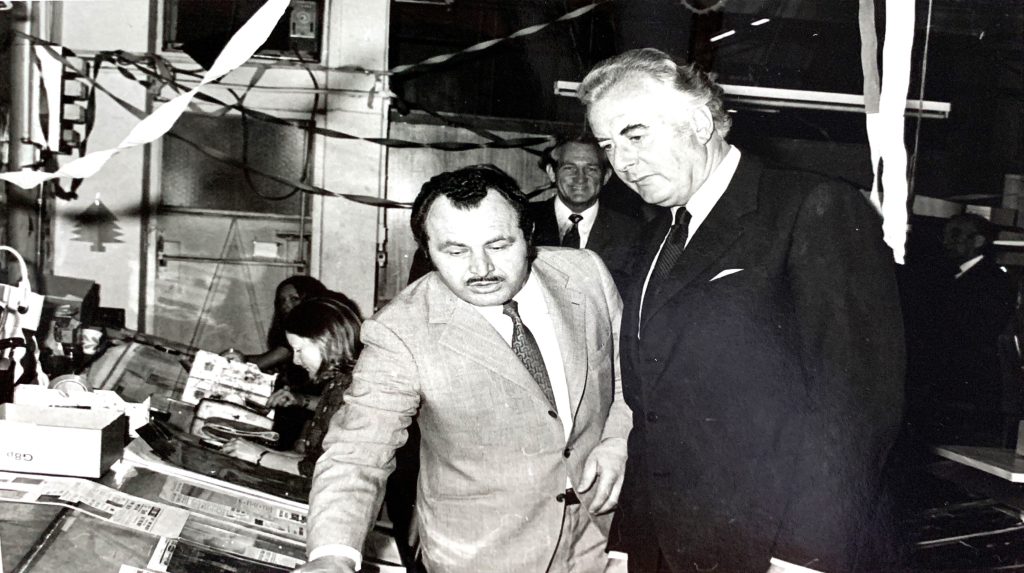
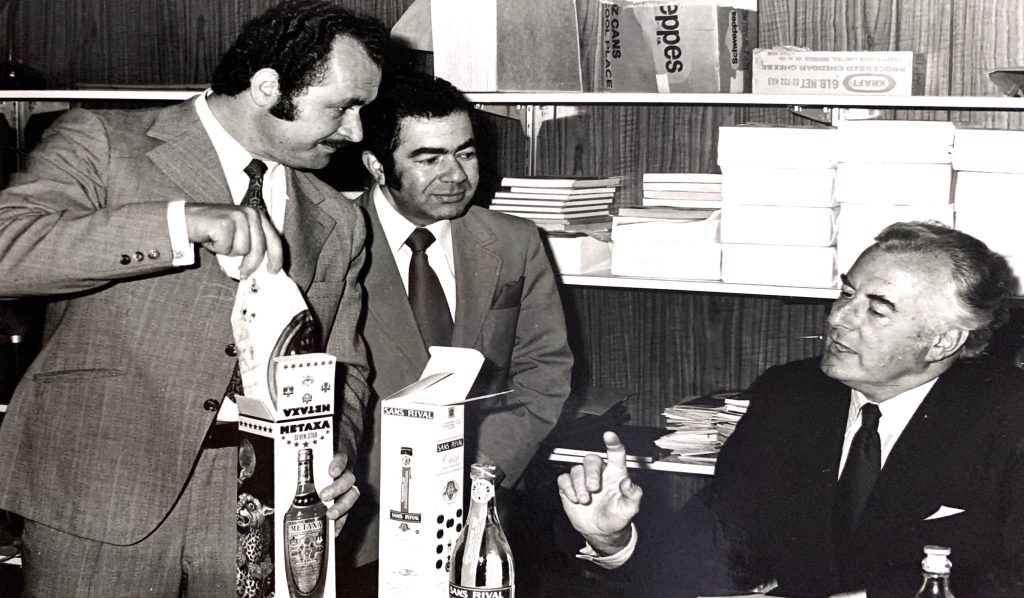
He worked closely with the late Gough Whitlam (a former Prime Minister of Australia), and the late Albert Jaime Grassby (a former Immigration Minister) to start a radio station for migrants. Mr Skalkos also started a 24-hour radio program ‘Voice of Greece’ with news direct from Greece, and he played a part in the launch of the Special Broadcasting Service (SBS) in 1978.
Former Prime Minister of Australia Gough Whitlam visiting Mr Skalkos’ printing presses. Theo Skalkos and Former Prime Minister Gough Whitlam.
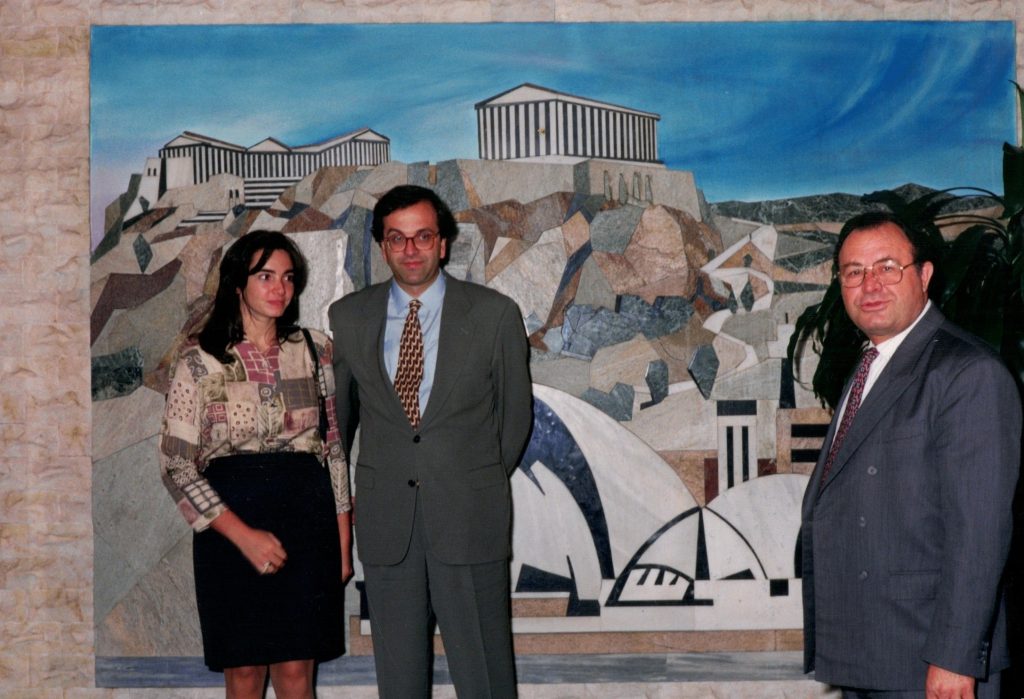
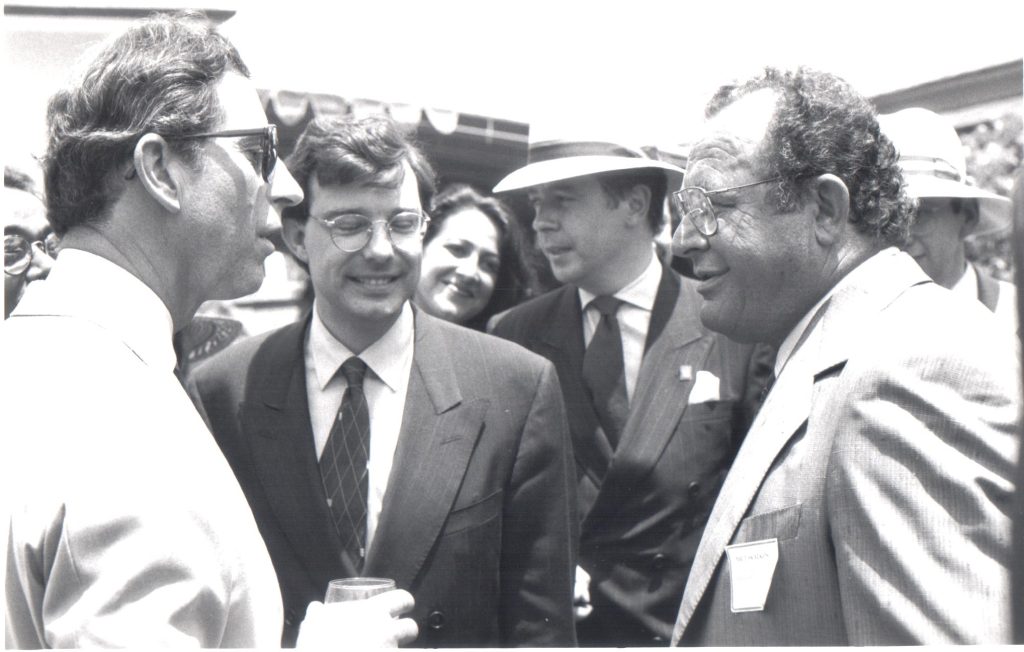
It’s clear that along his journey, Mr Skalkos met and became friends with some big players in Australia’s political, media and cultural circles. Besides Whitlam and Grassby, he also had ties to former Prime Ministers of Australia, Malcolm Frazer, Bob Hawk and John Howard, former Prime Minister of Greece, Antonis Samaras and media magnate Rupert Murdoch.
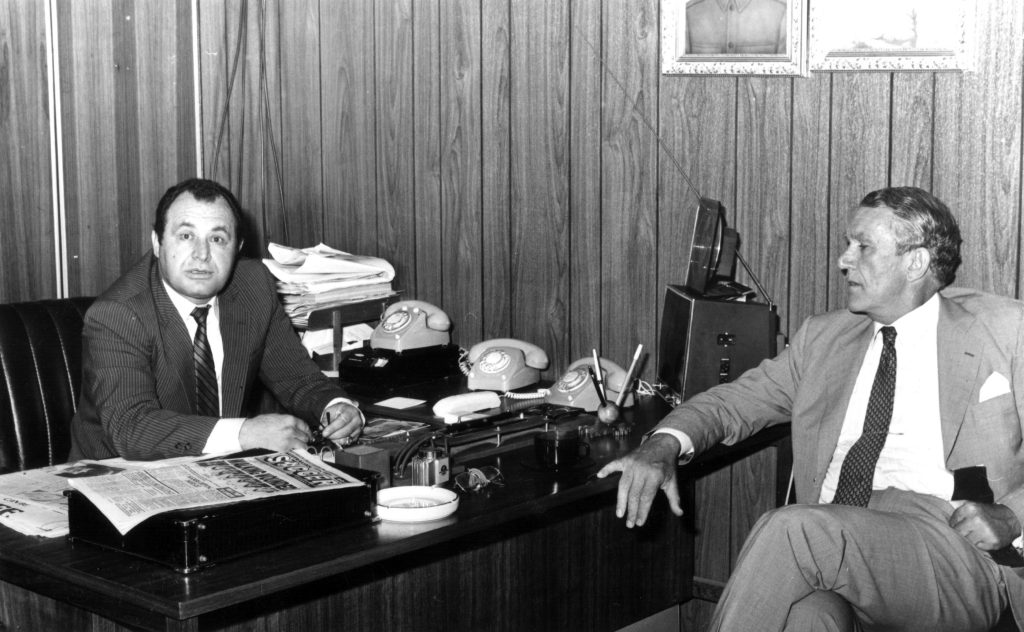
Theo Skalkos with former Prime Minister of Australia Malcolm Fraser.
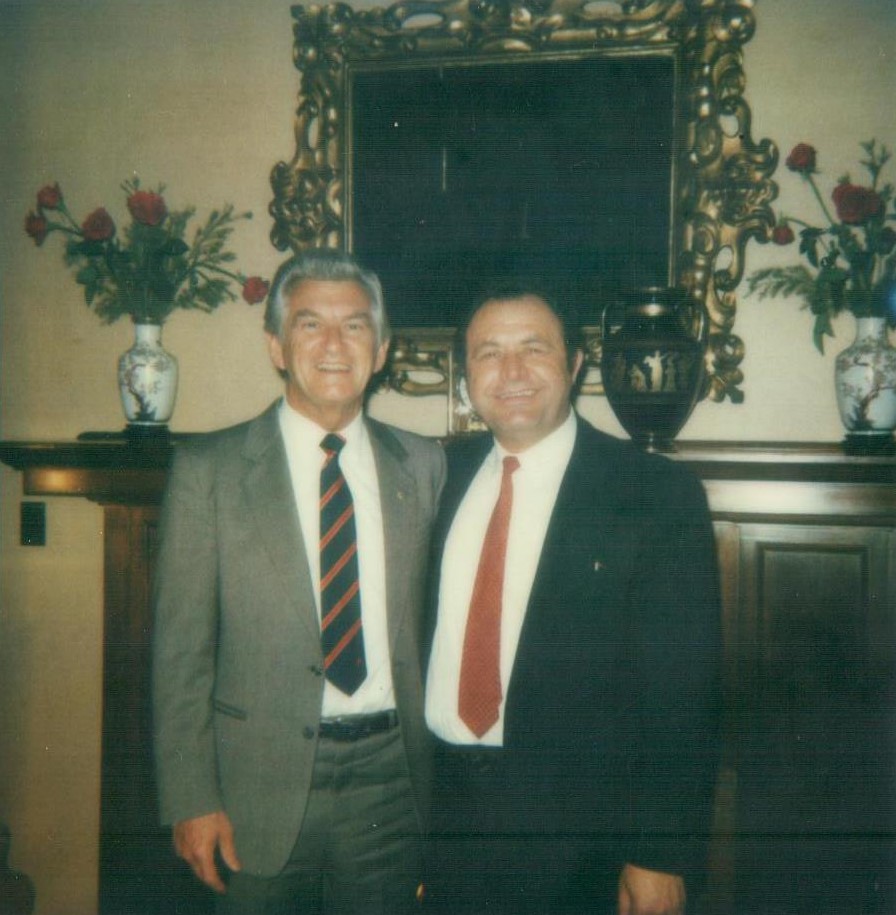
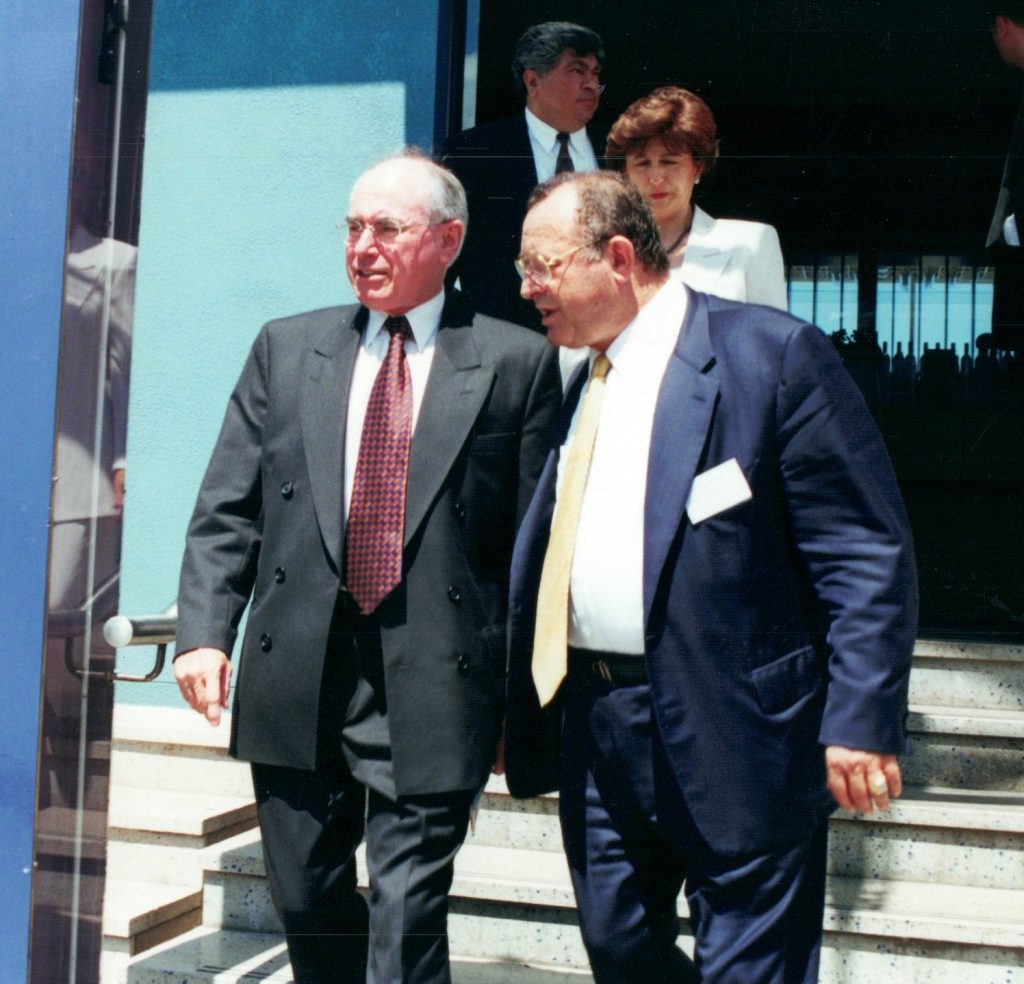
Former PM of Australia Bob Hawk and Theo Skalkos. Former PM of Australia John Howard and Theo Skalkos.
Former Greek Prime Minister Antonis Samaras (centre) and Theo Skalkos at his Glebe offices.
Mr Skalkos always spoke fondly of Murdoch, calling him a “good friend” with “guts.” When it came to politicians though, Mr Skalkos was never shy about his thoughts.
“I don’t believe politicians, I like to support people,” he said.
“If a person is good, it doesn’t matter what he believes. If a person does good for the country, it doesn’t matter what he believes – I don’t care. I never needed politicians, I never asked favours from politicians.
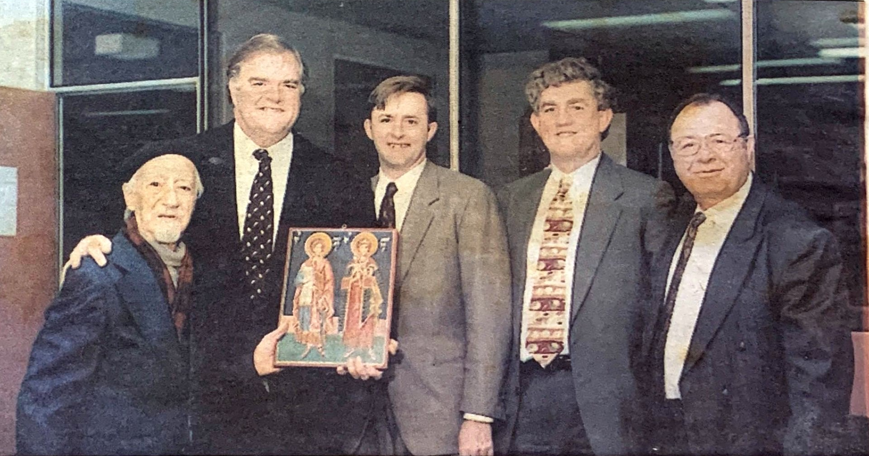
L to R: Iconographer Stathis Loupos, Kim Beazley former leader of the opposition, Anthony Albanese member for Grayndler and current serving Prime Minister of Australia, Barry Cotter former Mayor of Marrickville and Theo Skalkos at his offices in Marrickville.
With people not politicians at the core of his business model, it’s no surprise Mr Skalkos’ media empire continued to thrive despite being embroiled in numerous controversies. In fact, his ingenuity and innovation saw him become the longest-serving publisher of The Greek Herald.
“I changed the history of newspapers in Australia. I brought Greece to Australia. I fight for the good of the people,” Mr Skalkos said.
King Charles and Theo Skalkos during the 1983 royal tour of Australia with Princess Diana.
It’s a legacy that continues to this day as Mr Skalkos’ daughter Dimitra Skalkos is now at the helm of The Greek Herald and Foreign Language Press, leading the path towards sustainable digital transformation in an ever-changing media space.
The Greek community of Canberra in the Australian Capital Territory (ACT) gathered on Sunday, February 18 to celebrate 26 years of the Greek Glendi.
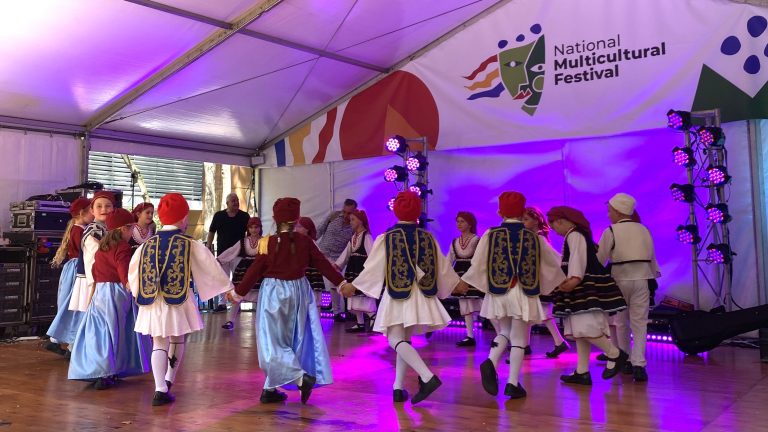
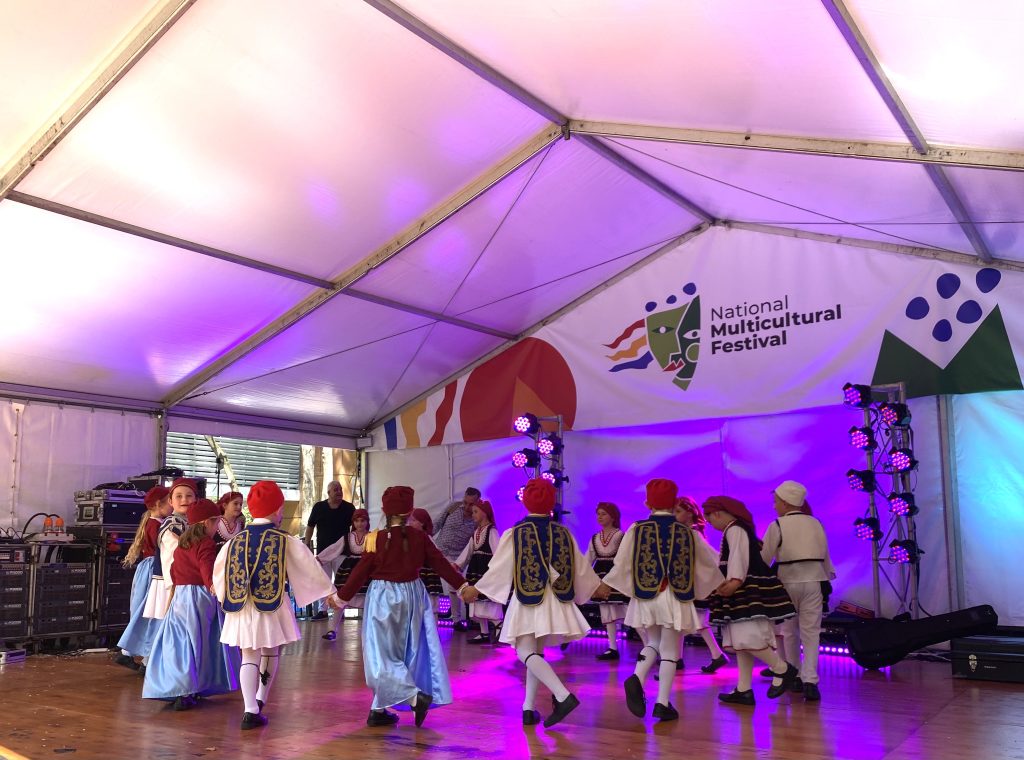
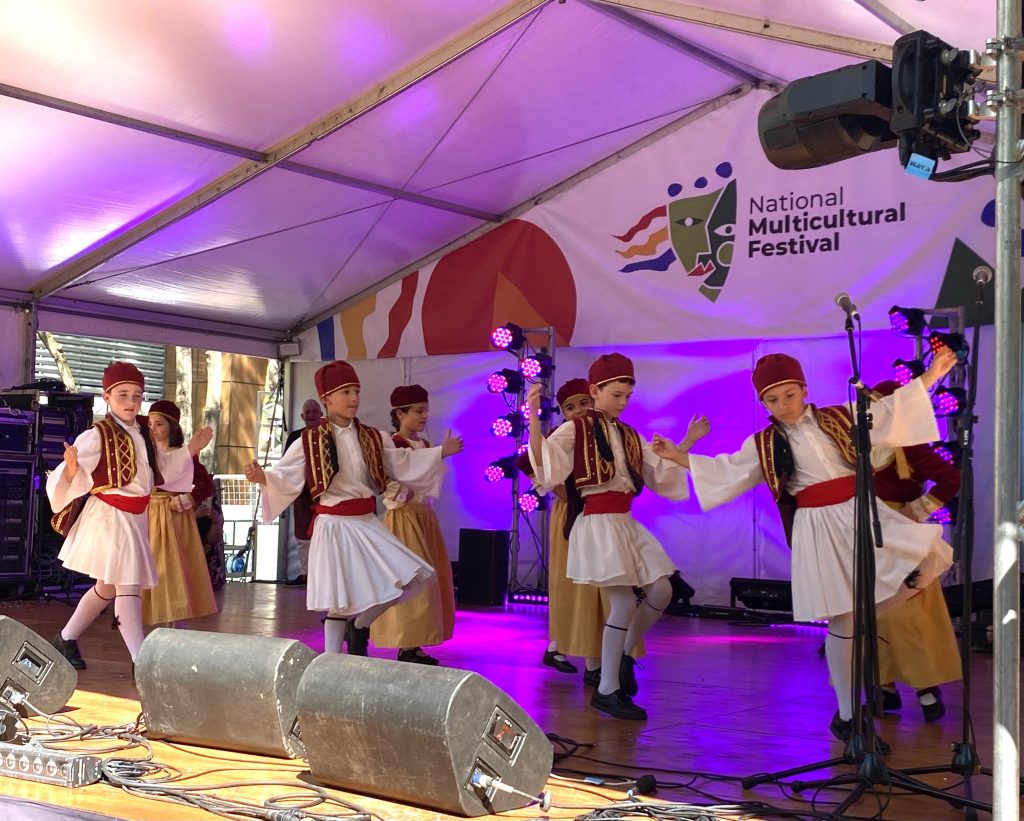
The annual event has been held since 1998 as part of the wider National Multicultural Festival in Canberra, and sees the community indulge in Greek food, experience Greek traditions, listen to live music, and watch modern and traditional Greek dance performances.
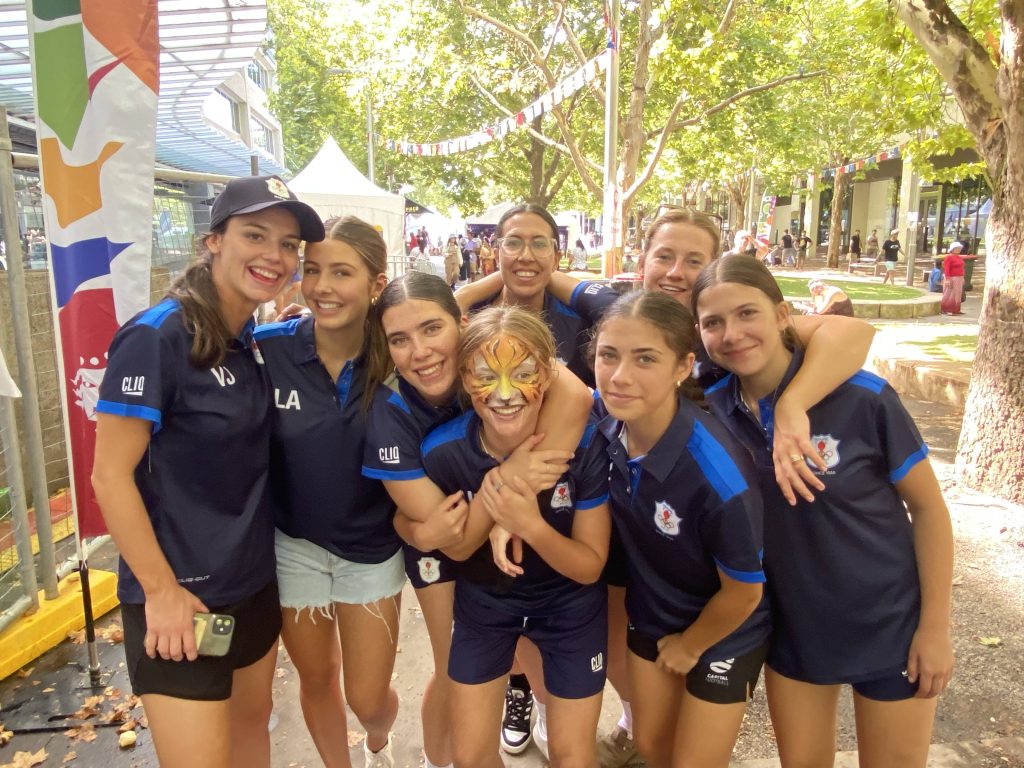
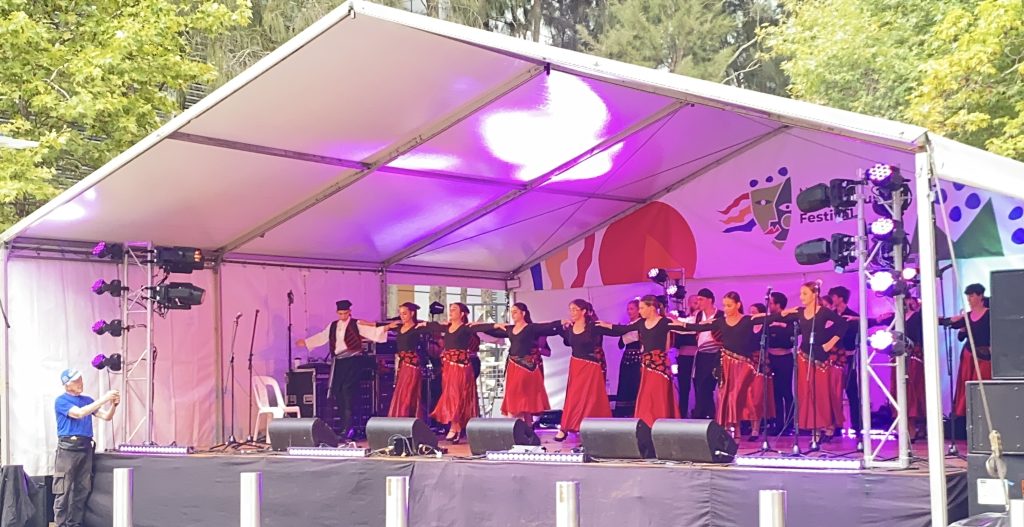
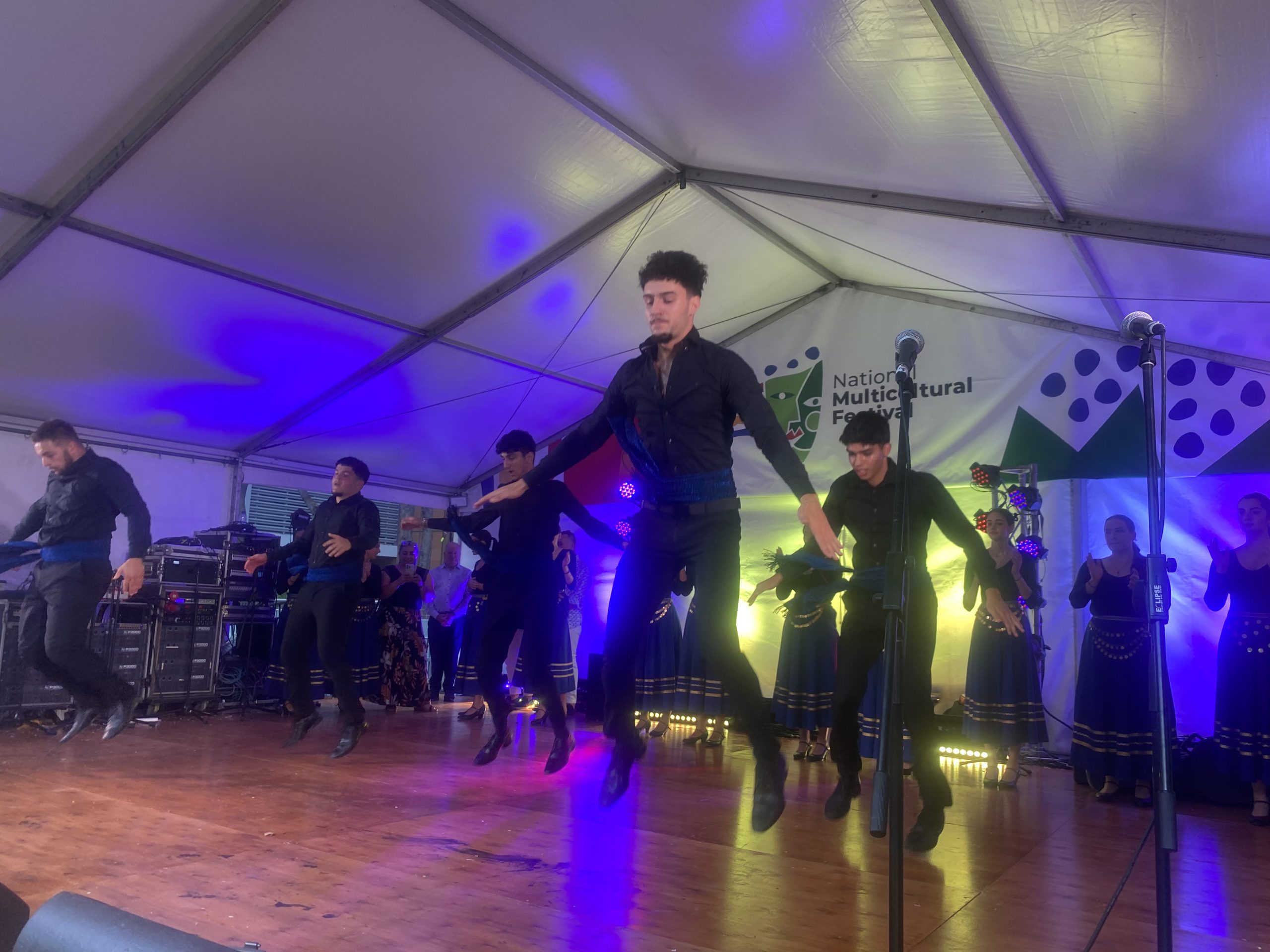
Girls from Canberra Olympic FC also joined in on the Greek Glendi festivities. All photos copyright The Greek Herald / Evelyn Karatzas.The Glendi was filled with dance performances by the Canberra Hellenic Dancers.
This year’s Glendi took place at a new location, the Akuna Street stage, from 1:15 pm and featured live music performed by Demotika, a Hellenic folk music group from Melbourne, with Paddy Montgomery on violin and bouzouki, Tony Iliou on lute, Nikos Kapralos on guitar, Arthur Kostarakis on clarinet and John Kostarakis on percussion.
The Canberra Hellenic Dancers (CHD) Atalanti, Zeus, Nike, Apollo, Artemis, Atlas, Aphrodite, Odysseus, and Athena dance groups also performed modern and traditional Greek dances which impressed the crowds.
Atalanti dance group.
Rain, hail or sunshine, the Greek Glendi continued until the late afternoon.
Despite some temporary rainfall during the Glendi, the sun returned and smiles were seen all around as the festivities continued.
Many competitions, including a zorba/ hasaposerviko dancing competition, a tsifteteli dancing competition, and a loukoumades eating competition. also took place.
The loukoumades eating competition.
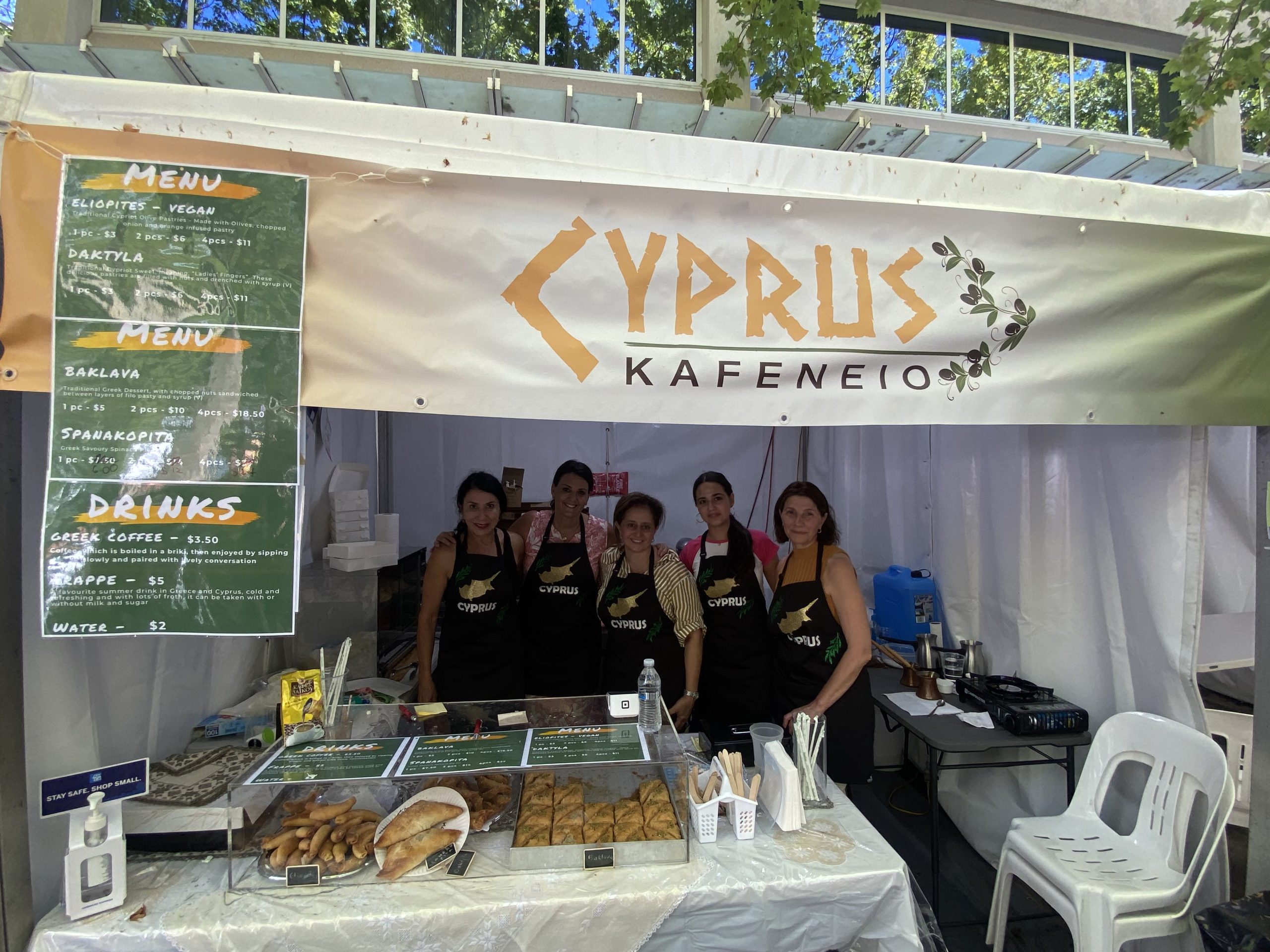
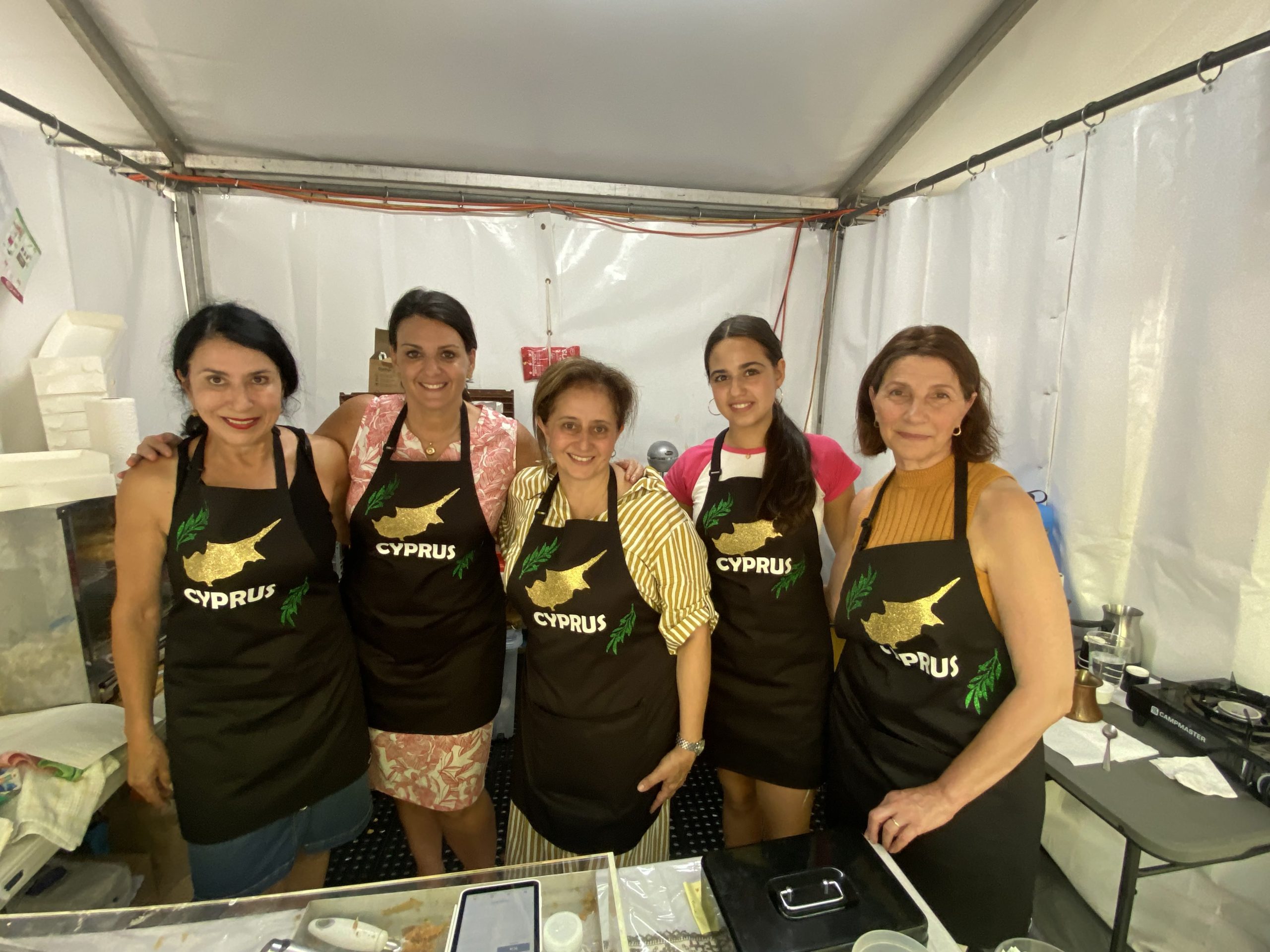
The Cyprus Kafenio. Photo: Evelyn Karatzas. Photo: Evelyn Karatzas.
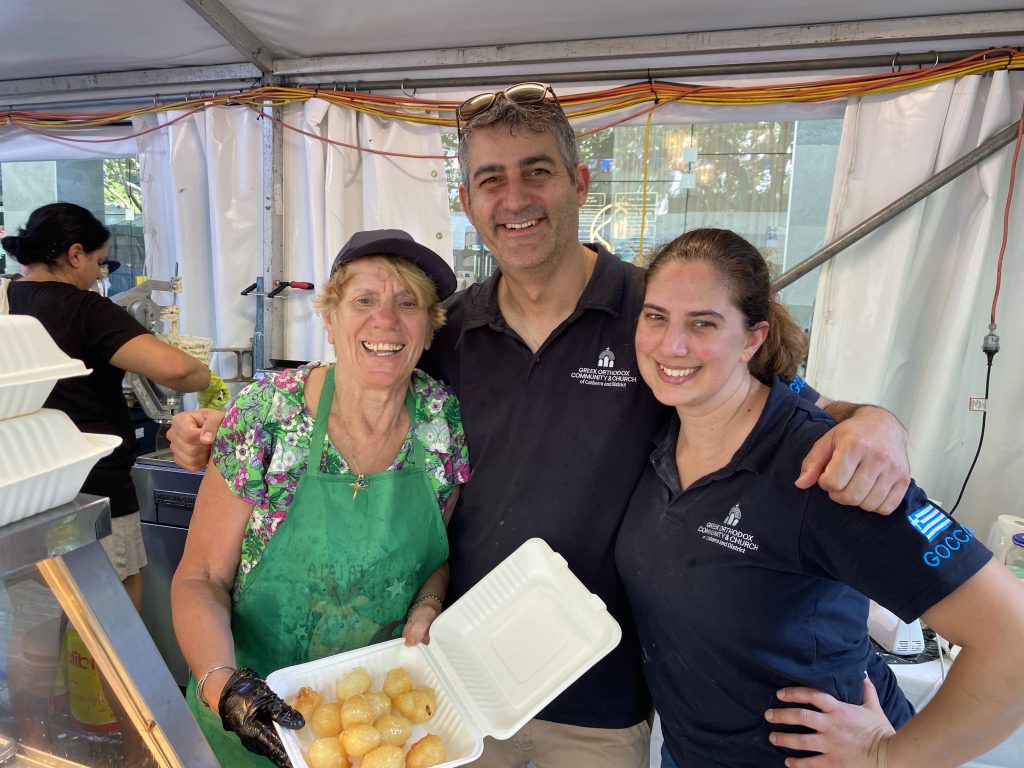
This year on the Glendi’s menu was delicious Greek and Cypriot food including loukoumades, lamb souvlakia, halloumi served with coleslaw, pita bread and honey, spanakopites, eliopites, daktila, baklava, Greek beers, ouzo and Greek frappe and Cypriot coffee.
One of the Greek festival’s attendees, Eirini Michalis said she loved coming to the Glendi every year and getting together as a community “is always fantastic.”
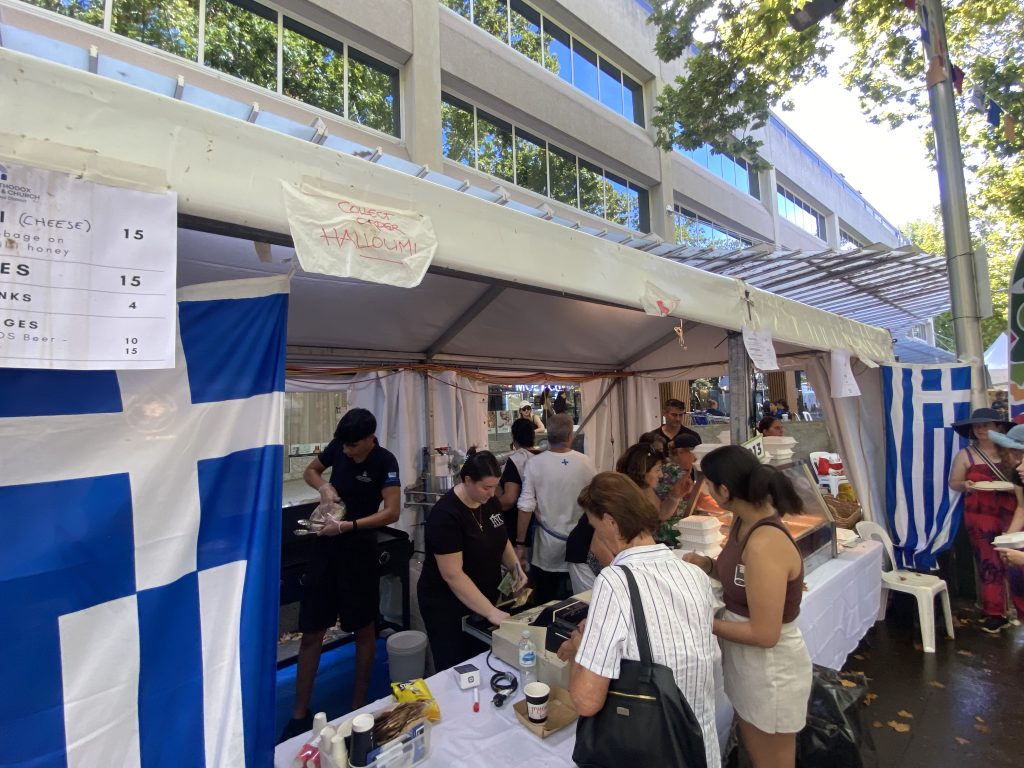
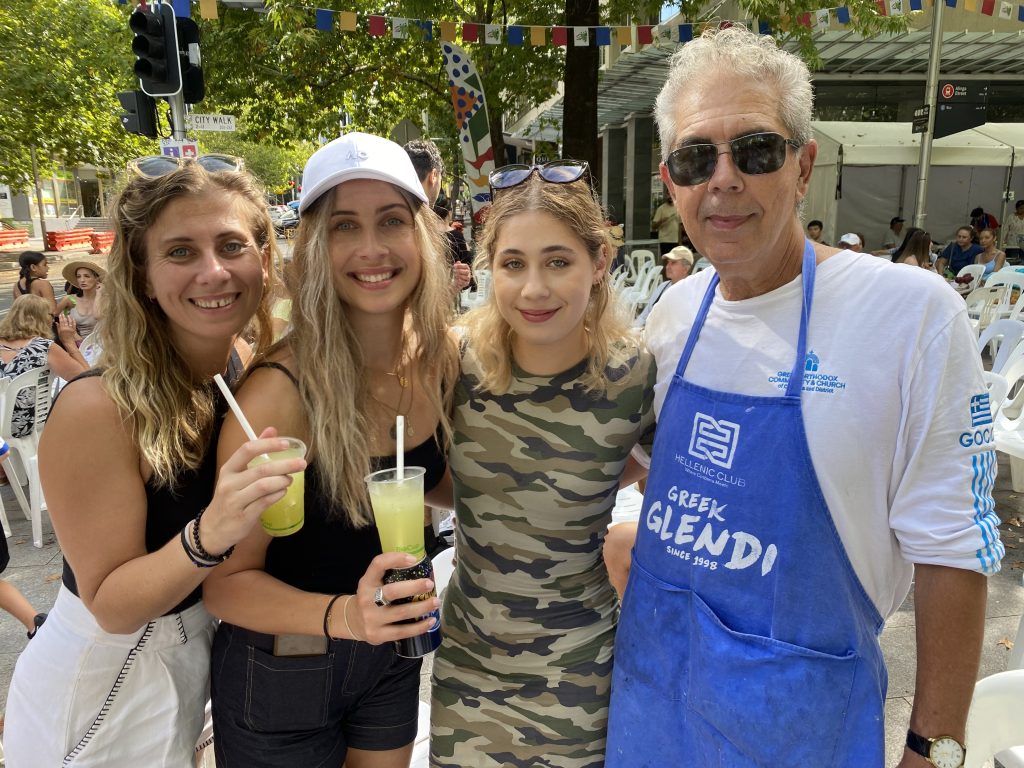
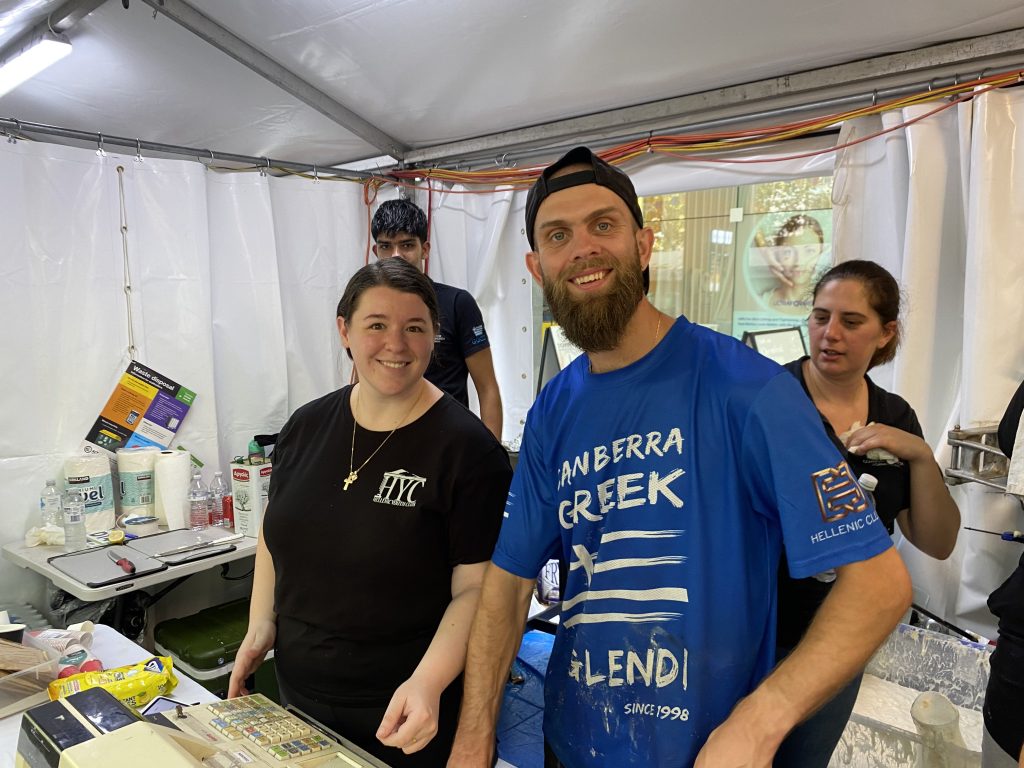
There were two areas where people could purchase Greek food. One was run by the Greek community, and the other by Canberra Olympic FC.(Left to right) Vasiliki Merkoureas, Sofia Merkoureas, Eirini Michalis and Leonidas Merkoureas.
“The music this year has been great, the food has been amazing, I’ve enjoyed all of it, it’s beautiful to just celebrate Greek culture here in Australia,” Eirini said.
“Whether you have immigrant parents or grandparents, I believe it’s extremely important to try and stay in touch with that culture and that community and just be able to celebrate and appreciate it.
“My favourite part of the Glendi has probably been listening to the band, which have been fantastic, as well as watching the younger generations do all their traditional dance performances, it’s been wonderful.
“The food was also great, I had the halloumi and some of the lamb souvlakia.”
Some of the younger Hellenic Dancers performing. The junior dance groups performing.
One of the performers from the Atalanti dance group, Theodore Merkoureas said although it was a super busy weekend, he loved being a part of the Glendi again this year.
“I love having Greek heritage and am in love with our culture and our community,” Theodore said.
“I’ve been dancing and performing since I was 5 (I’m 32 now) and volunteering at the GOCC/Olympic FC stalls ever since I can remember! So, I’ve been attending for more than 27 years.
“The Greeks bring a certain vibe to a party/glendi. Our music, our dancing, our food and our ‘kefi’ makes us stand out. When we dance, we are always inviting and happy to help someone learn the steps. It’s nice being a part of a community that provides such joy to people.”
HYC member Olivia Kambouris and Canberra Hellenic Dancer Theodore Merkoureas.
President of the Canberra Greek community Panayiotis Tsironis said the Greek Glendi has been a staple for the National Multicultural Festival since its inception.
“I was honoured to open the Greek Glendi for 2024 as the President of GOCCC. I am proud that our community came together to celebrate and showcase our culture to the wider community, which is what the Glendi is all about,” Mr Tsironis said.
“We had another successful Glendi thanks to the tireless efforts of our events committee which included members of the GOCCC executive, Canberra Olympic, Hellenic Youth and Hellenic Dancers.”
President of the Greek Community Panayiotis Tsironis with members of the Greek community.Mr Tsironis opening the Greek Glendi with his speech.
“I would like to thank our community supporters who have assisted in making this event a success: The Hellenic Club, Paul Myliotis from Msquared Capital, the Philoptohos, The Hellenic Youth, The Hellenic Dancers, Canberra Olympic, our volunteers and of course my fellow members of GOCCC.
“I would also like to thank the ACT Government for hosting the Multicultural Festival.”
*All photos copyright The Greek Herald / Evelyn Karatzas.
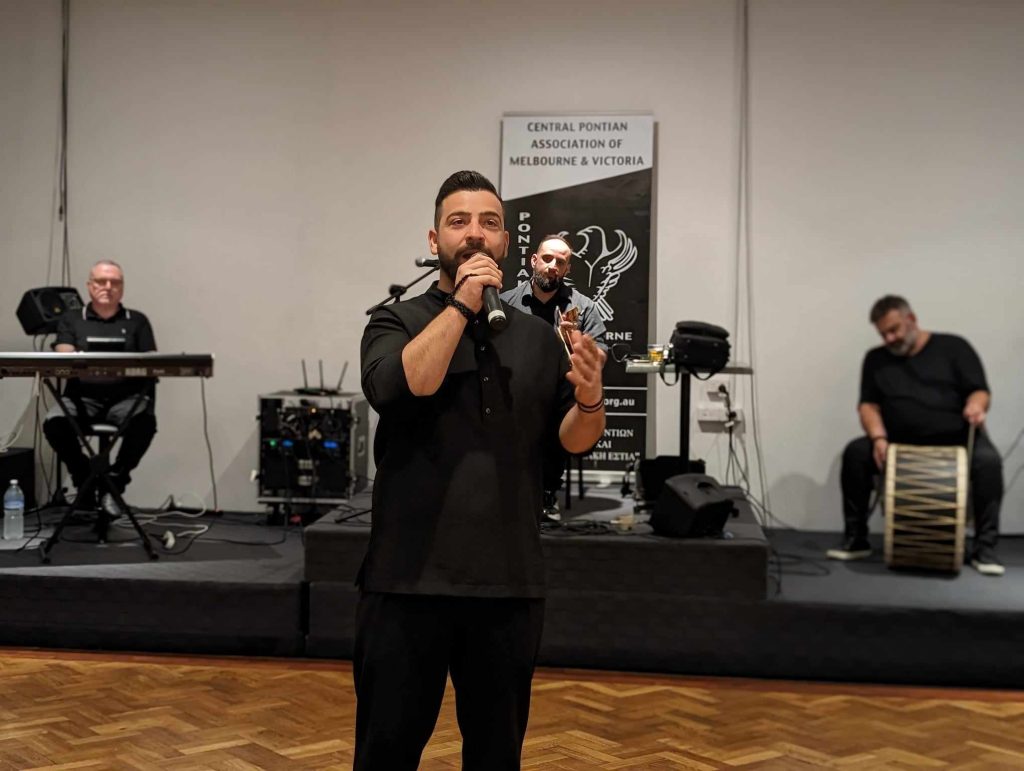
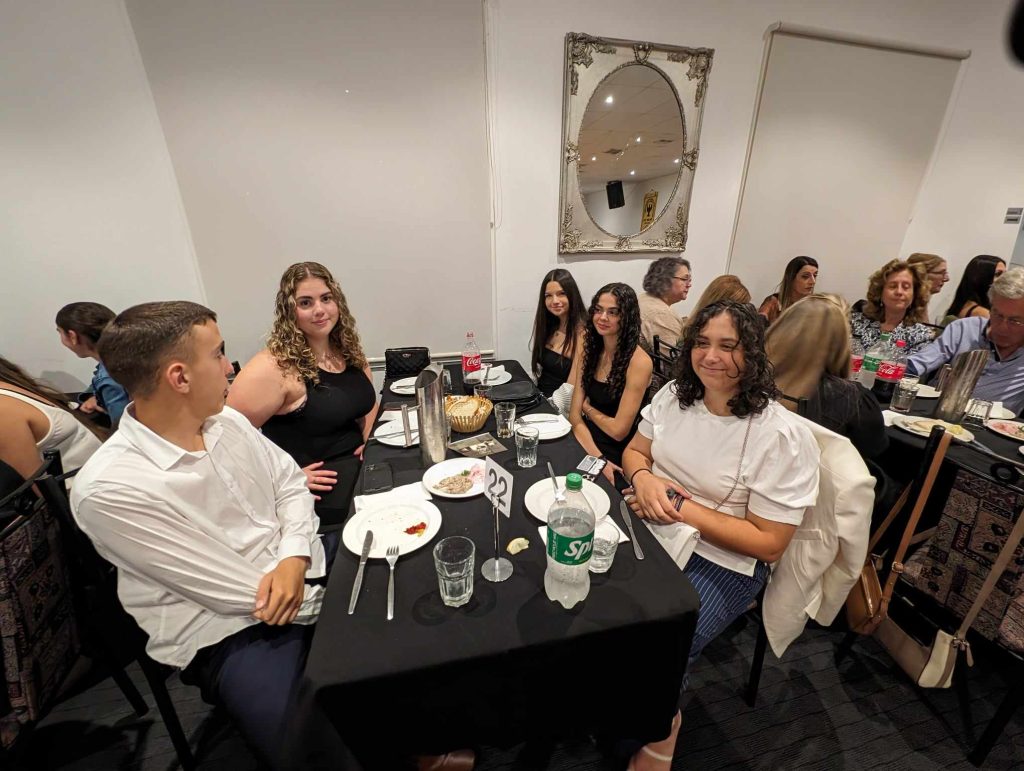
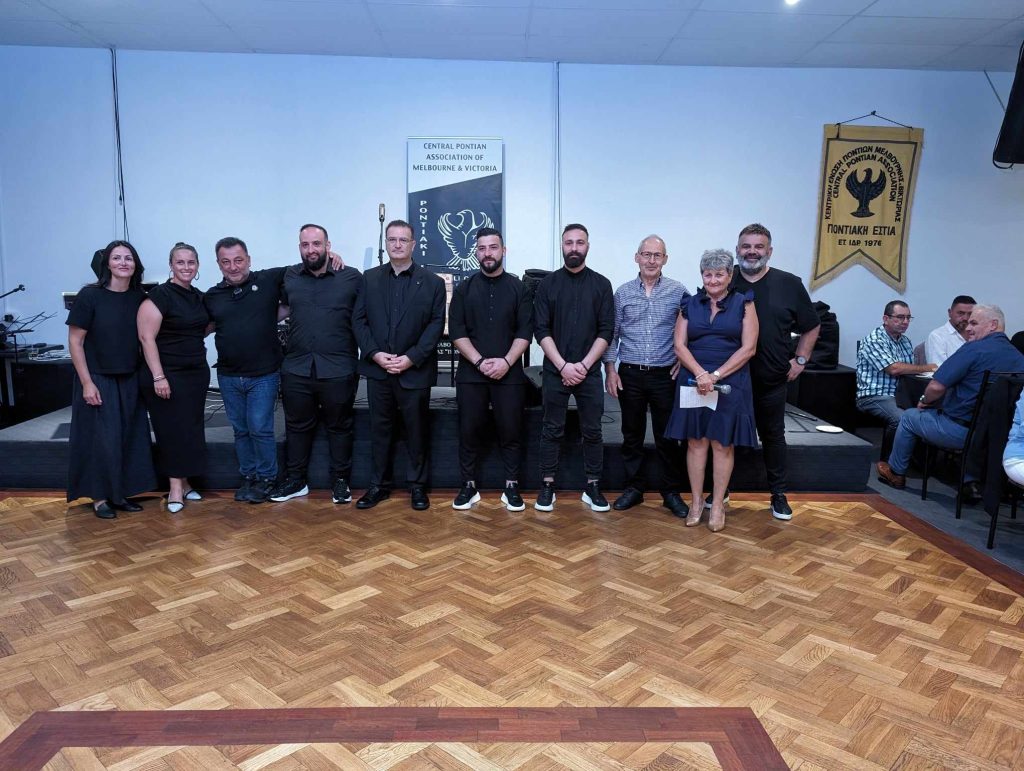
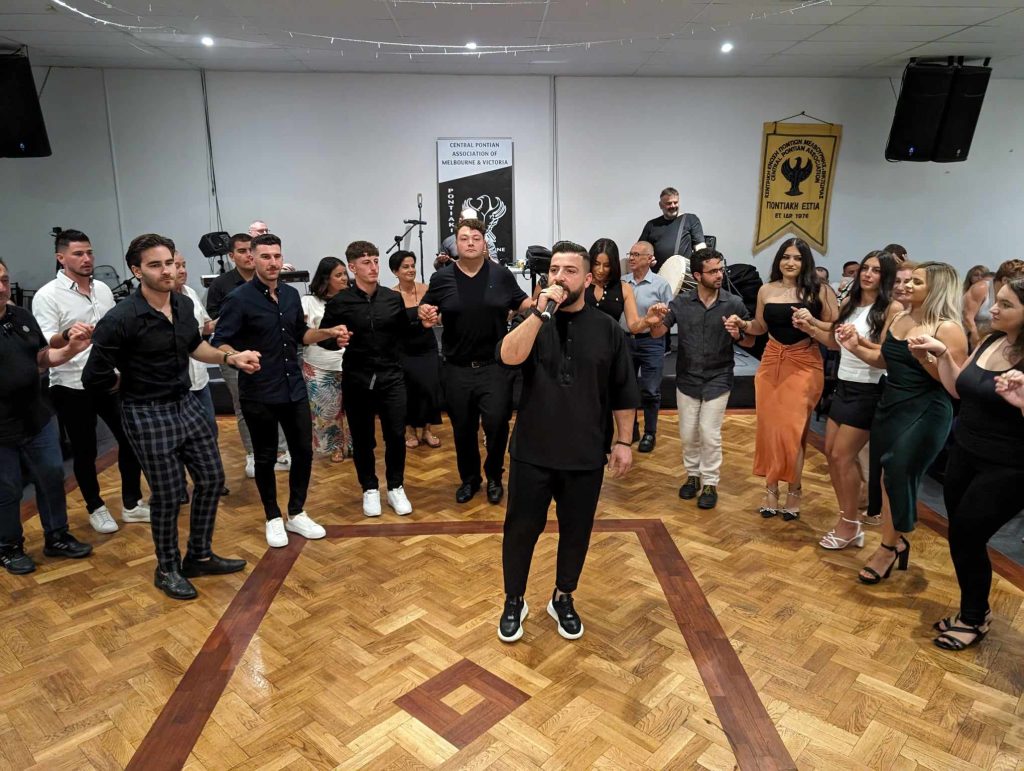
While Melbourne was caught up in the grand spectacle of Taylor Swift concerts at the MCG, Pontian families gathered at another sold-out event in the heart of Brunswick.
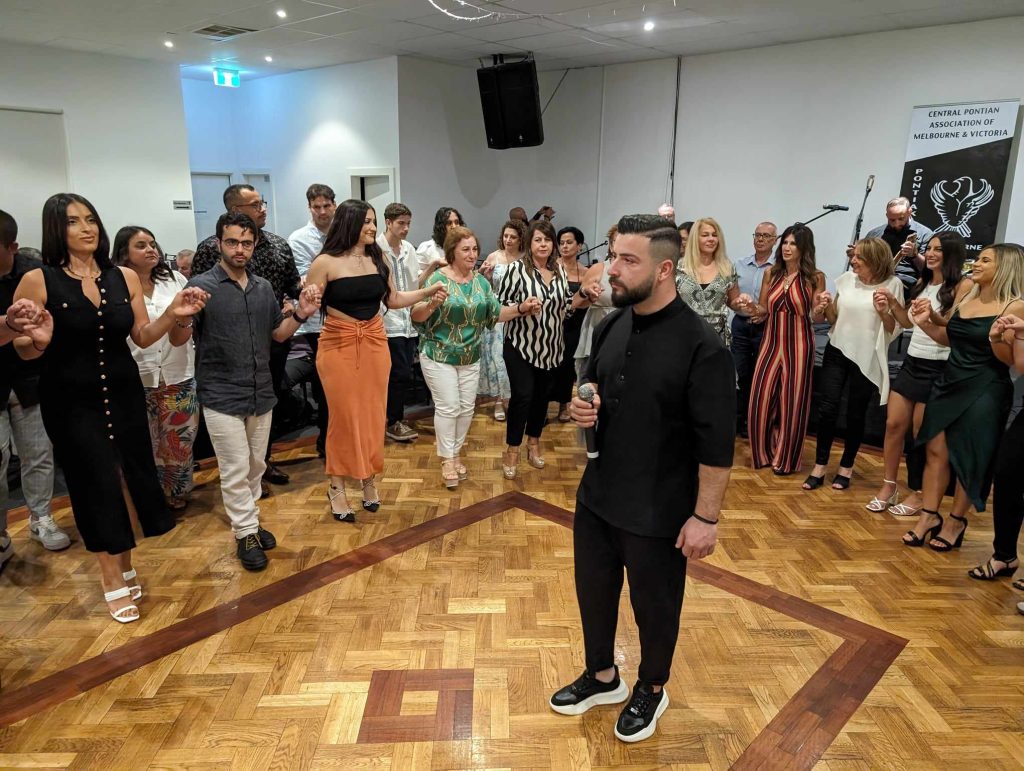
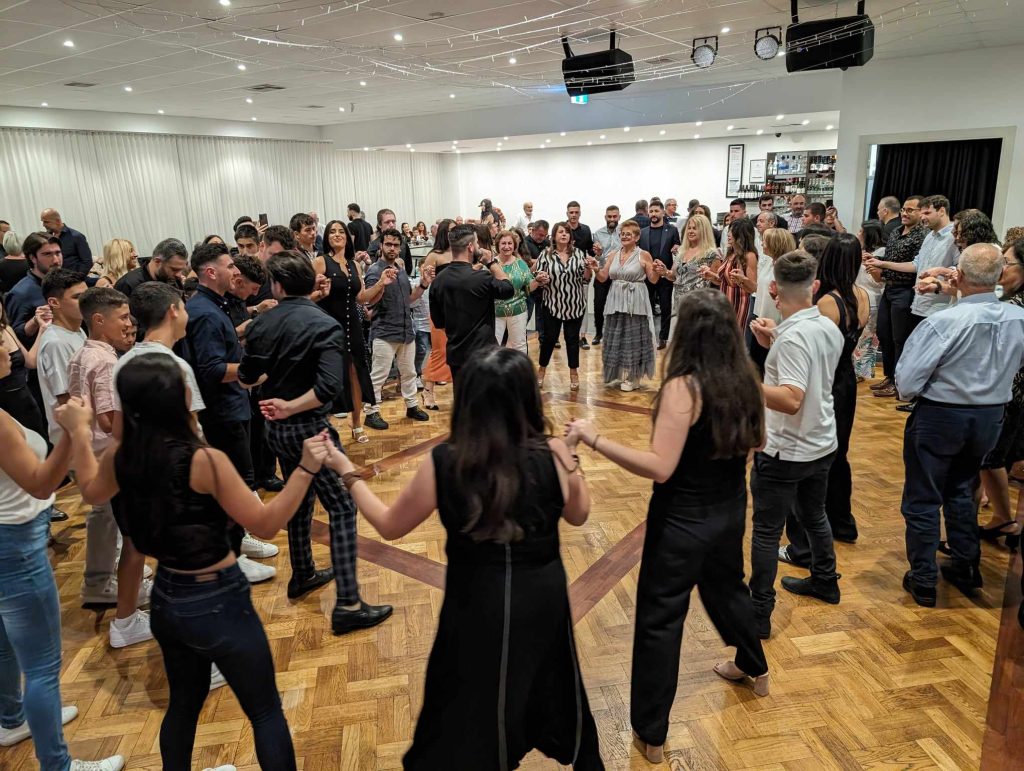
All photos copyright The Greek Herald / Mary Sinanidis.There was plenty of dancing at the event.
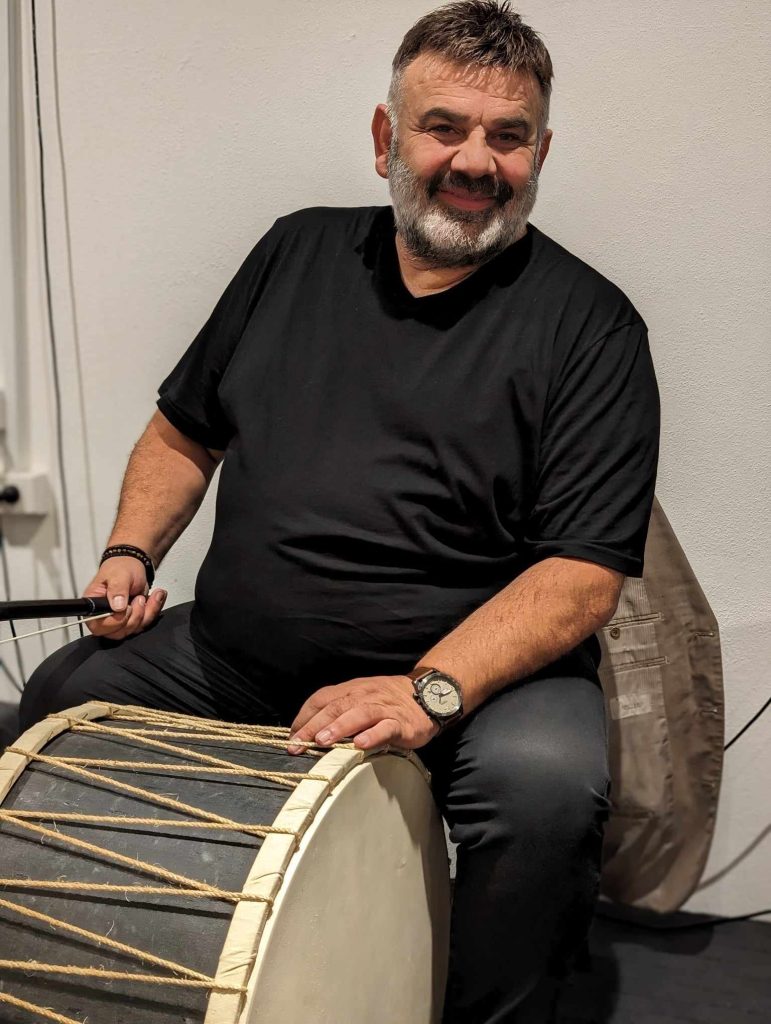
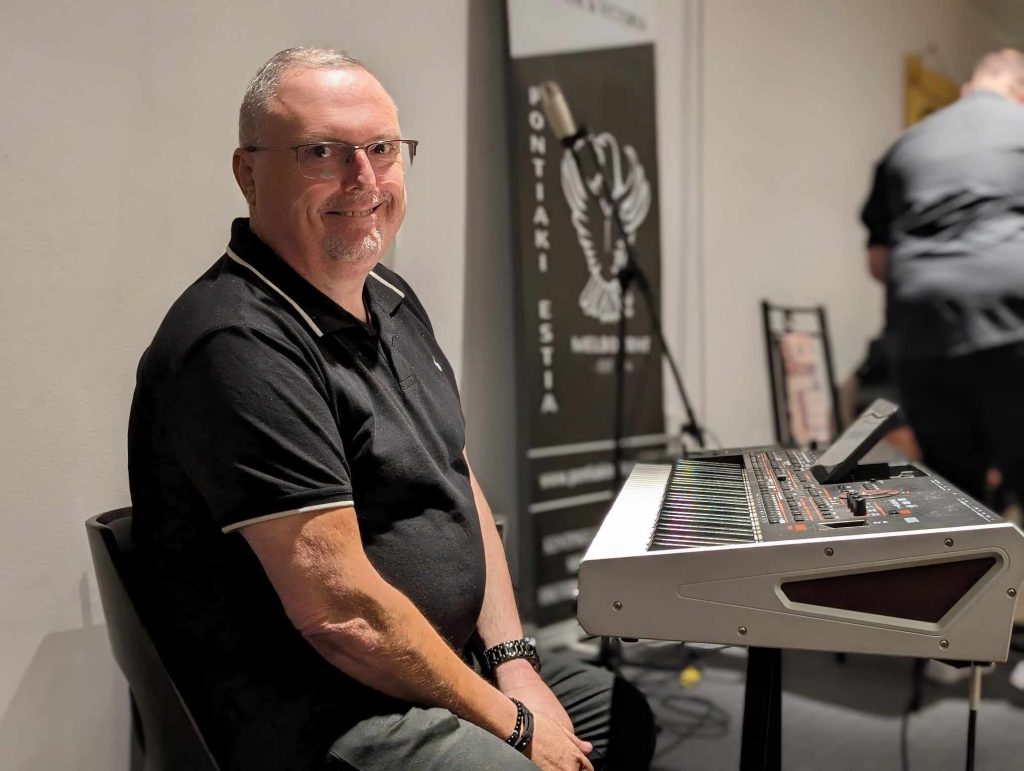
Pontiaki Estia’s intergenerational celebration was marked by culinary delights, dance and music by Nikos Kokkinidis, Giannis Katotikidis and Sotiris Theodoridis from Greece, and Melbourne’s own Yiannis Pilalidis on percussion.
Singer Giannis Katotikidis.
Singer Katotikidis says, “It is a huge honour to be here, and crazy to know that people grew up here and still keep their Pontian interests alive.”
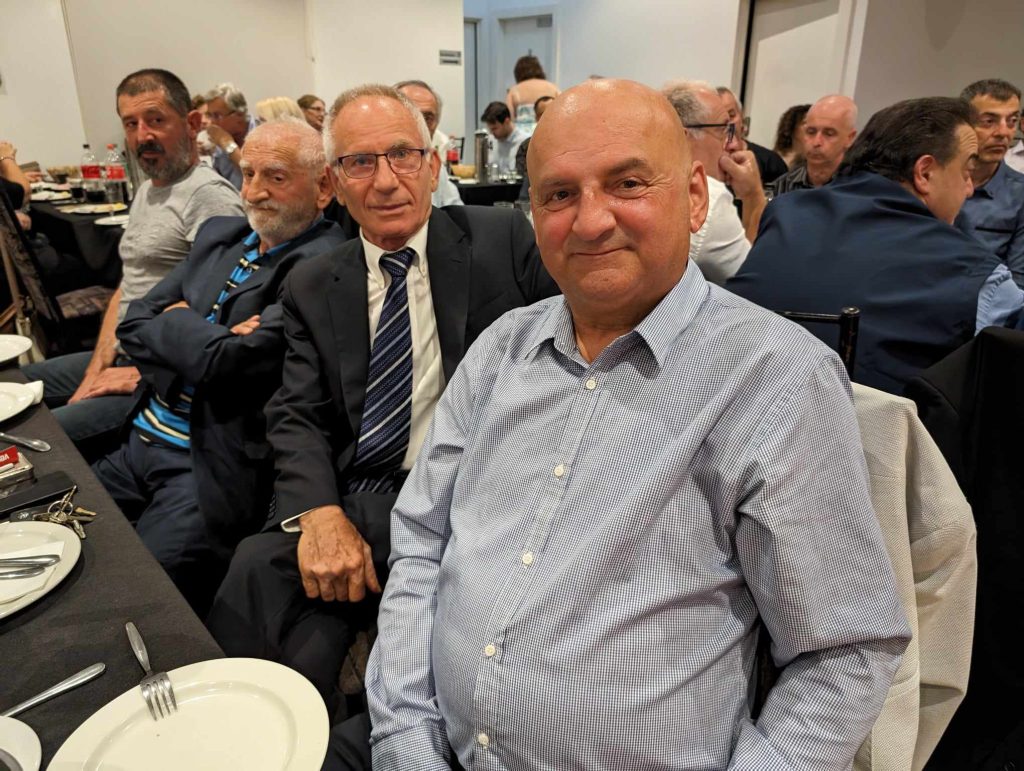
There are Pontians present from Sydney, Canberra, and even as far as Munich, Germany. Then there are the local brother organisations, such as Pontiaki Kinotita, Panagia Soumela and the Kalamata Association showing their support.
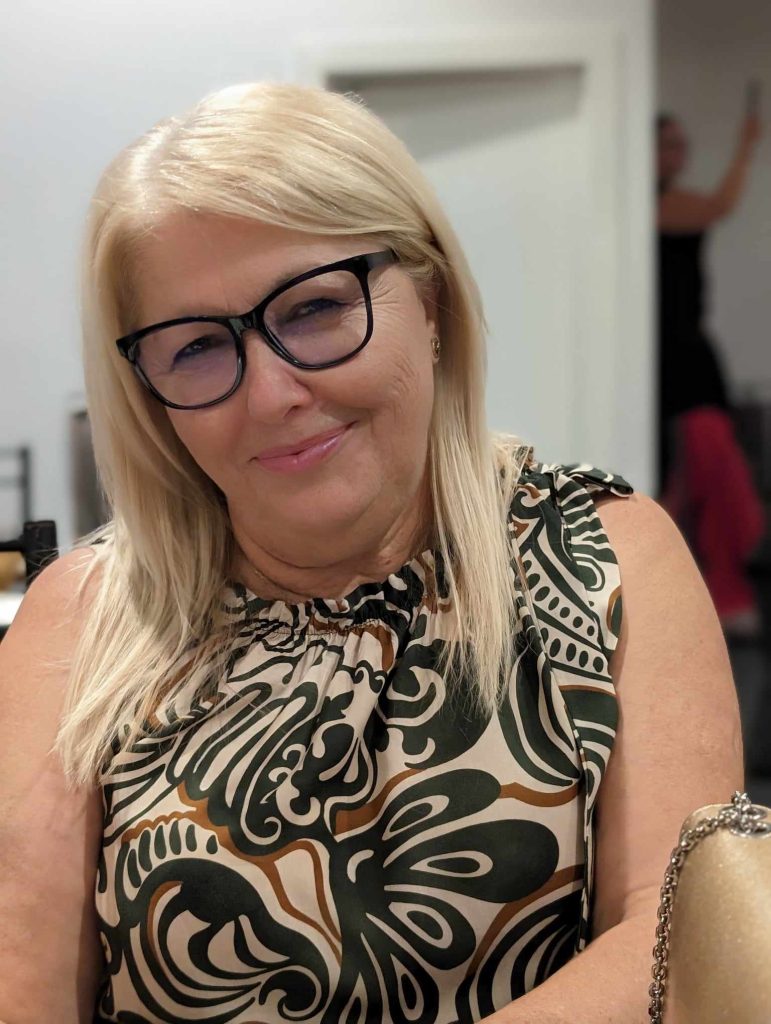
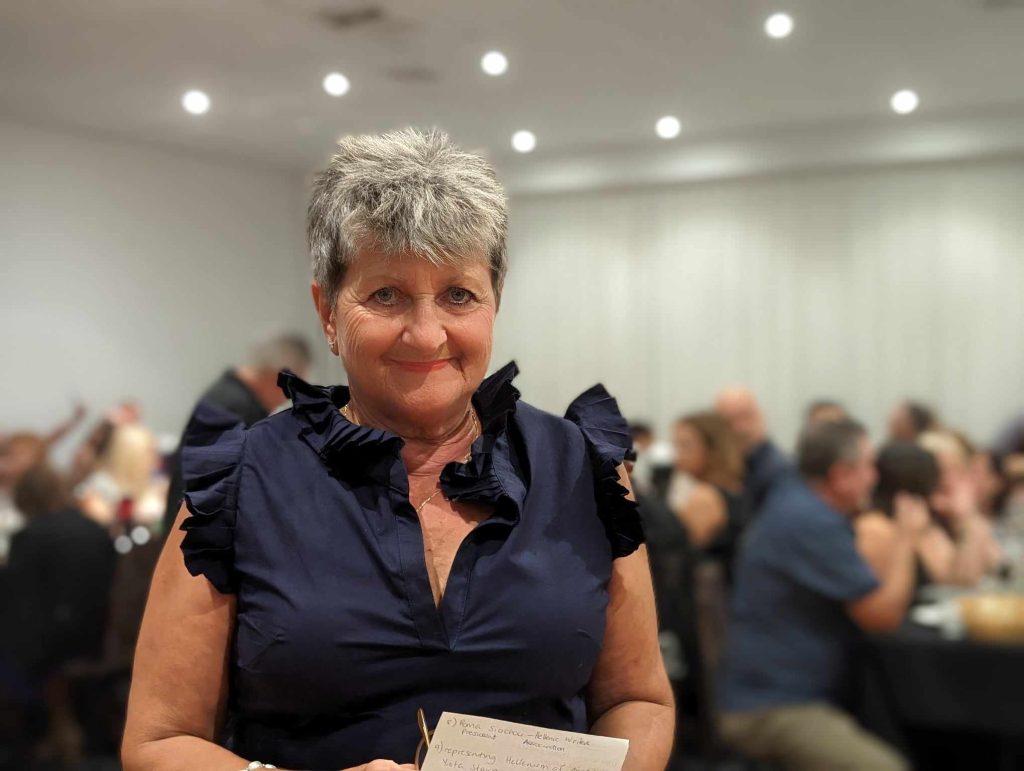
Roma Siachos.
Litsa Athanasiadis, Public Relations/Secretary of the Pontiaki Estia, is overjoyed by the turnout.
“It’s hard putting in words the fantastic vibe, full of youth,” she tells The Greek Herald.
For international studies student Eleftheria Tachmatzidou, aged 20, attending Pontian events has been a cherished tradition since childhood.
She reflects on the significance of these gatherings, stating, “My parents are sitting at the next table, and I’m here with my partner, his sister and friends.
“I am proud to be a Pontian. Listening to the music ignites a fire in me that only other Pontians can understand.”
Litsa Athanasiadis of Pontiaki Estia.Eleftheria Tachmatzidou. Penny Tsombanopoulos and Litsa Athanasiadis.
All ages enjoyed themselves at the event.
Litsa Athanasiadis, Roma Siachos, Katy Karabatsos and their table.
Her sentiments echo those of many who find solace and connection in the rich tapestry of Pontian culture.
Simela Stamatopoulos, a member deeply entrenched in the Pontian community, says, “The sense of loss of the homelands creates a nostalgia within the older generation that is also passed down to the younger generation, who, in turn, feel a subconscious desire to hold onto the traditions of their ancestors.”
She articulates the factors that ensure the continued engagement of Pontian heritage, including leaders’ “progressive outlook and the capability and knowledge to engage with different authorities” as essential, but also points to leaders who “genuinely care about Pontian traditions and are not simply motivated by self-promotion.”
“They can confidently and effectively organise and promote events which help grow the organisation and keep it in a healthy economic position,” she says, adding that the keeping of traditions in the club has ensured authenticity of traditions.
“This means that what is passed down is authentic. It is a hub, a place where traditions can be experienced and embraced.”
Simela Stamatopoulos.
Pontiaki Estia members.
A group of young guests-enjoy themselves at Pontiaki Estia.Eleftheria Tachmatzidou came with her partner his sister and friends. Her parents were also there.
Pontiaki Estias event was intergenerational. Pontiaki Estia’s committee.
Simela says the music, lyrics, food, cultural traditions and dialect are still relevant and loved by Pontians worldwide. Rather than diminishing, it has grown stronger.
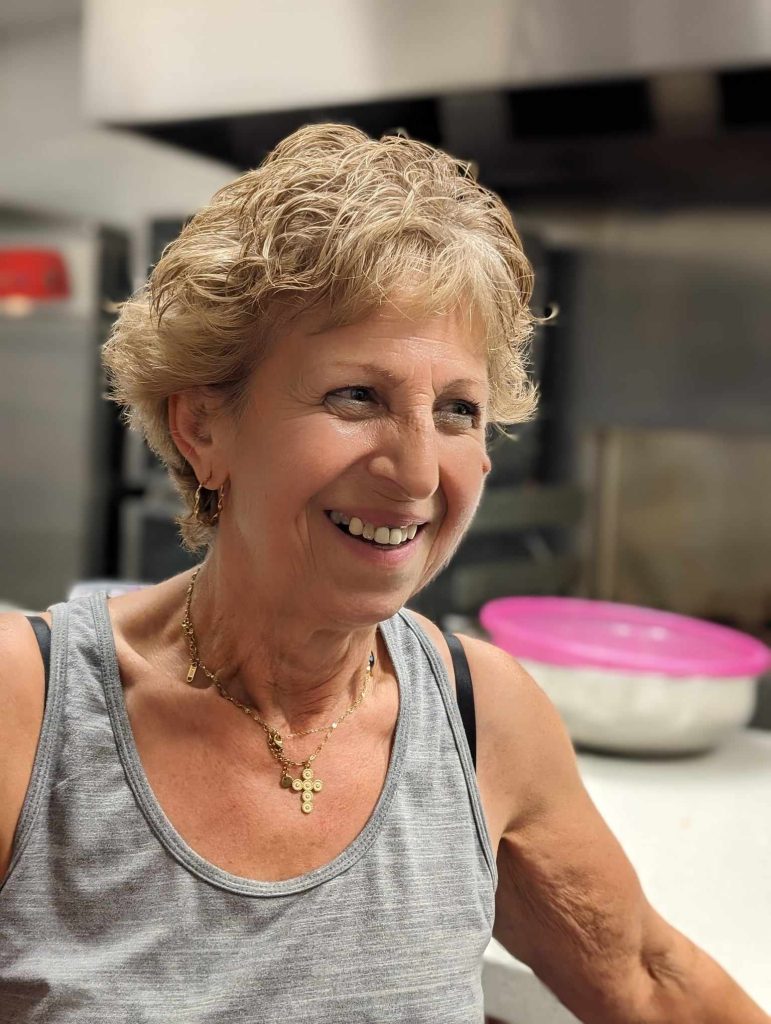
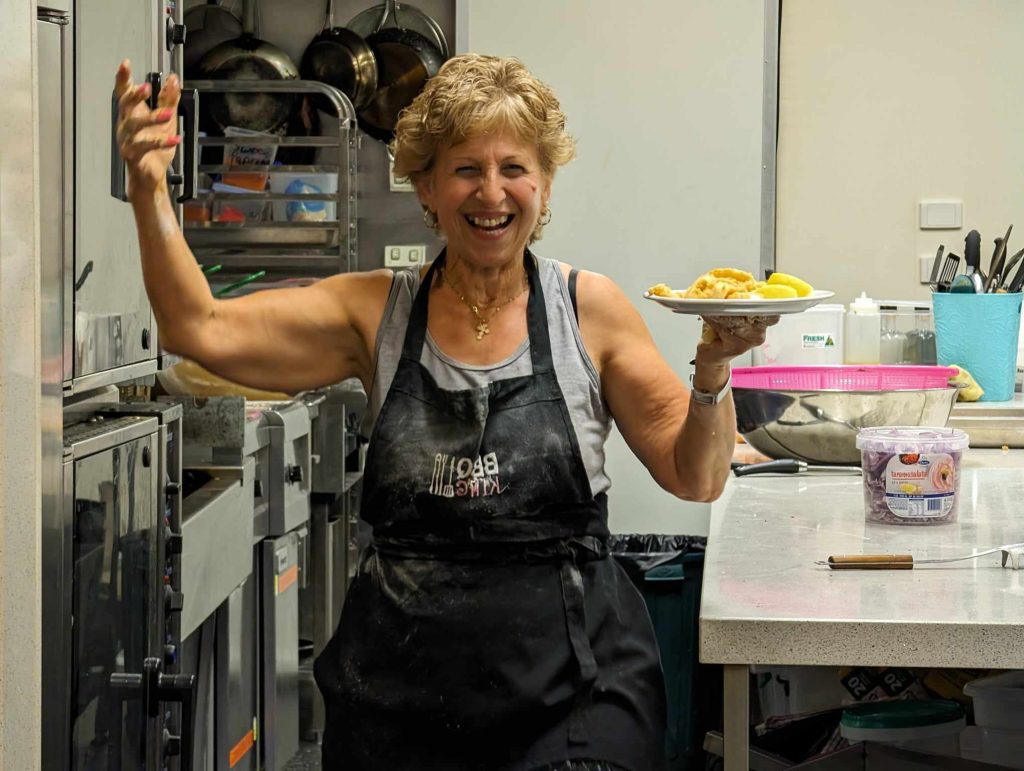
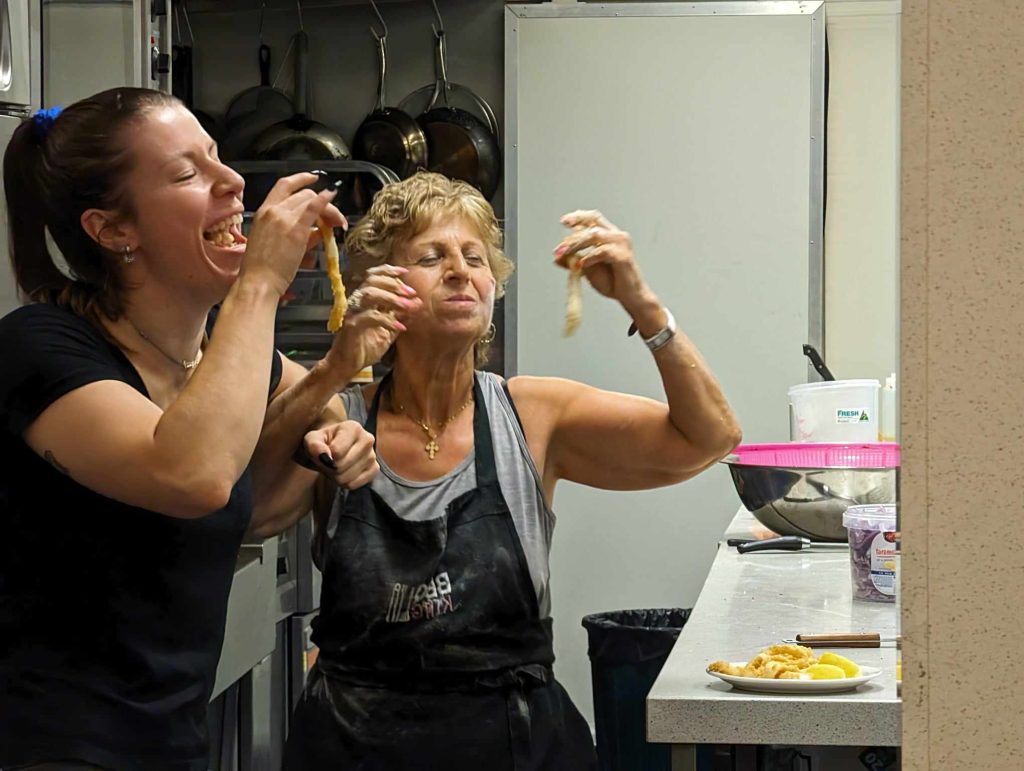
Behind the scenes, there’s a frenzy as volunteers on kitchen duties churn out seven different dishes for almost 250 guests.
Rather than turn into an episode of Gordon Ramsay’s Hell’s Kitchen, there’s a playful mood with laughter and dancing amid the hard work.
Dancing. There was plenty of dancing at the event.
Gesthimani Tsaousidou.
Gesthimane Tsaousidou was on volunteer kitchen duties.Fun and dancing between serving in the kitchen.
Gesthimani Tsaousidou rattles off the menu: saganaki, grilled garlic peppers, calamari, different types of dips, gyros… I ask her if there’s anything typically Pontian on the menu.
“Gyros,” she says.
“How does Pontian gyros differ from any other gyros?” I ask.
“It’s made with Pontian pleasure,” she says. “Everyone can make a gyros, but we make it not just to feed people, but with love. That’s why it’s Pontian.”
“Is this a Pontian joke?” I ask.
We laugh.
I leave Pontiaki Estia with a deeper appreciation for the timeless allure of Pontian culture.
Yiannis Pilalidis on percussion. Visiting performer.
It doesn’t take a lot to get Pontians to dance.
In a world of constant flux with stars like Taylor Swift who enjoy their heyday only to be surpassed by the next best thing, I feel glad to have witnessed the intergenerational commitment to preserving the cultural heritage of Pontos.
Through their music, dance, and unwavering passion, Pontians ensure the soul of Pontos lives on through events such as this one that wrapped up at 4.30am on Sunday.
Guests enjoying themselves.
Pontians at the Antipodes Festival on Sunday 25 February: 3:50 pm Junior Pontian dance troupes will perform at the #Lovelonsdalestage 5 pm Pontian musicians Sotiris Theodoridis, Nikos Kokkinidis and Giannis Katotikidis will be at the main stage of Pontiaki Estia at 5pm on Sunday 25 January. Joining them will be local musicians Mavrothalassites, and Pontiaki Estia will present its Momogeroi Performance.