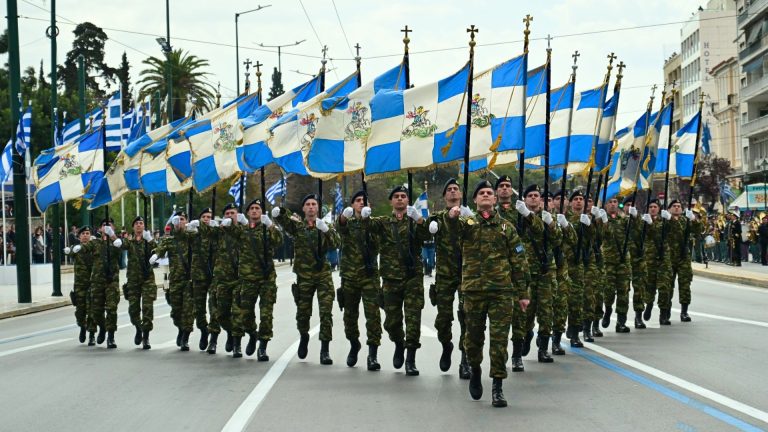
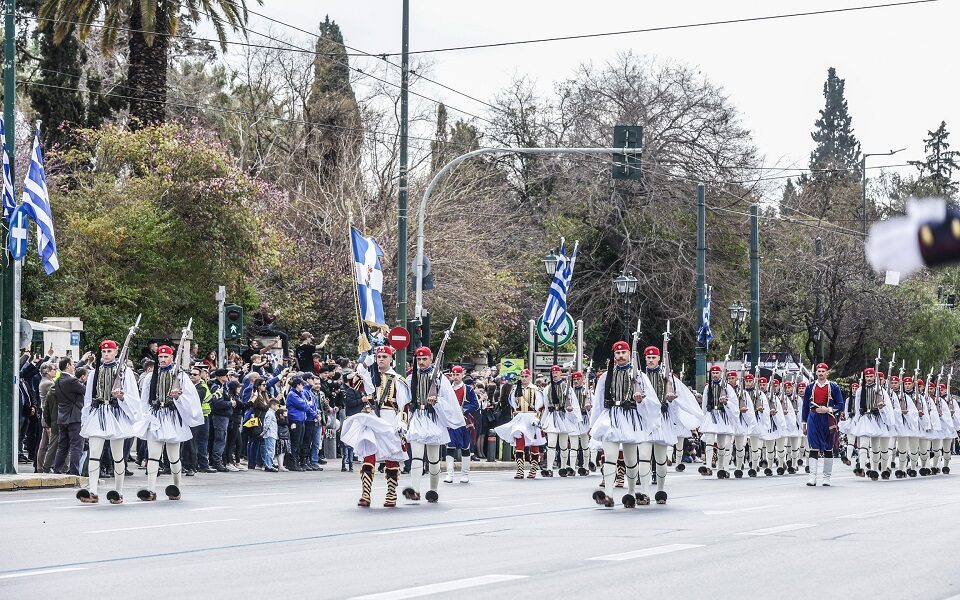
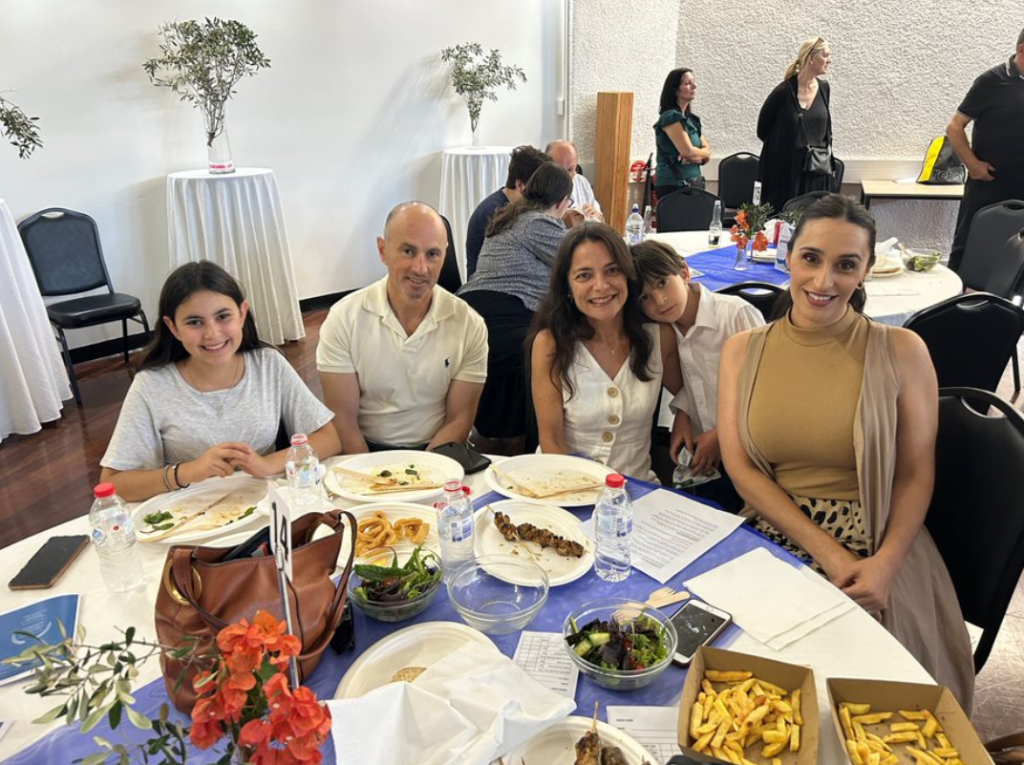
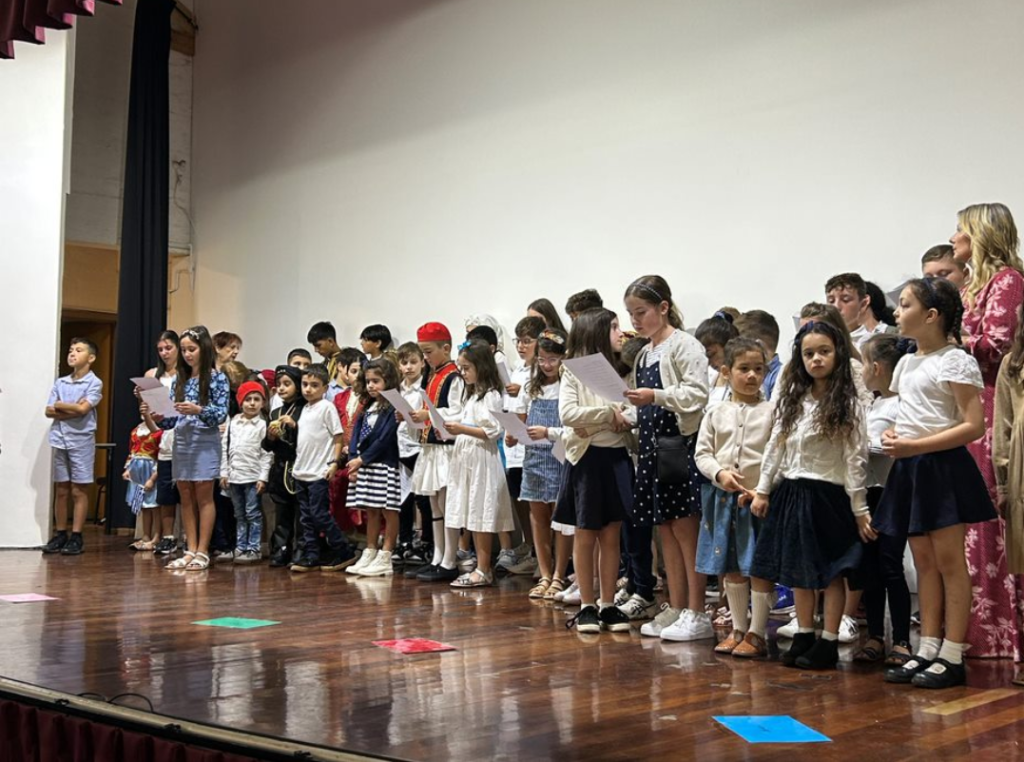
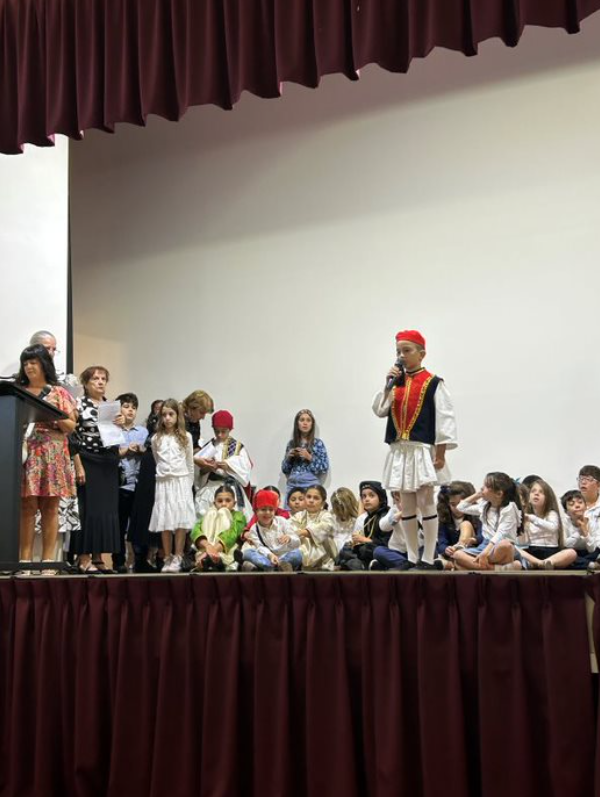
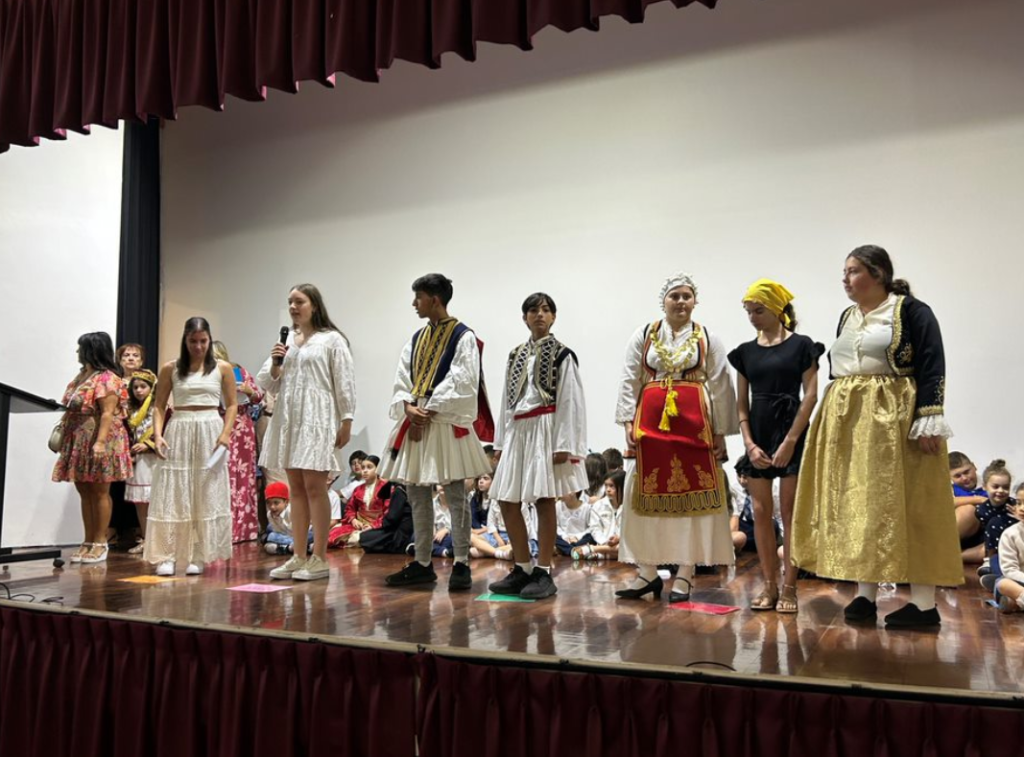
The annual parade commemorating Greece’s March 25th Independence Day culminated in a spectacular display as it passed the Tomb of the Unknown Soldier in front of Parliament at Syntagma Square, Athens.
President Katerina Sakellaropoulou, alongside political and military dignitaries, oversaw the event which drew thousands of enthusiastic onlookers waving Greek flags in support of their armed forces.
The day began with the official raising of the Greek flag at dawn atop the Acropolis, symbolising the nation’s unity and resilience. Meanwhile, a celebratory liturgy at the Greek Orthodox Cathedral of Athens, led by Archbishop Ieronymos and attended by the nation’s leaders, paid homage to the occasion.
The annual parade of the Armed Forces for Greece’s March 25th Independence Day. Photo: Ekathimerini.
President Sakellaropoulou honoured fallen heroes by laying a wreath at the Monument of the Unknown Soldier, a poignant moment of remembrance amidst the festivities.
Across the country, communities joined in the jubilation with a myriad of activities. From flag decorating to parades featuring students, scouts, and cultural associations, to performances of traditional Greek dances and theatrical productions, the spirit of patriotism echoed through cities, towns, and villages nationwide.
The day served not only as a celebration of Greece’s hard-won independence, but also as a testament to the enduring pride and unity of its people.
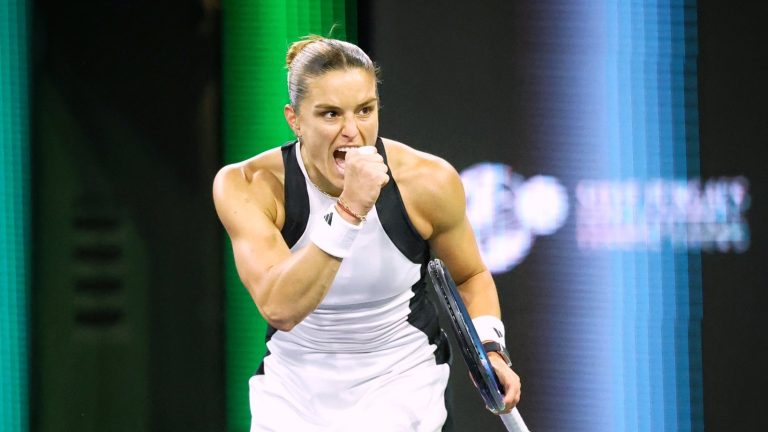
Maria Sakkari advanced unopposed to the quarter-finals of the Miami Open, as Anna Kalinskaya withdrew minutes before their clash.
Kalinskaya withdrew from the tournament due to an injury to her left thigh.
“I was looking forward to playing today, but unfortunately my health did not allow me to. Thank you for the support,” the Russian tennis player said.
For Maria Sakkari fans wondering why she's not playing today, her opponent Anna Kalinskaya has pulled out, allowing the Indian Wells finalist into the Miami Quarter-Finals ⏩ pic.twitter.com/CYytwlMJrP
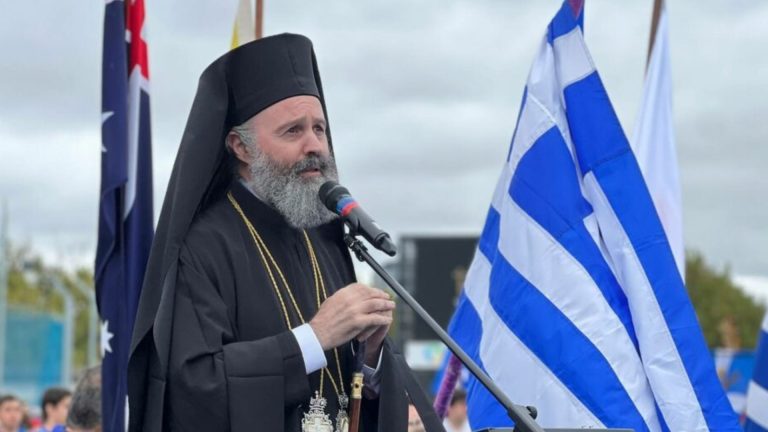
This year, Archbishop Makarios of Australia has issued a special message to mark the March 25th double celebration of Greek Independence Day and the Feast of the Annunciation of the Theotokos.
In his message, Archbishop Makarios said:
“Venerable fellow Bishops and my beloved children,
“Today marks the crowning of our salvation and the revelation of the mystery before all ages”
“Today, we jubilantly celebrate the Feast of the Annunciation of the Theotokos, commemorating the joyous announcement by the Archangel Gabriel that the Virgin Mary will conceive and give birth to the Son and Word of God. This announcement was the beginning of our redemption. The acceptance of God’s will by our Lady full of grace paved the way for the salvation of the human race by freeing it from the bonds of original sin.
“Centuries later, the enslaved Greeks, longing to be freed from the shackles of slavery and tyranny, fought and shed their blood “for the holy Faith of Christ and the Freedom of the Homeland”. Their struggles and sacrifices opened the way for national independence and the subsequent progress and prosperity of the Greek people.
“With deep emotion, we look back on these two great historical events to which we owe our freedom as people and as Greeks. Inevitably, we become even more emotional when we consider that today’s double feast coincides with another significant event for Orthodoxy and for Hellenism: It was such days, in March of the year 1924, when the fifth continent received, like another Annunciation, the glad tidings of the establishment of the then Holy Metropolis of Australia and New Zealand and the Holy Archdiocese of Australia.
“It was during these days, one hundred years ago, when the venerable Centre of Orthodoxy, our Ecumenical Patriarchate, opened the way to confer on its alienated children, the sanctifying, rejuvenating and ultimately liberating grace of God; a precious resource in order for them to be able to gain a foothold and to toil and labour in this blessed but far away land. Since then, the Mother Church has been the spiritual nurturer of Hellenism in the Antipodes and has played a pivotal role in its multifaceted progress and in the achievements that we are all blessed to be proud of today.
“Three great events with the common foundation of a courageous mentality and trust in God. Three events from which we, especially here in Australia, are called to draw inspiration so that we can meet the challenges of our time and sojourn the new centenary of our Holy Archdiocese with courage and faith.
“Make haste, my beloved children!
“Let us bear witness to our faith in Australian society with greater intensity! Let us show that the blood of saints and heroes flows in our veins! Let us pave the way for new pages of our local Church and Hellenism on the fifth continent to be etched in gold!
“Many blessed years to everyone; sanctified, productive and salvific.”
As a former student at St Euphemia College in Sydney’s southwest, I vividly remember March 25th celebrations every year where we proudly marched from the Martin Place cenotaph to the iconic Sydney Opera House in honour of Greek Independence Day.
Whilst the march was often long and tiring, the feeling of pride in our Greek culture, heritage and history, as well as the sense of connection we felt with Greeks from across Sydney, was enough to keep us going.
All photos copyright The Greek Herald / Andriana Simos.
In the years after 2020 when the state government lifted pandemic restrictions on outdoor gatherings, The Greek Herald reported that the parades were axed predominantly due to the uncertainty around public health orders, as well as the issue of allowing only a certain number of community members to attend the festivities.
Honouring the memory of the fallen 1821 Greek Revolution fighters
The event was organised by the Greek Orthodox Community of NSW in conjunction with the Inter-Communities Council of NSW of the Greek Orthodox Archdiocese of Australia (GOAA).
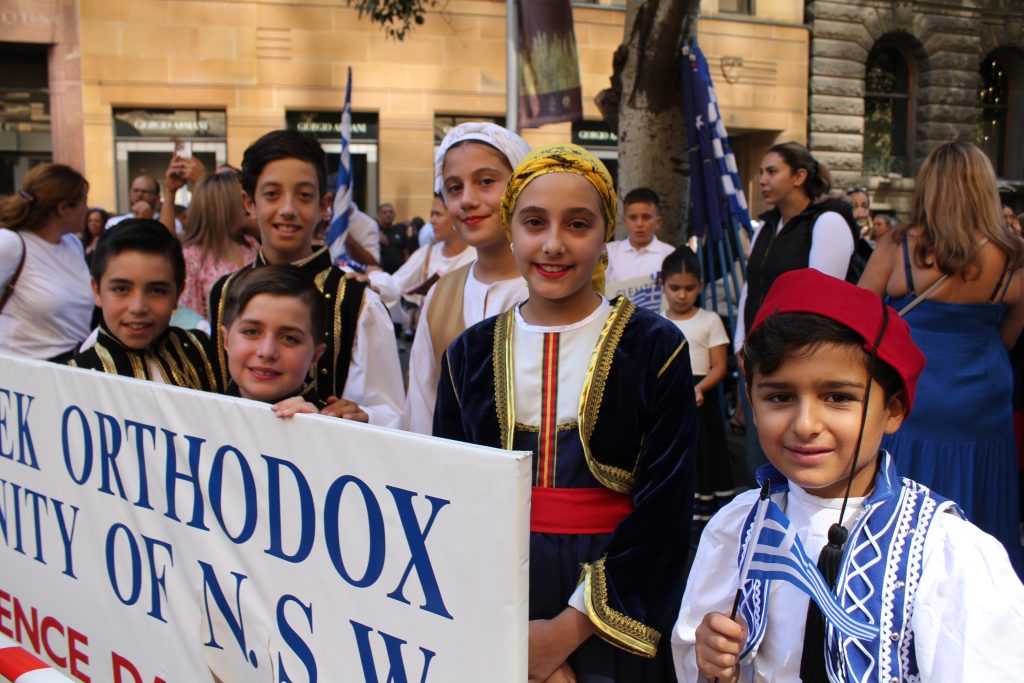
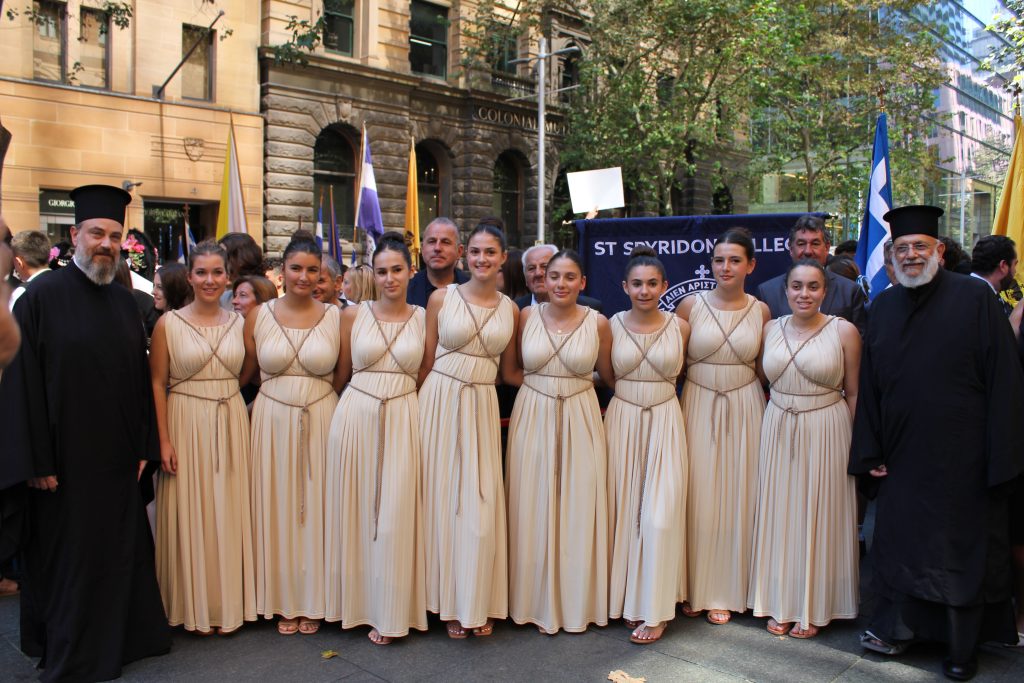
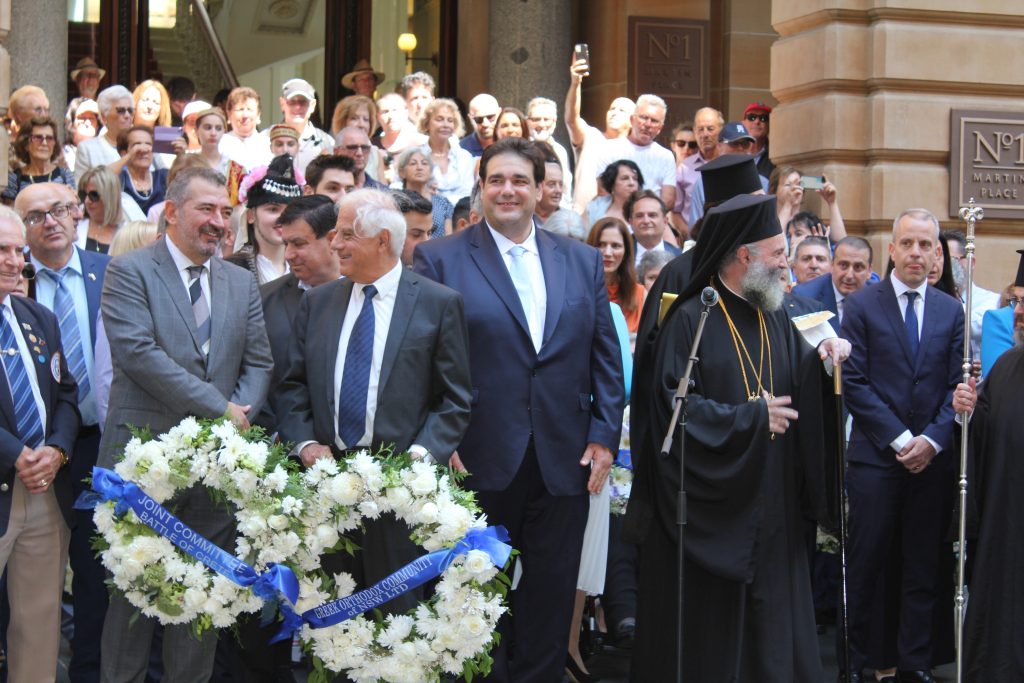
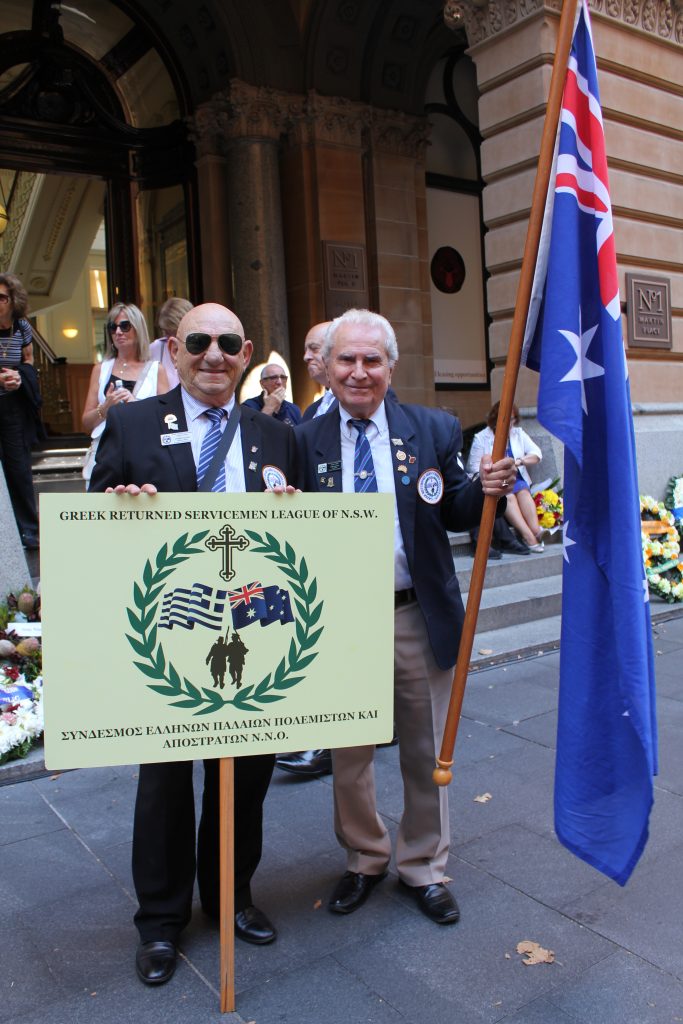
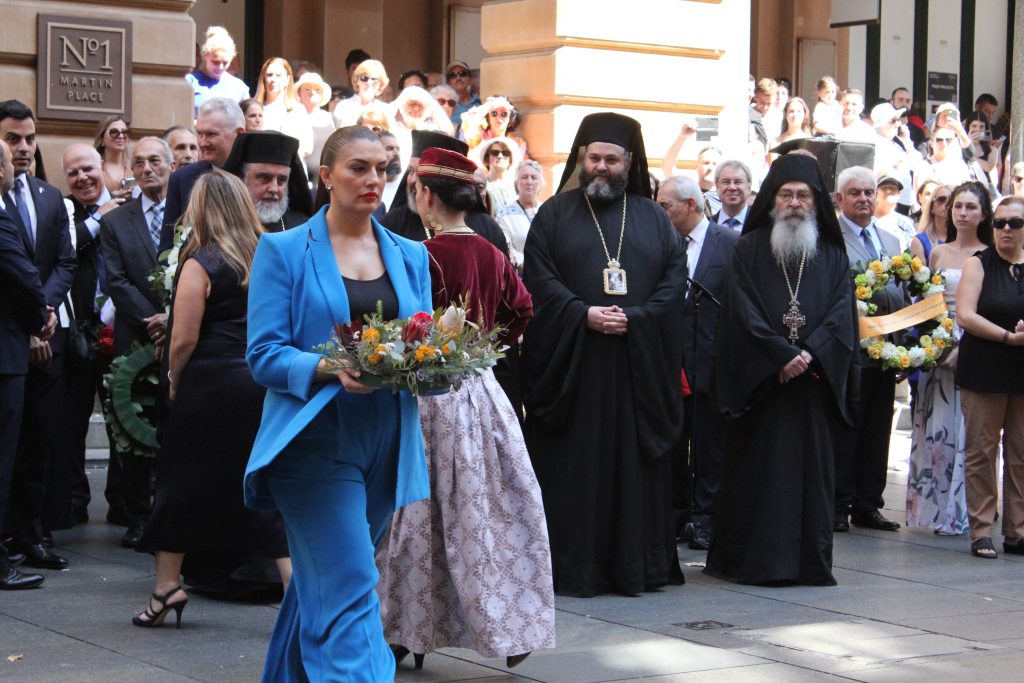
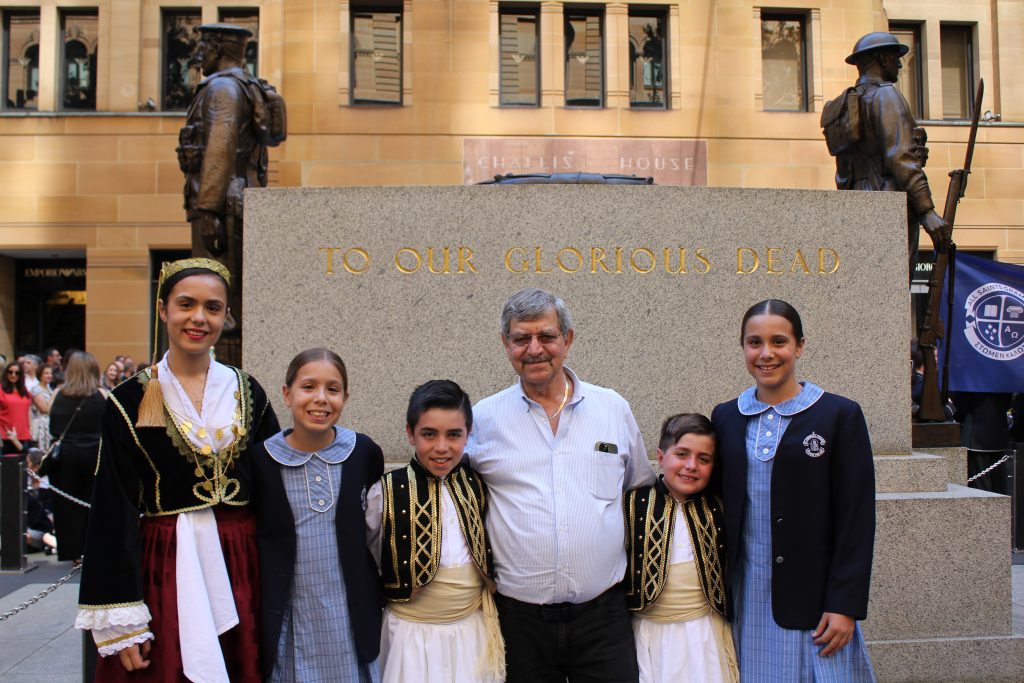
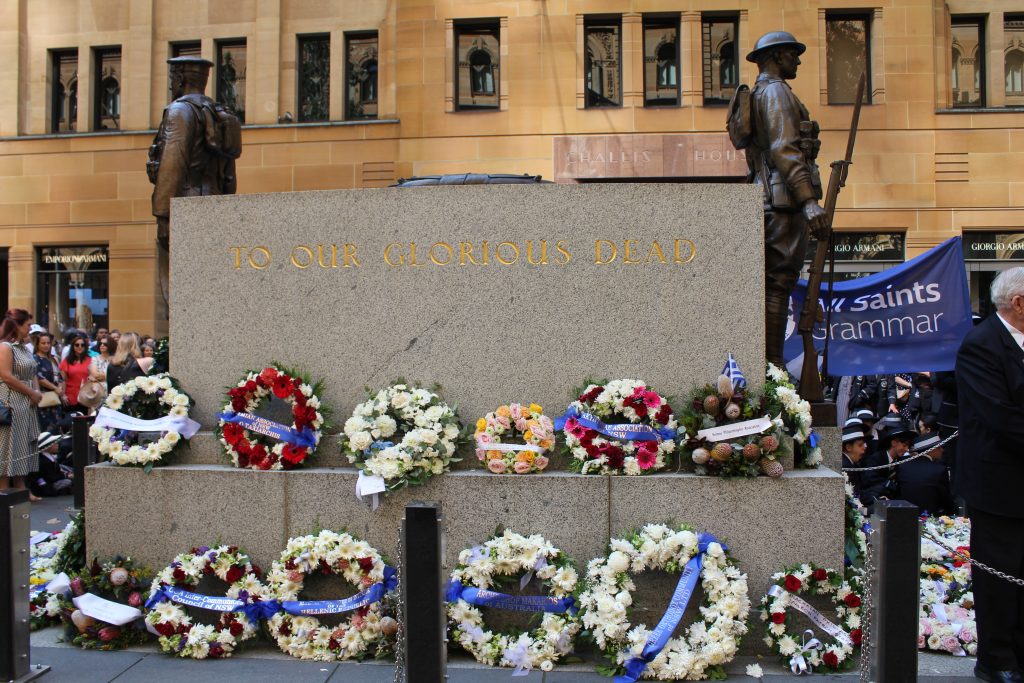
The historic occasion began with a wreath laying ceremony at Martin Place, where members of local Greek and Cypriot community organisations and students and staff at Greek Orthodox schools in Sydney paid tribute to the fallen heroes and heroines of the 1821 Greek Revolution.
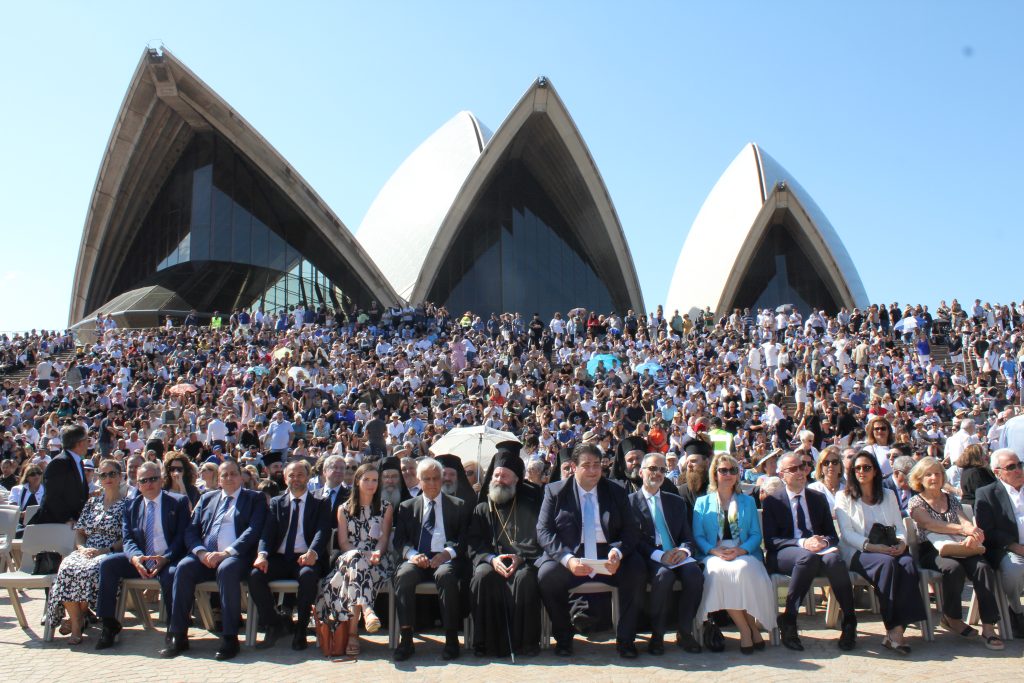
Some of the official guests.
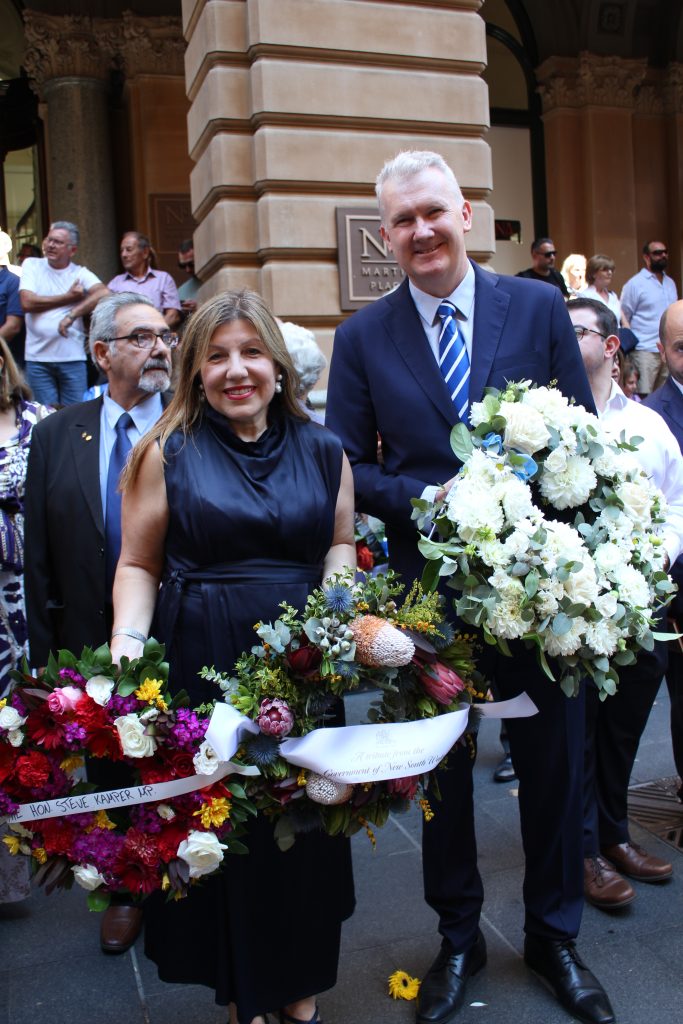
Some of the official guests in attendance included Greece’s Alternate Interior Minister Theodoros Livanios; Archbishop Makarios of Australia; the new Ambassador of Greece in Australia, Stavros Venizelos; the Consul General of Greece in Sydney, Yannis Mallikourtis; the High Commissioner of the Republic of Cyprus in Australia, Antonis Sammoutis; the NSW Minister for Industrial Relations, Sophie Cotsis MP, representing the NSW Minister for Multiculturalism Steve Kamper MP who was absent; the NSW Minister for Employment and Workplace Relations, Tony Bourke MP; the Liberal Member for Miranda, Eleni Petinos MP; the President of the Greek Orthodox Community of NSW (GOCNSW), Harry Danalis; and the President of the Inter-Communities Council of NSW of the GOAA, Kosmas Dimitriou; among many other community leaders and school students.
The Martin Place ceremony began with a small memorial service conducted by Archbishop Makarios, followed by the Greek and Australian National Anthems. The Last Post and Rouse was then played, the Ode was read by NSW Greek RSL member Peter Tsigounis, and a minute silence was held.
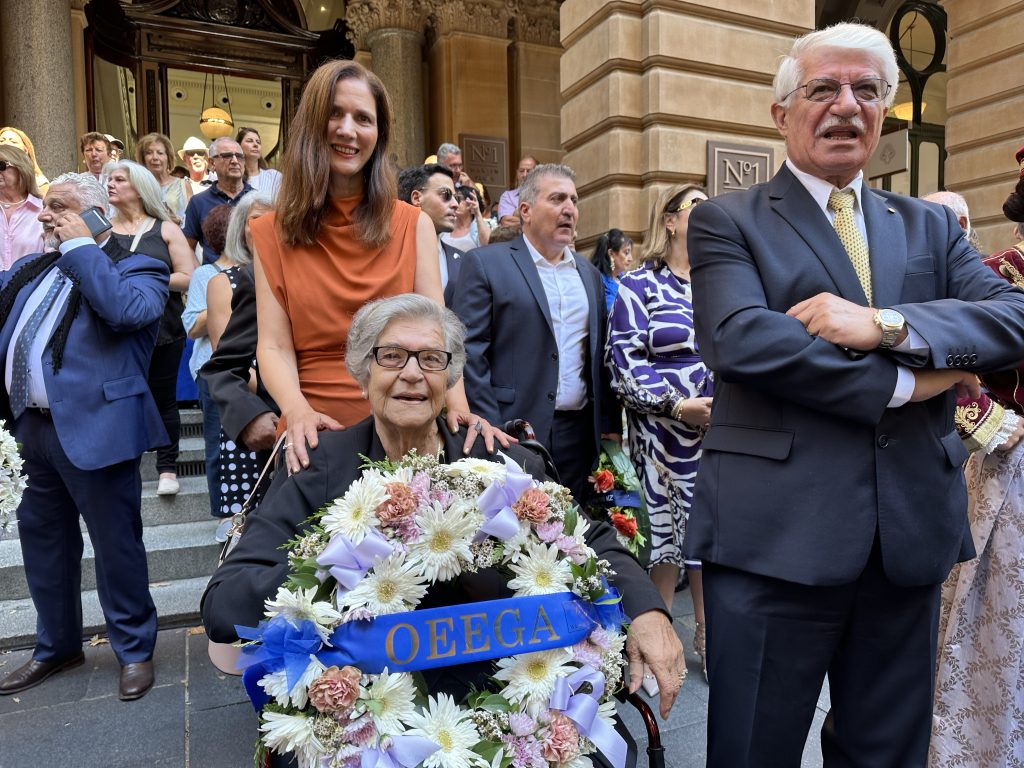
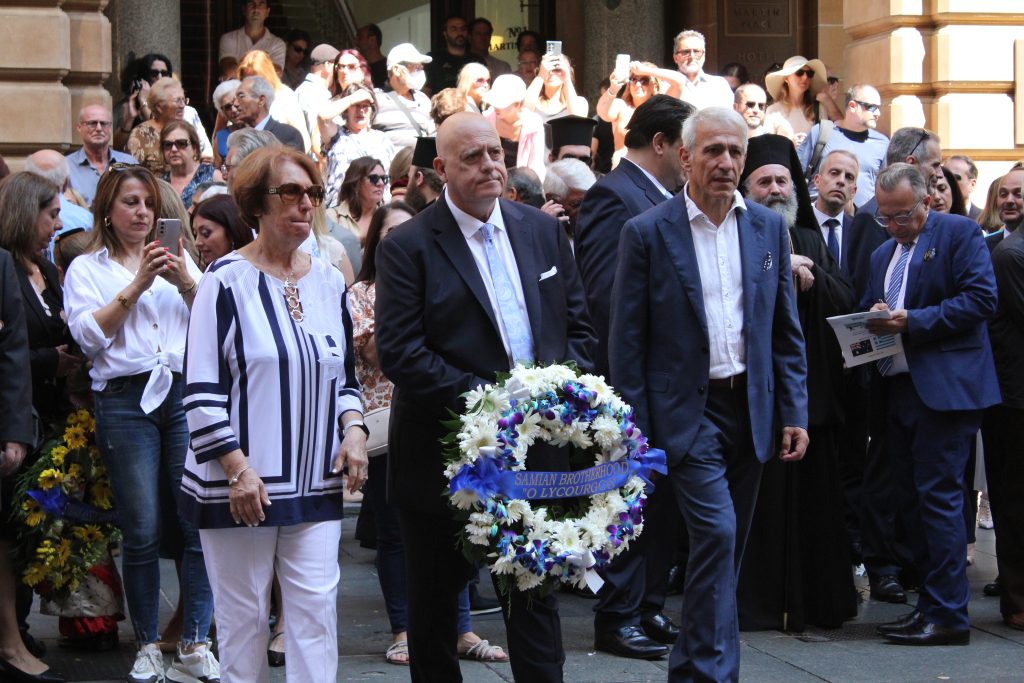
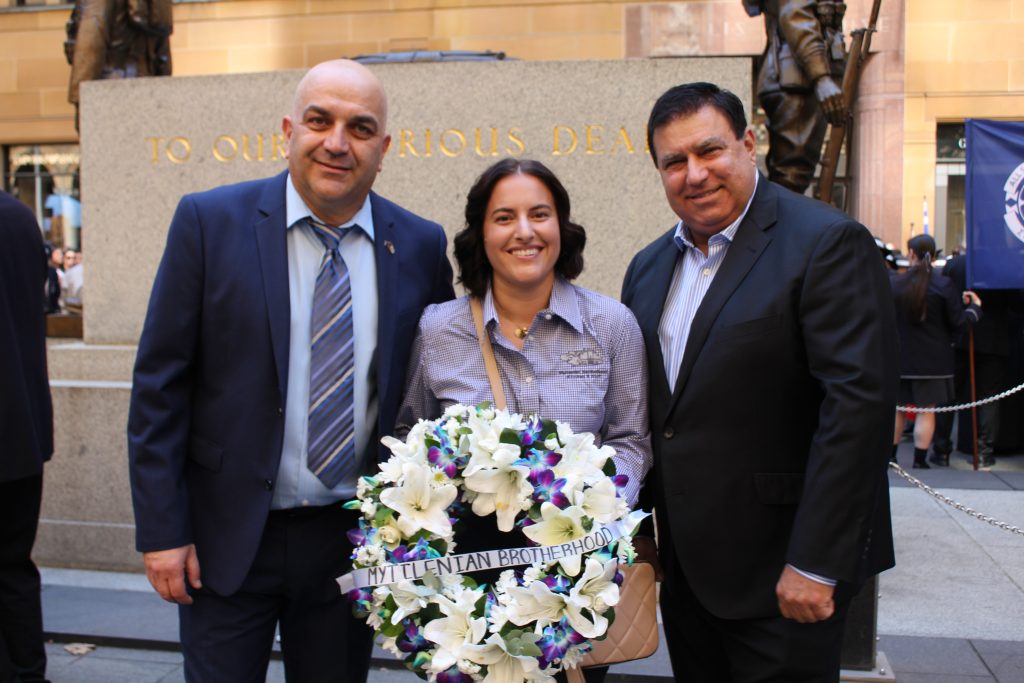
This was followed by the laying of wreaths from many of the official guests present.
Irene Anesti from OEEGA.Eleni Petinos MP.The Samian Association of NSW.The Mytilenian Brotherhood of Sydney & NSW.
Wreath laying at Martin Place.
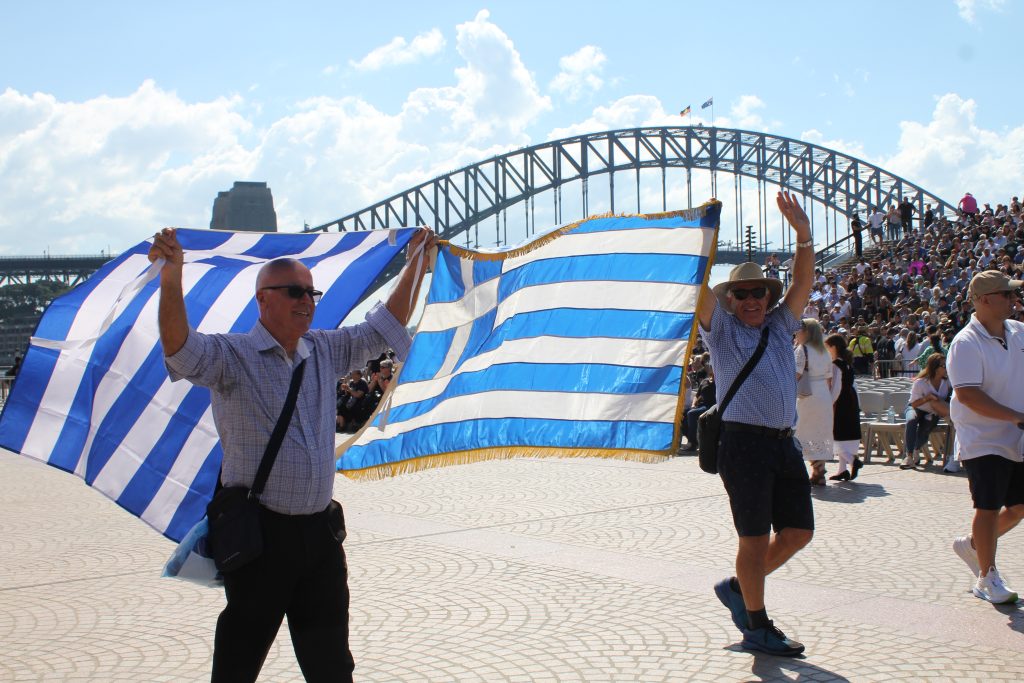
Greek flags fly proudly
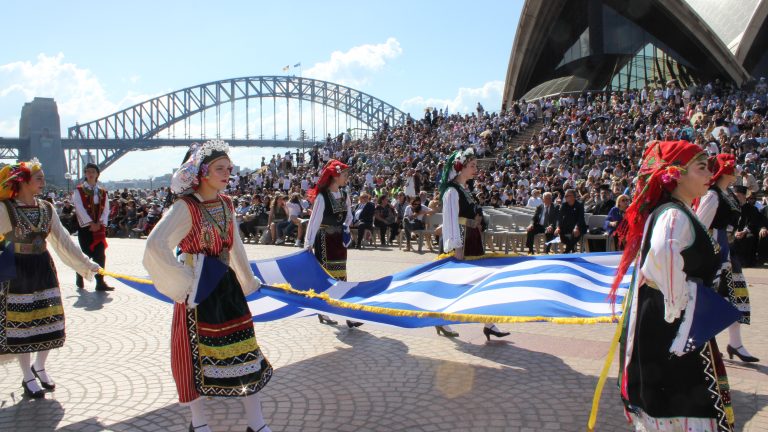
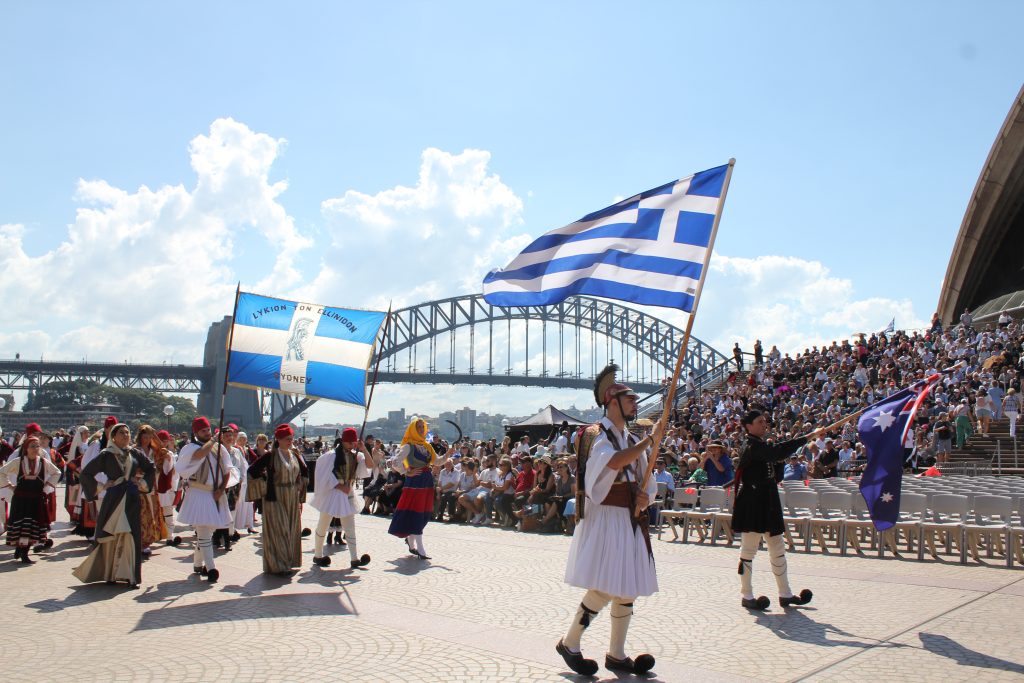
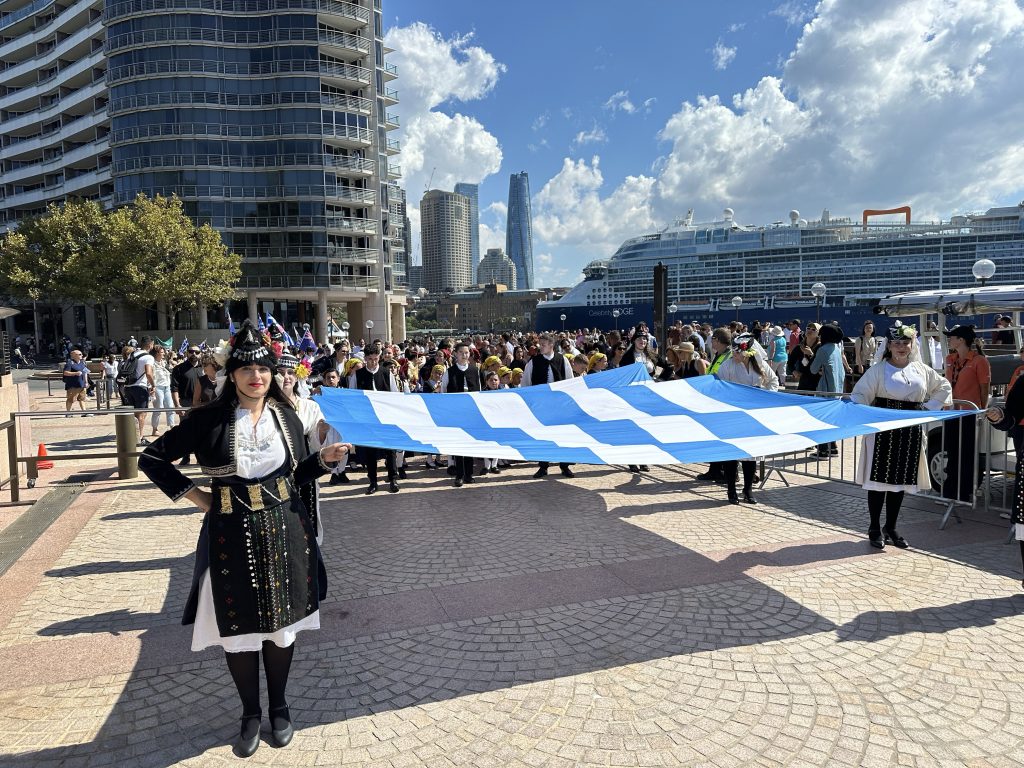
The highlight of the event was the parade through Sydney’s streets towards the Opera House.
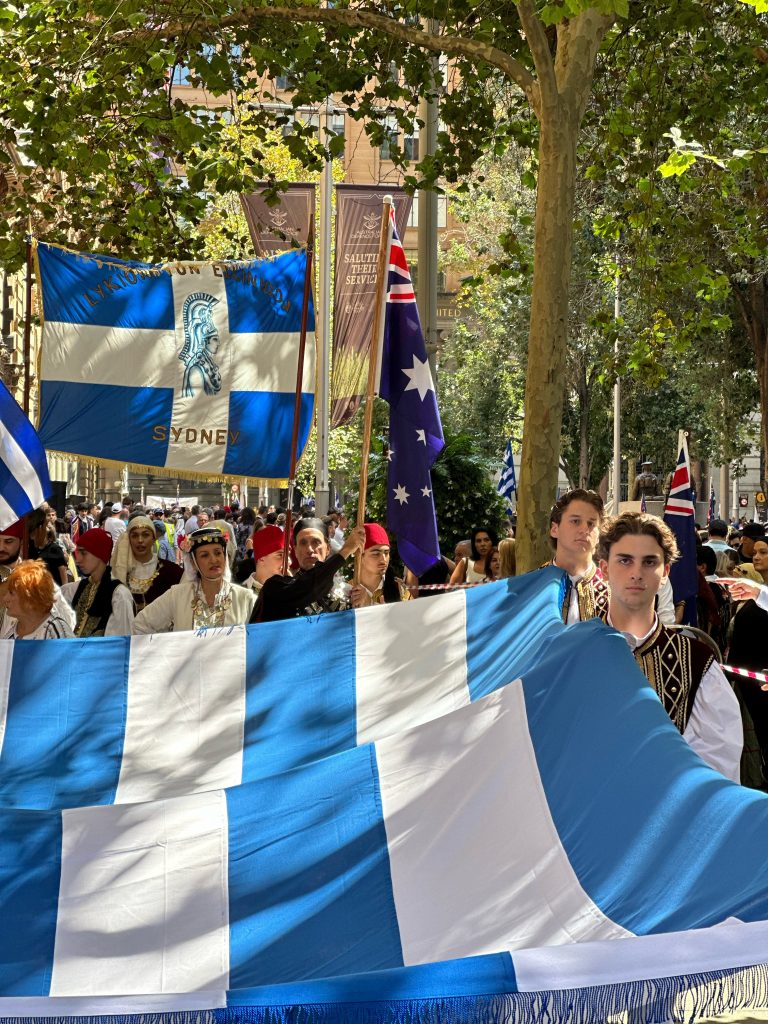
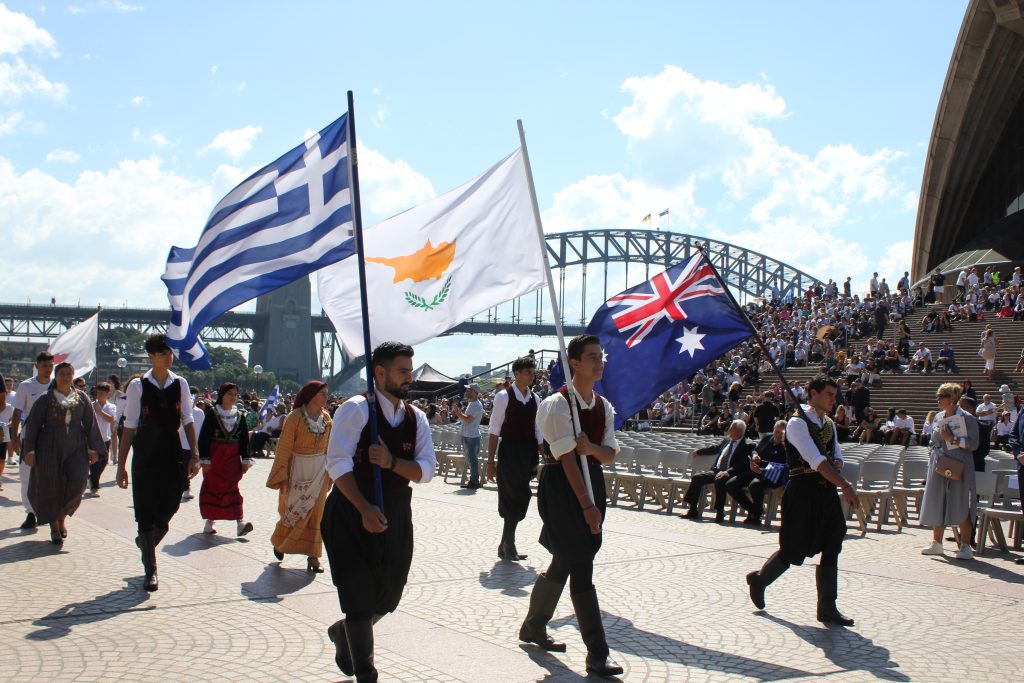
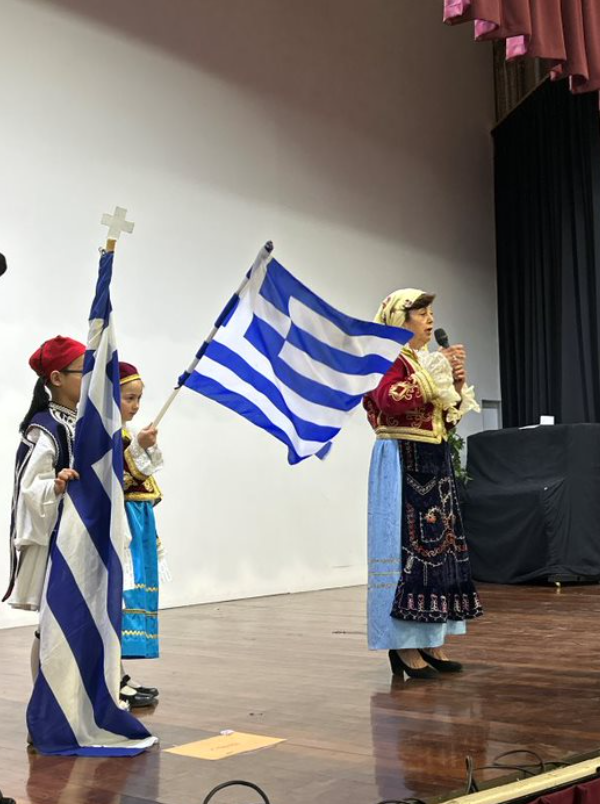
With a large Greek flag carried by youth dressed in traditional Greek costumes leading the way, Sydney’s Greek community walked together in sweltering heat and up multiple steep hills until the stunning Sydney Harbour Bridge and Opera House came into view.
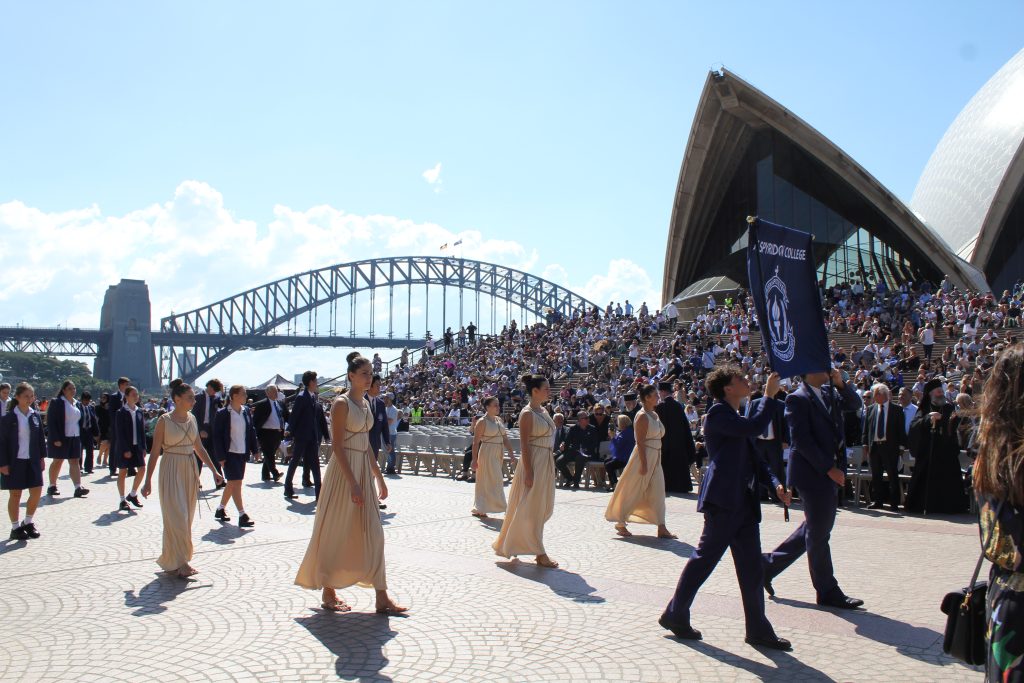
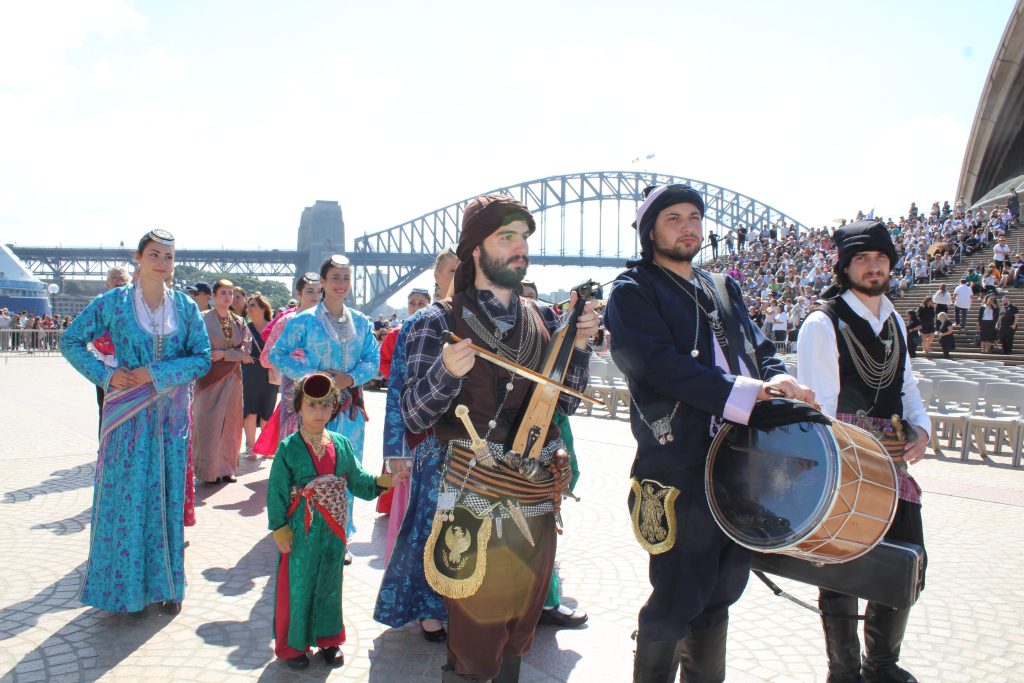
Once at the iconic venue, emcee Dimitri Kallos introduced each Greek and Cypriot community and Greek Orthodox parish individually. The three Greek Orthodox schools of St Spyridon College, All Saints Grammar and St Euphemia College were also strongly represented by large contingents of staff and students who wore their school uniforms.
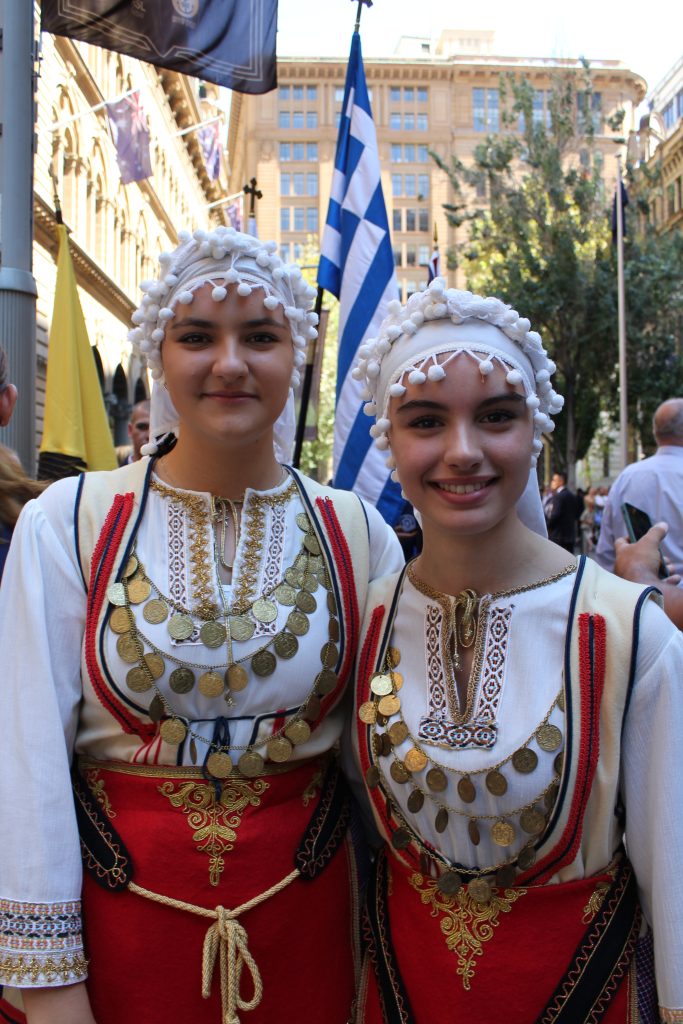
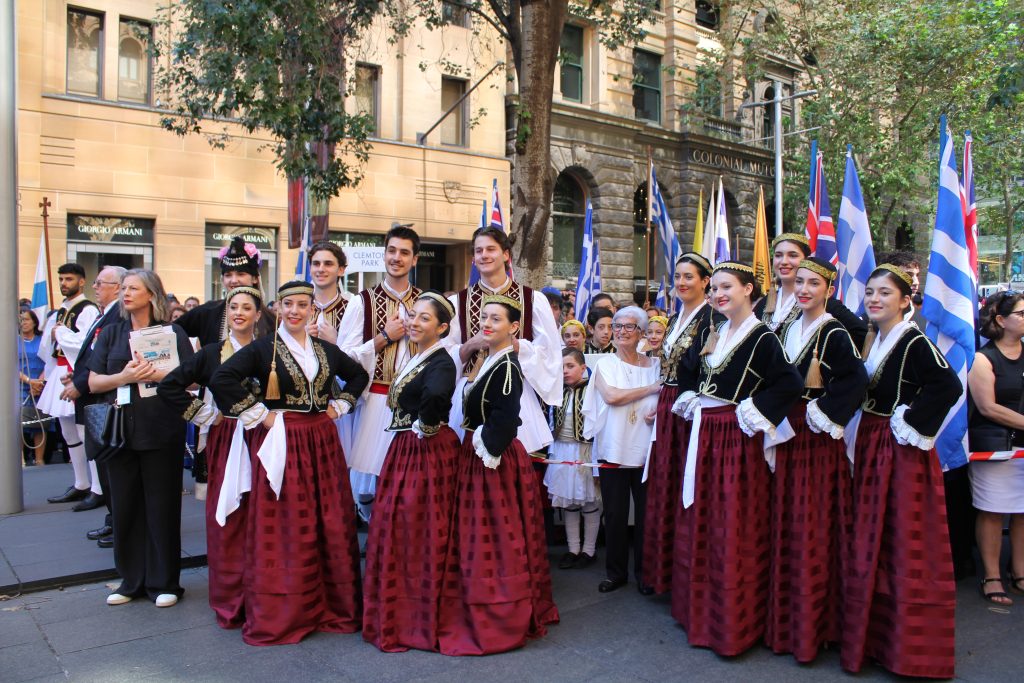
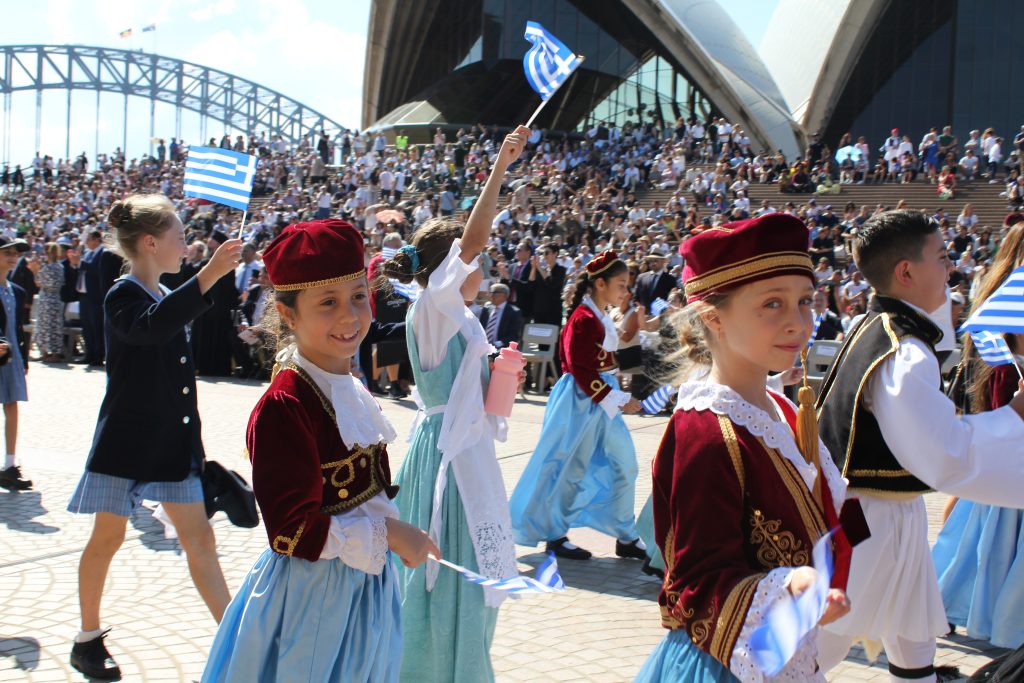
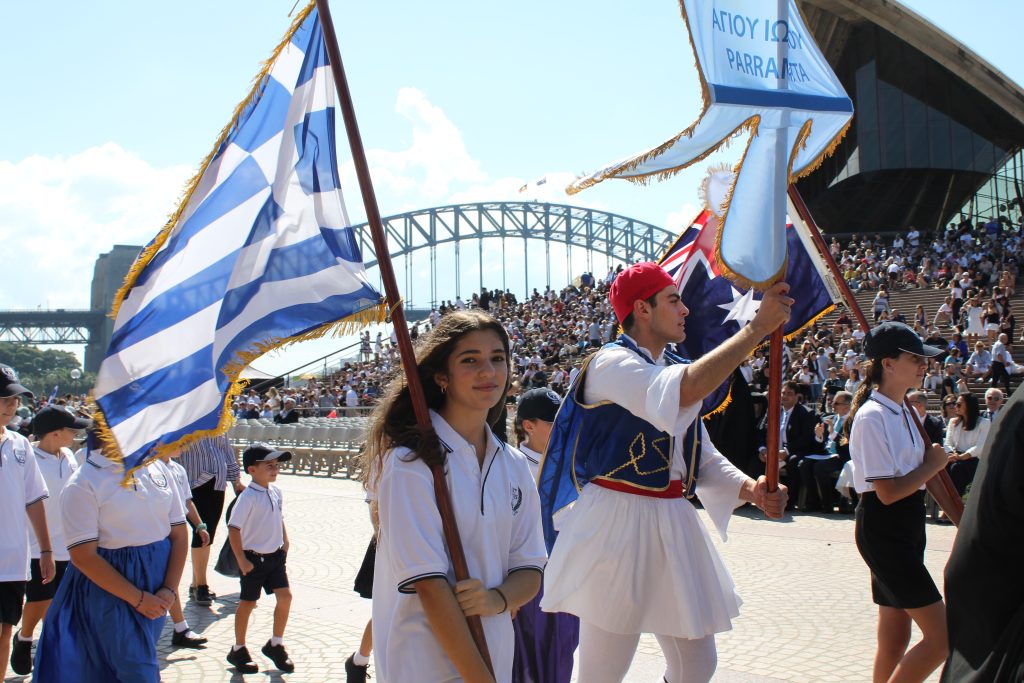
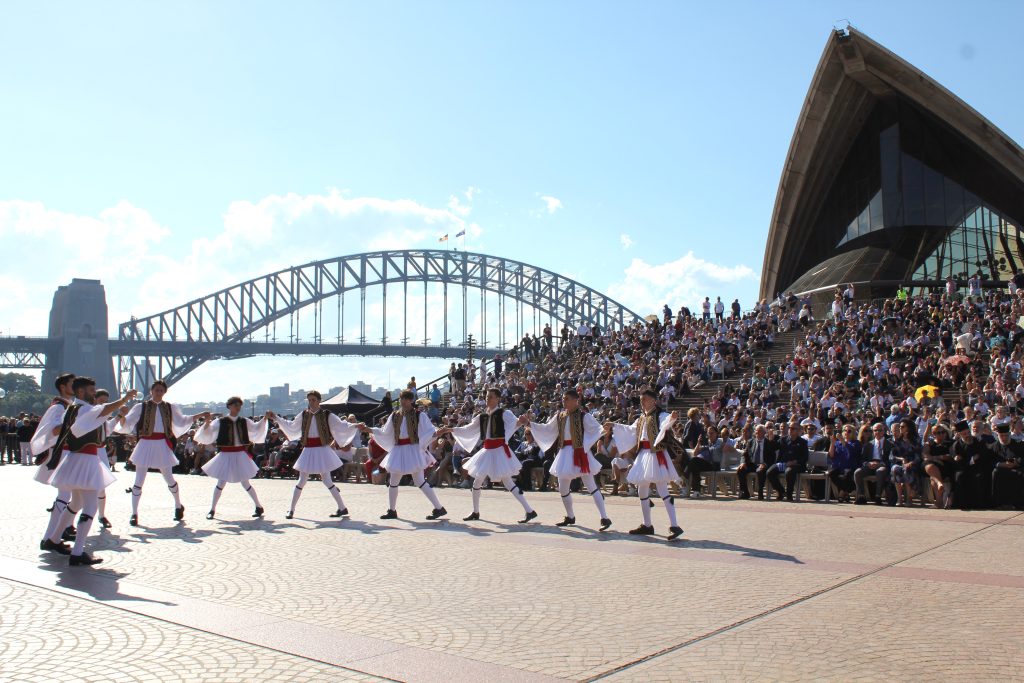
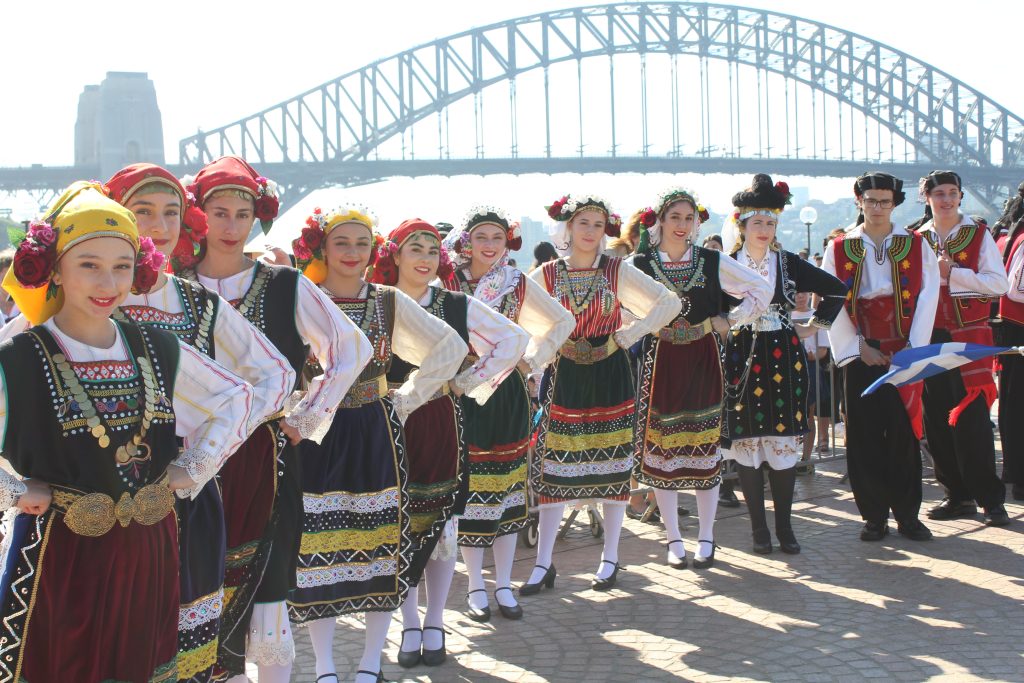
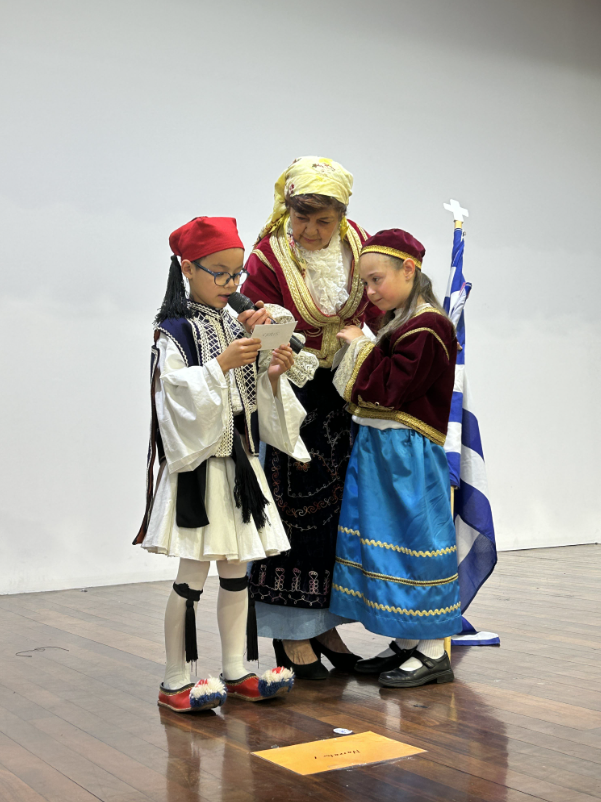
Other youth and members of community organisations also proudly waved Greek and Australian flags, with many traditional costumes from Crete, Pontus, Kalymnos and Mytilene standing out prominently against the sails of the Opera House.
Each arrival was greeted by loud applause and cheers of ‘Zito i Hellas’ from the people gathered on the steps of the Sydney Opera House.
‘Zito i Ellas’
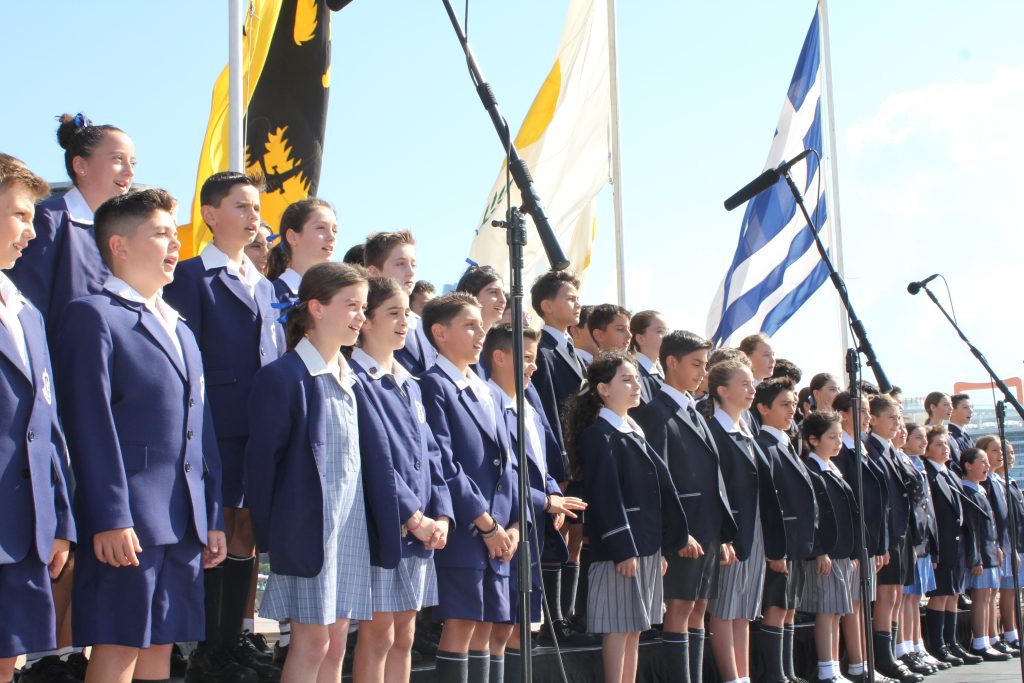
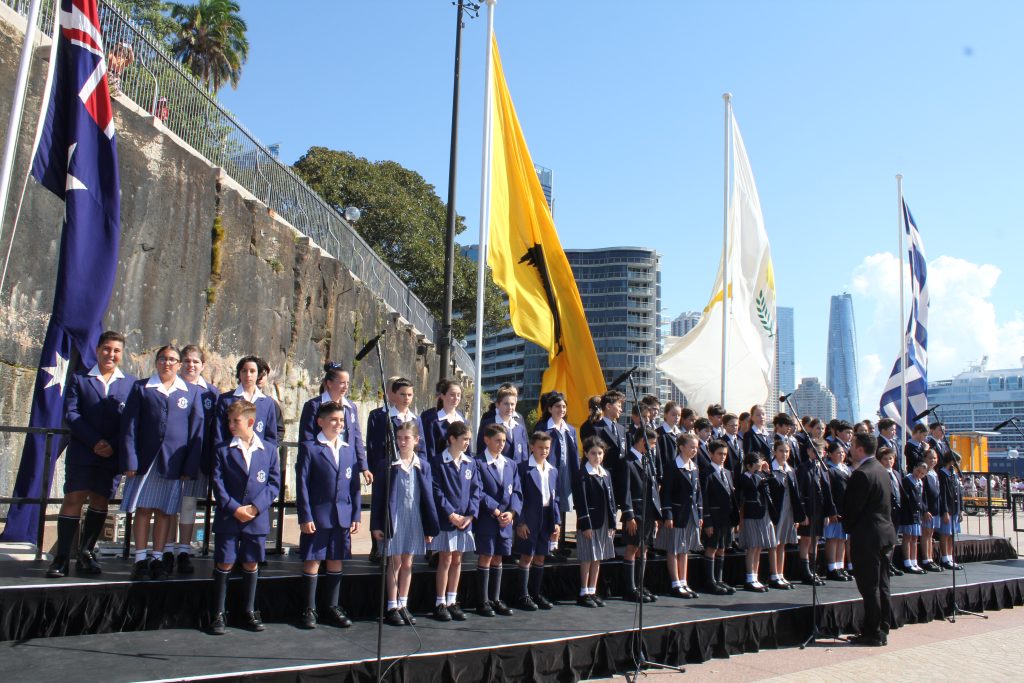
After everyone was seated, official proceedings began with the singing of the National Anthems of Greece and Australia from the Combined Choir of the GOAA Day Schools – St Spyridon College, All Saints Grammar and St Euphemia College. The choir also later performed ‘Natane to ’21.’
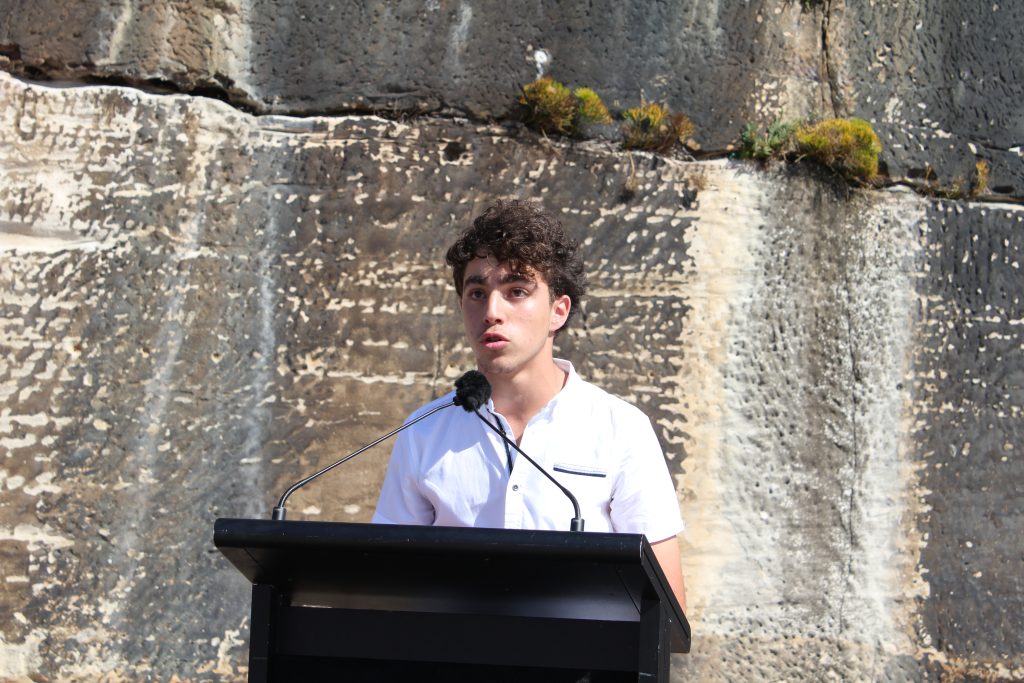
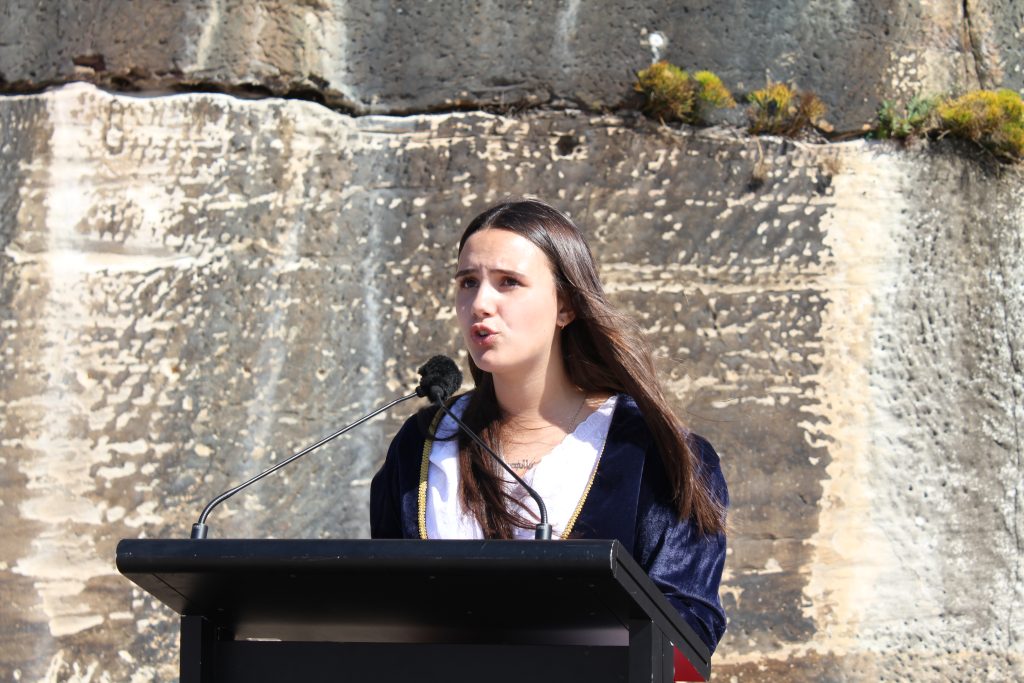
Students from the GOCNSW Afternoon and Saturday schools, Emmanuel Kasadelis and Lia Pappas, then recited a number of powerful poems, before Archbishop Makarios took to the microphone to give a speech.
Emmanuel KasadelisLia Pappas
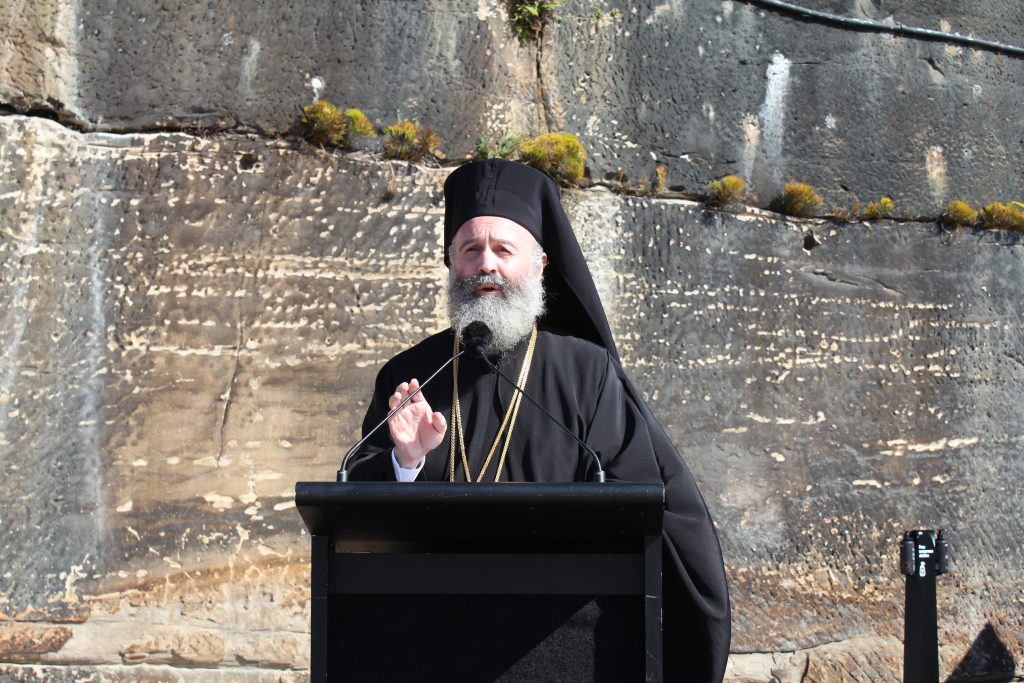
In his speech, the Archbishop had the crowd loudly chanting ‘Zito i Ellada’ and said it was a “great joy” to have all Greeks and Philhellenes gathered at the Sydney Opera House after a five year break to commemorate the start of the Greek Revolution in 1821 and to celebrate the Annunciation of the Theotokos.
“We have gathered here not to prove that we are strong, but to convey a message of unity to all people. We are united because the history of our ancestors inspire us. We are united as Greeks because together we seek the light. We are united as a people, as a nation and as Orthodox Christians because we share the same aspirations, the same history and the same suffering,” Archbishop Makarios said.
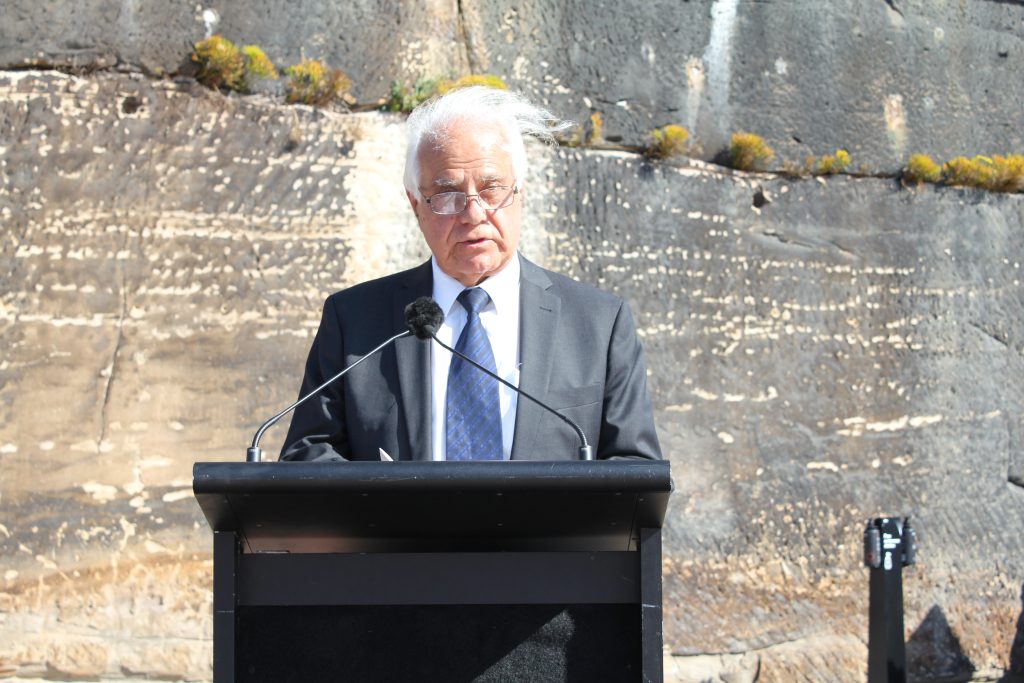
The President of the GOCNSW, Mr Danalis spoke next and gave a brief historical background to the start of the Greek War of Independence in 1821. He also thanked everyone for attending and taking part in the parade after a long hiatus.
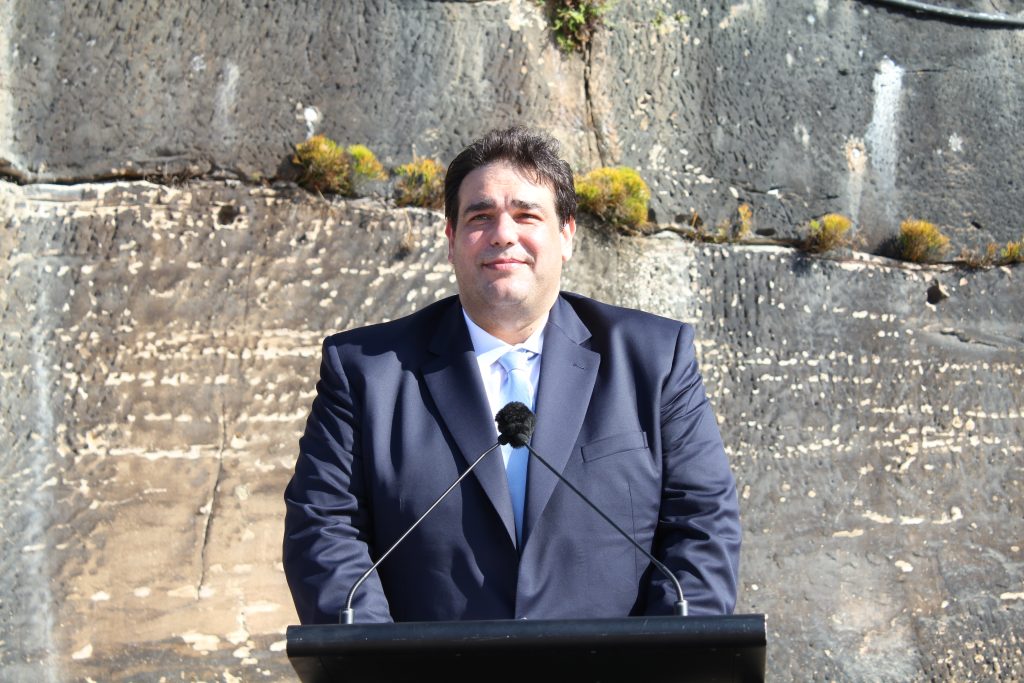
Archbishop Makarios of AustraliaHarry Danalis
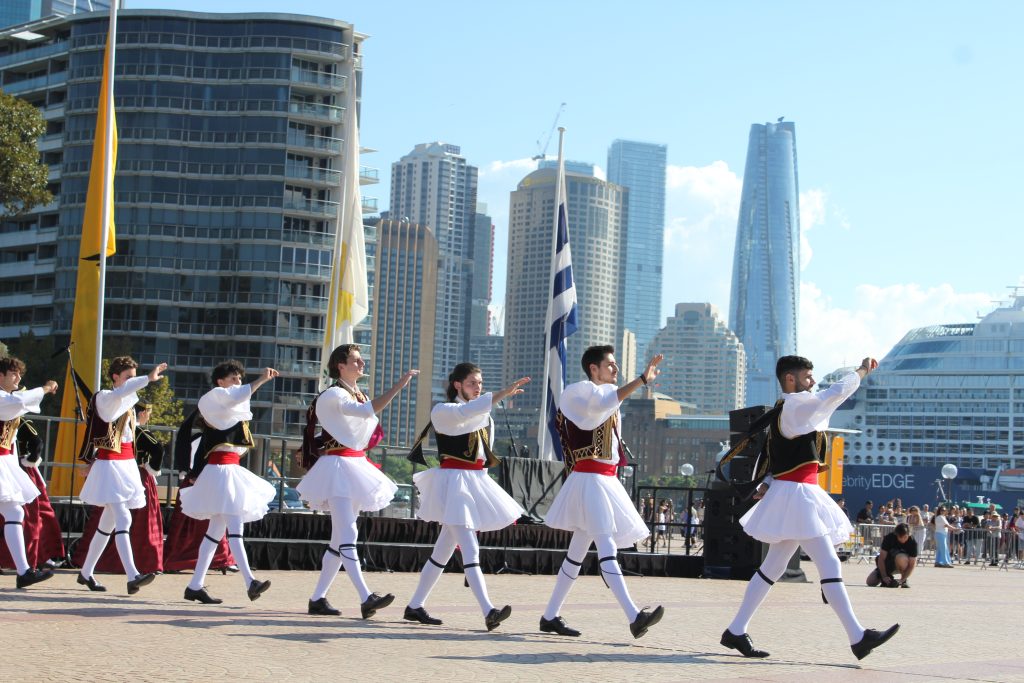
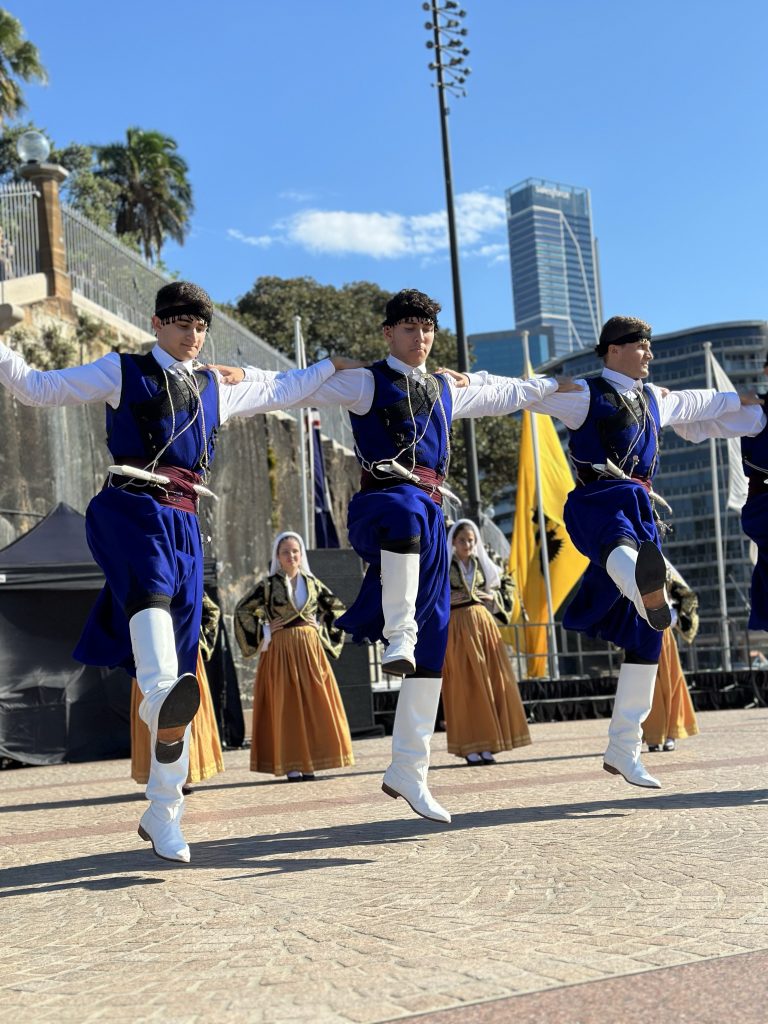
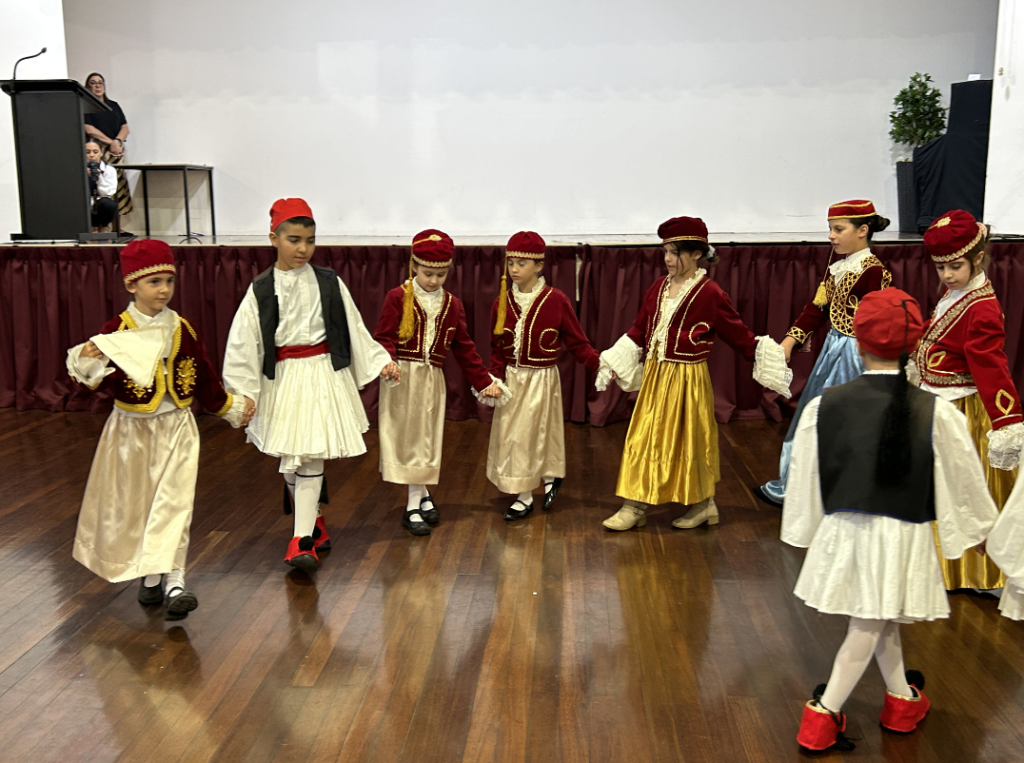
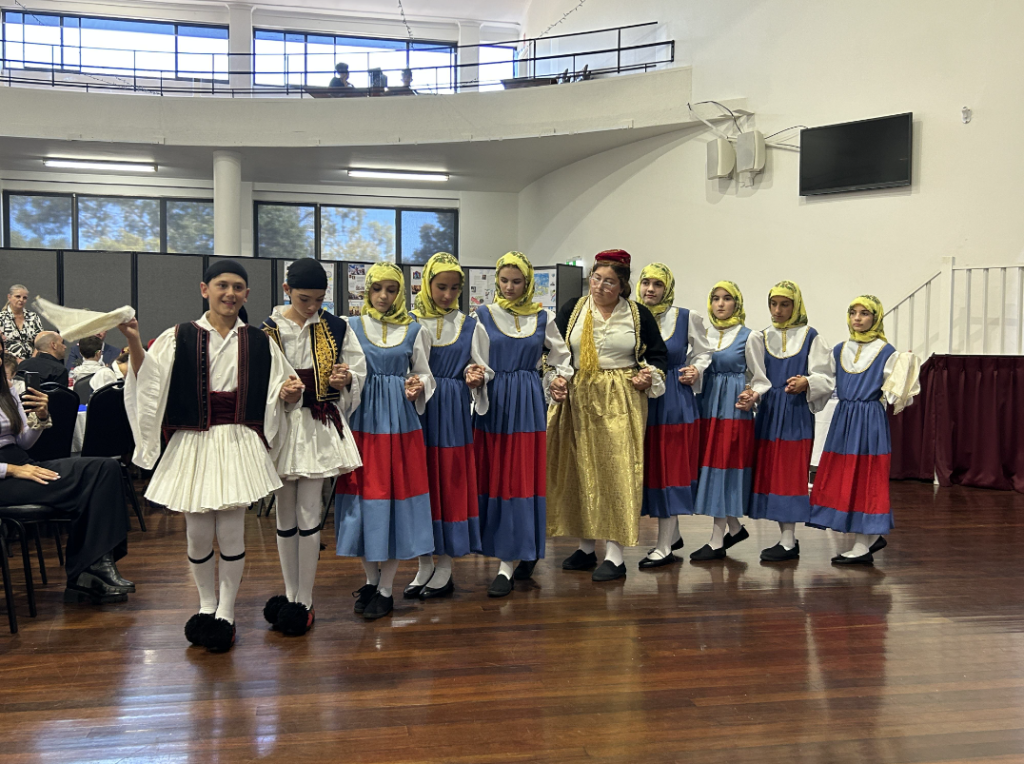
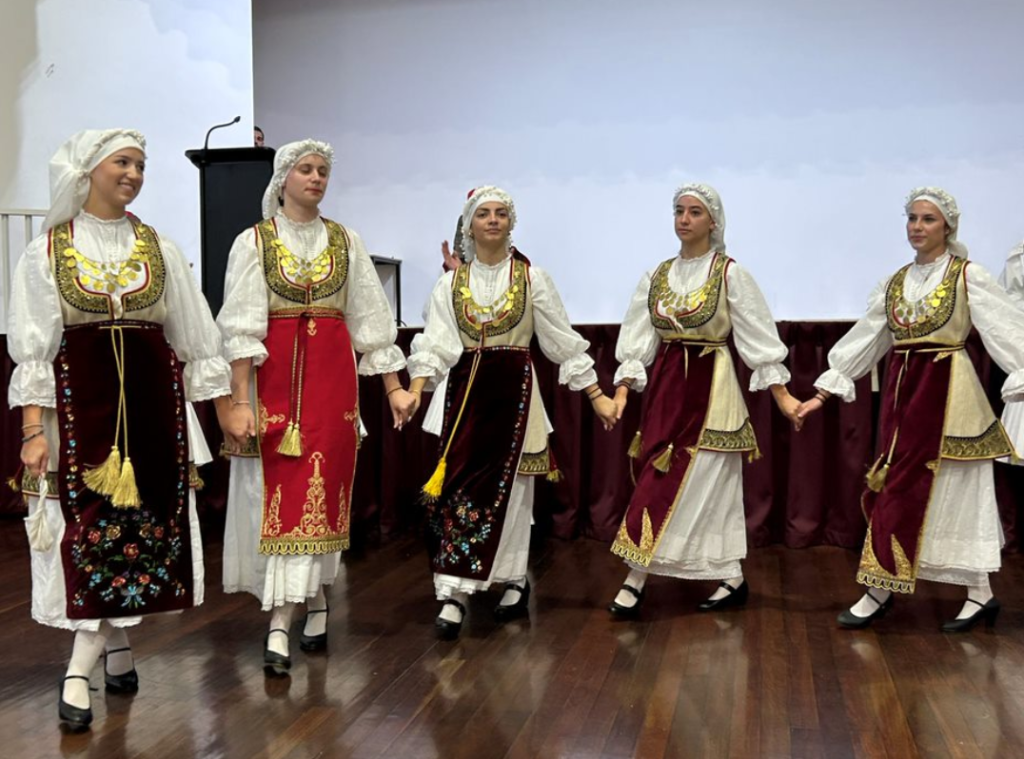
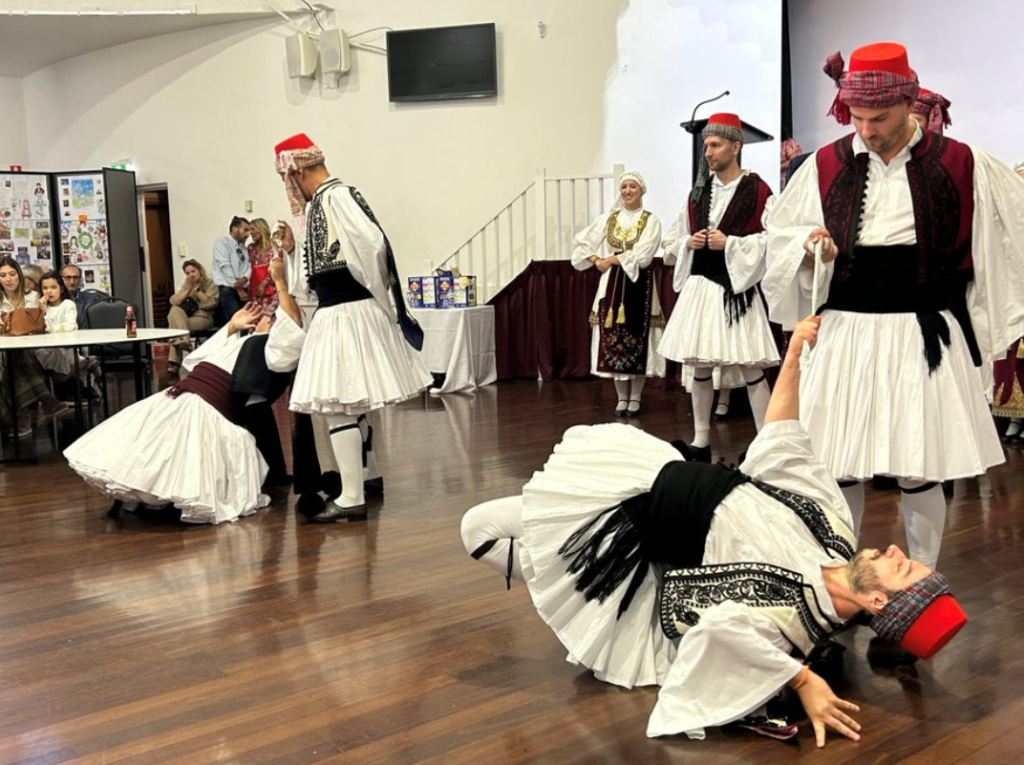
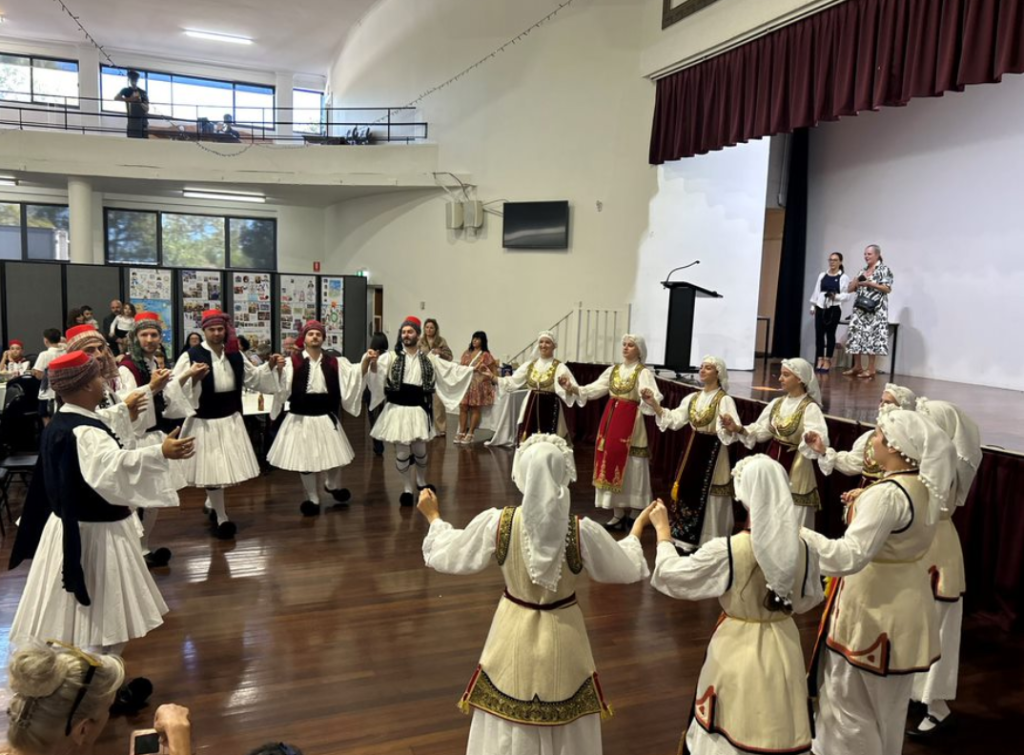
Breaking up the speeches was a performance of three traditional Greek dances – the Tsamiko, Syrto and Hasaposerviko – by the Dancing Schools of the GOCNSW (instructed by Paroula Thurban), the GOAA (instructed by Sophia Haskas), and the Hellenic Lyceum of Sydney (instructed by Dimitrios Papapetrou).
Their spectacular performance was followed by a speech from Greece’s Alternate Interior Minister, Theodoros Livanios. Mr Livanios said it was an honour to be representing the Greek government at events marking Greek Independence Day in Sydney. He also spoke of the bravery of Greeks during the 1821 Revolution and how they fought for our freedom.
The High Commissioner of the Republic of Cyprus, Mr Sammoutis spoke next of the strong ties between Greeks and Cypriots during the Greek Revolution until today.
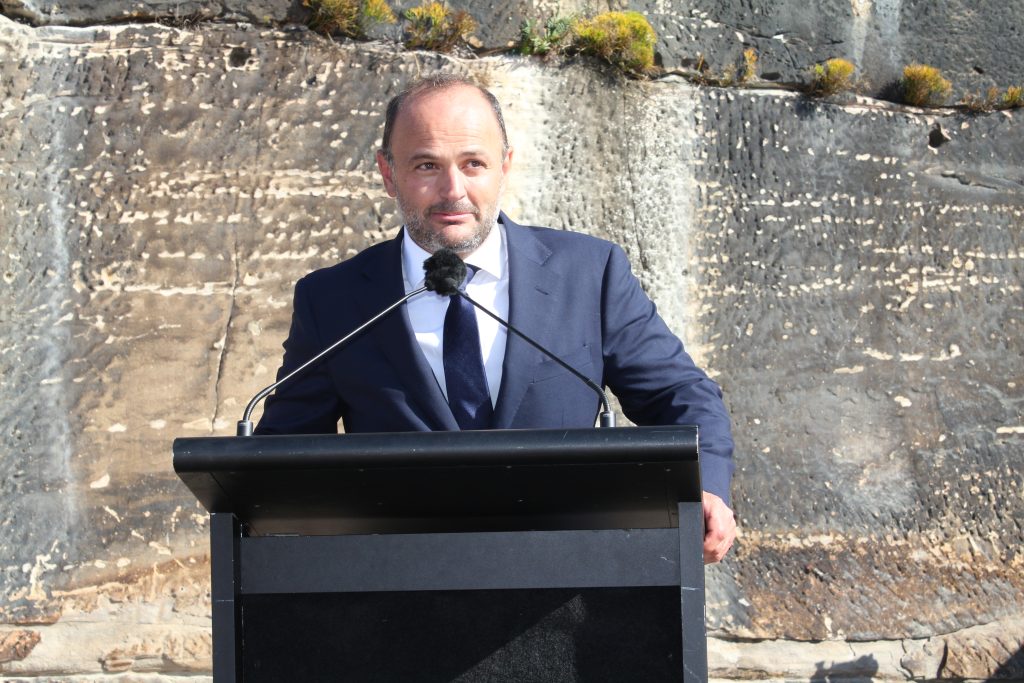
Theodoros LivaniosAntonis Sammoutis
After a round of applause, attendees were treated to another dancing performance from the Macedonian region by the Rallis School of Greek Dancing, the GOCNSW, the Pan-Macedonian Dance Group and the Institute of Hellenic Dance & Culture.
Performances of traditional Cretan, Cypriot and Pontian dances followed by the Cretan Association of Sydney & NSW, the Cyprus Community of NSW Dancing Group, and Pontoxeniteas NSW respectively. The dancing groups of the Parishes & Communities of the Archdiocese and the GOCNSW also performed some nisiotika dances.
To close the official programme, the President of the Inter-Communities Council of NSW of the GOAA, Mr Dimitriou gave the vote of thanks.
As the sun set over the Sydney Opera House, local Greeks returned to their homes with a sense of pride for the motherland and those men and women who fought for our freedom. Their minds were also on next year’s celebration – with hopes for it to be even bigger and better than ever.
*All photos copyright The Greek Herald / Andriana Simos.
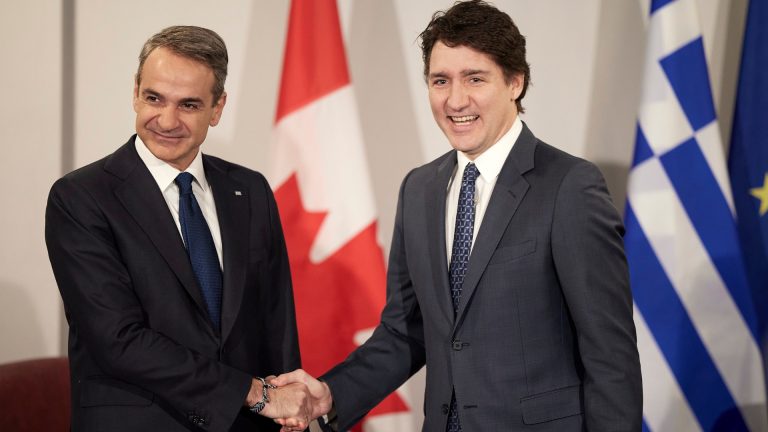
Upon his visit to Canada, Greece’s Prime Minister Kyriakos Mitsotakis, met with Canadian Prime Minister Justin Trudeau in Montreal, to finalise an agreement for Greece’s acquisition of seven state-of-the-art firefighting aircrafts.
Amna.gr revealed that Mitsotakis’s visit highlights the strengthening ties between Greece and Canada, with discussions including potential investment opportunities, tourism, and climate change challenges.
Στη συνάντηση με τον @JustinTrudeau είχαμε την ευκαιρία να κάνουμε έναν απολογισμό των διμερών μας σχέσεων και να τονίσουμε τις κοινές αξίες που ενώνουν τις δύο χώρες σε περιόδους σημαντικών παγκόσμιων γεωπολιτικών προκλήσεων. https://t.co/8zRfoTErsapic.twitter.com/7x13ahp4WG
Both leaders emphasised the importance of coordinated efforts in fire management and renewable energy initiatives.
The signing ceremony marked a significant milestone in bilateral relations, reflecting the strong friendship and shared commitment to mutual cooperation.
Upon their discussion, Mitsotakis further stressed the importance of Greeks being able to vote from abroad, and to the government’s strategy for Greeks abroad.
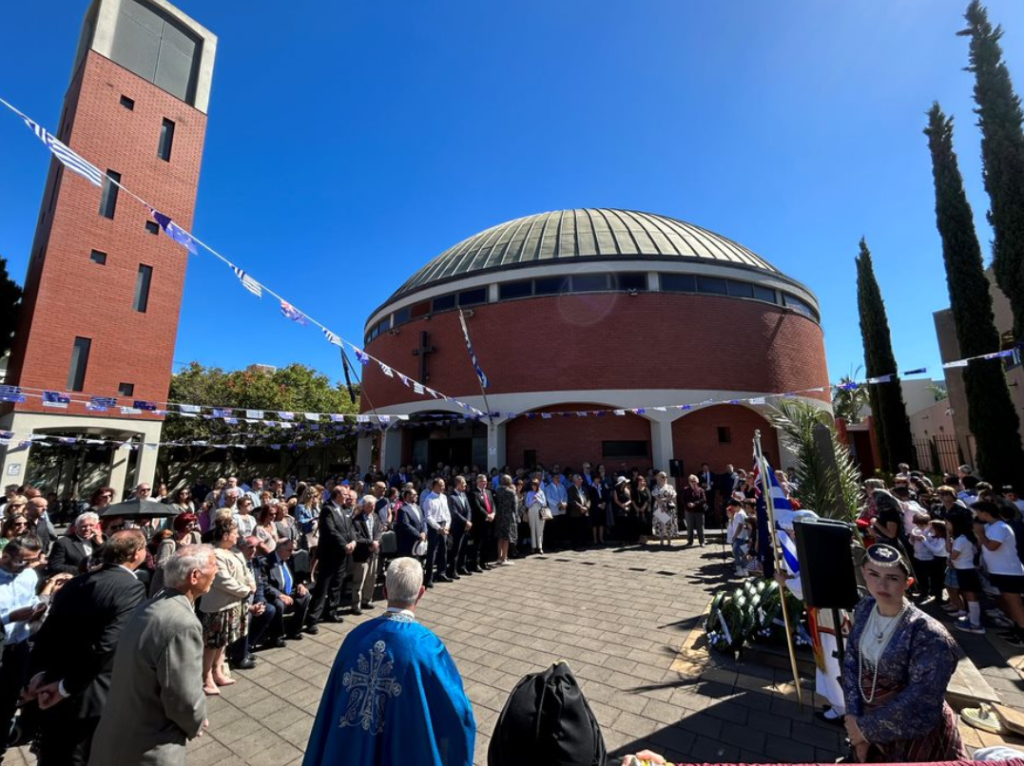
The Greek Orthodox Community of South Australia (GOCSA) commemorated Greek Independence Day with vibrant festivities on Sunday, March 24.
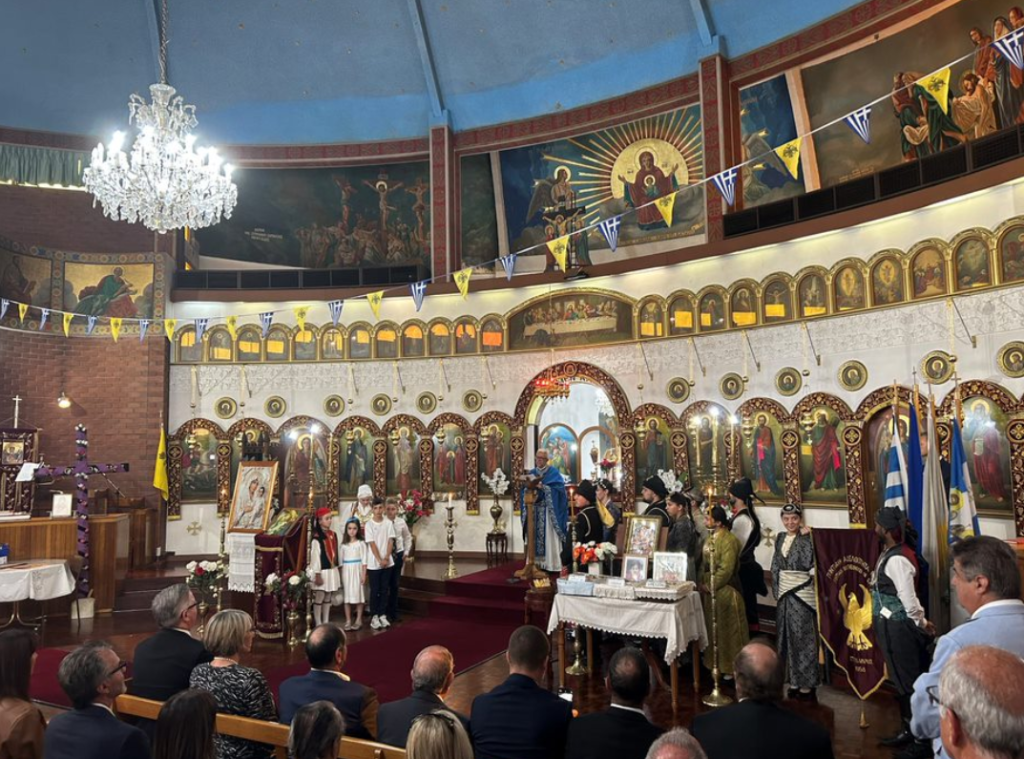
The day commenced with reverence as the Cathedral of Archangels Michael & Gabriel on Franklin Street filled with the faithful for a Divine Liturgy and Doxology.
Divine Liturgy.Courtyard of the Cathedral.Courtyard of the Cathedral preparing for the wreath ceremony.
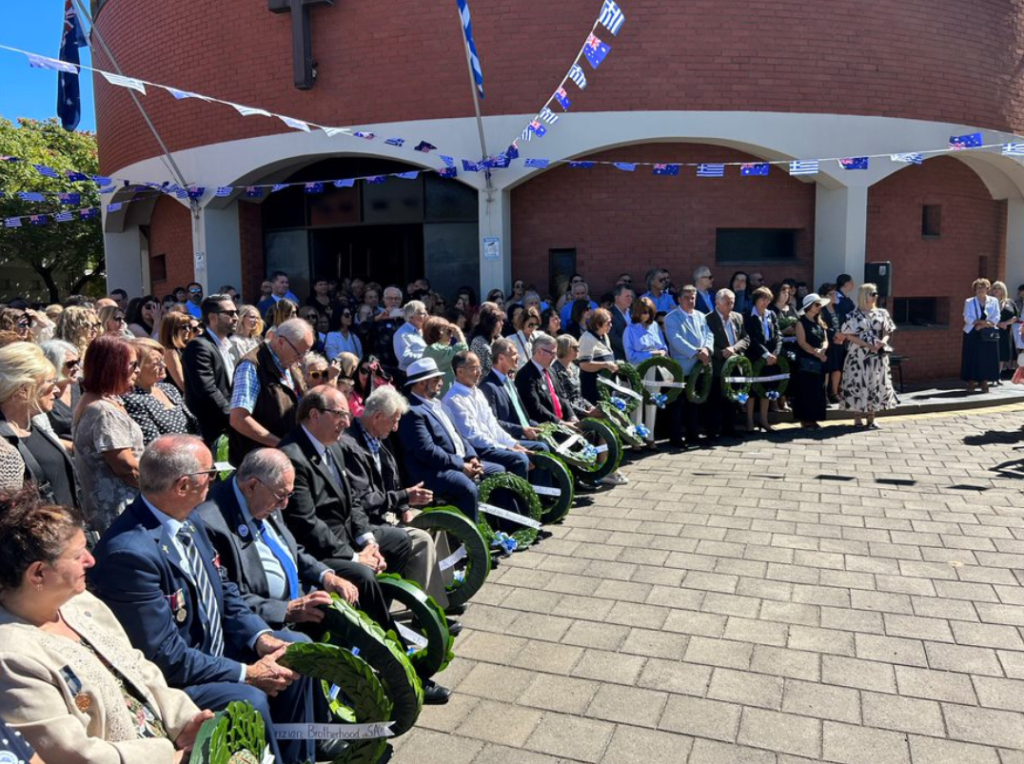
At 11:30am, the courtyard of the Cathedral became a space of remembrance for the Memorial Service and wreath laying ceremony, honouring the heroes of Greek independence.
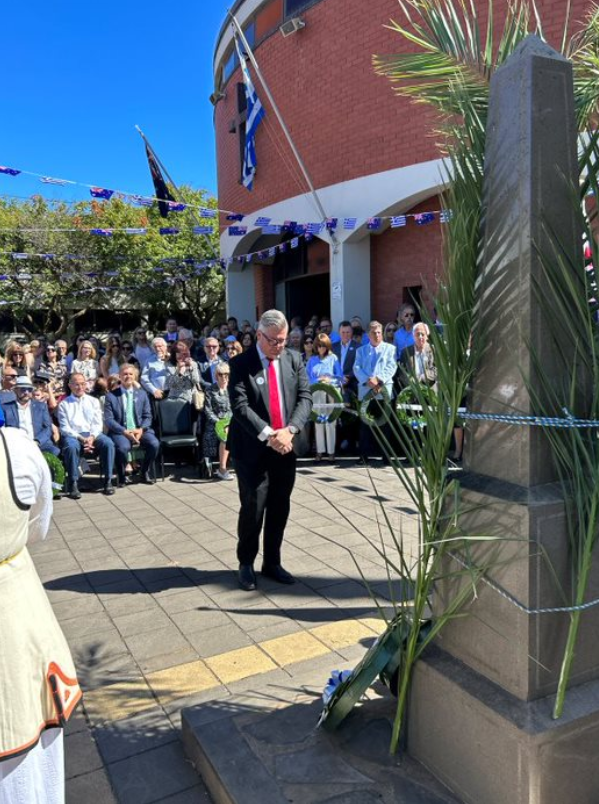
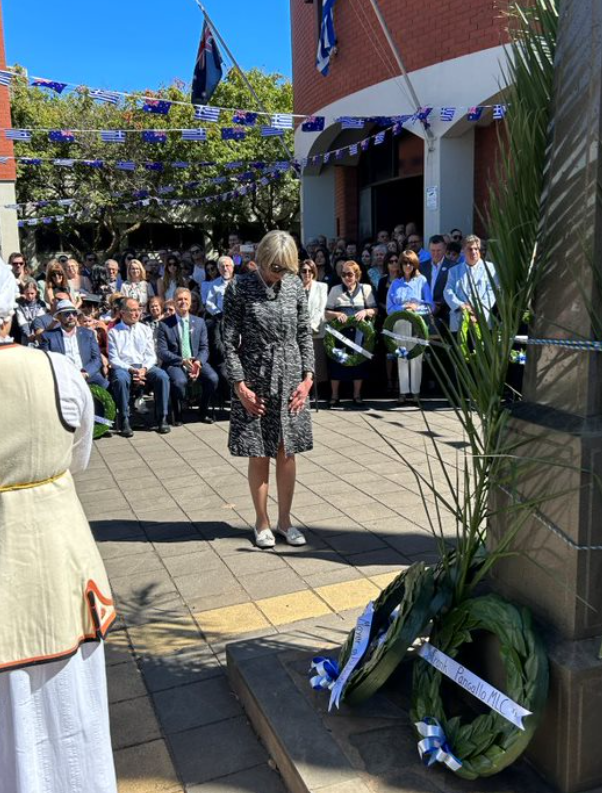
Wreaths were laid by dignitaries including The Hon. Michael Brown MP, Member for Florey representing the Hon. Peter Malinauskas MP, Premier of South Australia and the Hon. Zoe Bettison MP, Minister for Multicultural Affairs; The Hon. Chris Kourakis, Chief Justice of the Supreme Court of South Australia; Trian Gonis, representing Steve Georganas MP, Federal Member for Adelaide; The Right Honourable Dr Jane Lomax Smith, Lord Mayor of the City of Adelaide; Councillor George Demetriou, representing the Mayor of West Torrens, Michael Coxen; Councillor Stephen Finos of the City of Unley; and Councillor Peter Ppiros of the City of Charles Sturt.
Wreaths were also laid by the Greek National Resistance, Cyprus Community of SA, Pan-Arcadian Association of SA, Messinian Association of SA, and the Kastellorizan Society of SA, amongst other community organisations.
Hon. Michael Brown MP Member for Florey lays wreath. paying respects.Lord Mayor, Dr Jane Lomax Smith laying wreath.
Lunch was served, and the cultural festivities and official opening ceremony began.
Commemorations and celebrations of independence were then transitioned to Olympic Hall, where lunch was served, and the cultural festivities and official opening ceremony began.
The President of GOCSA, Peter Gardiakos, opened the festivities by reflecting on the national and cultural significance of the event, including Greece’s rich history and the spirit of 1821.
“The 25th of March is a date of profound significance for Greece… In 1821, on this historic day, the Greek War of Independence ignited, marking a turning point that echoes throughout Greece’s history… standing as a testament to the unwavering resolve of our ancestors to cast off the shackles of Ottoman rule and reclaim Greece’s sovereignty,” the President said.
Mr Gardiakos concluded with a broader theme, that “beyond [the date’s] historical significance… it’s a celebration steeped in the values of democracy. Born in ancient Greece, democracy remains a cherished principle, guiding our journey towards a brighter tomorrow.
“Just as our ancestors proclaimed “Eleftheria i Thanatos” (freedom or death) with unwavering determination, let us never forget the courageous souls who made the ultimate sacrifice for a liberated Greece.”
Speeches were also given by Mr Brown and Dr Lomax Smith.
Mr Brown spoke about Greek influence in the state since the early 1900s and highlighted GOCSA’s contribution to promoting multiculturalism and intercultural understanding. Dr Lomax Smith reminisced about 40 years ago when she moved into the city and “the Hellenic diaspora was everywhere,” and mentioned how Adelaide was the “Athens of the South.”
Following the official opening, the hall echoed with the melodies of theatre plays and poems of the talented students of GOCSA’s Greek Schools, showcasing their learnings over the past months.
GOCSA Greek school children reciting their poems.
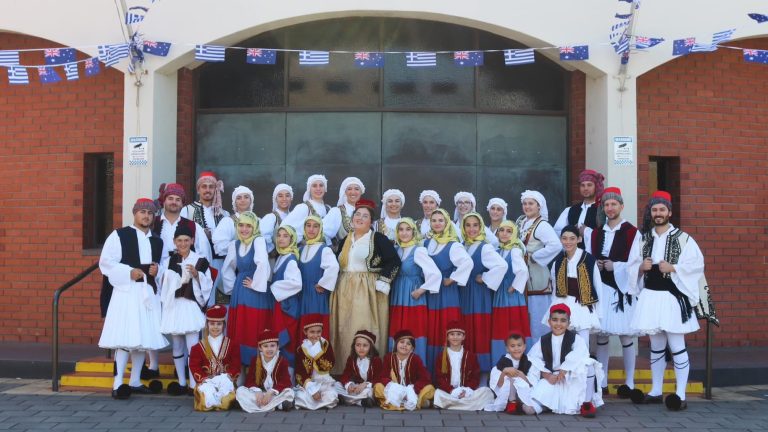
The festivities concluded with traditional dance performances by the GOCSA Dance Academy. The dancers, from the junior, intermediate, and advanced groups, were dressed in traditional revolutionary period costumes.
Their performances provided more than just entertainment; They were displays of cultural storytelling, each dance symbolising the spirit of a nation that has withstood trials and tribulations, and is now celebrating its 203rd year of independence.
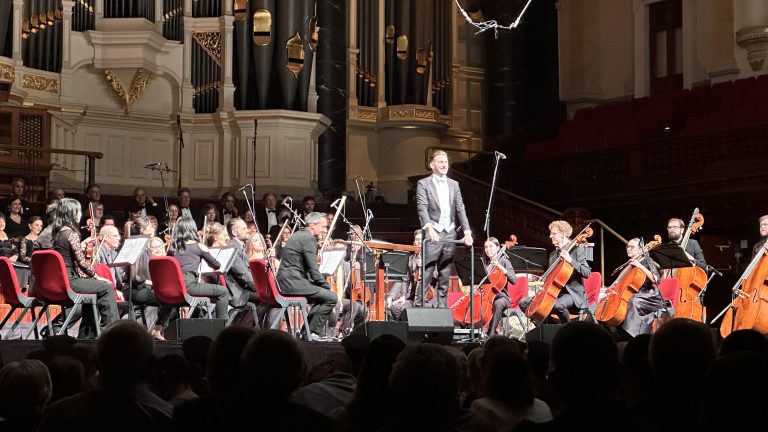
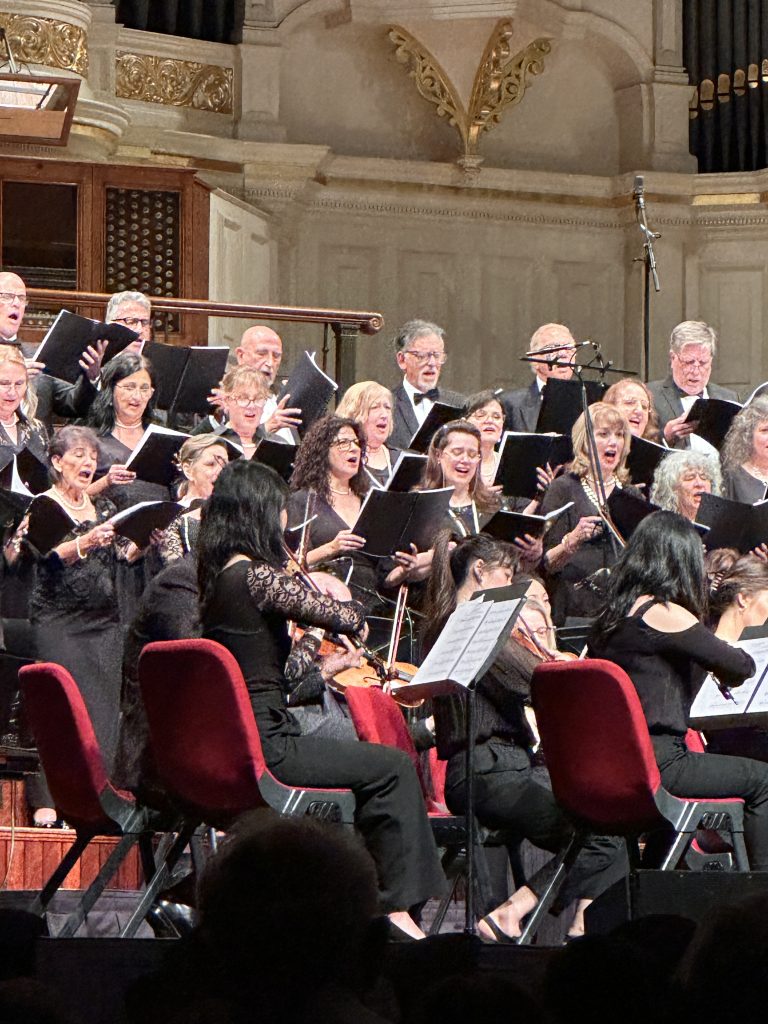
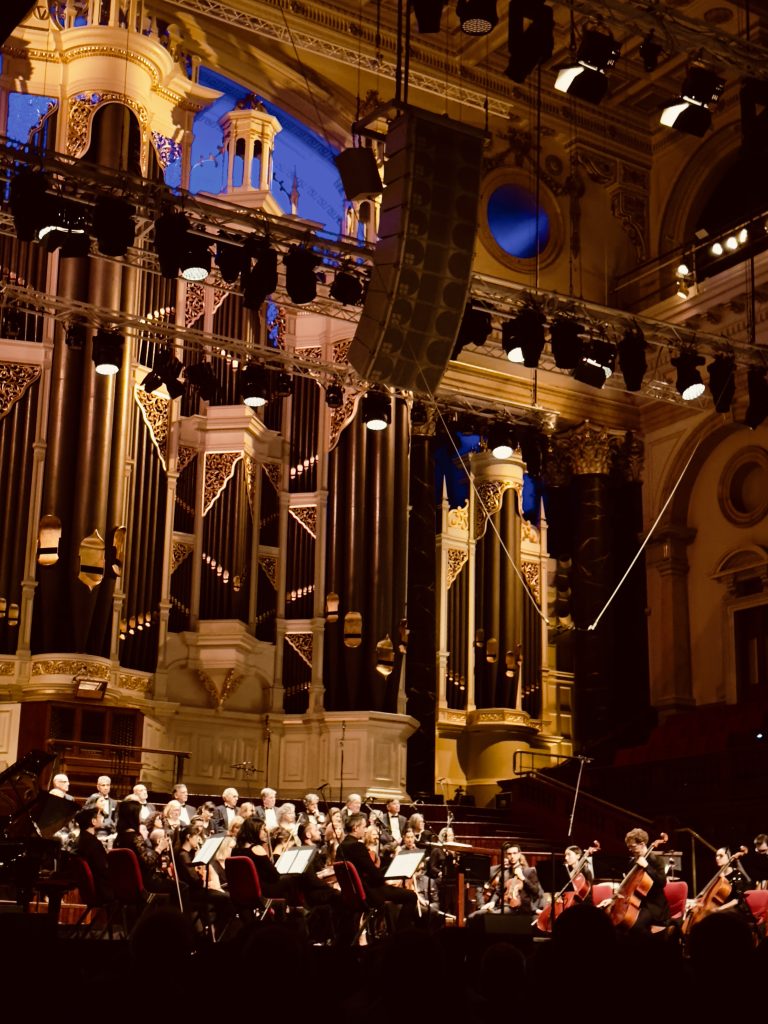
The centenary of the Greek Orthodox Archdiocese of Australia (GOAA) was celebrated on Friday, March 22 with a concert by the Australian Hellenic Choir (AHC), conducted by Leon Vitogiannis.
The celebratory event, titled ‘In honour and memory – 100 years of the Holy Archdiocese of Australia,’ was held in the Centennial Hall of Sydney Town Hall.
Photos supplied by Eirini Alligiannis.
Among the distinguished guests present on the night were Archbishop Makarios of Australia, Bishop Iakovos of Miletoupolis, Bishop Christodoulos of Magnesia, Bishop Bartholomew of Charioupolis, the Ambassador of Greece to Australia, Stavros Venizelos, and the Consul General of Greece in Sydney, Yannis Mallikourtis. Member for Miranda, Eleni Petinos MP, was also present.
After the music performance, Archbishop Makarios read a short speech which highlighted the Ecumenical Patriarchate’s role in Orthodoxy’s journey in Australia.
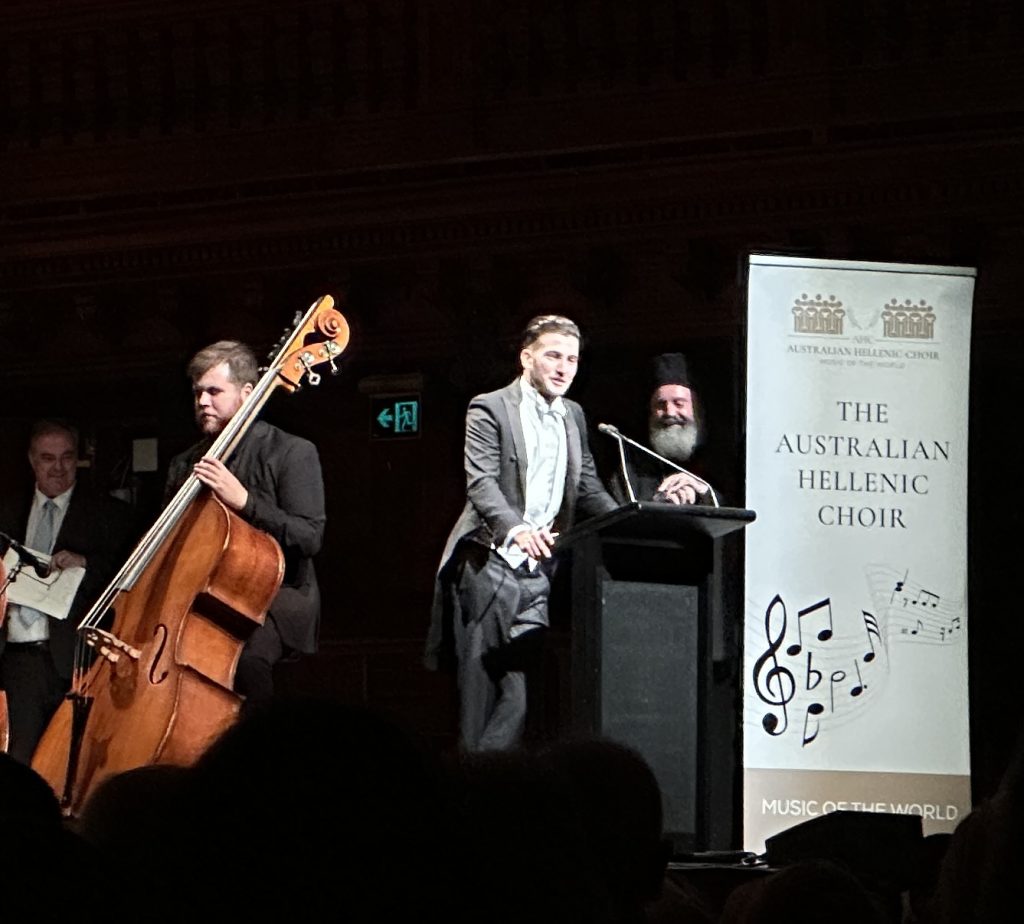
Leon Vitogiannis gave a speech. Photo supplied by Eirini Alligiannis.
“We are moving forward in unity, in order to deliver a better future to the new generations,” the Archbishop said in his speech.
“Unity and mutual love are the only resources we can rely on to move forward and be led to the light… Everything else: selfishness, separations, dislikes, hatreds and ambitions, lead to darkness and decay.”
Speeches were also given by Mr Venizelos and composer Mr Vitogiannis.
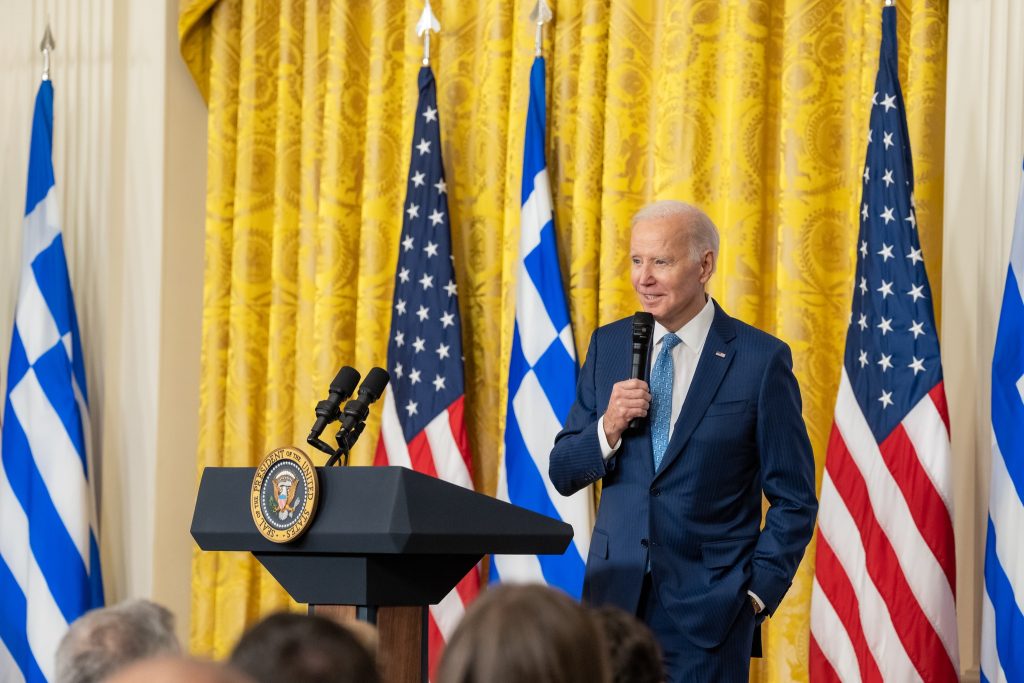
To celebrate Greek Independence Day, US President Joe Biden emphasised the strong bond between Greece and the US, crediting the Greek American community for its cultural contributions.
Ekathimerini reported that Biden highlighted the values of democracy, citing historical collaborations against fascism and communism.
“The people of Greece and the United States have been bound by this common belief – the power to shape our destiny should rest in the hands of ‘we the people,” the US President said.
President Joe Biden delivers remarks at a Greek Independence Day reception, Wednesday, March 29, 2023. Photo:Cameron Smith
“Generation after generation, Americans and Greeks have come together to make those words a reality … We see it today, as Greece and America stand together alongside a coalition of more than 50 nations to support the brave people of Ukraine as they fight for the same values those Greek revolutionaries did more than 200 years ago: liberty, freedom, and sovereignty.”
He also shared that he stands in solidarity with Ukraine, aligning with over 50 nations to uphold liberty and sovereignty.
Expressing personal gratitude, Biden also acknowledged his inspiration from Greek American mentors.
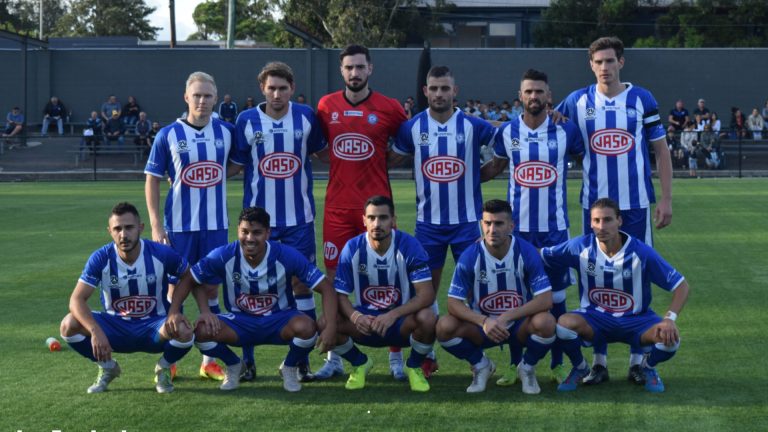
It was a much happier dressing room as Sydney Olympic FC returned to the winner’s circle following a 2-0 victory over Manly United in round 7 of the National Premier Leagues Men’s NSW fixture played at Cromer Park on a fresh Friday evening.
Michael Vakis opened the scoring in the 16th minute for the visitors before veteran marksman Roy O’Donovan made it 2-0 in the 34th minute in a strong first half.
The hosts match changed when Bilal Belkadi was given his marching orders in the first half as the Northern Beaches outfit failed to settle soon after that with Olympic taking charge securing the three precious points.
Sydney Olympic FC settled almost immediately as Jackson Bandiera found some space and crashed an effort against the crossbar.
The visitors remained on the front foot in the early stages. William Mutch took a touch before he slashed one wide of the mark.
Manly United FC found some rhythm and had an opportunity on the counter soon after that. Connor Rose cut inside his defender and curled it wide.
Sydney Olympic FC found the opener in the 16th minute. O’Donovan had his effort blocked by Manly United FC keeper Levi Kaye with the ball falling into the path of Vakis who made it 1-0.
Labinot Haliti’s troops continued to dominate the first half. This time, Darcy Burgess was free then he slid an effort past the post. The job was made harder for Manly United FC when Belkadi was shown a straight red card for some foul play.
Sydney Olympic FC made quick use of the advantage and soon made it 2-0 following Belkadi’s dismissal. Abraham Major sent into a cross for O’Donovan to nod home in the 34th minute.
The visitors came out with the same intent in the second half. Burgess again lashed at one which flew wide of the mark.
Manly United FC tried to find their way back into the contest quickly. The ball fell to captain Kieren Paull who shot over the ball.
Sydney Olympic FC went close to a third goal on the hour mark. They had multiple chances inside the box from George Antonis which were repelled.
Harry McCarthy had a chance for Manly United FC as they chased the game. He took the ball in stride but it went wide.
The game remained an open contest. Majok headed wide for Sydney Olympic FC then McCarthy rattled the crossbar for the hosts.
Substitute Peter Kekeris had a late chance to get Manly United FC on the board. His strike from distance faded over the bar.
Sydney Olympic FC almost added the icing on the cake through O’Donovan. His first strike was saved then a follow up went over.
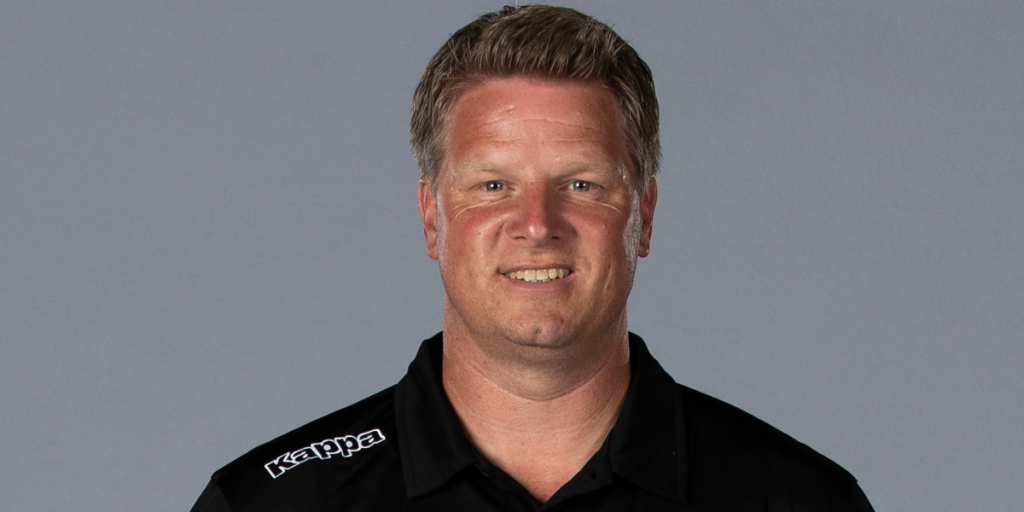
Manly United FC coach Patrick Zwaanswijk. Photo: Men’s NPL.
Speaking post match, Manly United FC coach Patrick Zwaanswijk reflected on the loss for the home side.
“The first half we started well then made too many mistakes in midfield which cost us.
“I think we made some individual errors and lacked ideas.
“We had free players but couldn’t find them despite coming out in the second half better,” said Zwaanswijk.
The Blues have found Cromer Park a happy hunting place in the last few seasons and will take this result in their stride as they hope to continue some consistency in getting their 2024 season back on track.
Women and men are celebrated and honoured in the anniversary of March 25th, the date that marks the onset of the Greek Revolution against the Ottomans. People who are heroes and stood out for their extraordinary courage to commit to the noblest of causes, the liberation of their country, and the continuation of the Greek civilisation. All of them offered their life, their possessions, even their children, to the highest duty of their era and thus, achieved eternity.
The selection of the day, March 25th, has not been random, as our ancestors decided upon the hallmark celebration of the Annunciation of the Theotokos (Virgin Mary) to start this long and trying battle that brought liberation to Greece so that the Virgin Mary would guide them through the long and trying war against the Turks.
Eventually, in the spring of 1821, after nearly 400 years of Turkish rule, the Greeks of Morea (Peloponessus), rose in rebellion. This uprising, following another, ill-prepared Greek revolution in Moldavia that was quelled by the Ottoman army, was to succeed in the Peloponnese from March 1821 onwards. Peloponessus was a rugged area, suited to hit-and-run warfare, with an overwhelming Christian majority, and Greek dominance in the sea due to the many ships of the nearby islands of Hydra and Spetses.
Many women, supporters of the supranational Philhellenic movement, are known to have been actively involved in the preparatory gatherings in the Filiki Eteria (Friendly Society). Women constituted a large and indispensable body of warriors who fought with all their might for the country and freedom. They are known for their generosity, their strength, their resilience, and invincible spirit in the face of the greatest threats. They dared to dream, fight, sacrifice and they shaped history. Interesting is the fact that the many women of the Revolution had often completely different characters.
For instance, Manto Mavrogenous (1796-1840), was a young, noble, and delicate figure. On the contrary, Laskarina Bouboulina (1771-1825), was a middle-aged woman, with a masculine behaviour and harsh characteristics. A common point was their shared faith in the enlightened vision that Greece will be free.
At the same time, the enslaved Greek women were experiencing a harsh reality. They and their children were exposed to all kinds of violence and misery; often they were traded in Turkish slave markets, or they had to fatally resist. Let us remember the heroic women of Zalongo, who committed suicide, jumping off a cliff, to avoid slavery.
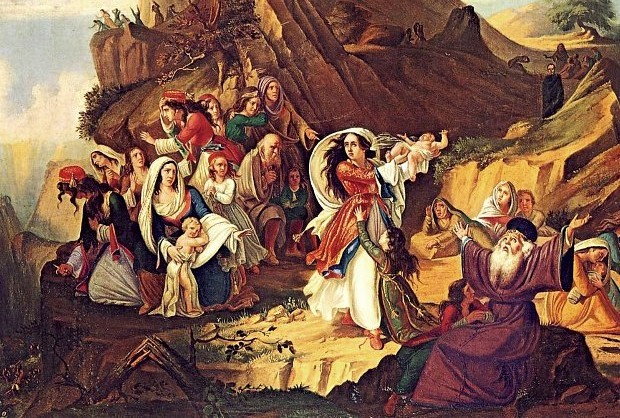
The women of Zalongo
The Dance of Zalongo is the ultimate act of defiance and bravery. In 1803, the Epirus ruler, Ali Pasha, was intent on finishing once and for all with the rebellious people of Souli, who were consistently creating problems for him and the Pasha.
On December 12, the Turkish army forced them to sign a treaty, by which they promised to withdraw from their land. On December 16, the people of Souli divided into three phalanxes and left their ancestral land behind. On December 18, the third and last phalanx heading south, was attacked in Zalongo by a large body of Turkish-Albanian soldiers.
A violent fight followed and a group of soldiers was trapped by the enemy. Among the entrapped were about 60 women, some of which were pregnant. On the one side, there were hundreds of armed troops and the Souliotes’ certain enslavement, whereas, on the other side, there was the steep cliff of Zalongos. To evade capture, enslavement and humiliation, the women threw their children off the steep cliff and then they held hands and started singing and dancing, with their steps leading to the cliff, where they jumped to their death, one-by-one.
The Dance of Zalongo.
Suleiman Aga, Ali Pasha’s officer, was an eyewitness of the massive suicide and offered a concrete testimony of the Dance of Zalongo: “women held hands and started a dance, which was driven by an unusual heroism, with the fear of death emphasising its rhythm. At the end, the women make a permeating and long cry with its echoes extinguished in the depths of a terrifying cliff where they all fall together with their children.”
The person who offered a record of the event between 1803 and 1804, is the Prussian diplomat and traveller, Jacob Bardoldi (1779-1825). Another testimony of the dance of Zalongo is provided by the fighter of the Greek War of Independence and memoirist, Christopher Perrevos (1773-1863). The incident was soon known across Europe and the Dance of Zalongos became a symbol of heroism and self-sacrifice over the years. The brave, almost festive march to death by the Souliot women inspired artists to interpret the courageous act, including the French artist Ary Scheffer, who created the romantic painting “Les Femmes Souliotes.”
Domna Visvizi
The renowned Captain from Ainos, was born in 1783. In 1808, she was married to Hanji-Antonis Visvizis, and they had five children. Domna Visvizi narrates her own life in her memoirs: “Ainos is a blessed country! My love for the sea has been so intense, so irresistible, I was inexplicably drawn to the sea like no other element or person. I had absolutely no control over the sea’s allure to me. Also, I was raised in a loving home. Every home in my homeland was troubled by two major concerns: the marriage of the daughters and the liberation of the country.”
In 1821, Captain Hanji-Antonis Visvizis equipped his warship named “Kalomoira” with cannons and sailors and embarked on the War of Independence, accompanied by his wife, Domna, who was pregnant at the time, and their four children, the icon of Virgin Mary, the sacred bones of their ancestors and a handful of soil taken out of the land of Ainos, which they left behind. Domna was a steadfast supporter of her husband, taking on an active role in all the naval battles: that of Samos, Lesvos, and Evripous, until Hanji-Antonis was murdered on his own ship. Following the “mysterious death” of her husband, Domna, supported by the second-in-command captain Stavris, actively continued to fight with her late husband’s ship and her now five children.
During the siege of Evvoia, her warship and her overall contribution was crucial to the battle’s outcome; Domna was transferring ammunition and troops and, oftentimes, she was partaking in naval battles, bombarding the Turkish positions, and facilitating the battle for her co-patriots. In Evvoia she tore apart the transition of the troops of Omer Pascha, preventing them from reaching Central Greece. She was providing with ammunition and food supplies the revolted people of Skiathos island and other Aegean islands, thus enabling the continuation of the Greek War of Independence. Her warship “Kalomoira” was seriously damaged by the encounters she was involved in. In 1823, after the continuous and fierce naval battles, Domna was incapable of sustaining her warship and gave it over to the Greek administration so that it could continue participating in the War of Independence, as a fireship.
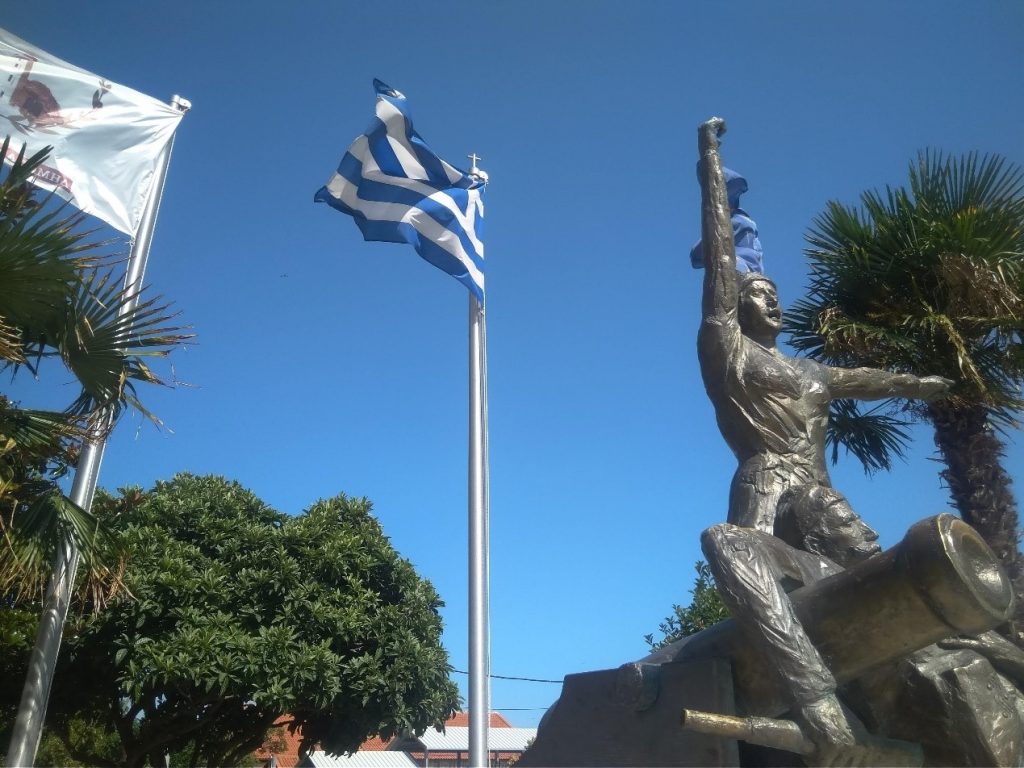
Statue of Domna Vizvisi and her husband.
Captain Domna Visvizi was honoured as a heroine of the Greek Revolution of 1821, as she fought incessantly, relentlessly for three whole years, defying all dangers and threats and she dedicated every penny of her fortune to the liberation of Greece.
Her self-sacrifice, valor, generosity, and courage were known throughout the country and the European philhellenes.
Following the liberation of Greece, the captain Domna Visvizi settled down with her children, originally in Nafplion and later in Hermoupolis, Syros. She was forced to live in extreme poverty and under the threat of eviction. Allegedly, the house she was renting in Nafplion had no windows or doors and later, in Syros, the island in which she had so many times defeated the enemy, she was barely making ends meet often lacking the necessary equipment for her subsistence. She died in Piraeus, so far away from her cherished land of Ainos.
Elizabeth Ypsilantis (1768-1866)
The preparation and outcome of a nation’s revolution is not solely a matter of determination and bravery. It largely relies upon the resources and financial stability. The independence of a nation is a massive expenditure. Originally, the Filiki Eteria took on the responsibility to cover the expenses and funded the Revolution. Also, many wealthy Greeks of the diaspora eagerly contributed with large amounts to this end, such as Georgios Leventis and Panayiotis Sekeris. Yet, any funds that had been raised were soon exhausted, and people turned to the Prince of the Danubian Principalities, Alexander Ypsilantis, who willingly liquidated his fortune and donated five million grosz. His mother, Elizabeth Ypsilantis, was given the nickname “The great mother of the Filikoi” thanks to her generous help for the war preparation, having donated the entirety of her fortune and everything that she could preserve from the Sultan’s sequestration. From real estate and jewelry, Elizabeth Ypsilantis offered everything to the revolted Greeks and the noble cause of their liberation.
Elizabeth Ypsilantis was a bright woman, of aristocratic line and played a significant role in the Greek Revolution. All four of her sons participated in the Greek War of Independence: Dimitrios, Nickolas, Alexander, and Gregory. Also, during the Revolution, her salon was transformed into headquarters, where the developments and strategic decisions of Filiki Eteria took place. The final decision for the start of the Greek Revolution was taken in her salon and the proclamation “battle for faith and homeland” was drafted here. Before Alexandros Ypsilantis signed it, he asked his mother to dispose of all the family real estate for the support of the Greek Struggle. As she accepted, he kissed her hand.
Conclusion
Unfortunately, the case of Domna Visvizi wasn’t a random exception. When the first Greek state was established, the administration didn’t prioritise the rewarding of the indispensable warriors, who were effectively the most crucial liberating force. Despite the large amounts of money allocated for the warriors of the land of the sea, the natives and the non-natives, in reality, when the time came to compensate them, they were largely ignored: Manto Mavrogenous, Marigo Zarafopoula, Karpos Papadopoulos, Panayiotis Sekeris, were also among the glorious warriors who, after enabling the liberation of the country, were sidelined by the administration of the newly-established state.
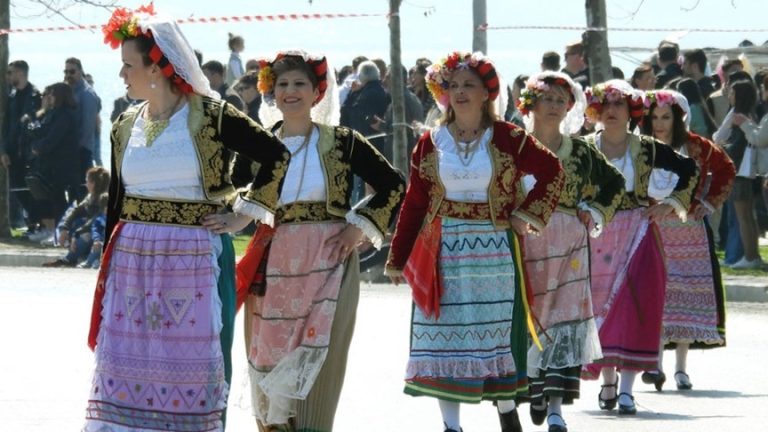
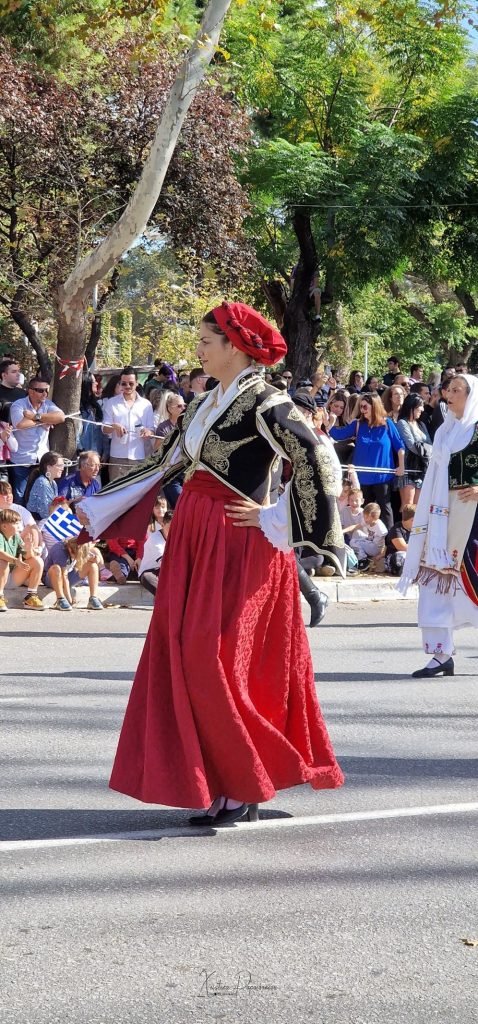
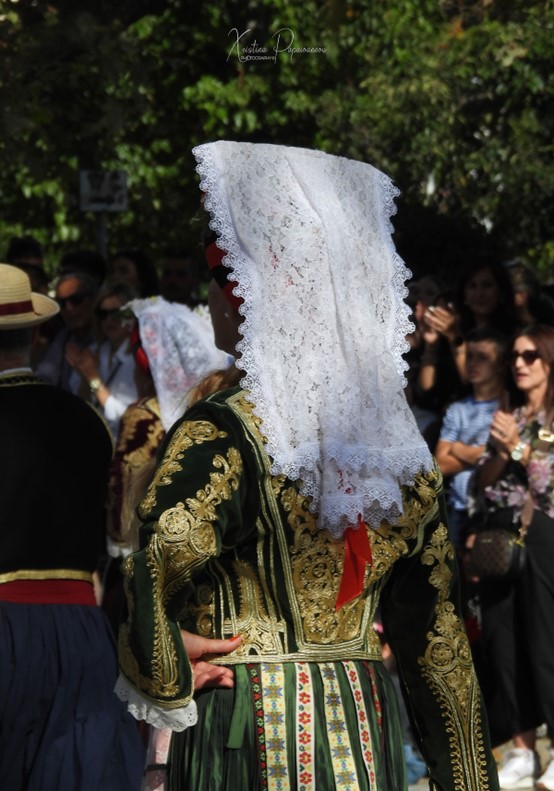
Contemporary women commemorate their ancestors through material and immaterial culture. Homage to our ancestors’ is paid in parades, events and re-enactments inspired by the beauty of the Hellenic iconography, reviving the meaning of the Greek Revolution. The spirit and the valor of women, men, young and the elderly has remained intact and immortal, inspiring millions of narratives over the world, where Greeks live and commemorate their ancestors and Greek history.
Ευθυμιάδης, Α. (2005). Η Συμβολή της Θράκης εις τους απελευθερωτικούς αγώνας του Έθνους (από του 1361 μέχρι του 1920).
Θρακικά, Τόμος 27ος , Γ’ Παράρτημα
Θρακικά, Τόμος 2ος, Μυστακίδης Β.
Heraclides, A., & Dialla, A. (2015). Intervention in the Greek War of Independence, 1821–32. In Humanitarian Intervention in the Long Nineteenth Century: Setting the Precedent (pp. 105–133). Manchester University Press. https://doi.org/10.2307/j.ctt1mf71b8.11