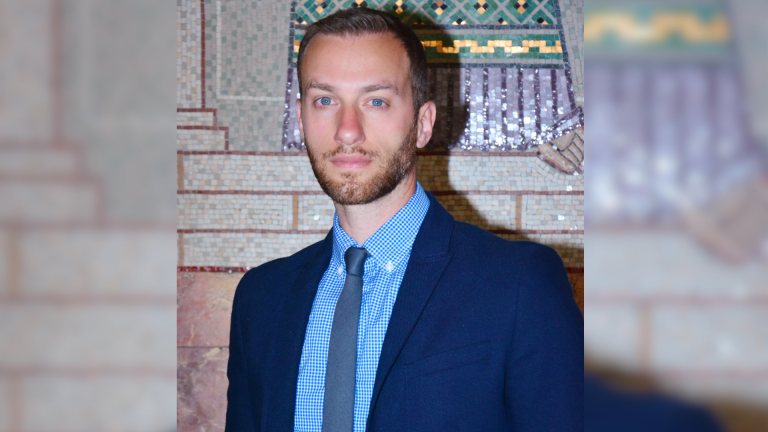
Migration historian Dr Ioannis Limnios Sekeris will present an online-only seminar titled “Migration as an Opportunity: The Intergovernmental Committee for European Migration (ICEM) and the Greek transport companies in the post-WWII migration to Australia”, on Thursday, 11 April 2024, at 7pm.
The event will be hosted online on the Greek Community of Melbourne’s (GCM) Facebook and YouTube.
Dr Sekeris’ research delves into the relationship between international organisations specialising in migration and the private sector, particularly shipping and airline companies, from 1951 to 1980. With a focus on the post-WWII migration from Europe, his work sheds light on the role of Greek transport companies in facilitating migration to Australia during this period.
The seminar will explore pivotal questions surrounding the involvement of Greek transport companies, such as the establishment of the Greek-Australian Line by shipowners Chandris in 1959, the role of the Intergovernmental Committee for European Migration (ICEM), and the strategies employed to navigate competition in the sea route between Greece and Australia. Migration, as Dr Sekeris asserts, was not merely an opportunity for migrating individuals but also for those involved in managing and mediating migration flows.
By examining the commercial motivations and strategies of Greek transport companies, the seminar aims to provide insights into the migration mechanism that facilitated the migration of approximately 200,000 individuals from Greece to Australia between 1950 and 1973.
Dr Ioannis Limnios Sekeris received his Ph.D. from the Department of Political Science and History of Panteion University, Greece, in 2023. His research interests include post-WWII migration, the history of international organizations, maritime history, aviation history, and transport history. He has authored numerous publications on migration policies, the involvement of shipping and airline companies in migration, and the management of migration journeys.
Event Details:
Date: Thursday 11 April, 7 pm
Platform: Greek Community of Melbourne’s Facebook, YouTube
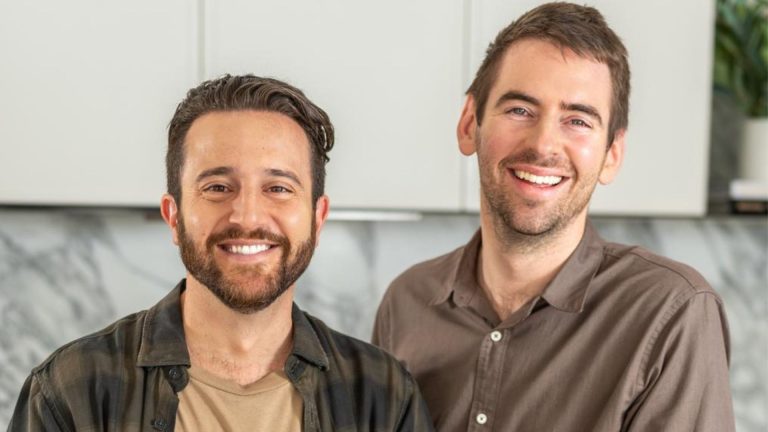
Adelaide restaurateurs Callum Hann and Themis Chryssidis, the duo behind top city venues including Eleven and Olive, will launch a new weekly radio show on FIVEaa.
According to The Advertiser, the hour-long program which start at 10am on Sunday, April 7, will cover all things food, from culinary destinations to recipes and health trends.
Former MasterChef star Hann said they can’t wait to get on-air and share their passion for the SA food scene.
“We’ve been working with the FIVEaa team for many years as guests on various shows, so it’s a significant honour to take it to the next level and have our own show focused entirely on what we love to talk about – food,” he said.
Chryssidis said the new program, On The Menu, would use food to “bring people together, start conversations, evoke memories and take us into the homes and kitchens of some well-known personalities”.
“It’s an incredible opportunity and we are excited to be able to share our passion and experiences with the people of Adelaide,” he said.
The duo co-founded Sprout Cooking School in 2011. Hann and Chryssidis are also presenters on Seven lifestyle show, Discover with RAA Travel.
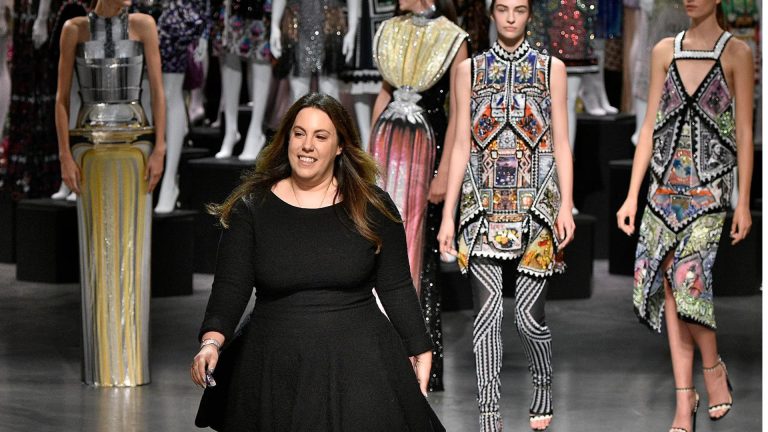
Greek designer Mary Katrantzou, who became famous in the late aughts and 2010s for her ornate, colorful, pattern-heavy designs, has joined Bulgari as its first-ever creative director of leather goods and accessories.
According to wmagazine, she will create a range of products for the fashion house, from everyday accessories like leather bags to one-of-a-kind and special high-jewelry pieces.
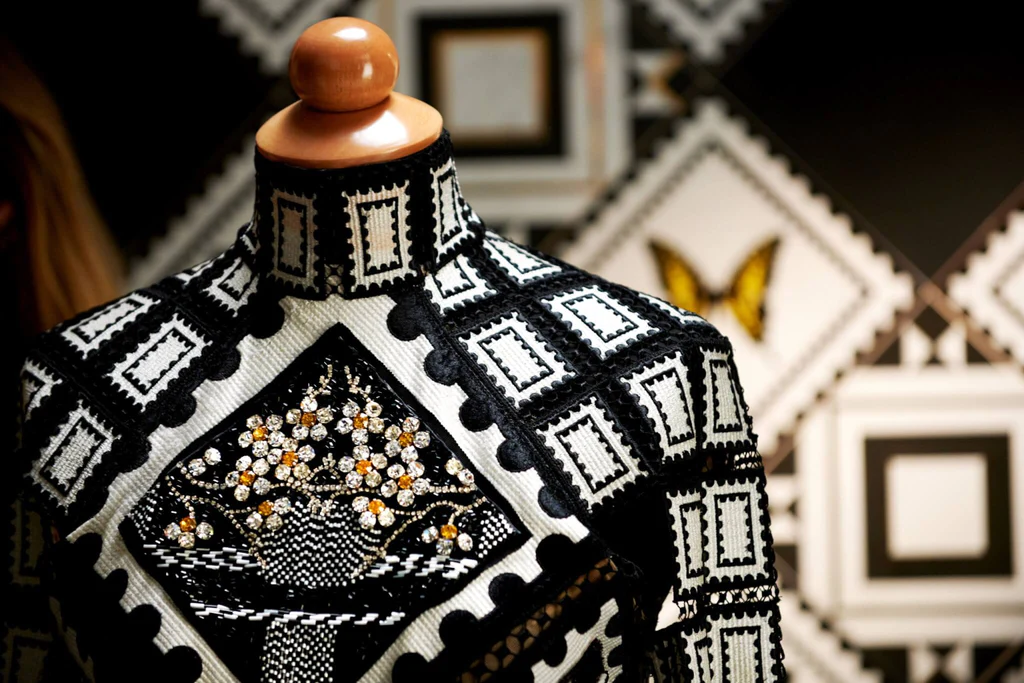
Katrantzou has been know for her skills with prints, textiles, and maximalist adornments. Jewelry and accessories, too, have always been highlighted in the designer’s work.
Katrantzou has collaborated with Longchamp on a range of bags, as well as Adidas on both clothes and sneakers. She also worked with Bulgari in 2021, feeling a connection to the brand, if only because she shares Greek heritage with its founder, Sotirio Bulgari.
Photo: marykatrantzou.com
Two years after the jewelry brand lent out pieces for Katrantzou’s show at the Temple of Poseidon in Athens, they invited her to design some pieces for a capsule collection. The result was a range of bags by Katrantzou, inspired by Bulgari’s iconic serpent motif. Now, she will take that experience to the next level.
“It’s a new chapter, and being around a completely different culture than my own company has been so inspiring,” Katrantzou said, according to Vogue. “The speed with which an idea can be realized and a prototype can be made is extremely rewarding for any creative.”
Katrantzou’s first pieces for Bulgari will be available in stores this August.
With Greece preparing for a another busy summer, the government has ruled it is time to take action.
Under draft legislation already put to public consultation, more than 45% of all music heard on local radio or in public spaces will in future have to be Greek, culture minister Lina Mendoni mentioned, according to the Guardian.
“In a globalised environment, English-language music has almost been imposed [on us],” she said in defence of the bill. “The spread of Greek-language music is limited. Statistics show that Greek music amounts to 30% of what is heard; 70% is foreign music. We … have a duty, under the constitution, to protect art.”
The law will be even more draconian in the case of state-funded films and audiovisual content. In both the music quota rises to 70%.
The development is music to the ears of Greek singers, lyricists and composers. The culture sector was also hit hard by Covid lockdowns.
Hoteliers are outraged at the prospect of having to give airtime to the likes of Zorba the Greek, in the lifts and lobbies of resorts. The Greek film industry said the law was a curb on freedom of expression and amounted to censorship. But the culture minister has her supporters.
The need for help is urgent and it’s now or never, they say, at a time when music rights are big business, digital music streaming services are becoming ever more prolific and even a small music market such as Greece’s – estimated to be worth about €24m a year – is predicted to see profits double.
“This is the first time we are trying to do something to empower Greek-language songs,” Mendoni said.
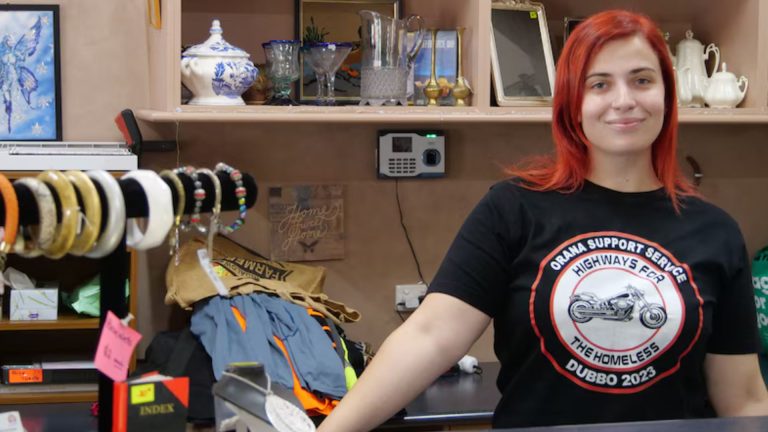
Roughly 18 months ago, Dubbo-based homelessness service, Orana Support, was looking for an opportunity shop site.
Tina Reynolds, the charity’s chief executive, jumped at the opportunity when a shop in Wellington in central west New South Wales became available for sale; the building originally housed the town’s formal wear business, and the bricks and mortar acquisition came with a catch, the dresses were included in the deal.
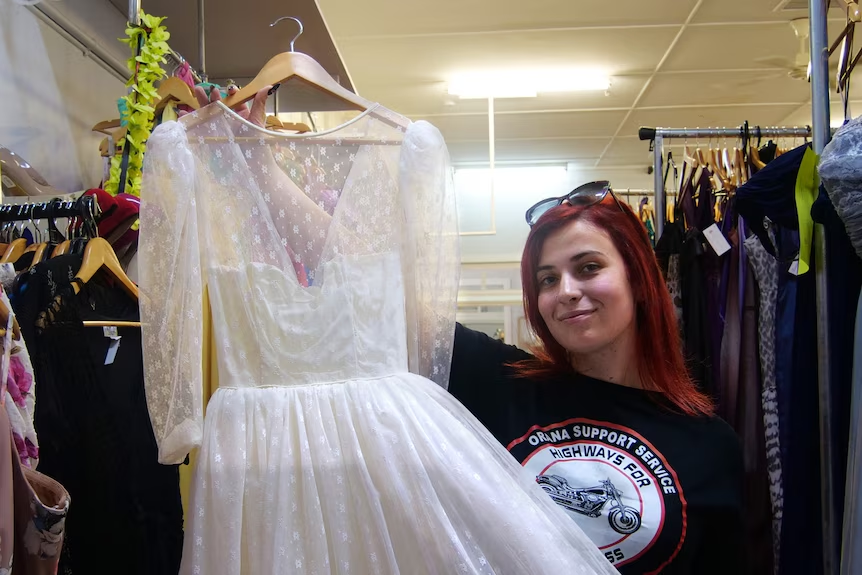
Orana Support’s Angela Skordalis helps deliver the dresses to interested buyers, hoping to soon wear the bargain dress at their own wedding.
Angela Skordalis, with one of the wedding dresses left behind by the previous tenant. ABC Central West/ Micaela Hambrett.
Ms Skordalis told ABC News that shoppers can’t believe the deals they are finding on the dresses.
“As soon as [shoppers] see the wedding dresses, they’re just flabbergasted,” Ms Skordalis said.
“A lot of our dresses are the best quality… Most of them are brand-new, but for a much better price.”
A connection between the language of Homer and Romeyka, an endangered form of Greek that is spoken by only a few thousand people in remote mountain villages of northern Turkey, has been found by researchers.
According to the Guardian, Romeyka has no written form, but has survived orally in the mountain villages around Trabzon, near the coast of Black Sea.
With its remaining speakers ageing, the dialect is now threatened with extinction, leading a University of Cambridge academic, Ioanna Sitaridou, to launch a “last chance” crowdsourcing tool to record its unique linguistic structures.
The Crowdsourcing Romeyka project is open to native speakers across the world who want to upload a recording of themselves talking in the language.
Ioanna Sitaridou, a professor of Spanish and historical linguistics, said she anticipated that many were likely to be in the US and Australia, as well as spread across Europe.
“There is a very significant diaspora which is separated by religion and national identity [from the communities in Turkey], but still shares so much,” she said to the Guardian.
Sitaridou has established that rather than having developed from modern Greek, Romeyka descended from the Hellenistic form of the language spoken in the centuries before Christ, and shares some key features with ancient Greek.
As a result, Sitaridou has concluded that “Romeyka is a sister, rather than a daughter, of modern Greek”, a finding she says disrupts the claim that modern Greek is an “isolate” language, meaning it is unrelated to any other European language.
Though the history of the Greek presence in the Black Sea is not always easy to disentangle from legend, the Greek language expanded with the spread of Christianity. “Conversion to Islam across Asia Minor was usually accompanied by a linguistic shift to Turkish, but communities in the valleys retained Romeyka,” Sitaridou said.
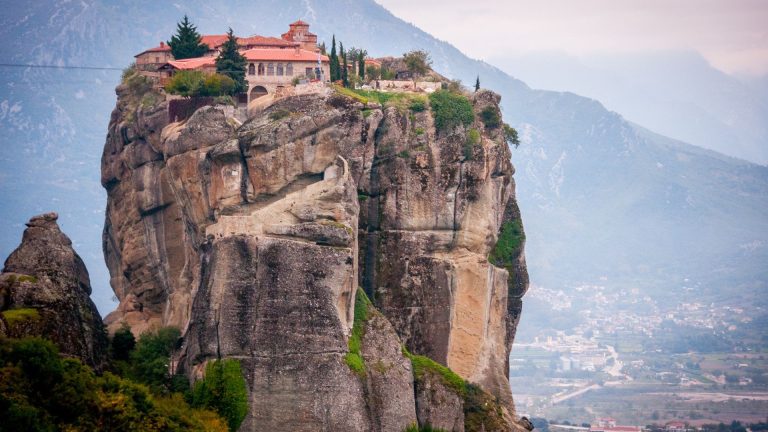
The Meteora Pyli Geopark is part of the UNESCO Global Geoparks network as it has just become one of the now 213 Geoparks located in 48 countries around the world.
According to amna.gr, the Geopark was among a group of 18 new geoparks whose addition was announced on Wednesday following a bid submitted by the Thessaly Region, the Natural Environment & Climate Change Agency (N.E.C.C.A.), Trikala Chamber, the Trikala Development Agency (KENAKAP S.A.) and the municipalities of Meteora and Pyli.
Meteora Mayor Lefteris Avramopoulos said that it put the region on the global geoparks map and highlighted the role of geoparks in serving local communities, contributing in the preservation of their geological heritage and a sustainable approach to growth.
“It is a significant recognition that opens new avenues, strengthening developmental momentum with the aim of extending the tourist season on terms of quality and sustainability,” Mr Avramopoulos said, thanking all the agencies involved in this result.
The Meteora Pyli UNESCO Global Geopark covers an area of 2,409.5 square kilometres and it has a unique landscape and natural environment, as well as its rich biodiversity, geological monuments and geodiversity.
Nestled in the heart of mainland Greece, the Meteora Pyli UNESCO Global Geopark stands out for its breathtaking scenery and natural diversity. Most notably, the geopark is renowned for the towering Meteora sandstone columns that reach heights of up to 300 meters. At the top of the columns one can find the iconic Byzantine monasteries, constructed between the 13th and 16th centuries.
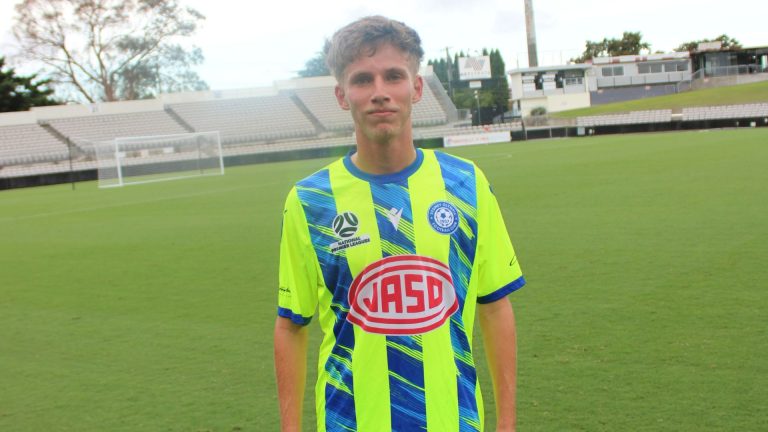
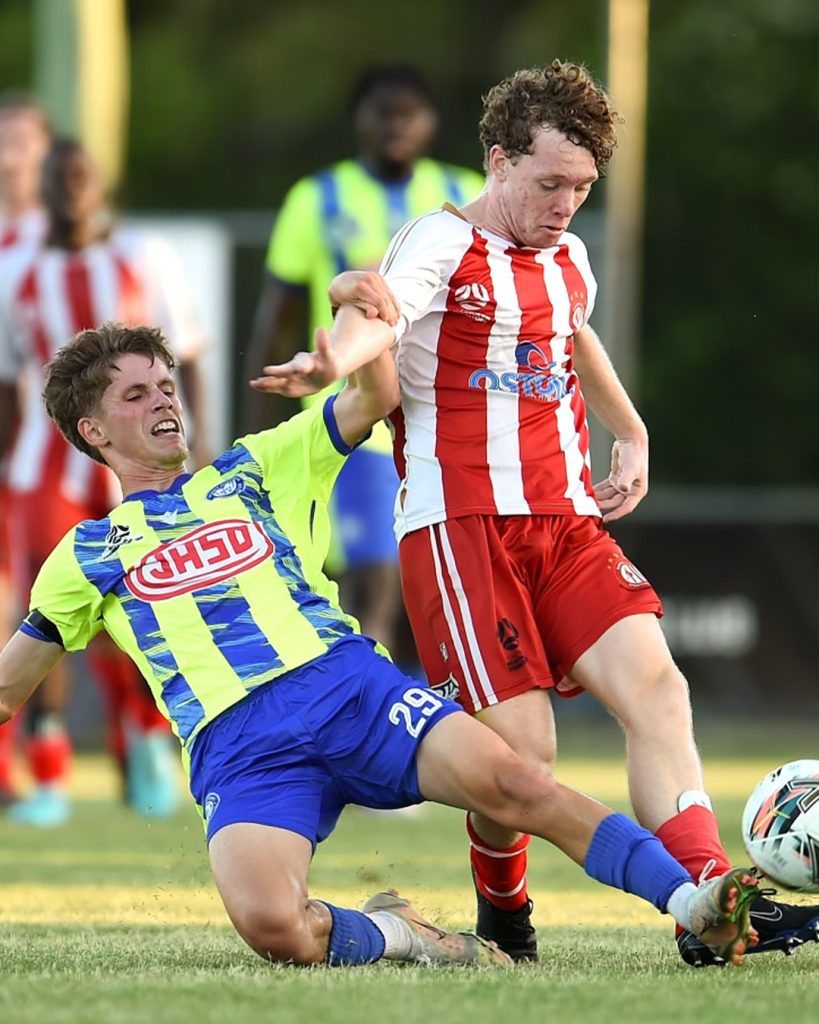
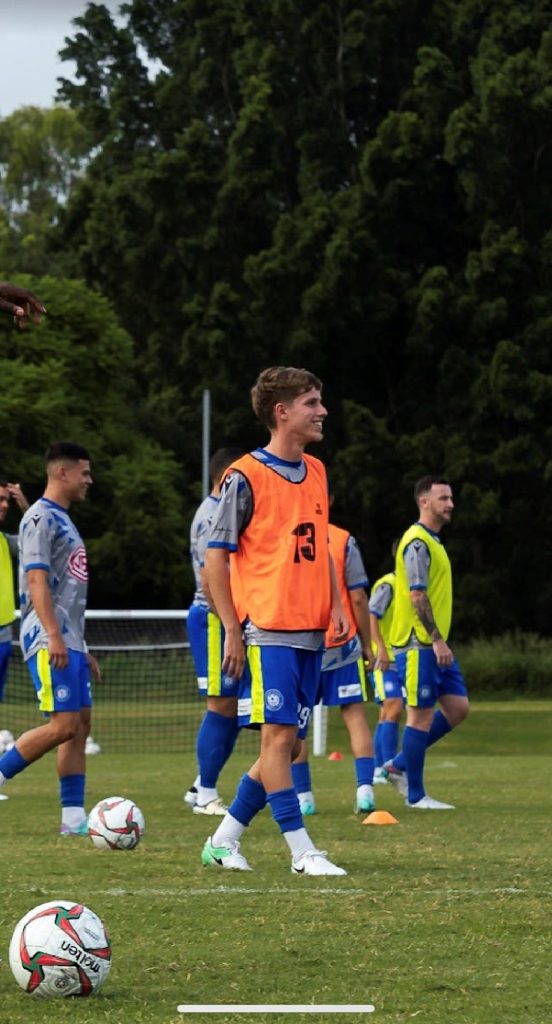
21-year-old George Antonis is a footballer whose technique and mobility in the midfield will leave an enduring legacy. Characteristics that make him stand out are his constant covering of gaps, whether he plays on the left or the right.
We’ve watched him play for Sydney Olympic FC and he has showed us he has a lot of potential to play big ball and help the team succeed in the upcoming National Second Division.
George, thank you for being with us. How did you get started in football and why did you choose Sydney Olympic?
My background was a big part of it. My whole family is into football.
Like my brothers, I was interested in football from an early age and started playing for the South-West Strikers at the age of five. I also played futsal for the Inner West Magic. I started my career with Sydney United in the Under-12s. I joined the Western Sydney Wanderers Youth at the end of 2015, prior to their entry into the National Premier Leagues. After eight years with the youth, where I was named captain, I signed a one-year scholarship contract with Wanderers on 28 June 2023. However, on 18 January 2024, I released my contract from the club by mutual consent. It was announced on the same day that I had signed with Sydney Olympic.
Which coach has inspired you during your career?
I can say with confidence that it was Labinot Haliti (current coach at Sydney Olympic). He also coached me at the Wanderers. He has a unique way of motivating you and helping you find your potential.
Have you trained with your brother?
Terry and I always went to parks and trained. My sister too. My sister stopped playing soccer because of a serious knee injury. Terry has always been my idol and the animator in my endeavours.
Did you continue your studies after high school?
No because I was training full time and it was difficult for me to deal with my studies. I will definitely be able to go to university in the future. Maybe something to do with coaching studies.
Why did you choose to be a midfielder and not a defender or an attacker?
Because I always wanted to pass the ball to the players to defend and attack at the same time.
How many goals have you scored so far?
Several goals throughout my career.
How have your teammates at Sydney Olympic treated you?
When I came to the team everyone was positive towards me and embraced me because we are a ‘Fist’. It is a team with experienced players from major categories and even professional ones, who make the difference in the team’s performance.
For the first time in its history, the Greek Orthodox Community of South Australia (GOCSA) marked World Autism Month with a special event to raise awareness and understanding about the condition, celebrate what autistic people bring to our community and encourage more multicultural communities to be part of the conversation.
Under the theme ‘A Spectrum of Possibilities,’ the event was held symbolically at GOCSA’s Boardroom on Wednesday, April 3, a day after the 17th World Autism Day when the Malinauskas Labor Government launched the state’s first Autism Inclusion Charter.
It featured as guest speakers the country’s first Assistant Minister for Autism, Hon Emily Bourke MLC; Chairperson and Founder of Gold Foundation, Angela Pangallo OAM and No 2 in Australia, No 5 in the world tennis player with intellectual impairment (PWII), Andriana Petrakis.
“I am so proud of everyone who got involved in the event. It’s important that as one of the state’s oldest multicultural organisations we play our part in helping increase autism awareness, break down barriers and promote acceptance and inclusion for autistic people, their carers and families,” GOCSA Vice President, Peter Gonis, said.
“Through education and dialogue, we can understand autism in communities like ours and reduce the stigma and misconceptions associated with it.”
According to recent statistics, the prevalence of autism diagnosis in Australia is estimated to be at least 3.2% of school-aged children and Australians with autism have among the poorest life outcomes in Australian society.
Assistant Minister for Autism Ms Bourke said, “Autism is the largest primary disability group in the NDIS, and South Australia sits above the national average, with 41% of South Australian NDIS participants being Autistic.
“Many people wonder why we need an Assistant Minister for Autism -and it is unique. We are the only Government in the world to have this position. It is because if we let down the largest disability group in our community, then we are letting down every disability group.”
It was an emotional moment when Chairperson and Founder of not-for-profit organisation Gold Foundation Ms Pangallo shared the story of her son Connor, who was diagnosed with Asperger’s Syndrome fifteen years ago, and how the difficulties of navigating a diagnosis when support is not available inspired her to “give kids a chance” and help other families.
In her speech and following a few words shared by City of West Torrens Mayor Michael Coxon, Ms Pangallo made special mention of how the late President of GOCSA, Bill Gonis, who was “a pioneer and visionary,” assisted the organisation in finding a new home at the Camden Park Community Centre.
“It is an enormous privilege to be doing this work for the Autism community and what a special honour it is that we are doing it with the support of the Greek Orthodox Community. I grew up in the Greek Orthodox Community and my parents were part of the foundations. That gives it an extra layer of meaning and purpose,” Ms Pangallo said.
Sharing her heart-warming and inspirational presentation, Greek Australian tennis champion Ms Petrakis said that as an autistic individual she has faced difficulties but she keeps a “positive and resilient” attitude.
“We should encourage each other and people with disabilities to get more involved in sports, schools, workplaces and organisations,” she said. For further information about Autism Month, visit https://autismsa.org.au/autism-month/ . To find out more about Gold Foundation and the support it provides for young people on the Autism Spectrum and their families, visit https://goldfoundation.com.au
Many Greek Australians who visit Greece say they’d love to live here, but working here – or rather, not working within decent conditions here – stops them. I spoke to two Greek Australians who have lived and worked in Greece for decades, to suss out what their experiences have been.
Constantine Marlasis, 56 years of age, was born in Melbourne, Australia and moved to Greece with his parents and younger sister when he was 17. A degree holder in accounting and marketing, his first main, full-time job in Greece was at a relative’s property development company – where he stayed for five years.
“In that time, I wasn’t paid any IKA (health and pension contribution insurance), and even though I confronted my boss many times, his response was that the company was on its way up and into big money, so there was no need for trivial employee insurances,” Constantine explained.
“I wasn’t happy with my work situation and as my wife at the time was fed up with living in Greece, we decided to move to Australia – to Queensland’s Gold Coast where the weather was good.”
This return to Australia in 1999, lasting for over a decade, saw Constantine work mainly in property management in the Gold Coast region. Work there was plentiful and rewarding in terms of both pay and people, he tells me, adding: “Australia has strict regulations. It’s a bit of a police state. Even socially, people there rarely deviate from routine, so you have to organise in advance just to meet a friend for coffee for example, unlike here in Greece where things are more laid back.”
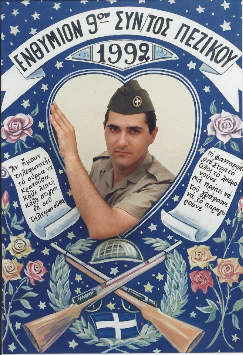
Constantine completing compulsory military service in the Greek Army
Divorce and feelings of isolation were the reasons that Constantine moved back to Greece permanently in 2013, where he eventually secured full time employment in customer service for an outsourcing company.
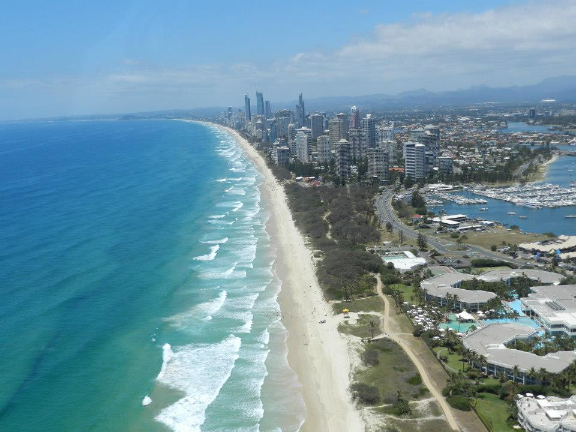
Aerial, part-view of Queensland’s Gold Coast
“In the seven years I worked in this capacity, the company managed to get away with a shifty system – changing our employment contract to working for another company, before each year ended,” Constantine said.
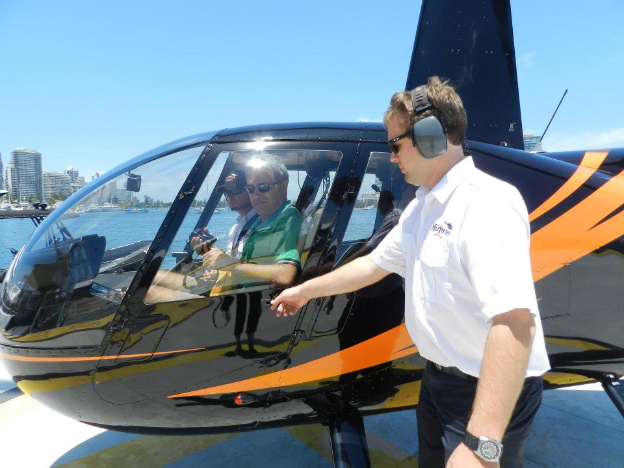
Constantine about to embark on a flight over the Gold Coast
“I wanted to leave, but would not be eligible for employee legal entitlements since ‘on the books’ I hadn’t worked for the same company for more than a year. These entitlements that come from being at the same company for over a year include pay rises, holiday pay and severance pay.”
Exasperated, he continues, “I finally managed to complete a year ‘on record’ with my employer – using left over holiday entitlements, thanks to a clever accountant’s advice.”
He also relates how working in an office with a nice view of Athens was soon put to an end.
“The employer decided to place a dark membrane covering over the windows, for the sake of potential better staff productivity!” he said.
Constantine then tried working for a large real estate agency in Greece, but found it exploitative as they only paid on commission.
“I had to drive around traffic-ridden Athens to show people properties at my own expense, and soon decided it just wasn’t worth it,” he said.
Constantine has been unemployed for almost a year now, with a potential job in the tourist industry as a chauffeur, on the cards.
“Luckily, with the savings I had from Australia mainly, I managed to buy myself an apartment, otherwise I suppose I’d have to move back with my parents at my age!” he explained.
This wouldn’t be so unusual as European official statistics for 2023 still note that seven out of ten Greeks aged 18-34 live with their parents.
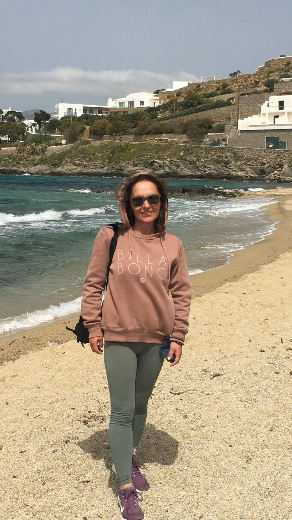
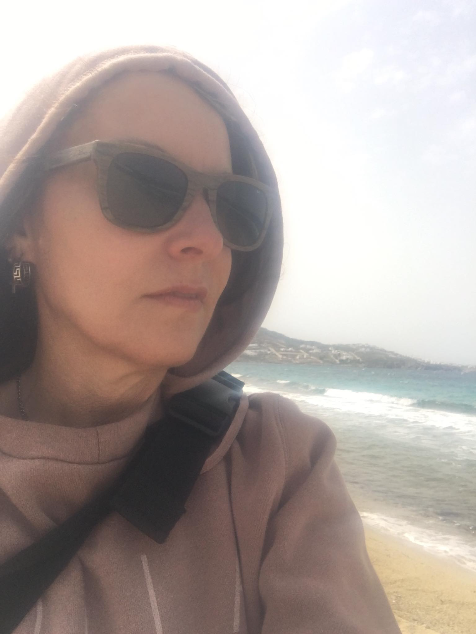
Kris Koutsogiorgos, in her 50’s, also has work experience both in Australia and Greece. Of her working life in Australia, post high school in the late 1980s, she relates good experiences.
“I worked for a major travel company, where I was well paid and in a good environment. Even doing other temporary work was rewarding and enjoyable,” she said.
A younger Kris with her father in Australia
But, like many Greek Australians initially on holidays here in Greece, Kris decided to stay on permanently in 1991. She married, had two daughters, before divorcing when the girls became adults, and then embarked on “becoming independent” through employment in Greece.
I note, from a recent article that confirms what many Greek friends and relatives have told me, that working way over 40 hours per week with no overtime is not unusual here.
“I certainly worked overtime! Luckily the tips made the pay acceptable. In Mykonos, I actually had a side gig happening where I’d refer tourists to good places to eat and earn a cut from these businesses,” Kris exclaims cheerily.
On the downside, Kris confesses, “at every job here, I found lies and jealousies.”
What is more, the exploitation by some Greek employers of migrants from poorer nations having come to Greece in desperation and hence accepting lower pay, exacerbates the already difficult conditions for Greek (including Greek Australian) employees.
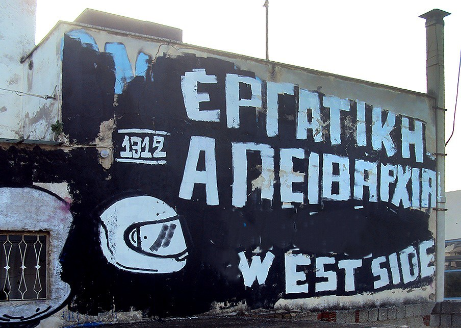
Graffiti in an Athenian working class suburb
(translation:Worker Disobedience)
There is a fair work practices, governmental Ombudsman service which disgruntled and essentially exploited workers can reach out to, but many avoid doing so due to a lack of trust in the Greek bureaucratic process.
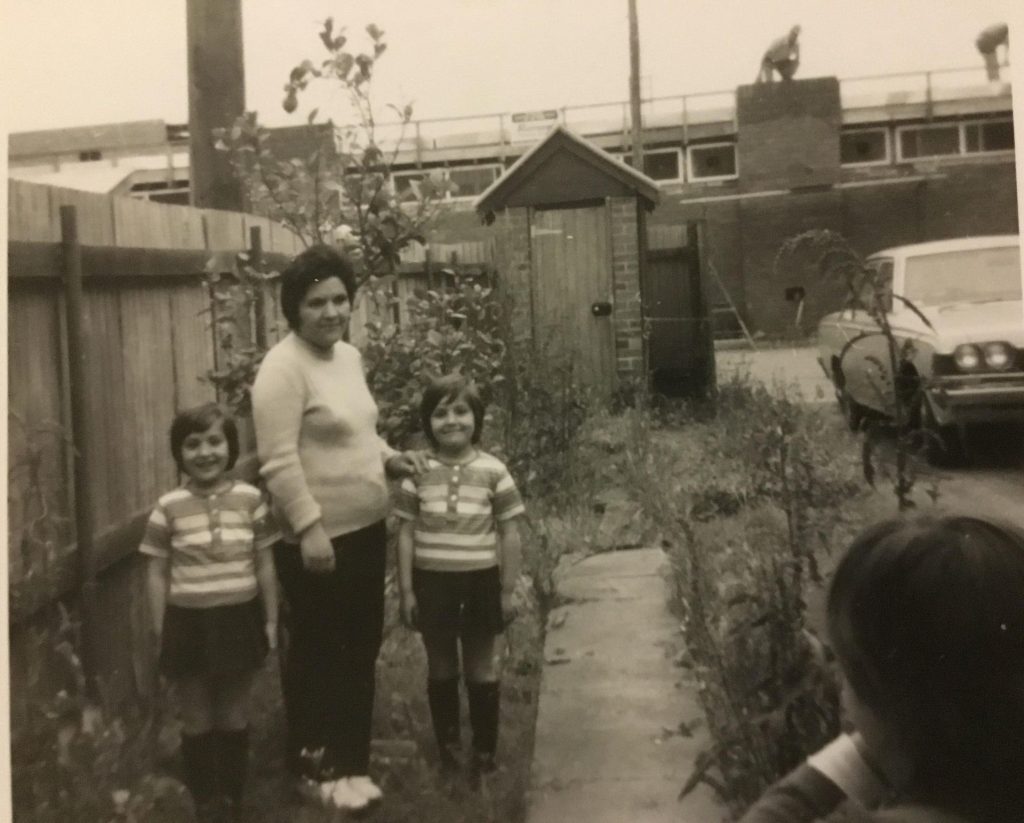
Kris with her twin sister and mother in Australia
Yet, like Constantine, Kris still enjoys life in Greece, citing her first holiday impressions from back in 1991 including “the simpler way of life, mothers on the street with chairs and a coffee, chatting, unlike Australia’s work and home routine” adding, “though life here is becoming a bit more like that now unfortunately.”
Kris’ current employment involves taking care of an elderly lady, and seasonal work as a tourist guide.
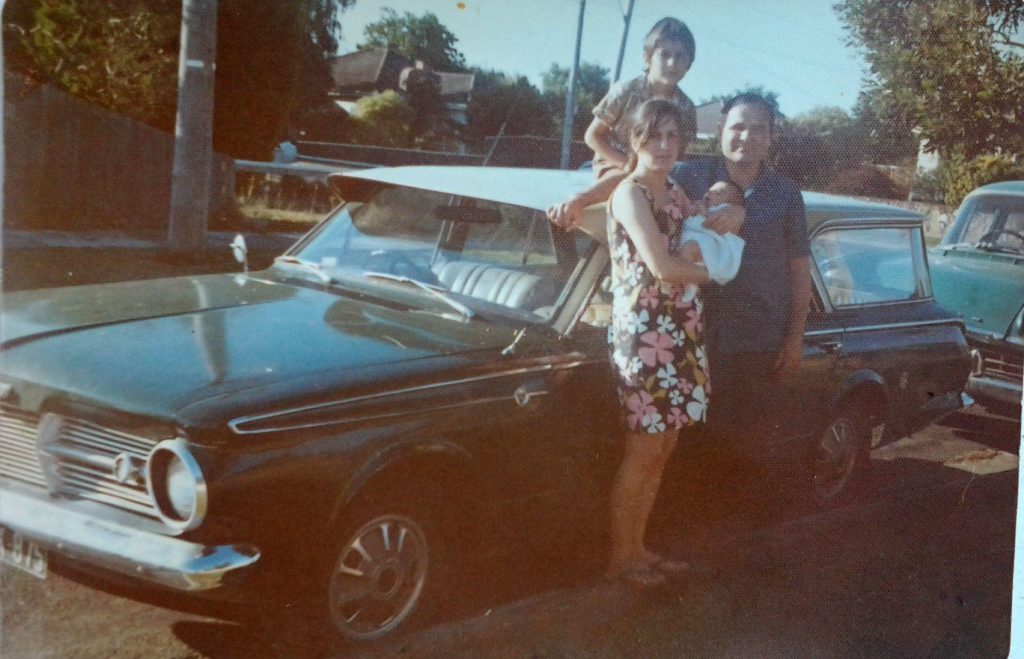
Constantine with his parents and baby sister in Australia
“Though I prefer the lifestyle of Greece to Australia, returning to Oz is not off the cards,” Kris states thoughtfully, with Constantine nodding, “same here,” while I catch myself thinking of echoes of our parents’ migration stories.