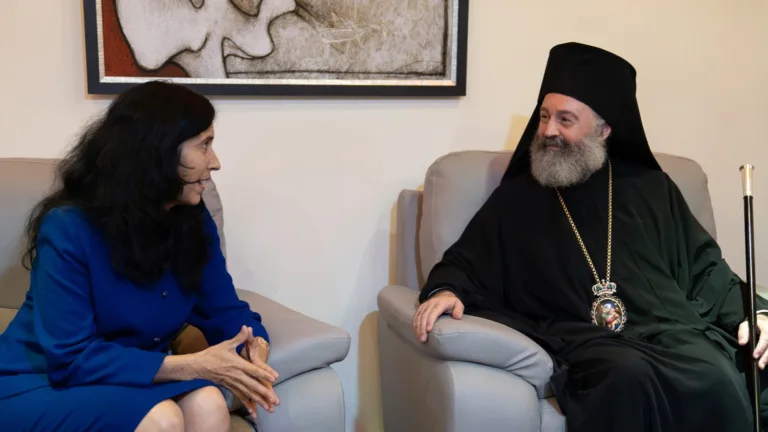
Archbishop Makarios of Australia recently travelled to Havana, Cuba, to commemorate the 20th anniversary of the consecration of the Church of Saint Nicholas, a significant event for the Orthodox community. Representing the Ecumenical Patriarchate, the Archbishop marked this important milestone for a church gifted by the late Cuban leader Fidel Castro to the Ecumenical Patriarchate two decades ago.
Upon his arrival at José Martí International Airport, Archbishop Makarios was warmly welcomed by Metropolitan Iakovos of Mexico, Bishop Athenagoras of Myrina, Cuban government representative Leira Sánchez Valdivia, and Greek Ambassador to Cuba, Theodoros Tsakiris, alongside other dignitaries.
In his address, Archbishop Makarios reflected on the historic visit of Ecumenical Patriarch Bartholomew to Cuba in 2004, during which the Patriarch consecrated the Church of Saint Nicholas. He also expressed his gratitude to the Cuban government for its ongoing support of the Orthodox faithful in the country, underscoring the significance of this landmark church in fostering faith and community.
The Church of Saint Nicholas has come to symbolise the strong ties between the Orthodox Church and Cuba, serving as a spiritual home for Orthodox Christians in the region. Over the years, it has stood as a beacon of faith, unity, and cultural exchange, bridging the Orthodox community with Cuban society.
This 20th anniversary celebration highlights the enduring legacy of the Orthodox Church in Cuba and its role in promoting faith, hope, and unity among its followers. Archbishop Makarios’ presence at the event further underscored Australia’s connection to the broader Orthodox community and its commitment to fostering ties across the global Orthodox diaspora.
Authorities detained 12 individuals and made one arrest following a rally in Athens on Sunday, January 26, marking the ongoing public demand for justice and accountability in the wake of the 2023 Tempi rail disaster.
The rally, held in the city centre, drew a large number of participants paying tribute to the 57 lives lost in the February 2023 train collision near Tempi. Demonstrators called for systemic reforms to prevent similar tragedies and held banners demanding government transparency and action.
While the demonstration concluded peacefully, police detained 12 individuals for questioning and later confirmed the arrest of one person on charges related to public disturbance. Authorities noted that these actions were precautionary to maintain public safety and order during the event.
The Tempi rail disaster, one of the worst train accidents in Greece’s history, continues to evoke widespread outrage and grief across the country. It has prompted significant public demonstrations, with citizens voicing concerns over infrastructure safety and the need for accountability.
The government has pledged to address the systemic issues exposed by the disaster, but critics argue that progress has been slow. Public memorial events and protests remain a powerful reminder of the collective determination to seek justice for the victims and their families.
Thessaloniki honored the National Day of Remembrance for Holocaust Martyrs and Heroes, on Sunday January 26, with a series of moving ceremonies, commemorating the Jewish community that suffered immense loss during the Holocaust.
The day began with a solemn memorial service held at the historic synagogue of Thessaloniki. Attendees, including city officials, Jewish community leaders, and citizens, gathered to remember the lives lost during one of humanity’s darkest chapters.
Following the service, participants assembled at the Holocaust Memorial in Eleftherias Square, a symbolic location that has come to represent the resilience of the city’s Jewish community. Wreaths were laid at the monument by local government representatives, foreign diplomats, and members of the public, all united in a pledge to ensure such atrocities are never forgotten.
The day’s events concluded with a commemorative march to Thessaloniki’s old railway station. This site holds deep historical significance, as it was from here that over 50,000 of Thessaloniki’s Jewish residents were deported to Nazi concentration camps during World War II. The march served as a poignant reminder of the tragedy and highlighted the importance of preserving the memory of those who perished.
Thessaloniki, once home to one of the largest and most vibrant Jewish communities in Europe, lost 96% of its Jewish population during the Holocaust. Today, events like these not only pay tribute to the victims but also educate future generations about the horrors of antisemitism and the enduring need to combat hate.
In his address, the Mayor of Thessaloniki reaffirmed the city’s commitment to preserving the memory of its Jewish history. “We stand here today to honor the lives taken from us and to ensure that their stories are never forgotten. Thessaloniki remains a city that values tolerance, inclusion, and remembrance.”
The National Day of Remembrance for Holocaust Martyrs and Heroes is observed annually in Greece to reflect on the profound impact of the Holocaust and to promote the principles of humanity and peace.
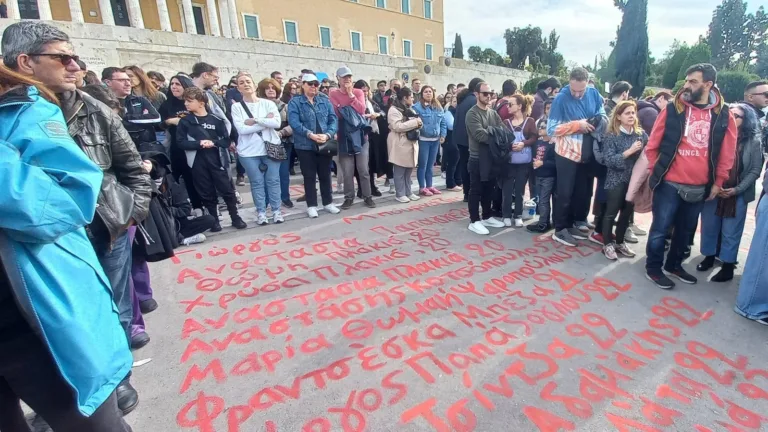
In a powerful display of public demand for accountability, tens of thousands of individuals convened in Athens’ Syntagma Square on Sunday, seeking justice for the 57 lives lost in the tragic Tempe train disaster nearly two years prior.
Demonstrators held placards bearing messages like ‘We won’t forget’ and ‘I have no oxygen,’ the latter reflecting the poignant final words of a victim during an emergency call, recently highlighted in local media.
‘We are here and we will not stop … until those responsible are held accountable,’ stated Maria Karistianou, whose 20-year-old daughter died in the 2023 train crash.
The largely peaceful protest, among the most significant in the capital in recent years, saw brief confrontations between participants and law enforcement. Parallel demonstrations unfolded in various cities across Greece.
The catastrophic head-on collision between a passenger train, carrying numerous students, and a freight train occurred just before midnight on February 28, 2023, on the route linking Athens to Thessaloniki. This incident ignited widespread protests nationwide, with many citizens asserting that it underscored systemic neglect of the rail infrastructure following a prolonged financial crisis.
Nearly two years later, the precise causes of death for many victims remain undetermined. Families have accused authorities of attempting to conceal evidence, a claim the government denies. ‘Two years after the tragedy, no one has been punished, no one is in prison,’ expressed Ilias Papangelis. Some protesters chanted ‘Murderers’ during the rally.
The center-right government, re-elected after the crash, maintains that it is the judiciary’s responsibility to investigate the causes. Despite pledging to reform the rail system, the European Commission has noted that progress has been slow. The recent nomination of former parliament speaker Constantine Tassoul has further angered victims’ relatives, who argue that under his leadership, lawmakers failed to examine any political accountability.
An expert report commissioned by the victims’ families revealed that the crash resulted in a massive fireball, though the cause remains unclear. Leaked audio evidence suggested that approximately 30 of the 57 victims were still alive immediately after the Thessaloniki-bound intercity train collided with a freight train.
These recent protests underscore the enduring grief and anger among the victims’ families and the broader public, as they continue to seek accountability and justice for the tragic event.
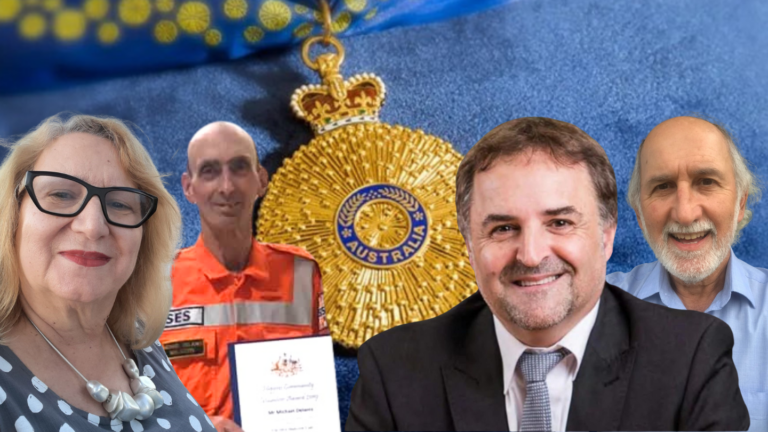
At least four Greek Australians have been recognised by the Governor-General today in the 2025 Australia Day Honours List.
A total of 732 Australians were recognised in this year’s awards, which were divided into three categories – Order of Australia (General and Military Divisions), Meritorious awards, and recognition for Distinguished and Conspicuous awards.
Included in this list, 24 recipients were recognised for their contribution in support of Australia’s response to the COVID-19 pandemic and will be included in a permanent COVID-19 Honour Roll.
The Governor-General congratulated all Australians who were recognised in today’s honours list.
“Recipients have made a difference and had an impact at the local, national and/or international level. Individually, they are inspiring and collectively they speak to the strength of our communities,” the Governor-General said.
“Recipients come from all parts of the country. They have served and had an impact in just about every field you can imagine; their stories and backgrounds are diverse. We value their service, thank them for their hard work and selflessness and, today, celebrate them.”
The Greek Herald spoke to some of the Greek Australians who were recognised to learn more about their achievements and how it feels for them to receive these prestigious awards.
Order of Australia Medal (OAM) category:
Kleoniki Matziaris-Garay – Footscray, VIC Kleoniki Matziaris-Garay is recognised for her service to the Greek community of Victoria. Ms Matziaris-Garay has dedicated her life to supporting the welfare and cultural development of the Greek Australian community. Over a career spanning 35 years in the social sector, with 30 years at PRONIA (the Australian Greek Welfare Society), she has worked in various capacities, from counselling individuals and families to coordinating volunteer training programs. She reflected, “Through my work I could also help in my own way our compatriots here, the Greek community.”
Kleoniki Matziaris-Garay.
She explained that her work evolved to address the unique challenges facing the elderly and women in her community. “For the last 10 years I have been dealing with the elderly. This gave me great joy because I managed to serve our compatriots from various fields and I had also seen the problems that women face, loneliness, especially when they lose their jobs and other various matters.”
Motivated by her observations, she founded the Hellenic Women’s Network VIC (Eliades) five years ago. “I promised myself that when I one day leave the workforce, I would do something for women. Through welfare we had developed many programs such as for domestic violence, but I wanted to do something myself that would encourage women to see their worth and feel that they belong.” Today, the network has 130 members, and she emphasised, “It is open to all ages and all women no matter what education they have.”
Reflecting on her career, she shared a poignant moment, “Something that touched me was when I helped a mother find her son who had been taken up for adoption. This still brings tears to my eyes.”
On receiving the honour, Ms Matziaris-Garay described it as unexpected, “It was a big surprise for me. I didn’t do anything to get awards. I have never thought about it, nor have I ever pursued it. For me, my prize is when I meet my old clients and see their joy to see me. That’s the award and the joy I get. But of course, it is a very great honour.”
Her journey as an immigrant adds another layer of significance. “When I came to Australia and I was 18 years old, I suddenly grew up. The responsibility my parents had once for me, now all the responsibility was coming to me. It is a great thing for an immigrant… to reach this point where this country that we loved is giving us an award. At least I consider Australia as my homeland, same as Greece.”
Dr James Markos – Tasmania Dr James Markos is recognised for significant service to medical education and research, particularly respiratory and sleep disorders.
Dr James Markos.
Dr Markos has dedicated nearly five decades to improving respiratory health, serving as Tasmania’s first full-time lung and sleep doctor and addressing critical shortages in his field. He has led groundbreaking public health initiatives, including combating wood smoke pollution in Launceston, and contributed to over 30 research publications. His legacy also includes mentoring future medical professionals and promoting lung health through innovative education and community campaigns.
Dr Markos expressed his immense pride in being recognised, describing the honour as “a great honour, sort of somewhat unexpected, but… it’s nice to be acknowledged for work that one’s done.” Reflecting on his career, he noted that his life has been “totally immersed in lung medicine,” dedicating nearly five decades to clinical practice, teaching, and research.
A pioneer in Tasmania, Dr Markos explained, “One of my contributions was that I was actually the first full-time lung and sleep doctor in my region.” His arrival in northern Tasmania addressed a critical shortage in respiratory medicine, ensuring that patients no longer needed to travel out of state for care.
Dr Markos also spoke of his public health advocacy, particularly his efforts to combat wood smoke pollution in Launceston. “I had a lot to do with… researching the wood smoke levels and the health effects, doing health education and public campaigns, and pushing for change to improve the lung health of people in northern Tasmania,” he said.
Teaching was another cornerstone of Dr Markos’s career. “I developed this little program I called my ‘snap, crackle, and pop’ talk,” he explained, describing how he sought to demystify lung medicine for medical students. “It was a pleasure to teach and mentor, to help junior doctors and students understand the nuances of respiratory medicine.”
In addition to his professional contributions, Dr Markos has been actively involved in the Greek Orthodox Community of Launceston and Northern Tasmania. As Secretary, he has helped foster a strong sense of culture and identity within the community. “We try to celebrate Greek Independence Day, Oxi Day, and other cultural events. It’s a small group here in Launceston, but we strive to keep the culture alive.”
Meritorious List:
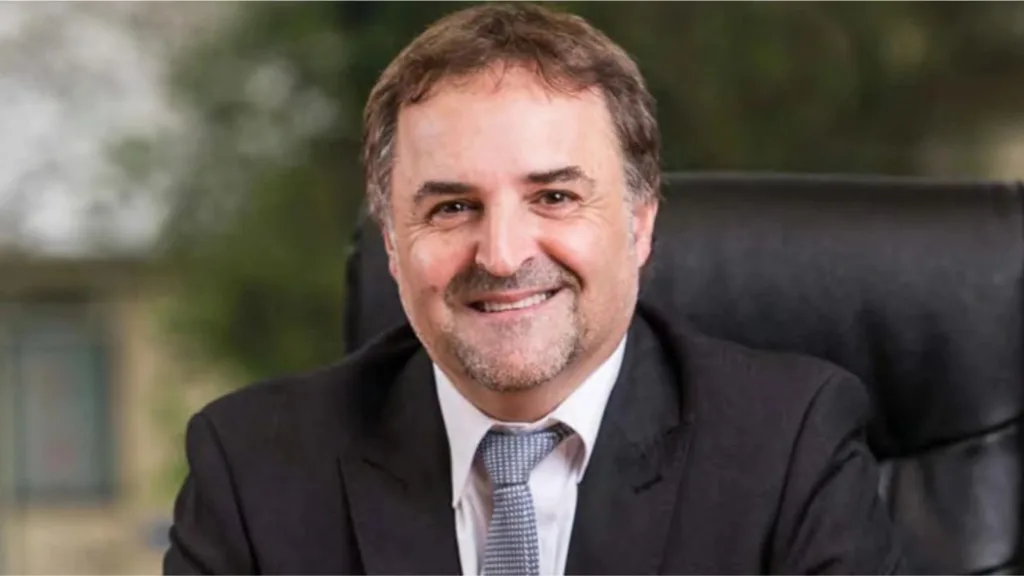
Public Service Medal (PSM) Panagiotis (Peter) Tsokas – South Australia Peter Tsokas is recognised for outstanding public service in local government, particularly in strategic and environmental planning. As CEO of the City of Unley for 12 years, Mr Tsokas has led innovative projects, including a world-first tree canopy monitoring initiative and efforts to reduce greenhouse gas emissions, earning national and global recognition. His leadership, which included representing Unley at the 2023 United Nations Climate Change Conference, has enhanced community engagement and set a benchmark for local government excellence in Australia.
Peter Tsokas.
Mr Tsokas reflected on his 12-year tenure as CEO of the City of Unley, during which he led the city to remarkable growth. “I have been the CEO at the City of Unley for the last 12 years and during this time, the city has thrived in so many ways, and I’m incredibly proud of what we’ve achieved together.”
He highlighted the city’s focus on sustainability and its reputation for excellence. “Unley has a reputation for its environmental stewardship, vibrant local economy, and civic leadership. These attributes, coupled with our strong sense of community, have cemented the city as a place people truly value—offering an enviable lifestyle, a range of activities, and outstanding facilities and services.”
Community engagement was a cornerstone of his leadership. “We’ve made a deliberate and sustained effort to genuinely listen to our community, ensuring their voices are not only heard but actively shape the decisions we make. This spirit of collaboration has strengthened trust, deepened our connection with the community, and fostered a shared sense of ownership and pride in the future of Unley.”
On receiving the award, Mr Tsokas said, “It’s an incredible honour and privilege to be awarded the Public Service Medal. To be acknowledged for something that I care so deeply about is not only a personal milestone but also a testament to the importance of serving our community with dedication and integrity.”
He added that his passion for community service is deeply personal, “Serving the community is more than just my profession, it’s my passion. Knowing that you make a positive difference to many people’s lives is very rewarding.”
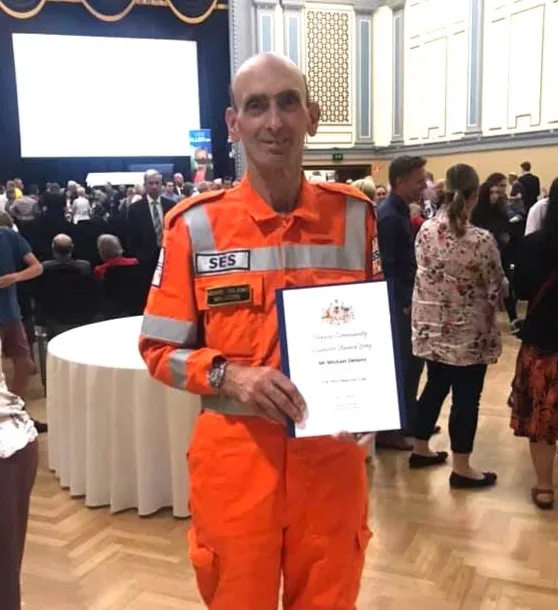
Emergency Services Medal (ESM) Michael John Delanis – Glen Iris, VIC Michael Delanis is recognised for distinguished service as a member of an Australian emergency service. With over 30 years of service to the Victoria State Emergency Service (VICSES), Mr Delanis has been a stalwart in emergency response and disaster management. His leadership roles in the Malvern Unit, including as Unit Controller, have been instrumental in shaping the organisation’s preparedness and response strategies.
Michael John Delanis.
Mr Delanis’s contributions extend beyond Victoria, as he has volunteered in interstate disaster relief efforts, including the Shepparton and Murray River floods and Cyclone Seroja in Western Australia. His commitment to mentoring future leaders within VICSES has made him a respected figure in the sector. His unwavering dedication to public safety and community resilience embodies the values of emergency service personnel.
The 2025 Honours List highlights the remarkable contributions of Greek Australians, showcasing their commitment to community, leadership, and excellence. Their achievements are an inspiration to all Australians.
Anyone can nominate any Australian for an award in the Order of Australia. If you know someone worthy, nominate them now at www.gg.gov.au.
*These are the names The Greek Herald were able to identify as Greek. If you believe your name should be on this list, please send an email to info@foreignlanguage.com.au.
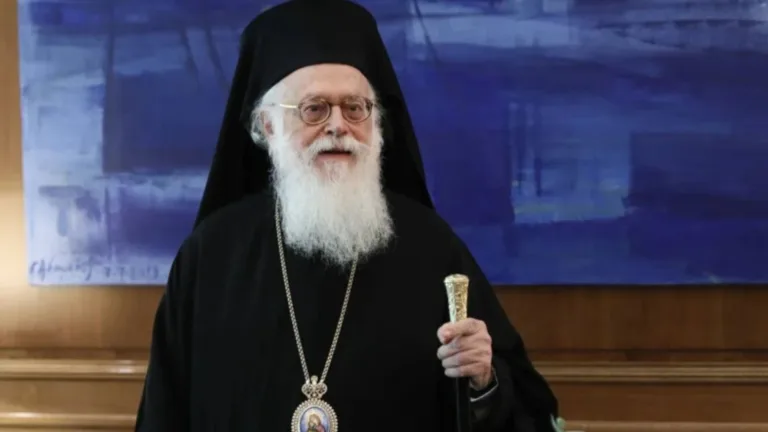
Archbishop Anastasios of Albania, a revered spiritual leader and humanitarian, has passed away at the age of 95 at Evangelismos Hospital in Athens, where he had been hospitalised since early January.
The archbishop was airlifted to Athens from Tirana on 3 January following complications with his health. He underwent emergency laparoscopic surgery to address gastrointestinal bleeding and was placed in intensive care under intubation. Despite medical efforts, his condition deteriorated in recent hours.
His health struggles began on 30 December when he was admitted to a hospital in Tirana with a fever.
Born Anastasios Yannoulatos in Piraeus on 4 November 1929, he was a distinguished theologian and scholar. A graduate of the University of Athens with a doctorate in theology, he furthered his studies in religious and missionary studies as well as ethnology at the universities of Hamburg and Marburg in Germany. His academic journey also included research at Makerere University College in Uganda as a scholar of the Alexander von Humboldt Foundation.
Archbishop Anastasios was ordained as a deacon in 1960 and became a priest in 1964. In 1972, he was consecrated as the Bishop of Androussa and served as the general director of the apostolic ministry of the Church of Greece from 1972 to 1991. His crowning achievement came in 1992 when he was appointed Archbishop of Albania. Taking on the monumental task of rebuilding the Orthodox Church of Albania after it had been dismantled under the oppressive Hoxha regime in 1967, he revitalised the Church, expanding its influence in health, education, social welfare, rural development, environmental protection, and cultural preservation.
In recognition of his contributions, Archbishop Anastasios was nominated for the Nobel Peace Prize in 2000 by 33 members of the Academy of Athens and prominent Albanian figures. His efforts were globally acknowledged, particularly in fostering interfaith dialogue, promoting peaceful coexistence, and advancing contemporary Christianity.
A scholar of international renown, he was an emeritus professor at the University of Athens and an honorary member of the Academy of Athens. He held honorary doctorates from 19 academic institutions across Greece, the United States, Romania, Cyprus, Georgia, Albania, and Italy. Additionally, he served as an honorary senator of the European Academy of Sciences and Arts, honorary president of the World Conference of Religions for Peace, and honorary professor at the University of West Attica.
Archbishop Anastasios leaves behind a profound legacy of spiritual leadership, intellectual achievement, and unwavering dedication to peace and unity.
The 2025 Greek Community of Melbourne kicks off its first ever women’s tournament.
It will commence on Sunday 2nd of February and hosted by Northcote City FC (aka ΗΡΑΚΛΗΣ) at the John Cain reserve. Entries have surpassed every expectation with the collaboration of the following women’s teams:
Bentleigh United, Box Hill United, East Kew, Heidelberg United, Keon Park, Chisolm United, Malvern City, Mill Park, Northcote, Sth Melbourne & Sth Springvale
With a plethora of diversified teams, this tournament promises to be great event.
Northcote City’s President (Michael Skliros) and Secretary (Arthur Zygouris) welcomed the Greek Community’s Women’s Cup and expressed their excitement in hosting the Greek based club at the facilities of the famous “John Cain” reserve.
The opening round will continue a day after the successful “Men’s Tournament”, ensuring the same calibre of event management is provided by GCM.
Full fixtures, scores, and updates will be announced at: www.greekcup.com.au
The Greek Community Cup is brought to you by the Greek Community of Melbourne in association with Australian Football Skool. The tournament is hosted by Northcote City FC and proudly supported by LV Furniture, Accountancy Group, Active Orthopaedic Centre and Peter Tziotzis-Orthodox Funeral Services.
ABOUT THE GREEK COMMUNITY CUP
The Greek Community Women’s Cup is more than just football—it’s about bringing people together to enjoy the game, equal opportunity, community engagement and support for local clubs that bridges sports, heritage and culture.
The Greek people have played a significant part in Australian football. It is a sport that is embedded and appreciate in the majority of Greek households.
Greek football is in mourning following the passing of the legendary Mimis Domazos at the age of 83. Known as the “General” of Panathinaikos and a key figure in the Greek national team, Domazos left an indelible mark on the sport and in the hearts of fans across Greece and beyond.
Domazos fell ill on the morning of Wednesday, 22 January, and was rushed to the “Red Cross” hospital in Athens after suffering a cardiac arrest. He collapsed while walking in the Halandri area of northern Athens and initially received first aid at a diagnostic centre before being transferred to the hospital. Ambulance crews performed successful cardiopulmonary resuscitation (CPR) during the transfer.
Despite doctors’ tireless efforts and the placement of an assistive device during his nearly two days in intensive care, the football legend passed away, leaving the Greek football community in profound grief.
Greek Football mourns the loss of Mimis Domazos.
Domazos was the captain of Panathinaikos during their historic journey to the 1971 European Cup final at Wembley—a defining moment in Greek football history. He is widely regarded as one of the greatest players the nation has ever produced.
His football career began at Amyna Ampelokipoi (1953-1959), but it was at Panathinaikos where he cemented his legacy. Over nearly two decades (1959-1978), Domazos won nine Greek championships and three Greek Cups, earning his reputation as a cornerstone of the “Clover” team. Following a brief stint with AEK Athens (1978-1979), he returned to Panathinaikos in 1980 to retire with the club closest to his heart.
Domazos’ influence extended beyond football. He was married to renowned Greek singer Vicky Moscholiou, and together they had two daughters. After retiring, he ventured into business, owning a chain of five-a-side football stadiums, and contributed opinion columns to Greek sports newspapers. Notably, he was one of the final torchbearers during the Opening Ceremony of the 2004 Athens Olympic Games.
Mimis Domazos’ unparalleled contributions to Greek football, both on and off the field, will be remembered for generations.
Amazon has announced its investment in three large-scale wind farms in Greece, marking its most significant renewable energy initiative in the country, according to ekathimerini.com. The wind farms, located in Western and Central Macedonia and the Peloponnese, are part of four Power Purchase Agreements (PPAs) with Ireland-based renewable energy firm Aer Soléir.
The projects include the Vermio North and South wind farms in Macedonia, and the Mesokorfi and Koukouras wind farms in the Peloponnese. Currently under construction, they are expected to start generating power by 2026, producing enough carbon-free energy to supply nearly 200,000 Greek homes annually.
Amazon’s investment aims to directly power its operations and support the local energy grid, benefitting businesses, public institutions, and households. More than 100 construction jobs have already been created for the Vermio wind farm, with up to 300 expected at peak activity.
Aer Soléir has also committed over €1 million to community initiatives, including infrastructure improvements, support for schools and emergency services, and assistance to local agriculture. An additional €1.8 million has been earmarked for reforestation and biodiversity projects near the Vermio site.
The €496 million project is financed through a combination of €249 million in commercial debt from the National Bank of Greece and funds from the European Recovery & Resilience Fund.
“The collaboration between Aer Soléir, the National Bank of Greece, and Amazon represents a transformative investment exceeding $1 billion,” said Theodoros Skylakakis, Greece’s Minister of Energy & Environment.
This follows Amazon’s completion of Greece’s first utility-scale solar project in 2022, contributing over 1GW of clean energy to European grids.
The island of Cyprus is going through major transformations, political, social, economic and cultural dimensions! If those changes continue unchecked they may lead to the irreversible loss of its ancient Hellenic identity. Cyprus’s legacy deep rooted in its history, it now stands at the crossroads and vulnerable to political, social and demographic sweeping changes brought about by homegrown political incompetence but also due to foreign influences.
Cyprus, perched in the Eastern Mediterranean Basin has long been a land of paradox—a blessed island yet a cursed one! Its strategic location has made it a coveted stepping stone and a gateway to Western markets, the Far East and Egypt. That curse has now become more dangerous than ever before especially after the discovery of natural gas in its Exclusive Sea Protection Zone. (EEZ). Today, the island’s untapped recourses with its strategic military position have turned it into a magnet for foreign powers seeking exploitation and military dominance in the region.
The island has been a prized trophy for centuries and shares the hallmarks of foreign exploitation and domination. One of the most dangerous countries in the region is Turkey, where Sultan Erdogan envisions his Neo-Ottoman Empire and Cyprus, lays smack in the centre of his ambitions.
Nobody can tell what the Sultan’s cunning mind plots for the future (not even the West can predict that) for he has mastered the art of deceipt. Demographic engineering has long been a potent tool for reshaping and even erasing ethnic identities of nations and today, the island’s future hangs in the balance.
Jewish/Israeli Connection
In the last decade a somewhat—aside from the European Union’s influence in the affairs of the Republic—a surprising contender has emerged in the property investment arena of the island: the Israeli Connection! The sudden surge of calculating Jewish/Israeli acquisitions in EU-Cyprus worth millions has prompted speculation of the scale and nature of these ventures. Why now?
Is there more than meets the eye behind this influx of capital investments and growing acquisitions of hotels, land and properties coming from Israel and investors of Jewish origins in diaspora?
The trend gained momentum immediately after the IMF/EU Troika’s 2013 Bail-in robbery in Cyprus by the Anastasiades government to save a corrupt banking system by stealing people’s bank accounts without their consent. Repossessed properties and toxic loans were sold en-masse at staggering discounts—often 80-90% of the outstanding debt to international Banking Hedge Funds while at the same time, borrowers were held liable for the outstanding debt!
Cyprus banks eager to clear their books of toxic loans facilitated the sale to bulk buyers who seized the opportunity like bees to a honeycomb! What’s particular striking is the geographical scope of these investments within the Cyprus Republic but also in the Turkish occupied northern part of the island.
Greek properties and land in the occupied north are offered to Jewish/Israeli investors for a steal by the illegal Turkish Cypriot Authority for development; properties that in fact, truly belongs to Greek refugees! Could this wave of ventures simply reflect savvy investment strategies, or are there deeper, strategic considerations at play? The answers remain elusive, but the curious Israeli Connection is undoubtedly reshaping Cyprus’ political landscape in significant ways.
The common perception—that “foreign investments are good for the economy” —is frequently invoked, but it fails to address the deeper question about social, demographic, environmental, and economic repercussions such projects may entail for the small island. It has been suggested that some dark forces envision EU-Cyprus of becoming a “new Israel” or an “extension of the existing one.” Real or not, they undoubtedly provide food for thought!
Jewish Ambitions
Jewish settlements in Cyprus trace back to ancient times when Jews living in Cyprus have actually experienced two major expulsions from the island. The first mass exile occurred soon after the destruction of the First Temple in the 586 BC, and the second after the obliteration of the Second Temple in 70 AD. In both instances, Jews were banished forever and forbidden to live in Cyprus!
The most blatant historical ambition to take over the island and make it into a Jewish state were exhibited by the Zionist Movement in Diaspora years after the expulsion of the Jews from Portugal by King Manuel. Thousands of displaced Portuguese Jews found refuge in Venice, including the family of Joseph Miquel Nasi, whose mother was a prominent socialite and banker’s wife. As a young boy, Joseph soon took offense to Venetian high society for ignoring his mother’s social status and vowed to punish the Venetians for ill-treating his mother! In 1568 the Jews were once again ordered to leave the city of Venice forcing Joseph Miquel Nasi and his family relocate to the influential and prominent city of Constantinoupolis.
The Ottoman Empire expanded rapidly and Joseph Miquez Nasi—a brilliant strategist and financial expert—rose to prominence as the most trusted advisor and confidant to Sultan Selim II. In fact, he had become known throughout the Empire as “The Great Jew”. In recognition for his loyalty to the Turkish Empire, the Sultan bestowed upon him the title of Duke of Naxos and the Seven Seas.
However, behind the prestigious titles, Nasi harboured a secretive personal mission: His ambition stemmed from a vow made to his mother to punish the Venetians and fulfil his ultimate dream of becoming the new King of Cyprus. His friend Sultan Selim II approved his ambitious plan and ordered the preparation of an immense invasion force against the Venetian-held island of Cyprus. By assembling a fleet of 400 ships and a formidable army of 60,000 well-equipped soldiers, the Sultan was more than ready to keep the promise made to his good friend Nasi.
On 27 June 1570, the Ottoman invasion-fleet, under the command of Lala Mustapha Pasha, cast off to capture Cyprus from the Venetians. The passionate realisation of “the Great Jew” to establish a Jewish settlement on the island were now more real than ever before! Using the island as a stepping-stone to Zion, the Zionist colonisation of Cyprus envisioned as a territorial solution to rootless Jewish communities—so acute in the 16th century—offered Miquel Nasi the opportunity to provide a permanent sanctuary to stateless Jews in Diaspora.
But for Joseph Miquel Nasi, it was not meant to be: “The Great Jew” died and did not live to see his dream of becoming King of Cyprus, nor to provide a homeland for displaced Jews! The Zionist colonisation of Cyprus remained unrealized, bringing to an end of one man’s remarkable, yet incomplete legacy.
Fledgling State of Israel
After the Second World War, Cyprus played a significant humanitarian role in supporting thousands of Jewish refugees attempting to return to the Promised Land! Following the liquidation of the Nazi concentration camps in Europe, the British set up a massive barbed-wire detention camp at Karaolos for Holocaust survivors trying illegally to enter Palestine. Determined to reach their destination, over 1,600 tragically drowned at sea, while only a few thousand have managed to arrive safely in Palestine. Of the 64 vessels that sailed for Palestine, Exodus 1947 a steamship departing from France was the biggest. It carried 4,515 passengers—the highest number of illegal immigrants ever attempting to reach and occupy Palestine. The steamship was apprehended and all refugees were shipped back to France in three separate vessels.
Between 1946 and the establishment of the State of Israel in 1948, the British confined over 50,000 Jewish refugees in Cyprus unsure what to do with them. During this time, Cypriots played a critical role in supporting the Jewish migrants detained inside the Karaolos Detention Camp in Famagusta. Despite their own struggles under British rule, local Cypriots—many of who were impoverished themselves, showed extraordinary compassion. They visited the detention camp providing clothing, food, water and other provisions to help out and ease the plight of those trapped in bleak conditions. Their generosity reflected a profound truth: poverty has neither enemies nor envy!
These events remain undeniable historical facts for which cannot be disputed; facts that have taken place in a by-gone era marked by the stark contrast between acts of ethnic brutality and acts of human empathy for those people less fortunate. Greek Cypriots demonstrated compassion and humanity to Holocaust survivors the best way they could—even as they themselves endured the hardships of British colonial subjugation!
The humanitarian efforts by Greeks in aiding those in need, serve as a powerful reminder of how humanity and solidarity can coexist in the face of adversity!
New realities
Nowadays things are very different; a new and shrewd trend across the island is taking place that could have far-reaching consequences in the future! Money, corruption and exploitation for profit have become the new religion of the day! Cypriots now face not only with the challenges posed by the Turkish military invasion but also face another form of intrusion—this time cunning economic one! A wave of companies and individuals of Jewish/Israeli origin are systematically purchasing properties throughout EU-Cyprus—including the Turkish occupied north—raising public concerns about the implications of such a practice.
It seems as thought there is a deliberate mission to acquire and develop as many Israeli-owned properties as possible: hotels, villas, apartments, prime industries, and vast tracts of land for development! The public is seriously questioning the motives and what lays behind this sudden surge of interest in properties and investments in Cyprus! Meanwhile, the government and most political parties continue to praise the Israeli investment spree “in a free market society” as a positive move for the economy, often with little consideration for the long-term implications for the island’s future.
A number of major hotels in Limassol, Nicosia, Paphos and Larnaca have already changed hands and the buying frenzy has extended as far as the picturesque and quaint Latchi waterfront in Polis Chrysochous where Israeli companies have purchased most of the hotels. Meanwhile, a massive but contentious “all inclusive” Israeli resort complex—that looks like a settlement—comprising more than twenty steel buildings aimed for the Israeli market, is being constructed by a Jewish consortium. This development proceeds with little consideration for the environmental impact or the infrastructure of the local community.
The developers ignoring building permits and conditions added extra floors and additional mass structures without proper planning consent. As a result, the public is now confronted with an overwhelming eyesore; an ugly complex perched prominently atop the hill at the very entrance of beautiful Latchi! Such actions demonstrate a stench of corruption, disrespect for the law but also disregard for the local community. Meanwhile, the authorities seem to turn a blind eye, leaving citizens questioning why such actions are allowed to take place in a EU country that prides itself on upholding the Rule of Law!
*Andreas C Chrysafis is a UK published author of five books and over 450 press articles but also a recognized artist. His works are globally available and can be viewed here Copies: www.artpal.com/chrysafis