Home Blog Page 255

Dr Christos Theologos: ‘Dance keeps us bound to our roots, from Chios to Sydney’

By Panagiotis Dalatariof

The Zeibekiko Festival is returning to Australia for the third exciting year. From 3 to 12 October, the festival – under the banner of Ventouris Productions – arrives dynamically and promises the ultimate celebration of Greek traditions. Through dance, music, storytelling and community connection, the Greek spirit will be highlighted once again.

As part of the festival, Dr Christos Theologos, one of the most respected folklorists of Greece, will lead a series of lectures and workshops on the deep roots of the dance traditions of Asia Minor, such as the zeibekiko, aptalikos, karsilamas, Cappadocia, coastal Asia Minor and Constantinople.

In addition, he will conduct special workshops on the traditional dances from the island of Chios. His work highlights the connection between dance, Byzantine tradition and religious folklore, illuminating the timeless cultural memory that is inherent in movement and ritual.

Dr Theologos holds a PhD in Folklore, has lectured at the University of the Aegean, is Principal of the Music School of Rhodes, and is a member of the Hellenic Folklore Company, which has functioned as a scholarly body since 1908. He is also Director of the Artistic Workshop of Culture.

Through The Greek Herald, he speaks about the purpose of his visit to Australia, stresses how important dance is in order to safeguard elements of Hellenic tradition, while also sending his own resounding message to the Greeks of Australia.

christos theologos
Dr Christos Theologos is one of the most respected folklorists of Greece.

What is the main purpose of your visit to Australia and what do you hope to offer the Greek diaspora with your presence here?

The main purpose of the visit to Australia is to share with the Greek diaspora both the knowledge and the experience that I have acquired over more than 40 years of my involvement with tradition, and in particular with Greek traditional dance. Together we will try to approach the music and dance phenomenon holistically, emphasising that Greek traditional dance, as well as music, does not exist in isolation but is part of a whole in every circumstance.

Music, song and dance in popular culture are not independent but are interwoven with human everyday life, through popular events, rites of passage and customary representations. Approaching the music and dance phenomenon holistically within our popular culture reflects the local culture of each community, not as something static but as something dynamic, within the framework of a traditional community.

Dance as well as music is a communicative medium; it is a kind of linguistic code which contains elements of verbal and non-verbal communication. Every movement, every step of the dancing (music and dance) expresses one or more meanings.

Through workshops, seminars and personal contacts, the aim will be to transmit not only the steps, but also the experiences, the symbols and the memory carried by these dances, with particular emphasis on the zeibekiko as a form of expression, improvisation and personal narration. I hope my presence will function as a bridge between the roots and the contemporary diaspora, rekindling the link with our cultural heritage.

How important do you consider it is for Greeks of the diaspora, and particularly for the younger generations, to know and experience the traditional dances of Asia Minor and our islands?

Traditional dances are not simply artistic or customary events. They are bearers of memory, history and identity. Especially for the descendants of refugees and for the younger generations in the diaspora, the dances of Asia Minor, Cappadocia and the islands of the North-Eastern Aegean function as a kind of intangible thread that connects the past with the present. These are elements of the intangible cultural heritage of Aegean civilisation.

The Aegean in our music and dance tradition never functioned as a border, but as a bridge that connects the islands of the Aegean with Asia Minor. Thus, together we will discover that there are differences in each individual place or village that make each one unique. At the same time, however, through these differences the homogeneity of the Aegean space is also highlighted.

Knowledge of, and experiential contact with, these dances strengthens cultural self-awareness, cultivates collective belonging and gives meaning to the preservation of Greek identity away from the homeland.

Can dance safeguard elements of identity when the distance from the homeland is great?

Absolutely. Dance has the power to function as a cultural imprint even in conditions of geographical or temporal distance. When the Greek of the diaspora rises to dance a karsilamas or a ballos, he does not merely express a musical tradition – he reactivates memories, relationships, symbols, and often a sense of communal continuity. Dance becomes a language of expression which does not require words in order for one to connect with his history and identity.

How does the audience abroad react when it discovers the richness and symbolism of Greek traditional dances?

The reaction is always moving. The audience, whether Greeks or people of another origin, is impressed by the authenticity, the emotional intensity and the cultural complexity of Greek dances. Often they feel that they are discovering something they lacked: a way to express their joy, their pain, their history. The dances of refugeehood and of the Aegean, with their small details and strong expressiveness, touch deeply the soul of both the recipient and the dancer. They discover that these expressive means are their own expressive means. That tradition, ultimately, is not a museum piece, a fossil of the past. It is a living element of the past in the present, which with their own contribution will be fertilised for the future, for the new that is being born.”

Is there a difference in the approach of Greeks abroad compared with the audience in Greece?

Yes, there is a difference which has to do mainly with the emotional charge and the degree of attachment to cultural memory. Greeks abroad often see dance as a means of reconnection, while in Greece the relationship may be more everyday or ritual. In the diaspora, every dance seems to be an act of resistance to oblivion; a means of preserving identity. This ‘nostos’, the desire for return – even if symbolic – makes their approach often more conscious and moving.

christos theologos
Dr Theologos teaching the next generation.

You have dedicated your life to the study and teaching of folklore and dance. What message would you like to leave with the Greeks of Australia through your presence here?

The message that I would like to leave is simple but essential: The Hellenic cultural space exists everywhere. It is the personal and collective responsibility of each individual Greek community, whether in Greece or among the Greeks of the diaspora, to function not only as root and fertiliser, but as the trunk of life in the present. Do not forget to dance. Dance is a way of life, a way of being. It is the means to meet our ancestors and to converse with our descendants. Memory is not something frozen; it is alive when you sing it, play it, dance it. Besides, memory has the power to defeat the decay of flesh. Nothing dies when we keep it alive in our memory and of course do not treat it merely as recollection.

Whether you are in Nea Filadelfeia, in Rhodes, in Chios, in Sydney, or in Melbourne, dance can keep you bound to your roots and offer you joy, community and inner strength.

For the full program of events and to book tickets, visit https://www.trybooking.com/eventlist/zeibekiko. The Greek Herald are proud media partners for this event.

Follow the Zeibekiko Festival Australia:

South Melbourne turns to supporters ahead of Australian Championship kick-off

By Bill Roumeliotis

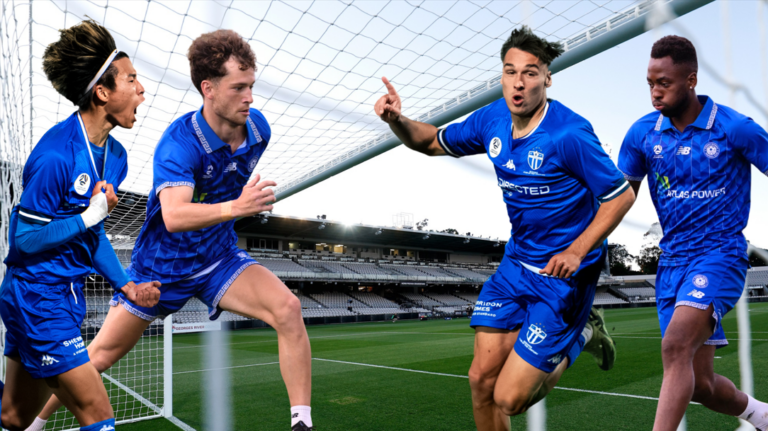
The opening clash of the Australian Championship between South Melbourne and Sydney Olympic won’t just be a football match – it will be an event shaped by the voices of the fans themselves.

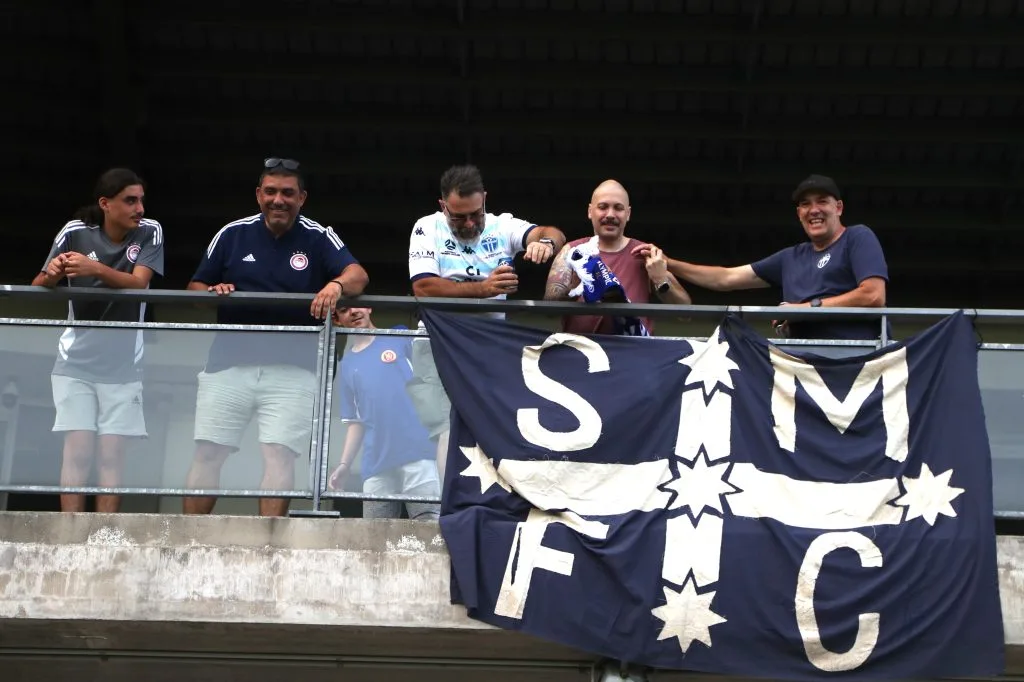
On Thursday evening, South Melbourne hosted a Fan Forum at their clubhouse, inviting supporters to share ideas ahead of the historic season launch at Lakeside Stadium on Friday, October 10.

The forum gave small groups of fans the chance to discuss what they wanted to see on match day, with many suggestions set to be adopted by the club.

Newly appointed South Melbourne General Manager, Stratis Xynas, said the feedback was crucial.

“The match between South Melbourne and Sydney Olympic in the Australian Championship opener won’t just be a season launch or an old-school derby – it will be a football celebration,” he told attendees.

“To attract fans of all ages, we’re planning a range of pre-game, halftime and post-game events. We’ve invited you today to share your ideas – and many of them we will implement.”

The Fan Forum is part of the club’s strategy to ensure the opening fixture reflects not only the traditions of two iconic Hellenic heritage clubs, but also the needs of a new generation of supporters.

“Football Australia is committed to making the Australian Championship a success. That’s why they selected the South Melbourne vs Sydney Olympic match as the opening fixture,” Mr Xynas added.

“The game will be broadcast nationally across Australia, meaning tens of thousands of viewers will be watching. So, we want Lakeside Stadium packed.”

By actively engaging their fan base, South Melbourne hopes to create an inclusive, festive and memorable atmosphere that showcases the potential of the new national second division.

Low birth rates and ageing: The silent enemy of the Greek nation

0

By Professor Anastasios Tamis

In an earlier article I referred to the worst national enemy of Greece: low birth rates. From the late 1990s it had become clear to Greek demographers and social scientists that the number of births in Greece was falling noticeably and dangerously. Temporarily, the number of births, despite the downward trend, offered some sense of optimism, when the fertility rate of Greek women of Albanian origin approached numerically that of Greek women.

In a few years, the number of children born to Albanian parents who lived in or had been born in Greece almost surpassed the number of children born to parents of Greek origin. If to the above data we add the fertility shown by other Greeks but of non-Greek origin citizens, then the shrinkage is mitigated and the ageing is temporarily slowed.

Before we pass on to the observations made by researcher demographers and analysts, I would like to insist that over the last forty years, the native Greeks insist on absolving themselves of any responsibility for fertility, and to declare as responsible for the tragic demographic decline that shakes our metropolitan homeland, supposedly the state of successive governments, low incomes, poverty, hardship, high prices, the impossibility of providing education and the constant “we can’t manage, my brother”.

The transfer of responsibility from the self-seeking mentality of the Greek individual himself, who for decades now has learnt to function as a private person and not as a citizen, who has based the values of his life on the egocentric way of life, self-love, personal satisfaction, the “who cares” attitude, the easy-going pleasure seeker, demonstrate that in Greece and in the majority of the developed countries of Europe, the return to a society that gives priority to the values of family, to the social dogma that supported human ontology for thousands of years, is delayed.

A recent study from Brussels concludes that the problem of insufficient fertility plagues almost all the countries of Europe, except Bosnia, whose dominant religion is Islam. The same study notes that by 2060 the number of Muslims in Europe will surpass the number of Europeans who declare themselves Christian, and therefore will numerically constitute the first European religion, with the number of Atheists and agnostic atheists second, and Christians third.

In 1970 the number of inhabitants of Turkey amounted to 34 million and the number of Greeks to about nine million. In 2025 the number of Turks exceeded 87 million and that of Greece 9.6 million. In 2050 it is estimated that the population of Turkey (to whom Mr Erdoğan distributes cheap onions so that they can live) will surpass 100 million and the number of Greeks will decrease to 8.5 million, the same as it was in 1970!

The prediction that in the next three decades the decrease of the population of Greece and its demographic ageing will continue, while the balance of births/deaths will remain negative, was made last week by the Laboratory of Demographic and Social Analyses – University of Thessaly.

In the relevant analysis entitled “Demographic and low birth rates in Greece today: demographic inertia and social challenges”, whose author is Iphigenia Kokkali, assistant professor and director of the Laboratory, the collapse of births is underlined, which in 2023 reached 72.3 thousand, that is, were about half of those recorded annually on average in the 20-year period 1951-1970. According to this research, the population of Greece has decreased by 500,000 people in recent years, while the demographic collapse continues, under the pretext of supposed social challenges, which, in a sleight-of-hand way, do not touch Muslim populations, but operate as safety valves of protection and enjoyment exclusively for Greeks. Bravo to us.

The analysis notes that today Greece records one of the lowest annual fertility rates in the European Union, with intergenerational fertility moving at 1.3–1.4 children/woman (in the generations born around 1980), that is, significantly below the reproduction threshold (2.07 children/woman). In Australia, the total fertility rate of Australian citizens of Greek origin amounted in 2024 to 2.2 (that is, double that of Greeks within Greece).

At the same time, Greece is a relatively aged country since almost 23% of its inhabitants are over 65 years old, while in 2023 those over 65 were almost one million more than young people aged 0–14. At the same time, a progressive increase of childlessness rates is observed, which for the generations around 1980 now concern about 1 in 5 people.

The decrease of the population of Greece, which essentially began in the early 1990s, began to appear noticeably from 2011, precisely because of the mass entry of foreigners between 1991 and 2010, which resulted in a positive migratory balance of 795,000 people.

The research of Mrs Kokkali concludes: “The mass entry of young people in search of work contributed, among other things, to the slowing of the ageing of the population of Greece, to the increase of its birth rate and to the strengthening of its demographic dynamism, given that the increase of the population of the country between 1991 and 2011 is attributed almost exclusively to the increase of the number of foreigners. The financial crisis changed the direction of flows and the balance of entries and exits became once again negative, as in the pre-1990 era. During the decade 2011–2021, the exits continued, and concerned, on the one hand, the economic migrants who, having settled in the country during the two previous decades, now return to their countries – on the other hand, they concern the young Greek men and women (25–34 years old but also 35–45 years old), who emigrate.”

The painful finding of the research follows: “In the already burdened population structure of the country, we could say schematically that the framework of life in Greece today seems either to push young people to flee, or to childlessness. And these are very basic stakes, in the case that we would like to limit low birth rates and the extent of the decrease of the population of the country in the coming decades.”

However, I would like to emphasise that beyond and above the conclusions of Mrs Kokkali, there are not highlighted as social variables of her research and not mentioned in detail other causes which concur and which shape the mentality of negative fertility and childlessness which plagues the Greek family. For example, such as the free cohabitation of young couples, the departure from the parental family home, the sad and often unnecessary increase of divorces, the degeneration of issues relating to human genders and ontology (which from time-to-time constituted laws of the Greek state), the lack of state support, including housing and work, the average age at marriage which has now shifted into the decade of the thirties for women.

Peta Trimis: The new star of Australian football with a Hellenic soul

By Takis Triadafillou

At just 19 years old, Peta Trimis is already being hailed as one of the brightest young stars of Australian football. With deep Hellenic roots and an unrelenting passion for the game, the Sydney-born forward is chasing dreams that span from the Matildas to her beloved Liverpool.

From kicking a ball around the parks of Sans Souci to competing in the A-League, Trimis has shown that hard work and faith can carve a pathway to success.

“After playing for Sans Souci FC, I joined Sydney University, the Football NSW Institute, and at 16, I signed with Bulls FC NPL,” she explains.

“I then entered the A-League with the Central Coast Mariners. I currently play for Sydney Olympic, but I’ve already signed to return to the Mariners next season.”

Trimis’ first taste of international football came at just 15.

“With the Junior Matildas (U17) at 15–16 years old. We won the AFF tournament,” she recalls proudly.

Along the way, several mentors shaped her career. “My very first coach at Sans Souci, and Emily Husband, who gave me my A-League debut,” stand out as her most influential coaches.

A versatile forward who can also play as a number 10, Trimis draws inspiration from global icons and close to home. “Neymar, my dad Petros Trimis, and Mary Fowler,” she says when asked about her role models.

Like many young athletes, she has also learned to manage the mental challenges of elite sport. “There’s a lot of mental pressure – expecially after mistakes. Expectations are high. But coaches like Alex Epakis have helped me manage it,” she admits.

Her ambitions extend well beyond Australian shores. “I haven’t played in Europe yet, but I dream of Liverpool and competing in England or Spain. One day, I’d also love to play in Greece,” she reveals.

Her success is built on routine and discipline. “I’m part of the Future Matildas program, I do individual technical training and strength work,” she says. “I’ve had no major injuries – just a sprain. I also follow a nutrition plan, especially with support from the Young Matildas.”

Beyond the pitch, Trimis is also passionate about education. “I want to study education and become a teacher. My inspiration is Teresa Polias,” she shares.

Her Greek heritage continues to guide her. “I love Greek culture, the church, and the food. When I can, I go to church services,” she says.

For young girls dreaming of following in her footsteps, her message is simple yet powerful: “Work hard, believe in yourself, enjoy the game, and do extra training. Be brave and play with passion.”

Trimis’ journey is only just beginning. Balancing ambition, family, and faith, she is a living example of how determination and values can shape a career. As she reflects on her path so far, her philosophy is clear: “Play with courage and freedom.”

Because for Trimis, football isn’t just a sport – it’s a way of life.

A second chance at life: Angelo Alateras’ journey from mechanical heart to transplant hope

By Despina Karpathiou   

It’s not every day you get a second chance at life — and by life, I mean a heart.

The heart is the silent hero of our existence — a ceaseless force that begins beating before we even open our eyes to the world and doesn’t rest until our journey ends. Each beat is a gift, carrying oxygen and life-giving energy to every corner of the body.

The Greek Herald spoke to Angelo Alateras about his second chance at life.

Life for Angelo, born to Greek parents in Melbourne, was pretty normal. He loved spending time with his cousins and was always active.

“It was in my 20s that I started to gain weight, and by my late 30s, I was 180kgs,” Angelo recalls.

The strain on his body eventually led to a diagnosis of Ventricular Tachycardia (also known as VT or arrhythmia).

“I was so seriously ill, on my last leg, when my only option for a second chance was to be put on life support via a Left Ventricular Assist Device (LVAD) — a mechanical heart to keep me alive,” he says.

Angelo spent two months in a coma, another two months in ICU, and three months in a ward — seven months in hospital in total.

“Whilst in ICU, I went into cardiac arrest. When I came to, a nurse who had performed CPR apologised for breaking a few of my ribs. I just told her, ‘I should be thankful you were in the right place and saved my life’,” he says.

The hardest moment, Angelo says, came when his father visited him in ICU after six weeks apart.
“My dad sat in the chair beside me, but he didn’t recognise me at all. My brother had to tell him, ‘It’s your son, Angelo.’ It was so emotional seeing my father’s memory slipping away. I told myself then, I just need to be strong and never give up. At that point, I couldn’t even communicate with him because my voice box was damaged when they removed the breathing tubes. I had to learn to speak again.”

For the next two years, Angelo lived with the LVAD while waiting for a donor heart.

“I had to carry a shoulder bag containing two batteries the size of bricks and a controller that kept me alive. This bag weighed 4kgs,” he explains.

On top of that, he carried a backpack with four backup batteries in case the main ones ran low — another 6kgs.

“The bag also had to hold my diary, where I documented battery performance and my symptoms throughout the day. I also had to carry a spare controller in case the one attached to my body failed. If I had to change them over, I only had five minutes to do so — otherwise, I could have died,” he explains.

The weight — both physical and emotional — became exhausting. Angelo knew he had to fight harder.

He began attending rehab at the Alfred Gym three times a week to build up his strength so he would be ready for the call. Then came another huge sacrifice: to be eligible for transplant, Angelo had to remove all his teeth in one go to eliminate the risk of infection.

Fast forward 21 months — and 615 days of physio later — Angelo had lost over 80kgs and was finally ready for a real heart transplant.

That magical call came on March 5, 2025, at approximately 10:30 pm: they had found him a heart.

He was admitted the next day, and after 12 hours of surgery, his body had successfully accepted its new heart.

Angelo then spent one week in ICU and another week in a ward before beginning rehabilitation at home.

He credits his wife as being his “second life support system.”

“This whole process has been extremely taxing on both of us,” he says. “Firstly, I want to thank my wife, who has stood by my side every second of every day. I could not have done this without her. She has been my second life support system.”

His parents also never left his side during his long hospital stay.

After being discharged, Angelo was unable to drive, so his wife had to take him to hospital at least three times a week for rehabilitation.

“Post-transplant, she also had to undergo training so she could change my bandages every two days,” he adds.

He also expressed gratitude to his wider support system.

“I would like to say a huge thank you to my family and friends, who have been a great support throughout my journey. I also want to thank my work management and staff, who have been incredibly supportive,” he says.

Today, Angelo is back to living life. He goes to the gym every day, plays lawn bowls, enjoys the outdoors, and has even returned to fishing — something he loves.

And finally, his heartfelt appreciation goes to the Alfred Hospital and its dedicated team.

“I cannot express my gratitude enough to the Alfred Hospital and their team — in every department — for everything they have done for me and for hundreds of others. If you would like to support this amazing hospital and its transplant team, any donations would be greatly appreciated,” he says.

Donations can be made at: www.hlttv.org.au

Angelo would like everyone to join him at Oakleigh Bowls Club on August 31st (1-5pm) to celebrate his successful heart transplant & to launch the Heart to Heart House Christmas Raffle. RVSP to Angelo on 0411 667 970.

Amaretti: A sweet treat from My Greek Kitchen

Niki Louca from My Greek Kitchen shares her favourite recipe for Amaretti (a bitter-sweet flavored macaroon) with The Greek Herald. You can follow her on Instagram @mygreekkitchen for more!

Ingredients:

  • 4 egg whites at room temperature
  • ½ tsp salt
  • ½ to ¾ tsp of almond extract *
  • 1 tsp vanilla extract
  • 1 1/3 cups sugar
  • 4 cups almond meal/flour
  • Icing sugar (for coating)

*different brands of almond extract have different strengths. You may need to increase yours if the aroma is too weak for you.

Method:

  1. Preheat your oven to 160C fan force.  Line a baking tray with baking paper.  Set aside.
  2. With a hand held mixer, beat the egg whites and salt till soft peaks form.  Add the almond and vanilla extracts – mix, add the sugar and mix till well combined.  Lastly add the almond meal and stir till a soft dough forms.
  3. In a separate plate put some icing sugar.  Using a measuring spoon (tablespoon size), take the dough and shape into small balls and place them in the icing sugar.  Roll them till evenly coated and place on your baking tray.  Repeat till all dough is used.  Makes approximately 18-20 biscuits.  Using the base of a flat bottom glass, gently flatten each biscuit a little.  Bake for approx. 25-27 minutes.
  4. Let them cool completely in your tray and store away in an airtight container.
  5. Can freeze dough in pre portions, without rolling them in the icing sugar.  When ready to bake, roll them in the icing sugar and bake frozen.

Niki Louca runs cooking classes in Melbourne. For more or to book classes visit My Greek Kitchen at www.mygreekkitchen.com.au or Instagram @mygreekkitchen. You can email Niki at: niki@mygreekkitchen.com.au.

The Italian occupation and bombardment of Corfu

0

In 1923, a year after Mussolini rose to power and as Greece was still reeling from the Asia Minor Catastrophe, Fascist Italy revealed its expansionist ambitions in the Balkans, according to sansimera.gr

The trigger was the murder of General Tellini and four members of the Italian commission tasked with demarcating the Greek-Albanian border. On August 27, 1923, they were ambushed and killed on the Ioannina–Kakavia road. Without waiting for investigations, Mussolini issued an ultimatum to Athens demanding a public apology, military honors, executions of the perpetrators, participation of Italian officers in the inquiry, and compensation of 50 million lire.

The Greek government, led by Nikolaos Plastiras, rejected most of these terms, insisting the culprits were Albanian bandits and proposing that the League of Nations handle the dispute.

On August 31, while diplomatic efforts were still underway, Italy launched a naval operation. A fleet of 25 warships appeared off Corfu, demanding its surrender. When Governor Petros Evripaios refused, Italian ships bombarded the city, killing 15 civilians—mostly women and children-and injuring 35. Italian troops then landed, occupied the island, and mockingly placed a wooden rooster on the Old Fortress with the inscription: “When this rooster crows, then the Italians will leave Corfu.”

Greece appealed to the League of Nations, which condemned the attack but faced strong resistance from Italy. The matter was referred to the Conference of Ambassadors, which forced Greece to pay the 50 million lire indemnity, hold a memorial service for the victims, and conduct further investigations under international supervision.

Only after these concessions did Italy agree to withdraw from Corfu on September 27, 1923, leaving the local population to bid farewell with the ironic chant: “Koukou-rikou!”

The murderers of Tellini and his team were never identified.

Source: sansimera

Meteora takes action to restore historic stone bridges

0

The historic stone bridges of Epirus and Pindos, masterpieces of traditional craftsmanship, remain enduring symbols of Greece’s cultural and architectural heritage, according to amna. Many of the finest examples are found in the Municipality of Meteora, which is moving forward with preservation and repair projects, particularly after the damage caused by Storm Daniel.

Mayor Lefteris Avramopoulos emphasized their significance, stating: “The stone bridges of the Municipality of Meteora are not merely technical constructions of the past. They are living parts of our history, our identity, and our cultural heritage. They are symbols of connection—not only geographical, but also human and cultural.”

He highlighted the Sarakina Bridge, badly damaged during the storm, as “a monument of national importance.” Studies are being finalized in cooperation with the Ministry of Culture, while funding for its full restoration is being pursued. Similar efforts are underway for the Gkikas Bridge in Kranea, where works have already begun.

“As the Municipal Authority, we are committed to protecting, highlighting, and utilising all the historic bridges of our region—not only as monuments of the past, but also as pillars of sustainable development and cultural revival in the Municipality of Meteora,” the mayor noted, adding: “Because for the Municipality of Meteora, the stone bridges are not merely witnesses of history. They are history itself.”

Among the oldest bridges is Balta, built in 1403 over the Kakoplevritis ravine, while others include the single-arch Delis Bridge (1860), Psyrra Bridge (1790), and Michos Bridge (1799). The seven-arched Sarakina Bridge, spanning the Pineios River, remains the most striking and is set for complete restoration.

Source: amna.gr

Greece’s travel surplus climbs to €6 billion in first half of 2025

0

Greece’s travel services sector posted a surplus of €6 billion ($7 billion) in the first half of 2025, marking a 9.1% rise compared with the same period last year, according to data released Thursday by the Bank of Greece.

Between January and June, travel receipts climbed 11% year-on-year to €7.6 billion, reuters.com, has reported. The increase was fueled by a 24% jump in travel payments and a 10.1% rise in average spending per overnight stay.

Tourism, which contributes more than a quarter of Greece’s GDP, remains a critical driver of economic performance. Receipts from EU visitors rose 8.5% to €4.1 billion, while revenues from non-EU countries increased 13.7% to €3.2 billion. Eurozone countries Germany, France, and Italy were the top contributors.

Among non-EU markets, Britain generated €1.2 billion, up 7.3%, while receipts from the United States surged 29.4% to €704.3 million.

Inbound arrivals reached 11.7 million in the first half of the year, a modest 0.6% rise compared with 2024. Passenger traffic at airports rose by 4.9%, but land border crossings fell 13.1%.

Source: Reuters

‘Is it just fun, or do they learn?’ A guide to Greek immersion

By Joseph Lo Bianco, President of the Pharos Alliance

Introduction

This Pharos Tip arose from a parent at a ‘bilingual homes’ seminar who asked how to encourage children to actively use the Greek they were learning. I noted the shortage of immersion experiences, contexts in which Greek is the natural medium of communication. Using the metaphor of swimming, I explained immersion requires design and intent: “not just splashing about having fun, but fun with purpose.”

This guide outlines how to plan and implement effective immersion activities for school-aged learners of Greek. A very alert parent, let’s call her Maria, smiled and challenged me as follows: “you promise, it’s not just splashing about having fun, is it?”, to which I replied, “not at all, it’s designed for learning, but there should be some fun”.  Maria laughed and stated: “ok, let’s go swimming.  So, what’s the best way to do it?”

Maria’s Question: How to Do Immersion?

So, to answer Maria’s question, what is the best way to do immersion? More specifically, what are the ingredients of a successful activity of language for school-aged children studying Greek?

Focusing on the Greek language required I will divide it into three groups: the planned language, that you need to do before the activity, the taught language, that you teach before the activity or during the activity at strategic times, depending on the length of time of the immersion experience, and the enacted language, meaning what actually goes on between the learners and the tutors, or the swimmers and the coaches.  These are not strictly sequential but overlap in dynamic and reinforcing ways. 

I will answer the question by specific examples: a physical activity (sport, or dance), a mini theatrical performance (such as discussing a Greek myth and enacting it with dialogue), or a visit, such as to a Greek old people’s home.   Different activities draw on different learning styles and practices and can be pitched at different interest levels and ages. 

You should include evaluation to give you information on how to refine the activity on future occasions.  The main thing to keep in mind is that an immersion activity supplements and enriches the teaching of Greek in a formal environment, but even though it is supposed to be enjoyable, I promise, you and Maria, that “it’s not just splashing about having fun.”

Immersion can be designed around three overlapping dimensions:

  1. Prepared language – vocabulary, expressions, and phrases identified in advance.
  2. Taught language – explicit instruction given before or during the activity.
  3. Enacted language – what happens between learners and facilitators during the experience.

Planning Involves Linguistics and Logistics

While language is central, other aspects matter:

  • Linguistic goals – target proficiency, key functions, and vocabulary.
  • Cultural goals – greetings, politeness, and body language common in Greek-speaking communities.
  • Social goals – encourage interaction, confidence, and group cohesion.

Know your participants: assess age, exposure, and comfort with immersion. Identify heritage speakers and give them leadership roles. Include students with special needs, as immersion mirrors real-world communication. Choose immersion-appropriate settings: sports fields, community centres, or aged care homes. Ensure spaces provide visual, physical, and social supports for Greek.

Training Facilitators and Volunteers

Staff should model Greek-only communication, practicing common dialogue patterns for instructions, encouragement, or comfort. Fallback strategies include gestures, paraphrasing, or visual aids, these are part of what we can call scaffolding, see below.

Sample training phrases:

  • Μη χρησιμοποιείς Αγγλικά. Δοκίμασε να το πεις στα Ελληνικά.
  • Χρησιμοποίησε χειρονομίες ή δείξε αυτό που εννοείς.
  • Μίλα αργά και καθαρά.

Scaffolding the Experience

Scaffolding supports learners in reaching beyond their current level of Greek. Over time, this support is reduced as competence grows.

  • Begin with a short English briefing if necessary, explaining immersion and reassuring participants.
  • Provide tools such as:
    • Greek passports for collecting stamps after each successful exchange.
    • Cue cards with key phrases.
    • Visual signage in Greek (Νερό – Water, Τουαλέτα – Toilet).

Evaluation methods include reflection phrases (“Σήμερα έμαθα…”), staff logs, or video review.

1. Prepared Language

Identify in advance the vocabulary, expressions, and phrases learners need to participate. Run simulations of the activity with facilitators to predict likely linguistic demands.

  • Theme-specific vocabulary: e.g. for sports—jump, run, pass; for theatre—character actions and emotions.
  • Highfrequency chunks: “Έλα εδώ!”, “Καθίστε”, “Ξεκινάμε τώρα!”.
  • Visual scaffolding: flashcards, labelled props, gesture cues.
  • Function-based phrases: negotiation, turn-taking, giving praise.
  • Age-appropriate expressions: engaging and usable across age groups.

2. Taught Language

Prepare learners through explicit instruction that introduces and practices the prepared language.

  • Pre-teaching sessions: brief, visual, and interactive.
  • Multimodal learning: speech, gesture, movement, props.
  • Choral repetition and role-play: dynamic group practice.
  • Games and drills: reinforce vocabulary in playful ways.
  • Focus on comprehension first: understanding before production.

3. Enacted Language

During immersion, facilitators ensure Greek is used meaningfully and reflect afterward on what worked.

Key features include:

  • Authentic use in context – Greek for instructions, cheering, performing.
  • Natural exchanges – communication among peers and facilitators.
  • Embodied language – linking movement to words (e.g. “πηδάω ψηλά” with a jump).
  • Peer modelling – observing others using Greek.
  • Immediate feedback – light and supportive correction.

Examples

Sports Camp

  • Vocabulary: τρέχω (I run), παίζω (I play), πέταξε (μου) την μπάλα! (throw (me) the ball!), διάλειμμα (break), ομάδα (team), μπράβο! (well done!).
  • Inputs: instructions (Τρέξτε μέχρι τη γραμμή!), team language (Είμαστε ομάδα!), encouragement (Δεν πειράζει, προσπάθησε ξανά).
  • Activities:
    • Warm-up chants with verbs and counting.
    • Relay tasks requiring Greek answers.
    • A “language referee” ensuring Greek use, giving playful fouls for English.

Aged Care Visit

  • Vocabulary: Καλημέρα σας (Good morning), Πώς είστε σήμερα; (How are you?), Ευχαριστώ πολύ (Thank you very much).
  • Inputs: greetings and respectful forms (Σας, Κύριε/Κυρία).
  • Activities:
    • Memory sharing with photos or songs.
    • Crafts or cooking described in Greek.
    • Exchange of poems or blessings (Να έχετε υγεία και χαρά!).

Grammar focus should include imperatives (Περίμενε!, Έλα εδώ!), present tense verbs (παίζω, τρέχω), and politeness structures (Μπορώ να…;, Θα ήθελα…).

Conclusion

Immersion requires more than exposure; it needs scaffolding, trained facilitators, and intentional design. Whether through sport, theatre, or intergenerational dialogue, the aim is authentic communication that strengthens fluency and cultural understanding.

Children should be immersed in activities where Greek is essential to participate. Facilitators prepare and model language, pre-teach critical vocabulary, and provide supportive cues. Students progress from recognising Greek, to practising it, to using it meaningfully.

Expectations should remain modest: short immersions cannot produce fluency but can validate Greek as a living medium for engagement. Repetition, redundancy, and embodied experience help input become intake. English use should not be harshly penalised, but facilitators remain Greek-only models.

Finally, recruiting fluent peers as mentors can greatly enhance the experience, showing children that Greek is a natural language of friendship and collaboration.


*Joseph Lo Bianco is President of Pharos Alliance, and Professor Emeritus in Language and Literacy Education at the University of Melbourne.

Do you have a question you would like the Pharos Alliance to answer, send your query to editor@foreignlanguage.com.au.

FULL PHAROS TIPS SERIES:

TIP 1: My child doesn’t want to go to Greek school. What can I do?

TIP 2: Help! After 7 years of Greek School, my child still doesn’t know the alphabet

TIP 3: How can I support my child’s Greek language learning at home?

TIP 4: I failed Greek as a kid, can I learn Greek as an adult?

TIP 5: How to make sure kids get language learning on their Greek holiday

TIP 6: I try to use Greek, but they always reply in English…

TIP 7: My partner doesn’t speak Greek – Can we still raise bilingual kids?

TIP 8: Are apps like Duolingo enough to learn Greek, or do we need a tutor?

TIP 9: I understand Greek but struggle to speak it – how can I overcome that barrier