Home Blog Page 179

Inherited property in Greece: Can you claim full ownership?

By Anastasia Miliou, Attorney at the Supreme Courts

Most people have heard of usucaption (known in Greek law as chrisiktisia). In simple terms, it means that if someone uses a property as if it were their own for 20 continuous years, they can eventually become its legal owner.

This 20-year period counts from the first moment the person starts acting like the owner.

But things become more complicated when the property is shared — for example, a home inherited by siblings, where each one owns a part of it.

By default, the law says that if you are a co-owner and you use the whole property, you are considered to be doing so on behalf of all co-owners. This means you cannot claim full ownership just because you used it more than the others.

A co-owner can eventually take full ownership through usucaption, but only if they clearly inform the other co-owners that:

  • they will now be using a larger share than their own, or
  • they will be using the entire property exclusively for themselves.

Once the other co-owners are aware of this, the 20-year countdown begins.

The notification can be:

  • Explicit – directly telling the others in writing or in person
  • Indirect – through actions that clearly show the person is taking over the whole property (for example, locking out others, renting it out alone, or making major renovations)

What matters is that the other co-owners become aware of it.

If the co-owners have already made an informal division among themselves — even verbally — and each person uses their agreed part exclusively, then no extra notification is needed. From that moment, each person uses their part on their own responsibility.

In many families, shared properties come from inheritance. For example:

  • A father dies and leaves a house to his three children.
  • They all own it together as co-heirs.

Even if one child lives in the entire house, the law still sees them as holding it for all three, unless they clearly tell the others that they now claim it exclusively for themselves.

Summary

A co-owner can become full owner of a shared property only if:

  • They clearly inform the other co-owners that they now claim the whole property.
  • From that point on, they use it exclusively for at least 20 years without interruption.

    Simply living in or using the whole property is not enough.

    *Anastasia C. Miliou is an Attorney at Law at the Supreme Courts with experience in international law and a large clientele in both Greece and abroad. Her telephone number is 6945028153. If you would like questions answered as part of her articles in English online, you can e-mail her at natmil@otenet.gr or visit www.legalaction.gr
    Estudiantina of Melbourne unveil second album ‘Ta Nisia’ (The Islands)

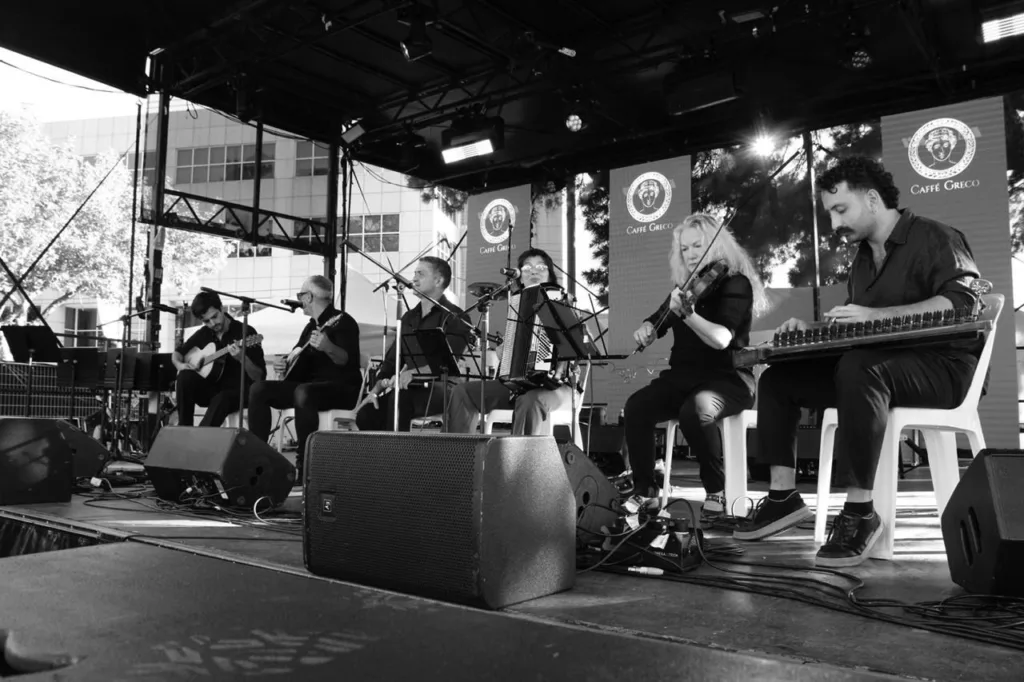
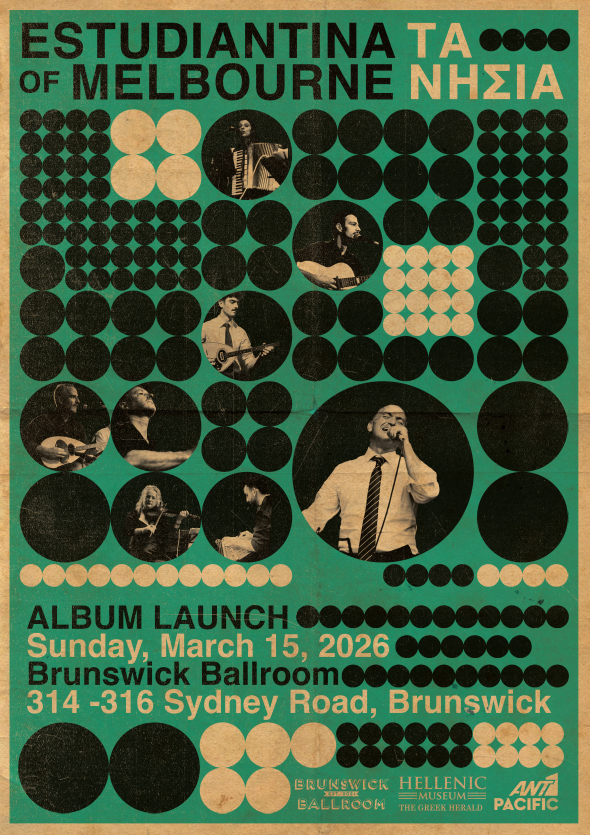
    Estudiantina of Melbourne have announced the release of their highly anticipated second album, Ta Nisia (The Islands), with a special live launch event at the iconic Brunswick Ballroom on Sunday, 15 March 2026.

    Following the success of their debut album Journey to Rebetika, the ensemble returns with a work that captures both continuity and transformation. Ta Nisia is more than a musical homage to the sunlit Greek islands. It marks a pivotal evolution in the group’s artistic journey – honouring their roots in Smyrneika and rebetiko while boldly embracing new creative directions.

    Estudiantina of Melbourne unveil second album 'Ta Nisia' (The Islands)
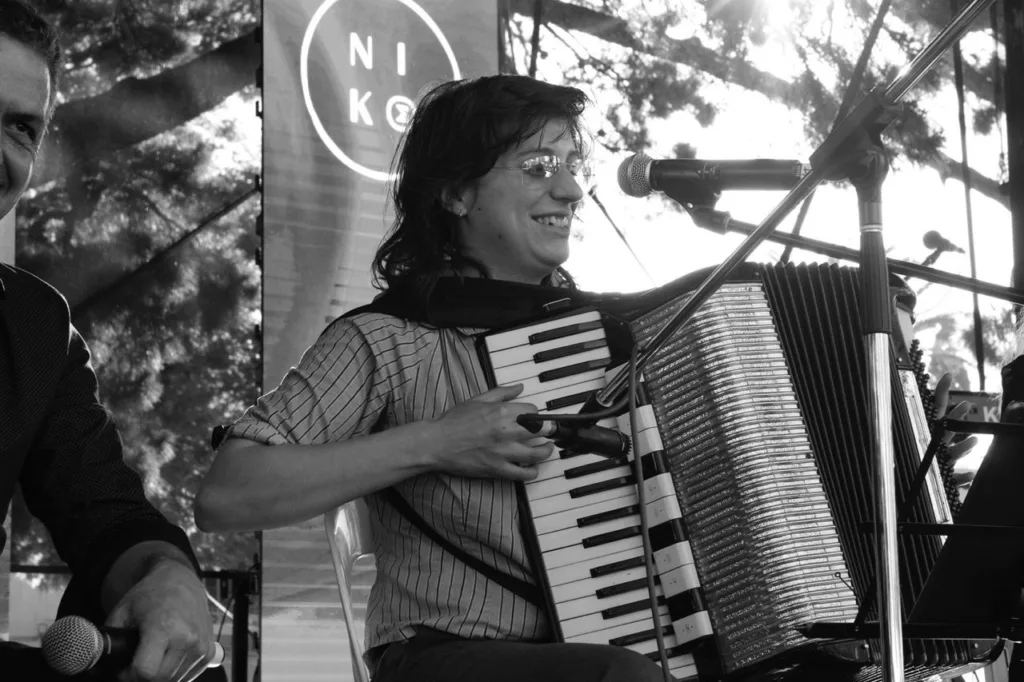
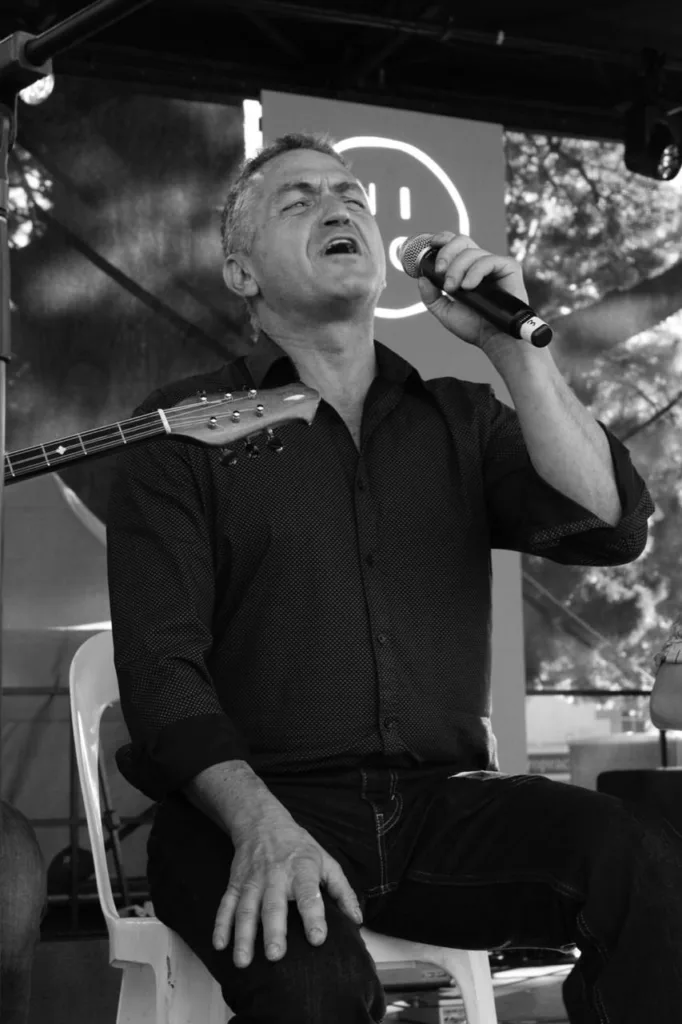
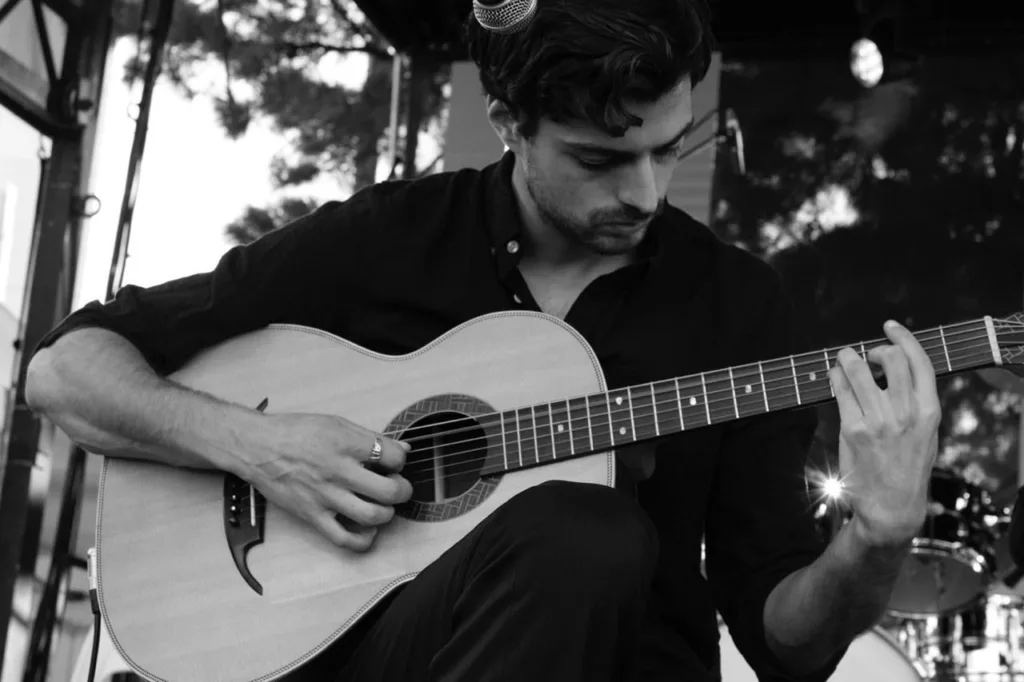
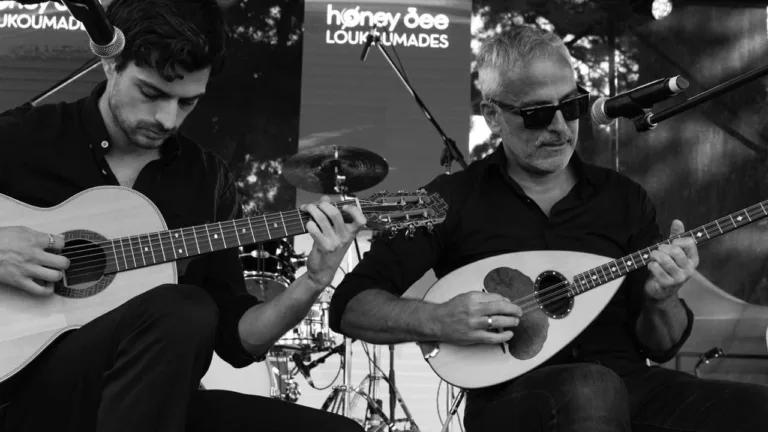
    Estudiantina of Melbourne unveil second album ‘Ta Nisia’ (The Islands). All photos by Sarah Jane Wentzki.

    Ta Nisia operates on both literal and metaphorical levels. Literally, it conjures the shimmering coastlines of the Aegean – whitewashed villages, salt-washed air and glistening seas – reflecting the ensemble’s commitment to Greek musical traditions.

    Metaphorically, the album forms a constellation of musical “islands”: each track stands alone yet remains connected to a wider narrative of migration, identity, growth and belonging.

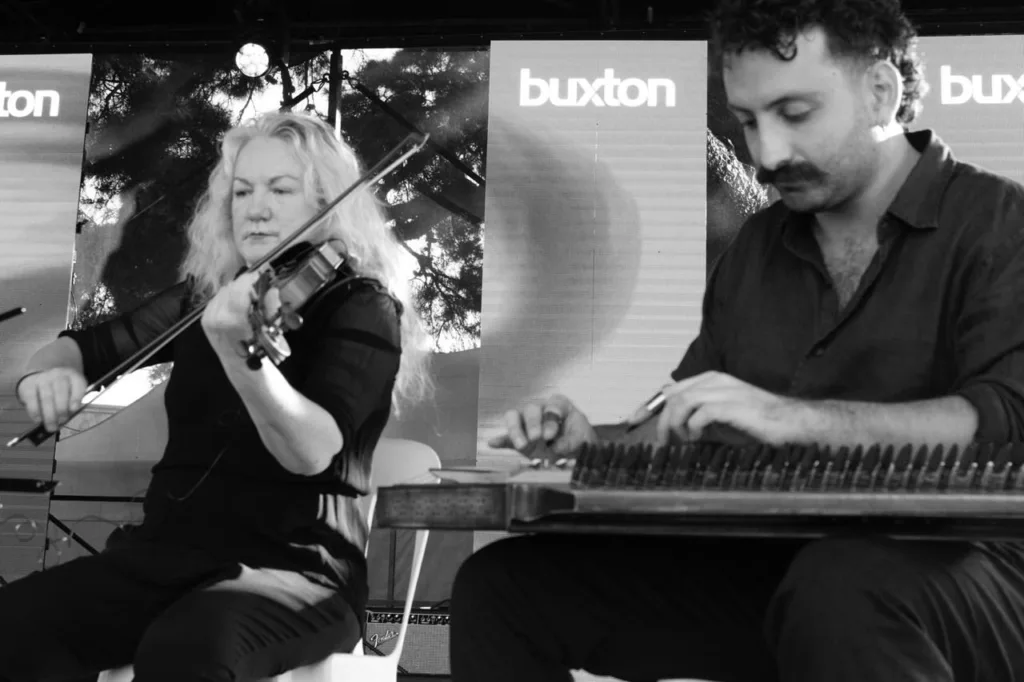
    The ensemble’s core musicians for this album are: Maria Antaras-Dalamagas – Accordion, Vocals, Vagelis Ginis – Vocals, Camille El Feghali – Qanun, Jenny Dixon – Violin, Alex Petropoulos – Guitar, Paul Karalis – Bouzouki, Con Kalamaras – Bouzouki, Vocals, Rosco Heck – Percussion.

    But also expanding with guest artists Indra Buraczewska (double bass) and Tim Meyen (cimbalom – a rare 145-string Austro-Hungarian instrument) further enrich the soundscape, adding depth, texture and a gentle push into unexplored musical territories.

    This album stands as a cultural snapshot of Melbourne’s vibrant multicultural landscape. It speaks to the universality of music – an international language that transcends borders, time and language. At the same time, it pays tribute to Melbourne itself: a city that has quietly but powerfully brought these musicians together.

    In many ways, Melbourne becomes an unspoken member of the ensemble – nurturing their creativity and shaping their collective voice.

    Ta Nisia represents the ensemble’s continuous growth as artists and as individuals. Through performances at festivals and events across Australia, Estudiantina of Melbourne have cultivated a distinctive sound that now resonates internationally. Their work has received attention from Greek media across several continents, firmly positioning them within the global Greek musical diaspora.

    Event Details:

    • Ta Nisia Album Launch Date: Sunday, 15 March 2026
    • Venue: Brunswick Ballroom, Melbourne
    • Tickets here

    This event is proudly supported by Brunswick Ballroom, ANT Pacific, The Greek Herald, The Hellenic Museum, Neos Kosmos, and the Greek Orthodox Community of Melbourne.

    An inspiring night of Greek culture and language at Charles Darwin University

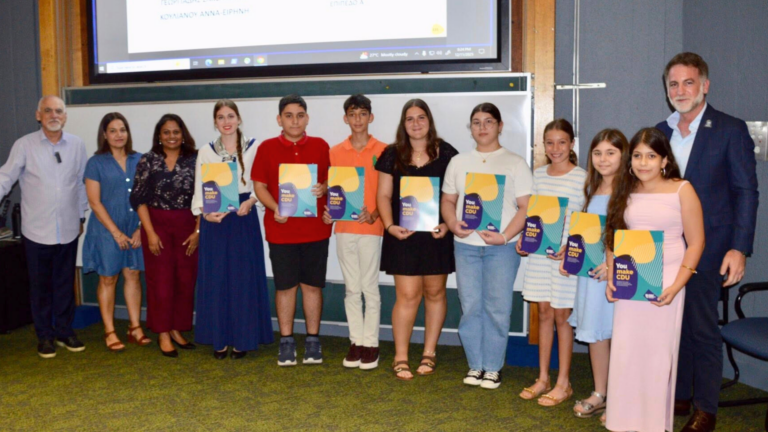
    The Greek Orthodox Community of Northern Australia hosted an “Evening of Poetry and Certificate of Greek Language Awards” at Charles Darwin University (CDU), bringing together students, families and community members for a celebration of Greek language and culture.

    The event featured traditional dances, poetry recitations and the presentation of Greek language certificates to eight young students, who were praised for making the community proud.

    Organisers described it as “an inspiring evening dedicated to the Greek language, poetry, and culture.”

    The Community thanked CDU for its hospitality, parents for their support, and the students themselves – “the future guardians of the Greek language” – for their dedication.

    With continued backing from the Greek Orthodox Community of Northern Australia, the local Greek school, and the “tireless and creative contribution of Professor George Frazis,” the organisation says it remains committed to advancing Greek learning “in our faraway homeland.”

    From tourist to local: Andrea’s journey to a slower, richer life in Greece 

    These days, it feels like more and more Australians – and people across other Western countries – are reconsidering what “home” really means. 

     Since the pandemic, the rise of remote work, soaring living costs, and a growing sense of dissatisfaction – particularly among millennials – have sparked a quiet exodus.  

    Many are trading in the daily grind for something slower, sunnier, and more meaningful. One noticeable trend? A surge in digital nomadism, with Greece emerging as a surprising but increasingly popular destination for those in search of a better quality of life. 

    The Greek Herald spoke to Andrea Smirnneos, who left Sydney for Athens two years ago and hasn’t looked back.  

    Born and raised in Sydney, Andrea carries a rich cultural heritage – her father’s Greek roots and her mother’s second-generation Italian background which have deeply shaped her identity and outlook on life. 

    “I also spent five years living in Melbourne, which gave me a different perspective on life and culture,” Andrea explains. 

    Over time, her love for Greece only grew – something about the people, the warmth, the food, and the history just felt like home to Andrea.

    “After working as a travel agent for five years, I started to really think about how I could bring that love for Greece into my work and help others experience it too,” she says.

    Before COVID, Andrea had always toyed with the idea of moving to Greece.  

    “I was visiting every couple of years, soaking up the culture and dreaming about what life here could look like—but it was always just that, a dream without a solid plan,” she says.  

    But then the pandemic hit, and like for so many of us, everything was put on pause. Andrea’s dream quietly faded into the background over the next few years.  

    “Fast forward to two years ago, I was on holiday in Greece with friends and family when, completely out of the blue, a family friend offered me a role in the travel industry – right in line with my background back in Australia. It honestly felt like fate, and I haven’t looked back since,” Andrea remembers. 

    Andrea jokes that one of her first reality checks after moving to Athens came when she stepped out of “tourist mode” and discovered that everything was closed on Sundays. It was a small but telling moment that reminded her she was no longer on holiday – this was real life in Greece. 

    “Personally, I think my biggest challenge was really understanding the Greek way of life and the pace of how things are done in a casual and professional setting as someone who lives here and not just on holiday,” Andrea explained.  

    She also struggled with the language difference, not just as someone with heritage, but as someone trying to truly live and integrate in Greece. While she grew up hearing Greek, she quickly realised that understanding the local dialect, grammar, and expressions required more than just the version spoken by the Greek Australian community, which often includes lots of slang.  

    On a professional level, Andrea’s biggest challenge was putting herself out there in the tourism world. 

    “Greece is always full of tourists but also full of travel agents who can now provide the same thing, so working on my POD (point of difference) is my biggest challenge”, she explains.  

    Andrea started her travel agency, Get Tripped in 2023.  

    This was initially a Facebook Group with a few members, it’s now grown to a few hundred members, and expanded to a WhatsApp Group, with daily travel life updates and communities.   

    Andrea explains that being an expat herself, assisted in getting her business to stand out.  

    “I also am focusing on growing Get Tripped Girls which is a travel & event community based out of Athens (and hopefully more places soon) connecting girls who are mainly expat, but of course locals are welcome, and we have a few too! We run nights out, cafe catchups, soon to be summer trips and lots more,” she says.

    The rise of in-person communities focusing on interpersonal connection (as opposed to digital connection), has meant many more people are seeking meaningful connections.  

    Andrea often says she wishes more tourists truly understood Greek culture and the lifestyle that comes with it.  

    “It’s best summed up by the phrase “siga, siga”—meaning “slowly, slowly.” It’s not about laziness, but about trusting that things will get done in their own time,”.  

    Learning to embrace that mindset was one of the most valuable—and freeing—lessons of her move. 

    Moving forward, Andrea wants to stay in Greece and has set some goals to achieve that. 

    “Ideally in the next 5 years Get Tripped & Get Tripped Girls will be a fully-fledged European Travel Agency that focuses on Greece & the Mediterranean, along with Get Tripped Girls growing to multiple different countries,” she hopes. 

    Greek Fest @ Bay Street unveils 2025 program for Brighton-Le-Sands celebration

    Sydney, get ready! The Greek Orthodox Community of NSW (GOCNSW) and the Greek Festival of Sydney have officially released the full program for this year’s Greek Fest @ Bay Street, set to transform Brighton-Le-Sands into a vibrant seaside celebration on Sunday, 16 November 2025, from 11am to 10pm.

    One of the most anticipated cultural events of the year, the festival promises a full day of live music, dancing, food stalls, and family-friendly entertainment – all just steps from the beach.

    With free admission and a huge lineup, thousands are expected to pour into Bay Street to celebrate Greek culture and community spirit.

    Big names headline the Main Stage

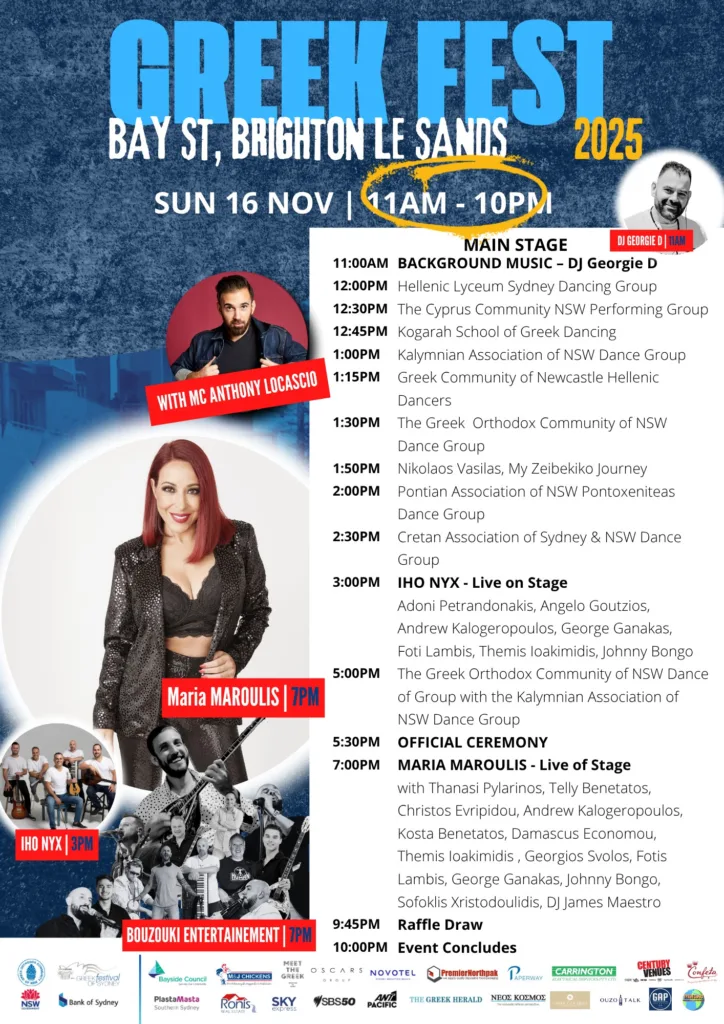
    This year’s headliner is the electrifying Maria Maroulis, who will take the main stage at 7pm.

    Known for her powerhouse vocals and modern take on Greek favourites, Maroulis is set to light up the evening with a high-energy performance accompanied by a full band, including Thanasi Pylarinos, Telly Benetatos, Christos Evripidou, Andrew Kalogeropoulos, Kosta Benetatos, Damascus Economou, Themis Ioakimidis, Georgios Svolos, Fotis Lambis, George Ganakas, Johnny Bongo, Sofoklis Xristodoulidis, and DJ James Maestro.

    Comedian Anthony Locascio will MC the day’s festivities, bringing his trademark humour and Greek Australian storytelling to the main stage.

    Music fans are also in for a treat with IHO NYX, performing live at 3pm, featuring a powerful ensemble of vocalists and musicians including Adoni Petrandonakis, Angelo Goutzios, Andrew Kalogeropoulos, George Ganakas, Foti Lambis, Themis Ioakimidis and Johnny Bongo.

    DJ Georgie D kicks off the festival from 11am, setting the tone with Greek summer hits and dance favourites.

    A full day of dance and cultural performances

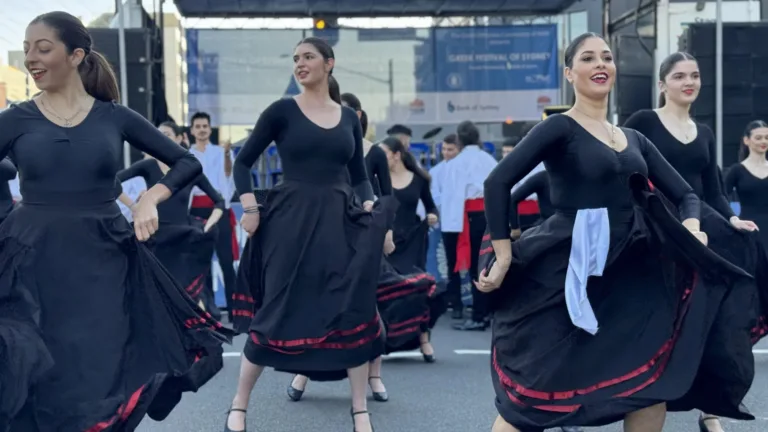
    From midday onward, the Main Stage will showcase the incredible depth of Hellenic Australian cultural talent, with performances by:

    • Hellenic Lyceum Sydney Dancing Group (12:00pm)
    • Cyprus Community NSW Performing Group (12:30pm)
    • Kogarah School of Greek Dancing (12:45pm)
    • Kalymnian Association of NSW Dance Group (1:00pm)
    • Greek Community of Newcastle Hellenic Dancers (1:15pm)
    • Greek Orthodox Community of NSW Dance Group (1:30pm)
    • Pontian Association of NSW Pontoxeniteas (2:00pm)
    • Cretan Association of Sydney & NSW Dance Group (2:30pm)

    The festival will also feature a special performance by Nikolaos Vasilas, My Zeibekiko Journey, appearing on both stages.

    An official ceremony will be held at 5:30pm.

    Junior Stage on Moate Avenue

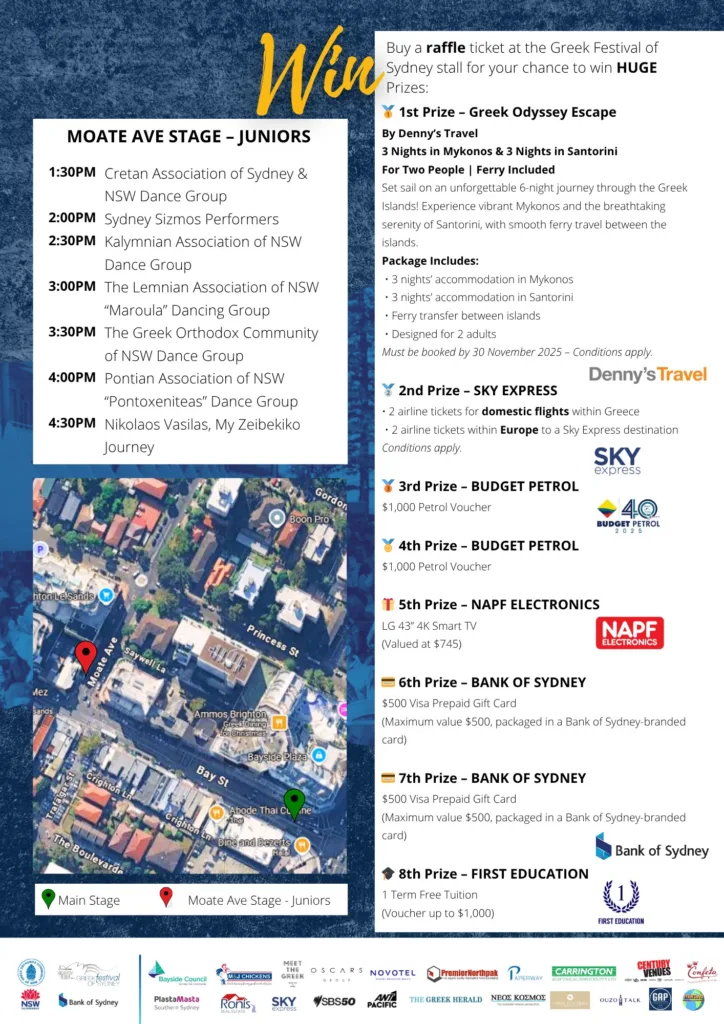
    Families and younger dancers will take centre stage at the Moate Ave Juniors Stage from 1:30pm, featuring:

    • Cretan Association of Sydney & NSW
    • Sydney Sizmos Performers
    • Kalymnian Association of NSW
    • Lemnian Association of NSW “Maroula”
    • Greek Orthodox Community of NSW Dance Group
    • Pontian Association of NSW “Pontoxeniteas”
    • Nikolaos Vasilas, My Zeibekiko Journey

    A feast of Greek food and summer vibes

    No Greek festival is complete without an abundance of food, and Bay Street will once again be lined with stalls offering all the classics – gyros, souvlaki, loukoumades, Greek sweets and more.

    With the ocean breeze drifting in from Brighton Beach, festivalgoers can enjoy the perfect fusion of food, live music, dance, and summer fun.

    Huge raffle prizes announced

    The Greek Festival of Sydney stall will be selling raffle tickets, offering major prizes including:

    • 1st Prize: 6-night Greek Odyssey Escape – 3 nights in Mykonos & 3 nights in Santorini (Denny’s Travel)
    • 2nd Prize: Sky Express airline tickets for domestic and European flights
    • 3rd & 4th Prizes: $1,000 Budget Petrol vouchers
    • 5th Prize: LG 43” 4K Smart TV (NAPF Electronics)
    • 6th & 7th Prizes: $500 Bank of Sydney Visa Gift Cards
    • 8th Prize: First Education – 1 Term Free Tuition (value up to $1,000)

    Raffle draw takes place at 9:45pm.

    A celebration for all ages

    With two stages, dozens of performers, local dance groups, big-name musicians, children’s entertainment, and endless food options, Greek Fest @ Bay Street is set to be one of the standout community events of the season.

    Whether you dance, eat, shop, listen or simply soak up the atmosphere, this festival has something for everyone.

    Event Details:

    • Date: Sunday 16 November 2025
    • Time: 11am – 10pm
    • Location: Bay Street, Brighton-Le-Sands
    • Admission: FREE | All Welcome

    Standing ovation for Tina Stefanou’s ‘Ways of Singing’ at 2025 John Berger Memorial Lecture

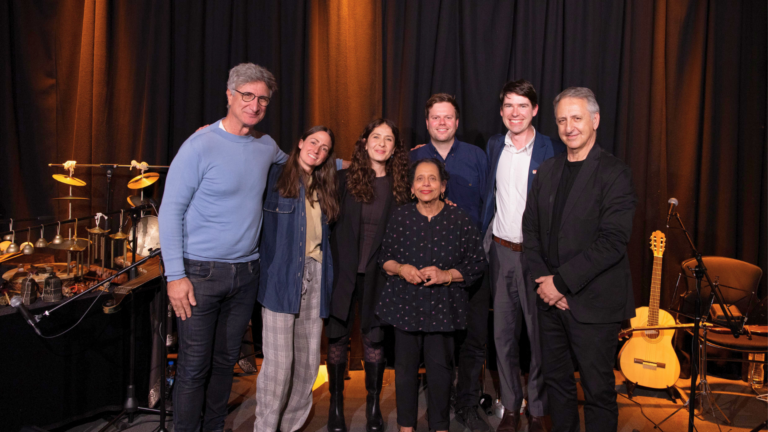
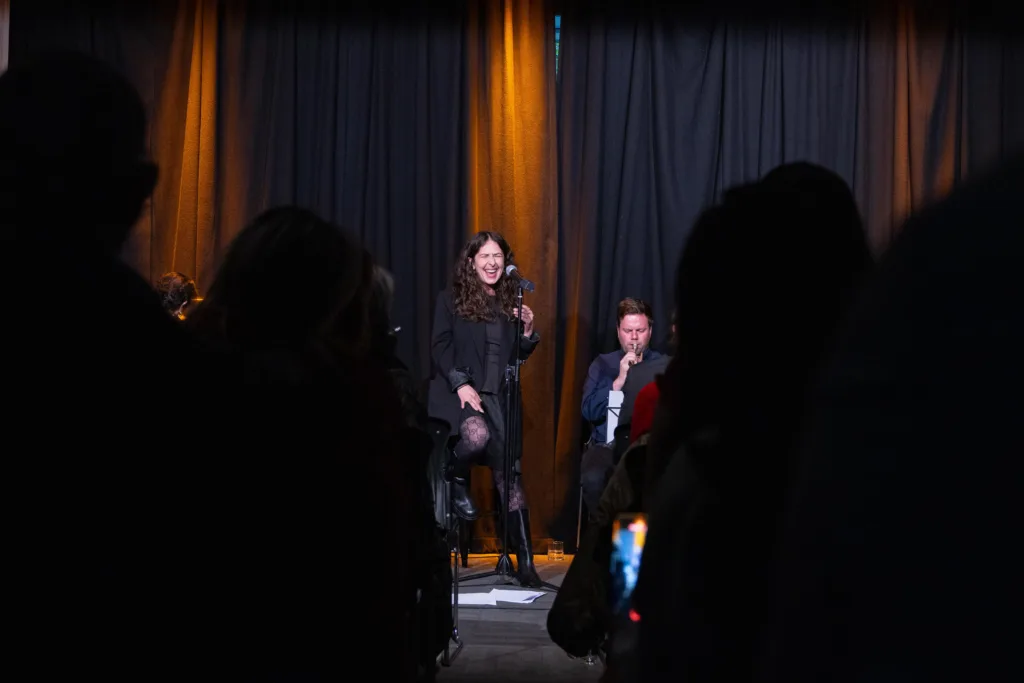
    A full house gathered at The Greek Centre on Wednesday night, as artist Tina Stefanou delivered this year’s John Berger Annual Lecture to a packed audience. 

    The event attracted artists, art practitioners, academics, students and community members who came to experience Ways of Singing, Stefanou’s performative reimagining of John Berger’s Ways of Seeing through the embodied and insurgent capacities of vocality.

    Stefanou’s performance explored vocality, phonophobia, the chorus and listening as social, cultural and environmental forces. resonance and listening as social, cultural and environmental forces. 

    Drawing on her multidisciplinary practice, she invited the audience to consider how voice moves between people, places, mediums, animals, and memory.

    Jim Bossinakis, Chair of the Cultural Committee of the Greek Community of Melbourne, said, “Experiencing Tina’s reimagining of John Berger’s work through voice was extraordinary. The depth of attention in the room and the standing ovation spoke to how powerfully the performance resonated with the audience.”

    Reflecting on the performance, Stefanou said, “It felt important to assert my energy as a researcher who thinks through the live voice, working with my struggles with words, but also to bring a chorus of improvisors into this space of discourse, beyond and through the spoken word.” 

    Speaking to the act of listening, she added, “The words can move beyond themselves moving in others, and you can make your own connections.”

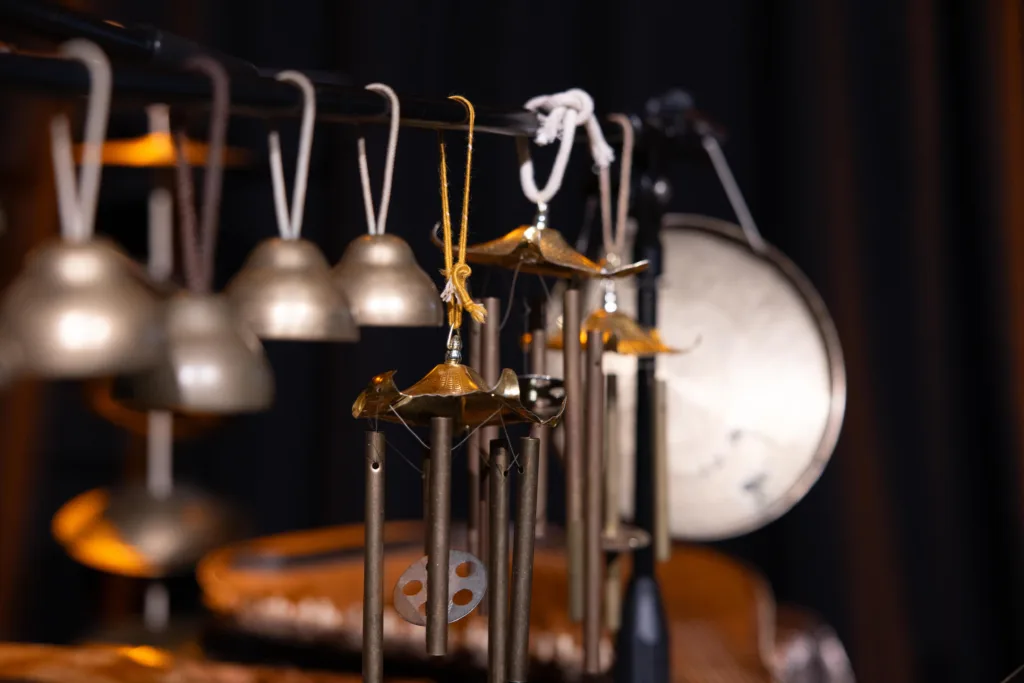
    Ways of Singing featured a live ensemble: Durè Dara (percussion), Lisa Salvo (voice), Tom Stewart-Toner (electric guitar and objects) and Callum G’Froerer (trumpet). Together, they created an improvised sonic environment that framed the lecture as a collective act of listening.

    The response in the room was immediate, with the event concluding to a standing ovation.

    The fourth annual Greek Community Cup kicks off

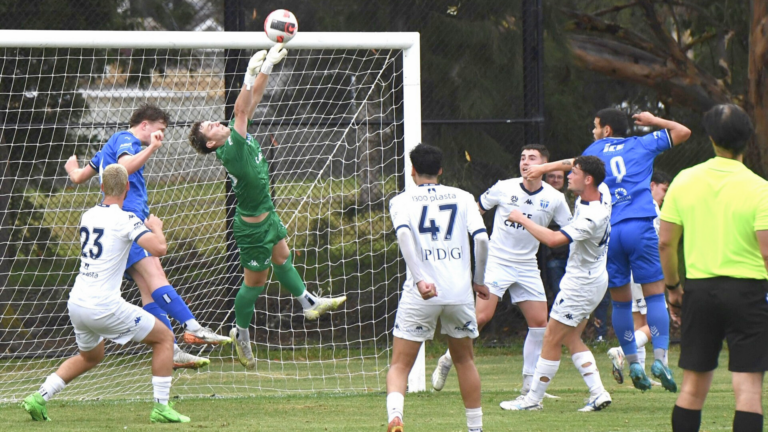
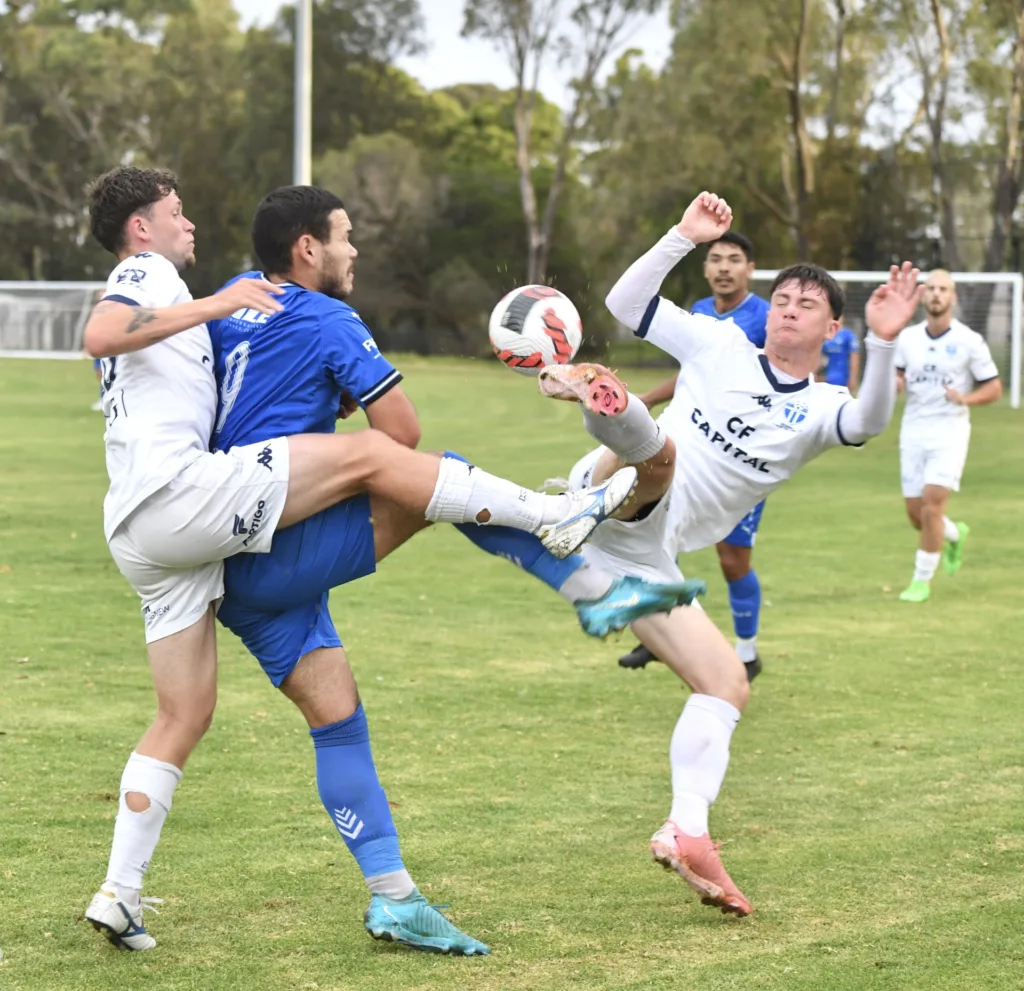
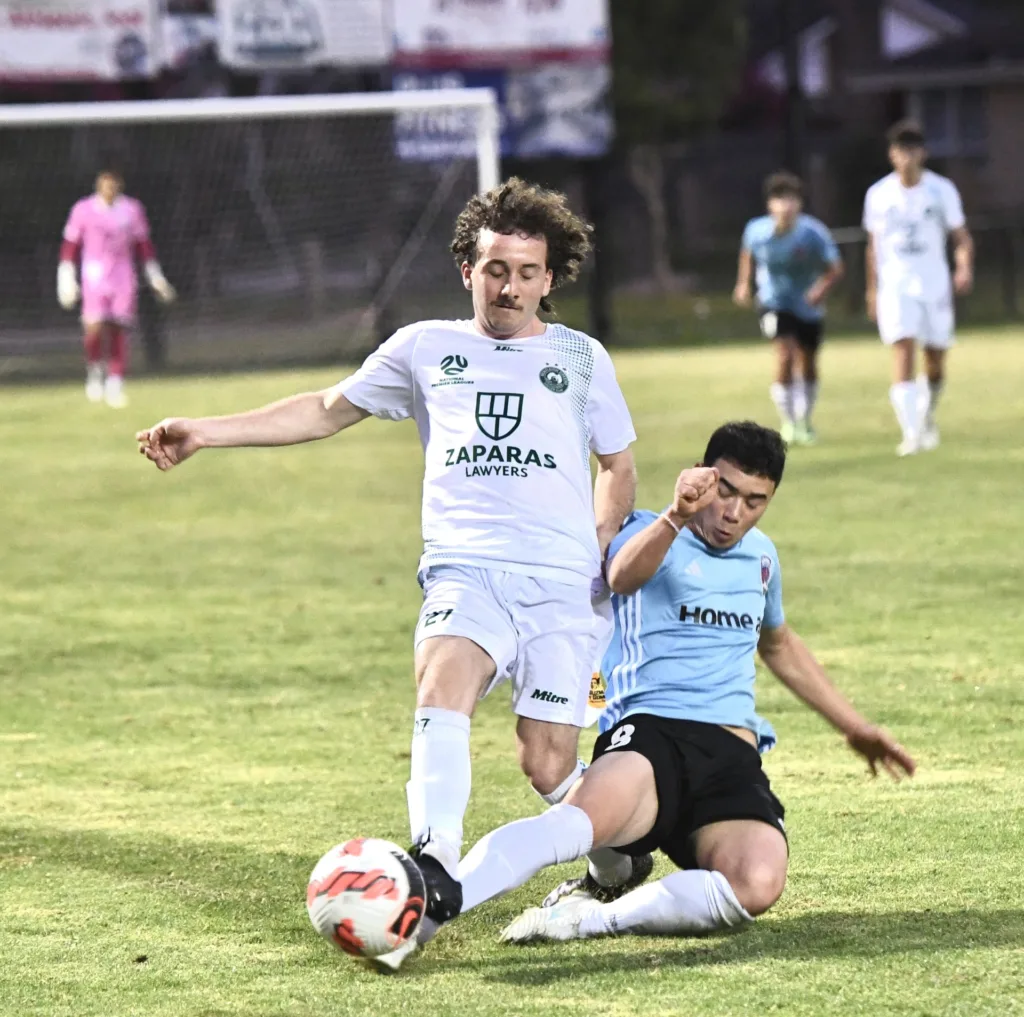
    The 4th annual Greek Community Cup begins today, bringing together Greek Australian football clubs and supporters for a competitive and community-focused tournament. 

    Hosted by Mill Park Football Club and running until December 7, the tournament brings together clubs and supporters from across Melbourne for competition and strong community spirit. 

    Following the success of January’s tournament, which featured standout National Premier League (NPL) sides including Heidelberg United, Oakleigh Cannons FC and reigning champions South Melbourne Hellas, this year’s Cup is set to deliver another exciting fixture of matches. 

    Opening weekend matches:

    Four games will be played across the opening weekend: 

    Friday 14 November 

    • 7:30pm: Box Hill United vs Heidelberg United 
    • 7:45pm: Malvern City vs Mill Park 

    Sunday 16 November 

    • 1:00pm: Bentleigh Greens vs South Melbourne 
    • 1:15pm: Heidelberg United vs Northcote City 

    Games will continue through to December 7. Full fixtures are available at greekcup.com.au

    The Greek Community Cup remains a valued pre-season opportunity for clubs to trial new players, strengthen team cohesion and engage supporters ahead of the regular season. 

    Each team will play at least four games, with standard matches played in two 35-minute halves and finals in 45-minute halves. The winning club will be awarded the Greek Community Cup trophy, with medallions and prize money presented to players. 

    Come along to Partridge Street Reserve and enjoy the opening games of the Greek Community Cup.

    Kooyong MP meets parents calling for accessible Greek bilingual programs in public schools

    0

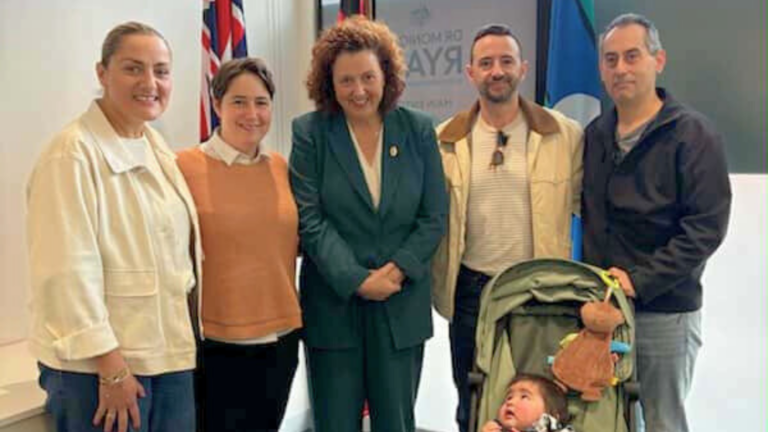
    Parents from the Malvern Greek Story Time program recently met with Dr Monique Ryan, Independent Member of the House of Representatives for Kooyong, to advocate for accessible and local Greek–English bilingual education pathways for their children.

    The parents participate in a free weekly Greek and Key Word Sign immersion program held every Friday morning during school terms at Malvern Library. Sessions regularly attract more than 50 parents, carers and pre-schoolers who gather to sing, dance and speak Greek together, often filling the entire library with activity.

    Despite the program’s success, parents expressed significant concerns about the lack of ongoing bilingual learning opportunities. 

    “We want pathways – and local, accessible pathways at that,” one father said. “Right now, the only Greek bilingual program in the state school system is in Lalor. It’s 30 to 50 per cent Greek instruction, but it’s nowhere near us. It’s not a feasible option for our family.”

    When Dr Ryan asked about after-school language programs – which the federal government currently supports – parents responded that these options are insufficient. 

    “Those programs are only three hours a week and compete with every other aspect of life. We want a truly bilingual program where 30 to 50 per cent of learning is in Greek. Lalor Primary offers around 20 hours a week in Greek – that’s real bilingual education, not three hours,” one parent said.

    Parents asked whether the federal government could extend incentives to public schools to establish bilingual streams, noting that while Commonwealth funding had been provided for after-hours language schools, no equivalent support exists for bilingual programs in the state system.

    In discussing potential locations, Dr Ryan acknowledged that she was meeting with parents inside a major “learning hub” — the Hawthorn–Camberwell area — which hosts four French bilingual programs across both public and private schools. 

    “We want this model replicated across Victoria,” parents said. “We want equity and accessibility.”

    Evie, the facilitator of the Malvern Greek & Key Word Sign Story Time program, responded immediately and confidently when asked where a Greek bilingual program should be established. 

    “Oakleigh or Huntingdale would be ideal,” she said. Drawing on her experience mapping language needs through the federal ELLA program and the Victorian Bilingual Kindergarten initiative, she highlighted the strong local Greek-speaking demographic and the readiness of families to continue their language journey.

    Evie also noted that similar hubs could be established for other communities: Springvale for Vietnamese and Berwick for Indian languages, among others. “We have the children, and we have the parents wanting to continue the language journey,” she said. “Now the government must provide the pathways.”

    Parents expressed hope that the Victorian Multicultural Commission and the Department of Education will work together to commit to introducing a minimum number of bilingual programs across the state school system in the coming years.

    Unity in faith: SOFIA USYD’s pan-Orthodox panel draws over 250 students

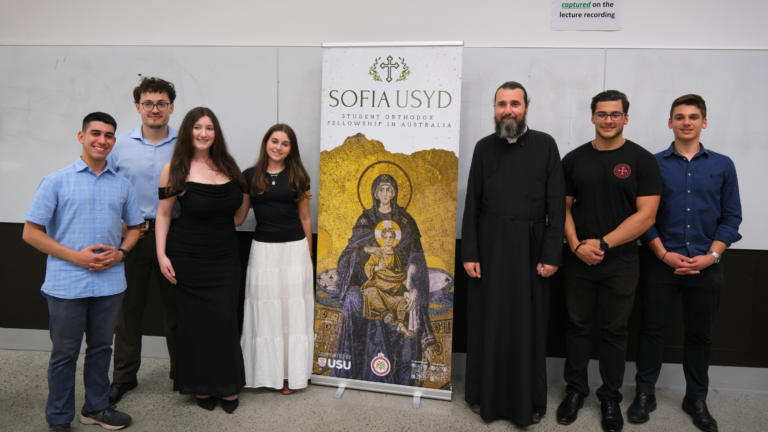
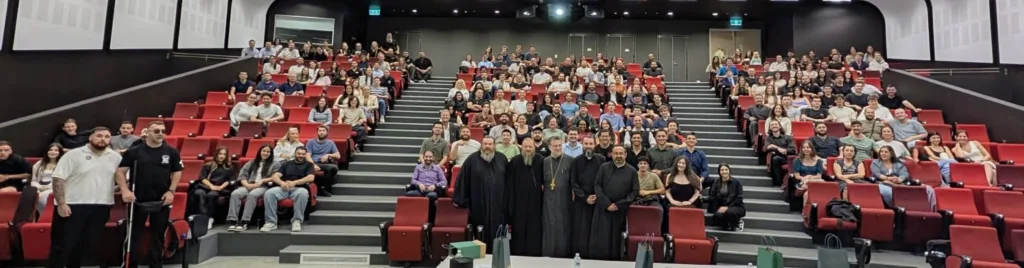
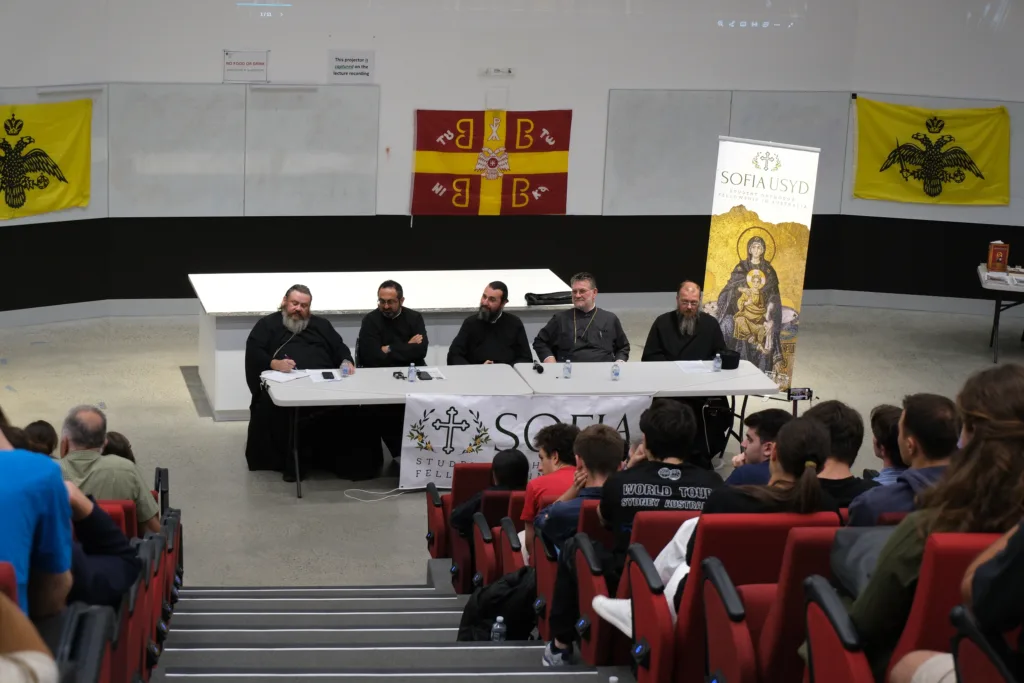
    Sydney University Orthodox Society’s remarkable 2025 revival reached its grand finale on Thursday, November 6, with a vibrant pan-Orthodox panel that brought together five priests of different nationalities. 

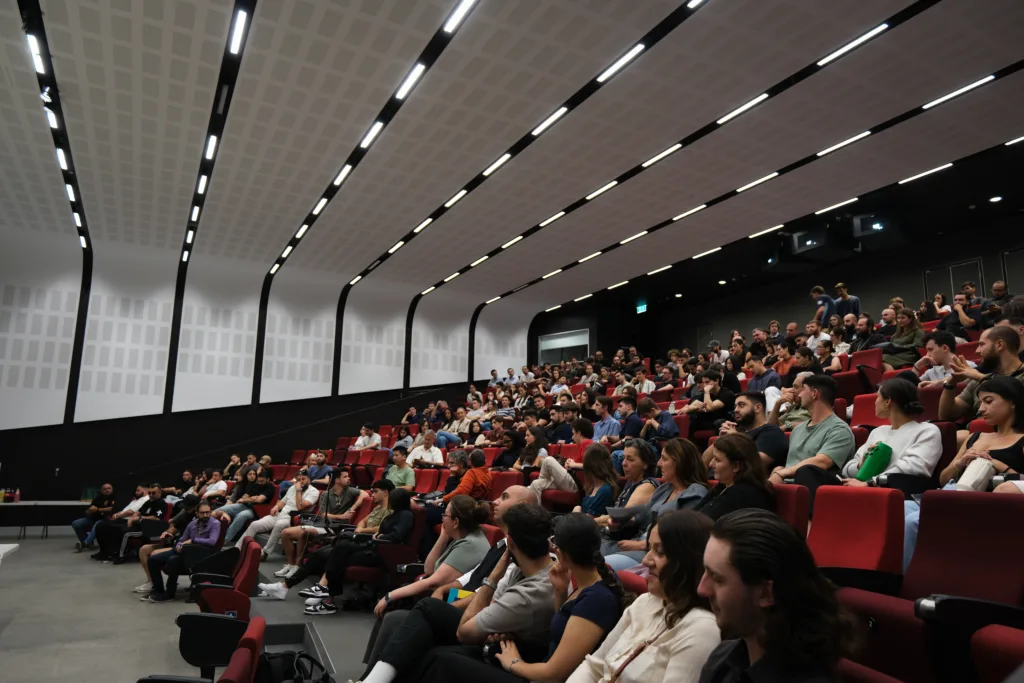
    It was a striking image of Orthodox Christian harmony and solidarity on a campus that is growing ever more uneasy with traditional faith and values. The event, which drew over 250 attendees, marked a fitting conclusion to a year of thriving activity and renewal for the society.

    More than 250 Students came together for the End of Year Talks.

    Founded in the 1980s, the Sydney University Orthodox Society (SOFIA USYD) has long been a pillar of support for Orthodox Christians on campus, providing a space for students to deepen their faith and build lasting friendships through weekly meetings and community engagement. 

    Over the course of 2025, SOFIA USYD has hosted more than 20 events, including Welcome Weeks, guest speaker talks, sports games, monastery trips, and combined gatherings with fellow SOFIA groups at UNSW, UTS, and Macquarie University. 

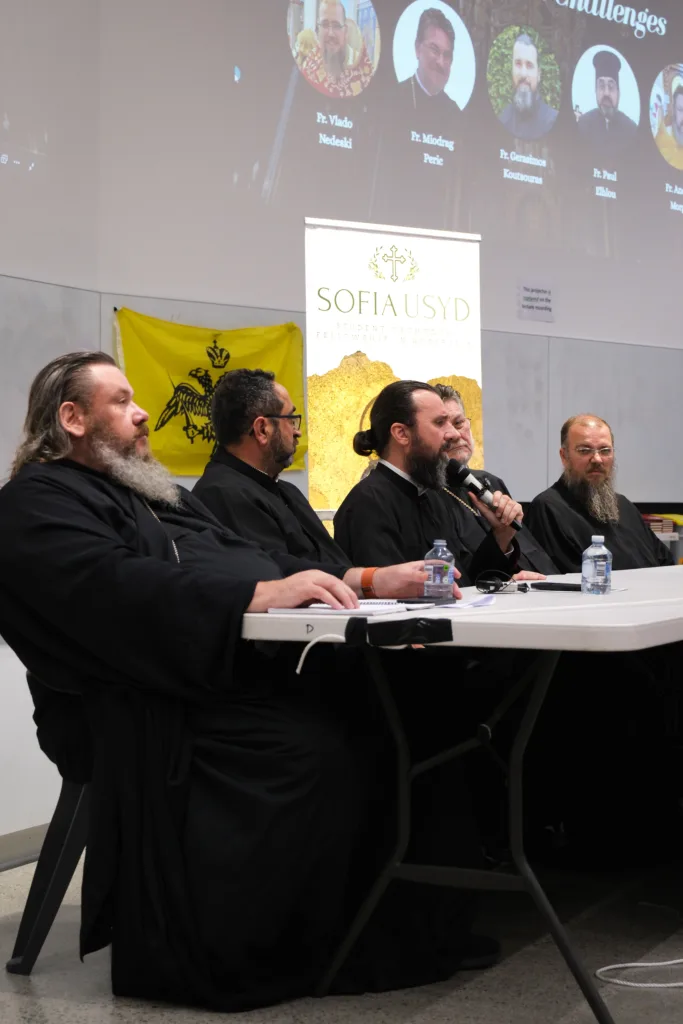
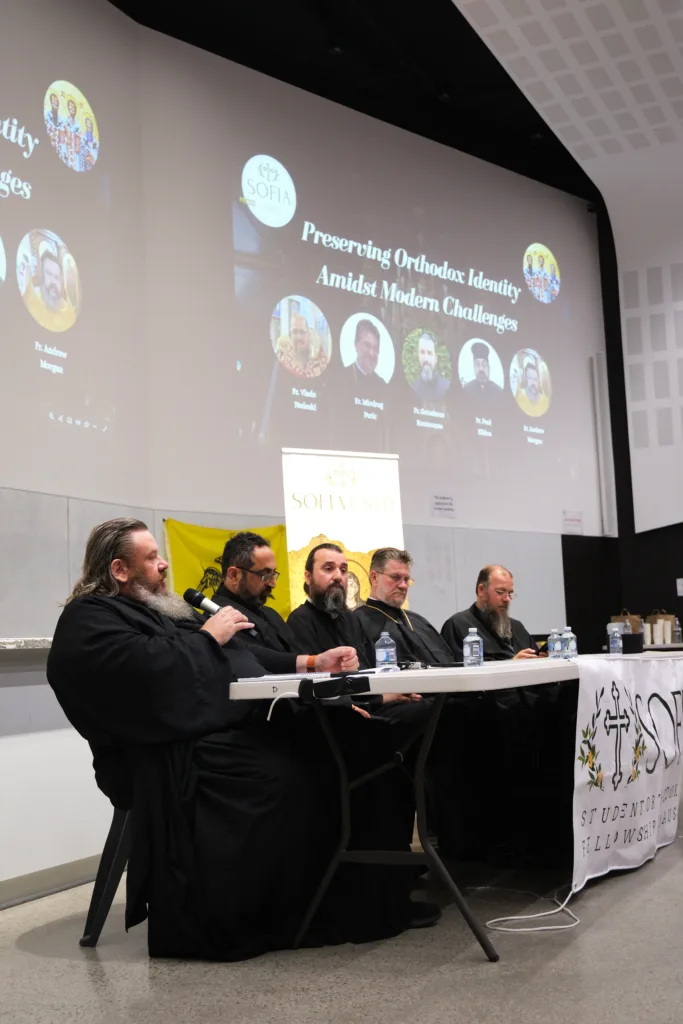
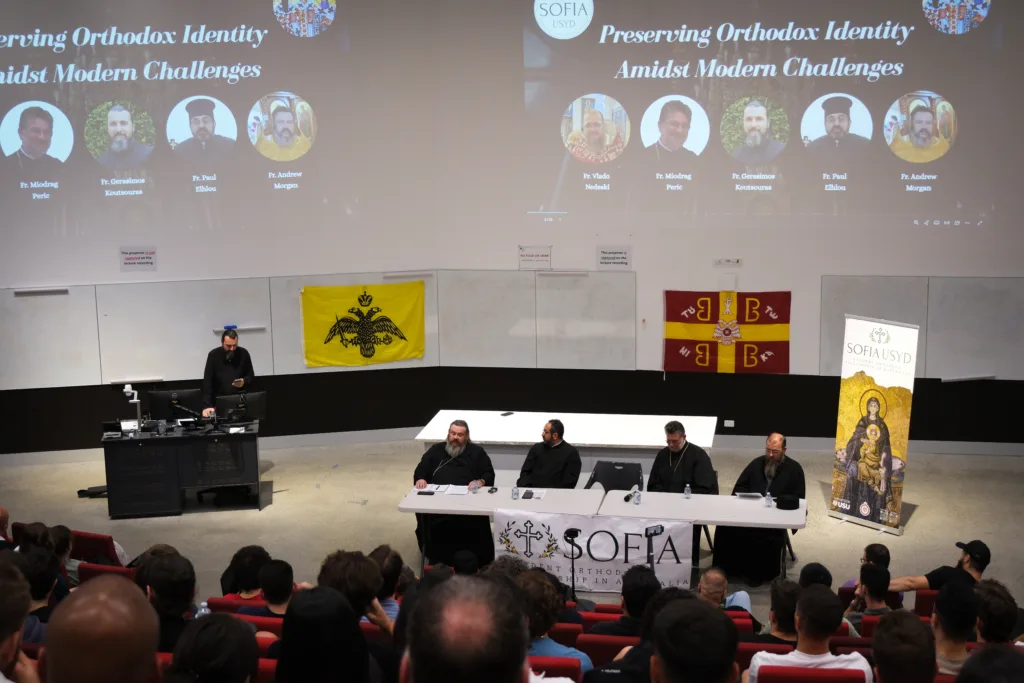
    This year’s end of year talk, titled Preserving Orthodox Identity Amidst Modern Challenges, was delivered by five esteemed priests of our Orthodox Church: Fr. Gerasimos Koutsouras, Fr. Miodrag Peric, Fr. Vlado Nedeski, Fr. Paul Elhlou and Fr. Andrew Morgan. 

    Father Gerasimos as the Keynote Speaker.

    The talk was led by SOFIA USYD’s chaplain, Fr. Gerasimos, who reflected on how Orthodox identity is both a divine gift and a lifelong commitment, with the other priests offering insightful reflections and responses during the discussion and Q&A session that followed.

    Christine Karabalis, the Associate Vice President of SOFIA USYD, played a key role in organising the event, coordinating the involvement of priests from different parishes and extending the invitation to the wider Eastern Orthodox community. 

    Reflecting on the night, Christine shared, “this event showed that our youth are ready to embrace their faith courageously, understanding that Orthodox identity is something we actively acquire and protect from the pressures of the world.”

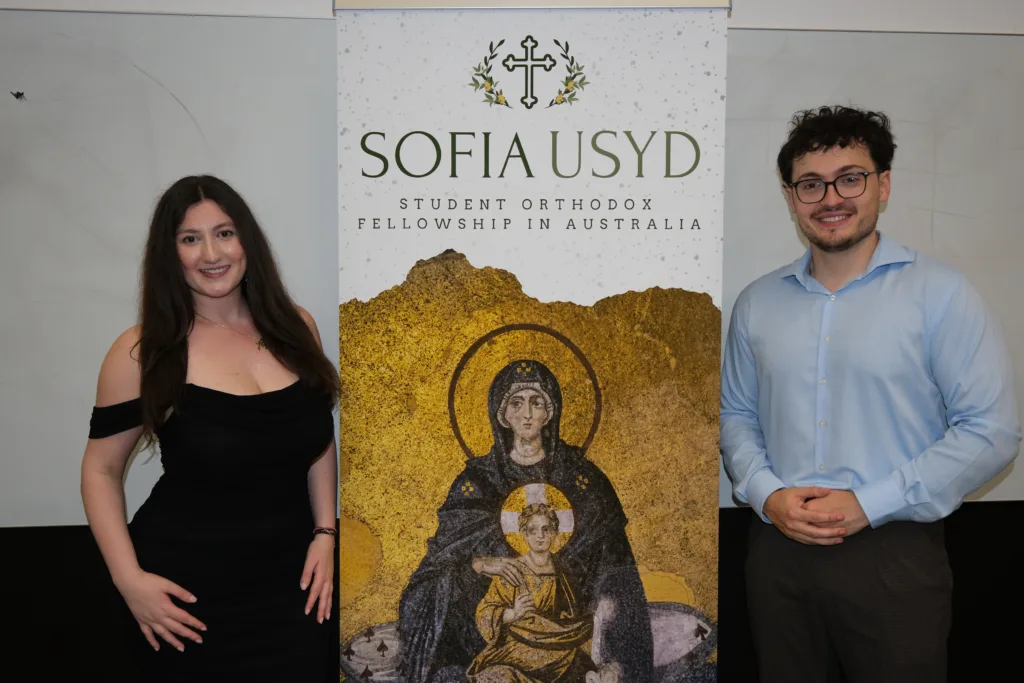
    Christine Karabalis and Christos Missiris.

    Christos Missiris, President of SOFIA USYD, added: “It was moving to witness the unity of the Orthodox churches and to see so many young people engage thoughtfully with the discussion, reflecting on what it truly means to acquire and live out their faith.”

    Moreover, Nektarios Karpouzis, the Vice President, observed that “this event sent a stark and resounding message to all: the Orthodox youth of Australia stand unshaken and united. Their presence is felt in every corner, they are unyielding in their faith, and they have firmly secured their presence with the Orthodox youth fighting in a society that is constantly growing more hostile to traditional values.”

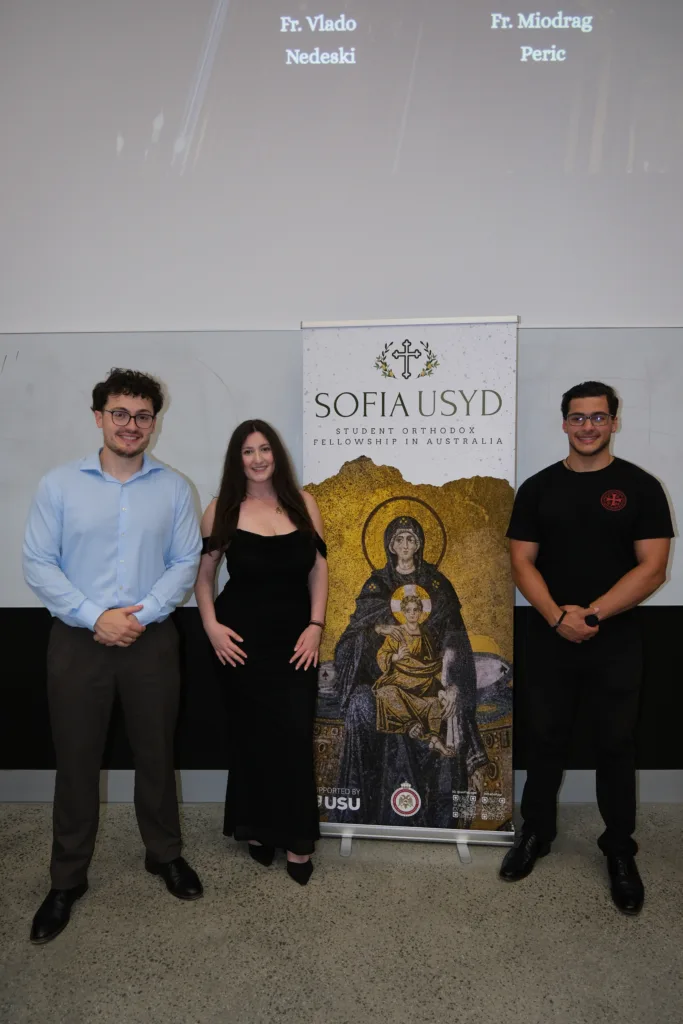
    (L-R): Christos Missirs, Christine Karabalis and Nektarios Karpouzis.

    A central theme that emerged throughout the panel discussion was that of love and unity. The Fathers emphasised that the second greatest commandment is to “love your neighbour as yourself,” reminding everyone that Orthodoxy transcends ethnic boundaries and political orientations and disputes. Above all, we are – firstly and exclusively – Orthodox Christians.

    This love, they reminded us, must also extend to the heterodox; yet when our faith is ridiculed or insulted, we must speak with courage, for silence in the face of this is not love, but complicity.

    To learn more about the society and stay updated on upcoming events, follow on Instagram at @sofiausyd.

    SOFIA USYD extended thanks to other SOFIA executive members – Dimitrios Yalizis, Angelique Malakonakis, and Raphael Dokos for their dedication and support, and to David Karpouzis from @sofiamacquarie for capturing the evening through his photography.

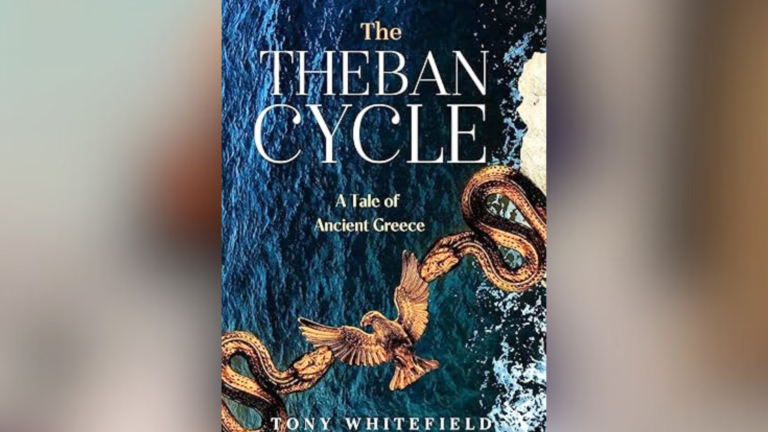
    A mythological reimagining: Reviewing Tony Whitefield’s ‘The Theban Cycle’

    Philhellene author and academic, Tony Whitefield welcomes readers to gather close and immerse themselves in the Thebes of 1189 BCE and beyond, delving deep into the echoes of Greek mythology and ancient atmospheres that are now spoken of as legend.

    As most stories often do, this retelling of historical fiction commences with a heartfelt dedication. Whitefield’s, in this case, preserves the memory of his daughter Katerina, ensuring her presence remains within the fabric of the book’s coin-capped 30 chapters and 300 pages.

    Plunging into the myth-dwelling, aqueous cover from the onset, cyclic symbolism flows where an eagle can be seen between two snakes – enchanting all to read on and discover the “fated” fables, “prophetic” wedding gifts, and what makes “more gold than sense”.

    Whitefield masterfully reimagines the fragmented yet sacred legacy of the Theban Cycle’s four historic Greek epics, enveloped in a tapestry embroidered with both tragedy and heroism.

    Uninhibited and woven with whimsical annotations, the author’s tone is laced with a thought-provoking essence and educational “offerings”, serving to help determine the accuracy of many “pre-destined” events.

    Mythophiles will be bestowed with a more “mundane” yet digestible version of the lives, loves, and losses of the “triple-cursed”, “pitiable” and “exiled royal” Oedipus, his mother and wife, Queen Jocasta, the blind and “wise” seer Tiresias and his daughter Manto, sacrificial Antigone, Alcmaeon of the “Epigoni”, and even the “Suppliant Women” of Argos.

    From the very beginning, inextricably linked themes of loyalty, power and atonement float throughout the “miasma” as time highlights the book’s core purpose – learning from the past and asking ourselves, “what harm comes from truth?” – especially when it’s “mixed up with gods”, “falling kingdoms”, and “hallucinogenic oracle concoctions”.  

    theban cycle
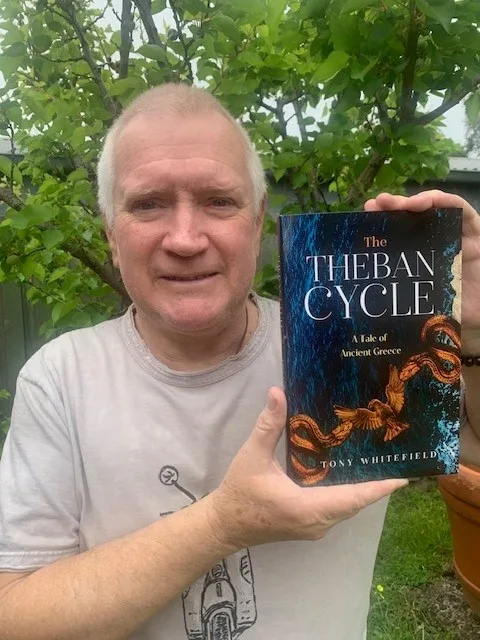
    Philhellene author and academic, Tony Whitefield, with his new book.

    Before King Kadmus sets the soul-seeking ventures in motion by journeying to find his lost sister, Europa, the primary protagonist ponders on his “lacklustre existence”, helping to reflect a greater universal human conundrum – “surely there is more to life than this?”

    Like every cycle, an inescapable nature of repetition remains at the forefront and aftermath of each multi-faceted narrative within, which is abundantly clear in the case of King Laius’ neglectful “defiance” and “tyrant” Creon’s “arrogant hubris”.  

    Whitefield’s “grain-of-salt” approach and straightforward storytelling, along a shifting timeline, allows for a more nuanced, flexible, and less dramatic interpretation of the “inherited consequences” faced by all controversial figures involved.

    Fearless in his mythographic exploration, the author keeps it unmistakably unfiltered when integrating even the day-to-day human need for “colonic cleansing” amid the “blood-soaked beds” and brother vs. brother battles, as in the case of Polynices and Eteocles.

    He showcases just how some “unwittingly, unknowingly, and very much unfortunately” devastating patterns can entangle everyone for the sake of simply desiring to belong somewhere or to something – “Why are we attacking Thebes?” “I don’t know” “Did they do anything to us? “I don’t know”.

    Riddles, age-old customs, the effect of the Nemean Games, and the allegiance between King Adrastus and “boar-emblazoned” Prince Tydeus in the “Seven Against Thebes”, all earn their place alongside even the most infamous heroes in that of “Argonauts leader”, Jason, his Limnian queen, and mighty “Hercules”.

    Finally, for detailed references and further insight, entire sections on “main characters”, “the Theban Cycle from history”, “author’s notes”, “additional readings”, and “videos and podcasts” bring the story full circle following a present-day reflection of the Temple of Apollo at Delphi.

    All in all, there is certainly something unique about a plot that invites its audience to pause on occasion, “drink some wine”, and insists on its “ambushed” and “surrendered” characters taking “refuge from the midday sun” despite the permeating chaos.

    On this note, we could certainly raise a glass to Mr Whitefield’s grounding evaluation, which helps to bridge the gap between myth and reality… an iteration of the Theban Cycle that will only get better with age, just like a connoisseur’s favourite red or white.

    Στην υγειά σας! (to your health!)