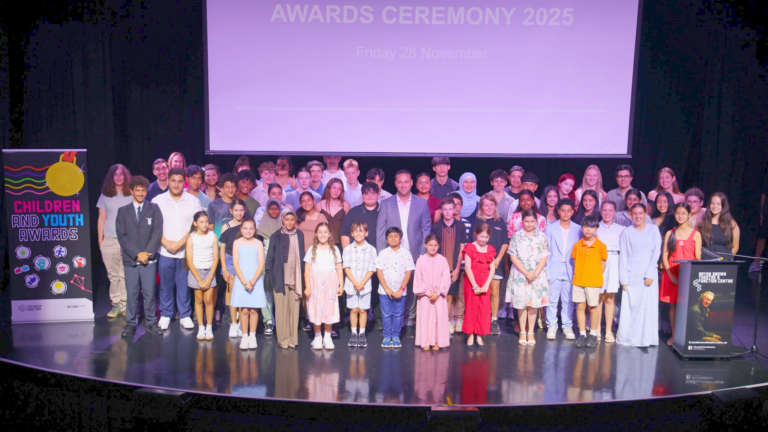
The inspiring and outstanding accomplishments of 21 high achievers have been recognised at the 2025 City of Canterbury Bankstown Children and Youth Awards.
Among those recognised were:
Estelle Freeman, a 9-year-old Padstow resident who helps cook meals for families in need and creates handmade cards for seniors in nursing homes.
Prahar Shukla, an 8-year-old Earlwood resident who is an award-winning public speaker and has represented Australia on the world stage.
Thien Ha Vo, a 13-year-old Yagoona resident who volunteers and provides philanthropic support to the Children’s Cancer Institute, Ovarian Cancer Australia, St Vincent de Paul, The Children’s Hospital at Westmead and Vietnamese Youth Orchestra.
Mayor Bilal El-Hayek said the City was lucky to be home to such hard-working and community-service-minded young people.
“These children are awesome and I congratulate them for what they are doing in our community,” Mayor El-Hayek said.
“They are making a real difference, whether it is bringing joy to our elderly or putting aside time to help others.
“They are a credit to their families, schools and the entire community. What bright futures they have ahead of them.”
Revesby resident Piper Goyen was one of the winners recognised for her success as a national sports commentator, player, debater and community volunteer.
Piper, an 18-year-old proud Aboriginal woman, has her sights set on becoming a sports journalist after she finishes her HSC and she credits her family for helping her succeed.
“My family is extremely proud and supportive of everything I do and are a huge part of how I’ve had so many opportunities,” she said.
“From years of driving me around to sports, school events, etc they are proud of the things I am now doing myself and with my life.”
Mayor El-Hayek said he was especially impressed with the work 9-year-old Estelle Freeman is doing when it came to our elderly.
“I can just imagine the smile on the faces of the nursing home residents who receive one of her handmade cards. Written from the heart and lots of love,” he said.
CBCity Children and Youth Award 2025 recipients
Children’s categories:
Inspiration – Amir Bentaalla, Mariam Kharboutli, Kylie Masterton, Israa Vidmar and Mohammad Reza Mirzaee
Contribution – Sofia Wallace, Kashmala Khan, Noor Mohammad Faruk Hussain, Christian Burke and Estelle Freeman
Leadership – Laila El Sayed, Sara Azam, Evie Doroszuk, Prahar Shukla and Sophie Harikopoulos
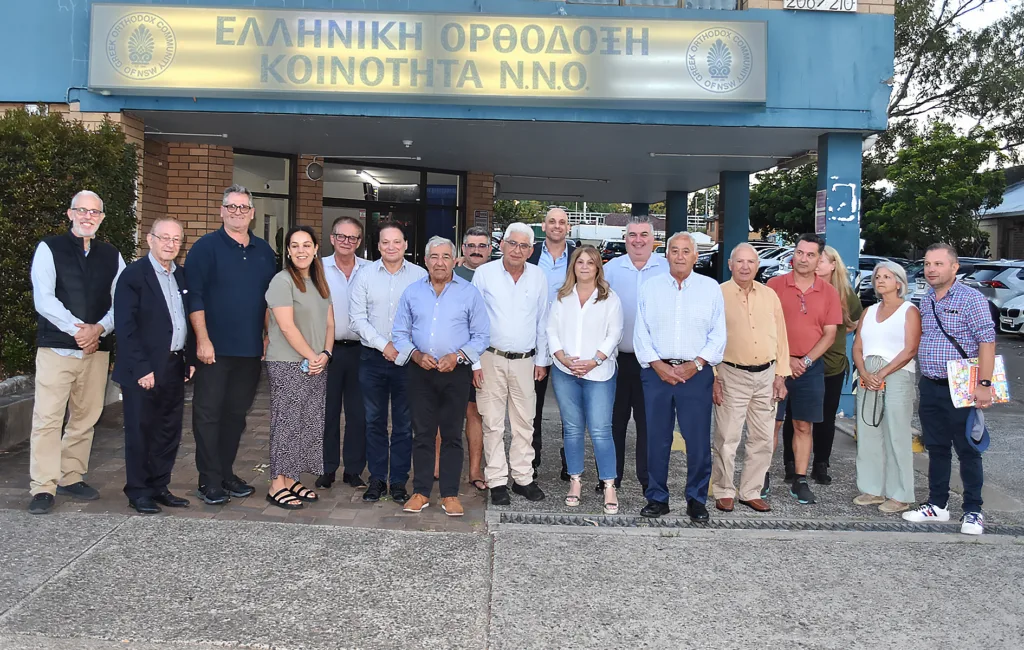
The Greek Orthodox Community of New South Wales (GOCNSW) has announced the formation of its new Board of Directors and Executive Committee following last Sunday’s elections.
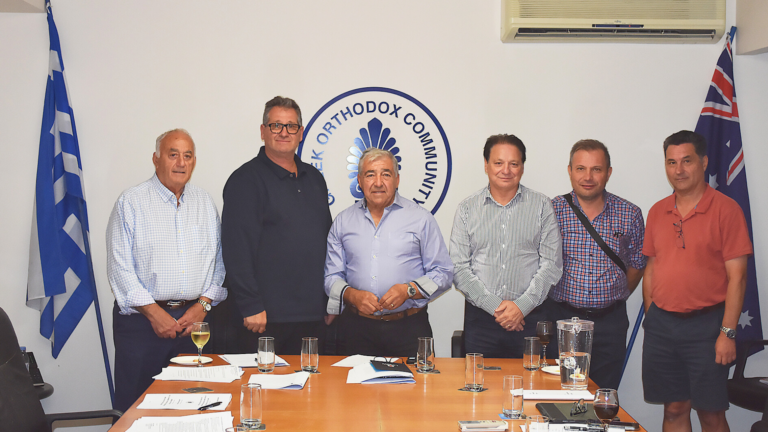
The newly elected Board convened earlier this evening for its first official meeting, during which executive positions were determined.
The new Executive Committee is as follows:
President: Con Apoifis
Vice President: Chris Skiladellis
Secretary: George Diamantaris
Assistant Secretary: Con Spiropoulos
Treasurer: John Terzis
Assistant Treasurer: Con Mavrokordatos
Additionally, Sue Persefoni Thliveris has been appointed the new Chair of the Greek Festival of Sydney, one of the community’s most significant cultural celebrations.
The first meeting of the board was held with 18 of the 20 elected members present. It was noted that Dimitris Arvanitishas resigned, while Ioannis Zoumpoulis, currently overseas, will participate and serve on the Board upon his return.
The full list of elected board members includes: Houliaras Olympia, Costa Athanasia, Zoras Evangelos, Koulouris Stanley, Psarros Jim, Bekris Dimitris, Tsintilas Peter, Paschalidis/Papadopoulou Georgia, Tsilioris Peter, Ronis Peter, Zoumpoulis Ioannis, and Katris Nikitas.
Newly elected President Mr Apoifisacknowledged the responsibility of stepping into a role held with distinction by former President Harry Danalis for many years.
“Assuming leadership of the Koinotita and following in the enormous footsteps of Harry Danalis is a significant challenge. I approach this role with respect and caution, knowing how much he contributed to our community,” Mr Apoifis stated.
Mr Apoifis emphasised that the Board’s foremost priority is to serve the Koinotita.
“We are here for the good of the community, to elevate its work, and to ensure that Greek culture, language, and history continue to be promoted and strengthened. Our aim is to take the Community to the next level,” he said.
The Greek Orthodox Community of NSW extended warm congratulations to all elected board members and executive officers. Their commitment, dedication, and willingness to serve are greatly appreciated, and the Community looks forward to the positive contributions they will bring in the coming term.
The Greek Orthodox Community of NSW remains committed to serving the Greek Australian community through cultural, educational, and social initiatives.
Football Australia has confirmed the match officials for the inaugural Australian Championship Final, marking another important milestone in the competition’s first season.
Across the campaign, referees have been widely credited for their professionalism, consistency, and contribution to the strong standard of football delivered each round.
The Final appointments recognise officials who have excelled throughout the season and continue to progress through Australia’s refereeing pathway, with many targeting future opportunities in the Isuzu UTE A-League Men’s competition.
Leading the team for the Final is Referee Eric Saba (Football NSW), supported by Assistant Referees Cameron Wright (Football NSW) and Alessandro Llana (Football NSW). The lineup is completed by Fourth Official Declan Woods (Football Victoria) and Fifth Official Luke Gennimatas (Football Victoria).
Taking charge of the Championship’s first Final is Eric Saba, whose calm authority, match management and consistent high-level performances have been praised by clubs and assessors throughout the season.
Saba made his Isuzu UTE A-League Men’s debut last week in the Central Coast Mariners FC v Melbourne City FC fixture. He began his refereeing journey with the North West Sydney Football Referees Association before progressing through Football NSW’s development system.
Joining Saba on the touchlines are Cameron Wright and Alessandro Llana, representing the Macarthur District Football Referees Association and Manly Warringah Football Referees Association respectively. Wright was appointed to the 2022 and 2024 NSW NPL Grand Finals and made his Isuzu UTE A-League Men’s debut last year, while Llana officiated the 2025 NSW NPL Grand Final.
Supporting the on-field team including the use of Football Video Support (FVS) during the Final, are Declan Woods and Luke Gennimatas. Woods, a graduate of the Football Australia Referees Academy (FARA), made his Isuzu UTE A-League Men’s debut last year, while Gennimatas recently officiated at the 2025 CommBank Emerging Socceroos Championships.
Completing the team is Match Day Observer, Alessandro Arbizzani, from Football Victoria. Arbizzani regularly coaches officials in the NPL system and was the appointed assessor for the 2024 Hahn Australia Cup Final.
Each official has earned their selection through strong performance data, match assessments, and their contribution to maintaining the high officiating standards seen across the Championship’s debut season.
Football Australia Head of Refereeing, Jon Moss, said, “This first season has demonstrated the tremendous depth we have in Australia’s refereeing ranks. The officials have embraced the challenge of a new competition and delivered performances that match the Championship’s elite standard.”
“The use of FVS for the first time in this country has been historical, and successful, and we look forward to how our officials will perform in the Final,” he added.
“The inaugural Australian Championship has highlighted the power of our refereeing pathways. When officials commit to their development and seize the opportunities in front of them, moments like this Final appointment become possible. We’re enormously proud of the team selected for this historic match,” Football Australia General Manager – Elite Refereeing, Alan Shortall, said.
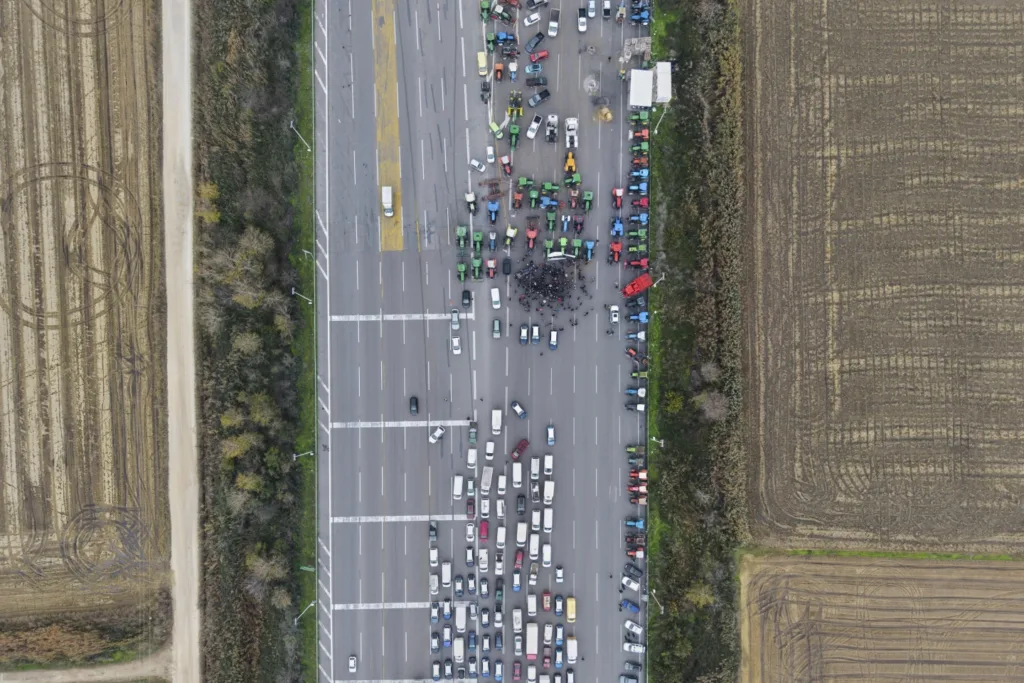
Farmers in northern Greece blocked major border crossings on Wednesday, December 3, defying a government warning as protests escalated over delays in European Union-backed subsidy payments.
The delays emerged after revelations of widespread fraudulent claims for EU funds, which prompted the June resignation of five senior officials and the phased shutdown of the state agency handling subsidies.
Tractor convoys disrupted routes to North Macedonia, Bulgaria and Turkey, following earlier road blockades over the weekend.
Photo: AP Photo / Giannis Papanikos.
Public order minister Michalis Chrisochoidis said the government is open to dialogue but will not tolerate closures of key transit hubs.
Dozens have been arrested nationwide for allegedly filing false claims, after an EU investigation linked the case to “a systematic large-scale subsidy fraud scheme and money-laundering activities.”
The farming sector has also been hit by goat and sheep pox, leading to a mass livestock cull.
Protest leaders vowed to expand demonstrations. “The poorer we get, the more determined we become… The money was stolen by opportunists,” said blockade committee member Kostas Tzelas, urging the state to recover the funds and return them to farmers.
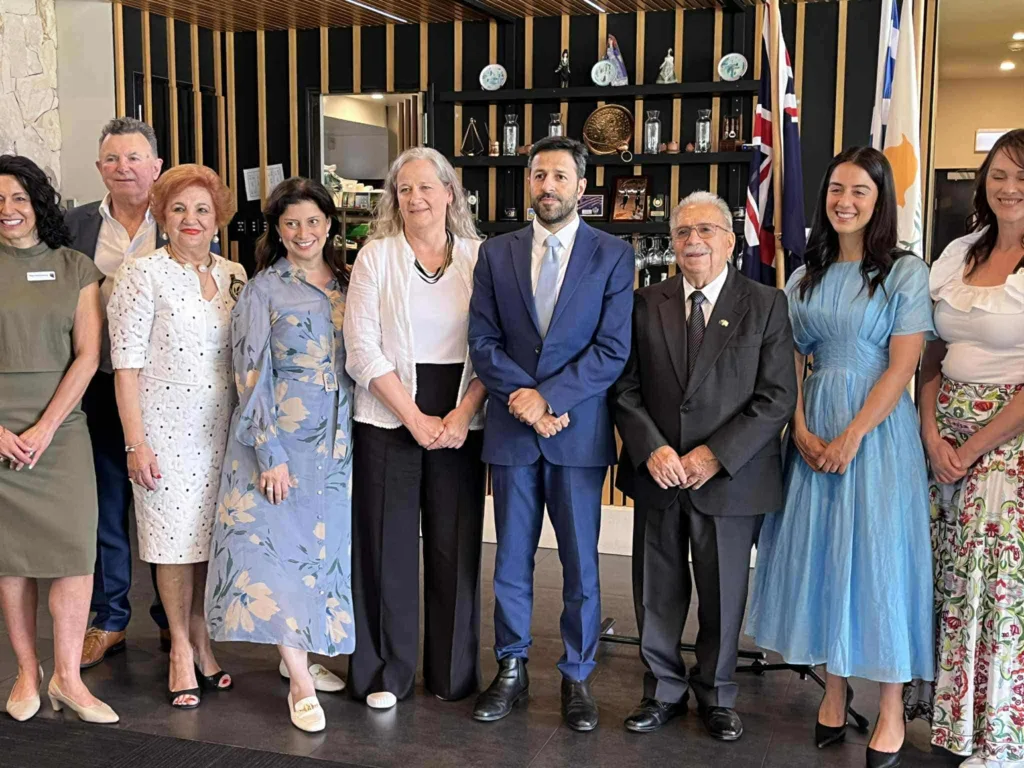
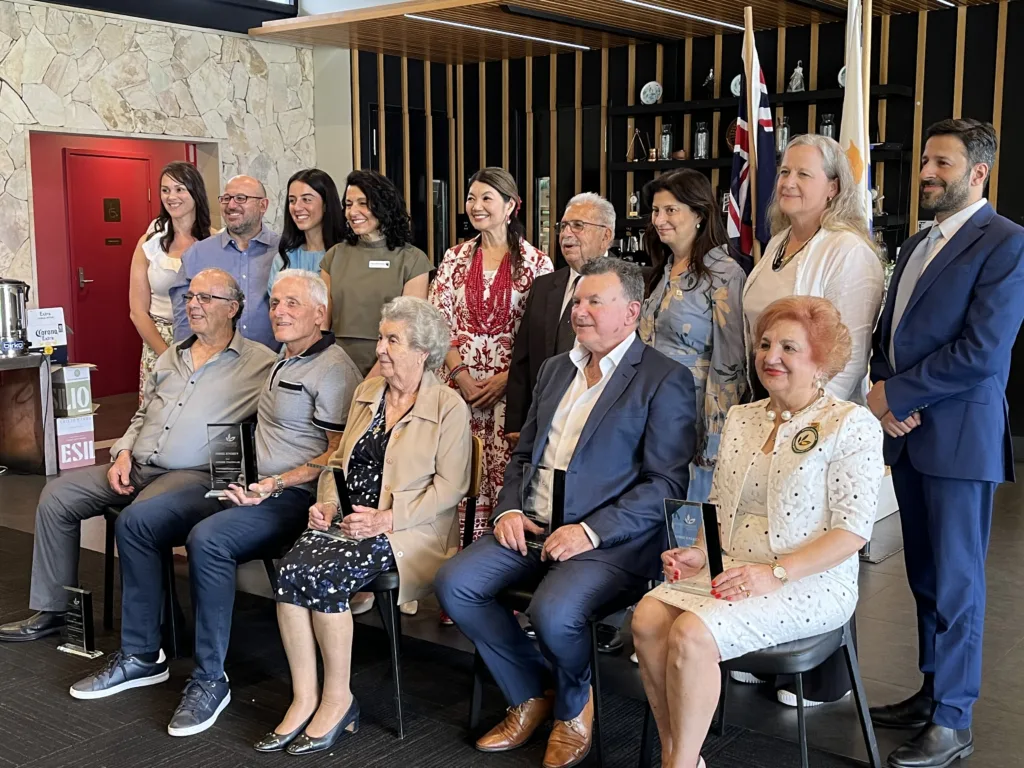
The Cyprus Community of South Australia recently celebrated a milestone of pride and unity, holding a special Independence Day Luncheon that brought together politicians, community leaders and residents of all ages.
The event drew a large crowd and featured reflections on Cyprus’ struggle for independence, as well as tributes to those who have strengthened Cypriot life in South Australia.
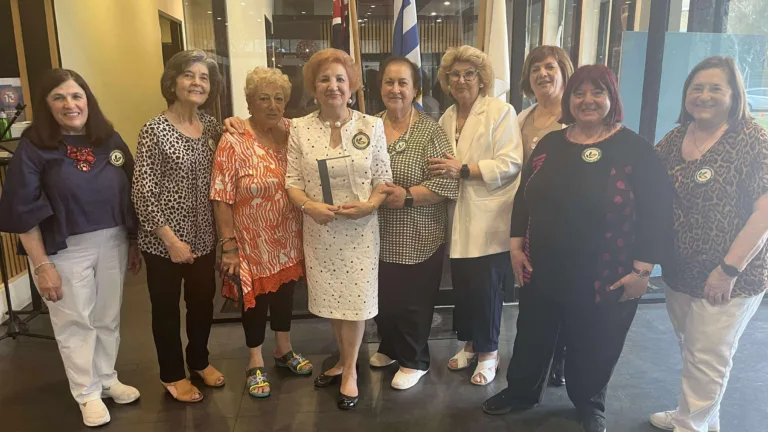
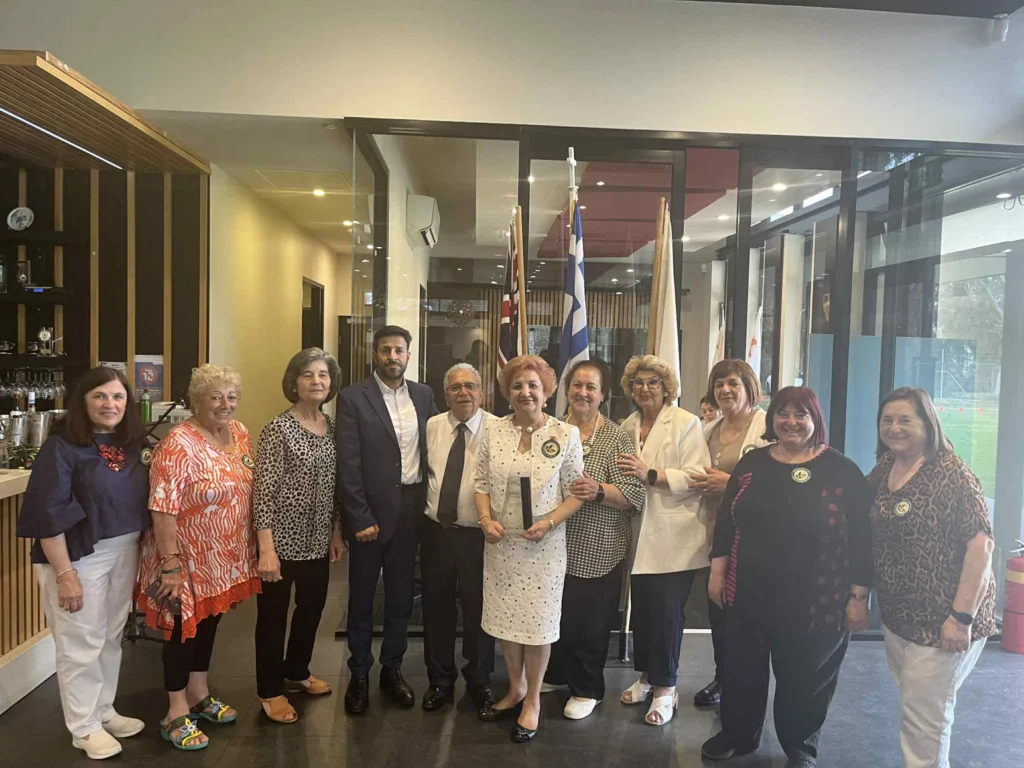
One of the most moving moments of the afternoon was the recognition of individuals who have made exceptional contributions to the community – including founding Ladies Auxiliary member and long-serving president Thekla Petrou, who was honoured for 50 consecutive years of service.
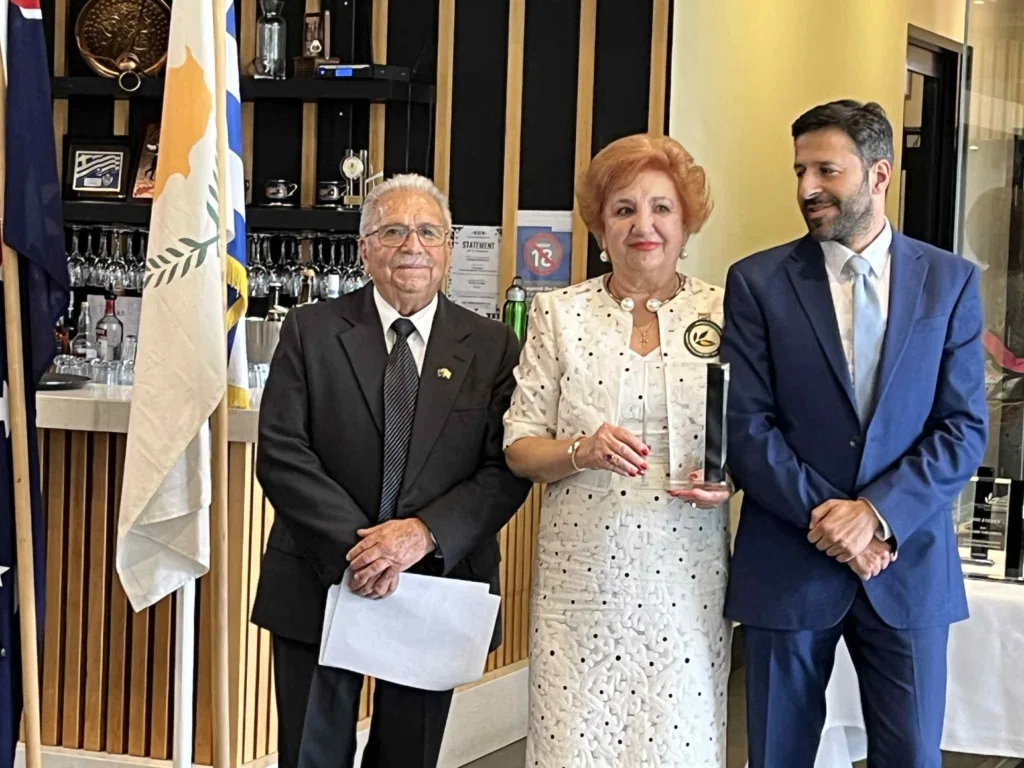
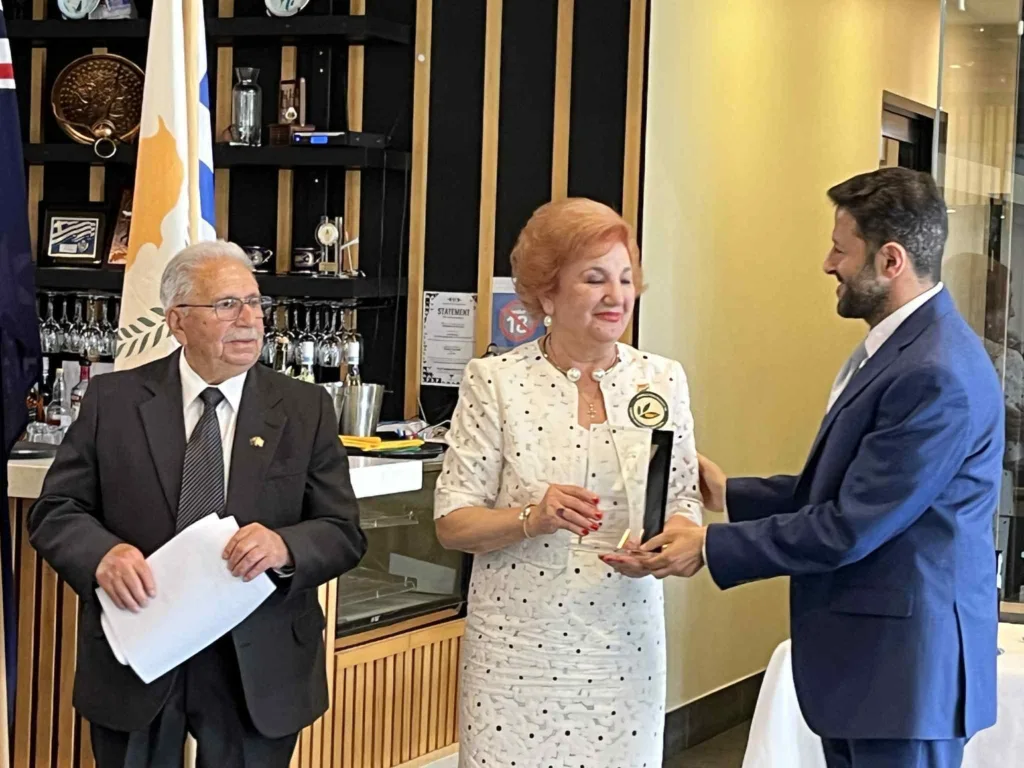
The ceremony was attended by the Deputy High Commissioner of the Republic of Cyprus, Nicholas Varellas, who presented awards alongside other distinguished guests.
Thekla Petrou (centre) stands next to Cyprus Community President Christos Ioannou (left) and Deputy High Commissioner of the Republic of Cyprus, Nicholas Varellas (right).
A tribute to a community pillar
In his address, Cyprus Community President Christos Ioannou paid an emotional tribute to Mrs Petrou, describing her as “one of the pillars of our Community.”
“Our first honouree is a woman whose name is synonymous with dedication, leadership and love for our community – Mrs Thekla Petrou,” he said.
“For an extraordinary 50 years, Thekla has devoted herself to the Ladies Auxiliary, including 30 years of distinguished service as President. Through countless events, fundraisers, cultural celebrations and acts of care, she has played a central role in shaping and strengthening the very fabric of our community.
“Her passion, strength and unwavering perseverance have touched generations, inspiring others to serve and uphold the values that unite us as Cypriots and South Australians.”
A lifetime of service
Mrs Petrou, who founded the Ladies Auxiliary at just 26 years old while raising two young children, said she was humbled by the recognition.
“I am deeply touched and humbled that the Cyprus Community has chosen to honour me,” she said.
“It hasn’t always been easy, but with the unwavering support of my husband I was able to devote countless hours to something I truly believed in. Looking back, I have no regrets. The time and energy I gave have come back to me through the friendships I have formed and the joy of being part of something greater than myself.”
She also expressed gratitude to the Government of the Republic of Cyprus, which previously honoured her during the 40th anniversary of the Ladies Auxiliary.
Mrs Petrou extended heartfelt thanks to current and former committee members, board presidents, volunteers, and especially the women she worked alongside for decades – “like a family,” she noted. She also remembered those who have passed away, adding, “May they rest in peace.”
Above all, she thanked her family: “Finally, a big thank you to my family and especially my husband for his patience and constant support throughout this entire journey.”
Additional honourees
At the event, the community also recognised the contributions of:
Minas Louca
Maroulla Kourouyianni
Antonis Stasoullis
Charalambos Charalambous
Their decades of service and support were acknowledged as vital to the flourishing of the Cypriot community in South Australia.
Thekla Petrou was acknowledged among other worthy volunteers as well.
A celebration of identity and legacy
This year marks the 50th anniversary of the Ladies Auxiliary, a milestone made all the more significant by Mrs Petrou’s founding role and her lifetime of dedication.
The luncheon not only commemorated Cyprus’ Independence Day, but also honoured the individuals whose tireless work has shaped the community for generations.
As Mrs Petrou reflected on her five decades of service, she captured the spirit of the day: “I have gained far more than what I ever gave. From the bottom of my heart – thank you.”
A community groundswell is building in Coburg, Victoria, with more than 2,500 people signing a petition urging Merri-bek City Council to stop an overdevelopment proposal that locals say risks “destroying the heart of our community.”
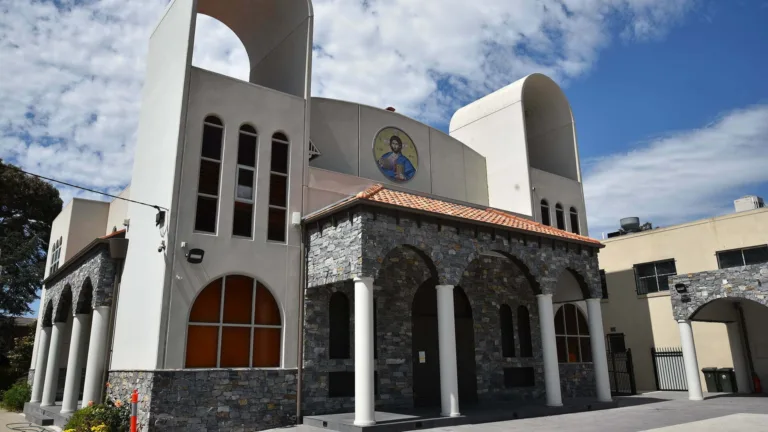
The petition, launched by the Ypapanti Committee and titled Help STOP Merri-bek from closing our Church, calls on the Council to revise its Central Coburg Structure Plan, which includes at least 15 new buildings – among them an eight-storey tower directly opposite the Presentation of Our Lord, Greek Orthodox Church and Community Hub on Victoria Street.
Residents, parishioners and community service participants warn the proposal threatens one of the municipality’s busiest cultural, spiritual and welfare centres, describing it as a hub whose loss of access, parking and safety would have “devastating” consequences.
A community hub at risk
The Ypapanti precinct hosts far more than weekly services. It operates as a metropolitan-scale community centre, facilitating festivals, education programs, addiction recovery initiatives, welfare services for the homeless, and major rites of passage – from christenings and weddings to funerals.
Petitioners argue that these high-demand programs “cannot be sustained” if parking, accessibility and safety are compromised.
Concerns also remain over the fragility of the consecrated building, which houses hand-painted iconography, relics, and spaces not easily relocated or protected from construction impacts.
Parking and traffic fears dominate community concerns
Central to the community backlash is the anticipated loss of essential on-site and street-level parking. The petition states elderly parishioners, families with young children, funeral attendees and welfare program participants rely on this daily access.
Traffic modelling for the precinct has not been publicly released, nor have shadow diagrams, prompting fears of congestion, overshadowing and increased safety hazards during peak church periods such as Easter and major feast days.
A proposed multi-deck car park remains “unconfirmed in scope and utility,” leading signatories to question whether it can realistically support peak loads or accommodate essential service vehicles.
The Coburg development plans
Local voices: ‘Our church is the heart of our community’
Dozens of supporters have left deeply personal messages underscoring the church’s cultural and social significance.
Madeline, who signed the petition, wrote: “This church is more than a building, it is the heart of our family and our community. It’s where my husband was baptised, where we were married, and where we plan to baptise our daughter next year… Father Leo and the parish do incredible work that touches countless lives… Our church deserves protection, not disruption.”
Another supporter, Teena, expressed how deeply the proposed tower would impact the spiritual life of parishioners: “As a Greek Orthodox woman and parishioner, I’m heartbroken. Ypapanti is our spiritual home… This development would overshadow a sacred place that generations have built with love and faith. Please protect our church and the heart of our community.”
These comments reflect a broader sentiment throughout the petition: that the proposed redevelopment risks dismantling a vital cultural anchor for Coburg’s multigenerational communities, including Greek, Middle Eastern, South-East Asian and African families.
Calls for transparency and genuine consultation
Petitioners have outlined several key requests to Merri-bek Council, including:
Scrapping the eight-storey tower opposite the church and redistributing height elsewhere.
Guaranteeing no net loss of accessible parking.
Conducting a full independent traffic and parking impact assessment.
Releasing all shadowing, noise, wind and safety modelling publicly.
Funding a structural dilapidation survey before construction begins.
Engaging in co-design workshops with the Church Committee and community groups.
Supporting welfare and addiction-recovery programs that operate onsite and “save lives.”
‘Revitalisation should not mean displacement’
While signatories say they support responsible development, they argue the current plan fails to accommodate Coburg’s diverse, multi-generational population. Many note the absence of culturally appropriate housing or larger dwelling designs suited to the area’s demographic needs.
“Development that destroys parking, threatens heritage, endangers the elderly and undermines essential welfare programs is not revitalisation – it’s displacement,” the petition states.
The community campaign continues to grow, with organisers promising further updates as efforts to protect the church and community hub intensify.
Council says vision aims to ‘maximise Coburg’s potential’
Merri-bek City Council, for its part, issued a media release and said its Coburg is here concept for central Coburg is driven by community feedback gathered through “The Coburg Conversation” in 2023, which highlighted calls for more green space, diverse housing options, better journeys for walkers, riders and drivers, and accessible parking.
The draft vision includes a new library and piazza, up to 18-storey buildings designed to minimise overshadowing, six new public open spaces, new streets and laneways, and around 900 car parks within a short walk of central Coburg.
The Coburg is here development plan is open now for community feedback until December 18. Have your say here.
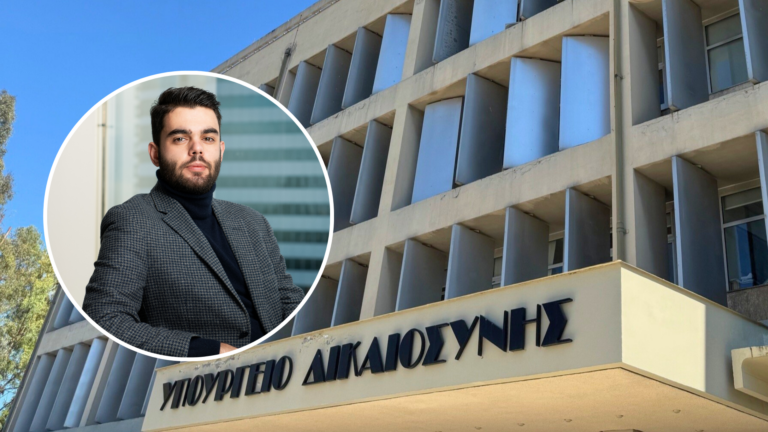
Greece is moving ahead with the largest overhaul of its inheritance framework since 1946, following the presentation of a new draft bill to Cabinet on November 27 by Minister of Justice George Floridis and Deputy Minister Ioannis Bougas.
A subsequent detailed presentation took place at the Ministry of Justice on 2 December 2025, led by Professor Apostolos Georgiadis — the distinguished academic who chaired the expert committee responsible for drafting the reform.
Legal experts have described the proposal as the most extensive reform in eight decades, with significant implications not only for families in Greece but also for the global Greek diaspora, including the large communities in Australia, Canada and the United States.
According to international lawyer Panagiotis Alexandros Rozakis, the reforms modernise Greece’s approach to wills, estates and inheritance rights, align the law with contemporary family realities, and address chronic legal uncertainties that have affected thousands of Greeks living abroad.
Combined with recent procedural changes under Law 5221/2025, the package promises faster, clearer and more practical outcomes for cross-border families managing property and inheritance matters.
Protecting the true will of the deceased
A central pillar of the reform is ensuring that the testator’s real intentions are respected.
Handwritten wills
Handwritten wills will now undergo stricter scrutiny. Importantly, the absence of a date will no longer automatically invalidate a will unless another flaw exists – a change emphasised by Professor Georgiadis as essential for preventing unfair outcomes caused by minor technicalities.
In line with recent procedural updates, notaries will have exclusive authority to publish and validate handwritten wills – a step that removes inconsistent court practices and brings uniformity to the process.
Additionally, handwritten wills that appoint a distant relative or a non-relative will require formal validation (“κήρυξη κυρίας”), a safeguard intended to ensure authenticity in more complex family scenarios. Notaries will now handle this validation exclusively, reflecting the broader shift of succession procedures away from the courts and into streamlined administrative channels.
Recent procedural reforms also introduced the requirement for notaries to upload wills to an electronic platform (https://diathikes.gr/) and allowed inheritance certificates to be issued by lawyers as well as justices of the peace – measures that digitise the system and speed up cross-border cases.
Two new inheritance-planning tools
For the first time, Greece will introduce mechanisms commonly used in other European systems:
Inheritance Contract “Cause of Death”:
A binding agreement made by a person with their future heirs or even a non-relative. This tool permits a testator – while still alive – to determine the allocation of real, movable, or even intangible assets (such as copyrights, patents, books and artistic works).
Contract for Waiver of Future Inheritance Rights
Allows an heir to renounce future rights in exchange for agreed terms or compensation. This contract enables families to plan around future property transfers with clarity, preventing disputes before they arise.
Rozakis notes that these tools give families – especially those living abroad – the ability to plan estates with certainty and avoid conflict. They also align Greek estate-planning practices with long-established models in both civil-law and common-law jurisdictions.
Updated rules for intestate succession
The draft bill strengthens the position of the surviving spouse or civil-union partner. Under the proposed changes, the spouse’s compulsory share rises to 33.3%, with the remaining 66.7% distributed among the children – an increase of 8.3% compared with current law.
Professor Georgiadis described this adjustment as a correction of social imbalance, noting that the surviving spouse often requires greater protection than adult children.
The reform also resolves long-debated issues relating to consensual divorce, dissolution of civil partnerships, and – for the first time – grants limited inheritance rights to long-term unmarried partners under strict conditions. These partners will be recognised within the fifth degree of succession, acknowledging modern family structures while maintaining safeguards against abuse.
Transforming the forced share (“νόμιμη μοίρα”)
One of the most significant changes is the shift of the forced share from a real right in property to a monetary claim. This means statutory heirs will no longer automatically become co-owners of specific real estate but will instead be entitled to the value of their share in cash.
For example, if a testator leaves a property to only one child, the omitted child will no longer become a co-owner of the home but may claim the monetary value of their lawful share.
The aim is to prevent the fragmentation of properties – a major issue that has left many Greek homes, farms and blocks tied up in legal limbo. By moving to monetary compensation, the new system is expected to reduce disputes, streamline property transactions and preserve the value of family assets.
The grounds for disinheritance are also modernised, with “ingratitude” toward the deceased clarified as a key factor.
Protecting heirs from the deceased’s debts
One of the most widely welcomed reforms is the complete separation of the deceased’s liabilities from the heirs’ personal assets. Debts will be paid only from the estate, eliminating the risk that heirs – particularly those abroad – might unknowingly inherit tax or banking liabilities.
Rozakis says this reform alone will drastically reduce the number of renunciations (“αποποιήσεις”), which have risen sharply in recent years due to fear of hidden debts.
Resolving long-standing ambiguities
The draft bill brings clarity to issues that have burdened courts for decades, including:
deadlines for renunciation by persons lacking legal capacity
inheritance rights of half-siblings
conflicting interpretations across jurisdictions
These clarifications aim to provide greater certainty for families navigating emotionally challenging and legally complex situations.
Abolishing outdated legal provisions
Several outdated and rarely applied legal provisions will be abolished altogether, including:
contracts for the distribution of assets by an ascendant (“νέμηση ανιόντος”)
disposal of an inheritance
extraordinary wills
The removal of these obsolete tools simplifies the legal framework and eliminates concepts that no longer reflect contemporary social and legal reality.
Why this matters for Greeks abroad
For diaspora families, this reform marks a once-in-a-generation change. The new framework aims to:
simplify cross-border inheritance procedures
reduce delays and cost
prevent property fragmentation
provide modern estate-planning tools
protect heirs from unexpected debt
allow remote management of estates through legal representatives
Rozakis emphasises that these changes, in combination with recent digitalisation measures, will allow many inheritance processes to be completed without heirs needing to travel to Greece.
What diaspora members should consider once the law passes
Greeks abroad will be encouraged to:
review existing wills in light of the new rules
verify property titles in the Hellenic Cadastre
assess whether inheritance contracts may suit their circumstances
prepare for the shift to monetary forced shares
seek legal advice for cross-border estate planning
As Rozakis notes, this is “a historic moment for Greek law” – a rare opportunity to modernise an 80-year-old system and bring greater fairness, certainty and functionality to families in Greece and around the world.
Need legal help in Greece?
Contact Panagiotis A. Rozakis | Attorney at Law p.rozakis@dvlf.gr | +30 698 092 8817 | +30 2103390080
On the evening of November 28, the Australian Hellenic Medical Charity Incorporated (AHMCI) held its annual gala. This year it was dedicated to supporting the Kalymnos Hospital, a regional medical facility that provides vital healthcare to the island’s 32,000 residents.
The event was a resounding success, raising approximately $101,000 to fund critical upgrades to the hospital’s ageing renal care infrastructure.
All photos copyright The Greek Herald / Peter Tantalos.
More than 400 guests attended the sold-out dinner, supported by almost 50 sponsors who contributed monetary donations and auction items. The overwhelming community response reflected a shared commitment to improving healthcare access on Kalymnos, where patients face limited options for advanced renal treatment.
This year’s funds will be directed toward procuring new dialysis machines for Kalymnos Hospital.
The existing machines, some more than 25 years old, currently support 12 patients, with more expected to require treatment in the coming years. For many, travelling to Athens for dialysis is not possible, making local access a matter of survival.
The AHMCI aims to supply Fresenius 4008S Next Generation Haemodialysis Machines, widely used across private healthcare facilities in Greece. These modern systems feature Online Clearance Monitoring technology, enabling real-time measurement of toxin removal during treatment, an essential improvement for patient safety and clinical accuracy.
A vision eight years in the making
Chief Justice of the Supreme Court of South Australia and Patron of AHMCI, The Hon. Chris Kourakis, opened the evening’s remarks by reflecting on the origins of the charity and its guiding principles.
“It was eight years ago that I met with a small group of people in a coffee shop…and there was a project where they wanted to deliver an ultrasound machine for a hospital at Chalkidiki… We talked about the principle that we wouldn’t be doing this for one hospital… if we did it once, we would do it wherever there was a need for medical equipment,” Kourakis said.
“The other thing we agreed on was that for the prioritising of projects we would have an expert panel of medical practitioners which would advise on the priority.”
His Honour continued by highlighting the unity behind the initiative.
“The Group is truly panhellenic. It wasn’t divided by regional community or church divisions – it is Greeks working together. And now, eight years later, close to a million dollars’ worth of fundraising [has been raised],” he said.
The Chief Justice distinguished the AHMCI’s hands-on approach from traditional philanthropic models.
“There is an important thing which distinguishes this charity from many others. It’s the directness of which the support is given. We don’t hand over cash and leave it to them, we find the means, and we deliver the equipment and people from Australia go over for that purpose,” he explained.
“That’s important, not only to be satisfied that the money you give goes to the right place, but it builds a connection – its Greeks of the diaspora coming to understand the still continuing needs of Greeks in Greece and we build… continuing links between the Greeks of Greece and the diaspora.”
The human reality behind regional healthcare
Michael Ikonomos, Founder of the Adelaide Kalymnians & Friends, spoke next about the stark reality facing many Greek island communities.
“Many of us have enjoyed wonderful carefree holidays in Greece. We take out our travel insurance and feeling secure that we will be covered in case of illness or accidents,” he began.
“Unfortunately, though, this can be a false sense of security, as the reality is that if [one] were to fall ill or have an accident in a regional area, outside of Athens or major cities, the insurance claim would not be enough, because many regional hospitals do not have the resources, equipment nor staff to provide the care expected.
“Sadly however, this is daily reality for people living permanently in these area… they must rely on hospitals which are underfunded and under resourced. This is why the medical charity exists, to help those who are unseen and unheard and often forgotten… [and] to give a voice and comfort to those in regional Greece, waiting for help that far too often never comes…”
A night of philanthropy and gratitude
Reflecting on the night to The Greek Herald, AHMCI President Kosta Barkoukis expressed his gratitude.
“It’s an amazing effort to raise over $100,000 with the assistance of private donations. We are proud to support SA Great and assist the Hellenic regional hospitals that are in critical need of medical equipment and infrastructure,” he said.
Mr Barkoukis confirmed that the $100,000 raised will fund four new Fresenius dialysis machines, with hopes that an additional eight may be secured through private benefactors and what he described as “the ethical work undertaken by the AHMCI.”
*All photos copyright The Greek Herald / Peter Tantalos.
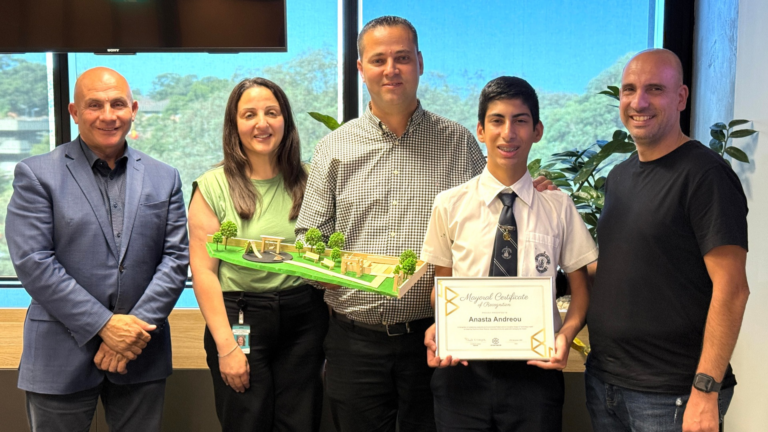
St Euphemia College has proudly celebrated Sustainability Prefect Anasta Andreou, who has been honoured by ANATE Corporate Group and the Canterbury-Bankstown City Council Youth Committee for his outstanding Design & Technology project and Council presentation.
The accolade was presented by the Canterbury-Bankstown City Mayor, Bilal El-Hayek, highlighting Anasta’s leadership and vision, as well as his dedication to sustainability and innovative solutions.
College officials described his achievement as “a remarkable accomplishment and a true reflection of his commitment to making a positive impact.”
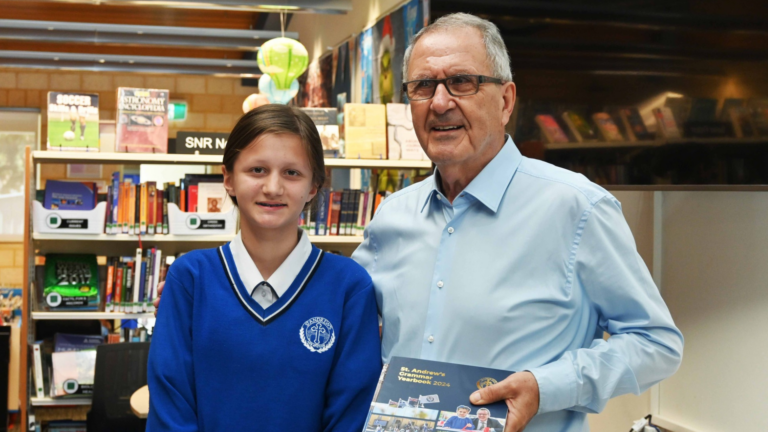
Year 11 students at St Andrew’s Grammar in Western Australia were recently inspired by Professor Anastasios Tamis, a veteran educator with over 50 years of teaching and lecturing experience.
Drawing on his expertise in the history of democracy, he urged students to uphold principles of belonging, citizenship, and care as they face technological shifts such as Artificial Intelligence (AI).
Professor Tamis also reflected on the school’s origins, recalling his discussion with CEO Paul Savvas to over 500 parents about founding a school in Dianella for Greek Australian families and the wider community.
His lecture sparked thoughtful discussions among students that continued long after the session.
St Andrew’s Grammar expressed gratitude to Professor Tamis, with Mr Savvas and Principal Craig Monaghan acknowledging his impact on future generations.