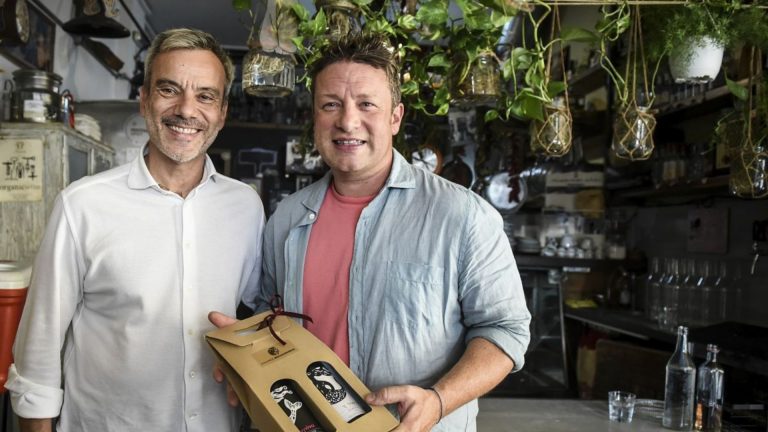
Famous British chef, Jamie Oliver is currently in Thessaloniki for TV production and while he was in the beautiful north, met with the Mayor, Constantine Zervas to discuss the city’s gastronomy.
During the meeting, Mayor Zervas discussed that the city’s gastronomy is one of the strongest points for the tourism development and the promotion of the city internationally.
Thessaloniki is included in UNESCO’s Network of Creative Cities, which is providing a wave of energy for the city’s tourism development, and during the visit Zervas even offered the chef two bottles of wine from the municipality’s urban vineyard.
Balkan telecommunications and media company, United Group, plans to invest 2 billion euros to upgrade Greece’s telecoms infrastructure, the prime minister’s office said on Thursday.
The planned upgrades will take place until 2027 and will see the installation of a 10-gigabit fibre optics network that will service 4.5 million customers.
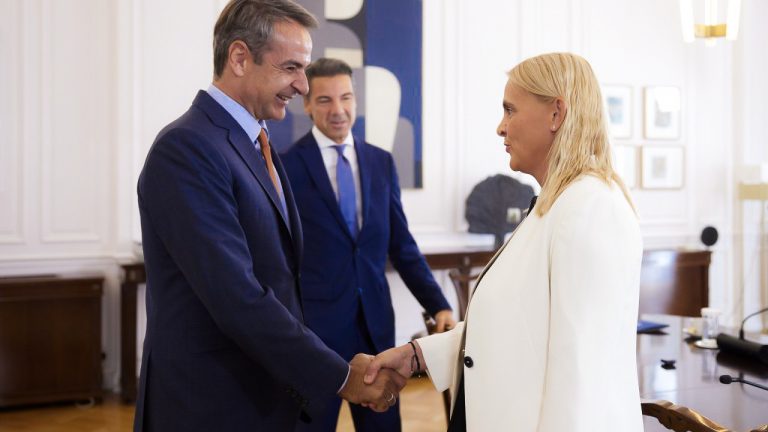
During the Thursday meeting between Greece’s Prime Minister, Kyriakos Mitsotakis and representatives of United Group at Maximos Mansion in Athens, Mitsotakis said the digital upgrade will allow the nation “make a real leap”.
“It will allow us to quickly bridge an important gap that we have long pointed out and provide very high speeds at affordable prices to millions of Greek households,” Mitsotakis said.
Συναντήθηκα σήμερα με εκπροσώπους του ομίλου United Group, στο πλαίσιο της ανακοίνωσης του ομίλου να υλοποιήσει επένδυση ύψους 2 δισεκατομμυρίων ευρώ στην Ελλάδα, έως το 2027, για την αναβάθμιση των τηλεπικοινωνιακών υποδομών νέας τεχνολογίας. https://t.co/6artlqRvm7pic.twitter.com/5n8u4zpvFd
United Group is majority owned by private equity firm BC Partners, whose President, Nikos Stathopoulos said the 2 billion euro investment will “greatly promote the prospects of the country” whilst also promoting “the economic prosperity and social prosperity” of Greece.
United Group CEO Victoriya Boklag said that the upgrades would create a “state-of-the-art fibre optic infrastructure,” which is a “vote of confidence in Greece and its technological capabilities.”
People wanting to experience the world will now be able to enjoy everything other cultures have to offer at home, thanks to the NSW Government offering million-dollar investments into major council-run cultural festivals and events.
Grant funding of up to $500,000 a year for two years is now available for local councils across the state’s Six Cities to host major cultural events in partnership with the NSW Government.
Premier Dominic Perrottet said this partnership will benefit the state’s Six Cities Regions, including celebrating our rich diversity, driving tourism and boosting local economies.
“We are talking about working with councils to host events that will attract tens of thousands of people from far and wide that want to experience our state’s diverse cultures,” Mr Perrottet said.
“By partnering with councils, we will be able to support them cater for bigger crowds, which will benefit their local economies and especially small businesses.”
This funding has been made available thanks to the NSW’s 2022-23 Budget, which saw a record $28 million invested into the state’s multicultural future.
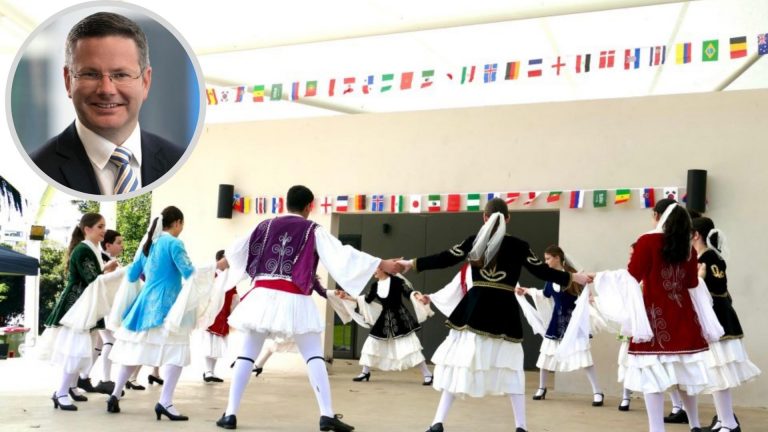
Minister for Multiculturalism Mark Coure said cultural events help celebrate NSW’s greatest asset—its people.
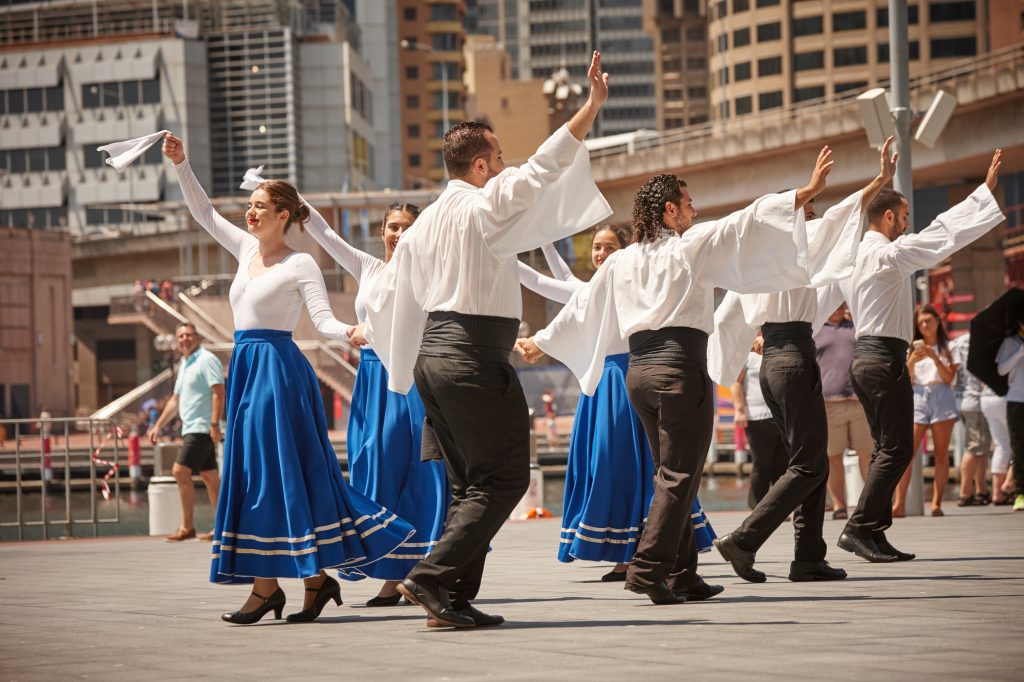
Greek festival in Sydney.
“Councils in our major cities all have a major event that is synonymous with their local community, whether it be Lunar New Year, the Mid Autumn Festival, Ramadan, Diwali or even Christmas,” Mr Coure said.
“Every year, people wait in anticipation for those events to enjoy the vibrancy, the colour and the culture they are known for. That is the beauty of our multiculturalism—you don’t need to travel overseas to experience other cultures. You can do it right here in NSW.”
All councils across the state’s Six Cities are eligible to apply to support existing major cultural events or to establish a new one.
Minister for Local Government Wendy Tuckerman said councils understand local needs, and were best placed to drive social and cultural events.
“Local Councils are the level of government closest to the community, so the NSW Government working directly with councils in our six cities will ensure these celebrations benefit their communities directly,” Mrs Tuckerman said.
“By partnering with councils, we are boosting local cultural celebrations led by local leaders, helping to cater for bigger crowds so tourists can experience everything their city has to offer.”
The Six Cities Regions comprise of the Lower Hunter and Greater Newcastle City, Central Coast City, Illawarra-Shoalhaven City, Western Parkland City, Central River City and Eastern Harbour City.
Successful councils can use the funding for festivals held in 2023 and 2024. Successful councils must partner with the NSW Government and co-fund to host events.
Applications open on Friday, 9 September and close on Friday, 14 October. For more information, visit www.multicultural.nsw.gov.au
The Greek national basketball team has ruthlessly defeated Estonia 90-69 this morning in Milan, entering round 16 of EuroBasket 2022 undefeated.
The ‘Greek Freak’, Giannis Antetokounmpo, delivered yet another masterclass, not just as an unstoppable scorer but as a facilitator and defensive disruptor.
Setting the tone early with an 8-0 start, he managed to reach a game tally of 25 points before the interval as the Greeks raced to a 51-26 lead at half-time.
Antetokounmpo was clearly limping after the game, but took part in the postgame on-court celebration and exchanged handshakes with Estonia’s players and coaches.
Greece’s coach, Dimitrios Itoudis, said Antetokounmpo got ice and received treatment but did not sound worried. “It’s all good,” Itoudis said.
Other notable mentions were Kostas Sloukas who scored 11 points for Greece.
Young fans of the Greek national team showing their support for Giannis Antetokounmpo who has recently been elevated from the “Greek Freak” to the “Greek God” during today’s game against Estonia. Photo: FIBA
Speaking after the game, Giannis’ older brother, Thanasis Antetokounmpo said the win felt great.
“Estonia are young running guys, they were great,” the Greek forward said.
“We’re a super-young team and we need these games against the world’s top players and for us, it’s about gaining experience. And I think we gained a lot.”
WATCH the game highlights from Greece’s EuroBasket 2022 victory over Estonia this morning here:
Whilst Estonia head home, this morning’s victory means Greece has topped Group C with a 5-0 record.
Now heading to Berlin, the Greek national team will next face the Czech Republic, the fourth-placed team from Group C, for a place in the quarterfinals.
“We respect the team of the Czech Republic. They have some quality players who have played at NBA level or Euroleague level,” Itoudis said.
“This is a knockout game. We’re going to approach this game as a final.”
“The Queen died peacefully at Balmoral this afternoon,” it read.
“The King and The Queen Consort will remain at Balmoral this evening and will return to London tomorrow.”
Charles, who will be known as King Charles III, issued a statement saying the death of his “beloved mother” was a “moment of the greatest sadness for me and all members of my family.”
Greece has also joined the growing number of tributes to the Queen.
Greek Prime Minister, Kyriakos Mitsotakis, wrote on Twitter he was “deeply saddened” by her passing.
I am deeply saddened by the passing of Her Majesty Queen Elizabeth II. The duty, service, and dedication she demonstrated throughout her reign was not just exemplary but extraordinary.
“The duty, service and dedication she demonstrated throughout her reign was not just exemplary but extraordinary,” Mitsotakis wrote.
Greece’s President, Katerina Sakellaropoulou, also marked Queen Elizabeth’s death on Twitter.
Queen Elizabeth’s reign has marked the modern history of the 🇬🇧. She has been a true pillar of her country and has been rewarded with love and respect. My heartfelt condolences to her family and the British people. She will be missed. @RoyalFamilypic.twitter.com/RLWFy7o1eM
“Queen Elizabeth’s reign has marked the modern history of the United Kingdom. She has been a true pillar of her country and has been rewarded with love and respect,” Sakellaropoulou wrote.
“My heartfelt condolences to her family and the British people. She will be missed.”
“Today marks the end of an era, the close of the second Elizabethan age. This time of mourning will pass but the deep respect and warm regard in which Australians always held Her Majesty will never fade,” Mr Albanese said.
The Prime Minister's statement on the passing of Her Majesty Queen Elizabeth the Second. pic.twitter.com/P6l00TQkId
This morning, Archbishop Makarios of Australia expressed his sadness at the passing of Queen Elizabeth and expressed his hopes for King Charles.
“We are confident that the heir to the throne, King Charles, will honourably continue along the same path as that of late Queen Elizabeth,” Archbishop Makarios’ statement read.
The Queen’s body is expected to be taken from her estate at Balmoral, in north-east Scotland, to Edinburgh on Friday morning local time.
Her body is then expected to be taken to Buckingham Palace’s throne room before lying in state for four days in Westminster Hall.
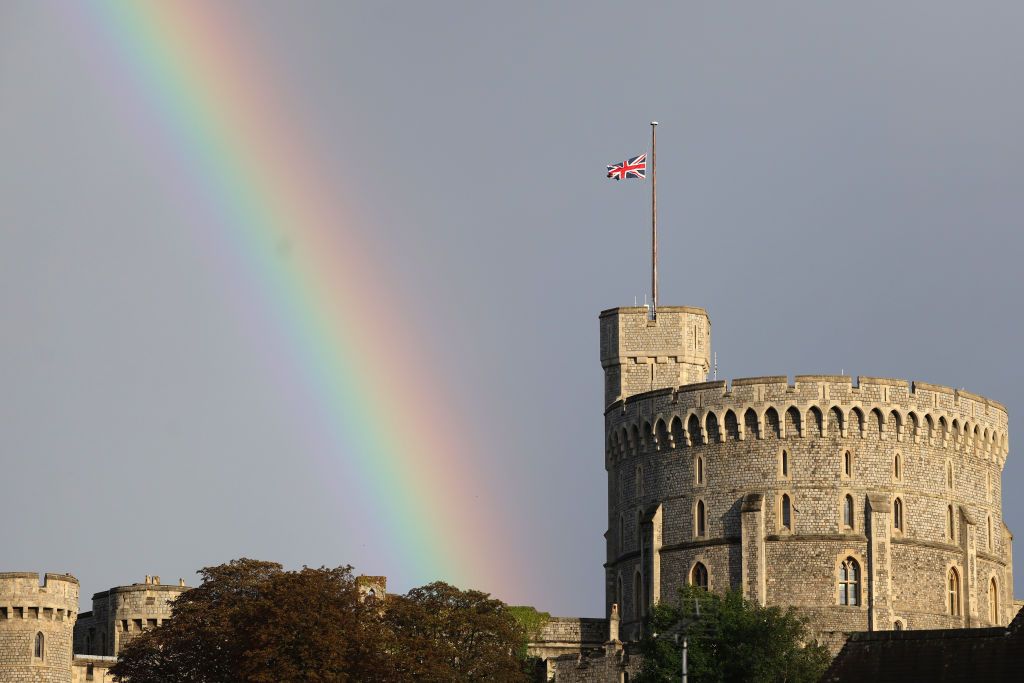
A rainbow was spotted at Buckingham Palace this morning as people gathered to mourn the passing of Queen Elizabeth.
The UK is expected to declare a period of national mourning ahead of the Queen’s funeral, which protocol says will be held at Westminster Abbey in London.
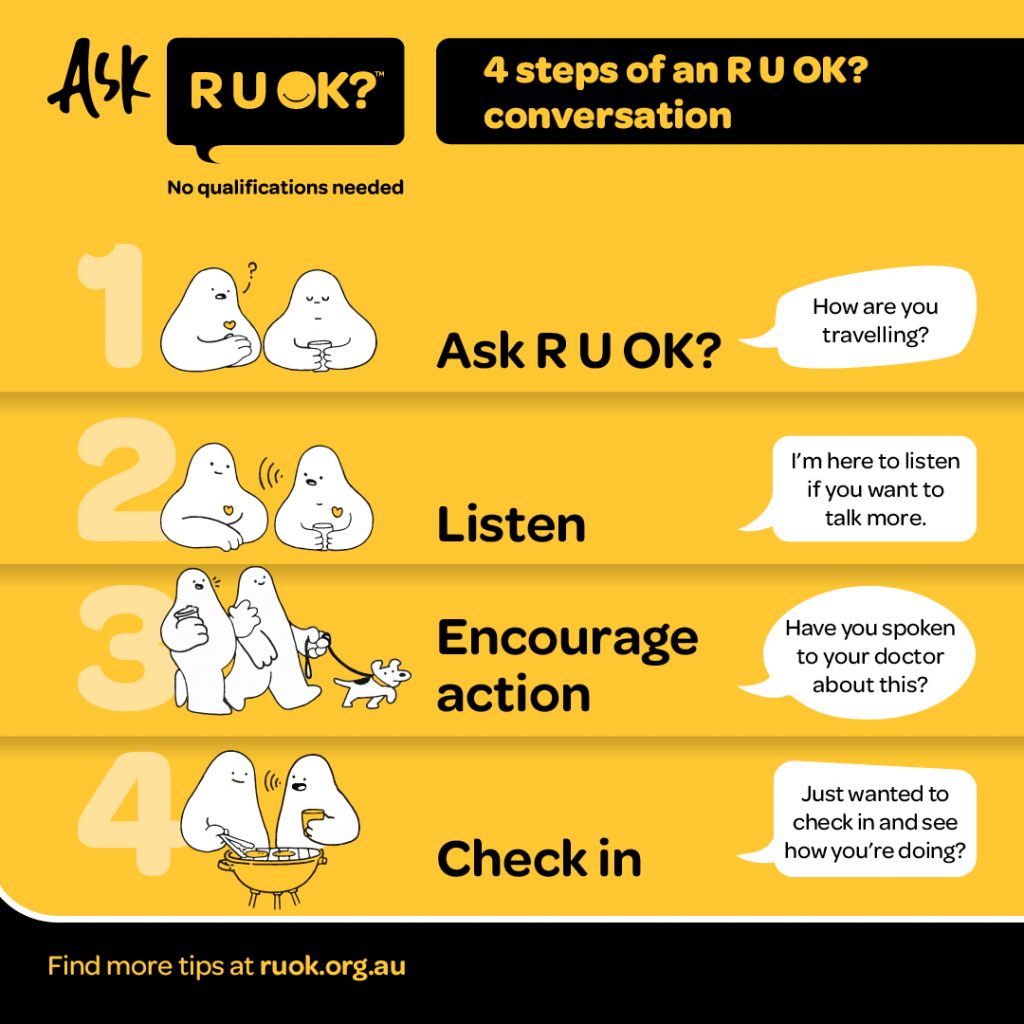
Today is RUOK day: a national day of action when Australians are reminded that every day is the day to ask ‘are you OK?’ and start a meaningful conversation whenever they spot the signs that someone they care about might be struggling with life.
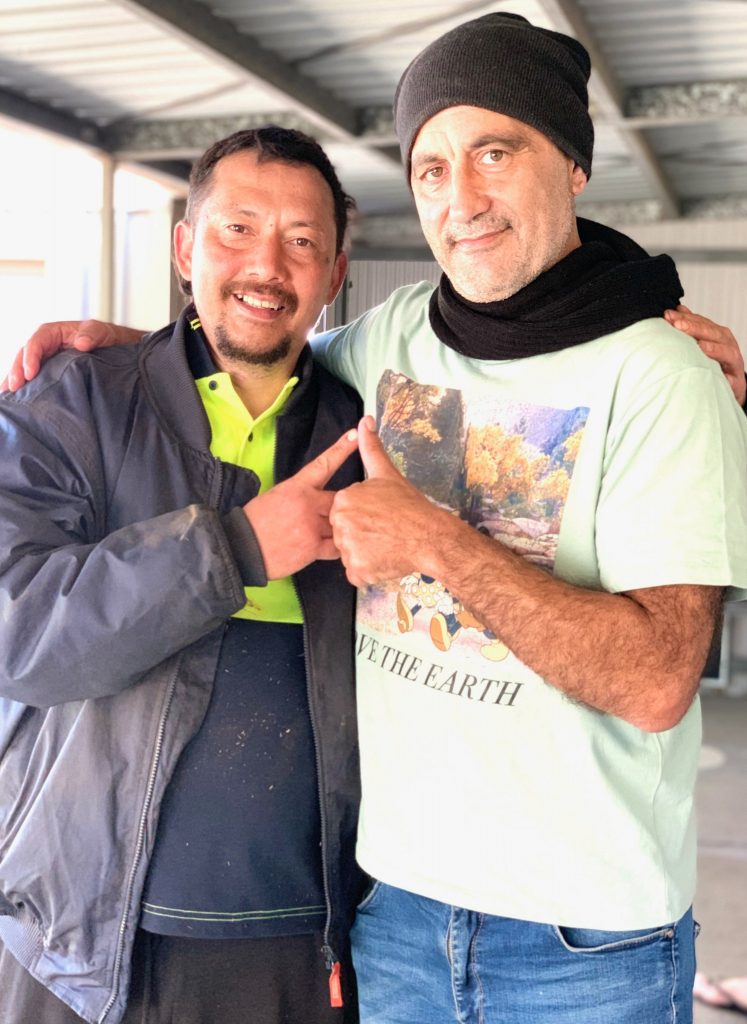
The NSPTRP is a 100 percent volunteer service that supports all Australians, from First Nations to individuals of culturally and linguistically diverse backgrounds.
Since its inception in 2019, Gerry and his team of psychosocial support workers have worked with 19,000 people right across Australia, with a specialist focus on individuals living below the poverty line.
Speaking to The Greek Herald about how he came to be the founder of the NSPTRP, Gerry points to growing up in Sydney in the 1960s as the child of Greek migrants.
Gerry is the child of Greek migrants
“The sixties were a different time and racism was a burden we carried,” he says.
“We were treated as inferior but I grew up in a time of great silences, where a certain sense of resilience born of the silences was practiced and exercised.
“We didn’t talk about depression and anxiety nor did we even recognise that many people had certain types of psychological conditions or psychiatric disorders. We just thought that they were either high-strung or reclusive.”
Warning: The contents of this story may be distressing to some.
Migrants and Mental Health:
It was in 1974, at 12 years of age, that the silences began to shed and Gerry was first exposed to suicide.
“It was a Greek individual who had come to this country as a 17-year-old and died as a 26-year-old by his own hand,” Gerry says.
“I read some of his letters and he was isolated and lonely. He would write to his mother detailing his experiences of classism and racism and would express his wish to go back home.
“His suicide reverberated through our community.”
Gerry argues that whilst suicidality affects everybody, the risk of suicide is heightened for those living below the poverty line, Indigenous Australians and the migrant-born.
For migrants in particular, he says the risk is greatly raised when of a non-English speaking background, coming from socioeconomic disadvantage and civil strife, and living in shared housing with low social contact.
Gerry has always been an advocate for justice and human rights for non-English speaking communities.
Gerry’s daily fight for justice:
In Gerry’s case, he was exposed to every facet of the migrant experience living in Australia, observing the sexism and classism, as well as witnessing his parent’s philanthropy in volunteering at their local Orthodox church and establishing in the 1960s afternoon Greek language and history classes, precursive pathways to Sydney’s first Greek schools.
He says this set him on a path of advocacy and a half-a-century-long career fighting for justice and human rights.
“As an 11-year-old, I represented Greek migrants who were asbestos workers and were dying of mesothelioma,” he says.
“I didn’t win any battles for them and it should’ve really beaten me down. But I reasoned that if we run from wickedness nothing will ever change.”
In 2019, Gerry also started the NSPTRP after he fought to save the life of a six-year-old child who had attempted suicide.
“The youngest suicide in this country was a nine-year-old and I responded to their family in October of 2018. I flew across the country and spent five days with the family to help them and I’ve supported them ever since,” he says.
“It’s an abomination to lose your child. We weren’t put on this earth to bury our children.”
‘When you help a family, you help everyone’:
The help Gerry and the NSPTRP provides ranges from heavy-duty mentoring to intense psychosocial support, as well as outreach and mobility support.
The help Gerry and the NSPTRP provides ranges from heavy-duty mentoring to intense psychosocial support, as well as outreach and mobility support.
“We work with every member of the family because when you help a family, you help everyone,” Gerry says.
“We get to know and understand them, we unpack their stories and then we do the outreach. We help them identify what they need and we support them to get there, whether it be health care, housing, university, employment or some other alternative pathway.
“We get the kids enrolled in school, mentor vulnerable kids to attend school, to believe in themselves. If they’re looking to get into university, we assist all the way. We support them to talk to counsellors and psychologists.
“If they have certain health needs we arrange and accompany them to see GPs, psychiatrists and other healthcare specialists. Where needed we journey together.
“We reach out and we take calls at all hours day or night so they’ve always got someone to turn to.”
On the occasion of RUOK day, Gerry urges those who are struggling to reach out.
“Reach out to family members, friends or reputable services and supports. Also reach into you, often yourself can be the wisest and most expert counsel.
“If there’s hard trauma you have experienced, escape it, don’t let yourself be its hostage. Let it not define you.
“None of us are ever truly alone. Remember always, everything comes to pass.”
If this story has caused any distress, crisis support services can be reached 24 hours a day: Lifeline 13 11 14; Suicide Call Back Service 1300 659 467; Kids Helpline 1800 55 1800; MensLine Australia 1300 78 99 78; Beyond Blue 1300 22 4636.
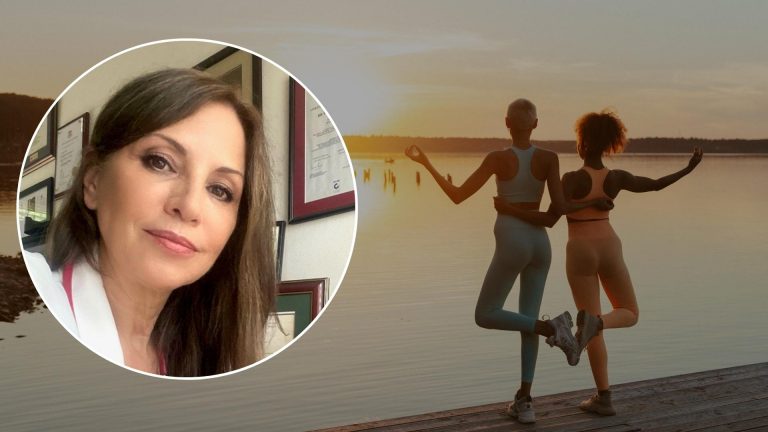
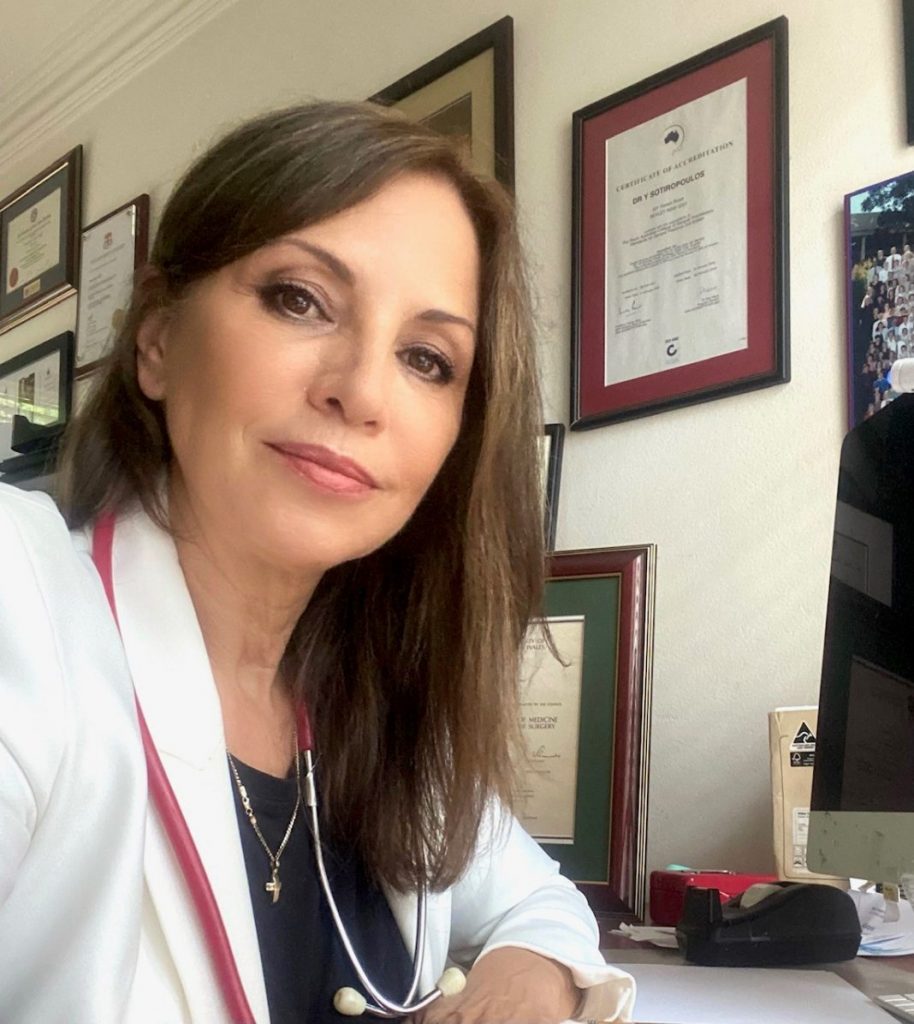
To mark Women’s Health Week, The Greek Herald sat down with Dr Yiotoula Sotiropoulos, a General Practitioner (GP) from the Sydney suburb of Bexley.
Dr Sotiropoulos speaks openly about under-reported women’s health issues in the Greek community, as well as why she believes regular health check-ups are important.
1. In the Greek community, what do you believe to be the most under-reported women’s health issue?Why do you believe it is under reported and what can be done to mitigate its impact on women.
In my experience as a GP, I have found a reluctance of women to volunteer issues related to urinary incontinence, that is leakage of urine from the bladder with exercise, coughing and sometimes even laughing. Fortunately, there are many treatment options, ranging from non-invasive treatments such as pelvic floor exercises that can be guided by physiotherapists trained specifically in this area, medications, laser treatments and then of course more invasive treatments such as surgery as a last resort.
Women however just ‘put up with it,’ believing it’s part of ageing, or even normal after childbirth. It certainly doesn’t have to be! It’s important to discuss these issues with your GP with whom you feel comfortable, so that he/she can work out the most effective management. Treatment may involve a physiotherapist and a gynaecologist who together with your GP will work out effective strategies. Having the conversation is the first step.
2.A new survey released this week has revealed a significant decline in women’s physical and mental health since the COVID-19 pandemic began. What are your thoughts on this and what tips do you have to boost women’s physical and mental health?
The pandemic has resulted in a profound change in our society’s psyche. Studies all over the world have shown repeatedly that there has been a significant increase in anxiety and depression, as well as a decline in physical activity and as a result, an increase in health risk factors such as obesity, elevated lipids and blood glucose levels.
Human beings need social connections. We need to interact with one another. Despite the lifting of restrictions, people have been reluctant to return to their normal activities because of fear. A recent article in ‘News GP’ reported the impact has been particularly profound for women with one in three women from a total of 418 surveyed, reporting ‘clinically significant’ mental health issues.
Contributing factors have been ‘working from home’ whilst juggling home schooling for children and caring for other household members.
I believe we need to return to our usual habits, as much as possible, such as returning to the workplace where there will be interaction with others and the opportunity for ‘incidental activity’ such as walking to the station, walking from the carpark, walking up and down the office/workplace, getting lunch or a coffee. Further, structuring activities such as a lunchtime walking group, a walking group with other mums when children are dropped off, joining a dance group. These are all activities my patients have mentioned, and I think they are excellent suggestions. Visiting our elderly, involving them in family activities again is vital to their wellbeing.
Dr Yiotoula Sotiropoulos has given some tips to improve mental and physical health.
Further, women need to access the mental health services which are available through a ‘Mental Health Care Plan.’ There certainly has been a demand on our psychologists over the last 2-3 years, with many reporting prolonged waiting lists. GP’s are often in a position to be able to offer some assistance as well. The first step is to acknowledge the need and have an honest discussion without fear nor shame.
3. The message for this year’s Women’s Health Week is one of the importance of women’s health check-ups. Why are health check-ups important and why do you encourage women to do them?
The way we practice medicine has changed significantly in the last 30 years or so. Advancements in health have resulted in people living longer, and we certainly want to be living healthier, so preventative medicine is vital for this. Rather than waiting for health problems to manifest, we encourage regular health checks to hopefully prevent disease. Checks such as:
Twice yearly mammograms for women over the age of 50 to identify early disease when it is treatable;
Cervical screening (previously known as Pap Smears) from age 25 to identify people who may be at risk of developing cervical cancer;
Bowel screen programs for over 50’s to identify microscopic bleeding which may be associated with bowel polyps, which can be a precursor to bowel cancer;
Blood tests for Cholesterol and Blood Glucose and Blood Pressure checks, all of which are asymptomatic but increase our risk of developing heart disease or stroke and;
Vaccination programs for Influenza and Pneumonia.
These are a few of the preventative activities we encourage, to identify early problems, when we can treat for cure. It’s also important to know one’s family history and tell your GP so that they may implement a monitoring activity if it is relevant.
I understand that everyone leads a very busy life, but GP’s have what we call ‘recall systems’ in place, and they can remind their patients when tests are due. Talk to your GP about this.
4. Is there anything else you’d like to say?
I would encourage all women to find a GP with whom they feel comfortable, and to have the continuity of care that General Practice offers. Your GP should be the one you can seek assistance for minor physical ailment, such as a virus, see you during your pregnancy, look after your children’s health and be able to help when you are most vulnerable either during physical illness or mental health problems. Your GP will discuss prevention and care and help you lead a long and healthy life.
Women are wonderful ‘care-givers,’ but often forget to make time for themselves.
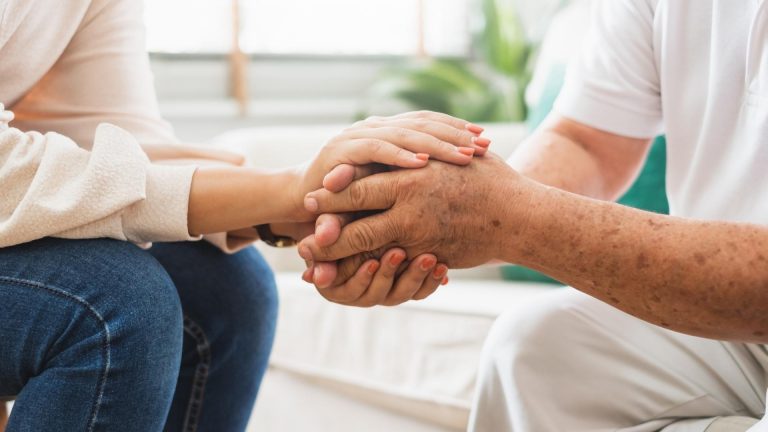
20% of Australians experience mental illness each year*. If someone you love has told you they are struggling with their mental health, you may not be sure what you can do to best support them and keep them safe.
Here are 6 tips for supporting a loved one struggling with their mental health:
1. Take the backseat approach and just be there to listen.
Even though you may not always completely understand why the person feels the way they do at certain times, you can still listen non-judgementally (you’re actually not expected to know what to do or have all the answers!)
2. Respond to what they tell you with empathy.
Empathetic responses can sound like: “I’m sorry to hear you’re going through a tough time at the moment,” “I get why you’d feel that way,” or “I’m really glad you felt comfortable to open up to me about this.”
This one question can make a world of difference to someone struggling with their mental health. Some people will actually have things in mind that they know will be helpful for them. Even if they don’t, the act of you asking shows your support and care – which is likely what they need most.
4. Respect their privacy.
Unless the person is in danger of immediate harm, you should not disclose their mental health to anyone else – except if they explicitly ask you to. Telling you about their mental illness takes a lot of courage, so it should be their choice to decide who, when, and how they tell about the situation. Of course, they have the right to not tell anyone at all – as long as they are safe, this is up to the individual.
5. Don’t invalidate what they’re telling you.
Being told “grow up,” or “get over it,” can actually be quite harmful to the person. If you don’t know what to say, it’s much better to ask, “Is there anything I can do for you right now?” rather than judge and invalidate, even if unintentional.
We have professionals, medication, self-help and therapy to help manage mental illness symptoms; it is by no means your responsibility. So please don’t think that you need to be their therapist.
The biggest takeaway?
Do your best to support them and show that you genuinely care.
Supporting someone, though, can take a lot out of you. It’s important to know your limits and ensure that you’re also looking after your mental health at the same time. And don’t forget… all those support services out there are just a phone call away if it’s getting a bit tough.
Crisis support services can be reached 24 hours a day:
Lifeline: 13 11 14;
Suicide Call Back Service: 1300 659 467;
Kids Helpline: 1800 55 1800;
MensLine Australia: 1300 78 99 78;
Beyond Blue: 1300 22 4636.
If you or someone you know is impacted by sexual assault or family violence, call 1800-RESPECT on 1800 737 732 or visit www.1800RESPECT.org.au
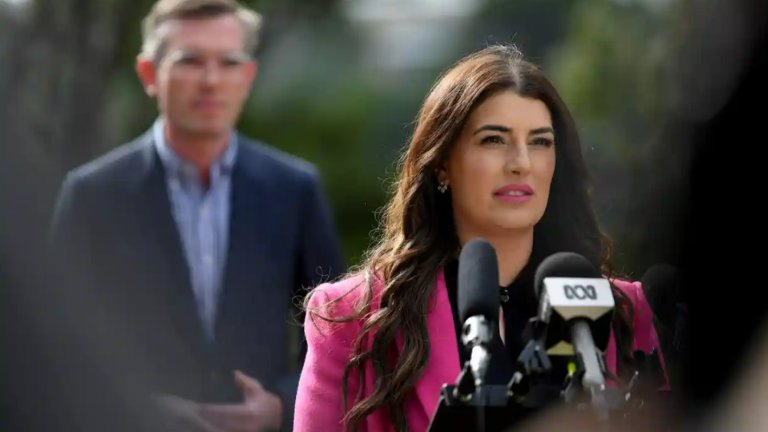
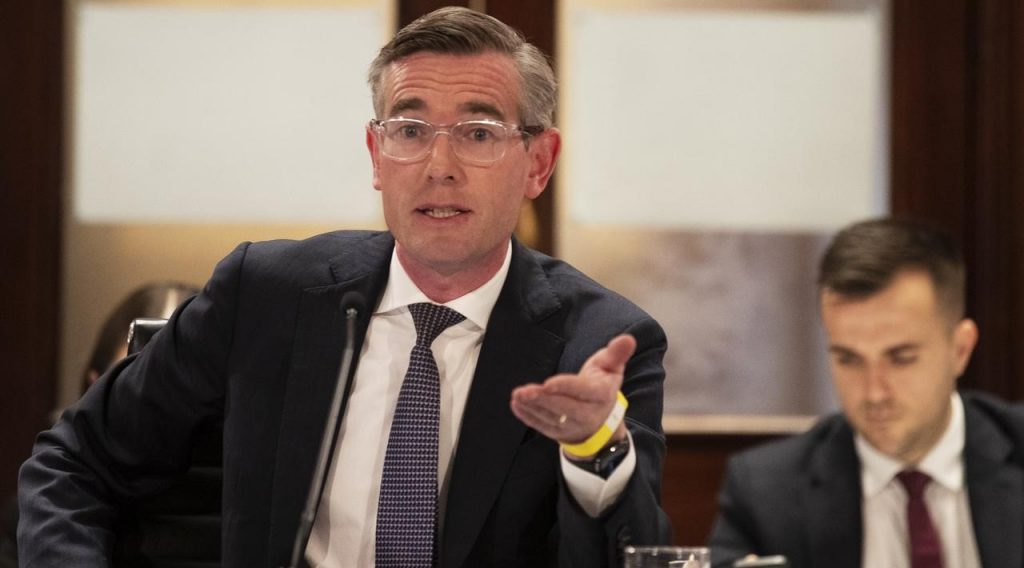
NSW Premier Dominic Perrottet has admitted he was made aware of concerns about ex-minister Eleni Petinos in the months before she was sacked over bullying allegations,ABC News has reported.
Mr Perrottet told a budget estimates hearing on Wednesday that he instructed NSW Minister for Customer Service, Victor Dominello, to speak to Ms Petinos regarding the concerns.
NSW Premier Dominic Perrottet at the budget estimates hearing. Picture: NCA NewsWire / Nikki Short.
The department of customer service secretary, Emma Hogan, told a hearing she was first made aware of “a couple of incidents” involving Ms Petinos in April.
Ms Hogan said they were not formal complaints, but she raised the concerns with Ms Petinos in May.
When questioned about when he became aware of the issues, Mr Dominello insisted he “did not receive any formal or informal complaints.”
Eleni Petinos MP was dumped from cabinet over bullying allegations that she denies.
The NSW Premier revealed Ms Petinos had offered to resign after the allegations first emerged and when they spoke on the phone during an overseas trip Mr Perrottet made in July.
“She said during the phone call that, ‘If it would help you, I would resign.’ There was no basis for her to do that,” Mr Perrottet said.
“I returned, I made my own inquiries, and my own decision (to fire her).”
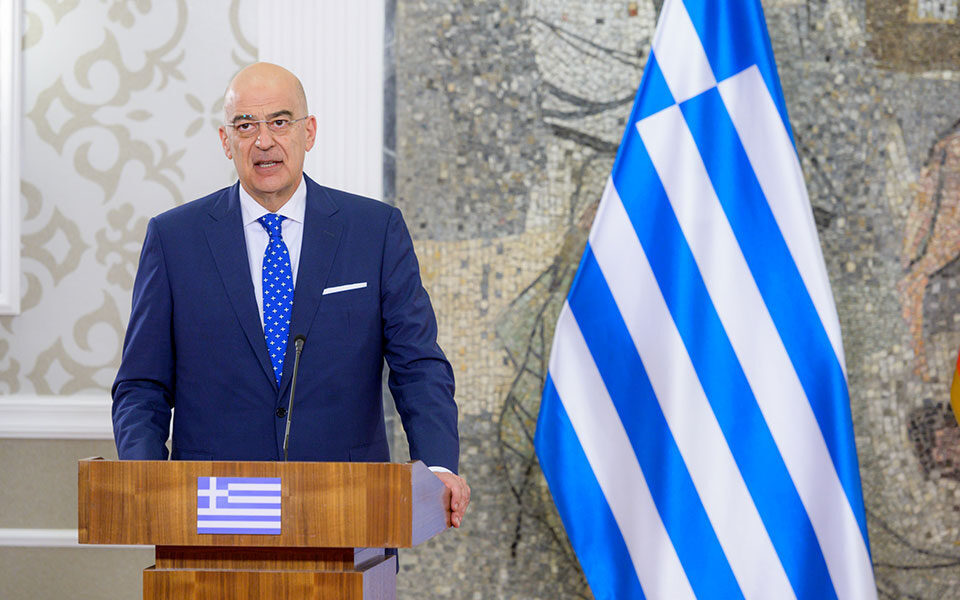
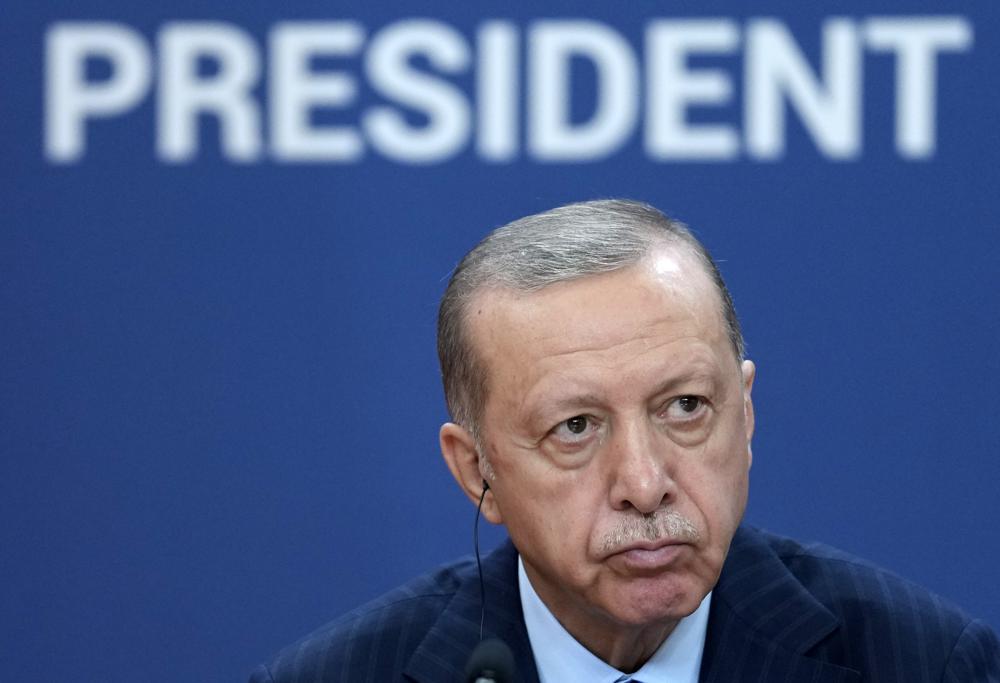
Greece’s government has sent letters to NATO, the United Nations and the European Union calling on them to formally condemn increasingly provocative statements by Turkish President Recep Tayyip Erdogan.
In them, Dendias quoted Erdogan’s recent references to the Greek people as “vile,” and to Greek “occupation” of Aegean Sea islands that have been part of Greece for decades.
Nikos Dendias has sent letters to the EU, NATO and the UN. Photo: Intime News.
“These public statements by the Turkish president speak for themselves; they are unprovoked, unacceptable and an insult against Greece and the Greek people,” Dendias wrote in the letters sent between September 5 – 6.
The Foreign Minister said this behaviour by Turkey should be censured by the three bodies.
Erdogan has recently made provocative statements towards Greece. Photo: AP Photo/Darko Vojinovic.
“By not doing so in time or by underestimating the seriousness of the matter, we risk witnessing again a situation similar to that currently unfolding in some other part of our continent,” he wrote, in an allusion to the war in Ukraine. “This is something none of us would really wish to see.”
The letters come at a low point in relations between the two neighbours, who are separated by centuries-long enmity and contemporary disputes, including Aegean Sea boundaries and immigration.