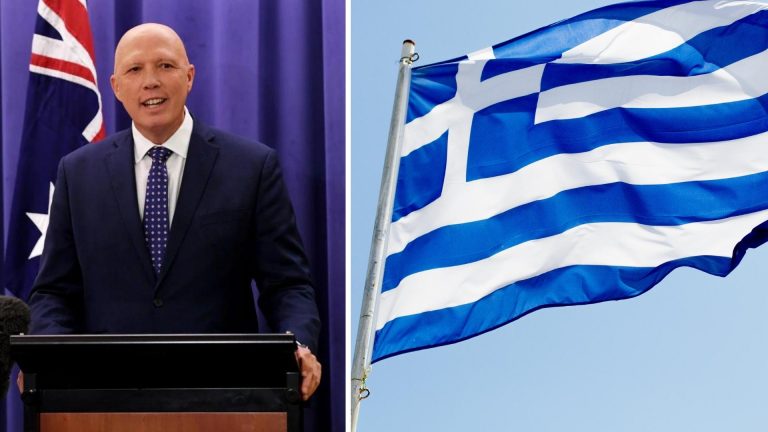
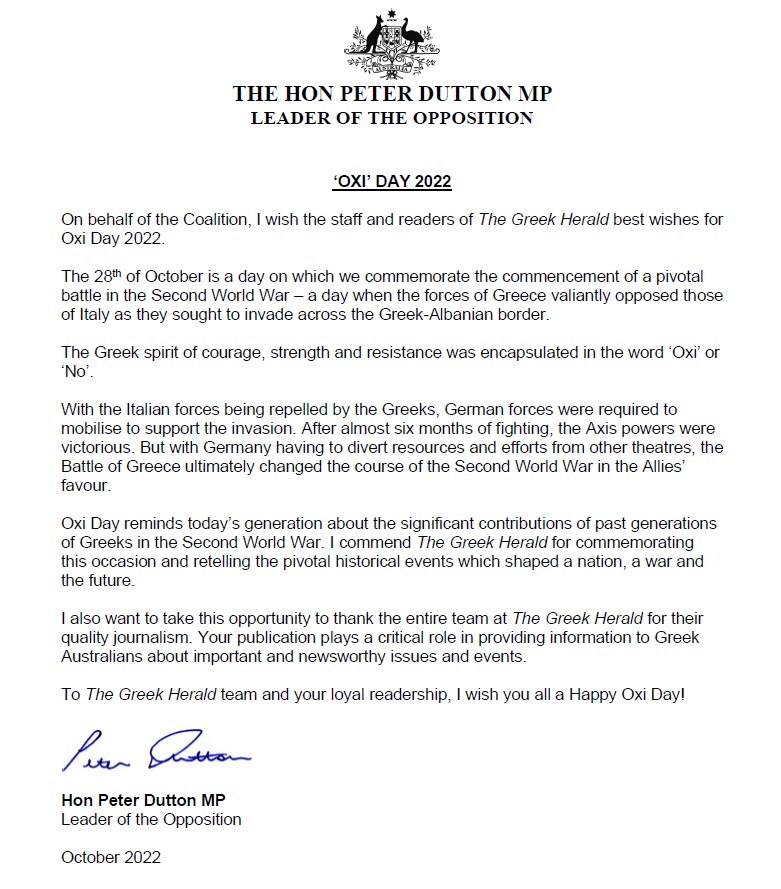
In his message, Mr Dutton said: “Oxi Day reminds today’s generation about the significant contributions of past generations of Greeks in the Second World War.”
The Leader of the Opposition described the national day as a “pivotal historical event” that “shaped a nation”.
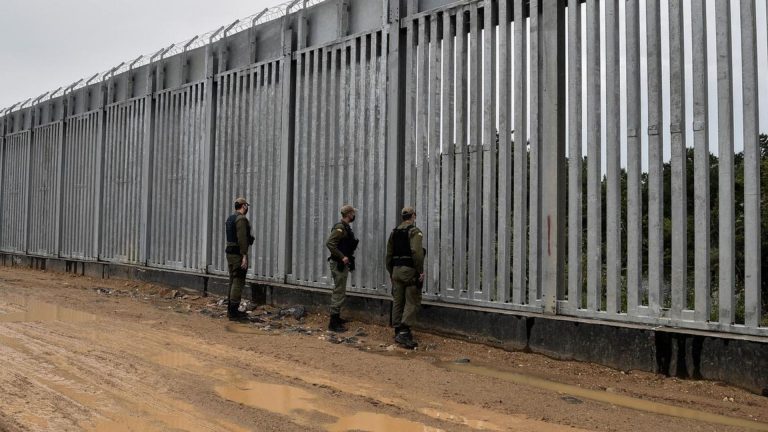
Citizen Protection Minister, Takis Theodorikakos announced that Greece will expand the number of border guards on its northern border with Turkey due to an increase in unauthorised migrants being apprehended trying to pass.
250 more policemen will join the 1,500-member border force once their training is finished in the coming three months.
The expansion plans include extending the current fence along the Turkish border by 40 kilometres to prevent further illegal migration.
“The fence has proved to be effective in curbing illegal migration,” the minister said.
Mr Theodorikakos added that an average of 1500 people try to sneak into Greece on a daily basis, with over 1200 arrests being made of suspected traffickers in just the last nine months.
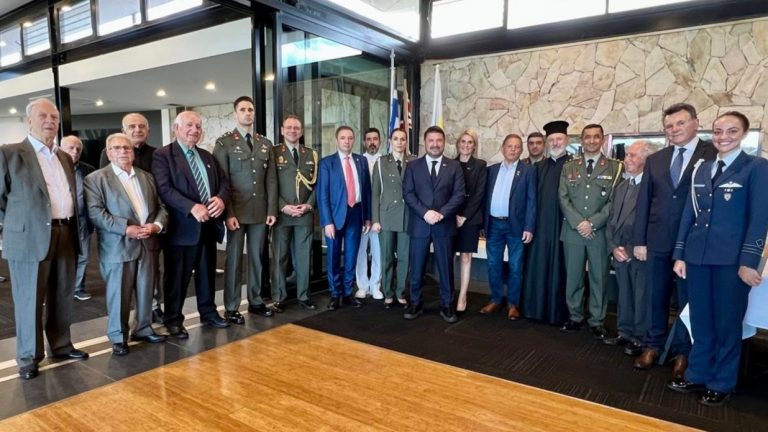
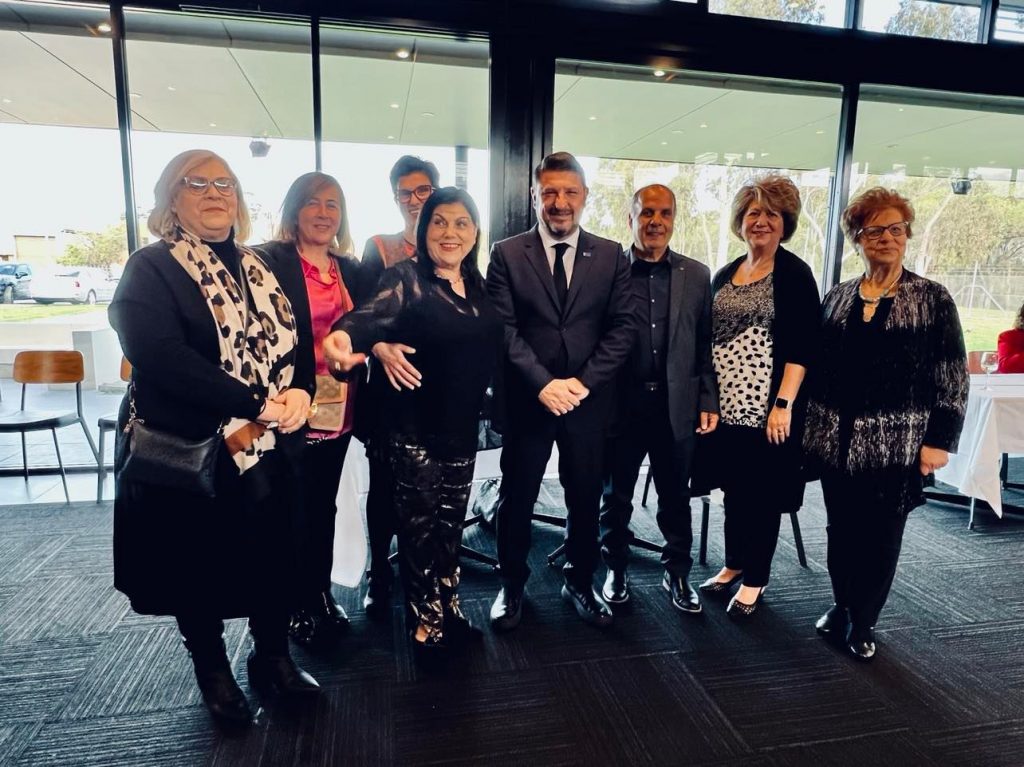
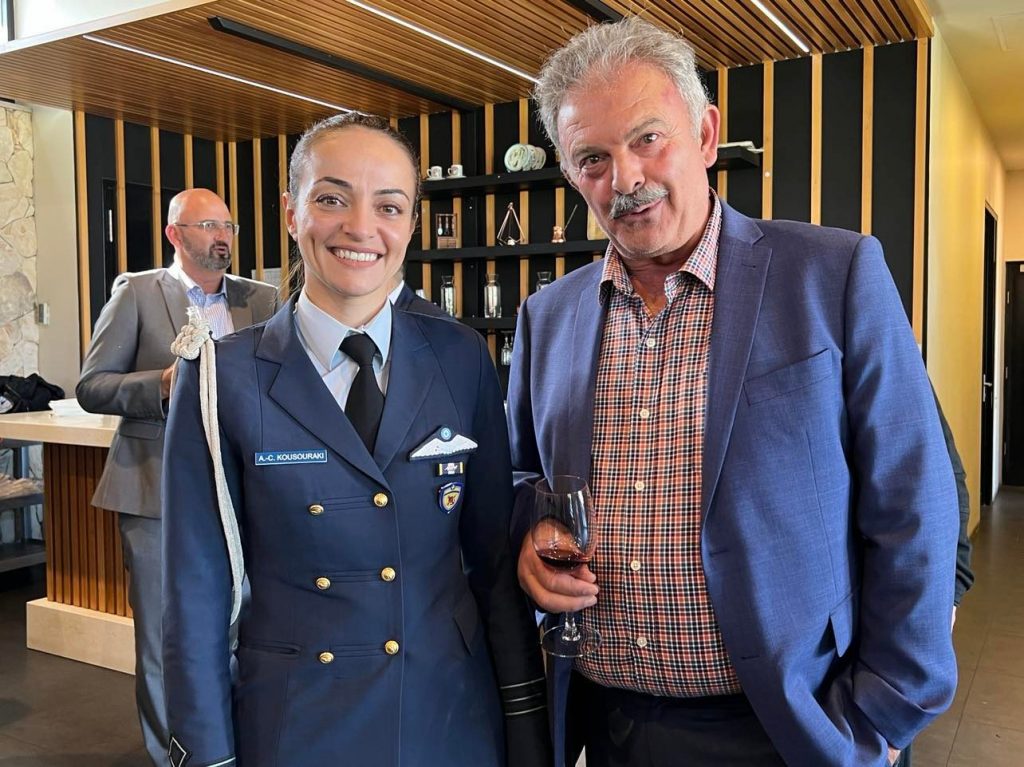
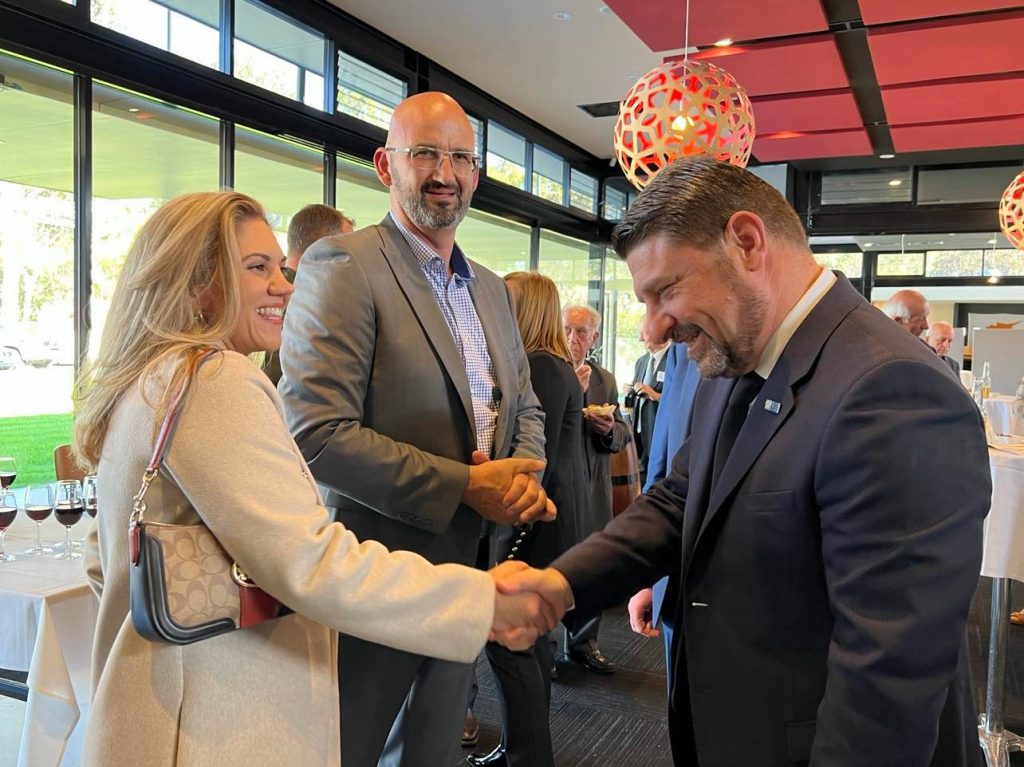
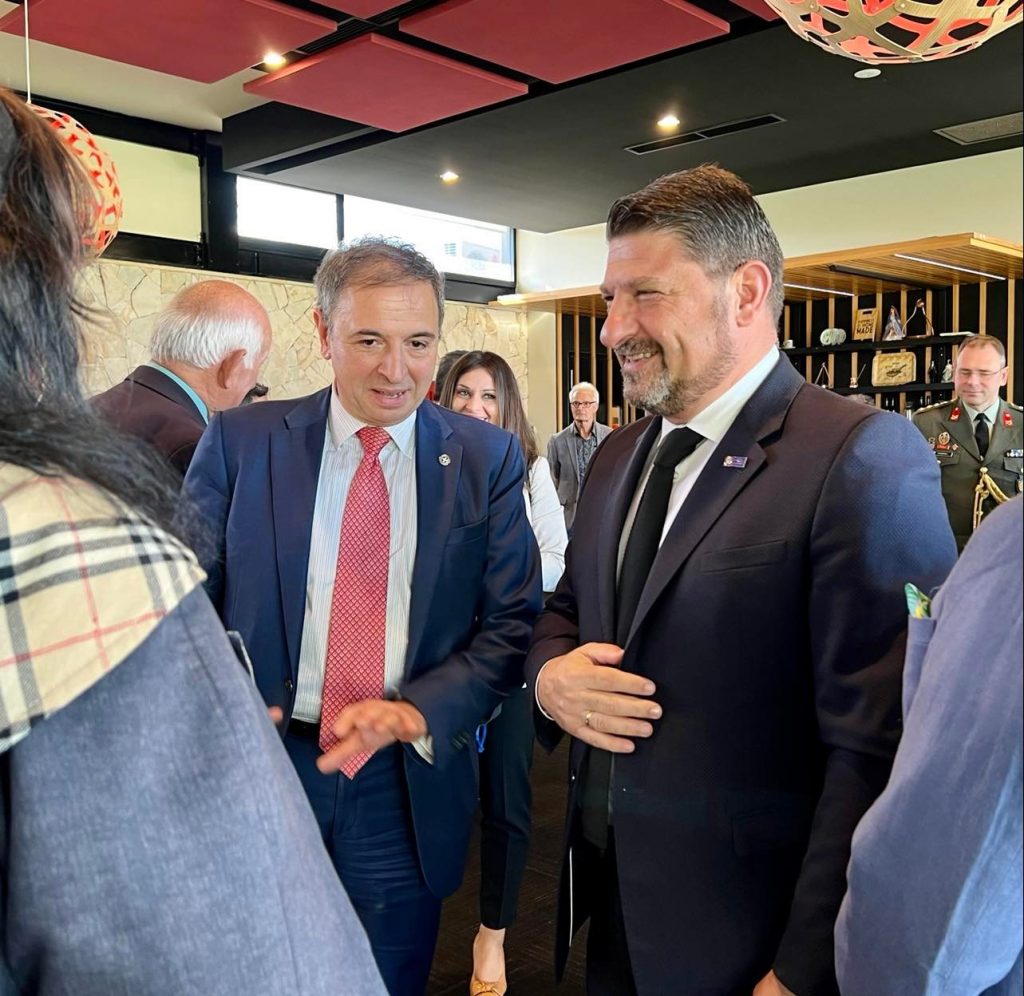
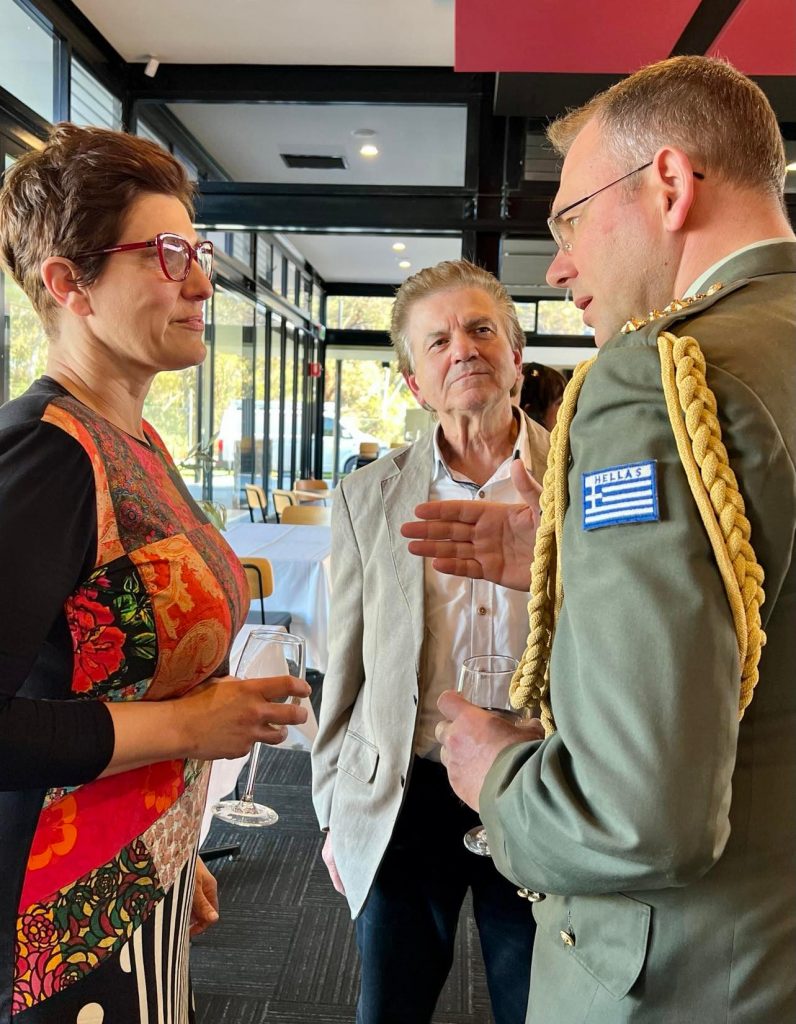
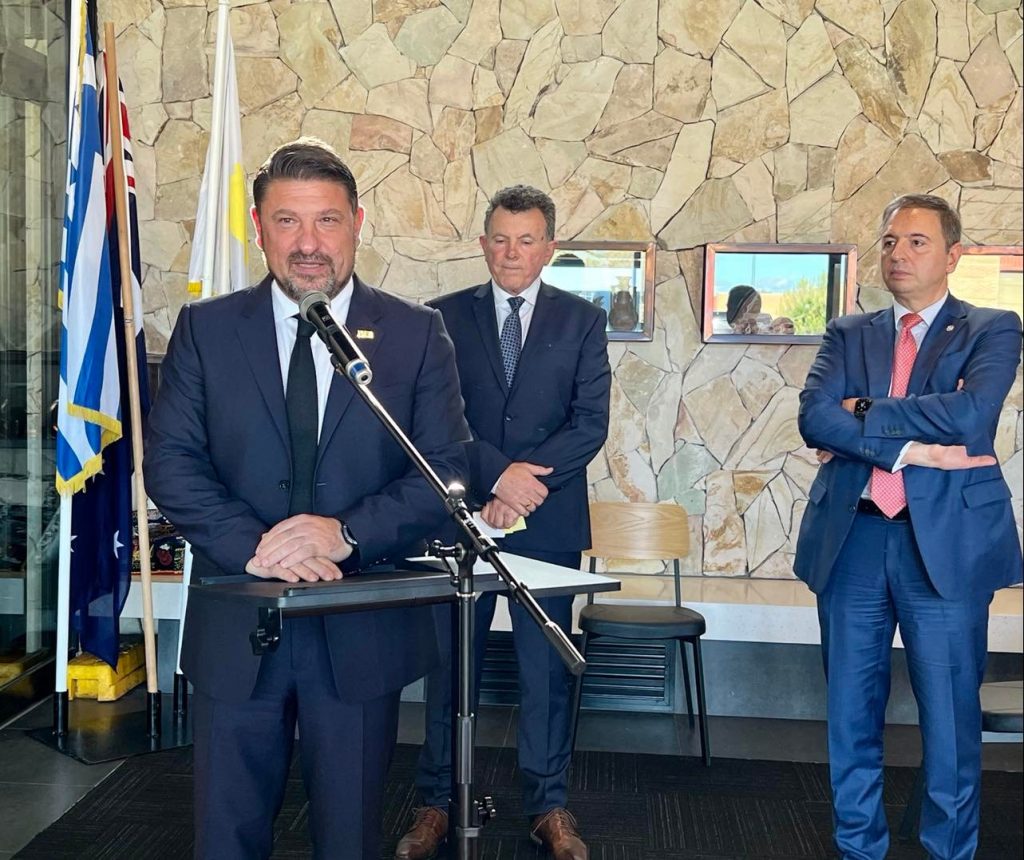
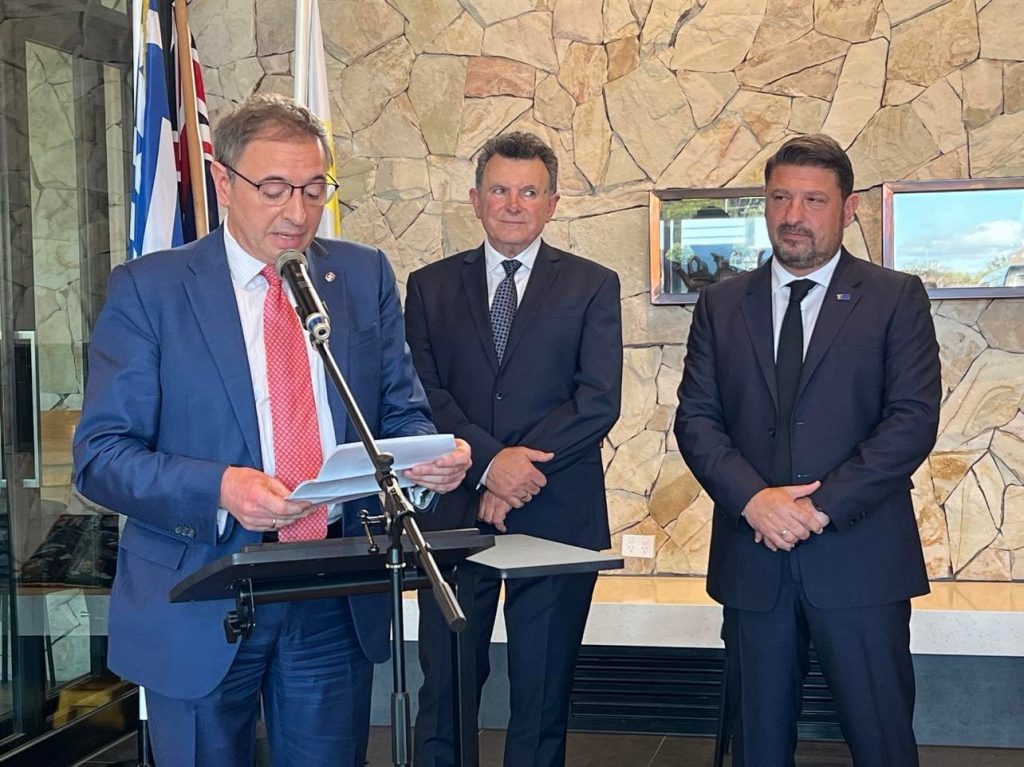
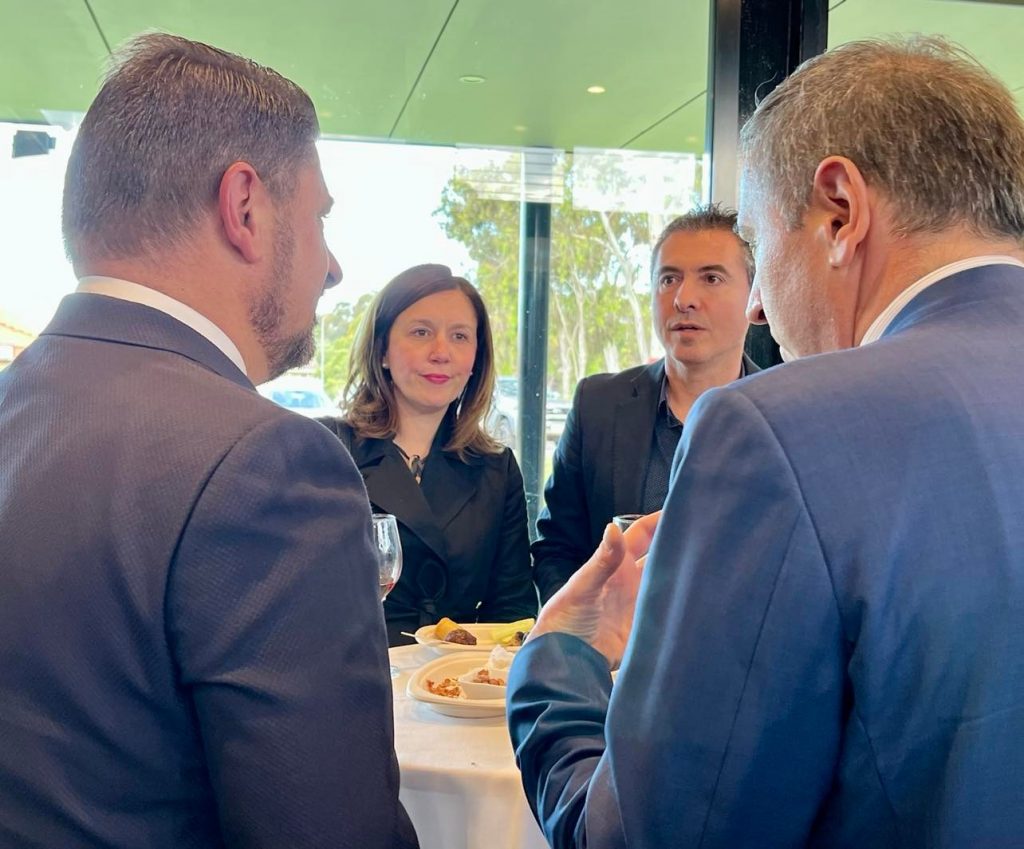
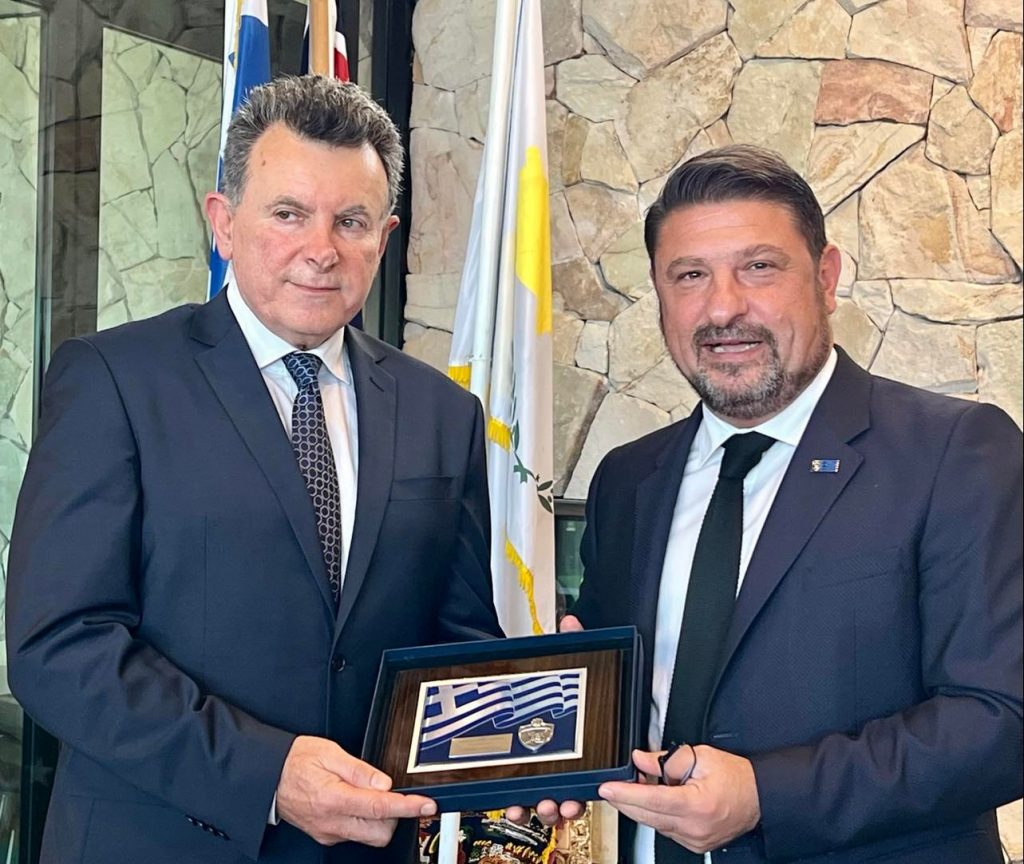
Australia’s Greek diaspora should not worry about the Turkish provocations in the Aegean because the country is ‘strong’ and the Hellenic Armed Forces ready to counter outside threats, Deputy Defence Minister Nikos Hardalias told representatives of community organisations yesterday, during an event hosted by the Consul General of Greece in Adelaide, George Psiachas.
The Minister conversed with the attendees and reassured them that “back in the homeland we do the best we can so you, here in the Antipodes, can have a country to be proud of.”
“This visit has been extremely fruitful and we have already taken the first steps to further strengthen our military relations with Australia,” he emphasised. “Let’s not forget that both countries share common values and during the course of history often faced the same enemies.”
Hardalias announced that Australian Defence Minister Richard Marles, has accepted an invitation to attend a high-profile International Defence Exhibition that will be held in Athens in May 2023, and also said he is hopeful that the Lemnos Remembrance Trail will be ready within the next few years.
The Australian Federal Government has allocated $4.9 million for the Trail that will be created in recognition of the Australian doctors, nurses and other service personnel who served there during the First World War.
“In the coming days, a team from Australia will be on Lemnos to finalise some details for the technical study which will be ready by March next year and we are hopeful the project will be ready by 2025,” he said.
During his speech, the Greek Minister especially thanked Federal Member for Adelaide, Steve Georganas and SA Energy Minister, Tom Koutsantonis for their efforts to raise awareness in Australia for issues concerning Greece and the country’s position as a pillar of stability, peace and development in south-eastern Europe and the Balkans.
“I know you are worried about the provocations but we are and will remain focused on the International Law and the Law of the Sea,” Hardalias said.
“We seek cooperation, we want peace in the region and we have nothing against the Turkish people, however what is non-negotiable are our sovereign rights and we will not take a step back.”
On the same evening, Hardalias attended a Hellenic Australian Lawyers event held at the Adelaide Pavilion and will attend a number of OXI Day events before his departure to Greece on Saturday, October 29.
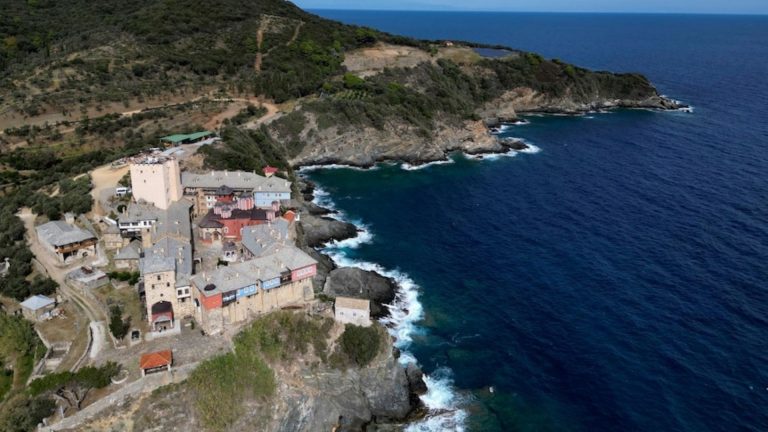
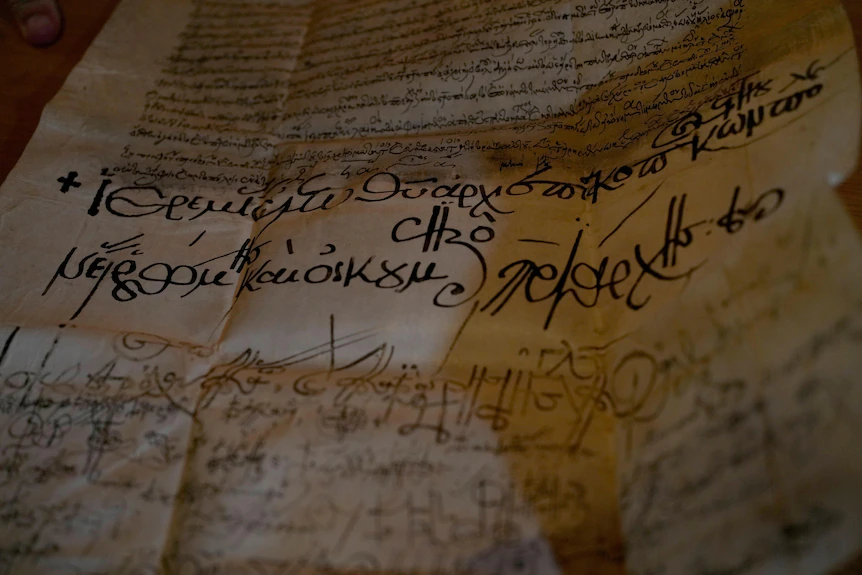
Transcripts dating back thousands of years to the Ottoman-era have been discovered by researchers at the medieval fortified monastery in Mount Athos, an Orthodox Christian community known as the epicentre of Eastern Orthodox monasticism.
These Ottoman-era transcripts were found amongst other centuries old works in several languages including Greek, Russian and Romanian.
The thousands of Ottoman-era manuscripts are virtually unknown. (AP Photo: Thanassis Stavrakis)
Byzantine scholar, Jannis Niehoff-Panagiotidis says that it is impossible to understand the economy of Mount Athos and the society that was under the Ottoman rule without consulting the documents that have been discovered.
“Ottoman was the official language of state,” he said from the library of the Pantokrator Monastery, one of 20 on the heavily wooded peninsula.
Professor Niehoff-Panagiotidis said the oldest of the roughly 25,000 Ottoman works found in the monastic libraries dated to AD 1374 or 1371.
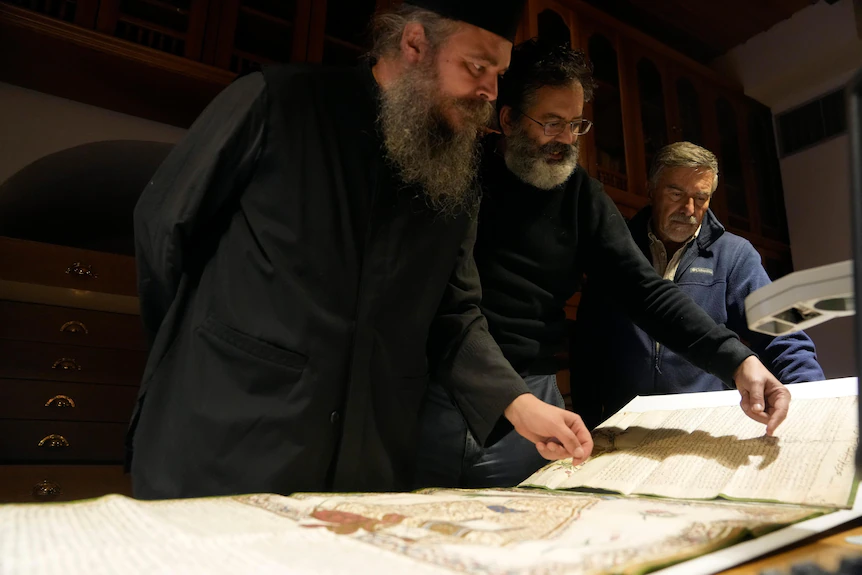
Pantokrator monk Father Theophilos, Byzantine scholar Jannis Niehoff-Panagiotidis and researcher Anastasios Nikopoulos in the monastery’s library. (AP Photo: Thanassis Stavrakis)
That is older than any known in the world, he said, adding that in Istanbul, as the Ottomans renamed Constantinople when they made the city their own capital, the oldest archives only go back to the late 15th century.
“The first documents that shed light on the first period of Ottoman history are saved here, on Mount Athos,” he said.
German Chancellor, Olaf Scholz has condemned Turkey’s position challenging Greece’s sovereignty over its Aegean islands.
In a joint press conference with the Prime Minister of Greece, Kyriakos Mitsotakis, on Thursday, Scholz said: “It is not acceptable for a NATO ally to question another one’s sovereignty.”
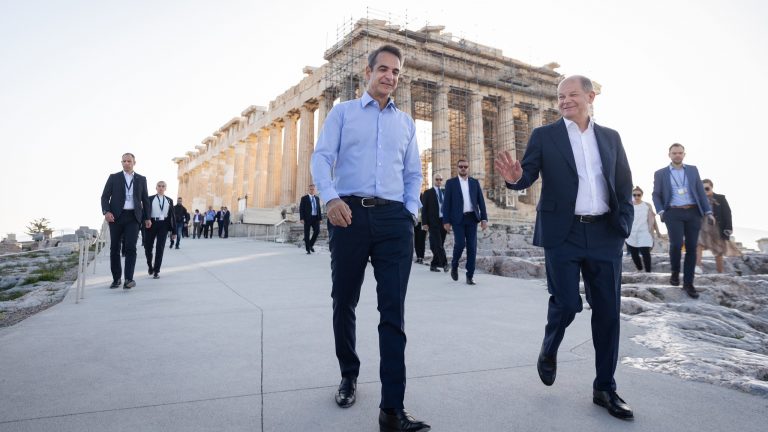
Scholz, who had toured the Acropolis with Mitsotakis earlier in the day, said that differences between Greece and Turkey “can be resolved through dialogue and based on international law,” maintaining that “good neighbourly relations are of importance not only for the two countries but for Europe and the transatlantic alliance as a whole.”
Καλημέρα @kmitsotakis. Die Akropolis ist beeindruckend. Die gemeinsame Besichtigung mit Dir eine tolle Idee. Gleich sprechen wir über die wichtige Frage, wie wir die hohen Energiepreise runter kriegen. Gut ist: 🇩🇪 und 🇬🇷arbeiten eng zusammen – sind Freunde in der #EU und #NATO. pic.twitter.com/J0K0EjhSgc
For his part, Mitsotakis said: “There is no room for other, unnecessary sources of tension.”
“My wish is that, even with delay, our neighbours will choose the road of de-escalation, of legality, of peaceful coexistence without rhetorical outbursts but with constructive actions,” the Greek Prime Minister added.
“On my side, Turkey will always find me ready to extend a hand of friendship. We don’t have any room for further needless sources of tension.”
Mitsotakis said it was “truly a shame” that Turkish President, Recep Tayyip Erdogan “can’t see that he is walking into a dead end when he poisons his people with lies against Greece. Because our neighbours and all our allies know that the Greek islands do not threaten anyone.”
The pair revisited Greece’s demand for WWII operations from Germany, with the Greek Prime Minister urging Berlin to repay a forced loan dating from Nazi occupation.
“Differences are to be bridged,” Mitsotakis said.
Berlin says the issue was settled long ago.
Scholz, who arrived on Athens on Wednesday evening
arrived in Athens on Wednesday evening, visited the Acropolis on Thursday morning.
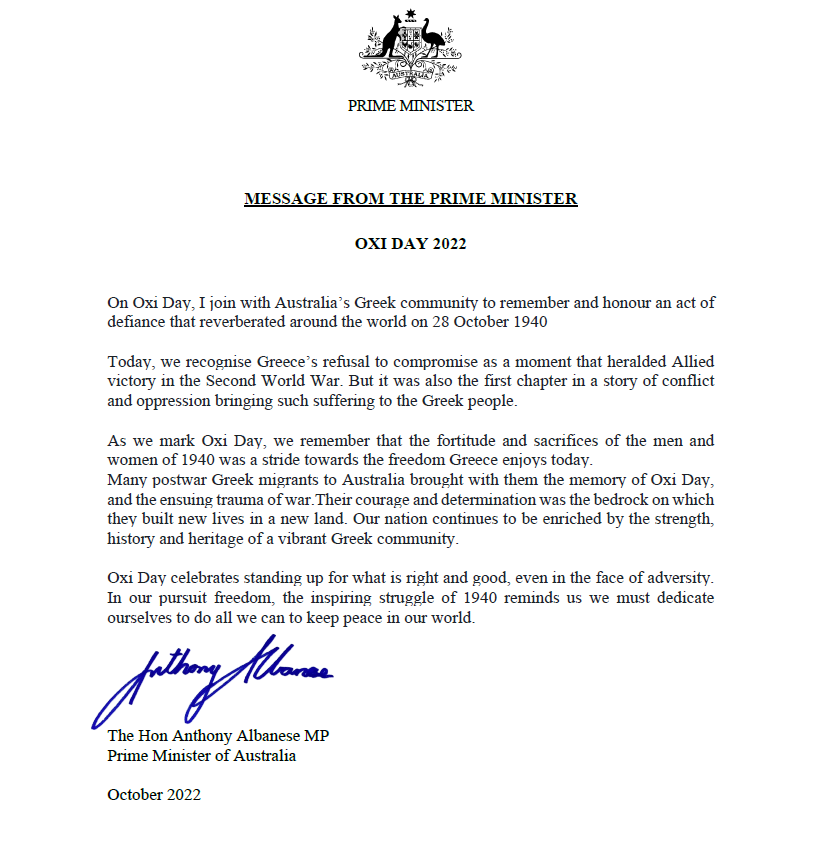
Australia’s Prime Minister, Anthony Albanese, has joined the Greek community today in honouring the 82nd anniversary of Greece’s National Day (OXI Day).
In his message, Mr Albanese said OXI Day is a time to “remember that the fortitude and sacrifices of the men and women of 1940 was a stride towards the freedom Greece enjoys today.”
The Prime Minister also stressed how Australia “continues to be enriched by the strength, history and heritage of a vibrant Greek community.”
October 28th. One of the most important dates for the Greek people. It’s a day that reminds us that Greek people are courageous, strong and resilient.
It’s the day we said ‘OXI’ (NO).
Greece is located in Southern Europe, boarded by both the Ionian and the Mediterranean Sea. During World War II (1939-1945), Greece was a strategically important region, as anyone who occupied the country would control the majority of the Mediterranean Sea and give their army a valuable base for all its operations.
The Axis powers of Germany, Italy and Japan grew fond of Greece’s location and wanted to occupy the land to increase their chance at victory.
At 3am on Monday, October 28, 1940, Italian ambassador to Greece, Emanuele Grazzi, delivered to Greece an ultimatum made by Italian dictator, Benito Mussolini.
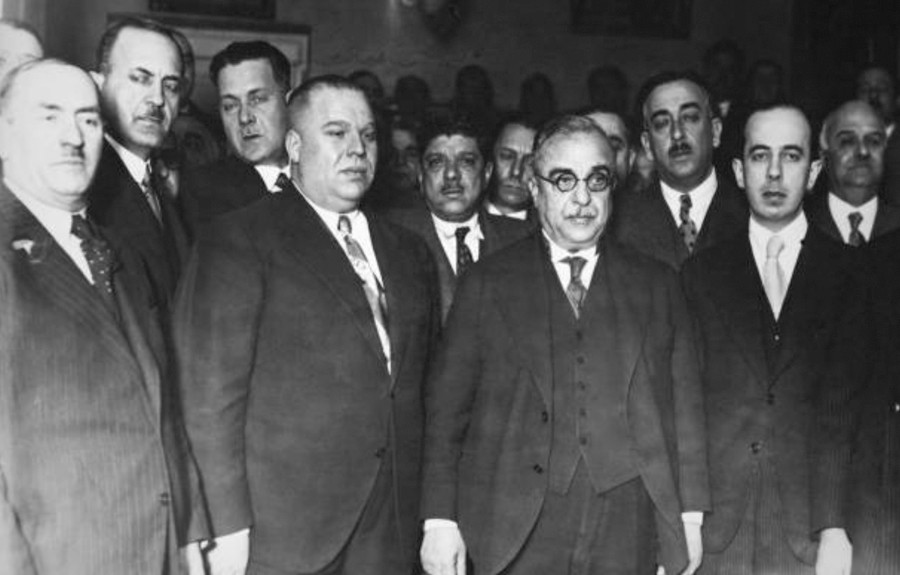
Greek Prime Minister, Ioannis Metaxas (with glasses), rejected the Italian ultimatum.
Mussolini proposed to Greek Prime Minister, Ioannis Metaxas, that the Italian army gain free passage through Greece to occupy certain “strategic locations” for war purposes.
Metaxas was faced with an ultimatum – Surrender or go to war.
He responded, “Alors, c’est la guerre,” which is translated to, “then it is war.” While Metaxas didn’t actually respond with ‘OXI’, the Greek newspapers at the time printed “OXI” over their front pages, and the streets of Athens were filled with patriotic Greeks chanting “OXI.” Thus, OXI Day was born.
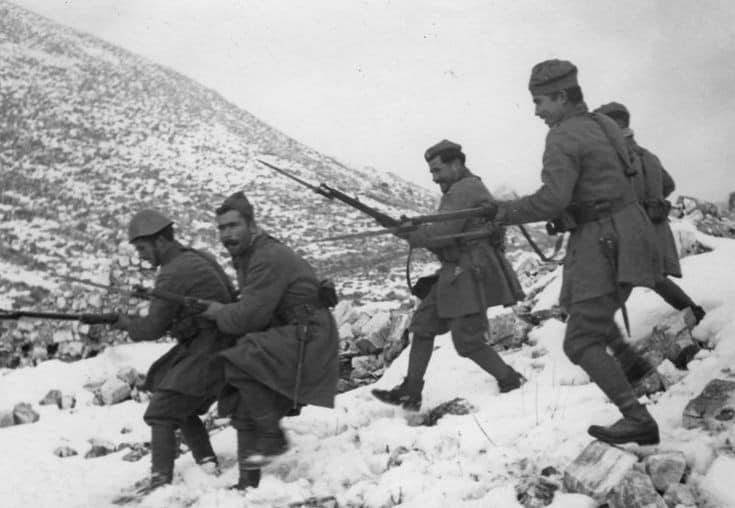
By 5.30am, Italian armies were at the Greek-Albanian border of the Pindus region, Northern Greece. They were met with resistance from the Greek army. The Greco-Italian war, as it would be called, was a crucial battle in the outcome of WWII, lasting from October 28, 1940 to April 23, 1941.
The Italian army was met with resistance resistance from the Greek army.
During the fierce battle, 14,000 Greek soldiers would be killed. Prime Minister, Ioannis Metaxas, would be killed and new Prime Minister, Alexandros Koryzis, committed suicide.
Despite all this tragedy, poorer weapons, uniforms and planning, against all odds, the brave Greek soldiers managed to drive the Italian army out of Greece. This battle gave the Allies the boost in confidence they needed to overturn the outcome of the war and defeat the Axis powers.
Winston Churchill would later praise the Greek army, saying: “Hence we will not say that Greeks fight like heroes, but that heroes fight like Greeks.”
In the end, OXI Day is a proud day for all Greeks. Without the Greek resistance against the Italian army, the outcome of WWII could have been very different.
By Theodora Gianniotis (Outreach and Engagement Officer, Australian Archaeological Institute of Athens).
It is very easy for third- and fourth-generation Greek Australians to lose sight of the meaning of significant days to our cultural calendar without a recognisable relevance. This is not a phenomenon specific to Greek Australians, but something shared across cultural groups in Australia’s beautiful ethnic melting pot. These days of significance spark something in us that we distantly recognise and feel and grounds us. We want to share them but are not sure how. For Greek Australians, October 28 – OXI Day – is that day, and the pride it invokes makes us want to share this day and its legacy in mourning and commemoration.
Collaborating with the Inner West Council, Australian Archaeological Institute of Athens and Sydney University allows us to create recognisable relevance for this historical event, not just for Greek Australians but also for all Australians. More importantly, it will enable us to share with all our friends and family. This date’s intergenerational impact on Greek Australians and all Australians is why this day needs to be shared outside the realm of Greek Australians. Instead, we must be telling the story through these collaborative efforts, which will occur this Sunday, 30 October, at Marrickville Town Hall.
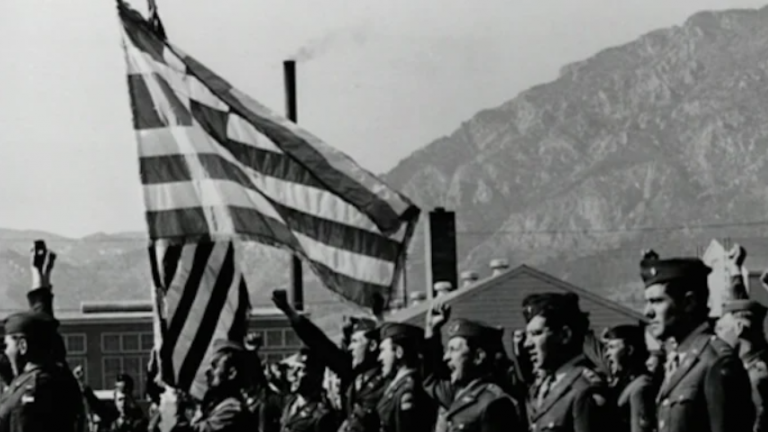
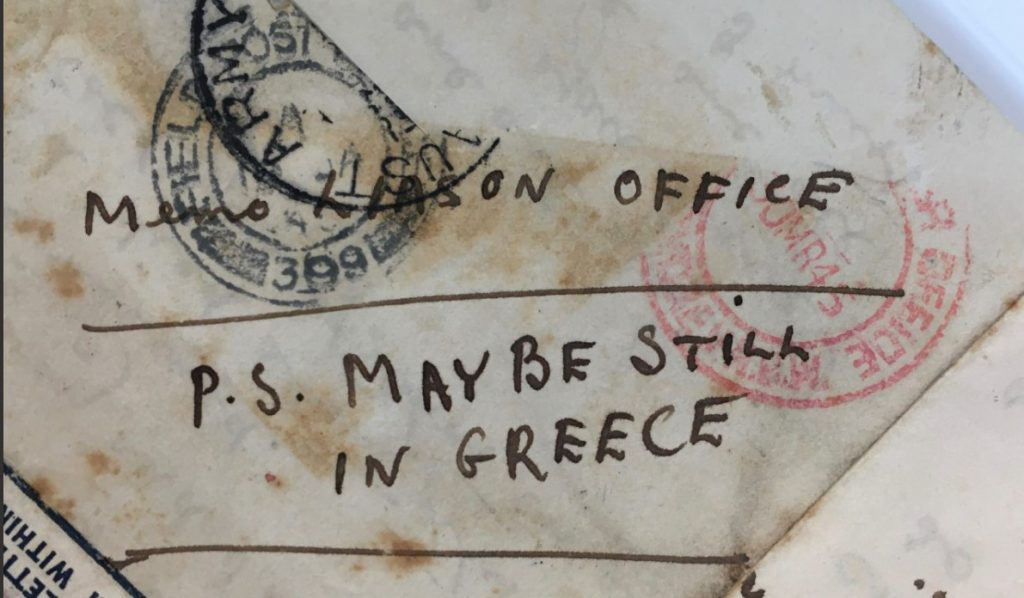
Photo: Private collection of Dr Michael Bendon.
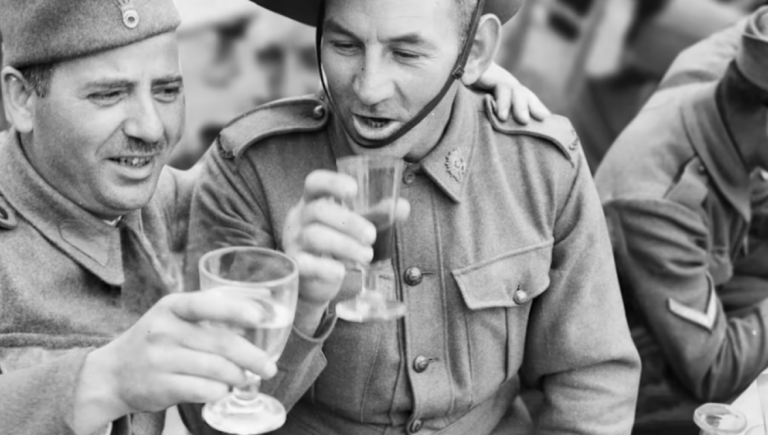
Nothing defines a greater example of “mateship” or as we Greeks call it “philotimo” between our two cultures than ANZACS and Greeks fighting for our freedom during WWII against all odds. Though we, as Greek Australians, may think this day is confined to Greece’s history books, the reality tells us differently. The theatre of war that was Greece captured the ANZAC spirit and even today presents a relevant and relatable point in the current Australian psyche. Therefore, collaboration such as this will ensure this legacy continues. It will be an opportunity to share stories and commemorate the grandparents and great-grandparents who fought together.
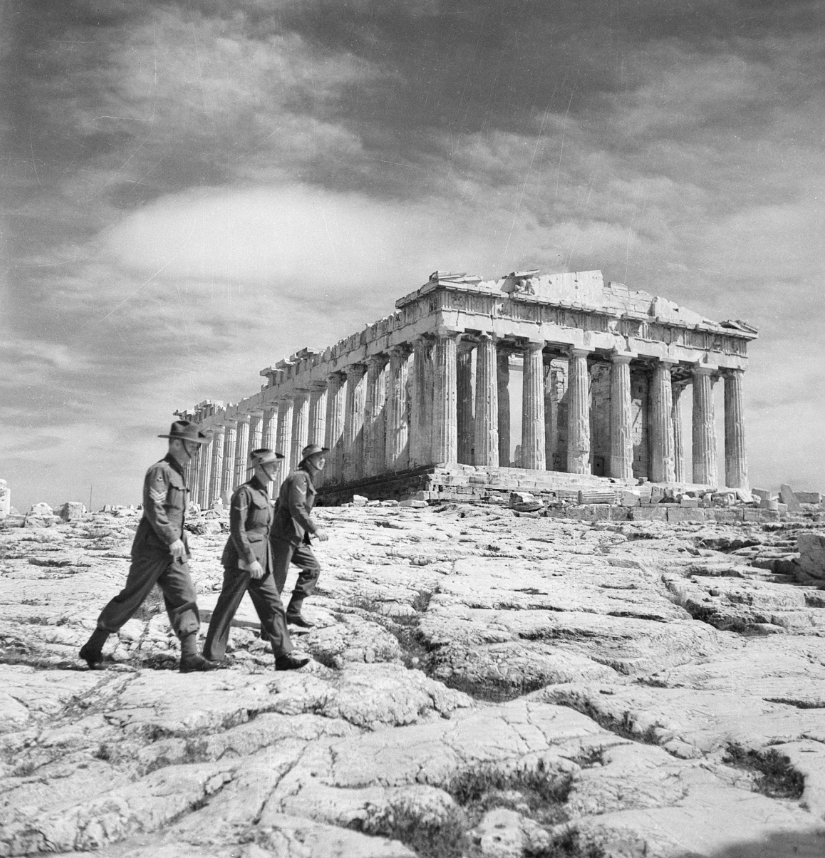
October 28, though commemorated by us Greek Australians as the day we said ‘OXI’ (NO) to the invading forces of Mussolini and drove them back, unfortunately, it also marked the beginning of the invasion by the Nazi war machine. Greece was about to be plunged into the horror of war. Horrors unimaginable suffered by our parents and grandparents. “Eίθε να μην δείτε ποτέ τέτοιες μέρες” (never may you see days like that) my grandmother would tell me, the worst of humankind laid bare. In that darkness, though, hope and friendship developed. With the eminent German invasion, the ANZACS were sent to Greece from the borders in the north to the final stand in Crete.
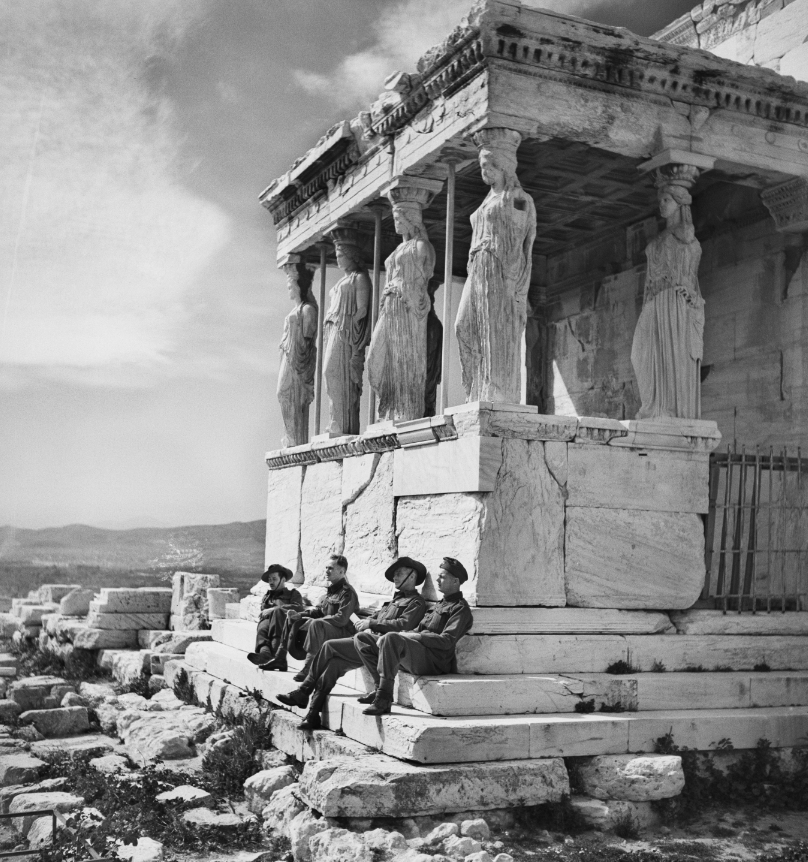
Photo: Australian War Memorial.
No other theatre of war blurred the lines between military and civilians more than in Greece. As the chaos descended, Greeks, both women and men, took to fighting as resistance fighters and worked closely with the ANZACS. The ANZACS, as testimonies attest in many military records and photographs currently held by the Australian War Memorial, helped evacuate many men, women and children, many of whose descendants migrated to this country. Many of our families recall those days when they fought for freedom alongside the ANZACS. This is more than a Greek story; this is as much an Australian story, and we should be proud to share our October 28 story to keep its legacy.
On their return, ANZACS never forgot the effort of these civilians, and many were executed and killed to save ANZACS. In the Australian War Memorial, the theatre of Greece and Crete is honoured, and the legacy of the Battle is as it is every ANZAC day.
Photo: Australian War Memorial.
This collaboration marks an event not just for Greek Australians but for all Australians and an opportunity to stand united and commemorate those that paid the ultimate sacrifice, to pause to think of those who survived and ultimately migrated to this country. This is an opportunity to share as Australians a moment in history where our two cultures united in the depth of darkness and rose victorious so we today can have the privileges we enjoy.
This event and collaboration will mark the first of an annual event and a roll-out of future research that will ensure the relevance of OXI Day for all Australians, Greek or otherwise and ensure the Greek-ANZAC legacy will remain relevant for future generations.
And I can only end on the following words: “Until now, we used to say that the Greeks fight like heroes. Now we shall say: Heroes fight like Greeks” – Winston Churchill on OXI.
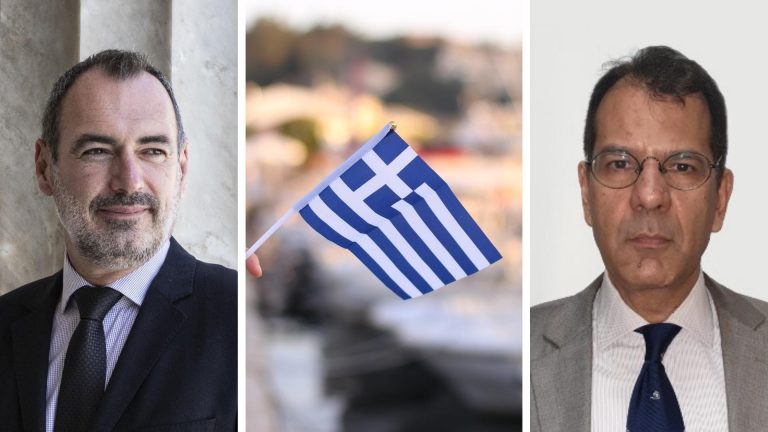
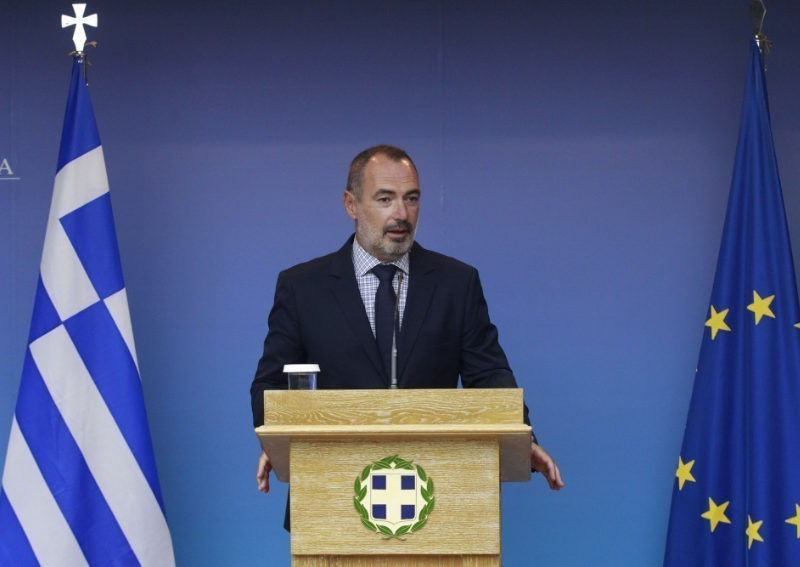
Greece’s Deputy Foreign Affairs Minister, Andreas Katsaniotis, and Ambassador of Greece to Australia, George Papacostas, have both issued messages today to mark the anniversary of OXI Day on October 28.
In his message, Mr Katsaniotis speaks about how the Greek people said ‘NO’ to an Italian Fascist Invasion in 1940 and “became symbols of heroism and self-sacrifice.”
“October 28th is a day of honour and remembrance for Hellenism,” the Greek Deputy Foreign Affairs Minister added in his message.
“It is the day when unity overcame discord, hope overcame fear. It is the day when a brave battle was fought in favour of the high ideals that the Greeks have bequeathed to humanity.”
Next, Ambassador Papacostas stressed in his message the importance of “honouring the sacrifices” of those Greeks who defended the ideals of freedom and democracy during World War II.
“Keeping in mind our ancestors and their sacrifices which helped deliver a free, democratic, prosperous and modern Greece, we celebrate this anniversary on October 28,” the Ambassador said in his message.
The Age Good Food Guide returns this year and the six finalists for the Young Chef of the Year Award have been announced.
Among the finalists is 28-year-old Greek Australian chef, Nicholas Deligiannis, as well as Ronith Arlikatti, Oliver Garrioch, Saavni Krishnan, Sriram Aditya Suresh and Cameron Tay-Yap.
Deligiannis did his apprenticeship at Jacques Reymond Restaurant (and then Bistro Gitan), before flying to London to gain experience.
On his return to Victoria, gigs in Melbourne and on the Mornington Peninsula culminated last year in a head chef role at seafood-focused restaurant Audrey’s.
The winner will be announced on November 14 at The Age Good Food Guide awards.