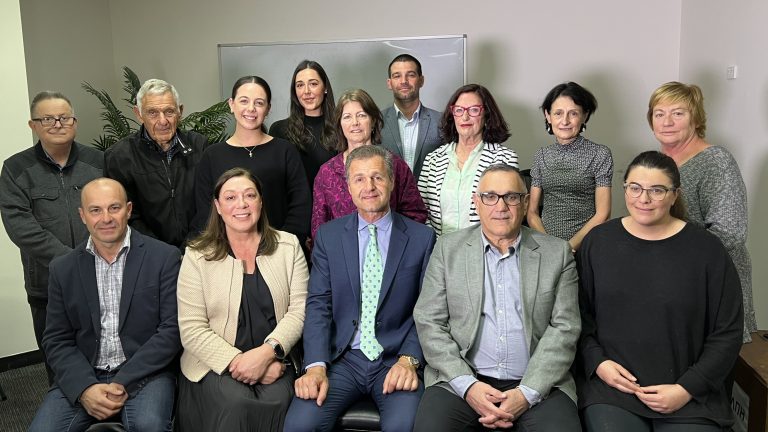
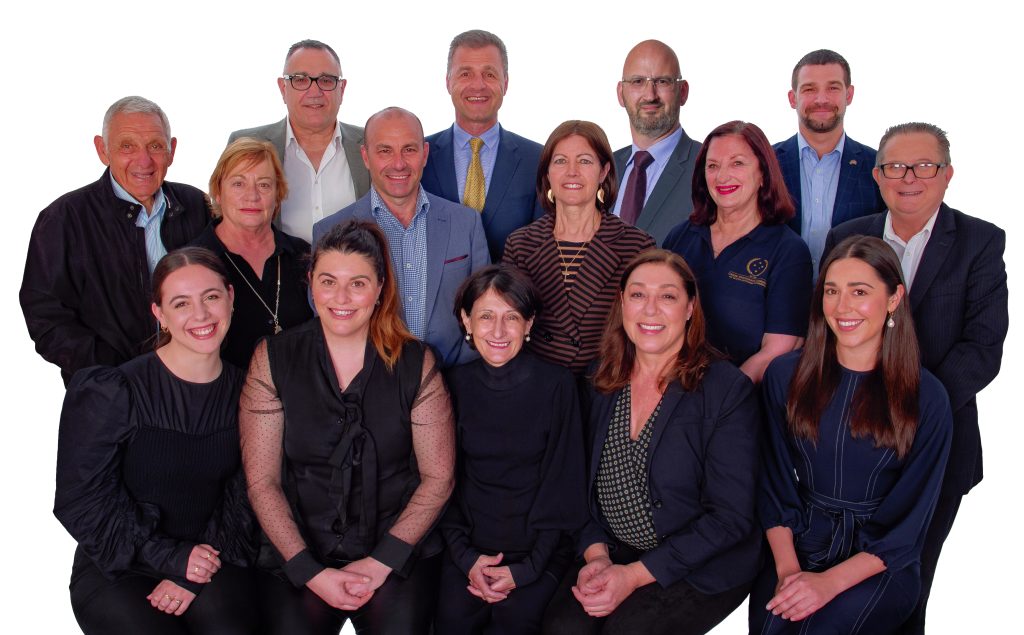
Following the results from the December 11 elections this year, the Greek Orthodox Community of South Australia Inc. (GOCSA) has announced their Administrative Council and the appointment of two new positions on the Executive Committee.
The 15 newly elected members, along with members from the Electoral Committee, met on Tuesday, December 13 and Thursday, December 15 to announce the new Executive Committee for the 2023-2024 term.
In a press release, GOCSA said the two newly created Vice-Presidency positions will allow the organisation to streamline and strengthen its approach to Public Relations, Community Engagement and Government Relations.
GOCSA President, Peter Gardiakos, said that the new Board Members will bring a wealth of experience and skills to the organisation during this time of much-needed transformative growth.
Front row L to R: Anastasia Mavrides, Chloe Germanos Kourakis, Helen Chrisakis, Smaro Skordas, Stephanie Skordas. Centre Row L to R: Philip Galantomos, Alexandra Scounos Sifis, George Vasilias, Eleni Mermingis, Hellas Lucas, John Ninos and Back Row L to R: Peter Psaroulis, Peter Gardiakos, George Vlahos, Peter Gonis.
“Our board’s focus will be to strengthen the foundations, bring back our youth, bring back equal agenda, bring back transparency and bring back open dialogue with our members,” Mr Gardiakos told The Greek Herald.
Vice President Peter Gonis added that GOCSA “want to create positive and strong relationships with our community and with other multicultural organisations.”
“Our 3rd and 4th generation Greeks today have more Australian values than ever before. We too need to adapt to that, but we need to do so in a respectful manner that preserves our history, our language, and our culture. The role our community plays is now more important than ever,” Mr Gonis said.
“This Board is armed and ready to get on with the challenges ahead. We want to ensure our community is stronger and more vibrant than ever before.”
This sentiment was echoed by GOCSA’s other Vice President, Stephanie Skordas, who said the Community’s focus moving forward will be on how to improve community engagement and foster media engagement.
The Cyprus Community of New South Wales brought the festival spirit to Sydney’s inner west on Saturday, December 17 with their inaugural Christmas Fair.
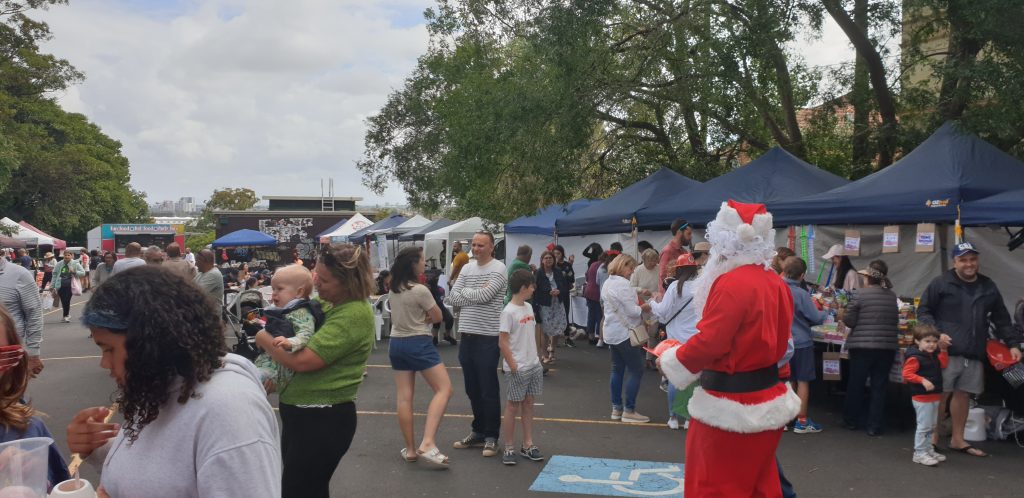
Large crowds attended the Christmas Fair, which was held on the grounds of The Cyprus Club in Stanmore from 3pm to 9pm.
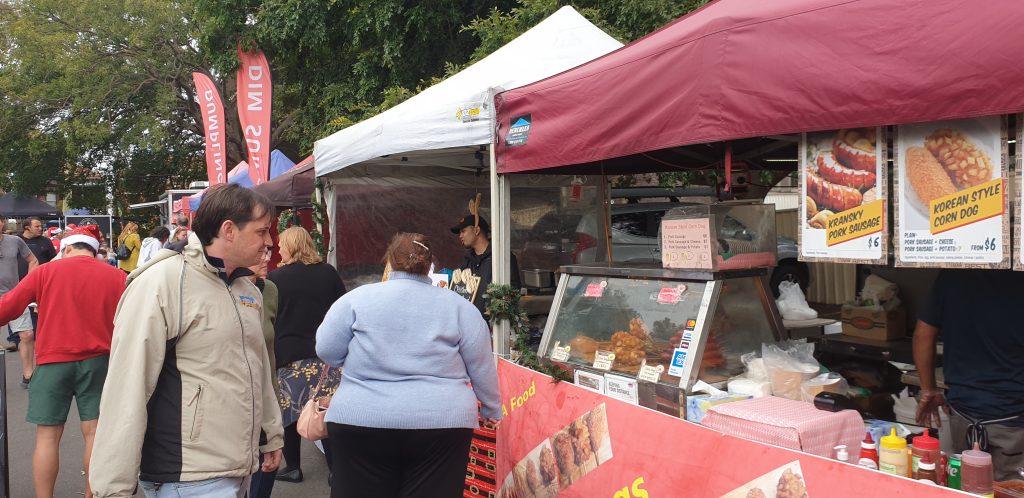
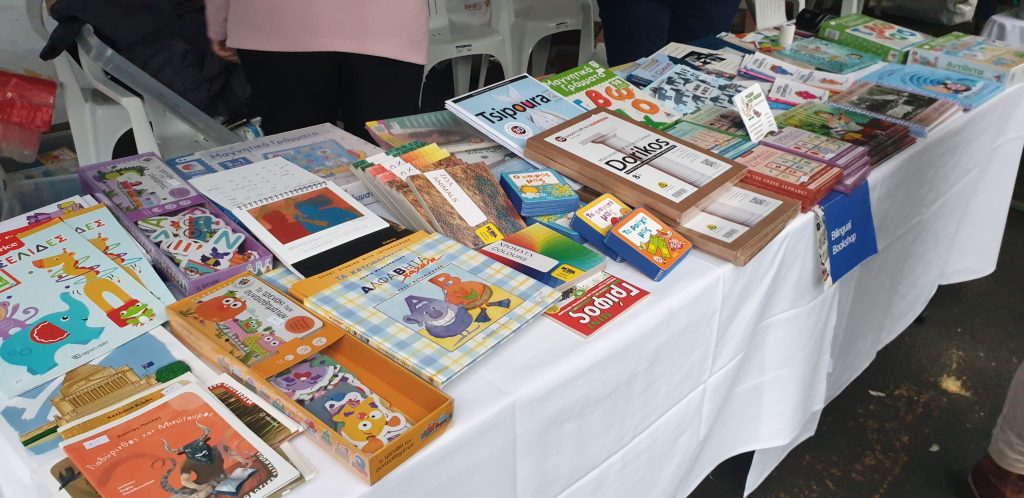
Throughout the night, people were able to browse over 30 Greek and Cypriot food and gift stalls. There was even a bilingual children’s book stall.
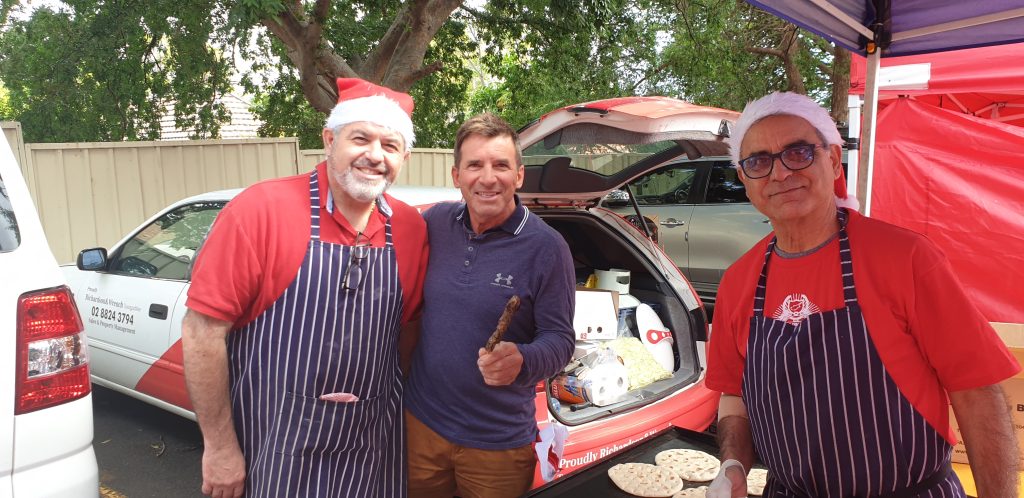
Food and gift stalls.
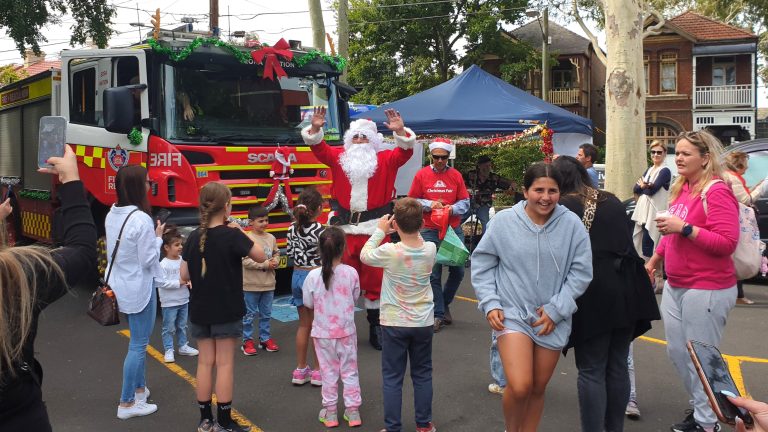
There was also plenty of activities for the kids, including a special visit from Santa Claus. Christmas music filled the air on the night.
Santa Claus visited.
“We planned the evening to be similar to a lot of traditional markets held in European cities. We’re really happy with the turnout at our inaugural Christmas Fair,” President of the Cyprus Community of NSW, Andrew Costa, told The Greek Herald after the event.
“We plan on holding similar events next year, including one at Easter.”
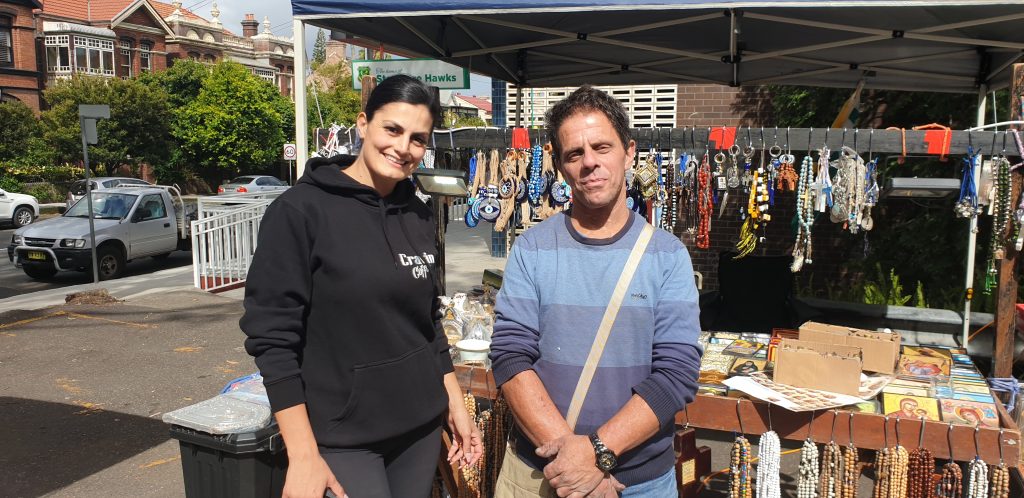
President of the Cyprus Community of NSW, Andrew Costa (right).
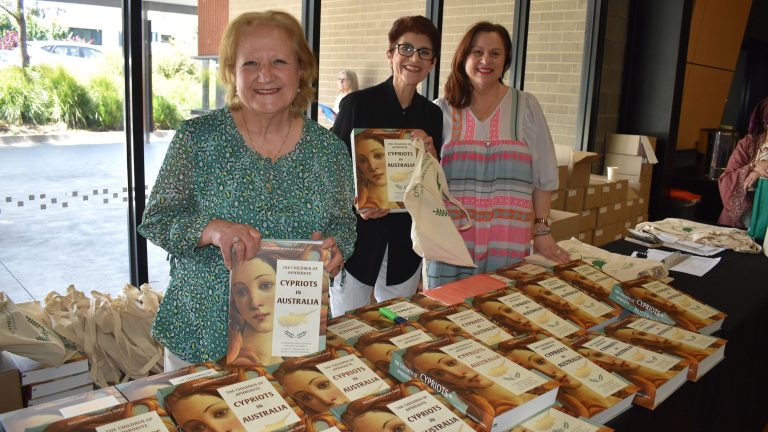
Professor Anastasios Tamis’ book, Children of Aphrodite: Story of Cypriots in Australia, begins with two Cypriots – Michailidis and Dimitriadis – convening at a family house on Cardamon Street, Carlton, to discuss ways to support their struggling compatriots. That is how the creation of the Community of Cyprus in Australia began on Sunday, November 1, 1931. Within years, a number of Cypriot clubs began to sprout.
Anecdotes such as this were shared during the book launch at Alphington Grammar School in Melbourne on Sunday.
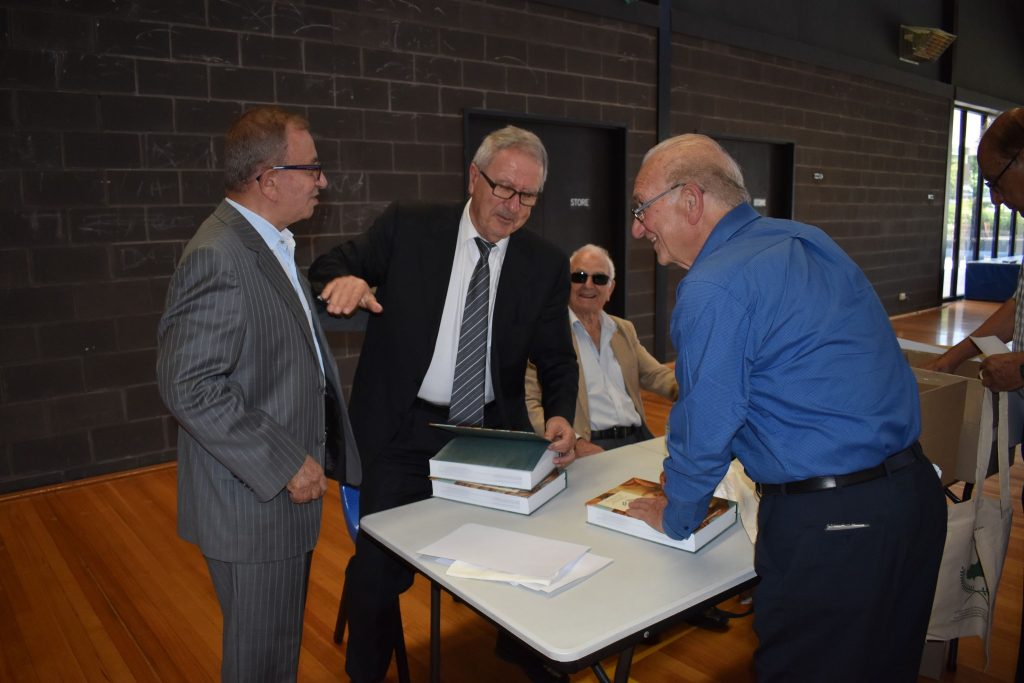
Professor Tamis signing book while also sharing a banter with Cypriot Community President Theo Theophanous.
Two years in the making, the book is a tribute to the first generation of Greek Cypriots who “sacrificed their own welfare for their children,” said Professor Tamis, a pioneer in sociolinguistic studies on the Greek language in Australia and New Zealand, president of the Australian Institute of Macedonian Studies and executive director of the National Centre for Hellenic Studies and Research at La Trobe.
The large volume celebrates the 90th anniversary of the birth of the Cypriot Community of Melbourne and Victoria. It also monitors, investigates, documents, analyses and preserves the history of Cypriots in Australia, which currently number 80,000 people.
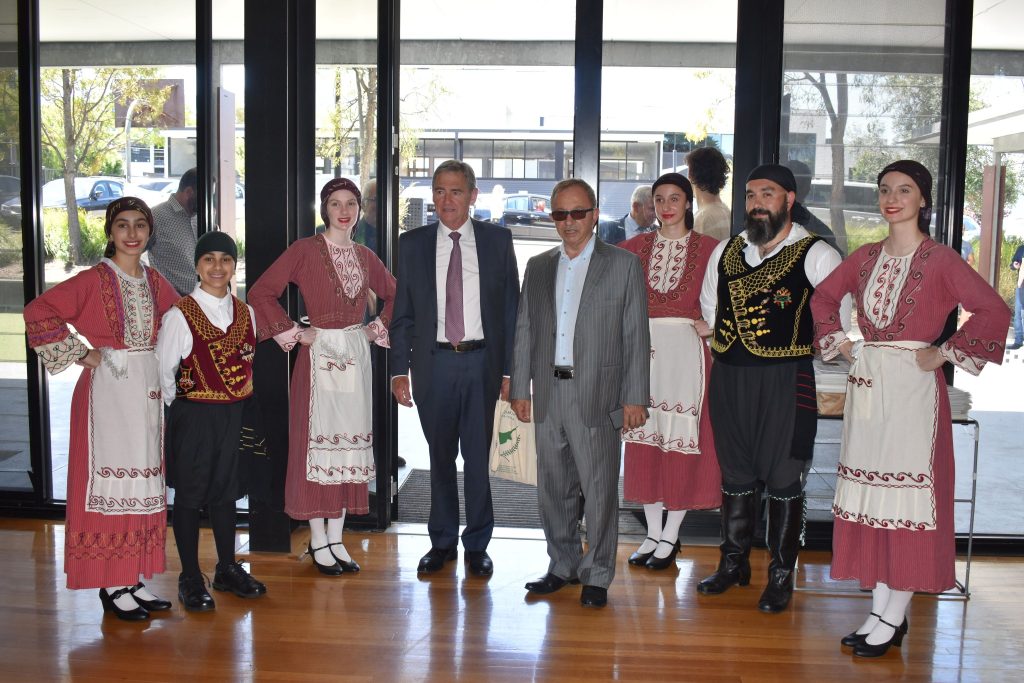
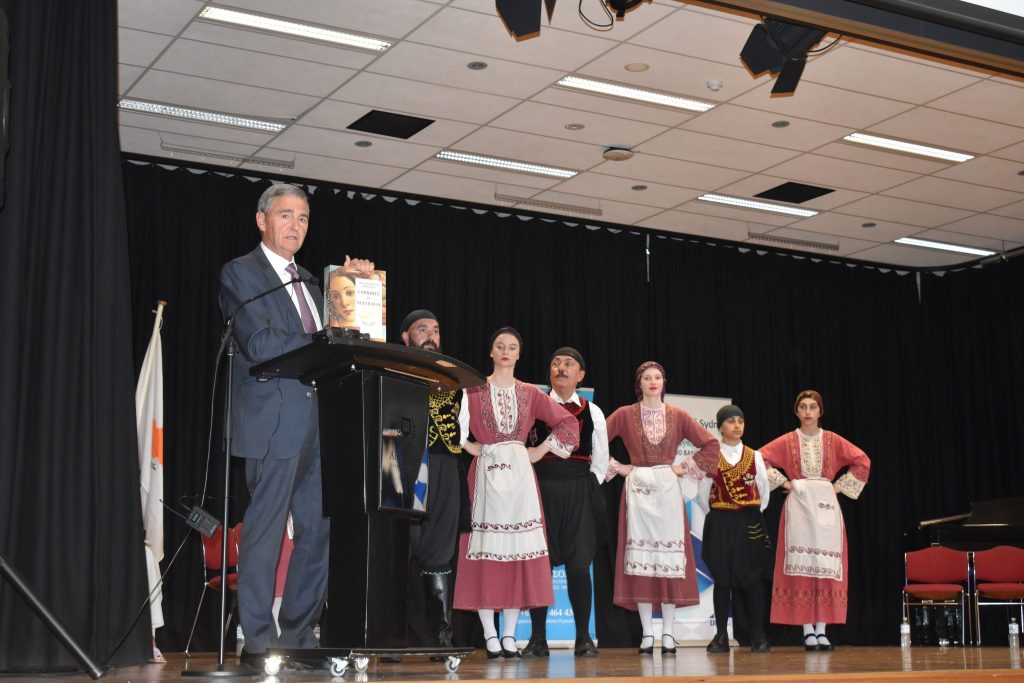
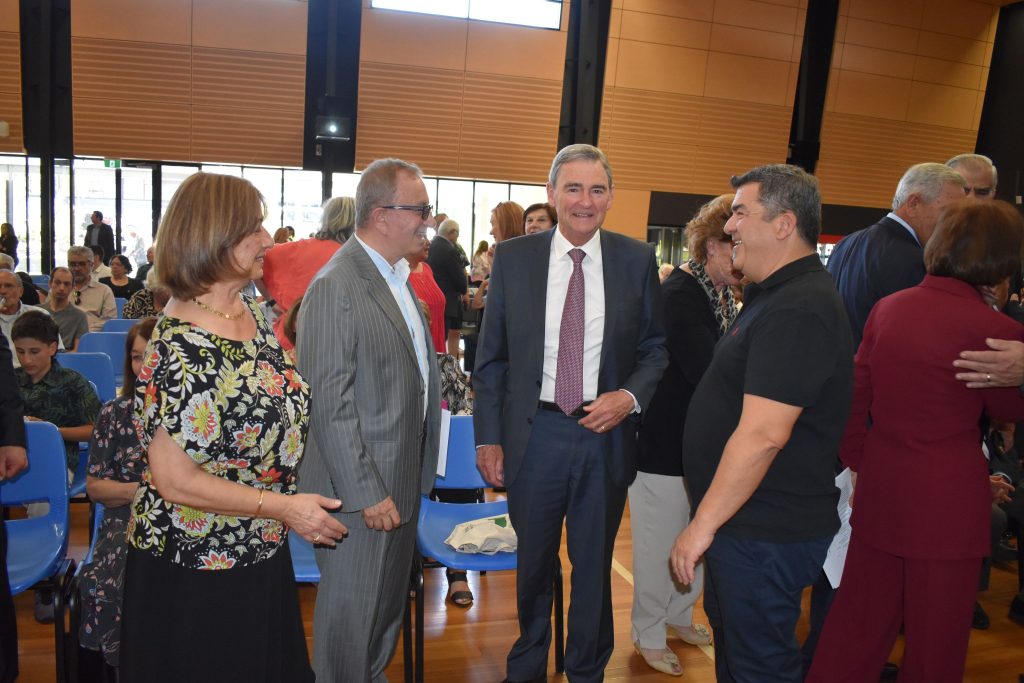
Former Victorian John Brumby and Cypriot Community President Theo Theophanous with Pegasus Dancing troupe.
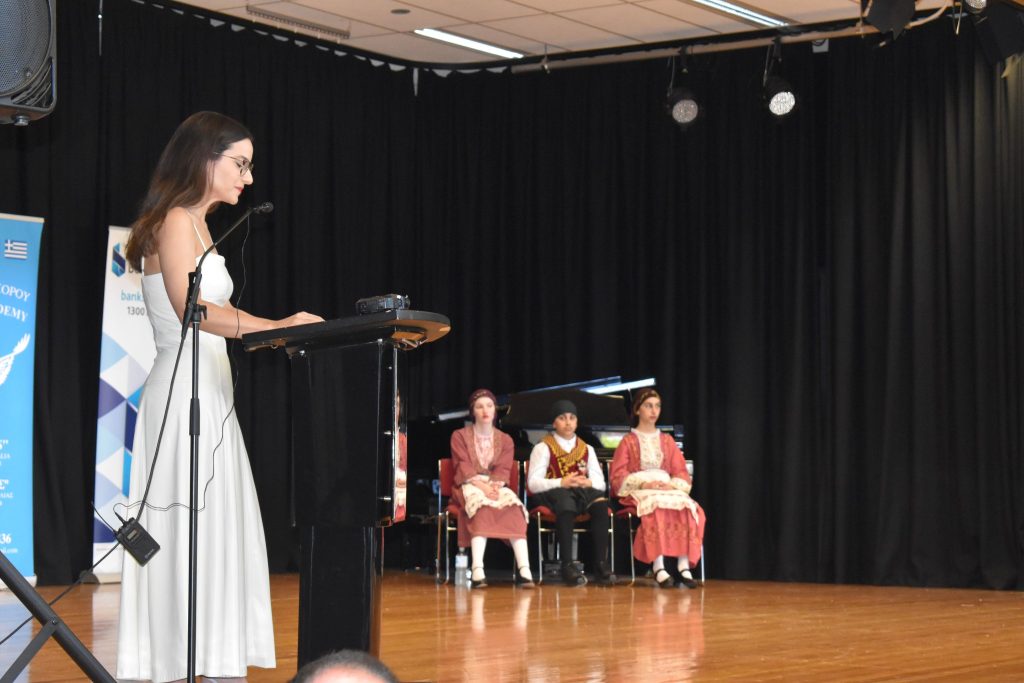
“Without past we have no memories, no knowledge, no present, no future,” Professor Tamis said, taking the microphone from Cypriot Australian actress Andrea Demetriades, the MC for the occasion.
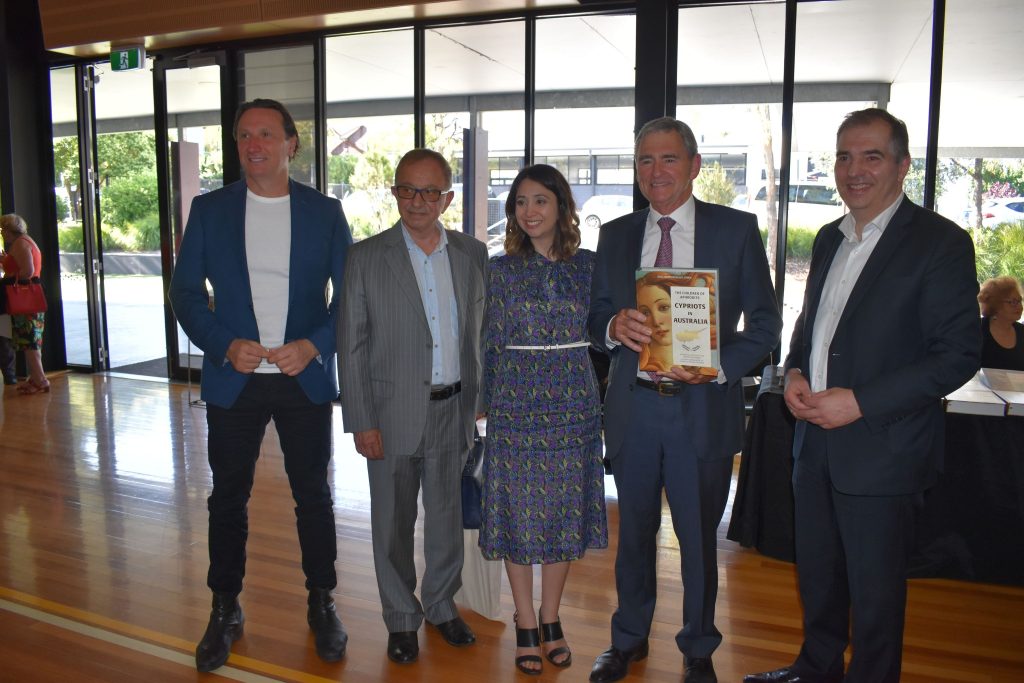
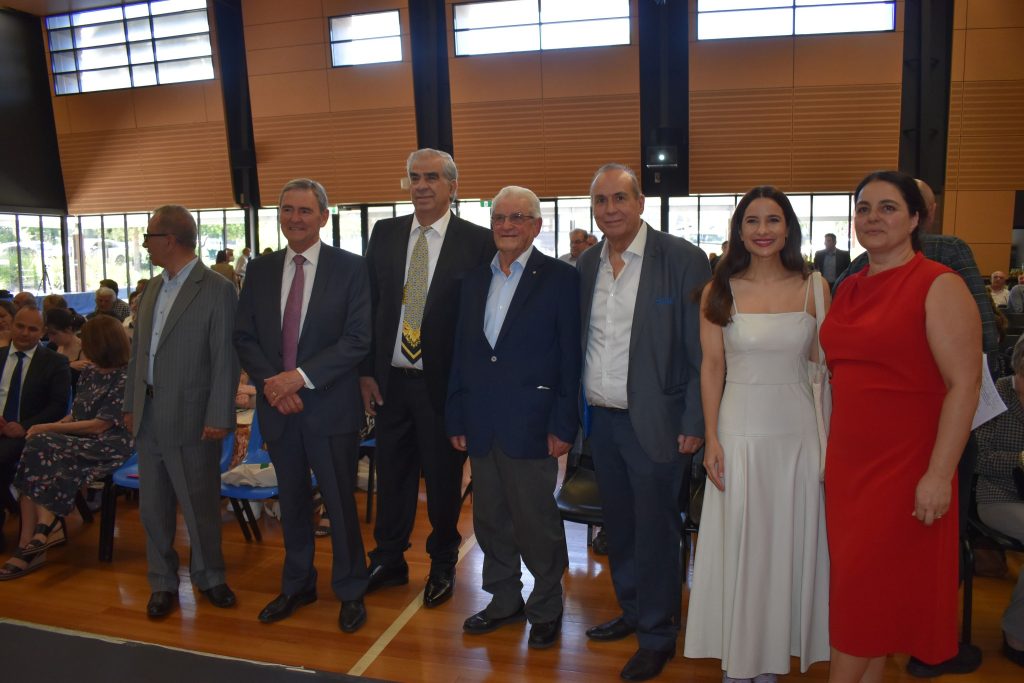
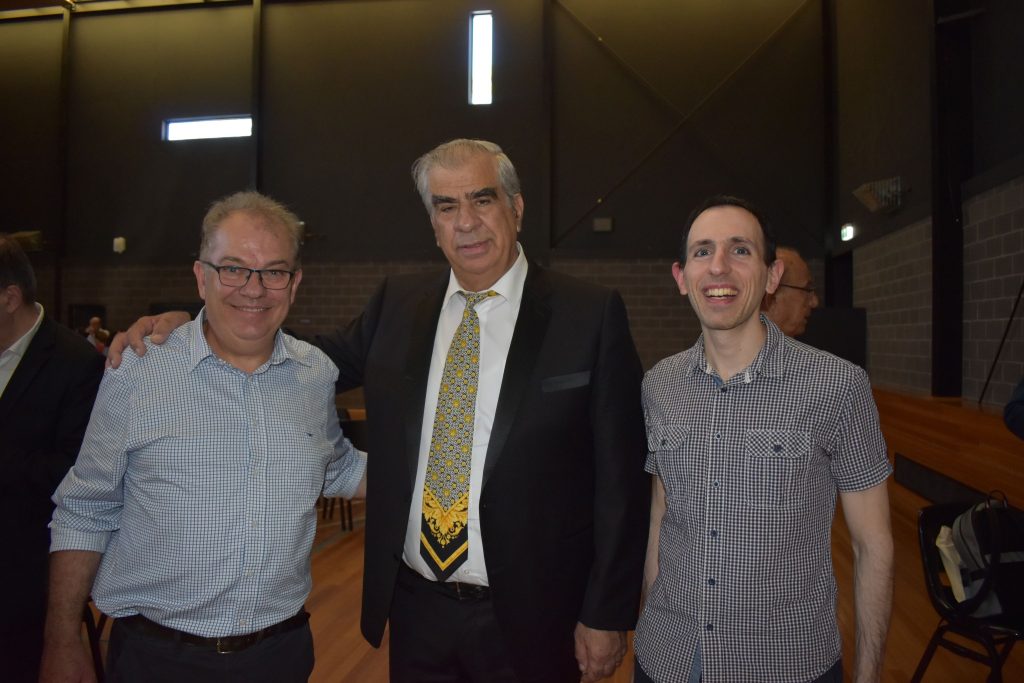
Guests were plentiful, including former Victorian premier John Brumby AO, Cypriot President Theo Theophanous and his daughter Kath Theophanous MP, High Commissioner of Cyprus Antonis Sammoutis, former Cypriot Community president Stelios Angelodimou, Greek Community of Melbourne President Bill Papastergiadis, Victorian politician, John Pandazopoulos, Darebin Mayor Julie Williams, Meribek Councillor Lambros Tapinos, Councillor Emily Dimitriadis and so many more. It was also prologued by Annita Demetriou, President of Cypriot Parliament, appearing from a video wall from Cyprus to highlight the contribution of the Cypriot diaspora in Australia.
Guests at the event.
The book tells the stories of many prominent Cypriot Australians, but it is the entire community which it represents.
“Regardless of whether your names are in the book, there are names of people who were beside you, who were known to you: your parents, ancestors neighbours… They were heroes who fought in the war in 1945,” Professor Tamis said, adding the book gives people the opportunity to “locate and recognise the sacrifices and contributions of hundreds of Cypriot patriots and family men, who came as children and sacrificed their lives, leaving valuable successors in society”.
Launching the book, Mr Brumby said: “I am particularly pleased to be here with the Cypriot community today because, as Tamis shows in the book, the Cypriot story in Australia is not the same as many other migrant stories. It has many similarities in the hardships and challenges, but it has many differences as well.”
He pointed to Cyprus being a British colony and how, unlike Greek migration, the movement of Cypriots was from one British colony to another.
“And when Greeks from the mainland arrived, the Cypriots were able to initiate them into the strange way we do things in Australia,” Mr Brumby said.
Actress Andrea Demetriades was the MC at the event.Former Victorian premier John Brumby officially launched the book.
“Without the Cypriot community already in place it would have been even harder from the successive waves of Greek immigrants to settle here.”
Former Cypriot Community leader Peter Yiannoudes, who came to Australia as a 20-year-old longing to work in the movies, can vouch for that.
“We knew English due to being a British colony and came to Australia as citizens,” Mr Yiannoudes told The Greek Herald. “Without the Cypriot community already in place it would have been even harder for the successive waves of Greek immigrants to settle here. Don’t forget the first interpreters at court cases were Cypriots.”
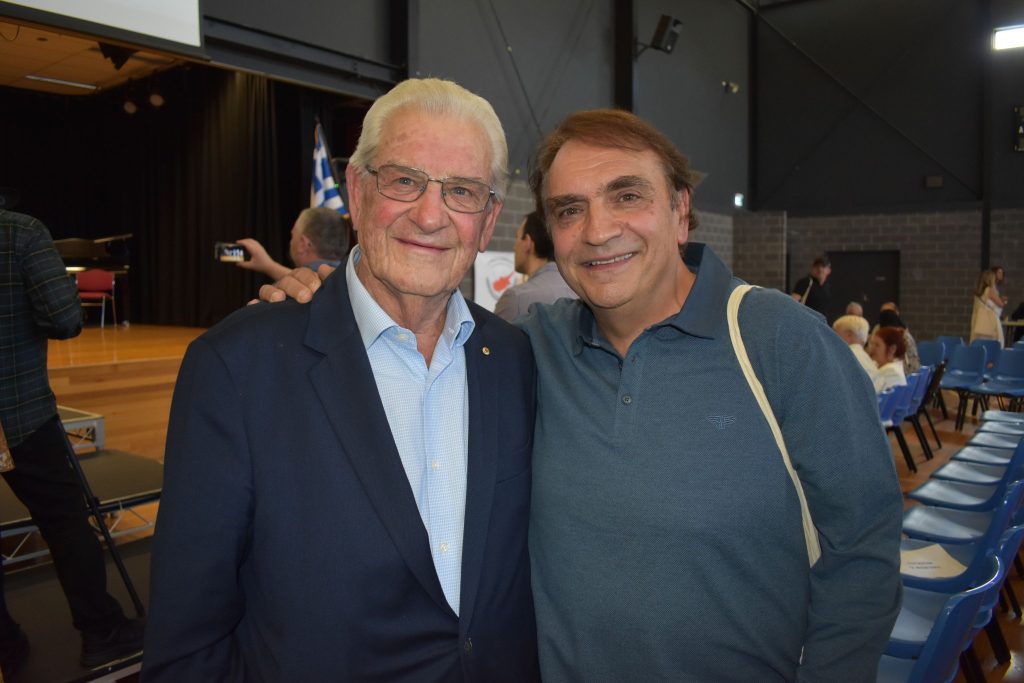
Peter Yiannoudes and his nephew Michael Protopapa.
Mr Sammoutis pointed to the importance of this book as a first systematic historical documentation of the Cypriot Community. Apart from showing the growth of the Cypriot community of Australia, the book also documents how the Cypriot Australian community was influenced by turbulence in Cyprus, commencing from the start of the colonial era, the years following 1931, the struggle for liberation in the 1950s, the first Turkish invasion in 1964, the catastrophic junta, Turkish invasions in July and August 1973, the refugee crisis and the economic crisis of 2009-2018. Mr Sammoutis said Cypriots should not forget their political roots.
“The Cypriot diaspora of Australia has been struggling to support our leadership back in Cyprus in every station,” he said, while also referring to Turkish Cypriots who had for centuries enjoyed “a peaceful co-existence” with Greeks.
Mr Brumby said: “The story [the book] tells is really relevant to all Australians. When I was premier of Victoria many years ago, I said that diversity was Australia’s greatest strength.”
While it may be relevant to all Australians, it was specifically written bearing future generations in mind.
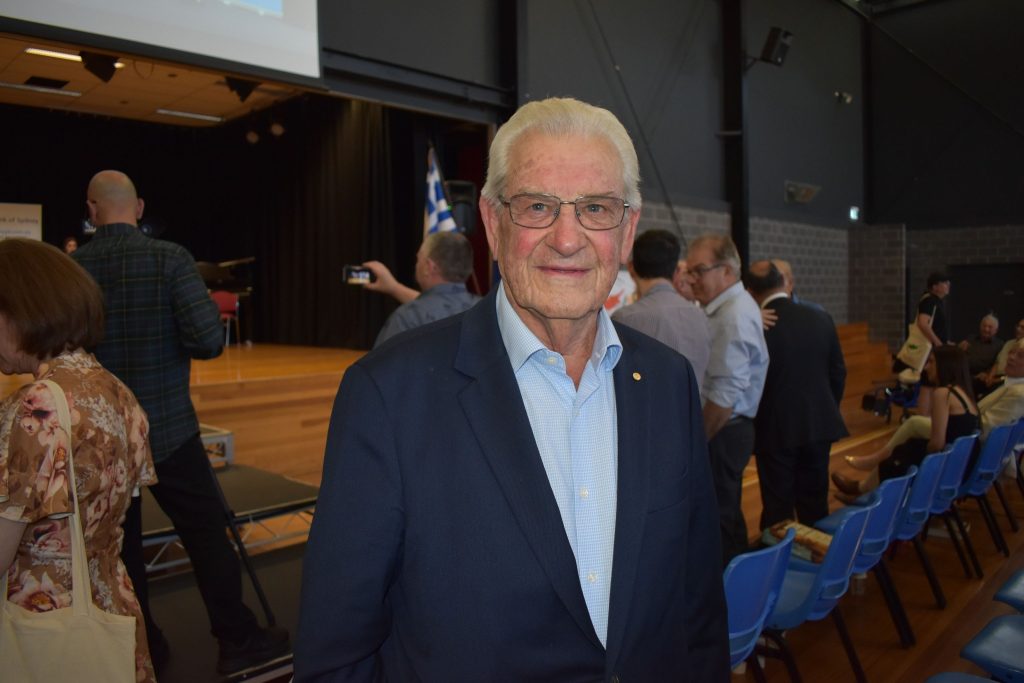
Stelios Angelodimou (middle)Peter Yiannoudes.
“The book was not written for us or our parents, it was written for your children,” Professor Tamis said.
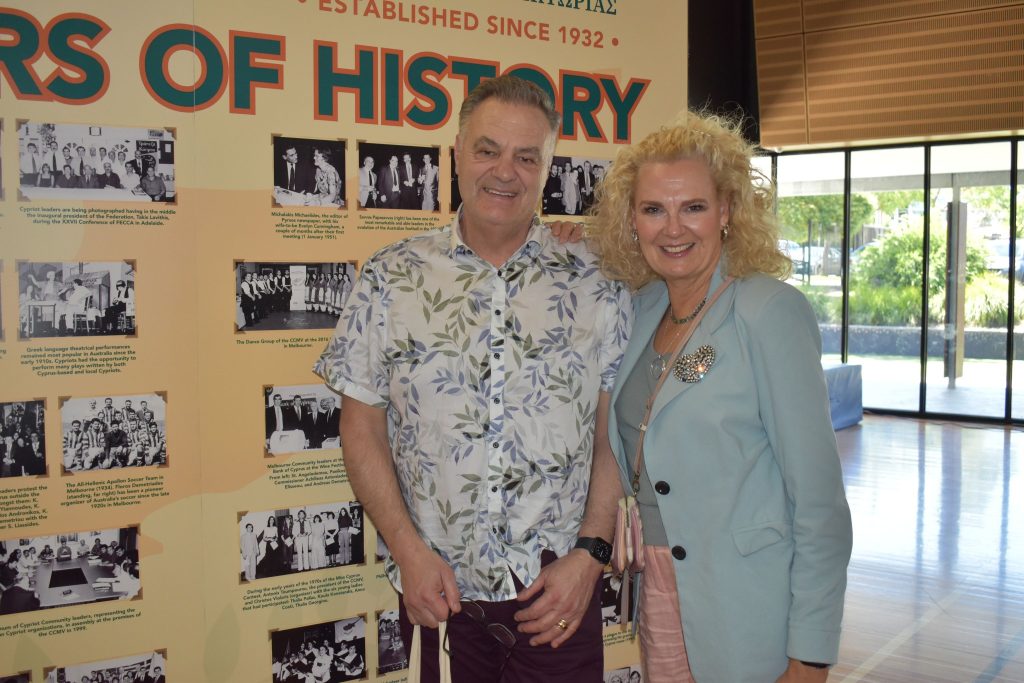
Indeed, the generational wave was evident as young Cypriots sought their parents on a photo wall.
Christopher Michaelidis and his wife, Beverly, looked at a photo featuring his dad, Michalakis Michaelidis, publisher and editor of Pyrsos newspaper. The son has “fond memories” of the family newspaper on Little Lonsdale Street between Russell and Exhibition streets. His father was “forever working as most Greeks do” and had come from Cyprus in 1949.
Christopher Michaelidis and his wife, Beverly, carefully looked at a photo of Christopher’s dad Michael, who was the publisher and editor of Pyrsos newspaper. Cr Emily Dimitriadis and her family at the book launch.Cr Lambros Tapeinos, Cr Emily Dimitriades and John Pantazopoulos.
“Within two years he was operating his business,” Mr Michaelidis told The Greek Herald. “He went to have four children and two of us are still in printing.”
And the story goes on with their children and those that follow.
Mr Papastergiadis said: “For me, personally, it’s a story of hope to progress.”
For more info about the book, contact anastasios.tamis@aims.edu.au
St Basils Home for the Aged in Fawkner, Victoria was facing financial insolvency during the peak of the COVID-19 pandemic in 2020, The Age has reported.
According to the latest financial report by St Basils Fawkner, which was lodged almost a year late, the home has not paid rent to the property owner, the Greek Orthodox Archdiocese of Australia, for years.
For the past decade, the home paid the Greek Orthodox Archdiocese an average annual rent of $2.37 million, but the chairman of St Basil’s Fawkner Bishop Evmenios confirmed to The Age the nursing home’s difficult financial position meant it was still not paying the church to occupy the site.
St Basil Fawkner’s auditor William Buck noted there was “material uncertainty” over the home’s ability to continue as a going concern.
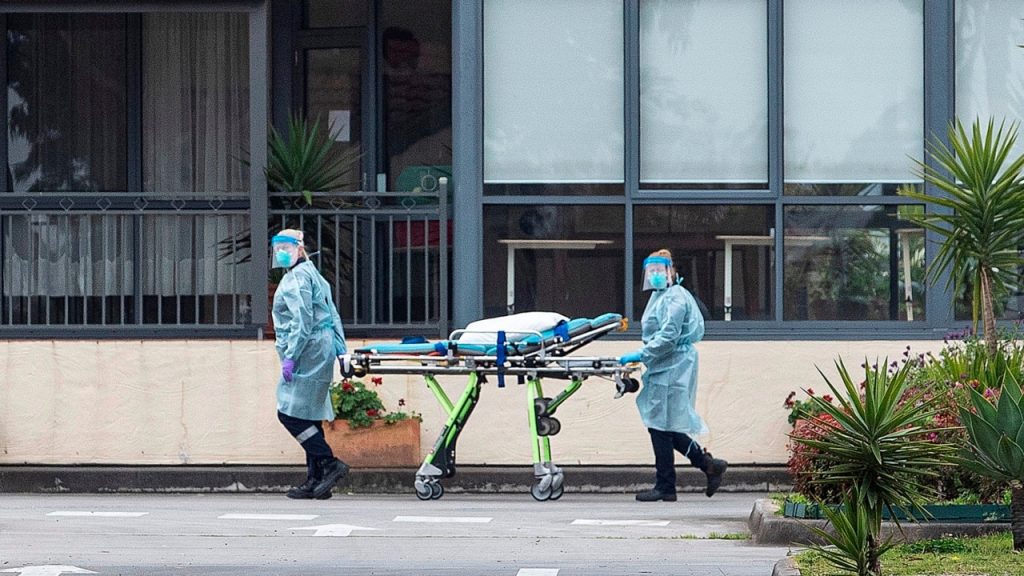
The aged care home also had to slash staff dramatically after 45 residents died from COVID-19 and another five died from alleged neglect during a coronavirus outbreak at the facility in 2020. The outbreak is now the subject of a coronial inquest.
St Basils Fawkner during the outbreak in 2020.
The collapse in revenue from residents dying or departing did allow St Basils Fawkner’s to claim $2.4 million in JobKeeper payments from the federal government.
The report, for the financial year ending June 2021, also revealed the nursing home needed 70 residents at the time to break even, well above the 59 residents the federal Health Department last week confirmed were currently living there.
In response, Bishop Evmenios said the home remained solvent and that since joining as Chairman in September 2020 he had, together with staff at the home, been “rebuilding a once proud and exemplary aged care facility.”
The families of residents who died at the facility told The Age they believe St Basils Fawkner should not have reopened following the deaths.
The Greek Parliament has approved Greece’s 2023 budget which calls for primary surplus and will offer subsidies for 85% of households and businesses as inflation looms.
According to AP News, the budget passed 156-143 in the 300-member parliament on Saturday evening after a five-day intense debate.
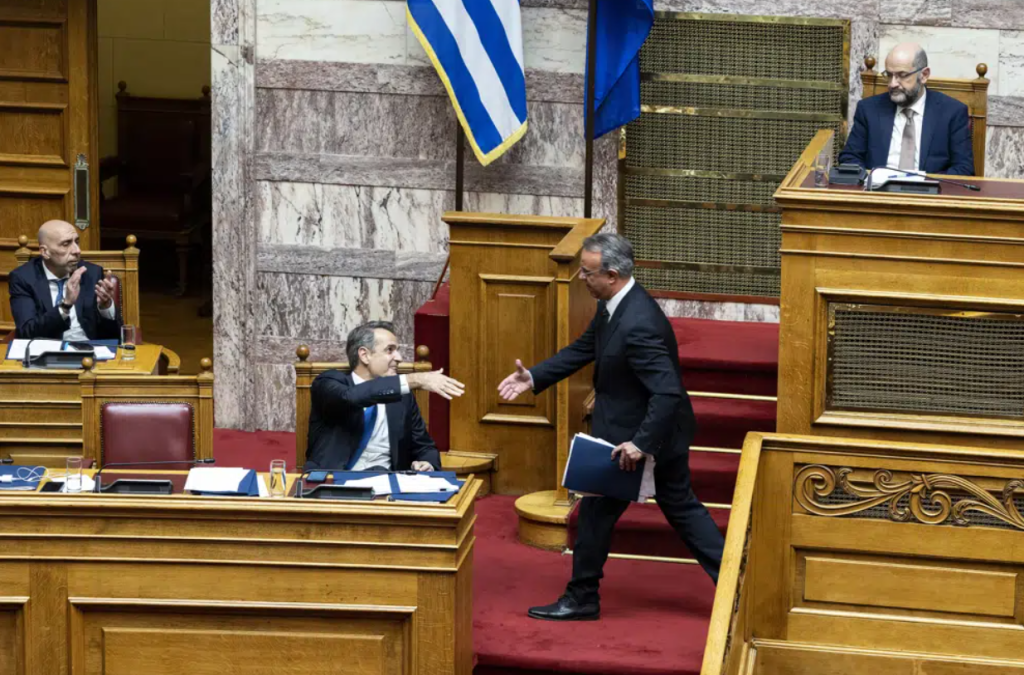
Greek Prime Minister Kyriakos Mitsotakis, left, shakes hands with Finance Minister Christos Staikouras during a parliament session for the budget of 2023. Photo: AP Photo/Yorgos Karahalis.
While Greece rebounded strongly from a recession due to the coronavirus pandemic, the parliament forecasted economic growth will slow to 1.8% in 2023 from 5.6% this year.
To combat this, the primary surplus in the budget means the Greek government will spend less on current income from taxes and exclude the servicing of the country’s debt.
Προχωράμε σε μια νέα πρωτοβουλία για να στηρίξουμε όσο το δυνατόν περισσότερα νοικοκυριά. Η περίμετρος του μέτρου απλώνεται μέχρι και για εισοδήματα 24.000 ευρώ για ένα ζευγάρι, με προσαύξηση 5.000 ευρώ για κάθε παιδί. Ώστε από τη νέα πρωτοβουλία να ωφεληθεί και η μεσαία τάξη. pic.twitter.com/t4W7MyJlgn
The new budget will also support households and businesses struggling due to inflation, which is expected to average 5% in 2023.
Greek Prime Minister Kyriakos Mitsotakis also announced his government will subsidise electricity bills and in February 2023, for six months, will subsidise purchases of foodstuff. The new budget will fund these subsidies through a windfall tax on the country’s two oil refiners.
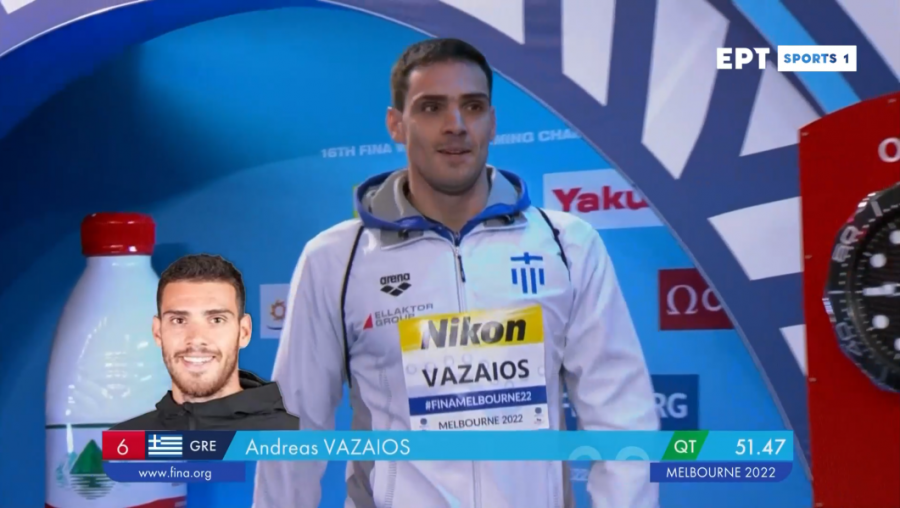
Greece’s Andreas Vazaios finished in sixth place with a time of 51.80 in the final of the 100m mixed individual category at the 16th FINA World Swimming Championships (25m) 2022 in Victoria last week.
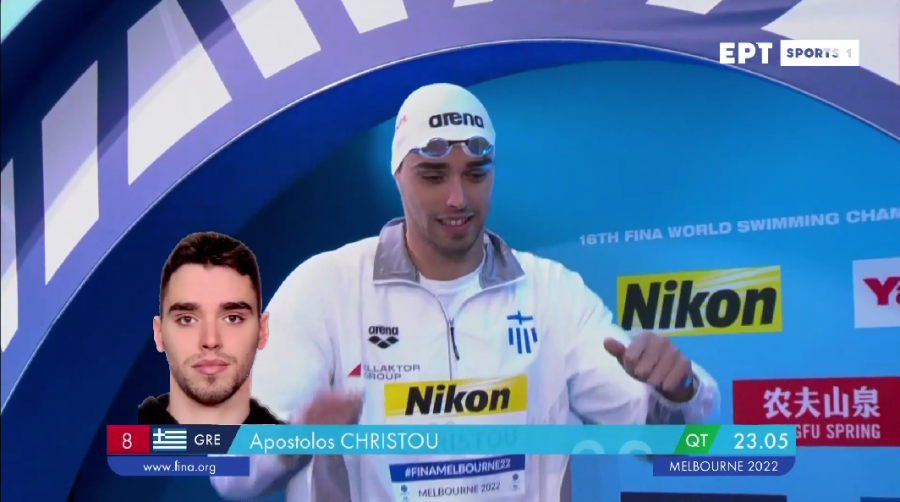
Apostolos Christou finished with a performance of 23.10 in the 50m backstroke race.
Apostolos ChristouAndreas Vazaios
Greek swimmer Kristian Gkolomeev was eliminated from the final of the 50m freestyle. In order to qualify, he needed a time below 21.00. He finished with 21.08, in fifth place in his semi-final race and 10th overall.
Finally, 18-year-old Greek Cypriot Anna Hadjiloizou added another highly successful presence at the 25m swimming championships in Melbourne. Anna came second in the fifth qualifying series and 20th in the overall ranking, among 58 athletes.
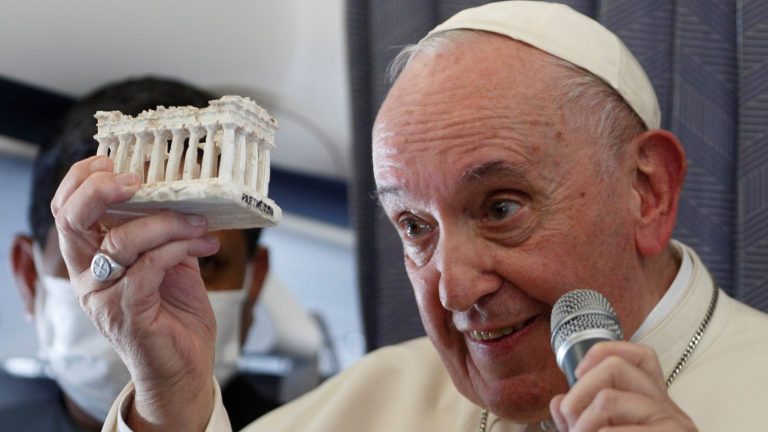
Greece’s Culture Ministry has welcomed Pope Francis’ decision on Friday to return to Greece three fragments of the Parthenon Sculptures that have been in the papal collections of the Vatican Museums for more than a century.
The Vatican announced Pope Francis’ decision on Friday and said the pope was “donating” the fragments to Ieronymos II, the head of the Greek Orthodox Church, as a gesture of ecumenical dialogue with the Roman Catholic Church.
📌Τρία παρθενώνια θραύσματα επιστρέφονται από το #Βατικανό στην Αθήνα
Εκφράζεται η ευγνωμοσύνη του #ΥΠΠΟΑ και προσωπικά της ΥΠΠΟΑ Λίνας Μενδώνη, για τη γενναιόδωρη απόφαση του Πάπα Φραγκίσκου.
— Υπουργείο Πολιτισμού και Αθλητισμού (@cultureGR) December 16, 2022
The Vatican statement suggested the Holy See wanted to make clear that its donation was not a bilateral state-to-state return, but rather a religiously inspired donation from a pope to a primate.
The 5th century BC sculptures are mostly remnants of a 160-meter-long frieze that ran around the outer walls of the Parthenon Temple on the Acropolis in Athens.
One piece is the head of the horse that was pulling Athena’s chariot on the west side of the building. The others are from the head of a boy and the head of a bearded male.
This latest decision by Pope Francis comes as recently a small museum in Sicily, Italy also decided to return its lone Parthenon fragment to Greece in a loan that Greek authorities hope will be extended indefinitely.
Argentina has won its first World Cup since 1986 in one of the most dramatic, enthralling matches ever seen in the sport.
Argentina beat France 4-2 in a penalty shootout after Lionel Messi scored twice in a 3-3 draw that featured a hat-trick for Kylian Mbappe as the holders recovered from 2-0 down after 80 minutes.
Argentina had looked to be cruising to a one-sided victory after Messi’s penalty and a brilliant goal by Angel Di Maria in the first half put them in total control, but Mbappe converted an 80th-minute penalty and volleyed in an equaliser a minute later to take the game to extra time.
Messi put Argentina ahead again but Mbappe levelled with another penalty.
That took the game to a shoot-out where Argentina keeper Emiliano Martinez saved Kingsley Coman’s penalty and Aurelien Tchouameni fired wide to give Gonzalo Montiel to chance to win it, which he took.
There were tears from both teams at full time — and Messi was also spotted looking overcome with emotion as he walked to one section of the stadium by himself to thank somebody in the crowd.
Messi was called up onto the stage moments later when he was awarded the golden ball as the player of the tournament. He is the only player to win the Golden Ball twice.
The win completes the 35-year-old’s glorious career and he joins Diego Maradona as a god-like figure in the South American country.
NSW Minister for Multiculturalism, Mark Coure MP, has issued a message to mark International Migrants Day.
FULL MESSAGE:
Today marks International Migrants Day, an occasion that recognises the courage and resilience of people who leave their homelands to find new opportunities for themselves and their families elsewhere.
The NSW Liberal-National Government is committed to ensuring that those who wish to call NSW home, especially those fleeing war, have every opportunity to succeed.
We work hand-in-hand with specialist, non-profit organisations to provide the best settlement journey possible. This includes connecting people with employment, health, education, legal support and community and youth affairs to ensure we continue delivering the services that allow everyone to thrive.
While many of us come from far and wide to call NSW home, we are all united by a common goal to make it a better place for everyone.
Migrants add so much to the success of our state. Today, we honour their contributions to our society and celebrate their many achievements in their efforts to rebuild new lives for themselves and their loved ones.