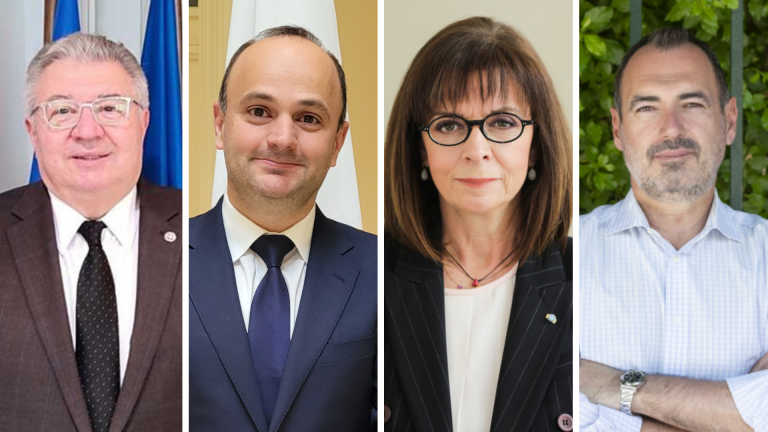
Greek and Cypriot officials have today issued Christmas messages of support to their respective diaspora communities in Australia.
The messages are from Greece’s President, Katerina Sakellaropoulou; Greece’s Deputy Foreign Affairs Minister, Andreas Katsaniotis; Greece’s Secretary General for Greeks Abroad, John Chrysoulakis; and the High Commissioner of the Republic of Cyprus in Australia, Antonis Sammoutis.
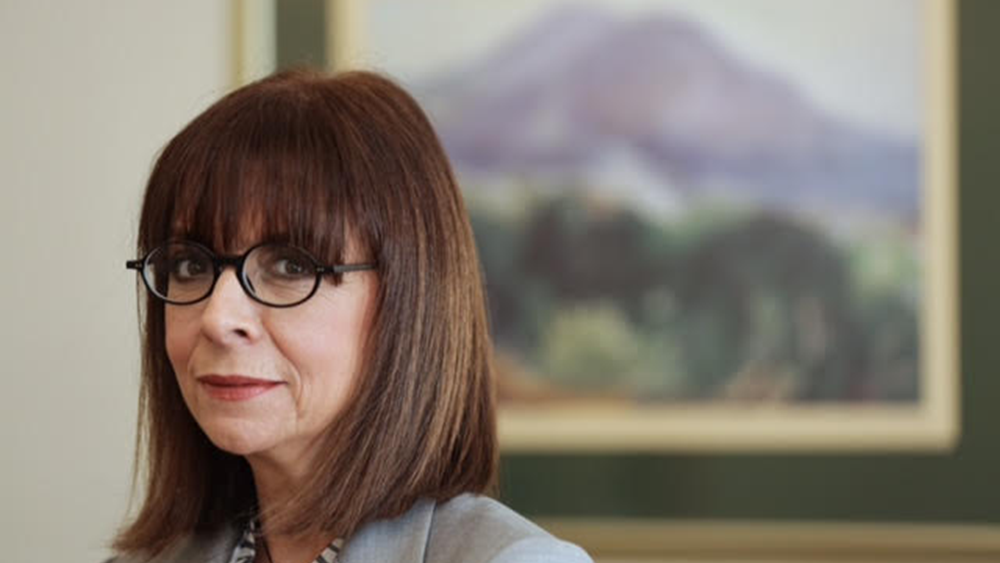
Greece’s President, Katerina Sakellaropoulou:
Katerina Sakellaropoulou
In her Christmas message this year, Greece’s President Katerina Sakellaropoulou praised the Greek diaspora for their contributions to their new homeland.
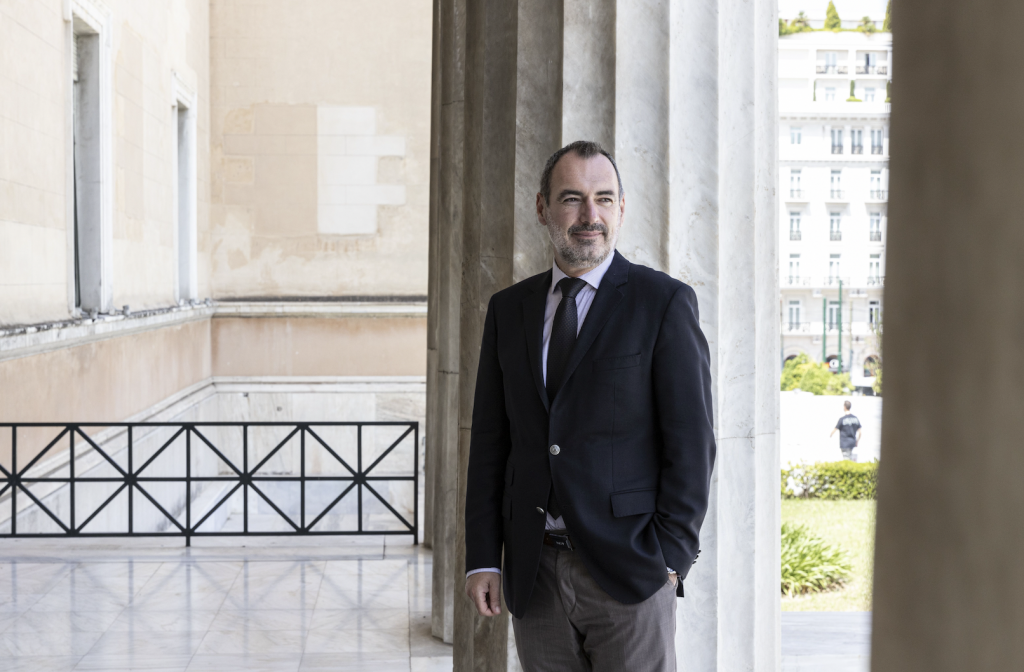
Greece’s Deputy Foreign Affairs Minister, Andreas Katsaniotis:
Andreas Katsaniotis.
In his Christmas message to the Greek diaspora in Australia, Greece’s Deputy Foreign Affairs Minister wishes every a Merry Christmas and prosperous new year, before outlining Greece’s economic and political successes for 2022.
Greece’s Secretary General for Greeks Abroad, John Chrysoulakis:
John Chrysoulakis.
Greece’s Secretary General for Greeks Abroad, John Chrysoulakis, expresses the country’s full support of the Greek diaspora in Australia and stressed the Greek government will continue to serve the community’s needs.
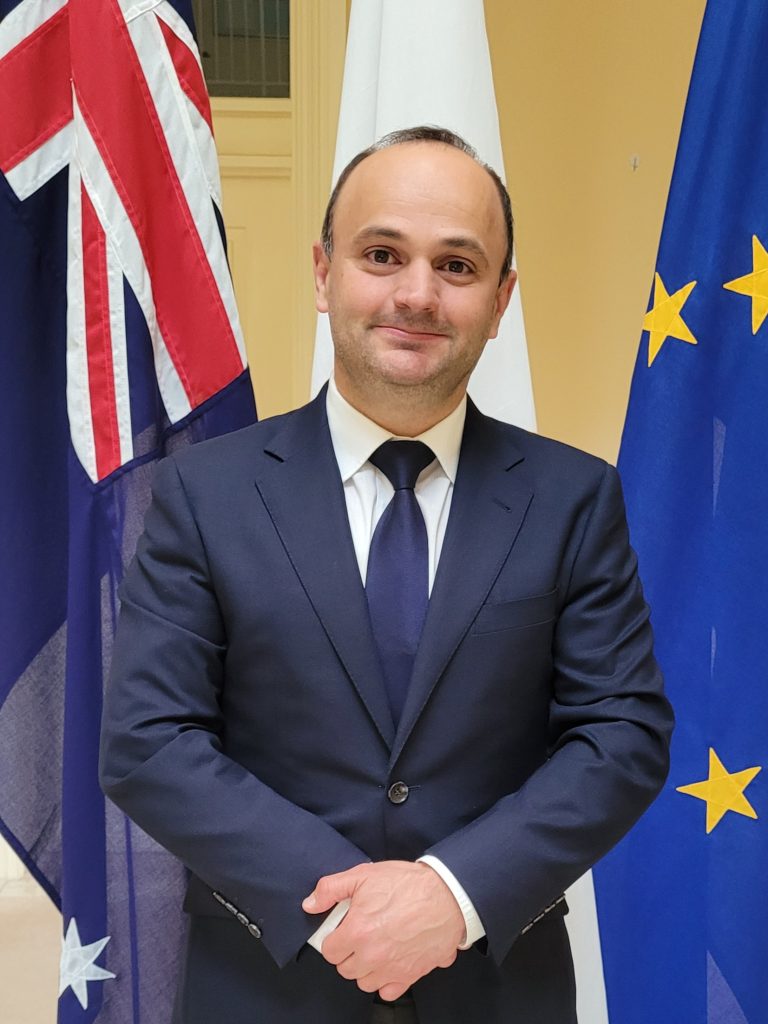
High Commissioner of the Republic of Cyprus in Australia, Antonis Sammoutis:
Antonis Sammoutis
In his Christmas message, the High Commissioner of the Republic of Cyprus in Australia, Antonis Sammoutis, wishes the Cypriot diaspora in Australia a joyful Christmas and New Year. He also stressed the power of the next generation to maintain Cypriot culture.
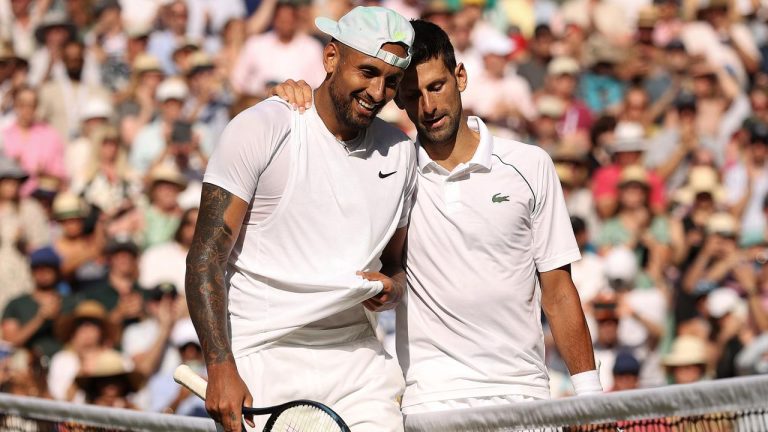
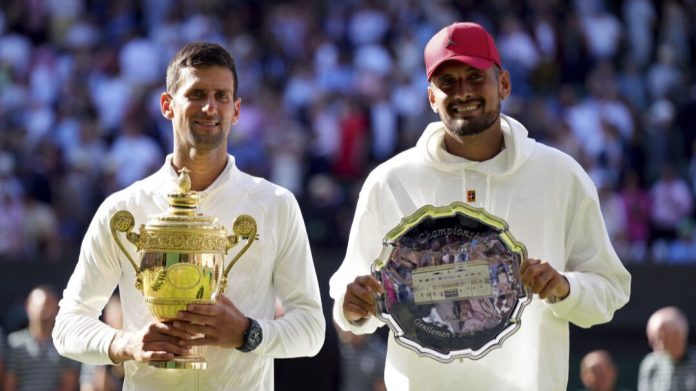
Tennis star, Nick Kyrgios, has backed the decision to allow Novak Djokovic to compete at the 2023 Australian Open in Melbourne, Victoria next month,The Daily Telegraph has reported.
Kyrgios said during an interview at the World Tennis League in Dubai on Wednesday that Serbian tennis player Djokovic “needs to be playing at all costs” at the Australian tournament.
“He’s one of the greatest of all time and as long as he’s going to be playing and hanging around, we need him at these tournaments,” Kyrgios said.
Novak Djokovic (left) defeated Nick Kyrgios (right) at Wimbledon this year.
“And if I win a tournament, if you don’t go through Novak, then you kind of know the tournament isn’t really a tournament.”
Djokovic was banned from returning to Australia as a consequence of being deported earlier this year over his refusal to be vaccinated against COVID-19.
That decision has since been reversed and the 21-time major champion will get the opportunity to vie for a record-extending 10th Australian Open crown in a few weeks’ time.
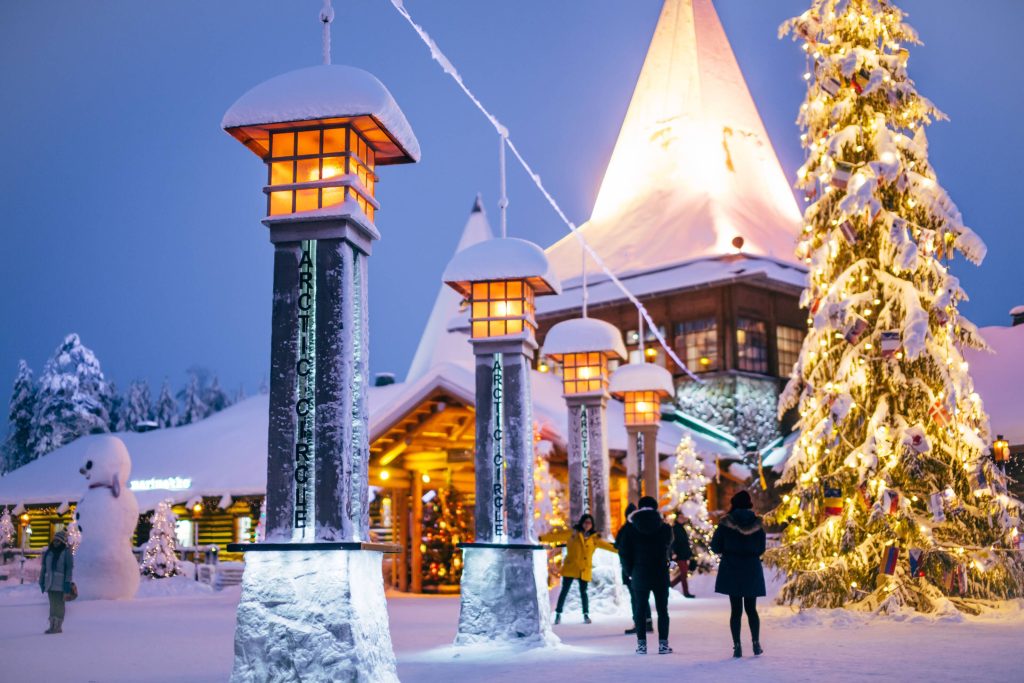
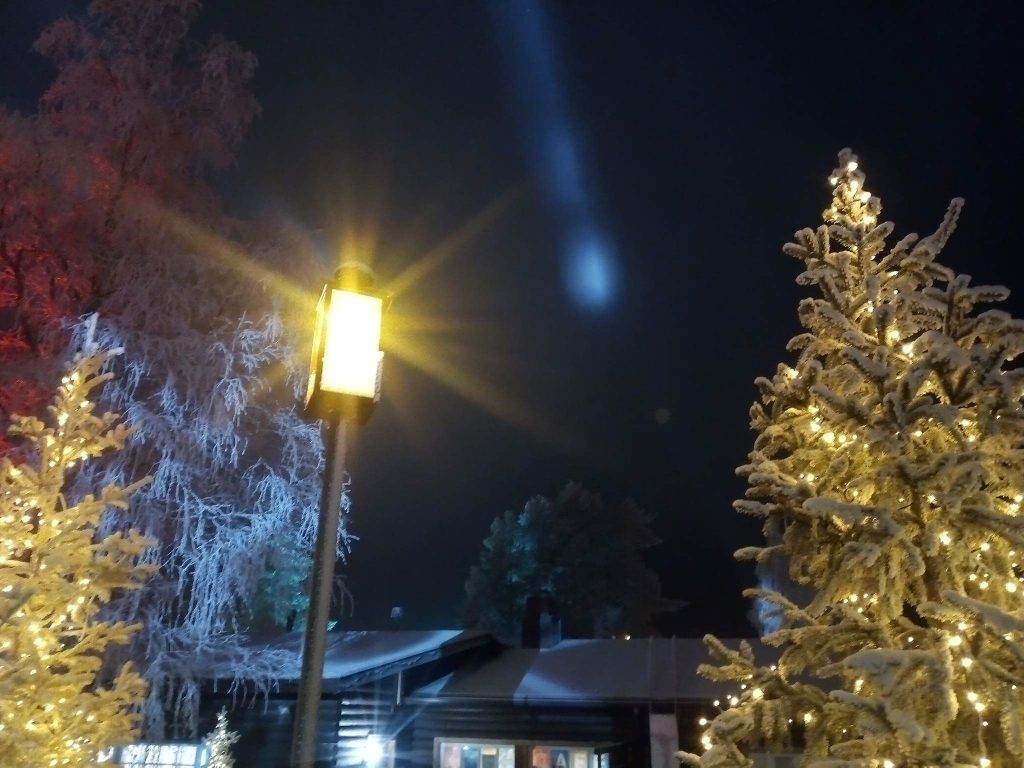
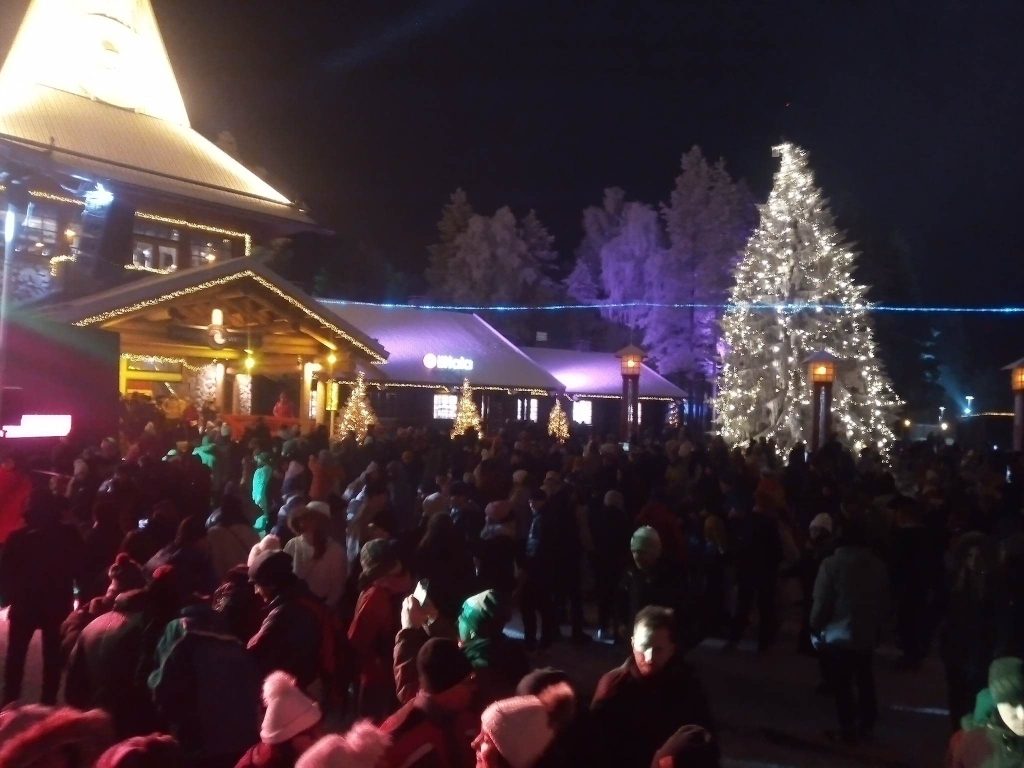
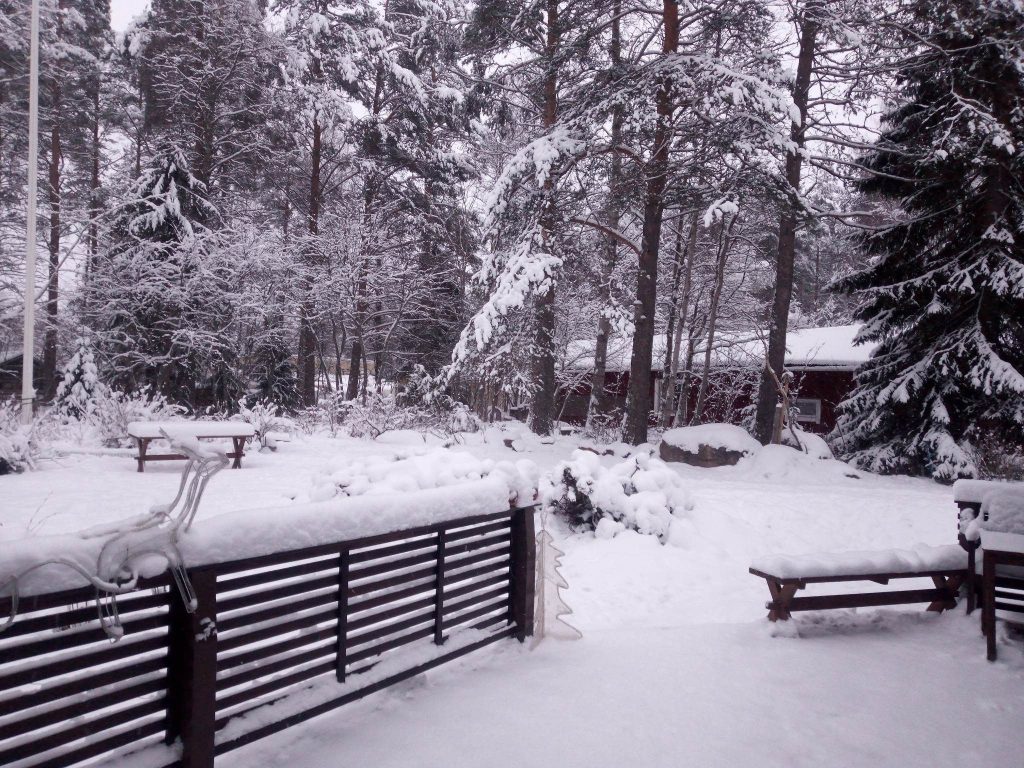
Until 2019, Rovaniemi, the official hometown of Santa Claus in Finland, was the ideal place to get into the Christmas spirit. Joulupukki (Santa Claus in Finnish) was there 365 days a year, the snow wrapped everything like a white veil and as it was near the Arctic Circle, a magical world unfolded for young and old.
“We are talking about a snow-white and decked Rovaniemi, which was practically empty. Of course, it was an opportunity to promote the place again to the local Finnish people, but the blow to many businesses was great. The Finnish people used to come here but they didn’t do activities which were offered by several businesses,” George explains.
“The village of Santa Claus may have been decorated, Santa Claus was there in his office, but it looked like a ghost village.”
Of the 4,000 to 5,000 people who used to visit Rovaniemi in the years before the pandemic, the village only had a few visitors in the last two years.
What will Santa’s village be like this year?
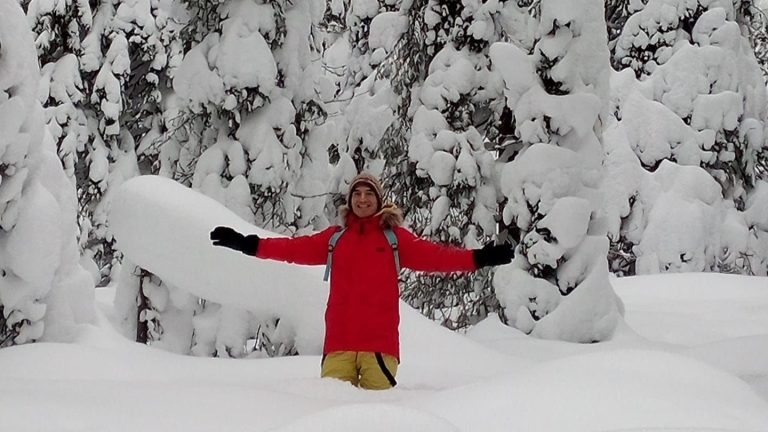
George left Greece with his wife and children years ago and moved to Santa’s village where every day is Christmas.
“My children really like the village, it pleases them,” George, who is a swimming instructor at the local swimming pool, says with a smile.
“The story about Santa Claus, his elves, fairies and reindeer. All this gives off a magic that fascinates adults, let alone the children.”
George, who used to be a tour guide in the village, estimates that this year a record number of people will visit Rovaniemi.
“I have not completely abandoned tours for visitors. In my free time I can do a few. As a result I have been in contact with several of my colleagues,” he says.
“This year all the data shows that we will be having a record number of tourists.”
When we ask him what he believes has led to this increased tourism, he answers us with a deeply Greek saying.
“We have one life. People are tired with the pandemic and want to get away. The village, especially at this time of year, is ideal for such a situation,” he concludes.
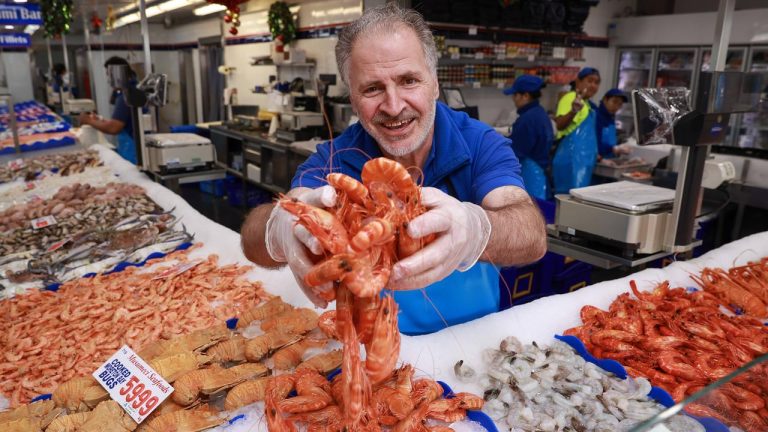
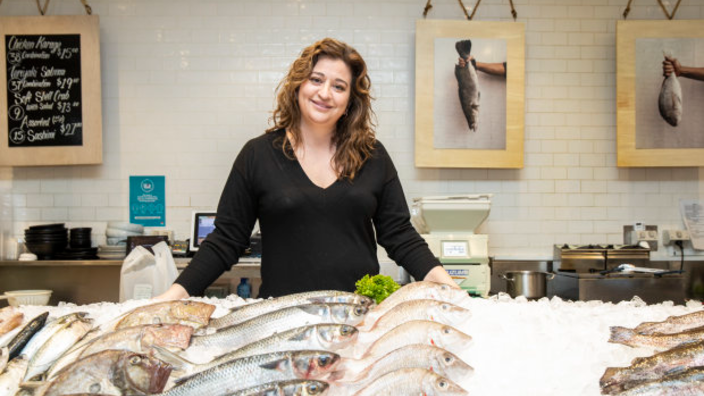
Over 100,000 people are expected to flock to Sydney’s Fish Market in Pyrmont today as it kicks off its famous 36-hour marathon trading from 5am until 5pm on Christmas Eve.
This comes as Sydney fishmongers have experienced a bumper crop of prawns and other seafood after the record high rainfalls along the east coast of Australia in recent months.
According to The Daily Telegraph, the plentiful supply of seafood will see prices as low as $20 a kilo for tiger and king prawns.
“Nowadays people opt to enjoy some of our delicious, fresh rock oysters with a squeeze of lemon, a few kilos of prawns, a side of smoked salmon, and some of our fantastic rock lobsters.”
Ms Papacosta said prawns are traditionally the biggest seller of the festive season and encouraged people to speak with their local seafood retailer “about your local school prawns, which are often really sweet and can be eaten whole.”
This bumper seafood season comes as Australians are planning to eat, drink and be merry for Christmas in record numbers this year, with spending on food alone estimated to hit $23.4 billion.
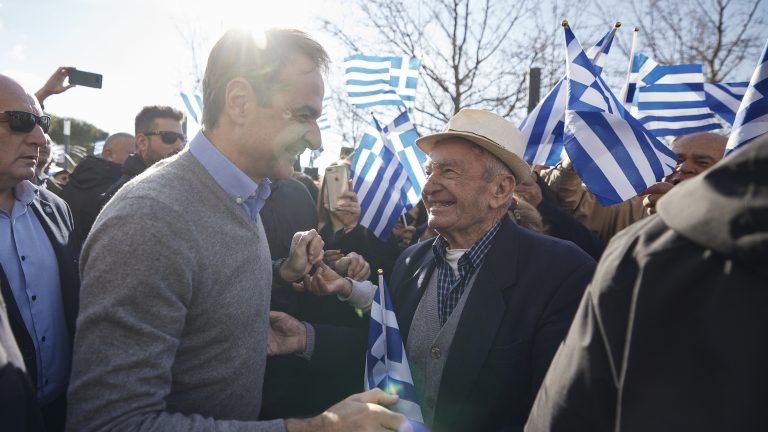
Greece’s Prime Minister, Kyriakos Mitsotakis, pledged his full support to the ethnic Greek minority in Albania during a historic visit to the southern Albanian town of Himara on Thursday.
Mitsotakis is the first sitting Greek Prime Minister to visit Himara.
Addressing a crowd on the waterfront in the town, Mitsotakis said they had “in my person a firm supporter in your just demands” and stressed that “the ethnic Greek minority in Albania… is a bridge of friendship between Greece and Albania.”
Σήμερα είναι μια ξεχωριστή στιγμή για μένα προσωπικά και αισθάνομαι ιδιαίτερα συγκινημένος που έχω την τιμή να είμαι ο πρώτος Έλληνας Πρωθυπουργός που επισκέπτεται τη Χειμάρρα. Σας ευχαριστώ από καρδιάς για τη θερμή υποδοχή και την αγάπη σας. https://t.co/Ns0cG9HwIzpic.twitter.com/mCn6E80jya
The Greek Prime Minister also offered his country’s full support to Albania’s further integration efforts with the European Union.
“I am and will remain a supporter of Albania’s European path and Albania’s obligation is to fully respect your own rights in the issue of self-determination, in the issue of language and in the issue of your property rights,” Mitsotakis said.
Ευχαριστώ τους κατοίκους της Δερβιτσάνης και της Λιβαδειάς για την υποδοχή. Είχα δεσμευτεί ότι θα τους επισκεφθώ πριν το τέλος του χρόνου και είμαι πολύ χαρούμενος που τήρησα την υπόσχεση αυτή. Θέλω να γνωρίζουν ότι η ελληνική πολιτεία είναι δίπλα τους. https://t.co/YtdHjAM927pic.twitter.com/02wjQpnKAf
After meeting with the local Greek minority community at Himara on the Albanian Riviera, Mitsotakis was to travel to another southern commune, Livadhja, before ending his one-day trip in Dervican, where most of the Greek minority is located.
The Prime Minister is being accompanied on his visit by Olympic gold medallist Pyrros Dimas, who is a native of Himara.
Once a year, the city of Drama in Greece’s northeast becomes a winter wonderland with a Christmas village known as Oneiroupoli (‘Dreamland’) lighting up the town.
The annual festival attraction has been bringing joy to young and old alike ever since it first began in 2003.
The festival takes place at the central square of Drama and runs for a month each year, commencing on December 4, which is the feast day of Saint Barbara (Drama’s patron saint), up until January 7.
The people of Drama are proud to be a part of the city’s festivities, with one particular local not missing a single year of Oneiroupoli’s magic.
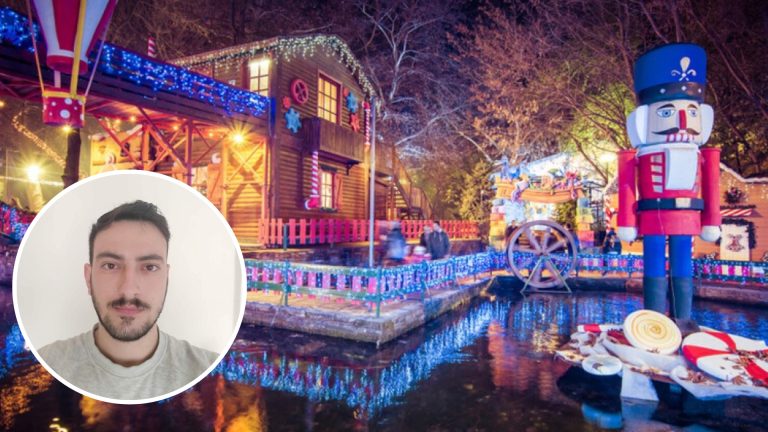
29-year-old Sofoklis Tselebis has lived in Drama for most of his life and has been to Oneiroupoli more times than he can remember.
“I was there the very first time it opened and I visit Oneiroupoli every year to see how it’s different,” Sofoklis tells The Greek Herald.
Sofoklis Tselebis, a Drama local
“When it first started, it was just like a big village with a market. Each year it got bigger and better, adding many attractions and rides for the kids, as well as music events and stalls for adults.
“It feels like you are in a dream when you are walking around the village. I love the way the little wooden houses are decorated and the trees are all lit up.”
Over the years, Oneiroupoli has become a great tourist attraction, and the locals love the attention it’s brought to their city.
“For us locals, we love Oneiroupoli because it brings life to Drama and it gives us a break from our usual routine, but we also really love to see tourists visiting and being amazed by our city,” Sofoklis says.
With so many different attractions including Santa’s House, a carousel and an ice rink, one could mistake Oneiroupoli as a theme park built just for little kids.
Instagram: Oneiroupoli_dramas
Sofoklis says this is not the case.
“There are many stalls with delicious home-made food, there are live performances and events, and there is also a lot of alcohol available for the parents or adults to have their fun,” he says.
For Sofoklis, there is one particular reason why he keeps coming back every year with his family and friends.
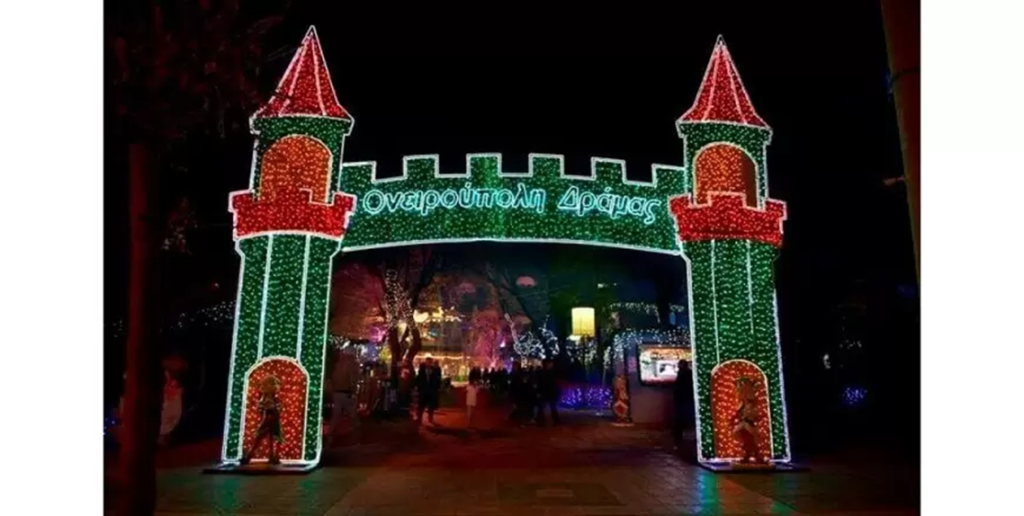
The entrance to Oneiroupoli. Credit: Greek transfer services
“My personal favourite is the stall that sells fresh home-made pies. Conveniently it’s right next to the stall that sells mulled wine, so the pie goes down easy. That combination gives me absolute happiness,” he says with a laugh.
What else is Sofoklis looking forward to this Christmas?
“Nothing beats having a warm, cozy Christmas lunch at my house with my family, and then going out with my friends at night,” he says.
Of course, visiting the magical village is also part of his plans this Christmas, as the whole town gathers for the 19thconsecutive year of Oneiroupoli’s festivities.
“We are all planning to go again this year,” Sofoklis says. “It’s something we look forward to every year.”
Greece has been ranked as the top economic performer among 34 countries that were listed in Britain’s The Economist, amna has reported.
The analysis was based on five key indicators: GDP, inflation, inflation breadth, stock market performance and government debt.
An overall score was produced based on how well each country performed on each indicator.
.@TheEconomist ranks Greece as the top 2022 performer among 34 countries, with high growth, narrow inflation breadth, plunging debt-to-GDP ratio and outperforming stockmarket. Very glad to see that our efforts and reforms are making a real impact. We look forward to 2023! pic.twitter.com/dFkUpJnRzs
The Greek Οrthodox community of St George in Brisbane, Queensland experienced a festive afternoon on Sunday, December 4 this year in the Greek Community Centre Hall (The Greek Club).
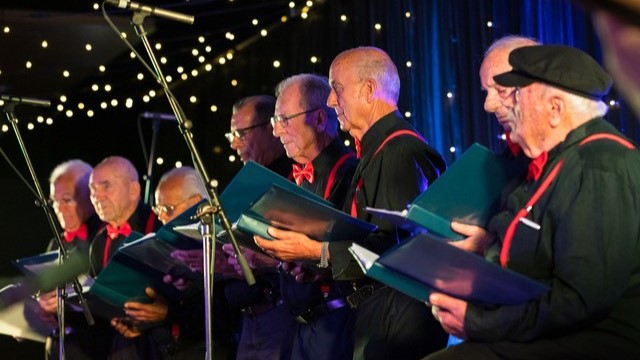
The choral group, Ellinikes Fones, together with the children’s choir of the Greek Οrthodox school of St George and the GOC choir Fones, presented their second concert in just six months since their establishment, closing the year in the best possible way.
The Christmas concert was dedicated to the ancient custom of the Greek carols and the celebration of the Twelve Days.
For the first time in the history of the community, people witnessed an artistic production and collaboration of all ages for a common purpose – to awaken memories in the older people and teaching the younger ones about traditions that tend to be forgotten year after year.
The protagonist of the evening was none other than the Christmas boat that came to us from Chios and proudly decorated the stage.
The organisers greeted their guests with traditional Christmas treats and welcomed them in a crowded room specially decorated for the occasion.
The event began with a narrative prologue, setting the historical framework of the concert. Straight after that, the younger carolers immediately addressed the audience with the familiar phrase, “Shall we sing?” (na ta poume?) and the room was filled with music.
For an hour-and-a-half, three choirs, two vocal ensembles and singers accompanied by exceptional musicians from the local community transported people to an imaginary place (plateia) where they witnessed a captivating concert of high level.
The Christmas boat took people away to different regions of the motherland with traditional melodies and songs from Thrace, Macedonia, Kalymnos, Chios, Corfu, Crete, Ikaria and the Dodecanese. The traditional Athenian carols and the carols of Asia Minor were not missing.
Furthermore, Greek arrangements of modern western Christmas songs such as Jingle Bells, Silent Night and Little Drummer Boy, to name a few, were also heard.
The concert was successful and the warm applause rewarded the smiling carolers.
Greetings were given by His Grace Bishop Emilianos of Meloia and Thomas Drakopoulos from the cultural committee of St George.
The event was organised and coordinated by the Ellinikes Fones committee under the direction and artistic supervision of the conductor Christina Xydi and produced by her husband, George Lignos.
The evening ended with delicious meze and Greek wines from the fine gastronomic cuisine of Nostimo restaurant.
I’m a Greek Australian who’s lived in Greece (along with my Aussie husband and our sons) for over 22 years now. Yet, unlike Easter with its ‘set’ customs and traditions, when Christmas comes along I get a tad bewildered about how to celebrate it, and so, I get creative.
It’s ‘easy’ to switch off the mind in terms of Christmas preparations when relatives invite us over, but even in these cases it fascinates me how they celebrate Christmas.
These extended family Christmases usually take place in the Peloponnese or Athens, and every year things vary.
Christmas food wise, the host relatives may have a lamb in the oven with potatoes one year, whereas the next year, a Christmas turkey. Once or twice, the main course has even been beef. At least the desserts are reliable! They’re the Greek Christmas ‘standards’, such as melomakarona and kourabiedes and perhaps diples.
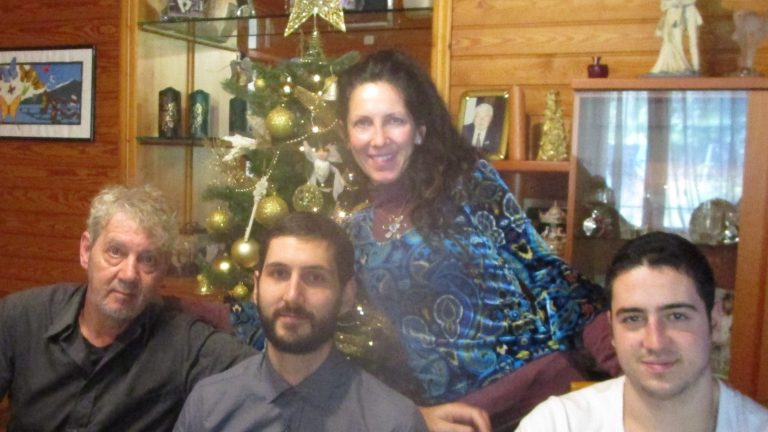
Kathy’s husband and sons.
Then, after the Christmas meal, sometimes in stereotypical ‘English’ Christmas fashion, with our relatives we sit around and watch TV, full from our feasting and conversing. And at times, regardless of whether there’s a Chris or Christine in the family, there’ll be an outburst of song and dance, often till the late hours.
As for Christmas presents, my family and I open ours on Christmas morning. When invited to relatives on Christmas Day, we take their presents to them, and in our first few years in Greece, we’d wait around initially excitedly, and then awkwardly – for the relatives to open theirs. A few of the more sensitive relatives, being put on the spot I guess, varied their usual Greek tradition; nervously and hesitantly opening their gifts on the day – to please us!
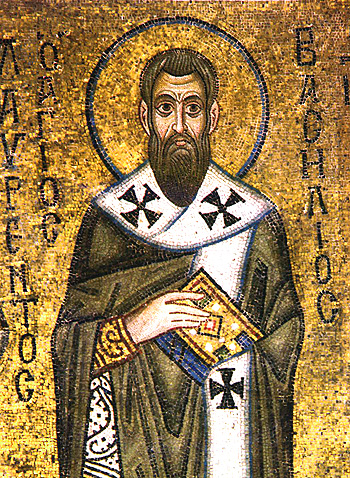
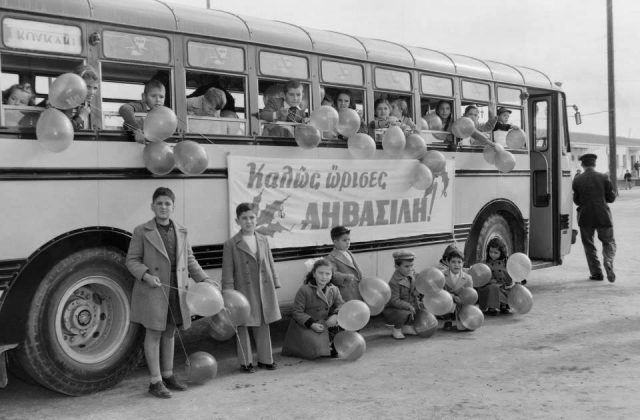
Of course, I soon realised that in Greece, Christmas presents are opened on New Year’s Day – on St Vasilis Day – dare I say Greek Father Christmas Day?
St Vasili.
But St Vasili (or St Basil) is not the same Father Christmas that I grew up with in Australia. To me at least, the Greek saints, including St Basil, are those depicted on Byzantine icons. To turn him into Anglo-Saxon Santa Claus in his red and white garb with a jolly way including a belly, is to me certainly a creative way to fuse east and west.
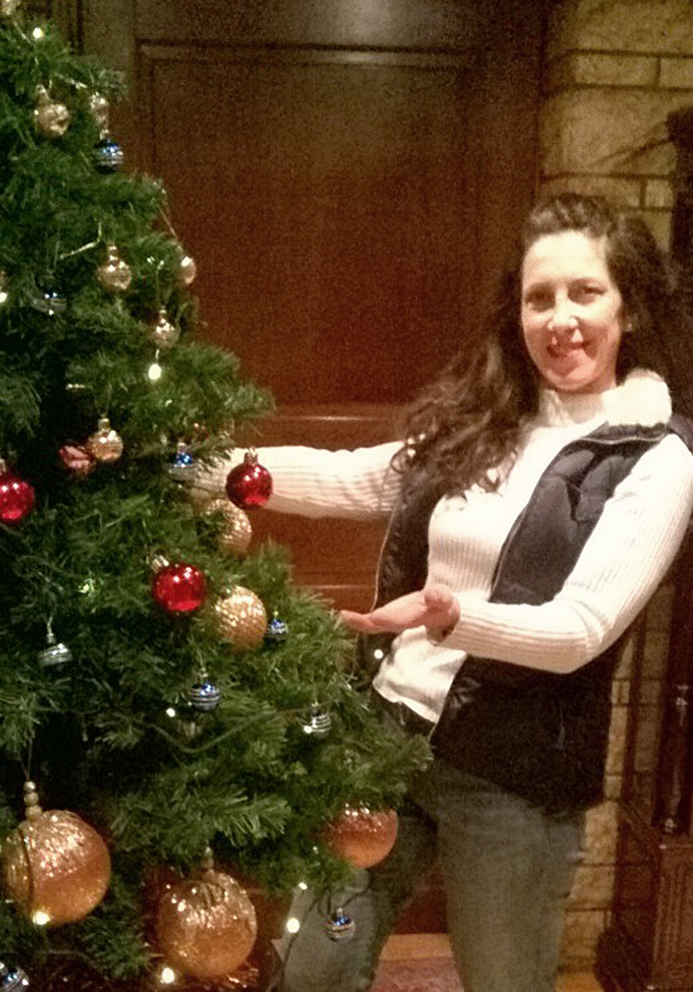
Then there’s the Christmas tree; sometimes it’s a boat with lights instead. For example, some local councils in Athens have lit up Christmas trees adorning their streets, while others have the boat. This sea vessel Christmas ornament, symbolises sailing into a new life after Christ’s birth, as well as being a homage to sailors (once plentiful in Greece), and their safe return home for the holidays.
Speaking of holidays, here in Greece the kids get two weeks off at Christmas, unlike us in Australia who have six weeks due to summer.
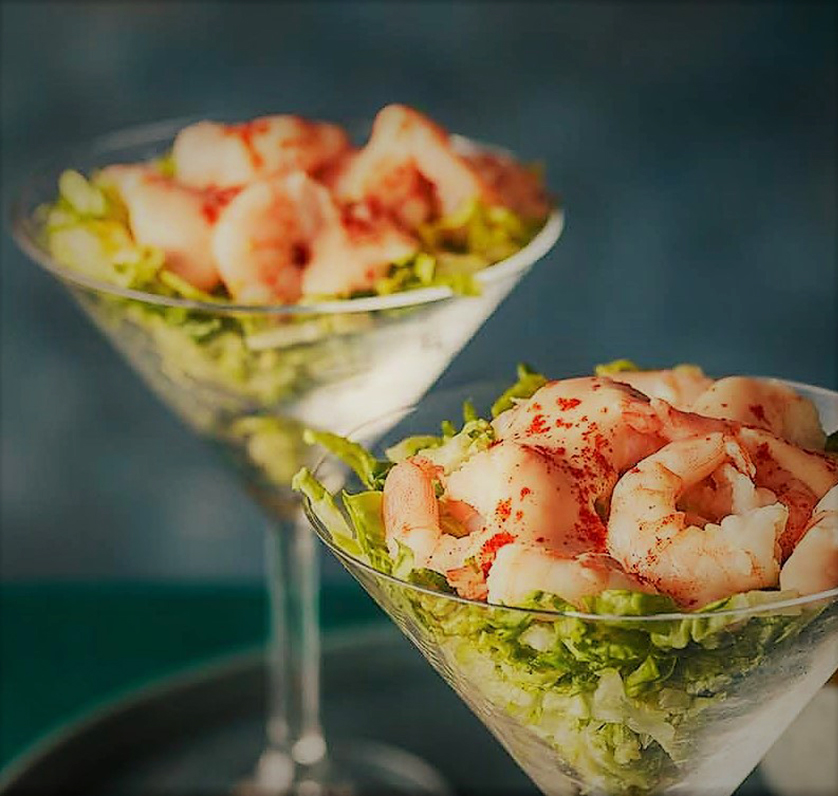
I guess the different Winter-Summer timing also directs food and activities at Christmas – whereby in Australia some do prawns: either on the BBQ, or in an entree like a prawn cocktail (as my mother-in-law always did). And, we sometimes have BBQs in Australia (with or without prawns) and go to the beach (weather permitting).
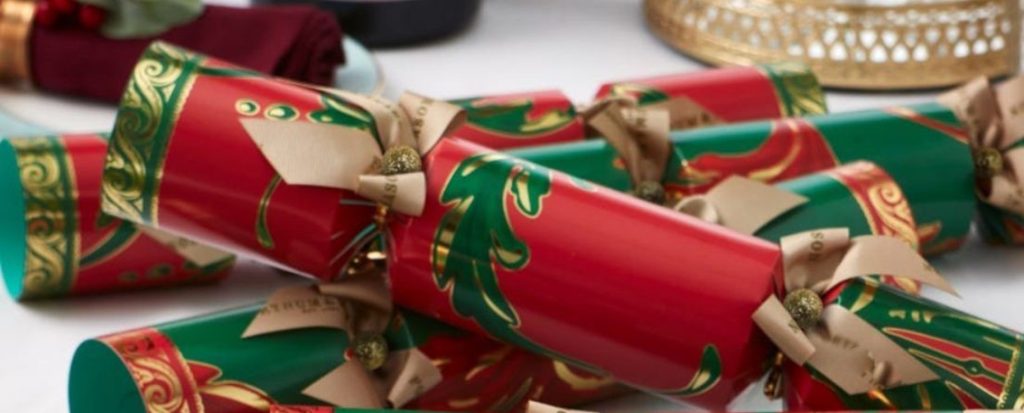
My Greek Australian Christmas customs were broadened when I met my Aussie husband and his family. On their table decked out for Christmas, there were what I first thought of as ‘weird huge lollies’ beside each plate. I later found out they’re Christmas bon bons or crackers.
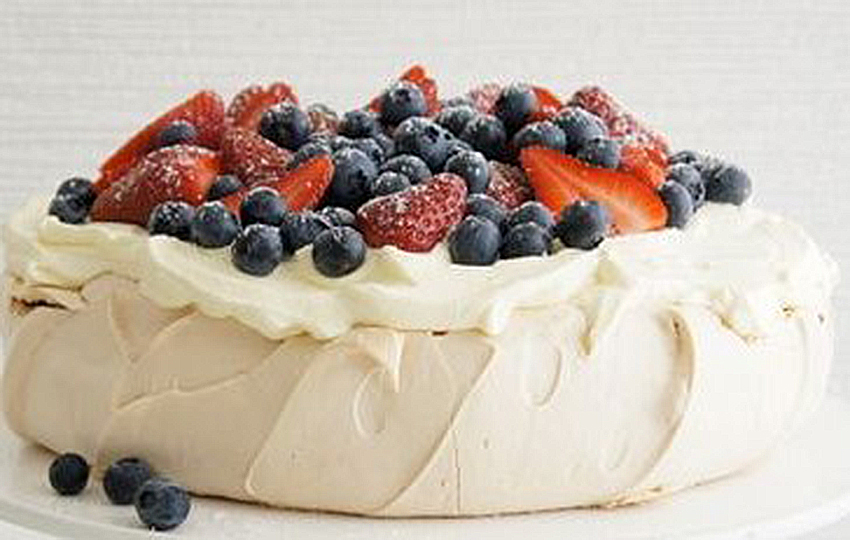
Then, there were the ‘party’ hats! More Aussie Christmas ‘bizarreness’ I thought, at seeing paper crowns that we had to wear to get into the merry spirit of things I guess. And there were the Anglo-Saxon-Celtic based customs such as delicious fruit mince pies, and punch or eggnog, and of course the good old Aussie favourite – pavlova.
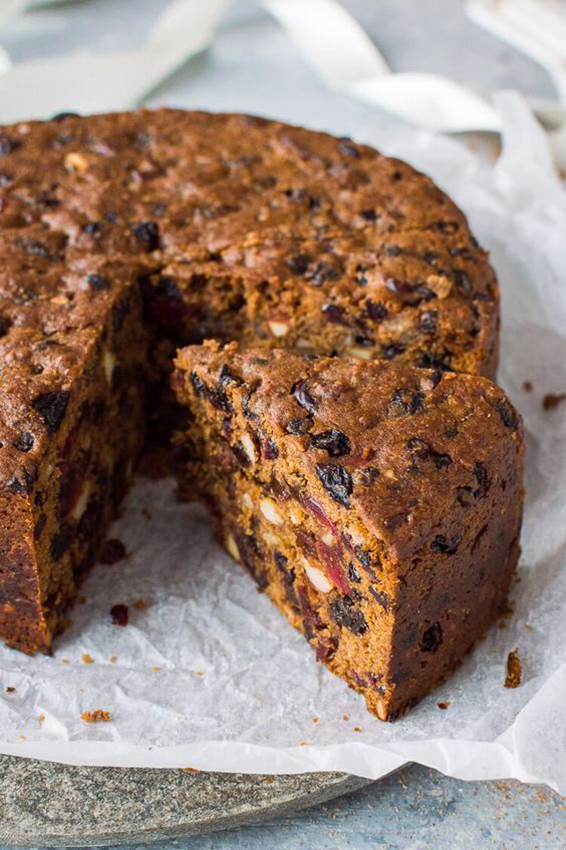
But one thing on that table I was familiar with was the fruit cake – reminding me I wasn’t that foreign to an ‘Australian’ Christmas. At one of my places of employment in Australia, the Lion’s Club charity would kindly gift all staff – a fruit cake. I was mesmerised, and relished it as it was different, exciting, non-Greek.
Every year in Greece, I pay homage to my Aussie Christmases. I make a fruit cake, we open our presents on Christmas morning in our pyjamas, and play Christmas carols in English. But, we are subsequently part of Greek Christmas, such as appreciating (and tipping), the children here in Greece who come house to house on Christmas Eve singing carols (kalanta).
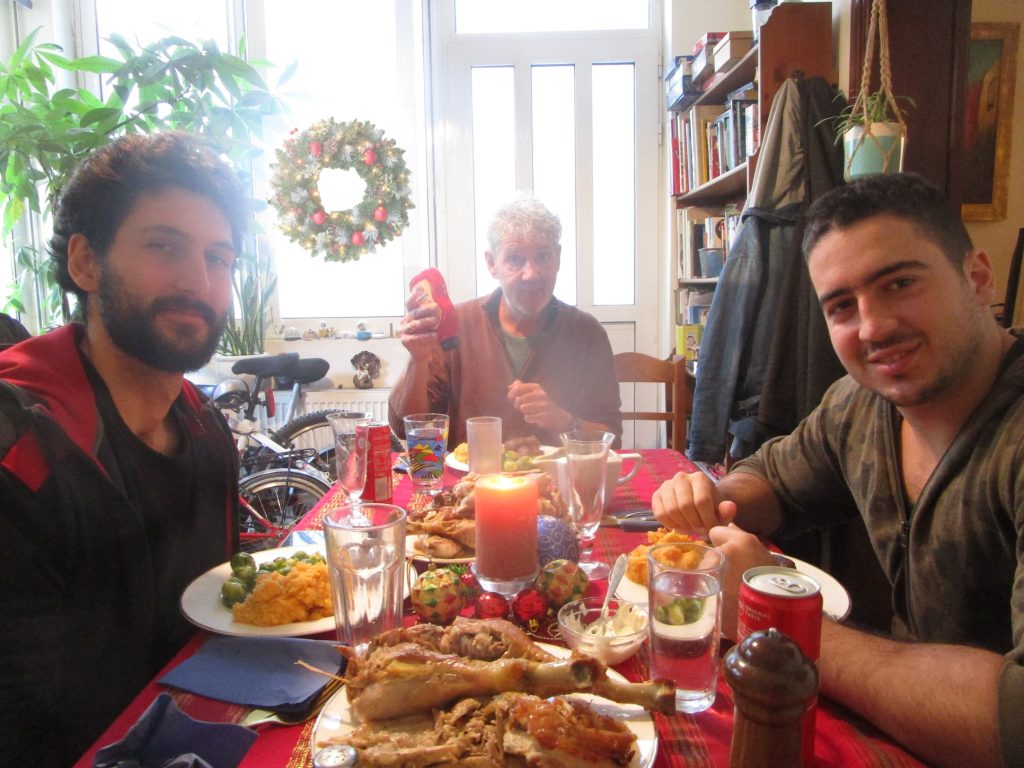
Our Christmas menu also reflects these Greek and Australian – and overall multicultural – influences. This year I’m thinking of meat pies and sausage rolls as an entree, or maybe samosas – and then we’ll ‘go Greek’ or English or American or French even, by having a turkey in the oven, and vary the usual roast potatoes sides with brussel sprouts or asparagus, or mashed potatoes and good old gravy. And we’ll have a mixed dessert table; the Greek aforementioned Christmas treats, but also perhaps a Tiramisu and lamingtons.
And as for the ‘spirits’; good spirits and cheer and gratitude for this family time of year wherever we are and whatever we eat! And certainly not forgetting the true origins of Christmas celebrations with a Church visit for a prayer of humility and gratitude; and a Xronia Polla wish to all the Chris’ and Christine’s.
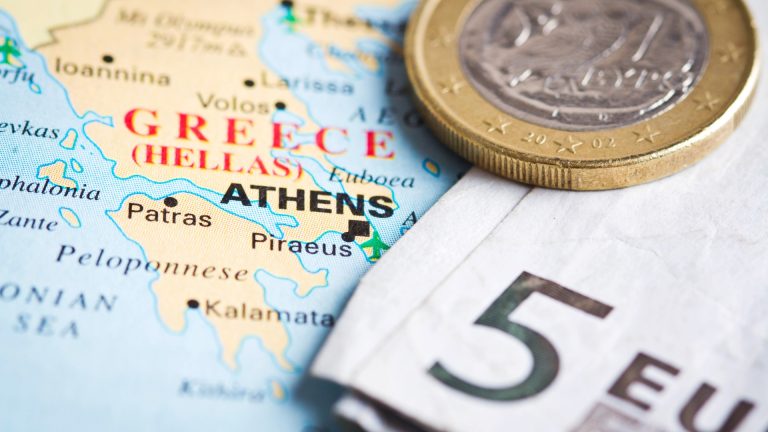
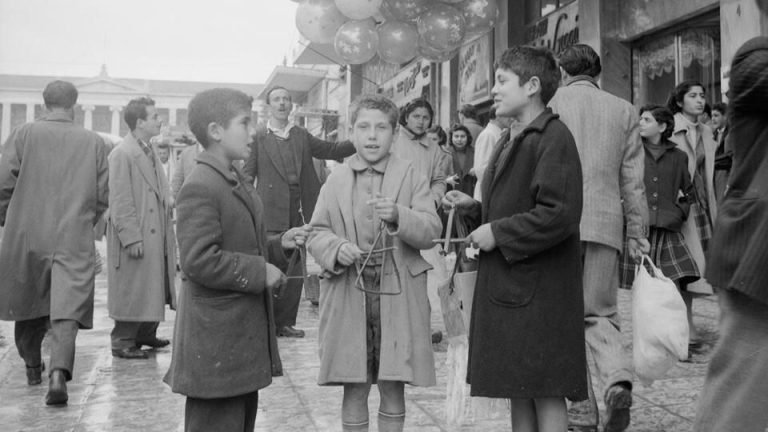
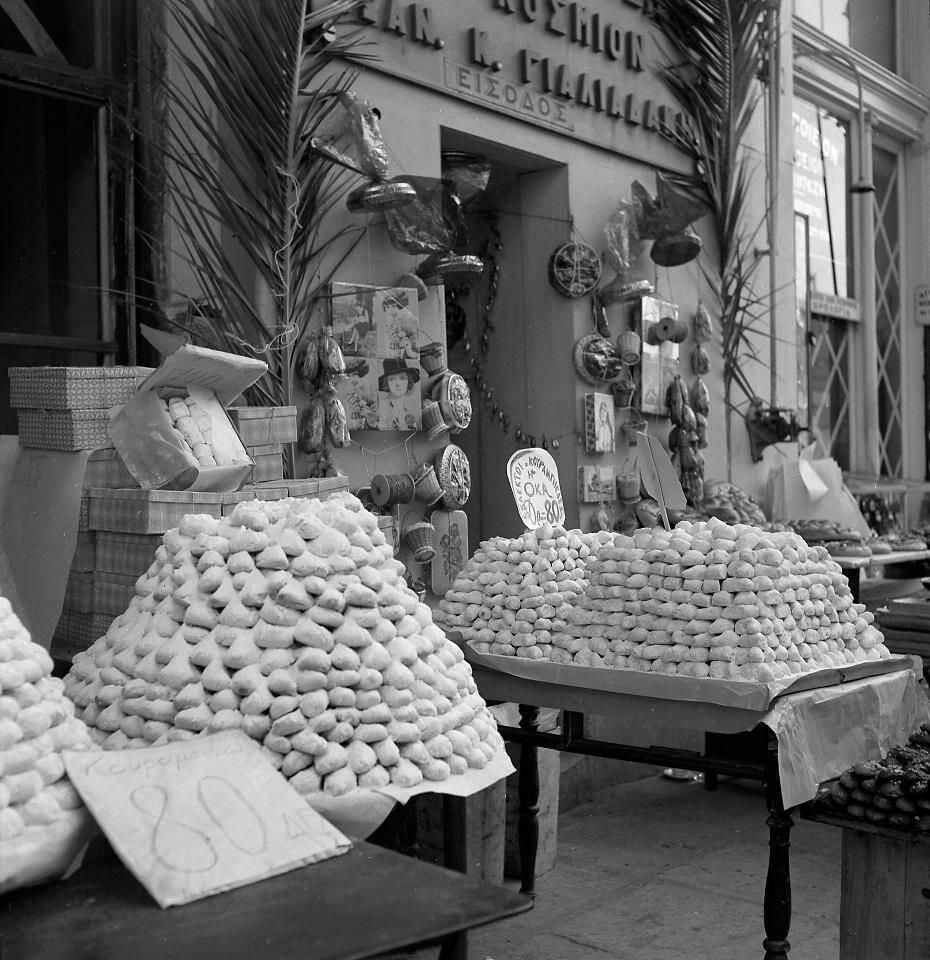
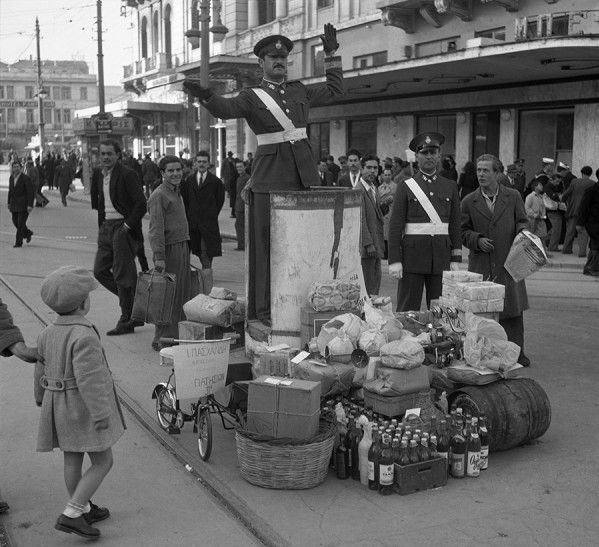
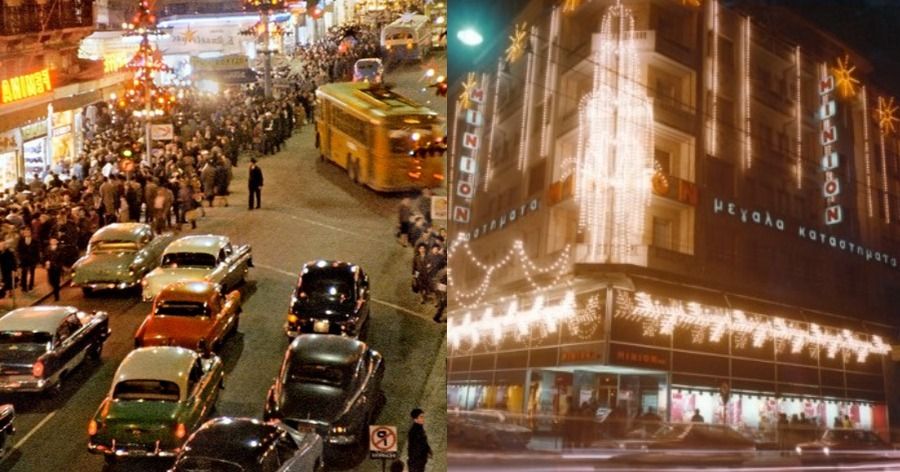
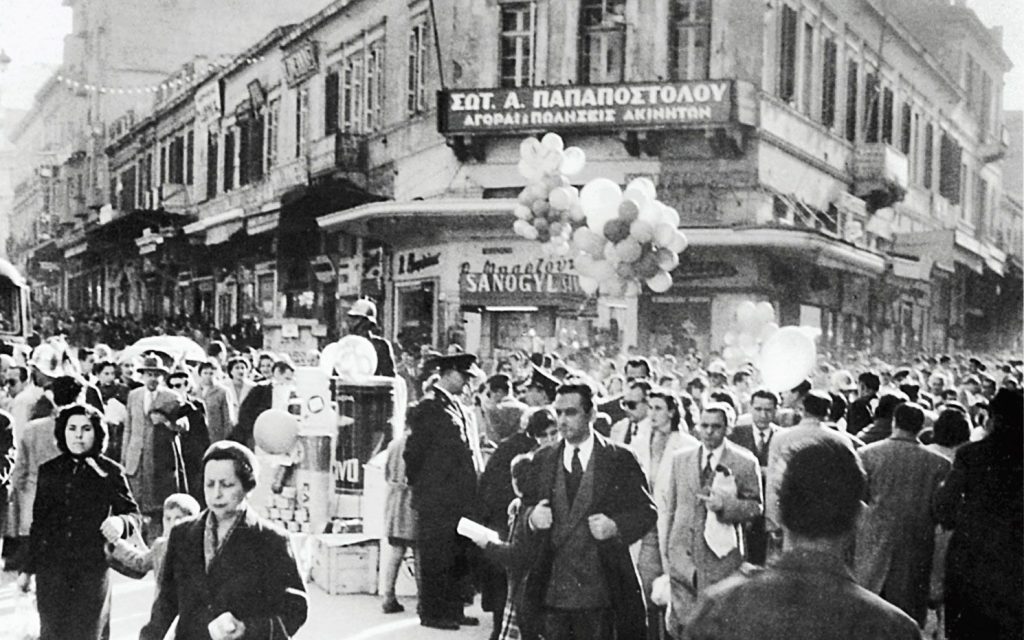
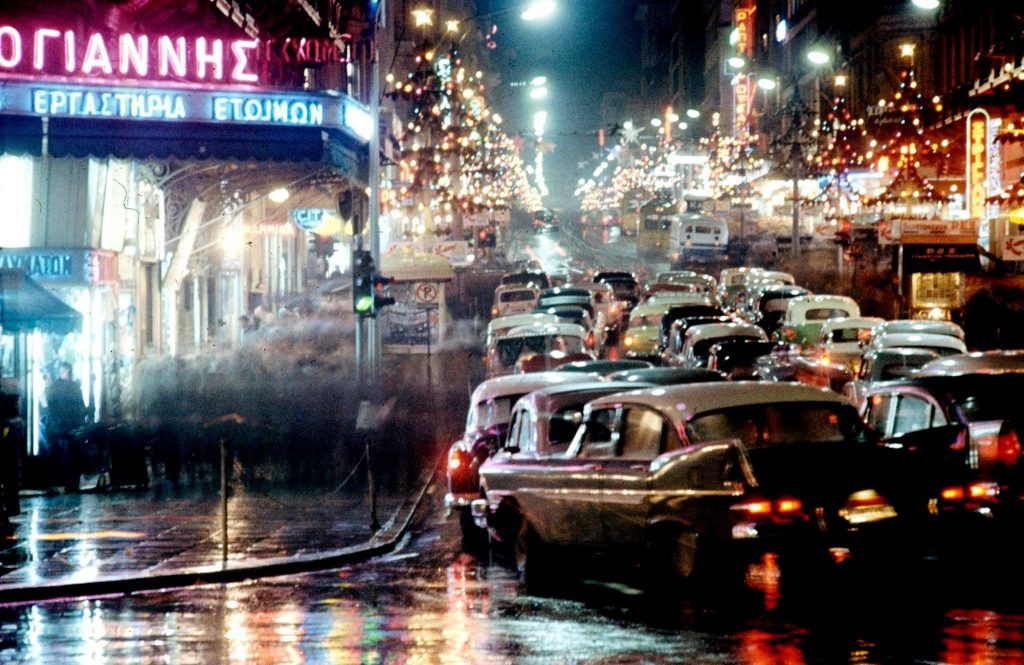
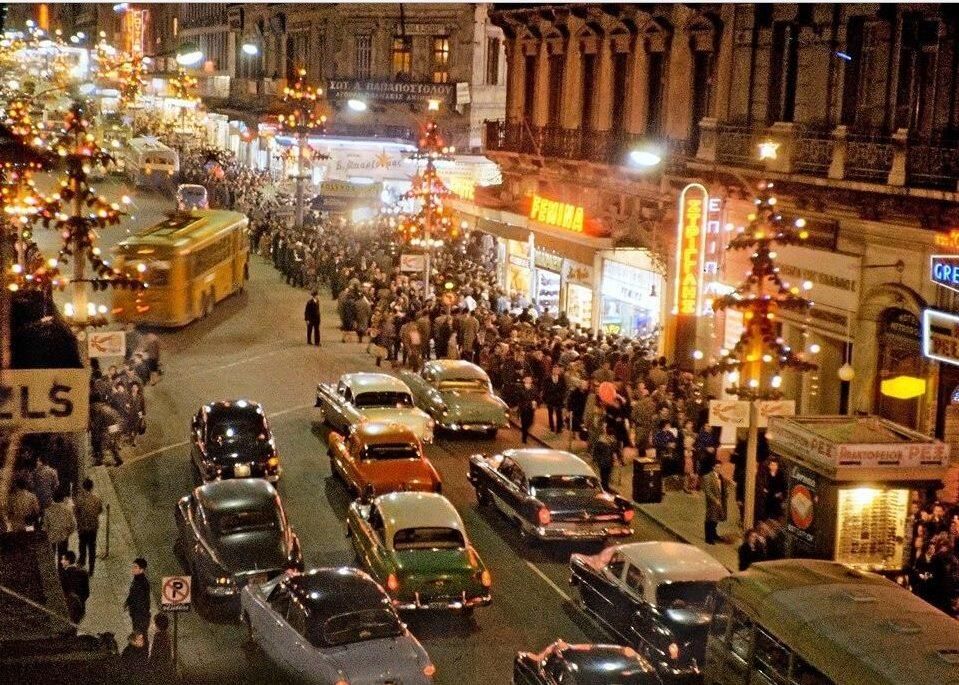
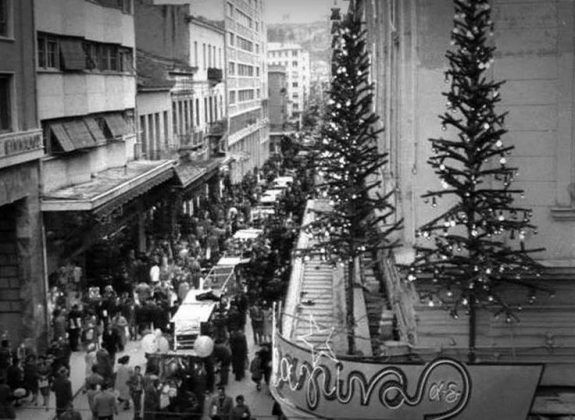
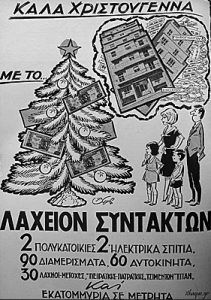
Walking in the centre of Athens, Greece during Christmas time in the 1960s and 70s was a whole ritual. Many readers of The Greek Herald may retain unaltered images from that time.
The whole family dressed well and wanted to experience the decoration of the city that, although much poorer than we are today, always hid a magical glow.
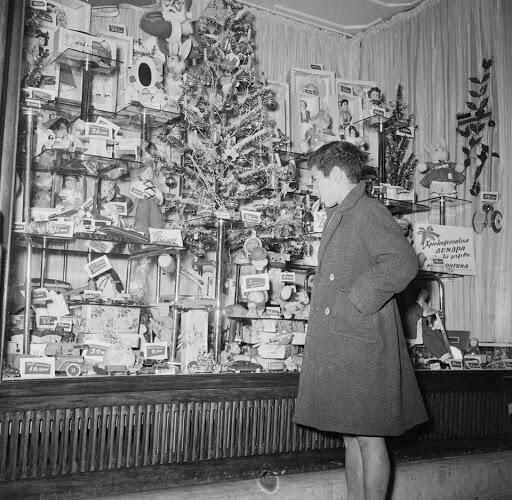
The Minion building had a leading place in Athens – flooded with light and full of colours. During the Christmas season, on the seventh floor, a whole Christmas scene was set up for the children.
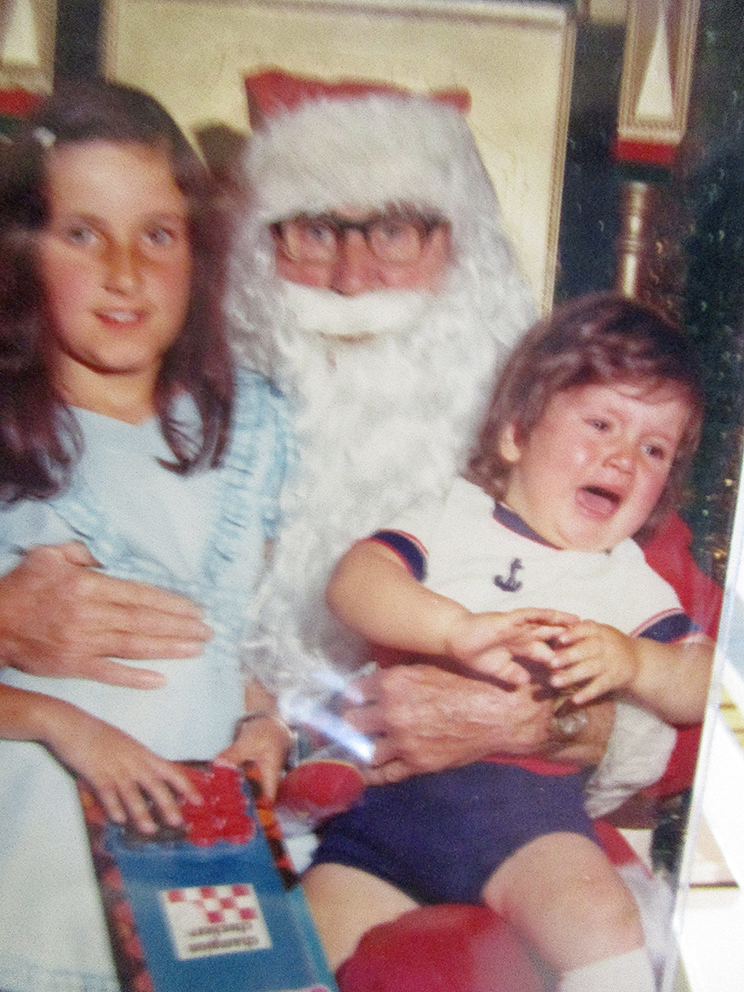
Toys and gifts fascinated the little ones and getting a photo with Santa was one of the greatest joys of every child.
Other buildings which gave a festive touch to Athens were Dragonas, the Tsitsopoulos-Athenee Bros, the Lambropoulos Bros, Klaoudatos and Katrantzos, among many others.
The Panhellenic markets were the ultimate destination for games and parents bought ‘good’ leather shoes for their children from Mouger’s.
After shopping, families went for doughnuts at Krinos or Zonars, which was a meeting point of urban and secular Athens.
The streets were full of people who usually went to the centre of the city by bus to experience the festive atmosphere.
The vendor carts that lined Athenian streets seemed like miracles to the eyes of children with their inflatable Santa’s and toys.
Traffic wardens with tinsel around them impressed passers-by. The seamstresses sewed feverishly to get dresses ready in time for the New Year’s Eve season.
No matter how many years have passed, no matter how many things have changed, Christmas has been and will always be the most glamorous holiday for children and adults.
The days of 1960-1970 are gone but those who lived those years hold them deep in their souls with a sweet nostalgia and always recall fond memories.