When Stelios Daliardos was five years old, he would play Greek CD’s of live concerts and mimic the performers for family and friends. Now, as an adult, he is no longer mimicking those performers but singing in front of live audiences.
“I’d stand up on the coffee table and sing as a little kid,” he tells The Greek Herald. “That’s where the love for it came.”
Named as a ‘young gun’ at Sydney’s Greek nightclub, Feggaria, the 19-year-old singer was born and raised in the local suburb of Belmore.
“One day I do want to be remembered as the boy from Belmore,” Stelios says with a smile.
Sitting down with the singer, it’s clear he can’t deny the Greek blood that runs in his veins.
“This is what I love, this is who I am,” Stelios says when he talks about his passion for Greek music.
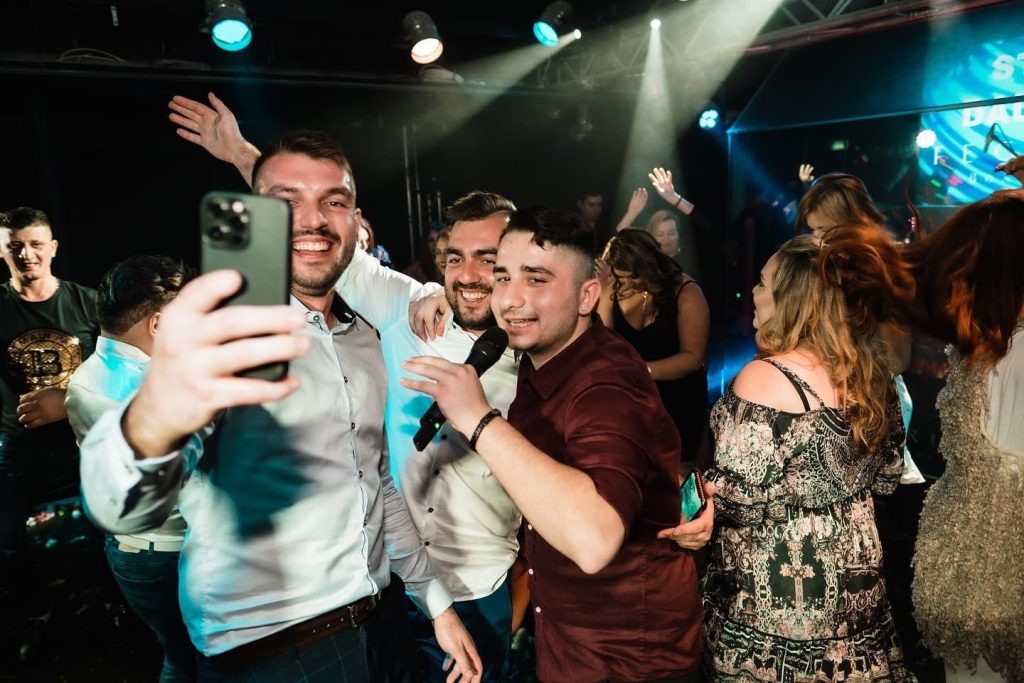
Stelios Daliardos performing at a Sydney nightclub. Photo: Syndesmos
But what makes this Greek singer unique is that Stelios wasn’t born in Greece. Instead, he was born in Australia and grew up around English-speaking parents. Like many second-generation Greek Australians, he learnt Greek in his early childhood from his grandparents and at Greek school.
The young talent dreams of making it as a singer in Greece and Australia. He hopes to converge his passion for Greek and English music by producing bilingual songs.
“I want to release my music, I’ve written many songs… The biggest thing is to put the Greek Australian identity on the world stage,” he says.
Stelios wholeheartedly identifies as an Australian, but actively nurtures his Greek heritage.
“For me, it’s weird, because I am as Greek as I am Australian. I love Greece, I love the culture. I love it all. But when it comes to Australia Day, I am the biggest Aussie out there with the flag,” Stelios explains.
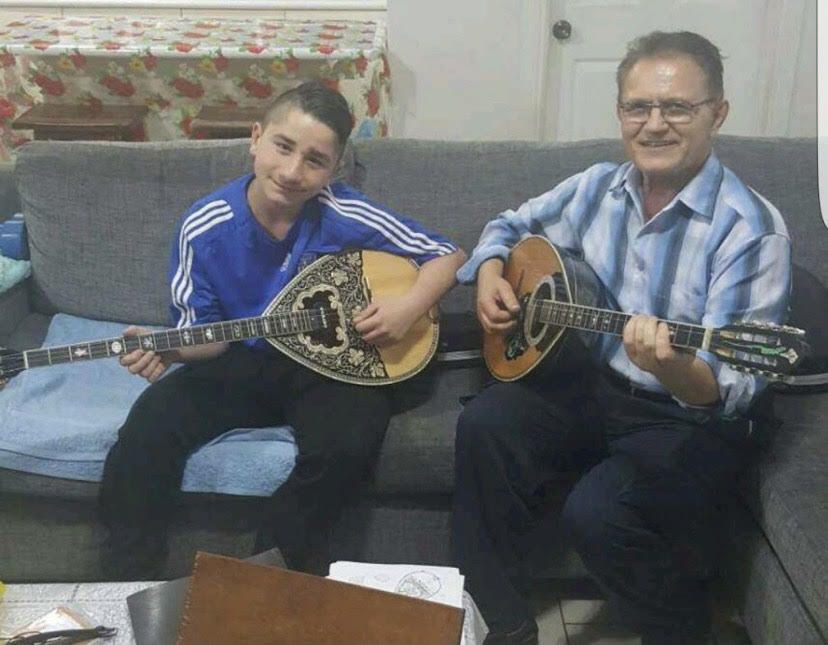
Stelios collaborating with Greek singer, Giannis Kapsalis. Selios age 14 with bouzouki teacher Bill Lambos.
In his teen years, Stelios picked up the bouzouki and naturally his voice followed. He says when he was 15 years old he became hooked on the feeling of performing after an impromptu performance at a taverna one night.
By years 11 and 12 he started doing small gigs, performing at christenings and weddings and since graduating high school, he performs every Saturday night at Feggaria.
Music for Stelios is about a real connection and he says it has kept him strong in life’s toughest situations and given him the willpower to deal with losing a grandparent.
“I write music for that reason, even if one person can feel warmth and strength from a song I sing, then I am happy,” he explains.
Among this fiery passion for Greek music, Stelios’ unwavering desire to keep Greek culture alive in younger generations also profoundly motivates him.
He says that in high school he almost lost his passion for singing Greek and doesn’t want the same to happen to others.
“I wanted to fit in, I wanted to be cool,” he says.
“I don’t want people to deny their Greek culture and try and be something they are not – like I almost did… You just have to dive in deep, learn the language and not forget your roots.”
Over the last fifteen years as the ageing of the 1st Generation of Greek immigrants became increasingly apparent and catastrophic, most Greek community organizations slept into a lethargy and a state of weariness. Our activities entered a stall speed; our pursuits and endeavours were curtailed, underrating our priorities and eradicating our ambitious aspirations. During this period of decline our collective entities abandoned their previous vividness, deserted their passion to maintain their national ideologies; halted their cultural activities; theatrical, literary, musical and performing arts became a rare phenomenon.
The Hellenic community accepted (and occasionally saluted) without any constructive protest and serious dissent several imposed decisions to destroy our tertiary research centres, to eliminate a plethora of Chairs of Greek and Hellenic Studies and even Departments of Greek Studies (their number from 15 are now reduced to four, nationally), to abolish studies related to Classical Studies and Greek History (their numbers from 37 are now reduced to eight, nationally, and this is thankfully to the James and Elizabeth Tatoulis initiative in Melbourne).
The national issues pertaining Hellenism now are being treated as “nationalistic outbursts”; the display of love for Greece and its diachronic civilization has not become just obsolete; it is now designated as a “xenophobic arrogance”. The All-Australia Communal links and federated arrangements, since 1946 were re-established and dissolved eleven times since then. Currently, there is not any federated body, any co-ordinating entity to hold together the existing historical communities. This vacuum of collaboration and cohesion between the operating Communities is invalidly usurped by the Church, which remains the only bond inter-connecting these Communities. Other grandiose shapes and figures of organizations, such as SAE, the Australian Hellenic Council, the Hellenic Congress were reduced to mere romantic and incapacitated entities allured by ambitious personas who lack the resilience of an aspired leader.
Let us now be more specific, outlining only a few areas of concern:
We have set in place in Australia over 1100 registered Greek community organizations, more than 30 Federations of Greek community organizations, at least 11 Co-Federations of the Federated community entities in Australia and at least five Grand (world and planet-wide) World Co-Federations, including the Macedonians, the Cretans, the Pontians, the Thessalians, the Cypriots. Amongst the latter, only the Cypriots deserve and have the agony of such an organization.
In addition, in Australia we have organized multiple of ambitiously founded and operated social classes of clergymen, businessmen, professionals, teachers, unionist, RSL, industrialists, university students and other milieus of economically, socially, and politically motivated Greek entities.
Moreover, we have a manyfold of Greek Bishops, over 120 politicians of Greek ancestry in Australia at local government, State and Commonwealth levels and at least another 20 high-ranking politicians married to Greek spouses.
Furthermore, we have over 1000 keen Philhellenes in posts of influence.
Also, we have an Ambassador, at least five career Consuls and Consuls General, and several Honorary Consuls, in addition to Marine and Commercials consular heads.
Additionally, we have the support and the ardent alliance of another strong team of diplomats, namely the Cyprus High Commission.
What is more, since 1944 we established a plethora of Commerce and Industry Chambers, multiple collective entities supposedly to represent collectively the Greek Communities and its leaders; we temporarily founded and raised collective bodies with grandiose designations, such as Australian Hellenic Council, Council of Hellenes, United Hellenic Alliance.
Moreover, we established Chairs, Lectureships, Departments at fifteen Australian Universities; we founded nine Bilingual Schools across Australia where we had the opportunity to teach and preserve studies related to our history and ethnic identity; we managed to build a robust corpus of Greek legal personalities excelling in the judicial system; we forged nationally and international strong cohorts of prominent scholars, journalists, writers, artists and world-acclaimed actors and cinema directors.
Finally, Australia’s Greeks are the most adaptable settlers, possessing the highest citizenship rate in Australia amongst all other ethnic communities.
Yet, in 2023 have we utilized any of the above resources and socio-economic axioms to benefit our country and Hellenism over the bare minimum? Have we invested these credentials in advancing Hellenism in a systematic, well-organized, and consistent way? Had we ever designed as a group (forget about implementation) any ethnic, cultural sequencer, any socio-political driver, placing in a concrete fashion where we are and what do we wish to achieve now and in the future? Did we had ever any platform, any plan, or agenda?
Is there any serious course of communication between the Hellenic Diaspora and the Metropolis? Had we ever organized any conference, congress or even a colloquium to overview the current rubric of our internal affairs via-a-vis our bond, rapport, or even affiliation with the Grecian Greeks? When was the last time that we had a genuine appraisal of our “national issues” in Australia? Are we happy with the current idleness and indifference that had incapacitated our collective ability? Are we content with the mode, options, and settings of the currently disseminated leadership fashion? The existing exceptions of robust leadership shown in some cities of Australia, including Melbourne, are mainly related to persons and their keen passion in promoting Hellenism.
All and each of our leaders must undertake his/her share and try to abort from the fallacy that we are well organized.
It is time, to acknowledge the self-imposed constraints, to understand our congenial abilities, our potential as a persuasive and instrumental ethnic group and try to rejuvenate our human resources in posts of leadership and influence; it is appropriate to invigorate our aspirations, to revive the past aggressive attitude towards the maintenance and the dissemination of our culture. Our continuing apathy and dispiritedness if will be allowed to prevail in the years to come we shall lament not only the collapse of our ability to maintain our identity but also will lead to the eradication of all those significant achievements that past generation of Hellenes, with lesser ammunitions, managed to accomplish.
We need to display cohesive attitudes and utilize affectively every aspect of the communal strength; abandon the useless personal polemics; build open channels of communication between the different providers; clearly define the course of our endeavored aspirations; build strong and undisputed filters of co-ordination; engage people who have both social and know-how standard of displacement; set aside old prejudice and commence from ground zero, widening the objectives and ambitions. The key word is “Hellenism”, and its relation to the development of the current world.
*Professor Anastasios M. Tamis taught at Universities in Australia and abroad, was the creator and founding director of the Dardalis Archives of the Hellenic Diaspora and is currently the President of the Australian Institute of Macedonian Studies (AIMS).
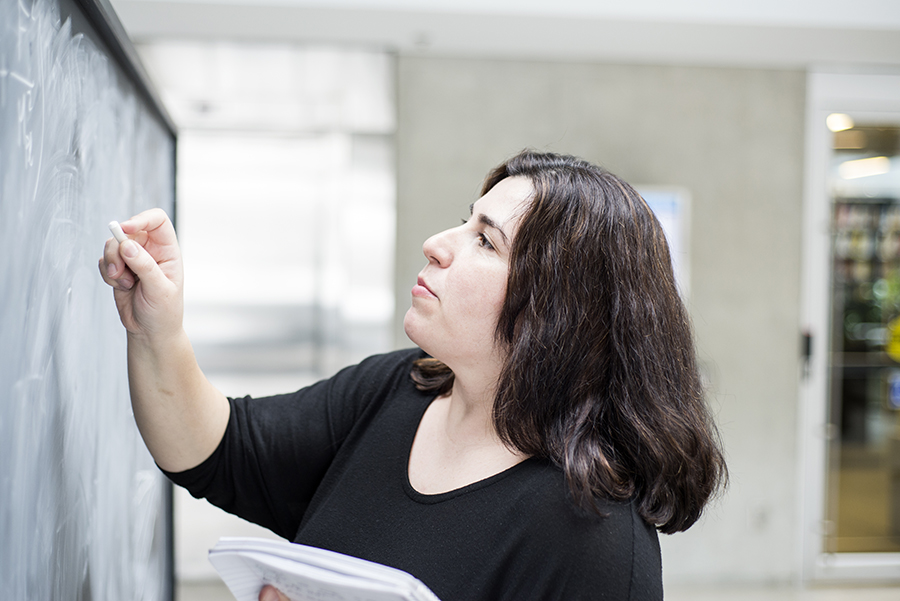
Greek physicist, Asimina Arvanitaki, was awarded the CAP-TRIUMF Vogt Medal 2022 by the Canadian Association of Physicists (CAP) and the TRIUMF particle accelerator centre in December.
Arvanitaki received the award for “innovative contributions to a number of areas of fundamental physics and in particular for identifying experiments that could test the underlying physics” according to the Greek Reporter.
The physicist is the Chair of the Stavros Niarchos Foundation (SNF) Aristarchus Chair in Theoretical Physics at Canada’s Perimeter Institute, one of the largest theoretic physics research centres in the world. She is the first Greek woman to be chairperson for the SNF at the Institute.
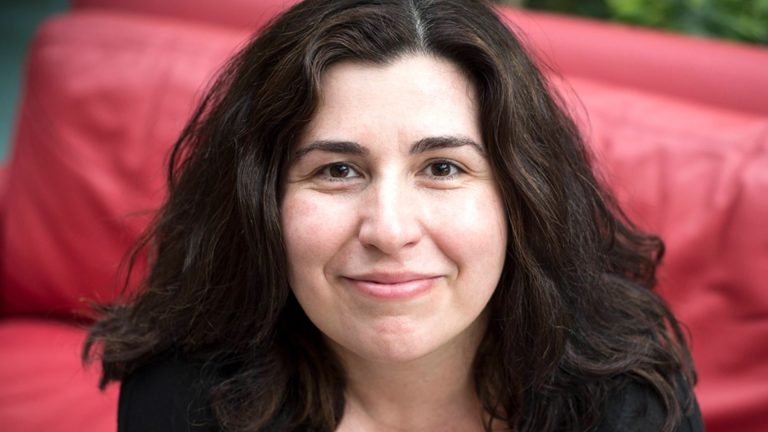
Asimina Arvanitaki. Photo: Perimeter Institute
The Perimeter Institute director, Robert Myers, said in a statement regarding the award, “Asimina is a trailblazer.”
“Her work developing new ways to detect fundamental particles is opening up exciting frontiers and inspiring the next generation of particle physicists. This is a well-deserved honour,” Mr Myers further added.
The Greek physicist is responsible for “devising small-scale—but precise—experiments that scrutinise the limits of major theories” the Perimeter institute said in the statement.
Arvanitaki said about her award, “I am extremely humbled to have received this award. It’s always special to be recognized by your scientific peers, and I would like to thank both the Canadian Association of Physicists and TRIUMF from the bottom of my heart.”
Menelaos Raptis, a young student from Thessaloniki, Greece has become the newest member of the NASA research team.
According to the Greek Reporter, in an interview with the Athens-Macedonian News Agency, Raptis said, “I am honoured and delighted to now be part of the NASA research team that will [analyse] the data from the James Webb Space Telescope,”
The Greek student studies at the Franklin & Marshal College of Astrophysics and is a member of Greece’s National Robotics Team and also was the Youngest Ambassador of Space in 2017.
Raptis, having joined the NASA team will be working on the James Webb Space Telescope project analysing data.
This telescope is the largest optical of its kind in space, uses infrared radiation and includes the study and observation of astronomical objects.
Credit: Menelaos Raptis / Facebook
The young astrophysicist says the collaboration with a professor at Franklin & Marshall College prepared him for, “difficult and demanding challenges, mainly in programming but also in astrophysics.”
He said in the interview with the Athens-Macedonian News Agency, “After this challenging training, the professor in charge considered me not only competent but also the ideal student to be given the opportunity to analyse space data with the professor in charge.
I will not hide that during my first academic semester I demonstrated perseverance, patience, but above all passion!”
Menelaos Raptis will join several other young scientists from Greece and around the world at NASA paving the way for new findings in astronomy.
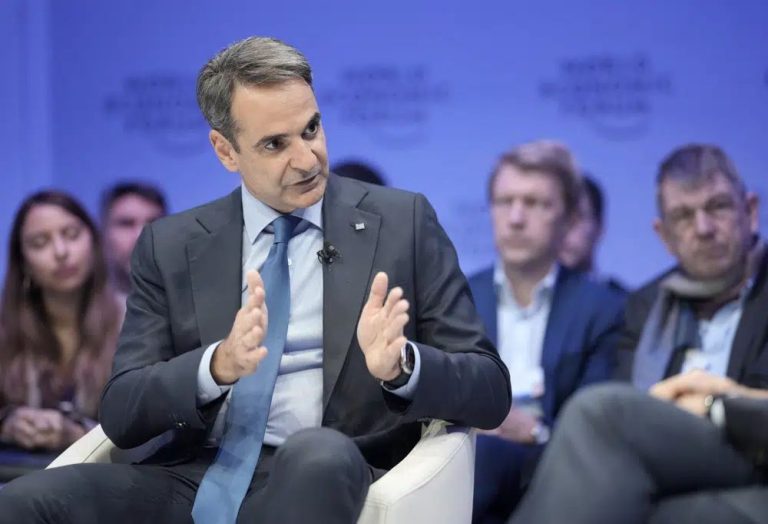
Greek Prime Minister Kyriakos Mitsotakis said on Thursday during a session at the World Economic Forum in Davos, that “we will not go to war with Turkey.”
The Prime Minister still believes it is possible to resolve his country’s differences with Turkey by speaking with Turkey’s president Recep Tayyip Erdogan, according to apnews.
Relations between the two NATO allies and historic regional rivals have been particularly strained for nearly three years, with alarming rhetoric from Turkish officials. Turkish President Erdogan has repeatedly said Turkish troops could descend on Greece “suddenly one night,” and even threatened to hit Athens with ballistic missiles.
Greek Prime Minister Kyriakos Mitsotakis
“We will not go to war with Turkey,” Mitsotakis said during a session at the World Economic Forum in Davos, Switzerland, Thursday. “We should be able to sit down with Turkey as reasonable adults and resolve our main difference, which is the delimitation of maritime zones in the Aegean and the eastern Mediterranean.”
Mitsotakis noted that although it was a “complicated issue because of the geography of the Aegean,” Greece had managed to resolve similar disagreements with Italy and Egypt and was contemplating taking a similar dispute with Albania to the International Court of Justice in The Hague.
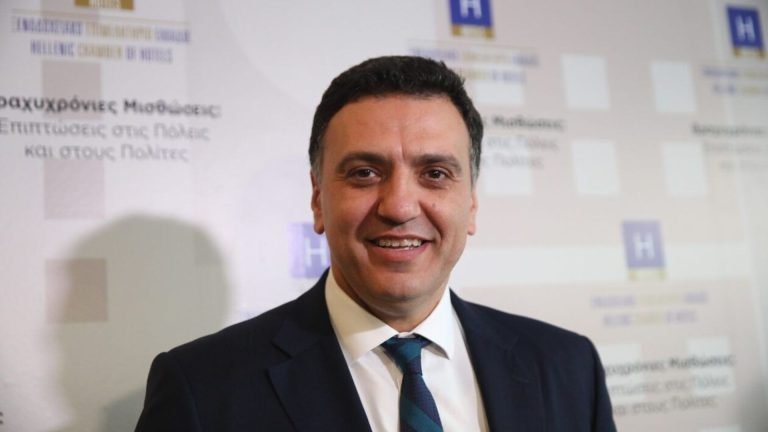
The relevant bill for the establishment of a Hellenic Tourism Organization EOT office in Melbourne, is about to be tabled in parliament, according to what Tourism Minister Vassilis Kikilias said on Thursday, during an interview with the OPEN TV station.
Kikilias’ words, reiterated the will of the Greek government to proceed to this significant move and marked the impact that the office would have to connection with the Greek presence in Australia.
“It is a strategic move that will significantly contribute to attracting travelers from Australia. It is vital that we add more markets, more dynamic to the country, so that we have travelers and tourists 12 months a year,” Kikilias said, highlighting the effort’s target.
“It is crucial, because as you understand it is on the other side of the planet, it is another continent. It has a significant Greek element – 300,000 Greek-Australians live in Melbourne – and it is a market that has finally opened up after two years of restrictive measures due to the pandemic,” he said.
The Minister of Tourism appeared to be positive about the new touristic season in Greece and he referred to the picture of pre-bookings which shows the strong tourist stream that Greece will have in 2023. For example, he mentioned that 56 direct flights per week have already been announced from the USA and Canada to “El . Venizelos”, with more to be added by spring.
“The regional airports have set a record with 31 million passengers, which shows that our strategy for better tourism throughout Greece has succeeded,” Kikilias said, adding that for Athens, tourism was this year the main source of funding, boosting citizens’ pockets, restaurants, cafes, museums and commerce.
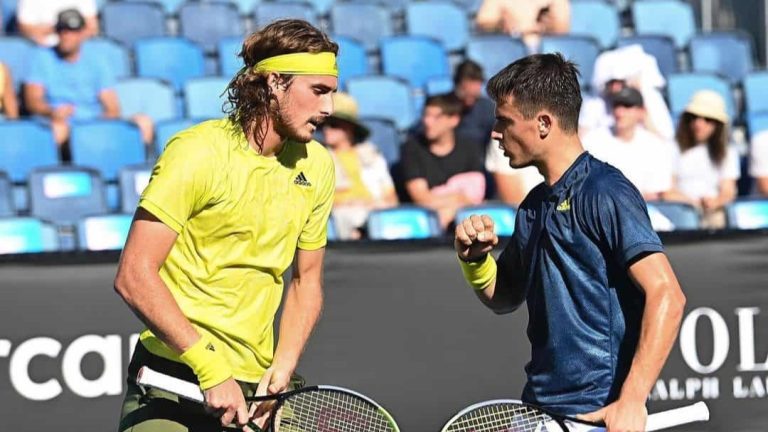
Petros and Stefanos Tsitsipas came back from a set down to beat Ramkumar Ramanathan and Miguel Angel Reyes-Varela to advance to the 2nd round of the Australian Open.
This was the 1st Grand Slam win for the two Greek tennis players.
The brothers got off to a good start at the Australian Open, beating Ramanathan and Reyes-Varela 3-6, 7-5, 6-3 to qualify for the “32” best pairs in Melbourne.
Petros and Stefanos fell behind early with a break in the 1st set for 1-4 and were unable to come back, however they came up big in the 2nd set and took a 4-1 lead. Ramanathan and Reyes Varela managed to tie the game at 4-4, but the two Greek players kept their cool, were patient and finally got a new break in the 12th game to take the set 7-5.
In the 2nd set our champions were even better, nobody was in danger from the two serves and thanks to a break from the 4th game (3-1), they managed to turn around and win the set 6-3.
Stefanos and Petros scored their first victory together in a Grand Slam event, “unlocking” another great achievement.
We remind you that they made their Slam debut 2 years ago in Melbourne, playing as a wild card at the 2021 Australian Open, where they were defeated 2-1 in sets by Mackenzie McDonald and Tommy Paul.
They also played at Wimbledon in 2021 and the US Open in 2022, losing both times in very close matches.
At this year’s Australian Open, they entered the main draw of the doubles for the 1st time without a wild card and celebrated their first victory, to qualify for the “32” best pairs of the tournament.
In the 2nd round they will have a very difficult task, as they will face the leading pair of the board and No.3 in the world ranking, the Dutch Wesley Koolhof and the British Neal Skupski.
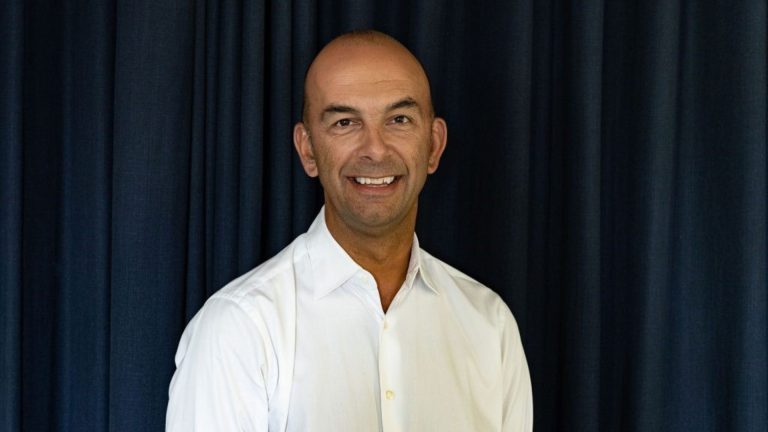
Greek Australian Con Dedes is certainly no stranger to the hospitality scene.
With over 30 years of experience in running and operating restaurants in Sydney, Con speaks with The Greek Herald and shares how his Greek heritage has inspired his culinary journey.
Tell us about your journey in the restaurant industry and how it all began.
My journey in hospitality semi formally started from the age of 12. I was washing dishes and pots and pans in the kitchen of Dedes Restaurant at the once known Western Suburbs Soccer Club. It was super busy and by its very nature, all the seeds of hospitality and what it was all about were beginning to take shape within my DNA.
Watching my mother Helen and my father Stavros look after their own team, guests and suppliers obviously made an impression from an early age. I then progressed within the kitchen cooking next to dad up until the age of 19 or so, when I experienced the front of house and what it took to aspire to become a restauranteur.
Which part of Greece are your parents from? Did they migrate here?
My father Stavros is from a small village called Apidea close to Scala, and my mother Helen is from Mytilene. My dad was a police officer and got stationed in Mytilene, where he met mum and they both migrated to Australia in 1967 on the Patris.
Has your Greek heritage inspired you at all throughout your career?
The heritage has undoubtedly inspired me not specifically in opening a Greek restaurant (although that should still be on the cards for the future), but by the very nature that as Greeks we are naturally hospitable and hence want to extend that to our fellow person. There will always be nods to our beautiful cuisine within the aspirational and casual dining offers at Dedes Waterfront Group.
Do you have a favourite Greek food?
When it comes to favourites within the Greek cuisine, there is not one standout – although it is super hard to beat a horiatiki salata with a side of yemista – classics will always be classics.
Your latest restaurant opening was SALA Dining. How does this restaurant differ from the rest in your portfolio?
SALA at Jones Bay Wharf, Pyrmont fits beautifully within our suite of restaurants as a wonderful waterfront venue. It compliments Flying Fish as an outstanding aspirational dining offer serving seasonal seafood with a modern Italian bent.
If you weren’t in hospitality which industry do you think you’d be in?
If my path had not lead me down the hospitality route, I think my calling would have been one where looking out for people would have been a cornerstone – a career with that alignment no doubt. Wasn’t tall enough to be in the fire brigade!
With so many different names under the Dedes Waterfront Group, you must be extremely busy. What do you do to take your mind off the stresses of work?
We are blessed within Dedes Waterfront Group to have so many beautiful and varied brands, so one day is definitely never the same – my wife Kerrie and I have wonderful people around us from our HQ to of course our great venues.
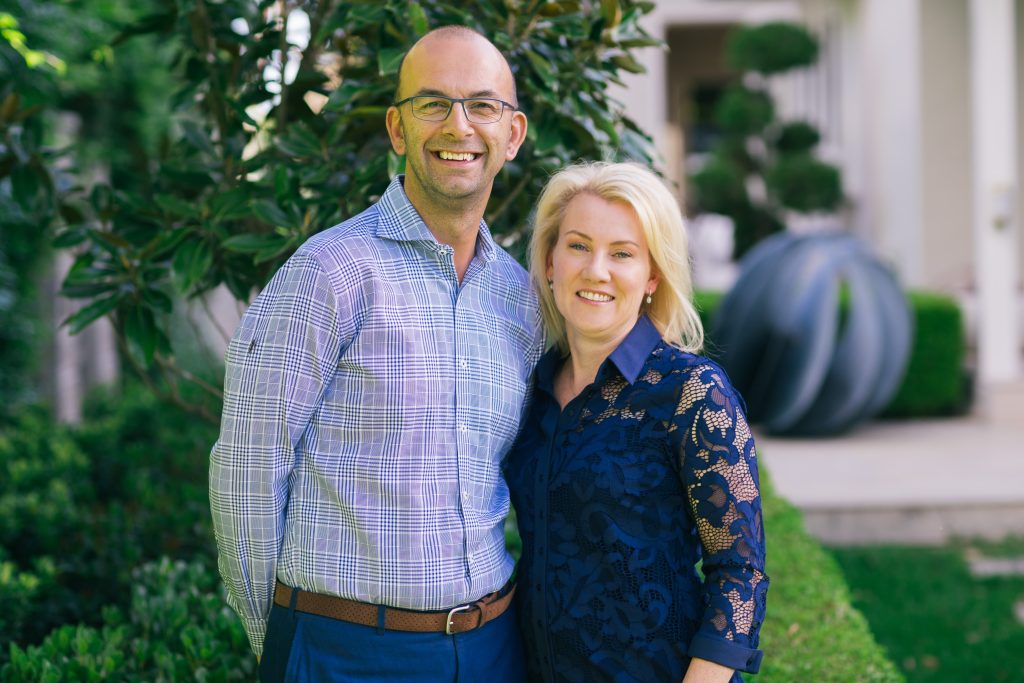
Con and Kerrie Dedes
We have worked together in the industry for the last thirty years and whilst this has at times been super challenging, it has also been very rewarding to see and be a part of the growth, and to watch our team members grow with us. To unwind, the golf course holds a special place with family and friends and, believe it or not, spending more time with Kerrie and our children.
Gardener, Sophia Pashalis, is an advocate for planting more trees in her suburb of Sunshine West, Melbourne, with the decline of tree canopies in the area affecting temperatures.
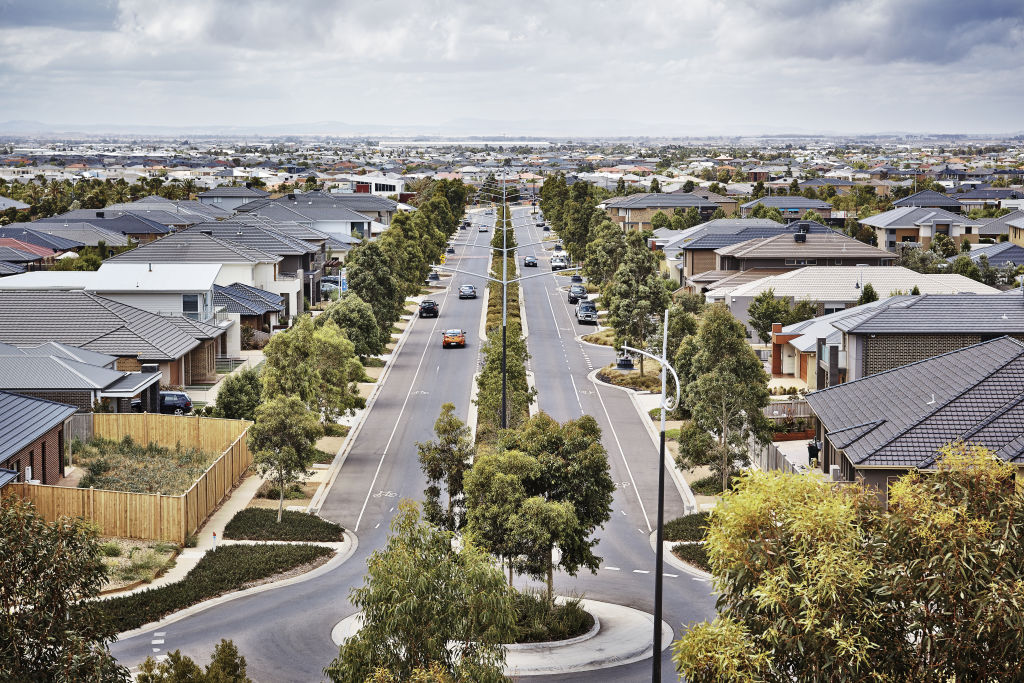
In a 2018 study, scientists revealed the western suburbs of Melbourne have the lowest tree canopy in the city. Using arial mapping, the researchers discovered the western suburbs averaged less than six per cent in tree canopies, while the eastern suburbs averaged around 26 per cent. Sunshine West, in the City of Brimbank local government area, is part of the six per cent.
Tree canopies help to keep the suburbs cooler especially in the warmer months, and can also decrease the need for air-conditioning use.
Green spaces and shade improve our mental health, and play a vital role in keeping us cool during the hot days, according to Melbourne GP Jennifer Conway.
GP Conway is a member of the Doctors for the Environment, an advocacy organisation showing the impacts of the environment on health. She further stated in regards to the issue of declining trees, “There is lots of evidence about how important green space is to our health—both physical and mental.”
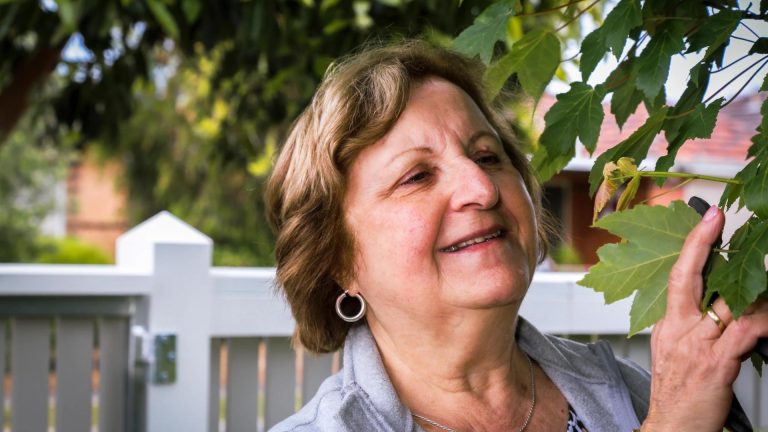
The Greek Australian gardener is living proof that spending in the garden amongst the trees contributes to her overall quality of life. Mrs Pashalis says it’s a form her therapy for her. She finds it calming to wander her garden, clipping plants and maintaining the wellbeing of her trees.
According to ABC news, Mrs Pashalis further added, “The more trees you have, the cooler the place will be, the better the oxygen we will have, the trees will bring in the moisture.”
Melbourne’s west. Photo: Nic Walker
Mrs Pashalis is a member of the West Sunshine Multicultural Senior Citizens Club in Melbourne. In a meeting at the citizens club, members said Mrs Pashalis is one of the fiercest advocates for more trees in Sunshine West and the western suburbs, according to ABC news.
Thami Croeser, an urban planner in Melbourne who studies ways to make cities greener, says there is a tug of war going on around trees, ABC news reported.
Trees on private land are being lost to urban development and while the council endeavours to keep up with the decline by planting on public land, Croeser believes, “It can be one of those two steps back, one step forward things.”
In a Monash University study researchers found temperatures rising by up to 13 degrees Celsius in the suburb of Sunshine west because of the declining tree canopies and urban development in the area.
The suburb, along with local government area of Brimbank, experience “heat island” effect in summer due to the lack of tree canopies in the suburbs, according to scientists. This makes certain parts of the western suburbs hotter and affect people mentally and physically during the summer months.
Melbourne’s west. Photo: Isamu Sawa
Mrs Pashalis and her friends at the West Sunshine Multicultural Senior Citizens Club want more trees and parks in the neighbourhood, but are concerned by urban development taking over.
Mayor Tony Briffa of the Hobsons Bay City Council in the western suburbs says the council is endeavouring to turn things around with an “urban-forest strategy developed to increase canopy cover to 30 per cent by 2040.”
“It’s an ambitious target but we are working really hard to meet it,” Mayor Briffa added.
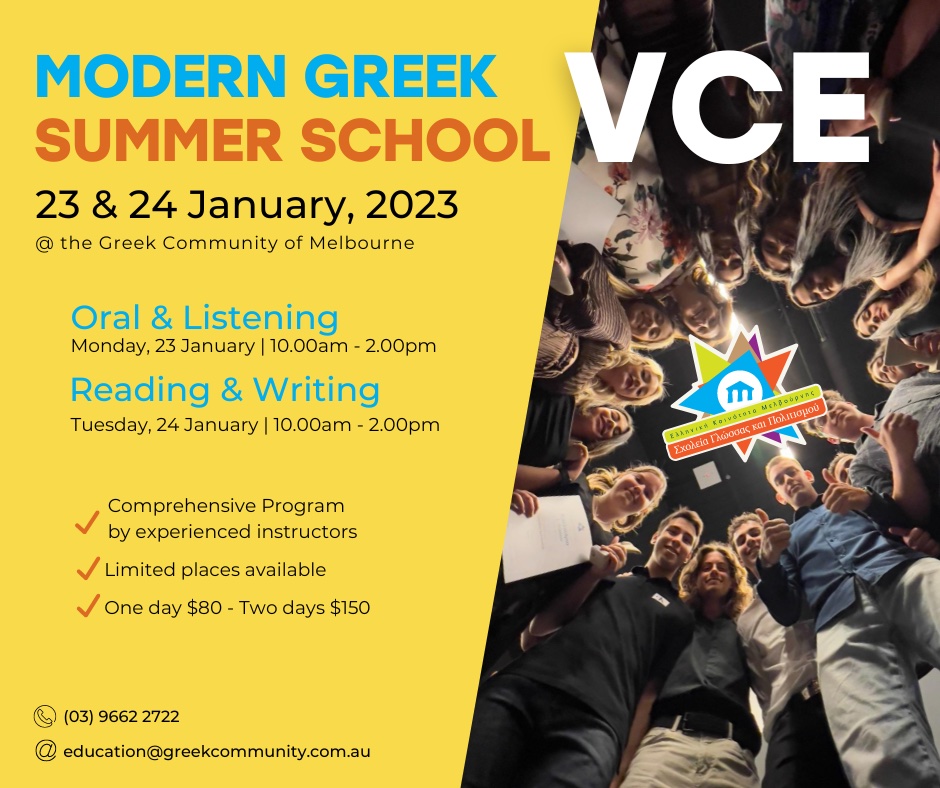
The Greek Community of Melbourne Language and Culture school have announced the Modern Greek VCE Summer School program to prepare year 11 and 12 students for VCE exams in Melbourne.
The program has been carefully designed and created by the GCM after receiving feedback regarding the students’ need for a dynamic start to their VCE exam preparation.
The program will entail a two-day intensive workshop course for VCE Modern Greek, giving students a head start in learning both the material of the course as well as the structure of a VCE exam. The classes will provide the students the opportunity to cultivate the skills they need to ace the exam.
The team of teachers who curated and implemented the program are Aphrodite Papandreou, Christian Raspas and Maria Bakalidou.
The classes will take place on January 23 and 24 at 168 Lonsdale Street, on the Mezzanine level of the Greek Centre in Melbourne.
The programme of the workshop is as follows:
Monday 23 January at 10.00am to 2.00pm for the Oral Exam and Listening Comprehension class
Tuesday 24 January at 10.00am to 2.00pm for the Reading and Responding, Writing class
Cost of attendance is $80 for one day and $150 for both days.