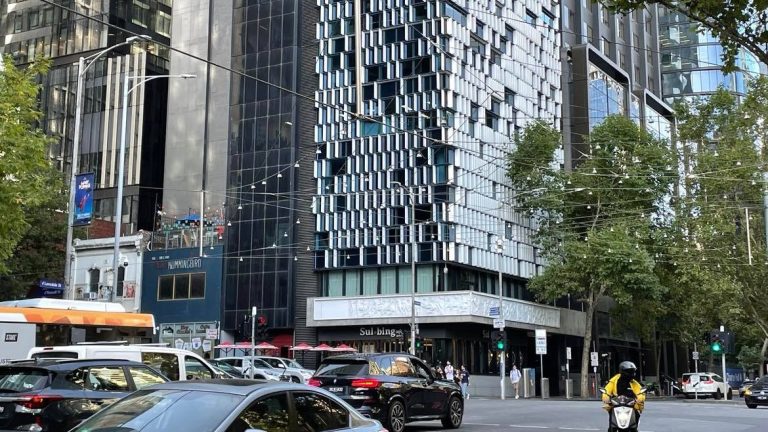
A bill for the establishment of a Greek National Tourism Office (EOT) in Melbourne, Victoria was passed by Greece’s Parliament late on Thursday night.
The bill focused on support measures for victims of the Tempi train tragedy, as well as “interventions for the modernisation of tourism legislation.” The EOT office was in Article 38 of the bill.
Greece’s Tourism Minister, Vassilis Kikilias, confirmed in January this yearthat his ministry wanted to open an EOT office in Melbourne, Victoria by April 2023.
The Greek Tourism Minister also thanked the President of the GCM, Bill Papastergiadis, for his “very good and constructive cooperation and also for granting the building facilities that will house the GNTO office.”
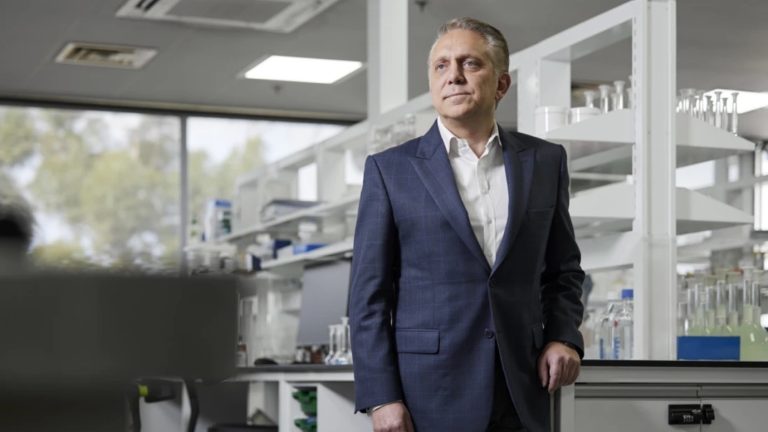
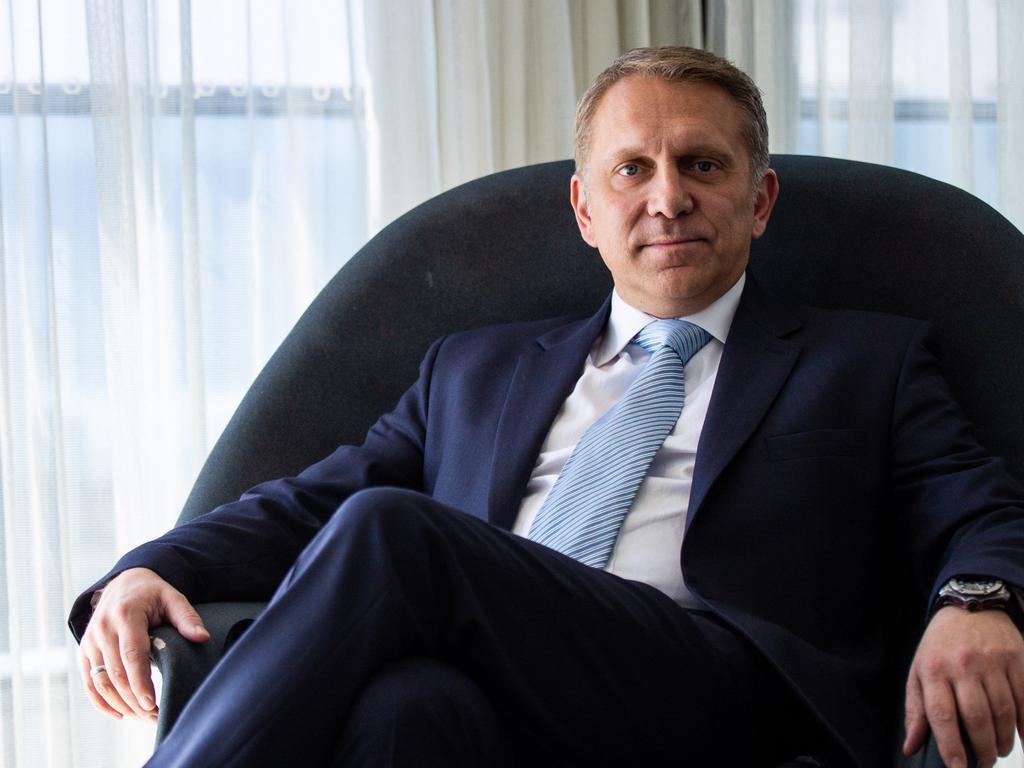
In the interview, Bastas said he is in the process of buying his partner out of Arrotex and Juno Pharmaceuticals, of which he also owns half, to merge both companies into one.
Together, the companies will combine for pre-tax earnings of more than $250 million and annual revenue of at least $1.5 billion.
“My bankers [Goldman Sachs and KKR] are telling me this is the largest private deal that has ever been done… the largest non-private equity debt sponsored deal in Australia,” Bastas told The Australian.
“There’s no company I have ever acquired, there’s no merger I have ever engineered, that has not succeeded.”
Bastas is the son of Greek immigrant parents who came to Australia in the early 1960s and settled in Melbourne, Victoria.
He said his success is tied to his persistence and patience.
“Every deal has 10 different ways for it to fail, and there’s only one way to do it. Knowing that, I just persevere until I find the one way the deal gets done,” Bastas said.
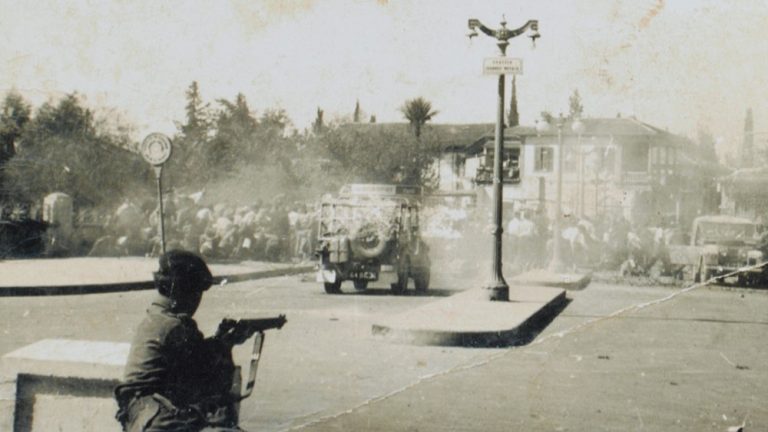
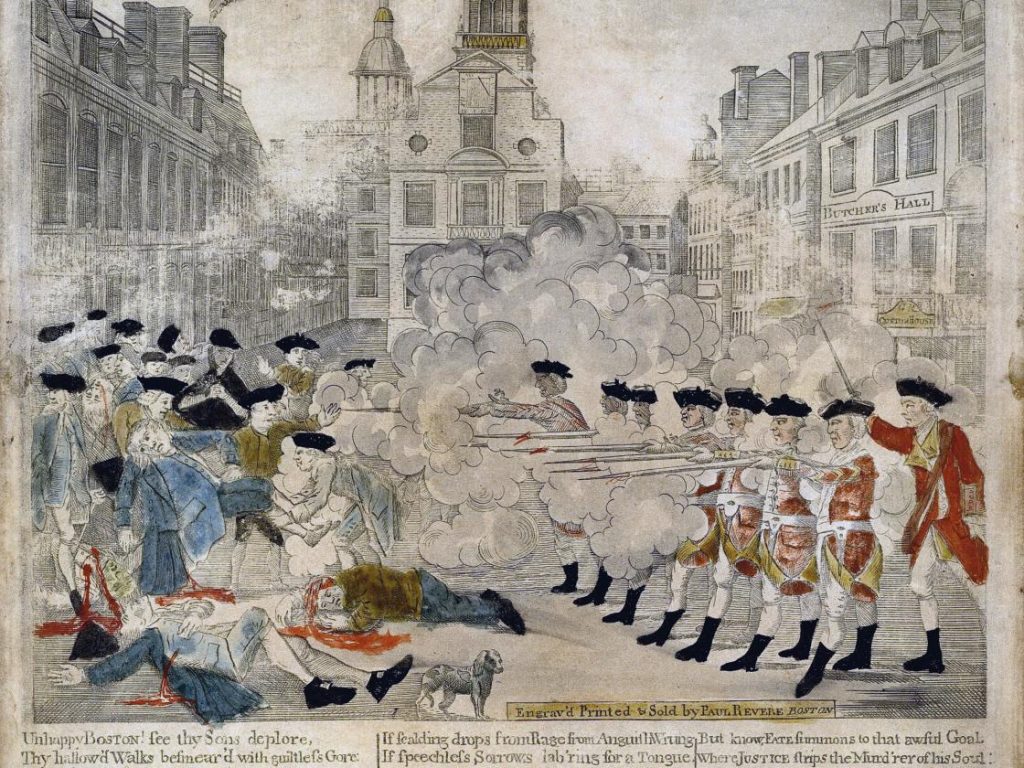
As we commemorate the heroes of 1821 on March 25, on April 1 is the commemoration of another struggle, this time against the British. A struggle shared by many peoples globally from the Americas of the 1760s to the twentieth century liberation of Africa, Asia and the Middle East – all from British occupation.
Instrumental to the war was theΕθνική Οργάνωσις Κυπρίων Αγωνιστών (EOKA).
EOKA was inspired by anti-colonial anti-British movements, dating back to the 1760 Sons of Liberty of the America Revolution, 1952 Kenya uprising, Indian Revolt, 1913 Irish Citizen Army of Ireland, United Resistance Movement (URM) of Israeli, amongst many others.
They were all citizen organised, clandestine, political and paramilitary organisations leading a military campaign, plus civil disobedience, demonstrations, disruptions, heroes to liberate their people. EOKA, like other revolutionary anti colonial movements, recruited school children, domestic servants, police, teachers and ordinary citizens to the cause.
As in 1760s to the 1960s, British strategy followed a similar pattern of brutal suppression, indiscriminate torture, concentration camps, death camps, hangings, detention and beating of children and women. In all instances, British brutality only encouraged the heroes to more daring deeds against the occupiers.
EOKA was part of a global movement which also took inspiration from the 1821 Greek War of Independence against Ottoman Turks and called for “enosis” with Greece.
The British attempt to divide the population, to “wedge” and disrupt the revolution had some success in India, Ireland and perhaps its greatest success was in Cyprus. It can be argued this has continued to this day.
In the 1760s, the British divided the settlers in the American colonies as they were to do in Cyprus between Turks and Greeks.
For the Americans it was all out war led by George Washington, a former British soldier armed, funded and supported by France, whereas EOKA practically stood alone.
Collective punishments by the British made EOKA even more popular and global sentiment stacked against the British, as it was a decade earlier when the British used the same tactics in India.
With its reputation as a “civilised” nation in tatters in India and Africa, Cyprus was viewed as Britain’s next toy of torture and terror.
The Greek Cypriot community was overwhelmingly in favour of Enosis with Greece. The struggle was fought in the villages, cities and mountains.
By late February 1956, the British suppressed a school children revolt that left one boy shot dead, closing down the entire school system. The death of children and unarmed protesters hit newspaper headlines globally. Former British-occupied territories in Africa, India and even the USA sympathised and related to what was happening in Cyprus.
Global public opinion was critical against the British, sometimes referring to them as “Europe’s aggressors.” The atrocities of the second world war were alive and well in the tool box of the British. This comparison with the Nazis was to have a profound impact on the British psyche and continues to this day.
The Church of Cyprus founded in 431AD and led by Archbishop Makarios became the public face of the revolution. Once the British could not pressure Archbishop Makarios, they kidnapped him and placed him on an airplane to fly him to the Seychelles on March 9, 1956.
In response, EOKA organised a week-long general strike followed by a series of attacks on British personnel including the Governor.
The British occupying forces kidnapped and beat school children, women, anyone who they believed was involved. Importantly, the United Kingdom released secret documents in 2012 showing indiscriminate torture and terror of the population designed to “scare” all into submission.
Under the Detention of Persons Law, passed on 15 June 1955, the British set up one of the tools they invented back in the 1890s in South Africa Boer War – the concentration camp. The inhumane conditions attracted comparison with Nazi camps and the International Committee of the Red Cross visited the camps to inspect the conditions.
On May 10, 1956, the first two EOKA prisoners were hanged. EOKA responded with the execution of two British soldiers.
The mountains of Trodos provided a fierce battle ground where 20 EOKA members were captured, at least seven British soldiers burned to death by accident.
On August 9, 1956, the British hanged three more EOKA prisoners then in November 1956, the Suez Crisis forced the British to move the occupying troops to Egypt. EOKA was to begin a wave of attacks that would become “Black November” for the British, with a total of 416 attacks, 39 killed, 21 of them British.
Although Governor Harding denied torture allegations, describing it as propaganda by EOKA, the 2012 UK secret dossier clearly shows the opposite.
British turned a blind eye to interrogators, many of whom were deliberately under-educated Turkish Cypriots who were against “enosis” and encouraged animosity between the two ethnic groups.
Torture included beatings, public floggings, forced standing, ice and drugs. Irrespective of the extent of the torture, Governor Harding failed to win over the Greek Cypriot population, as the British were seen as no better than the Nazis.
EOKA was accused of intimidating the population not to co-operate with the British. Declaring people as “traitors” to the cause became a hallmark of all these liberation movements.
This is a controversial aspect of the war of liberation, as it is the case with other anti-colonial organisations.
In all these instances, politics filter within, leading to the targeting of political adversaries and people they just did not believe were loyal to the cause.
In particular, the Communist Party of Cyprus (AKEL) and their supporters were targeted by EOKA.
In both Cyprus of the 1950s as the Americas of the 1770s, the British delicately fuelled this hostility to wedge their opponents. The stark difference with America and the Cyprus war of independence is the “divide and conquer policy.”
In the case of the Sons of Liberty, pro-British settlers were incited to scuttle the liberation movement. It’s generally believed the divide and rule tactic failed.
This was not so in Cyprus as the British openly tolerated and even armed the Turkish Cypriot paramilitary organisations. The British had deliberately set out to use the Turkish Cypriot community on the island and the Turkish government as a means of defeating EOKA.
British propaganda was targeted to scare the Turkish Cypriots that if the British leave, their safety could not be certain.
When Governor Hugh Foot arrived in Cyprus in December 1956, it was clear the British could not win the war of independence, their divide and rule policy was gaining momentum but not fast enough to keep the British as occupiers.
The British had begun a narrative to inspire the Turkish Cypriots to support their paramilitary armed groups. The Turkish Cypriot Resistance Unit, the Black Gang and Volkan appeared as early as May 1955. All of them were absorbed later by the Turkish Resistance Organisation.
EOKA avoided conflict against the Turkish Cypriots, however declassified UK records show how the provocation designed by the British led to intercommunal tensions and rioting in the towns of Cyprus, forcing the British to withdraw their troops from hunting EOKA up in the mountains and restore order in urban areas.
Unlike Sons of Liberty, who could count on the support of France to ensure the sacrifice for liberty could be sustained, as it has to this day with the USA standing as a beacon of liberty, this was not so for Cyprus.
Without a “France” to provide the backing, Cyprus and its heroes of the revolution continue the struggle.
The EOKA heroes deeds are part of history, an integral part of the islands fabric, a message to all peoples under foreign occupation that sacrifices are often essential and liberty is sacred. A lesson given to all humanity by the Sons of Liberty of the American, the Filiki Eteria of Greece, and the heroes of EOKA.
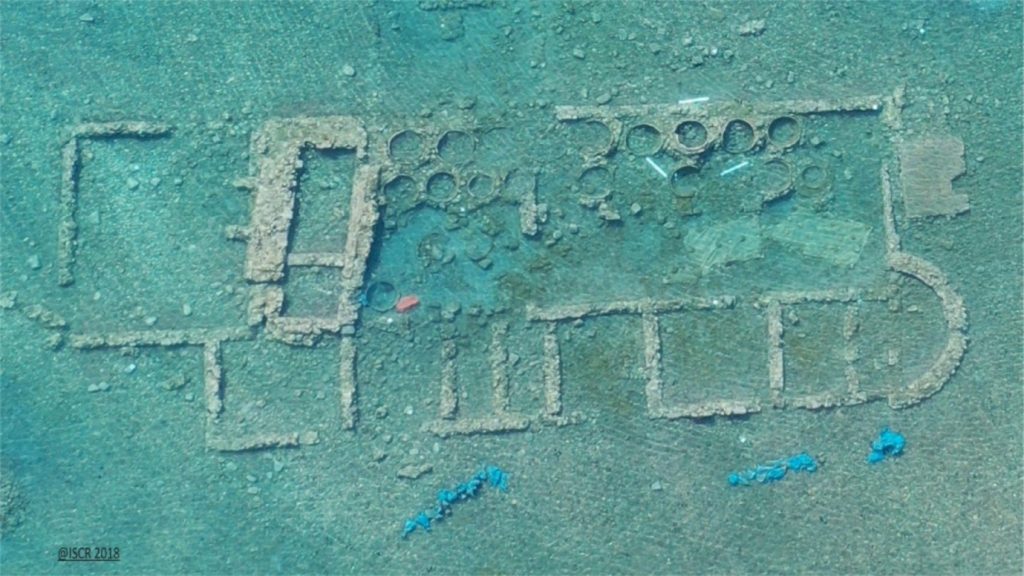
Three ancient monuments in Greece are set to be preserved as part of a new collaboration between the European Union’s Horizon Europe initiative and the Greek-led Triquetra project.
According to Ekathimerini, the collaboration aims to create a toolbox for assessing and mitigating climate change risks and natural hazards threatening cultural heritage.
Triquetrais being led by Professor of Earthquake Engineering at the National Technical University of Athens (NTUA), Konstantinos Spyrakos, in collaboration with NTUA professors Charalambos Ioannidis and Denis Istrari.
“Eight European monuments are under our microscope as pilot studies, three in Greece, and one each in Italy, Poland, Germany, Switzerland and Cyprus, which are all included in UNESCO’s World Heritage List,” Professor Spyrakos told Ekathimerini.
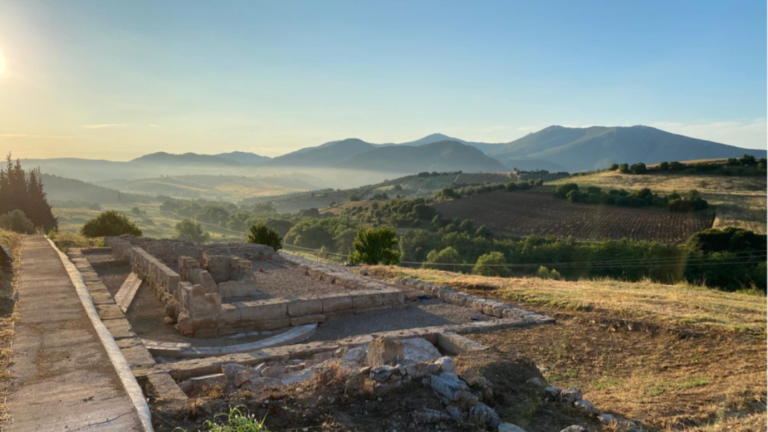
Epidaurus, Greece. Photo: Triquetra Project
The pilot sites in the project are: Kalopodi in Greece; Ventotene in Italy; Aegina Island in Greece; Choirokoitia in Cyprus; Epidaurus in Greece; Roseninsel in Germany; Argilliez in Switzerland; and Smuszewo in Poland.
Mr Spyrakos said these sites will be analysed and models will be used to predict the changes that the climate crisis is going to cause them in the future.
“Finally, the necessary methodology will be developed to deal with the problems, applying innovative solutions and new materials, which will be custom designed for each case; a valuable “toolbox” for the future protection of monuments,” Mr Spyrakos concluded.
The ‘Greek Storytime’ children’s program, which teaches pre-school children how to speak Modern Greek through interactive storytelling, is expanding to new libraries in Victoria.
The program welcomes all ages and abilities. Auslan, which is sign language for people who are Deaf or Hard of Hearing, features in some programs.
At Glenroy Library, ‘Greek Storytime’ will be on the fourth Friday of every month at 10:30am. At Malvern Library, the programwill run at 10.30am every Friday during school terms.
The Pharos Working Group has announced the program will also be coming to libraries in Altona, Mill Park and Lalor.
This boost to the program comes as the Victoria Labor government pledged last year during the state election to invest $6 million to deliver multicultural storytimes across Victoria in languages like Hindi, Punjabi, Italian and Greek.
For information on how to get Greek Storytime up and running in your local library, please contact Evie on evie.diamantis@gmail.com
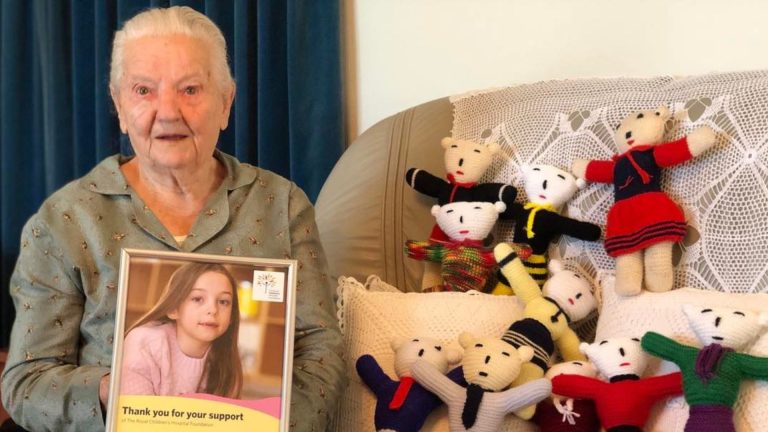
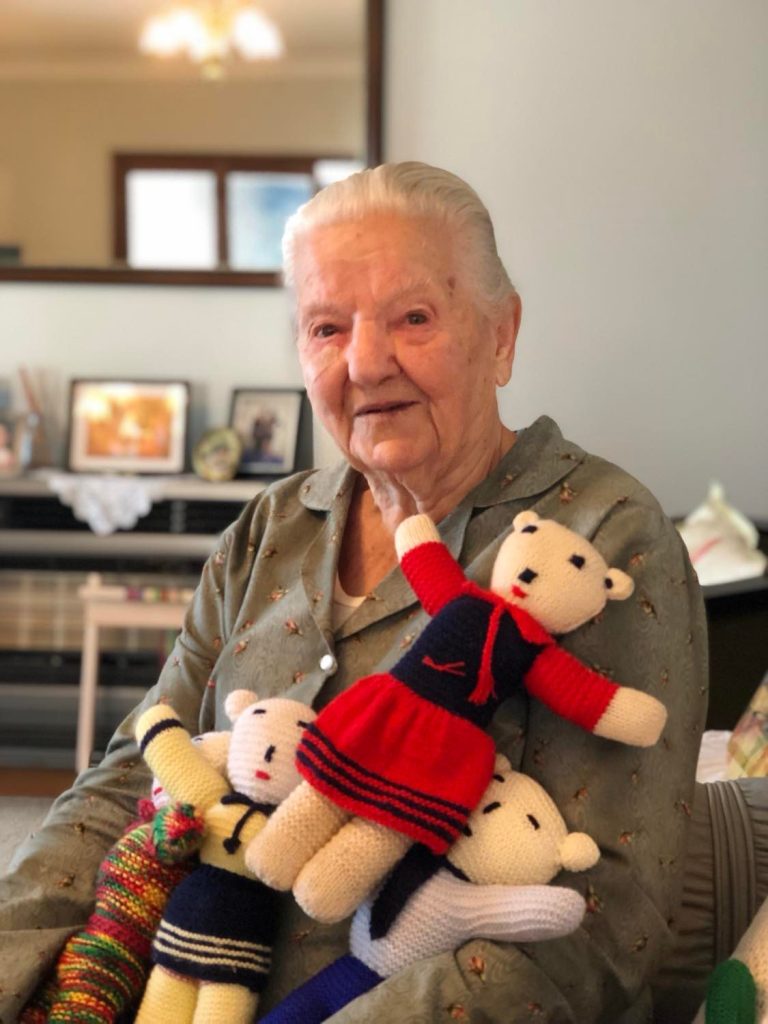
Hand-sewn dolls of different colours are strewn around Panagiota Triantafyllou’s home in Reservoir, Victoria.
Yiayia Panagiota, 94, knits them, embroidering smiles on each face, working late into the night to create these playthings for sick children – first for Ambulance Victoria and, more recently, for the Royal Children’s Hospital.
“I do my chores, switch off the TV after the weather report and then I listen to the radio, sitting on my little chair,” she tells The Greek Herald.
“As I knit, I wonder how it must be to have a child with a life-threatening illness or disability.”
It’s a meditative process.
“I am lucky that my two daughters, Dimitra and Mina, live nearby and they are healthy. I also have grandchildren and great grandchildren too. They are good kids. They don’t smoke or do drugs,” the 94-year-old says.
Panagiota Triantafyllou and her dolls
“Other people have problems with their children, but I thank God, from morning until night, that I have such great kids that don’t give me sorrow.”
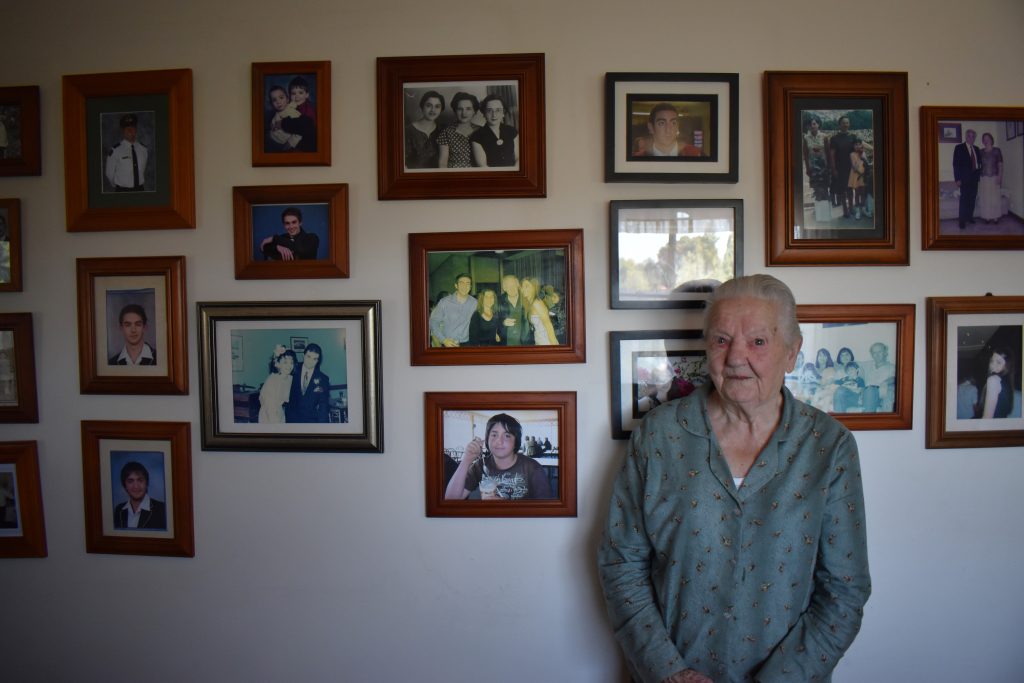
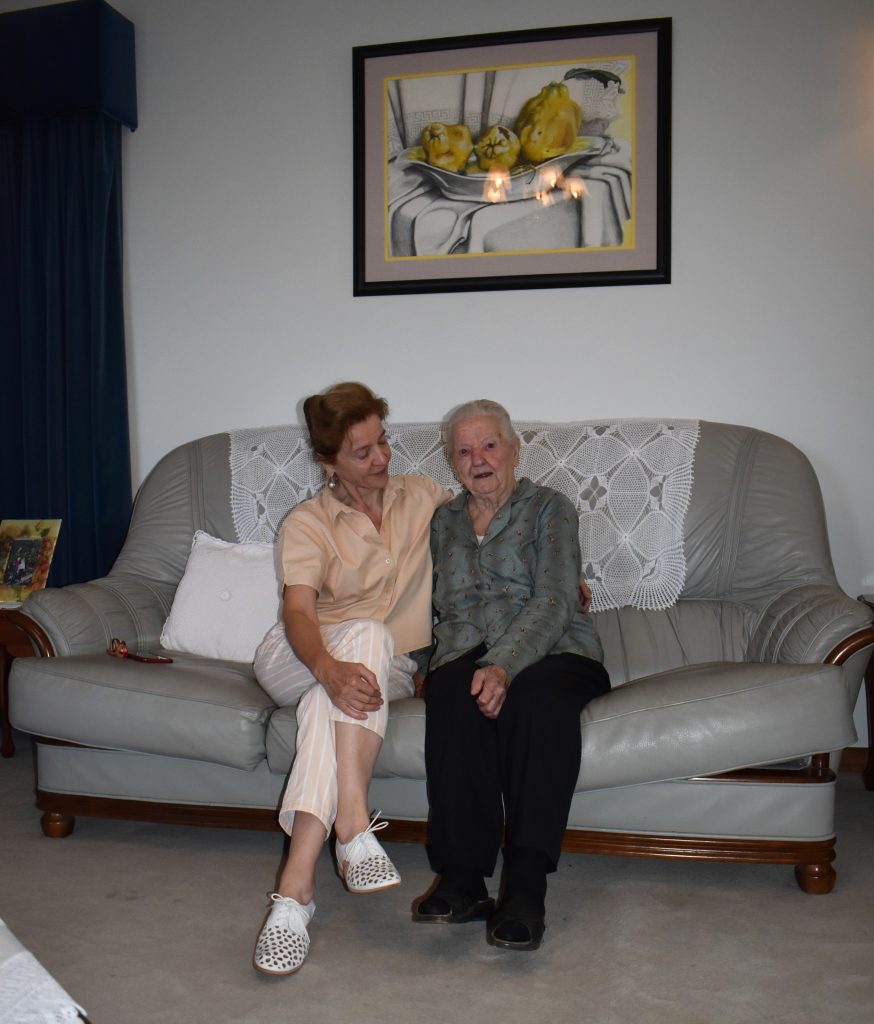
She darts a glance at her daughter Dimitra, a retired high school teacher, preparing tea and a generous serving of cake made by her other daughter, Mina. Her chair faces a wall covered with frames of family members to keep her company.
“Let me introduce you,” she says before gushing into explanations of each child and grandchild’s achievements.
There’s the plastic surgeon who moved to Sydney, the space engineer, the police officer, and the grandchildren who she also makes dolls for.
Her husband, who died a few years ago, would wake up at night and find Panagiota’s hands productively at work. In those days, it wasn’t dolls but quilts, curtains, tablecloths and other intricate designs.
“He would be surprised to see me up and he would say, ‘Panagiota, you could have bought a second house to rent and never have to work with all the money you’ve spent on threads’,” she laughs.
Panagiota Triantafyllou in front of the picture wall
Laughter turns to tears she chokes back, as she remembers the good times and bad. From taking three buses to get to Epworth Hospital where she worked in the laundry, to her husband’s eye injury and buying her house in Reservoir 38 years ago. One memory leads to the next.
She learnt to embroider, crochet, knit from a young age.
“All girls did then,” she said, adding that her daughter Dimitra, an art teacher, also took the time to learn.
“Not like you,” Dimitra quips, adding that her interest lies more in art, in painting.
Doll-making for Panagiota began just prior to COVID-19. Her daughter Dimitra says she and her sister “wanted to find a smaller easy-to-finish project as much of mum’s work is time-consuming.”
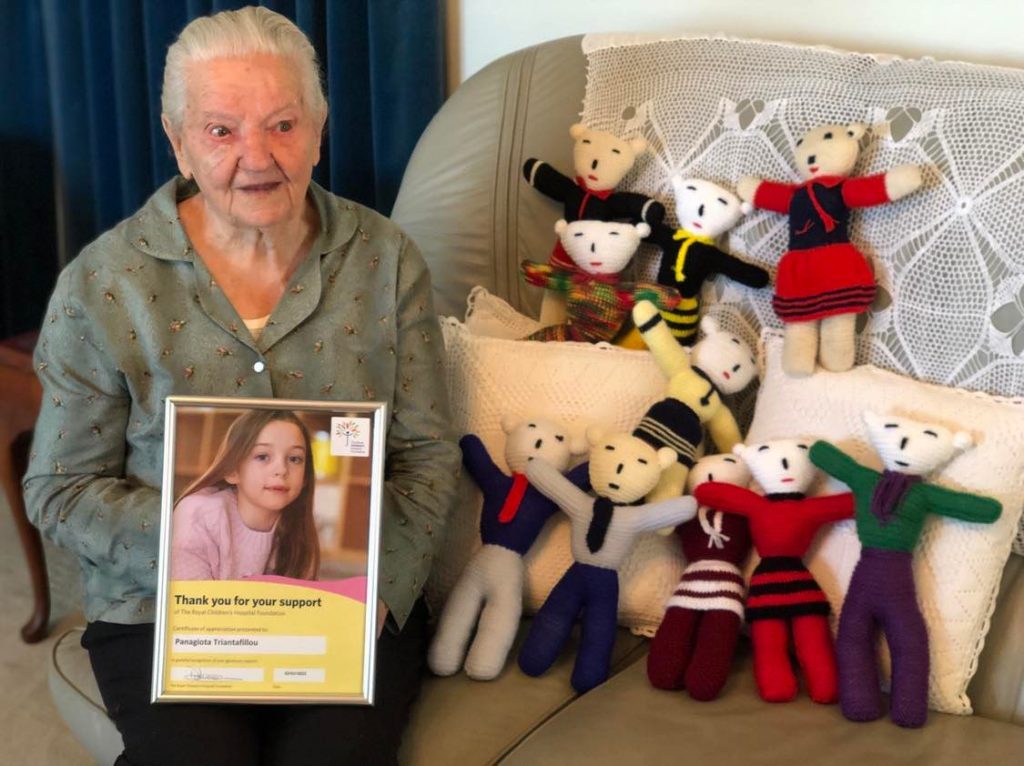
The idea of making dolls appealed to Panagiota. She donated some to Ambulance Victoria and then decided to create more for the sick children at the Royal Children’s Hospital – a total of 30 in the recent batch with the promise of more to come.
“I am lucky that my two daughters, Dimitra and Mina, live nearby and they are healthy”
Then came a knock on the door to surprise her and she received a framed certificate of thanks.
“I couldn’t believe that the hospital would thank me. I thought ‘Oh my God.’ I was so dizzy and moved by this,” Panagiota says, pointing to her prized display.
“Look at this photograph of the beautiful koritsaki (little girl) in the certificate they sent me. My dolls are going to children like her!”
During the last years of her husband’s life, he was in Frontida Care.
“The elderly lady in the next room had dementia and would hold a doll and talk to it, so I can only imagine how the children must feel,” she says.
Panagiota Triantafyllou
“I will keep making dolls for the children. People say I should sell them, but I want to give them away. I want to make people happy. I’m also thinking of knitting them some jumpers or other things to keep the children warm in winter. Like I do for my own great grandchildren.”
Panagiota asks me what I think she should make. We both wonder what the next steps should be.
“But I’ll take a break in August because my Phaedon (grandchild who is a plastic surgeon in Sydney) is getting married in Corfu this September, and I promised to go to the wedding!” she answers.
She’ll stop at her beloved Stymfalia, Corinth, where her brother has maintained her family house.
“I’ve been to Greece three times since coming in 1963,” she explains.
Dimitra and Mina were born in Corinth on Valentine’s Day just a year apart and came to Australia when they were six and seven years.
“People thought they were twins,” she says.
“We came to Australia for the children, to give them a better life, and we stayed for the children. We couldn’t go back to Greece and put them in the school system there.
“When I went back to Greece in the past, I felt like a ‘xeni’ (foreigner). My parents had passed away and many of my siblings had left. But now it’s time to go back again.”
She’ll return to the place where she learnt to knit, to crochet, to embroider. One last time.
*All photos copyright: The Greek Herald / Mary Sinanidis
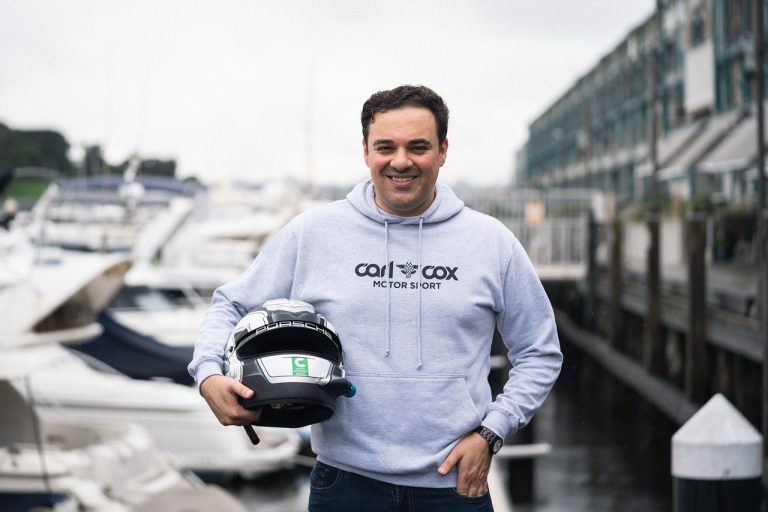
Fresh from sampling a NASCAR in Texas, Porsche racer Aaron Zerefos has confirmed his place on the grid for Bathurst’s lesser-known Great Race, Easter’s Hi-Tec Oils Bathurst 6 Hour.
The 6 Hour is the hallmark endurance race on the Shannons SpeedSeries calendar, which harks back to the golden era of touring car racing downunder.
The six-hour race isn’t filled with sports cars or purpose-built race cars. Instead, its focus is on the grass roots of Aussie motor racing with a grid of more than 60 production cars.
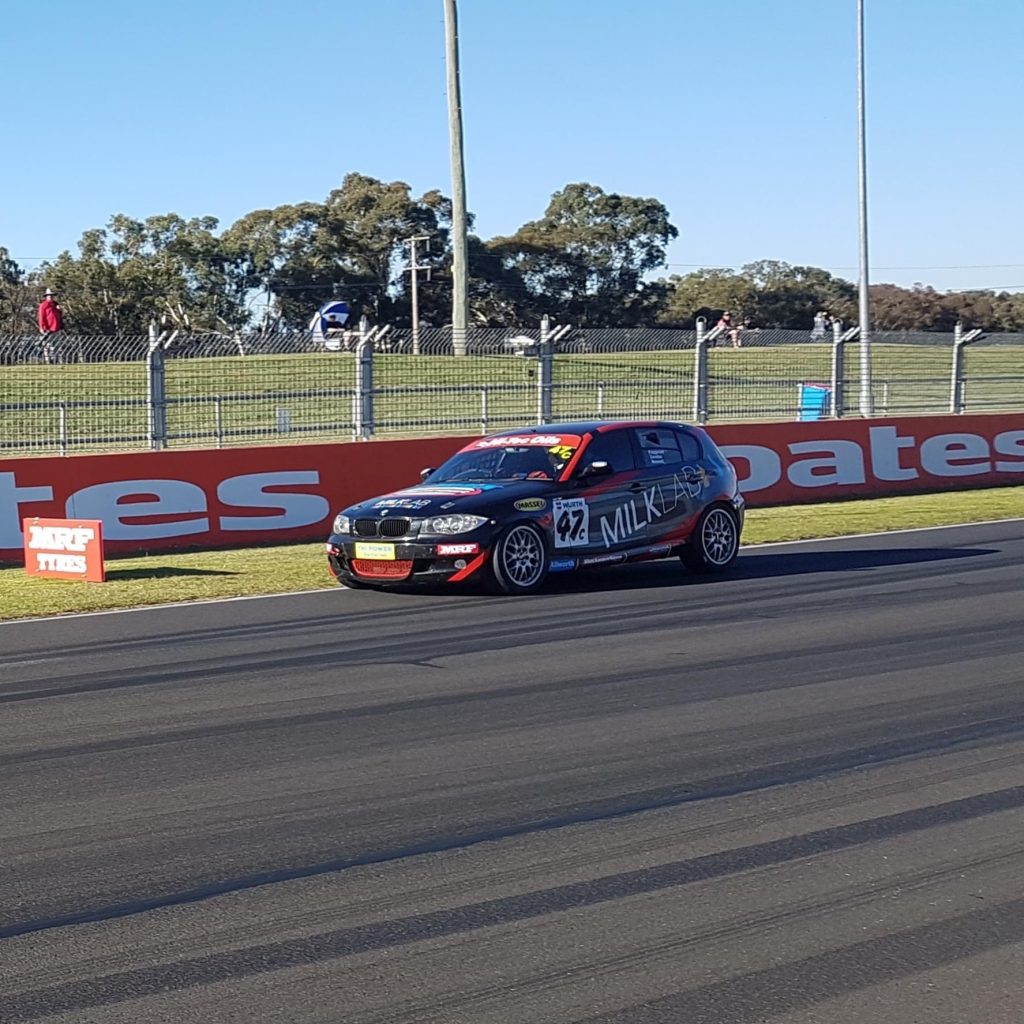
Zerefos, who resides between Los Angeles and Sydney, said he is looking for to joining On Track Motorsport, where he will share a BMW 130i with John Fitzgerald and Peter Johnston.
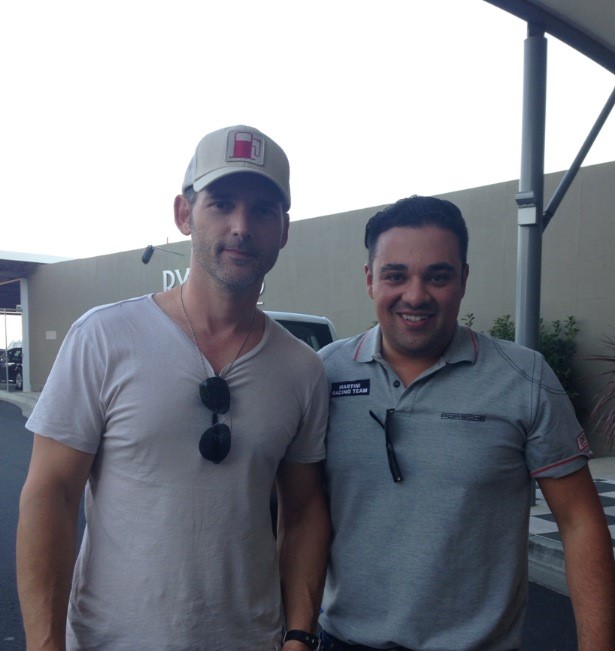
Zerefos pictured with Eric Bana at the Bathurst 12 Hour.
“It should be a fun weekend, I’m looking forward to jumping in the Bimmer,” Zerefos said.
“It’s a good package for endurance racing because it’s consistent and reliable, and I’m excited to be teaming up with John and Peter.
“Milk Lab will be supporting the #47 entry – the racing world is so commercial these days, so it makes sense for me to promote a brand that I sell. It will be good to have some oat lattes before the race and aim for the podium again – hopefully we can go a couple of spots better than our third in class last year.
“I am looking forward to seeing what the Mountain has in store for us this year, you just never know,” Zerefos concluded.
The Hi-Tec Oils Bathurst 6 Hour will be shown live and ad-free on Stan Sport.
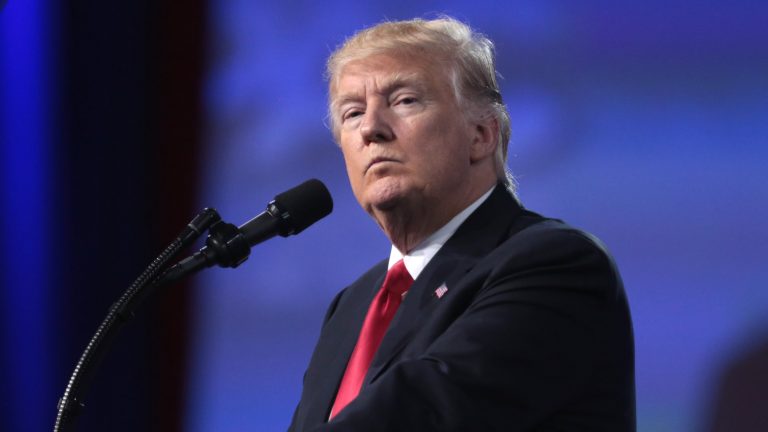
A Manhattan grand jury has voted to indict Donald Trump after he paid hush money to porn star Stormy Daniels,The Sydney Morning Heraldreports.
The former president has denied any wrongdoing and has attacked the investigation, calling the indictment “political persecution”.
The investigation derives from an alleged affair Trump had with Daniels in 2006, when he was a reality TV star and she was in her twenties.
According to The Sydney Morning Herald, Daniels attempted to tell her story in the lead up of the 2016 election but was paid out via a home equity loan taken out by Trumps “fixer”, Michael Cohen.
The hush money paid to Daniels is not the crime, rather it is alleged that Trump reimbursed Cohen, falsified business records and then sought to cover up an unreported campaign donation, which is in violation of New York state law.
Donald Trump is the first former US president to face criminal charges, even as he makes another run for the White House.
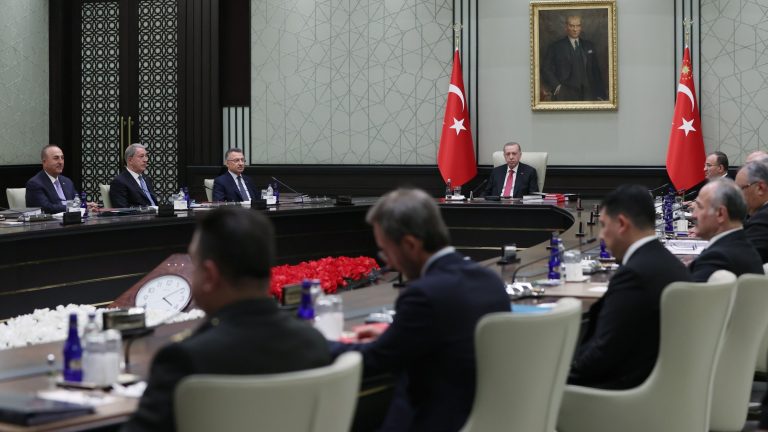
The Council convened in Ankara, the capital of Turkey, on Thursday and said the established bilateral relations would benefit both sides.
The Council also noted any ongoing developments in the Aegean and the Eastern Mediterranean are being followed closely.
This comes as Greek Defence Minister Nikos Panagiotopoulos announced he will travel to south east Turkey, visiting the earthquake affected area and people.
The visit is set for April 4 and Panagiotopoulos will meet with Turkish Defence Minister Hulusi Akar.
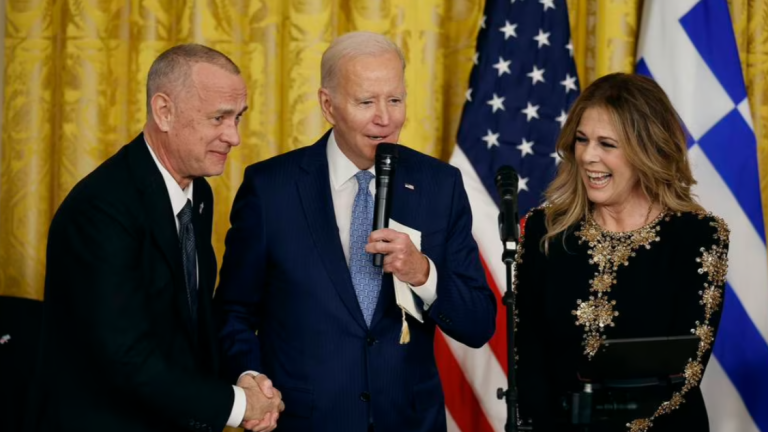
US President Joe Biden hosted the traditional Greek Independence Day reception at the White House on Wednesday night.
The event was attended by Archbishop Elpidophoros of America, hundreds of Greek community leaders, Greek American politicians and some well-known Hollywood stars including Rita Wilson, who is of Greek descent, and her husband Tom Hanks.
As allies, partners, and friends, Greece and the United States have proven time and again we aren’t just the inheritors of democracy.
We’re its champions.
And that’s thanks to the character of the Greek community – and the Greek ideals woven into the foundations of America. pic.twitter.com/IOS2eJXEtu
In his speech on the night, Biden congratulated everyone for celebrating Greek Independence Day and said: “The world owes a great deal of debt to Greece, including the revolutionary idea of a democracy.”
Later, Wilson performed four songs at the reception in the East Room before Biden returned to the stage to praise her and joked that “the only thing I worry about is your taste in men.”
Hanks responded as he joined Biden and Wilson on stage: “No, I am not Greek, but I had the good sense to marry one.”
The White House celebration of Greek Independence was first started by US President Ronald Reagan in 1986 with the help of Father Alex Karloutsos, Tom Korologos and Andy Manatos and has become a White House tradition ever since.